Forget Edward Gibbon’s 1776-1788 “The History of the Decline and Fall of the Roman Empire”. Forget Will and Ariel Durant’s, 1944, “Caesar and Christ”, Volume Three, of their, Eleven Volume, “The Story pf Civilization” series.
They never got it right.
This is “THE REAL (?) HISTORY OF THE ROMAN EMPIRE” brought to the movie goer and my readers from “HOLLYWOOD: THE MOTION PICTURE CAPITAL OF THE WORLD”.
While, perhaps, with a larger dose of 1960’s Italian and French cinema tossed in for good measure, with just pinch of “Cine Mexicano”.
As for “Hollywood”, the publicity department that came up with the above tag line, conveniently overlooked its real history, but not this motion picture history buff. I have linked four of my “THE HOUSE OF FRADKIN-STEIN”, http://www.bewaretheblog.com, history articles below, and the first is a look at that “Motion Picture Capital of the World”.
“HOLLYWOOD: Segregated Housing, Motion Picture Studios and Movie Palaces”. Which can be found at:
https://www.bewaretheblog.com/2019/04/hollywood-segregated-housing-motion.html
“The American Revolutionary War Through the Eyes of Hollywood”, to be read at:
https://www.bewaretheblog.com/2020/07/the-american-revolutionary-war-through.html
“The Creation of Today’s Middle East-‘HISTORIC REALITY vs HOLLYWOOD: T. E. Lawrence, Prince Faisal, :Lowell Thomas, and Mickey Marcus”, to be read at:
https://www.bewaretheblog.com/2021/05/the-creation-of-todays-middle-east.html
“MCCARTHYISM: LIGHTS, CAMERA, COMMUNISTS IN THE MOTION PICTURE INDUSTRY”, to be read at:
https://www.bewaretheblog.com/2025/08/mccarthyism-lights-camera-communists-in.htm
The following motion picture’s represent different periods, not all of them, in the “History of the Roman Empire” from its beginning to its fall. A few come from “Hollywood“, but mostly these film’s are from Italy during the “Peplum” period of Italian film making. My article on that era, is “PEPLUM: A Look at the Sword and Sandal Motion Pictures from the 1950’s and 1960’s” at:
https://www.bewaretheblog.com/2021/02/peplum-look-at-sword-and-sandal-motion.html
There is an old saying that “ROME WASN’T BULIT IN A DAY”, but it began, according to legend, with two brothers:
ROMELO E REMO aka: DUEL OF THE TITANS was released in Italy on December 6, 1961
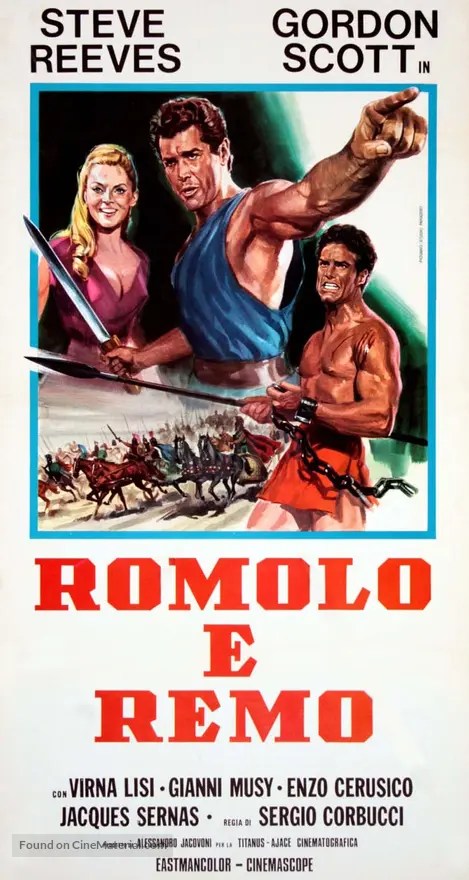
Which would come to the United States on, in June 1963, as “Duel of the Titans”.
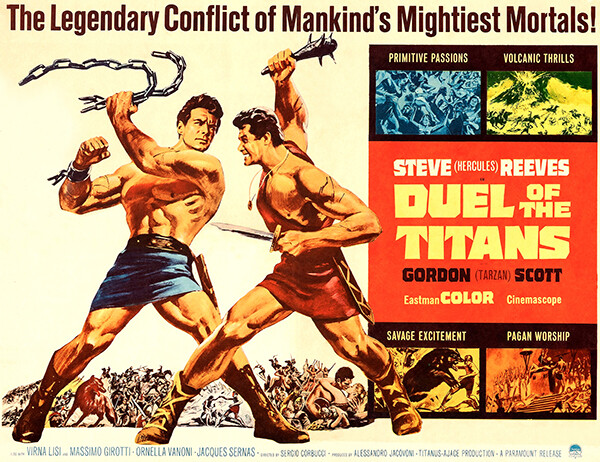
Eight screenplay writers worked on the picture including the motion pictures director Sergio Corbucci. Among his writing was adapting Edward George Bulwer-Lytton’s novel, “The Last Days of Pompeii”, for the 1959 Italian version. However, he is best known for during Italy’s “Spaghetti Western” period, creating the character of “Django” in 1966.
Another of the writers was Sergio Leone, who turned Japanese director Akira Kurosawa’s, 1961, “Yojimbo”, into 1964’s, “Per un pugno di dollari (For a Fistful of Dollars”).
Steve Reeves portrayed “Romolo (Romulus)”. Reeves had just been seen in 1961’s, “La querra di Troia (The Trojan War)”. He would follow this picture with, 1962’s, Il figlio di Spartacus (The Son of Spartacus)”. Back in 1954, he was 4th-billed as “Police Lieutenant Bob Lawrence”, in Ed Wood, Jr’s., “Jail Bait”. In 1958, Steve Reeves went to Italy to make a movie and travel on the producers expenses. The film was “Le fatiche di Ercole (The Labors of Hercules)” and came to the United States in 1959 as, “Hercules”.

Gordon Scott portrayed “Remo (Remus)”. Just before this film, Scott appeared in 1961’s, “Maciste alla corte del Gran Khan (Maciste at the Court of the Grand Khan)”. Which somehow, when it came to the United States, in 1962, had become, “Samson and the 7 Miracles of the World”. After this picture, the actor appeared in the 1962’s, “Il figlio dello sceicco (The Skeik’s Son)”. However, between 1955 and 1960, Gordon Scott was American writer, Edgar Rice Burrough’s “Tarzan”, in six motion pictures. In 1961, Gordon Scott moved to Italy and starred in “Maciste contra il vampire (Maciste vs the Vampire)”. That came to the United States in 1964, as “Goliath and the Vampires”. As with Steve Reeves, both actors were dubbed into English by other actors.

Virna Lisi portrayed “lulia (Julia)”. Among her English language films is the 1965 Comedy, “How to Murder You Wife”, co-starring Jack Lemmon and Terry-Thomas, 1966’s, “Assault on a Queen”, co-starring Frank Sinatra and Anthony Franciosa, and the same year’s, “Not with MY Wife”, co-starring with Tony Curtis and George C. Scott.

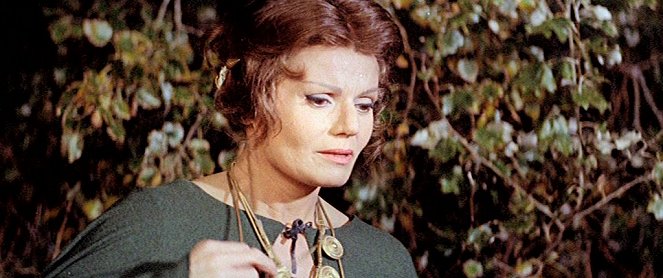
The movie follows the mythic legend of the brothers who founded Rome. Born of a God, and a Mortal woman, “Rhea Silva”, portrayed by Laura Solari, are the twins, don’t ask about the casting here, “Romulus and Remus”, left as babies by a river, and raised by a wolf.
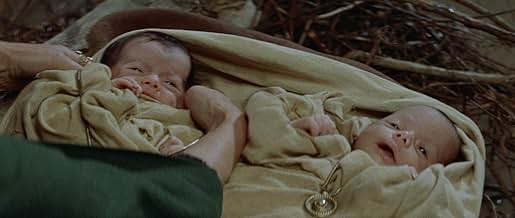
The two grow up to lead a band of thieves with their purpose being to defeat two wicked Kings. One is “Amulius“, portrayed by Franco Lupi, who is the twins Uncle, that ordered their murder at birth, but their mother hid them by the river.
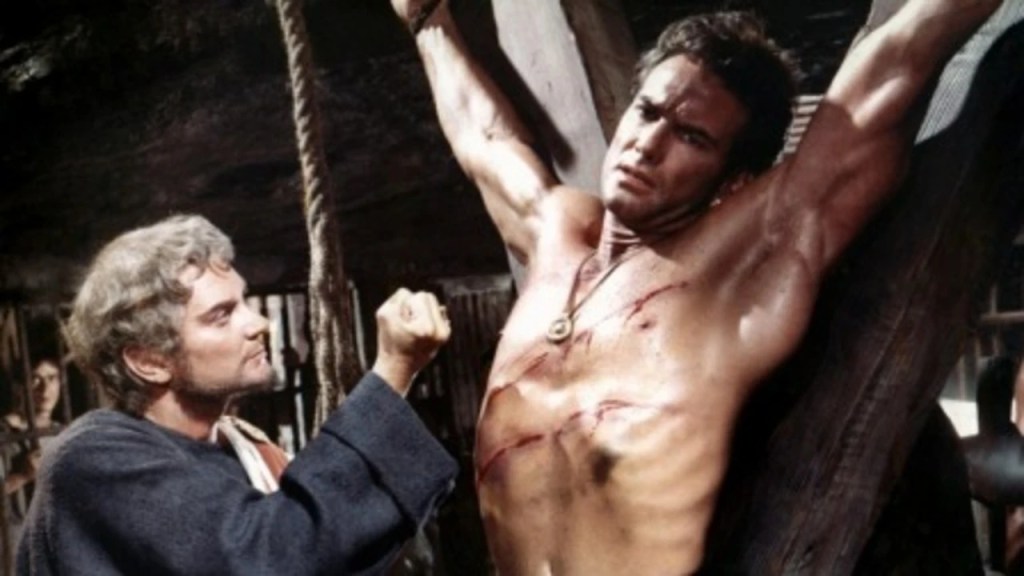
Above, “Amulius” tortures his son, “Remus”
The other king is “Titus Tatius” aka: “Tatius Sabinus” aka: “Tasius Nemulias”, was portrayed by Massimo Girotti and the “King of the Sabines”
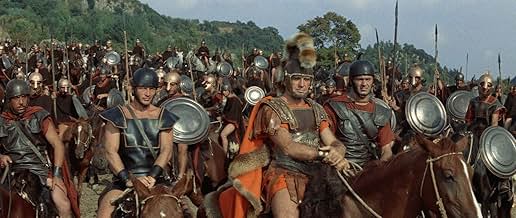
After 20-years of battles together, the two brothers are reunited with their mother.

Above, Andrea Bosic portraying “Faustulus”, the man who found the two babies being suckled by the she wolf and brought them home to his own wife for the two to raise. With him is “Rhea Silva”, 20-years after she left her sons, and she is reunited with them before she dies. Just before her death, their mother tells her sons, that they are destined to build a “Great City”.
At about this time, “Remus” had fallen in love with “Julia”, the daughter of his enemy “King Tasius Nemulias”, and was feeling a hunger for power, and in turn, was also greedy. While, “Romulus” has no idea about his brother’s new goals in life.
Next, “King Tasius Nemulias” is after both brothers. Which finally causes a rift between “Romulus” and “Remus”, and leads to a fight between the brothers as to who will become the true founder of the “Great City” that their mother prophesied. The film ends with “Romulus” killing his twin and becoming the first ruler of the city of Rome.
What happened to “King Titus Tatius” is not in this motion picture. Which brings me to the next feature film.
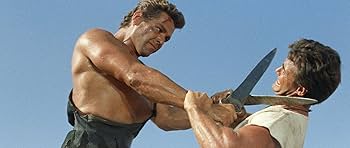
A problem facing “Romulus” after the founding of “Rome”, named for himself, was the growing population, predominantly male. He went to the newly established, “Senate of the Roman Kingdom” for advise. Which leads to my next motion picture:
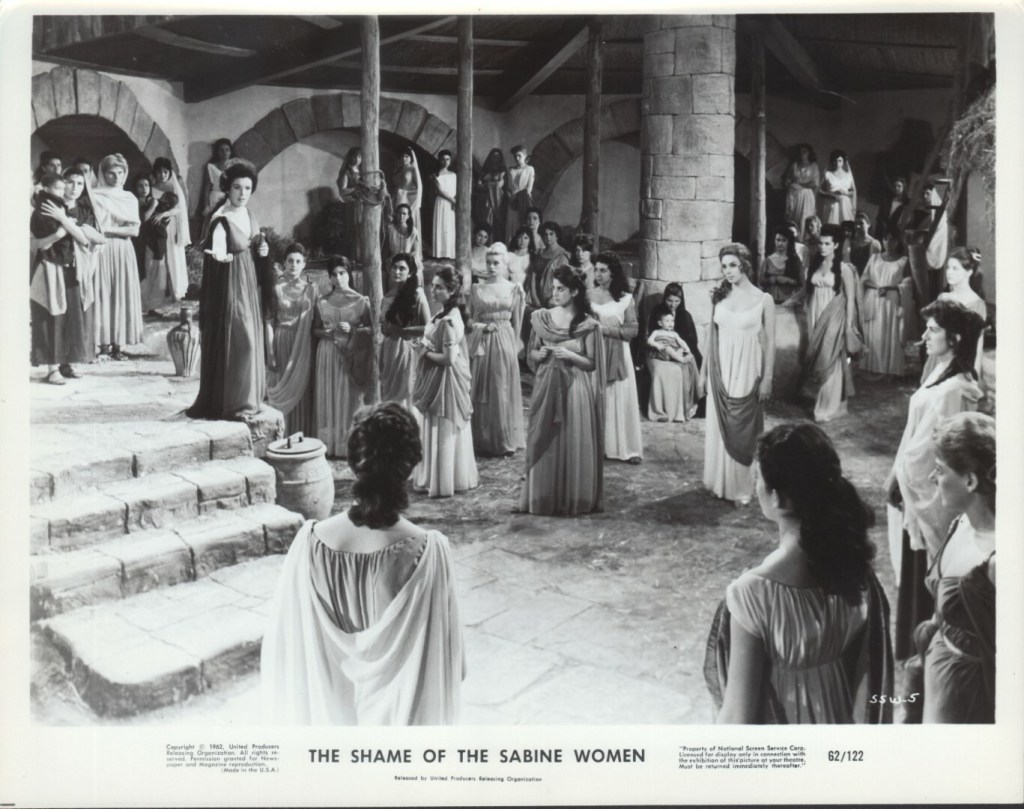
EL RAPTO DE LAS SABINAS(THE RAPE OF THE SABINE WOMEN) was released in Mexico on July 19, 1962.
The motion picture was produced, directed, and written by Albert Gout in Mexico. It would be released in an English language dub as “THE SHAME OF THE SABINE WOMAN”.
The basic story has “Romulus”, portrayed by Argentine actor, Wolf Ruvinskis, and the men of “Rome”, attending a festival as guests of the Sabine’s and their King, “Titus Tatius” portrayed by Italian actor, Luis Induni. There, they abduct women to become their brides and a war breaks out. My reader should understand that the word “Rape”, does not refer to a sexual act, made at the time, meant “Kidnapping”, or “Abdication”.
By the time this short war has come to its head, the “Kidnapped Women” are happily married and some with children. They take the war into their own hands and force an end to it. As that moment in time, both “Romulus” and “Titus” form a ruling partnership combining the two cities and become the legendary “1st and 2nd Kings of Rome”. Later, “Titus” is murdered in another city, not connected to “Romulus” and he becomes the sole ruler.
Think America actor Alan Ladd and you remember classic’s like 1942’s, “This Gun for Hire”, 1946’s, “Two Years Before the Mast”, 1953’s, “SHANE”, but strangely he was cast as 1954’s, “The Black Knight” at the time of “King Arthur”. Ladd, looking for work starred in the next chapter of the “Rise of the Roman Empire” I’m looking at, under the legendary “3rd King of Rome, ,Tullus Hostilius”.
ORAZI E CURIZAI (THE HORATII AND THE CURATII) aka: DUEL OF CHAMPIONS released in Italy on October 19, 1961
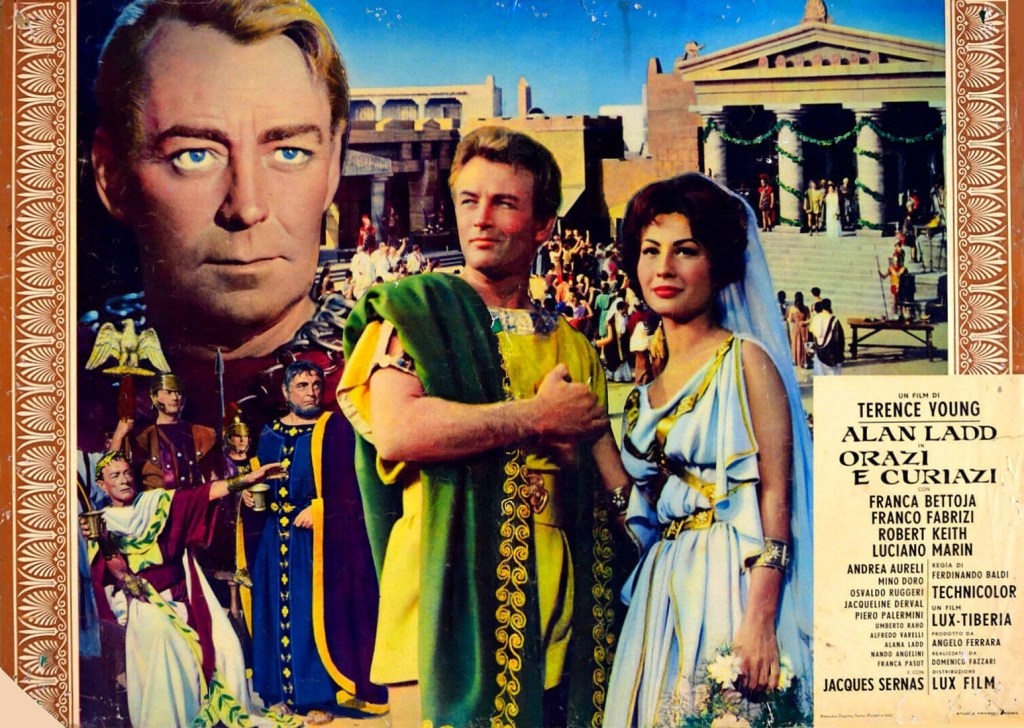
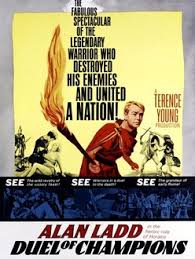
There were four writers involved in the screenplay. The original story was by Luciani Vincezoni. When “Peplum” was dropped, and “Spahgetti Westerns” came into being. Vincezoni was the co-writer with Sergio Leon on 1965’s, “Per qualche dollaro in piu (For a Few Dollars More)” and 1966’s, “il buono, il brutto, il cattivo (The Good, the Bad, the Ugly)”. In 1986, Luciani Vincezoni was the main story and actor on Arnold Schwarzenegger’s, “Raw Deal”.
The Three writers that turned the story into a screenplay were: Ennion De Concini, Carlo Lizzani, and Giuliano Montaldo.
There were two directors, one Italian, one English language.
The Italian director was Ferdinando Baldi, two of his films shown in the United Stated dubbed into English and released just prior to this film, were 1960’s, “David and Goliath”, starring Orson Welles as “King Saul”, and 1961’s, “The Tartars”, starring Welles and Victor Mature.
The English language director was Terence Young. Whose first film after this feature was 1962’s, “Dr. No”, introducing Sean Connery as “James Bond”, and followed by 1963’s, “From Russia with Love”. In 1965, Young directed the 3rd “James Bond” feature film, “Thunderball”.
On Intenational Co-productions like this one, there usually a co-directors sharing the responsibilities. However, there was friction on the set, and Young left, before shooting was completed.
Alan Ladd portrayed “Horatio”. Ladd had just starred in the Korean War drama, 1960’s, “All the Young Men”, and followed this film with the crime drama, 1962’s, “13 West Street” co-starring with Rod Steiger.
As to that “Tension” on the set. One reason is found in a “Los Angeles Times” article, by Philip K. Scheuer, dated March 31, 1961. Alan Ladd is quoted as explaining why he walked off the set after 11-weeks of filming, over not being paid:
My advice to any American actor making a film abroad is to develop his own foreign policy beforehand”, said Ladd. “My own, for the future, will be ‘Speak softly, but carry an iron contract’.”
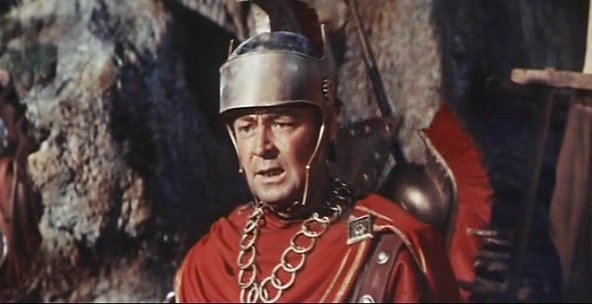
Franca Bettoia, billed as Franca Bettoja, portrayed “Marcia”. She portrayed “Ruth Collins” in 1964’s, “The Last Man on Earth”, starring Vincent Price, from a screenplay by Richard Matheson, based upon his short story, “I Am Legend”. That Matheson had his name credited on screen as “Logan Swanson”, because how bad the movie was and the changes made to his original screenplay..
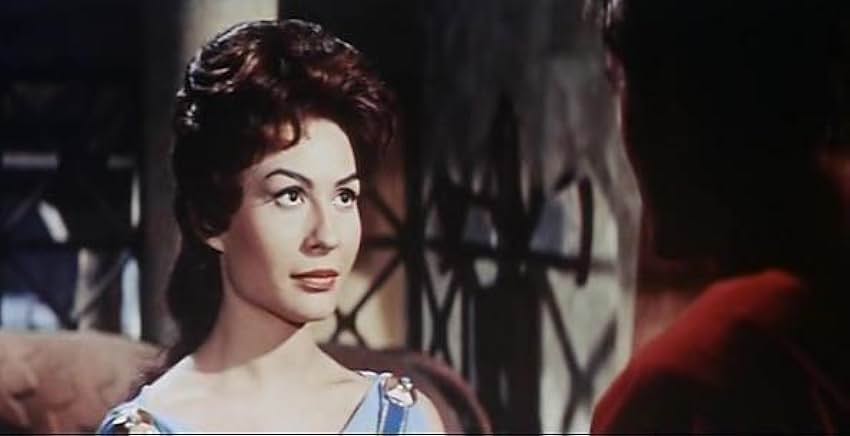
Franco Fabrizi portrayed “Curazio”. Fabrizi had just been in the French comedy, 1961’s, “Le puts aux trots veritas (The Puts to the Three Truths)”. He followed this picture with the war drama, 1961’s, “Una vita difficult (A Difficult Life)”.
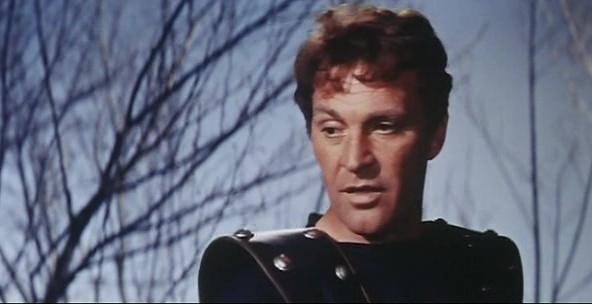
Robert Keith portrayed “Tullus Hostilus, King of Rome”. “Tullus” was the grandson of “Hostus Hostilius” who fought side by side with “Romulus” against “King Titus Tatius”.
American character Keith had just been seen in the Aude Murphy and John Saxon “B” Western, 1961’s, “Posse from Hell”. He followed this feature film with six television appearances, on six different American television dramas ending his career in “The Masks”, March 20, 1964, on the “The Twilight Zone”.
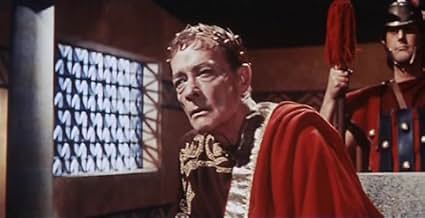
Jacques Sernas portrayed “Marcus”. Sernas had just been in 1961’s, “Goliath and the Vampires”. The Lithuanian born actor had portrayed “Paris” in director Robert Wise’s epic film, 1956’s, “Helen of Troy”.
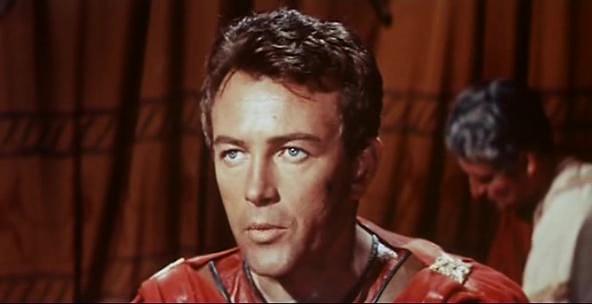
Historical Footnote:
According to legend, I return to two Steve Reeves movies. The first deals with the Trojan War and is 1961’s, “La guerra di Troia (The Trojan Horse)”. In the picture, Reeves portrays “Aeneas”, from Greco-Roman mythology, who at the end of the movie is leading the survivors of Troy away from the cities destruction.
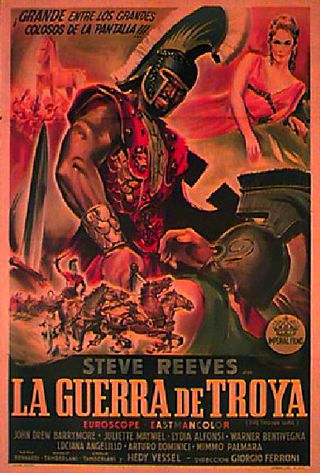
The second movie, is 1962’s, “La leggenda di Aeneas (The Legend of Aeneas)” aka: “The Avenger”. The story picks up where the other ended with “Aeneas” Reeves), leading the survivors of Greek Troy to Italy and establishing what becomes the city of Alba Longa.
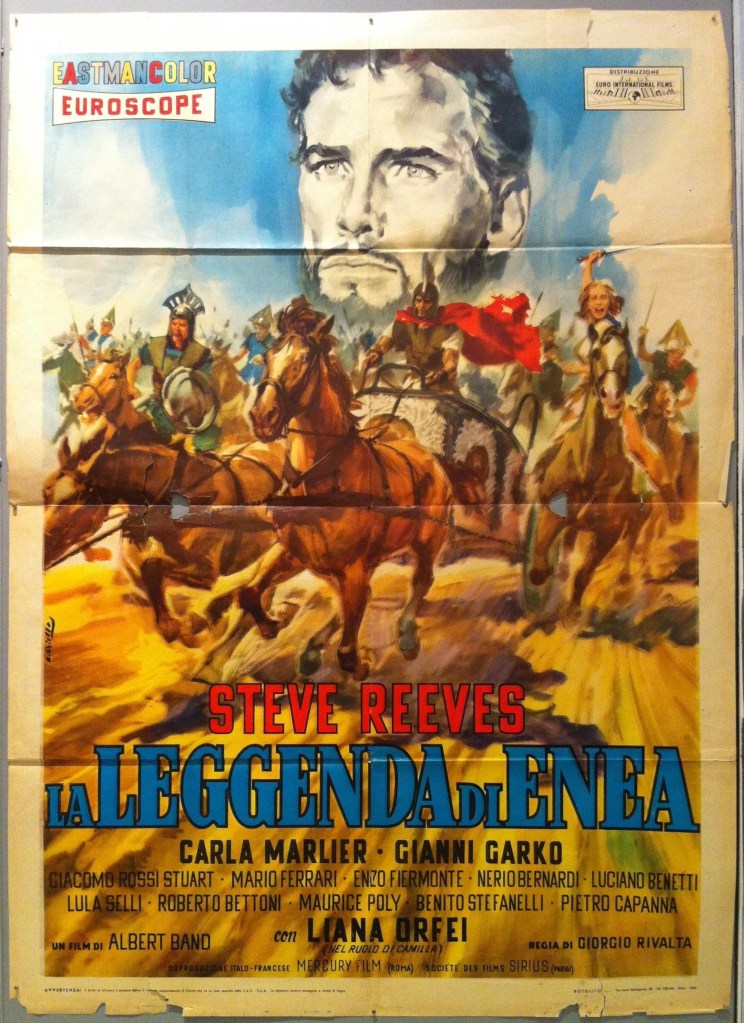
Which brings me to “Duel of the Champions” and the following overview of the story.
The story takes place prior to the unification of Rome with Alba Longa. Roman hero, “Horatio”, is leading his soldiers against those of Alba Longa.
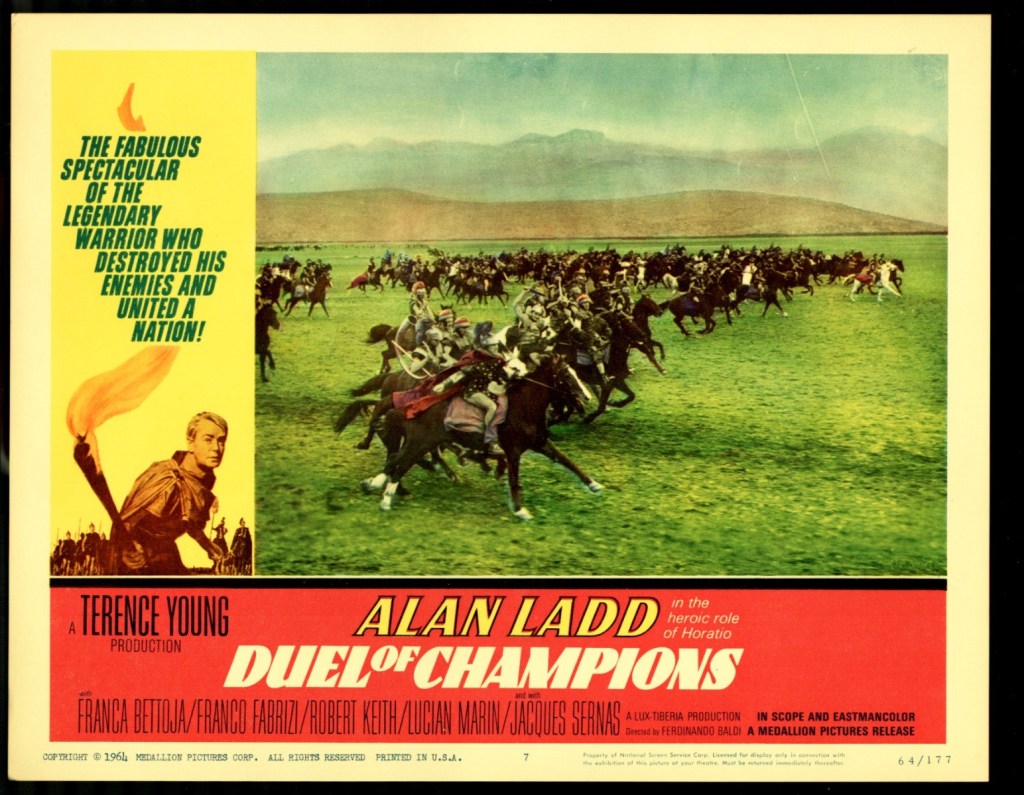
During the engagement, he is wounded and taken prisoner, but escapes and hides in the hills.
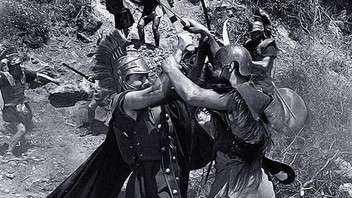
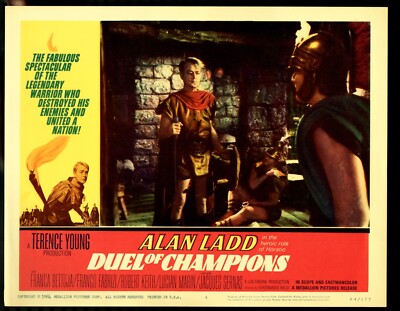
Roman King “Tullus Hostilius”, believes “Horatio” a coward, announces the engagement not of “Horatio”, but his brother “Marcus”, to “Tullus’s” daughter, Marcia”. Further, the King names “Marcus” as his heir to the throne of Rome.
Politically, both Rome and Alba Longa want peace and “King Hostilus” of Rome, and “King Gaius Cuilius of Alba”, portrayed by Andrea Aureli, consult an oracle. The oracle calls for a “Duel of Champions”, each King will choose “Three Brothers”, who will fight to the death. The winning side will dominate the joining of the two kingdoms.
Not knowing of the events that have transpired in Rome, “Horatio” comes down from the hills, finds “Marcia” married to “Marcus”, and that he has been branded a coward. “Horatio” returns to the hills, but comes back down to fight for Rome along side “Marcus” and their brother “Nevio”, portrayed by Piero Palmerini.
In the battle, the three brother’s representing Alba Longa will kill ‘Horatio’s” brothers and then he stands alone. Defending Rome against “Curzio”, “Eli”, portrayed by Lucino Marin, and the 3rd brother only identified as “A Warrior of Alba”, portrayed by Osvaldo Ruggieri. All three die by the hand of “Horatio”. However, “Horatio’s” sister, “Horatia”, portrayed by Jacqueline Derval, was “Curzio’s” love and she kills herself with a knife over his death.
The story ends with “Horatio” now free to marry “Marcia”.
Moving ahead to the newly formed “Republic of Rome”
On August 2, 1960, “Hollywood Gossip Columnist”, Hedda Hopper, in her article, “Louis Jordan Keeping Busy” in the “Pittsburgh Press” newspaper mentioned that the French born actor was about to make “Virgins of Rome”, to be filmed in Italy. The following movie ended up being filmed in Yugoslavia.
LE VERGINI DI ROMA (VIRGINS OF ROME) aka: AMAZONS OF ROME released on March 24, 1961, in Italy
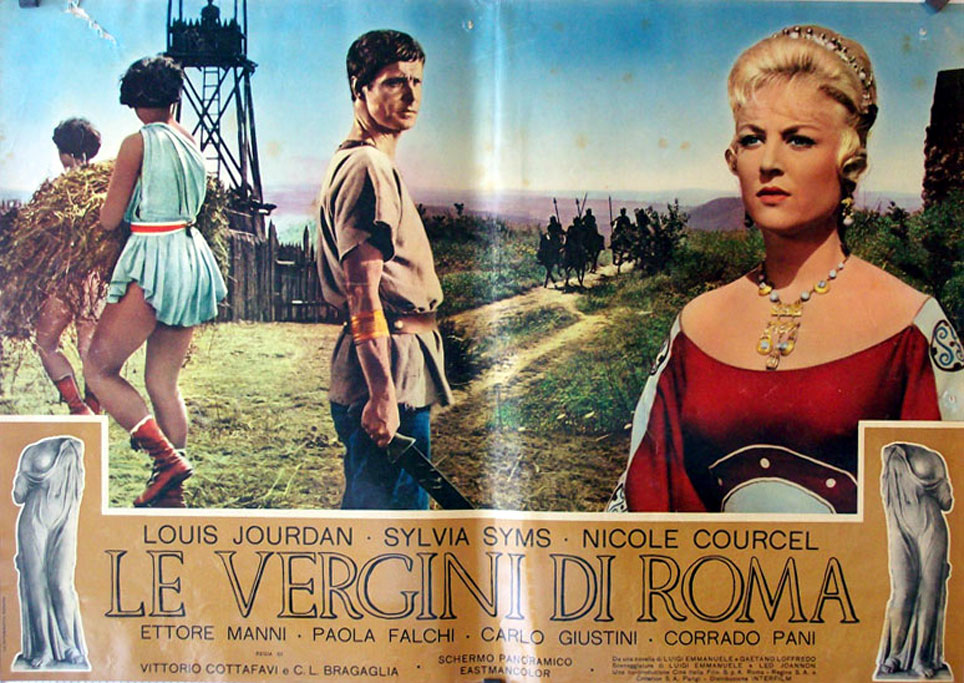
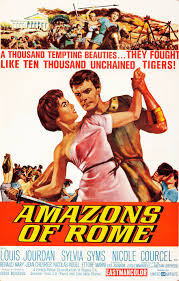
The original story came from two writer’s, Léo Joannon was a French writer, but also a film director. He was a writer for this picture, but in 1951, he directed the comedy “Atoll K” aka: “Utopia”. Which was the last film working together of the comedy team Stan Laurel and Oliver Hardy.
Luigi Emmanuele co-wrote both the story and screenplay. In 1959, he had written the Steve Reeves, and Christine Kaufmann’s (the future 2nd Mrs. Tony Curtis), “Gli ultimi giorni di Pompei (The Last Days of Pompei)”.
According to actress Sylvia Syms, in London’s “Evening Standard” for November 7, 1960, co-star Louis Jourdan “Wore out four directors”, because he wanted to play the role as a comedy and this was a serious motion picture. However, the official cast and crew lists only three directors, Carlo Ludovico Bragaglia who directed 63 motion pictures, Vittorio Cottafavi who directed 80 motion pictures, and Peter O’Cord who, apparently, directed only this movie, and that would be the English language version.
Louis Jourdan portrayed “Drusco”. Jourdan had just co-starred with Frank Sinatra, Shirley MacLaine, and Maurice Chevalier, in Cole Porter’s, 1960, “Can-Can”. Jourdan followed this movie with the French, drama, 1961’s, “Leviathan”.
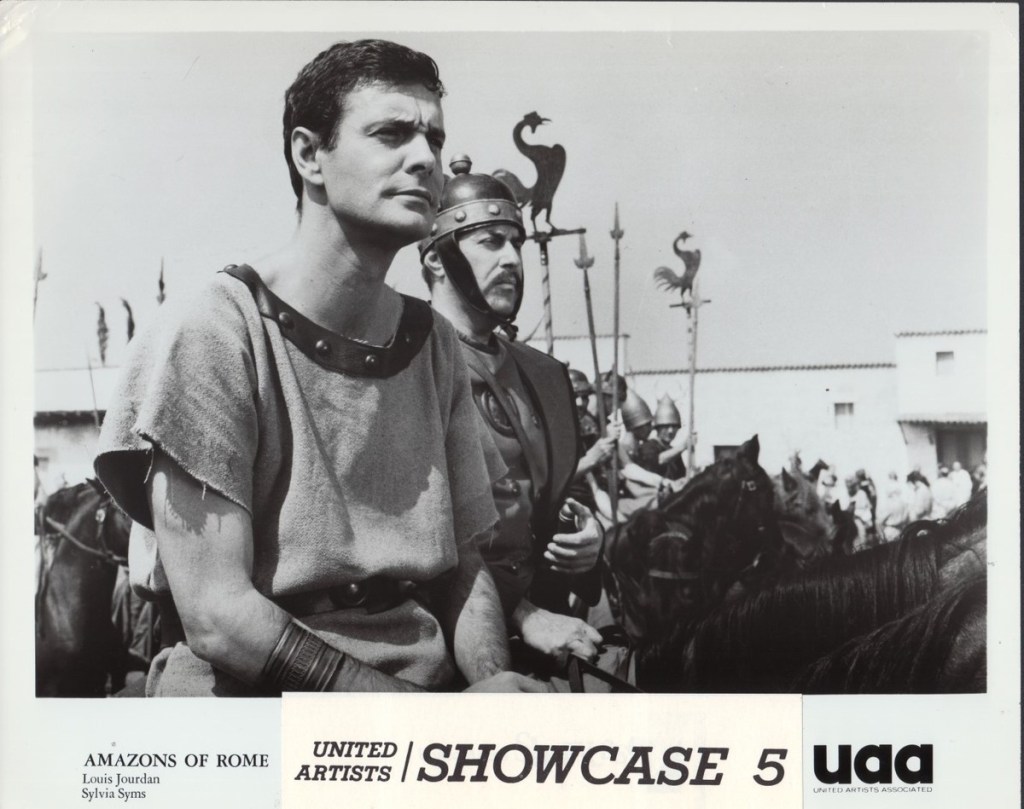
Nicole Courcel portrayed “Lucilla – Porcenna’s wife”. Courcel had just been seen in the French 1961, “Les amours de Paris”, and followed this feature with the French comedy, 1961’s, “Vive Henri IV. . . . Vive Amour (Long Live Henry the IV. . ..Long Live Love)”.
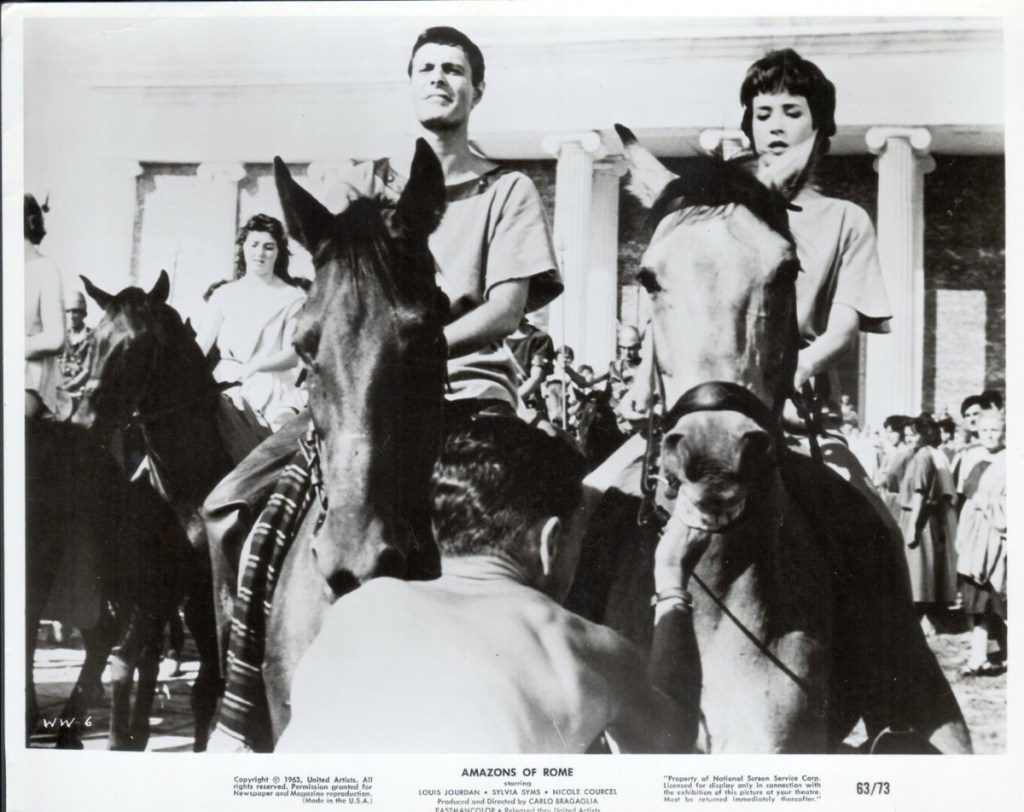
Sylvia Syms portrayed the legendary “Cloelia”. Syms was just seen in 1960’s, “The World of Suzie Wong” and followed this film, co-starring with Sir John Mills in 1961’s, “Flame in the Streets”.
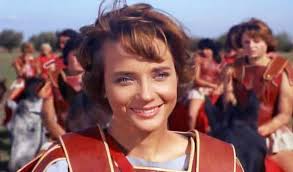
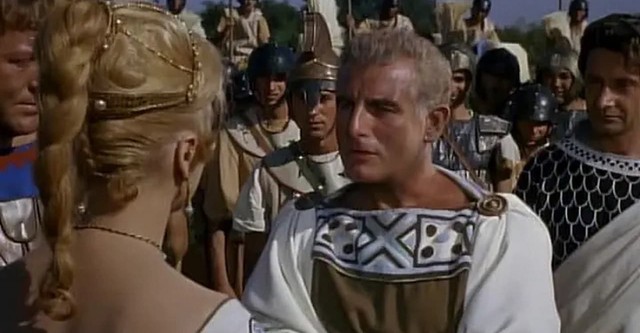
Jean Chevrier portrayed “Lars Porcenna the Etruscan King”. He had just been in the French romance drama, 1960, “Le gigolo”, and followed this feature with the 1962 crime drama “Le captif”.
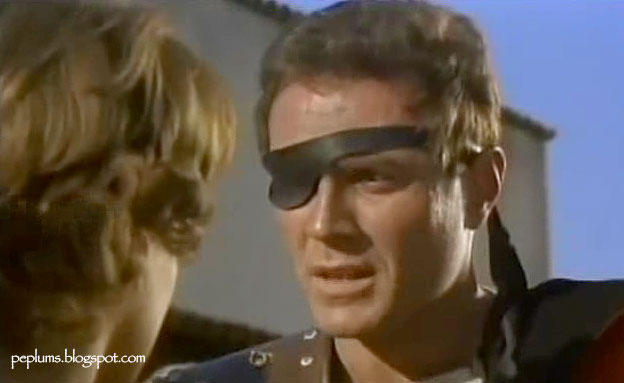
Ettore Manni portrayed “Horatius Cocles”, aka: “The Cyclops” as he lost one eye in battle”. Manni is a major actor in “Peplum”, he was just in 1960’s “La rivolta degli schavi (The Revolt of the Slaves)” that starred American’s Rhonda Fleming and Lang Jeffries. He followed this picture with 1961’s, “Ercole alla conquista di Atlantide (Hercules Conquers Atlantis)”, that was dubbed into English as “Hercules and the Captive Women”.
The screenplay was loosely based upon the legend of the leader of a female army, “Cloelia”. Who helps end the war between Rome and Clusium, part of the “Rome-Etruscan Wars” in 508 B.C. However, this movie is set in 476 B.C.
In this piece of fiction, “Drusco” is the head of the Barbarian horde, “Stavos”, portrayed by Renaud Mary, is head of the Greek mercenaries, are part of a coalition with the “Porcenna, King of the Ethruscans”. This group is winning over Rome, and “Drusco” offers peace with Rome, IF they give him hostages as a sign of good faith. He also wants one to be “Cloelia” the leader of a group of women soldiers the fought. This is done, but “Cloelia” and the women escape and “Drusco” is blamed. While “Cloelia” leads her female army to the aide of Rome. Where Roman commander, “Horatio Cocles” is preparing his last stand against the Etrucscans, when the women army arrive, with “Drusco”, who is in love with “Cloelia”, to save him and defeat the enemy.
For the record, there are two ancient stories connected with “Cloelia”. The first has her as one of the hostages taken by the Etruscans and that the captured women convinced their guards to let them bathe in the Tiber river without them, to keep their modesty. At which point, “Cloelia” leads them across the river and to a Roman encampment and freedom.
The second story has her escaping from an Etruscan encampment, leading a large group of Roman virgins. According to the writings of Latin author Valerius Maximus, during the reign of Tiberius 14 A.D. to 37 A.D., “”Cloelia” rode on a horse protecting the women as they crossed the Tiber . While deflecting with her the fire of Etruscan arrows aimed at her. This too, became part of her legend.
Three years after “Amazon Women of Rome”, another version of the tale was released” Neither was correct:
Il COLOSSO DI ROMA (THE COLOSSUS OF ROME)” aka: “HERO OF ROME” released in Italy on June 24, 1964
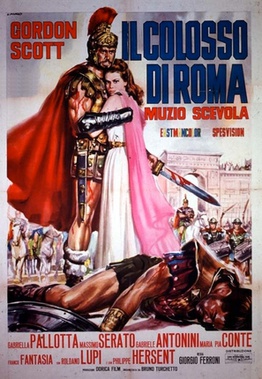
Gordon Scott portrayed the real life Roman hero, “Gaius Mucius Scaevola”.
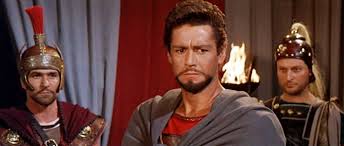
Gabriella Pallota portrayed “Cleolia”.
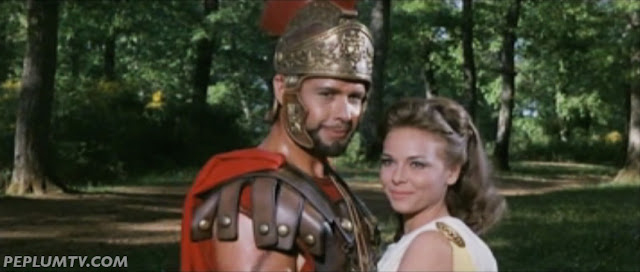
Roldano Lupi portrayed “Lars Porsenna”.
Massimo Serato portrayed “Lucius Tarquinius Superbus” the 7th and final “King of Rome”.
In this version after the Etruscan’s declare war on Rome, to regain their territory they lost in their first war with Rome. “Cleoia” is ““Gaius Mucius Scaevola‘s
fiancee, giving him more reason to hate “Lars Porsenna” with her his hostage.
“Scaevola” walks into the Etruscan’s and attempts to assassinate “Porsenna”, but instead is captured. “Lars” threatens torture, but to prove that will not work. “Gaius Mucius Scaevola” thrusts his right hand into a fiery brazer telling the other that there are more Roman soldiers that would do the same, torture does not work on them. As a result, along with learning how the Roman’s banished their last king, “Lucius Tarquinius Superbus”, and set up their “Roman Republic” with a Senate. “Lars Porsenna” releases the hostages and sues for peace.
Problem is the banish “Lucius Tarquinius Superbus” still wants a war as a means, in his mind, of regaining his throne. He makes an agreement with the
Etruscan army, and the Etruscan’s are overpowering the Roman Senate’s army. There is no strong commander, and they are failing without proper leadership. “Gaius Mucius Scaevola”, now realizes he must fight for Rome with his weak left hand, trains himself to use it, and leads the Roman army to victory over the “Etruscan” army under the banished King.
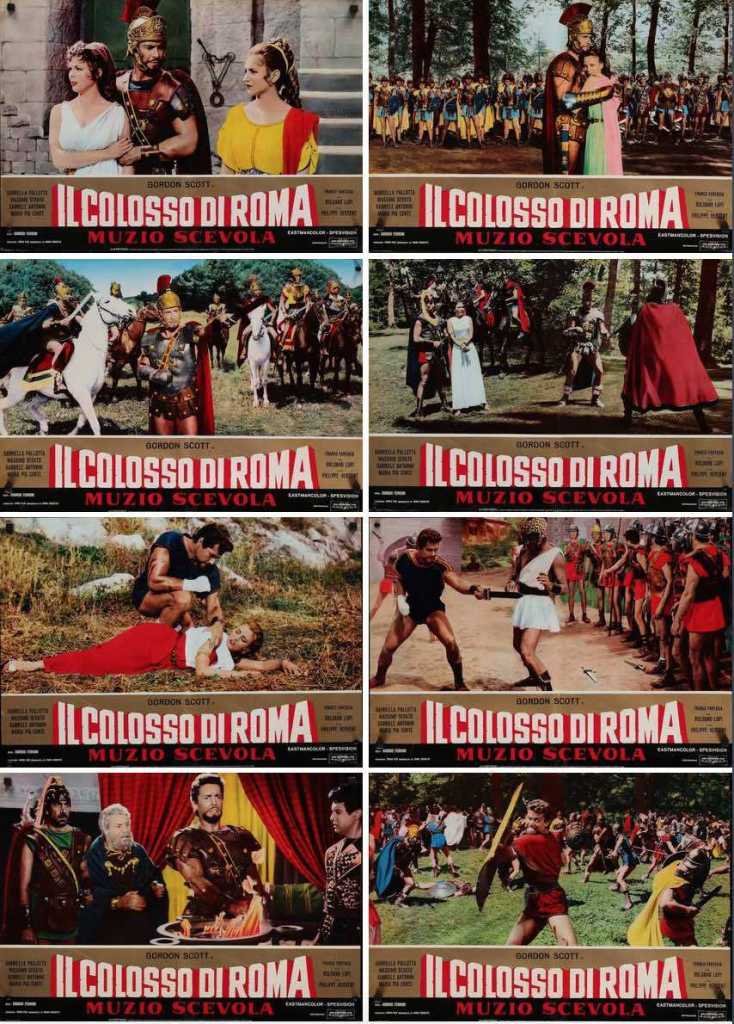
According to Latin historians, and writers like Dante Alighieri, and Leo Tolstoy. One portion of the tale about “Gaius Mucius Scaevola” and his right hand may be true. It is based upon written records of a scribe, that upon being taken to “Lars Porsenna”, the Roman soldier replied to questioning:
“I am a Roman Citizen, men call me Gaius Mucius. I came here as an enemy to kill my enemy, and I am as ready to die as I am to kill. We Romans act bravely and, when adversity strikes, we suffer bravely.” He also declared that he was the first of three hundred Roman youths to volunteer for the task of assassinating Porsena at the risk of losing their own lives.“
I now move to the “Second Punic War” and one name the proceeded a human cannibal name “Lecter”.
ANNIBALE (HANNIBAL) released on December 2,1 1959 in Italy
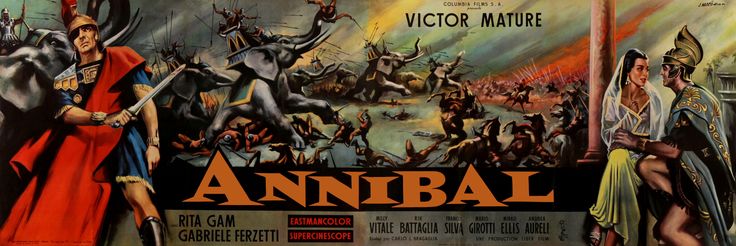
I start with a little word game, the official Italian cast listings show the original historical treatment used for this motion picture was researched by Alessandro Continenza. It was converted by Sandro Continenza. However, it appears that Alessandro and Sandro, are the same person.
That treatment was converted to a working story by Ottavio Poggi. The screenplay was written by American television writer, Mortimer Braus.
The motion picture was directed by Carlo Ludovico Bragaglia. He followed this motion picture by directing, 1960’s, “Gli amor di Ercole (The Loves of Hercules)”, starring Jayne Mansfield and her husband, Mickey Hargitay.
The English language version was Edgar G. Ulmer. Ulmer is remembered for directing the classic Boris Karloff and Bela Lugosi, 1934, “The Black Cat”.
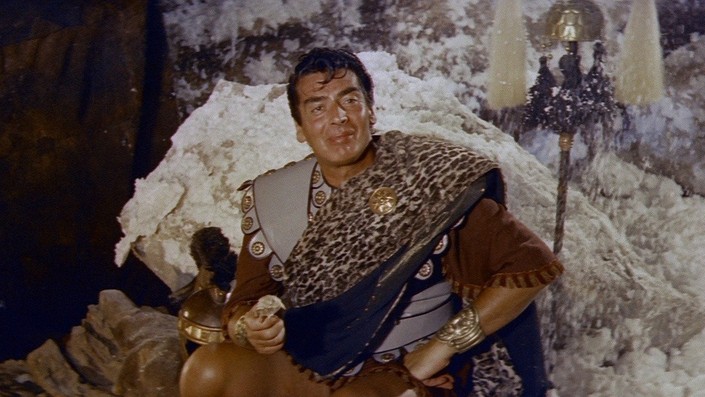
Victor Mature portrayed “Annibale (Hannibal)”. Mature had just been in producer Irwin Allen’s, 1959, “The Big Circus”. He would follow this feature with the “Peplum” entry, 1961’s, “The Tartars”, co-starring with Orson Welles. My article is “Victor Mature: ‘One Million B. C.’ to ‘The Big Circus’: The Leading Man As A Character Actor” for your reading at:
https://www.bewaretheblog.com/2020/06/victor-mature-one-million-bc-to-big.html
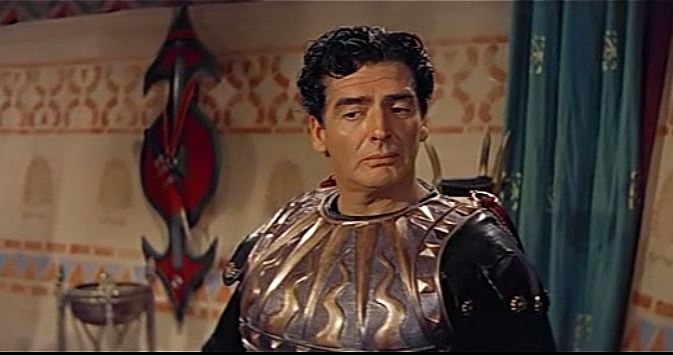
Gabriele Ferzetti portrayed “Quinto Fabio Massimo (Roman Senator Fabius Maximus)”. Ferzetti co-starred with Monica Vitti in director Michaelanglo Antonini’s ,1960, classic psychological drama, “L’avventura”.
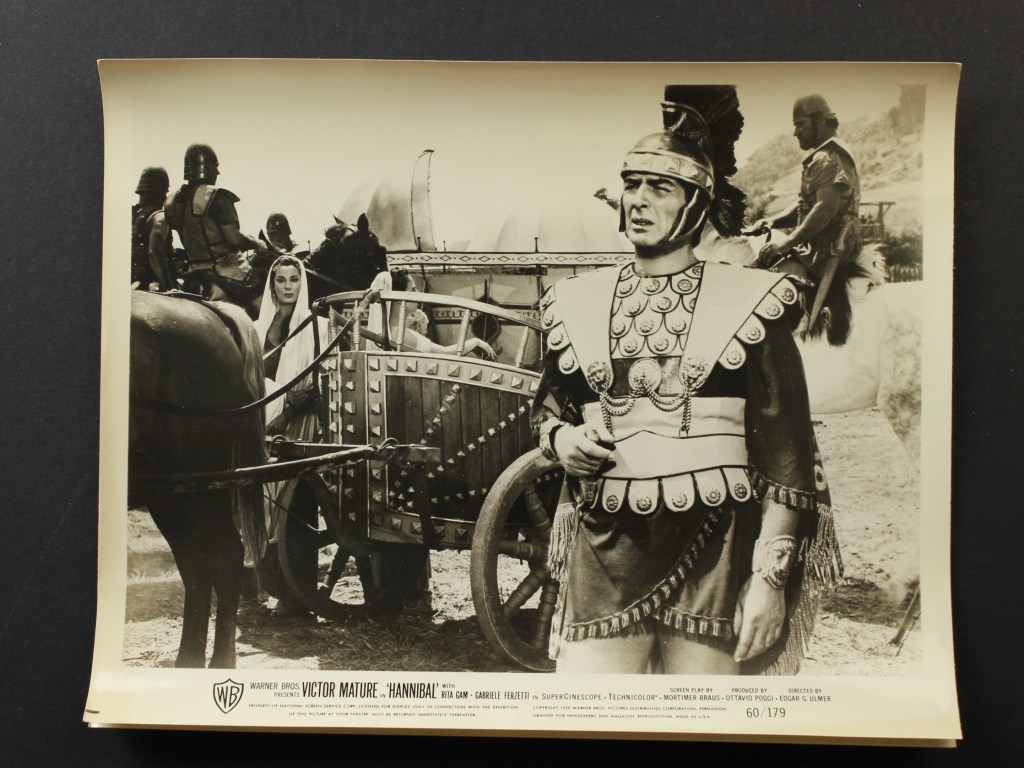
Rita Gam portrayed “Silvia”. American Gam in the past, had co-starred with Jack Palance, and Jeff Chandler, in “Universal Pictures” version of “Attila the Hun”, 1954’s, “The Sign of the Pagan”. She had just co-starred with Alberto Sordi in the 1959, Italia comedy, “Costa Azzurra”, and followed this film portraying “Herodias”, in director Nicholas Ray’s version of the “Life of Jesus”, 1961’s, “King of Kings”.
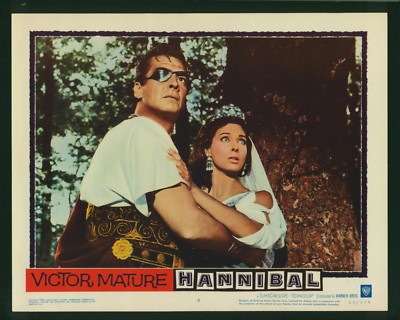
Two actors in this film are of interest to fans of “Spaghetti Westerns”.
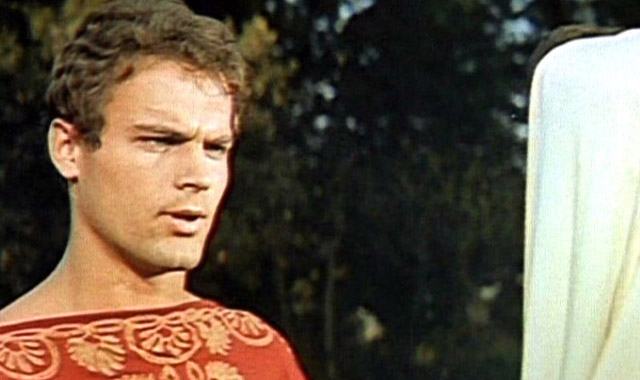
Mario Girotti portrayed “Quintillo”. When the Italian film industry switched from “Peplum” to their versions of American Westerns. Girotti changed his Italian name to an American sounding one and became Terence Hill.
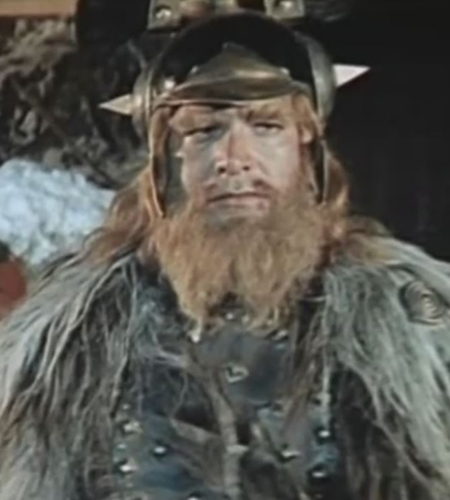
Carlo Pedersoli portrayed “Rutario”. When the Italian film industry made the switch of genre, he became “Bud Spencer”.
For those of my readers interested in the “Spaghetti Western”, way back in January 2015, one of my first very short articles was “American Western’s European Style”, found at:
https://www.bewaretheblog.com/2015/01/american-westerns-european-style.html
The Screenplay:
Historical footnote:
The motion picture opens with “Carthaginian General Hannibal” crossing the Alps. The way Rome was set up, the Roman’s believed there was no way a foreign enemy could attack it, without the city and army having days to prepare a defense. However, there actually was a way, the back door so-to-speak. No one in Italy thought that would ever happen, but the film opens with “Hannibal” leading his army across the Alps from France. The exact passage he took, is still debatable, but the feat is considered one of the greatest military movements in ancient history.
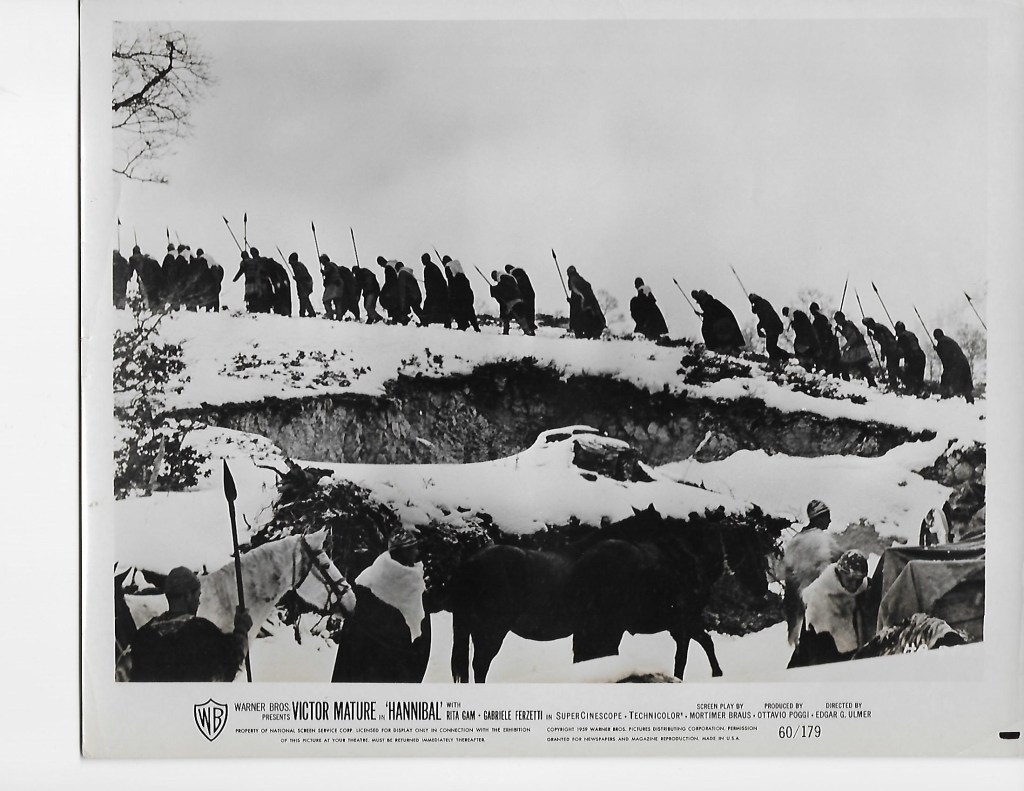
The Roman Senate is debating their options, IF “Hannibal” actually makes it into Northern Italy. Within the Alps the Carthaginian General loosing both men, elephants and supplies. However, he is approached by a local chieftain and a allegiance between the two is formed and the impossible crossing is concluded.
Once in Italy, “Hannibal” is able to capture “Sylvia”, the niece of “Roman Senator Fabius Maximus“.
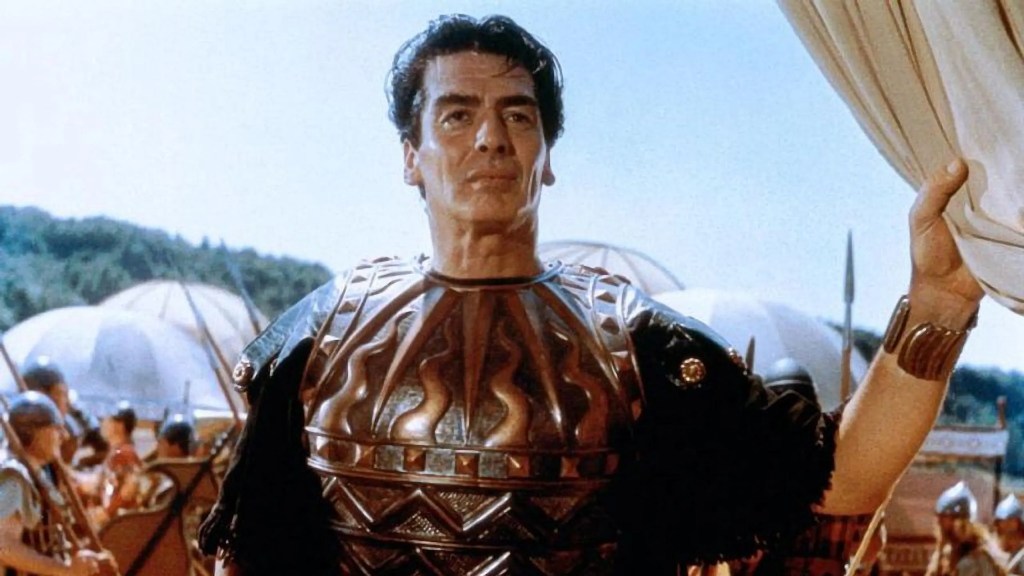
“Sylvia” and “Hannibal” fall in love, but some of his troops dislike this possible match and a failed attempt of her life is made. A battle with Roman troops takes place and “Hannibal” looses one of his eyes, but the Roman’s are no match for the Carthaginians.
Enter, “Fabius Maximus”, who warns the Roman Senate that the only way to beat “Hannibal” is with a war of attrition. Which is not the Roman way of fighting, and instead, the Roman Army meets “Hannibal’s Carthaginians” at Cannae. The outcome is the vastly superior and large Roman army suffers a major defeat.
“Fabius” is recalled to lead the Roman army and his tactics begin to slow down “Hannibal”. Meanwhile, “Hannibal’s” wife and child arrive, while “Silvia” returns to Rome and commits suicide.
The screenplay stops at this point as “Hannibal” is faced with defeat. The postscript tells the audience that “Hannibal” moved away from Italy and continued to battle throughout Europe.
Historical Footnote:
“Fabius Maximus” never had a daughter, he has a son, “Quintus Fabius Maximus”
“Hannibal Barca’s”, his proper name, wife was named “Imilce”, or possibly “Himilce”, and was an Iberian woman. There is no confirmation of actually having a child, but possibly a son named “Haspar”.
In 1954 Hollywood movie studios were running away from “The House Committee on American Activities”, see my linked article on “McCarthyism”. Which were looking for alleged Communists within the motion picture industry. Causing the movie studio heads, afraid of backlash from Congress, to blindly “Blacklist” anyone under investigation.
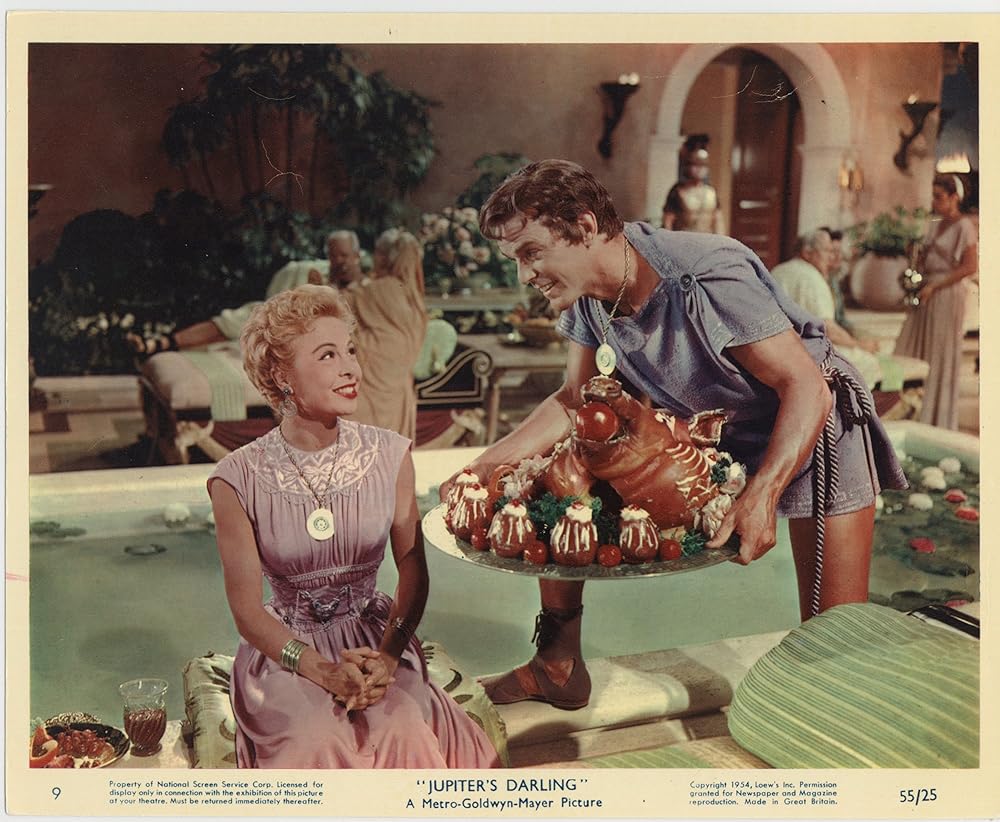
Three major film genres were considered “Safe”, and ruled the first half of the “Eisenhower Years”. These were Musicals, Westerns, and Biblical stories. Which brings me to “Metro-Goldwyn-Mayer” turning out musicals over any other genre. So, it was natural that they would look to the story of “Hannibal”. The motion picture was “Jupiter’s Darling”, starring swimming star, Esther Williams as “Amities”, Howard Keel as “Hannibal”, and George Sanders as “Fabius Maximus”.
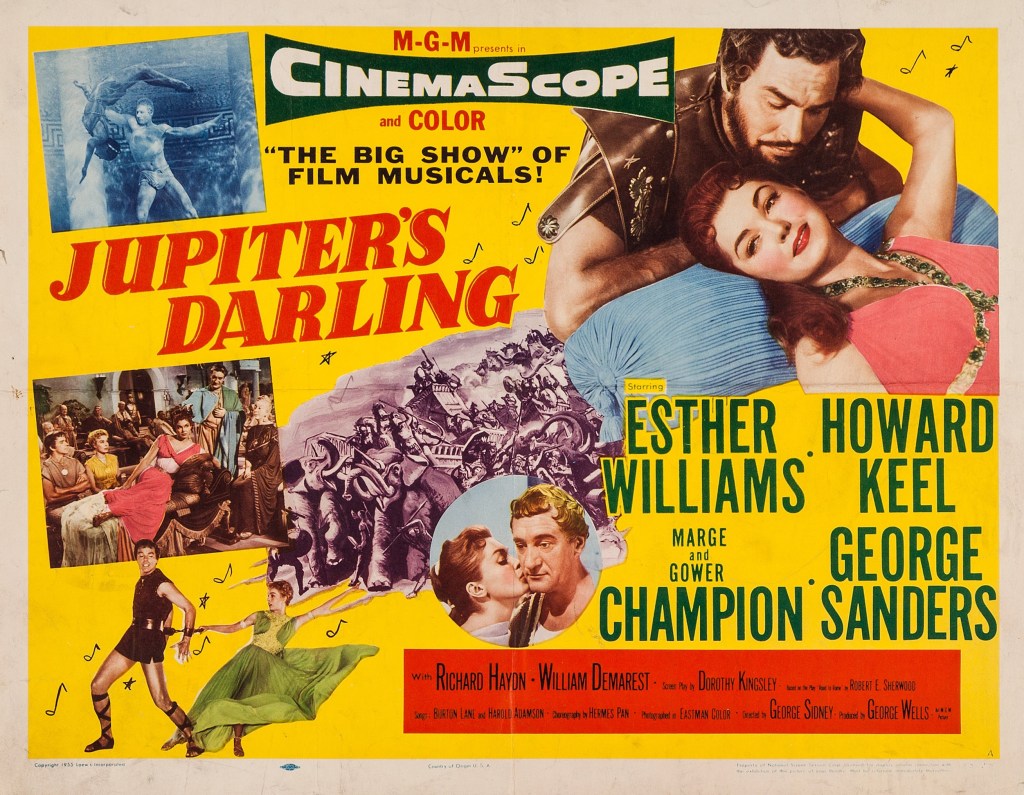
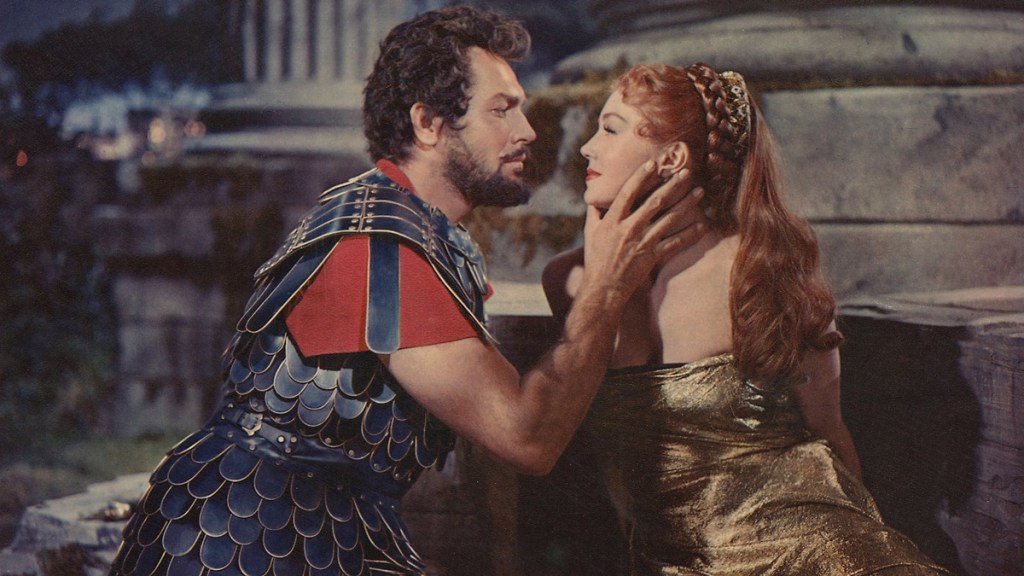
Below, “Hannibal”, Howard Keel, sings “Hannibal’s Victory March”, with his army (chorus).
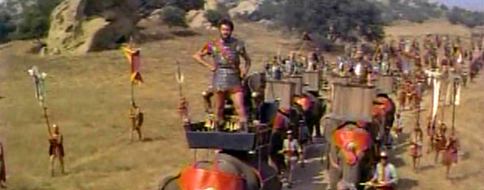
In all, there were 7-songs, including “If This Be Slav’ry”, sung and danced by husband and wife team, Marge and Gower Champion.
Returning to a more serious (?) motion pictures from the “Third Punic War”
Between 135 B. C. and 100 B. C. in Sicily, were two slave revolts. The 1st Servile (Slave) War, was from 135 to 132 B. C. The 2nd Servile (Slave) War was from 104 to 100 B. C. I could not locate any motion picture’s about these periods of Roman History.
However, there was the 3rd Serville (Slave) War from 73 to 71 B. C.
SPARTICUS premiered at the “Cecil B. DeMille Theatre” in New York City on October 6, 1960
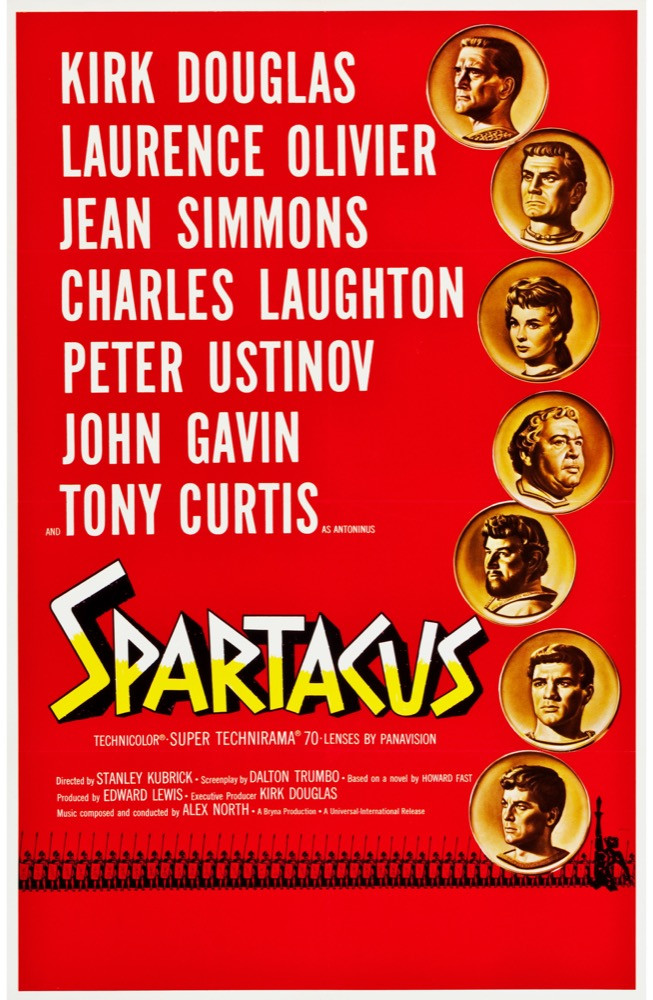
In 1951, American novelist, Howard Melvin Fast, published his novel “Spartacus”. In 1943, Fast joined the “Communist Party USA (aka: CPUSA)”. In 1950 he was called before the “House Committee on Un-American Activities”, and refused to give them the names of contributors to a fund for Orphans of American Veterans. Who had fought on the Communist side ,during the “Spanish Civil War”. Howard Fast was given a three-month prison sentence for contempt of Congress.
Side Note #1: One of the major contributors to that orphan’s home was Eleanor Roosevelt.
The screenplay was written by Dalton Trumbo. In 1947, “CPUSA” member Trumbo had refused to name names for the “House Committee on Un-American Activities”. He became a member of the “Hollywood Ten”! All were members of the American motion picture industry, who had refused to name names. Academy Award winner, Dalton Trumbo was “Blacklisted”, he went to the United Kingdom and worked there. It was producer and star Kirk Douglas that broke Trumbo’s “Blacklisting” by giving him full on-screen writing credit for this motion picture. At the same time, producer/director Otto Preminger joined Douglas, giving Dalton Trumbo full on-screen writing credit for 1960’s, “Exodus”.
Stanley Kubrick directed “Spartacus”. He had first directed Kirk Douglas, just prior to this picture, in 1957’s, anti-war, “Path’s of Glory”. The film was set in France during the First World War and based upon a true incident. In which a French General made an error that cost many French soldiers their lives, but instead of charging the General. Who wanted to charge 100-French soldiers with cowardice to cover himself. The French Officer corps to protect their own. Has a small group chosen and Douglas, both a French officer and lawyer. must defend them, with the outcome preordained.
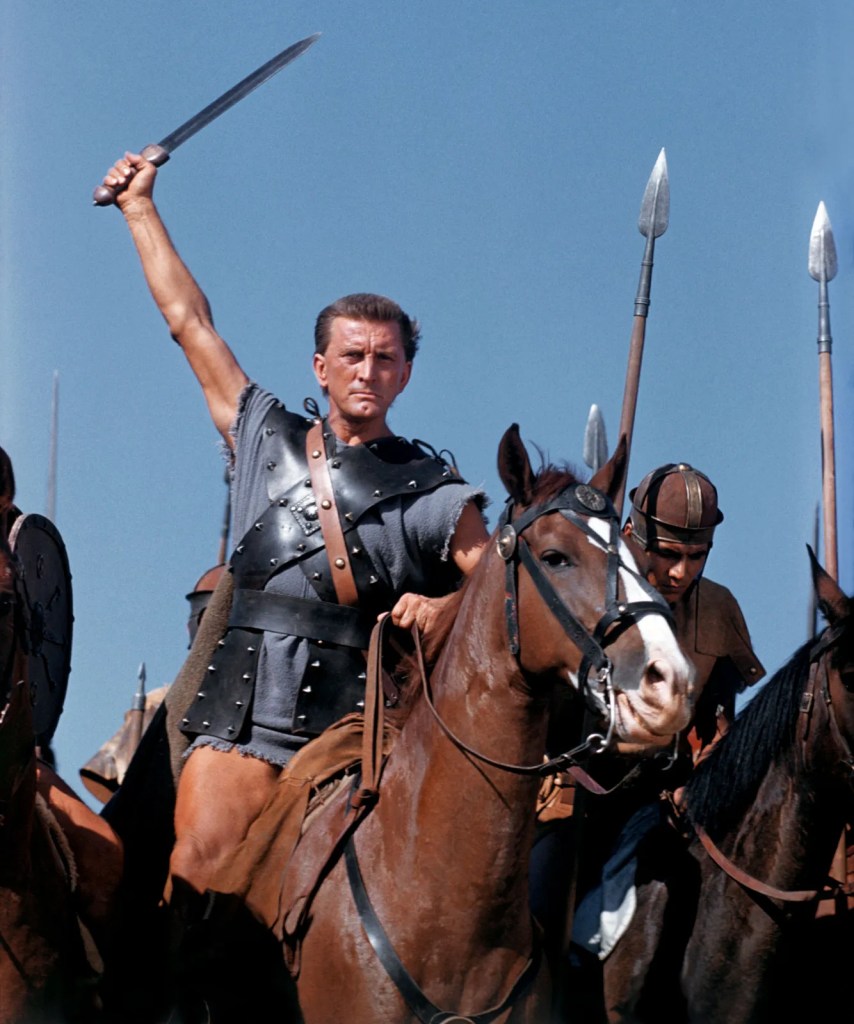
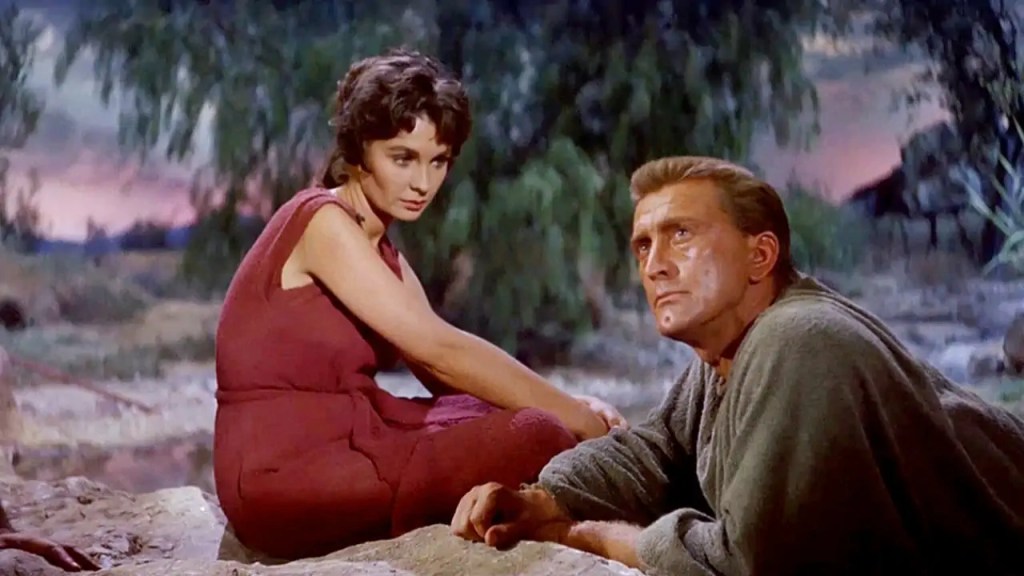
Kirk Douglas portrayed “Spartacus”. Douglas had just co-starred with Kim Novak in 1960’s, “Strangers When We Meet”. He followed this picture with 1961’s, “Town Without Pity”. My article is “Kirk Douglas: Twelve 1947 – 1964” found at:
https://www.bewaretheblog.com/2025/09/kirk-douglas-twelve-1947-1964.ht
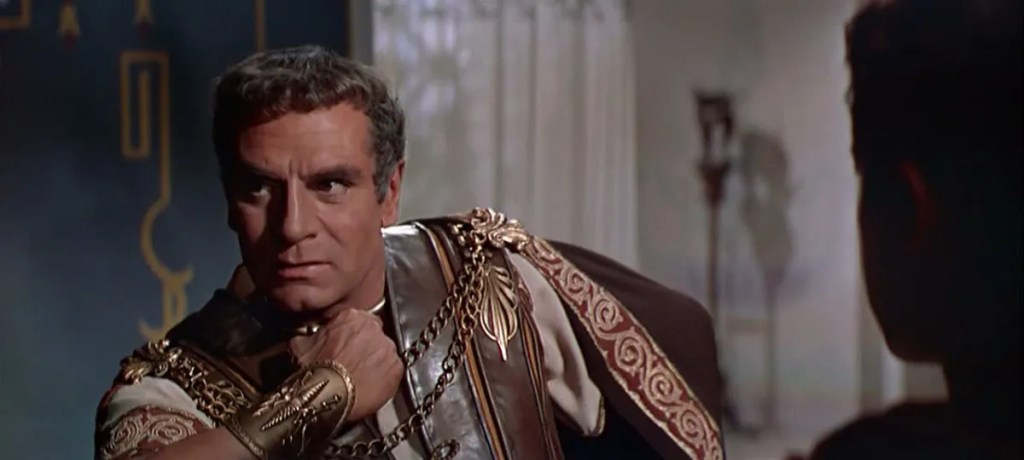
Sir Laurence Olivier portrayed “Senator Marcus Licinius Crassus”. Olivier had just been seen in 1960’s, “The Entertainer”, and followed this picture with 1961’s, “The Power and the Glory”.
Jean Simmons portrayed “Varinia”. Simmons had co-starred with Burt Lancaster in 1960’s, “Elmer Gantry”. She next co-starred with Cary Grant, Deborah Kerr, and Robert Mitchum, in 1960’s, “The Grass Is Greener”.
Charles Laughton portrayed “Senator Gracchus”. Laughton had just been seen with Van Heflin in an Italian Second World War film based upon a true incident, 1960’s, “Sotto dieci bandier (Under Ten Flags)”. The actor next appeared on television’s “Wagon Train”, in the episode, “The Albert Farnsworth Story”, October 12, 1960.
John Gavin portrayed the young “Julius Caesar”. Gavin had just been seen in director Alfred Hitchcock’s, 1960, “Psycho”. He followed this film co-starring with Doris Day and Rex Harrison in 1960’s, “Midnight Lace”.
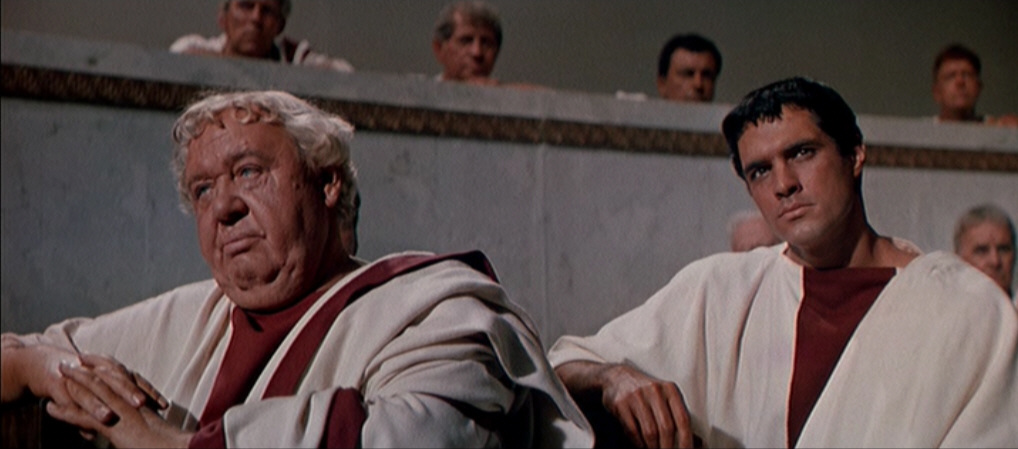
Above left, Charles Laughton, right, John Gavin
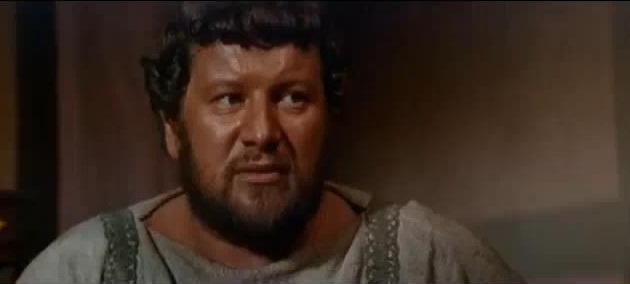
Peter Ustinov portrayed “Lentulus Batiatus”. Ustinov followed this feature film by co-starring with Deborah Kerr and Robert Mitchum in 1960’s, “The Sundowners”.
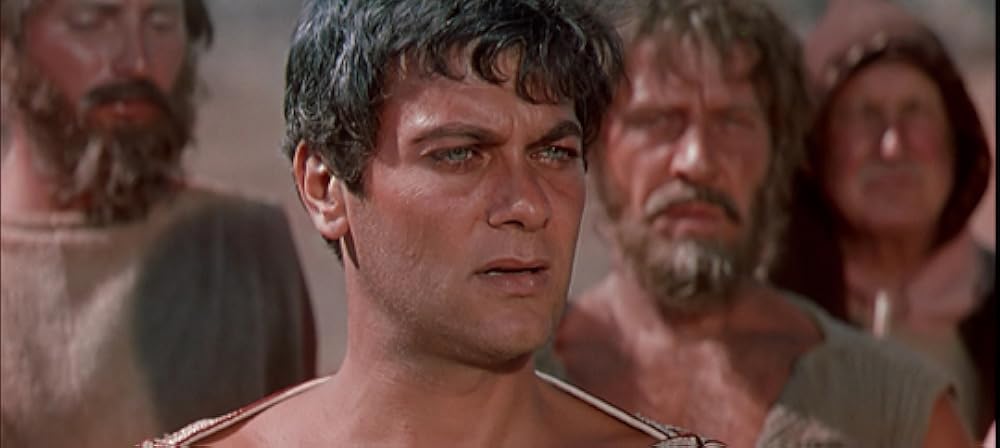
Tony Curtis portrayed “Antoninus”. Curtis had just co-starred with Debbie Reynolds in 1960’s, “The Rat Race”, and followed this movie with 1960’s, “The Great Impostor”. My article is “Tony Curtis and Janet Leigh: Their 5-Motion Picture Together With 2-Interludes” to be read at:
https://www.bewaretheblog.com/2022/03/tony-curtis-and-janet-leigh-their-5.html
The story opens with the punishment of a Thracian slave named “Spartacus” and is to be put to death. Along comes gladiator school owner, “Lentulus Batiatus”, is impressed by the slaves actions and purchases him to be trained as a gladiator.
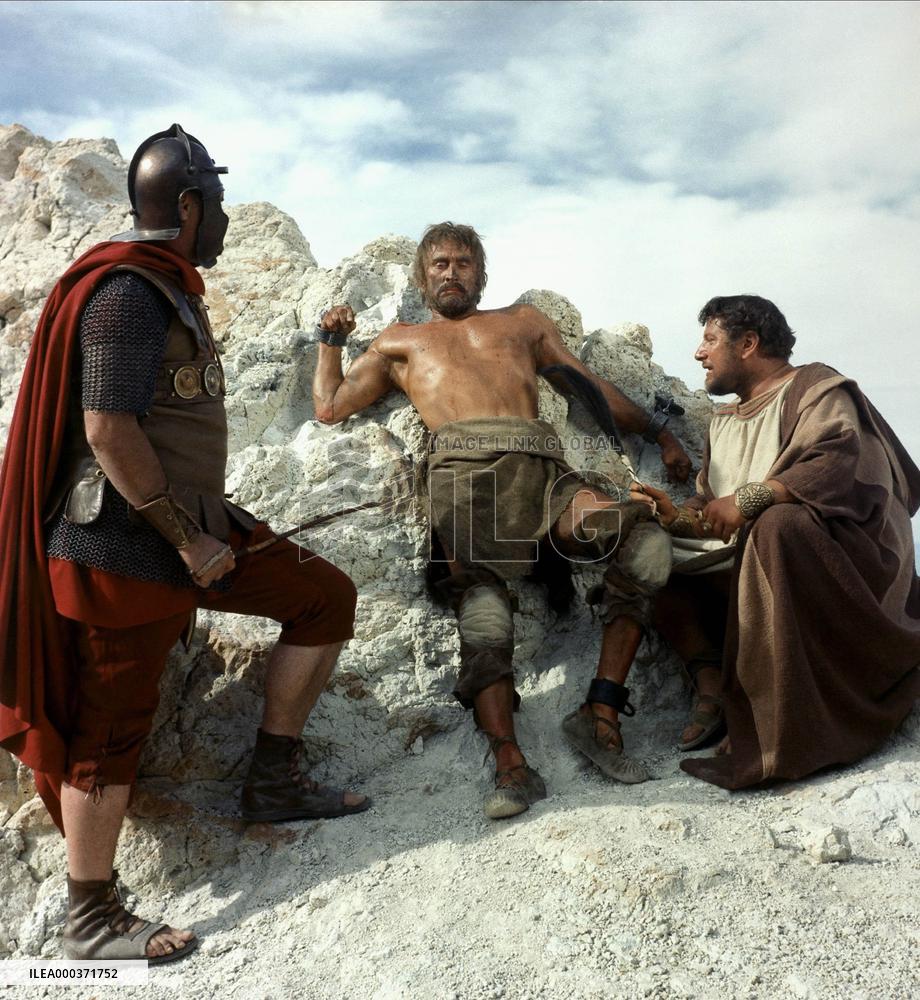
Note: Greek historians Plutarch and Appian write that “Spartacus” had been a Roman soldier and did something that enslaved him and he was sent to Gladiator school as a result with other collected by “Batiatus”.
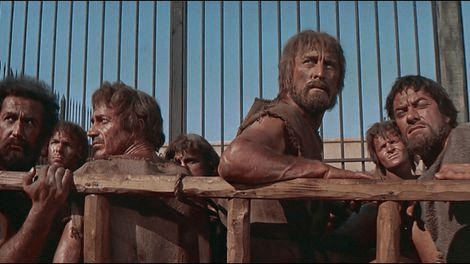
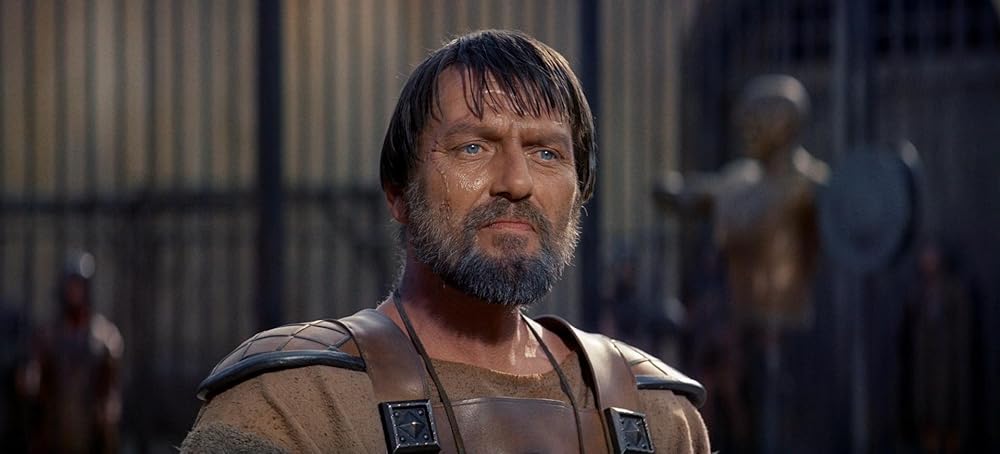
“Batiatus” tells his gladiator trainer, “Marcellus“, portrayed by Charles McGraw, not to over due the training of “Spartacus”, as he has quality. However, “Marcellus” has a cruel streak and uses it within the limits “Batiatus” has put on “Spartacus”.
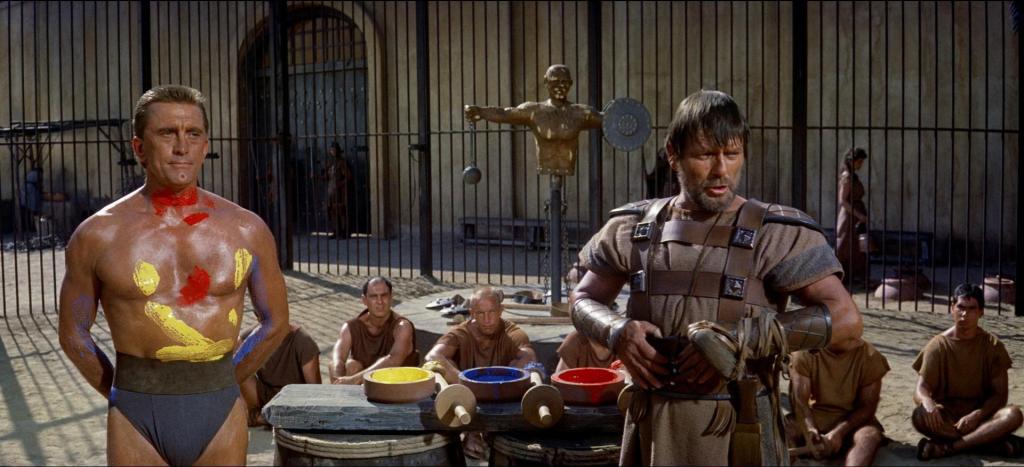
As his gladiatorial training goes, “Spartacus” is given a serving woman, “Varina”, sent to “Entertain” him. However, he does not touch her and the two develop a love for each other, but “Marcellus” uses this to get at “Spartacus”. When “Spartacus” is to have “Varina” in his cell for the night, “Marcellus” sends “Varina” to another gladiator and no woman comes to the other.
Next, “Senator Marcus Licinius Crassus” arrives with his guests, “Helena Glabus”, portrayed by Nina Foch, her husband, “Marcus Publius Glabus”, portrayed by John Dall, and “Claudia Marius”, portrayed by Joanna Barnes. They want to see a gladiator duel to the death, but “Lentulus Batiatus”, tries to talk them out of it. However, as Roman records actually indicate, not only did “Crassus” want to become dictator, he was also the riches Roman at the time. Next, “Helena” and “Claudia” now go to pick out the gladiators.
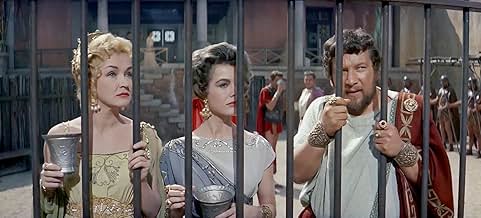
Above left to right, Nina Foch, Joanna Barner, and Peter Ustinov, at one of the slave cages as the women pick the three gladiators to fight to the death, one being “Spartacus”
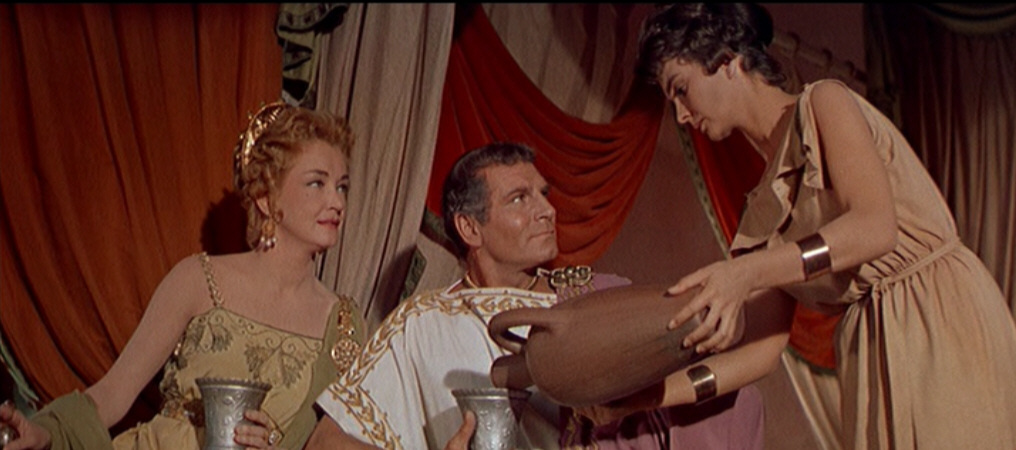
After returning to their sears, “Varina” waits on them, and “Crassus” will buy her from “Batiatus”.
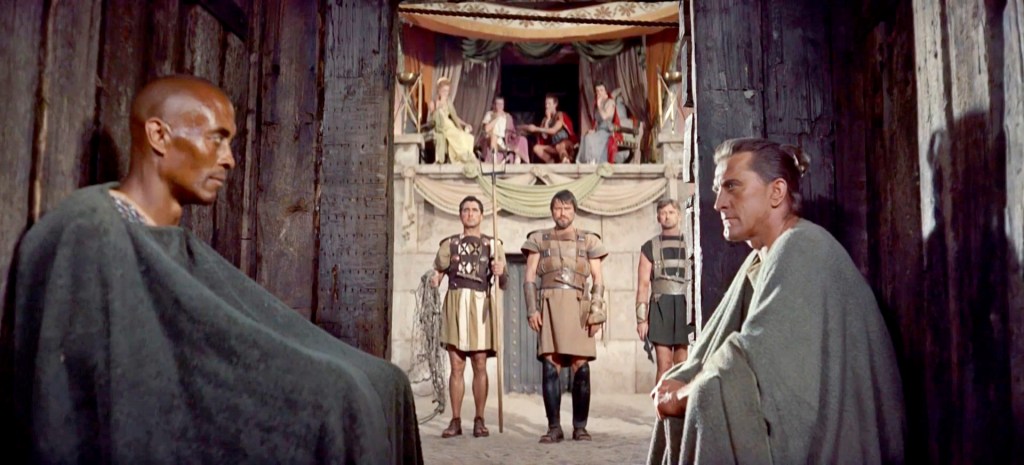
Above left, Woody Strode portraying “Draba”, awaits with Kirk Douglas to be called by “Marcellus” to the arena. Strode was both a UCLA and Rams Football star, and a member of director John Ford’s stock company. My article is “Woody Strode and Michael Pate: Western Stalwarts”, found at:
https://www.bewaretheblog.com/2015/03/woody-strode-and-michael-pate-one.html
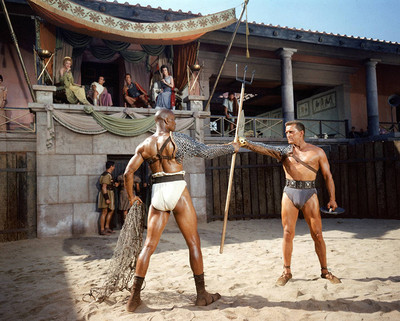
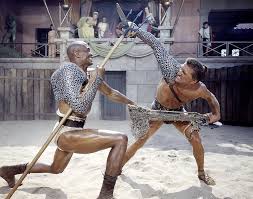
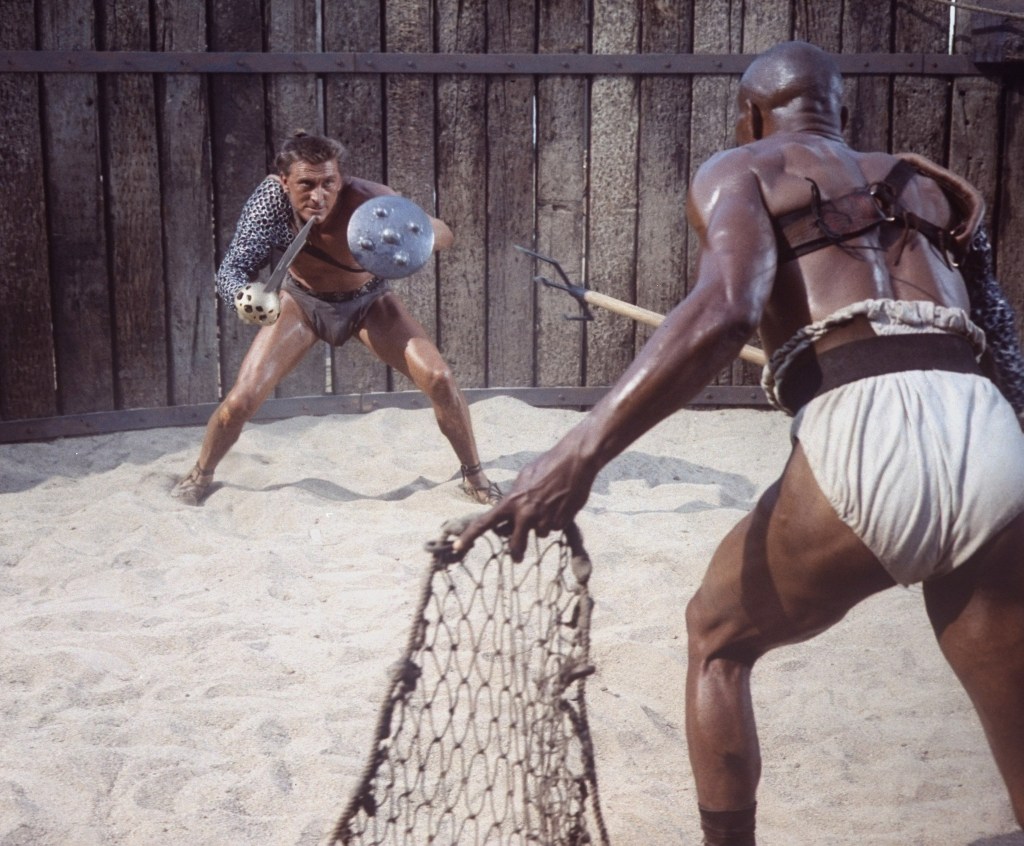
“Draba” has “Spartacus” pinned down and should give him the killing movement of his spear, but instead. “Draba”, who has befriended “Spartacus”, and honors the role of a gladiator, turns and jumps up to the viewing seats. There he attempts to kill “Crassus”, but instead, it is “Draba” who dies. His death starts “Spartacus” thinking more of freedom and escape.
The following day, “Batiatus” leaves with “Varnia” for the estates of “Senator Crassus”. While back at the gladiator school, “Marcellus” makes the mistake of taunting “Spartacus” about both “Varnia” and “Draba”. “Spartacus” now kills “Marcellus”, opens the gladiator cages and the “THIRD SEVILLE WAR” begins.
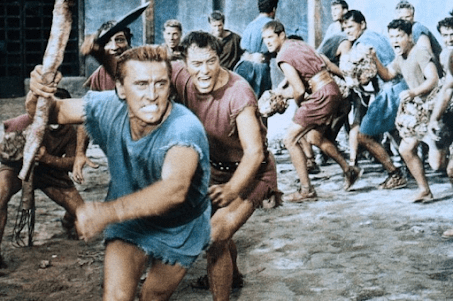
Among the growing army of “Spartacus” was “Crixus”, portrayed by John Ireland. “Crixus” was one the military leaders of the escape slaves and others that joined the war against Rome. In many reports, it is written that he may have been a better leader than “Spartacus”, but both shared that responsibility in real life, according to the Greek Historians. My article is “John Ireland: Westerns, Film-Noirs, A Little McCarthyism, and a Few Affairs” to read at:
https://www.bewaretheblog.com/2020/12/john-ireland-westerns-film-noirs-little.html
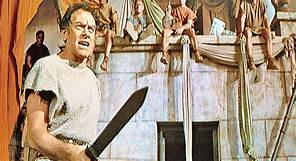
As “Spartacus” moves forward toward freedom and his followers returning home, two things take place.
First, in one group of new followers are “Varina”, reunited with her love and the future mother of his son.
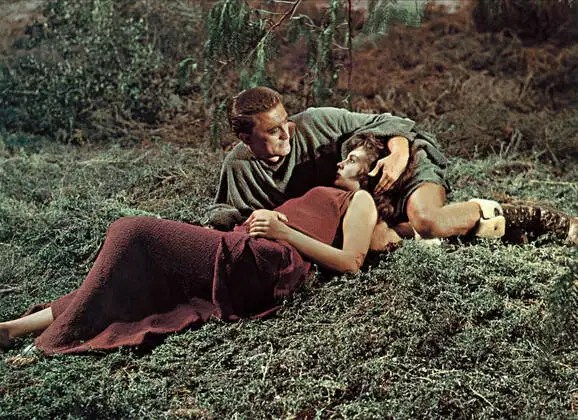
Along with a gentle young man “Antoninus”, a poet, and teller of stories, who was used by “Crassus” for his own pleasure.
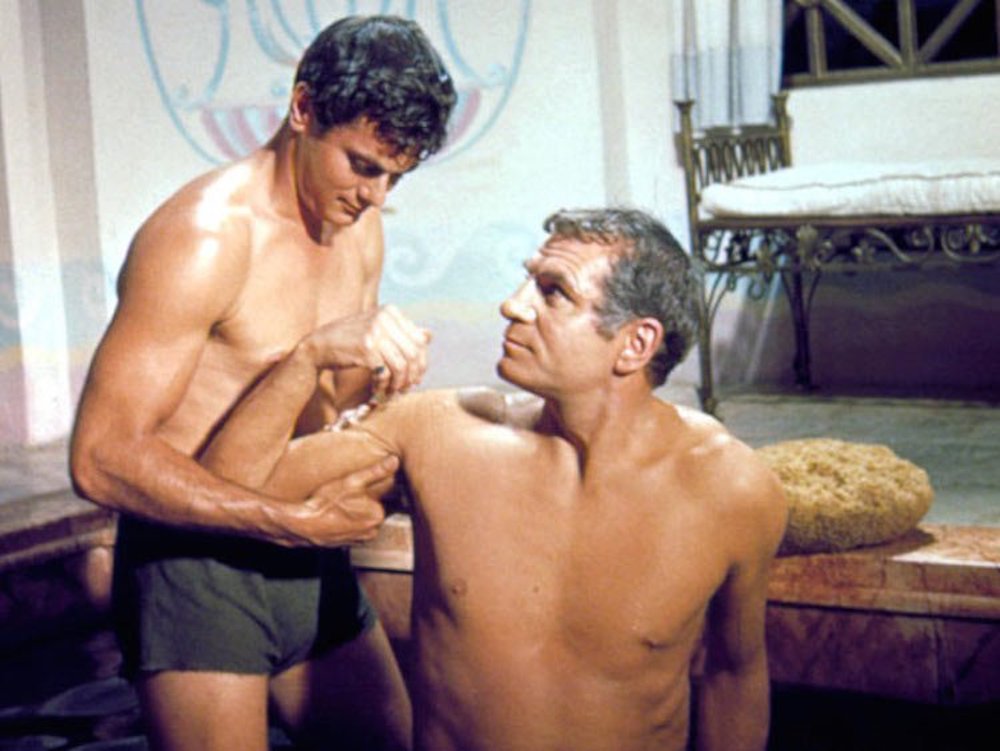
Second, in the Roman Senate, there is a battle of wills between “Senator Crassus” and “Senator Gracchus”, both wants full control, but for different motives. Their battle on the Senate floor is how to handle the slave rebellion and what it is doing to Rome.
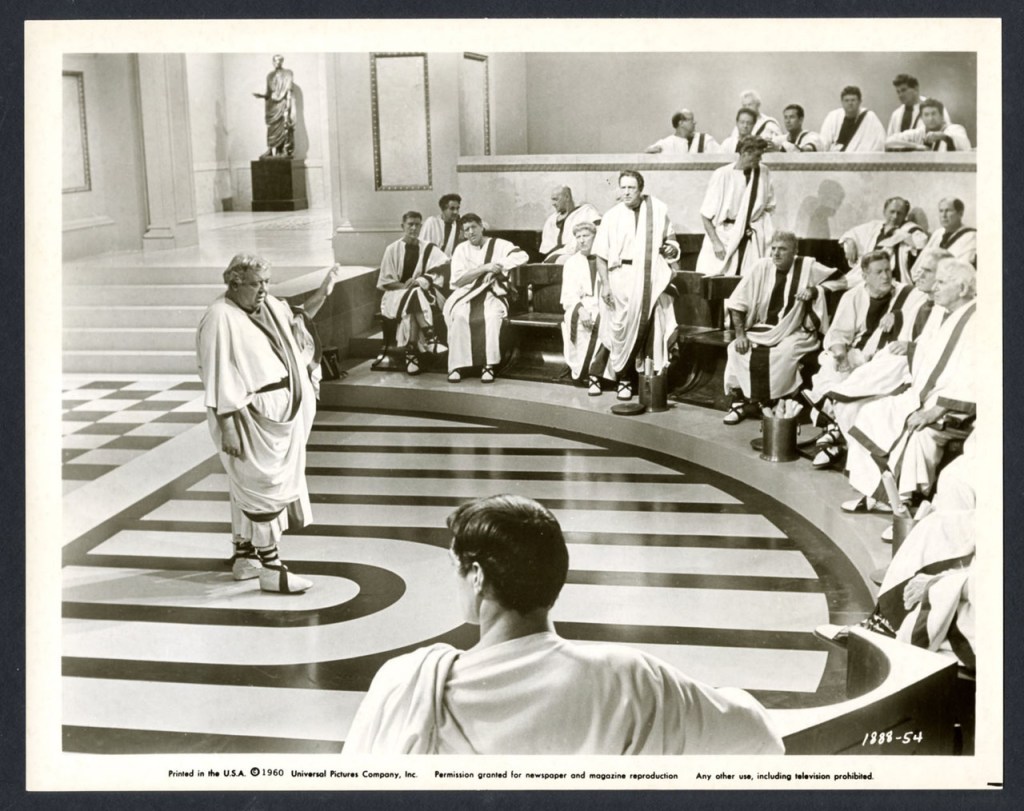
Young “Senator Julius Caesar” has been a supporter of “Gracchus”, his mentor, who has been giving him command of an ever growing Roman army, but they are unable to stop “Spartacus”. Next, “Gracchus” reveals to “Caesar” that he has bribed the “Cilician Pirates” of “Tigranes Levantus”, portrayed by Herbert Lom, to get “Spartacus” and the slave army out of Italy. “Julius Caesar” feels this is below him as a soldier of Rome and goes over to “Crassus”. Who convinces the Senate to give him supreme command of the armies of Rome. He now uses “Gracchus’s” weapon and bribes the pirates to abandon the slaves. While he has the Roman army pushing the slave army away from the coast line toward Rome. As panic, created for his use by “Crassus”, runs through Rome itself.
“Spartacus” finds his followers surrounded by the Roman army and asks them to die fighting. Adding that even if all of them have died, they have struck a blow against slavery. “Crassus” lets loose the army and most of the slave army are killed in what is nothing short of a massacre.
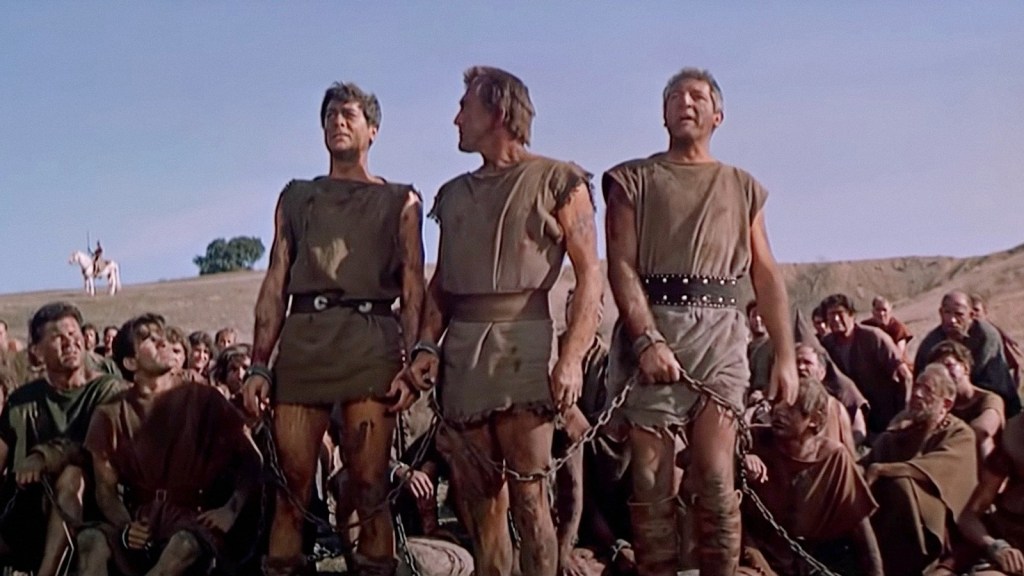
Above the survivors of the battle stand together, as Roman soldiers search for the leader of the revolt, that none of them has ever seen. “Crassus” offers them “FREEDOM”, if they identify the body of “Spartacus”. “Freedom” to “Senator Marcus Licinius Crassus” is a return to slavery, but they’ll be alive.
Suddenly, someone in the group shouts out:”
“I’M SPARTACUS!”, next ever man is saying the same thing and “Crassus” sentences them all to death by crucification.
Meanwhile, “Senator Gracchus” bribes “Lentulus Batiatus” to find “Varina” and “Spartacus’s” baby son and bring them to him. There, he further bribes “Batiatus” to take “Varina” and the baby to safety far away from Rome and Italy. After they leave, he commits suicide,
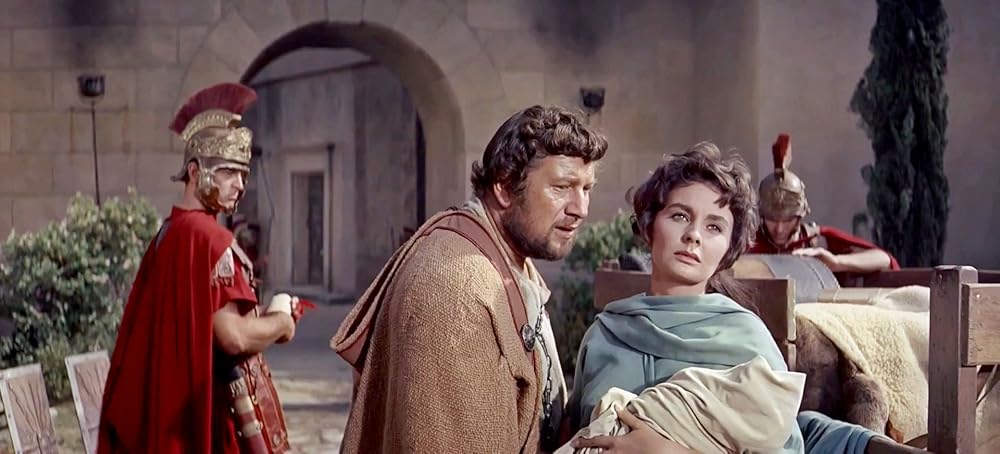
At the end, ‘Varina” shows “Spartacus” his son.
Side Note #2: According to Plutarch, Appian, and the Roman historian, Florus, “Spartacus” died during the battle. Appian claimed the body was never found. The troops of “Senator Marcus Licinius Crassus” rounded up Six-thousand survivors of the followers of “Spartacus” and “Crixus”. All were crucified and lined the Appian Way for 100-miles, from Capua, the location of the gladiator school, to Rome.
Accordion to British historian and novelist, Adrian Keith Goldsworthy, in either his 2003, “In the Name of Rome: the men won the Roman Empire”, and his, 2006, “Caesar: Life of a Colossus”. Julius Caesar’s family claimed to have immigrated to Rome from Alba Longa and was descendant from “Aeneas”‘ Given the legendary fact the “Aeneas” was descended from the “Goddess Venus”, Caesar’s family was divine.
Moving forward from the story of “Spartacus”. Julius Caesar , was able to form a three-way alliance between two enemies, “Marcus Licinius Crassus”, and, “Gnaeus Pompeius (Pompey) Magnus”, and himself. This became the “First Ruling Triumvirate of Rome”.
In 49 B. C., Gaius Julius Caesar, for the first time, became “Dictator of Rome”. He would take on that title three more times. His last dictatorship started in February 44 B.C. When he proclaims himself “DICTATOR FOR LIFE!”, but then he met a woman from Egypt!
The following has been modified from my article “CLEOPATRA On Celluloid: Claudette Colbert, Vivian Leigh, Rhonda Fleming, Sophia Loren, and Elizabeth Taylor” at:
https://www.bewaretheblog.com/2022/04/cleopatra-on-celluloid-claudette.html
CLEOPATRA premiered in New York City on August 16, 1934
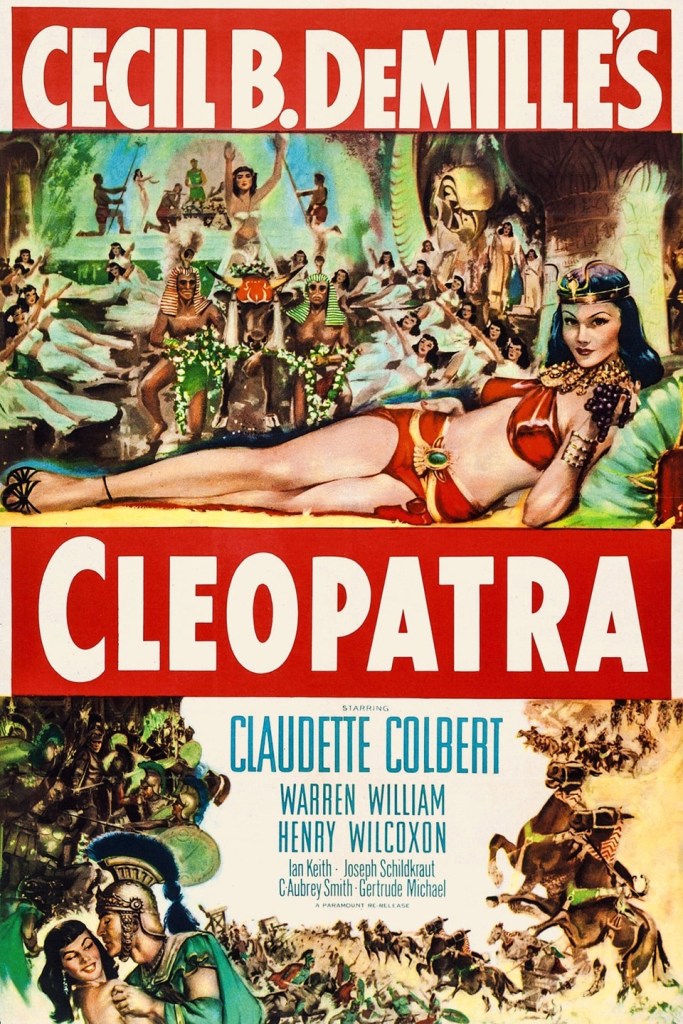
The motion picture was produced and directed by Cecil B. DeMille. My article is “Cecil B. DeMille: December 1913 to December 1923″ at:
https://www.bewaretheblog.com/2024/07/cecil-b-demille-december-1913-to.html
In typical DeMille style, the motion pictures writing credits are very interesting.
First, there is credit given to the Greek Middle Platonist philosopher, historian, biographer, and essayist, Lucius Mestrius Plutarchus, more simply known as Plutarch, for his biography, “Life of Caesar”.
Bartlett Cormack wrote the initial story for the motion picture. He is credited with using “historical material”, but what that “historical material” is, other than Plutarch’s book, I could not locate.
The actual screenplay was written by two writers:
Waldemar Young started screenplay writing in 1917. Among his work are four silent films by director Tod Browning starring Lon Chaney, Sr., 1925’s “The Unholy Three”, 1927’s “The Unknown” co-starring Joan Crawford, 1927’s “London After Midnight”, and 1928’s “West of Zanzibar” co-starring Lionel Barrymore. For Cecil B. DeMille, Young co-wrote 1932’s “The Sign of the Cross”, and 1935’s “The Crusades”.
Vincent Lawrence started his screenplay writing career in 1924. Most of his work before “Cleopatra”, were musicals for Maurice Chevalier. However, in 1938, Lawrence co-wrote the screenplay for “Test Pilot” starring Clark Gable, Myrna Loy, and Spencer Tracy. The following year he was an uncredited contributor to the screenplay for 1939’s “Gunga Din” starring Cary Grant, Victor McLagen, and Douglas Fairbanks, Jr.
The Three Leads and Two Main Supporting Players:
Claudette Colbert portrayed “Cleopatra”. Colbert bookended this motion picture with the release of director Frank Capra’s 1934, “It Happened One Night”, co-starring with Clark Gable, and followed this feature with the 1934 version of authoress Fannie Hurst’s “Imitation of Life”, with her “Cleopatra” co-star Warren William.

Warren William portrayed “Gaius Julius Caesar”. William was appearing in two film series, he was both Erle Stanley Gardner’s lawyer, “Perry Mason”, and, S.S. Van Dine’s detective, “Philo Vance”. Warren William had bookended this feature first as “Perry Mason” in 1934’s “The Case of the Howling Dog”, and followed with the previously mention 1934 “Imitation of Life”.

Henry Wilcoxon portrayed “Marcus Antonius aka:Marc Anthony”. Wilcoxon started on-screen acting in 1931, and besides this picture. The actor was in Cecil B. DeMille’s, 1935 “The Crusades”, 1947’s “Unconquered”, 1949’s “Samson and Delilah”, 1952’s “The Greatest Show on Earth”, and 1956’s “The Ten Commandments”.

Joseph Schildkraut portrayed “King Herod”. Schildkraut started acting in the Austrian-Hungary film industry in 1915. Over his career the actor would portray “Judas Iscariot” in Cecil B. DeMille’s 1927 silent classic, “King of Kings”, that starred H.B. Warner as “Jesus”. In 1929, he portrayed “Gaylord Ravenal” in the hybrid part silent, part talkie, version of Jerome Kern and Oscar Hammerstein II’s “Show Boat”, and he also appeared in DeMille’s 1935 “The Crusades”. In 1959, Joseph Schildkraut portrayed “Otto Frank” in director George Stevens production of “The Diary of Anne Frank”.

Above, Henry Wilcoxon with Joseph Schildkraut.
Ian Keith portrayed “Octavian aka: Caesar Augustus”. Keith started his on-screen work in 1924. In 1930, he portrayed “John Wilkes Booth” in director D.W. Griffith’s “Abraham Lincoln” starring Walter Huston. The same year, Ian Keith was in director “One-Eyed” Raul Walsh’s “The Big Trail”, the first movie with an actor now named John Wayne. For DeMille, Keith was in 1932’s “Sign of the Cross”, 1935’s “The Crusades”, 1938’s “The Buccaneer”, and 1956’s “The Ten Commandments”.

The opening credits shows what appears to be a naked slave woman surrounded by dark shadows.

An Overview of the Screenplay:
It is 48 BC and “Cleopatra” and her brother “Ptolemy XIII Theos Philopator”, there is no actor listed in this role, are politically battling for control of Egypt. “Pothinos, Ptolemy’s Regent”, played by Leonard Mudie, kidnaps “Cleopatra” and her loyal follower “Apollodorus the Sicilian”, portrayed by Irving Pichel, and takes the pair to the desert to die of thirst.


Above, Leonard Mudie and Claudette Colbert.
“Pothinos” next informs “Julius Caesar” that “Queen Cleopatra” has fled Egypt. He convinces the Roman General to sign an agreement with “Ptolemy” for joint control of the country, but in walks “Apollodorus” with a rug as a gift for “Caesar”. When the rug is unrolled, there is “Cleopatra”, forcing “Pothinos” to try and explain his false words, by denying that the woman in the rug is “Cleopatra”.


However, “Caesar” sees through the deception and rips up the agreement. Next, apparently alone in “Caesar’s” quarters, “Cleopatra” continues to entice him with plans of jointly conquering India for that country’s riches. Continuing to use her charms upon the married Roman, as they talk, “Cleopatra” spots a pair of sandals from behind a curtain. She slowly moves into position, picking up a spear during the conversation, and kills a man holding a knife, “Pothinos”.

“Gaius Julius Caesar” banishes “Ptolemy”, makes “QUEEN, Cleopatra” the sole ruler of Egypt, and begins an affair with her.


“Julius Caesar” returns to Rome with “Queen Cleopatra”. She rides into the city upon a golden throne lifted by slaves and the citizens cheer her.


However, there is a concern by members of the Roman Senate that “Caesar” may be planning to declare himself Emperor and make “Cleopatra” his Empress. “Julius Caesar” divorces his wife, “Calpurnia”, played by Gertrude Michael. seen below speaks to “Marc Anthony” about her concerns.

“Marc Anthony”, after speaking with “Calpurnia”, is now worried about what the Senate might do and speaks to his friend “Julius Caesar”. Portraying “Anthony’s” close friend, General “Gnaeus Domitius Ahentobarbus aka: Enobarbus” in the following still is C. Aubrey Smith.


Ignoring “Calpurnia’s” fears and a warning from a soothsayer, on the steps to the Senate, to “beware the Idea of March”, the Roman General enters the Senate chambers.


Informing the Senators of his plans, “Gaius Julius Caesar” is assassinated.


Hearing the news, “Cleopatra” wants to go to “Caesar”, but “Apollodorus” tells his Queen, that her lover’s only love was power and what she could bring of it to him. Fearing Roman reprisals, “Cleopatra” and her court return to Egypt.
Next the Senate makes “Marc Anthony” and “Octavian” co-rulers of Rome, but the two remain bitter rivals for power.

“Anthony” as a means to capture “Cleopatra” and bring her back to Rome, invites her to meet him at Tarsus in South Central Turkey. However, “Enobarbus” warns him against the plan and the Queen, but “Anthony” goes anyway.
When “Marc Anthony” arrives at Tarsus, “Cleopatra” awaits him on her royal barge and the Roman co-ruler finds himself invited to a banquet in his honor.


Instead of bringing “Queen Cleopatra” back to Rome as his prisoner, she seduces “Marc Anthony”, and they sail for Egypt.

“King Herod” who is secretly aligned with “Octavian” now visits the lovers. “Herod” in a private audience with “Cleopatra” reveals that both Rome and “Octavian” would be pleased, if she were to poison “Anthony”.

In a drinking match with “Anthony”, “Herod” attempts to give him a wine glass with poison, but the other is on to the trick and neither drink the poisoned wine.

Meanwhile, “Apollodorus” reminds his Queen of her duty to Egypt over her love for any man. On a condemned murderer, she tests the poison wine to see how well it works. Next, while drinking with “Anthony”, he holds another poisoned wine class in his hand

Just then, word is received that “Octavian” has declared war on Egypt. “Anthony” orders his Generals and Legions to gather, but “Enobarbus” tells him that all the troops have deserted out of loyalty to Rome, and he leaves him also.

Roman General and co-ruler of Rome, “Marcus Antonius”, is now faced with commanding the untested Egyptian army and navy at the critical sea “Battle of Actium”, on September 2, 31 BC. Which will end in an Egyptian defeat.

“Octavian” and his soldiers surround and besiege “Anthony” and “Cleopatra” within Alexandria. “Cleopatra” leaves its protection accompanied by “Apollodorus” to meet with “Octavian” in an attempt to save “Anthony”, but the bitter “Octavian” refuses.

However, “Anthony” believes “Cleopatra” is trying to save herself and not him. Taking his sword in despair, “Anthony” stabs himself in the stomach. Just as “Cleopatra” returns to find her love now dying, but the two are able to reconcile their love before he dies.

“Octavian’s” army finally breaches the gates of Alexandria, only to discover that “Cleopatra” has taken her own life by the bite of an asp.


Returning to the assassination of Julius Caesar, I turn to a poet, actor, and playwright, William Shakespeare for another take on the event and its aftermath.
WILLIAM SHAKESPEARE’S JULIUS CAESAR premiered in Sydney, Australia on May 8, 1953
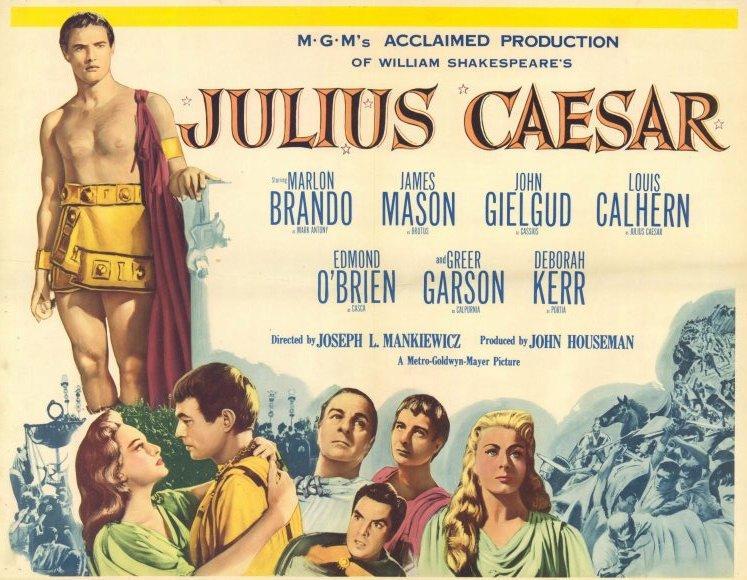
This was a true “HOLLYWOOD PRODUCTION” produced by Orson Welles’s co-founder of “The Mercury Theatre”, actor, writer, producer, John Houseman.
The motion picture was directed by Joseph L. Mankiewicz, who had won both writing and directing “Academy of Motion Picture Art and Sciences, Oscars” for 1950’s, “A Letter to Three Woman”, and 1951’s, “All About Eve”.
Mankiewicz adopted William Shakespeare’s 1599 play for the motion picture screen.
Marlon Brando portrayed “Mark Antony”. Brando had just starred as “Emiliano Zapata”, in director Elia Kazan’s, 1952, “Viva Zapata”, from a screenplay co-written by John Steinbeck. He followed this motion picture with his signature role in, 1953’s, “The Wild One”.
Marlon Brando was nominated for the “Best Actor Academy Award”, for the third consecutive time, and won the “BAFTA” for “Best Foreign Actor”.
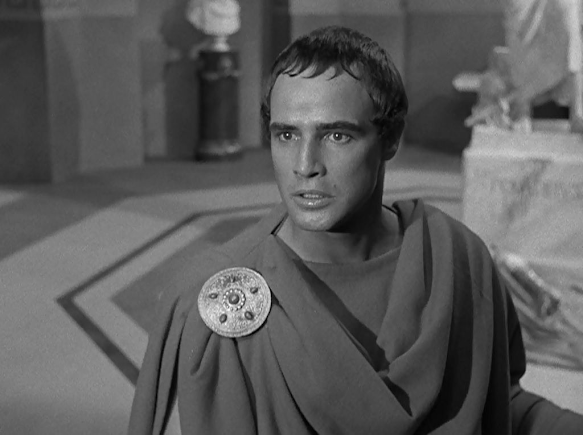
James Mason portrayed “Brutus”. Mason had just had a cameo role as “Rommel” in 1953’s, “The Desert Rats”, and followed this motion picture with director Carol Reed’s, 1953 crime film-noir. “The Man Between”, co-starring with Claire Bloom.

Sir John Gieguld portrayed “Cassius”. He had last been seen on-screen in the uncredited role of “King Hamlet’s Ghost”, in Sir Laurence Olivier’s, 1948, “Hamlet”. Sir John followed this motion picture with Laurence Harvey’s, 1954, “Romeo and Juliet”.

Louis Calhern portrayed “Julius Caesar”. He had just co-starred with Van Johnson and Janet Leigh, in the 1953 comedy, “Confidentially Connie”, and would follow this picture, again co-starring with Van Johnson, but also June Allyson in the 1953 comedy, “Remains to Be Seen”.

Edmond O’Brien portrayed “Casca”. O’Brien had just appeared in the forgotten “B” western, 1953’s, “Cow Country”, and followed this feature with “China Adventure”, co-starring Barry Sullivan, and Marlon’s older sister, Jocelyn Brando.

Greer Garson portrayed “Calpurnia”. She had just co-starred with Michael Wilding and Fernando Lamas in the film-noir, 1951’s, “The Law and the Lady”. Garson followed this movie by co-starring with Walter Pidgeon and Agnes Morehead, in 1953’s, “Scandal at Scourie”.

Deborah Kerr portrayed “Portia”. Kerr had just co-starred with Stewart Granger and James Mason, in 1952’s, “The Prisoner of Zenda”. She followed this motion picture by co-starring with Jean Simmons, Stewart Granger, and Charles Laughton, in 1953’s, “Young Bess”.
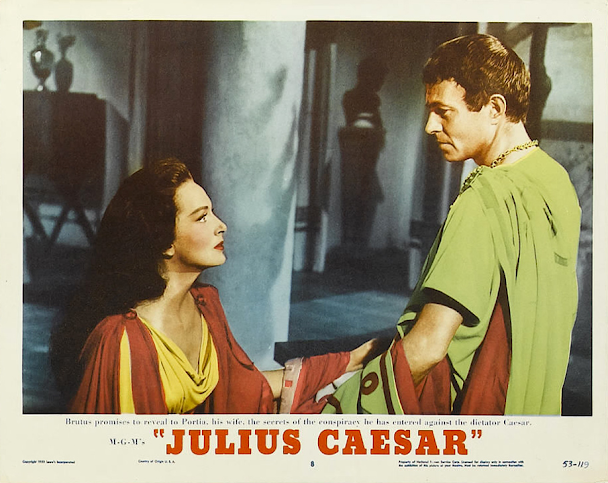
The screenplay had very slight modifications to William Shakespeare’s original words.


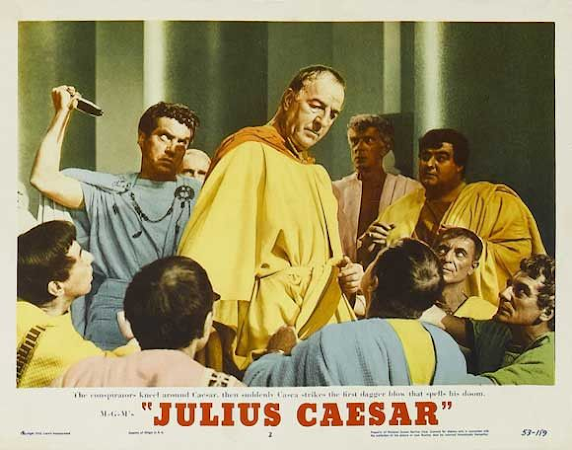

At Caesar’s funeral, James Mason’s “Brutus” opens with:

Romans, countrymen: Be patient till the last. Hear me for my cause, and be silent that you may hear. Believe me for mine honor and have respect to mine honor that you may believe. Censure me in your wisdom and awake your senses that you may the better judge – – – –
To be countered by Marlon Brando’s “Mark Anthony’s” reply, opening with:
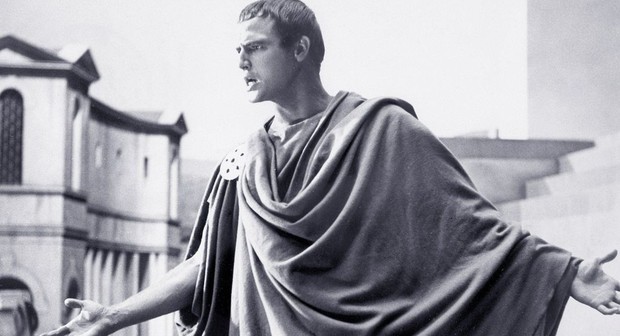
Friends, Romans, countrymen, lend me your ears;
I come to bury Caesar, not to praise him.
The evil that men do lives after them;
The good is oft interred with their bones;
So let it be with Caesar. The noble Brutus
Hath told you Caesar was ambitious:
If it were so, it was a grievous fault,
And grievously hath Caesar answer’d it – – – –
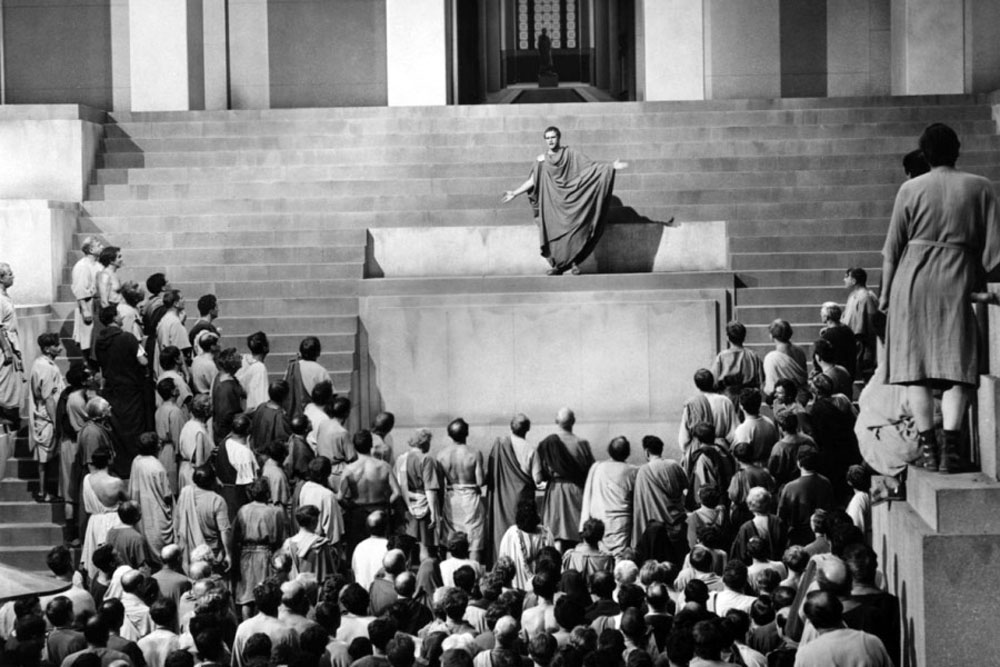
The play continues with the events leading to the death of noble “Brutus” by “Octavius Caesar” portrayed by Douglas Watson, and “Anthony’s” armies.
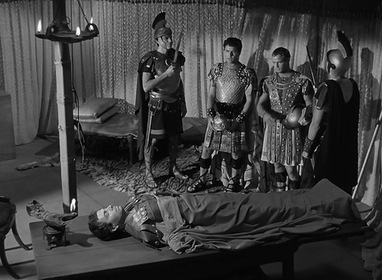
The following motion picture covers a large amount of years, and begins during the rule of “Emperor Tiberius” in 30 A.D.
THE LAST DAYS OF POMPEII released on October 18, 1935

The story of the destruction of Pompeii has been made into motion picture’s since the silent era.
During the Vietnam War, I was stationed in Naples, Italy, and made several trips to the ruins at Pompeii and up Mount Vesuvius. My linked article, “POMPEII DESTROYED: Motion Pictures VS Reality”, is at:
http://www.bewaretheblog.com/2018/10/pompeii-destroyed-motion-pictures-vs.html
The above article includes photos I took at the “Reagan Library”, when they had the Pompeii exhibit.
Merian C. Cooper produced this motion picture and co-directed it. Prior to and during the Second World War, Cooper was a spy for the “Office of Strategic Services (OSS)”, known today as the “Central Intelligence Agency (CIA)”. My article, “MERIAN C. COOPER: BEFORE ‘KING KONG’ TO ‘CINERAMA”, can be read at:
http://www.bewaretheblog.com/2015/10/merian-c-cooper-before-king-kong-to.html
The screenplay for “The Last Days of Pompeii” was written by Ruth Rose, based upon the Edward Bulwer-Lytton novel. The picture was a family affair, Rose was the wife of Merian C. Cooper’s partner and the main director of all of their productions, Ernest B. Schoedsack. My following linked article is also a semi-biography of Schoedsack, “RUTH ROSE: The Real ‘Ann Darrow’, the 1933 ‘King Kong’, the Screenplay and More”, at:
http://www.bewaretheblog.com/2021/09/ruth-rose-real-ann-darrow-1933-king.html
As I said this was a family affair and two other names from 1933’s “KING KONG” are directly associated with this feature film. Stop-motion-animator Willis “Obie” O’Brien, who brought “Kong” and his son to life, was the features chief technician. I look at both O’Brien’s 1925 version of Sir Arthur Conan Doyle’s, 1912, “The Lost World” and “Obie’s” dream project, in my article, “WILLIS O’BRIEN: 1925’s ‘The Lost World’ and the Story of Gwangi”, at:
http://www.bewaretheblog.com/2020/06/willis-obrien-1925s-lost-world-and.html
All the visual effects miniatures were constructed by Marcel Degado. My article, “MARCEL DELGADO: The Artist That Built the 1933 ‘King Kong”, may be read at:
http://www.bewaretheblog.com/2016/04/marcel-delgado-artist-that-built-king.html
Some of the Cast:
Preston Foster portrayed “Marcus”. To my television generation, Preston Foster was “Captain John Herrick”, of the tugboat, the “Cheryl Ann” at the Los Angeles “Waterfront”, 1954 -1955. Foster had the title role in the classic, first technicolor horror movie, 1932’s, “Dr. X”, co-starring a pre-“King Kong”, Fay Wray.

Basil Rathbone portrayed “Pontius Pilate”. Rathbone would follow this feature film with a forgotten drama, 1935’s, “A Feather in Her Hat”, co-starring with Pauline Lord, this was the second of her only two motion pictures, and Louis Hayward. This article is modified from “Basil Rathbone: From the Boer War to the Ghost in the Invisible Bikini” found at:
https://www.bewaretheblog.com/2023/05/basil-rathbone-from-boer-war-to-ghost.html

Alan Hale, Sr. portrayed “Burbix”. Hale had just appeared in director Cecil B. DeMille’s, 1935, “The Crusades”, and would follow this feature film with 1935’s, “Another Face”, starring Wallace Ford, Brian Donlevy”, and Phyllis Brooks.

Above, John Wood portraying “Flavis as a Man”, Preston Foster, and Alan Hale, Sr.
The Basic Story Slightly Revised from My Basil Rathbone Article:
This is a religious themed screenplay, as was the novel, but the story is not the one written by Edward Bulwer-Lytton. The story opens in the Roman city of Pompeii in the shadow of Mount Vesuvius. “Marcus” is a happily married blacksmith with a young wife and baby.

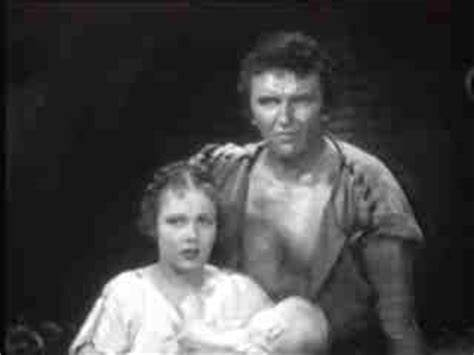
Above, Gloria Shea portraying “Julia”, holding her and “Marcus’s” son.
Walking the crowded streets of Pompeii, “Julia” and the baby are run down by a man on a chariot. “Marcus” spends their life savings on medicine and a doctor, but he needs more money to buy more medicine. The blacksmith now becomes a gladiator, winning his first fight, but returns to find both his wife and son have died. An embittered “Marcus” becomes both a famed, but fierce gladiator.
The story continues and in a gladiatorial match, “Marcus” kills a man, but learns he has a young son , “Flavus”, and adopts him. “Marcus” next becomes a slaver, and while attacking an African village to turn the village men into slaves. He is about to kill a man, but pauses after the other mentions he also has a son. “Marcus” doesn’t kill the African, stops slaving, and becomes a trader instead. Later, after rescuing a fortune teller, “Marcus” is told that his son will be saved by the greatest man in Judea.
“Marcus” believes that the person in the prophecy can only be the governor, “Pontius Pilate” and takes “Flavus” to meet him. On their journey to Jerusalem, they stop at an inn, one of the other men in the inn, tells “Marcus” that the greatest man is staying in the stable, which “Marcus” will not believe.
Arriving in Jerusalem, “Marcus” and “Flavus” meet the “real greatest man” to him, “Pontius Pilate”. Knowing of his history, “Pilate” employees “Marcus” to lead a band of cutthroats on a raid for horses from the Ammonites.


Above, Basil Rathbone, Preston Foster, and David Holt portraying “Flavus, the boy”.
The raid goes off as planned, but “Flavus” falls from a horse and is near death. “Marcus” has heard of a great healer, the man from the stable, and he takes his dying son to him.

“Marcus” returns to Jerusalem with “Pilate’s” share of the money, only to discover that “Pontius Pilate” has sentenced “Jesus” to be crucified and the deed hangs heavy upon him.

As “Marcus”, “Flavus”, and their trusted servant “Burbix” leave Jerusalem, they cannot miss seeing the three crosses on the hill, with one holding the body of “Jesus”.
Years pass and both men remain friends and “Flavus” has grown into manhood. “Marcus” has invited “Pontius Pilate” to visit his lavish home in Pompeii. “Marcus” now owns a gladiator school and slaves are used to fight and die during the training of the future gladiators. “Flavus” announces he has fallen in love with a girl, “Clodia”, portrayed by Dorothy Wilson. “Marcus” is at first very happy for his son.

This immediately turns to concern when “Flavus” reveals that “Clodia” is an escaped slave that he rescued. “Pilate” is quick to remind both men that helping an escaped slave is against the law and is a sentence to death.

“Pilate” leaves for Jerusalem with his haunting memories of “Jesus”. Unknown to “Marcus”, “Flavus” is actually helping many slaves escape the city. “Flavus” meets “Clodia” and the two start helping some more slaves to escape his father’s own training school and are arrested.

This leads to the climax of the film, as Mount Vesuvius erupts, “Marcus” saves “Flavus”, “Clodia”, and the other prisoners in the jail awaiting execution, but dies as he holds open the gate to the docks and has a vision of “Jesus” calling to him.
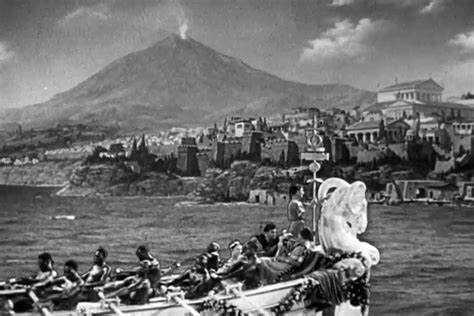
.png)


The actual eruption of “Mount Vesuvius” was in 79 A.D. In that year Rome was ruled by Titus Flavius Vespasianus.
In 1895, playwright Wilson (William) Barrett wrote a four-act religious play entitled “The Sign of the Cross”. The play was about “Emperor Nero”, who ruled Rome from 54 A.D. into 68 A.D.
In 1932, Cecil B. DeMille would turn the play into a motion picture and finish his “Biblical Trilogy”, 1923’s, “The Ten Commandments”, 1927, “The King of Kings”, and 1932’s. “Sign of the Cross”. The first two movies are referenced in my above article about “DeMille”.
“The Sign of the Cross” is a PRE-MOTION PICTURE CODE movie. Although, technically, the code, as shown below, was agreed by the studios to start in 1930. No enforcement took place for three-and-a-half years.
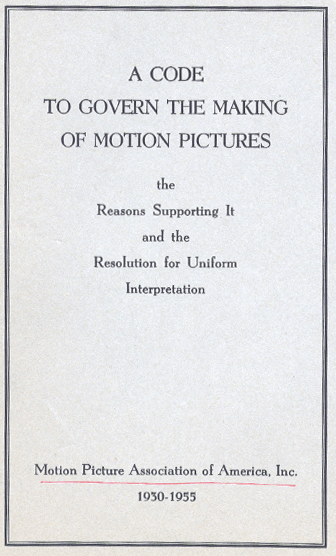
However, on June 13, 1934, Joseph Breen, a Catholic layman, began enforcement of the actual code. Breen was working for Will H. Hays, the “President of the Producers and Distributors of America”, and “The Hays Office” was born to enforce the code through censorship.
Warning: the following motion picture contains nudity and torture situations. Which would not have been permitted after Joseph Breen took notice of all movies that were seeking the “Seal of Approval” from the all powerful “Hayes Office”!
THE SIGN OF THE CROSS premiered in New York City on November 30, 1932
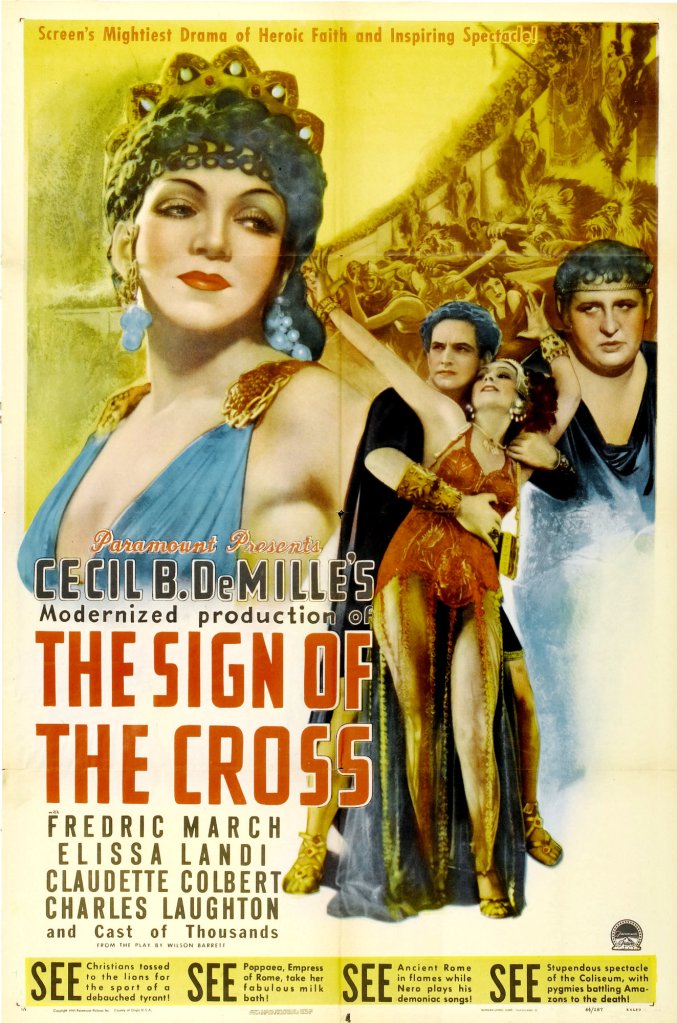
It should be noted that an uncredited source for this screenplay was the 1896 novel “Quo Vadis” by Henryk Sienkiewicz. As of this writing there have been 7 motion pictures between 1901 and 2002 of “Quo Vadis”. Which includes the major “Hollywood” production of 1951, starring Robert Taylor, Deborah Kerr, Leo Glenn, and Peter Ustinov as “Nero”.
Mormon screenplay writer Wademar Young was the main writer of the film. He was the main writer for Cecil B. DeMille on 1934’s, “Cleopatra”, and 1935’s, “The Crusades”. For director Tod Browning, he wrote three Lon Chaney films, 1925’s, “The Unholy Three” and 1927, “The Unknown” co-starring Joan Crawford, and 1927’s, “London After Midnight”.
Sidney Buchman was the co-screenplay writer. Among his later screenplays were 1939’s, “Mr. Smith Goes to Washington”, 1940’s, “The Howards of Virginia“, and 1941’s, “Here Comes Mr. Jordan”.
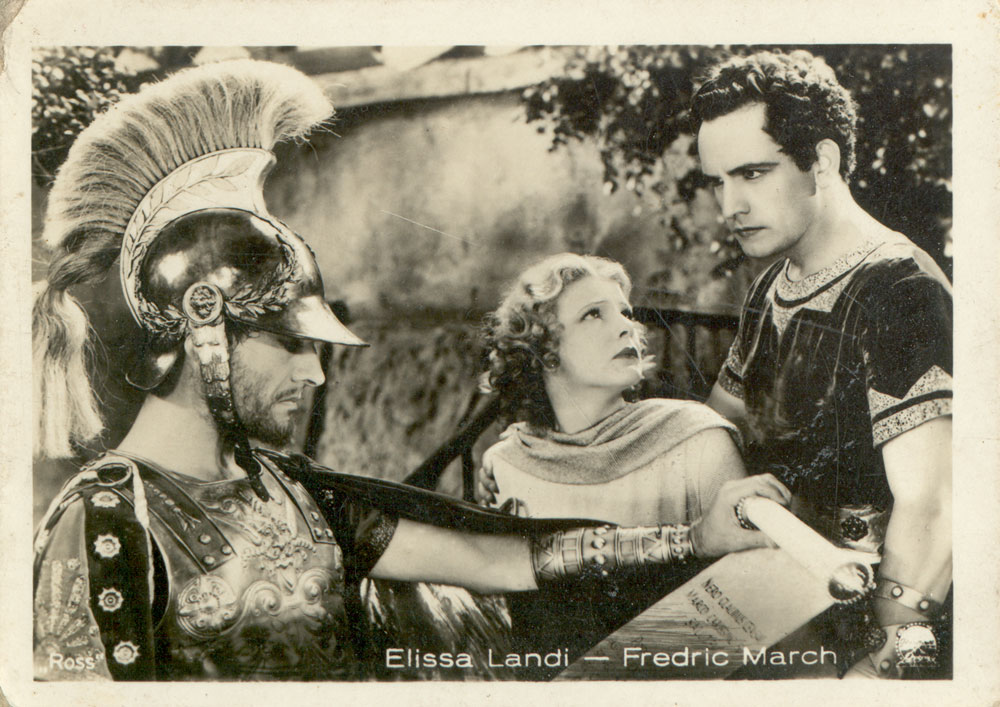
Fredric March portrayed “Marcus Superbus, prefect of Rome”. In 1931, March received the “Academy of Motion Picture Arts and Sciences, Best Actor Oscar”, for Robert Louis Stevenson’s “Dr. Jekyll and Mr. Hyde”. In 1935 he would portray “Jean Valjean” pursued by Charles Laughton’s “Inspector Emile Javert”, in Victor Hugo’s “Les Miserables”. In 1956, he was “Philip of Macedonia” in the excellent “Alexander the Great”, starring Richard Burton.
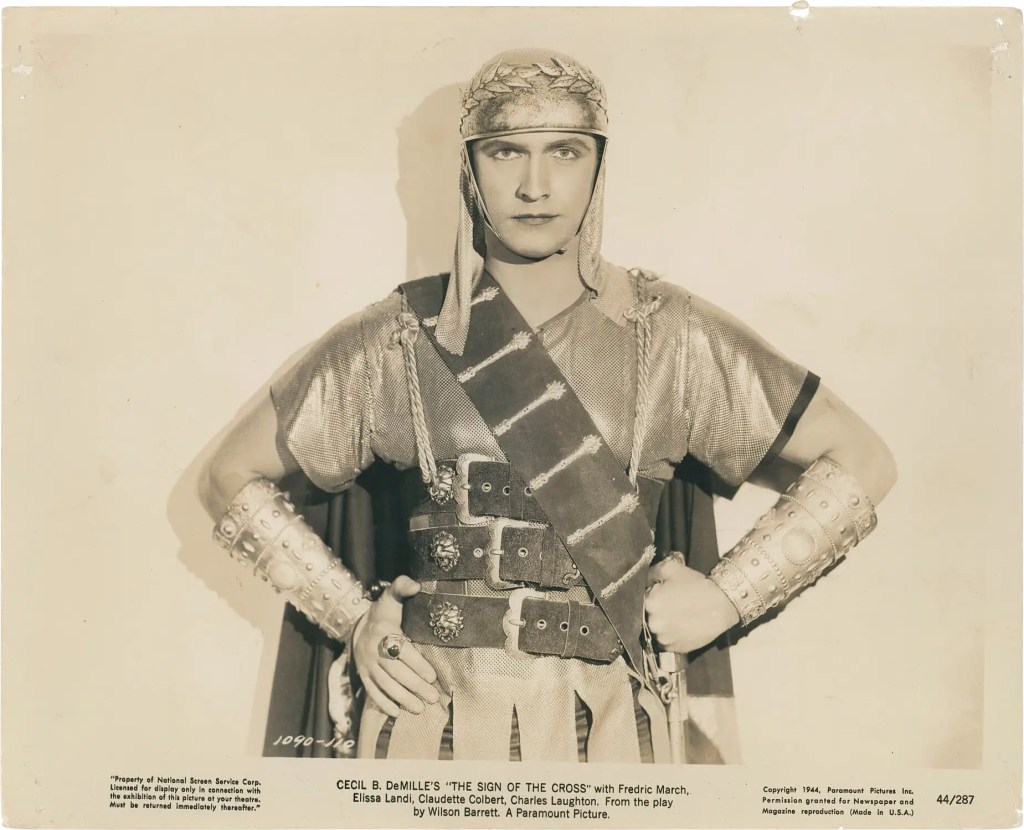
Elissa Landi portrayed “Mercia”. Landi was born in Italy and appeared on-stage with both the “Oxford Repertoiry Company” and at “London’s West End Theatre” opposite the future Sir Laurence Oliver and Sir John Gielgud. She had just co-starred with Paul Lukas and Warner Oland in 1932’s, “Passport to Hell” and followed this feature film opposite David Manners in 1933’s, “Warrior’s Husband”.
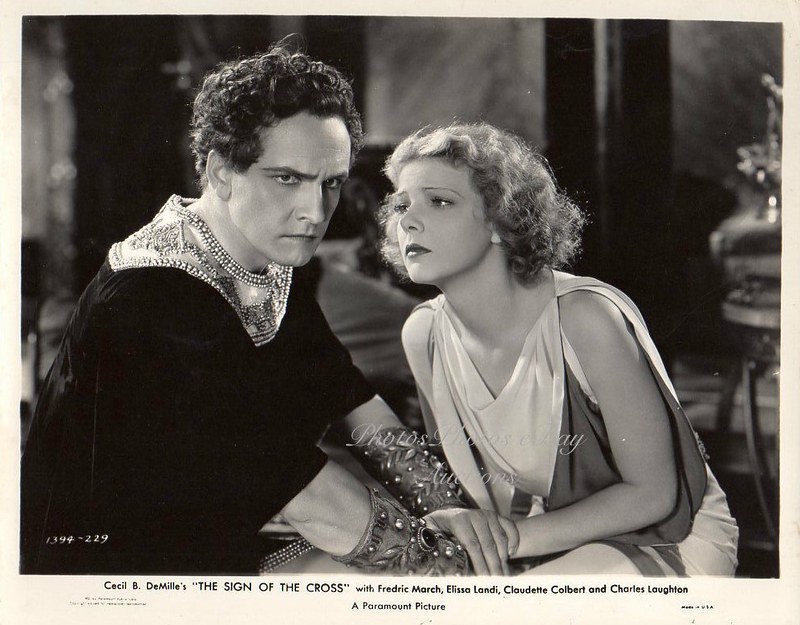
Claudette Colbert portrayed “Empress Poppaea”. Colbert had just co-starred with composer and actor, George M. Cohan and comedian Jimmy Durante in the musical, 1932’s, “Phantom President”. She followed this picture opposite Fredric March, again, in Noel Coward’s, 1933, “Tonight Is Ours”.
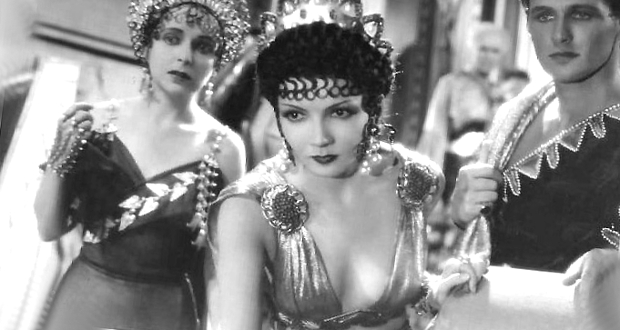
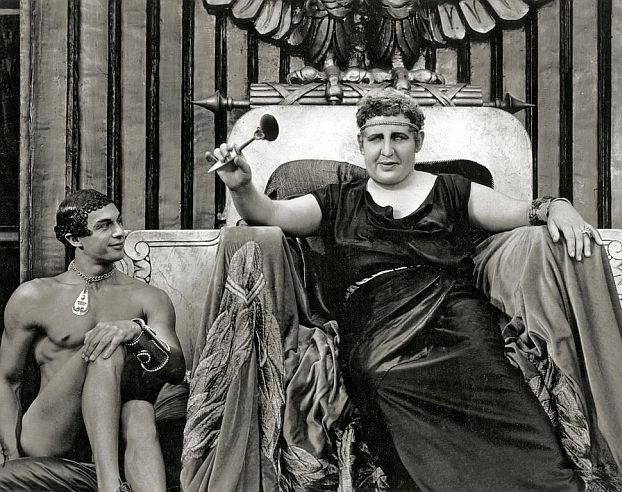
Charles Laughton portrayed “Emperor Nero Claudius Caesar”. Laughton followed this motion picture with the H. G.Wells’s, 1932, “Island of Lost Souls (Island of Dr. Moreau)” and 1933’s, “The Private Life of Henry VIII”, co-starring his wife, Elsa Lanchester.
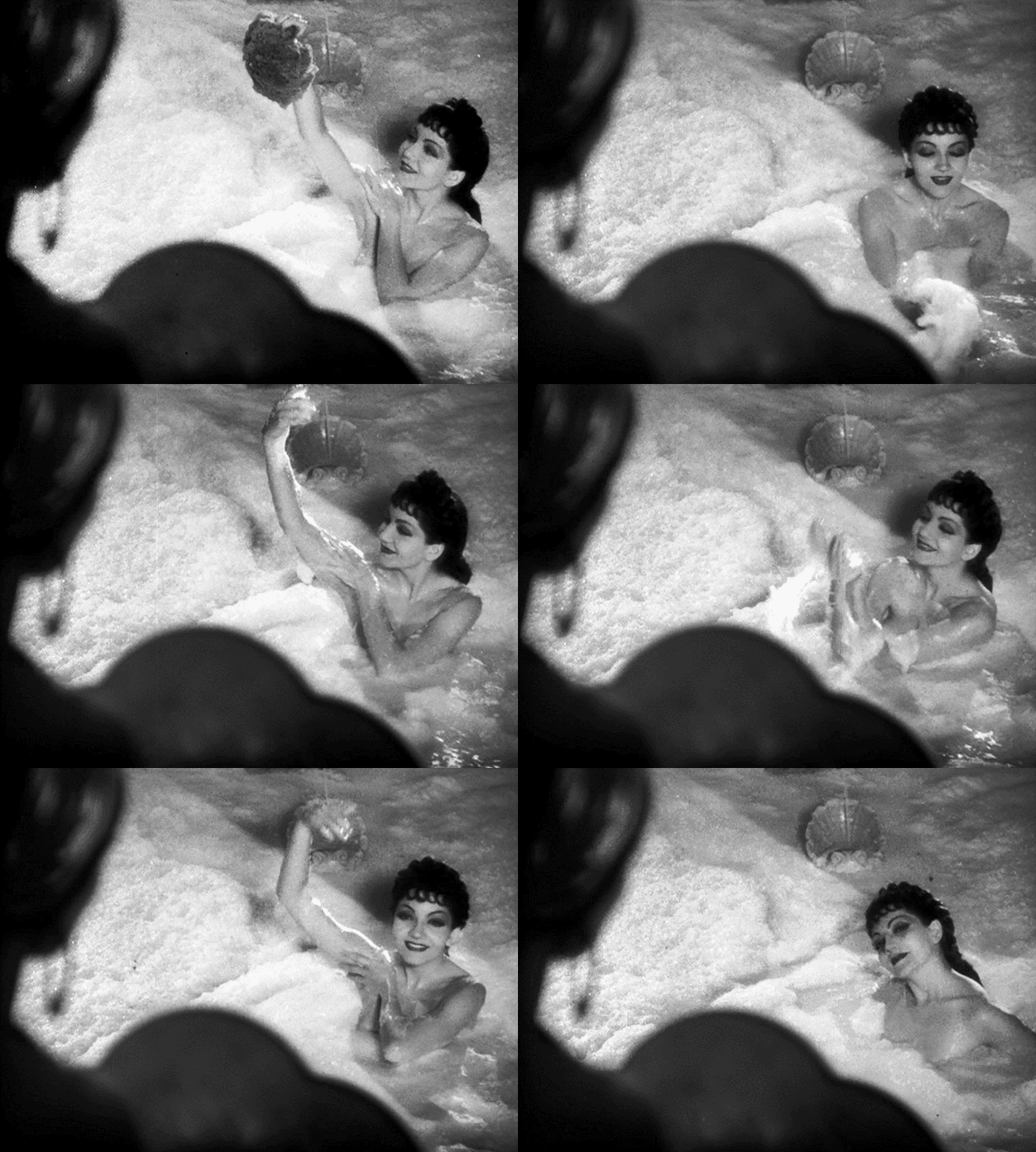
Although the movie was about the persecution of Christian’s by “Nero”. The picture is remembered for Claudette Colbert’s milk bath and the fact that she was pre-code nude.
The story opens, in 64 A. D., with the “Great Fire of Rome” and “Ofonius Tilgelinus“, portrayed by Ian Keith, informs “Emperor Nero” that the citizens of Rome are blaming him for starting the fire. “Nero” does not take blame, but puts the blame of the Christians.
In Rome, the “Apostle Titus”, portrayed by Arthur Hohl, “Mercia”, and “Flavius Fontellus”, portrayed by Harry Beresford, are apprehended by a mob for being Christians. The Prefect of Rome, “Marcus Superbus”, arrives and tells the mob to disperse and frees the three Christians.
News of “Marcus” disobeying “Emperor Nero’s” edict reaches the “Empress Poppaea”. At a fountain, “Mercia” and “Marcus” happen to meet, but “Licinius”, portrayed by William V. Wong, comes to the foundation and reminds “Marcus” that he must arrest Christians.
Later the same night, the “Apostle Titus”, sends a young Christian boy, “Stephen”, portrayed by Tommy Conlon, to tell other Christians about a secret meeting at the Cristian Bridge.
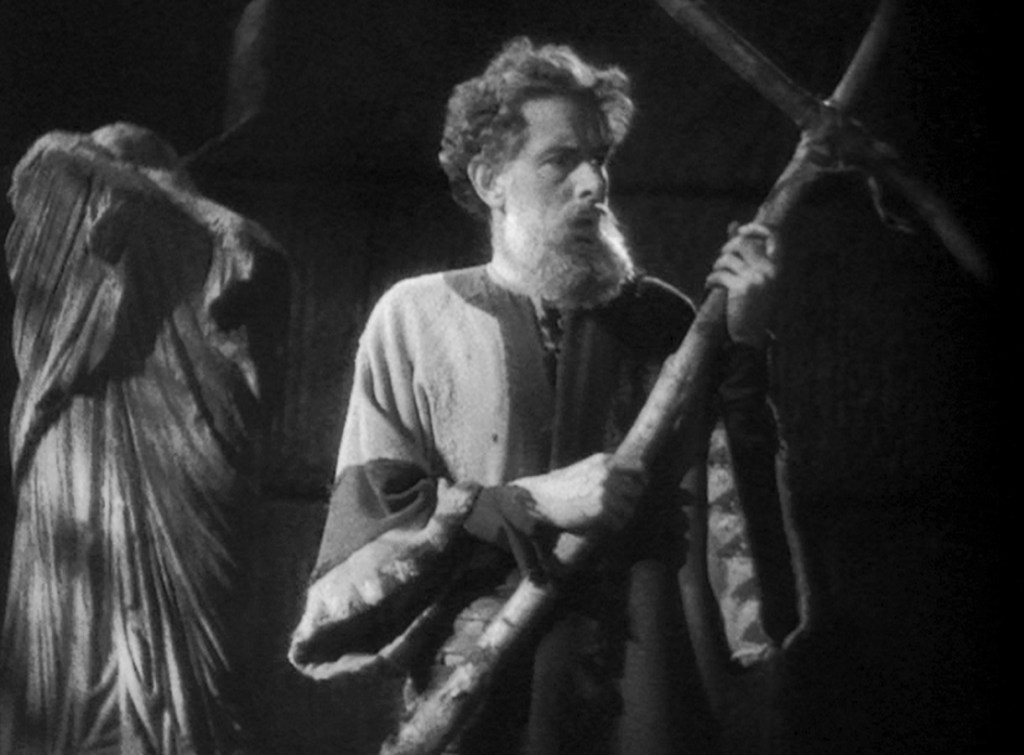
At about the same time, “Marcus” arrives at “Mercia’s wanting to “take her” for himself, but will not go. Meanwhile, “Stephen” is arrested by “Licinius” for possibly being a Christian and is tortured, revealing the “Secret Meeting” place and time.
Learning of “Stephen’s” arrest, “Marcus” races to the secret meeting to get “Mercia” out, before the Roman soldier’s arrive. He warns everyone, and is able to take “Mercia” from the meeting place. Just as the soldiers arrive and arrest the other Christians.
Knowing everything, the following morning “Empress Poppaea” scolds “Marcus”, who is her lover, over his attention to “Mercia”.
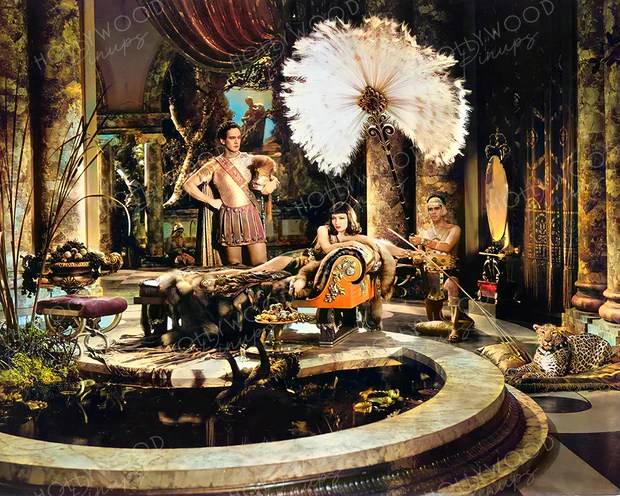
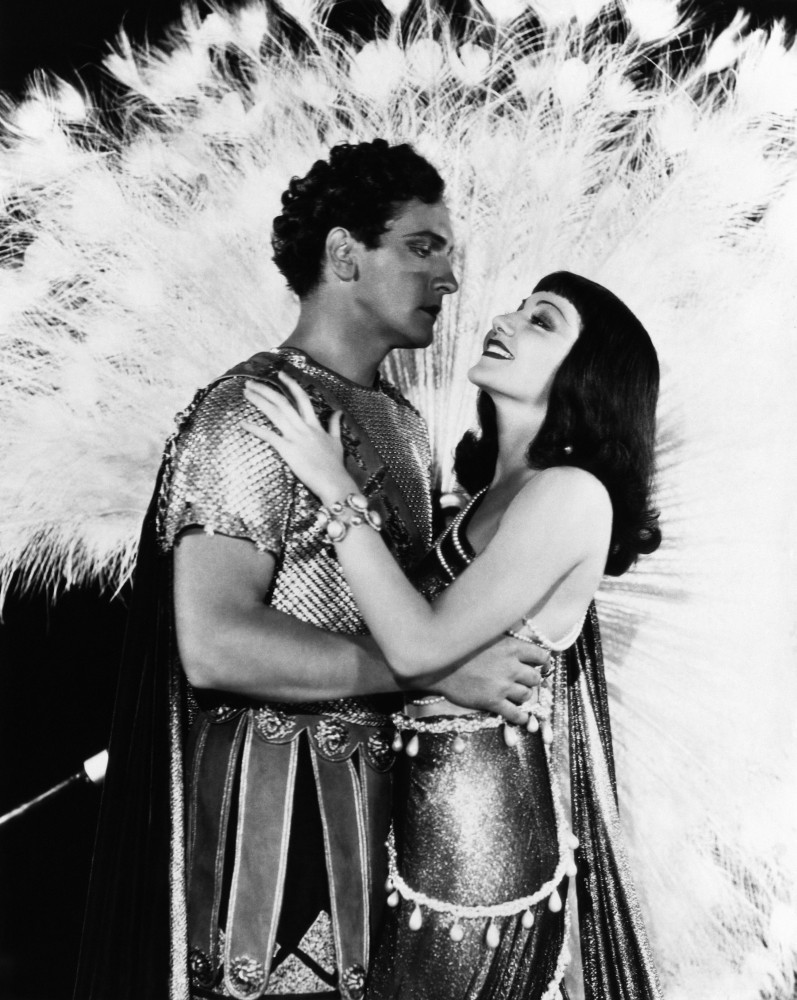
“Tigellinius” goes to “Emperor Nero” and reports to him that “Marcus” took a Christian woman to safety, before the soldiers arrived at the secret meeting. “Nero” calls “Marcus” to the throne room, and accuses him of betrayal to Rome (“Nero”).
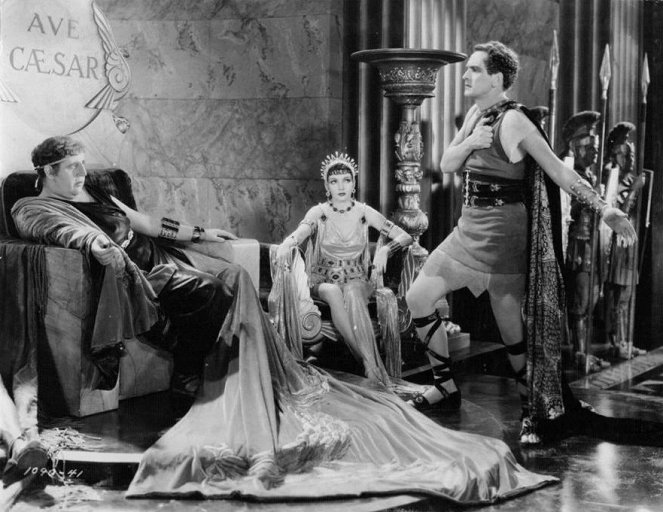
After “Marcus” is dismissed, “Poppaea”, jealous of “Mercia”, has her husband sign an arrest order for the Christian woman. At the home of “Marcus”, a feast is taking place with “Mercia” present, and he introduces her to an exotic dancer, “Arcania”, portrayed by Joyzelle Joyner.
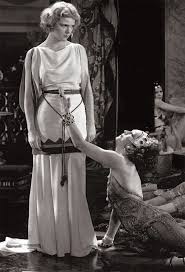
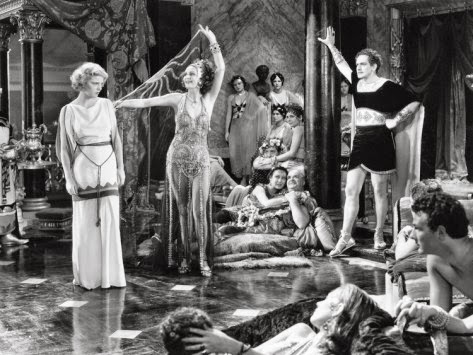
While, outside his house, Christians are singing and drowning out the music accompanying the dancing of “Arcania”. “Marcus” sends everyone away, so he can be alone with “Mercia”.
Alone, “Marcus” tries to get “Mercia” to denounce her Christian faith, so they can truly be together, but she refuses. As “Licinius” arrives accompanied by some soldiers and arrests “Mercia”.
“Marcus” goes to “Nero” and demands he release “Mercia”, but “Nero” will have done of such a request to free a Christian, who burned down Rome.
The climax of the story comes with the imprisoned Christians in the arena against both gladiators and animals. While, “Empress Poppaea” has “Marcia” held back to be executed by herself, for all of Rome to see, and “Marcus” faced to watch her death.
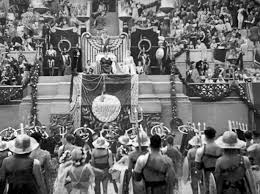
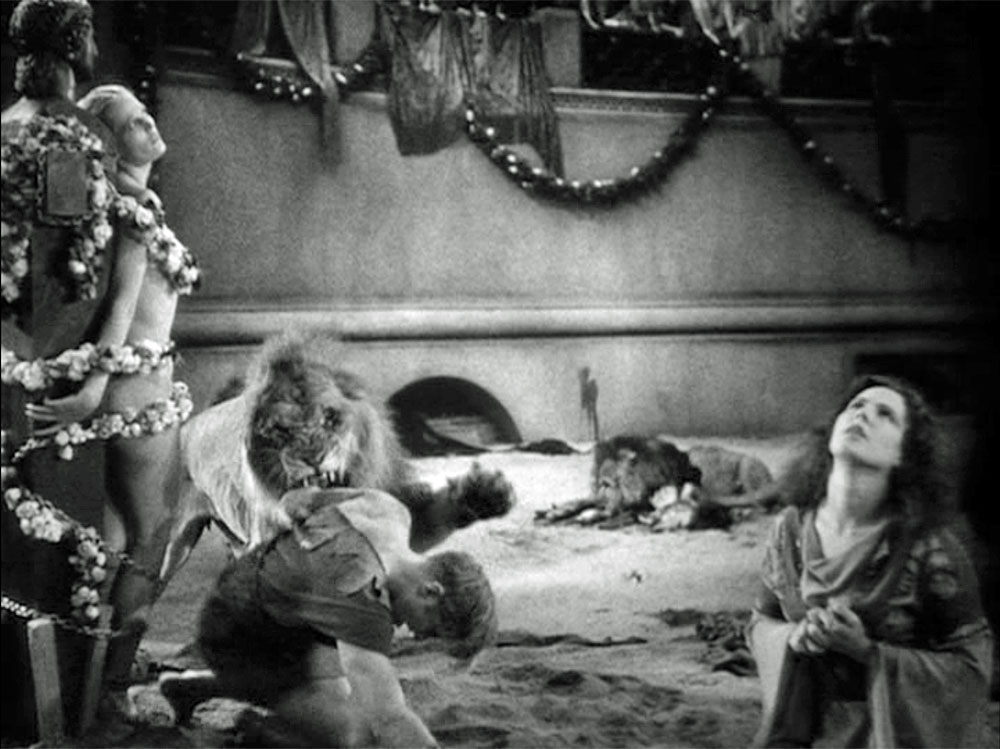
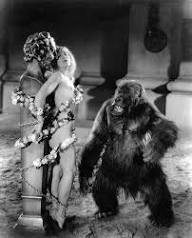
While “Mercia” is alone in the cell that held her and the other Christians. “Marcus” comes to her, and again, asks that she renounce her faith and marry him. She will not denounce her religion, although she admits loving. him. “Mercia” explains her faith in Christianity and the teachings of a “Rabbi” named “Jesus”, who died for her and the other Christians on the Cross. His love for her, and her strong faith, convinces “Marcus” to join the woman he loves, facing the death of “Nero’s” lions.
The film ends with “Marcus”and “Mercia” walking together into the arena to face their fate. Both knowing they will be together in eternal life.
Point of comparison to the novel “Quo Vadis”. Although it is listed as an uncredited source for this motion picture. The novel ends with “Marcus Vinicius” and “Lygia (Not “Mercia”) having their lives spared in the arena. This is after her bodyguard, “Ursus”, breaks the neck of one of the wild bulls that has been killing the Christians and came for the three. By the voice of “The Citizens of Rome”, much as “Nero” does not want it, by law, he must free them. The three retire to a villa in Sicily as Christians.
I take a blogger’s privilege, and move my article forward to the rule of “Marcus Aurelius Antoninius”, March 7, 161 A. D. to March 17, 180 A. D.
On May 1, 2000, Ridley Scott’s, , motion picture, “Gladiator”, about the fall of the Roman Empire, premiered in Los Angeles, California. There is a controversy over many of the scenes in David Franzoni’s screenplay, including the dialogue, and the actor’s and camera instructions in the written screenplay. Both Scott and Franzoni deny such a claim, but film historian’s have produced pages of the earlier film’s screenplay. Which makes it appear the within “Gladiator’s” screenplay, certain sections are a Xerox copy of the other film’s page. I write this to explain why I have decided to conclude my article with the earlier feature film, and in IMO the better one.
THE FALL OF THE ROMAN EMPIRE had it’s “London Royal Premiere” on March 24, 1964
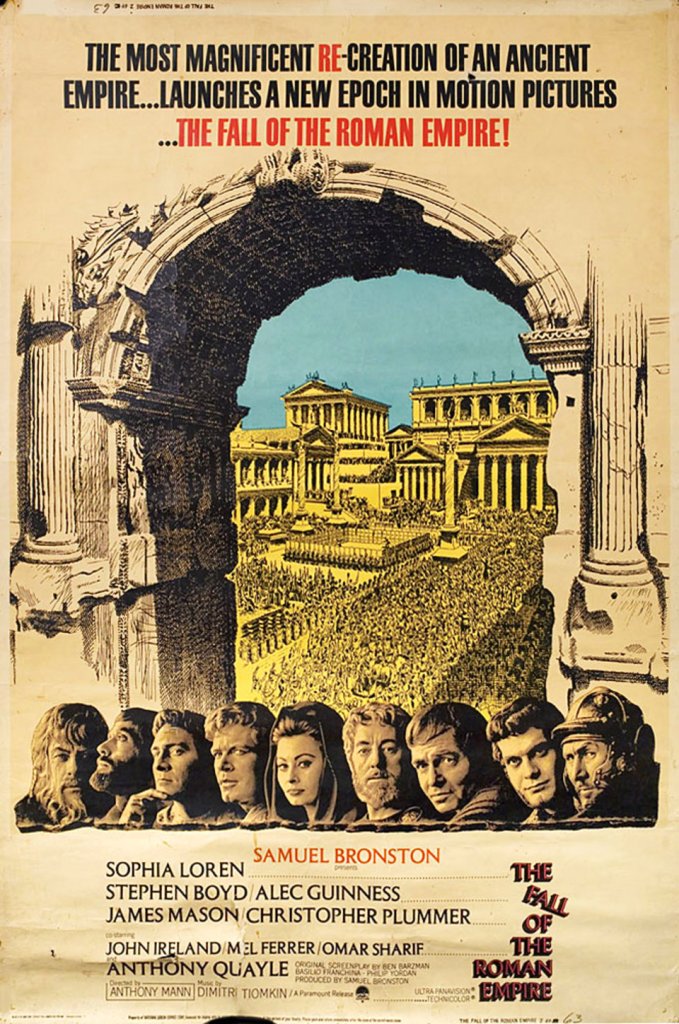
The motion picture was produced by Samuel Bronston. He has just produced 1963’s “55 Days at Peking”, and followed this feature with 1964’s, in “Cinerama”. “Circus World”. My article is “SAMUEL BRONSON Movies Featuring a Cast of Thousands” found at:
https://www.bewaretheblog.com/2016/04/samuel-bronston-movies-featuring-cast.html
The screenplay’s source is the uncredited, Edward Gibbon’s, “The History of the Decline and Fall of the Roman Empire”.
It took three screenplay writers to create the story and screenplay. They were:
Ben Barzman who among his screenplays co-wrote Bronson’s 1961, “El Cid”, and 1963, “55 Days at Peking”.
Basilio Franchina, who wrote with Barzman, the 1st World War German Air Force feature, 1966’s, “The Blue Max”.
Philip Yordan had written two classic crime screenplays, 1945’s, “Dillinger”, and 1951’s, “Detective Story”. He also co-wrote Samuel Bronston’s, 1961, “King of Kings”, 1961, “El Cid”, and 1963, “55 Days at Peking”.
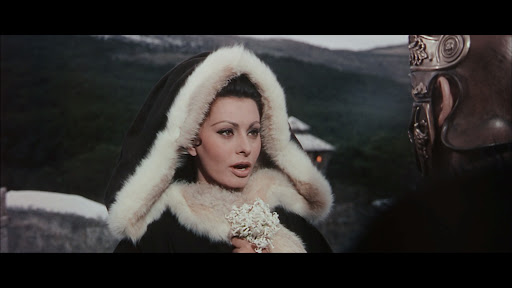
Sophia Loren portrayed “Lucilla”. She had just appeared in the classic Italian romantic comedy, 1963’s, “leri, oggi, domain (Yesterday, Today and Tomorrow)”, she would follow this film with another classic Italian romantic comedy, “Matrimonio all’italiana (Marriage Italian Style)”. My article on one important year in her career is “SOPHIA LOREN: ‘1957” at:
https://www.bewaretheblog.com/2021/10/sophia-loren-1957.html
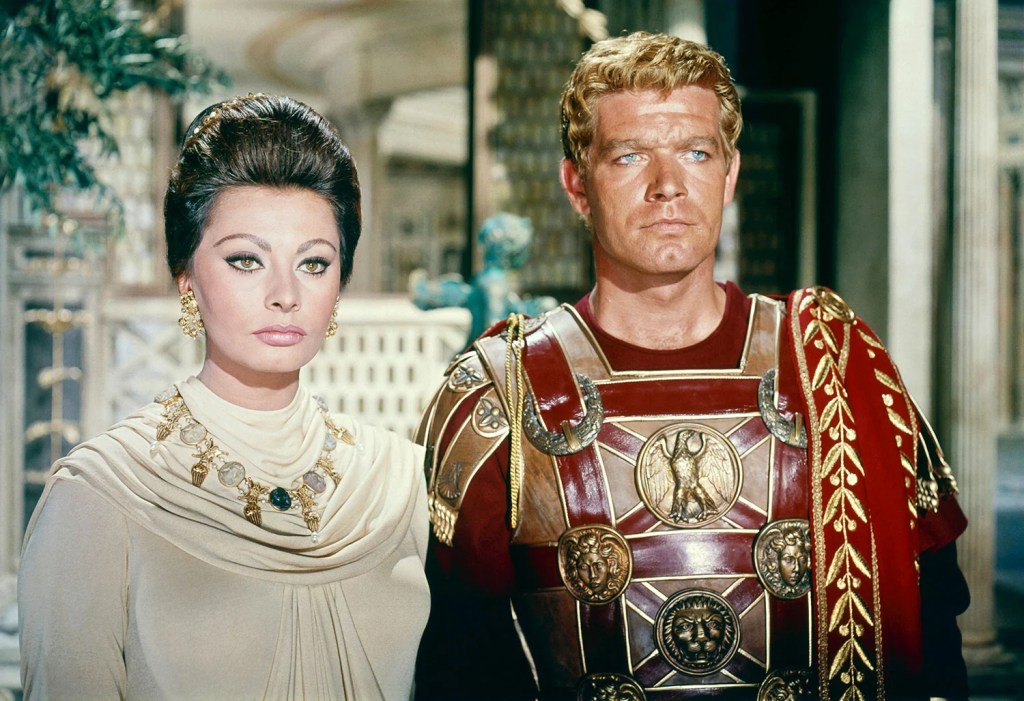
Stephen Boyd portrayed “Gaius Livius”. Boyd with Louis Jourdan, had just appeared in “War of Nerves”, January 3, 1964, on television’s, “Bob Hope Presents the Chrysler Theatre”. He followed this feature film with the British psychological thriller, 1964’s, “Third Secret”, co-starring with Sir Jack Hawkins, and Sir Richard Attenborough.
Sir Alec Guinness portrayed “Marcus Aurelius Antoninius“. Guiness had just been seen in 1962’s, “Lawrence of Arabia”, and followed this feature film co-starring with Mike Connors and Robert Redford, in the war comedy, 1965’s, “Situation Hopeless — But Not Serious”.
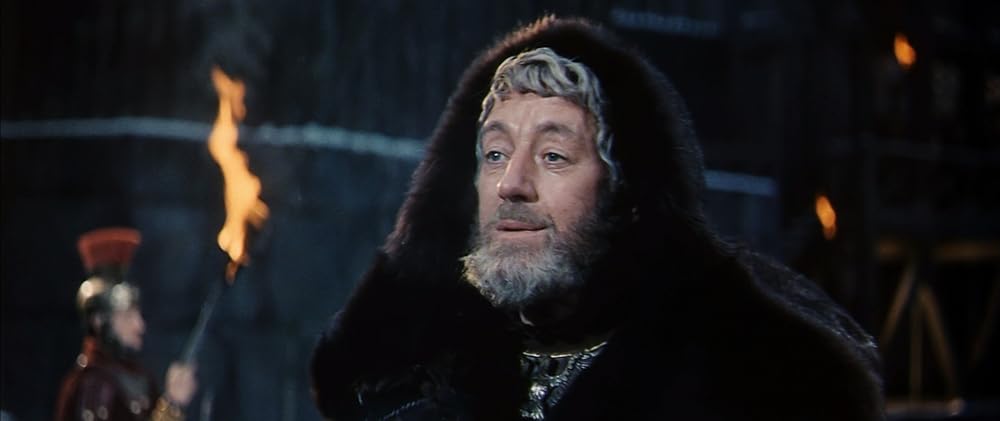
James Mason portrayed ex-slave and now counselor to the Emperor, “Timondes”. Mason had just been in the 1963, Italian Second World War movie, “Beta Som (Italian code for “Bordeaux Sommergibile”) aka: “Torpedo Bay”. He followed this feature co-starring with Ann Bancroft and Peter Finch in 1964’s, “Pumpkin Eater”. My article is “James Mason: A Spotlight On His 1950’s Roles” to read at:
https://www.bewaretheblog.com/2023/09/james-mason-spotlight-on-his-1950s-roles.html
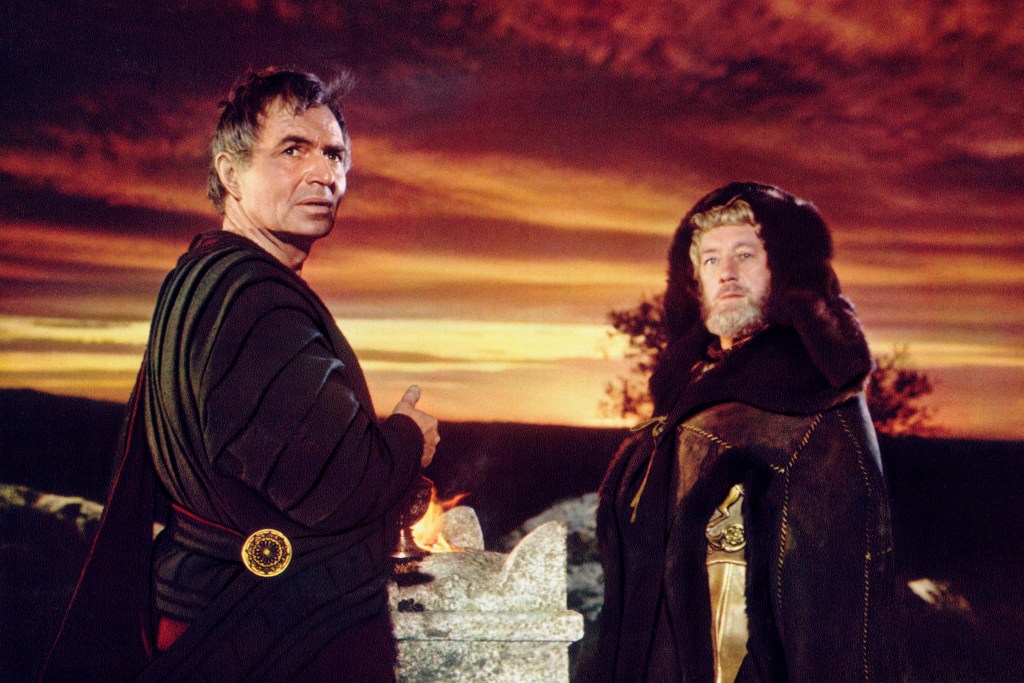
Christopher Plummer portrayed “Commodus”. He had just been seen in a 1962, made-for-television version of playwright Edmund Rostand’s, “Cyrano De Bergerac”. Plummer followed this feature film with a 1964 made-for-television version, of William Shakespeare’s “Hamlet”.
Anthony Quayle portrayed “Verulus”. Quayle followed this feature by co-starring with Sylvia Syms in director Nathan Juran’s adventure, 1964’s, “East of Sudan”.
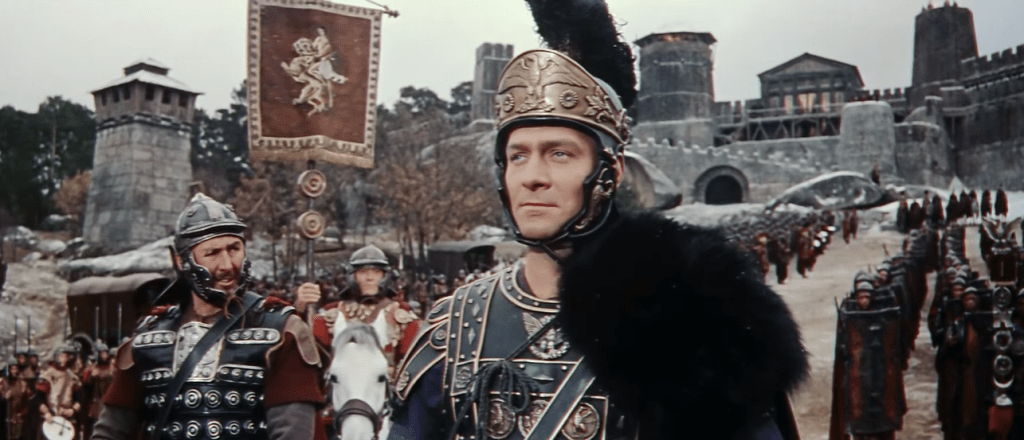
Above right, Anthony Quayle looking at Christopher Plummer.
John Ireland portrayed “Ballomar”. Ireland had just been seen in the neo-noir, 1963, “The Ceremony” directed by and starring Lawrence Harvey. His next feature film was William Castle’s, 1965, “I Saw What You Did”.
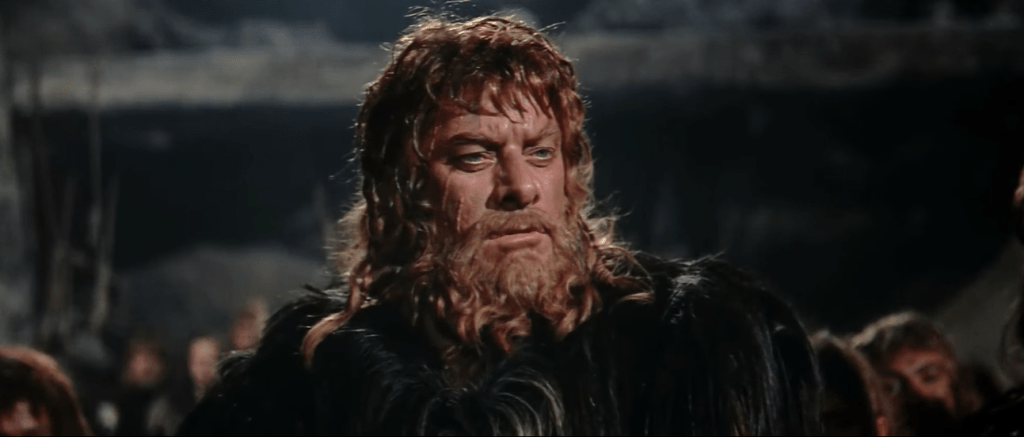
Omar Sharif portrayed “Sohamus”. Sharif was just in 1962’s, “Lawrence of Arabia”. He followed this feature film co-starring with Gregory Peck and Anthony Quinn, in 1964’s, “Behold a Pale Horse”.
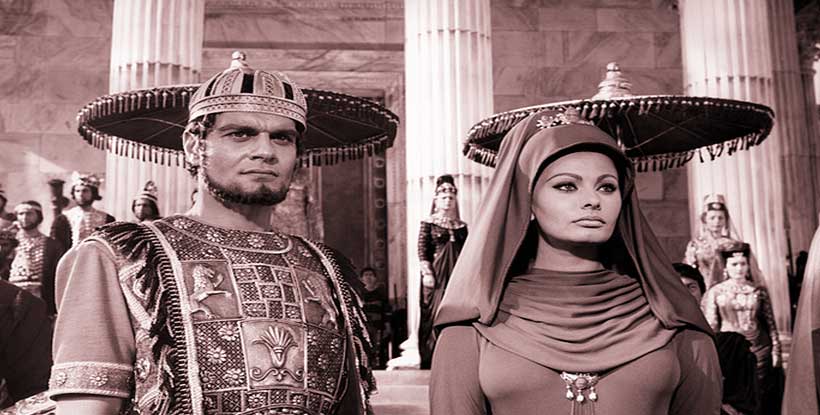
Above, Omar Sharif and Sophia Loren
Mel Ferrer portrayed “Cleander”. Ferrer followed this picture co-starring Natalie Wood, Tony Curtis, Henry Fonda, and Lauren Bacall, in 1964’s, “Sex and the Single Girl”.
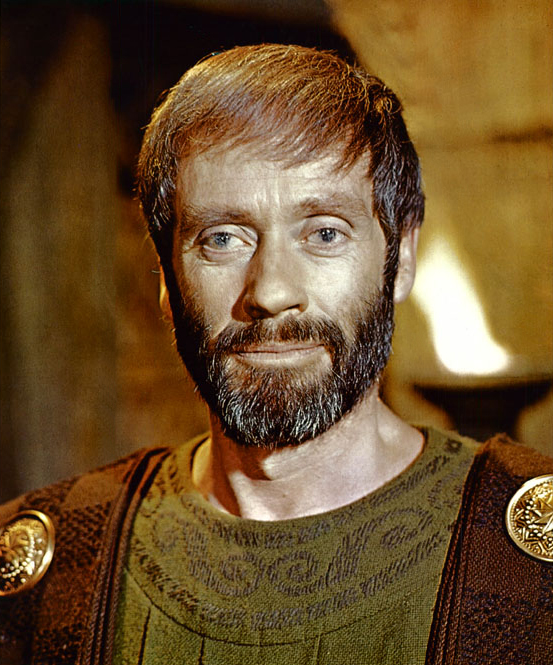
The Screenplay:
It is the winter of 180 A.D., this will be the end of “Pax Romana”. Roughly a 200-year-period called the “Golden Age of Rome”. During this period, there was increased and sustained Roman imperialism, prosperous stability for all the people’s of Rome, the power of Italy over all other known counties, plus regional expansion, and relative peace and order for the empire.
The audience sees Roman Emperor “Marcus Aurelius Antoninius” in his winter headquarters. He has been fighting to keep the Germanic tribes from invading his northern territories along the Danube frontier. Privately, the emperor believes that all people are equal and deserve equal opportunities and treatment. Very contrary to the beliefs of Rome, and he is afraid that should he die, his son, “Commodus” would succeed him. “Commodus” believes in both force to accomplish anything and that he is the greatest “Gladiator” the world has ever seen.
Historical Footnote:
The real “Commodus” was joint emperor, or junior emperor and counselor of Rome from 177 A. D., at the age of 16-years, and had accompanied his father during the “Marcomannic Wars (The wars against the Germanic peoples actually starring in 166 A. D.).
Returning to the screenplay:
“Marcus Aurelius” wants a successor who will grant equal rights to all of his subjects, and this disqualifies his son. He decides to nominate for the next Emperor, “Gaius Livius”, who is in love with “Marcus Aurelius’s” daughter “Lucilla”.
Historical Footnote:
The real “Lucilla” was “Annia Aurelia Galeria Lucilla”, the second daughter of “Marcus Aurelius”, and was first married, at age 16, to co-emperor and adoptive brother, “Lucius Aurelius Vernus” from 161 A. D. to his death in 169 A. D. , they had three children. Opening the rule of the Roman Empire to “Commodus”.
Returning to the screenplay:
However, before “Emperor Marcus Aurelius” can announce his unmarried daughter “Lucilla’s” marriage to “Gaius Livius”, he is poisoned by the blind “Cleander” at the instructions of “Commodus”.”Cleander” is one of a group who wants political advancement by helping the Emperor’s son becoming the new Roman Emperor.
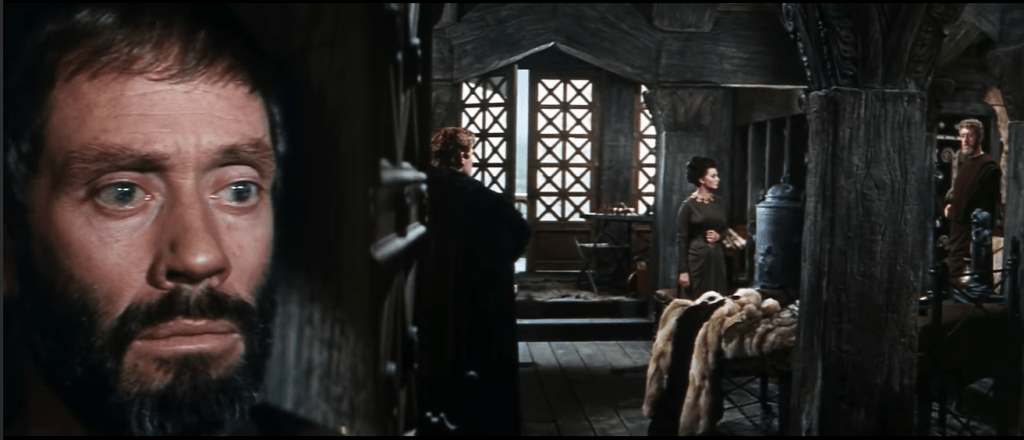
Although he was told of the marriage plan and he becoming the Emperor’s nominated successor, as had “Lucilla” been informed, “Gaius Livius” says nothing, and supports his long time friend “Commodus”.
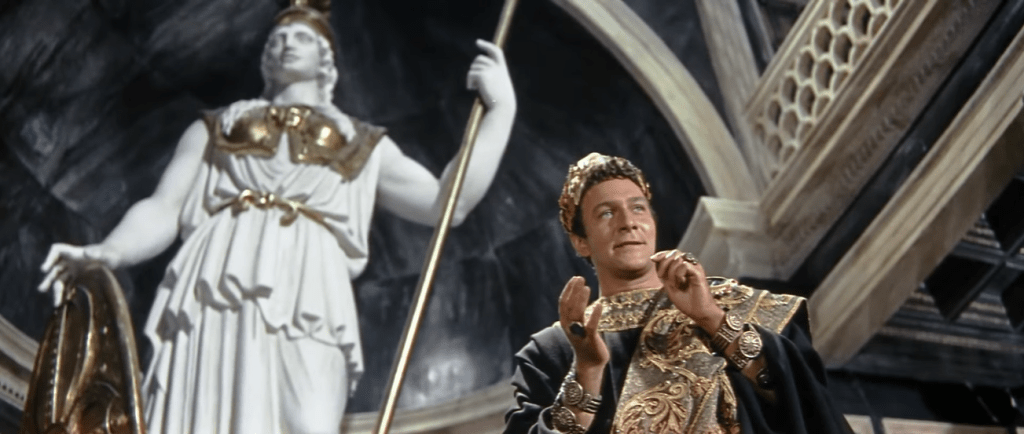
“Commodus” was not in the plot to assassinate his father, but he has always hated him and now will destroy everything he stood for, and starts by placing heavy taxes upon the Roman provinces to enrich Rome itself, or more precisely, himself.
On the field of battle, “Livius” defeats the last of the German barbarians, and “Lucilla” and her father’s counselor, “Timonides”, convince him to have mercy toward them. Keeping her father’s legacy intact. “Timonides” is sent the barbarian leader, “Ballomar”,with the peace proposal. To prove his trust, “Timonides” must put his hand into the flame of a torch without crying out.
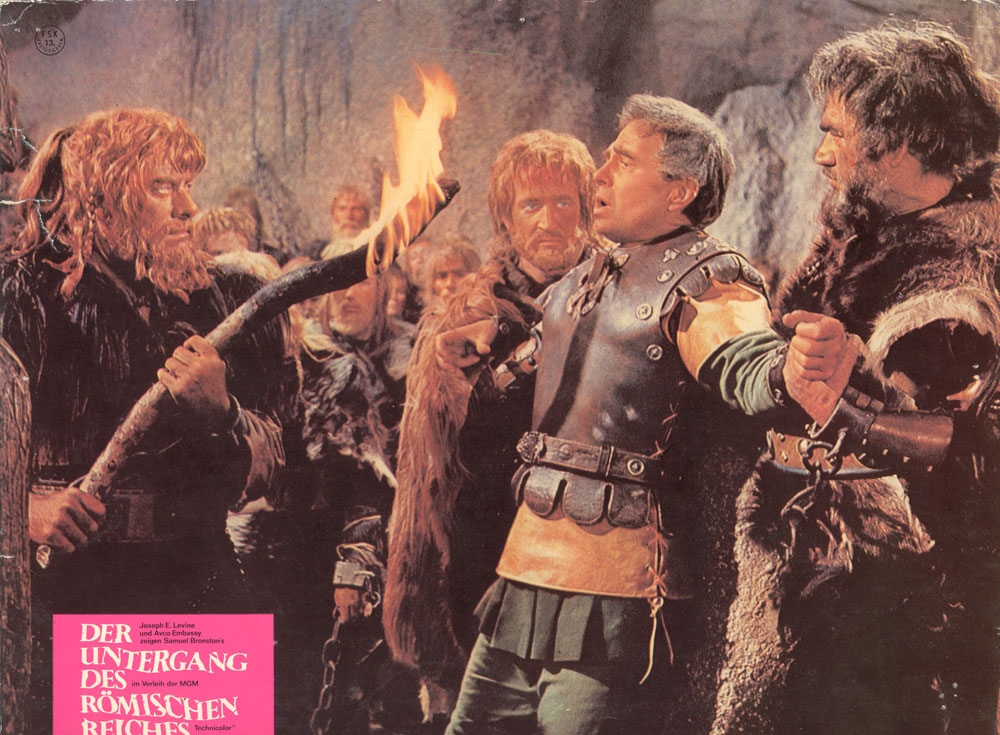
The ordeal is taken on by the counselor and “Ballomar” believes his words and agree to the judgement of the Roman Senate.
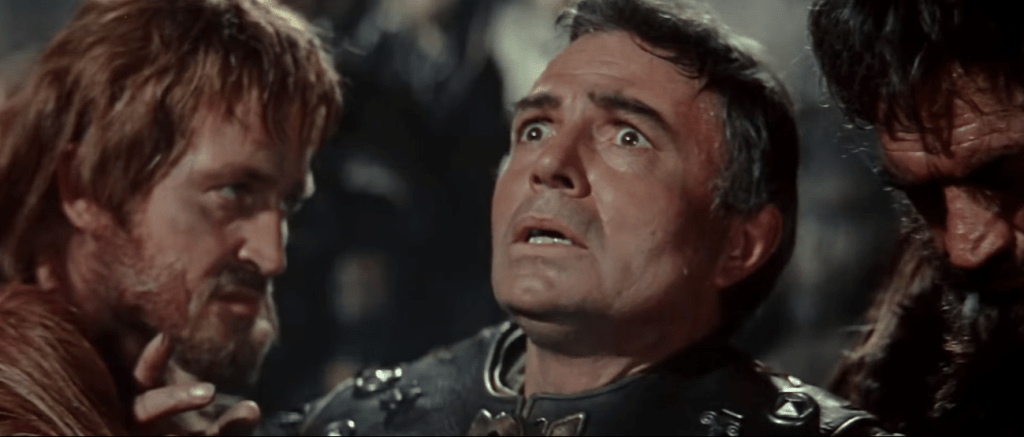
“Emperor Commodus” is very hostile toward the idea of having “Ballomar’s” barbarians on Italian land. However, a speech to the Senate by “Livius” and one by “Timonides”, mentioning that these German Farmers can tell the other barbarian tribes to end their wars with Rome and bring peace. Both speeches convince the Senate to welcome the new German Farmers.
Thwarted by his sister, his friend, and a slave, Emperor “Commodus”, gets even, by sending “Livius” back to the snow bound Northern frontier, and his sister to Armenia. Where she shares a loveless political marriage to “Sohamus”.
Next, “Lucilla” joins a revolt against her brother in the Eastern provinces, where famine perpetuated by “Commodus’s” unjust taxes is building in strength. In an interesting ploy against his sister, the Emperor sends the Northern Army to put it down. Knowing, that “Livius” will put aside his feelings and fight to preserve the Roman Empire.
As the opposing Roman armies meet to do battle, Roman against Roman, “Sohamus” arrives and attacks “Livius” not only with his Armenian army, but troops borrowed from the Persians, the arch enemy of Rome. The mistake “Sohamus” has made, was bringing the Persians, and now both armies join as one to fight him.
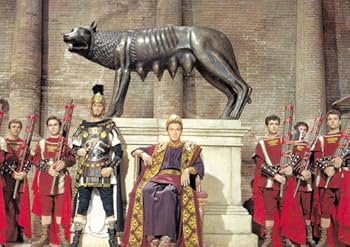
As a result of defeating “Sohamus” and his Persian allies. “Gaius Livius” receives an offer from “Emperor Commodus”. He will make “Gaius Livius” his co-Emperor, BUT ONLY IF HE NORTHERN ARMIES HARSHLY PUBISH THE NORTHERN PROVIDENCES.
Now the Northern and Eastern armies of Rome under the leadership of “Livius” and “Lucilla” march on Rome with the intention of forcing her brother to abdicate. However, “Commodus” uses the wealth of the Roman treasury to bribe the
soldiers to turn against his sister and her lover. This is followed by the Emperor ordering and executing the massacre of the German settlements in which “Timondies”.
“Lucilla” attempts to get “Verulus”, her brother’s bodyguard to assassinate her brother, but he refuses, confessing one night he slept the “Marcus Aurelius’s” wife and that “Commodus” is really his son.
Historical Footnote:
“Luicus Aelius Aurelius Commodus” was actually the son of “Marcus Aurelius Antoninius“ and his First Cousin, “Annia Galeria Faustina the Younger“, Empress of Rome from 161 A. D. to 175 A. D., her death. “Commodus” was their 12th child, of 14.
Returning to the screenplay:
The Senate now declares “Commodus” A GOD!
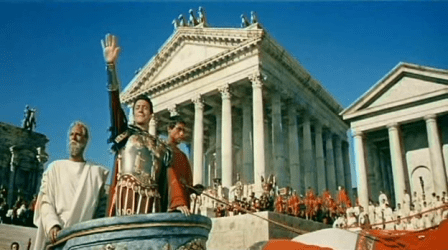
“Livius” and “Lucilla” are to be burned at the stake, a tribute to their new God, as the people of Rome celebrate with wild abandon. Also to be burned at the stake are “Ballomar” and his wife. However, in consideration of their former friendship, “Commodus” offers “Livius” a duel for the Roman throne to belong to the winner. The Roman soldiers form a barricade around the two, and the duel takes place.
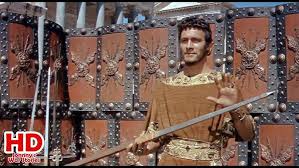
The “Emperor Commodus” is killed and “Livius” declared “Emperor of Rome”, but he declines the honor and with “Lucilla” the two walk away. As people start panic bidding against each other for the command of the Roman armies and by that, “Emperor”.
A voice over is heard stating that although the Roman Empire did not immediately fall, internal corruption led to its eventual collapse.
Point of information:
In 193 A. D. five men, claimed the title of Emperor, “Publius Helvius Pertimnax” won the bidding and became the First Roman Emperor after “Commodus”. His rule lasted 87 days, from January 193 A. D. into March 193 A.D. He was followed by “Marcus Didius Julianus”. Whose reign lasted from March to June. Then three men claimed to be the Roman Emperor at the same time . This caused a Civil War and these Roman General and Politicians were, “Gaius Pescennius Niger”, “Decimus Clodius Albinus”, and “Lucius Septimius Severus”, who started a small dynasty,


Leave a comment