He was born Charles Lutwidge Dodson, but if my reader ever went down the rabbit hole with Alice. Then, they may know him better, by his pen name, of LEWIS CARROLL.
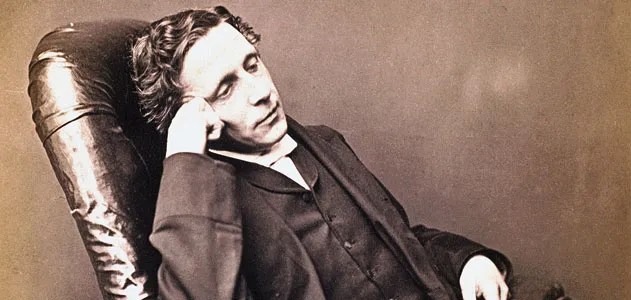
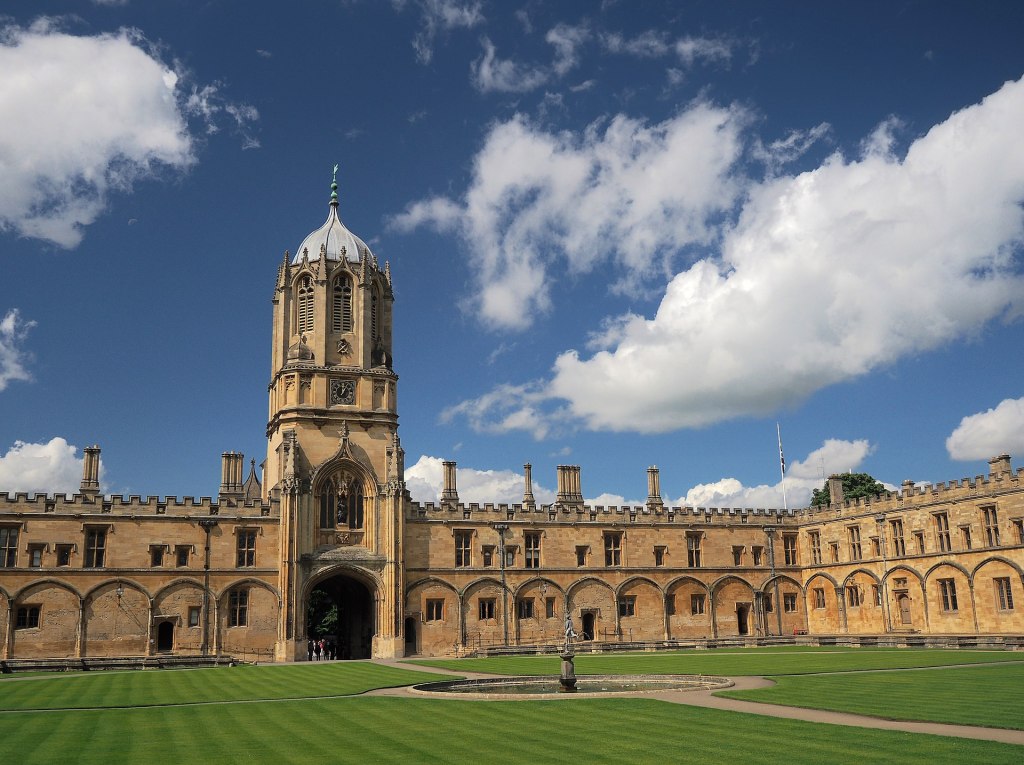
Above, the almost asleep Dodgson, had his higher education at Christ Church College, within Oxford, seen below. This was a requirement of his family, who were known as high-church Anglicans. All the male members were expected to became “Deacon’s” of the church. After completing his education, Charles became a very reluctant Anglican deacon. However, Charles Lutwidge Dodson, was also a poet, mathematician, photographer, puzzler, and of course author.
As I write this article, there are currently 35-motion pictures, 9-direct to video, and 45-television, world wide versions of either Carroll’s “Alice in Wonderland”, “Through the Looking Glass”, or a combination of the two stories.
I will not be looking at every production mentioned in the following link, but I will be selecting several titles to illustrate different on-screen interpretations of the two classic works.
For those of my reader’s who are interested in all of the on-screen versions. The following link from, “Wikipedia”, gives you the current list, as of this writing.
https://en.wikipedia.org/wiki/Films_and_television_programmes_based_on_Alice_in_Wonderland
The Road To Wonderland:
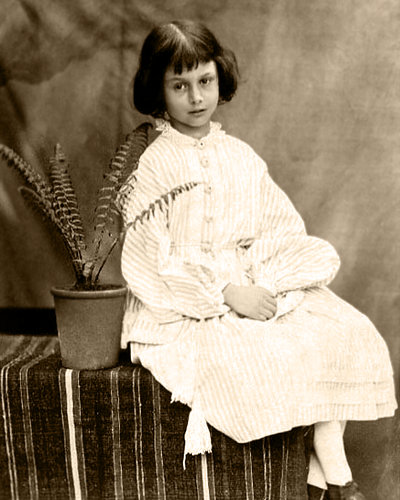
The date was July 4, 1862, the setting is a rowboat riding on “The Isis (Alternate name for the “Thames River), heading for a picnic beside the river. Rowing the boat was the Reverend Robinson Duckworth, when 10-years-old, Alice Pleasance Liddell, asked the other adult, CHARLES LUTWIDGE DODGSON, to tell her and her two sisters, Edith, 8-years-old, and Lorina, 13-years-old, a story. When the story was finished, “Alice” asked Charles Dodgson to write it down for her. In November 1864, he presented the young girl a manuscript he called:
ALICE’S ADVENTURES UNDERGROUND
Below a photograph taken by Charles Dodgson of Alice Liddell at the time of the boat ride.
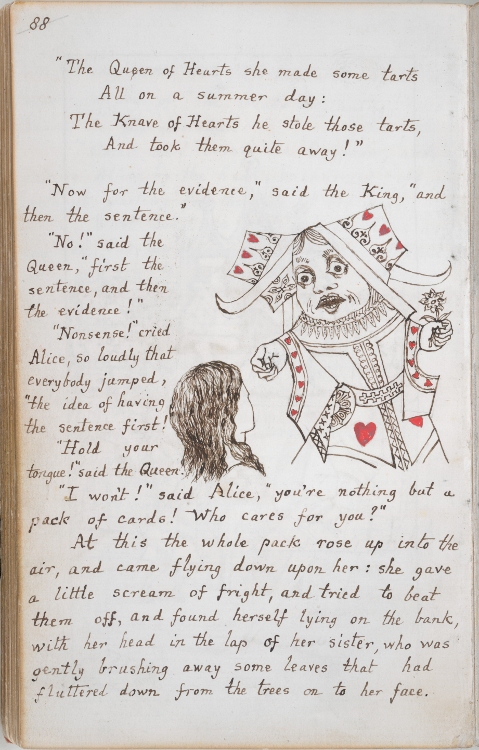
This following page, illustrated by the author, is from his original manuscript of “Alice’s Adventures Underground”.
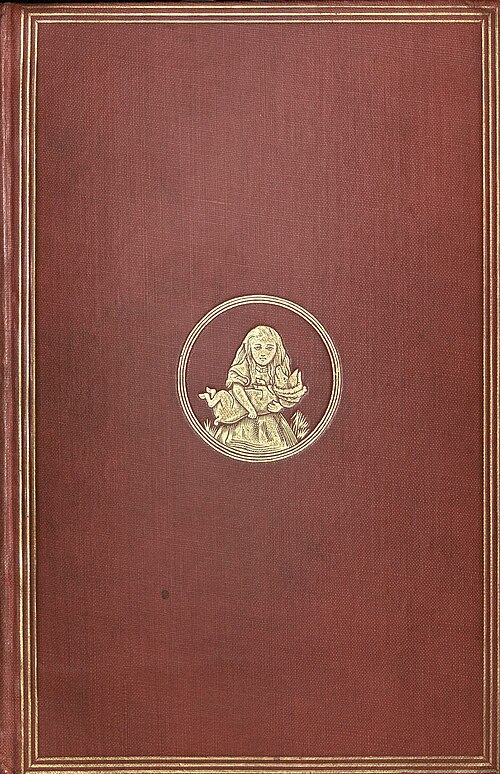
The following photo is the cover of the 1865, First Edition, of “Alice’s Adventures in Wonderland”, the original title of Carroll’s published novel.
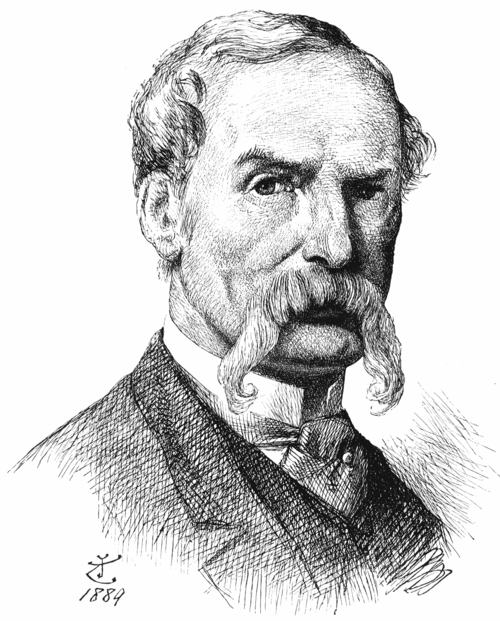
After being advised not to do his own illustrations, and to find a professional for that work. This edition was illustrated by “Punch Magazine’s” political cartoonist, Sir John Tenniel, below, in his self-portrait.
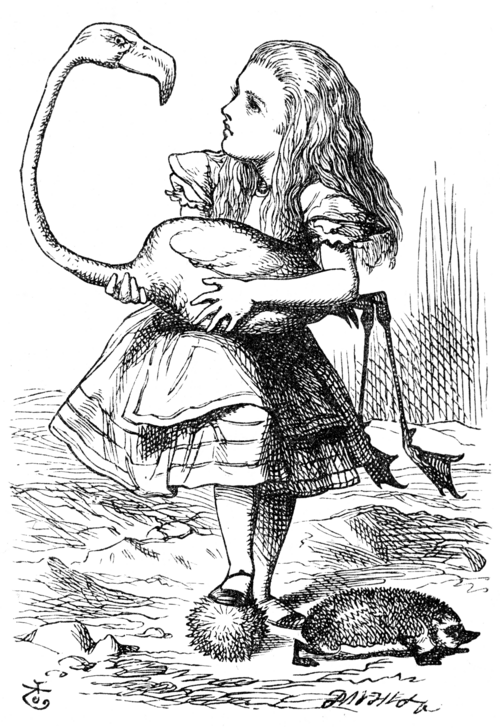
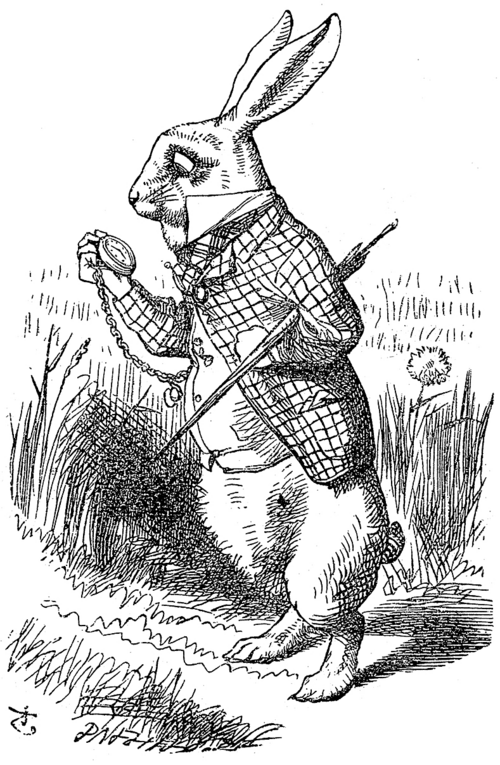
The following are Tenniel’s, “Alice”, “The White Rabbit”, and “The Cheshire Cat”.
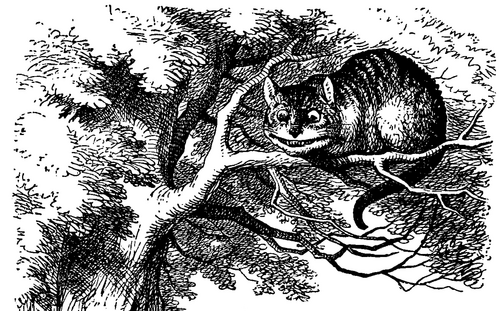
Lewis Carroll’s sequel, “Through the Looking Glass, and What Alice Found There”, the full original title, was published in December 1871. That work was also illustrated by John Tenniell. The novel contains one of Carroll’s classic poems:
“Jabberwocky”
‘Twas brillig, and the slithy toves
Did gyre and gimble in the wabe;
All mimsy were the borogoves,
And the mome raths outgrabe.
“Beware the Jabberwock, my son!
The jaws that bite, the claws that catch!
Beware the Jubjub bird, and shun
The frumious Bandersnatch!”
He took his vorpal sword in hand:
Long time the manxome foe he sought—
So rested he by the Tumtum tree,
And stood awhile in thought.
And as in uffish thought he stood,
The Jabberwock, with eyes of flame,
Came whiffling through the tulgey wood,
And burbled as it came!
One, two! One, two! And through and through
The vorpal blade went snicker-snack!
He left it dead, and with its head
He went galumphing back.
“And hast thou slain the Jabberwock?
Come to my arms, my beamish boy!
O frabjous day! Callooh! Callay!”
He chortled in his joy.
‘Twas brillig, and the slithy toves
Did gyre and gimble in the wabe;
All mimsy were the borogoves,
And the mome raths outgrabe.
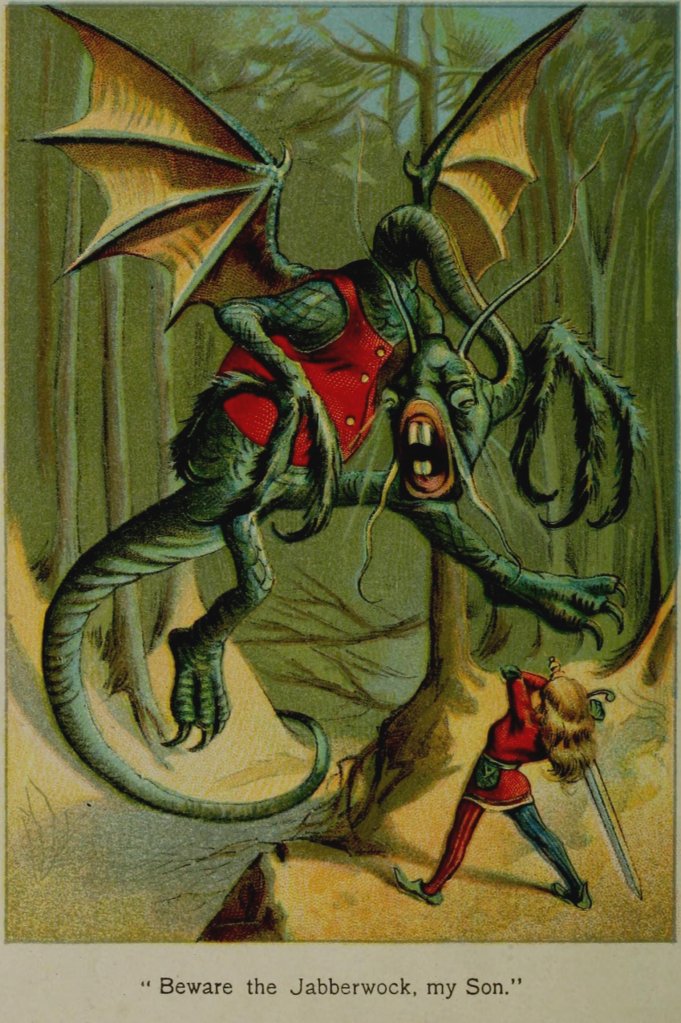
This is how John Tenniell saw “The Jabberwocky”.
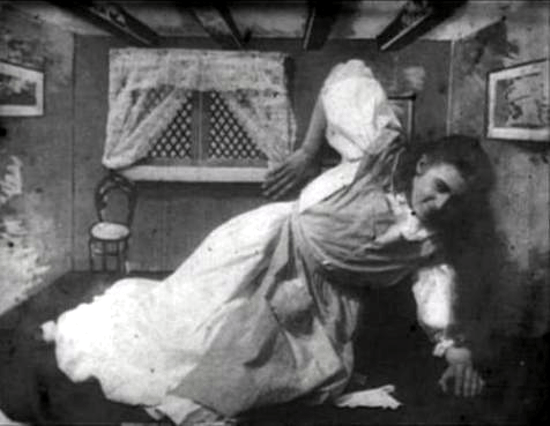
32-years after the publication of “Through the Looking Glass”. The British, “Hepworth Pictures”, founded in 1897, and based at the “Walton Studio’s” in London, made the first film version of “Alice In Wonderland”. The short had a running time of 8-minutes and 19-seconds.
The production company had been founded by Cecil M. Hepworth. Considered one of primary founders of the British film industry.
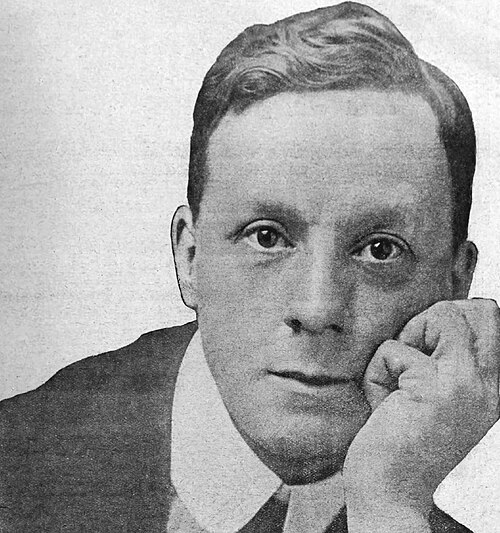
May Clark portrayed “Alice”. Between 1900 and 1908, she made 20-films, but stopped acting, and became a cinematographer.
Cecil M. Hepworth, himself, portrayed “The Frog”. Between 1898 and 1914, Hepworth acted in 29 short and full-length films. Between 1896 and 1927, he directed a combination of 136 short and feature length films, and between 1829 and 1927, Cecil Hepworth produced 1,675 short and full length films.
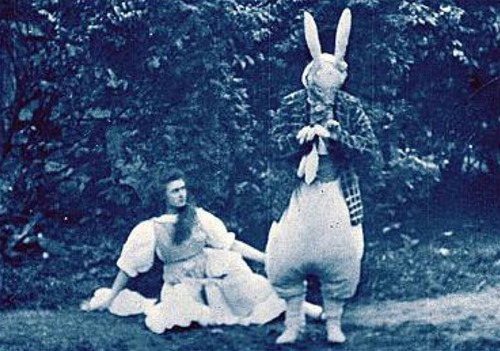
Mrs. Margaret Hepworth portrayed both “The White Rabbit” and the “Queen of Hearts”. This was the first of five films she appeared in between 1903 and 1905. Below is her “White Rabbit” with May Clark’s, “Alice
Below, Normen Whitten portraying “The Mad Hatter”, at the tea party with “Alice”. This was the second of his five short films as an actor. Whitten also produced five other short films.
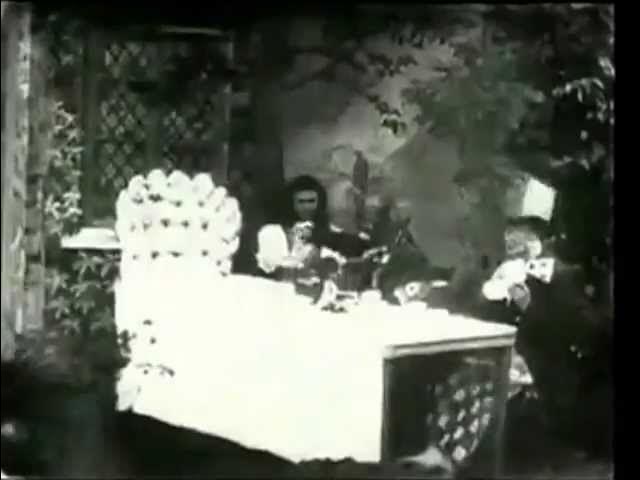
As of this writing, the following link will take my readers to the 1903, “Alice In Wonderland”.
https://www.youtube.com/watch?v=zeIXfdogJbA
Two other “Alice in Wonderland” silent films followed, both made in the United States.
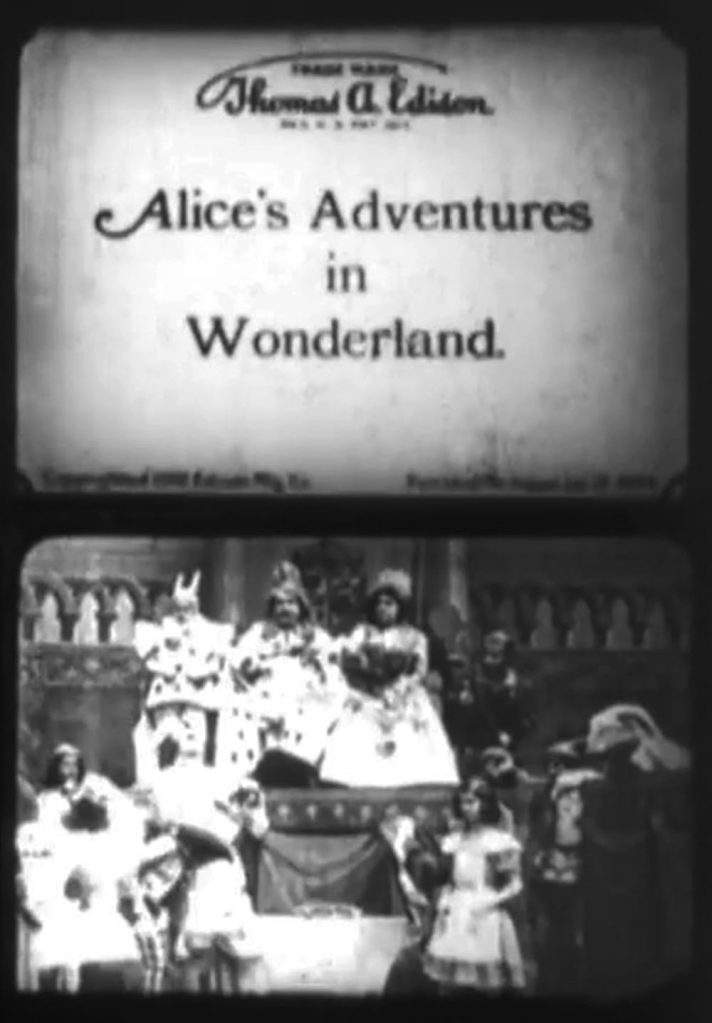
The first was from Thomas Edison’s motion picture company. “Alice’s Adventures in Wonderland”, was a short released on September 9, 1910, with a running time of 10-minutes.
The second United States, “Alice In Wonderland” production, was also the first full-length motion picture version. We know the picture was written, directed, and edited by a W. W. Young. We also know that he edited the 1930 documentary, the “Mystery of Life”. The “IMDb” website added only one other piece of information about Young. He was a “New York child psychologist”, which is mentioned at:
https://www.imdb.com/name/nm0950148/trivia/?ref_=nm_dyk_trv
ALICE IN WONDERLAND released on January 19, 1915
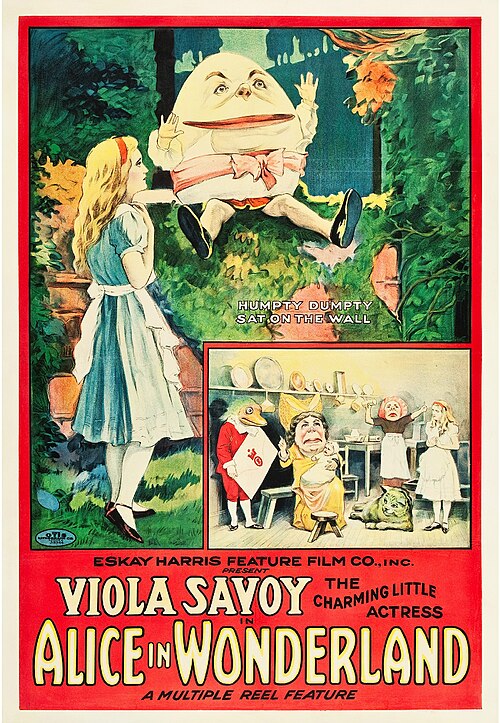
As the above poster shows, the role of “Alice” was portrayed by legitimate stage actress, Viola Savoy, and “The White Rabbit”, seen with her below, was portrayed by Herbert Rice. The 15-year-old actress only did one other film, 1915’s, “The Spendthrift”, with 6th-billing.
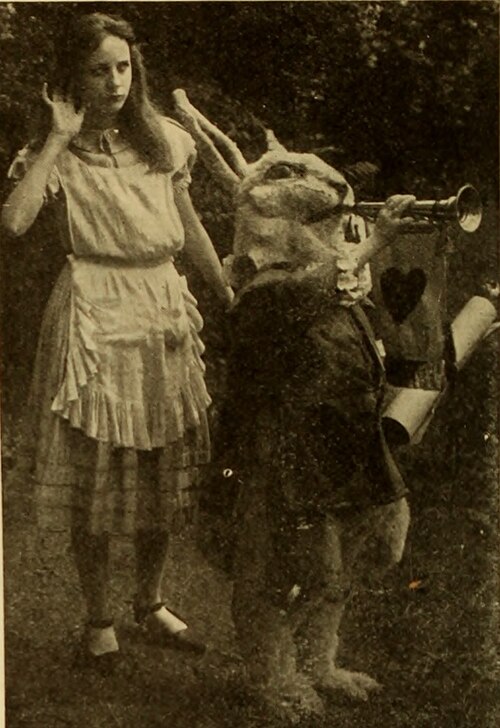
Apparently, later in 1915, W. W. Young, wrote the following for a legitimate theatre style program to accompany a special showing of the motion picture. The program reads:
“for the BENEFIT PERFORMANCE FOR BRYN MAWR COLLEGE ENDOWMENT – ESKAY HARRIS FEATURE FILM CO, Inc PRESENTS – “Alice In Wonderland’
And there is delightful little Alice herself. We spent more than two months looking for just the type to portray the difficult stellar role. Several of the most popular motion picture stars, famous for their curls and girlish looks, were seriously considered, but for one reason or another would not fit. I studied the photographs of scores upon scores of motion picture and stage children of various degrees of fame and had personal interviews with many.
Finally in a theatrical manager’s office I saw a photograph of Viola Savoy and felt instinctively that my search had ended, for if in person she lived up to the promise of her photograph, there could be no doubt of her being exactly the type. Within two minutes after meeting her, and without bothering to inquire whether she had ever acted for the picture screen, she was engaged for the title role. That it was a happy choice is the unanimous verdict. She is Carroll’s Alice come to life.
Subsequently I learned that she had been acting from infancy and although only twelve years old had appeared in 128 different productions on the legitimate stage, her most recent achievement being the title role in The Littlest Rebel with William Farnum. Best of all, she knows that most effective acting is just being natural, and that is exactly the way she played Alice.
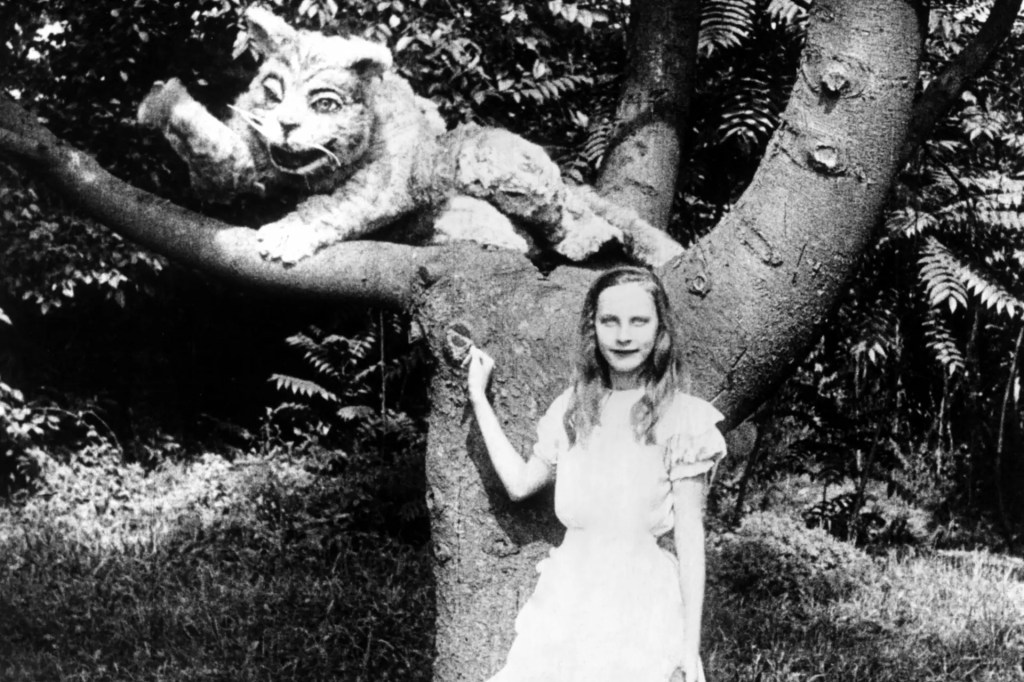
Above, Viola Savoy and an unknown actor as “The Cheshire Cat”.
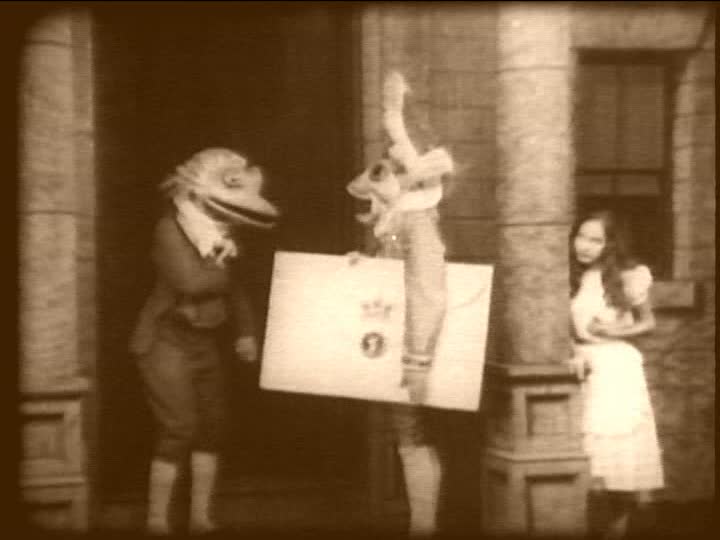
As of this writing, the following link will take my reader to the partly reconstructed print, of the 1915, “Alice in Wonderland”. There are complete scenes missing and some others have missing sections and dialogue.
https://www.youtube.com/watch?v=pRNCYvnt4N4
I move forward three-years to a recognized reworking of Lewis Carroll’s “Alice“, and the basis for what became a major animation studio.
On June 28, 1921, the “Laugh-O-Gram-Studio”, opened on the second floor of the McConahay Building, 1121-1131 E. 31st Street, in Kansas City, Missouri. The animation studio occupied a five-room suite of second floor studios. However, in July 1923, the owner of the studio had to file for bankruptcy, and on October 16, 1923, the doors closed forever.
The studio’s final short, “Alice’s Wonderland”, was a combination of live action, and animation. It was ready to be released on “Laugh-O-Gram’s” final date of operation, however, the short was put hold.
What did happen, was that the founder and owner of “Laugh-O-Gram” had convinced his brother, and his staff to move with him to Hollywood, California. Where the motion picture industry was relocating, because the weather permitted out door filming year round. He even convinced the mother of Virginia Davis, his “Alice”, to move to California with him.
Any fans of animation would recognize the names of the crew that moved, Ub Iwerks, Hugh Harman, Rudolf Ising and Fritz Freleng. The owner’s brother’s name was Roy, and he was Walter Elias Disney.
As I just mentioned, “Alice’s Wonderland” would have been released, October 16, 1923, but instead it would be used as a promotional tool to get financial backers for the new Hollywood, California, location.
ALICE’S WONDERLAND
Walt Disney wrote the story line that finds “Alice”, Virginia Davis entering the “Laugh-O-Gram” studio and being shown drawing boards that come alive. After leaving, that night, she dreams about taking a train to cartoon land. There she is greeted by and interacts with cartoon characters in her “Wonderland”.
That short, and the 56 others that followed in the series, are recognized as a direct reworking of Lewis Carroll’s “Alice in Wonderland”. The series is mentioned on many lists of Carroll’s work found on-screen. Instead of following “The White Rabbit” down its rabbit hole, Walt’s “Alice” enters the “Laugh-O-Gram” studios and it becomes the modern “Wonderland”. The following link, at the time of writing, will take my reader to the complete short:
https://www.youtube.com/watch?v=tIFEIVkYSnw
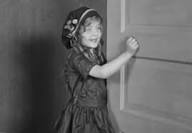
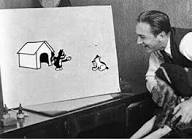
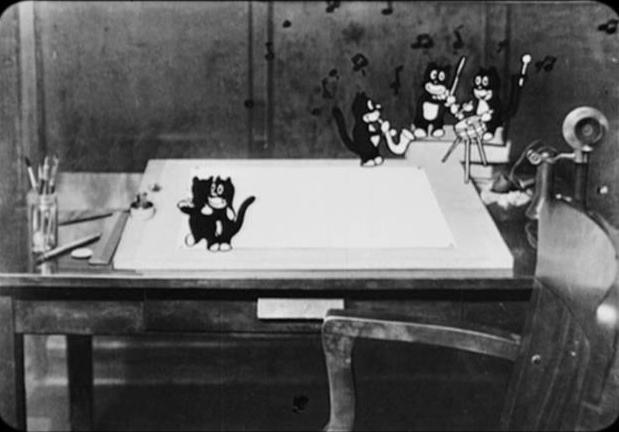
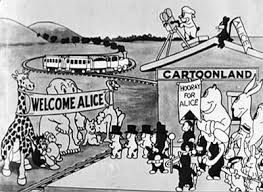
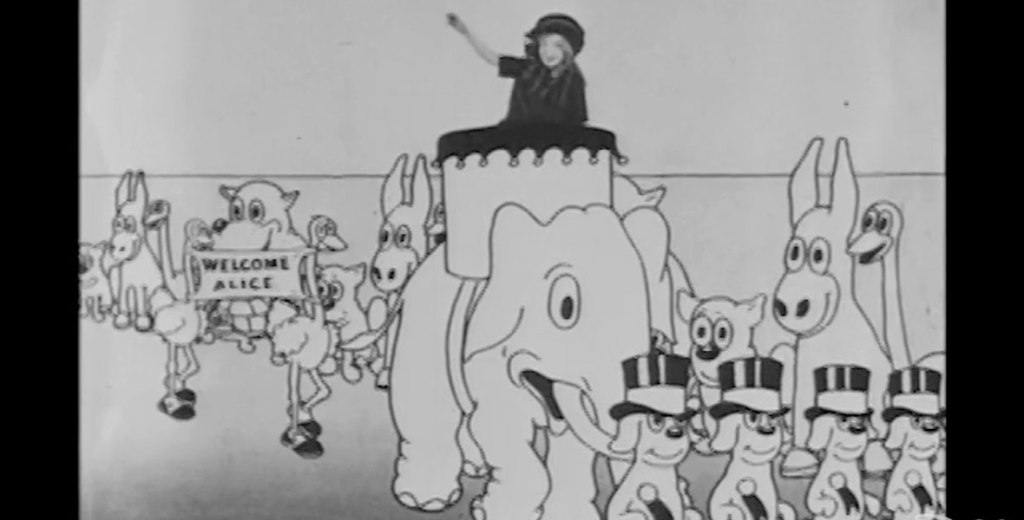
The “Alice Comedies” would last into August 22, 1927, with “Alice in the Big League”. There would be three other “Alice’s” over that time, Virginia Davis appeared in 15 shorts, Margie Gay in 31, Dawn O’Day in 1, and Lois Hardwick in 10.
The next time Lewis Carroll’s “Alice in Wonderland” appeared on-screen was one-year prior to the “Centenary Celebration of the Birth of Lewis Carroll”.
ALICE IN WONDERLAND premiered on September 20, 1931
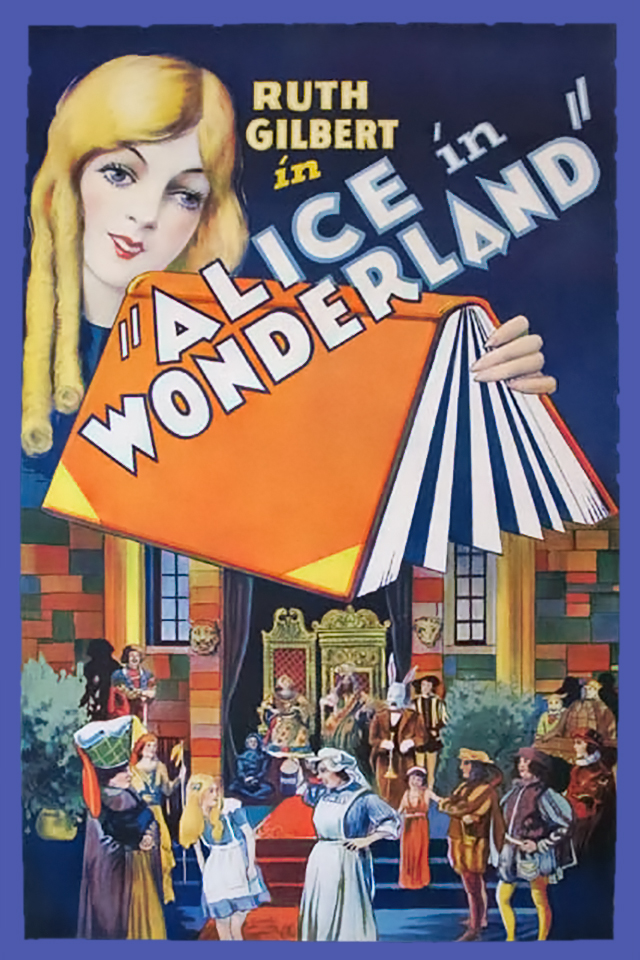
This version of Lewis Carroll’s story was remembered for two things only. This was the FIRST SOUND VERSION of the story, and a fictious claim that Irving Berlin wrote a “Jazzy Theme Song” just for this motion picture.
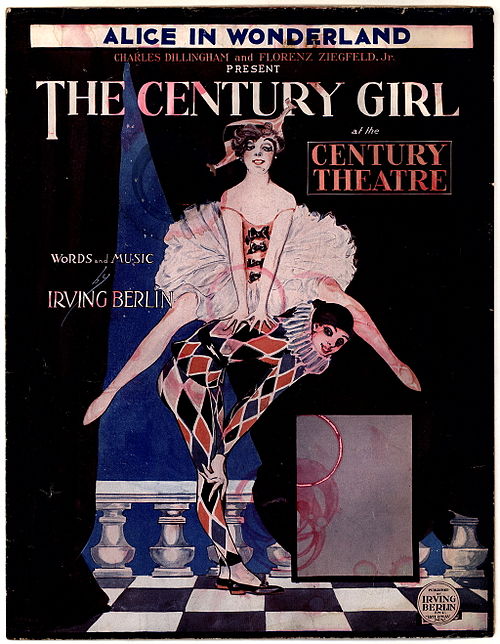
However, that theme song entitled “Alice in Wonderland” was actually written by Irving Berlin in 1916 for the the Broadway musical, “The Century Girl”, and last was heard in another Irving Berlin Broadway musical, 1924’s, the “4th Music Box Revue”
Ruth Gilbert portrayed “Alice”. This role gave Gilbert national attention and she switched to the legitimate theater. She portrayed 6th-billed “Muriel McComber”, just behind, 5th-billed Elisha Cook, Jr. as “Richard Miller”, in the premier of Eugene O’Neil’s “Ah, Wilderness”, October 2, 1933. Her next on-screen role was on May 7, 1949, in “The Florist Shop”, on televisions “NBC Presents”.
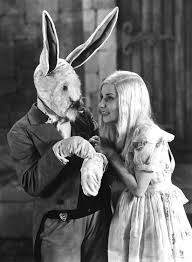
Above, Ralph Hertz portraying the “White Rabbit” and Ruth Gilbert portraying “Alice”.
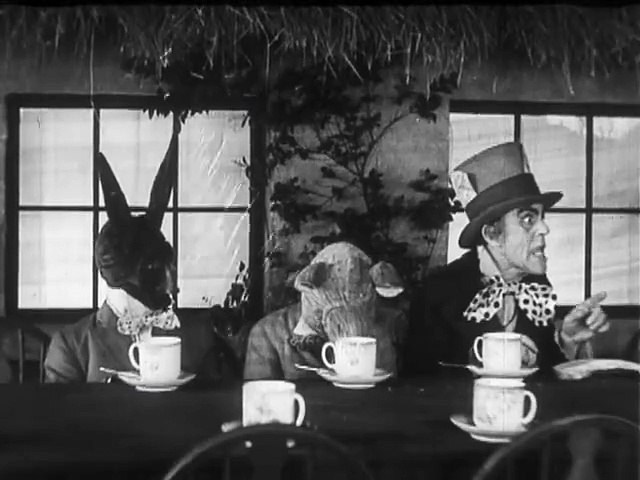
Above left to right, Meyer Beresen portraying the “March Hare”, Raymond Schultz portraying the “Dormouse”, and Leslie T. King portraying “The Mad Hatter”.
Although the above was the first sound production, it was overshadowed, even before it was released. This was because “Paramount Pictures” was in the process of making a major production, and what a production it was:
ALICE IN WONDERLAND released on December 22, 1933.

You do not need to take the time to read all the names on the above poster, because they appear beside the roles each played, in “Alice in Wonderland”, on the following closing credit list. Which includes Gary Cooper, W.C. Fields, and Cary Grant. Every name listed was under contract to “Paramount Pictures”. Which meant an actor, or actress, had to do whatever role the Executives wanted them to play without objection. In this case, ALL ACTORS NOT ASSIGNED TO A ROLE on another feature film currently under production on the “Paramount Picture’s” lot was assigned to a role in “Alice in Wonderland”.


The screenplay was based upon both works by author Lewis Carroll, leaning more heavily on the second, “Through the Looking Glass and What Alice Found There”.
The screenplay was by two interesting writers.
Over his career, Joseph L, Mankiewicz, was nominated by the “Academy of Motion Picture Arts and Sciences” for 10-Oscars, and won 4-Oscars for two motion pictures. In each case, one Oscar was for his Directing and the other for his Screenplay writing. The movies were 1949’s, “A Letter to Three Wives”, starring Jeanne Crain, Linda Darnell, and Ann Sothern, and 1950’s, “All About Eve”, starring Bette Davis, Anne Baxter, George Sanders and Celeste Holm. Two other of Mankiewicz’s screenplays are for the 1955 musical, “Guys and Dolls”, starring Marlon Brando, Frank Sinatra and Jean Simmons, and 1963’s, “Cleopatra”, starring Elizabeth Taylor, Richard Burton and Rex Harrison.
Although, this is the only screenplay by William Cameron Menzies. He was one of the uncredited Director’s on 1939’s, “Gone with the Wind”, but is known to science fiction fans for two motion pictures he Directed. These are, 1936’s, “Things to Come”, with one of only two screenplays written by British author H.G. Wells, and, 1953’s, “Invaders from Mars”.
William Cameron Menzies was also the Art Designer for “Alice in Wonderland”. As he was for 1936’s, “Things to Come”, and 1953’s, “Invaders from Mars”. My article is “William Cameron Menzies: Art Director, Production Designer and Motion Picture Director” at:
https://www.bewaretheblog.com/2022/09/william-cameron-menzies-art-director.html
The make-up and masks were by Wally Westmore, one of the six Westmore brothers. Among his work was the Oscar Winning Make-up he designed for Frederick March’s title role in 1931’s, “Dr. Jekyll and Mr. Hyde”, and the Charles Laughton and Bela Lugosi, make-ups for 1932’s, “Island of Lost Souls. Which was based upon H.G. Wells’, the “Island of Dr. Moreau”,
There were three Directors on this feature film. The “Live Action” was Directed by Norman Z. McLeod. McLeod had Directed the Five Marx Brothers, Groucho, Chico, Harpo and Zeppo, in 1931’s, “Monkey Business”, and 1932’s, “Horse Feathers”, just prior to this feature.
The animation sequences were from the team of Hugh Harmon and Rudolf Isling.
Below, some of the Inhabitants of “Wonderland”, as Envisioned by William Cameron Menzies and Wally Westmore:

Above, Charlotte Henry’s “Alice” realizes there’s a “Looking Glass Room”. That is the opposite of her own room, or is it really vice-versa as Carroll wrote it?

Above, William Austin as “The Gryphon”, is speaking to Charlotte Henry, and Cary Grant as “The Mock Turtle”. Below, Roscoe Karns and Jack Oakie are “Tweedledee and Tweedledum”


Above, a rare color enhanced photo, the picture is in black and white, with Richard “Skeets” Gallagher as the “White Rabbit”. Below, Ned Sparks as the “Caterpillar”.


Above, May Hobson as “The Queen of Hearts”, and Alison Skipworth as “The Duchess”. Below, Edward Everett Horton as “The Mad Hatter” and Charlie Ruggles as “The March Hair”.


Above, Richard Arlen as “The Cheshire Cat” and below, Gary Cooper as “The White Knight”.

Last, but not least, W.C. Fields as “Humpty Dumpty”.

The motion picture was a box office flop for “Paramount Pictures”. One of the reasons given was that the audience came to see their favorite stars, but could not figure out who was who under the make-ups. Another factor was the studio kept the finished feature to only 77-minutes. The Mankiewicz and Menzies screenplay was attempting to do most of both novels. While keeping Lewis Carroll’s prose in place. A tall mountain to climb!
Another Box Office factor faced by “Paramount Studios” was that the motion picture was banned in China, causing a major loss of Box Office. Their censors claimed the motion picture came under the country’s category of “Superstitious and Strangeness” films.
A final look at Charlotte Henry as “Alice”.


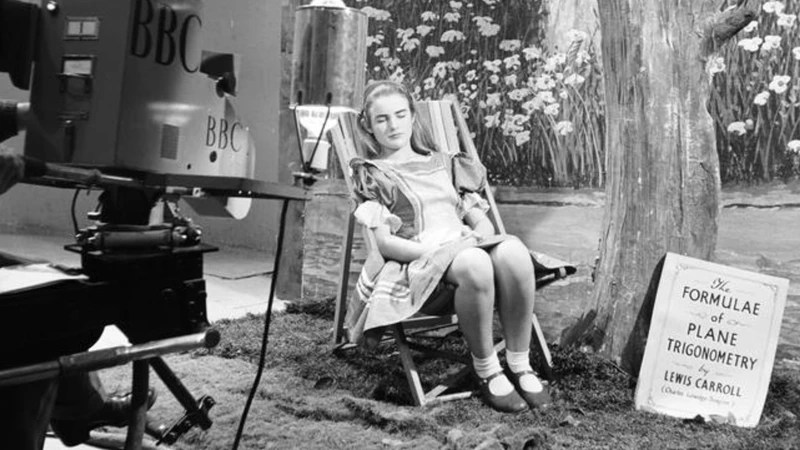
It would be the “British Broadcast Corporation (BBC)” on December 21, 1946, after the Second World War, that brought the next version of “Alice in Wonderland”, as either as 40-minute, or 46-minute, depending on the source, LIVE television production “Alice”.
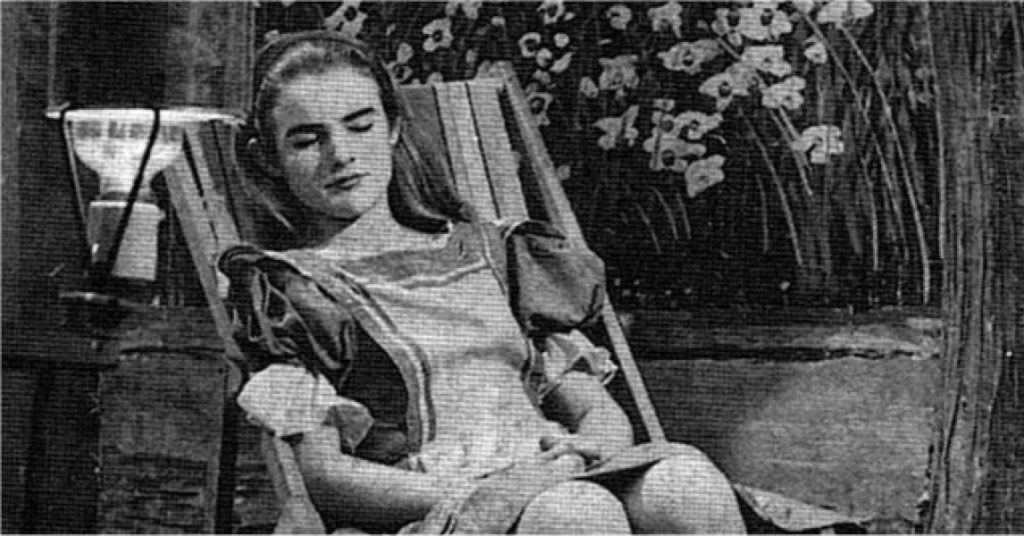
Above, either 14, or, 15-years-old, depending on the source, Vivian Pickels portraying “Alice”. Below, how it looked on set.
Alice au pays des merveilles (Alice in Wonderland) premiered in France on May 13, 1949
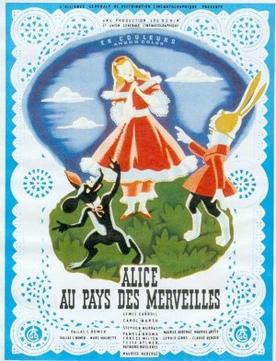
This was a vision of “Alice in Wonderland” that combined live action with puppets. That vision belonged to American puppeteer Lou Bunin, one of the pioneers of stop-motion-animation. For this feature, Bunin was able to get additional funding from J. Arthur Rank, the head of the British “Rank Motion Picture” organization. However, the film was made by and for the French motion picture company, “UGC Union Générale Cinématographique”.
The motion picture was directed by Dallas Bower. In 1938, he directed for British television, a production of William Shakespeare’s “Julius Caesar”. He was primarily a British television director and also did Shakespeare’s “The Tempest”, and the play “Rope”.
Although Lewis Carroll’s “Alice” is supposed to be 7-years-old. In this film, she was portrayed by 20-years-old Carol Marsh. Who had just portrayed “Rose”, in the British film-noir, 1948’s, “Brighton Rock”, starring Richard Attenborough. Carol Marsh is known to fans of the British Horror studio, “Hammer Films”, for portraying “Lucy Holmwood”, in 1958’s, “Dracula” aka: “Horror of Dracula”, starring Peter Cushing and Christopher Lee.
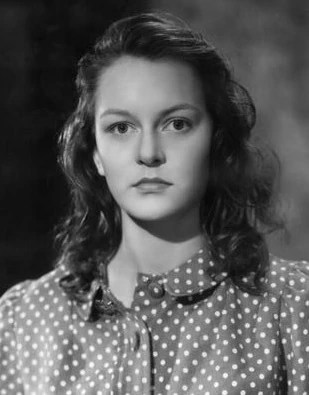
Lou Bunin’s puppetry is excellent in this film, but he ran into trouble on three fronts:
1. The Walt Disney Company was in the process of making their “Alice in Wonderland”, and placed a lawsuit on this picture. The Court’s judgement meant the film could not be shown in the United States.
2. Bunin’s version of the “Queen of Hearts” was considered to close to a parody of “Queen Victoria”, and that didn’t sit well with the British censors. The theatrical English language version, was never shown in Britain until 1985. Although the “BBC Programme Index”, indicates it may have been shown once on British television on April 2, 1961.
3. In the early 1950’s, Lou Bunin was brought in front of the “House Committee on Un-American Activities” and apparently, because of his political beliefs was “Blacklisted”. He had to stopp making motion pictures in the United States, and turned to filming commercials as a lively hood.
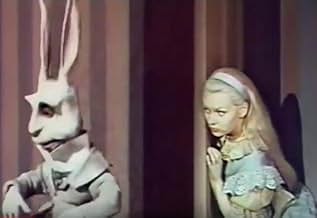
Above, “The White Rabbit”, voiced by Ernest Milton, and Carol Marsh as “Alice”.
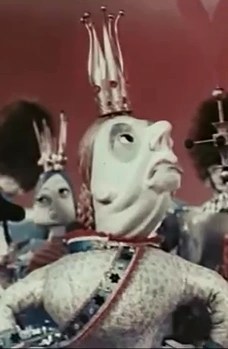
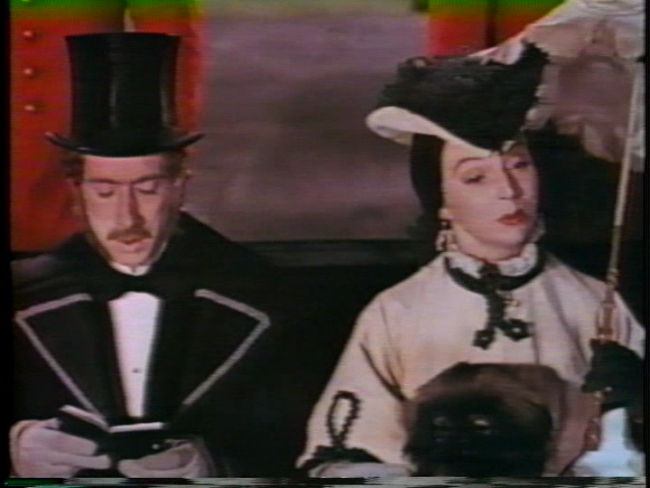
Above, the “Queen of Hearts” voiced by Pamela Brown. In the live action segments, Pamela Brown portrayed “Queen Victoria”, below.
Which brings me to the Walt Disney animated film behind his lawsuit. That might not have happened, if Walt had made his planned, 1933, “Alice In Wonderland”.
HIs original plan, in 1933, was for his first full-length feature and Walter Elias Disney had chosen Lewis Carroll’s “Alice’s Adventures in Wonderland”. This was to have been a live action feature and portraying “Alice”, the “Queen of the Movies”, at the time, Mary Pickford, seen below, in a three-strip technicolor test shot.
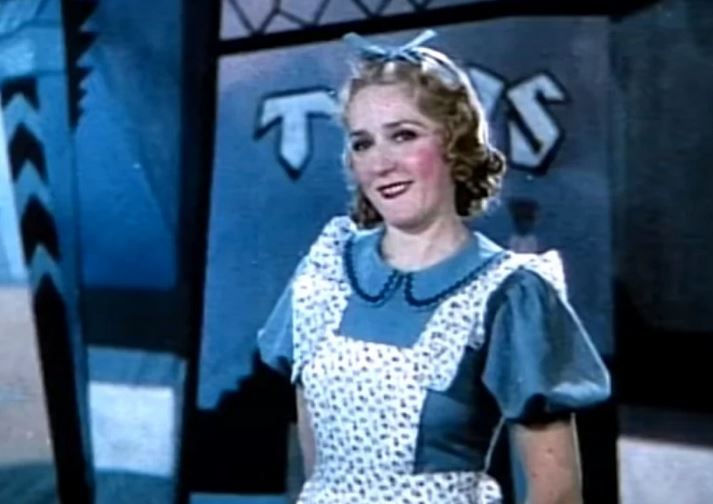
I just mentioned how Carol Marsh was a 20-year-old actress playing a 7-year-old little girl. Now, Disney, was actively looking at a 41-year-old actress in the same role. However, the previously mentioned, “Paramount Pictures”, 1933, production of “Alice in Wonderland”, stopped that idea cold. Instead, Walt started production on “Snow White and the Seven Dwarfs”, the first feature length animated motion picture. It would premiere on December 21, 1937, at the long forgotten “Carthy Circle Theatre”.
While his:
ALICE IN WONDERLAND premiered in London, England, on July 26, 1951
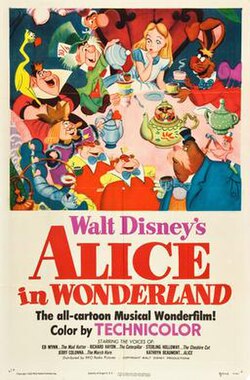
The film opens with the title song, “Alice In Wonderland”, composed by Sammy Fain, with lyrics by Bob Hilliard, and performed by “The Jud Conlon Chorus” and “The Mellomen”.
Alice in Wonderland
How do you get to Wonderland
Over the hill or under land
Or just behind the tree
When clouds go rolling by
They roll away and leave the sky
Where is the land beyond the eye
That people cannot see
Where can it be
Where do stars go
Where is the crescent moon
They must be somewhere in the sunny afternoon
Alice in Wonderland
Where is the path to Wonderland
Over the hill or here or there
I wonder where
Walt Disney’s voice cast were perfect for 1951, and still are for today as I write these words. So, I ask my reader to look the actor’s up and watch their performances in live action movies, or on television.
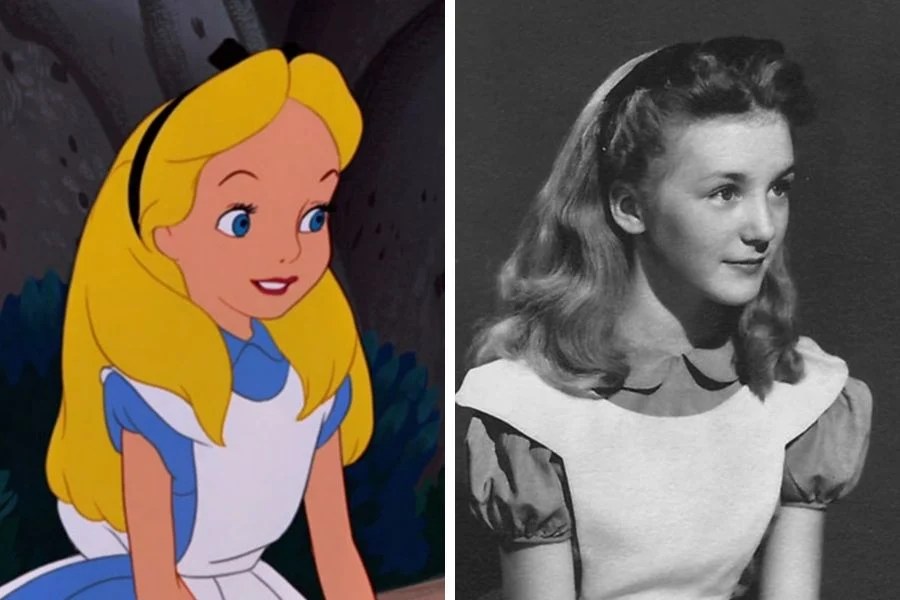
“Alice” was portrayed by ten-year-old Kathryn Beaumont. A possible problem with the production was settled, after Walt became impressed with how Kathryn looked, and used her, also, as the model for the animated character.
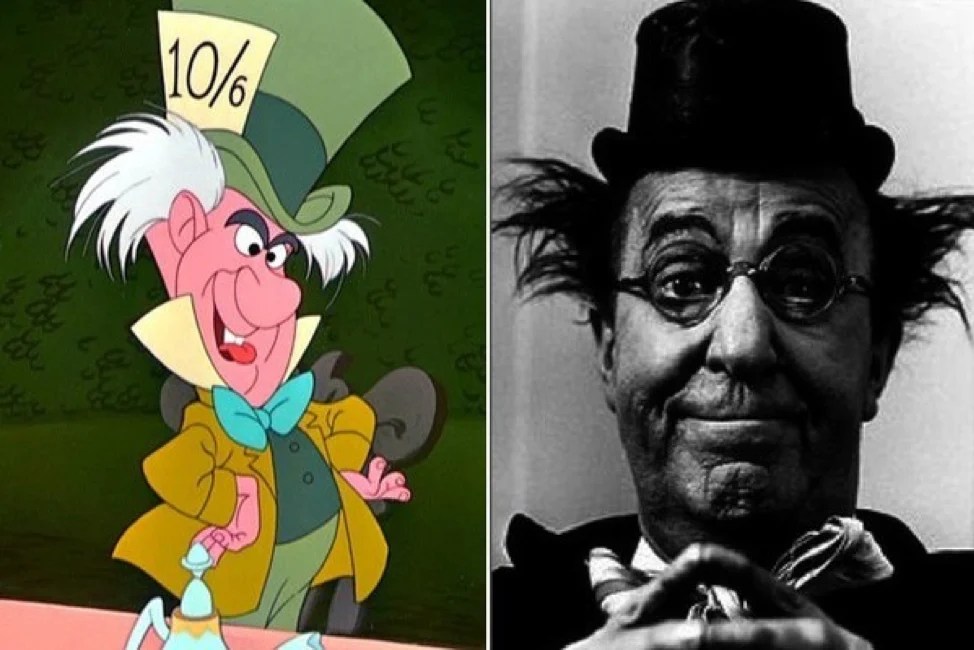
Ed Wynn voiced “The Mad Hatter”.
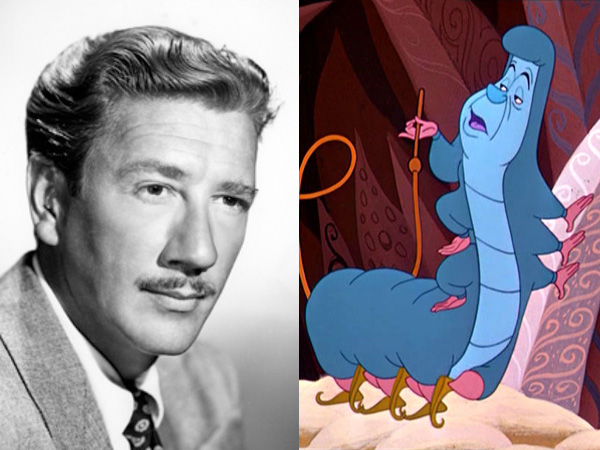
Richard Haydn voiced “The Caterpillar”.
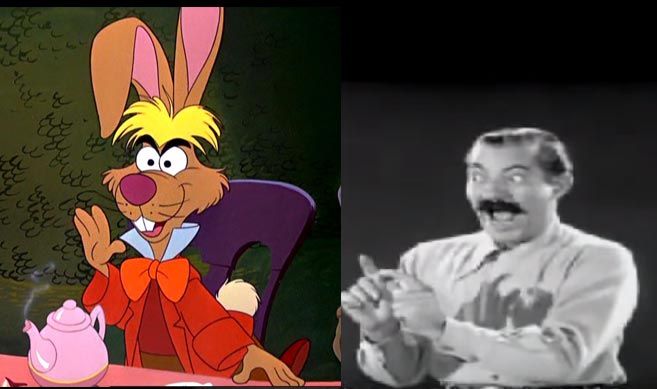
Jerry Colonna voiced “The March Hare”.
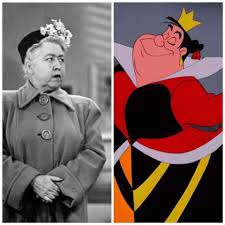
Verna Felton voiced “The Queen of Hearts”.
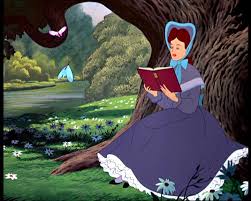
It took 14 writers, including an uncredited Aldous Huxley, to bring both novels together in one screenplay. Huxley, had presented Disney with a 14-page treatment on November 23, 1945, as requested, but followed that with a complete screenplay. Child actress Margaret O’Brien was being considered for the role of “Alice” in Huxley’s screenplay, but the whole idea was dropped. As his screenplay was determined to be to literal an adaptation of Lewis Carroll’s writing..
This happen while Walt was still considering either to make a live, or animated feature film. He was also considering a combination of live action and animation similar to his 1920’s,“Alice Comedies”. At this time, dancer, singer, and actress Ginger Rodgers was being considered for “Alice” in a musical ballet version.
Finally a decision was made and In 1946, the actual work of the animated feature film began. When the last cell was filmed, 143-animators had worked on the feature film,
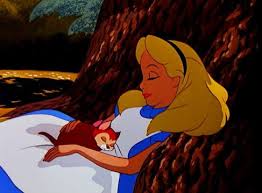
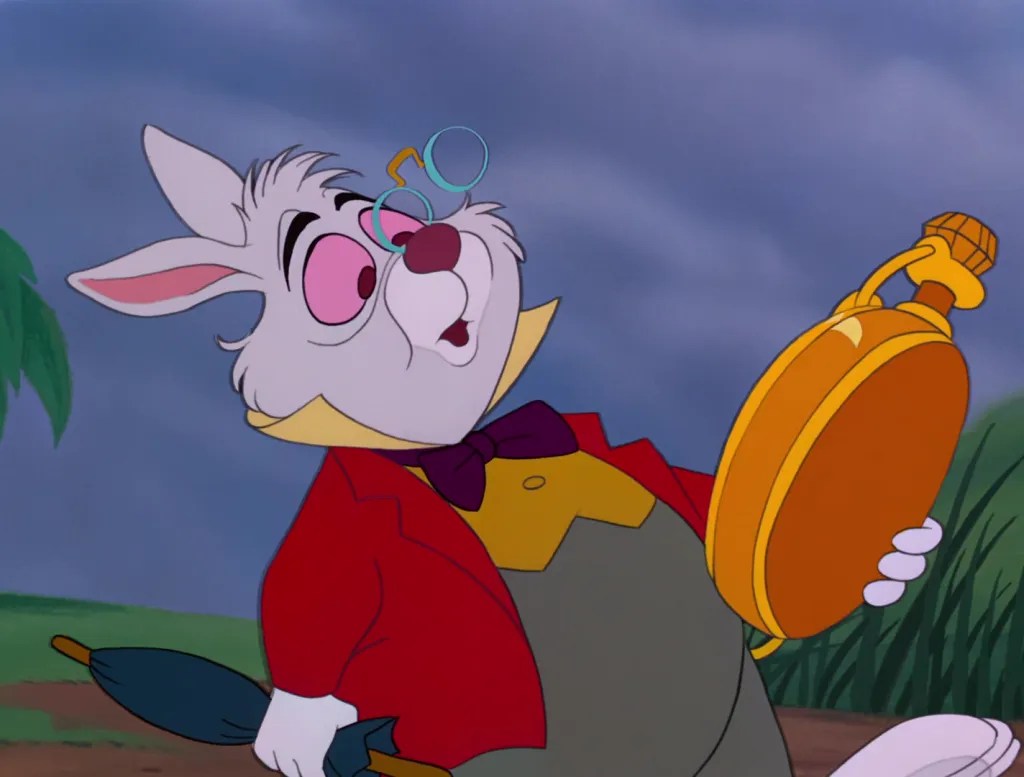
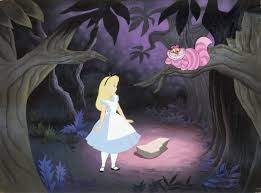
After all the work that went into making “Alice in Wonderland”, the movie was a box office failure. However, 20-years later, “The Kids”, who had seen the picture in 1951, or its severely cut version on televisions “Walt Disney’s Disneyland”. Started having it shown in sold-out performances on college campuses. Walt Disney re-issued the film in, 1974, in its first of many theatrical re-releases. “Alice in Wonderland” was promoted as a “Psychedelic Reflection of the Time”. The commercials used “Jefferson Airplane’s, WHITE RABBIT”, and a cult phenomenon was born.
Then there was a British musical with an all-star British cast.
ALICE’S ADVENTURES IN WONDERLAND released first in the United States on November 20, 1972, followed in the United Kingdom on December 4, 1972
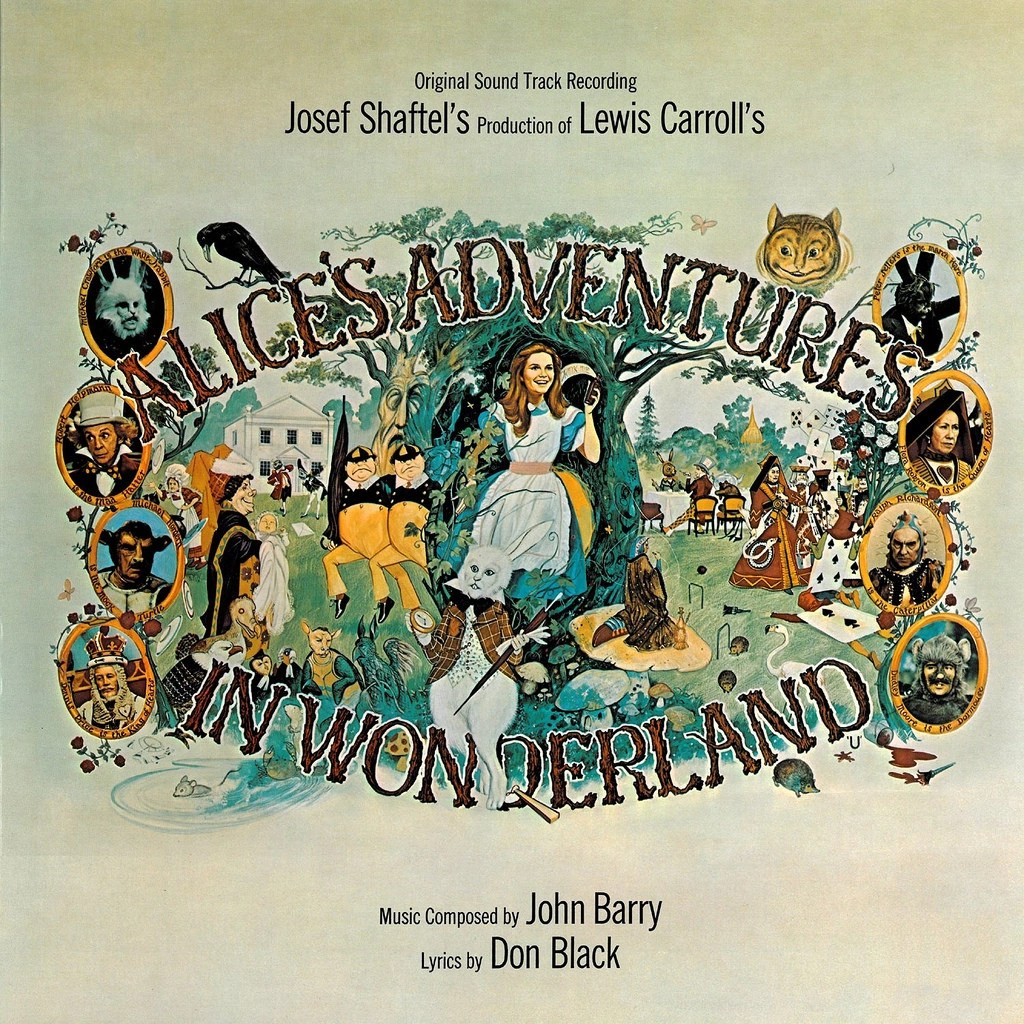
The above record jacket indicates the music for the production was composed by John Barry. Who, at the time, was known for composing the music for the “James Bond” movies. The lyrics where by Don Black, who wrote the lyrics for those “Bond” themes.
The motion picture was produced by Australian William Sterling, and the following is a look at just some of the major British performers that were a part of this forgotten production.
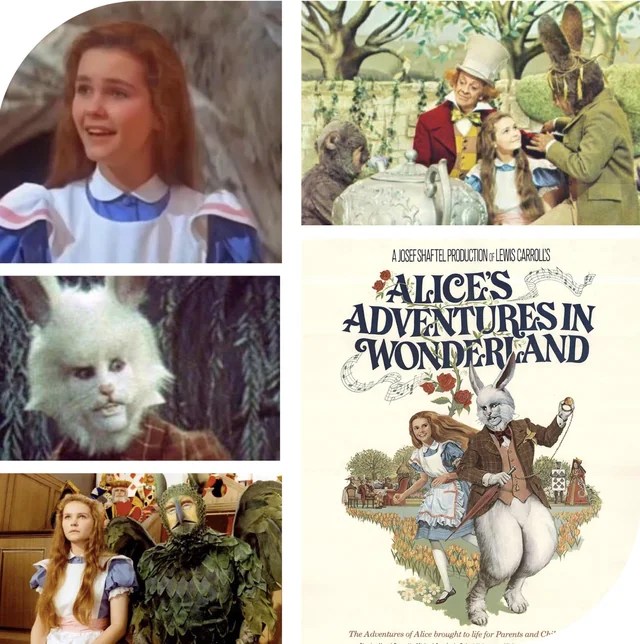
Above, top left is Fiona Fullerton portraying “Alice”. She is followed by Michael Crawford portraying “The White Rabbit”, and Spike Milligan portraying “The Gryphon”. Above right, is Robert Helpmann portraying “The Mad Hatter”, and Peter Sellers portraying “The March Hare”.
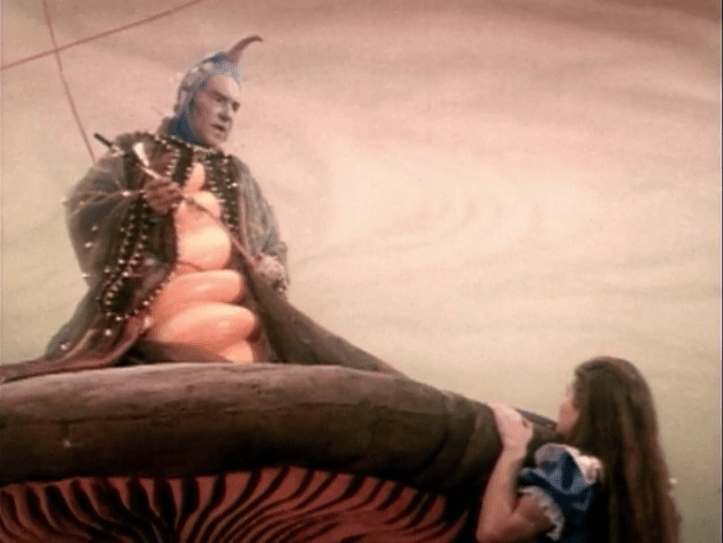
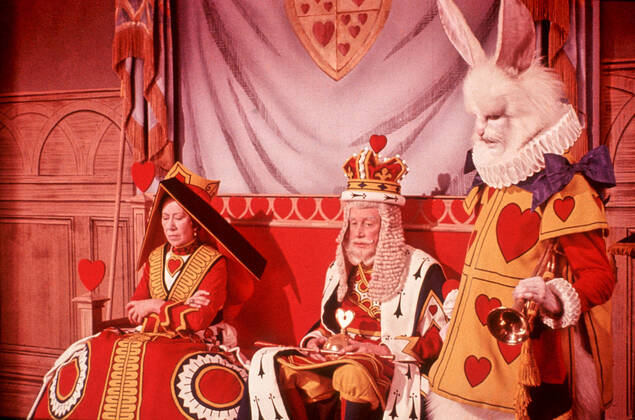
Above, Sir Ralph Richardson portraying “The Caterpillar”. Below, Dame Fiona Robson portraying “The Queen of Hearts”, Dennis Price portraying “The King of Hearts“, and Michael Crawford portraying “The White Rabbit”.
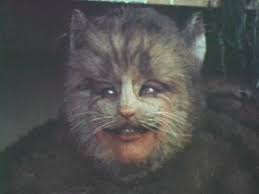
Below, Roy Kinnear portraying “The Cheshire Cat”.
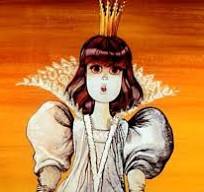
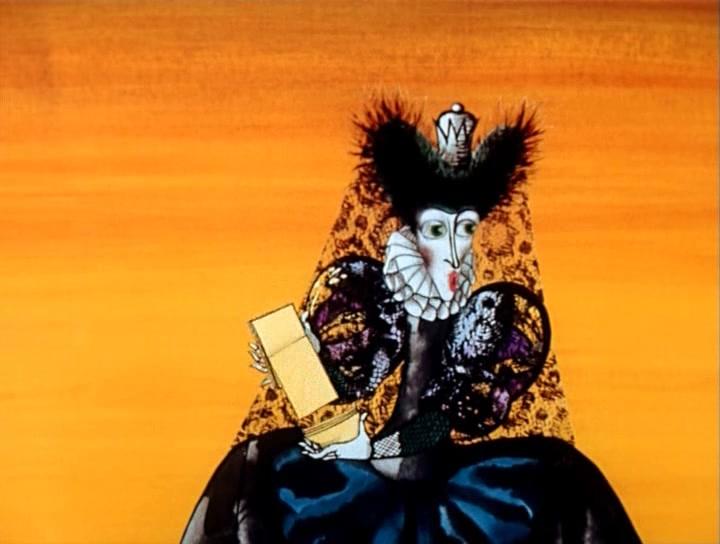
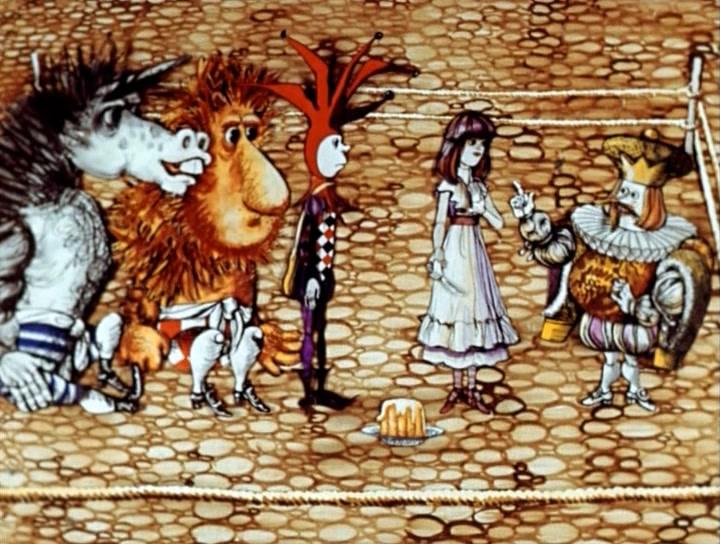
Lewis Carroll’s work was also filmed in the Soviet Union, but over the years. Many reviewers compared the 1981 animated character’s to those from Walt Disney’s 1951 animated feature. Rather than the short, three part, total 30-minute story line, to Carroll.
Алиса в Стране чудес» (Alice in Wonderland) premiered on Ukrainian television in 1981
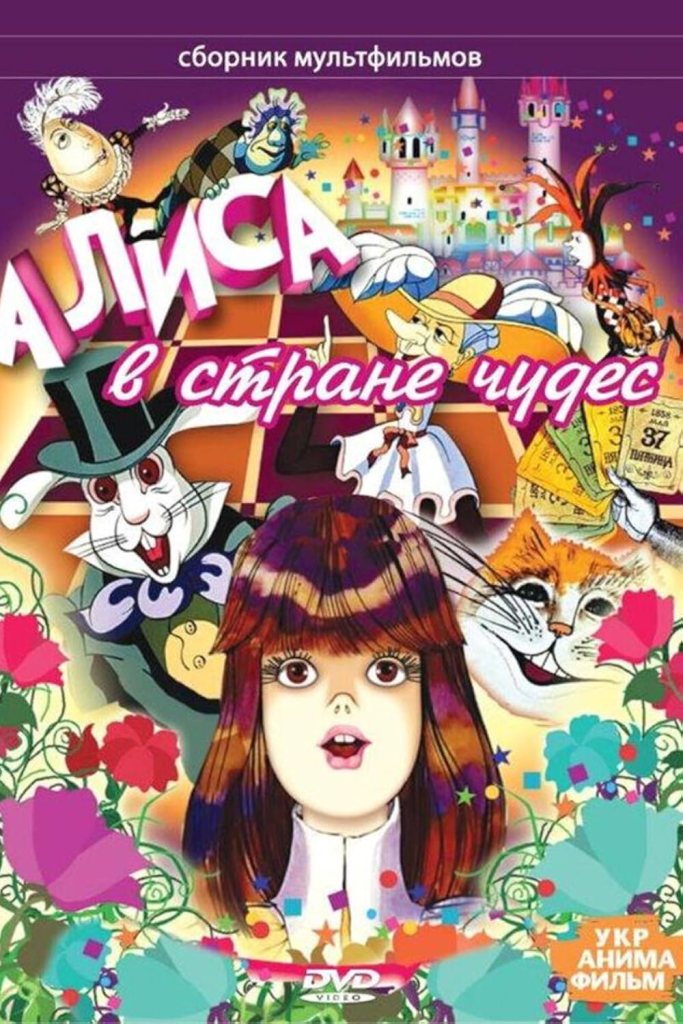
There is an interesting look on line, that does compare the Disney’s “Alice in Wonderland”, to the work of Soviet animators, Nina Churilova, Natalya Marchenkova, Adolf Redan, and Mikhal Titov. at:
https://www.reddit.com/r/cartoons/comments/1g4ypzs/the_characters_of_the_soviet_alice_in_wonderland/
Here are some of the comparison’s.
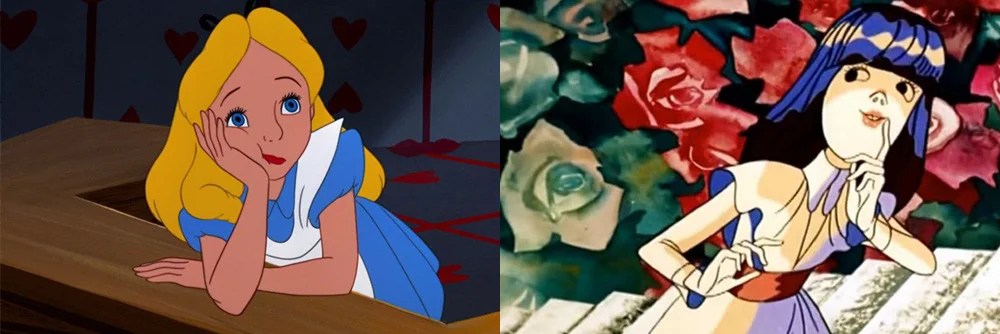
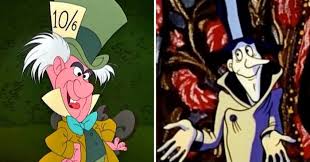
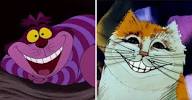
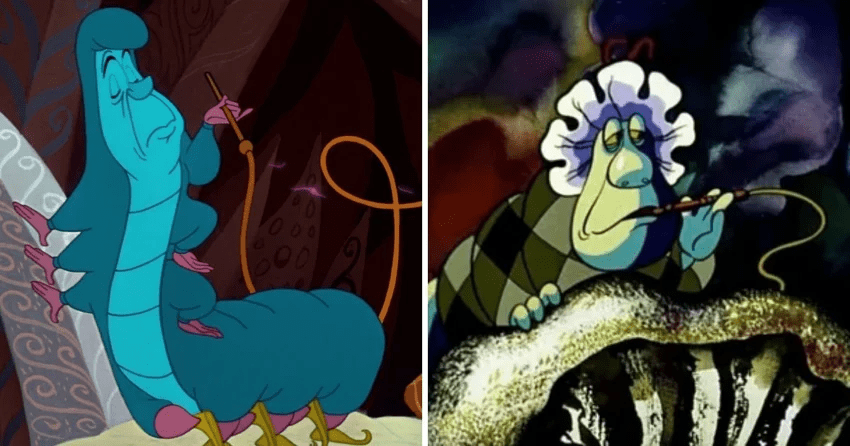
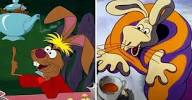
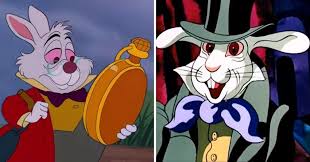
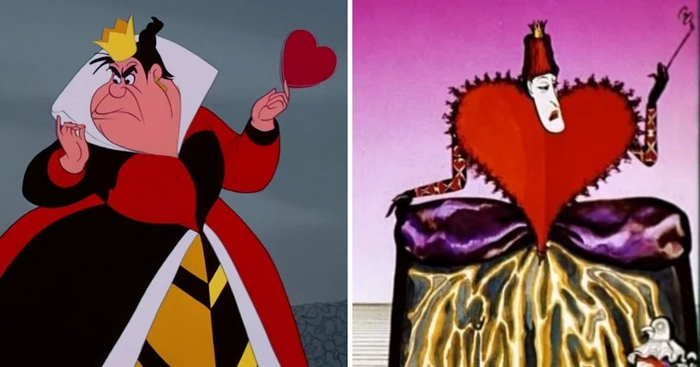
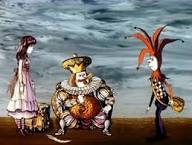
The following year the same Soviet Union animation company made a four-part mini-series of Lewis Carroll’s “Through the Looking-Glass and What Alice Found There”. The specifics of their story I could not locate, but the last still below is of “The White Knight” and “Alice”.
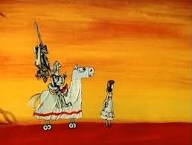
Then there was:
ALICE AT THE PALACE on the National Broadcasting Company (NBC) specials for Children, “Project Peacock”, January 18, 1982
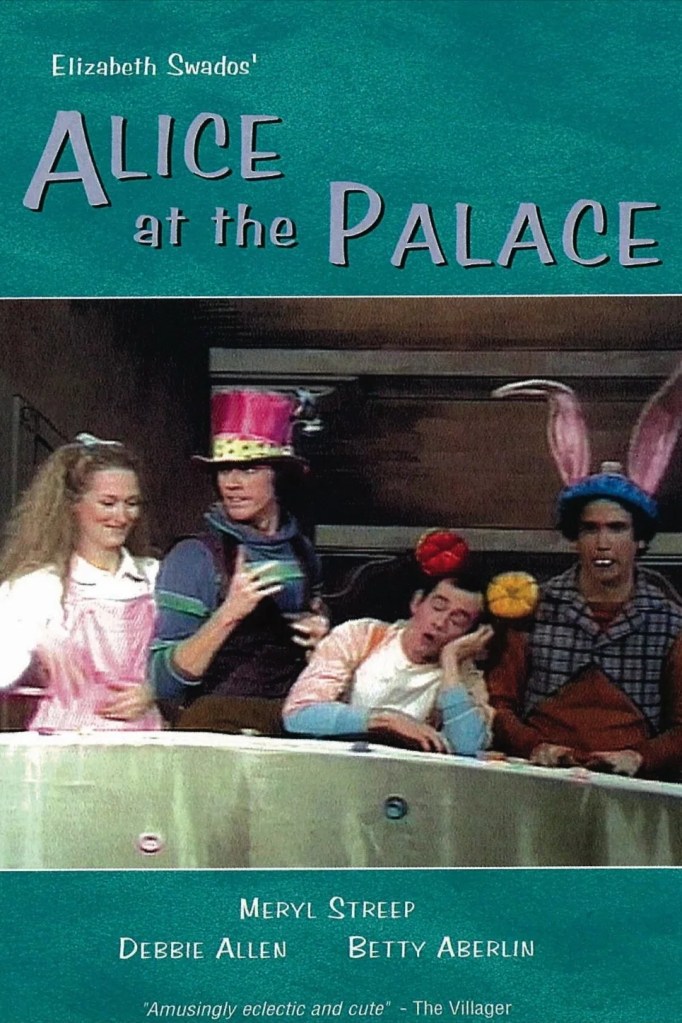
This had been a Broadway production back in 1978, entitled, “Wonderland in Concert“, that starred Meryl Streep as “Alice“.
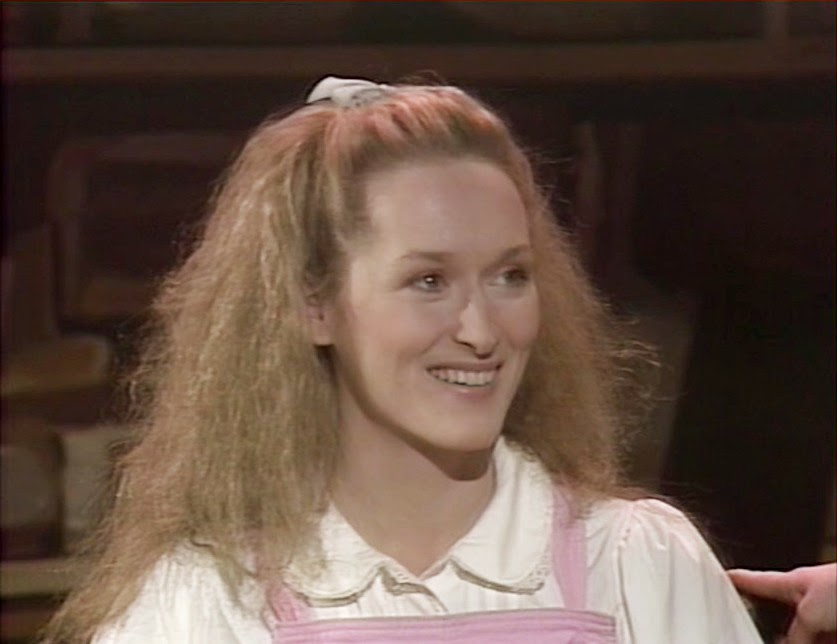
Streep repeated her role in this Children’s production. That takes the viewer to “Wonderland”, but was shorten to a 72-minute running time, without its 18-minutes of commercials that the viewer had to watch.
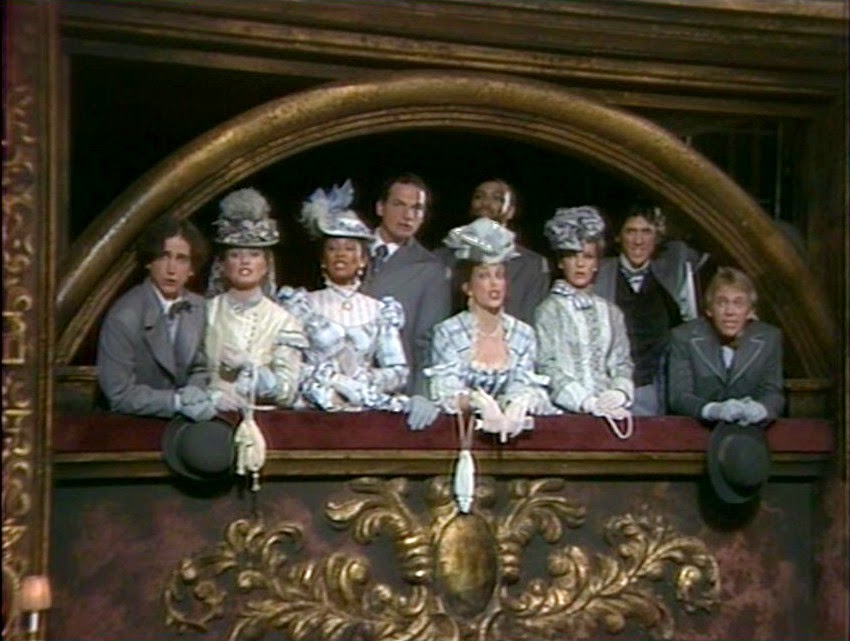
The subtitle of “at the Palace”, referred to England’s, “Victoria’s Palace Theatre” in London. Which the stage was meant to represent, as the original production had been on a bare stage. Below, is a photo of the chorus in what appears to be one of the “Boxes” for the upper class at the theatre.
Debbie Allen portrayed “The Red Queen”.
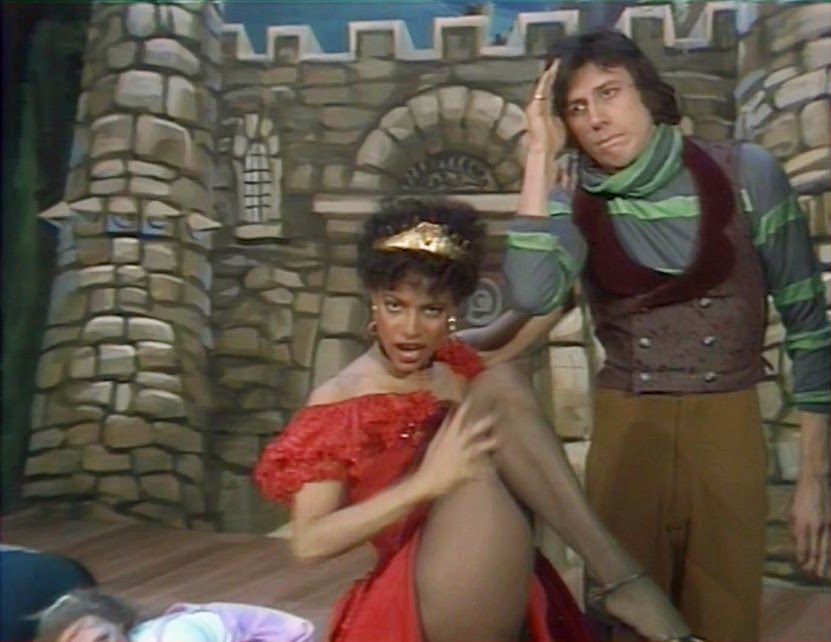
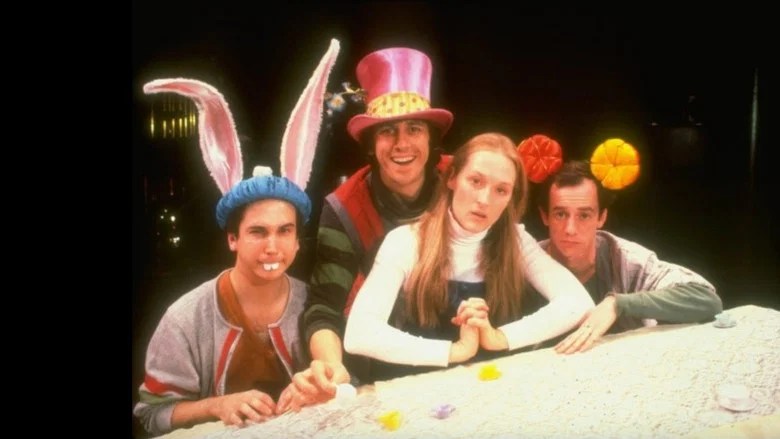
Above, actors in minimal costuming to let a child’s imagination fill in the blanks, and the actor’s free to improvise. Left to right are Mark Linn-Baker portraying “The White Rabbit”, Richard Cox portraying “The Mad Hatter”, Meryl Streep portraying “Alice”, and Michael Jetter portraying the “Dormouse”.
There is confusion by reviewers as to what role a particular actor portrayed. However, that can be remedied by the fact that several actors portray several roles within the show. Take Mark Linn-Baker, not only is he “The White Rabbit”, but he is also “The March Hare”, the “White Knight”, and the “Mock Turtle”. On the opposite side of the above photo, Michael Jetter ,not only portrayed the “Dormouse”, but he also portrays “Bill the Lizard”, and “The Baby”. While,Meryl Streep, and Debbie Allen, each only have one very important role to carry the story through.
Sometimes a movie about “Alice” isn’t about “That Alice”, but the “Other Alice”.
DREAM CHILD released October 4, 1985
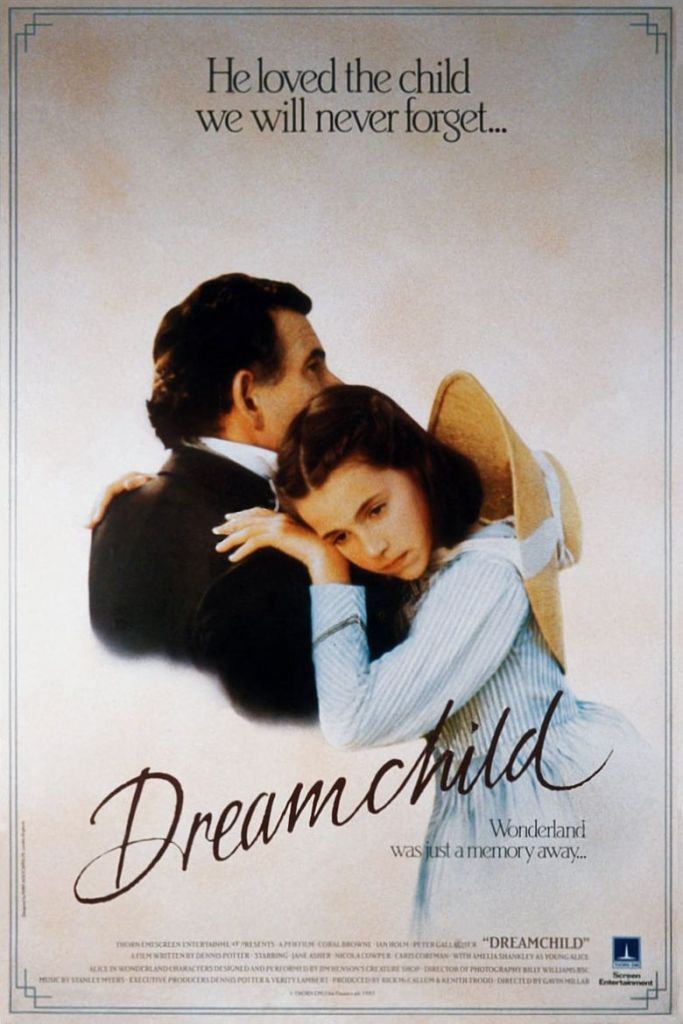
I take my reader back to a boat ride on the Thames going to a picnic, and a story that is fiction, or partly fiction.
His name was Dennis Christopher George Potter and he was a writer. On October 13, 1965, Deborah Wating was “Alice, on the “BBC’s”, “The Wednesday Play”. Potter took that short play, “Alice”, and expanded the story into “Dreamchild”.
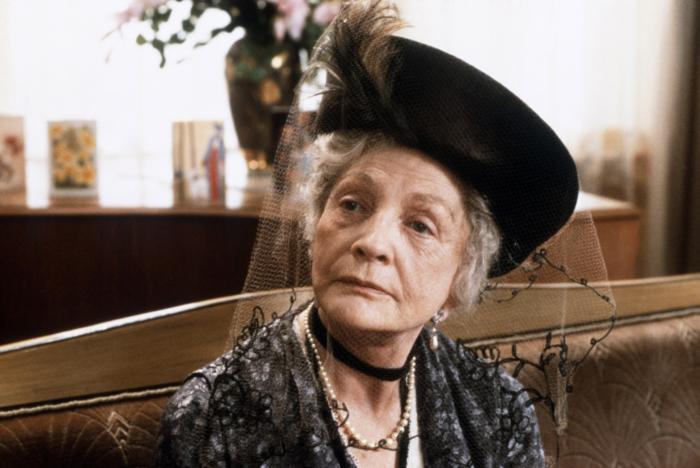
Coral Browne portrayed “Alice Hargreaves”.
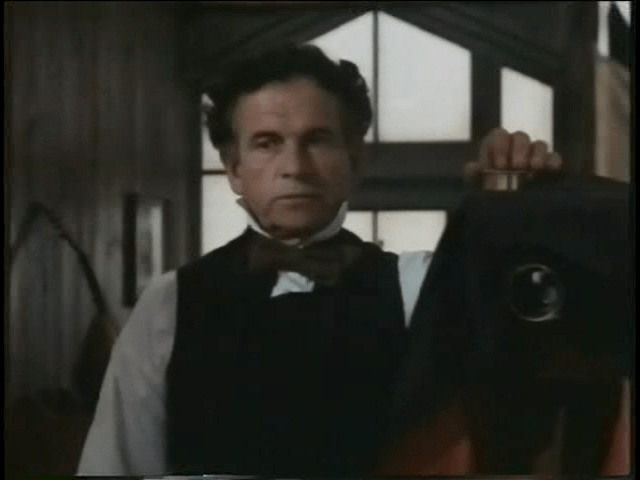
Ian Holm portrayed “Reverend Charles L. Dodgson” aka: “Lewis Carroll”.
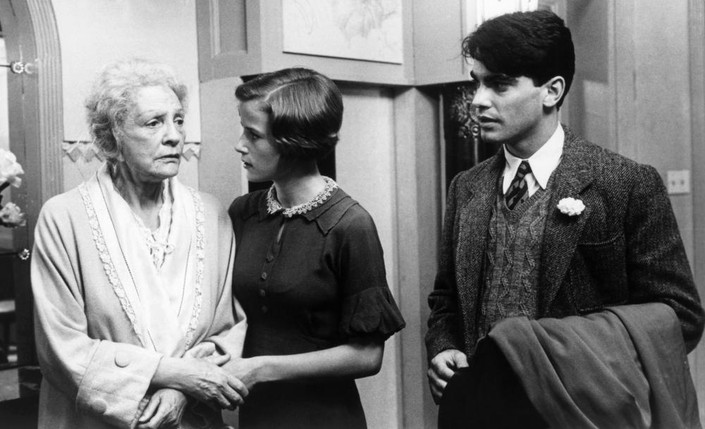
Above left to right, Coral Browne, Nicola Cowper portraying “Lucy”, and Peter Gallagher portraying “Jack Dolan”.
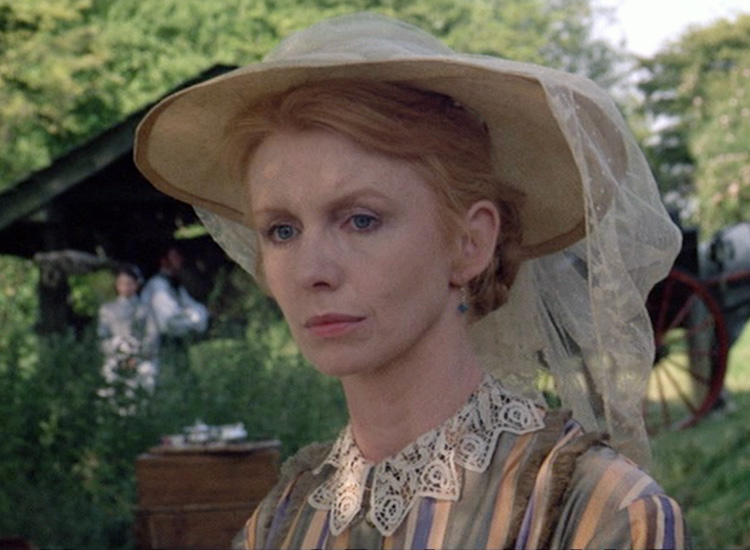
Jane Asher portrayed “Mrs. Liddell”.
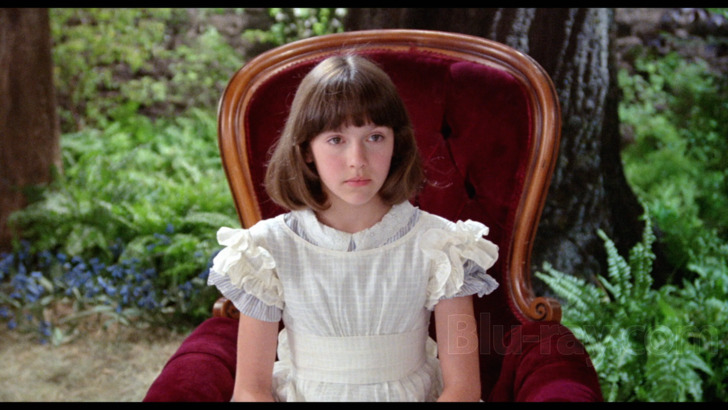
Amelia Shankley portrayed “Little Alice”.
The “Wonderland” character’s, with a slight bent to their personalities, came from “Jim Henson’s Creature Shop”.
A ship from England arrives in New York harbor, and departing, is widow, “Mrs. Alice Hargreaves”, with her caregiver, “Lucy”. She has crossed the pond to accept an honorary degree from “Columbia University (A true fact)”.
As “Mrs. Hargreaves” steps onto the dock, several American reporters surround her, all seeking a quote about “Mr. Dodgson”. You see, “Mrs. Hargreaves” is actually “Alice Liddell”, and of course, “Mr. Dodgson” was “Lewis Carroll”.
Overcome by the attention of the press, “Alice Liddell Hargreaves” and “Lucy” are helped to navigate the pressure of the press by ex-reporter, “Jack Dolan“, and he gets the two to their hotel. As the live story progresses, “Jack” will become “Alice’s” agent, and help her get endorsements. While, he falls in love with “Lucy”, and her to him.
So, much for the non-fantasy portion of the story. Once in her and “Lucy’s” hotel room, and left alone. She will enter a “Wonderland of Old Age”, all within “Alice Liddell’s” mind.
The live action portion of Dennis Potter’s screenplay, imagines, via flashback, that old age “Alice” believes that “Mr. Dodgson” may have had sexual interest in young “Alice”. The boat ride that was the basis for the original manuscript takes on a different tone to the audience. Later, “Alice” will see “Dodgson” as being jealous of the boy she would eventually marry. As “Alice Hargreaves” visualizes young “Alice” playing off of this weakness to control the future “Lewis Carroll”.
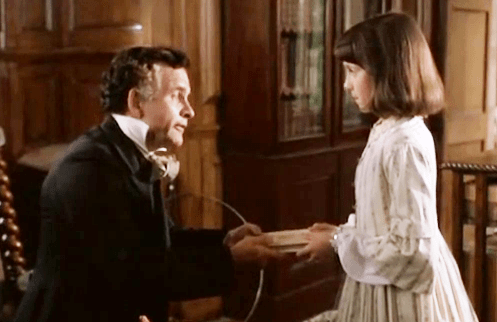
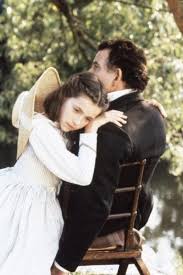
However, the “Henson” characters enter, giving the story a more macabre touch in “This Wonderland”. It begins, after, old age “Alice” joins the “Tea Party”. There the “Mad Hatter”, and the “March Hare”, question “Mrs Hargreaves” about her relationship with the author. Adding, that she is OLD AND FORGETFUL ABOUT WHAT REALLY HAPPENED.
As “This Alice”, now flashes back to that famous boat ride up the Thames.
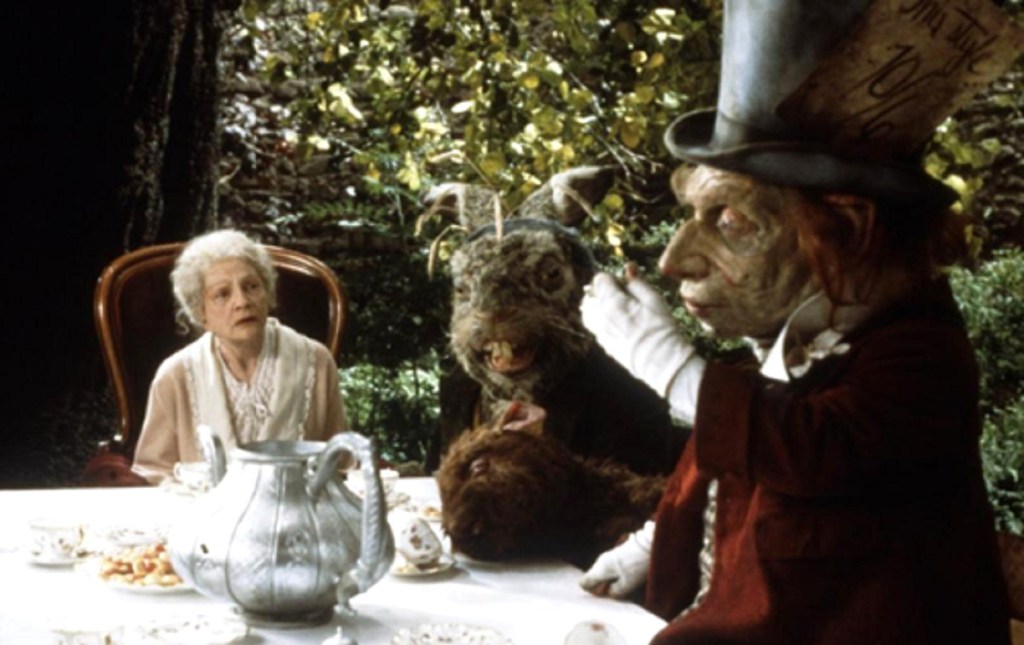
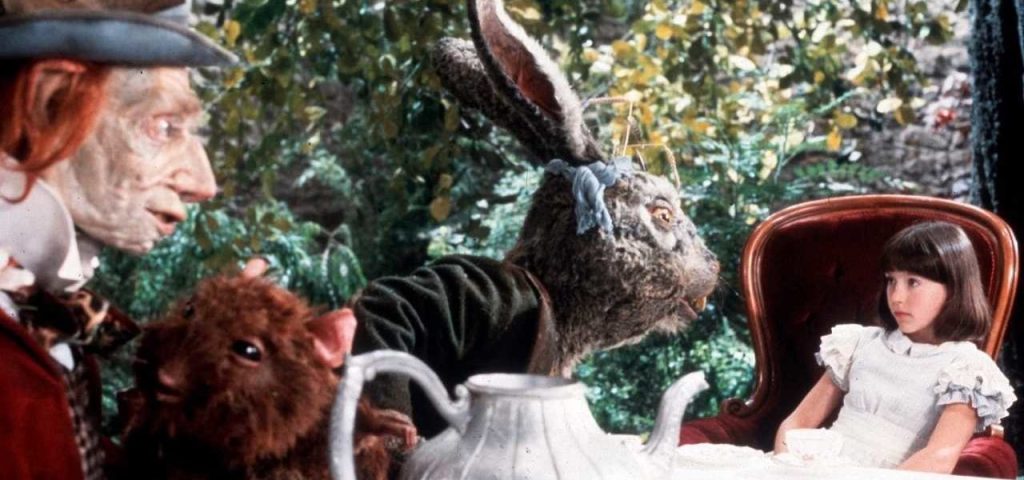
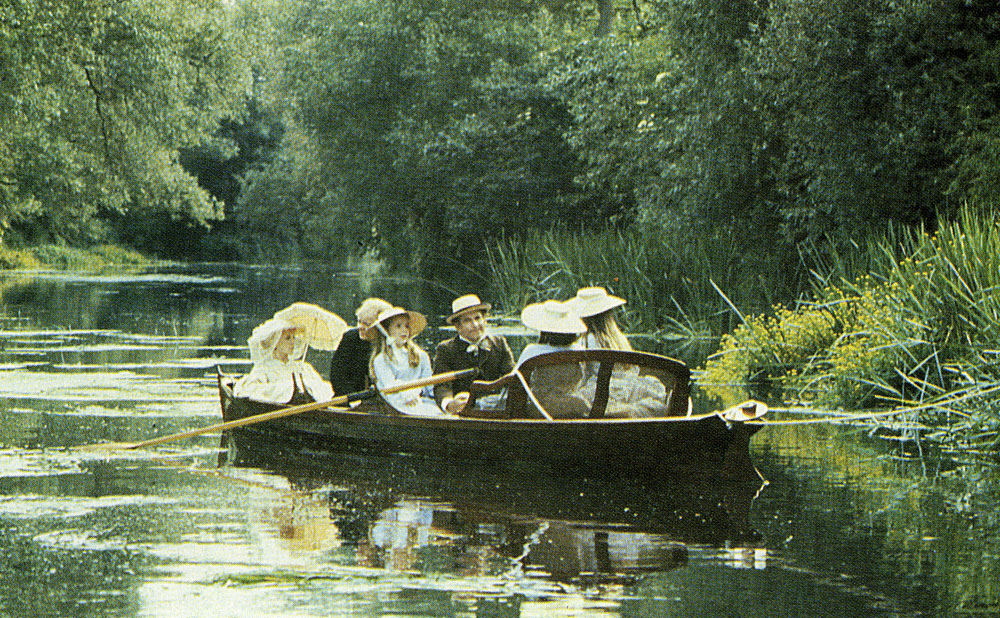
Leading to writer, Dennis Potter‘s, twisting of the relationship between Alice Liddell and mathematician, photographer, and poet, Charles Lutwidge Dodgson.
By the time “Alice” is to give her acceptance speech at “Columbia University”. She has come to terms with “Dodgson” and the way the two treated each other.
After the above very good, but twisted tale, there are still 48-titles left on the “Wikipedia List”, going to 2025, plus two in production, that I could mention. Not forgetting the one’s I did not to use to come to this point. However, it is time to end this look at the film versions of Lewis Carroll’s two novels and I turn to:
ALICE IN WONDERLAND premiering on London’s West End at the “Odeon Leicester Theatre” on February 25, 2010
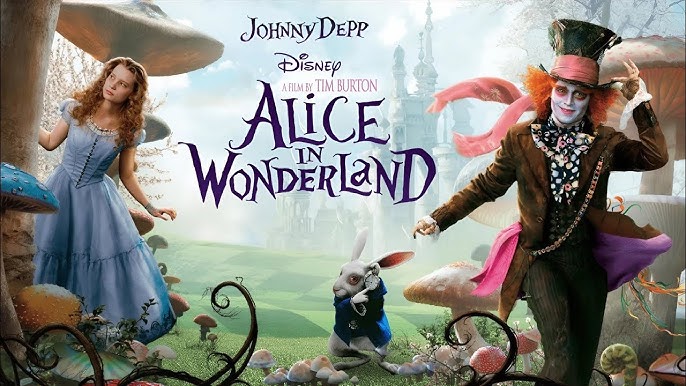
Writer, Linda Woolverton, turned both “Alice’s Adventures in Wonderland”, and “Through the Looking Glass and What Alice Found There” into a screenplay with a slight feminist bent.
Timothy “Tim” Walter Burton directed.
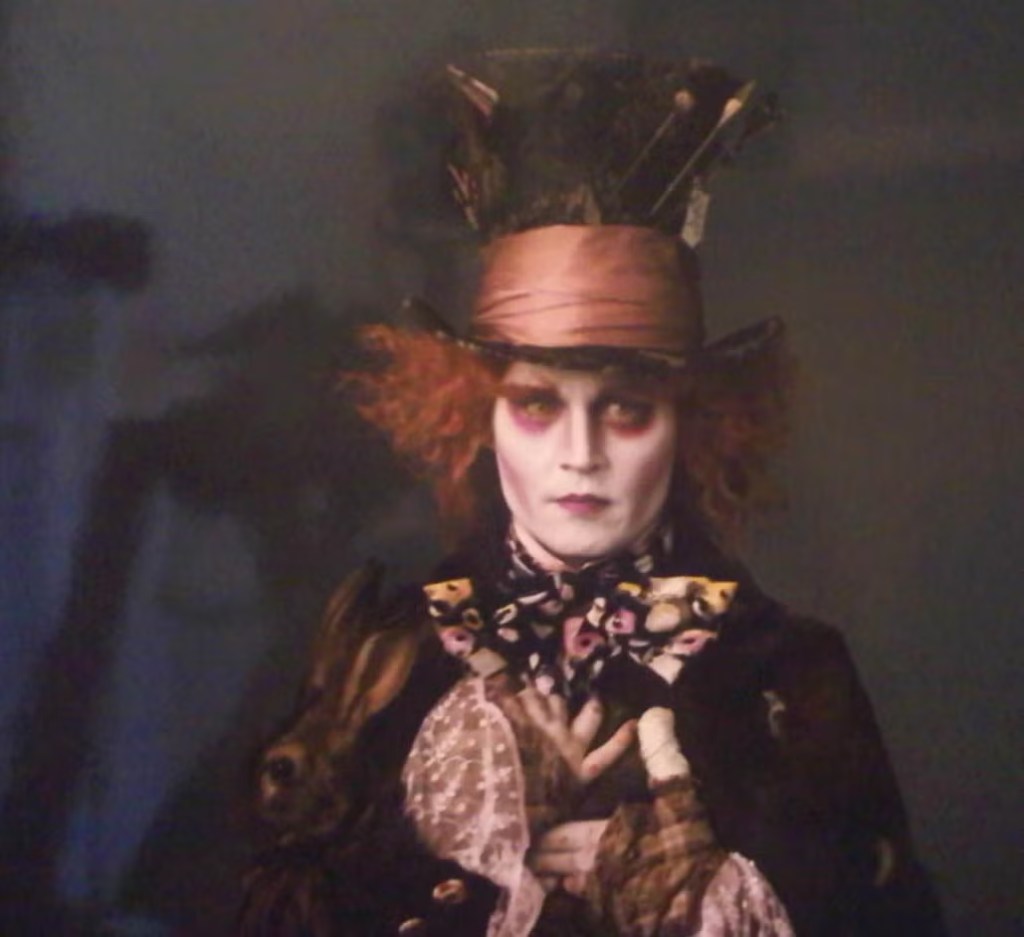
Johnny Depp portrays “The Mad Hatter”.
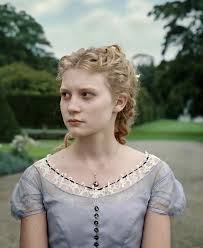
Mia Wasikowska portrays the now “Alice Kingsleigh”.
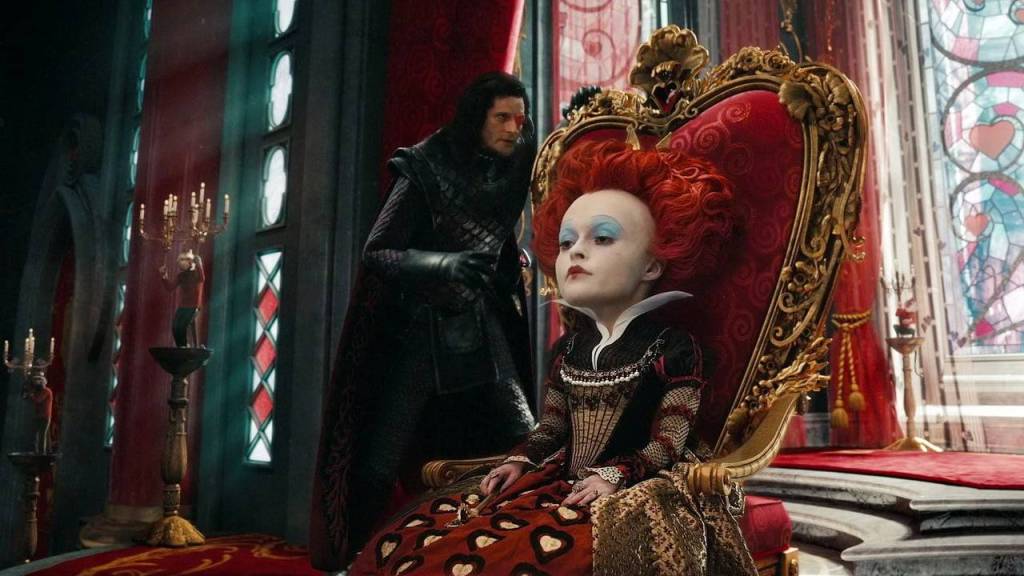
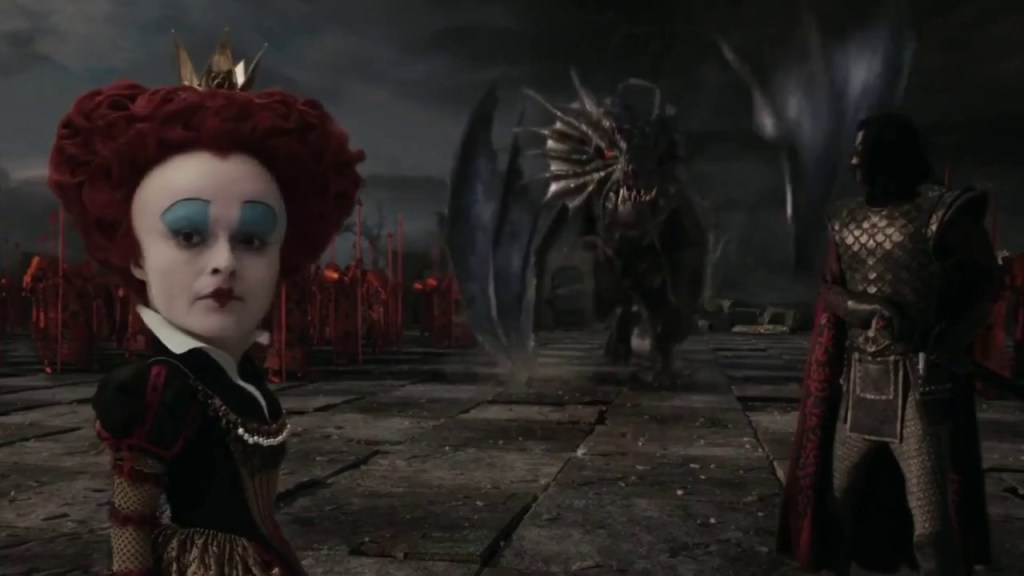
Helena Bonham Carter portrays the “Red Queen”.
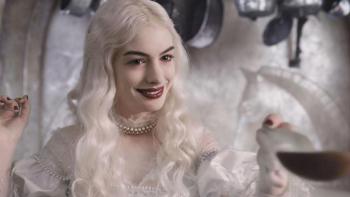
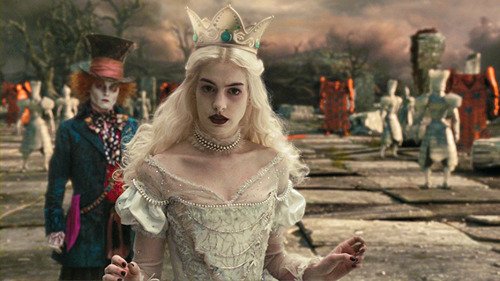
Anne Hathaway portrays the “White Queen”.
If you consider “Dreamchild” dark! Then Linda Woolverton‘s, “Alice in Wonderland”, turns it into sunlight.
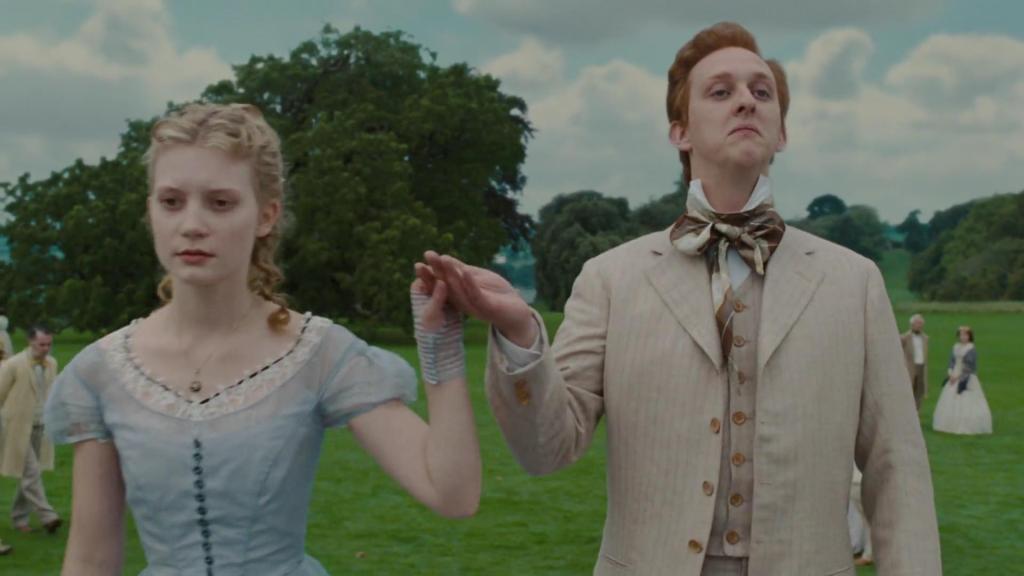
In Victorian London, 19-years-old “Alice Kingsleigh” has been having strange dreams, while still recovering from the death of her father. She has been made to attend a Garden Party by her older sister. Unexpectedly, “Hamish Ascot”, portrayed by Leo Bill, proposes marriage. “Hamish” is considered the perfect husband for “Alice”, but she is not sure marriage is what she wants.
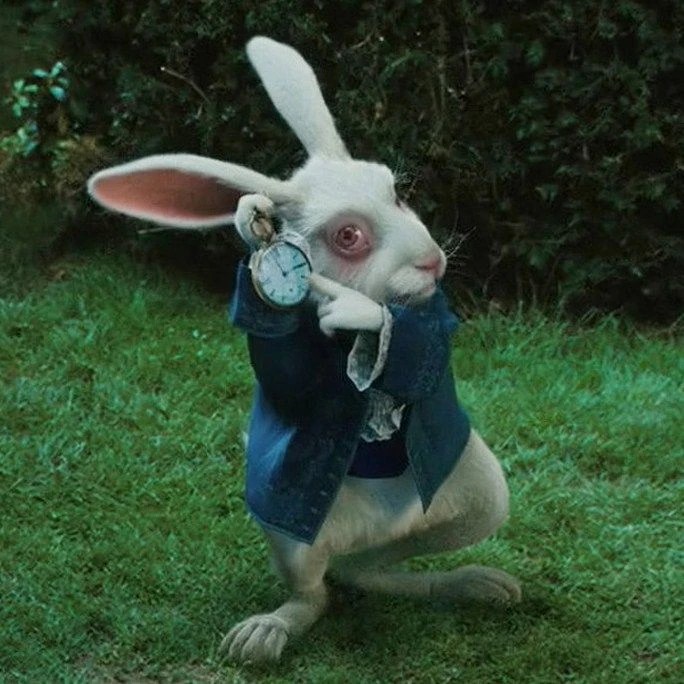
Then, “Alice” sees “The White Rabbit”, voiced by Michael Sheen, and follows him down the rabbit hole.
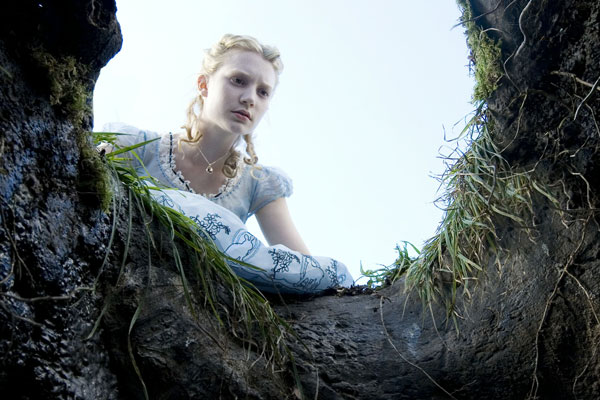
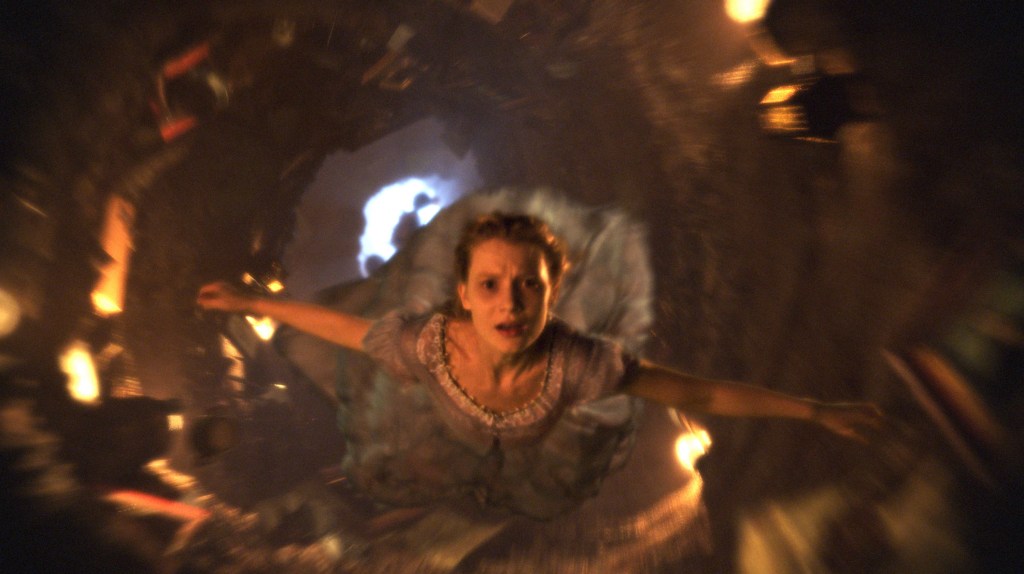
At the bottom of the rabbit hole is a table with a piece of cake on it. On the cake are two words, “Eat Me”, “Alice” does, and becomes gigantic in size.
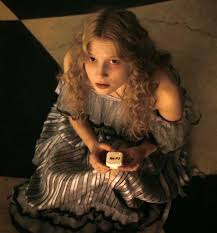
Eventually, she is able to get to a bottle that says “Drink Me”, and shrinks in size. However, “Alice’s” size is only adjusted to be able to go through the door into “Wonderland”. The dress she is wearing is too big for her, but it is pulled as tight as she can. Then “Alice” starts to meet the people of NOT “WONDERLAND”, BUT “UNDERLAND”. The name Lewis Carroll first gave to his story.
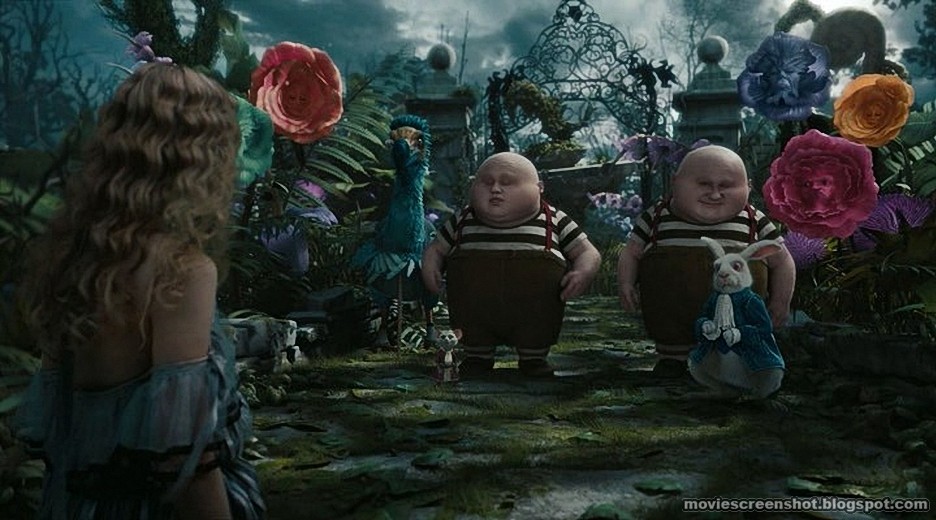
Besides “The White Rabbit”, “Alice” now meets “Tweedle Dee” and “Tweedle Dum”, voiced by Matt Lucas, the door mouse named“Mallymunkin”, voiced by Barbara Windsor. This group of characters are debating, if “This Alice”, is “THE ALICE”, destined to save “Underland” against the “Red Queen”.
How can these strange creatures think they know her? “Alice” convinces herself, that this is just another dream.
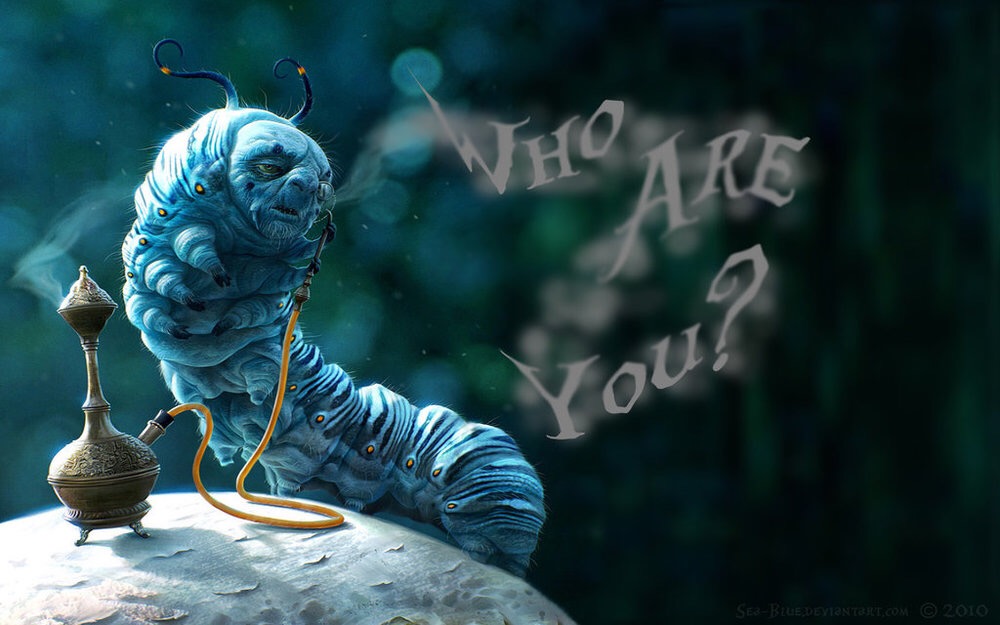
She next meets “Absolem”, a blue caterpillar, voiced by Alan Rickman. Who informs “Alice” that there is a prophecy that she will slay the “Jabberwocky”, voiced by Christopher Lee, and free “Underland” from the rule of the wicked “Red Queen”.
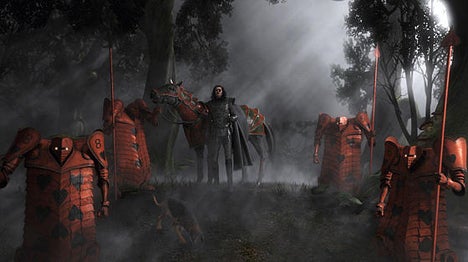
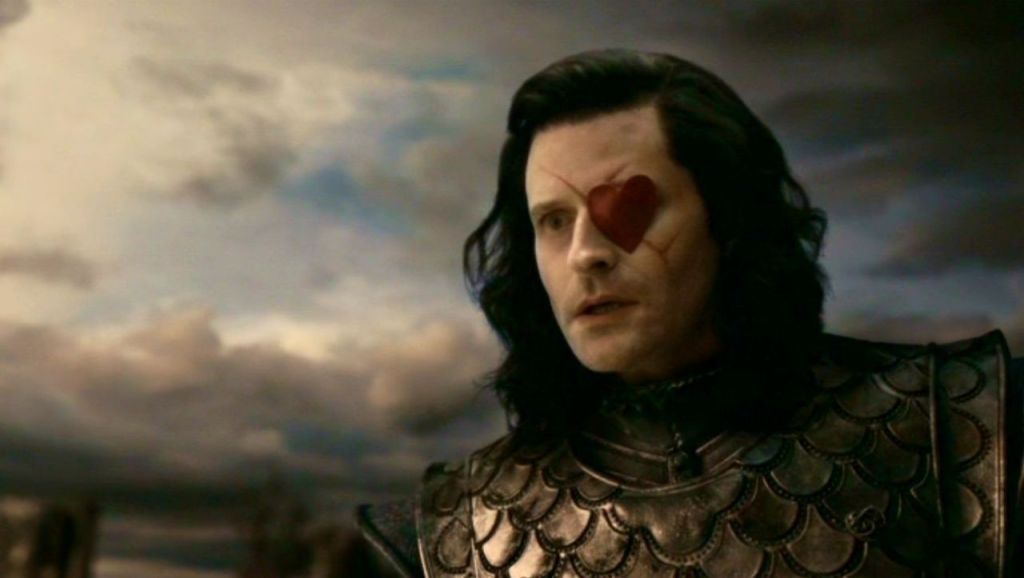
Just then, the “Bandersnatch”, and an army of “Red Knights” under the leadership of “Stayne- the Knave of Hearts”, portrayed by Crispin Glover, appears.
Everyone runs, “Mallymunkun” safely leaves with one of the “Bandersnatch’s” eyes, and “Alice” gets away in the confusion. “The Knave” reports to the “Red Queen” THAT “ALICE” HAS RETURNED!
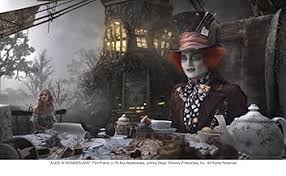
“Alice” next meets the “Cheshire Cat”, voiced by Stephen Fry, who tells her the way to the “Mad Hatter” and the “Tea Party” with the “March Hare”, voiced by Paul Whitehouse, and the “Dormouse”. As she meets the “Mad Hatter”, the sound of a hound followed by the “Red Knight’s” led by the “Knave of Hearts” is getting closer. As “Alice” is standing on the table, the quick thinking “Mad Hatter” puts her in the tea kettle.
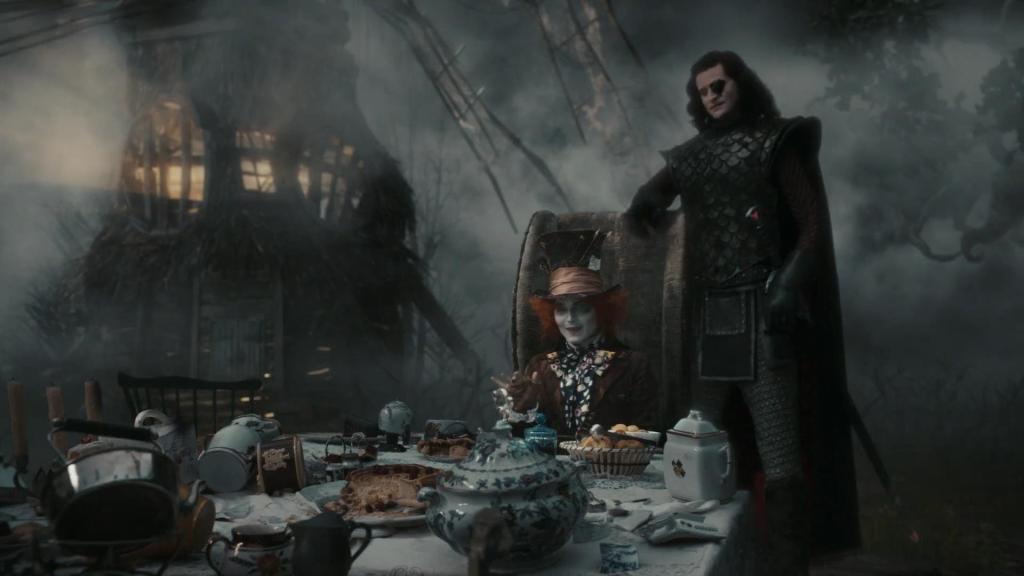
After the “Knave of Hearts” and the “Red Knight’s” leave. The “Mad Hatter” starts to take “Alice” to a safe place. As they walk, he tells her how the “Red Queen” usurped her sister, the good, but somewhat whacky, “White Queen’s” throne. However, the “Red Knight’s” appear and the “Mad Hatter” gives himself up, permitting “Alice” to escape again.
“Alice” is now found by the “Red Knight’s” hunting dog, “Bayard”, voiced. by Timothy Spall, who is actually a member of the resistance. He takes “Alice” to the “Red Queen’s” castle and she interrupts a game of croquet by crowing larger on another bite of the cake, but she has no clothing to fit her. The confused “Red Queen” gets “Alice” something to wear, and thinks she’s a courtier named “UM from Umbridge”.
Although, “The Knave of Hearts” is trying to remember where he saw “Um”. “Um” is becoming friendly with the “Red Queen” and learns that only the “Vorpal Sword” is capable of killing the “Jabberwocky”. The sword is kept in one place no one would go to, the “Bandersnatch’s Den”. However, she get the eye taken by “Mallymunkin” and trades it for the “Vorpal Sword”. In thanks, the “Bandersnatch” takes “Alice” to the “White Queen”.
We’ve reached the climax with the “White Queen” giving “Alice” a potion restoring her to her normal size. The “Cheshire Cat” uses his shapeshifting powers to help the “Mad Hatter” escape from the “Red Queen”. The “Hatter” now starts inciting revolution among the “Red Queen’s” subjects. “Absolem” starts spinning a web around himself and is able to make “Alice Kingsleigh” to remember that she visited “Underland” as a child, but called it “Wonderland”. His advise to her, is to fight the “Jabberwocky” and save “Underland” from the “Red Queen” for good.
The “White” and “Red Queen’s” are at the head of their armies on a chessboard like battlefield. The war to save “Underland” begins as “Alice” prepares to fight the “Red Queen’s” “Jabberwocky”.
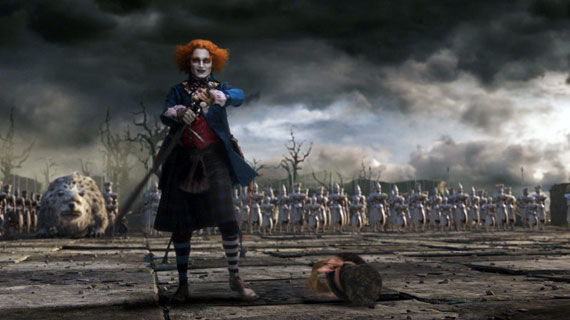
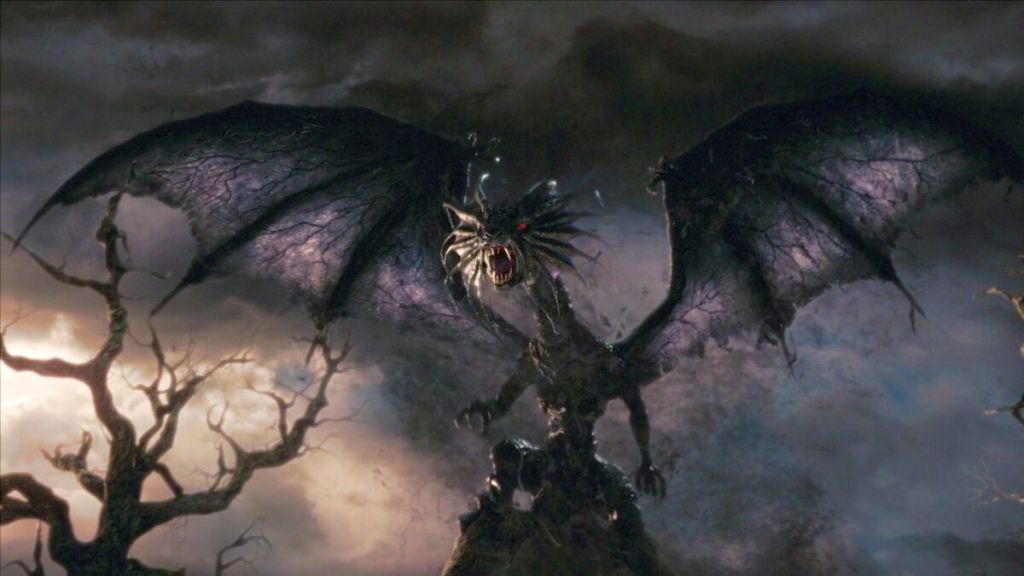
“Alice” slays the “Jabberwocky”, the “Red Queen Knight’s” gladly surrender to the “White Queen”, and she sends her sister and the “Knave” into exile together. As peace comes to “Underland”, “Alice Kingsleigh” wishes to return home, and the “White Queen” gives her a vial of “Jabberwocky Blood”. Which has the power to grant “Alice: one wish.
“Alice” says good-bye to her friends, makes her wish, and wakes up in the rabbit’s hole.
Returning to the Garden Party, she rejects the marriage proposal of “Hamish”, and asks to speak to “Lord Ascot”, portrayed by Tim Pigott- Smith. “Alice Kingsleigh” wants to put into action her father’s original idea of establishing trade routes to China. A partnership is continued with a new “Kingsleigh”, and with a Blue Butterfly named “Abselom”, “Alice Kingsleigh” sets sail for China.
There are few stories, or novels, that keep entertaining people 161-years after its publication, Lewis Carroll’s “The Adventures of Alice in Wonderland” is one of those few,.


Leave a comment