He was 45, she was 20, and as “Hollywood Legends” go, they fell in love and were married.
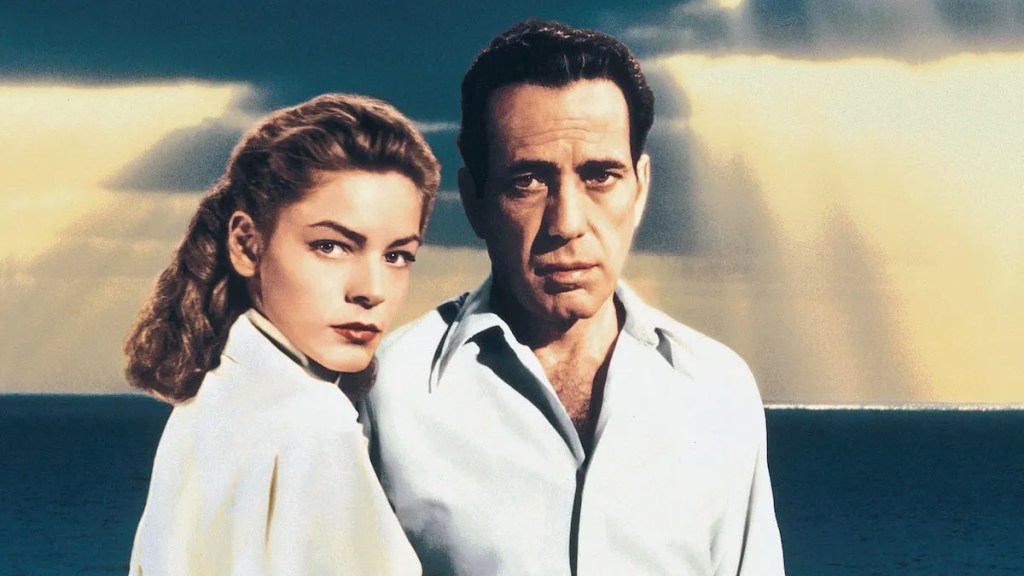
Think of Humphrey DeForest Bogart and films such as director Raul Walsh’s, 1940, “They Drive by Night”, director John Huston’s, 1941, “The Maltese Falcon”, and director Michael Curtiz’s, 1942, “Casablanca”, come to mind. All have that Bogart “Tough Guy” persona, but there were other, lesser known films. His first on-screen appearance was in a 20-minute, 1928, short, “The Dancing Town”, starring Helen Hayes, “Boggie’s” role was as “Man in Doorway at Dance”.
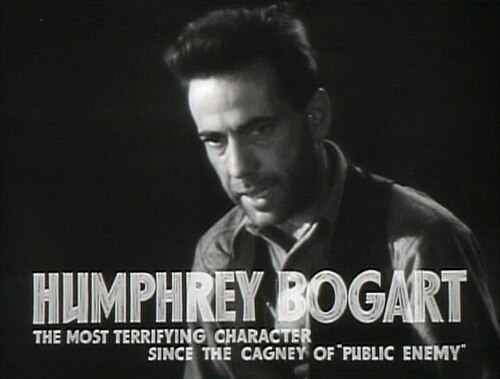
Of course there were those “Gangster” roles, such as recreating his 1935 Broadway role of “Duke Mantee” in 1936’s, “The Petrified Forest”.
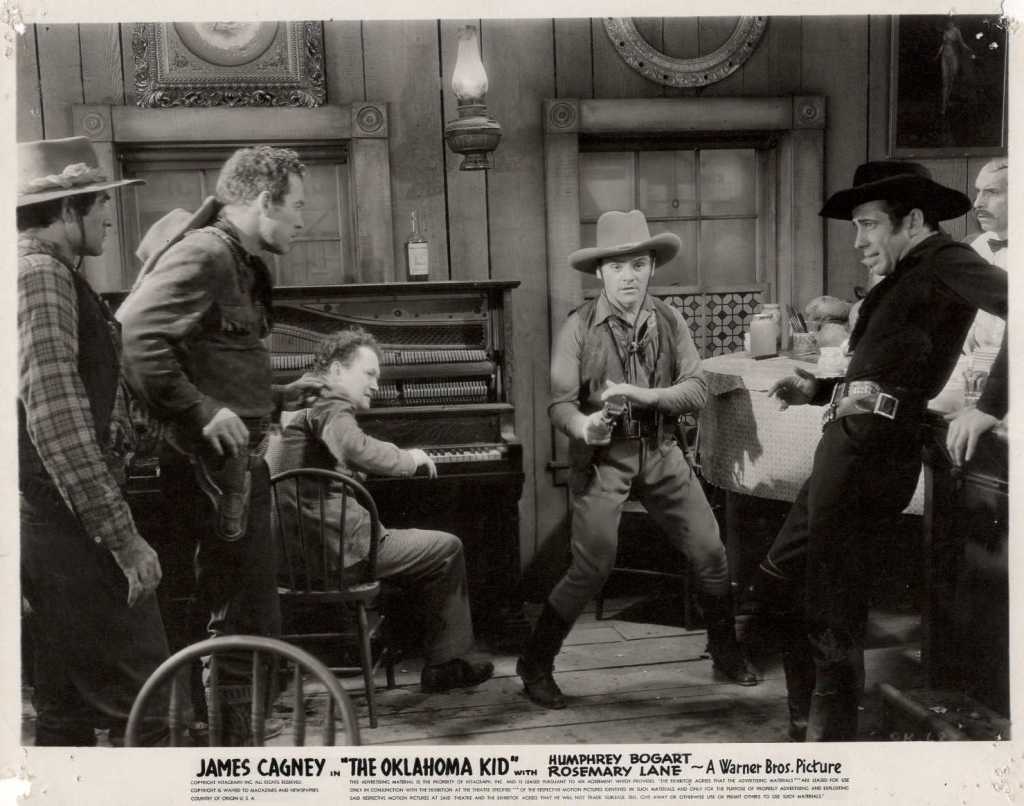
Speaking of James Cagney, both actors found themselves in a Western, contract players go where the studio, in this case, “Warner Brothers”, puts you. Cagney was the title character, center with his pistol being fanned, in 1939’s, “The Oklahoma Kid”. Bogart was “Whip McCord”, in the “Black Hat”, of course, in the still. That’s Ward Bond as “Wes Handley”, without his hat on his head.
Probably, the weirdest of “Bogie’s” pre-stardom movies was portraying a “Dead Mad Doctor”, brought back to life in:
THE RETURN OF DOCTOR X premiered in New York City on November 23, 1939

Above is the original poster for “The Return of Doctor X”.
The two executive producers on the picture were Jack L. Warner and Hal B. Wallis. The director was Vincent Sherman, an actor turned director. This was his first directing assignment, but his career would include: 1944’s “Mr. Skeffington” starring Bette Davis and Claude Rains, 1948’s “The Adventures of Don Juan” starring Errol Flynn, 1950’s “Harriet Craig” starring Joan Crawford and Wendell Corey and 1952’s “Affair in Trinidad” starring Rita Hayworth and Glenn Ford.
According to Jack L. Warner’s instructions. The motion picture was supposed to be a sequel for 1932’s “Doctor X”, starring Lionel Atwill and Fay Wray, but the screenplay was closer to 1936’s “The Walking Dead”, starring Boris Karloff.
The picture is based upon British author William J. Makin’s, 1935, short Science Fiction, Vampire story “The Surgeon’s Secret”. Which was republished as “The Doctor’s Secret”, the story credited for this screenplay, in an 1938 issue of “Detective Fiction Weekly”.
The screenplay was written by Lee Katz. Who was both a screenplay writer and second unit director. This was the 12th of his 13 “B” screenplays. As second unit director he had worked on, 1933’s, “The Mystery of the Wax Museum”, also starring Lionel Atwill and Fay Wray, and the Pat O’Brien and Humphrey Bogart, 1936, “China Clipper”. In 1942, Katz worked on both Bogart’s, “Across the Pacific”, and, “Casablanca”.
“The Return of Doctor X” starred Wayne Morris as “Walter Garrett”. Although the on screen credits had it wrong as “Walter Barnett”. Morris was a solid “B” lead until after World War 2. From which he returned a highly decorated war hero, but his career as a lead actor was over. His first motion picture had been 1936’s, “China Clipper”, and he had the title role in 1937’s, “Kid Galahad”. That same year, Morris co-starred with Ronald Reagan, Eddie Albert and Priscilla Lane in the comedy “Brother Rat”, and its sequel, “Brother Rat and a Baby”. Probably one of his strongest roles was as a French soldier about to be executed for following orders in Stanley Kubrick’s, 1957, “Paths of Glory”, starring Kirk Douglas.

Above left, Dennis Morgan, see below, and on his right, Wayne Morris.
Rosemary Lane portrayed “Joan Vance”. Lane started out with sister Priscilla, as a vocal artist with “Fred Waring and His Pennsylvanians”. Both sisters would go into acting. Rosemary was one of the “Four Daughters”, in the 1938 film starring Claude Rains and John Garfield, she co-starred, again, with John Garfield in 1939’s,”Blackwell’s Island” and co-starred in the James Cagney and Humphrey Bogart, 1939, “The Oklahoma Kid”.
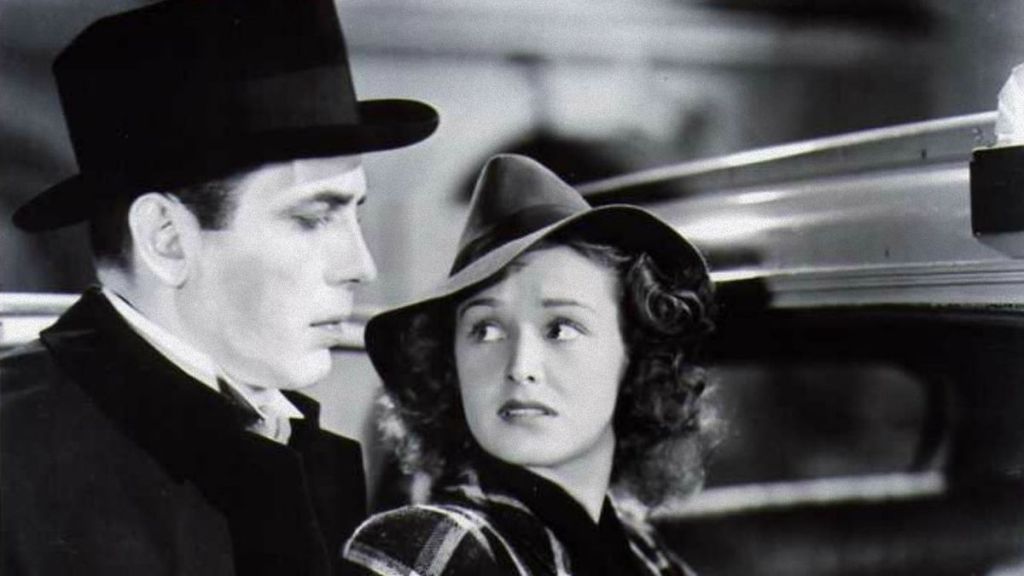
The Third lead was Humphrey Bogart, seen above, as the mysterious “Marshall Quesne”. He just had third-billing behind James Cagney and Priscilla Lane, in the gangster feature, 1939’s, “The Roaring Twenties”.
Dennis Morgan, the fourth lead, portrayed “Dr. Michael Rhodes”. Morgan had been a radio announcer for the “Green Bay Packers” and went to Chicago and became a radio singer. At times, he sang in movies, and at other times just acted. His big break came with the movie that followed “The Return of Doctor X”. That was the World War 1 feature“The Fighting 69th”, that starred James Cagney, Pat O’Brien and George Brent. In 1940, Morgan, co-starred with Ginger Rodgers in the drama “Kitty Foyle”. In 1941, Dennis Morgan was “Cole Younger”, in “Bad Men of Missouri”. Wayne Morris was also in the Western as “Bob Younger”. In 1945, Morgan would star as Robert L.Scott, in the biographical film based upon Scott’s World War 2 experiences as a member of the “Flying Tiger’s” in China, “God Is My Co-Pilot”.
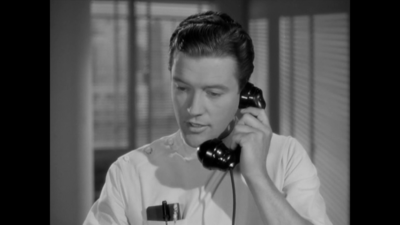
John Litel was “Dr. Francis Flegg”. Supporting actor Litel was seen in many film genre’s prior to this picture. His roles included 1937’s, “The Life of Emile Zola”, starring Paul Muni. 1938’s “Jezebel” starring Bette Davis and Henry Fonda, the same years “The Amazing Dr. Clitterhouse” starring Edward G. Robinson and co-starring Humphrey Bogart. He was also seen in several films portraying “Carson Drew” the father of the teen girl book series, “Nancy Drew”.
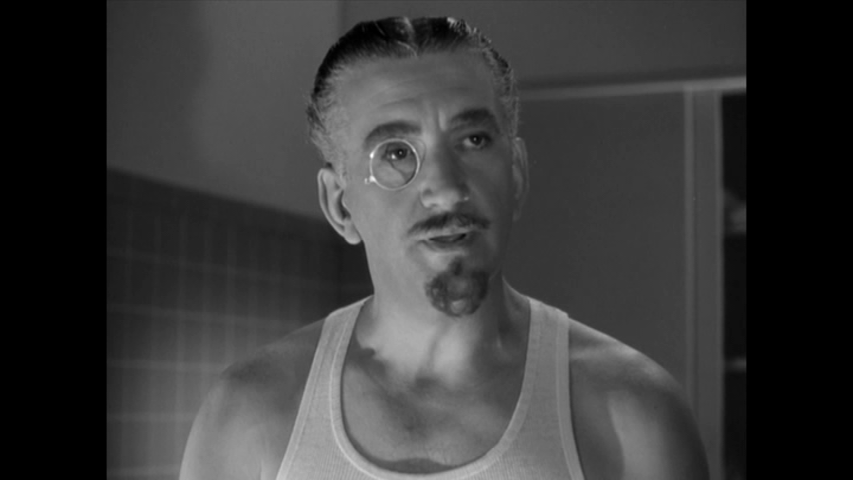
Lya Lys, her real name, played “Angela Merrova“. “The Return of Dr. X” was the German born actresses 18th film out of 19 on screen appearances starting in her native country.
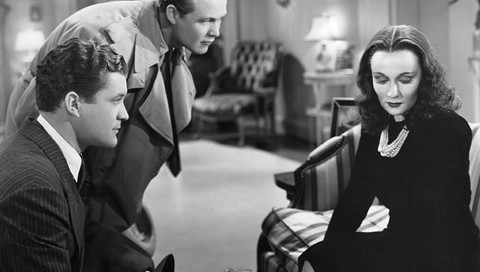
Three names in the cast are of interest to film and television buffs. The first is seventh billed Huntz Hall as “Pinky”. One of the reporters who works with Wayne Morris. Hall was one of the original “Dead End Kids” with Leo Gorcey and Bobby Jordon. Hall stayed with the group when they became “The Bowery Boys”
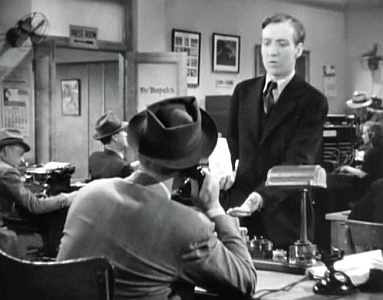
I couldn’t locate photo’s of the last two on screen credited actors. The first was DeWolf Hopper as an “Intern”. Later in his career DeWolf changed his first name to William and became television’s “Paul Drake”, opposite Raymond Burr on “Perry Mason”. He starred in Ray Harryhausen’s 1958, “20 Million Miles to Earth”, and was featured in both 1955’s, “Rebel Without a Cause” and 1956’s, “The Bad Seed”.
Another “Intern” was portrayed by Glenn Langan. Langan was a solid third, or fourth billed actor during the 1940’s, but probably is best remembered for portraying the title role in 1957’s, “The Amazing Colossal Man”.
The screenplay begins with Reporter “Walter Garrett” discovering the body of the dead actress “Angela Merrova” in her hotel room. When the authorities arrive they find the body missing. The following day the actress appears at “Walt’s” newspaper office, threatening to sue over her obituary, but something about her just doesn’t seem right.
“Walt” goes to his friend “Dr. Michael Rhodes” for a possible explanation and “Rhodes”, refers “Garrett” to his associate “Dr. Francis Flegg”.
“Flegg” insists that “Garrett” is hallucinating, but appears to be dodging the questions he’s being asked. Afterwards, “Rhodes” is called by the police to identify a body, which turns out to be one of his patients. The body has been drained of almost all its blood. “Walt Garrett”, who’s with him, tells his friend that “Merrova” looked the same way. When he first saw her in the hotel room, before she disappeared.
That night, “Michael Rhodes” visits “Dr. Flegg” with a blood sample from his now dead patient. There, he is introduced to “Flegg’s” assistant, the strange “Marshall Quesne”
Note Below:
The somewhat “Bride of Frankenstein” white streak to Bogie’s hair. Which, I guess, the make-up artist and director thought would give him a more sinister appearance.

Having followed “Rhodes” back to “Flegg’s” house. “Garrett” sees “Rhodes” leave, and “Merrova” enter, for what becomes a strange blood transfusion by “Quesne” and “Flegg”.

“Walt” convinces “Michael” to go with him to “Merrova’s” hotel room to confront her. There they meet with the actress who confirms the reporters story about both the hotel room and transfusion. She promises to reveal more about what’s been happening on the following day. However, before “Rhodes” and “Garrett” leave. “Quesne” shows up, and “Merrova” goes very silent.

When “Garrett” and “Rhodes” return the next morning. They find “Merrova” dead once more, but this time for real and drained of blood. “Walt” has been trying to remember something very familiar about “Marshall Quesne” and he starts digging through old newspaper files. He finds what he was looking for about a famous doctor, named “Xavier”, who was executed in prison for a string of murders.
Leading to two questions:
Is “Dr. Xavier” “Marshall Quesne”?
Did “Xavier” fake his own death, somehow?
Next, “Dr. Michael Rhodes” and “Walt Garrett” go to the cemetery containing the grave of “Dr. Xavier” and dig up his coffin. The coffin is empty and the two men leave the cemetery and confront “Dr. Flegg” about his assistant. “Flegg” reveals that as an experiment, he brought “Xavier” back from the dead, and demonstrates the procedure with a dead rabbit.
“Flegg” reveals a problem he had not thought of when planning his experiment. The problem is, “Dr. Xavier”, now requires blood, more specifically an extremely rare blood type. As an ingredient in a special formula he requires to stay alive . It is “Dr. Xavier” aka: “Marshall Quesne”, who is committing what are being described as “The Vampire Murders”.
Realizing that “Garrett” and “Rhodes” are getting close to him. “Dr. Xavier” decides to get “Dr. Flegg’s” book containing all the known people in the city with that right blood type. “Dr. Xavier” obtains it by murdering “Dr. Flegg”.
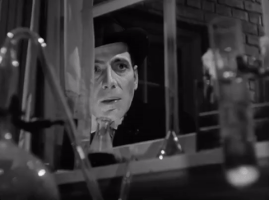
From the book, “Xavier” discovers that “Dr. Rhodes’s’” girlfriend “Nurse Joan Vance”, has the proper type of blood. He goes after the girl, and the hunt for him is on.


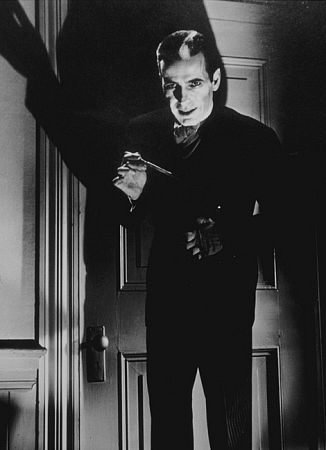
Of course, in the nick of time, “Rhodes”, “Garrett”, and the police arrive. “Dr.Xavier” escapes for the moment, but is shot and dies, happily, freed of being a murderer.
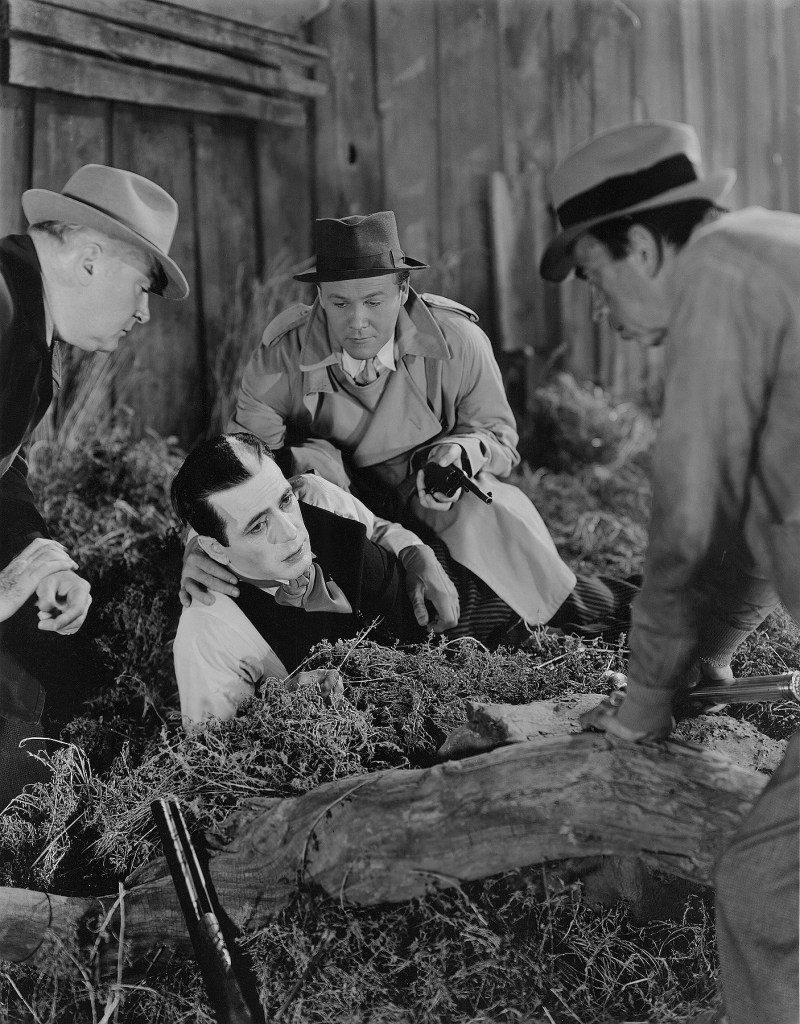
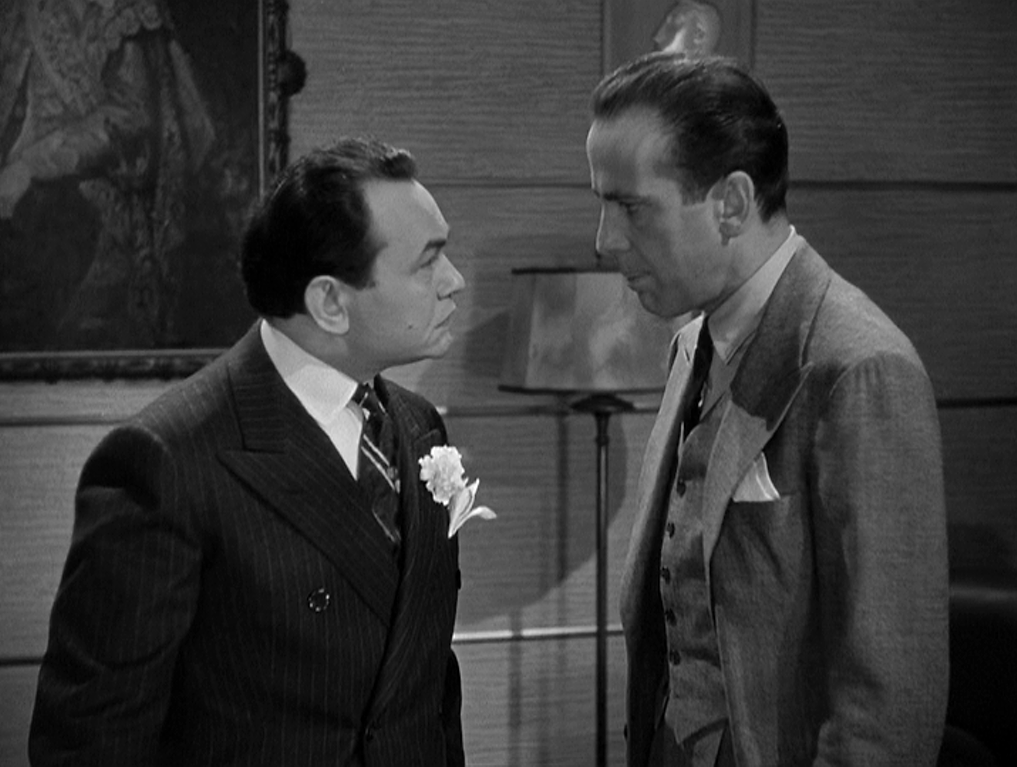
Humphrey Bogart now moved to star status with the comedy crime drama, 1940’s, “Brother Orchid”, co-starring with Edward G. Robinson, and comedian and actress, Ann Southern
“Brother Orchid” would be followed by director Raul Walsh’s, 1941, “High Sierra”, co-starring with Ida Lupino.
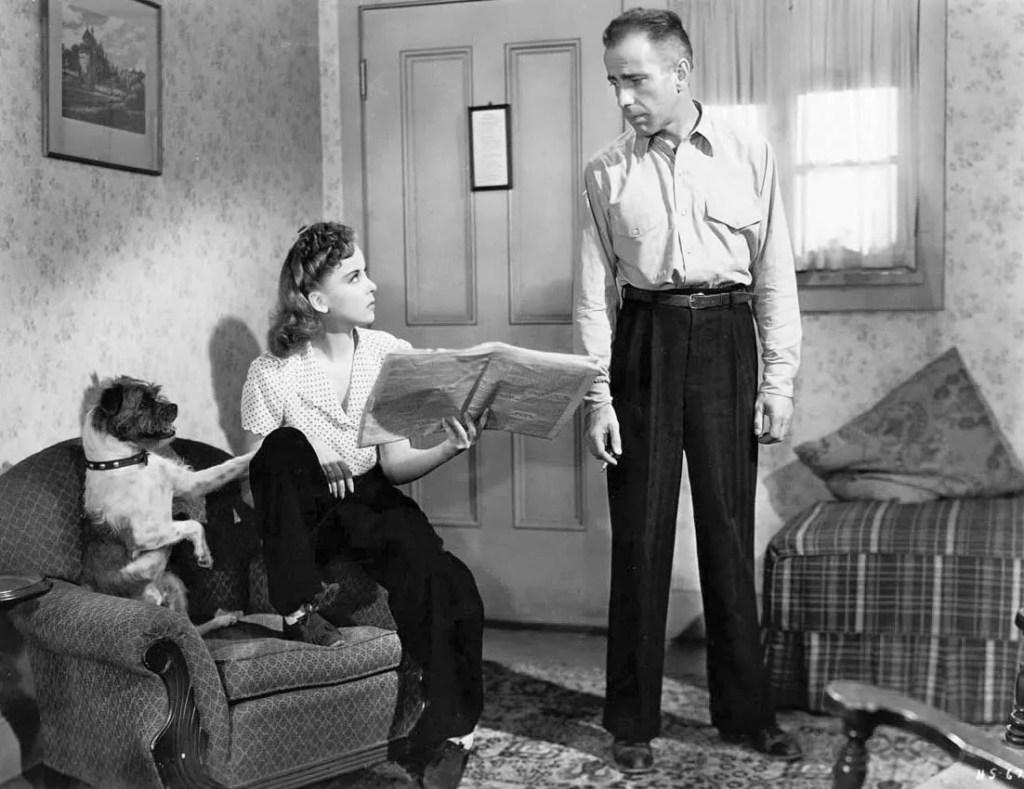
Her name was Betty Joan Perske, she was six-years old when her parents divorced. Her father, had been born in New Jersey, and deserted his wife and daughter. Betty would never see him again.
Her mother was born in Romania, and was Natalie Alberta Weinstein-Bacal according to records at Ellis Island. Sometime after her divorce, different sources state, that Natalie went back to a last name of Bacal.
Apparently, there were some wealthy uncles for Betty’s schooling. She was enrolled in the exclusive, “Highland Manor Boarding School for Girls”, in Tarrytown, New York, it would close in 1942.
Tarrytown was followed by her enrollment in “Julia Richman High School” in Manhattan. In 1941, Betty Bacal, enrolled in the “American Academy of Dramatic Arts”, a private drama school. It is said, that she dated another student named Kirk Douglas. Betty made her acting debut on Broadway, with a walk-on in the play “Johnny 2×4”, by playwright Rowland Brown. The setting for the play is described in a March 17, 1942 review in the “New York Times” as:
Peeking back to the sinful days of 1926, Rowland Brown has discovered a Greenwich Village speakeasy. In “Johnny 2×4,” which was staged at the Longacre, he has made a densely populated play out of it, and fitted it out with some good vintage songs and one brilliant trumpet solo.
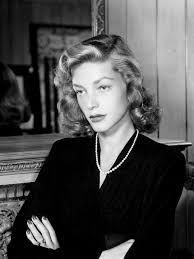
Betty became a model for “Harper’s Bazaar”, and photographer Louise Dahl-Wolfe took a photo of the young model/actress that became the cover of the March 1943 issue.
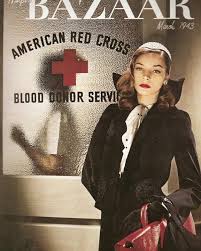
The “Harper’s” cover was seen by Nancy “Slim” Hawks, an ex-“Harper’s” model, and currently married to film producer and director Howard Hawks. “Slim” thought Betty Bacal might be a perfect fit for a role in her husband’s up coming motion picture. Apparently, his secretary misunderstood that he wanted “Betty”, from New York, to submit information about herself for consideration, but instead the secretary told Betty to come to Hollywood for a screen test.
Hawks met with the young actress, and the meeting ended with Betty Bacal signing a 7-year personal contract with him. However, Hawks suggested that Betty, change her first name to “Lauren“, because he believed it sounded more sophisticated, elegant, and marketable for a Hollywood sex symbol. He also set her up with a voice coach to develop her trademark, throaty and sexy, deep voce. At the end of the meeting, model, Betty Bacal, had added another “L” to her last name, and became LAUREN BACALL.
On February 29, 1944, filming began on the motion picture.
Ernest Hemingway was a reporter during the Spanish Civil War 1936 into 1939. The year before the outbreak of war between the “Republicans” and the “Nationalist”, Hemingway had begone work on his novel, “To Have and Have Not”.
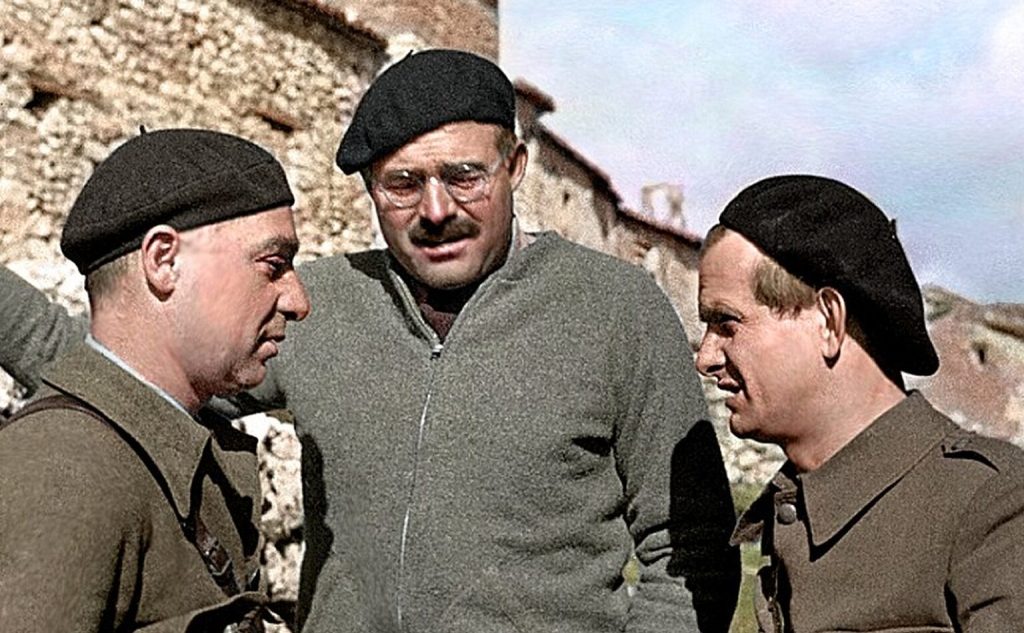
Above, Hemingway center with Soviet Union writer, Ilya Ehrenburg, left, and German writer, Gustav Regler, right, during the Spanish Civil War, circa 1937.
In 1937, the novel, “To Have and Have Not”, set in Key West, Florida, and Cuba, during the 1930’s was published. There are major changes between the original novel, including the names of characters, and the final motion picture screenplay. That began with a fishing trip that Howard Hawks took with his friend Ernest Hemingway, on which the two wrote the original screenplay.
TO HAVE AND HAVE NOT premiered in New York City on October 11, 1944
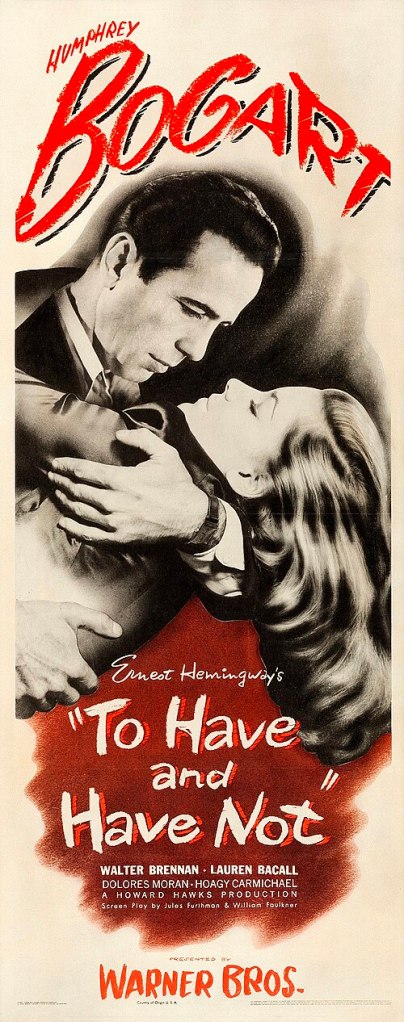
The first revision of the Hemingway/Hawks screenplay, had kept the novel’s setting both in Key West, Florida, and Cuba. It was written by Jules Furthman. Furthman had been the main screenplay writer for producer Howard Hughes’s, “Billy the Kid” feature, 1943, “The Outlaw”. However, this was the Second World War, and President Franklin Delano Roosevelt had his “Good Neighbor Policy” in effect. As a result, Howard Hawks had another good friend, author, William Faulkner, rewrite the screenplay. Who moved the story from Cuba to Martinique, that was controlled by the Vichy-French loyalists to Nazi Germany.
At the time, director Howard Hawks, had just filmed 1943’s, excellent piece of war-time-propaganda, “Air Force”. Although he was also the uncredited director on both 1943’s, “The Outlaw”, and the Randolph Scott, Canadian Second World War, “Corvette K-225”.

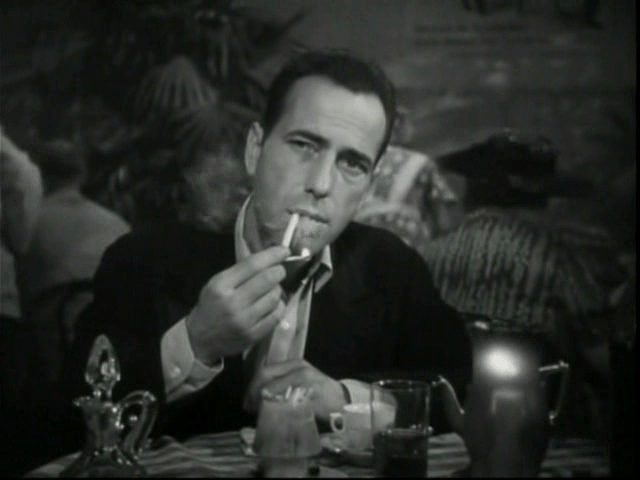
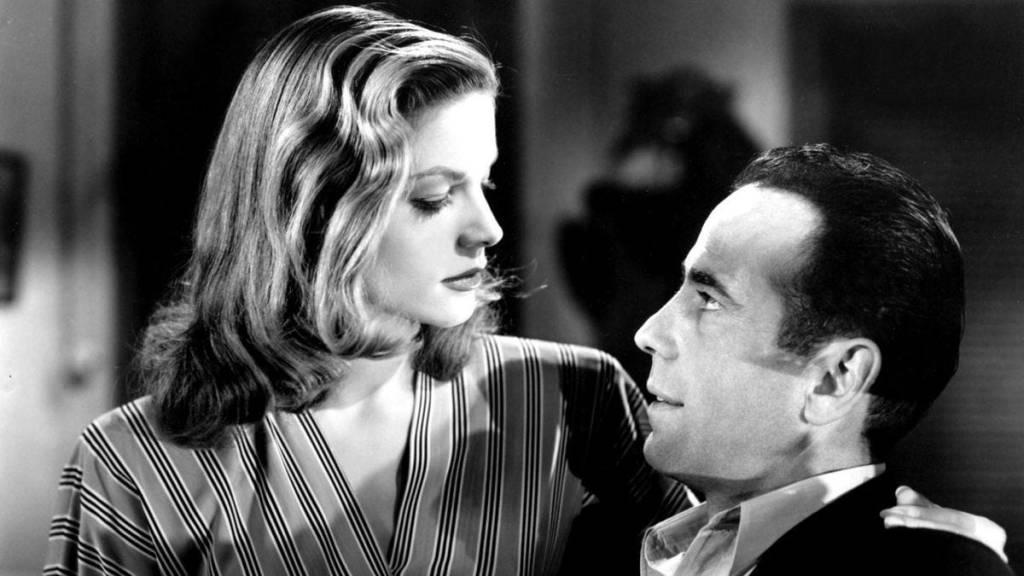
Humphrey Bogart portrayed the main character now named, “Harry ‘Steve’ Morgan”, the middle name of “Steve”, had been added to the character by Hawks. Bogart had just been seen in 1944’s, “Passage to Marseille”, co-starring Claude Rains and French actress, Michele Morgan. He followed this feature film with the film-noir, 1945’s, “Conflict”, co-starring Alexis Smith and Sydney Greenstreet.
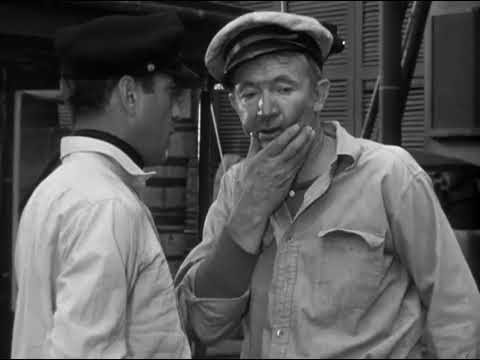
Walter Brennan portrayed “Eddie”. Brennan had just starred in 1944’s, “Home in Indiana” with co-stars Jeanne Crain, and Lon McCallister. He would follow this feature film co-starring with Bob Hope and Virginia Mayo, in the 1944 comedy, “The Princess and the Pirate”. For Howard Hawks, Brennan would be seen in 1948’s, “Red River”, and 1959’s, “Rio Bravo”, both starring John Wayne. My article, “Howard Hawks’ ‘Rio Bravo’ Remade (?) as ‘El Dorado’ and ‘Rio Lobo’ Starring John Wayne”, and can be found at:
http://www.bewaretheblog.com/2017/10/howard-hawks-rio-bravo-remade-as-el.html
Lauren Bacall, in her first feature film, portrayed “Marie ‘Slim’ Browning”. The middle name of “Slim” had been added to the character by Hawks. The “Warner Brothers” publicity department was already working on the studio’s new star. At least for this movie, Lauren Bacall was billed as having “THE LOOK!”
That came about, because Bacall stood exactly 5-foot, 8 and a half-inches high. Which put her at a vary obvious, half-inch taller than Bogart, Not what a studio wanted, a taller leading lady to the leading man, this was discovered during her screen test. So, to correct the problem, looking directly into the camera, Lauren Bacall placed her head bent down against her chest. As the camera rolled, she slowly tilted her eyes upward. “The Look” was born, and became her trademark throughout her career. However, “Warner Brothers” almost killed her career, see 1946’s, “Confidential Agent”, after this film.
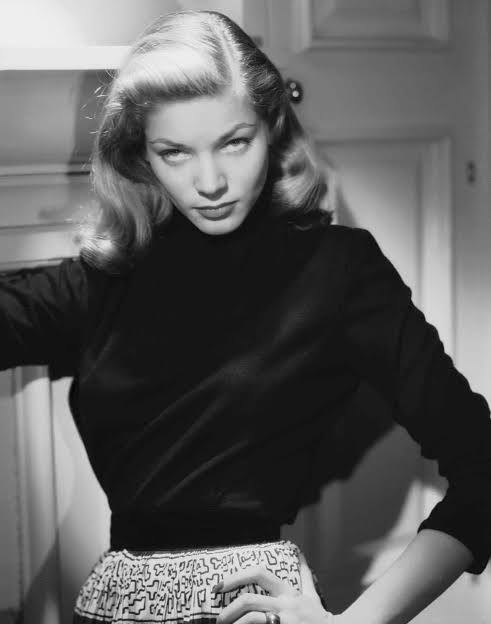
As to those middle name changes to the two characters by Howard Hawks. In the movie Bogart and Bacall call each other “Steve” and “Slim”. Which just happens to be the nicknames that Howard Hawks and his wife Nancy Hawks called each other.
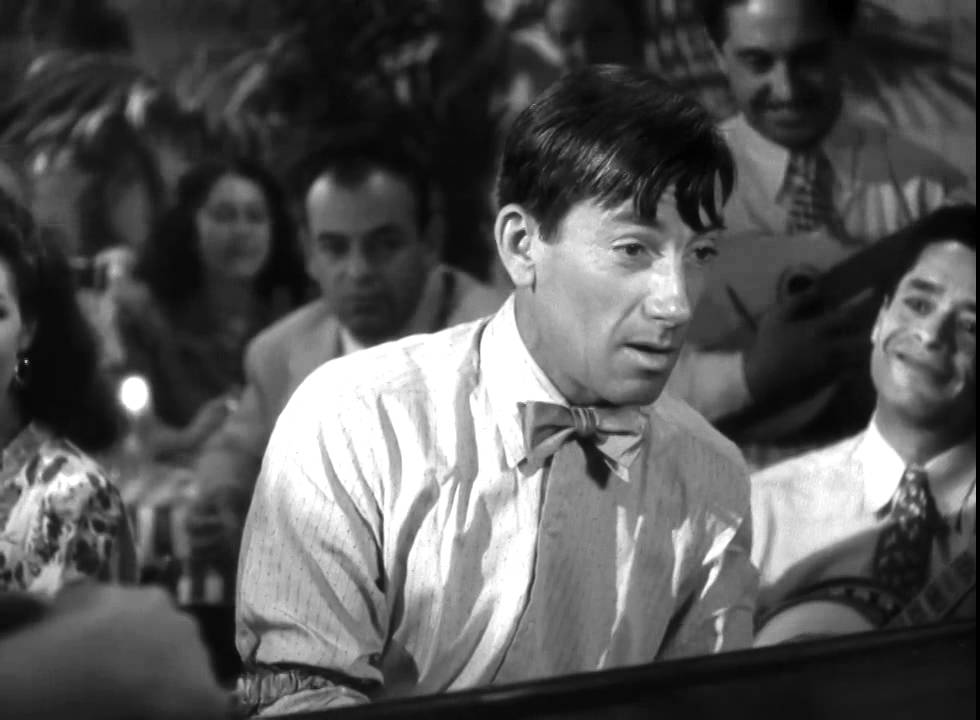
Hoagy Carmichael portrayed “Cricket”. Musician and composer Carmichael had written the standards of the time, “Stardust”, “Georgia On My Mind”, and “In the Cool, Cool, Cool of the Evening”, just for starters. According to British author Ian Fleming, it was Carmichael’s looks and actions that he thought of when creating “James Bond”. My article mentioning this is “Ian Fleming’s ‘James Bond’: ‘Casino Royale’ Time Three” at:
https://www.bewaretheblog.com/2017/04/ian-flemings-james-bond-casino-royale.html
The following, modified, comes from my article “Ernest Hemingway’s ‘To Have and Have Not’ on the Motion Picture Screen and on Radio” at:
https://www.bewaretheblog.com/2021/10/ernest-hemmingways-to-have-and-have-not.html
It includes a few other description changes from the novel, and Bacall’s character is no longer married to “Harry Morgan” and has a different last name.
There is no “Albert” in the screenplay and Walter Brennan’s “Eddie”, who calls Bogart, “Harry”, has become a combination of both Hemingway characters.
The “Gordon’s” are now “Mme. Hellene de Bursac”, played by Dolores Moran, and, “Paul de Bursac”, played by Walter Szurovy. The reason for the name change, is that the story was moved from “Key West, Florida”, during the “Great Depression”, to, “Fort-de-France”, on the island of “Martinique”, during “Vichy France’s” occupation in the Second World War. “Paul de Bursac” is now a major leader of the Resistance.

In the following still, the United States Coast Guard has been replaced by the French Vichy police. Below, on Bogart’s left, is Dan Seymour as “Capt. M. Renard”, and, Aldo Nadi as “Renard’s bodyguard”. To Bogart’s right, are Sheldon Leonard as “Lieutenant Coyo”, and Marcel Dailio as “Gerard” aka “Frenchy”, the Hotel owner, and contact to the French resistance, with Bacall in the foreground.

Walter Sande is the only untouched character from Hemingway’s novel, portraying “Johnson, the rich bilker”.

The Basic Plot:
“Harry Morgan” was running a fishing charter out of “Fort-de-France” on the island of “Martinique”, before Hitler invaded Poland. It is now mid-1940, France has just fallen to Hitler’s Germany, and the Nazi allies, the Vichy French, have come to power on the island, While, “Harry,” keeps an uneasy relationship with the Vichy Police under “Capt. Renard”.
“Eddie” was a very good first mate and close friend before the War, but he started to drink and is not dependable all the time. “Harry’s” current client, an American named “Johnson”, owes him $825, but claims he doesn’t have it with him and will get it the next day after the banks open.

Back at their hotel, the owner, “Frenchy Gerard”, approaches “Harry” to smuggle some French Resistance people onto the island from Key West, but “Morgan” does not want to get involved in the current political situation.

Next, “Harry” meets a young American woman recently arrived from Rio by plane, named “Marie Browning”. He will start calling her “Slim”, because of how slim she is. Apparently, “Marie” arrived on Martinique, because that was as far as her money would take her from Brazil. A now drunken “Johnson”, makes a pass at “Slim”, and she goes over to the piano, and “Cricket”, to avoid him. He starts playing a song ,and she sings a duet with the piano player of “How Little We Know”.

“Marie’s” duet will lead to a job and income as a singer, but immediately upon finishing her song. “Harry” watches the young woman lift “Johnson’s” wallet and go upstairs to her room. He follows her, takes the wallet from “Marie”, opens it, finds $1,400 in traveler’s cheques, and a plane ticket on a flight leaving before the banks open.
“Harry” returns the wallet to “Johnson” and makes him sign some of the travelers cheques to cover his expenses. Suddenly, shots ring out on the street, as a gunfight between the Resistance and the Vichy Police starts. The gunfightt moves into the hotel’s bar and “Johnson” is killed by a stray bullet.

After the shooting stops, the police seize “Johnston’s” wallet, “Harry’s” money, and the traveler’s cheques, and takes him and some others to the police station. He’s questioned and released.

Later, back at the hotel, “Frenchy” approaches, the now almost penniless, “Harry Morgan”, and offers to pay him a large amount of money to take Resistance leader “Paul de Bursac” and his wife, “Helene” to a nearby islet on Martinique. Without any choices left to him for income, “Harry” accepts.

While this is all taking place, a sexually charged relationship is developing between “Slim” and “Steve”. Playing games with the censors of the “Hayes Office”, Howard Hawks uses that developing chemistry, on and off the set, between Bacall and Bogart in scenes like the classic, “You Know How to Whistle”, with the following lead in.

What follows, is a classic line delivered by Lauren Bacall, as the sexual tension between the two actors build, as “Slim” is leaving “Steve’s” room.


“Steve” uses the bulk of the money given to him by “Frenchy” to purchase a plane ticket back to the United States for “Slim”. “Harry” now picks up the “de Bursacs, but his boat is spotted by a French police patrol boat and fired upon, wounding ‘Paul de Bursac”.

“Harry” manages to escape the patrol boat and get “Paul” and ‘Helene de Bursac” to the arranged pick-up with a rowboat in the islet. When he finally returns to the hotel, “Steve” discovers two things, the first is “Slim” has made the decision to stay with him. The second, “Frenchy Gerard” has hidden “Paul de Bursac” in his hotel’s basement. “Harry” now removes the bullet from “Paul’s” shoulder and learns that the two have come to Martinique to help a man escape from the “Devil’s Island” penal colony.


“Paul” now asks “Harry” to assist the Resistance in the “Devil’ Island” escape and rescue, but he turns him down. Later, it will be learned the “de Bursac’s” were killed in the escape attempt.
What happens next, is that the Vichy authorities come to the hotel and go directly to “Harry’s” room with a sense of purpose. There, “Captain. Renard”, reveals that for the second time they have “Eddie” in jail and there is nothing “Morgan” can do to help him. Further, “Renard”, withheld liquor from “Eddie” until he had the shakes and then offered him a bottle and a glass. “Eddie” has revealed everything about “Harry’s” smuggling operations. “Capt. M. Renard” and the other Vichy police are there to arrest him. Cornered in his hotel room, “Harry ‘Steve’ Morgan” turns the tables on the French police, he shoots and kills one of the Vichy police, grabs “Capt. Renard” as a hostage, and forces him to release “Eddie”, and write, and sign, “Harbor Passes” for himself, “Slim”, and his friend and mate. “Eddie”.
The story ends with the three going to “Steve’s” boat to head for the United States.
Lauren’s mother and her new husband, Lee Goldberg, moved to California sometime, date not specifically known, after this motion picture. Lauren and her mother “Lee” (Natalie) were always very close and remained so to her death.
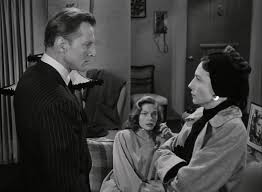
“Confidential Agent” was set during the Spanish Civl War, and premiered on November 2, 1945, in New York City. Lauren Bacall, co-starred with Charles Boyer, and Greek actress, Katina Paxinou. It was Bacall’s belief that “Warner Brothers had almost killed her career as a result of the release of this motion picture. This was actually the third movie she had shot, and the studio executives decided to move it up to her second released movie.
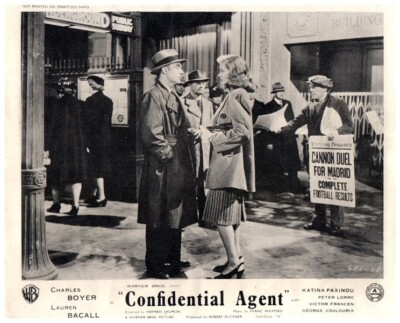
Above, Charles Boyer speaking to Lauren Bacall.
According to the “Turner Classic Movie” website at
https://www.tcm.com/articles/99318/lauren-bacall-profile-lauren-bacall-wednesdays-in-september
Meanwhile, Warner’s executives decided Bacall’s third completed film, the espionage drama Confidential Agent(1945), should be her second release, arguing that the timely subject matter would be more commercial. Unfortunately for Bacall, her performance as a society girl hooked up with underground agent Charles Boyer, fared poorly with critics, who wondered what had happened to the magical actress from her first film.
“Confidential Agent” had been filmed from June 1945 through September 1945, but there had been much more happening before June.
For example, filming of Bacall’s real second feature film, had ended in January 1945. However, because of the decision by the “Warner Brothers” executives. That movie would not be released until August 1946. Over a year after “Confidential Agent”.
There had been a comedy, “Two Guys from Milwaukee”, that was released on July 26, 1946. The picture starred Dennis Morgan and Jack Carson. At the end of the movie, Dennis Morgan’s character of “Henry” is flying home. While sitting across from him on the airplane, is his favorite movie star, Lauren Bacall, in an uncredited cameo as herself. “Henry” decides not to bother the actress, because sitting next to Bacall, in an uncredited cameo, is HER HUSBAND HUMPHREY BOGART.
At the start of May, Bogart’s divorce to his third wife, Mayo Methot became final. On May 21, 1945, “Boggie” married “Slim” Bacall.
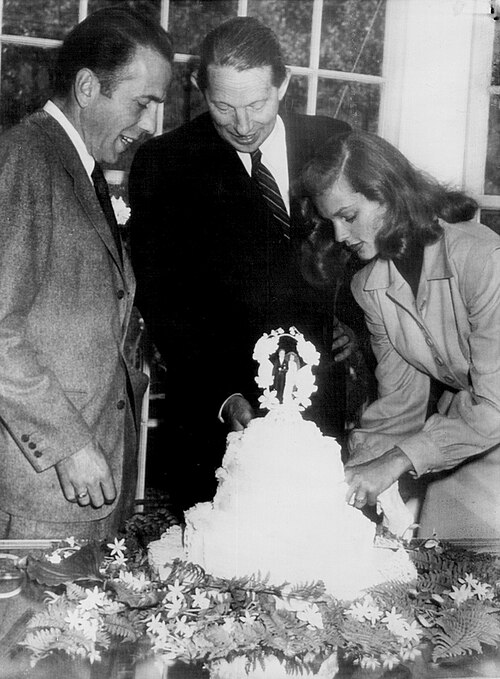
Above, left to right, husband, Humphrey Bogart, best man, his close friends Pulitzer Prize Winning author, Louis Bromfield, and the bride, Lauren Bacall. The ceremony took place at Bromfield’s “Malabar Farm”, near Lucas, Ohio.
So what was the motion picture that the “Warner Brothers” executives swapped with “Confidential Agent”, that caused Lauren Bacall major bad reviews?
THE BIG SLEEP premiered in Atlantic City, NewJersey, on August 22, 1946
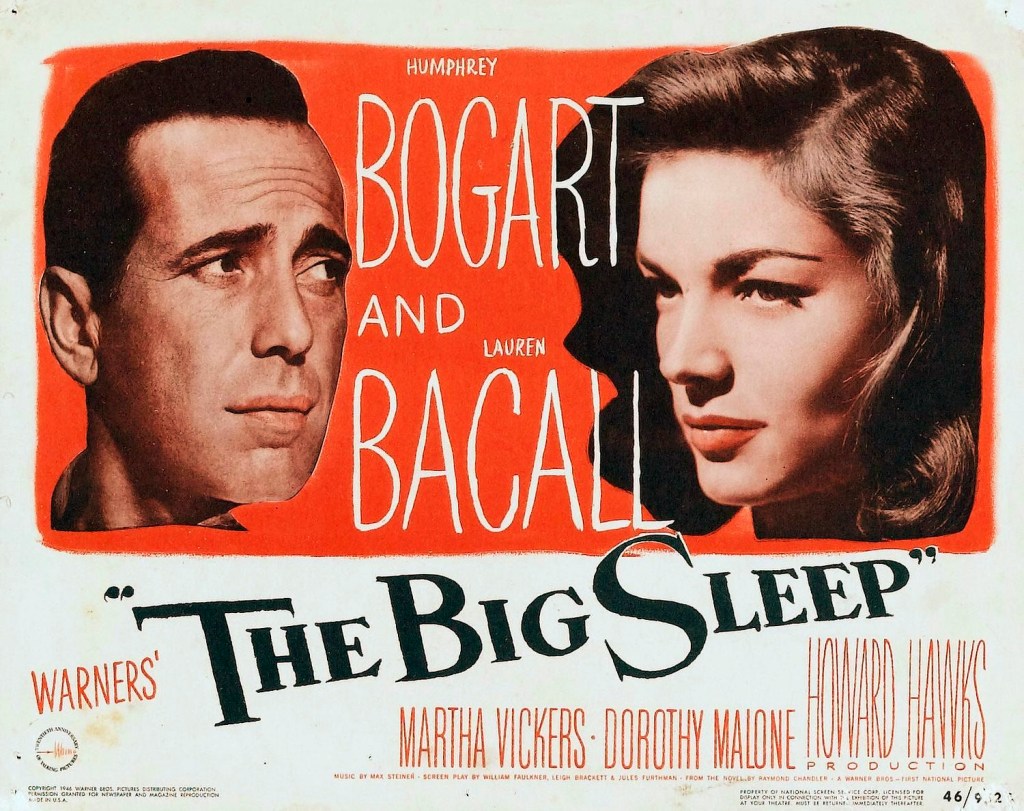
As the above poster shows, Howard Hawks was the director. His previous motion picture had been “To Have and Have Not”.
The Back Story is More Interesting Than the On-Screen Story:
The screenplay was based upon the Raymond Chandler novel, that was published in 1939, and first introduced detective, “Philip Marlowe”. The initial screenplay was written by Jules Furthman. However, it didn’t please the director, and he had William Faulkner rewrite it, but it still didn’t please Hawks. He had read some excellent science fiction with a mystery sub story by a writer named Leigh Brackett. Hawks had his secretary contact the writer and have “HIM” come in for an interview. When the writer arrived at the office of Howard Hawks, he might Leigh Brackett, they hit it off, and “SHE” wrote the final screenplay that was initial filmed. My article is “LEIGH BRACKETT: Howard Hawks and John Wayne Meet “The Queen of Space Opera”, Leigh, also write the original screenplay for “The Empire Strikes Back” and came up with the fact that “Darth Vader” was “Luke’s” father, at:
https://www.bewaretheblog.com/2018/06/leigh-brackett-john-wayne-meets-queen.html
There were two views by the movie critics on the screenplay.
“New York Times” main film critic, Bosley Crowther, gave this point of view:
The Big Sleep is one of those pictures in which so many cryptic things occur amid so much involved and devious plotting that the mind becomes utterly confused. And, to make it more aggravating, the brilliant detective in the case is continuously making shrewd deductions which he stubbornly keeps to himself. What with two interlocking mysteries and a great many characters involved, the complex of blackmail and murder soon becomes a web of utter bafflement. Unfortunately, the cunning script-writers have done little to clear it at the end.
“Time Magazine” film and drama critic, James Agee had this opposite point of view:
wakeful fare for folks who don’t care what is going on, or why, so long as the talk is hard and the action harder
However, Agree did add:
the plot’s crazily mystifying, nightmare blur is an asset, and only one of many
Another interesting screenplay problem was the question of, who in the novel, killed the chauffeur “Owen Taylor”, portrayed by the uncredited Dan Wallace, was it a murder, or suicide? In the end Hawks wrote Raymond Chandler and this is how the author described his answer to the producer/director, found in 2000s, “The Raymond Chandler Paper: Selected Letter and Nonfiction, 1909-1959”:
A cable was sent to Chandler, who told his friend Jamie Hamilton in a March 21, 1949 letter: “They sent me a wire … asking me, and dammit I didn’t know either”
The Main Cast:
Humphrey Bogart portrayed “Philip Marlowe”. The next motion picture he was actually seen in, his voice was only heard in 1946’s “Never Say Good-Bye”, was 1946’s, “Dead Reckoning”, which had an interesting bit of co-star casting. Bogart’s co-star was Lizabeth Scott. Sometimes considered a Bacall clone, because of both her looks and voice, below.
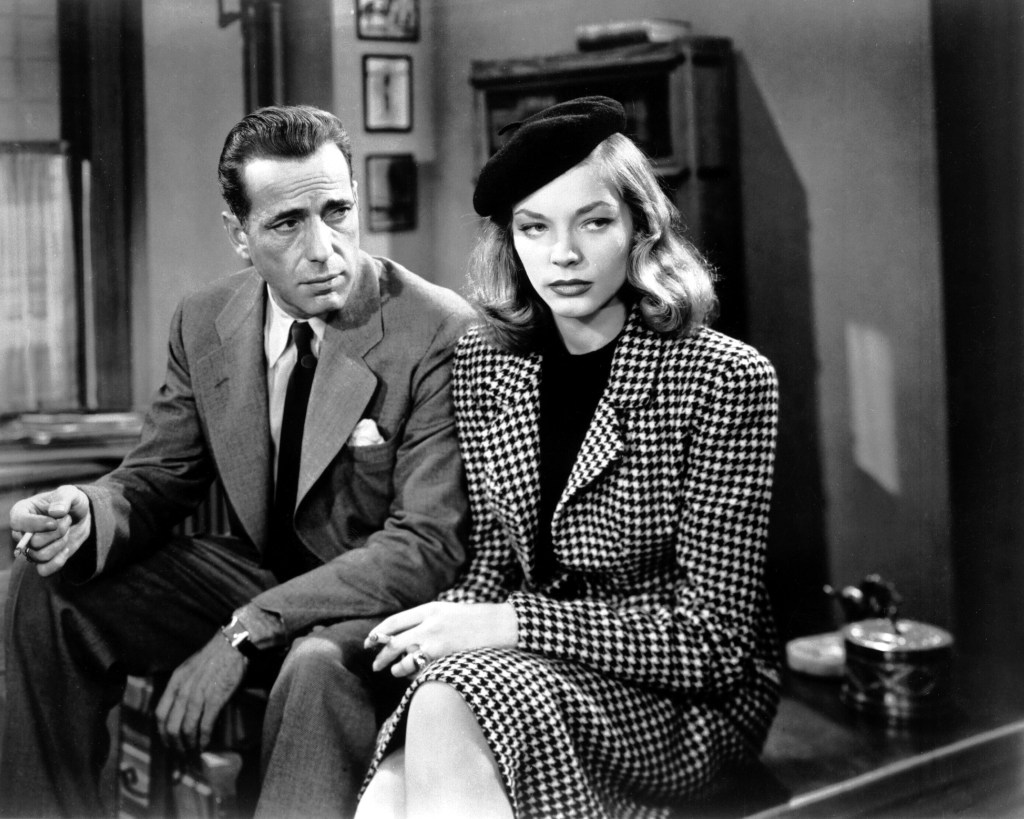
Lauren Bacall portrayed “Vivian Sternwood Rutledge”. The character was changed to a more romantic dynamic, by Howard Hawks, with “Marlowe”. Rather than the tense, antagonistic, and calculating, older sister, protecting her younger, even from “Philip Marlowe”, of the Raymond Chandler novel. Howard Hawks added extra scenes between “Vivian” and “Marlowe” that got around Joseph Breen of the “Hayes Censorship Office”, but played with the sexual tension that the two leading actors had shown in “To Have and Have Not”.
Martha Vickers portrayed the younger sister that the story revolves around, “Carmen Sternwood”. Vickers first on screen appearance was in the uncredited role of “Margareta – Vazec’s daughter” in 1943’s, “Frankenstein Meets the Wolf Man”. “Vazec” is the suspicious Inn Keeper. Martha Vickers billed as “Martha MacVicar”, was just seen co-starring with Tom Conway in the, 1944, “Falcon in Mexico”. She followed this motion picture with co-star Dennis Morgan, in the musical comedy, 1946’s, “Time, the Place and the Girl”.
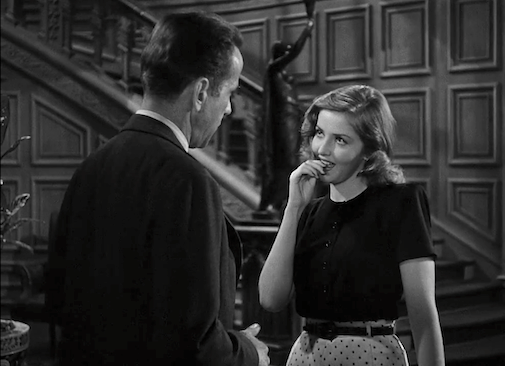
Two Interesting Actors:
Dorothy Malone portrayed the “Acme Book Shop Proprietress”. Her scenes with Bogart are hot and seductive, and she almost steals the movie. They were added by Hawks after shooting had originally been completed. Malone had 9th billing in the Cary Grant and Alexis Smith, 1946, “Night and Day”, just before this picture. She followed this film with another 9th-billing, in the Dennis Morgan and Viveca Lindfors, 1948, “To the Victor”.
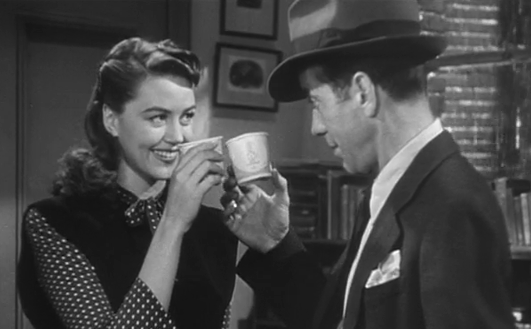
Elisha Cook, Jr. portrayed “Harry Jones”. Among character actor Cook, Jr’s roles. was “Wilmer Cook”, in director John Huston’s, 1941, “The Maltese Falcon”, starring Humphrey Bogart. He was “Harry Williams”, in the Betty Grable, Victor Mature, and Carol Landis, film-noir, 1941’s, “I Wake Up Screaming”, and of course. Elisha Cooks, Jr. invited the audience to a party at a home he owned in 1958’s, “The House on Haunted Hill”. My article is “Elisha Cook, Jr: Film-Noir’s, Westerns, Horror, Science Fiction and a Judy Garland Musical” at:
https://www.bewaretheblog.com/2025/05/elisha-cook-jr-film-noirs-westerns.html
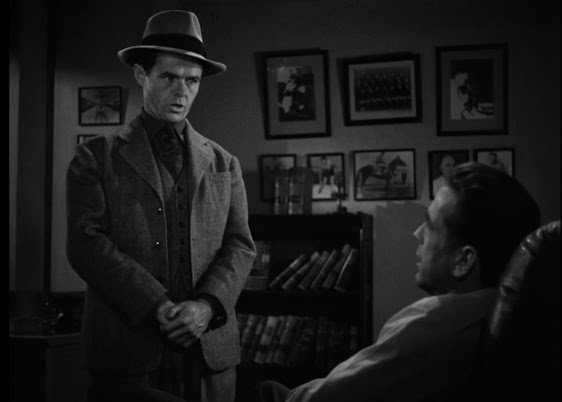
The Basic Story:
The set up has private detective “Philip Marlowe” going to the mansion of “General Shernwood”, portrayed by Charles Waldron. Where “Marlowe” has to meet “The General” inside a very hot “Green House”, because of the “General’s” medical condition. In fact, the “General” has “Marlowe” enjoy a strong drink, to be able to enjoy it himself, by watching the detective, and asking him questions about the strong whiskey.

On the surface, “General Shernwood” wants “Marlowe” to resolve a series of debts his youngest daughter, “Carmen”, owes a bookseller named “Arthur Gwynn Gieger”, portrayed by Theodore von Eltz. As “Marlowe” is about to leave, he is approached by the “General’s” older daughter, “Vivian”. Who suspects her father’s true motive is to have the Private Detective find his missing protégé, “Sean Regan”, who disappeared over a month ago.

So begins a story, with many characters, and twists to keep track of, as “Philip Marlowe” becomes intwined in a typical Raymond Chandler character study. Which is well executed by all involved.
“Marlowe” enters “Geiger’s” book store, and meets “Agnes Lozelle (or “Lowlier), portrayed by Sonia Darrin. “Marlowe” is in the character of a book nerd. He asks if “Agnes” has a copy of a specific rare book. From her answers, he knows she doesn’t have the slighted knowledge of rare books. He also notices people being let into a back room.

“Marlowe” goes across the street to “The Acme Book Store”. There he meets an extremely sexy proprietress. Who immediately shoots down his false description of the book. “Marlowe”, decides to stay there, watching “Geiger’s” book store. His time is not wasted, as “Philip Marlowe” sees “Geiger” enter, and then shortly leave. Excusing himself to the “Acme Book Store” proprietress. who has been somewhat attempting to seduce him, “Private Eye Philip Marlowe” starts to follow “Geiger”, the “Alleged” rare book dealer.

Arriving at “Geiger’s” home, “Marlowe” stakes it out. When, suddenly, he hears a gunshot, gets out of the car, and runs to the house. Inside, he finds a drugged “Carmen” standing over a body, and a camera without film. The Private Detective takes “Carmen” home to “Vivian”.

“Marlowe” returns to “Geiger’s” house to find the body gone. During the following night, he learns that the “Sternwood” driver, “Owen Taylor”, was found dead. “Taylor” was struck in the head and placed in the “Sternwood” limousine. The limousine was placed in gear and made to drive off the Lido Pier into the ocean.
Now more characters appear and interweave with “Carmen’s” story.
“Vivian” arrives at “Marlowe’s” office with scandalous photos of “Carmen”. She had received the photos with a blackmail demand, in trade for the original negatives.

“Marlowe” returns to “Geiger’s” bookstore, and follows a car leaving to the apartment house for “Joe Brody”, portrayed by Louis Jean Heydt, a gambler who previously blackmailed the “General”. “Philip Marlowe” doesn’t go up to the apartment, but returns to “Geiger’s” house and finds “Carmen” standing outside. Speaking with her, she insists that it was “Joe Brody” who killed “Geiger”. Just then gangster “Eddie Mars”, portrayed by John Ridgely, “Geiger’s” landlord, shows up at the house.
After which, “Marlowe” goes to “Brody’s” apartment and finds “Agnes”, and “Vivian”, there.

“Carmen” shows up demanding to have the negatives back.

“Marlowe” disarms “Carmen”, and sends her home with “Vivian”. After they leave, “Brody admits to being the blackmailer, but he didn’t kill “Geiger”. The doorbell rings, “Brody” answers the door, and “Brody” is shot dead! “Marlowe” chases the killer, and catches “Geiger’s” driver, “Carol Lundgren”, portrayed by Tommy Rafferty, and turns him over to the police.
“Philip Marlowe” goes to “Eddie Mars’s” casino and inquires about “Mars’s” wife. Who supposedly ran off with the missing “Regan”. However, “Eddie” is evasive, and brings up that “Vivian Sternwood” is running up a large gambling debt. As the two men continue to talk, “Vivian” wins big, and wants “Marlowe” to take her home. Outside, one of “Eddie’s” stooges attempts to rob “Vivian”, but “Marlowe” knocks him out. Driving back to the “Sternwood’s”, “Philip Marlowe” realizes that “Eddie Mars” staged the robbery. Thinking that would stop the private detective in discovering that “Vivian” and “Eddie” are actually working together. “Marlowe” now, presses “Vivian”, over her connection to “Eddie”, but she admits nothing.
Back at his own house, “Philip Marlowe” finds “Carmen Sternwood” waiting, were she attempts to seduce him. He chases her out, but not before finding out that “Vivian” is getting frequent calls from “Eddie Mars”. The following day, “Vivian” tells “Marlowe” that “Regan” has been found in Mexico, and she plans to go to him. Afterward, “Mars” has some of his thugs beat up “Philip Marlowe”, and pass on the message, that he is to stop his investigation.
The beaten up “Marlowe” is found by “Henry Jones”. Who is strongly infatuated with “Agnes”. “Jones” convey’s “Agnes’s” request for $200 in trade for the location of the wife of “Eddie Mars”.

While “Jones” waits outside of “Marlowe’s” office, a thug and gunsel, “Lash Canino”, portrayed by 1930’s, “B” cowboy star, Bob Steele, appears, and sizes up the other.

“Canino” threatens “Harry Jones” for the address of “Agnes”.

“Lash” succeeds in getting “Harry” to give him “Agness’s” address, after which he. forces him to drink poison.

Before “Harry” dies, showing up is “Philip Marlowe”, who learns “Harry” knowing what was coming and to protect “Agnes”, deliberately gave “Lash” the wrong address for “Agnes”
“Agnes” calls “Marlowe” at his office, and he learns that she has seen “Mona Mars”, portrayed by Peggy Knudsen, at an auto repair shop in a small town called Realito. “Marlowe” sets up a meeting with “Agnes”. When he arrives at the auto repair shop, he is attacked by “Lash Canino”, and knocked out cold.

When he awakes, ‘Marlowe” is tied up and being watched by “Agnes”, but also “Vivian” is in the garage.

“Vivian” unties “Marlowe”, who gets into a gun fight with “Canino”, and kills him. The two drive back to “Geiger’s” house, “Marlowe” calls “Eddie Mars”, making it seem he’s still in “Realito. “Eddie Mars” arrives with four men, and has them set up an ambush outside the house for when “Marlowe” finally arrive.
Eddie” goes inside the house to be confronted by “Philip Marlowe”. “Marlowe” accuses “Mars” of blackmailing “Vivian” over “Carmen” having killed “Regan”. “Mars” says “Carmen” did the killing in a mental haze. “Marlowe” doubts what “Mars” has said, and he next forces “Eddie Mars” outside of the house. Where he is killed by his own men in the ambush, thinking he was “Marlowe”. The private detective now calls the police and tells them that “Eddie Mars” killed “Regan”, thereby protecting “Carmen”.
The screenplay ends with “Marlowe” convincing “Vivian” that “Carmen” needs psychiatric care. “Vivian” confesses her own faults to the man she loves, and tells “Philip”, her problems are: NOTHING YOU CAN’T FIX!
The next motion picture that the “BOGART’S MADE”, is what should have been a typical Humphrey Bogart portrayal. HOWEVER, there are TWISTS WITHIN TWISTS.
DARK PASSAGE premiered in New York City on September 5, 1947
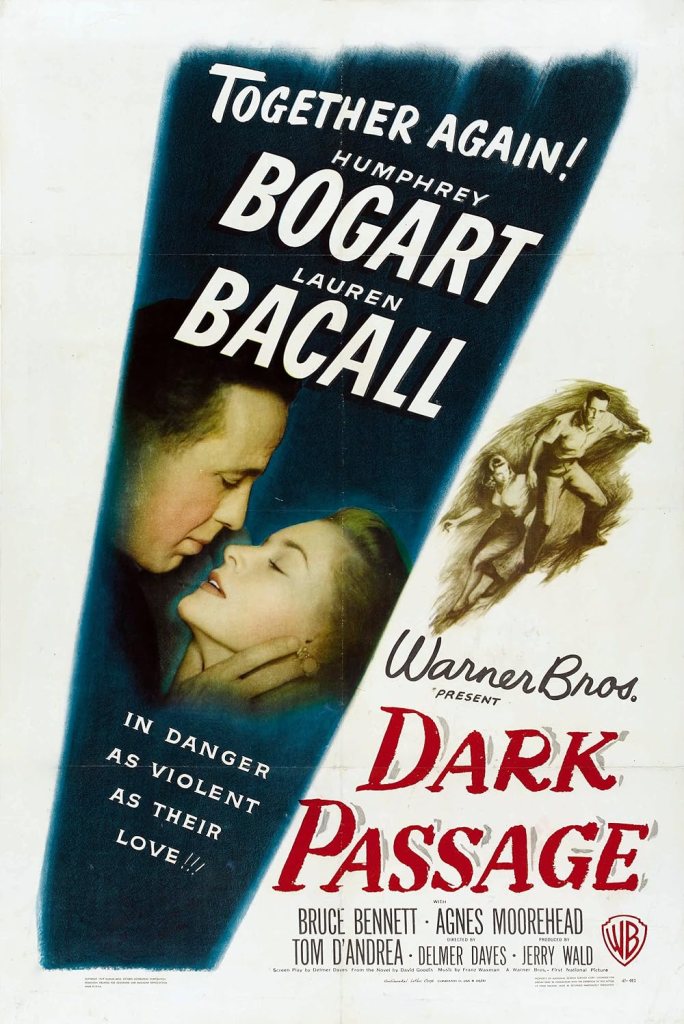
The screenplay was based upon noir crime fiction writer David Goodis’s 1946 novel, “Dark Passage”.
The screenplay was by the film’s director Delmar Daves, 1943’s, Cary Grant and John Garfield’s, “Destination Tokyo”. He had just directed the Edward G. Robinson, 1947, film-noir, “The Red House”, and followed this picture with the Dennis Morgan and Viveca Lindfors, 1948, “To the Victor”.
Humphrey Bogart portrayed “Vincent Parry”. He had just starred with Barbara Stanwyck and Alexis Smith in 1947’s, “The Two Mrs. Carrolls”. Bogart followed this picture with the uncredited role of a father staring through a window in 1947’s, “Always Together”, starring Robert Hutton and Joyce Reynolds. However, it was his appearance in the movie that followed the uncredited role, that he is remembered for, director John Huston’s, 1948, “The Treasure of the Sierra Madre”.
Trivia: according to Lauren Bacall, her husband was wearing a wig in the Huston movie, because most of his hair had finally fallen out during production of this motion picture.
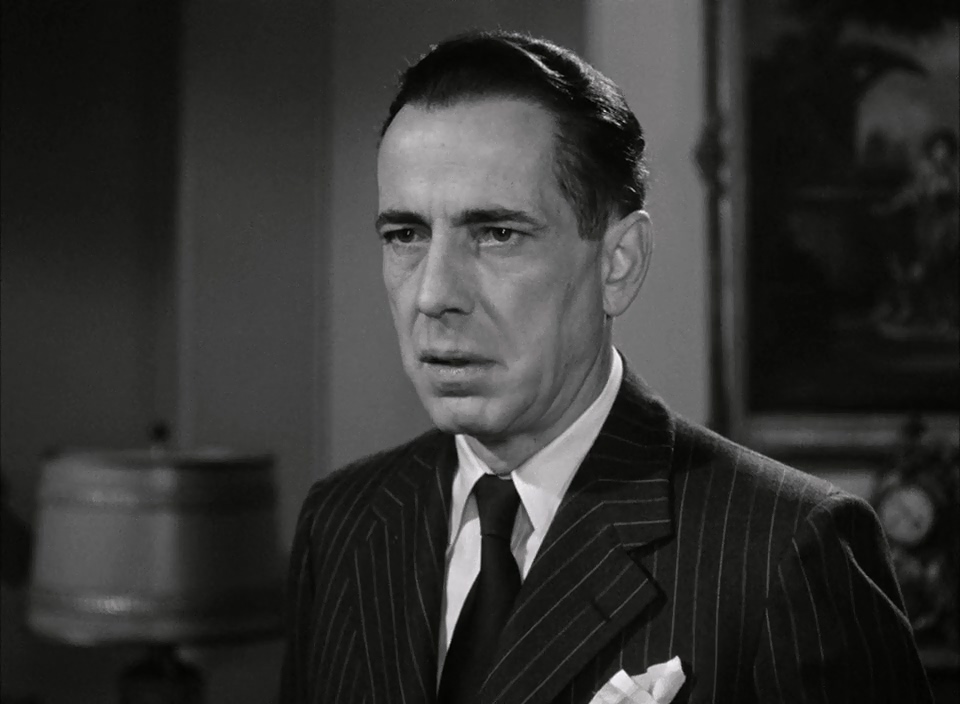
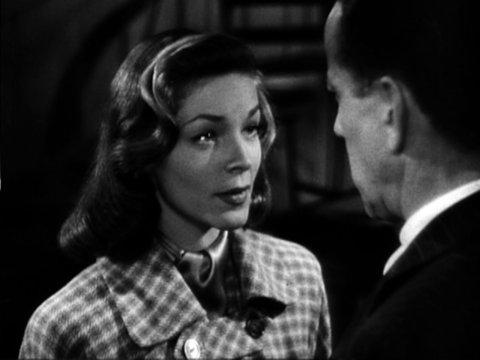
Lauren Bacall portrayed “Irene Jansen”. Bacall had just been seen in 1946’s, “The Big Sleep”, and would follow this picture with the fourth and final film I want to mention.
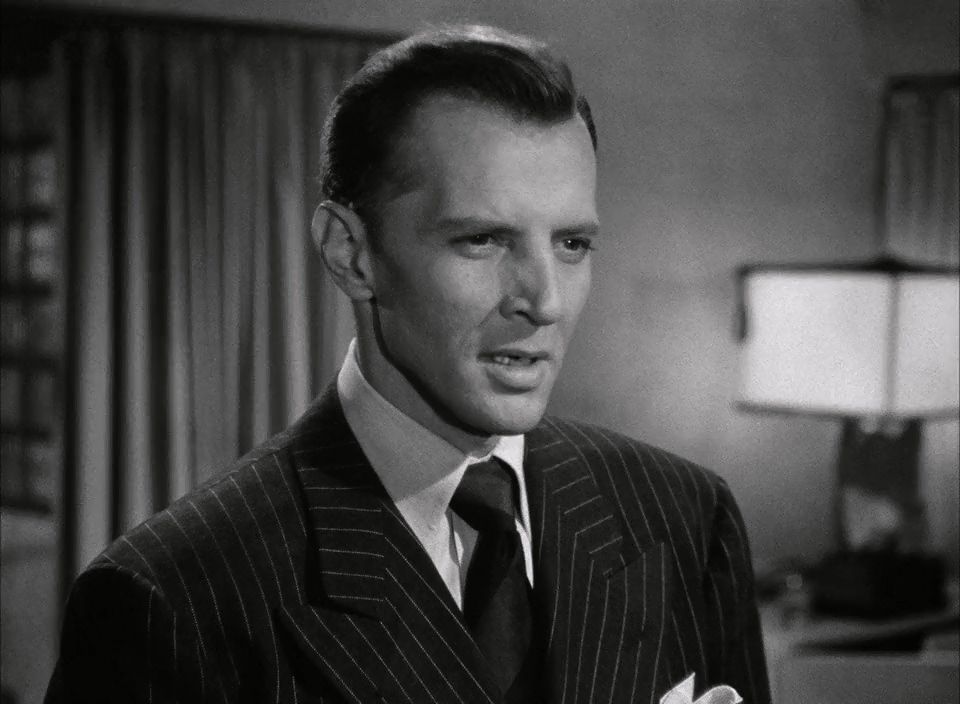
Bruce Bennett portrayed “Bob”. The one-time “Tarzan”, had just been seen with 4th-billing in the Dennis Morgan, Jane Wyman, and Janis Page, 1947, Western, “Cheyenne”. Bennett followed this picture with John Huston’s, 1948, “The Treasure of the Sierra Madre”.
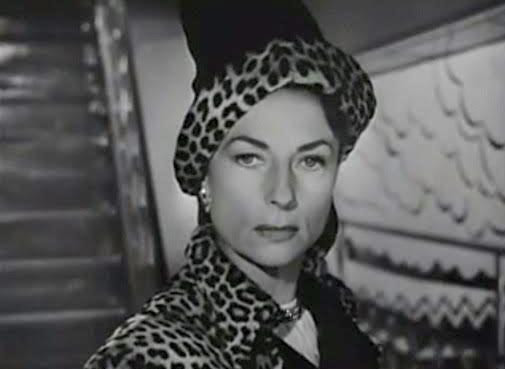
Agnes Moorehead portrayed “Madge Rapf”. An original member of Orson Welles’s, “Mercury Theatre”. She had just been in the Hedy Lamaar, Robert Walker, and June Allyson, 1945, “Her Highness and the Bellboy”. Moorehead followed this feature film with the 1947 film-noir, “The Lost Moment”, co-starring Robert Cummings and Susan Hayward.
The Basic Story:
Convicted wife-killer, “Vincent Parry” escapes from San Quentin prison in a metal laundry barrel and evades the police by hitching a ride with a passing motorist. The motorist, “Baker”, portrayed by Clifton Young, has his radio on and hears a report of “Parry’s” escape, and in shock, looks at the man he picked up. In response to “Baker”, “Vincent Parry” beats him unconscious, but also leaves the c car on the roadside. Next, “Parry” is again picked up by a passing motorist, an apparent stranger to him, dilettante, “Irene Jansen”, who smuggles “Parry” passed the police blockade, and then, offers him her apartment to stay in. He agrees and after “Parry” is safely inside her apartment, “Irene” goes out and buys him new clothing.
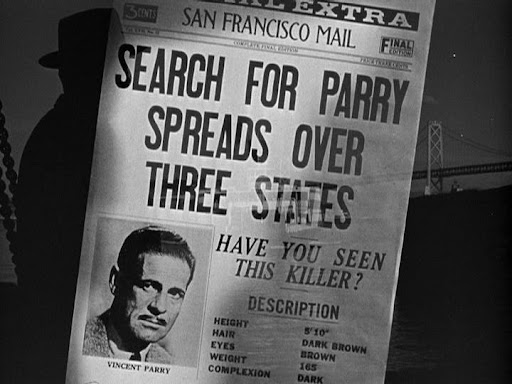
While “Vincent Parry” is alone in the apartment, an acquaintance of “Irene”, “Madge Rapf”, knocks on the door, and “Vincent” yells for her to leave. SECOND TWIST, “Madge” was a friend of “Vincent Parry’s” wife, and also tried to get romantically involved with him.
When “Irene” returns, and learns that “Parry” had yelled at “Madge”. THIRD TWIST, “Irene” has been interested in all cases of “miscarriages of justice”. Having heard of “Vincent Parry’s” escape that morning, “Irene Jansen” set out to find and protect him. “Irene” reveals to “Vincent”, that she has followed his court case and always believed that he did not murder his wife. There are many similarities with her own father’s trial, and him being convicted of a murder he didn’t commit. Those facts have created “Irene” strong sympathy for “Vincent Parry”.
Wearing his new clothes, “Vincent” leaves “Irene’s” apartment, but is recognized by a cab driver named “Sam”, portrayed by Tom D’Andrea. It turns out that “Sam” is sympathetic towards “Parry” and takes the escaped convict to a plastic surgeon, “Dr. Walter Coley”, portrays by Houseleyy Stevenson, to change his appearance.
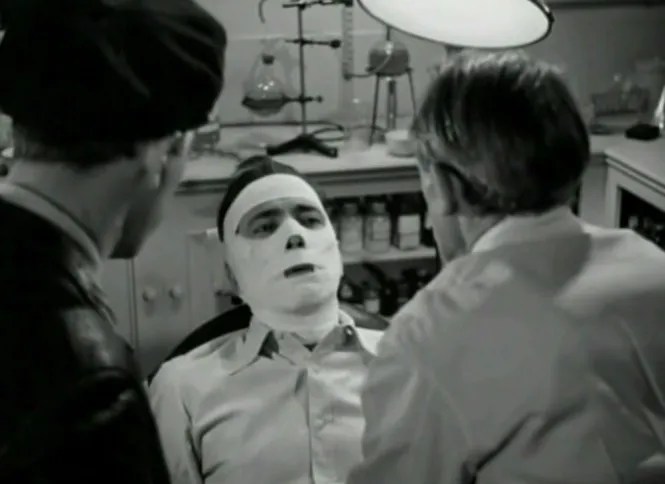
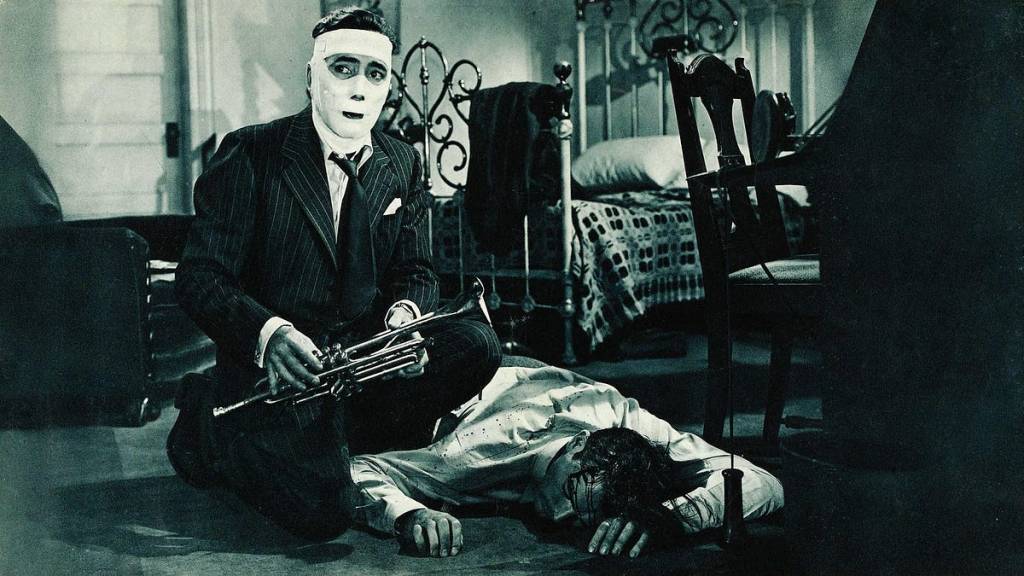
“Vincent” arranges to stay with a friend, “George Fellsinger”, portrayed by Rory Mallinson. during his recuperation and leaves for the surgeon. Upon his return to “George’s” place, “Vincent” finds him murdered. The police discover “Vincent Parry’s” fingerprints on “George’s” trumpet and “Parry” is now wanted for a second murder.
FIRST TWIST, all the above scenes, until the above still’s sequence, have been filmed in “Subjective Camera” aka: “Point of View”. The audience has heard “Vincent Parry” with Humphrey Bogart’s voice, BUT never seen “Parry’s” face until after the plastic surgery, and then mostly in bandages. However, you can’t hide Humphrey Bogart’s eyes. The camera is “Vincent’s” eyes up and until this change. Taking up more than half the screenplay.
“Madge” and her ex-boyfriend “Bob”, who is romantically interested in “Irene”, come to see “Irene”. While hiding in another room is “Vincent”, who can overhear everything.
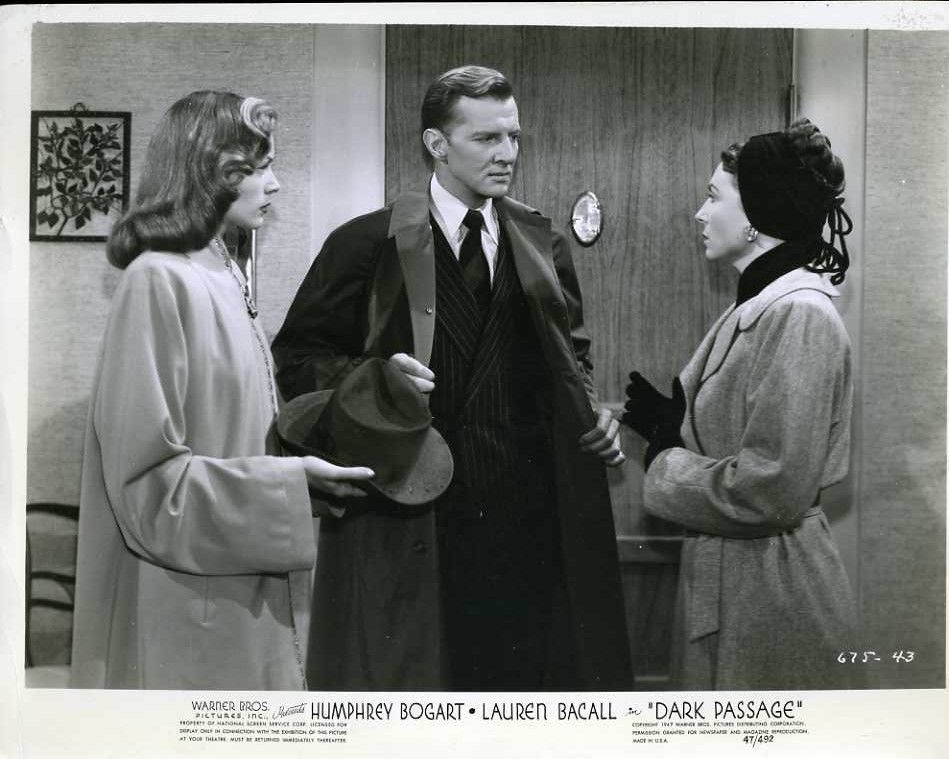
“Madge” has come to “Irene’s” apartment, and in conversations she asks the other to let her stay with her for protection. She is worried that prison escapee, “Vincent Parry”, might come after her for testifying against him. As the conversation is going nowhere and “Madge” seems to be overreacting. “Irene” insists that “Madge” leave now. So, in return and acting maliciously, “Madge” lets “Bob” know that, based upon the incident at the door, “Irene” had a “Male Guest”. This doesn’t work either with “Bob”, but “Madge’s” behavior toward “Irene”, is more upsetting to “Bob”, than learning “Irene” may have a romantic rival for her. “Bob” has to “literally” drag “Madge” out of the apartment.
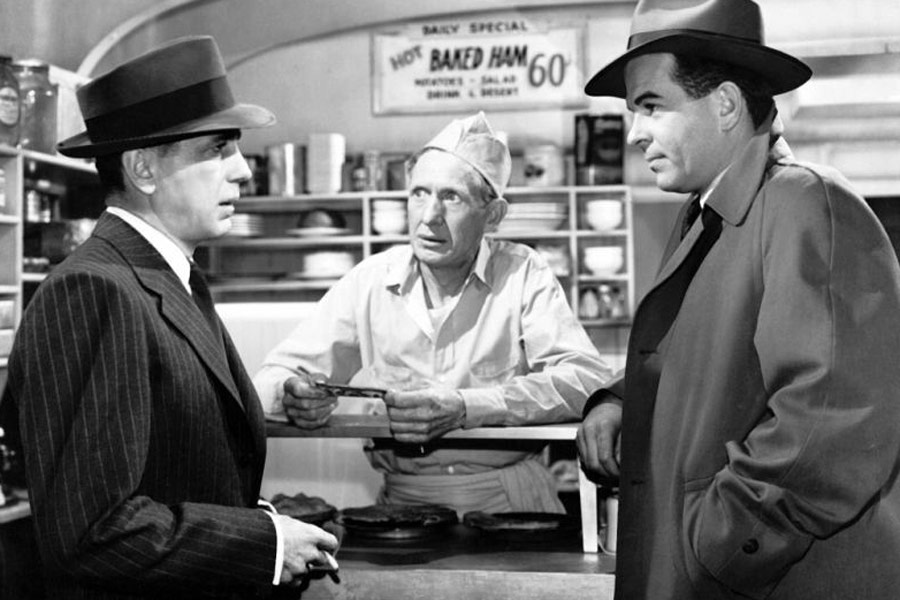
After the bandages have been removed, a reluctant “Vincent Parry” leaves “Irene Jansen” to avoid getting her more deeply involved with him. Next, at a diner, a suspicious off-duty detective, “Detective Kennedy”, portrayed by Douglas Kennedy, asks “Parry” for proof of his identity, and is told they were accidentally left in his hotel room. No problem, the detective will escort him to his hotel room.
As the two head for the “Hotel Room”, “Vincent Parry” is able to dart in front of an on-coming car and escape from “Detective Kennedy”. Returning to his hotel, he is surprised to find “Baker”. It turns out that “Baker” is also an ex-con from San Quentin. “Baker” has pulled out a gun and now holds the other at gunpoint, demanding that “Irene Jansen” pay him $60,000 (at the time of this writing equal to $888,465.47), a third of her worth, or he’ll turn the new “Vincent Parry” over to the cops for the $5,000 reward.
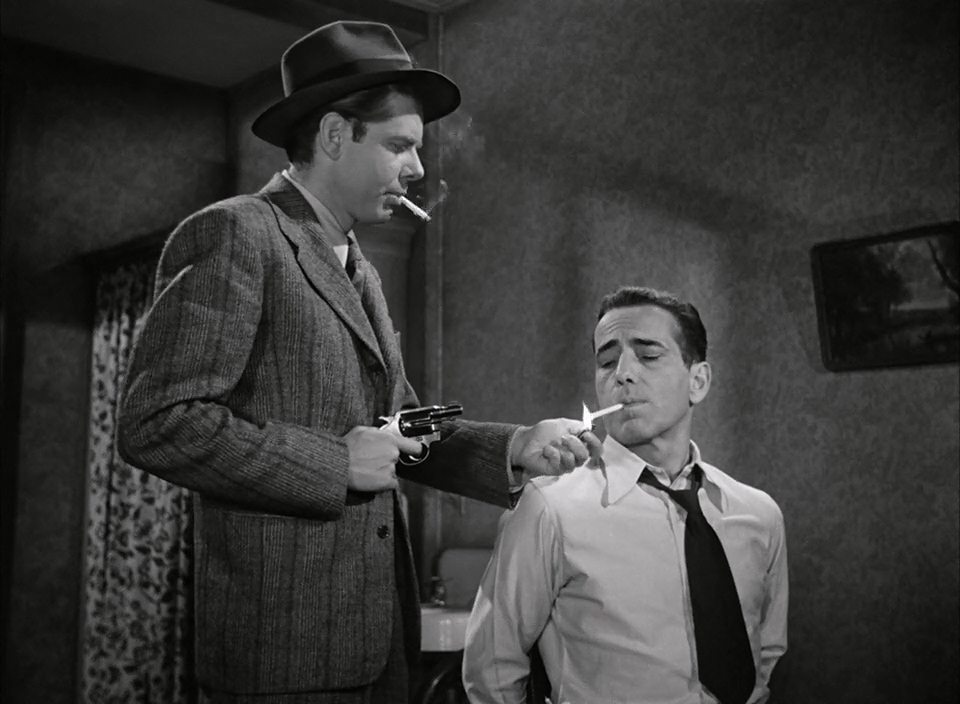
“Parry” seems to reluctantly agree, and the two leave for “Irene’s” apartment, but “Vincent” says he knows a short cut. The two men arrive at a secluded spot under the “Golden Gate Bridge”. At which point, “Vincent” turns the table on the other, by first disarming him. A second, “Vincent” figuring there more here than it seems, starts to question the other. “Baker” admits that is was “Madge” behind both the deaths of her husband and a short time ago, “George”. The two men fight, and “Baker” accidentally falls to his death.
Knowing she will not recognize him, “Parry” calls on “Madge”. He says that he’s a friend of “Bob’s” and became somewhat romantically interested in her from what “Bob” told him, and wanted to meet.
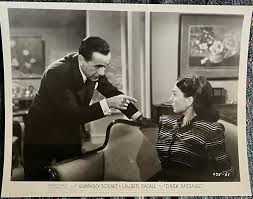
However, “Madge” recognizes his voice, and figures out who this man really is, as “Vincent Parry” now accuses “Madge” of the two murders . He attempts to convince her to sign a full confession, but she won’t. This leads to a major argument and a fight, where “Madge” plunges through a window to her death.
Certain that he will now be accused of murdering “Madge”, along with “George” and his wife. “Vincent Parry” decides to flee, At the bus station, he observes a romantic couple standing by the juke box, they pick the song, “To Marvelous for Words”. He had played it several times in “Irene’s” apartment. This leads “Vincent” to call her, and asked her to meet him in Paita, Peru, “Irene” accepts.
Sometime later at a bar inn “Paita”, the bar band starts playing “To Marvelous for Words”. “Vincent” looks up to see “Irene”, he walks over to her, and the couple start to dance.
Edward G. Robinson always had top billing in every other motion Humphrey Bogart was in with him. Now, he found the billing switched.
KEY LARGO dual premiers in Los Angeles and New York on July 16, 1948
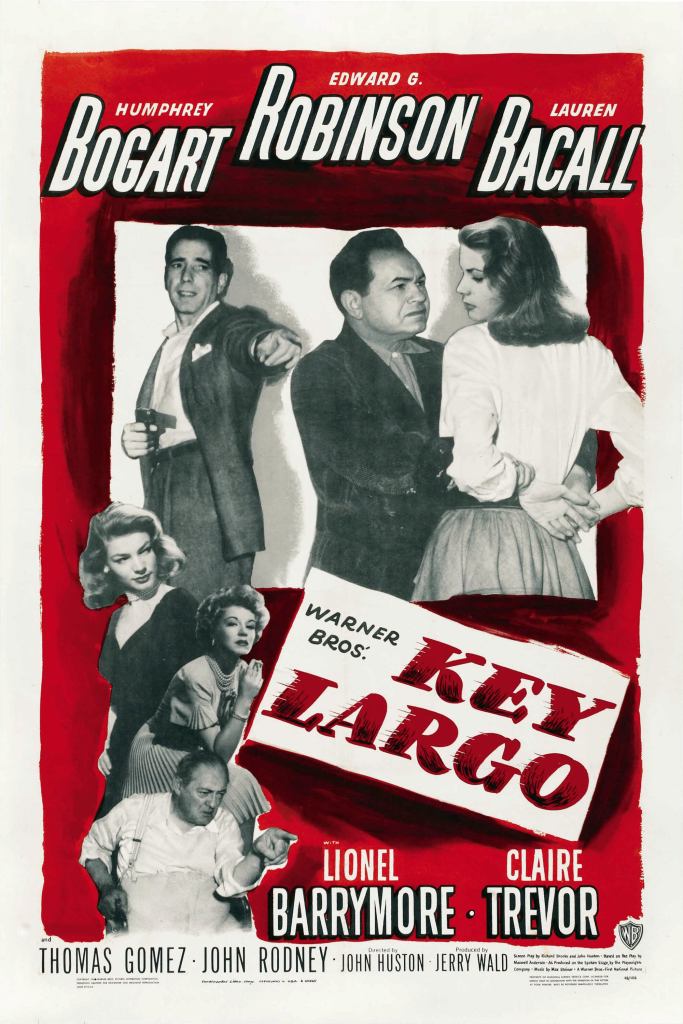
The motion picture was directed by John Huston. Huston had just directed 1948’s, “The Treasure of the Sierra Madre”, and followed this picture with the Jennifer Jones and John Garfield, 1949, “We Were Strangers”.
The screenplay was based upon playwright Maxwell Anderson’s 1939 play, “Key Largo”. The screenplay was co-written by John Huston and Ricard Brooks. Among Brooks’s other screenplays were 1958’s, “Cat on a Hot Tin Roof”, that starred Elizabeth Taylor and Paul Newman, 1960’s “Elmer Gantry”, that starred Burt Lancaster and Jean Simmons, and 1967’s “In Cold Blood”, that starred Robert Blake and Scott Wilson. Among Richard Brooks directing assignments were all three of those motion pictures.
Humphrey Bogart portrayed “Major Frank ‘Soldier’ McCloud”. Bogart would follow this feature with 1949’s, “Knock on Any Door” that introduced John Derek.
Edward G. Robinson portrayed “Johnny Rocco/Howard Brown”. Robinson was just seen in 1948’s “All My Sons” co-starring Burt Lancaster. He would follow this feature with the Dark Fantasy, 1948’s “Night Has a Thousand Eyes”, co-starring Gail Russell and John Lund.
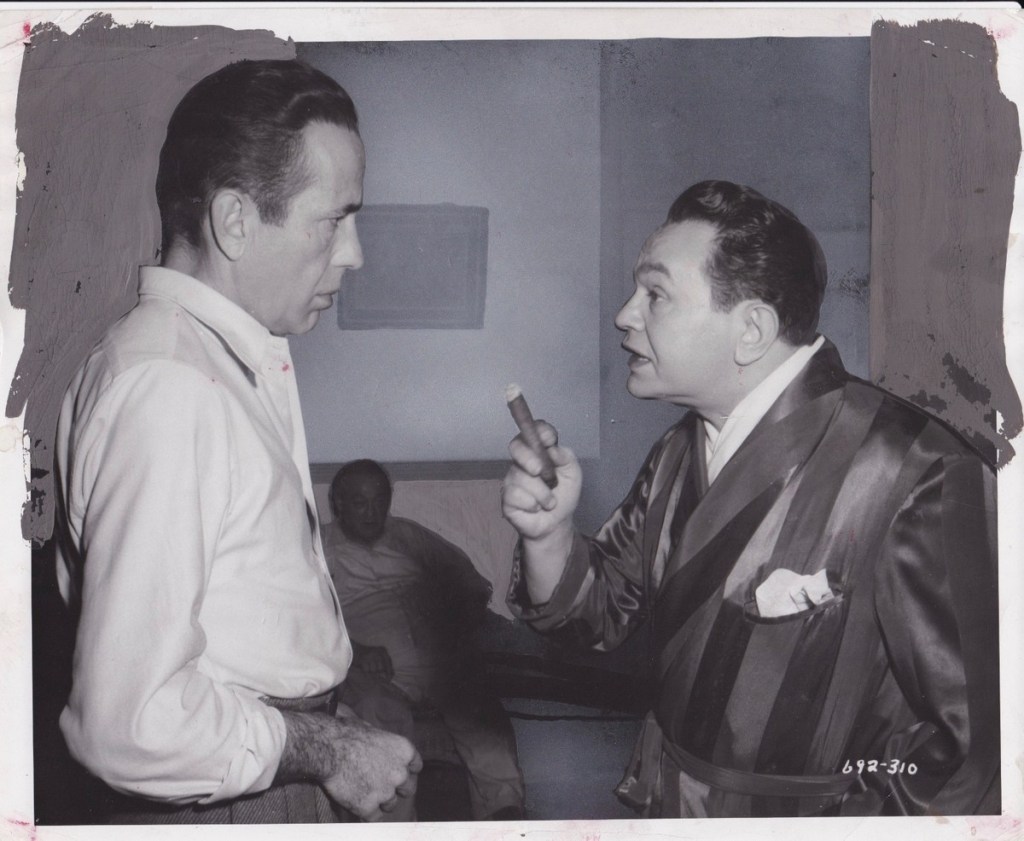
Lauren Bacall portrayed “Nora Temple”. Her next feature film was 1950’s, “Young Man with a Horn” co-starring with Kirk Douglas and Doris Day.
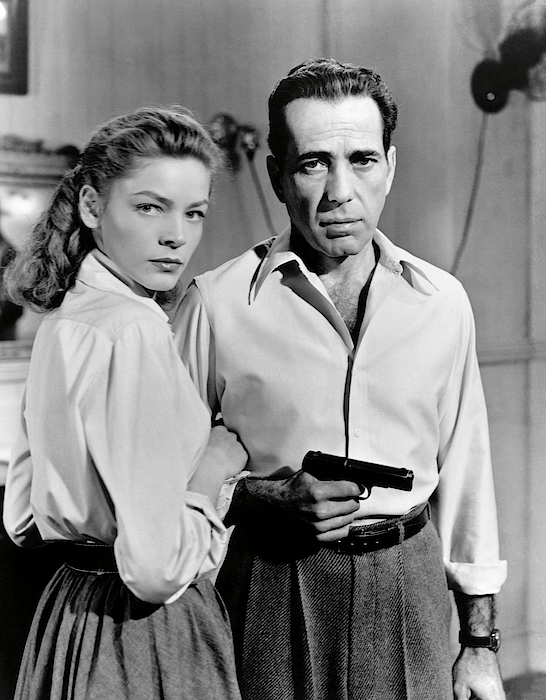
Lionel Barrymore portrayed “James Temple”. The older brother of John and Ethel Barrymore portrayed “Prince Dakar” aka: “Captain Nemo” in the 1929 hybrid, part silent, part talking version of Jules Verne’s “The Mysteries Island”. In 1932, the three siblings made “Rasputin and the Empiress”, with John Barrymore portraying the “Mad Russian Monk, Rasputin”, Ethel portraying the “Czarina of Russia”, and Lionel the “Czar”. In 1935, Barrymore was “Professor Zelin”, in director Tod Brownings, 1935 “Mark of the Vampire” with Bela Lugosi in the original Lon Chaney role. He also originated the role of “Dr. Giliespie” in the Lew Ayers “Dr. Kildare” movie series.
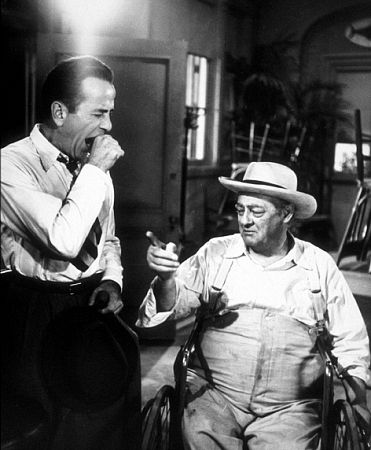
Claire Trevor portrayed “Gaye Dawn”, that won her the “Academy of Motion Picture Arts and Sciences, Best Supporting Actress Oscar”. Trevor, was “Dallas” in director John Ford’s 1939, “Stagecoach”. She would be “May Holst” in director William “Wild Bill” Wellman’s, 1954, “The High and the Mighty”. Trevor would follow this movie portraying the wife of baseball legend Babe Ruth, in 1948’s “The Babe Ruth Story”, co-starring William Bendix as her husband.
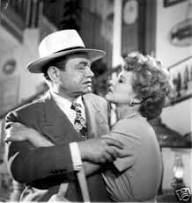
It should be noted that Maxwell Anderson’s play takes place in 1939, and opens on a hilltop in Spain during the 1936 to 1939, Spanish Civil War. It switches to Key Largo, Florida and a run down hotel. The gangster’s of the movie, are the “Mexican Bandidos” of the play. Who take over the hotel, and the hero is actually a deserter from the Spanish Civil War, who dies at the end.
The Basic Plot of the the 1948 movie:
The screenplay opens not on a “Hilltop” in Spain, but in Key Largo, Florida, with the arrival of “Frank McCloud” at a small rundown hotel. He is visiting the family of “George Temple”, who served under him and was killed in the Italian Campaign (the 1943 to 1945, invasion of Sicily, and the mainland invasion of Italy). There he meets the widow of “George”, “Nora Temple”, and “George’s” elderly father and hotel owner, “James”.
It’s off season, there are only six guests staying at the hotel. They are described in the screenplay as, “Dapper-Edward ‘Toots’ Bass”, portrayed by Harry Lewis,.“Boorish-Richard ‘Curly’ Hoff”, portrayed by Thomas Gomez, “Stone Faced-Ralph Feeney”, portrayed by William Hadde, “Servent-Angel Garcia”, portrayed by Dan Seymour, “Attractive, aging alcoholic-Gaye Dawn”, as mentioned, portrayed by Claire Trevor. There is also a “SIXTH MAN”, who stays unseen in his hotel room. All the visitors claim to be in the Florida Keys to fish, during HURRICANE SEASON.
“Frank” tells “Nora” and “George’s” father about his heroism. They, in turn, tell “Frank” all “George” said abut him in his letter’s to the two. While the three prepare the hotel for the upcoming hurricane, “Sheriff Ben Wade”, portrayed by Monte Blue, and his Deputy, “Clyde Sawyer”, portrayed by John Rodney, are searching for two fugitive Seminole tribe members, brother’s “John”, portrayed by uncredited Jay Silverheels, and “Tom Osceola”, portrayed by Rodd Redwing.
After the Sheriff and his Deputy leave, the local Seminole Indians seek shelter, around the hotel, from the on-coming Hurricane and with them are the “Osceola” brothers.
The storm is approaching and “Curly”, “Ralph”, “Angel” and “Toots” now pull pistols on “James” and “Nora Temple”, and “Frank McCloud”, making the three their hostages. They now reveal, that the missing “Sixth Guest”, is the notorious gangster, “Johnny Rocco”, exiled to Cuba, years ago, but back awaiting for his Miami contact to conclude a major deal.
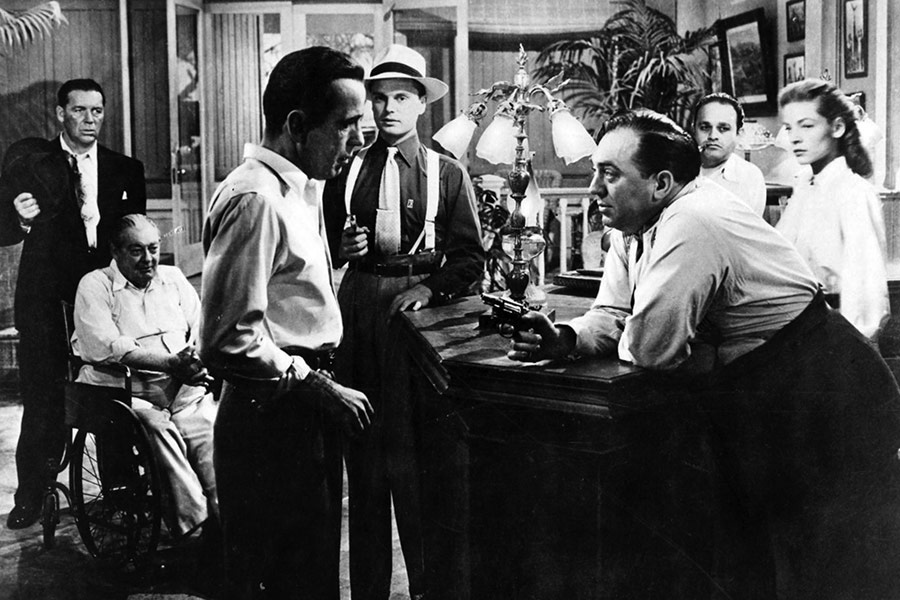
“Rocco’s” men spot “Sheriff Deputy Clyde Sawyer” looking around for the “Osceola Brothers”. However, tov protect “Rocco”, they capture the deputy and bring “Sawyer” into the hotel lobby.
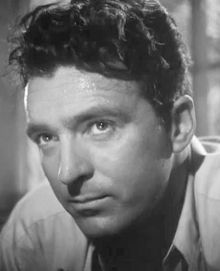
“Rocco” finally comes down, and after meeting the other three, and finding “Deputy Sawyer”. “Rocco” challenges “McCloud” to a duel. He wins, “Deputy Sawyer” lives, if not, “Sawyer” dies. “Rocco” doesn’t get the response he expected. When “McLoud won’t buy into a duel, and knowing the end result should he win. Tells the gangster, that he believes in self-preservation, and self-preservation outweighs heroics.
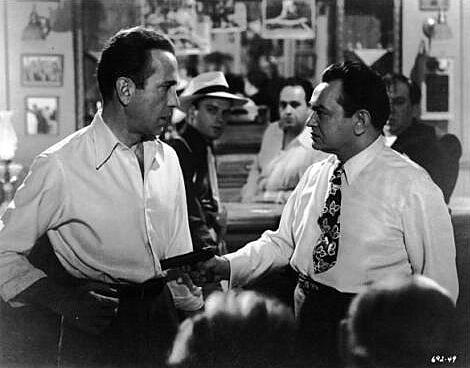
“Rocco” kills “Deputy Sawyer”, and has his men take the body out in a rowboat to be dumped in the water as the Hurricane approaches. Next, “Rocco” attempts to force his one-time “Gun Moll”, “Gaye Dawn”, to sing for everyone’s. As a bribe he offers the alcoholic a drink, after she sings, but she decides not to sing and “Rocco” won’t give her the drink.
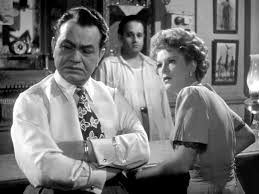
“Frank McCloud”, at the bar, pours a strong drink and gives it to “Gaye”. “Rocco” goes up to “Frank”, and slaps him a few times in the face for what he did, but once more does get the reaction he expected, from the “Soldier”, “Frank McCloud”. Instead of the cowardliness the gangster expected, as always happens from people “Rocco” pushes around. “Frank” simply, ignores “Rocco”. Nobody has ever ignored “Rocco”, and the gangster doesn’t know how to react. While, “Gaye” looks at what she believes is “Frank’s” heroic response. Causing, to remind her of her husband. During the Second World War battle for the abby in Monte Cassino, Italy. Her husband was killed, as the United States Army and British troops stormed their way up a steep hill to the Italian and German controlled abby.
A short while later, “James Temple” tells “Frank”, the he is welcome to call the hotel his home going forward and invites him to stay. A prospect that “Nora Temple” is finding intriguing.
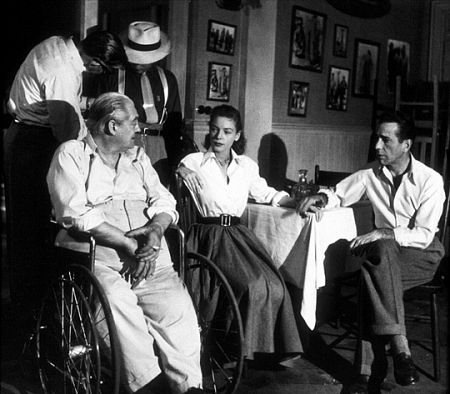
The Hurricane subsides and “Sheriff Wade” returns looking for his deputy. He finds “Sawyer’s” body washed up on the hotel’s driveway and makes the assumption that he was murdered by the “Osceola Brothers”. “Rocco” as “Mr. Brown” goes out to speak to the Sheriff and adds the finishing touches to the death of “Deputy Sawyer” by the Seminole brother’s.
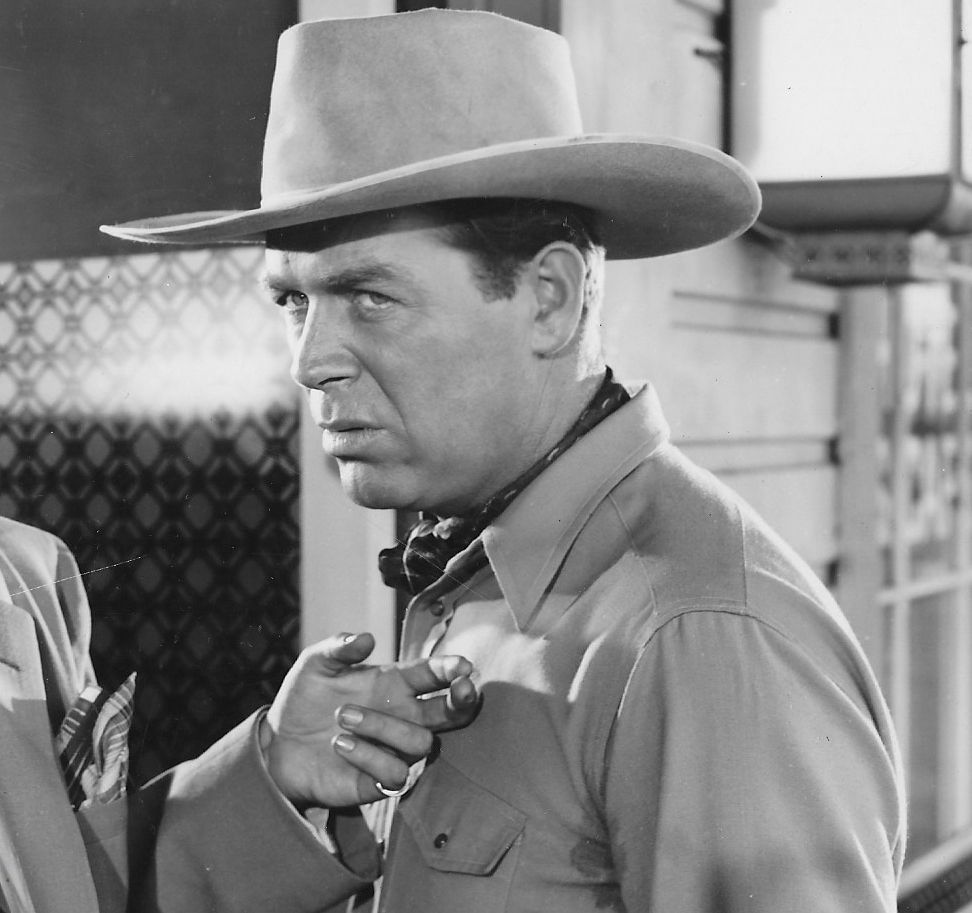
“Wade” confronts the “Osceola Brothers” and kills both of them ,and leaves the hotel with three bodies. Next, “Rocco’s” contact “Ziggy”, portrayed by Marc Lawrence, arrives with a large amount of counterfeit money.
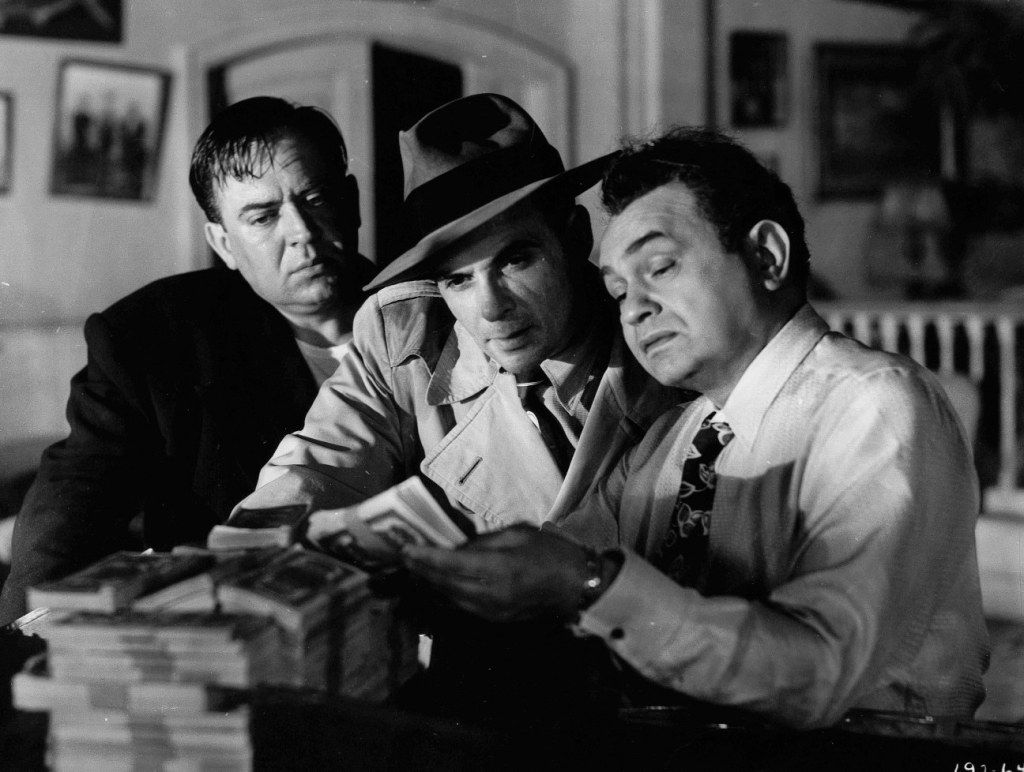
“Rocco” now forces “Frank”, a skilled seaman, to take him and his henchmen back to Cuba, by using the small boat kept at the hotel for fishing trips. While, “Rocco” and the others are getting their things together, “Gaye” passes “Frank”, “Rocco’s” own handgun.
Trivia: the name of the boat is the same as the one owned by Bogart.
Out on the “Straits of Florida”, “Frank ‘SOLDIER’ McCloud”, one by one, kills the members of “Rocco’s” gang and its leader. He heads back to Key Largo after radioing the “United States Coast Guard” for help.
Meanwhile, on land, “Gaye Dawn” informs “Sheriff Wade” about “Rocco” and the murder of “Deputy Sawyer”. “Wade” in turn, informs “Gaye”, and the “Temple’s” that “Ziggy” and his gang were already captured. With “Gaye”, “Sheriff Wade” leave the hotel.
The phone rings, and “Nora” hears that everything is alright with “Frank”. She starts opening the window curtains to a beautiful sunny day, as “Frank” starts to dock the hotel boat.


Leave a comment