He was born Napoleone di Buonaparte on August 15, 1769 in Ajaccio, Corsica, France. He would become “Emperor of the French” on May 18, 1804, his first reign was for ten-years until April 6, 1814. His second reign was a bit shorter, March 20, 1815 to June 22, 1815.
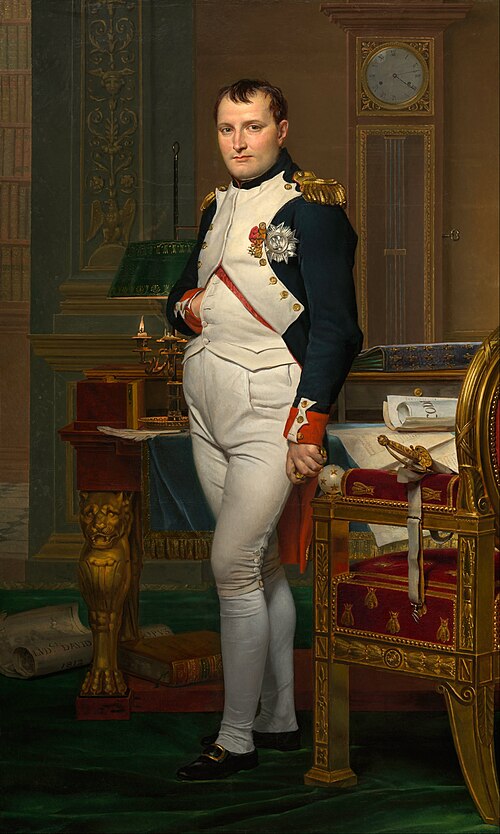
The first motion picture about “Napoleon”, was only an April 6, 1909, 13-minute short subject, made by the “Vitagraph Company of America”, entitled, “Incidents in the Life of Napoleon and Josephine” aka: “The Life Drama of the Emperor Napoleon and Empress Josephine”. In this short, “Napoleon” was portrayed by William Humphrey, and “Josephine” by Julia Swayne Gordon.

As of this writing, the last motion picture released about Napoleon Bonaparte, is director Ridley Scott’s, epic, Three-hour-and-25-minute, 2023, film “Napoleon”, starring Joaquin Phoenix, and it still doesn’t cover the complete story of the “Emperor”.
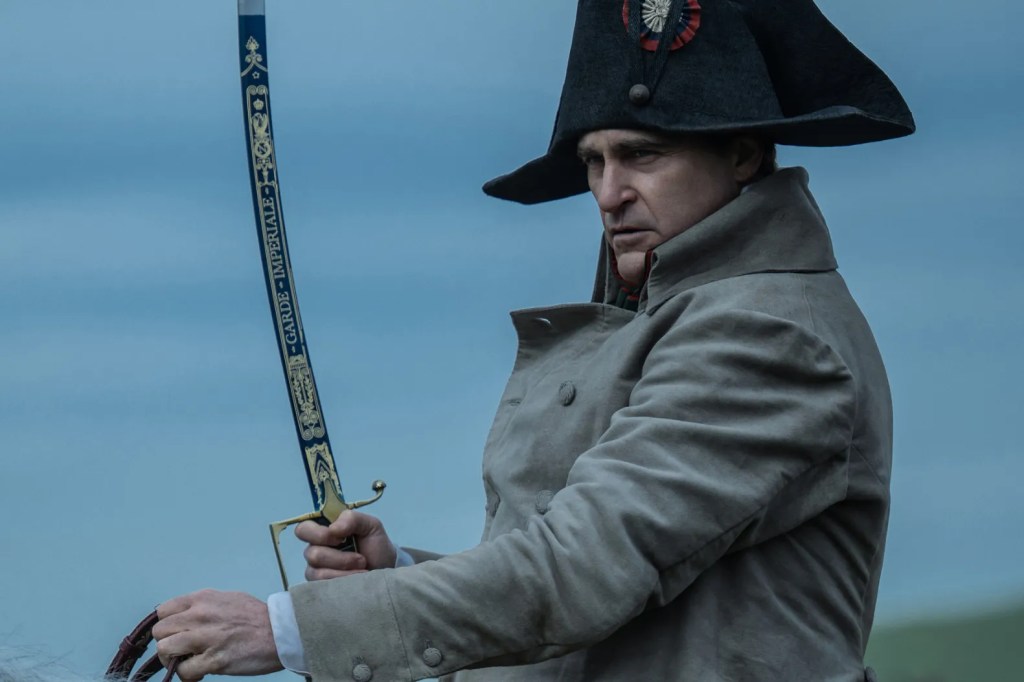
I call this article “Snapshots From His Movies”, because no movie, or television producer, or director, has told “NAPOLEON’S” massive historical legacy in one production, and I will not be able too in one article.
I have chosen motion pictures from different countries to illustrate different points in his story. Although the movies seem to prefer the ladies in his life to his battles.
This is, after all, a motion picture and television history blog, and so, I choose to start with a Silent Film Masterpiece:
NAPOLEON vu pour Abel Gance (Napoleon as seen by Abel Gance) was released on April 7, 1927
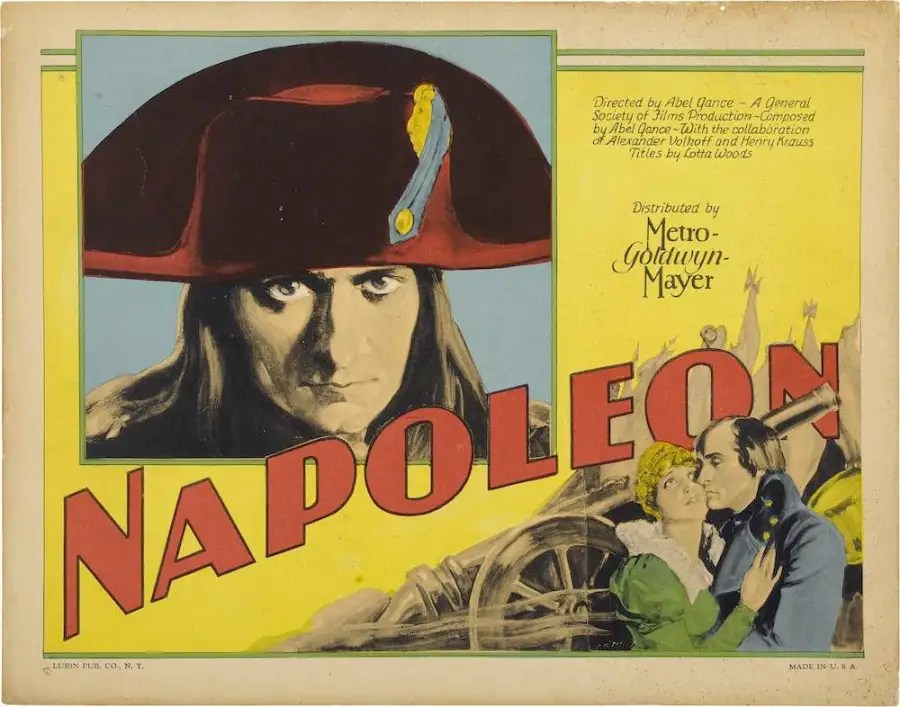
This is a French film from the great producer and director Abel Gance.
The above poster is for the American edited release, released by “Metro-Goldwyn-Mayer”, in January 1929, at a running time of One-hour-and-51-minutes. The original, French release, had a running time of Four-hours-and 10-minutes. However, Gance’s “Definitive” release was shown in May 1927, at the “Apollo Theater” in Paris, with a running time of Nine-hours-and-22-minutes.
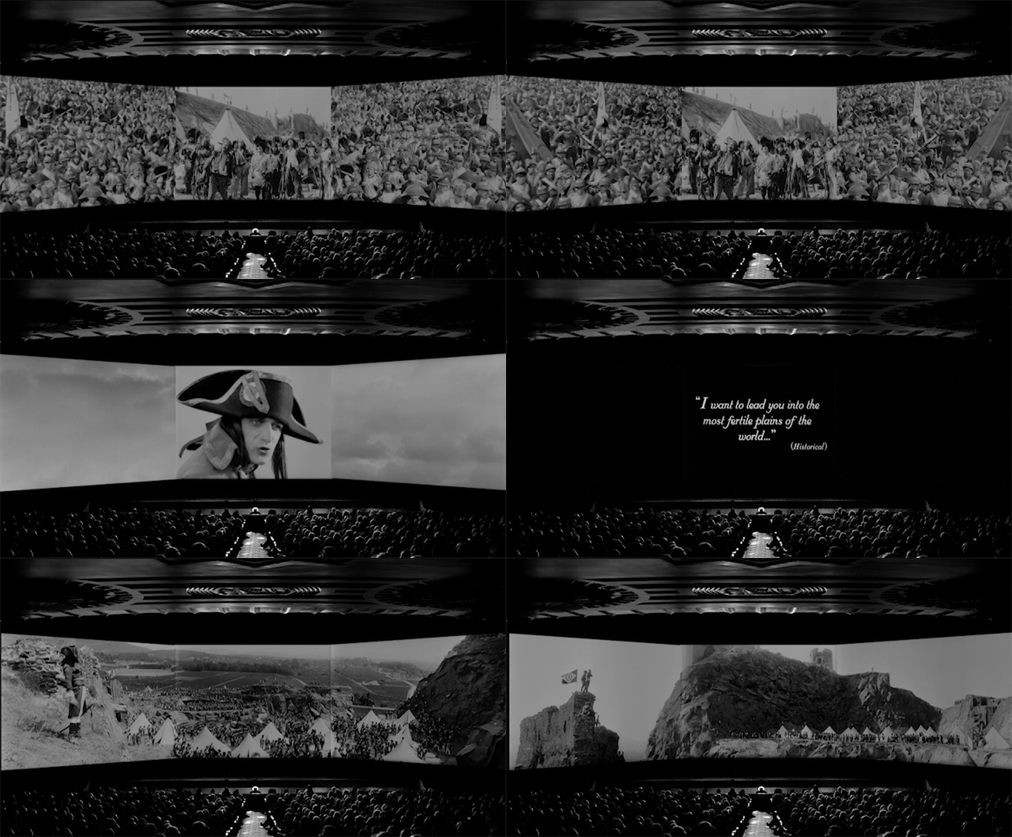
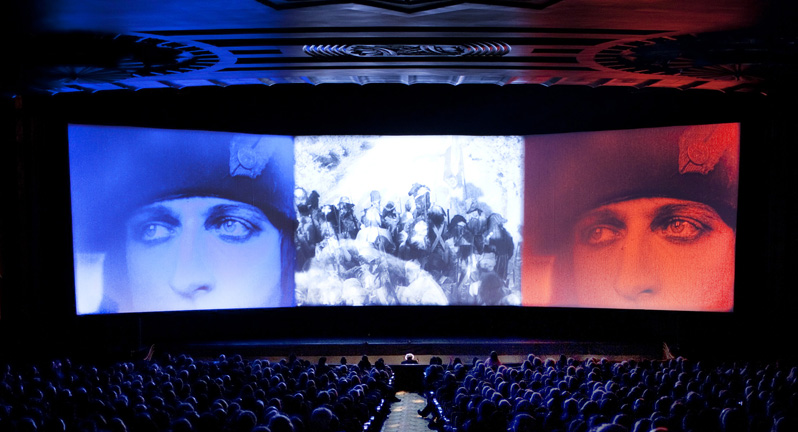
From a strictly cinematic point of view, Gance has the climatic ending in “Polyvision”. A three-projector format that predated Merian C. Cooper’s, “Cinerama”, by 25-years. Which is only one of the technical inventions created by Abel Gance. Others included, fast cuttings of one scene to another, hand-held camera shots, point of view camera shots, multiple camera locations, multiple exposures, superimposition, and using actual locations.
The film was supposed to be the first of six motion pictures covering “Napoleon Bonaparte” from his birth to his death. However, the costs to make this one film, ended Gance’s plan for six.
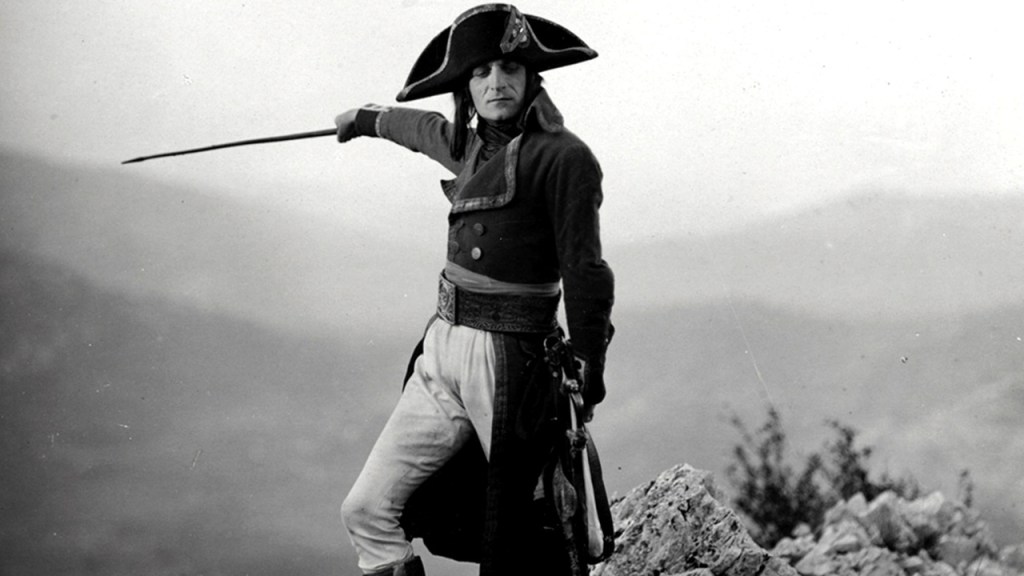
Albert Dieudonné portrayed the adult “Napoleon Bonaparte”. He was a writer of 12-screenplays, and directed 4-movies. Dieudonne died on March 19, 1976, per his wishes, he was buried in his “Napoleon Costume”.
Gina Manès portrayed “Josephine de Beauharnais”. She was a major French silent movie star, but when sound came. Gina Manes had problems, but her career lasted into 1966 for a total of 88-roles.
THE SCREENPLAY, WRITTEN SOLELY BY ABEL GANCE, IS DIVIDED INTO FOUR DISTINCT ACTS:
My reader will read how detailed to actual events and persons Abel Gance was in this production. What follows is only a small look at his definitive cut.
Act One:
The young “Napoleon”, portrayed by Vladimir Roudenko, during the winter of 1783, enters “Brienne College”, a military school for the sons of the nobility.
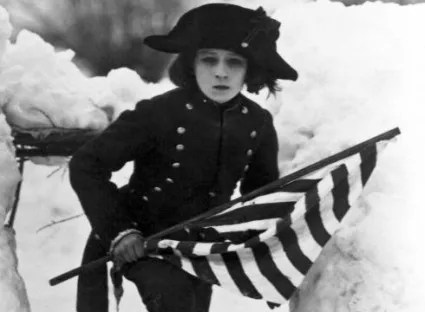
There is a snowball fight sequence between two teams of boys, and “Napoleon” leads one. In which, the first signs of his military instincts and skills are revealed to the teachers. However, when he is asked his name, with a strong Corsican Accent, he pronounces it. This causes “Napoleon” to be laughed at, and bullied for being a Corsican, by the other students and some of his teachers.
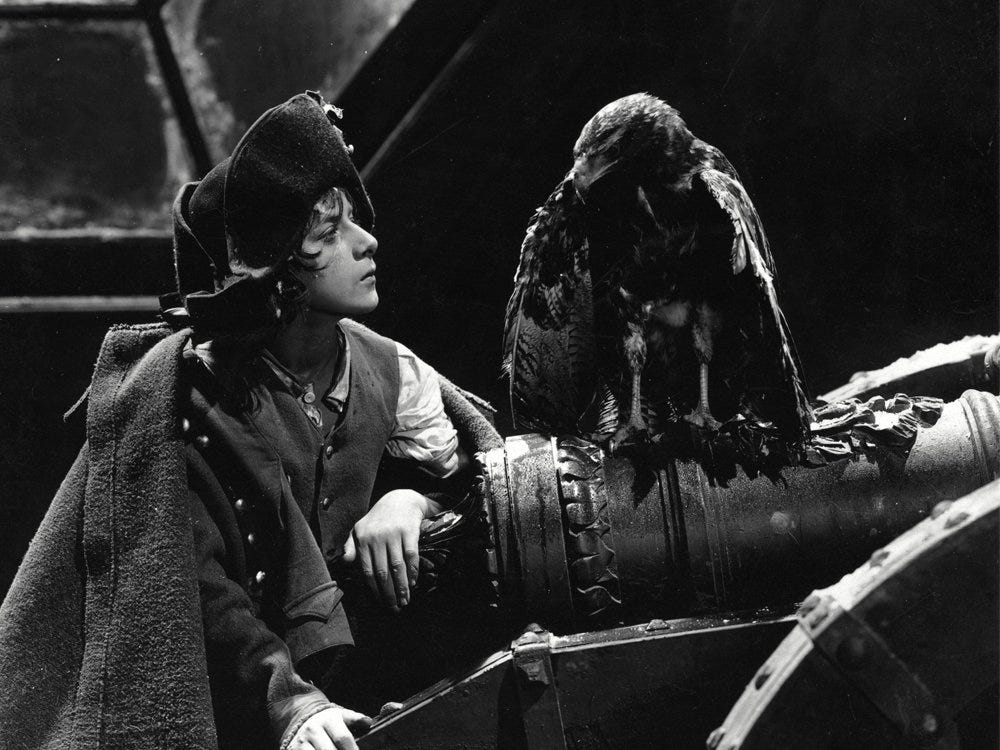
Switch to 1792, the “Cordeliers Club” (one of the clubs during the “Reign of Terror”, the “French Revolution”, supposedly founded upon the principle to prevent the abuse of powers and the infringement upon the rights of men).
Inside the club are three plotters, “George Danton”, portrayed by Alexandre Koubitsky, “Jean-Paul Marat”, portrayed by Anton Artud, and, “Maximilian Robespierre”, portrayed by Edmond Van Daële, who are conferring with each other.
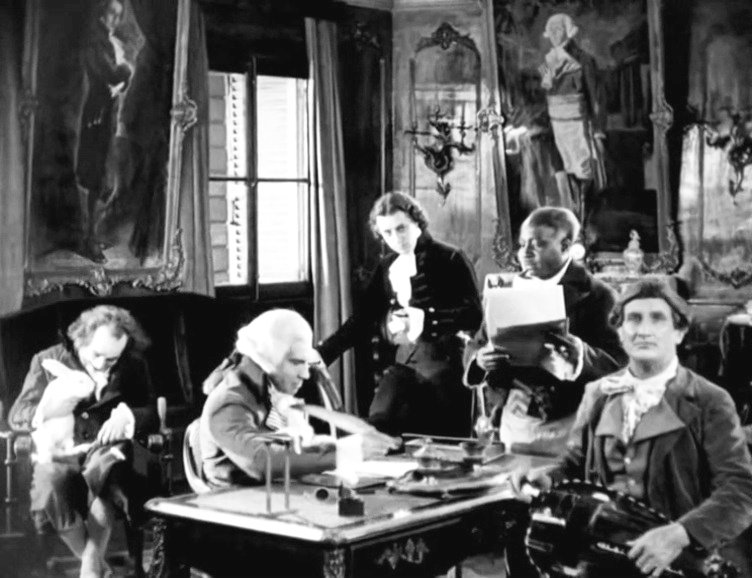
They are interrupted by “Danton’s” secretary and journalist, “Lucie-Simplice-Camille Desmoulin”, portrayed by Robert Vidalin. Who informs the three about a young Army Captain, “Claude Joseph Rouget de Lisle”, portrayed by Harry Krimer, who has written a song that was just published. His song is called “La Marseillaise”, and “Danton” orders that copies of the song be distributed to everyone in the club, and they all sing it.
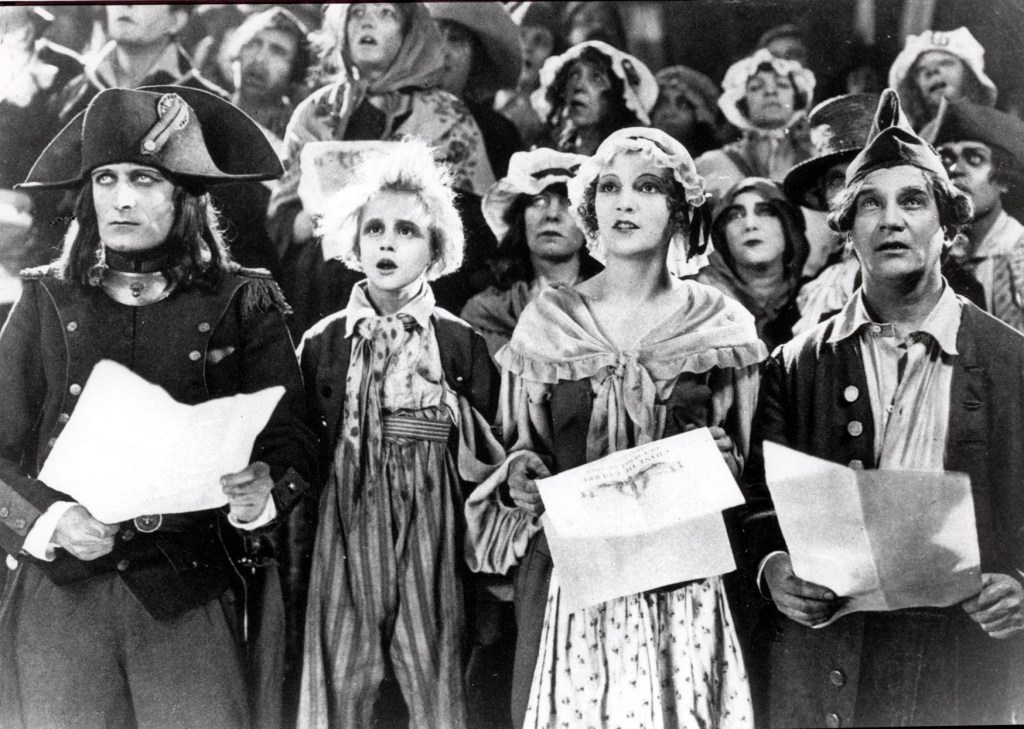
As “de Lisle” is leaving, a young Army Lieutenant, named “Napoleon Bonaparte” tells him that:
“YOUR HYMN WILL SAVE MANY A CANON”
On the night of August 10, 1792, “Napoleon” watches mob rule take over Paris and a man is hung. The “REIGN OF TERROR” has started!
What follows is “Napoleon” returning to his family in Corsica for a visit. Discovering that the president of Corsica, “Filippo Antonio Pasquale de Paoli”, portrayed by Maurice Schultz, plans to turn the island over to the British. In the streets and at meeting halls, “Carlo Andrea Pozzo di Borgo”, portrayed by Acho Chakatouny, is stirring up the crowds against the “Bonaparte Brother’s:
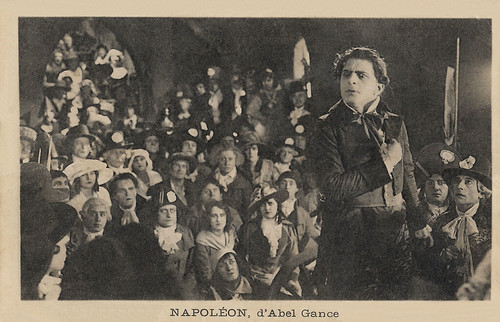
Louis, portrayed by Fernand Rauzena, Joseph, portrayed by Georges Lampin, Jerome, portrayed by Rodger Chantal, Lucien, portrayed by Fabien Haziza, and Napoleon”, who all oppose the president.
The story quick cuts to “Danton”, “Robespierre”, and “Marat’s” followers in-fighting with the “Girondists”, for control of the revolution.
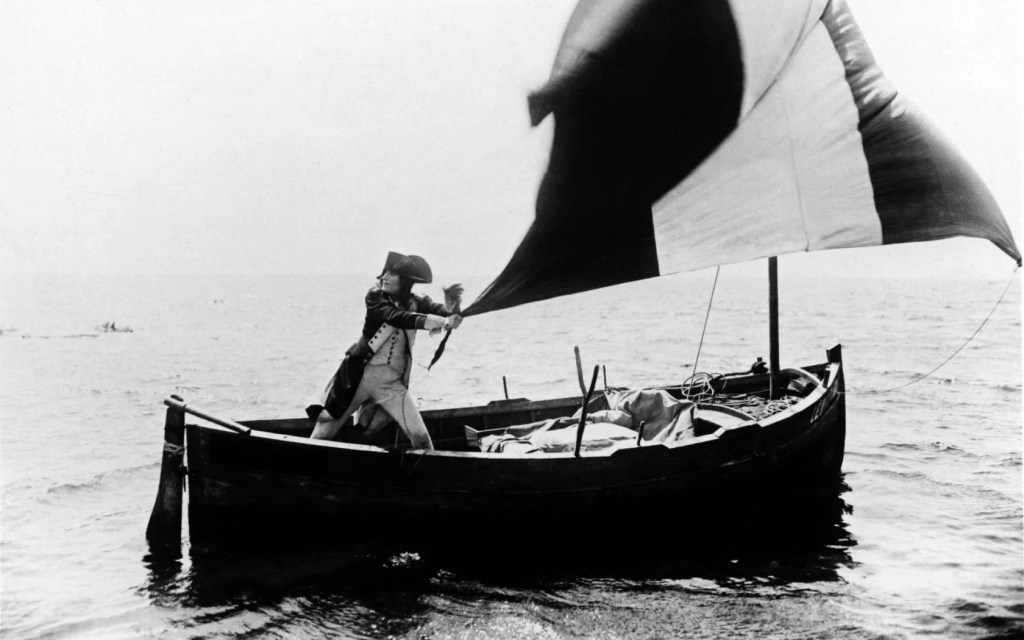
Another quick cut to “di Borgo” pursuing “Napoleon” on horseback, “Bonaparte” reaches the docks, finds a small boat, and pushes off as the other arrives. In need of a sail, in a symbolic sequence from Abel Gance:
“Napoleon Bonaparte” finds a means of creating a sail, and uses the “FRENCH FLAG” to escape to his future and ends “Act One”.
Act Two:
In July 1793, fanatic “Girondist”, “Marie-Anne Charlotte de Corday d’Armont”, portrayed by Marguerite Gance, Abel’s wife at the time, visit’s “Marat” at his home and with a knife kills him.
September 1793, “General Jean Baptise François Carteaux“, portrayed by Leon Courtois, is in control of a French army, he is ineffectively besieging the “Port of Toulon”, held by 20,000 English, Spanish, and Italian troops. “Captain Napoleon” is assigned to the artillery, and is dismayed by the lack of discipline of the French soldiers he is to command. He confronts “Carteaux” at an Inn, and suggests how best to engage with the cannon. However, the General is dismissive of any lower rank officer suggesting anything to a senior officer. Next, an enemy artillery shell hits the Inn.
“General Jacques Francois Dugommier”, portrayed by Alexandre Bernard. replaces “Carteaux”, and has a different attitude and asks “Captain Bonaparte” to join in the battle planning to take back the “Port of Toulon”.
Later, “Napoleon” sees a cannon being dragged away from a fortification, stops the men doing this, and demands it be returned. Next, he names the fortification the “Battery Without Fear”, and fires upon the enemy position. The French soldiers start to rally around him, and “Dugommier” advances “Napoleon’s” military position, to “COMMANDER AND CHIEF OF THE ARTILLERY”.
French troops prepare for a midnight attack, and “Napoleon” orders the attack during rain and high winds. A major politician, “Antoine Christophe Saliceti”, portrayed by Philipe Heriat, a fellow Corsican, calls “Napoleon’s” strategy a “Great Crime” and will cost lives. The politician’s outcry, causes “Dugommier” to bring “Napoleon” to headquarters before the attack takes place, but after discussing the situation. The General does not listen to the politician, and lets his “Commander and Chief of the Artillery” proceed with his attack plan. What follows is bloody hand to hand combat as British positions are taken by the French, lit by lightning flashes and in heavy rain fall. Because of the French advance, English “Admiral Samuel Hood, 1st Viscount Hood”, portrayed by W. Percy Day, orders the moored French fleet burned, before the French can recapture them and then he retreats.
The next morning, wanting to promote “Napoleon Bonaparte” to “BRIGADIER GENERAL”, “Dugommier” finds him sleep from exhaustion, and “Act Two” ends.
Act Three:
After being shamed in Toulon, “Saliceti” wants the revolution to put “Bonaparte” on trial, but “Robespierre” instead tells the politician. That “Napoleon” should be offered the “Command of Paris”, if he refuses, then he shall be put on trial. “Robespierre” supported by “George Augustus Couthon”, portrayed by Louis Connelly, and “Louis Antoine de Saint-Just”, portrayed by Abel Gance, himself, condemn “Danton” to death. Next, “de Saint-Just” puts wealthy “Josephine de Beauharnais” in prison in Les Carmes. “Josephine’s” ex-husband, “Alexandre de Beaucharnais”, portrayed by Georges Cahuzac, accepts his fate to be executed by the revolution. Elsewhere, “Napoleon” is imprisoned for refusing “Robespierre’s” offer. In prison, “Bonaparte”, “draws up a plan to build a Suez Canal”, while “Saliceti” taunts him for not getting a legal defense.
At the “National Assembly” voices are raised again both “Robespierre”, and “Saint Just”. The fortunes of the “French Revolution” are about to change.
At the archives, containing the records of the executions and charges against people. The audience sees two of the clerks, friends of the “Bonaparte Brothers”, discussing the files of certain people, including “Napoleon” and “Josephine de Beauharnais”. In their case, like several other people, the clerks make the files against them, just disappear, by actually eating each file.
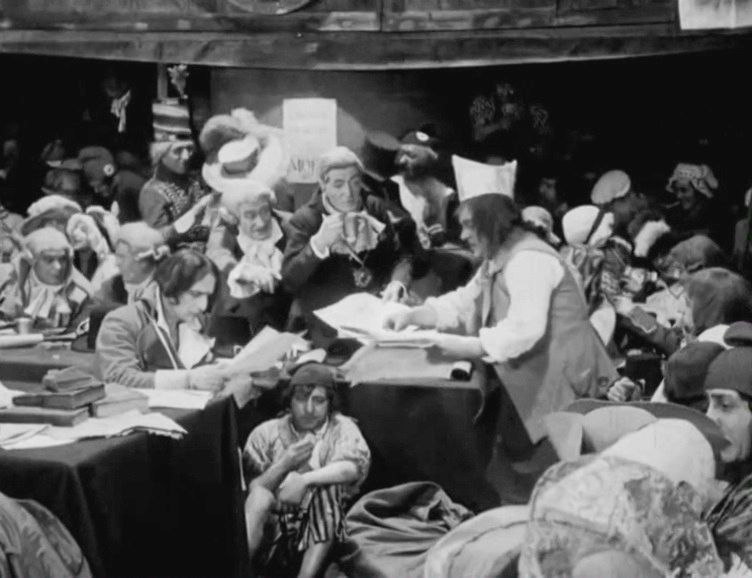
“Jean-Lambert Tallien”, portrayed by Jean Gaudrey, attempts to kill “Robespierre” with a knife, but fails. However, on the latest list of those to be executed by “Madame Guillotine”, are “Robespierre”, “Saint Just”, and “Couthon”, such is the fate of “The Reign of Terror”.
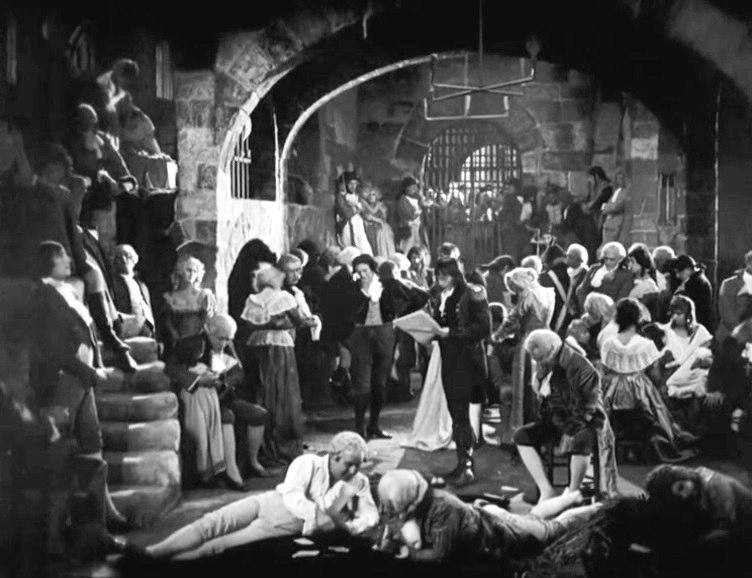
As a result of the disappearing files, “Josephine” and “Napoleon” are released from two separate prisons. Meanwhile, the “War in the Vendée”, a counter revolutionary insurrection in the city of Vendee was taking place. “Napoleon” is now offered the command of the infantry during the war, under “General Louis Lazare Hoche”, portrayed by Pierre Batcheff. “Napoleon” refuses, saying he will not fight Frenchman against Frenchman, when 200,000 foreigners were threatening his country.
He is given a minor map making post and draws up plans for the “Invasion of Italy”. While in Nice, “General Barthélemy Louis Joseph Schérer”, portrayed by Alexandre Mathillon, sees the plans and laughs at the foolhardy proposal. The plans are sent back and “Napoleon” uses them to cover a broken window in an apartment he shares with “Captain Auguste Frédéric Louis Viesse de Marmont, duc de Raguse”, portrayed by Pierre de Canolle, “Sergeant Jean-Andoche Junot”, Duke of Abrantes”, portrayed by Jean Henry, and an actor, “Francois-Joseph Talma”, portrayed by Rodger Blum. “Napoleon” and “Junot” observe the contrast in the winter cold, of the poor, starving people, living in the streets, outside of the homes of the wealthy.
As the above is occurring, “Josephine” convinces politician, “Paul François Jean Nicolas, Vicomte de Barras”, portrayed by Max Mauldisn, that “Napoleon” is the best man to quell a “Royalist Uprising”. On October 3, 1795, “Napoleon” accepts the command offer. Under “Napoleon’s” orders, “Major Joachim Murat”, portrayed by Genica Missirio, seizes a number of cannon to fight the royalists. Both “di Borgo” and “Saliceti” are on the Royalist side, are captured, but are set free by “Napoleon”. Next, French Statesmen, “Joseph Fouche, 1st Duc d’Otante, 1st Comte Fouché”, portrayed by Guy Favieres, tells “Josephine” that the noise of he fighting she hears, is in reality:
“Napoleon” entering history again.
“Napoleon Bonaparte” is made “GENERAL AND CHIEF OF THE ARMY INTERIOR”.
Abel Gance now gives his audience a “Bals des victims (Victim’s Ball)”. Which were given all over France, by dancing societies. To be admitted to one of these balls, you had to have a relative that was a “Victim” of “Madame Guillotine” during “THE REIGN OF TERROR”!
At the ball, “Napoleon” is engaged in a game of chess with “General Hoche”, and beats him, but, at the same time, is loosing to the charms of “Josephine”.
In “Napoleon’s” army office, 14-years-old “Eugène Rose de Beauharnais”, portrayed by Georges Henin, enters, asking, if he can keep his executed father’s sword? “Napoleon” graciously permits the request. The following day, “Josephine” arrives with “Eugene”, to thank “Napoleon” for his kindness to her only son. The romance between “Napoleon” and “Josephine” begins in earnest.
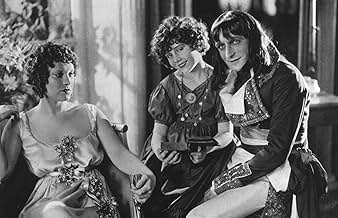
Above left to right, Gina Manès portraying “Josephine”, Annabella portraying the fictional “Violine Fleuri”, and Albert Diedonne portraying “Napoleon Bonaparte”.
“Josephine” now demands that “Barra” place “Napoleon” in charge of the “French Army of Italy”. This is followed by the marriage of “Napoleon” and “Josephine”, on March 9, 1796, with “Napoleon” arriving to his wedding two hours late, and ends “Act Three”.
Act Four:
The act opens with “Napoleon Bonaparte” entering the empty “National Assembly” in Paris. There he sees the “Spirts” of those who set the French Revolution in motion. The ghostly figures of “Danton” and “Saint Just” speak to him, and demand an answer to their question:
WHAT IS HIS PLAN FOR FRANCE?
All the “Spirt’s”, then sing, the “La Marseillaise”.
It has been only 48-hours since his wedding and “Napoleon Bonaparte” has left Paris, France, for Nice, Italy. He writes some letters to “Josephine”, along with military dispatches.
“Napoleon” now rides his horse to Albenga, a city on the Gulf of Genoa, in Northern Italy. He finds an army with resentful officer’s and starving troops. He orders an immediate review of his army. They respond to the command of “NAPOLEON BONAPARTE” and smartly come to attention. He encourages them for the upcoming Italian campaign, that will bring them “Honor, Glory, and Riches”.
His under fed, and poorly armed force, advanced, on April 11, 1796, into what became known as “The Battle of Montenotte”. His enemy was Austrian General, “Eugène-Guillaume Argenteau”. This movie ends with the French troops under “Napoleon” moving forward as the French Flag waves over them.
The actual battle was on April 11th and 12th, with the following facts:
On April 12th, “Napoleon” and his French troops were on a mountain top redoubt being attacked by the Austrian forces.
The overall strength of both armies, on April 11th, was, 9,000 poorly fed, French Troops, with 18 guns (Cannons). Against, 6,000 well fed and rested, Austrian troops, with 12 guns (Cannons).
“Napoleon” was the victor.
The actual cost of the battle, Bonaparte, 200 casualties, and no guns lost. Argenteau, 3,500 casualties, and the loss of all 12 guns.
For the climatic sequence of Abel Gance’s, 1927, “Napoleon”, the film ends in the “Polyvision” process, partly in color. Gance shot that climax with three cameras and it required three projectors to show it as shot. Obviously, only the cinema in Paris was able to show the ending as he shot it. This was filmed in 160 degrees panorama, or THREE-TIMES THE SIZE of conventional movies in 1927.
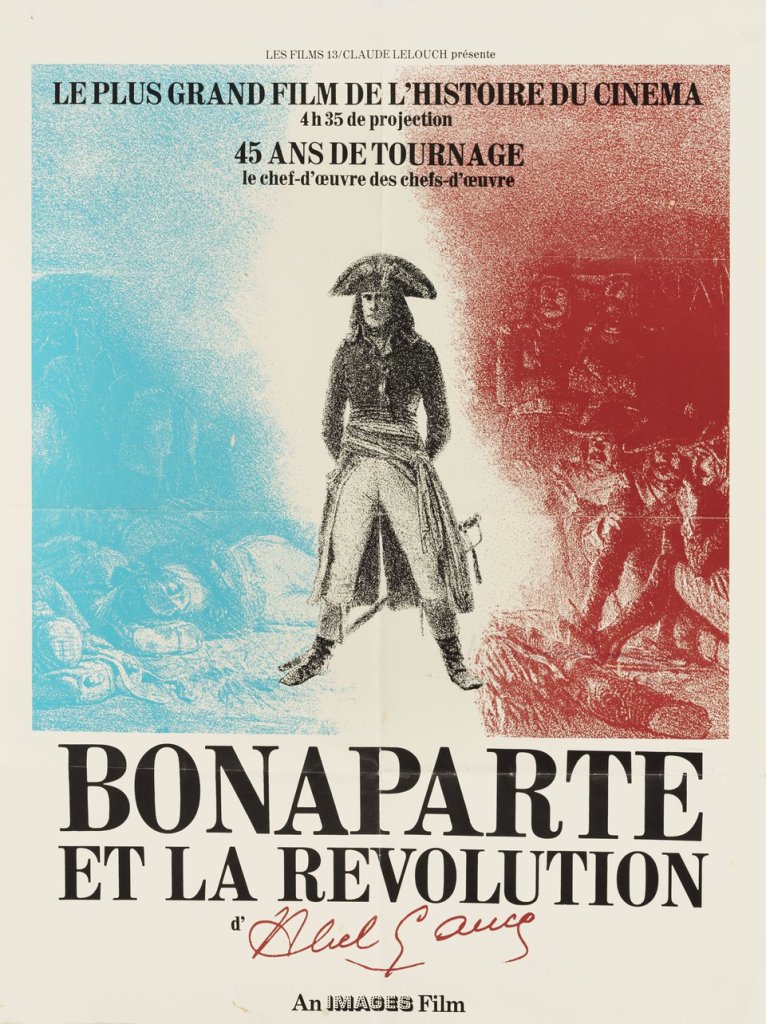
On October 14, 1971, at the “New York Film Festival”, Abel Gances “Bonaparte et le revolution (Bonaparte and the Revolution” premiered. This was the four-hour-and-thirty-five minute re-edit of his 1927 “Napoleon”. It contained added footage from both 1965 and 1971, and synchronized sound.
The following Nine Movies are examples of how film makers recreate, for their audiences, actual events in the life of “Napoleon Bonaparte”. They are basically in historical order.
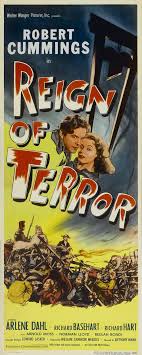
I want to first mention the ending to the forgotten , June 16, 1949, motion picture “The Reign of Terror”, aka: “The Black Book”. The screenplay is a look at “Maximilien Robespierre”, portrayed by Richard Basehart, and the French Revolution. It is the ending that is classic. The audience sees “Joseph Fouche, 1st Duc di’Otrante, 1st Comte Fouche”, portrayed by Arnold Moss, outside of a bakery. He is talking to a French Officer, who the audience does not clearly see, because he stands in a darken area in shadows. In the background is the noise from the crowd celebrating the execution of “Robespierre”. “Fouche” asks the officer his name, and from the shadowry figure, gets the reply, “Napoleon Bonaparte”, voiced by Sheppard Strudwick. An unknown name to “Fouche”, that does not impress him, but he promises to remember the French officer’s name, ANYWAY! Fade-to-black!
THE YOUNG MR. PITT released in the United Kingdom on September 21, 1942
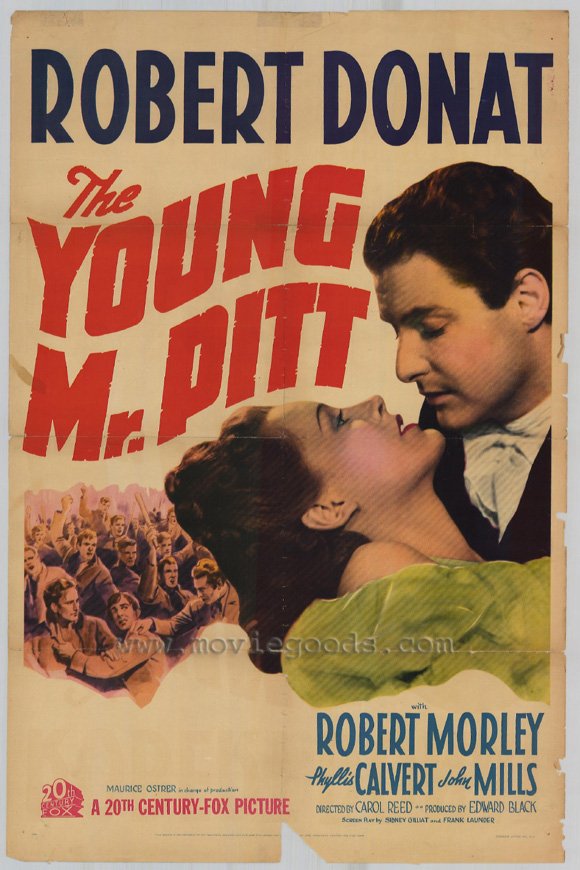
The story came from Valentine Browne, 6th Earl of Kenmore, styled himself, as Viscount Castlerosse.
The actual screenplay was from two writers. Sidney Gilliat, had been writing screenplays since 1931, he was producing motion pictures since 1936, and started directing in 1942. The second screenplay writer was Frank Launder. Who had been writing screenplays since 1929, directing since 1932, and producing since 1945.
The motion picture was directed by Carol Reed. Among his work as a director are 1940’s, “Night Train to Munich”, 1948’s, “The Fallen Idol”, 1949’s, “The Third Man”, 1956’s, “Trapeze”, 1959’s, “Our Man in Havana”, 1965’s, “The Agony and the Ecstasy”, and the 1968 musical, “Oliver“.
Selected Roles:
Robert Donat portrayed both the “Earl of Chatham (William Pitt the Elder)”, and his son, “William Pitt the Younger”. Donat had just co-starred with Greer Garson, in the 1939, classic, “Goodbye, Mr. Chips”. He proceeded that picture with director King Vidor’s, 1938, “Citadel”, co-starring with Rosalind Russell, and Sir Ralph Richardson.
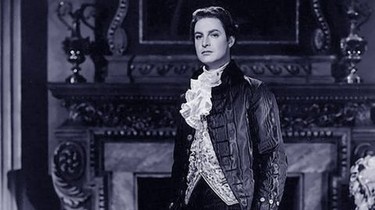
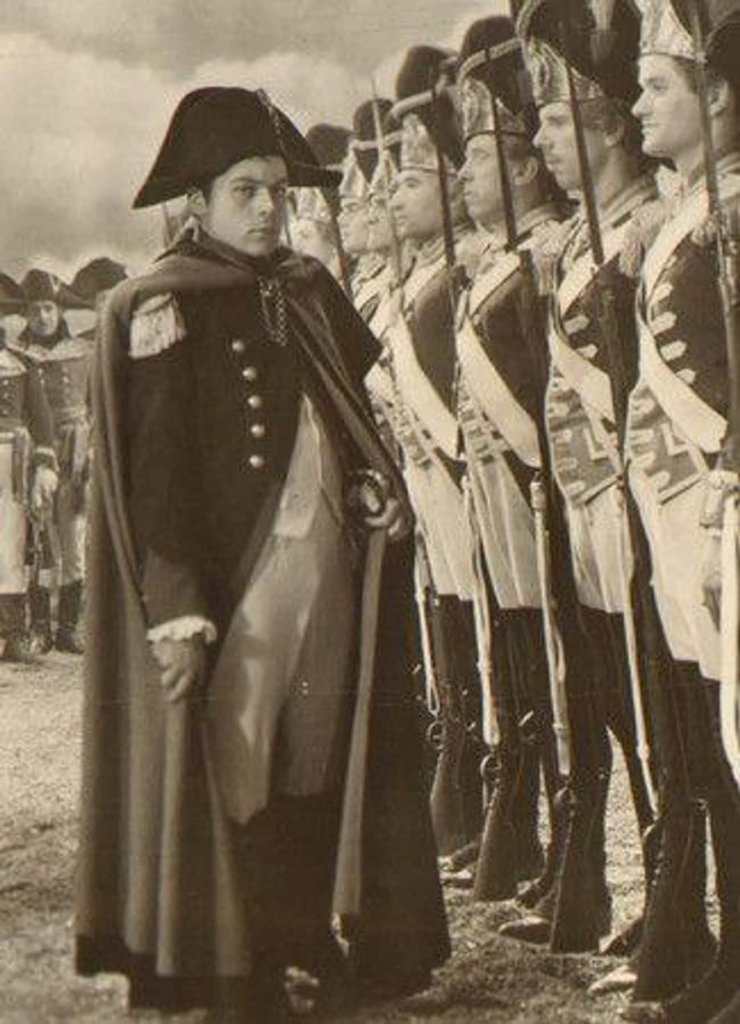
Napoleon Bonaparte was portrayed by Herbert Lom. My reader will find him in this role later in this article, in an epic film. Among his roles are “Captain Nemo” in stop-motion-animator Ray Harryhasuen’s 1961’s, “The Mysteries Island”, “Louis”, in the Dark Comedy, 1955’s, “Ladykillers“, starring Sir Alec Guinness, in 1962, he was Gaston Leoux’s, “The Phantom of the Opera”, and of course, Herbert Lom was, “Inspector Dreyfus”, in the “Pink Panther” series.
Robert Morley portrayed “Charles James Fox”. Morley was nominated for the “Academy of Motion Pictures Arts and Sciences, Best Supporting Actor, Oscar” for the role of “King Louis XVI”, in 1939’s, “Marie Antoinette”. He was Katherine Hepburn’s brother, in director John Huston’s, 1951’s, “The African Queen”, and co-starred with Humphrey Bogart, Jennifer Jones, and Gina Lollobrigida, in John Huston’s, 1953, “Beat the Devil”.
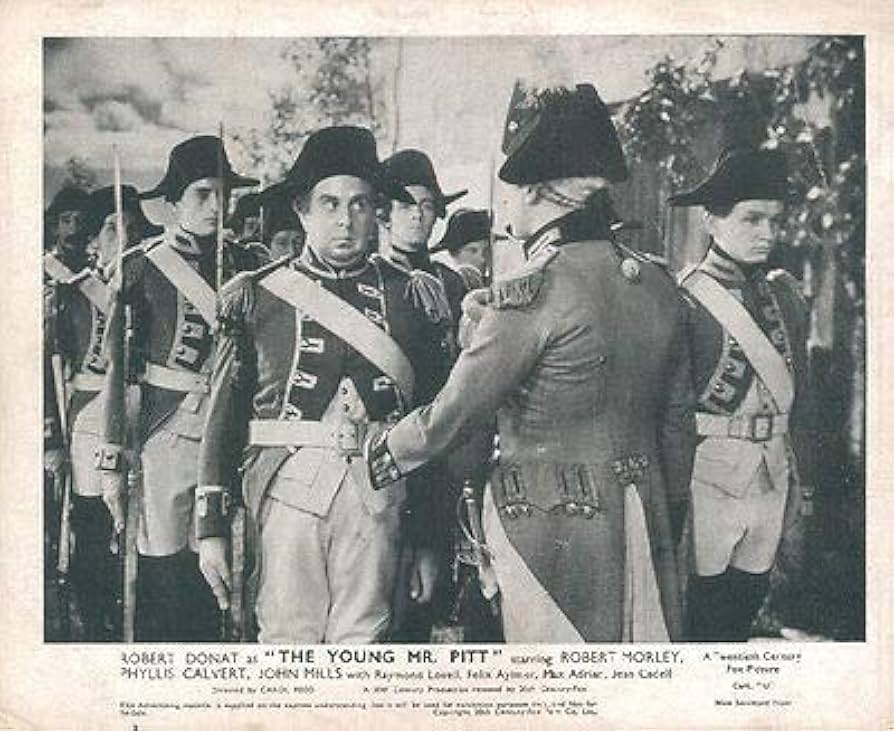
John Mils portrayed “William Wilberforce”. Mills had just been in the Second World War film, 1942’s, “In Which We Serve”, and followed this film with the Second World War film, 1943’s, “We Dive At Dawn”.
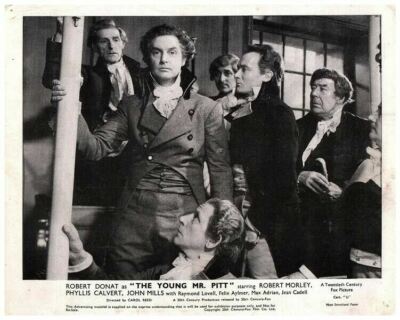
Above John Mills is to Robert Donat’s immediately right.
Albert Lieven portrayed “Charles-Maurice de Talleyrand-Périgord”. The Hohenstein, East Prussia, born actor started on-screen in German film productions. In 1937, with his Jewish wife, they made the move to Great Britain and “Lieven” started working in the film industry there.
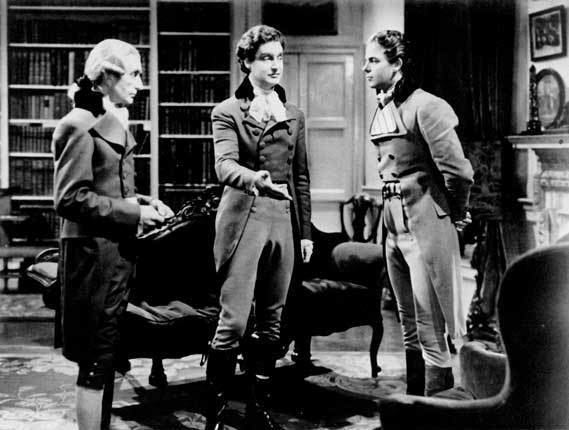
Above, Robert Donat speaks to Albert Lieven on the far right.
Stephen Haggard portrayed “Lord Horatio Nelson, 1st Viscount Nelson, 1at Duke of Bronte”, This was Stephen Haggard’s last movie of only nine.
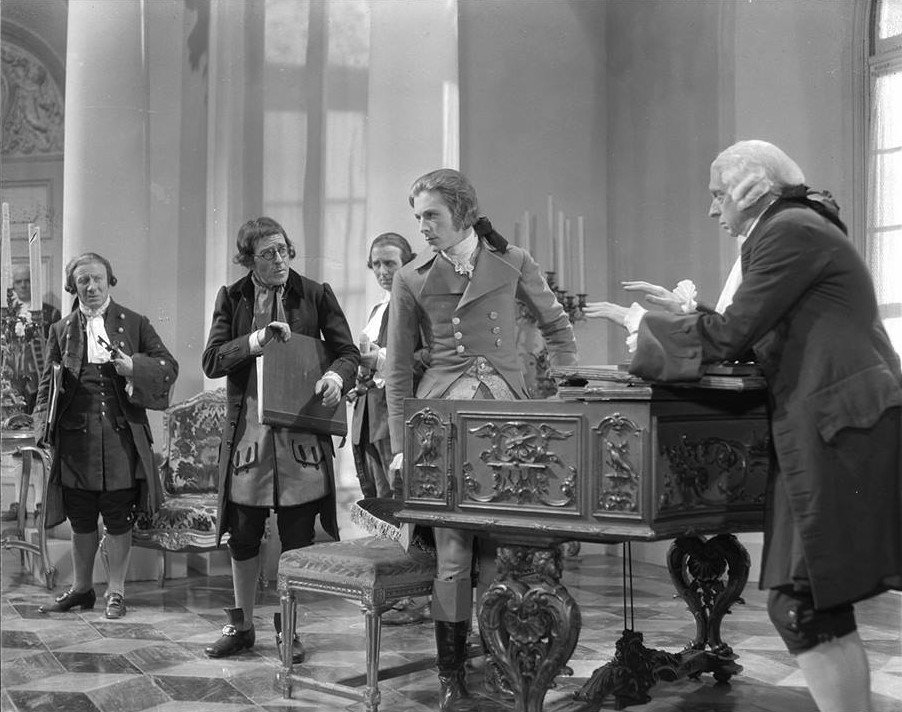
Above, second from the right, is Stephen Haggard portraying “Lord Horatio Nelson”.
Felix Aylmer portrayed “Frederick North, 2nd Earl of Guilford”. Among the character actors roles are “Polonius, the Lord Chamberlain” in 1948’s, “Hamlet”, starring Sir Laurence Olivier, “Merlin”, in 1953’s, “The Knights of the Round Table”, and “Stephen Banning”, in Hammer Films, 1959’s, “The Mummy”.
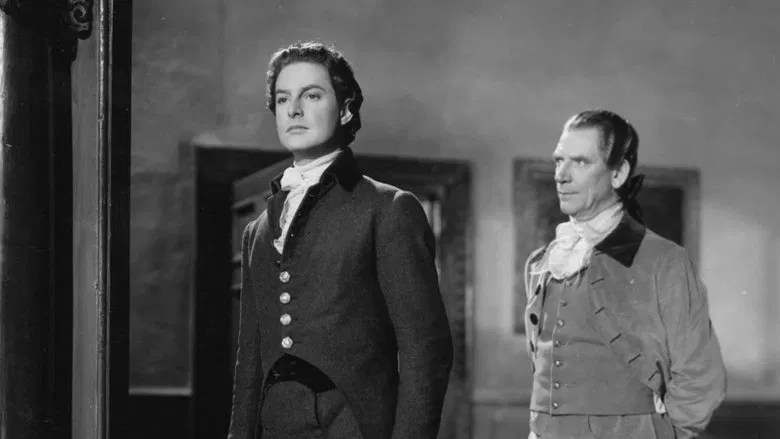
Above, Robert Donat and Felix Aylmer
An Overview of the Screenplay:
This is not just an historical motion picture, but at the time of its release, was a piece of British propaganda to the United States. The screenplay used “Napoleon Bonaparte” as the “Allegorical Adolph Hitler”.
The film begins in 1770, when “William Pitt the Elder”, STRONGLY TELLS PARLIAMENT NOT TO GO TO WAR WITH THE AMERICAN COLONIES. The “American Revolutionary War” takes ,place and brings down “Pitt the Elder’s” main two enemies in Parliament, “Charles James Fox”, and “Lord North”
Next, the father advises his second son, “William Pitt the Younger”, not to seek fame through war.
On December 19, 1783, “Pitt the Younger”, becomes the LAST, “Prime Minister” of “GREAT BRITAIN”, at the age of 24. One of his many reforms is to strengthen the British Navy. Throughout the above, there are quick sequences showing “Napoleon’s” childhood, and military training.
The “Reign of Terror”, starting on May 7, 1789, and on July 14, 1789, the “Bastille”. Next, France invades Belgium, but France and Britain were committed to Dutch neutrality. French Clergyman and Statesman, “Charles-Maurice de Talleyrand-Périgord” attempts to convince Prime Minister William Pitt, the Younger” to form an alliance with France, or at the least, acknowledge, pro-French neutrality. However, a French invasion of the “Dutch Republic”, leads to a British declaration of war against France.
For the “Prime Minister”, the results of the war turn against him. One major event, is Britain’s loss of most of its fleet, during the previously mentioned “Siege of the Port of Toulon”, by the artillery of “Napoleon Bonaparte”. Which results in Britain’s continental allies starting to drop their assistance, BUT “William Pitt” still refuses to surrender to France.
“Pitt’s” friend and a follow politician, “William Wilberforce”, continues to fight for peace negotiations. At this point, the Film Makers bring in a fictional American negotiator, again this was a piece of Second World War propaganda and the addition was to move the United States film audiences in further support of Great Britain.. This American was a, “Mr. Via Melvill”, portrayed by Hugh McDermott. Who is attempting to get the two countries to a negotiating table. Meanwhile, “Talleyrand”, sends word that the French moderates are willing to negotiate with “Pitt”.
HOWEVER, “NAPOLEON BONAPARTE” SIEZES POWER IN FRANCE.
“William PItt” realizes that “Napoleon’s” aim is to conquer the world. Once again the audience is given the allegorical Adolph Hitler.
At this point, realizing what was now involved, “William Pitt” brakes off his engagement to “Eleanor Agnes Eden”, who would now marry “Robert Hobart, 4th Earl of Buckinghamshire” in 1799.
“Pitt” institutes a risky strategy against “Napoleon”. Who was engaged in the ‘MEDITERRANEAN CAMPAIGN OF 1798″, June through December 1798.
“William Pitt” makes a surprising choice of giving Vice-Admiral, “Horatio Nelson” the command of “Royal Navy Squadron”, as “Napoleon” sails to invade Egypt. “Nelson’s” ships were set as a blockade to Egypt, but are scattered during a fierce storm.
Next, two events take place, the first, is that “William Pitt” collapses from over work and is warned by a doctor about his health. The second, is with the reformed British squadron, “Vice-Admiral Horatio Nelson” meets “Napoleon Bonaparte” in what became known as “THE BATTLE OF THE NILE”, August 1st through 3rd, 1798, and wins. The British people’s attitude toward the “Prime Minister” changes overwhelmingly to the good.
In a strictly political move made by “Bonaparte”, he writes a letter to “George William Frederick, King George III of England”, portrayed by Raymond Lovell. In it, “Napoleon” claims that “William Pitt” has refused his offers for peace negotiations. This forces “Pitt” to resign as the FIRST, “Prime Minister” of the now, “UNITED KiNGDOM”. As he also learns of “Eleanor’s” pending wedding. “Henry Addington, 1st Viscount Sidmouth”, portrayed by Henry Hewitt, becomes “Prime Minister” and signs a “Peace Treaty” with “Napoleon Bonaparte”. Precisely what “Napoleon” wanted, time to build up both his army and navy without British interference. The naive “Addington” and his administration dream of a long time of peace and prosperity, but overlook repairing and building up Britain’s defenses.
As “Napoleon” gathers his forces, in Britain, over his three-years in office, March 17, 1801 through May 10, 1804, the people of the “United Kingdom” complain about the inept “Prime Minister”, “Henry Addington”.
“Addington” is removed by the “King”, and “Parliament re-elects, “William Pitt the Younger”.
During those three-years, “Pitt” had regained the support of the “King”, and even, “Charles James Fox”. The new/old “Prime Minister”, rearms the army, brings the “Royal Navy” up to fighting strength, creates a system of “Home Guards” for defense, and prepares the United Kingdom for one mission, a confrontation with “Napoleon Bonaparte”. This comes to a head, on the sea, in the “BATTLE OF TRAFALGAR”, October 21, 1805.
One “Napoleon’s” side, was the combined Spanish and French Fleets of 33 ships of the line, 5 frigates, and 2 brigs, under “Admiral Pierre-Charles Villeneuve”. As part of “Napoleon’s” plan to invade Britain, this fleet were to the control of the English Channel. Providing the French invasion army with safe passage through channel to mainland England.
On “William Pitt’s” side was the Royal Navy, under “Vice Admiral Horatio Nelson”. The “Royal Navy” had only 27 ships of the line, 4 frigates, 1 schooner, and 1 cutter.
When the battle ended, the “Royal Navy” had won over a superior force, and “Vice Admiral Nelson” had himself a place in British history.
There is a closing speech by “Prime Minister William Pitt the Younger”, actually made for the Second World War United Kingdom audience:
“Pitt” states the VICTORY was won not just by him, BUT THE WHOLE NATION. Adding THAT BRITAIN WILL GO ON TO SAVE EUROPE!
For the next motion picture, I return to 1794.
DESIREE premiered in San Francisco on November 16, 1954
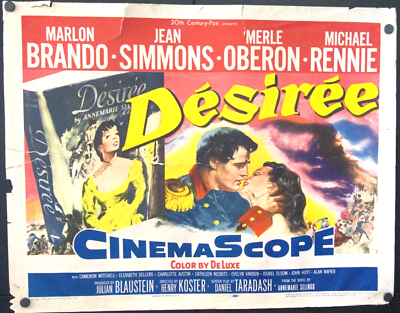
The screenplay was based upon a 1951 historical romance novel by Austrian-Hungarian writer, Annamarie Selinko.
The screenplay was by Daniel Taradash, in 1952, he wrote the screenplay for director Fritz Lang’s western, “Rancho Notorious”, that starred Marlene Dietrich, Arthur Kennedy, and Mel Ferrar. In 1953, he wrote the screenplay for “From Here to Eternity”, starring Burt Lancaster, Montgomery Clift, and Deborah Kerr, and he followed this feature film with 1955’s, “Picnic”, starring William Holden, and Kim Novak.
The motion picture was directed by Henry Koster. Koster had just directed the first CinemaScope motion picture, the religious epic, “The Robe”. He would follow this historical drama with the Bette Davis, Richard Todd, and Joan Collins historical movie about “Queen Elizabeth the First”, 1955’s, “The Virgin Queen”.
The Main Cast:
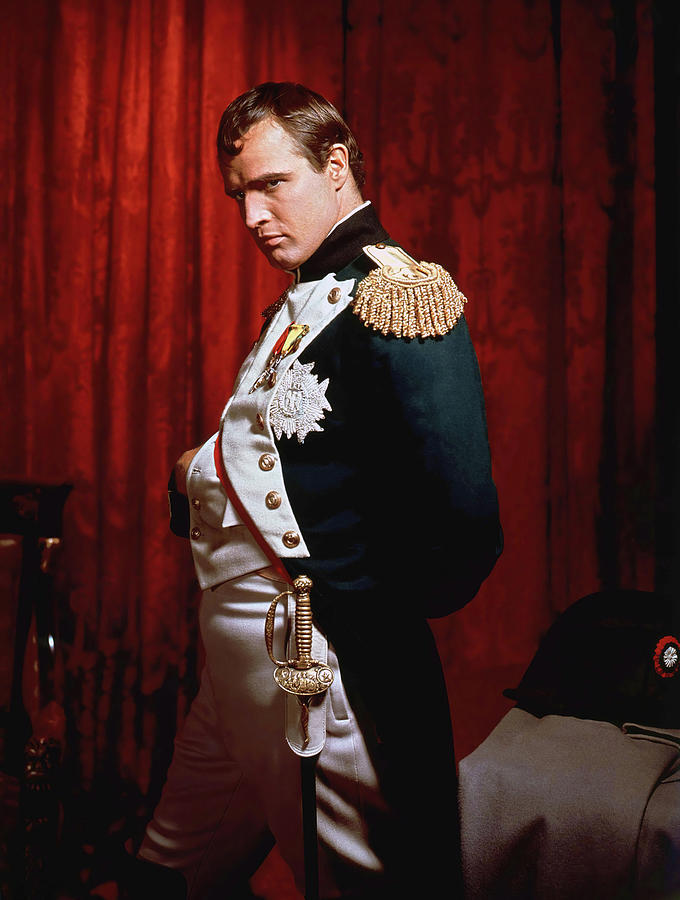
Marlon Brando portrayed “Emperor Napoleon Bonaparte”. Brando had just been seen in 1954’s, “On the Waterfront”, and followed this picture with the 1955 musical, “Guys and Dolls”.
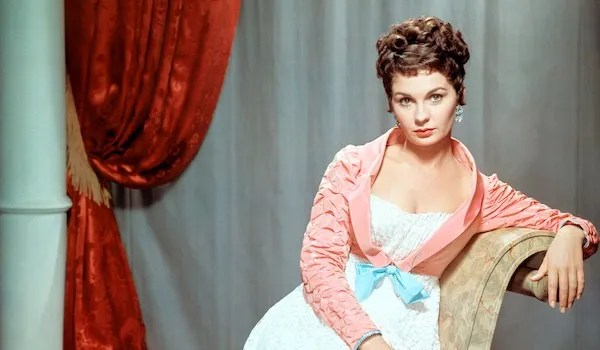
Jean Simmons portrayed “Bernadine Eugenie Désirée Clary”. Simmons had just starred in the epic, 1954’s “The Egyptian”, and followed this feature with the 1955 musical, “Guys and Dolls”.
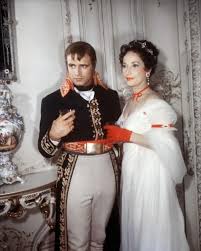
Merle Oberon portrayed “Empress Josephine de Beauharnais”. Oberon had just been seen in the Spanish comedy, 1954’s, “Todo es posible en Granada! (All is Possible in Granada)”, and followed this feature film with the musical, 1954’s, “Deep in My Heart”.
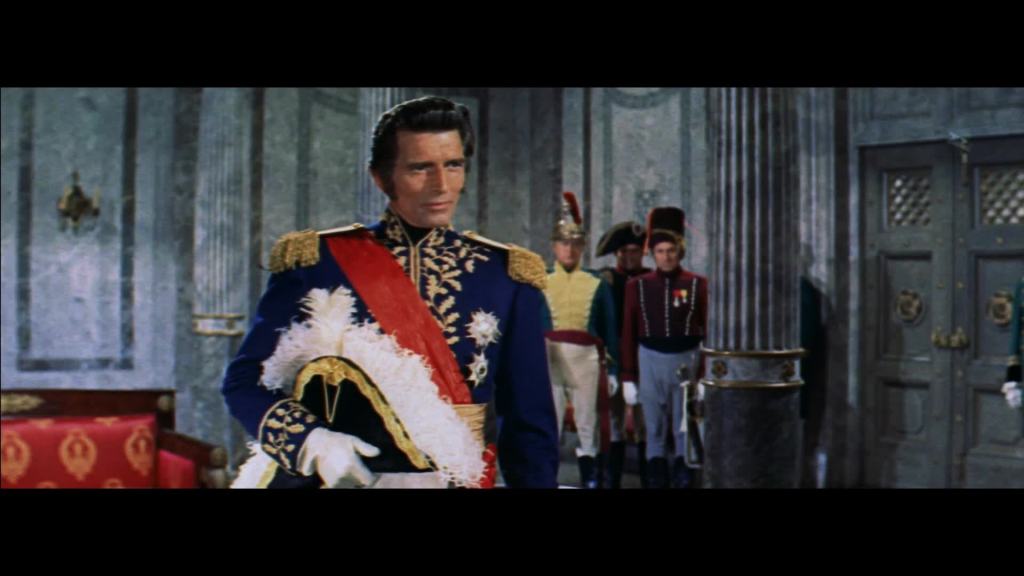
Michael Rennie portrayed “Jean-Batiste Jules Bernadotte”. Rennie had just been in 1954’s, “Demetrius and the Gladiators”, and followed this feature film with the Clark Gable and Susan Hayward, 1955, “Soldier of Fortune”.
Cameron Mitchell portrayed “Guseppe Bonaparte (now known as Joseph Bonaparte)”. Mitchell had just been seen in the excellent western, 1954’s, “Garden of Evil” and followed this movie with another very good western, 1955’s, “Strange Lady in Town”
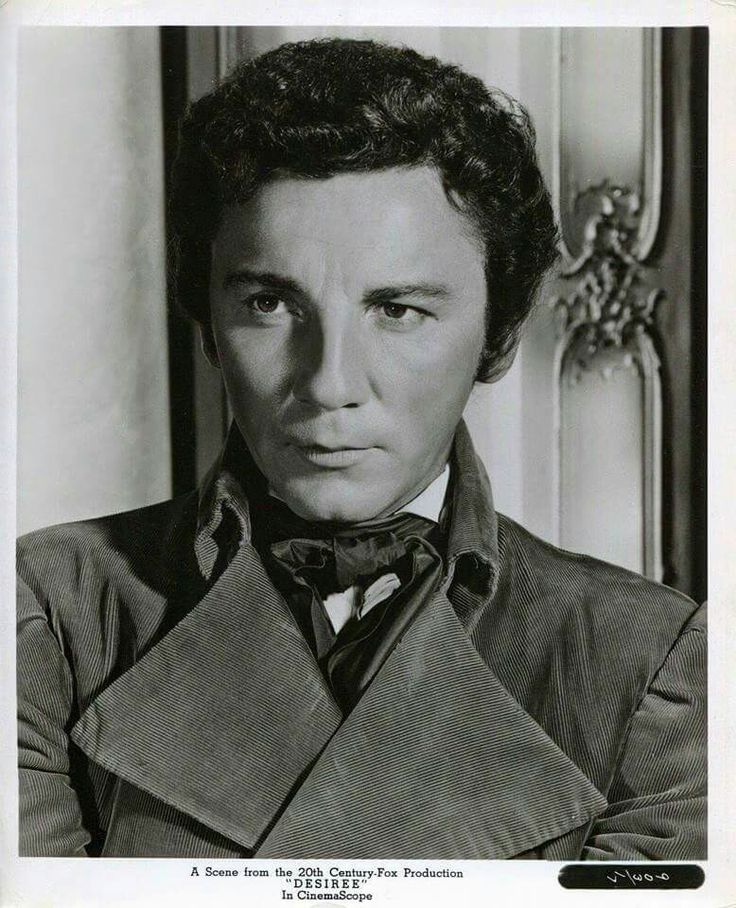
Elizabeth Sellars portrayed “Marie Julie Clary”. Sellars was just in the Humphrey Bogart and Ava Garner, 1954, “The Barefoot Contessa”, and followed this movie with 1955’s, “Prince of Players” starring Richard Burton.
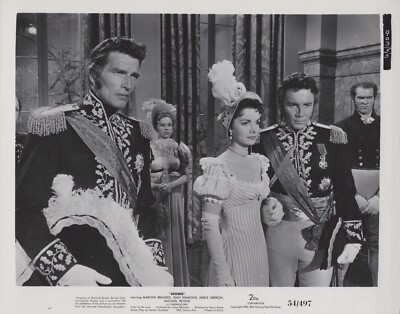
Above left to right, Michael Rennie, Elizabeth Sellars, and Cameron Mitchell.
The Basic Screenplay:
This is set during the “First Republic”, and apparently after the “Siege of Toulon”, although the screenplay doesn’t show it, but mentions it in dialogue.The story opens in 1794, Marseille, France, “Désirée Clary, makes the acquaintance of “Joseph Bonaparte”, and invites “Joseph” and his brother “Captain Napoleon Bonaparte” to call upon her family the following day at their home.
The brothers arrive, and almost immediately, “Joseph” is attracted to “Julie”, the sister of “Désirée” and her to him.
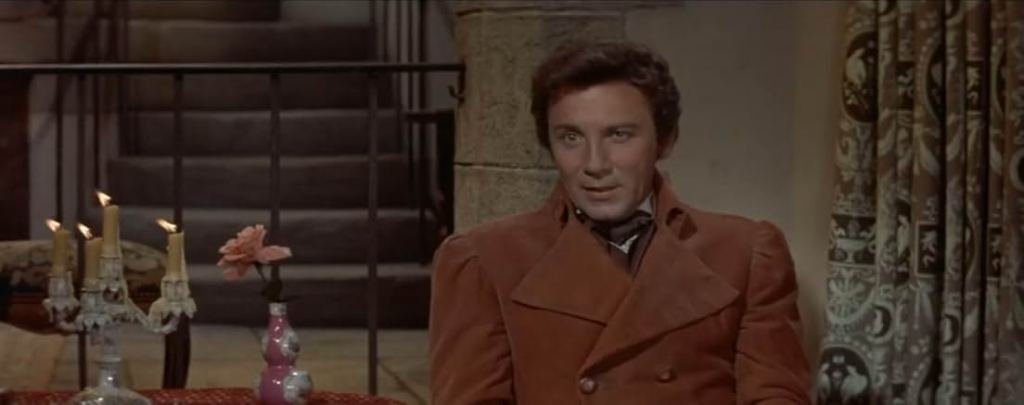
“Napoleon” is attracted to “Désirée”, but admits to her that both “Joseph” and himself, are poor, and would need the diaries of the sisters to live on. Later, “Désirée” hears that “Napoleon” has been arrested, and taken to Paris.
“Napoleon” returns to “Marseille”, and tells “Désirée” that he has been cleared of all charges, but he must return to Paris. As he has been ordered to track down “Bourbon Royalists”. These were people loyal to the “Comte de Provence”, the brother of the executed French King, “Louis the XVI”.
“Désirée” begs “Napoleon” to leave the army and join her brother in his business. “Napoleon” will not leave the army, but proposes marriage to her, and she accepts. She now lends “Napoleon” the money he will need to return to Paris to carry out his search for the “Bourbon Royalists”. He promises to return soon for their wedding.
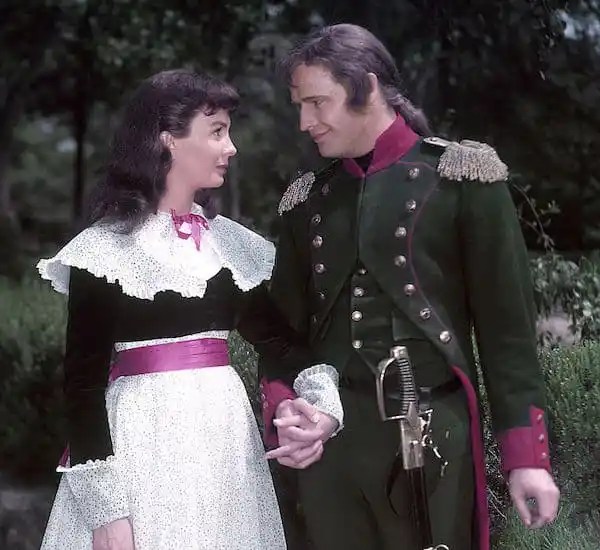
Months pass without a word from “Napoleon”, and “Désirée” now doubts “Napoleon’s” promise. She goes to the city, finds out that he is engaged to marry ‘Josephine de Beauharnais”. Hearing this, “Désirée” contemplates suicide, but instead meets “Jean-Batiste Jules Bernadotte”, who falls in love with her.
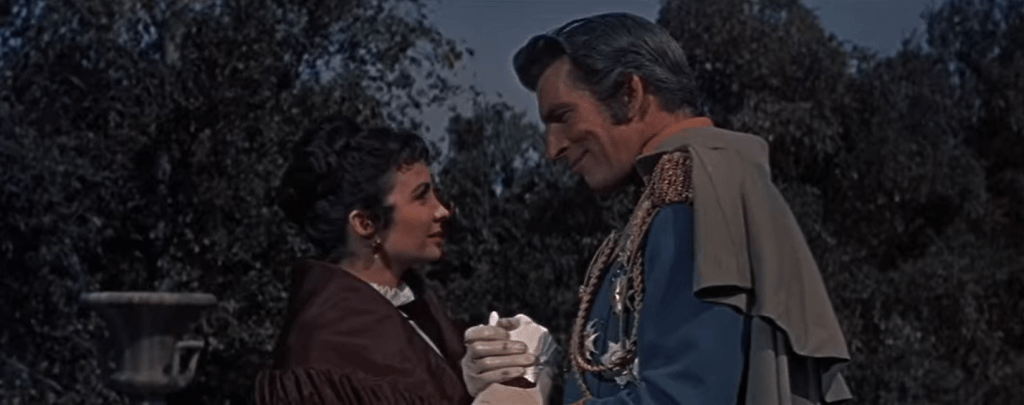
Later, in 1797, “Napoleon” has become France’s major general, and has already conquered Italy. Living in Rome is “Désirée”, her sister “Julie” and her husband, “Joseph Bonaparte”. “Désirée” becomes bored with Rome and returns to Paris.
There “Désirée” meets “Napoleon” and his wife, her rival for his love, “Josephine”. “Napoleon” announces a new campaign against Egypt.
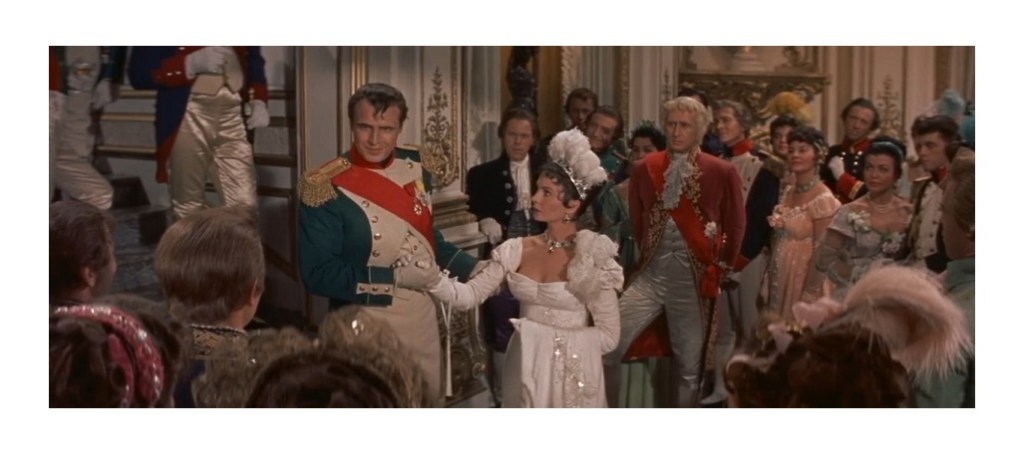
“Jean-Batiste Jules Bernadotte” is thrilled to see “Désirée” once again, and proposes marriage to her.
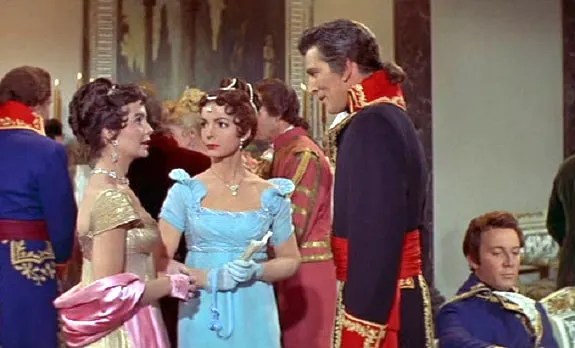
Move forward to July 4, 1799, “Désirée” and “Bernadotte” have settled into married life, the two have a son, “Joseph François Oscar Bernadotte”, know simply as “Oscar”.
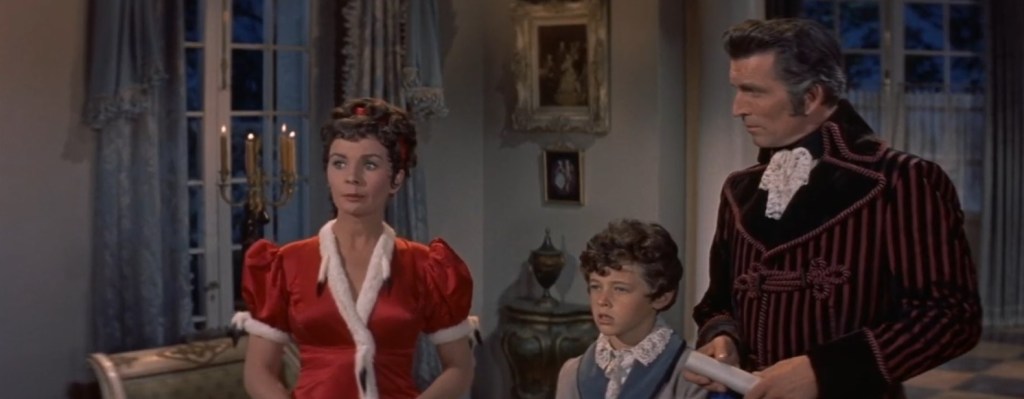
On November 7, 1799, “Napoleon” is named “First Consul of the French Republic” and asks “Bernadotte” to sit on the “Council of State”, and he agrees. On May 18, 1804, at his coronation, “Napoleon” is declared “EMPEROR”, and takes the crown from the hands of “Pope Pious VII” and crowns himself.
Move forward another five-years, “Napoleon’ divorces “Josephine”, and on April 2, 1810, he marries “Marie Louise”, of Austria. She is 19-years old, “Napoleon” is 41-years old. After their marriage, “Désirée”, and “Josephine”, become friends. While, “Napoleon Bonaparte” becomes involved with more wars thinking to unite all of Europe under his rule. An interesting political event also occurs, when “King Charles XIII” of Sweden”, adopts “Jean-Batiste Jules Bernadotte”, as his son and heir to the throne.”Désirée” is stunned by the news that one day she will become “Queen of Sweden”, and “Napoleon” now permits the two to leave Paris.
Eight months later, “Désirée” is not fitting in with the Swedish royal family and she returns to Paris. At that time, “Napoleon” introduces everyone to his son and heir, “Napoleon François Charles Joseph Bonaparte”. At the same time, he makes veiled treats against Sweden, because “Désirée’s” husband is forming an alliance with Russia. “Napoleon”: then adds, that he will be holding “Désirée” hostage to be sure that “Bernadotte” will ally himself with France, when “Napoleon” invades Russia and captures “Moscow”.
“Napoleon’s” army is defeated by the Russian winter, June 24, 1812 to December 14, 1812, and he goes to “Désirée” asking her to write a letter to “Bernadotte”, asking him for his help. Instead, Sweden joins Austria, Prussia, Russia, Spain, the United Kingdom, Portugal, and Sardinia, in what became known as the “WAR OF THE SIXTH COALITION”, December 24, 1812 to May 30, 1814, to defeat “Napoleon Bonaparte” and send him to “Elba”, a mediterranean island.
At the end of the war, “Bernadotte” reunites with “Désirée” in Paris, and then returns to “Sweden”.
Meanwhile, “Napoleon” escapes, and the “Battle of Waterloo” takes place, on June 18, 1815. “Napoleon” and his army retreat to the “Chateau de Malmaison”, on the left bank of the Seine River, the home purchased by “Josephine”.
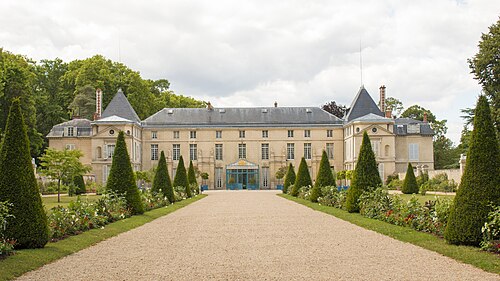
Representatives of the allied armies ask “Désirée” to go and speak to “Napoleon” in the hope that he will surrender. He asks to speak to her alone, and she goes to him.
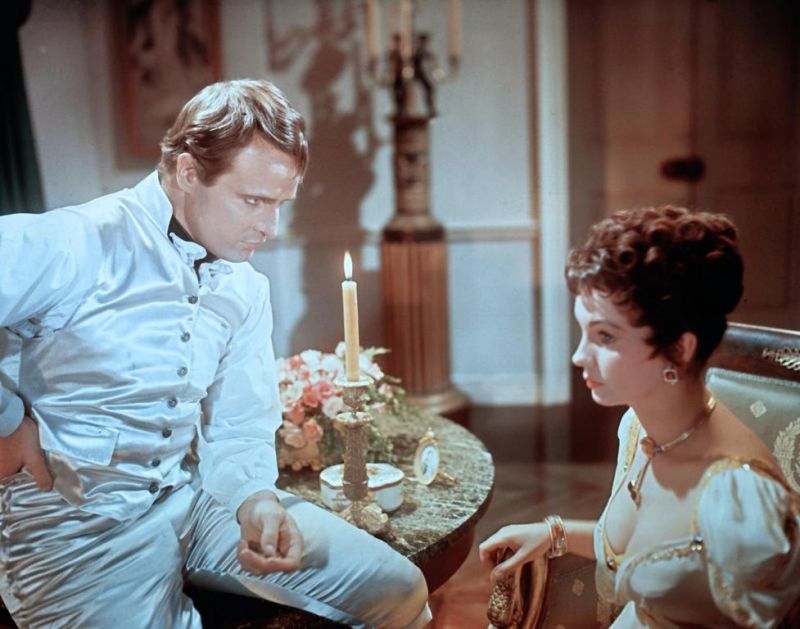
He musses what a life they would have had, if he had not married “Josephine”. Then ads, what he has accomplished for France, as “Désirée” gently tells him that now, for France, he must do as asked and go into exile on “St. Helena” island.
“Napoleon Bonaparte”, ends the screenplay by commenting that the two greatest men in history have loved her, “Jean-Batiste Jules Bernadotte”, and himself, “Napoleon Bonaparte”, “Emperor of France”, and presents “Désirée Bernadotte”, future “Queen of Sweden”, with his sword in surrender.
So ends a screenplay, based upon a novel, based upon actual events.
Abel Gance, at 71-years-of-age, was back with an all-star, international cast, in a motion picture about one of the most significant battles of the “Napoleonic War’s”. A motion picture that should have been great, but does not compare with his 1927, “Napoleon”, or even 1954’s “Desiree”.
AUSTERLITZ aka: THE BATTLE OF AUSTERLITZ released June 17, 1960
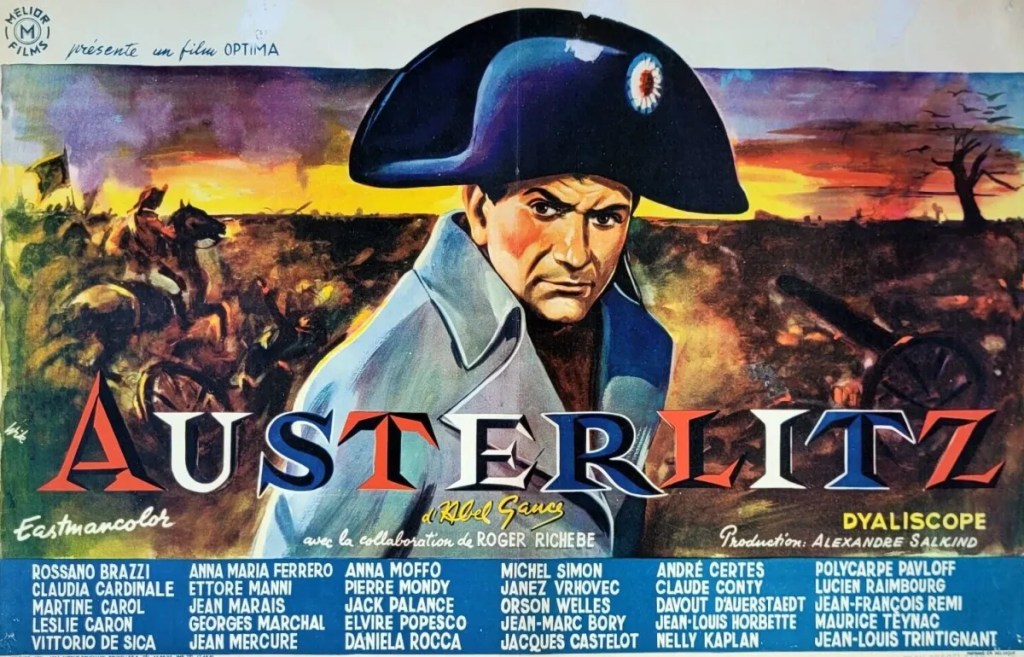
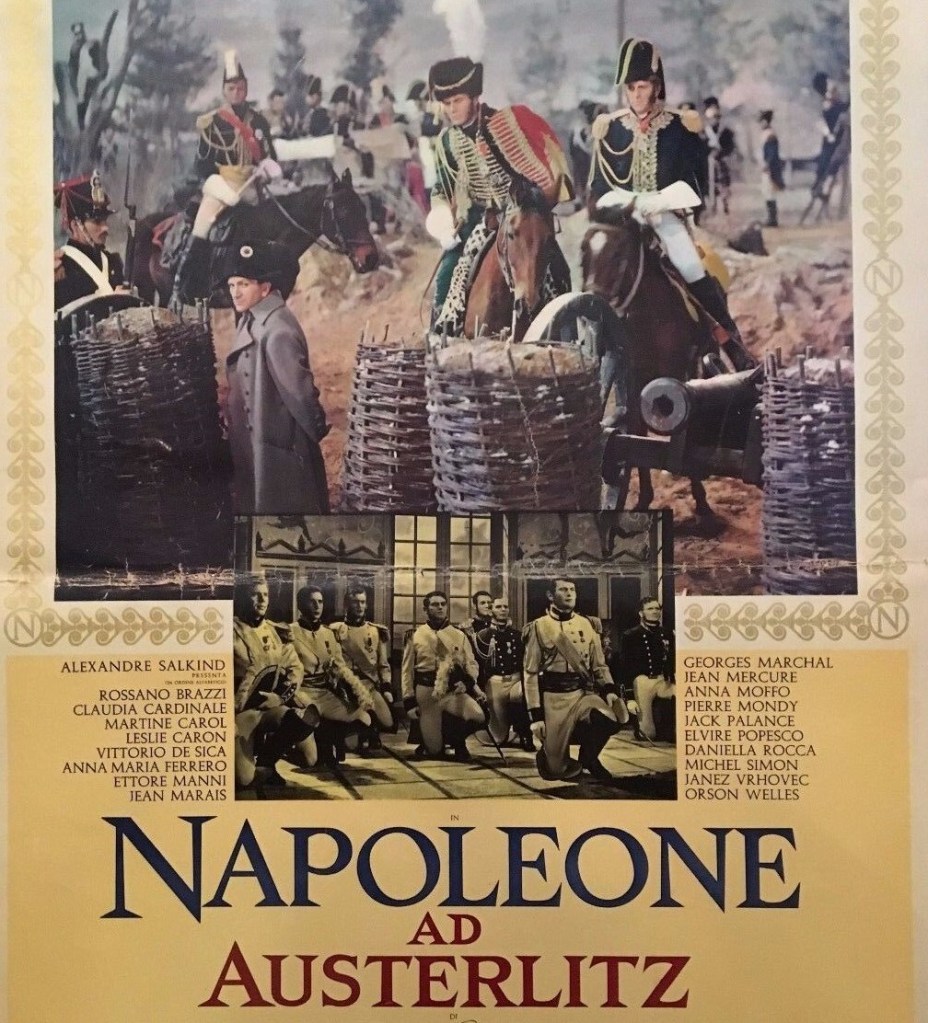
The screenplay was from three writers. The first was Abel Gance, he was working on French television, and he had just written the 1955 motion picture, “La tour de Nesle (Tower of Lust)”. He followed this movie with 1966’s, “Marie Tutor”, which was based upon a play by French author Victor Hugo.
The second writer was Argentine born Nelly Kaplan. This was the first of her 23-screenplays. However, she portrays in the movie, “Jeanne Francoise Adelaide Recamier” aka: “Juliette Recamier”, one of “Napoleon’s” mistresses seen in the first half of the screenplay.
The third writer was Roger Richebe, this was the last screenplay of his 43 feature films.
Abel Gance directed the motion picture. He had just directed 1956’s,”Magirama”, designed with three stories to illustrate Gance’s “Polyvision”. He followed this movie by directing the 1964 French/Spanish swashbuckler, “Cyrano et d’Artagan”. He had also directed both “La tour de Nesle”, and “Marie Turtor”.
The following is a Selected Look at 6 of the 44 credited cast roles. The entire international cast list may be found at:
https://www.imdb.com/title/tt0053638/fullcredits/?ref_=tt_ov_sm_3#amzn1.imdb.concept.name_credit_group.7caf7d16-5db9-4f4f-8864-d4c6e711c686
Pierre Mondy portrayed “Napoleon Bonaparte”. His career in French films totaled a 172 different roles.,
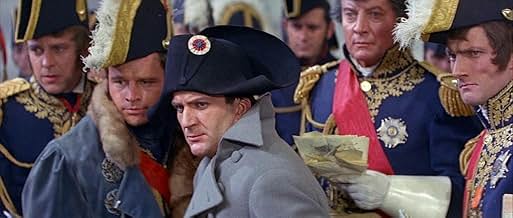
Martine Carol portrayed “Josephine de Beacharnais”. In 1953, she starred as “Lucrece Borgia” and in 1955, Carol starred as “Lola Montez”. Martine was the number one French actress for sexual woman’s roles until 1957, and Bridgette Bardot came on-screen.
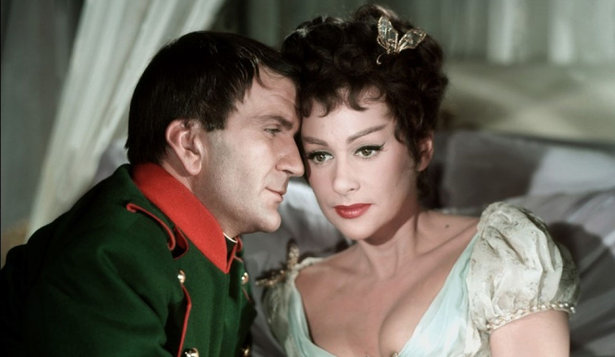
Claudia Cardinale portrayed “Paula Maria Bonaparte Leclerc Borghese” aka:
“Pauline Bondaparte”, “Napoleon’s” older sister. She would follow this picture with director Luchino Visconti’s, 1960,international classic, “Rocco ei suoi fratelli (Rocco and His Brothers”).
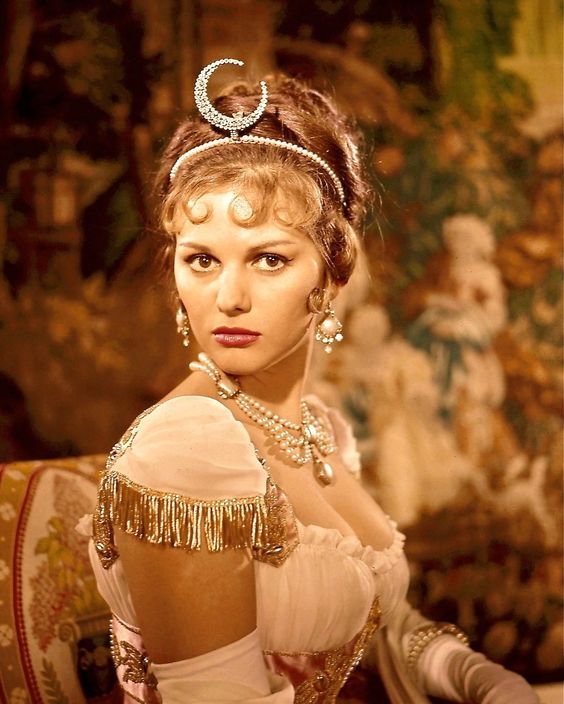
Leslie Caron portrayed “Elisabeth-Antonette Le Michaud d’ Arcon de Vaudey”, another mistress of “Napoleon”. Caron had just co-starred with Henry Fonda in, 1959’s, “The Man Who Understood Women”. She followed this production co-starring with George Peppard and Janice Rule in 1960’s, “Subterraneans”.
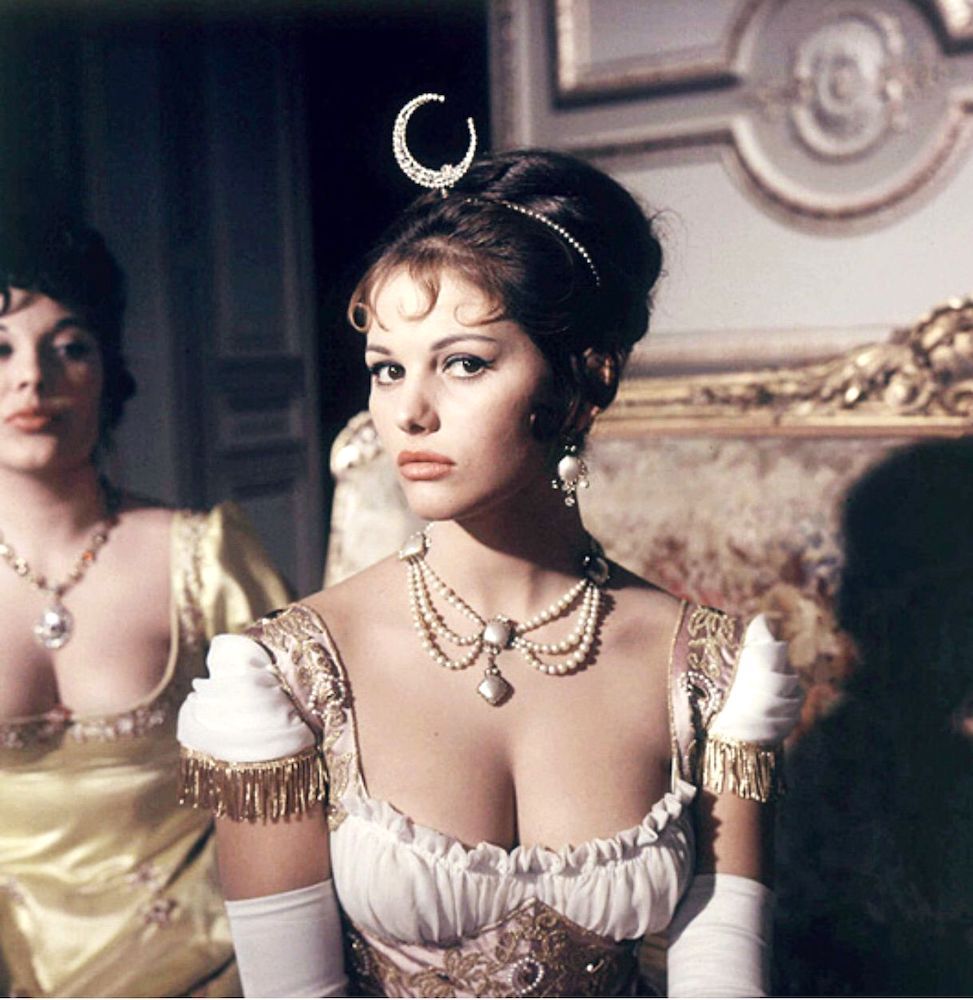
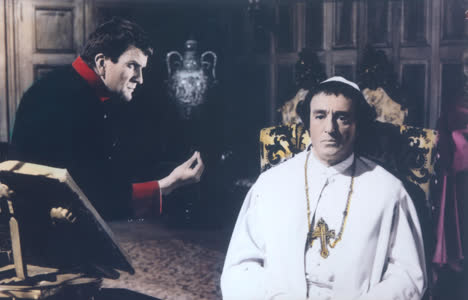
Vittorio De Sica portrayed “Pope Plus VII (Barnaba Niccolò Maria Luigi Chiaramonti)”. Director, actor, De Sica was just seen in the American, Nunnally Johnson written and directed, 1960, “The Angel Wore Red”, set during the Spanish Civil War, and starring Ava Gardner, Dirk Bogarde, and Joseph Cotton. He followed this motion picture with the 1960, comedy, “It Started in Napes”, co-starring with Clark Gable, and Sophia Loren. As a director he had just released the war drama, “La coociara (Two Women)”, starring Sophia Loren, Jean-Paul Belmondo, and Raf Vallone.
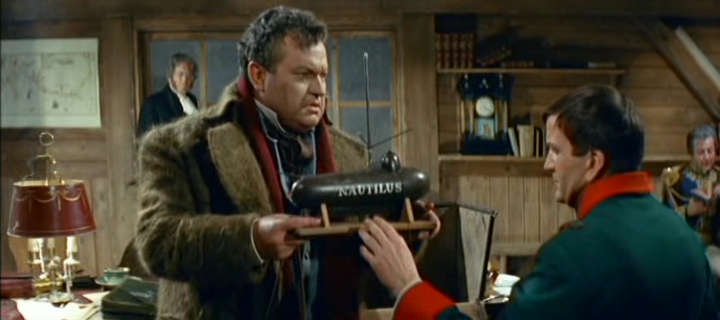
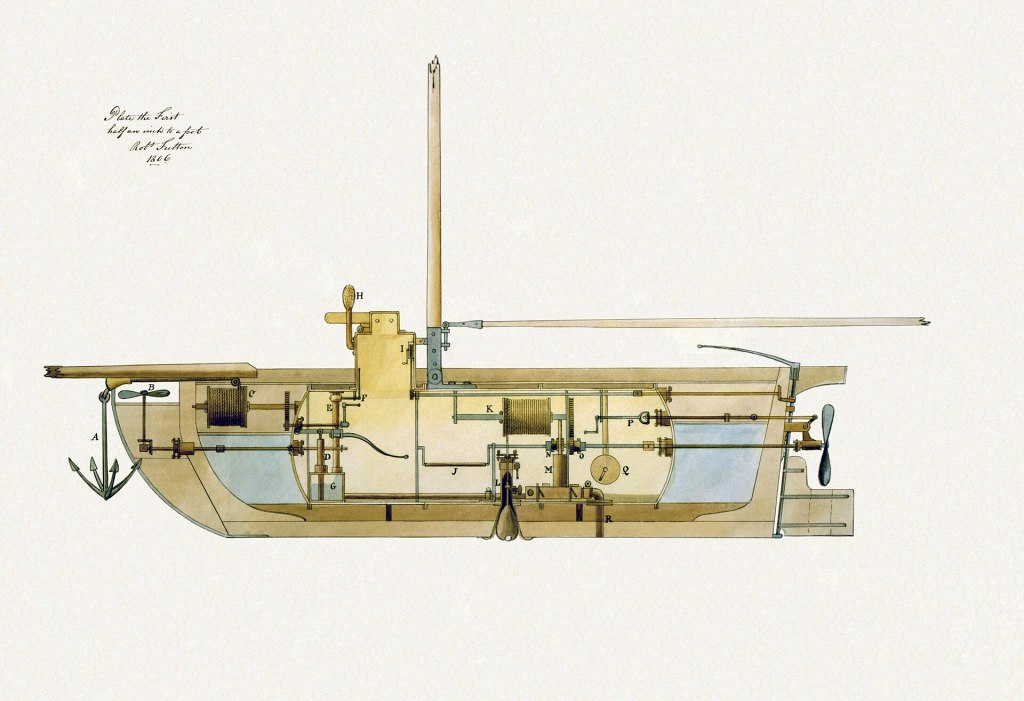
Orson Welles portrayed “American Engineer Robert Fulton”, with a too obvious fake nose. Fulton, an actual event, attempted to get “Napoleon” to buy his submarine, “The Nautilus” below, Fulton’s actual drawing.Welles had just starred in director Richard Fleischer’s, crime drama, 1960’s, “Crack in the Mirror”.
The “Battle of Austerlitz” aka: the “Battle of the Three Emperors”, took place on December 2, 1805. The “Three Emperors” were, “Napoleon Bonaparte”, with his army of French and Italian troops, “Alexander the First” of Russia, with the Russian Army, and “Francis the First” of Austria (The last “Holy Roman Emperor)”, with his Austrian army.
The battle took place near the town of “Austerlitz”, in what was then in the “Austrian Empire”. The town, today, is called “Slavkov u Brna”, and is in the “Czech Republic”.
The Screenplay:
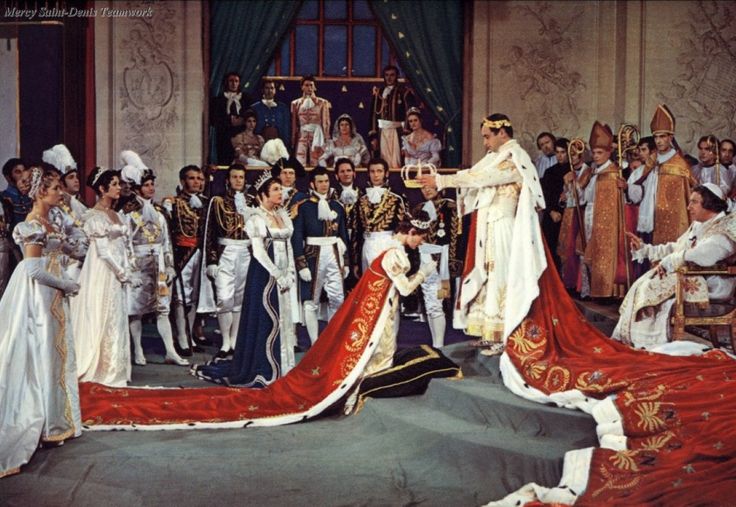
The motion picture is divided into two parts, the first part details the political movements by “Napoleon” and his followers to make him “Emperor”, but unfortunately his many affairs, in this film with Claudia Cardinale, Leslie Caron, and Nelly Kaplan, seem to overshadow the first part of Gance’s motion picture. There is even an affair between “Josephine” and Jean-Louis Xavier Trintignant’s, “Philippe Paul, Comte de Segur”, for good measure.
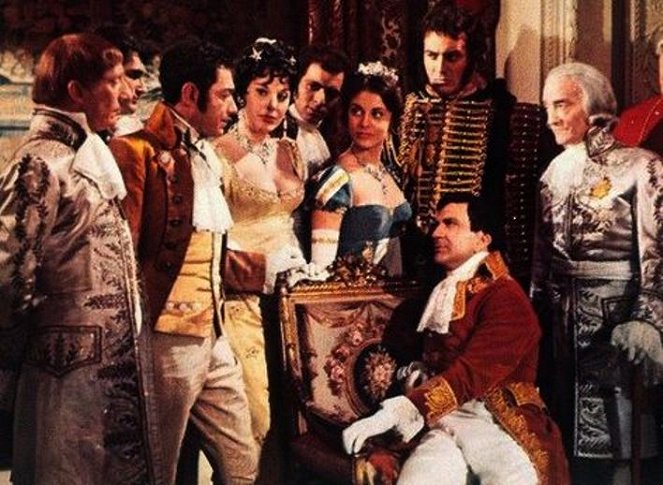
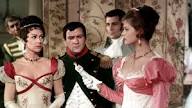
The major sequence of the first half is the coronation of “Napoleon Bonaparte” as “Emperor of France”. Below, “Emperor Napoleon” crowns “Empress Josephine”.
The second half of the film is “The Battle of Austerlitz”, but from a cinematic point of view. 71-years-old Abel Gance, cannot compare this production with his own 1927, at 38-years-old, silent classic. The battle sequences are slow and way too talkie.
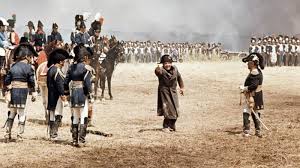
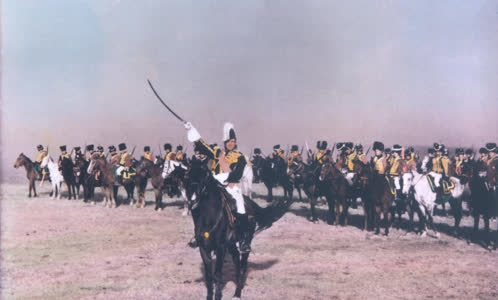
The actual battle ended with a decisive victory for “Emperor Napoleon Bonaparte”.
The allied loss was because Russian, “Emperor Alexander the First”, portrayed by French actor Jean-Louis Richard, the “Supreme Commander of the Allied Forces”, and Austrian, “Emperor Francis’s” either the “First”, or “Second” as the separate titles, see above, overlapped in 1805, was portrayed by Yugoslavian actor,,Janez Vrhovec, “Chief of Staff”, “General Franz von Weyrother”, portrayed in the movie by American Actor Jack Palance, according to historians, walked into a trap set by “Napoleon”.
“Napoleon” started this battle with an estimated force of between 65 to 75,000. At the battle’s conclusion, his losses and casualties were estimated as 8,569, or 9,288.
“Alexander the First” started this battle with an estimated force of between 73 to 89,000. At the battle’s conclusion, his losses and casualties were an estimated 27 to 36,000.
Moving forward one year to 1806, and the “War of the Fourth Coalition”.
On December 22, 1927, part one of a two-part, silent German biographical motion picture was released, and part two, on January 16, 1928. The motion picture was entitled “Königin Luise (Queen Louise)”.
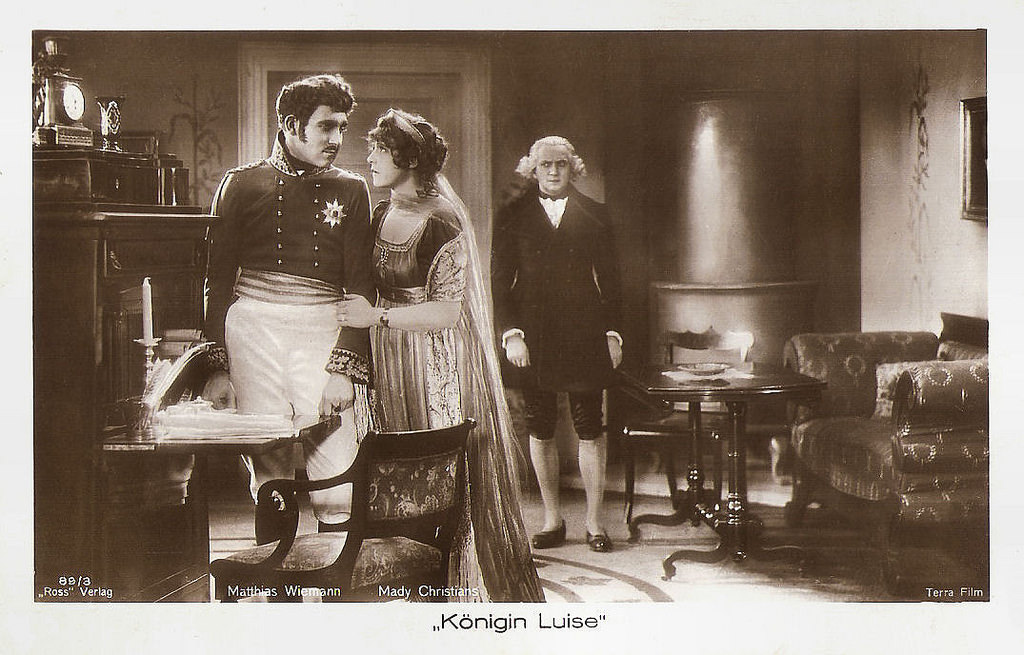
Above, Mathias Wieman portraying “King Friedrich Wilheim III“, and Mandy Christians portraying “Queen Luise Mecklenburg”.
Three-years later, the first sound film, about the same “Queen”, “Luise, Königin von Preußen (Louise, Queen of Prussia)”, was released in Germany, on December 4, 1931.
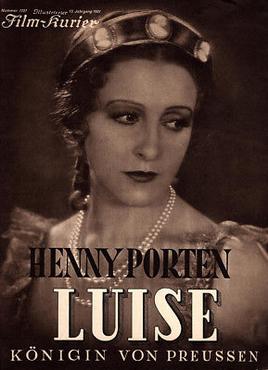
This motion picture was directed by Carl August Hugo Froelich. His first motion picture was 1913’s, “Richard Wagner”, about the composer. Two-years after this motion picture, Froelich joined Adolph Hitler’s, “National Socialist Party”. In 1939, the director, producer, and cinematographer, was appointed “President” of the “Reich Chamber of Film”.
The screenplay was based upon the 1919 novel, “Luise”, by Walter von Molo.
The screenplay was written by three writers. The first was Fred Hildenbrand Stuart, the second was Friedrich Raff, I could not locate any information about the two writers. However, the third writer was Julius Urgiß, he only wrote two screenplays after this film.. Julius was Jewish, and when the Nazi’s came to power in 1933, he immigrated to New York City.
Henny Porten portrayed “Luise Auguste Wilhelmine Amalie” aka: “Louise of Meckenburg Strelitz”, the “Prussian Queen”. Her production company financed this feature film. It was a box office failure, that let to financial problems for Porten’s production company, and the actress herself.
Gustaf Grundgens portrayed the Prussian “King Friedrich Wilheim III (Frederick William III)”.
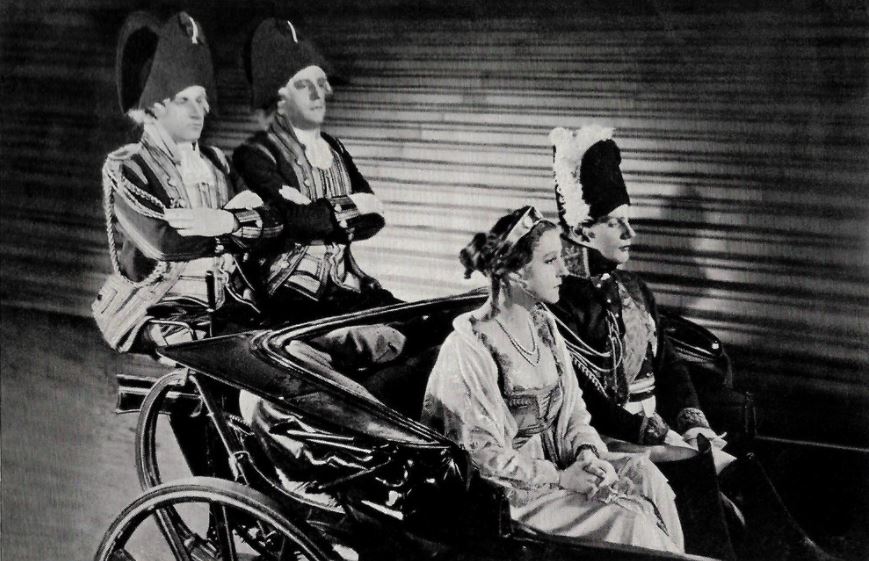
Above, Henny Porten and Gustaf Grundgens ‘.
Vladimir Gajdarov portrayed “Czar Alexander I”.
Paul Gunther portrayed “Napoleon Bonaparte”.
On February 16, 1957, a second sound motion picture about the “Prussian Queen” and her meeting with “Napoleon Bonaparte”, also titled in English, “Queen Louise”, was released.
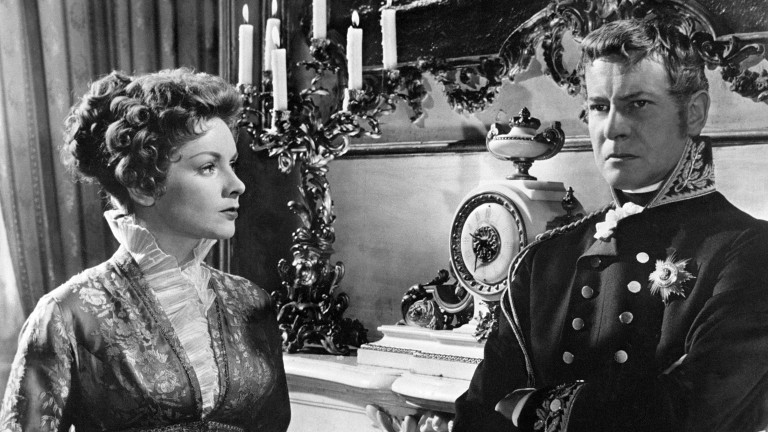
Above, Ruth Leeuwerik portraying “Queen Luise Mecklenburg”, and Dieter Borsche portraying “King Friedrich Wilheim III”
I could not locate the plots of any of these three motion pictures, but I can relate the events that these films told audiences about.
“The War of the Fourth Coalition”, took place from October 9, 1806 through July 9, 1807. The main coalition partners were Prussia, Russia, Saxony, Sweden, and Great Britain.
However, in August 1806, before the “Fourth Coalition” actually engaged “Napoleon”. “King Friedrich Wilheim III”, made a decision that Prussia would fight the French alone.
On October 14, 1806, the French force took the “Prussian General Friedrich Ludwig (Louis), Prince of Hohenlohe-Ingelfingen”, by surprise, at the town of “Jena”. The general was ignorant of the strength of the enemy, he never sent out scouts, he was ignorant of their location, he could not organize a battle plan, or for that matter, a proper retreat plan, as the battle progressed.
While at the municipality of “Auerstedt”, the Prussian troops was under the direct command of “Louis-Nicolas d’Avout aka: Davout, 1st Prince of Eckmuhl, 1st Duke of Auerstaedt”. He was the direct opposite of “General Ludwig” at “Jena”. “Davout”, at the first sign of the French, analyzed the area, and took defensive positions and deployed all of his troops and guns.
The overall command of the Prussian forces, was “Karl Wilhelm Ferdinand”, hereditary, “Prince of Brunswick-Wolfenbuttel, and the hereditary “Duke of Brunswick-Luneburg”. The “Divisional Commander” was “Friedrich Wilhelm Karl Graf von Schmettau”. Both has located themselves in “Jena”.
When “The Battle of Jena-Auerstedt” was over:
“Napoleon” had engaged, in both locations, a total of 66,000 troops. His total killed and wounded was estimated at 12,000. The Prussians, to counter “Napoleon”, had engaged a total of 110,000 troops for both locations. Their total killed, including both Brunswick and Schmettau, was estimated at 41,000.
Enter, “Louise of Meckenburg”, the “Prussian Queen”. She had been an open advocate of war with France. The “King” and “Queen” accompanied the Prussian troops to “Jena”. Where it was reported that the Prussian Queen was dressed like a “Amazon Warrior”, standing with her husband to witness the victory over “Bonaparte”.
However, history would mention the bad judgement of “King Friedrich Wilheim III” for taking on “Napoleon Bonaparte”, outside of the “Fourth Coalition”. While, on the other hand, “Queen Louise of Meckenburg”, became a symbol of Prussian resistance that has lasted until today.
That was demonstrated when on:
July 6, 1807, the “Prussian Queen” was granted an audience with “Emperor Bonaparte” at Tilsit, now Sovetsk, Russia. There she pleaded for better peace terms for Prussia, earning his respect, but failing to get any change from the terms dictated by “Napoleon”. The peace treaty was signed on July 9th, and was the Second signed with France.
The first treaty had been with “Emperor Alexander the First”, the “Czar of Russia”, July 7th.
On July 19, 1810, at the age of 34, “Queen Louise of Mecklenburg”, passed away.
When speaking of the 1954 motion picture ,”Desiree”, I mentioned “Marie Louise, of Austria“. So, let us see how “Metro-Goldwyn-Mayer” looked at her in:
CONQUEST aka: MARIE WALEWSKA released October 22, 1937
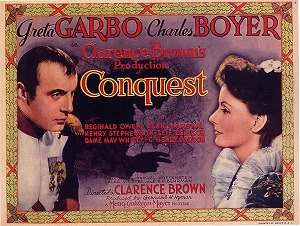
The screenplay was base upon Warsaw, Poland, born Wallow Gasiorowski’s, 1904, novel, “Pani Walewska”. Writer Helen Jerome, made the dramatization of the book, to be able to write a screenplay.
In typical, “Hollywood Style”, there were three credited screenplay writers and three uncredited.
There were two directors, the main director was Clarence Brown. Who had directed Greta Garbo, in 1926’s, “Flesh and the Devil”, 1928’s, “A Woman of Affairs”, 1930’s, “Anna Christie”, and 1935’s, “Anna Karenina”.
The uncredited director was Gustav Machete. He had directed Hedy Kiesler (Lamarr), in 1933’s, “Ekstase (Ecstasy)”, with her censored, in the United States, nude swimming sequence.
The Main Cast:
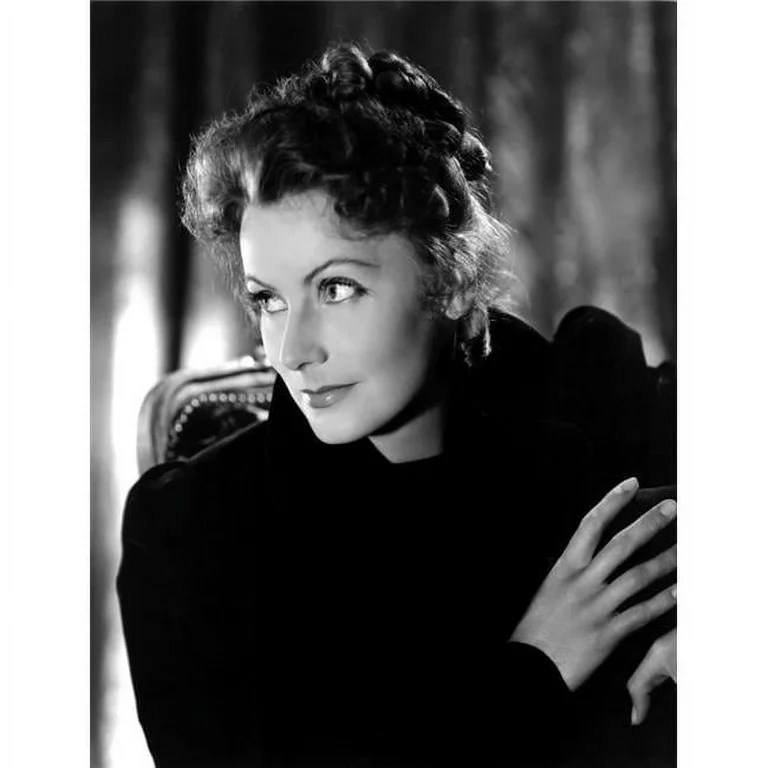
Greta Garbo portrayed “Countess Marie Walekska”. Garbo was 32-years-old, portraying an 18-years-old, at the start of the screenplay. She had just co-starred with Robert Taylor, in director George Cukor’s, 1936, “Camille”, and followed this feature with the motion picture with the tag line, “Garbo Laughes”, director Ernst Lubitsch’s, classic comedy, 1939’s, “Ninotchka”.
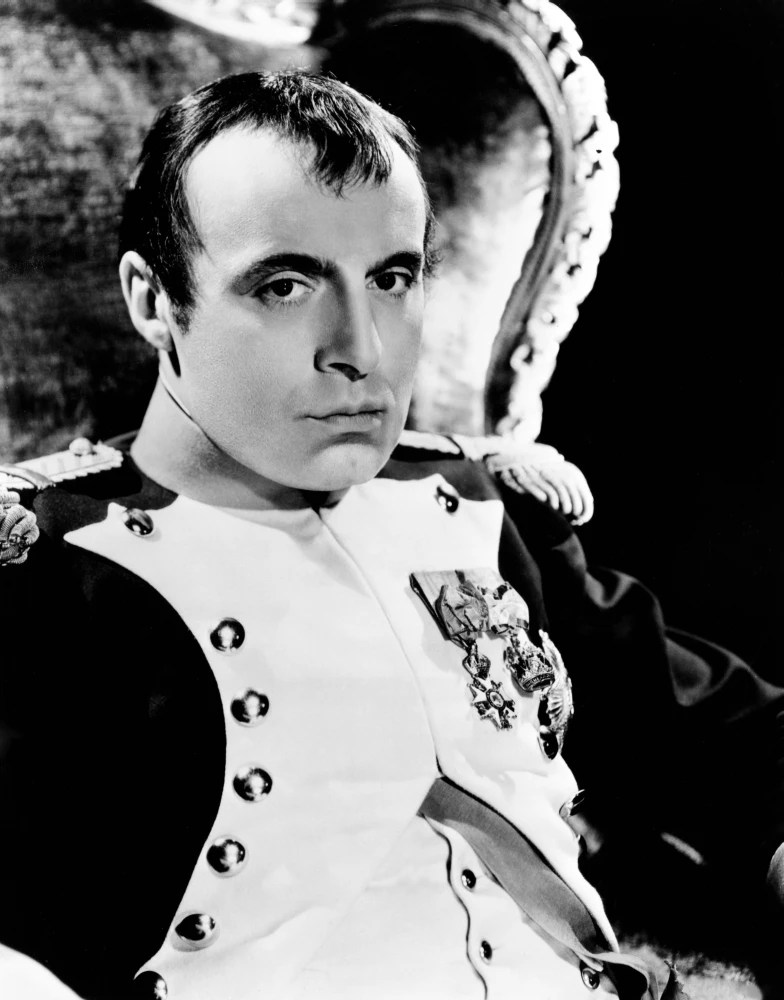
Charles Boyer portrayed “Emperor Napoleon Bonaparte”. Boyer had just been seen co-staring with Jean Arthur in the comedy, 1937’s, “History is Made at Night”. He followed this feature film with the comedy,1937’s, “Tovarich”, co-starring with Claudette Colbert and Basil Rathbone.
Henry Stephenson portrayed “Alexandre Florian Joseph, Count Colonna Walewski”. The character actor had previously been seen in 1937’s, “The Emperor’s Candlesticks”. A historical story set in Poland, starring William Powell and Louise Rainer, and Stephenson, followed this feature film with the screwball comedy, 1937’s, “Wise Girl”, starring Miriam Hopkins, Ray Milland, and featuring Robert Young.
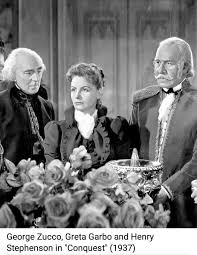
Above, with Garbo and Stephenson, the power of a make-up artist, is George Zucco portraying “Count Stanislaw Malachowski”. He was the “1st Prime Minister of the Duchy of Warsaw”, the count would die on December 29, 1809.
The “MGM” story:
Aaccording to the screenplay, the year is 1807, “Napoleon” has been unsuccessful in seducing “Countess Marie Walewska”. She is married to the much older “Alexandre Florian Joseph, Count Colonna Walewski”.
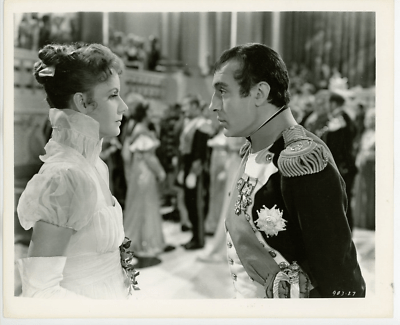
“Marie” resists the “Emperor”, that is until she realizes that such a union would save Poland from “Bonaparte”. After her husband annuals their marriage, and “Napoleon” divorces “Josephine”. The two are free to have a happy and public relationship.
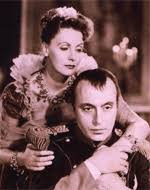
However, he shocks “Marie Walewska”, by announcing his engagement for political reasons, to the, “Arch Duchess Marie Louise (Maria Ludovica Leopoldina Franziska Theresia Josepha Lucia)”. However, “Marie Louise”, is reduced to a very minor character in this screenplay. “Marie Louise”, was portrayed by the uncredited Jean Fenwick.
“Napoleon” doesn’t think this marriage will affect his relationship with “Marie Walewska”. but she leaves him, without telling him she is pregnant with his child.
The audience now sees “Napoleon”, after being defeated by Russia, and is in exile on Elba Island. “Marie Walewska” arrives with “Napoleon’s” son, “Alexander”, but without telling the boy the man he is seeing, his father. Next, “Marie” carries a message from “Napoleon” to help him escape. The escape takes place, and so does “Waterloo”.
“Marie Walewska”, now finds “Napoleon Bonaparte” at the seaport of Rochefort. Where, “Napoleon”, prepares to go into British captivity, but “Marie” offers to use her contacts to sneak him away to America, but he asks what would he do there? Instead, “The Emperor of France” tells her, that he must follow his “Star”, whereever it leads him. The film ends with “Marie”, and “Alexander”, watching “Napoleon Bonaparte” being rowed in a small boat to a British man-of-war.
A small look at two truths:
Marie Walewska did vist “Napoleon” on Elba, September 1, 1814, with “Napoleon’s” son, “Alexandre”, but both were accompanied by Marie’s sister, and brother. While, “Napoleon’s” wife never visited him. There was no secret message to help him escape.
After “Waterloo”, “Marie” visited “Napoleon” at “Josephine’s” former home, “Chateau de Malmaison”. This meeting took place at the end of “The Hundred Days”, between his escape from Elba, to his exile on Saint Helena.
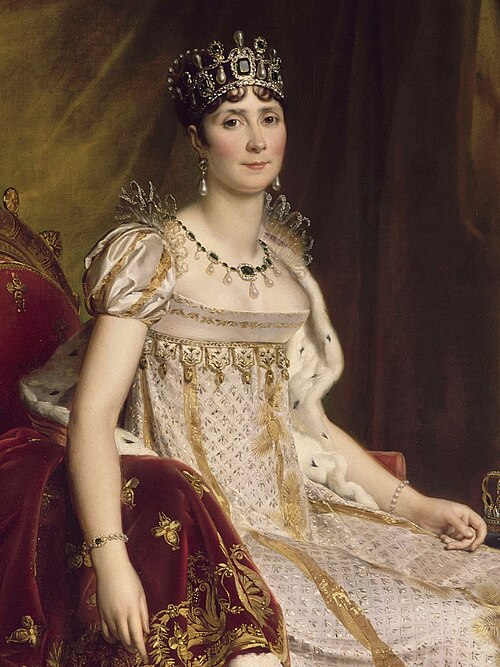
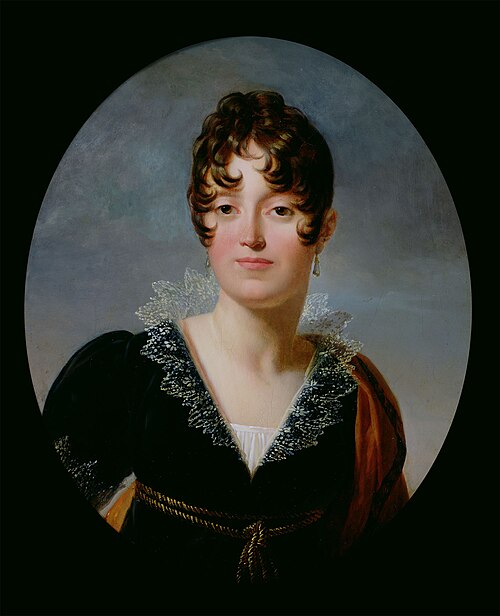
A break in my article, as I present paintings of the “Emperor” and the four main women in his life.
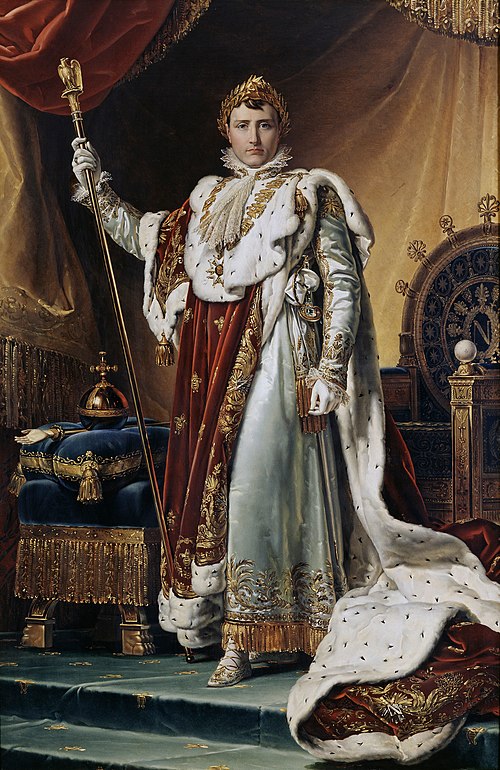
“Emperor Napoleon Bonaparte”, 1804, wearing his coronation robes by Francis Gerard.
Josephine de Beauharnais, in 1808, painted by Francis Gerard.
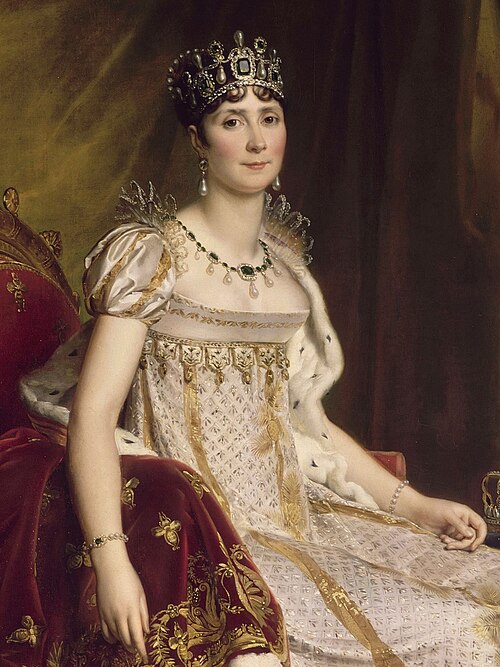
“Countess Marie Walekska, in 1810, painted by Francois Gerard
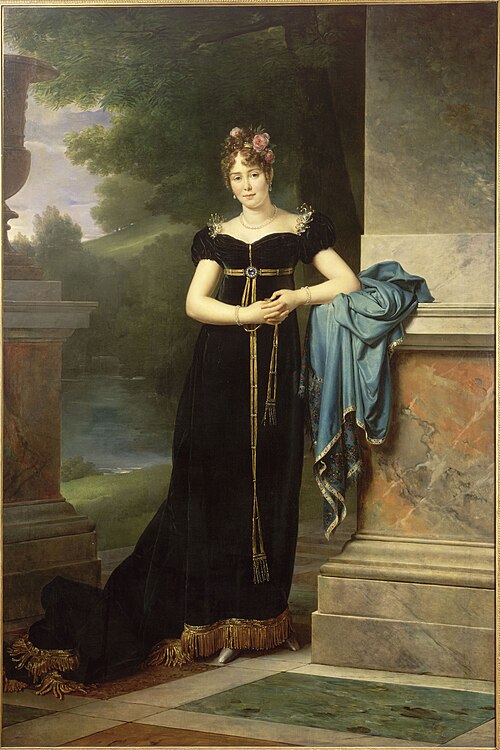
“Arch Duchess Marie Louise (Maria Ludovica Leopoldina Franziska Theresia Josepha Lucia)”, circa 1812
Bernardine Eugénie Désirée Clary, in 1810, painted by Francois Gerard
The majority of the above motion pictures mention, even in passing to progress their screenplays, two major events, and the next two features I choose for my reader’s, are two films about them.
In 1915, the first film version of Leo Tolstoy’s “War and Peace”, was a Russian silent film running one-hour-and-40-minutes.
Next, there is a 1947, Japanese movie, from “Toho Studios”, that translates as “Between War and Peace”. Which is listed, incorrectly, on many websites and other media, as the next film version of Leo Tolstoy’s novel, it is not. It is based upon American director, David Wark “D.W.” Griffith’s, 1911 film, “Enoch Arden”. Which is itself, is based upon an Alfred Lord Tennyson, 1864 poem of that name.
Although, I admit to preferring the four-part, Soviet Union version, that was released originally, in one, 4-hour-and 18-minute showing, at the “4th Moscow International Film Festival”, in July 1965.
However, my choice, is the motion picture that actually follows the 1915 Russian movie and was a “HOLLYWOOD EPIC”.
WAR AND PEACE released August 21, 1956
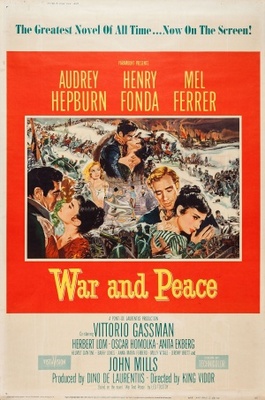
This 3-hour-and-28-minute, co-United States and Italy production, was filmed in Rome at both the “Cinecitta Studios”, and the “Ponti-De Laurentiis Studios”, and four locations throughout Italy.
It was produced by the uncredited Carlo Ponti, and the credited Dino De Laurentiis.
The screenplay was based upon Count Lev Nikolayevich Tolstoy (Leo Tolstoy’s), novel, “Война и мир (War and Peace)”. That was first serialized in “The Russian Messenger”, from 1865 through 1867, and first published in book form in 1869.
It took six credited writers, including the motion picture’s director, and one uncredited, to decide of the adaption of the novel that became the basis for the screenplay. The screenplay was written by three uncredited writers, that included author Irwin Shaw.
King Vidor directed the motion picture. He had been directing since 1913, and among his films are the First World War, 1925, “The Big Parade”, the 1929 African-American musical, “Hallelujah”, the Barbara Stanwyck, 1937, “Stella Dallas”, the Clark Gable and Hedy Lamarr, 1940, “Comrade X”, the Jennifer Jones, Joseph Cotton, and Gregory Peck, 1946, “Duel in the Sun”, and the Gary Cooper and Patrica Neal, 1949 version, of Ayn Rand’s, “The Fountainhead”.
The Main Cast:
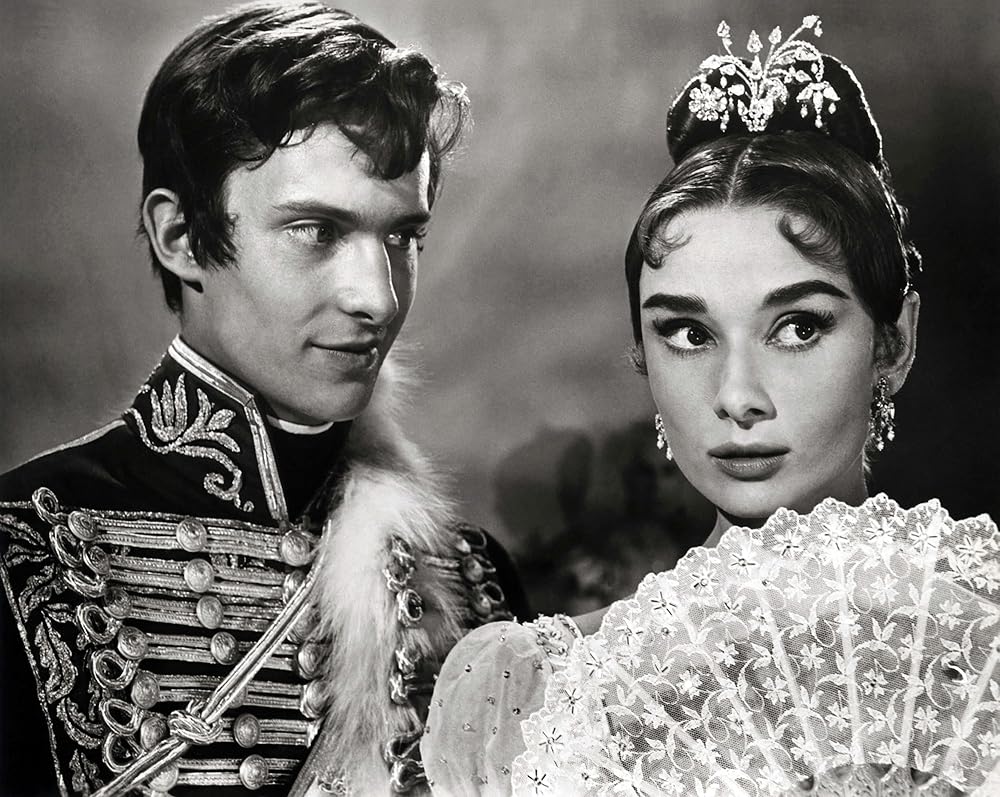
Audrey Hepburn, although one of the leading actresses in the world at the time, was seen as being too old for portraying 14-years old “Natasha Rostova”, at the start of the story. While, at the end of the screenplays, the actress was actually only one-year older than her character.
Audrrey Hepburn had just co-starred with Humphrey Bogart and William Holden in director Billy Wilder’s, classic, 1954, “Sabrina”. She followed this movie co-starring with Fred Astaire, in 1957’s, “Funny Face”.
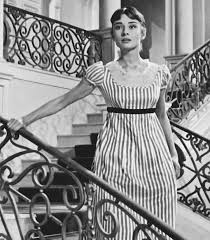
Henry Fonda, was considered, by the film critics and many readers of the novel, as “miscast”, in the role of “Pierre Bezukhov”. The actor was 50-years old, and “Pierre”, when the novel opens, is 21-years old. Fonda had just co-starred with James Cagney, in 1955’s, “Mister Roberts”, and followed this film with director Alfred Hitchcock’s true story, 1956’s, “The Wrong Man”, co-starring with Vera Miles and Anthony Quayle.
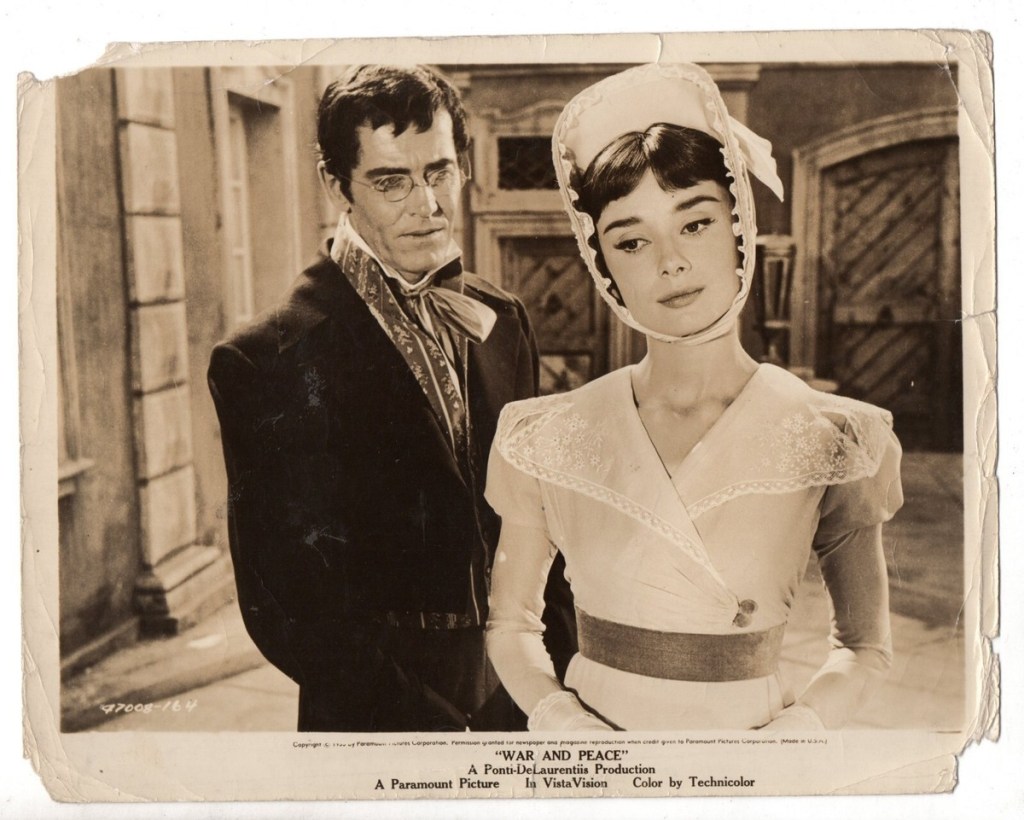
Mel Ferrer portrayed “Prince Andrei Bolkonsky”. Ferrer had just been, 6th billed, in the British musical, 1955’s, “Oh….Rosalinda!”, co-starring Anthony Quayle and Anton Walbrook, and followed this feature film with the French movie, 1956’s, “Elena et les hommes (Elena and Her Men)”, co-starring with Ingrid Bergman.
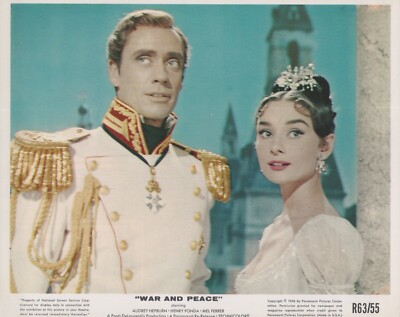
Vittorio Gassman portrayed “Anatol Kuragin”. Gassman had just portrayed William Shakespeare’s “Hamlet” in an Italian, 1955, television production. He followed this feature with the Italian film-noir crime drama, 1956’s, “Difendo il min amore (Defend My Love)”.
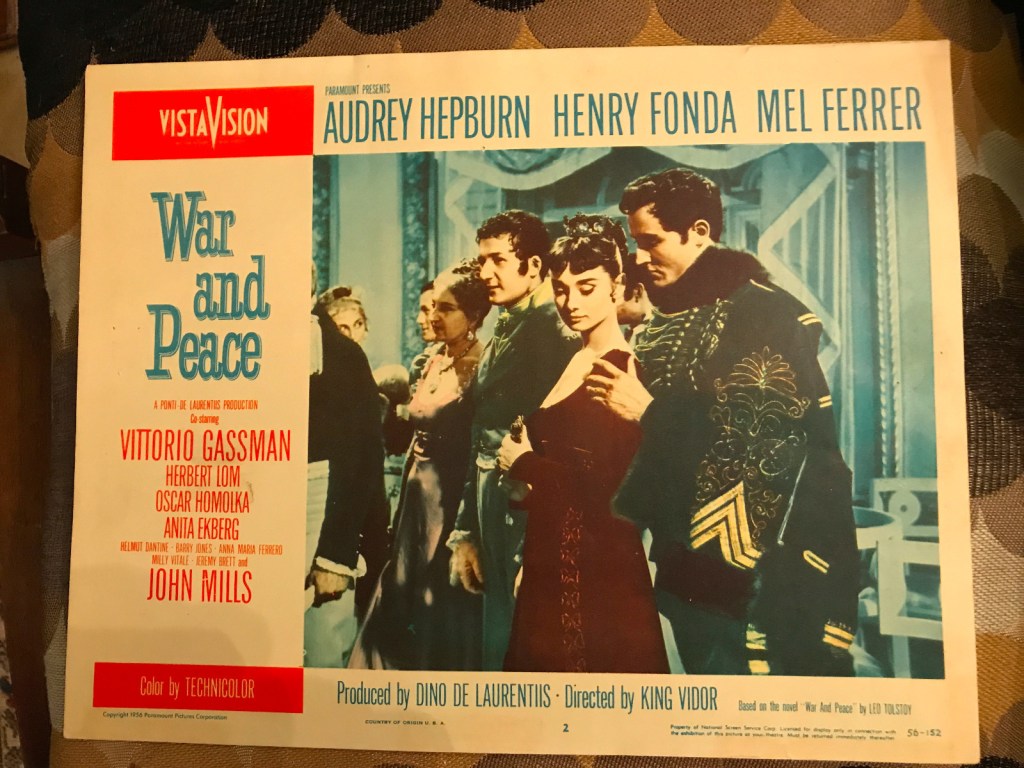
Above right, Audrey Hepburn and Vittorio Gassman
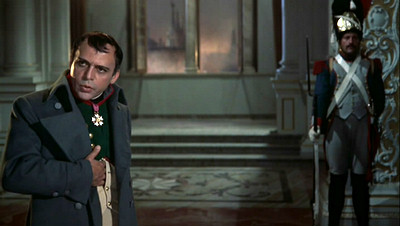
Herbert Lom returned as “Napoleon Bonaparte”. Lom had been seen co-starring with Ginger Rodgers and Stanley Baker, in the 1954 film-nori, “Beautiful Stranger” aka: “Twist of Fate”. He would be 4th-billed in the Rita Hayworth, Robert Mitchum, and Jack Lemmon, adventure drama, 1957’s, “Fire Down Below”.
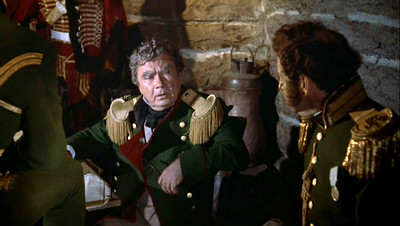
Oscar Homolka portrayed the actual, “Prince Mikhail Illarionovich Golenishchev-Kutuzov-Smolensky“. aka: “Field Marshal Mikhail Kutuzov”, Character actor Homolka had just been seen in director Billy Wilder’s, 1955, “The Seven Year Itch”, starring Marilyn Monroe, and Tom Ewell. He next guest appeared on several television programs.
Anita Ekberg portrayed “Hélène Kuragina”, Ekberg had just been in two picture prior as a Chinese mother in director William “Wild Bill” Wellman’s, excellent anti-Chinese communist piece of propaganda, 1955’s, “Blood Alley”, starring John Wayne and Lauren Bacall. She followed this film by co-starring with Robert Ryan and Rod Steiger, in the 1956 remake of dramatic actress, Lucille Ball’s, 1939, “Five Came Back”, as 1956’s, “Back from Eternity”.
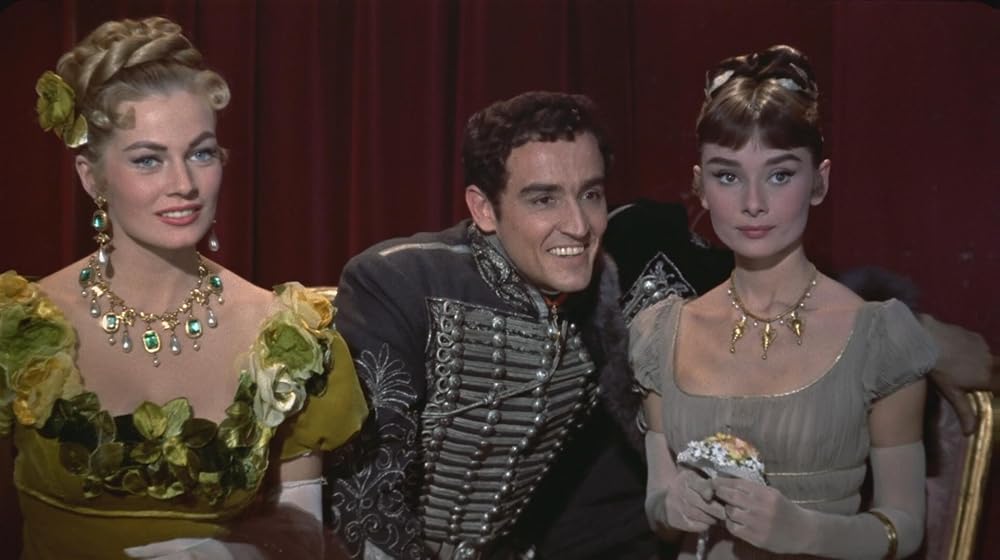
Above left to right, Anita Ekberg, Vittorio Gassman, and Audrey Hepburn
Jeremy Brett portrayed “Nikolai Rostov”. In the second on-screen appearance of the future “British, Granada TV’s”, “Sherlock Holmes“, seen below with Audrey Hepburn as his sister.
An Small Overview of a Screenplay Condensed from a 1,232 Page Novel:
Leo Tolstoy’s novel opens in 1805, as Europe is being torn apart by “Napoleon Bonaparte” and is built around a large amount of fictional characters. The main characters, listed above, does include two of the real names mentioned, “Napoleon”, and “Field Marshal Mikhail Kutuzov”.
The screenplay opens with:
“Pierre Bezukhov” returning to Moscow, after living in Paris. He believes that “Napoleon” is a “Cleansing Force”. Who will establish equality and liberty. Pacifist “Pierre”, is one of the two central characters, “Natasha Rostov” is the other.
“Pierre” is the illegitimate son of the wealthy, “Count Kirill Bezukhov”, portrayed by Gualtiero Tumiati. All of his relatives, and Russian society in general, snub the illegitimate “Pierre”, except the “Rostov” family. That is, until his father dies, and it is revealed that “Count Bezukhov” had accepted him as his “Legitimate Son”. Which, overnight, has turned scholarly “Pierre”, into the “Wealthy Count Pierre Bezukhov”. Now, a target for the status and money hungry, “Hélène Kuragina”.
“Natasha Rostov” is a 14-year-old girl looking in at the large balls her family gives, and dreams of finding her “Prince Charming”. As the story progresses, “Natasha” ages, and falls in love with with handsome “Prince Andrei Bolkonsky”, and he with her. At the end of the screenplay “Natasha Rostov” is 26-years-old.
Within the screenplay, as in Tolstoy’s novel, the audience is seeing “Napoleon’s” Russian campaign, and the historical impacts on the people of Moscow. All leading to “Prince Andrei” becoming an adjutant for “Field Marshal Mikhail Kutuzov”, and on December 2, 1805, being a participant in the “Battle of Austerlitz”, against “Napoleon Bonaparte‘s” invading army.
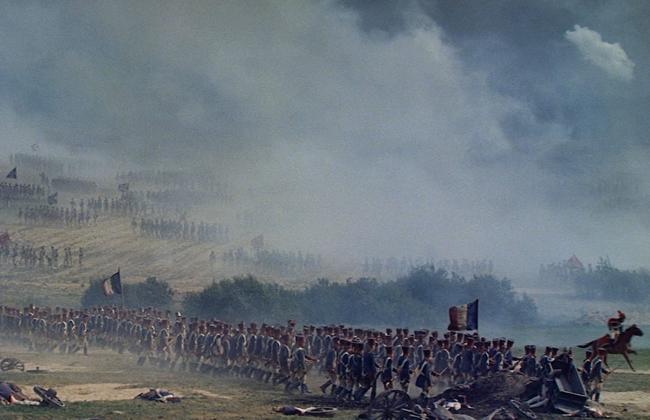
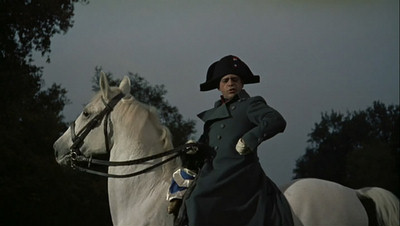
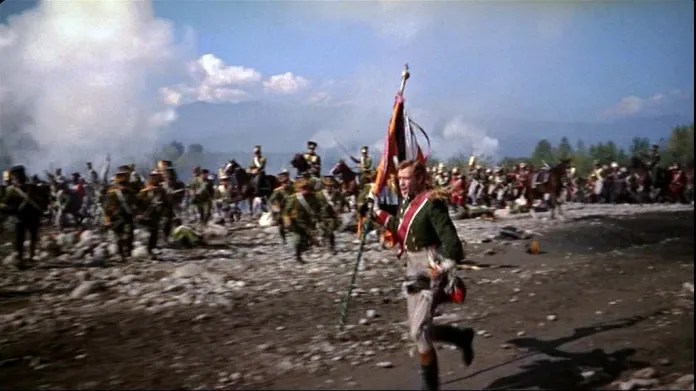
As the battle progresses, the Russian army is in retreat from the French army. “Prince Andrei” attempts to rally the troops by grabbing their flag, but is wounded and left for dead.
“Napoleon” serving his victory, finds “Andrei” still alive. Having watched the his action in battle, “Bonaparte” admired his courage, and has his personal physician attend to the Russian Prince.
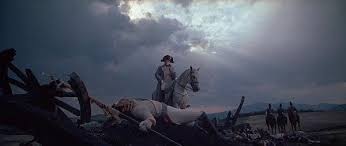
“Andrei” returns home to Moscow, and watches his wife “Lise” give birth to their son, but she dies after the baby is born. “Andrei” now blames himself for his wife’s death, and not offering her more love and support. While, “Pierre” is forced into a duel, that the scholar is not fit for, over his wife, “Hélène”. After finding out about her adultery. Luck is on his side, he is not hit, and he does wound his wife’s lover. Now realizing who she really is, separates from her, and goes with the “Rostov’s” to their country estate.
While hunting on their country estate, “Pierre”, “Natasha”, and her family, meet “Andrei”. He becomes fascinated with “Natasha”, and at her first ball, they dance together.
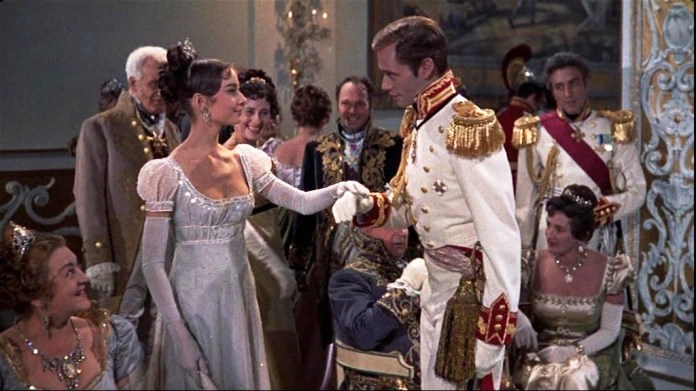
“Andrei” asks “Natasha’s” father for her hand in marriage, she wants this, but her father tells him to wait one year, because his daughter is still too young for marriage and that is agreed too.
“Andrei” now joins the mission to Prussia, and he witnesses, on July 7, 1807, “Czar Alexander I”, portrayed by Savo Raskovitch, sign the first “Treaty of Tilist”, ending the “Fourth Coalition”.
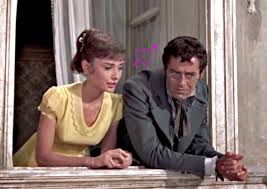
The story now deals with “Helene’s” brother, “Anatol Kuragin”, attempting to seduce “Natasha”. However. “Pierre”, and “Natasha’s” cousin, “Sonia Rostova”, portrayed by May Britt, threaten to reveal that “Anatol” is secretly married. This works, but it’s too late. All of Moscow is now gossiping about “Natasha”, and “Andrei” calls off their engagement. “Natasha” falls ill, after several months, she begs “Pierre” to send her regrets to “Andrei”. “Pierre”, who is secretly in love with her, tells “Natasha”, she is blameless, and that, if she was free. He would ask her hand in marriage.
On June 24, 1812, “French Emperor Napoleon Bonaparte”, violates the “Treaty of Tilist”, by crossing the “River Neman”, invades Russia, and the period of “Peace” has ended. “Napoleon” is met by “Field Marshall Kutuzov“, and the Russian army. However, the superiority of the French forces, cause the “Field Marshall” to order a retreat, and for the farmers to burn their crops, so as not to feed the French soldiers.
Next, against the wishes of his officers to stand and fight. “Kutuzov” enforces his order of retreat, and in August, a hard fought battle within the city of “Smolensk” takes place.
The actual battle took place from August 16, through August 18, 1812
The French troops totaled 180,000, but only an estimated 45,000 engaged in the battle. Their wounded, captured, or killed is estimated to be between 9,000 and 10,000.
The Russian troops totaled 120,000, but only an estimated 30,000 engaged in the battle. Their wounded, captured, or killed is estimated to be between 6,000 and 14,000.
Returning to the screenplay:
“Field Marshall Kutuzov” abandoned “Smolensk”, and made his stand at, “Borodino”. Wanting to see war first hand, “Pacifist, Pierre Bezukhov”, decided to leave Moscow and goes to “Bordino” There he finds “Prince Andrei Bolkonsky’s” camp, explains what “Natasha” has said, and asks him to forgive her, but “Andrei” will have nothing to do with the young woman. The next morning, September 7, 1812, “Pierre” experienced the madness of war in “Borodino”.
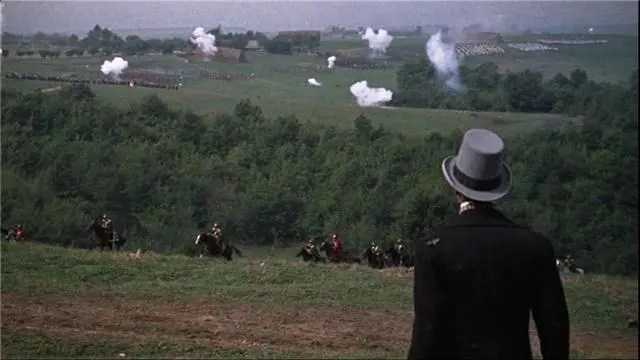
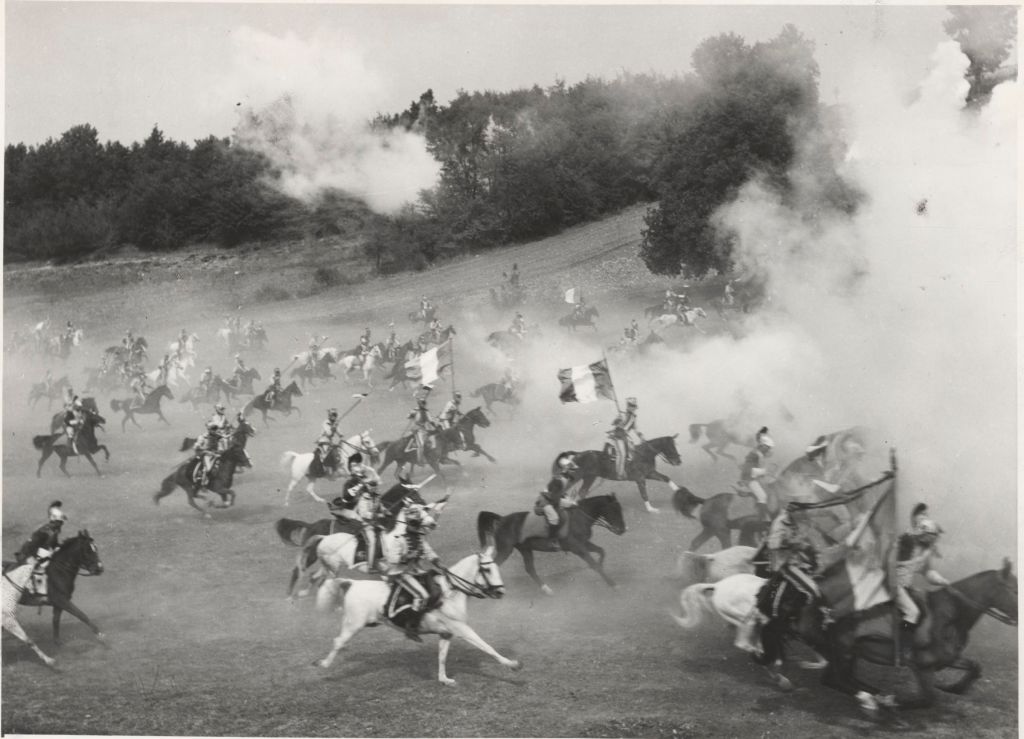
The battle was also known as “The Battle of Moscow”, because the village of “Borodino” was located just 28 miles from the Russian capital.
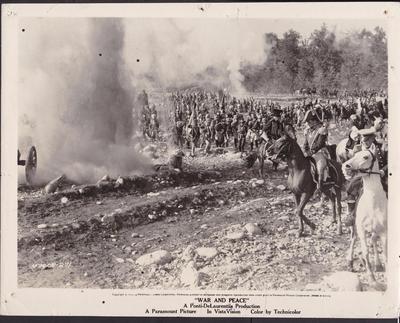
The French troops were estimated between 103,000 and 135,000. but only an estimated 109,500 engaged in the battle. Their wounded, captured, or killed is estimated to be between 30,000 and 42,000.
The Russian troops totaled 125,000 to 160,00, but only an estimated 122,200 engaged in the battle. Their wounded, captured, or killed is estimated to be between 40,000 and 53,000.
“Field Marshall Kutuzov‘s” last chance to stop “Napoleon’s” advancing French Army, was at a pentagonal earthwork redoubt, erected on a mound near the village of “Shevardino”, 1.2 miles from Borodino” toward Moscow. “The Battle of Shevardino” is in Leo Tolstoy’s novel, BUT was dropped in the motion picture screen play.
The French troops at Shevardino, were estimated at 36,000. Their wounded, captured, or killed is estimated to be 4,000.
The Russian troops were estimated at 20,000. Their wounded, captured, or killed is estimated to be 6,000.
Returning to the 1956, “War and Peace”:
In Moscow, the “Rostov’s” and “Pierre” are among the large amount of people planning on fleeing the on-coming French troops. When wounded soldiers are brought into the city, they are loaded upon the “Rostov” wagons, and taken away to safety from a now infuriated “Napoleon Bonaparte”. After he has learned that the Russian government has left the city.
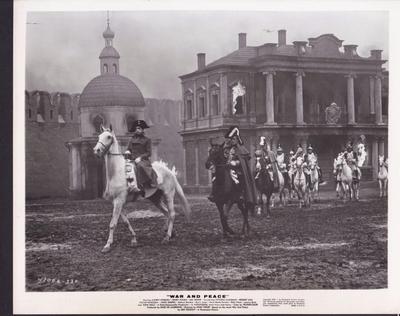
“Natasha” now learns that “Andrei” is among the wounded, she finds him, takes him to a monastery to convalesce, but he dies there. While, “Pierre” is stopped by the French, and becomes one of their prisoners.
Next, “Napoleon” realizes he has been outmaneuvered by “Kutukov”, and fearing he will be trapped in Russia during winter, ORDERS A RETREAT FROM RUSSIA, on October 19, 1912, adding that MOSCOW IS TO BE BURNT TO THE GROUND!
“Pierre” and the other Russian prisoners, are forced to go along with the retreating French army. On what will become a 2,000 mile walk through the Russian winter, while being attacked by Russian Cossacks. As the starving and dying French soldiers are found by the “Rostov’s” and others. They are given shelter by the people they would conquer for their “Emperor”.
In actuality, the retreat from Moscow and Russia during winter. Had cost the lives of French soldiers from starvation, wounds, and being killed by the Cossacks. In all, the “THE RUSSIAN CAMPAIGN”, cost “Napoleon”, 500,000 soldiers of France.
“War and Peace” ends with the “Rostov’s” returning to Moscow to find their mansion burned to the ground, but “Pierre”, who found out that ‘Helene” had been killed by the French, waiting on what remains of their front entrance for the woman he loves, “Natasha”.
The set up for the next motion picture, When the “War of the Sixth Coalition” ended, and “Napoléon Bonaparte” faced being sent to the island of Elba. He was permitted to address his “Old Guard”, with the following words:
April 20, 1814:
“Soldiers of my Old Guard, I have come to bid you farewell. For twenty years you have accompanied me faithfully on the paths of honor and glory. …With men like you, our cause was [not] lost, but the war would have dragged on interminably, and it would have been a civil war. … So I am sacrificing our interests to those of our country. …Do not lament my fate; if I have agreed to live on, it is to serve our glory. I wish to write the history of the great deeds we have done together. Farewell, my children!”
On February 26, 1815, “Napoleon Bonaparte” escapes from the “Island of Elba”. Which brings me to an excellent motion picture.
WATERLOO ( Ватерлоо) the “London Royal Premiere” took place on October 26, 1970
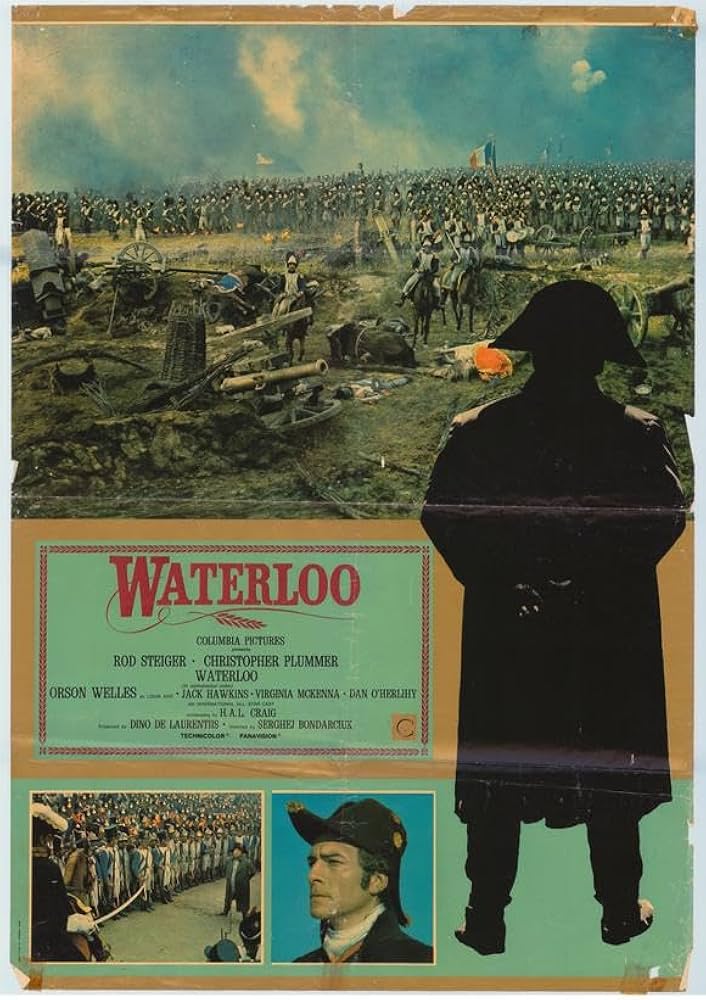
This was a,SOVIET UNION-ITALIAN co-production, directed by Sergei Bondarchuk, the director of the Soviet Union’s, 1965, “War and Peace”. The film is rumored to have run four hours in the Soviet Union, but that print is presumed “Lost”
The Main Cast:
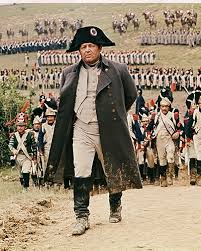
Rod Steiger portrayed “Napoléon Bonaparte“. Steiger had just starred as science fiction writer, Ray Bradbury’s, 1969, “The Illustrated Man”, and would follow this picture by co-starring with James Coburn in the Spahgetti Western, 1971’s, “Duck, You Sucker”.
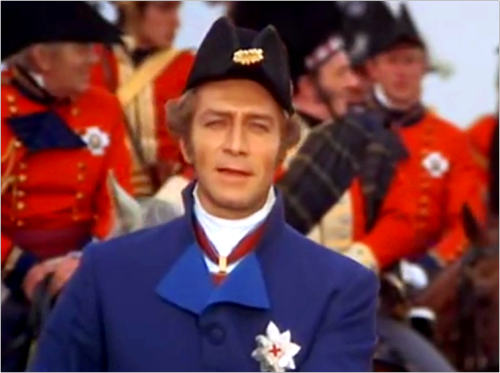
Christopher Plummer portrayed “Field Marshall Arthur Wellesley, 1st Duke of Wellington”. Plummer had just been seen in 1969’s, “The Royal Hunt of the Sun”, and followed this film with “Don Juan” and the “BBC’s Play of the Month”.
Orson Welles portrayed “King Lous XVIII of France”. He was seen in author Joseph Heller’s, 1970, “Catch-22”. Welles followed this picture with 1970’s, “The Deep”.
Jack Hawkins portrayed “Lieutenant-General Sir Thomas Picton”. Unknown to most movie viewers, but unfortunately very obvious here in “his” voice. Hawkins had his larynx removed in 1965, as a result of Throat cancer. For his last twenty-two motion pictures, with the actors approval either, Charles Gray, or Robert Rietti,were dubbing Hawkins’s lines in films, here it was Rietti.
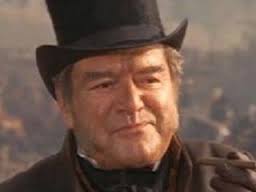
Dan O’Herlihy portrayed “Marshal Michael Ney, 1st Prince of de la Moskowa. 1st Duke of Eichingen”. He had just been seen in the Raquel Walsh, 1969, “100 Rifles”, and followed this feature film with 1972’s, “The Carey Treatment”.
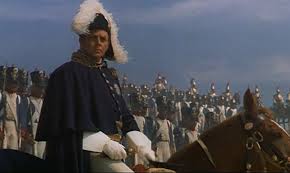
Rupert Davies portrayed “Colonel Alexander Gordon, 4th Duke of Gordon, Marquess of Huntly”. Davies was being seen on multiple television programs in guest appearances.
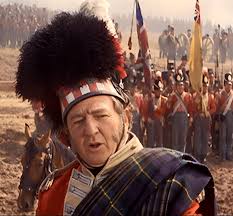
Virginia McKenna portrayed “Charlotte Lennox, Duchess of Richmond and Lennox“. McKenna had just been seen in 1970’s, “An Elephant Called Slowly”, and followed this picture by appearing on British television.
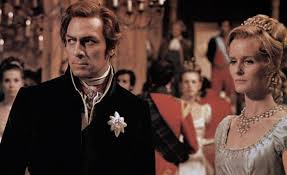
Three Interesting Factoids:
Unlike the debate over how many Soviet soldiers were used in Bondarchuk’s, “War and Peace”. The figures here are agreed upon. Close to a full 16,000 Soviet Soldiers were utilized to portray both armies, changing uniforms as the scene being shot required. For the Calvary sequences, representing once again both armies, a Full Brigade of Soviet Calvary was used. Months prior to the start of filming, the Soviet Soldiers were required to learn 1,815 drills, battle formations, and troop movements, used by both the French and British
There were some minor historical inaccuracies in the motion picture. Such as the Duchesses Ball, was held in a barn, and not the lavish ballroom of the picture, or that it was the son of the “4th Duke of Gordon”, who was present at battle, and not the Duke.
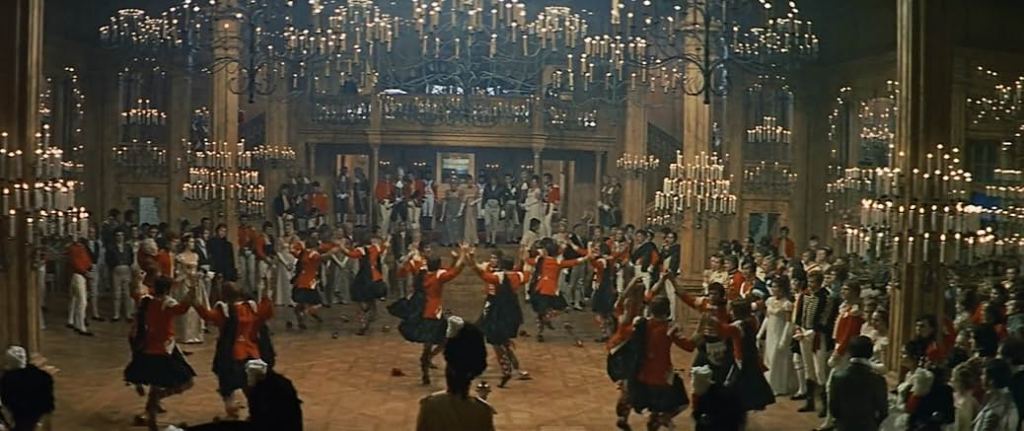
However, all the battle scenes are historically as accurate as possible.
There is one sequence unrelated to the actual battle that stays in my mind,and shows what a brilliant performance Rod Steiger gave as Napoleon. It is actually a long soliloquy, as he dictates multiple letters, to multiple scribes, all at the same time, a documented trait that Napoleon had.
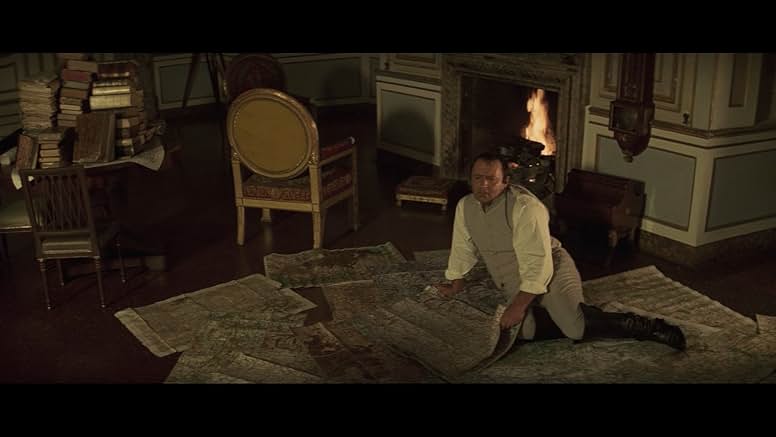
The Basic Screenplay:
This is pretty much a straight forward account of “The Battle of Waterloo”.
The feature opens with the above mentioned actual event, as “Napoleon Bonaparte”, on April 24, 1814, says farewell his “Old Guard”, and is exiled to “Elba”.
Cut to “King Louis XVIII”, receiving news that “Napoleon” has escaped exile on “Elba”, landed in France, soldiers are coming to him, and he is reforming his army.
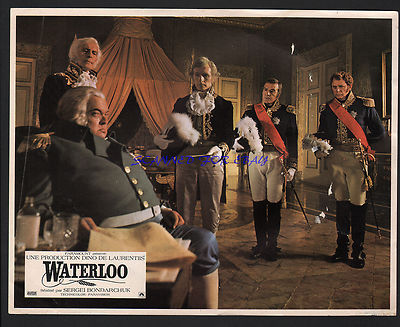
Cut to “Louis XVIII” fleeing France. followed by “Napoleon, and his few followers being blocked by a army led by “Marshal Michael Ney“, instructed to arrest him.
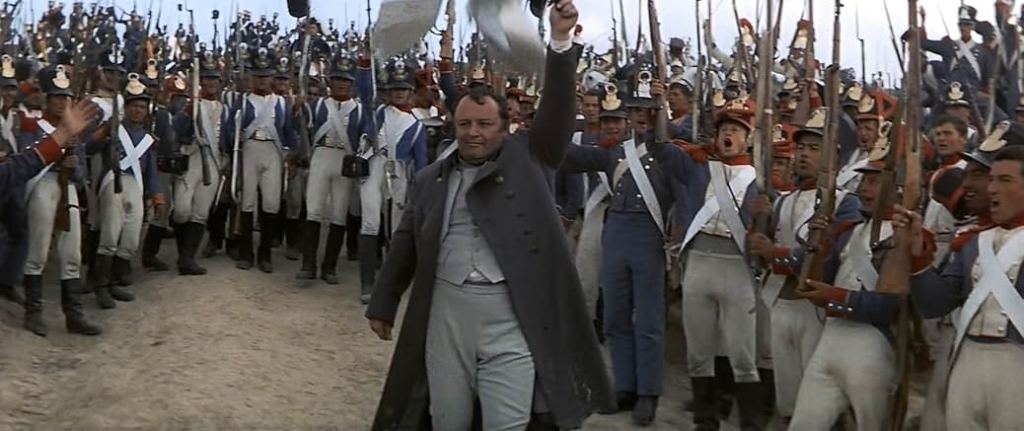
Instead “Ney” and his troops come over to “Bonaparte”. Cut to a Ball being given by the “Duchess of Richmond”, in Brussels, Belgium, for the “Duke of Wellington“, and his officers.
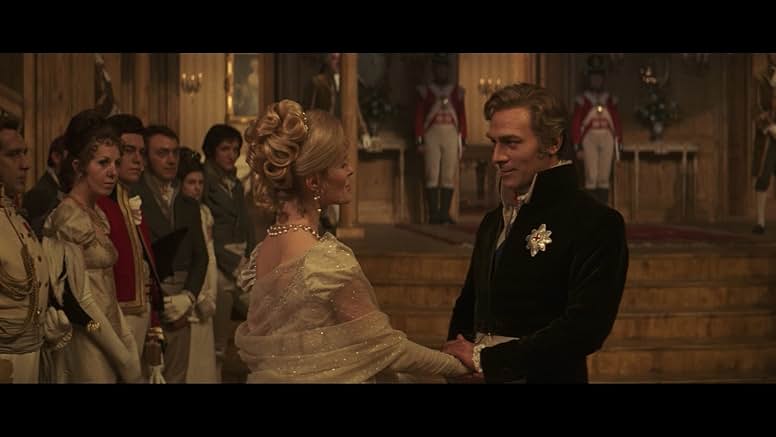
When the news of “Napoleon ” entering the Netherlands is received. That action, tactically drives a wedge between the British and Prussian armies. “Wellington” calls his staff together, in a room away from the ball, he tells his officers, that the time is now right for his counter offensive. That counter offensive will be at the town of “Waterloo”, located 10-miles south of central Brussels.
Before the main battle, two events take place:
“The Battle of Quatre Bras”, was at a strategic crossroads located at the town of “Quatre Bras”. “Marshall Ney’s” French army, on June 16, 1815, battled elements of the “Duke of Wellington’s” Anglo-Allied Army. Which was made up of soldiers from the “United Kingdom”, the “Netherlands”, the “Kingdom of Hanover”, the “Duchy of Nassau”, and the “Duchy of Brunswick”. The battle was a tactical victory for “Wellington”, but a strategic victory for “Ney”, because “Wellington” was prevented from going to the aide of “Graf (Count) Gebhard Leberecht von Blucher’s” Prussian Army.
“Ney’s” French strength was estimated as between 20,000 to 21,000. His killed, or wounded, is estimated as between 4,140 to 4,400.
“Wellington’s elements” were estimated at 32,000 to 34,000. His killed, or wounded, is estimated as between 4,800 to 5,600.
At the same time, “Graf von Blucher”, portrayed by Serghej Zakariadze, was engaged with “Napoleon Bonaparte”, at the village of “Ligny”. “The Battle of Ligny”, took place on June 16, 1815, “Napoleon Bonaparte” had a French force estimated at 62,882. His killed, wounded, and captured was estimated as between 8,300 to 12,000.
“Blucher’s” force was estimated at 83,417. His killed, and wounded, was estimated at 16,000, BUT he also had an estimated captured, or deserted, of 8,000.
Next, “Napoleon” has “Emmanuel de Grouchy, marquis de Grouchy”, portrayed by Charles Millot, take 30,000 men to prevent the Prussian advance from joining the British. “Napoleon” now takes command of the remaining French troops.
“Napoleon”, planned his major battle for June 17, 1815, but heavy rain fell during the day, and there was a torrential down pour during the night≥ However, the storm stopped by the following morning.
Next, on JUNE 18, 1815, “Wellington” and “Napoleon” meet in “THE BATTLE OF WATERLOO”. Which takes up approximately 2/3rd’s of a a 2-hour-and-8-minute motion picture.
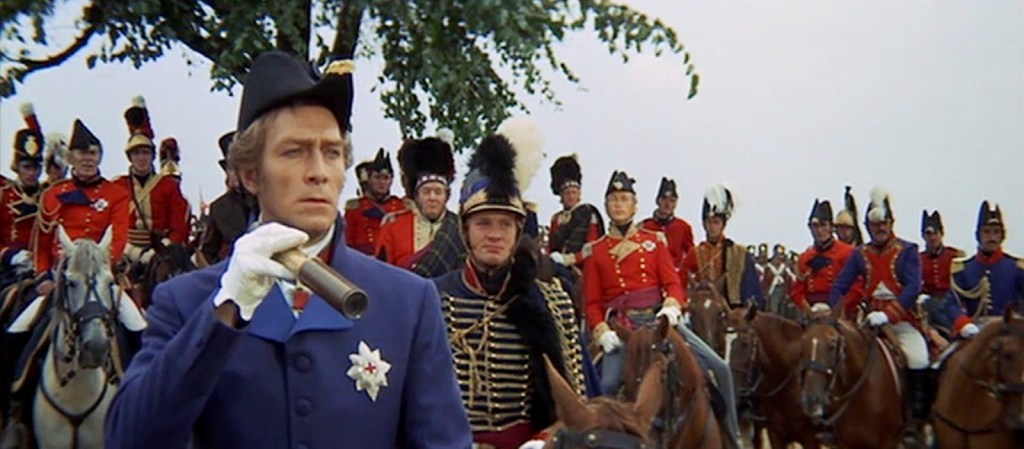
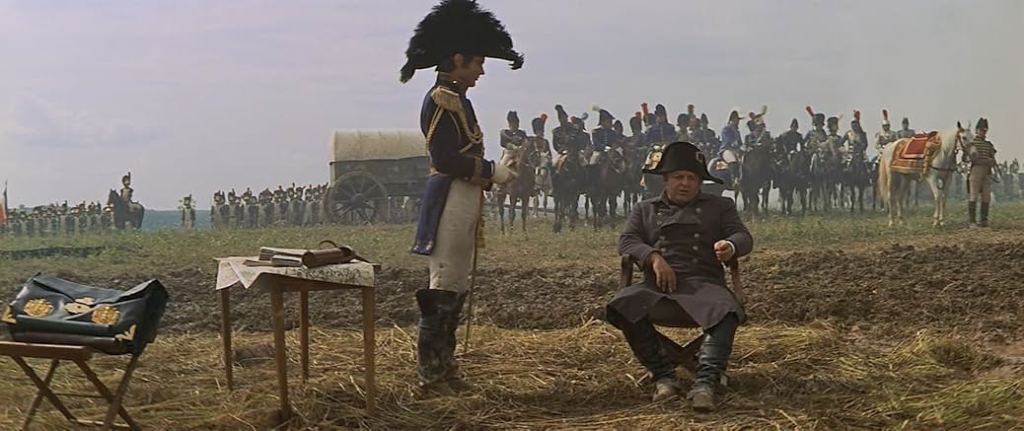
“Wellington’s” officers complained vigorously about having their troops at the top of a hill looking down on the good, fighting, flat land, between the hill, and “Napoleon’s” troops.
“Wellington” reply, was that he had personally studied this location, and even went there to view it, HIS DECISION STOOD!
Meanwhile, “Napoleon” launches an attack on one of two advance defensible flanks set up by “Wellington”, the “Château d’Hougoumont“, seen restored below.
“Napoleon” believed that “Wellington” would move his force, if he “teased” him into believing this location was the main attack by the French. However, the “Duke” just ignored the tease, and refused to divert his main force, as the French Emperor wanted.
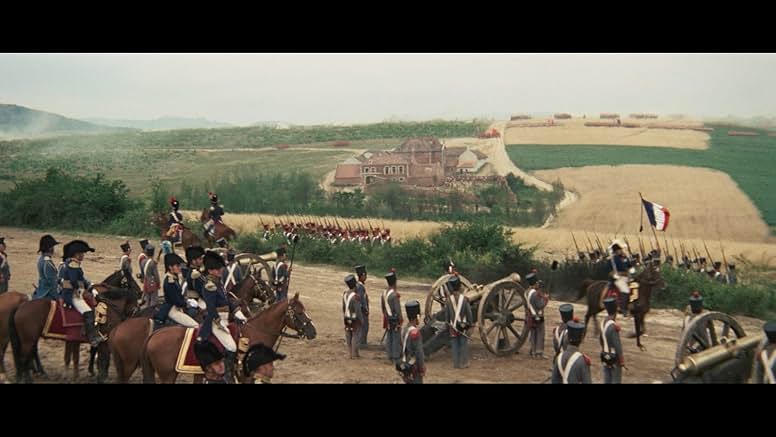
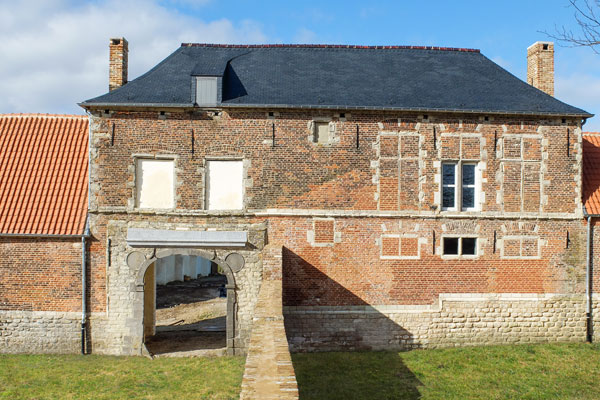
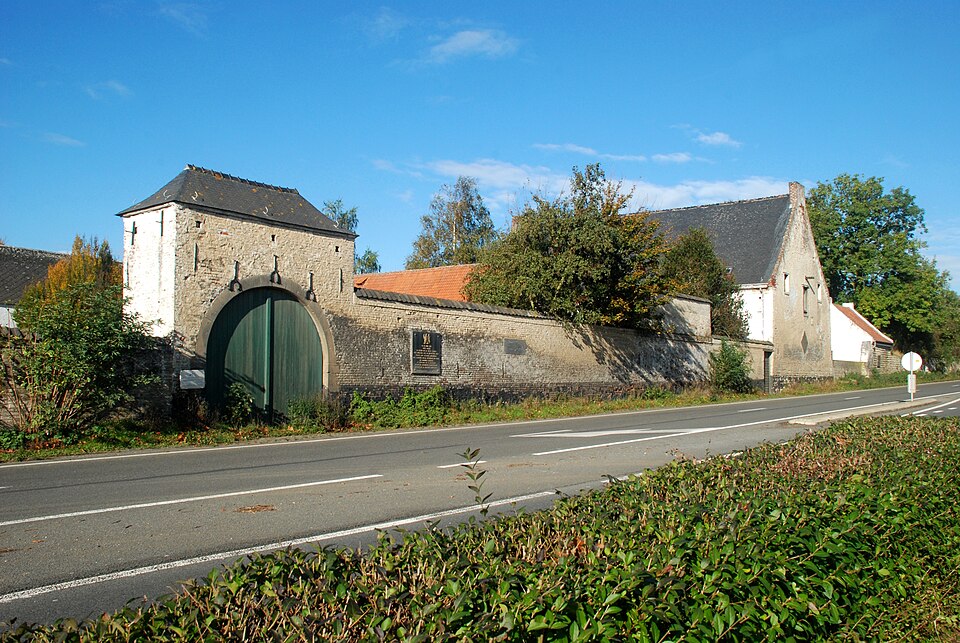
At the same time, the “Château d’Hougoumont” was being attacked. “Wellington’s” second flank, at “La Haye Sainte (The Holy Hedge)”, possibly named after “Jesus’s crown of thorns”, seen below today, is under heavier attack. “La Haye Sainte” was defended by 400 of the “King’s German Legion”. These were British troops of German origin. The battle would continue for most of the day.
“Lieutenant-General Sir Thomas Picton” is sent to plug a gap, when the Dutch brigade is routed by the French.
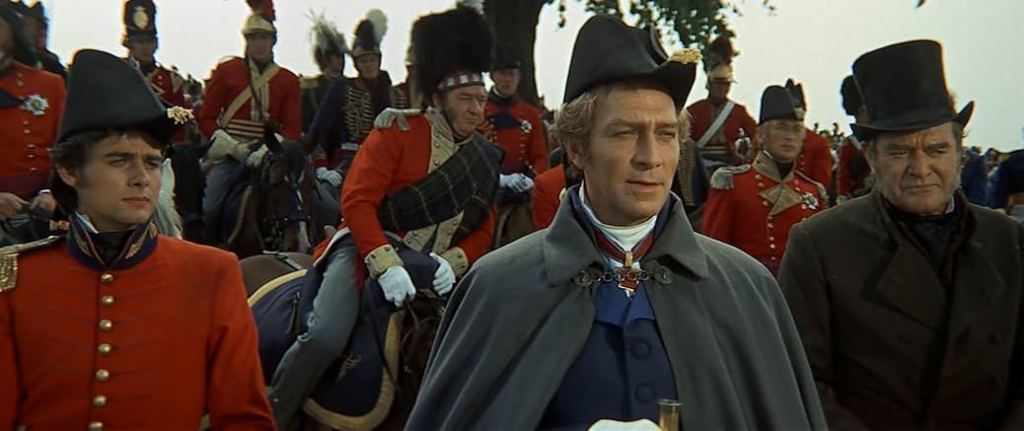
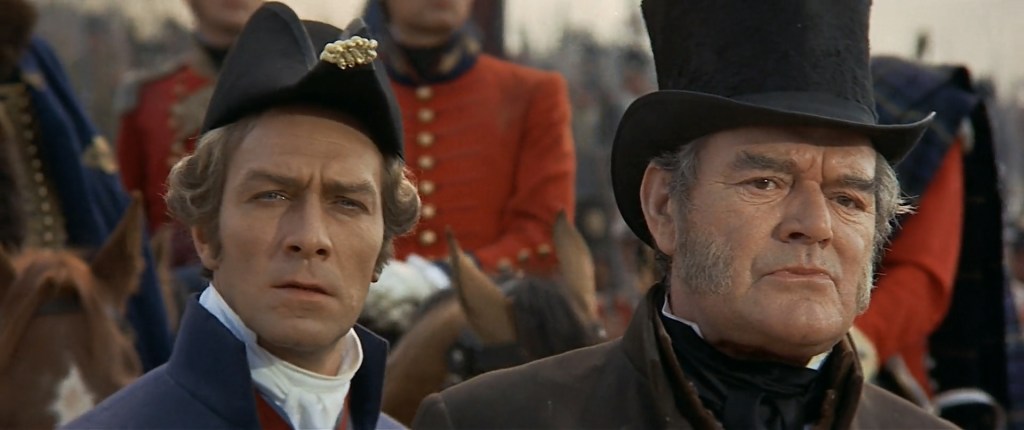
“Picton’s” action is successful, but the “Lieutenant-General” is killed. “Major General Sir William Ponsonby”, portrayed by Michael Wilding, leads a cavalry charge against the French canon.
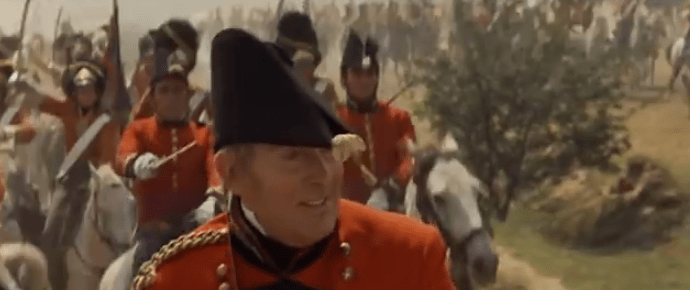
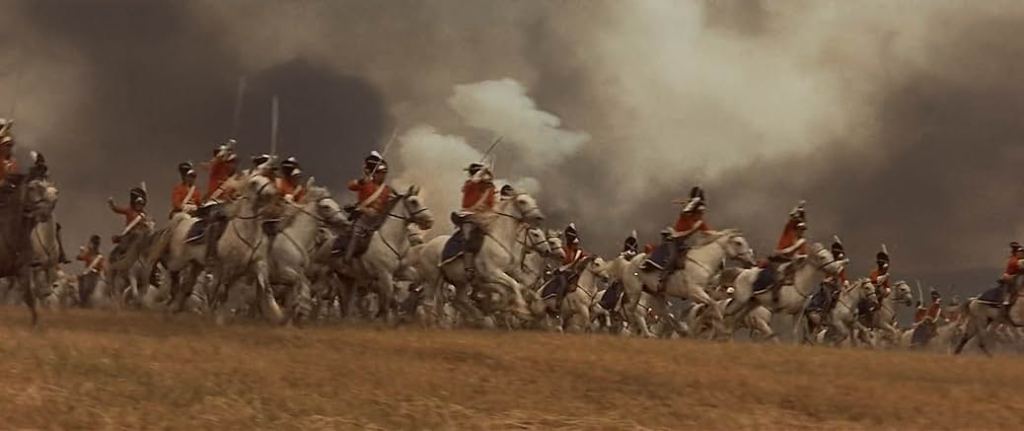
“Ponsonby” becomes isolated from the main allied troops, is surrounded by French cavalry, and cut down.
Both sides spot troops emerging from the east, to “Wellington”, they are “Grouchy’s”, to “Napoleon”, they are “Blucher’s”.
Suffering from a stomach ache, “Napoleon” momentarily withdraws from the battle, and leaves “Field Marshall Ney” in complete command of the French troops. At the same moment, the order is given for “Wellington’s Forces” to retire 100 paces. This would be known as the “Reverse Slope Tactic”, as the order enabled the British forces to become unseen by the spotters for the French cannons and obtain vital cover. REASON ONE DEMONSTRATED: As to why “Field Marshall Arthur Wellesley, 1st Duke of Wellington”, chose the hill instead of the flat open ground below it to fight “Napoleon”
Then there was REASON TWO: which would be demonstrated by “French Field Marshall Ney”.
When “Ney” observed “Wellington’s Force retiring 100 paces”, he made a major mistake. “Marshall Ney” believed that the “Duke of Wellington was WITHDRAWING from Waterloo”.
Before, “Napoleon” could react, the “Field Marshall” ordered the French Cavalry to charge. The fields used by the French cavalry were still soaked from the rain storm, and the horse’s couldn’t properly charge in the thick mud. Some were falling, injuring their legs, others just became stuck in that mud. Meanwhile, the British infantry squares started continuous firing at “Marshall Ney”, and the horse soldiers.
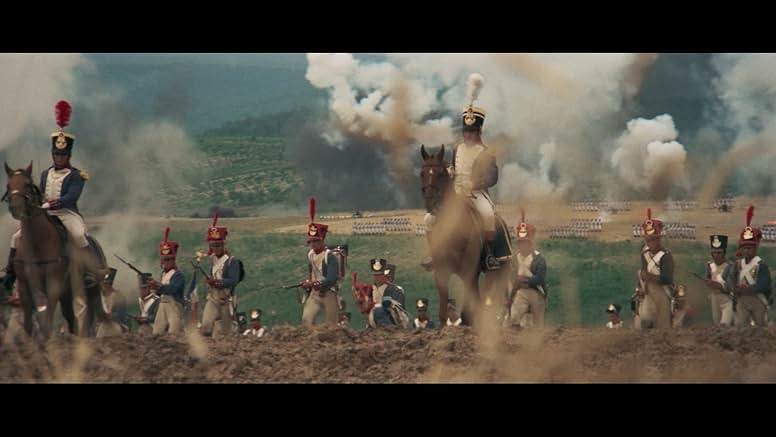
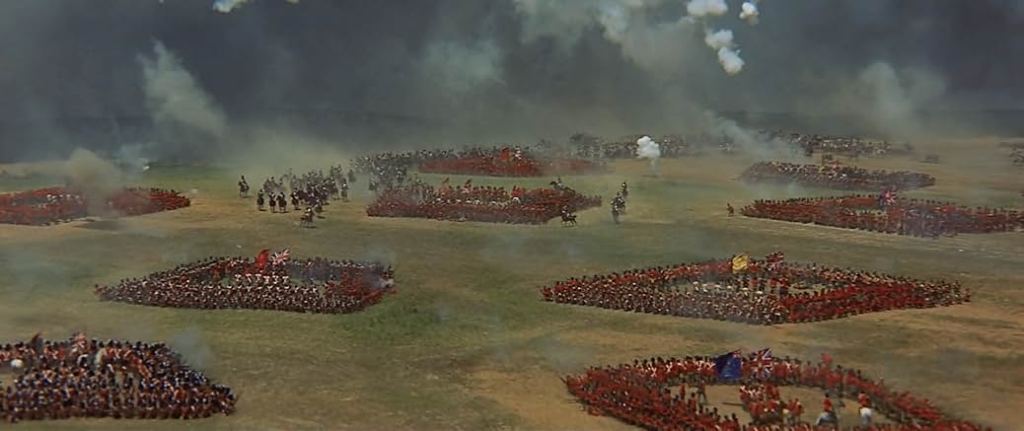
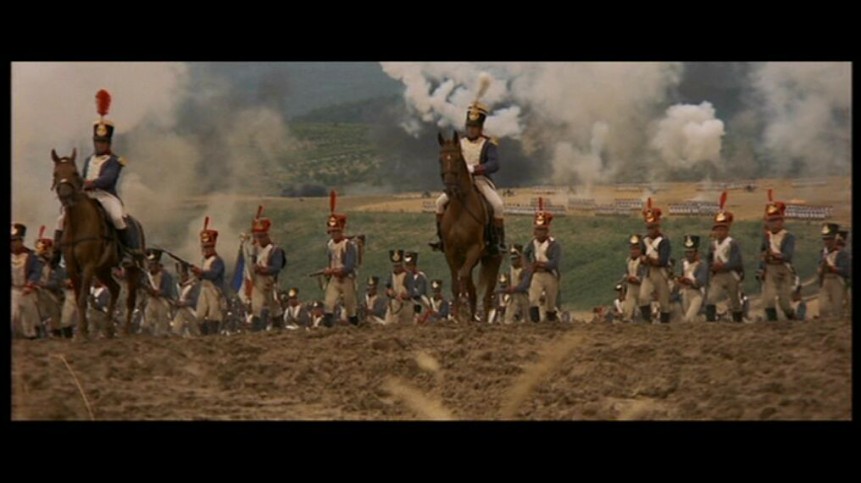
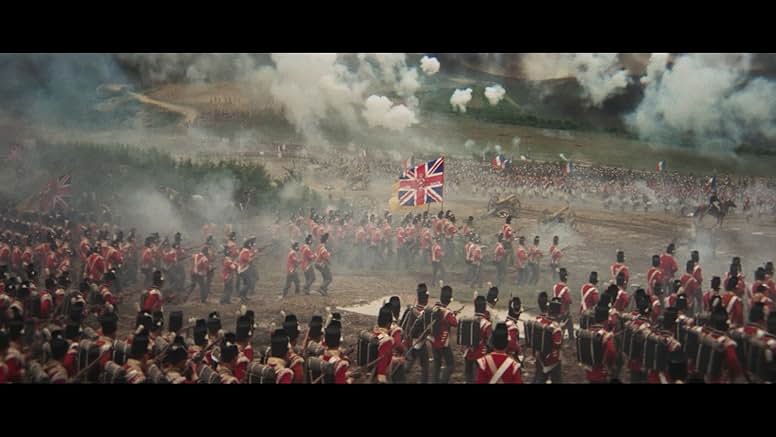
While, “Ney’s” charge was taking place, “La Haye Sainte” falls, and despite his losses from the “British Squares”. “Emperor Napoleon Bonaparte”, seemingly recovered from his stomach ache, decides to release “The Imperial Guard”, estimated to be between 13,000 and 14,000 soldiers with their own artillery. This unit was had been selected by, and was under “Napoleon’s” direct command. “The Imperial Guard” would deliver the decisive blow on “Field Marshall Arthur Wellesley, 1st Duke of Wellington’s” forces.
Hiding in the tall grass had been the “1st Foot Guards (Grenadier Guards)”, under the command of “Sir Peregrine Maitland”, portrayed by Vasili Plaksin. They delivered a devastating point-blank volley against the “Guards”. For the first time in its history, the French “Imperial Guard” breaks and the allies win the battle.
“Napoleon” had been correct, as “Graf Gebhard Leberecht von Blucher” and the Prussian Army arrive at “Waterloo” and the battle turns,
The motion picture ends with “The Duke of Wellington” riding through the piles of the dead of both sides.
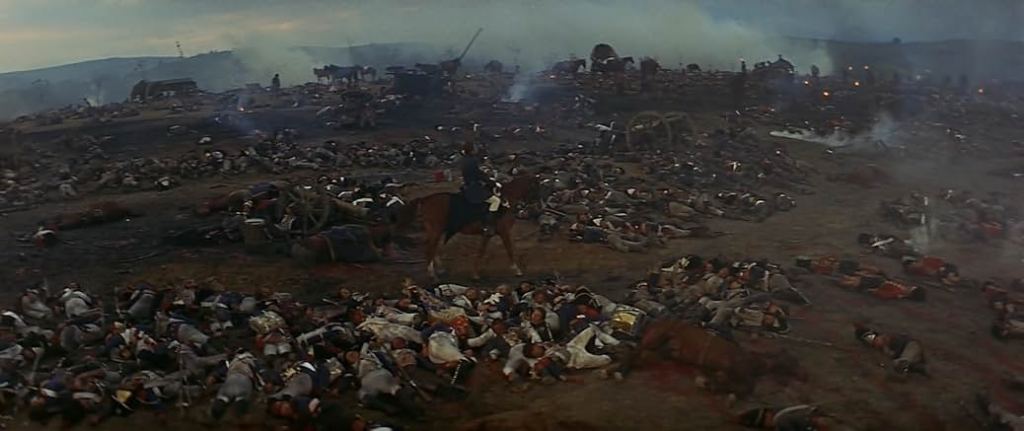
While, “Napoleon’s” Marshall’s and General’s urge him to return to France, fade out.
After “Waterloo”, “Emperor Napoleon” returned to Paris, but found the legislature against him. On June 22, 1815, he abdicated in favor of his son. He left Paris, and settled in “Josephine’s”, “Chateau de Malmaison”. By June 28th, the Prussian Army was just north of Paris., and “Napoleon” heard that the Prussians had orders to capture him, dead or alive. He fled to Rochefort, Charente -Maritime, on the coast in southwestern France. He planned to escape to the United States, but found the port was blockaded by British ships of the line. “Napoleon” surrendered to “Rear Admiral of the Red, Sir Frederick Lewis Maitland, on the “HMS Bellerophon”.
Most motion pictures made about “Napoleon” on “Saint Helena Island” are very non-historical in fact. One is a psychological drama about “Napoleon” reliving his life, another has him escaping to the United States, and the State of Louisiana. Where he is married and raises a family until his death. While a third, has “Napoleon” switching clothes with a deck hand on one of the supply ships to “Saint Helena”. Next, making his way to Paris, where he plans to reclaim the throne.
I return to the German Cinema for my final look at “Napoleon Bonaparte” on film, and his final years on “Saint Helena”.
Napoleon auf Sankt Helena (Napoleon at Saint Helena) released in Germany on November 1, 1929
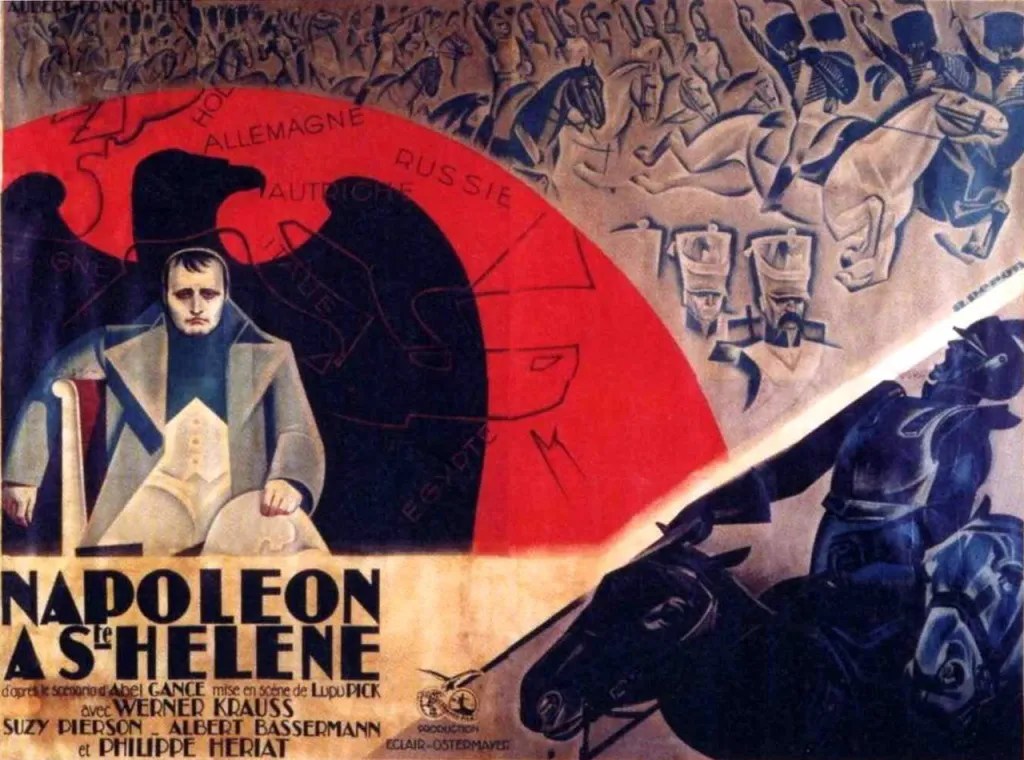
Werner Krauss portrayed “Napoleon Bonaparte”, if you do not recognize his name. You’ve probably seen, or at least heard of the German expressionist film from 1920. In which, he portrayed, the title character in, “The Cabinet of Dr. Caligari”.
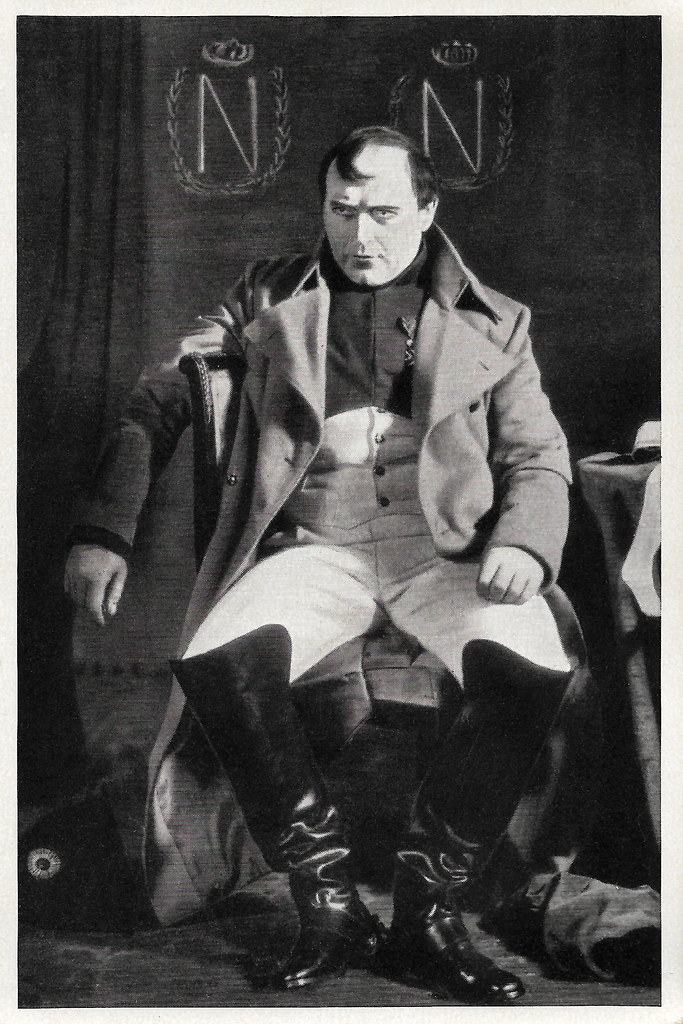
Albert Bassermann portrayed the other central character in any film about “Saint Helena”, “Lieutenant-General Sir Hudson Lowe”, “Napooleon’s” jailer on the island.
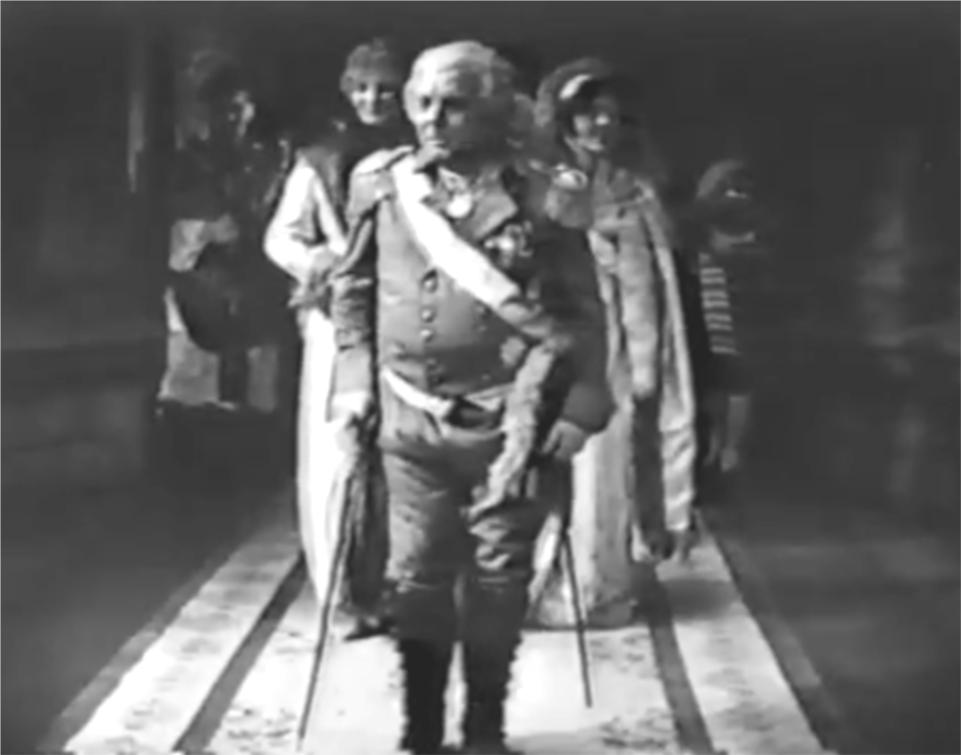
The screenplay was based upon a story by a familiar name, Abel Gance. Brought to the screen by Willy Haas, and Lupu Pick, who also directed the motion picture.
However, the original finished screenplay, was, “Part Six”, of Abel Gance’s life and career of “Napoleon”. Lulu Pick took Gance’s, much longer, screenplay, and reduced it to what was seen on the German screen. What was missing were “Part Two” through “Part Five”, in any form, to complete what was started, by Gance, with his, 1927, “Napoleon”, I started this article with.
The silent picture focuses on the last days in the life of “Napoleon Bonaparte”, seen below, surrendering to the British.
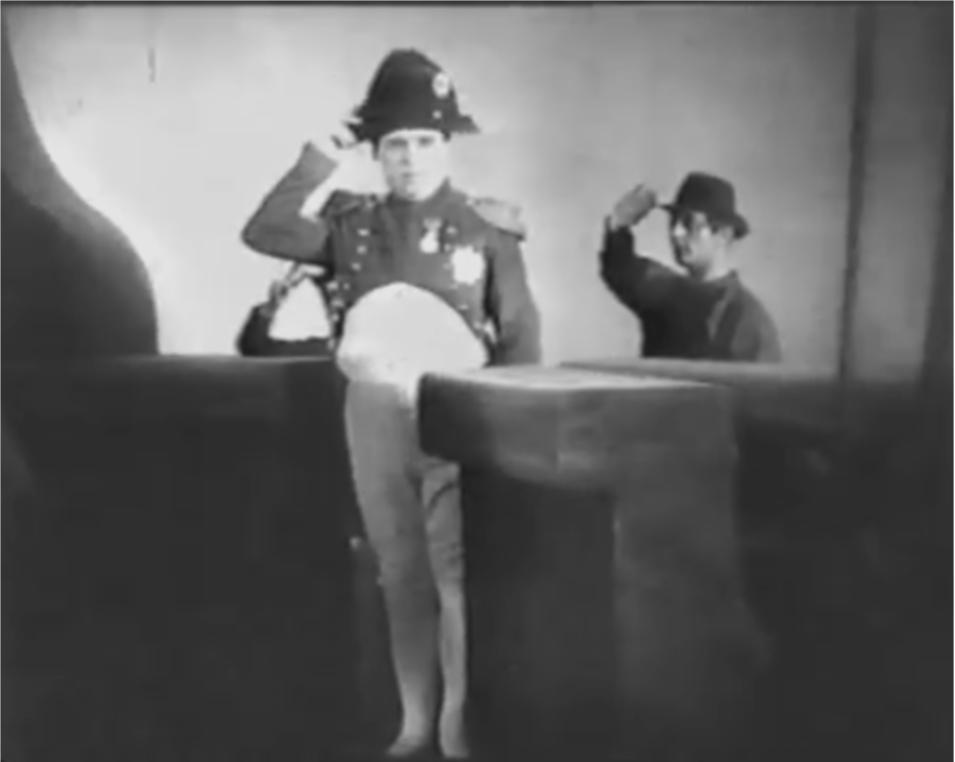
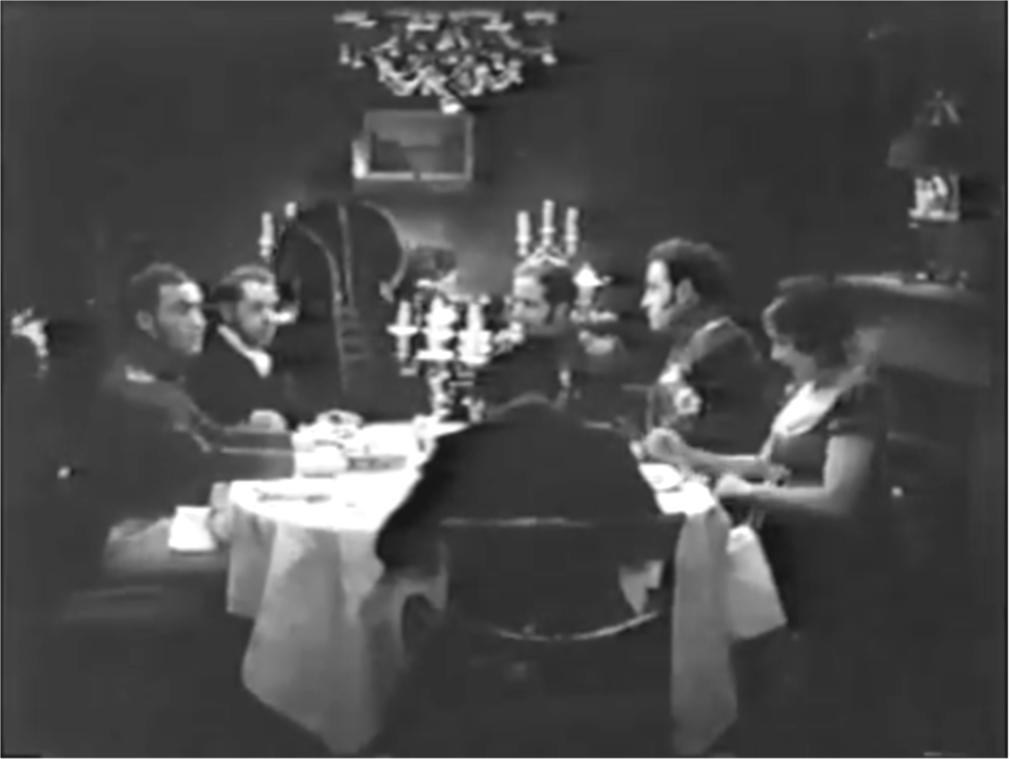
All I could determine is that the film was historically accurate, but the screenplay’s pace, by Lupu Pick, was slow. Otherwise, I could not find a complete description of the screenplay. However, the interaction between “Napoleon” and “Lowe”, is described as a “Game of Chess”. Also, the picture does show the fictional interaction of the others, estimated at 21 to 27, that accompanied their “Emperor” to “Saint Helena”, and stayed with him at “Longwood House”.
Facts:
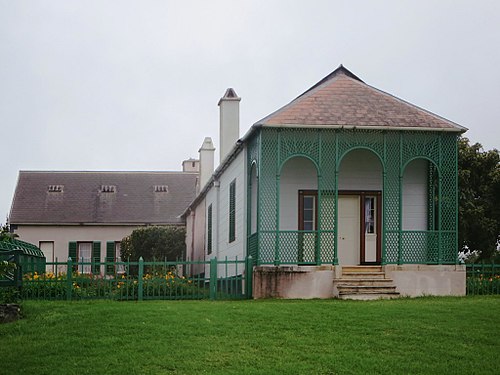
“Napoleon’s” left Portsmouth, England, August 7, 1815, on the “HMS Northumberland”, and the voyage to Saint Helena, a volcanic tropical island, in the South Atlantic Ocean, off of the African coast, took 10-weeks, arriving on October 15, 1815. Contrary to several movies about his time on Saint Helena, he never left it, and died at Longwood, Saint Helena, on May 5, 1821. The one-time “Emperor of France”, was 51-years-old. Below is a, September 2014, photo of “Longwood House”.
 THE FILM MADNESS OF FRADKIN-STEIN
Leave a comment