Most people remember the scene where Ingrid Bergman walks over to Dooley Wilson, and asks the piano player to: “PLAY IT AGAIN SAM”.
EXCEPT, that scene never happened.
However, it was a fact, that “EVERYBODY COMES TO RICK’S”.
This is a look at the making of a 1942, Classic Second World War Love Story, that actually began during, the Summer of 1938.
One tends to associate Vienna, Austria, with the music of Johann Strauss II, Franz Schubert, Ludwig van Beethoven, Amadeus Mozart, and other composers.

Above, the Johann Strauss Monument, and below, the State Opera House, in Vienna, Austria.

Murray Burnett was an English teacher for New York City’s, “Central Commercial High School”.
IN THAT SUMMER OF 1938, with his wife Frances, Murray, left on a vacation to the French Riviera, with a planned prior stop in Antwerp, Belgium, to visit Francis’s stepfather and some other of her relatives. Arriving in Antwerp, Frances’s stepfather had a somewhat unusual request from her extended family in Austria. Would the couple detour to Vienna, and SMUGGLE out of the country, the money and jewels of her Jewish relatives?
The problem for the couple to consider, was that:
The city of the “Waltz Kings”, had become one of German occupation since March.
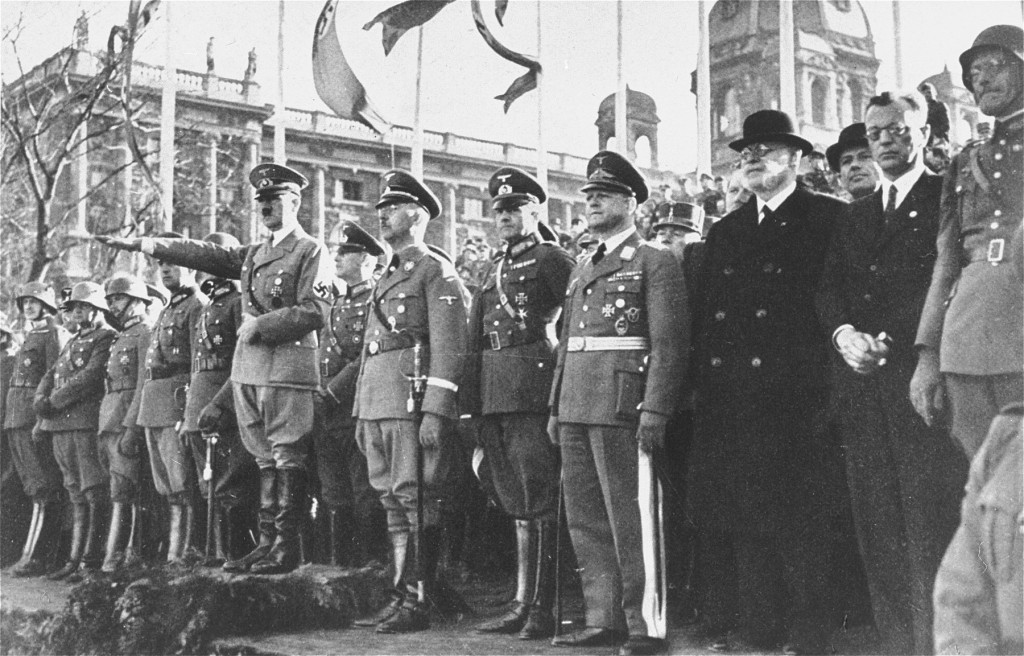
Above, Adolph Hitler in March 1938, on the streets of Vienna, Austria.
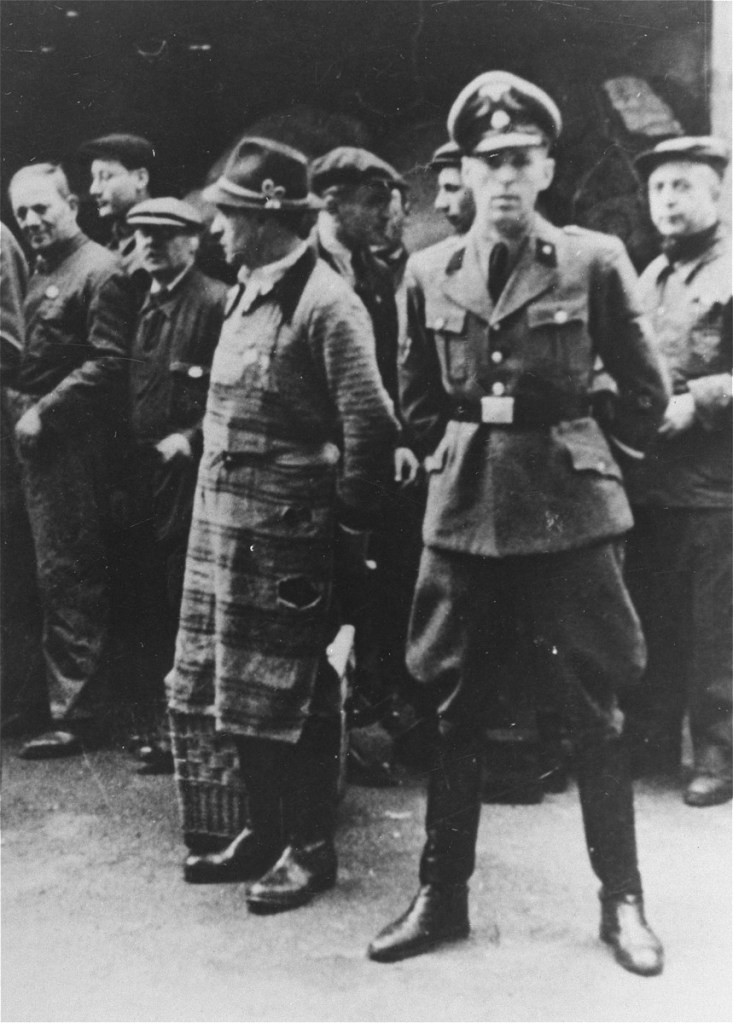
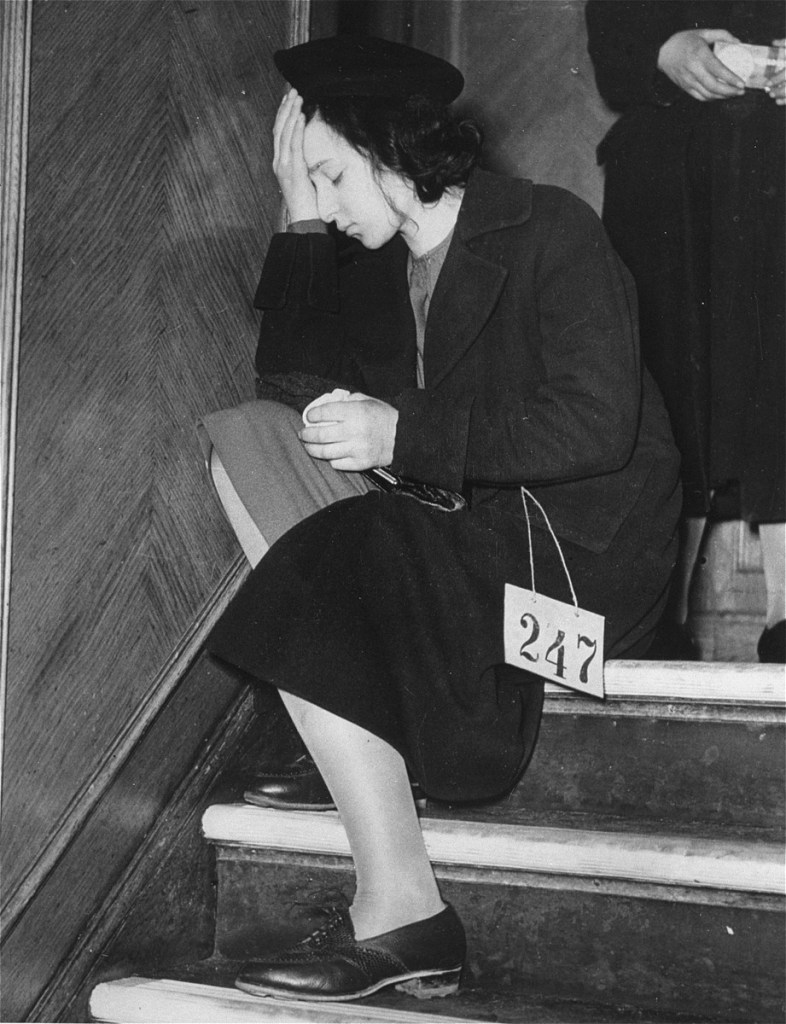
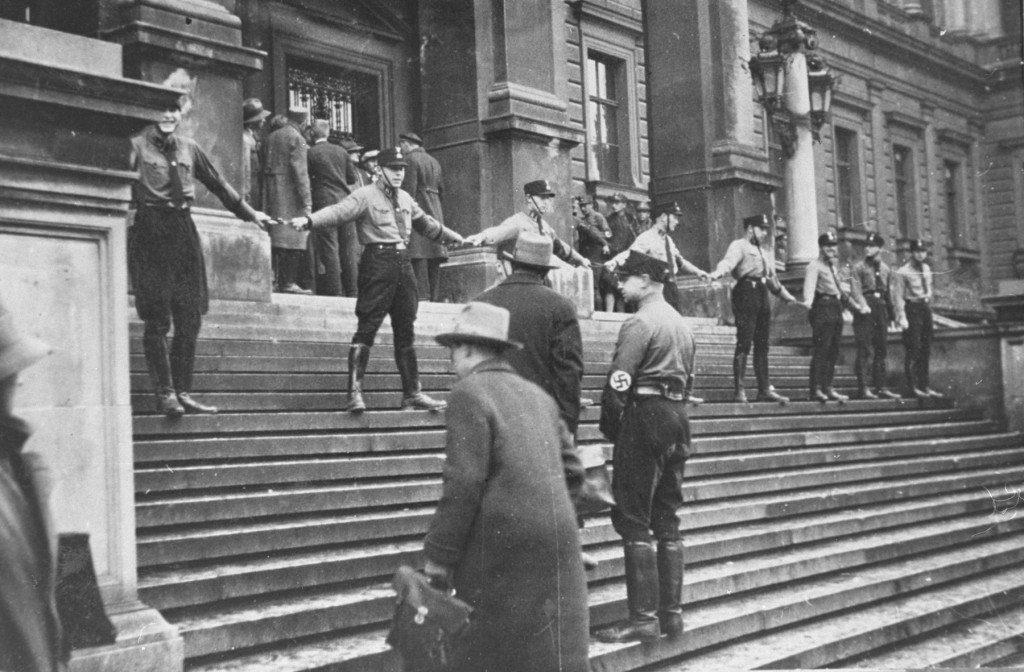
However, as American Citizens, they could travel freely without facing the strict asset confiscation laws imposed on Jewish locals. The two American’s agreed to what Frances’s Belgium stepfather requested. They traveled to Vienna, met her extended family, and took their money and jewels. What happened to the Austrian members of Frances Burnett’s family appears unknown, but wearing diamond rings on all his fingers, and Frances wearing a fur coat and other items. Unquestioned, Murray and his wife smuggled the money and valuables out of Austria. It is known, that Frances’s stepfather and her Belgium relatives did get out of the country, before Hitler invaded in May 1940.
On their way, now, to the French Riviera, the couple stopped in Cap-Ferrat, in the South of France.


There, at what Murray would call a “seedy cafe”, “La Belle Aurore (the Beautiful Dawn)“. The two American tourists listened to a black, American, jazz- pianist, playing to a mixed crowd of French citizens, Nazi’s, and refugees from the German’s, seeking a means to get to either England, or the United States. France would not be invaded until June 1940, and explained why “Cap-Ferrat” was neutral territory at this time.
Next, Murray and Francis stopped in Bournemouth, England, and he started making notes for an anti-Nazi play.

Returning from their trip, High School English teacher Murray Burnett, met with an older writer, some say by nine-years, he had been introduced to by the New York Theatre Community, which the two were apart of, her name was Joan Alison.
Their first play started to be written in 1938, “One in a Million”, an anti-fascist spy thriller. It was completed in early 1939, and the two authors started “shopping around” for someone to produce it. It took until June 1941, for the two to find someone interested in producing the play, Otto Preminger. His last film as a credited director, was 1937’s, “Danger – Love at Work”, starring Ann Sothern and Jack Haley. His last film as a producer, was 1931’s, “Die große Liebe (The Great Lov)e”, actually a movie made in his native Austria. However, nothing came from this, because the United States was still officially neutral in the Second World War, and Broadway producers feared the consequences of producing an anti-Nazi play, both from our government and the many supporters of the Nazi Party in the country.
While, Joan and Murray were shopping “One in a Million” around. The two took up writing another anti-fascist play based upon Murray’s notes. However, it wouldn’t be until the Summer of 1940, that “EVERYBODY COMES TO RICK’S” was completed. Murray Burnett had a favorite song in college. Murray would drive his roommate, and others at “Cornell University”, crazy with his repeated playing of Herman Hupfeld’s, 1931, “As Time Goes By”. That song, as did the black American piano player from the “La Belle Aurore“, became intricate parts of the new play.
Which now meant, that Burnett and Ailson, had two plays they were shopping around for a producer at the same time.

Above, Murray Burnett working for CBS radio, circa 1953, and below, New York radio host and writer, Joan Alison, unknown date.

Her name was Irene Levine, she was a talent scout, and in 1941, was an assistant editor in the “Story Department” for “Warner Brothers Studio”. When “Casablanca” was initially released, she had married real estate developer, Aaron Diamond, and became Irene Diamond.
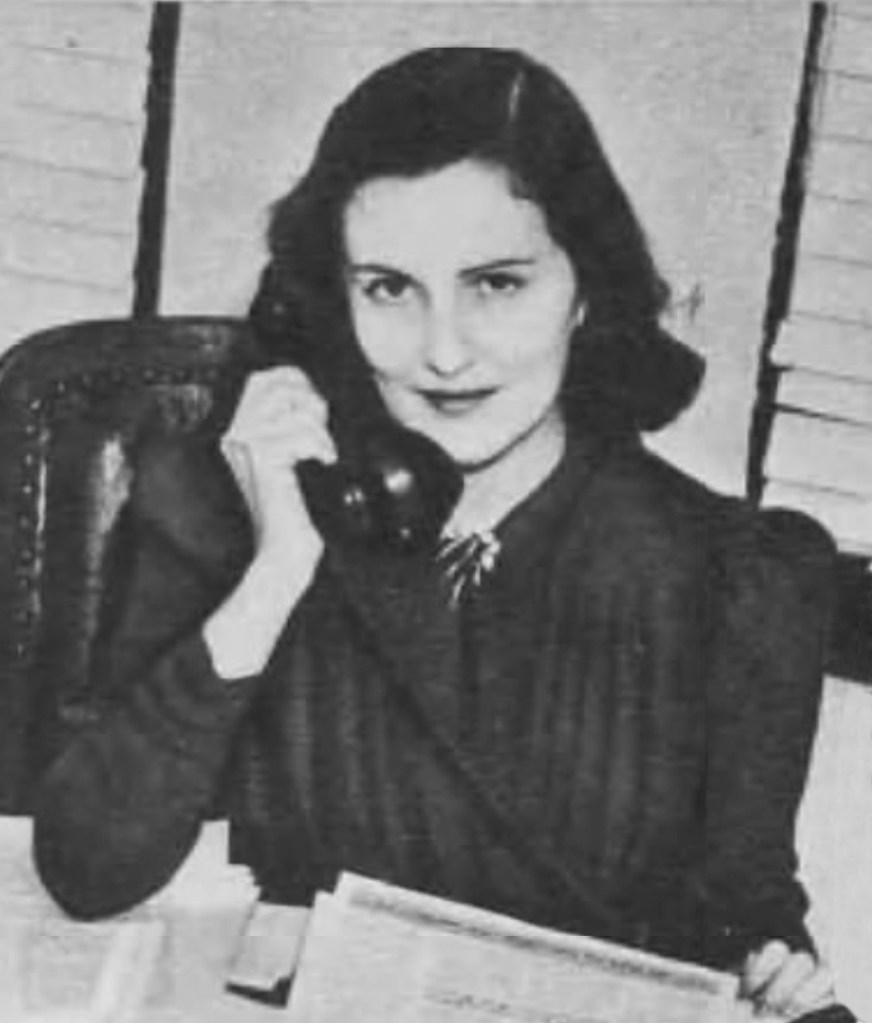
Part of her responsibilities was working closely with Aaron Blum Wolowicz, now known as Hal B. Wallis.
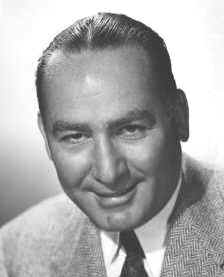
Irene, had recommended that Hal B. Wallis acquire the rights to the 1934 play, “Dark Victory”, by playwrights George Brewer, Jr. and Bertam Bloch. Her recommendation became the 1939, Bette Davis, motion picture. Davis lost to Vivian Leigh for the “Best Actress Academy Award”. Leigh was in a little picture called, “Gone with the Wind”. Another of Irene’s recommendations,was for Wallis to remake the “Warner Brothers”, 1931, “The Maltese Falcon”, but with staff writer John Huston, also as director.
Irene Levine, had been in New York City during 1941, and was one of the people that read the Burnett and Alison, unpublished, a critical point that I will mention later, “Everyone Comes to Rick’s”. It was Irene Levine, that recommended to Hal B. Wallis, that “Warner Brothers”, acquire the play, and the two playwright’s received $10,000 (as of this writing equal to $227,178), each for their work.
The next step for Wallis, was to assign screenplay writers, to turn the play into a motion picture script. That job went to three credited writers, and one uncredited writer, for the no longer, “Everyone Comes to Rick’s”, but, personally changed by Hal B. Wallis, to “CASABLANCA”.
The three credited screenplay writers were:
Julius J. Epstein, who would write 74-screenplays between 1934 and 1983. Among his other films are 1941’s, “The Man Who Came to Dinner”, 1941’s, “The Strawberry Blonde”, and 1942’s, “Yankee Doodle Dandy”.
Philip G. Epstein, (Julius’s twin brother), his 8-screenplays include the comic team of Bert Wheeler and Robert Woolsey’s, 1936, “Mummy’s Boys”, the Barbara Stanwyck, screwball comedy, 1938’s, “The Mad Miss Manton”, and, with Julius, the Bette Davis and Claude Rains, 1944, “Mr. Skeffington”.
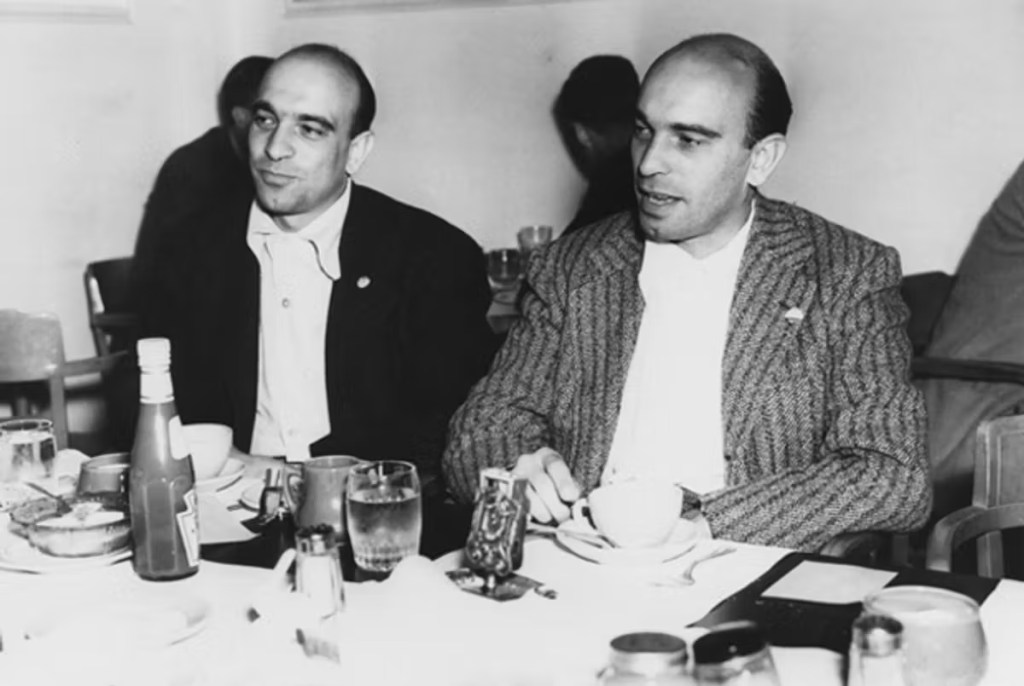
Above, Julius on the left, and Philip Epstein.
Howard Koch wrote 25-screenplays, and the script for Orson Welles’s, 1938, radio broadcast of Herbert George “H. G..” Wells’s, “The War of the Worlds”. His screenplays included Errol Flynn’s, 1940, “The Sea Hawk”, Gary Cooper’s, 1941, “Sergeant York”, but the one that got him into trouble, after the Second World War, with the “House Committee on Un-American Actives”, was 1943’s, “Mission to Moscow”. Which he wrote at the request of Jack L. Warner. The picture was a biographical story about the First American Ambassador to the Soviet Union, Joseph E. Davies, portrayed by Walter Huston. Unfortunately, the story painted a positive picture of both Joseph Stalin and the Soviet Union. Which from December 7, 1941 until the Japanese surrender on September 2, 1945, were an ally of the United States. The “HUAC” committee accused Howard Koch of being a “Communist”, once again a bad thing, and he was “Blacklisted” by the American motion picture industry, including, “Warner Brothers”, in 1951. Howard Koch and his wife Anne, left the United States and went to work in the United Kingdom’s film industry.
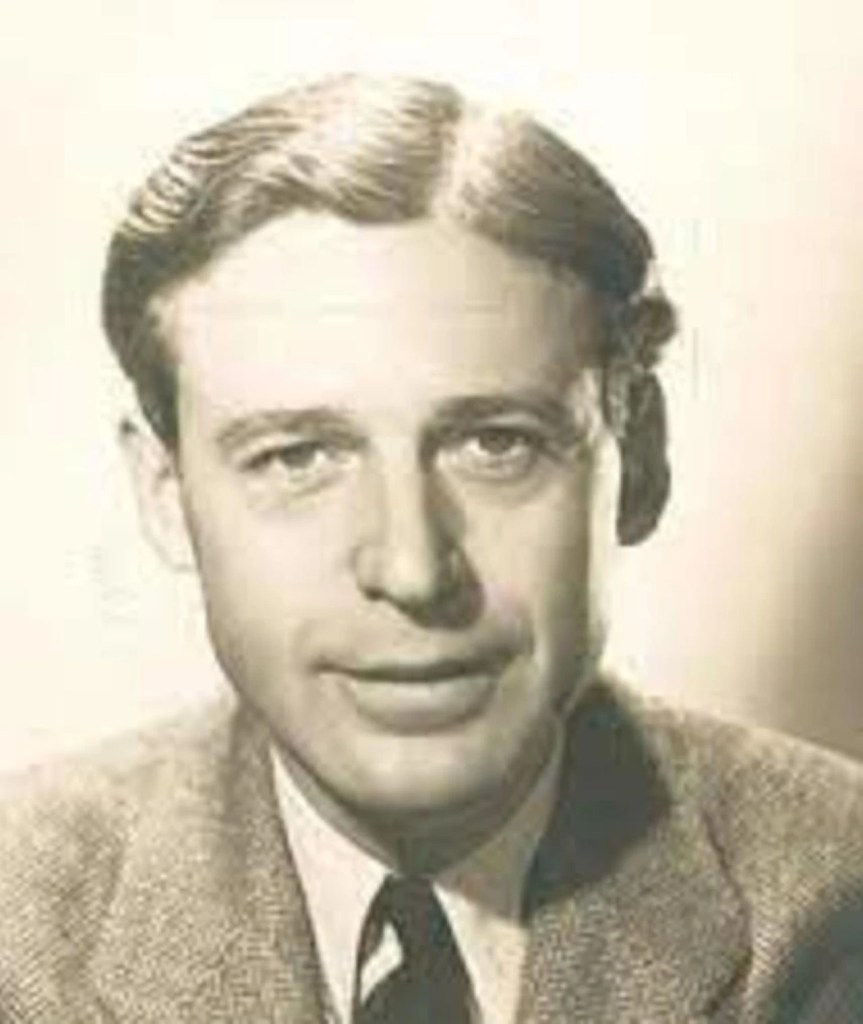
The one uncredited screenplay writer was:
Casey Robinson, who, between 1927 and 1975, wrote 82-screenplays. These included the Errol Flynn and Olivia de Havilland, 1935, “Captain Blood”, the 1939, Bette Davis, “Dark Victory’, and the Gary Cooper and Ingrid Bergman, 1945, “Saratoga Trunk”.
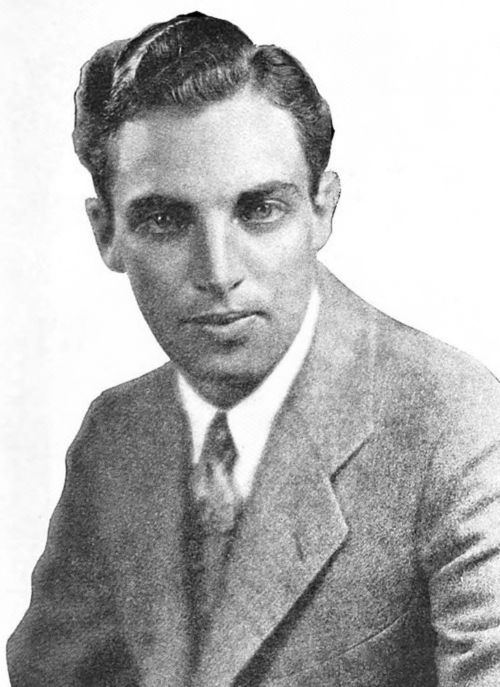
The four writers were given specific instructions, by Hal B. Wallis, about changes to certain characters in “Everyone Comes to Rick’s”. When I speak to the main roles, I will give my reader those character changes, if any, and why they were made.
Producer, Wallis, also requested that the four writers, watch the “Warner Brother’s”, box office competitor, “Metro-Goldwyn-Mayer’s”, 1938, “Algiers”, for the “Tone“, he was looking to get into the story.
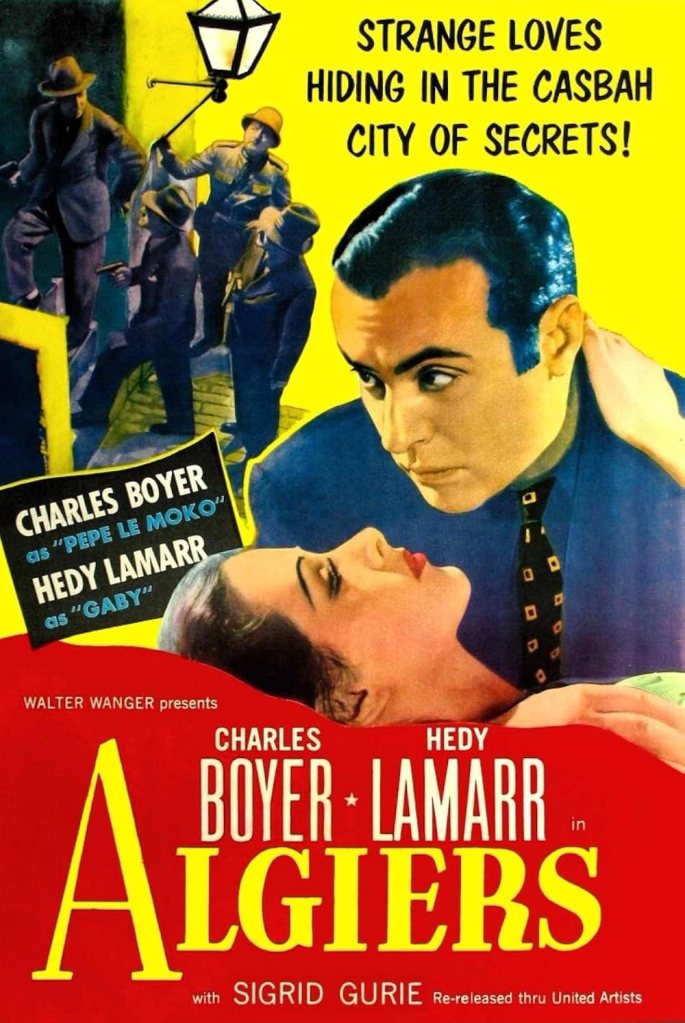
At the time of this writing, the following link takes my reader to Charles Boyer and Hedy Lamarr in 1938’s, “Algiers”:
https://ok.ru/video/1957687462530
The same instructions given to the four screenplay writers would be passed onto the motion picture’s director, as yet assigned. Because, Hal B. Wallis, wanted William Wyler to direct, but Wyler was unavailable. “Mrs. Miniver” had finished filming on April 1, 1942, at “MGM”, and Wyler was in post production. He was also to report as a, Major, in the “Army Air Corps Photo Intelligence Unit”, upon completion of post production. While “Casablanca” was scheduled to start filming on May 25, 1942.
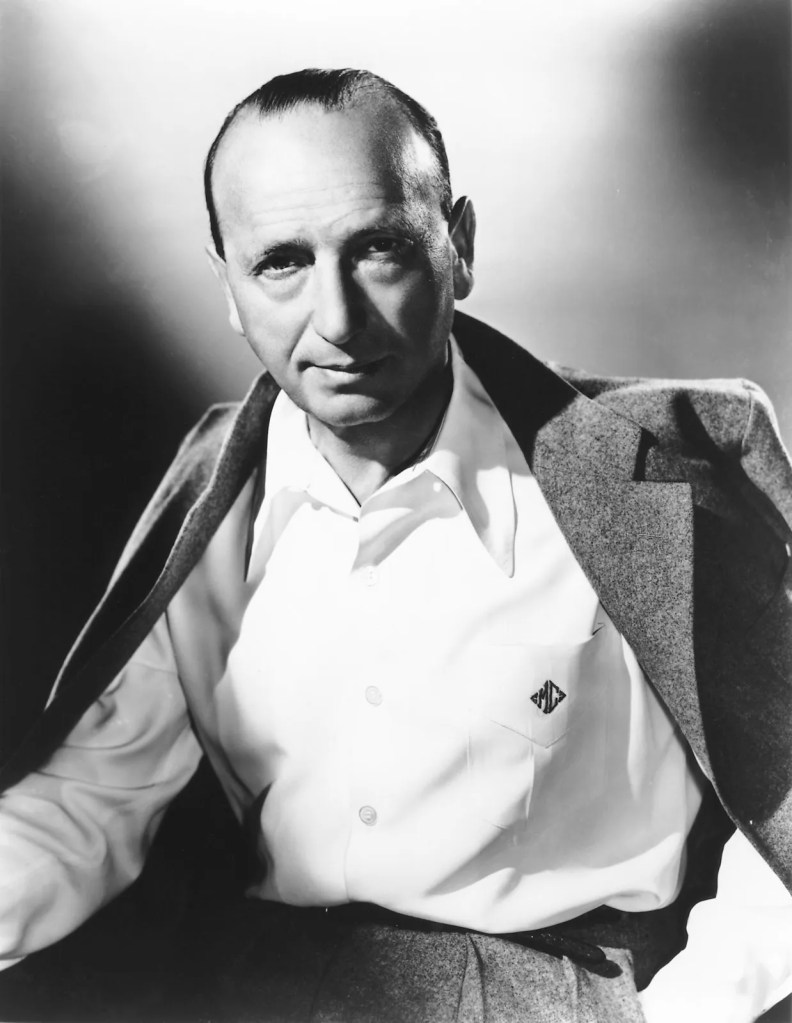
So, Hal B. Wallis turned to his close friend, Michael Curtiz. Who had finished production on James Cagney’s, 1942, “Yankee Doodle Dandy”, to direct “HIS” feature film.
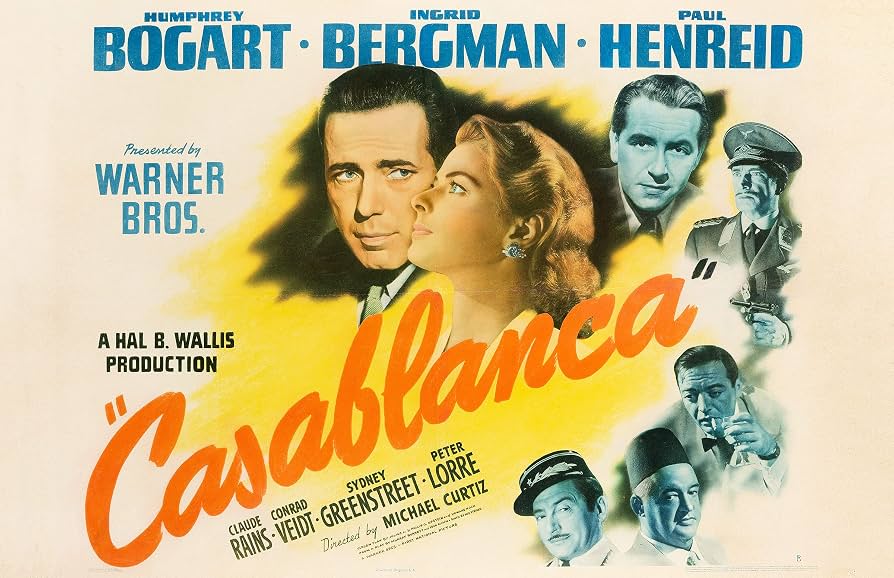
Technically, the “Executive Producer” was Jack L. Warner, but that was in name only. As “Casablanca”, see the above poster, was “Presented By WARNER BROS”.
Mihály Kertész started directing motion picture’s in 1912, in his native Hungary. 1926, found, Michael Curtiz, directing Dolores Costello, in his first American movie, “The Third Degree”. Among his other films was the first all-Technicolor horror movie, 1932’s, “Dr. X”, and in 1933, it was “The Mystery of the Wax Museum”, both films starring Lionel Atwill and Fay Wray. In 1935, it was the previously mentioned, “Captain Blood”, a year later, and “KARLOFF” was “The Walking Dead”. Michael Curtiz would follow this motion picture with 1943’s, “Mission to Moscow”.
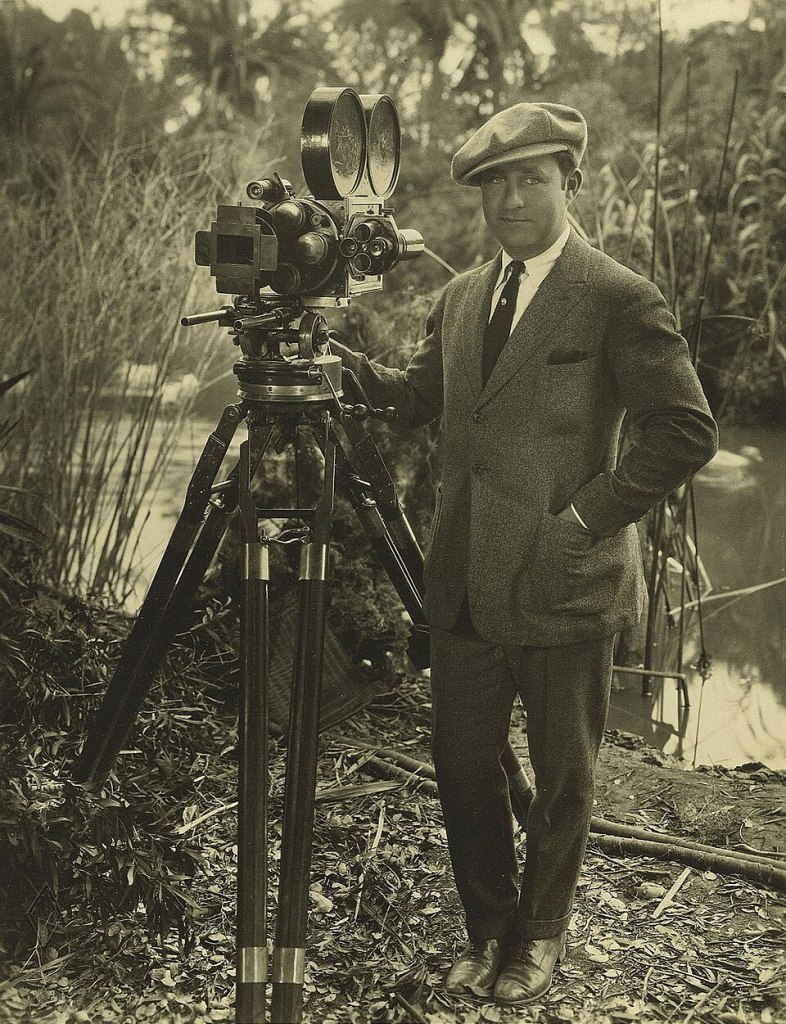
Arthur Edeson was the picture’s cinematographer, and he started his craft in 1914. In 1925, below on set, Edeson filmed Sir Arthur Conan Doyle’s, “The Lost World”, with stop motion animation by Willis O’Brien. In 1930, Edeson was nominated for the “Academy Award for Best Cinematography”, the motion picture was, “All Quiet on the Western Front”. That same year, for William Fox, Arthur Edison shot the Western “The Big Trail” in a very early 70 MM process. In 1931, it was Edison who filmed director James Whale’s, “Frankenstein”, in 1933, it was Whale’s, “The Invisible Man”, and in 1935, it was “Mutiny on the Bounty”, and in 1941, “The Maltese Falcon”.
Owen Marks was the picture’s film editor, and he started his craft in 1924. In 1930, he edited the Al Jolson musical “Mammy”, directed by Michael Curtiz. In 1931, he edited “Alexander Hamilton”, starring George Arliss, back in 1929, he was the only editor on Arliss’s, “Disraeli”, but was given no credit for his work. While, in 1933, Marks edited with full credit, George Arliss’s, “Voltaire”. In 1935, it was the Joan Blondell comedy, “Traveling Saleslady”, in 1936, it was the Leslie Howard, Bette Davis, and Humphrey Bogart, “The Petrified Forest”, and Owen Marks was the film editor for the western, 1939’s, “The Oklahoma Kid”, with James Cagney as the good-bad-guy, and Humphrey Bogart as the bad-b ad-guy.
Although, Owen Marks was nominated for the “Academy Award for Best Film Editing” on “Casablanca”. I could not locate a picture of him on line.
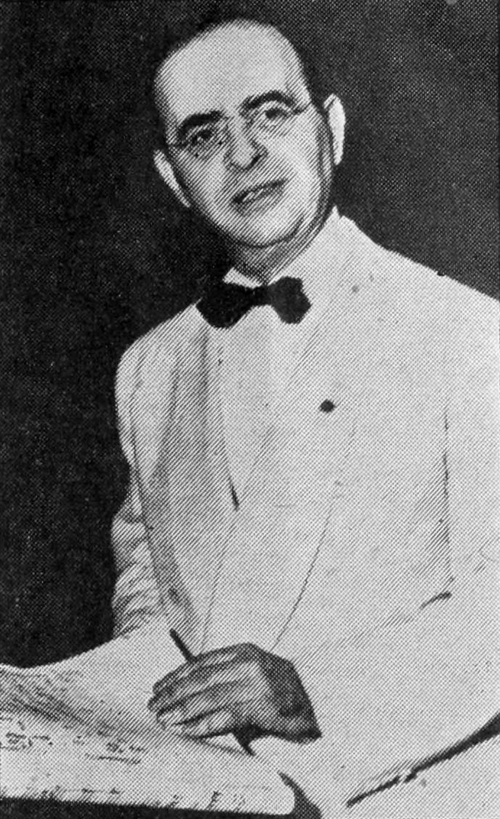
The Musical Score didn’t go as planned, because of a HAIRCUT, and a copyright. Just ask Austrian born, composer, Max Steiner.
Who began his American career on Broadway in 1914. Which lasted to 1929, with the advent of sound motion pictures, and he moved to “RKO Pictures”. His first full score was for 1931’s, “Cimarron”, based upon the Edna Ferber novel, and starring Richard Dix and Irene Dunne. In 1936, Max Steiner, moved again, to “Warner Brothers”, and his first score for his new employer was the Errol Flynn and Olivia de Havilland, 1936, “The Charge of the Light Brigade”. In 1939, David O. Selznick, at “MGM”, borrowed Steiner for to score his pet project, “Gone with the Wind”. Back at “Warner Brothers”, and just before this feature, Max Steiner scored the Bette Davis, and Paul Henreid, motion picture,1942‘s, “Now Voyager”. His later work would include, 1942’s, “Mission to Moscow“, director John Huston’s, 1948’s, “The Treasure of the Sierra Madre”, director, Robert Wise’s, 1956 epic, “Helen of Troy”, and the same year’s, “The Searchers”, from director John Ford.
As for “Casablanca”, Max Steiner did not like “As Time Goes By”, and his plan with Hal B. Wallis’s approval, was to drop it from the score and compose a new song in its place.
The first problem for the composer was that Ingrid Bergman had cut her hair for the 1948 motion picture version of Ernest Hemingways’, “For Whom the Bell Tolls”. There was no way, a wig was out, for all of the scenes with her, and the song,”As Time Goes By”, to be reshot.
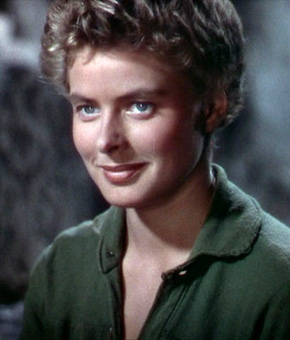
“For Whom the Bell Tolls”, also starring Gary Cooper, is part of my article,
“La historia de España como fue creada por Hollywood: cuatro películas (Spain’s History As Created By Hollywood: Four Films)” to be read at:
https://www.bewaretheblog.com/2018/08/la-historia-de-espana-como-fue-creada.html
The second problem for Steiner’s planned score was he wanted to use the Nazi Party Anthem, “Horst-Wessel-Lied”, for the opening shots of the motion picture.
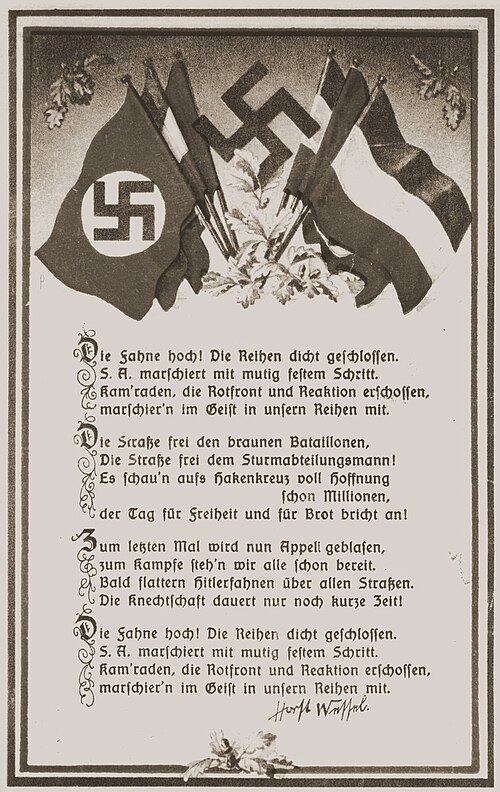
Apparently there was an active United States Copyright on the song. However, Max Steiner was able to use both the 1854, German patriotic song, “Die Wacht am Rhein (The Watch on the Rhine)”, which begins with:
There roars a call like a thunderclap,
like clashing swords and splashing waves:
To the Rhine, the Rhine, to the German Rhine,
who wants to be a guardian of the river?
Along with the French National Anthem, “La Marseillaise (literally: The Song of Marseillaise)”, which begins with:
Let’s go, children of the Fatherland,
The day of glory, has arrived!
Against us, tyranny’s
𝄆 blood-stained standard has been raised, 𝄇
Do you hear in the countryside,
The bellowing of those fierce soldiers?
They are coming right into your arms
To slit the throats of your sons, your companions!
Max Steiner composed his entire score around both songs. Throughout the motion picture, even in the background, “Leitmotif’s (a short, recurring musical phrase)” of either the “La Marseillaise”, or, “Die Wacht am Rhein“ are heard.
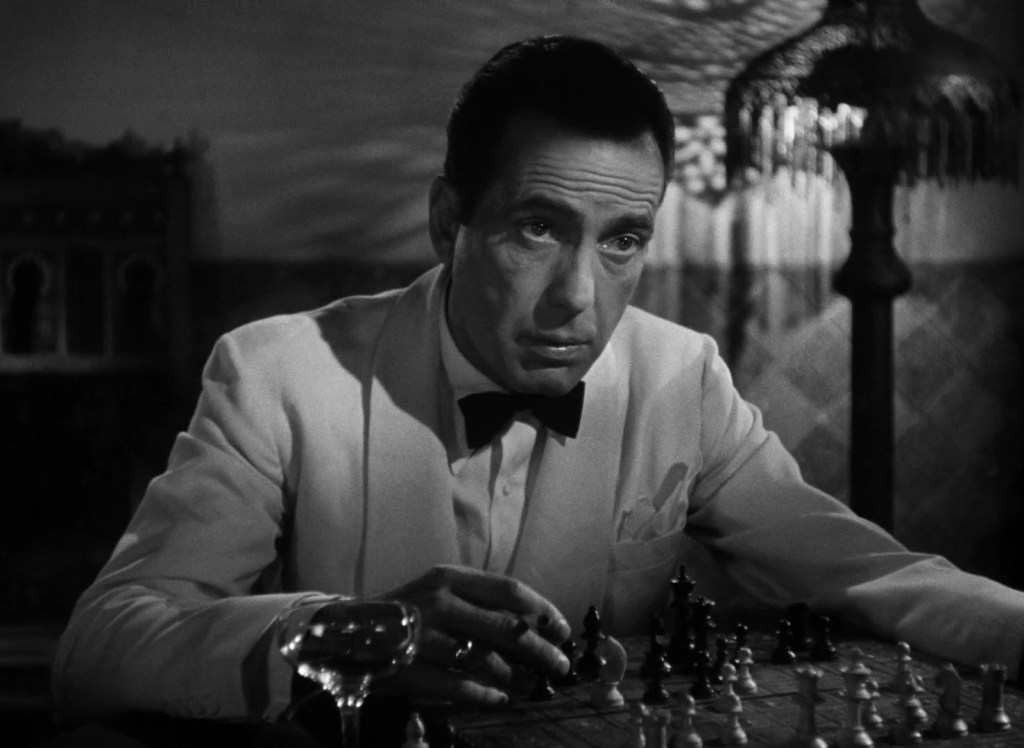
Some of the “EVERYBODY”, Who Comes to Rick’s:
Humphrey Bogart’s character remained “Rick Blaine”. He had just been seen in 1942’s, “Across the Pacific”, a spy thriller that starts in November 1941, with familiar co-stars Mary Astor and Sydney Greenstreet, and directed by John Huston. He followed this feature film with 1943’s, “Action in the North Atlantic”, co-starring Raymond Massey and Alan Hale,Sr. My article is “HUMPHREY BOGART: Horror Movie Actor”, a piece of trivia at:
https://www.bewaretheblog.com/2019/08/humphrey-bogart-horror-movie-actor.html
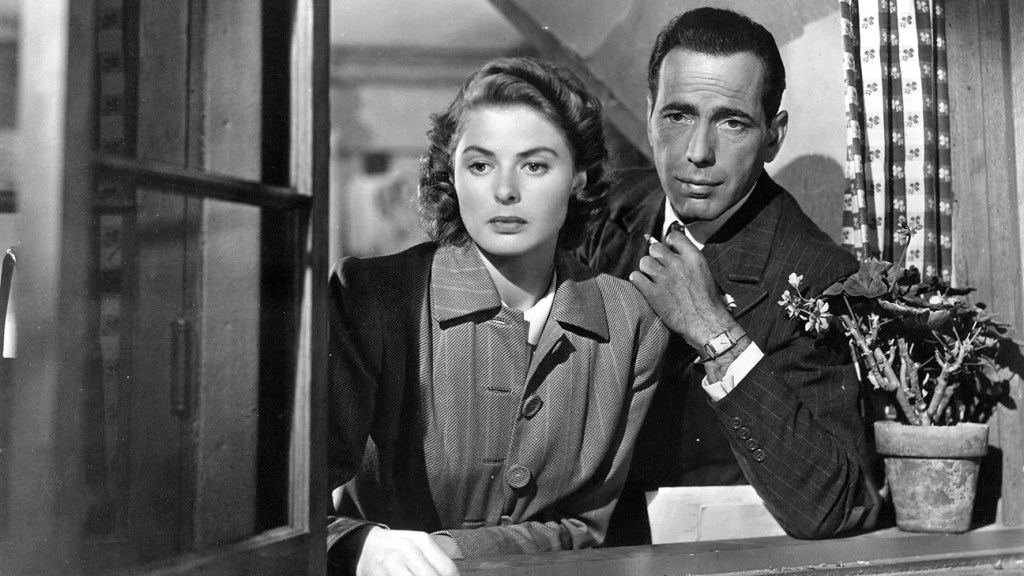
Ingrid Bergman, the actress was Swedish, now portrayed Norwegian, “Ilsa Lund Laszlo”. That had been changed from the original character of American, “Lois Meredith”. Hal B. Wallis had wanted Hedy Lamaar, she wasn’t available, and he had to trade Olivia de Havilland to David O. Selznick to get Bergman. It was reported that Ann Sheridan, Louise Rainer, and Michele Morgan were also under consideration for the role. Ingrid Bergman had just portrayed “Ivy Peterson” in 1941’s, “Dr. Jekyll and Mr. Hyde“, starring Spencer Tracy.
Paul Henreid portrayed “Victor Laszlo”, this character’s name also remained as originally written. The Austrian actor had emigrated to the United States in 1935. According to reports, he was very opinionated and considered Bogart a “mediocre actor”, and Bergman, a prima donna”. This from Paul Georg Julius Freiherr von Hernreid Ritter von Wasel-Waldingau, the son of the financial advisor to Austrian, Emperor, Franz Jospeh the First. Actor, Paul Henreid, had just co-starred with Bette Davis in 1942’s, “Now Voyager”, and would follow this feature by co-starring with Ida Lupino in the 1944, Second World War love story, “In Our Time”.
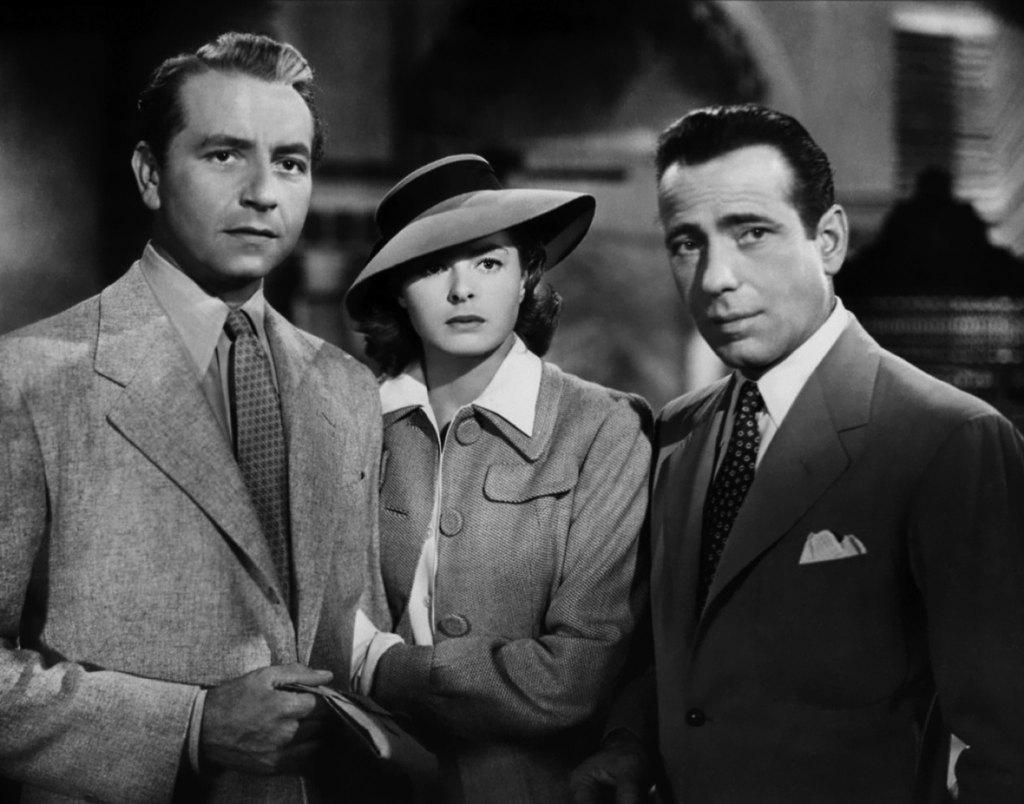
Above left to right, Paul Henreid, “Prima Donna” Ingrid Bergman, and “Mediocre Actor” Humphrey Bogart.
Claude Rains portrayed French Vichy Police Officer, “Captain Louis Renault”, originally Italian Police Commissioner, “Luis Rinaldo”. He had just been seen with third-billing in 1942’s, “Now Voyager”, and followed this picture with 1943’s, “Forever and a Day”, with every available British actor in the United States recreating the history of one house from it construction in 1804 to 1942, Second World War, England. My article is “- – – CLAUDE RAINS WAS THE INVISIBLE MAN- – – -“, found at:
https://www.bewaretheblog.com/2019/05/claude-rains-was-invisible-man.html
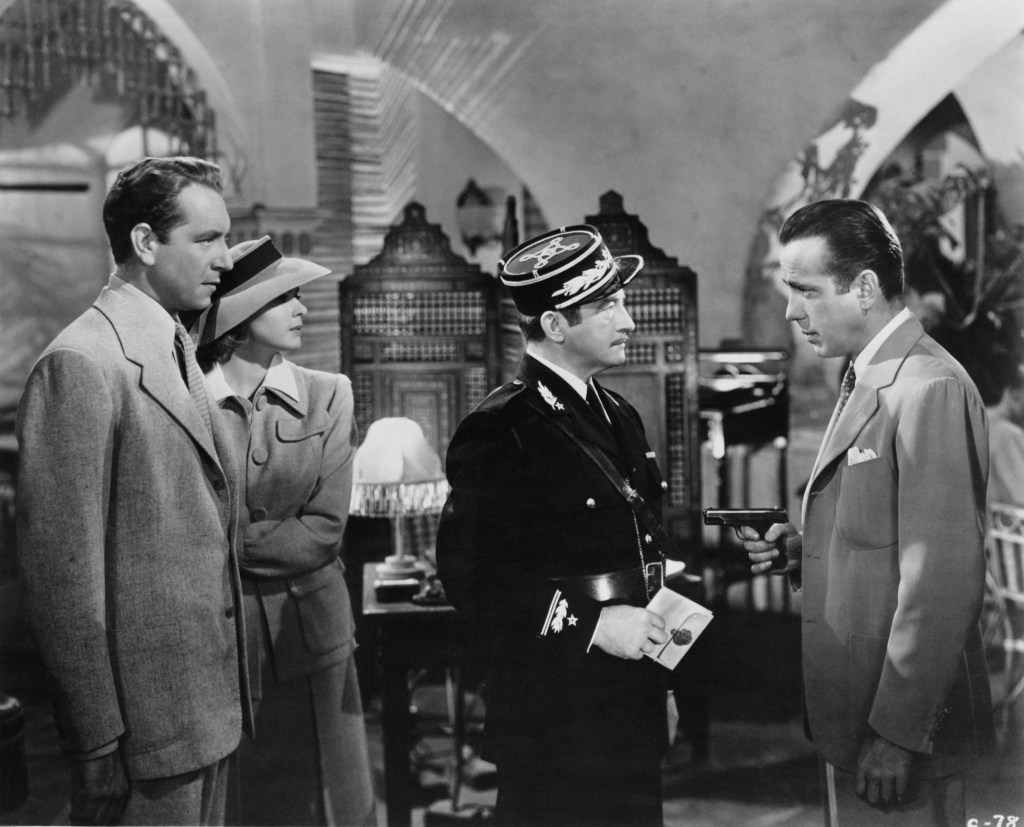
Above left to right, Paul Henreid, Ingrid Bergman, Claude Rains, and Humphrey Bogart.
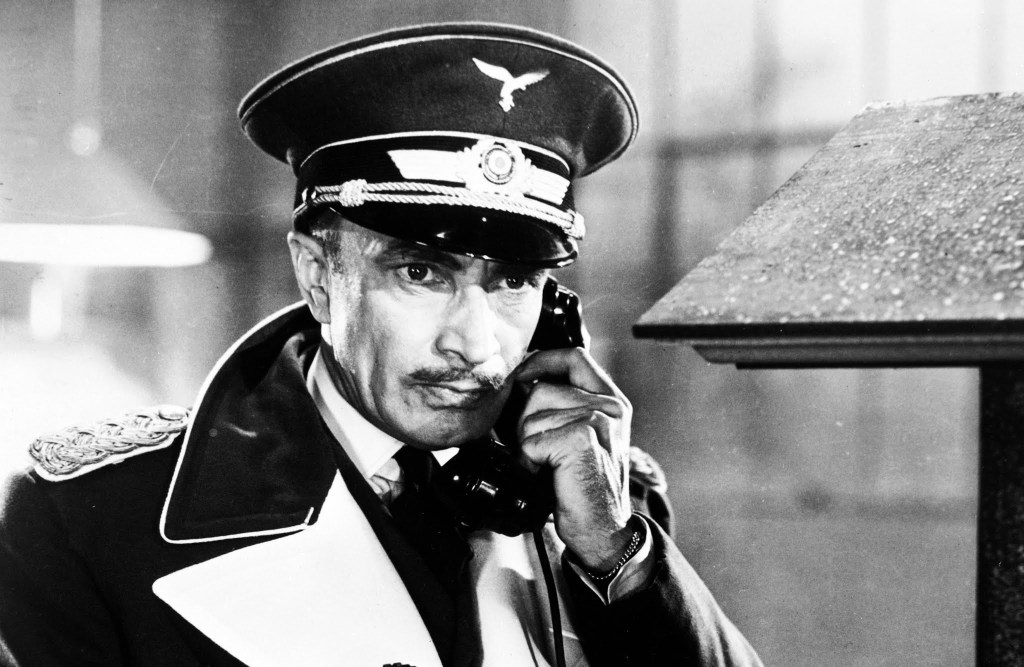
Conrad Veidt portrayed “German Major Heinrich Strasser”. Veidt was in two classic silent psychological drama’s. He was “Cesare, the Somnambulist”, center below, in 1920’s, “Das Cabinet des Dr. Caligari (The Cabinet of Dr. Caligari)”.
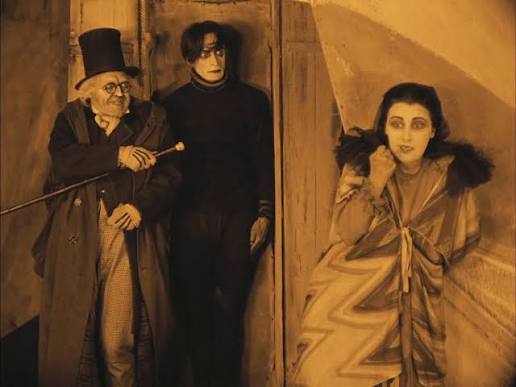
He was in “Universal Pictures”, 1928, version of Victor Hugo’s, “The Man Who Laughs”, as “Gwynplaine” aka: “Lord Clancharlie”.

Can my reader say the prototype for “The Joker”? Conrad Veidt also was “Jaffar” in the Korda Brother’s, 1940 classic, “The Thief of Bagdad”.
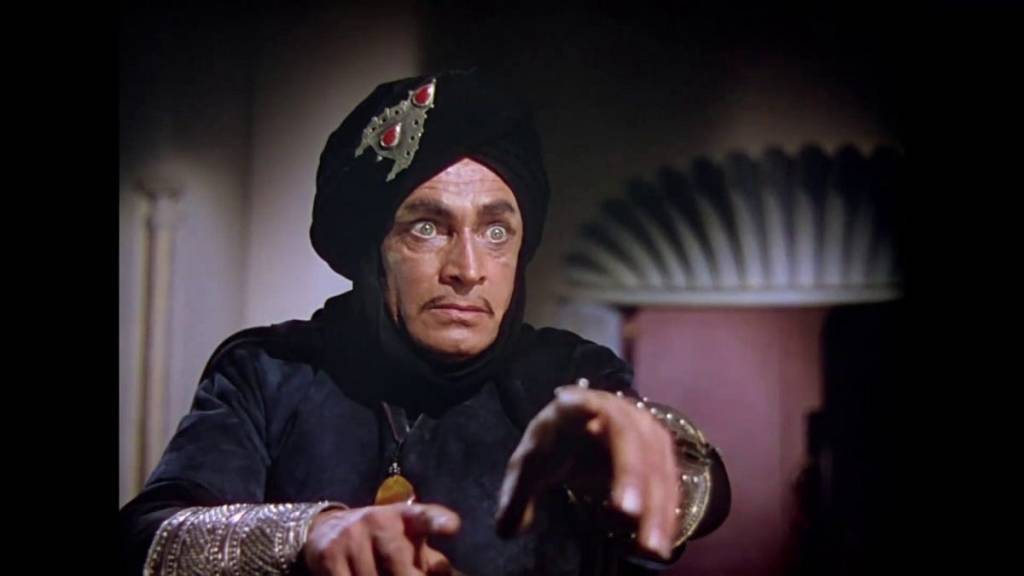
Below, “German Major Heinrich Strasser”:
Sydney Greenstreet portrayed Italian, “Signor Ferrai”, originally, “Senior Martinez” from Spain. Greenstreet had just been seen in 1942’s, “Across the Pacific”, and would follow this picture by co-starring with George Raft, in the 1943, German spy ring drama, “Background to Danger”.
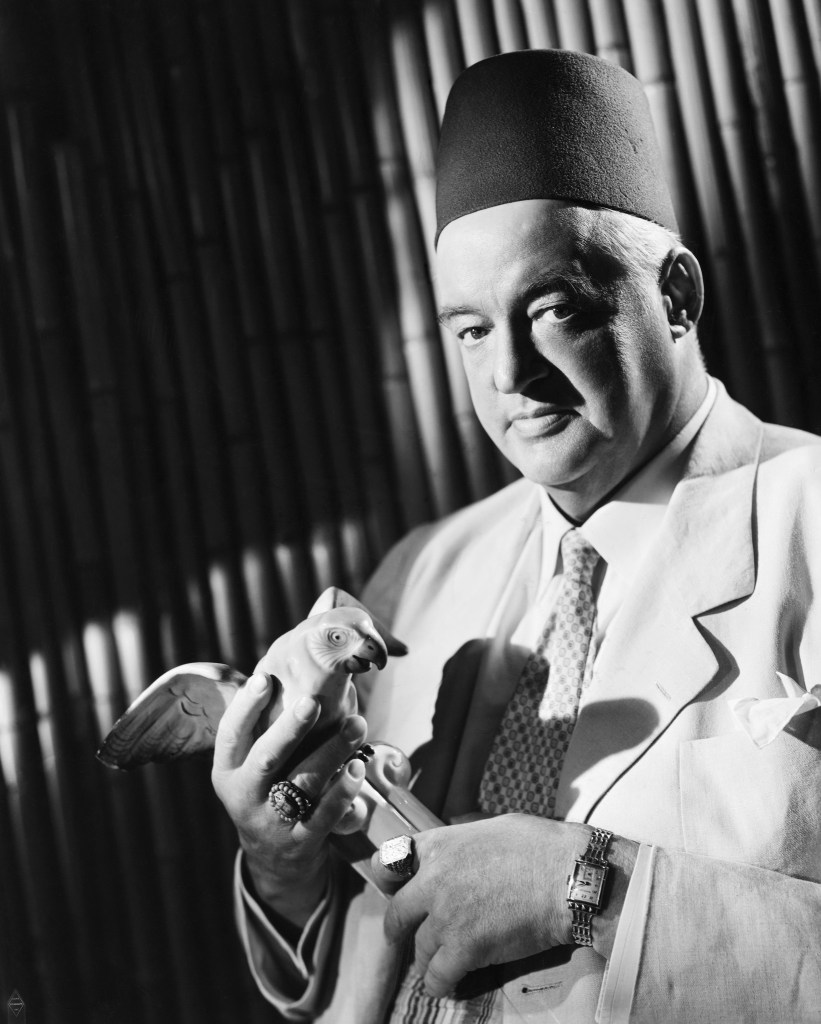
What, no “Maltese Falcon”, he was in the 1941 movie, Greenstreet’s first motion picture.
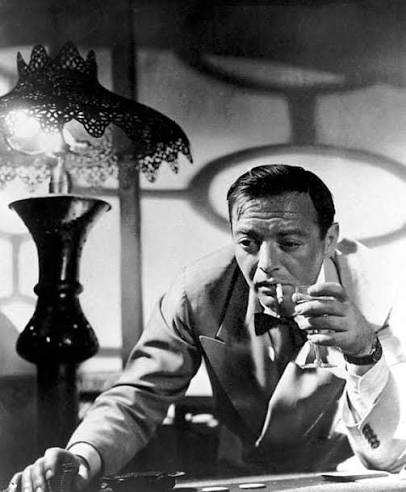
Peter Lorre portrayed “Guillermo Ugarte”, originally a Spaniard, in the screenplay, an Italian. Lorre was just seen in the horror comedy, 1942’s, “The Boogie Man Will Get You”, co-starring with Boris Karloff. He followed this feature with 6th-billing in 1942’s, “All Through the Night”, starring Humphrey Bogart and Conrad Veidt. My article is “PETER LORRE: Overlooked, or Forgotten Performances” to explore at:
https://www.bewaretheblog.com/2017/11/peter-lorre-overlooked-or-forgotten.html
Dooley Wilson portrayed “Sam, the piano player”. The original character that was based upon ,the black American, jazz- pianist, in “Everybody Comes to Rick’s”, was named “The Rabbit”. Back in 1908, Arthur Wilson was a drummer, and singer, performing at the first black owned theater, the “Perkin”, in Chicago. One day, Arthur Wilson flipped the “Blackface” of the Minstrel Shows, and started singing a song associated with Irish emigrant’s and using an Irish accent, but in WHITEFACE. The song, “Mr. Dooley”, had been written in 1902, and from that performance, going forward, he added the song to his act, and picked up the nickname of “Dooley”.
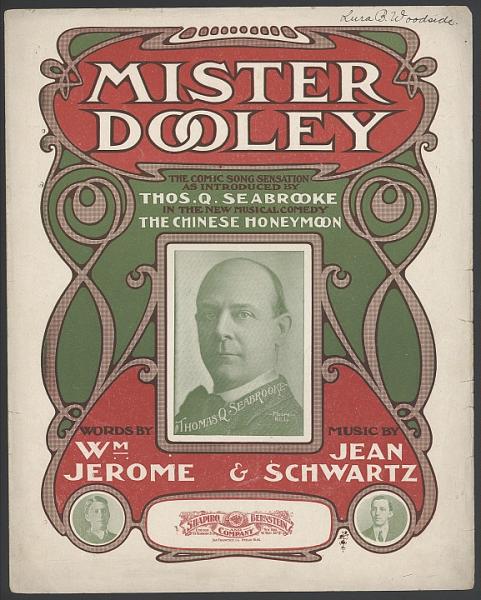
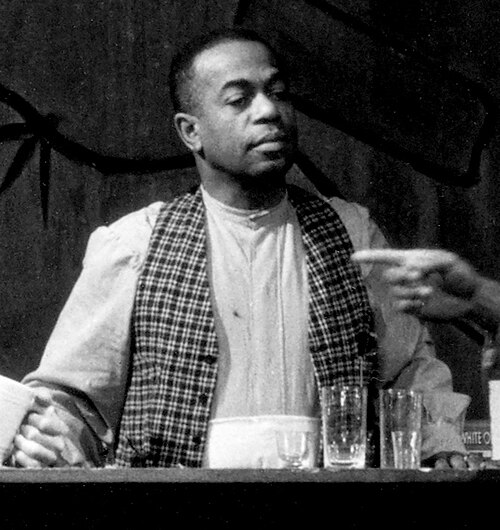
By 1920, “Dooley” Wilson and his band, were touring, London and Paris. Returning to the United States, “Dooley Wilson” decided to learn acting and become a part of President Franklin Delano Roosevelt’s “Federal Theatre Project”, during “The Great Depression”, to bring entertainment to American’s out of work, or who had lost their farms and everthing else.. Below, “Dooley”, portraying “Fat Joe”, in playwright, Eugene O’Neil’s, “The Long Voyage Home”.
One last point:
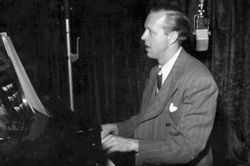
DOOLEY WILSON COULDN’T PLAY A PIANO! Off-screen, It was played by Jean Vincent Plummer.
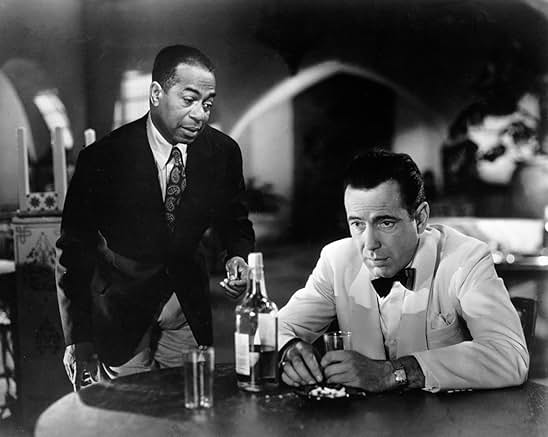
Above, Dooley Wilson with Humphrey Bogart, and below, Jean Vincent Plummer, one of the major trivia questions about “Casablanca”.
CASABLANCA premiered in New York City on November 26, 1942
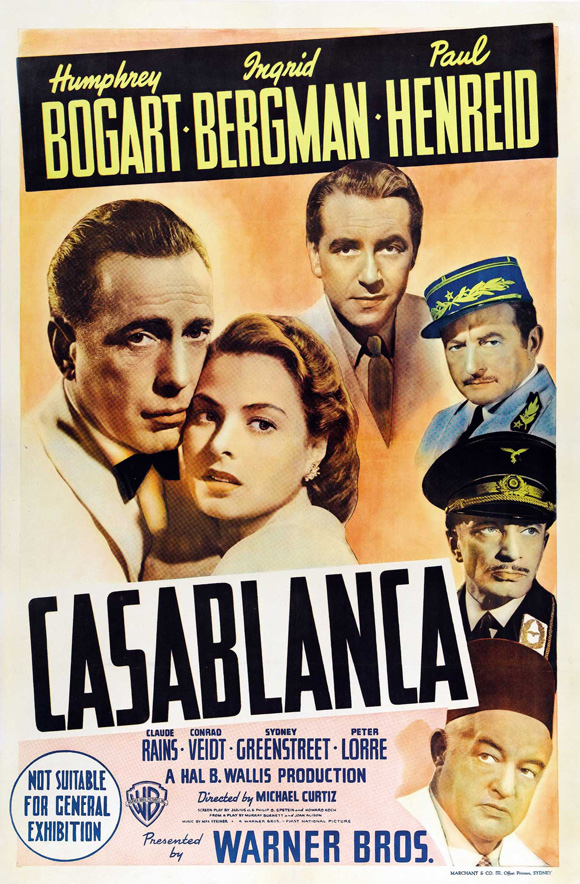
Note the above release date:
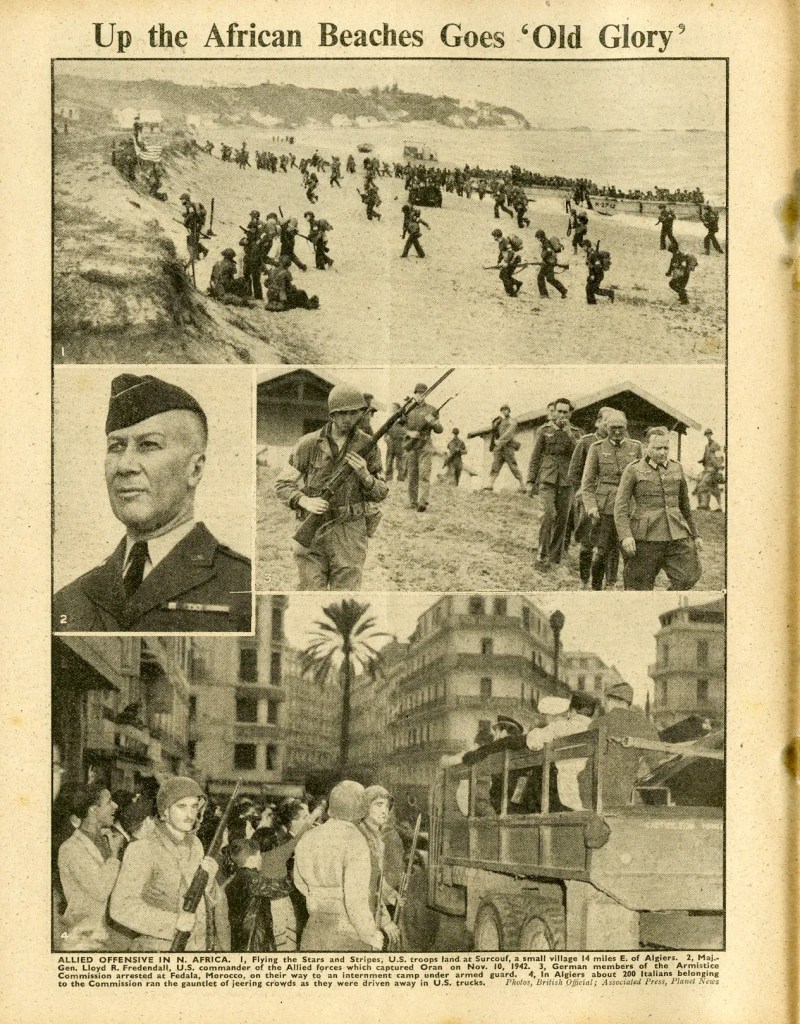
The allies invaded French North Africa between November 8th and 16, 1942, under the code name, “Operation Torch”. Hal B. Wallis and Jack L. Warner pushed up the planned release date of “Casablanca”. As a means of using the news sweeping the United States about the invasion of North Africa, which included Morocco, and Casablanca, to increase box office revenue.
I have a shorter version about the screenplay for the motion picture. Is found in my article “Casablanca” (1942), “Kings Row” (1942) and “Warner Brothers Presents” (1955 – 1956)” to read at:
https://www.bewaretheblog.com/2021/12/casablanca-1942-kings-row-1942-and.html
According to this screenplay, the story takes place in December of 1941. Raising the question, is the story before, or after, December 7th?
The answer comes to the viewer through the dialogue of the “Leuchtag’s”, a happy couple, portrayed by the uncredited, Ludwig Stossel, and, Ilka Gruning, who are described as refugees seeking passage to the “neutral United States”. Which places this screenplay, solidly, within the six days between, December 1st and December 6th, 1941. As the United States’s neutrality, changed immediately, on December 7th, after the Japanese bombed “Pearl Harbor”.

As experienced by Murray Burnett, and his wife Frances. The “Cafe Americain’s (“La Belle Aurore”) clientele, besides the refugees fleeing the Germans, and those who prey upon the refugees for their own profit, are Nazi officers, and members of the French Vichy Police Force. Who started to work for the Germans in Morocco, after the fall of France, on June 25, 1940.


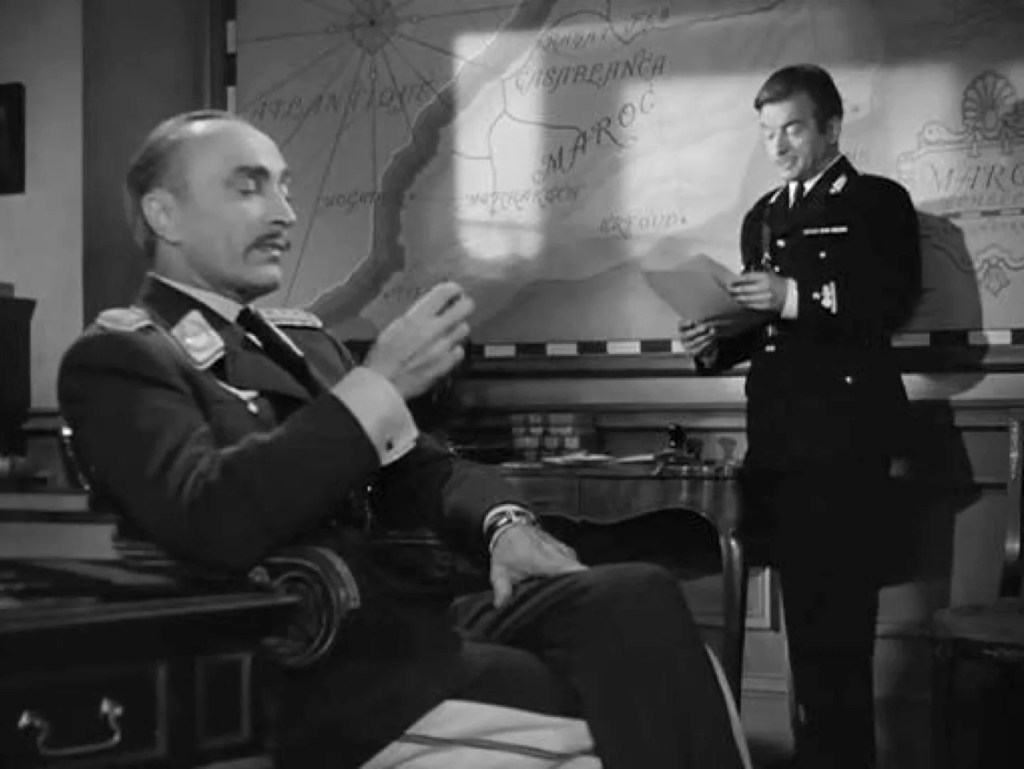
Above, “Sam” plays for the crowd at “Rick’s”, and below, “Vichy Police Captain Renault” speaks to “German Major Heinrich Strasser”.

“Rick” claims to be “neutral in political matters and the current war” but he made his money by running guns to Ethiopia during the “Second Italo-Ethiopian War (1935 into 1937)”, and fought on the “Republican Side” during the “Spanish Civil War (1936 into 1939)”, so did American author, Ernest Miller Hemingway.
Enter petty crook, “Signor Ugarte”, boasting to “Rick”, that he has “German letters of transit”, after he murdered the two German couriers.


“Ugarte” wants “Rick” to hold onto the “letters of transit” until he meets his contact at the Cafe, because the letters give the bearer unrestricted travel throughout German-occupied-Europe without question and more importantly, access to neutral Portugal and possible freedom.
However, “Signor Ugarte’s” plans go astray. When the openly corrupt “Captain Renault”, orders his men to arrest “Ugarte“, for the murder’s of the two German couriers. The arrest takes place, only moments, after “Ugarte” has spoken to “Rick” of his plans, and now, that arrest, leaves “Rick Blaine”, in possession of the “letters of transit”.


“Ugarte” is taken to police headquarters, and dies in their custody without revealing that “Rick Blaine” has the letters.
The audience now sees the strained friendship between “Rick Blaine” and “Captain Renault” in a small bit of levity in the screenplay.
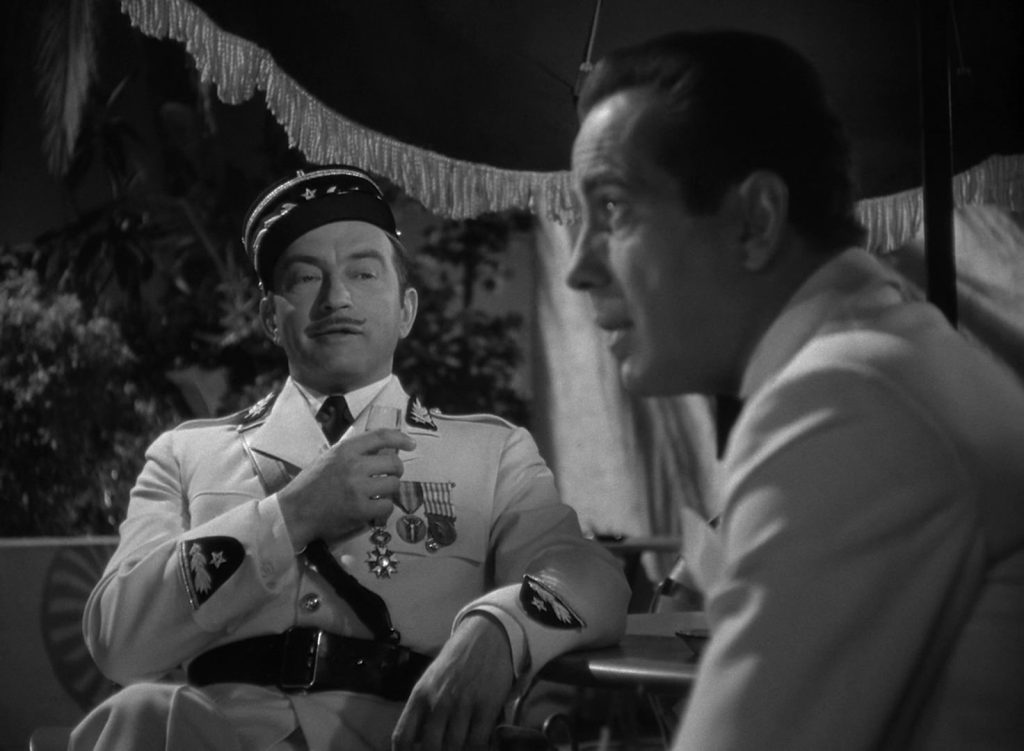
Captain Renault: “What in heaven’s name brought you to Casablanca?”
Rick: “My health. I came to Casablanca for the waters.”
Captain Renault: “The waters? What waters? We’re in the desert.”
Rick: “I was misinformed.”
Walking into the “Cafe Americain” is “Ilsa Lund”, accompanied by her husband, “Victor Laszlo”. She is recognized at the entrance by a character identified as the “Headwaiter” by reviewers, but the actor seen, is not portraying the headwaiter for “Rick’s Cafe Americain”. Who the uncredited actor was, appears to have been overlooked on both the “Official Cast Listings”, or in the “Warner Brothers Production Logs”. Along with the actual character he portrayed.
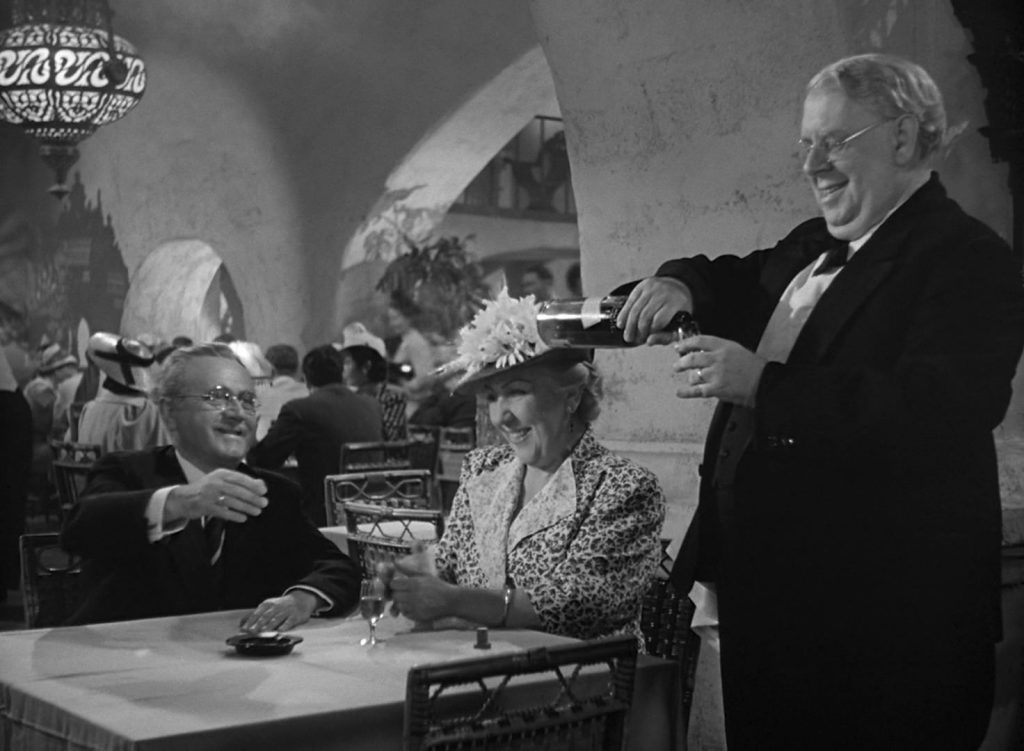
On both lists, the role of “Carl”, is shown portrayed by S.Z. Sakall. Neither listing shows his occupation as the “Head Waiter”, but that is who “Carl” is in the screenplay.

Below standing is, S. Z. Sakall as “Carl”, with Ludwig Stossel and Ilka Gruning, portraying “Mr.” and “Mrs. Leuchtag”, “Carl’s friends hoping to emigrate to the United States.
“Ilsa” spots “Sam” at the piano, leaves her husband, and walks over to the piano player. “Sam” smiles in acknowledgment of seeing her once more. This is followed by a classic scene, in which, “Sam” knows. what “Ilsa” is asking, but trays to avoid answering her request.
“Ilsa” asks:
“Play it once, Sam. For old times sake!”
“Sam” claims he has forgotten the song, but. “Ilsa” tells him :
“Play it, Sam, Play “AS TIME GOES BY”.
“Ilsa”, than hums the tune, and tells “Sam” to sing the lyrics.
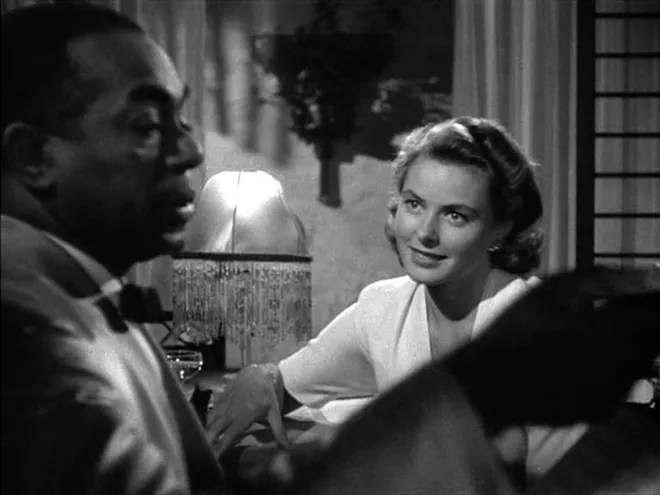
As I mentioned at the start of this article, there is no line:
“PLAY IT AGAIN SAM”.
The sound of “Sam” playing the “Forbidden Song”, causes “Rick Blaine” to rush through the crowd to stop the piano player. “Rick” had instructed “Sam” to never play that song again.
In the original screenplay, “Rick Blaine” yells to “Sam”, “What the (four letter word) are you playing?” However, Joseph Breen, of the “Hayes Censorship Office”, objected to the four-letter word, and the line was changed to, “Sam, I thought I told you never to play – – -“, and “RICK” SEES ILSA”.
They are joined by her husband, “Victor Laszlo”.
It is now revealed that “Ilsa” is in Casablanca to get “Rick’s” help in getting her husband, a known leader of the resistance against the Germans in Czechoslovakia, to neutral Portugal, and safety.
It is also the reason “Major Strasser” has come to “Rick’s“. German intelligence knew of “Ilsa Laszlo’s” plans to make contact with her old lover, and sent him to wait for her, and “Victor’s” arrival. Then, with French Vichy assistance, capture the Czechoslovakian resistance leader.

“Signor Ferrari”, a Moroccan underworld figure, and a friendly rival of “Rick Blaine”, meets “Victor Laszlo” and “Ilsa”. “Ferrari”, reveals his belief that “Rick” has “German letters of transit”.

That night as “Rick” is seemingly alone in his club and getting drunk thinking of “Ilsa” coming back into his life.

The story flashes back to Paris and “Rick” and “Ilsa” as lovers.
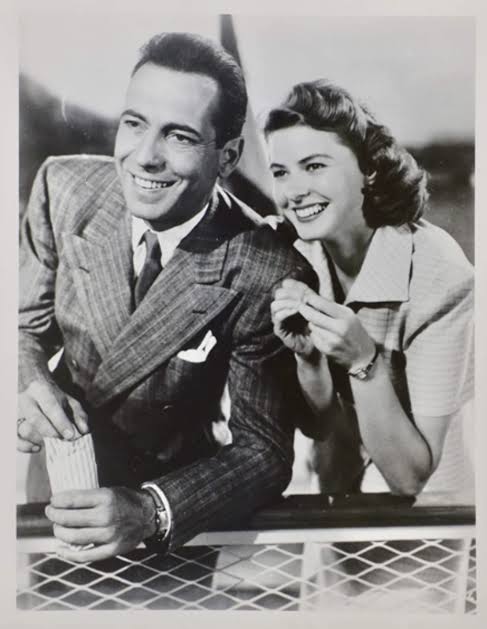
For the First of Four-Times in the movie, Humphrey Bogart toasts Ingrid Bergman with:
“HERE’S LOOKING AT YOU KID”
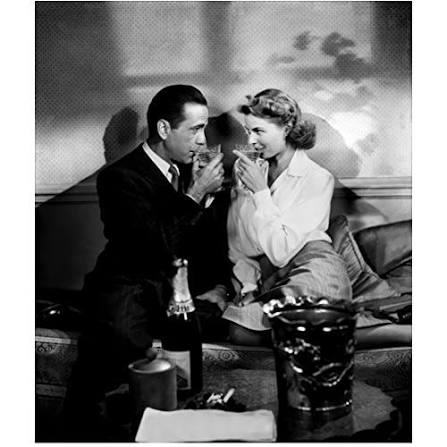
The line was not in the script and ad-libbed by Bogart. Depending upon the source, the line came either while Humphrey Bogart was watching Ingrid Bergman in a poker game, or while Humphrey Bogart was teaching Ingrid Bergman poker.
The flash back ends when “Ilsa” comes back to the “Cafe Americain”, and threatens “Rick” with a gun to turn over to her the “letters of transit”, but then confesses she’s still in love with him and he admits the same for her.

“Ilsa” admits to “Rick”, that back in 1940, photo below, while she prepared to leave Paris with him, as the “Battle of France (May 10th to June 25, 1940)”, was raging. “Ilsa” had discovered that “Victor” was alive, and not killed in a concentration camp as she believed. She left “Rick”, standing along at the train station in the rain, without telling him, that she was going to be nursing her husband, who was in hiding from the Germans, back to health.
While, “Rick” lies to “Ilsa”, that the two will leave for the United States on the next plane out of Casablanca.

The following day, at “Rick’s”, “Victor” goes to him, makes him a large cash offer for the letters of transit, but is refused. When “Victor” asks why? “Rick’s” response, is for “Victor Laszlo” to ask his wife,“Ilsa Laszlo”.
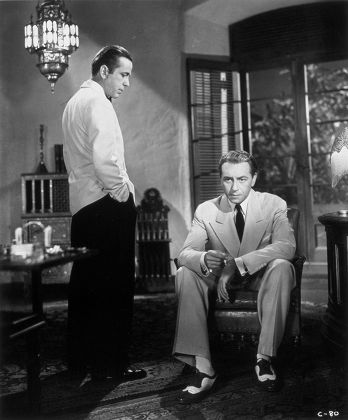
Before “Victor” can say anything else. They are interrupted, from downstairs, by “Major Strasser” and other German’s, singing, “Die Wacht am Rhein”
“Victor Laszlo” goes downstairs, walks up the French musicians, speaks to them, and counters with the forbidden by the French Vichy authorities, by singing, “La Marseillaise”, the FREE FRENCH NATIONAL ANTHEM. Thereby, invoking “Major Strasser’s” anger, as others in the room, join in, and drown out the German’s singing.


After the singing stops, “Major Strasser” confront “Victor Laszlo”, and the resistance leader responds to the Nazi, that:

“Major Strasser”, now demands, that “Captain Renault” close down “Rick’s”, over “Victor Laszlo’s” affront to Germany.
Using, the fake discovery, that “Rick Blaine” had been breaking the law. By having gambling tables in the “Cafe Americain”. Tables that “Captain Renault”, himself, uses, and after getting his own winnings, “Renault” does as requested, for show.

“Rick’s” bitterness toward her is no more and he lies that they will stay together, after “Victor” is safely out of the German spheres of influence. “Victor” suddenly appears after just getting away from a resistance meeting that was raided by the Germans and Vichy police. Below, “Carl” comforts, “Victor”.
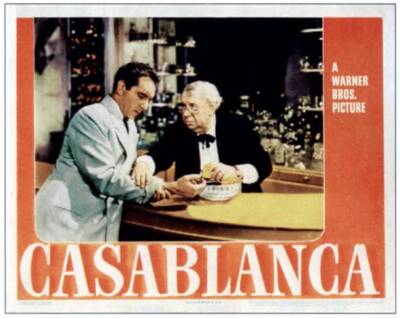
“Rick” has “Carl”, take “Ilsa” away, so he and “Victor” can talk freely.
“Victor” knowing that his wife is still in love with “Rick”, attempts to persuade him, to use the “letters of transit”, for “Rick” and himself, to get “Ilsa” to safety.

“Laszlo” isn’t as persuasive as thinks he is, and “Rick” refuses the idea of fleeing Casablanca with “Ilsa”. Later, the Vichy police arrest “Victor” on a trumped-up charge to appease “Major Strasser”. “Rick” goes to “Captain Renault” and convinces him to let the resistance leader go, promising that he will set-up “Victor Laszlo” in possession of the “German letters of transit”.
Further, to put “Louis Renault”, his somewhat friend at ease, “Rick Blaine”, informs the Vichy Police Captain, that he and “Ilsa” will be leaving for America shortly, keeping to the lie he told her.


“Captain Renault” now attempts to arrest “Victor Laszlo” as arranged with “Rick Blaine”, but finds a gun pointed at him, and being forced into helping “Victor” escape Casablanca.

At the airport, the plane to Portugal and freedom awaits its passengers. Now the lie is completed when:

“Rick Blaine” makes “Ilsa”, who still believes she is going to the United States with him, get on the plane to Lisbon with her husband, “Victor Laszlo”. Telling “Ilsa”, that she will regret her decision to stay with him.
“Maybe not today, maybe not tomorrow, but soon and for the rest of your life.”


Alone, “Major Strasser” arrives and attempts to stop “Victor” from getting on the plane and “Rick” shoots and kills him.
Next, when the Vichy Police arrive, “Captain Louis Renault”, tells them to round up the “usual suspects” to determine the killer of the German officer, as the “usual game” is again played.
The plane take-off into the foggy night.

The motion picture ends with “Rick” and “Louis” walking into the fog. As “Louis” suggests to “Rick”, that perhaps the two should join the Free French in Brazzaville, located in the French Colonial Congo.
The “Academy of Motion Picture Arts and Sciences” nominated 1942’s, CASABLANCA” for Eight-Oscars, and the film Won-Three.
They were:
“Outstanding Motion Picture (Best Picture)”: WON
“Best Director, Michael Curtiz”: WON
“Best Actor, Humphrey Bogart”: NOMINATED
“Best Supporting Actor, Claude Rains”: NOMINATED
“Best Screenplay, Julius J. Epstein, Philip G. Epstein and Howard Koch”: WON
“Best Cinematography – Black and White, Arthur Edeson”: NOMINATED
“Best Film Editing, Owen Marks”: NOMINATED
“Best Scoring of a Dramatic or Comedy Picture, Max Steiner: NOMINATED
According to Ronald Haver’s article, “The Unexpected Classic”, on the website for the “Criterion Collection”, release of the motion picture, dated January 11, 1989 at: https://www.criterion.com/current/posts/791
Hal B. Wallis is quoted as saying, after “Casablanca” won the “Outstanding Motion Picture”, surprising everyone at the “16th Academy Awards”, March 2, 1944:
“After it was announced that Casablanca had won the award for Best Picture, I stood up to accept when Jack [Warner] ran to the stage ahead of me and took the award with a broad, flashing smile and a look of great self-satisfaction. I couldn’t believe it was happening. Casablanca had been my creation; Jack had absolutely nothing to do with it. As the audience gasped, I tried to get out of the row of seats and into the aisle, but the entire Warner family sat blocking me. I had no alternative but to sit down again, humiliated and furious. . . . Almost forty years later, I still haven’t recovered from the shock.”
I mentioned, much earlier in this article, that both Murray Burnett and Joan Alison were paid 10,000, 1943 dollars each, by “Warner Brothers” for their “unpublished” play, “Everybody Comes to Rick’s”. According to “Box Office Mojo” at: https://www.boxofficemojo.com/title/tt0034583/ the final budget for 1942’s, “Casablanca” was $950,000. Taking in a final “Worldwide Box Office” of $4,757,681. Simple math, shows a profit of $3,807,681 for “Warner Brothers” over “Casablanca’s” its theatrical life span.
I also linked my article “Casablanca” (1942), “Kings Row” (1942) and “Warner Brothers Presents” (1955 – 1956)”. In that article is mentioned the two short lived series based upon “Casablanca”. The 1955 series, starring Charles McGraw as “Rick Blaine”, Marcel Dalio as “Captain Redaud”, and Clarence Muse as “Sam”, gave full credit to Murray Burnett and Joan Alison for the play, “Everybody Comes to Rick’s”, for the full 9-episode television run.
However there was the 1983, television series prequel, to 1942’s, “Casablanca”. The 5-episode series, did not mention either Burnett and Alison, and did not mention the play, “Everybody Comes to Rick’s”. This led to a $60-million-dollar lawsuit by the two writers for royalties.
I let the “New York Times”, for April 4, 1986 speak in two sections from the following linked article:
https://www.nytimes.com/1986/04/04/nyregion/appeal-on-casablanca-fails.html
Section One:
Two playwrights who sold a play to Warner Brothers Pictures Inc. that was used to make the film ”Casablanca” gave up rights to future use of the material, New York State’s highest court ruled today.
The unanimous ruling by the Court of Appeals, which was issued without a written opinion, upheld a decision last September by the Appellate Division of State Supreme Court in Manhattan that dismissed the suit brought by the playwrights, Murray Burnett and Joan Alison of New York City.
They sued Warner Brothers and NBC for $60 million in damages, contending that characters they had created for the 1943 motion picture ”Casablanca” were illegally used in a 1983 television series based on the movie.
Section Two:
The Appellate Division ruled that by signing the contract with the studio, the two signed away all rights to their work.
”It is beyond question that plaintiffs failed to retain any rights, copyrightable or otherwise, which defendants could infringe,” the court said.
End of “New York Times” excepts.
HOWEVER, that didn’t mean the two writers were through with “Warner Brothers”.
The studio realized that the copyright on “Everybody Comes to Rick’s”, was due to revert back to Burnett and Alison in 1997. Initially, the copyright was registered in 1941, by the two authors, and renewed by them in 1969. The studio didn’t want another major court case over the play and its two authors.
An agreement was reached, out of court, each writer would get 100,000 dollars, and were permitted to produce the stage play. While the studio would retain the “Underlying Rights” to the play. This sounded like a good resolution to the problem.
Sadly, Murray Burnett, passed away on September 23, 1997 in New York City, at the age 87.
Joan Alison had passed away, on March 30, 1992, BEFORE any agreement was ever made, at the age of 90, also, in New York City. He heirs received the funds owed her by the studio.
You must remember this
A kiss is just a kiss, a sigh is just a sigh.
The fundamental things apply
As time goes by.
And when two lovers woo
They still say, “I love you.”
On that you can rely
No matter what the future brings
As time goes by.
 THE FILM MADNESS OF FRADKIN-STEIN
Leave a comment