“When I was 5 years old. I wanted to be a Cowboy like those on the television screen, and so did other little boys of the 1950’s. In 1949, the first weekly television Western show appeared, and by the late 1950’s, as many as 46 Western programs were on the airways every week. No other genre would ever equal the American Television Western, and they thrilled many a young boy, like myself, and grown up’s as well.”
So begins my article, “HI HO SILVER. AWAY: The 1950’s, When WESTERNS Dominated the Airwaves”. for my reader to ride into the sunset at:
https://www.bewaretheblog.com/2018/01/xxxxx.html
Among those Western television programs, was 1952’s, “THE TIM MCCOY SHOW”.
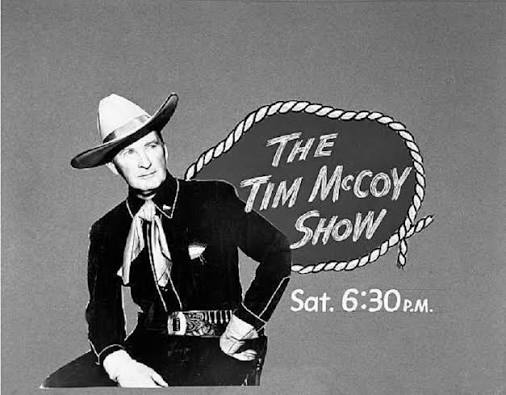
Tim McCoy had served in the Army, twice, along with being a “B” Western movie hero. His “KTLA” television show, with alternating co-hosts, Iron Eyes Cody, and Chief Yowalchie. Educated the program’s listeners on the real history of the different Native American tribes, and their folklore.
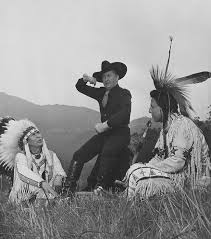
Above left to right, Chief Yowalchie, Tim McCoy, and Iron Eyes Cody.
Let me introduce my reader to a recognized expert on Native American culture:
COLONEL TIM MCCOY:
Timothy John Fitzgerald McCoy was born in Saginaw, Michigan, on April 10, 1891. Tim’s father, Timothy H. McCoy, enlisted in the Union army during the Civil War, he was 16-years old. Later, he would become the “Police Chief of Saginaw”. Tim’s mother was Catherine “Kitty” Fitzpatrick McCoy.
It was while attending “St. Ignatius College (Loyola University)”, in Chicago, Illinois. Where his parents had hoped their son would study to become a Jesuit Priest, that fate stepped in. One week, the college student skipped classes, and spent most of his time watching the “Miller Brothers 101 Ranch Wild West Show”. Along with taking every opportunity to speak to the cowboys, and the other performers, that included Native American’s.
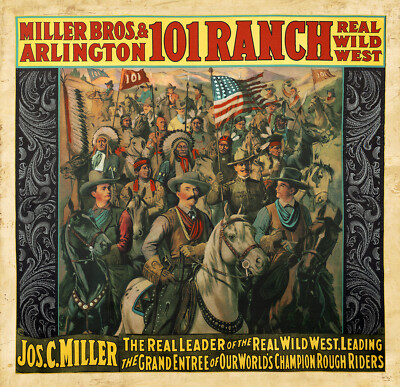
At the age of 18, Tim McCoy, left college and Chicago. The young man bought a one-way ticket to Wyoming, with dreams of becoming not a “Jesuit Priest”, but a “Cowboy”. During the Summer of 1909, Tim found grueling work in the hay fields of the “Double Diamond Ranch”. The young man was learning what a real cowboy’s life was really like, and after proving himself, he was included in the “Fall Round Up”.
Some film historians, have mistakenly used the skipping of that one week of Tim McCoy’s college education. As the point, he started learning the Arapaho language. This mistake has created an alternate time line, still in use by some writers, of the events that actually happened.
The actual year Tim McCoy started to learn the “Arapaho Language”, was still 1909. When Tim met Arapaho, George Shakespeare, and the two became friends. It was Shakespeare that first taught McCoy the basics of his native language.
My reader may ask how the Arapaho man, Buffalo Robe, became named for William Shakespeare? The United States Indian Agents and census takers on the “Reservations”, routinely assigned European names to the Native American’s, because, simply, they did not speak, or understand the tribe’s language.
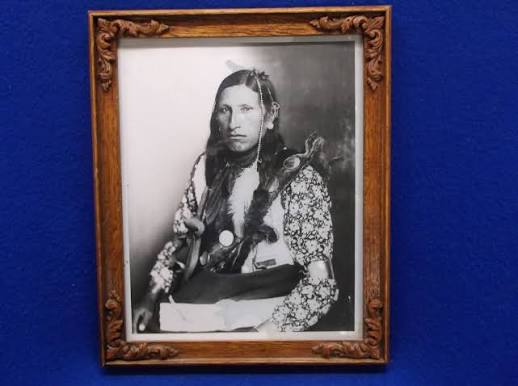
In 1912, while riding through Wyoming’s, Wind River country. Tim McCoy met another Arapaho man, Chief-Goes-In-Lodge. Who was a major leader of the Northern Arapaho nation.
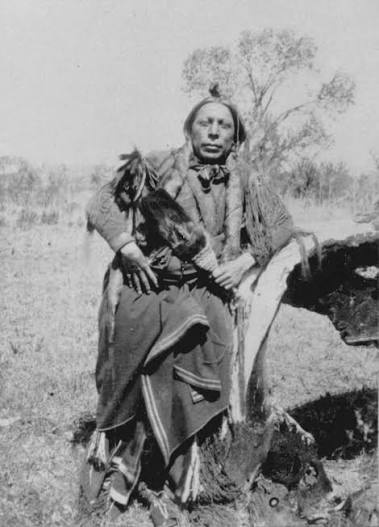
Through Chief Goes-In-Lodge, Tim McCoy would met both Chief Black Coal and
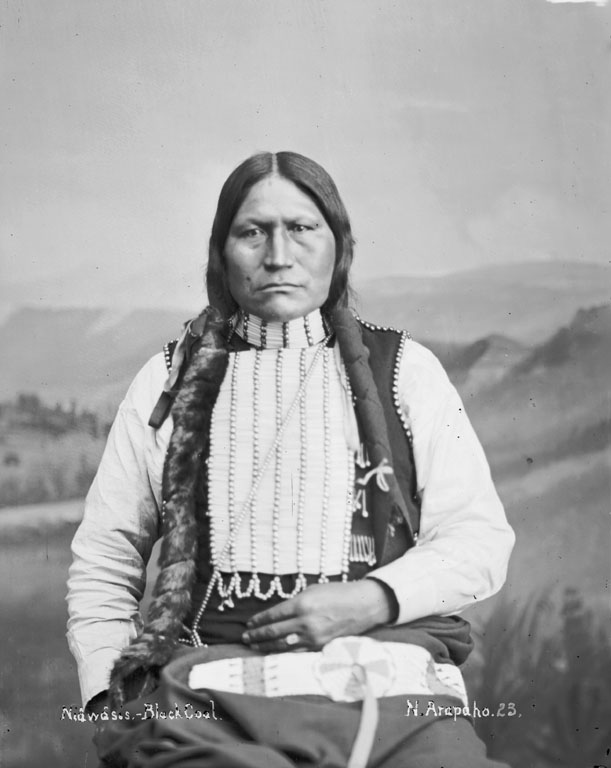
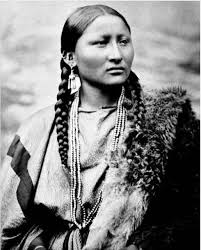
and Chief Sharp Nose. These three Arapaho Chief’s were assisting their people adjust to reservation life.
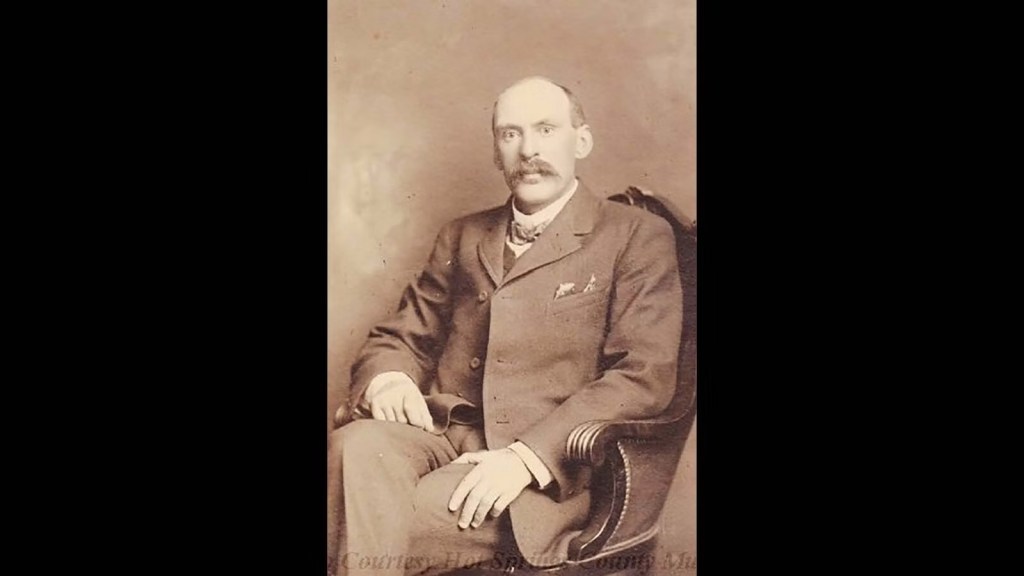
Back in 1910, Tim McCoy had left the “Double Diamond Ranch”, and rode into the town of Thermopolis, and spoke to the local Sheriff about finding work. He was directed to Tom Walsh, see the picture below, a perfect choice for the young Tim McCoy. Like his own father, who had grown up in a Gaelic-speaking community. Tom Walsh had a very distinctive brogue, and was known as “Irish Tom”. because he also spoke Gaelic. Walsh was also nicknamed, “Humpy the Boar Ape”, because of his stooped posture as he walked, and his physical build.
One other point about “Irish Tom”, was he was sort of a Wyoming Outlaw. Tim became part of Wyoming History, when he joined what was know as “Walsh’s Outlaw Train”. It seemed that stray cattle mysteriously ended up in “Irish Tom’s” heard. He thought there was the “Maverick Law” that made this practice of branding other men’s cows illegal. According to his own autobiography, 1977’s, “Tim McCoy Remembers the West”. Some of Tim’s friends in the “Outlaw Train”, ended up being shot in the back.
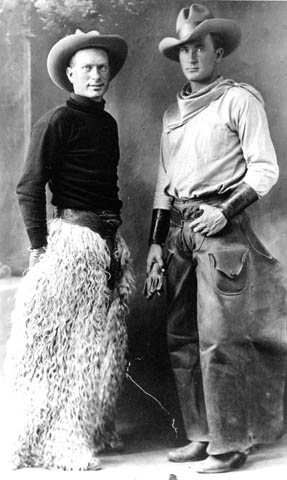
Below right, is Tim McCoy in 1912 with an unidentified cowboy.
Then there was the question, was Tim McCoy a real singing cowboy?
According to “Tim McCoy Remembers the West”. The answer was YES, and NO!
He was not a Gene Autry, Roy Rodger’s singing cowboy, or even like “B” western bad guy, and last “Universal Picture’s Frankenstein Monster”, Glenn Strange, style singing cowboy. HOWEVER, his soothing tenor voice, sang “Irish Ballads”, to the cattle at night. His singing, also gave him the nickname of “Irish Tom’s Singing Canary”.
For this fans of “Abbott and Costello Meet Frankenstein”, my article is “GLENN STRANGE: The Monster Sings!” found at:
https://www.bewaretheblog.com/2022/07/glenn-strange-monster-sings.html
By 1915, TIm McCoy, had saved enough money to file for a 640 acre homestead, he would call, the “Eagle’s Nest”.
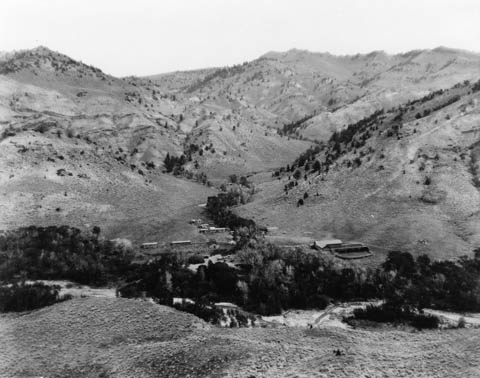
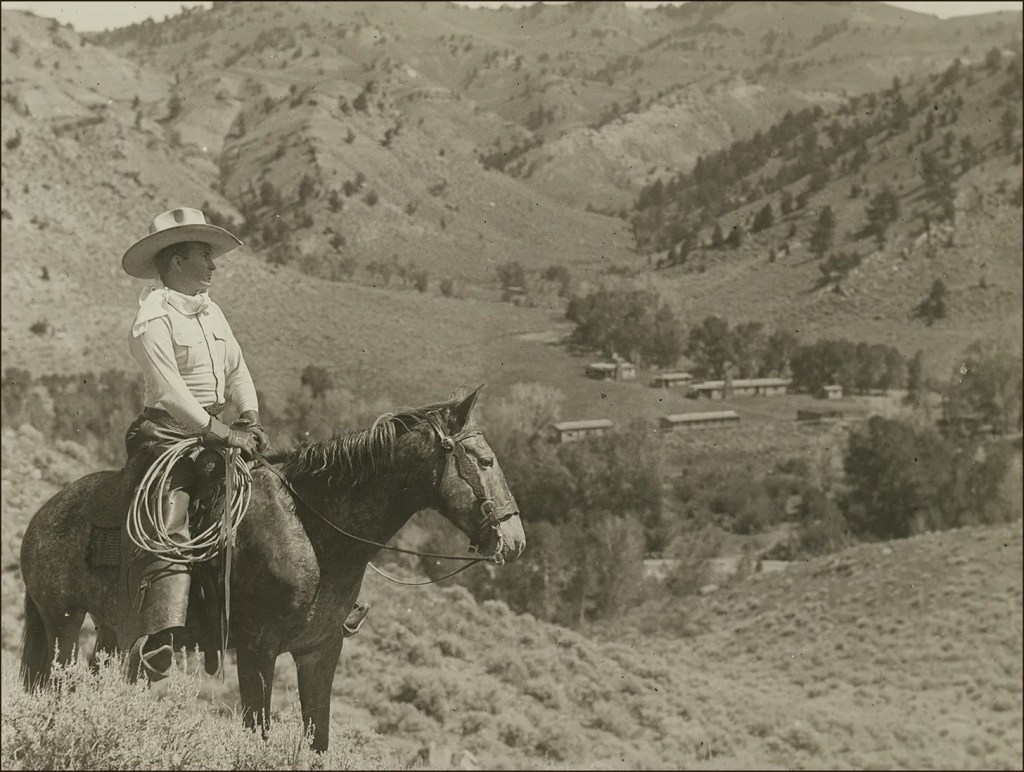
Two unrelated events in Tim McCoy’s life took place during 1917.
On April 6, 1917, the United States Officially entered the “First World War”. Tim McCoy knew he was eligible for the “Draft”, and wanted to avoid it and become an officer, not a regular recruit. His way around the “Draft” was by strategically using Wyoming politics. Everyone knew that former President Theodore Roosevelt wanted to create an all volunteer cavalry force. In early 1917, the exact month is not available to me, McCoy wrote him that he could recruit 400 men from Wyoming and Montana. Roosevelt replied by telegram for Tim to proceed. However, President Woodrow Willson rejected the former President’s plans.
Next, McCoy went to see Wyoming Governor Frank Houx, and Houx’s secretary discovered that officer qualifying exams were being taken at Fort Logan, Colorado.
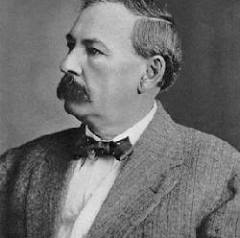
According to “Wyoming’s Official Archives”, Tim McCoy had missed the deadline for taking the exam, but with a letter of recommendation from the governor and telegrams from former President Roosevelt, he headed for Denver. The result was officer training camp at Fort Smelling, in Minnesota. According to the website, “MNOPEDIA”, at:
https://www.mnhs.org/mnopedia/search/index/thing/officers-training-camps-fort-snelling-1917
“At camps held around the country during World War I, the U.S. Army quickly trained the officers it needed to grow from a small defensive force into one of millions, ready to step onto the world stage. Fort Snelling hosted two such camps in 1917: one between May 11 and August 15 and another between August 28 and November 27.”
Although, I could not find the exact date Tim McCoy started “Officer Training”, it was during that training that he met Agnes Heron Miller, putting him in that first group.
During his officers training, on June 9, 1917, Tim married Agnes . Her father was novelist, Henry Valentine Miller, whose works include, the 1934, “Tropic of Cancer”. That still notorious autobiographical novel, filled with candid sexuality, became the court case the ended with guaranteeing free speech in literature. Her mother was American stage actress, Helene Wallace Stoepel, known professionally, as “Bijou Heron”.
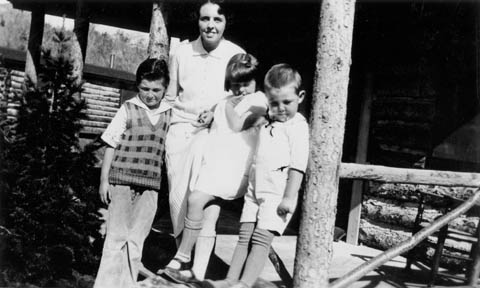
From a much later date, above, Agnes McCoy and their children, Gerald, Margaret, and John.
Completing his training, at Fort Smelling, Tim McCoy was commissioned a “Captain of Cavalry”. During the First World War, he remained in the United States as a training officer, not of Cavalry, but the more needed artillery. He left the Army at the war’s end, as a “Lieutenant Colonel”.
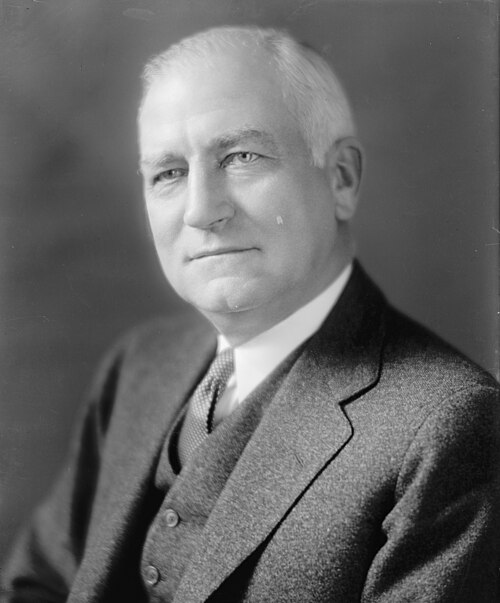
Besides returning to the “Eagle’s Nest”, and his family. Wyoming Governor Robert Carey, below, appointed Tim McCoy, the “Adjutant General of the Wyoming National Guard”, with the “Brevet Rank of Brigadier General”. This made him, as of this writing, still the youngest Adjutant General of any State, or U.S. Territory, at 28-years-of-age.
There are some biographer’s that refer to Tim McCoy’s “Eagle’s Nest Dude Ranch”. There was no such thing, but friends of his, especially in the Arapaho Nation, would spend time relaxing there, but they never were paying guests as a “Dude Ranch” required. Even during the war, “Eagle’s Nest” ranch, remained a working cattle and horse breeding ranch. Which over time, would expand to 5,000 acres.
However, there is a possible source for the misconception that Tim McCoy was running a “Dude Ranch”.
David Townsend, the president of the “Mountain Plains Enterprise Film Company”, wanted to build “Sunshine Studios”, on a section of Tim McCoy’s ranch.
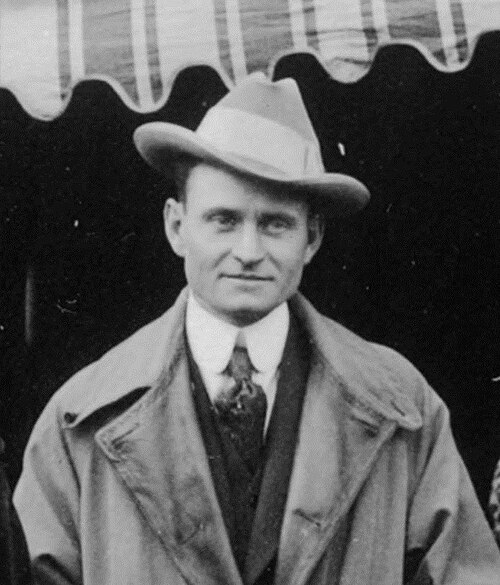
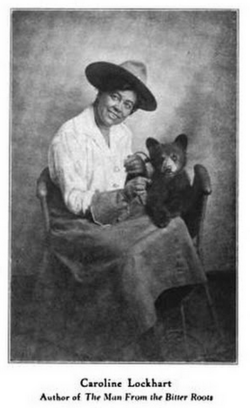
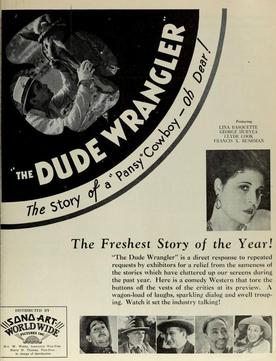
This was to be able to shoot the motion picture, “THE DUDE WRANGLER”, based upon a 1921 novel of that title, by authoress, Caroline Cameron Lockhart, but the project was abandoned. The film was to have starred Tim, but he accepted a major offer, directly from, Vice-President, Jesse L. Lasky, of “Famous Players – Lasky Corporation”. For a western that would be distributed by “Paramount Pictures”, and Lasky was the “Presenter (aka: Executive Producer).
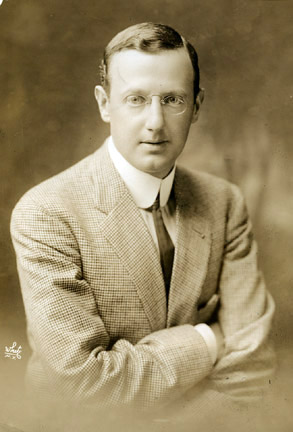
“The Dude Wranger” would be made by a different company in 1930, without McCoy, or Townsend’s involvement.
In September 1922, Tim McCoy resigned as “Wyoming’s Adjutant General”.
THE COVERED WAGON premiered in New York City on March 16, 1923
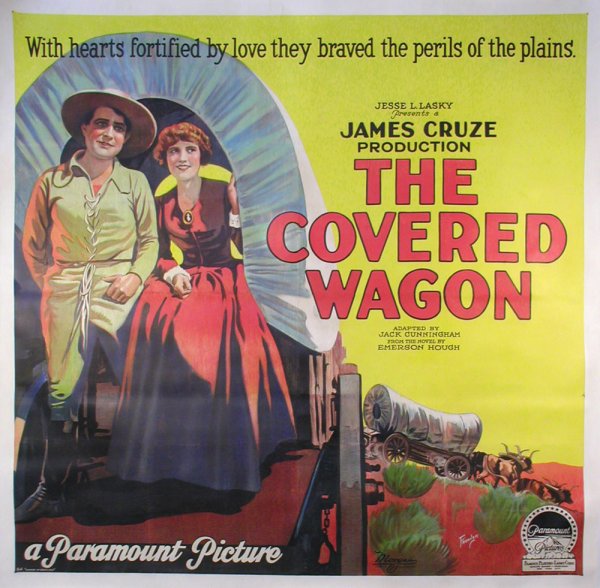
This was a major film for the silent screen. It would be shot in five different states, and on, 15 locations. The covered wagon’s seen in the film where real family heirlooms, that had actually brought their filmed driver’s family across the United States. The credited cast was 9-actors, the uncredited cast was also 9-actors. The director, James Cruze, was set to start filming. As was cinematographer Karl Brown. The production would start in November, 1922.
Everything was ready to shoot, but one thing! That was were Tim McCoy entered the motion picture business. The purpose of Jesse Lasky hiring Tim McCoy was that:
1. He wanted real Native American’s to portray the “Indians” in the motion picture.
2. Lasky knew of McCoy’s relationship with the Northern Arapho Nation, and wanted him to get the Native American actors. They would come from the “Wild River Reservation”, located in the west-central portion of Wyoming. The reservation is actually made up of two Native American Tribes, the “Northern Arapho”, and the “Eastern Shoshone”.
At the appointed time, Tim McCoy arrived with his Native American actors, and one problem became apparent. No one in the film company spoke either Native American languages, but McCoy did. Before he knew it, Tim McCoy found himself on the official cast listing as the film’s, “Technical Advisor” and the “Liaison: Indians”.
He was requested to take some of the Arapaho actors to “Hollywood” for the premiere of the “The Covered Wagon”. Tim McCoy is the man in his signature, “Ten-Gallon, Cowboy Hat“, in the following photo.
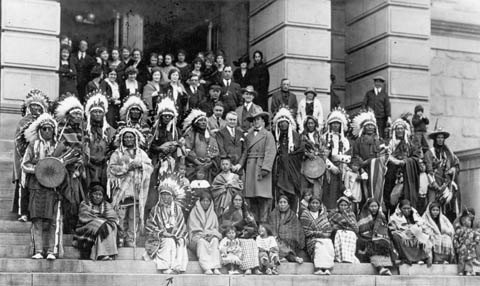
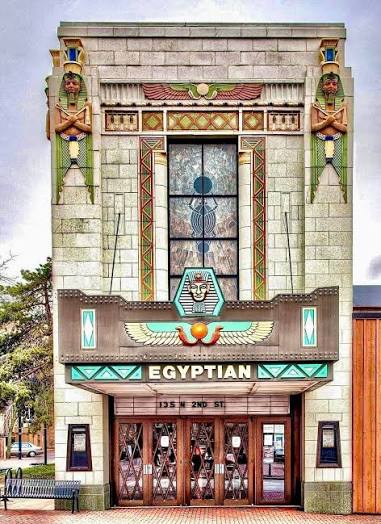
Below Grauman’s Egyptian Theatre, Hollywood, where Colonel Tim McCoy had a “Live On Stage Introduction”, to “The Covered Wagon”, accompanied by 35 his Arapaho actors.
I quote from “WYOHISTORY.ORG”, at:
“The first live prologue was staged at Grauman’s Egyptian Theatre in Hollywood, Calif., in the spring of 1923. All the subsequent prologues for various other movies were roughly the same: Approximately 35 Indians, dressed in their own war bonnets, fringed buckskin shirts, beaded leggings and quilled moccasins, stood on stage with Tim McCoy. Each individual stepped forward in turn to tell his or her own story in sign language, with McCoy interpreting.”
Tim McCoy took his prologue show on the road in the United States, crossed the Atlantic, and showed it in both London, England, and Paris, France, and returned to the United States.
There is a short subject from 1924, “The Man Who Would Not Die”, that lists Tim McCoy’s name as an actor. Current research states he had no connection to that short as an actor. However, he was still working as a Native American technical adviser, see the next motion picture, and it may be, but not confirmed. That had worked on the short in that capacity.
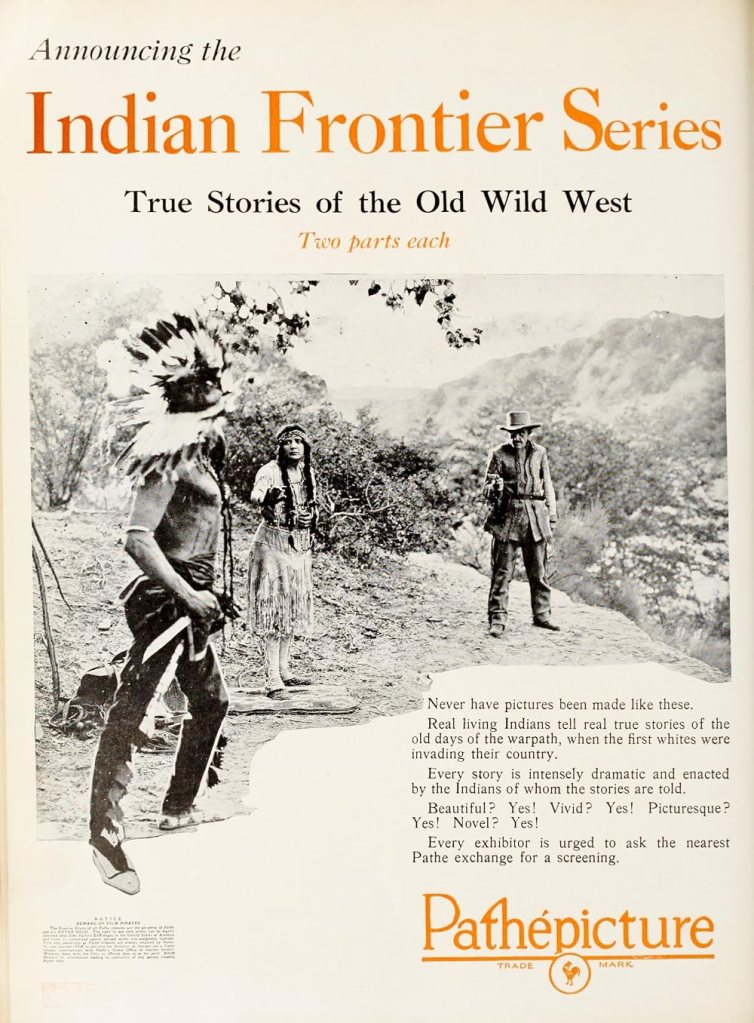
Tim McCoy’s actual first appearance on-screen was in:
ZANE GREY’S THE THUNDERING HEARD released March 1, 1925
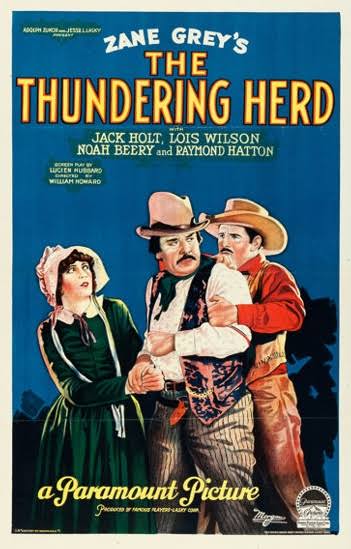
For Tim McCoy, “The Thundering Heard” is more of a transition movie.
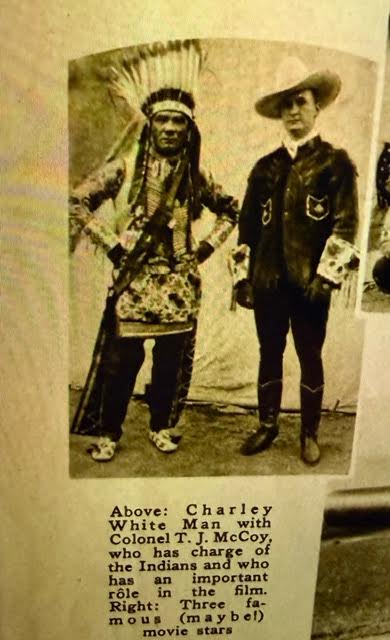
As a character in the picture, he portrays “Burn Hudnall”, and is billed as “Col. T. J. McCoy”. “Burn” is the son of the central family of buffalo hunters, and pioneers entering Texas. Charles Ogle, the “Frankenstein Monster” in Thomas Edison’s, 1910 film, portrayed his father, “Clark Hudnall”, Lillian Leighton, portrayed “Burn’s mother”, and Maxine Elliott Hicks portrays “Burn’s” sister, “Sally”.
I say transition, because Tim McCoy was also the “Production Coordinator: Photos and Information”, the “Buffalo Wrangler”, he had to round-up all 2,000 buffalo in “Yellowstone National Park”, for the title sequence at the climax, and he was also the “Director of the Indians”. Once again he was the only one in the crew who spoke their languages.
Below, is the only photo of “Colonel T. J. McCoy” I could locate for his first on-screen appearance.
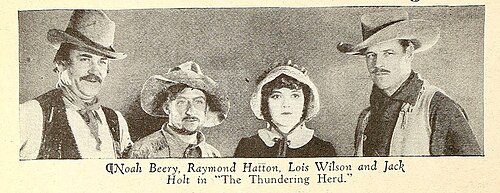
The love interest was provided by Jack Holt, portraying “Tom Doan”. Our hero, was soon to be known more for portraying villains in movies. Lois Wilson, portrayed “Milly Faye”, the ward of the crooked gambler and primary villain of the story, “Randall Jet”, portrayed by Noah Beery, Sr. His henchman was Raymond Hatton portraying “Jude Pilchuk”. Hatton would be cast opposite John Wayne and Duncan Renaldo in 9 of “The Three Mesquiteers” westerns, and play the prospector in Roger Corman’s, 1956, “Day the World Ended.
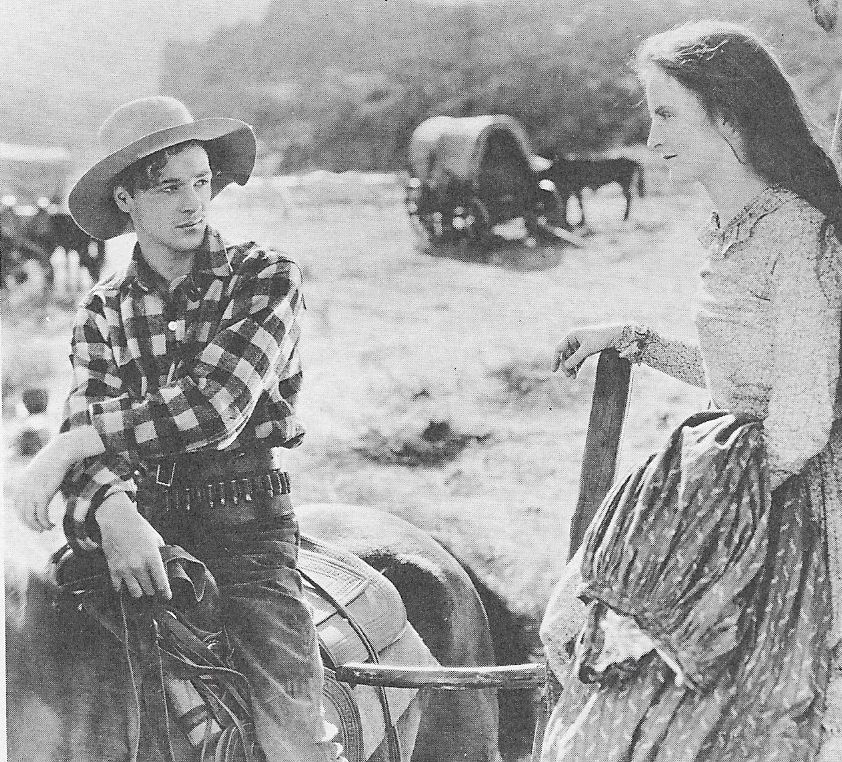
If my reader doesn’t recognized that young, uncredited “Buffalo Hunter”, above, opposite Lois Wilson. The actor’s name is Gary Cooper, and my article is, “GARY COOPER: 20 Selected Feature Films”, at:
https://www.bewaretheblog.com/2025/12/gary-cooper-20-selected-feature-films.html
Next, Tim McCoy left “Hollywood” and returned to Wyoming, and the “Eagle’s Nest”.
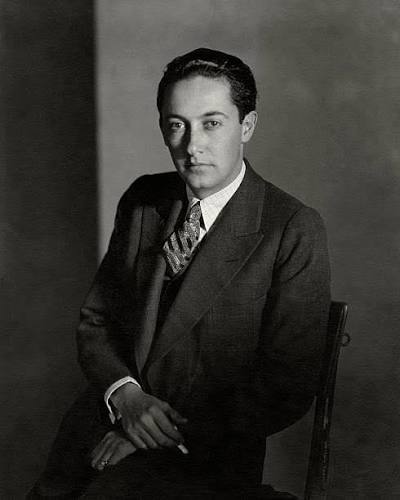
His name was Irving Grant Thalberg, he was now working for “MGM”, but when working at “Universal Pictures”, “The Boy Wonder”, was responsible for the career of Lon Chaney, giving him the name of “The Man of a Thousand Faces”. Now, he showed up at Tim McCoy’s front door.
He was born in the Russian Empire as Lazar Meir, but his family moved to Canada, and with a more Canadian sounding name he became Louis Burt Mayer. In 1924, he co-founded “Metro-Goldwyn-Mayer” studios.
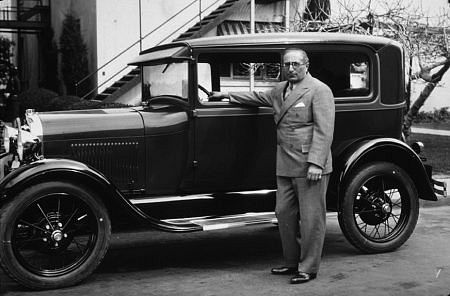
Mayer was a business man and he had seen the popularity of the other studios making westerns, and profits, with the likes of Tom Mix, Buck Jones, and Hoot Gibson.
Mayer created a banner to advertise “MGM’s” new actor, saying that he was “THE REAL MCCOY!”
Tim McCoy’s first starring western is a lost motion picture.
WAR PAINT was released on October 10, 1926
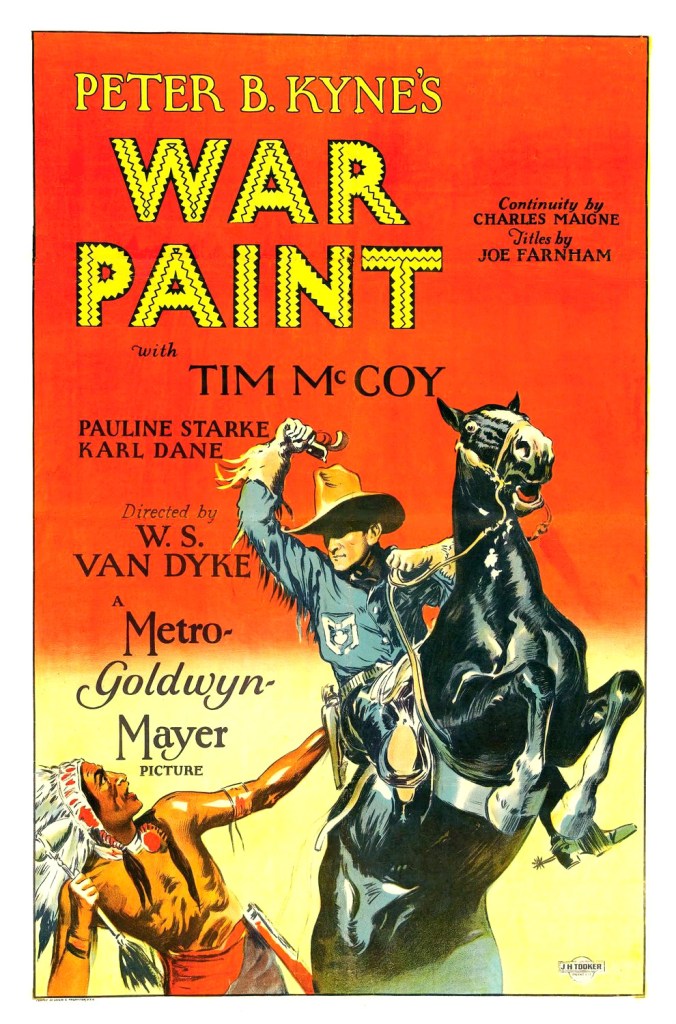
W. S. Van Dyke directed, among his future films were 1931’s, “Trader Horn”, starring Harry Carey, the first Johnny Weissmuller and Maureen O’Sullivan, “Tarzan” movie, 1932’s, “Tarzan the Ape Man”, the first William Powell and Myrna Loy teaming in 1934’s, “The Thin Man”, and the Norma Shearer and Tyrone Power, 1938, “Marie Antoinette”.
Tim McCoy portrayed “Lt. Tim Marshall”, in front by horse.
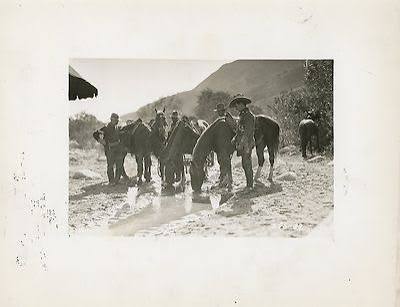
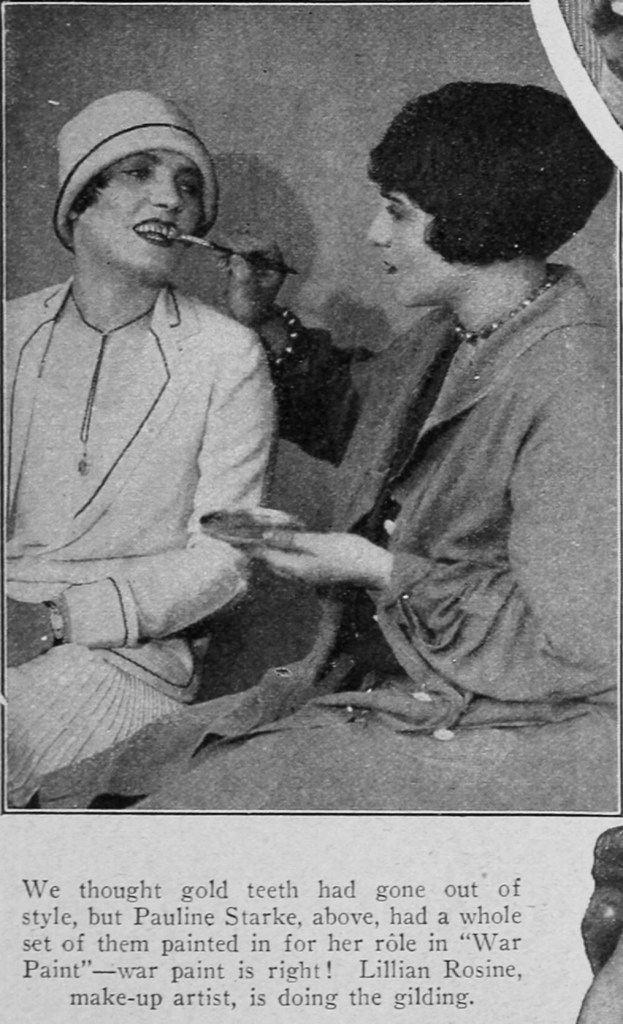
Pauline Starke portrayed “Polly Hopkins”.
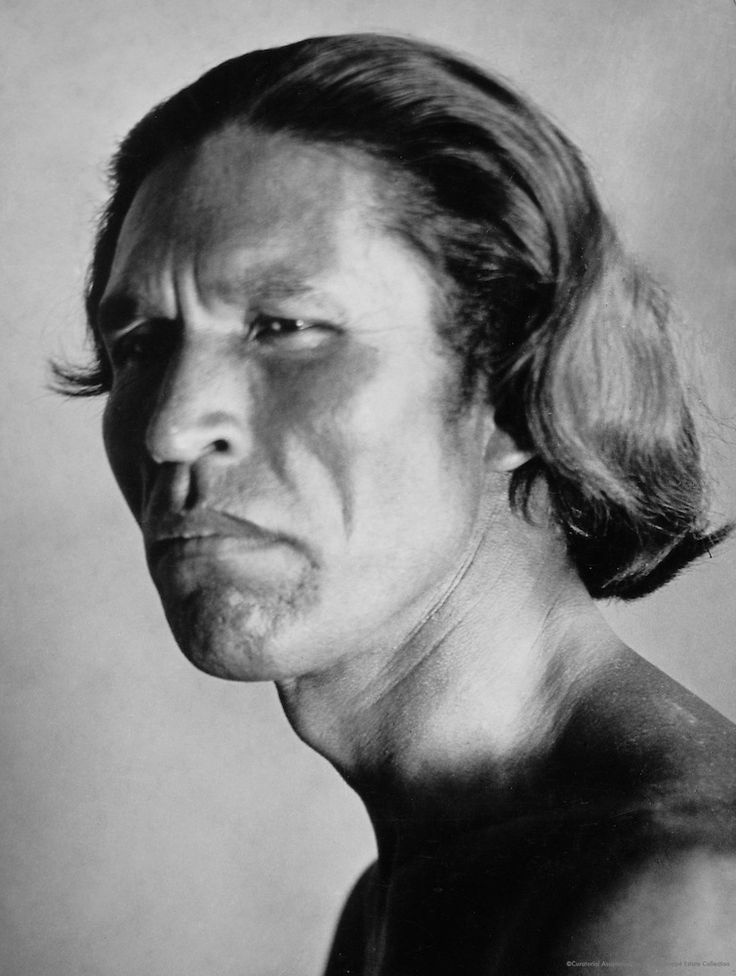
Chief Yowlachie, in his 7th motion picture, portrayed “Iron Eyes”. This appears to be the first time he met Tim McCoy, more later.
Iron Eyes Cody portrayed an uncredited “Indian”.
All we know about the screenplay, is that it was based upon a Peter B. Kyne’s story. He was the, author of 1913’s western classic novel, “The Three Godfathers”. There does not seem to be any record of a published story under the title “War Paint”, and at the time. Some writers were hired to come up with a story for a picture, but that also is not documented as to the screenplay’s source. Although, Charles Maigne is credited with adapting the Kyne’s story into a screenplay.
All we know of this “Lost Picture’s” storyline, sounds very familiar. “Iron Eyes” leaves the reservation with a group of followers, and Cavalry “Lt. Tim Marshall” is ordered to bring them back.
To save money, there was, a second Tim McCoy, motion picture shot at the same time as “War Paint”. That story is set during the “French and Indian Wars (1754 – 1763)”.
WINNERS OF THE WILDERNESS released on January 15, 1927
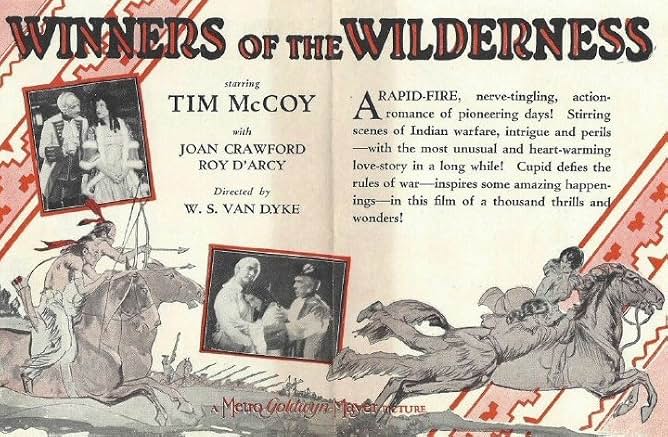
Once again, W. S. Van Dyke directed.
Colonel Tim McCoy portrayed “Colonel Sir Dennis O’Hara”, a British Wilderness Scout.
Joan Crawford portrayed “René Contrecoeur.” Crawford was two-films away from Tod Browning’s masterful horror film, 1927’s, “The Unknown”, in which she co-starred with Lon Chaney. “The Unknown”, is part of my article, “Joan Crawford: 7 Decades of Film Work” to be read at:
https://www.bewaretheblog.com/2025/04/joan-crawford-7-decades-of-film-work.html
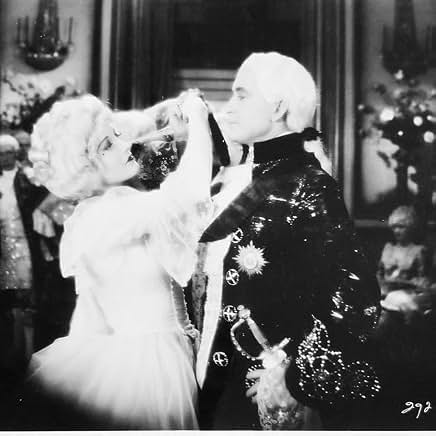
Above, and below photo’s of Joan Crawford and Colonel Tim McCoy.
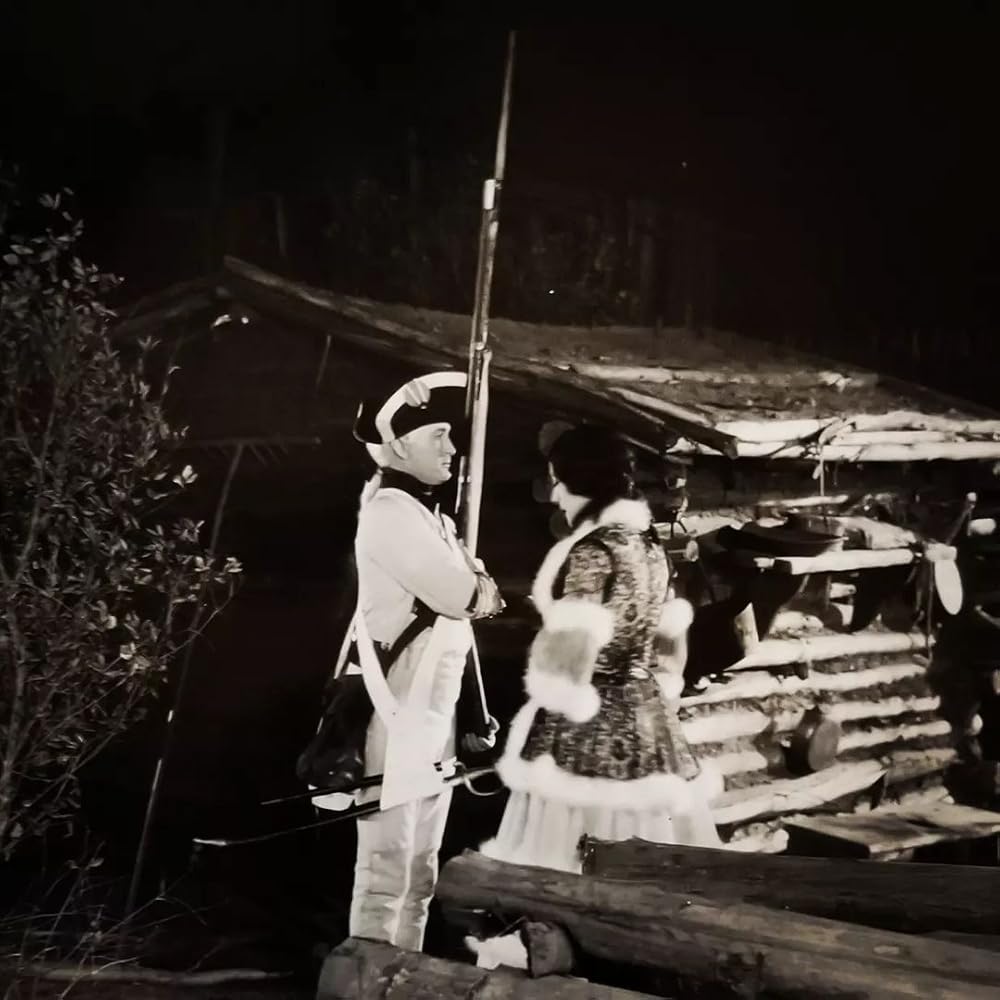
Roy D’Arcy portrayed “Captain Dumas”.
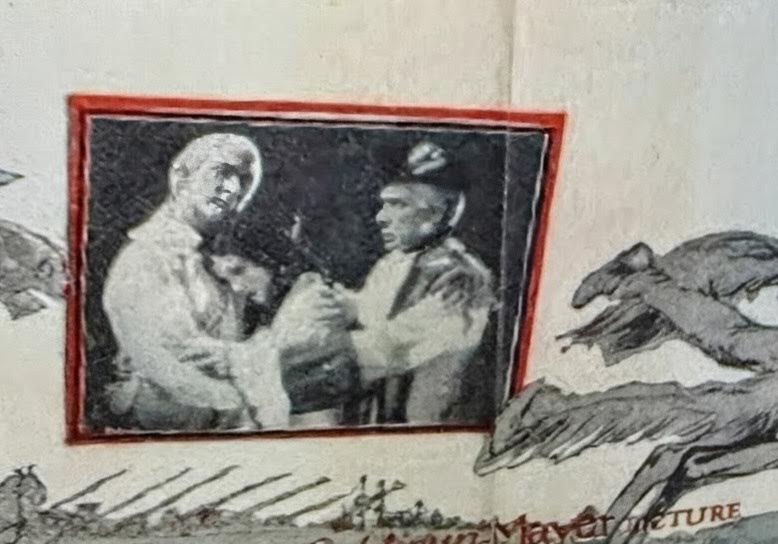
Above left to right, Edward Connelly portraying “General Contrecoeur”, Joan Crawford, his daughter, and Roy D’Arcy portraying “Captain Dumas”.
Chief John Big Tree portrays “Chief Pontiac”. No photos, or painting of “Pontiac” exists.
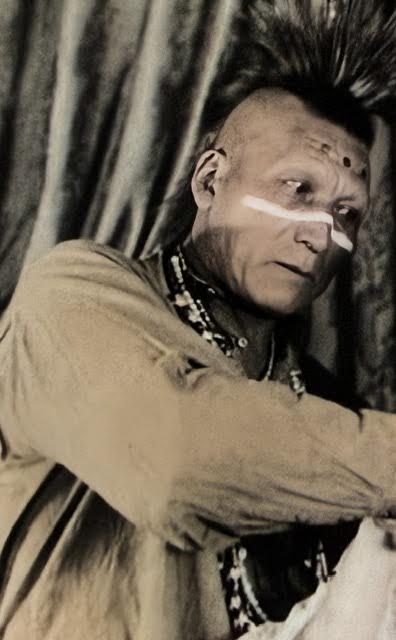
The plot has British wilderness scout, “Colonel Sir Dennis O’Hara”, who speaks Odawa, and is a friend of the native American’s. Sent to make peace with “Pontiac” for the British. While, French “Captain Dumas”, is doing the opposite. Meanwhile, “O’Hara” falls in love with the French commander, “General Contrecoeur’s”, daughter, “Rene”, and her for him. To make this story historic, Edward Hearm portrayed American “General George Washington”, and Will Walling portrays British “General Braddock”, whose defeat is portrayed at the picture’s climax.
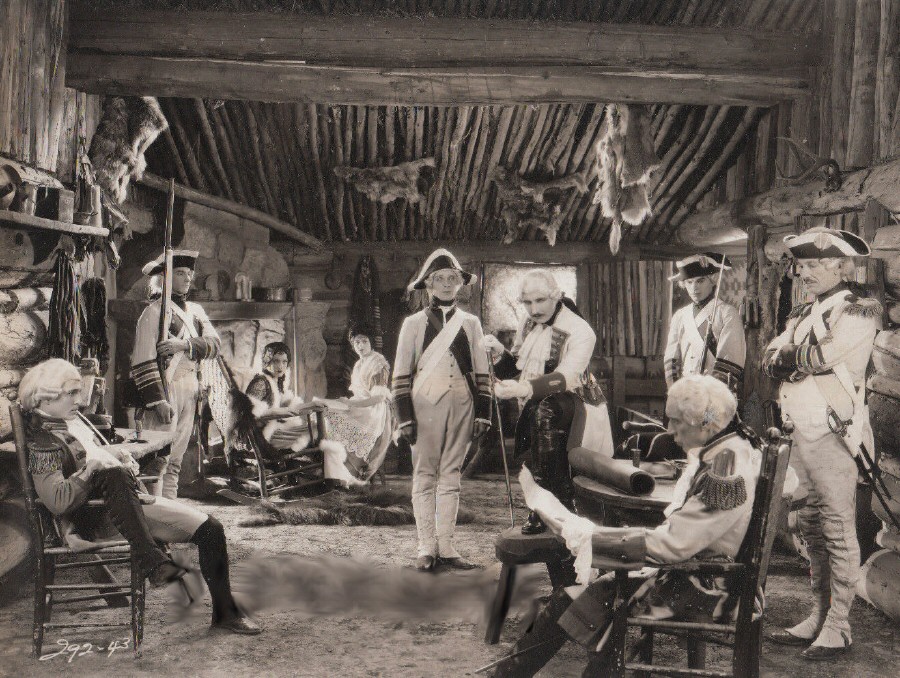
Above, an example of the work of “Set Designer, David Townsend”.
The motion picture is remembered for one scene shot in Two-Strip Technicolor . That was seen, at the end of the story, with “O’Hara” and “Rene” arriving by carriage to waiting soldiers. However, that ending is missing, and only a very bad, scenes missing, black and white, 16mm print remains.
Next for Tim McCoy, was taking the two-day, “Mexican-American War”, December 6 and 7, 1846, “Battle of San Pasqual”, and condensing it into a 56-minute movie with an added love interest.
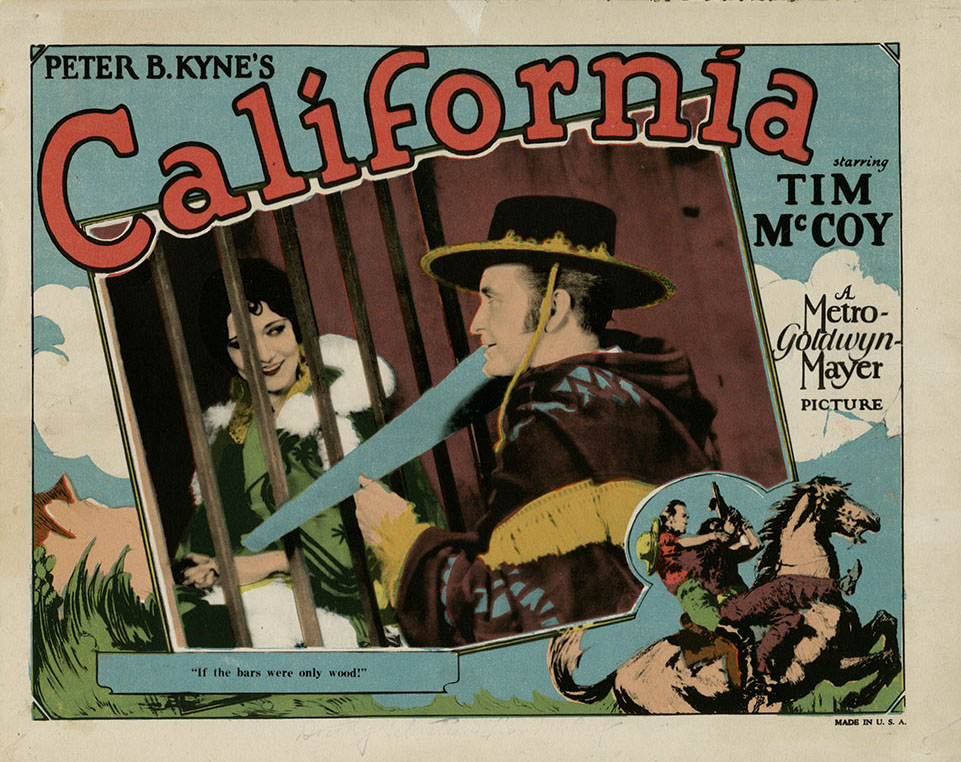
Above, Dorothy Sebastian portraying “Carlotta Del Rey”, and Tim McCoy portraying “Captain Archibald Gillespie”.
Directed by W. S. Van Dyke, from a story by Peter B. Kyne.
Fred Warren portrayed “Kit Carson”, and Edwin Terry portrayed “Brigadier General Stephen W. Kearny”.
The actual battle took place in what is today the northern most community of San Diego, California, county, and ended in a draw with both sides claiming victory.
I could not locate any still from the picture and what the entire plot was, but I do know that American soldier “Captain Gillespie”, ends up with Mexican girl, “Carlotta Del Rey”.
Another “Lost Western”, 1927’s,”The Frontiersman”, co-starring Claire Windsor, followed form “MGM”, and then:
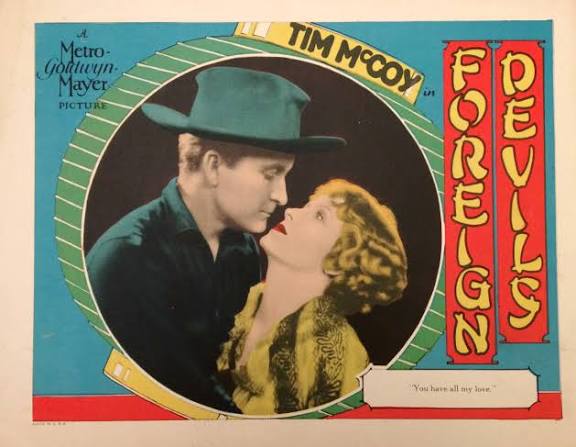
FOREIGN DEVILS released Steptember 3, 1927
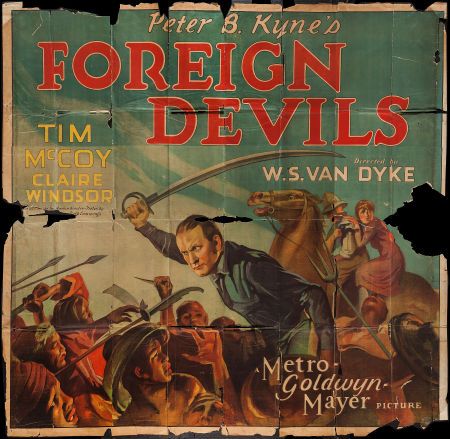
W. S. Van Dyke directs Tim McCoy, in a story by Peter B. Kynes, set in China during “The Boxer Rebellion”.
Tim McCoy portrayed “American Captain Robert Kelley”.
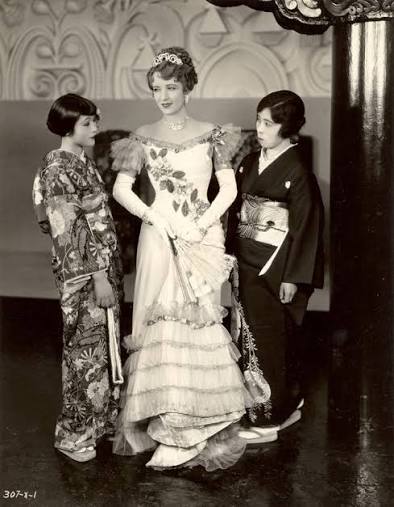
Claire Windsor portrayed “Lady Patricia Rutledge”.
Cyril Chadwick portrayed “Lord Vivien Cholmondely”.
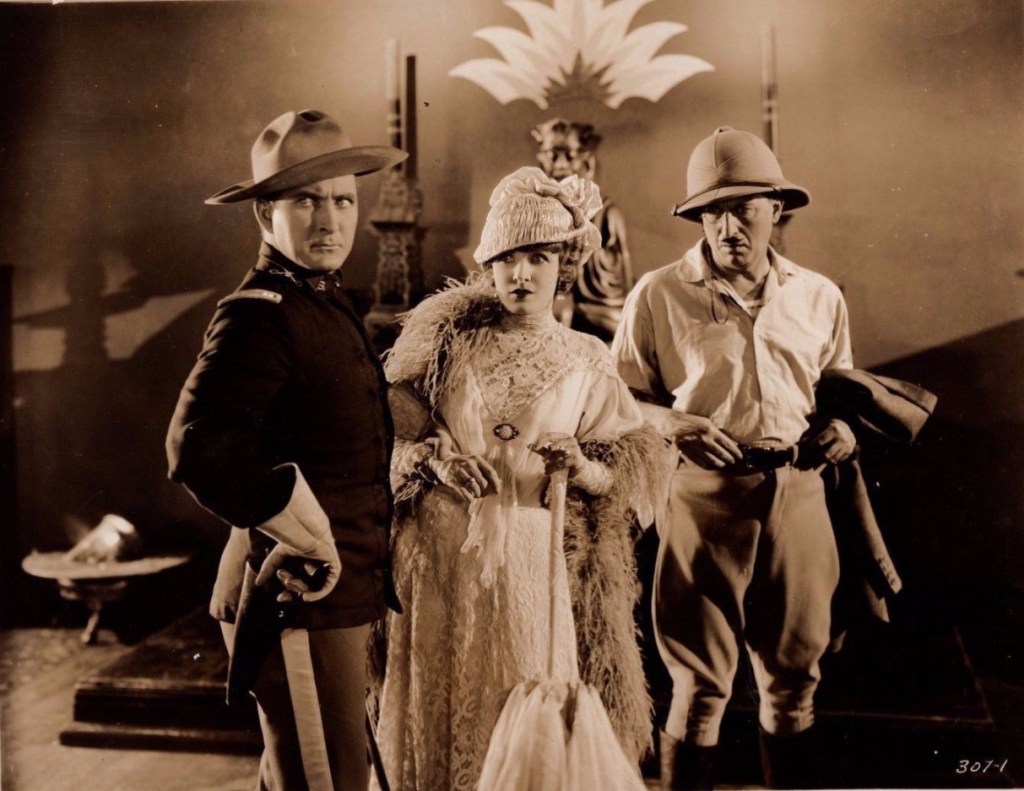
Above left to right, Tim McCoy, Claire Windsor, and Cyril Chadwick., below, the same three actors in that same position.
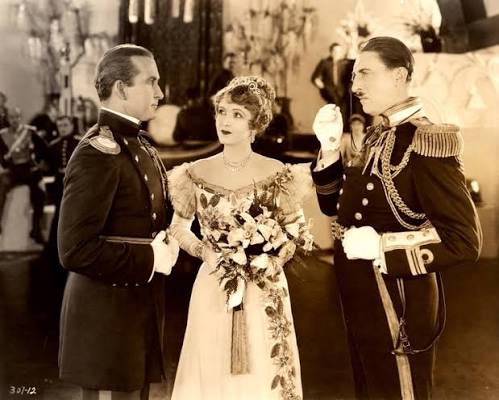
This 50-minute motion picture is focused on the siege of the “Foreign Countries Compound”, the “Foreign Devils” of the title, at “Beijing” aka: “Peking”, by the “Boxers”, an anti-Christian, anti-Foreign, and anti-imperialist, organization, that actually lasted 55-days, between June 20 and August 14, 1900. While, American “Captain Kelley” and British “Lady Rutledge” fall in love.
Three motion pictures later, found Tim McCoy reunited with Joan Crawford.
THE LAW OF THE RANGE released January 28, 1928
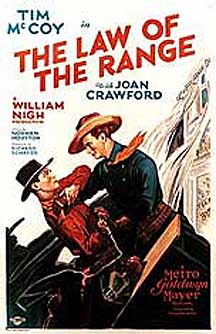
Tim McCoy portrayed “Texas Ranger, Jim Lockhart”.
Joan Crawford portrayed “Betty Dallas”. She had just been seen in a football story. 1927’s, “West Point”, and followed this feature, with the tile role in the 1928 silent, “Rose-Marie”. That kept the majority of the story from the popular, 1924, Broadway operetta, but without the music.
Rex Lease portrayed the “Solitaire Kid”. Lease has just been seen in the 1927 comedy, “The College Hero”, and followed this picture with 1928’s, “Red Riders of Canada”.
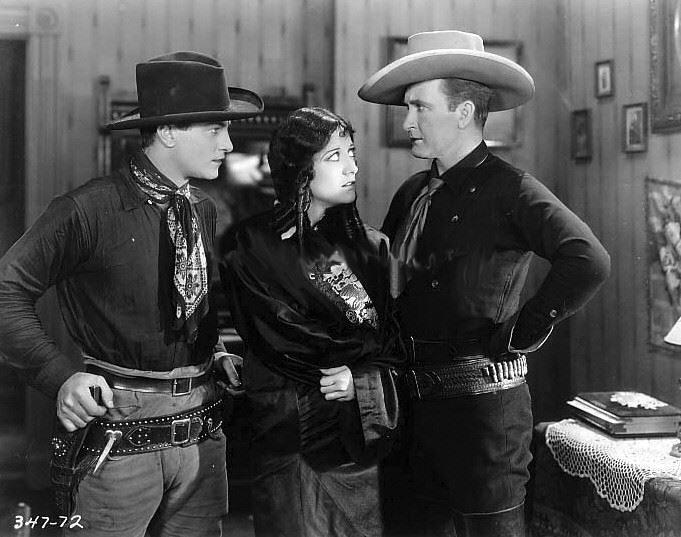
Above left to right, Rex Lease, Joan Crawford and Tim McCoy.
The motion picture was filmed mostly on Tim McCoy’s “Eagle Nest” ranch.
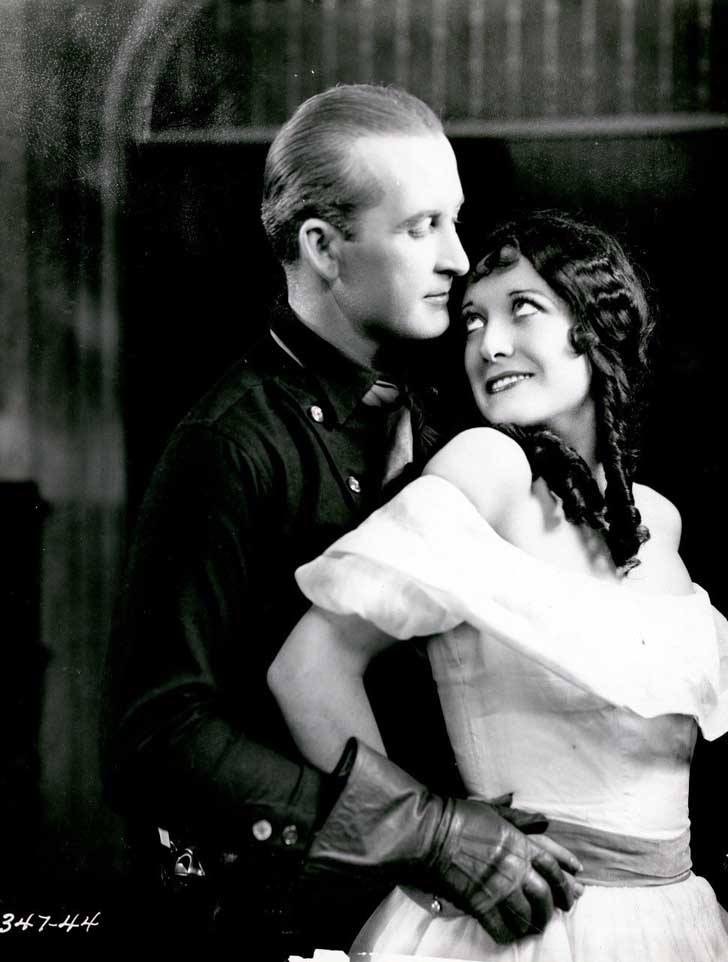
Above, “Texas Ranger Jim Lockhart” with his girlfriend “Betty Dallas”. She is on a stagecoach that is being held up by a masked man, and “Betty” notices he has a tattoo, exactly like “Jim’s”. Getting “Betty” to question, if Jim” has turned outlaw? “Texas Ranger Jim Lockhart” now goes in pursuit of the outlaw, “The Solitaire Kid”, which makes up most of the plot line. Below, “Lockhart” confront’s “The Kid’s” gang as he looks on.
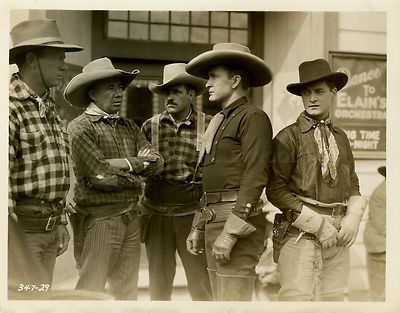
Meanwhile, “Betty” is still confused over the tattoo on the bandit’s arm.
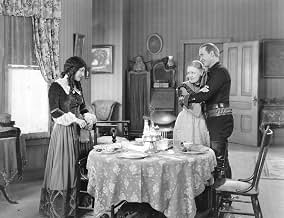
Above left to right, Joan Crawford, “Jim’s” mother, portrayed by Bodil Rosing, and Tim McCoy.
Now the Dramatic Climax:
The “Kid”, a robber, and murderer, is on the run with “Jim Lockhart” pursuing him across the country”Jim”catches up with the kid. As a raging wildfire is destroying the brush , a a very physical fight between the two starts.
How “Betty” and “Jim’s” mother arrive on this seen, apparently is part of lost footage.
With the brush fire raging out of control, the two continue their fight As their shirts are ripped open, the tattoo seen by “Betty” is revealed on both men’s arms. The fight stops for the moment, as they realize their brothers. Twenty-years-ago, Renegades raided their families wagon train and took one of the two brothers. Who has become “The Solitaire Kid”. Bound by his duty as a “Texas Ranger”, “Jim” needs to bring his brother to justice, but both men are being overcome by the smoke and fire.
How, “Betty Dallas” and the brother’s mother arrive is unknown, as it is on missing footage. There are reviews stating “Jim” shoots and kills his brother. Where that started is unknown, but is untrue.
The actual ending is one of redemption to satisfy the”Hayes Censorship Office”.
As the moving brush fire comes closer to the brothers, both are fighting the smoke and falling brush, and know that both cannot survive. At this point, the required “Redemption” takes place. As “The Kid” positions himself to give his brother protection and this works as the brush fire now continues away from them. All of this is being watched, at a safe distance, by “Betty” and the “Brother’s mother”. Now clear of the brush fire, “Jim” has “The Kid” with him, who reunited with his family, now atones for his sins, and dies in “Jim’s” arms.
Then there was Tim McCoy portraying a “Zorro” like character.
BEYOND THE SIERRAS released on September 15, 1928
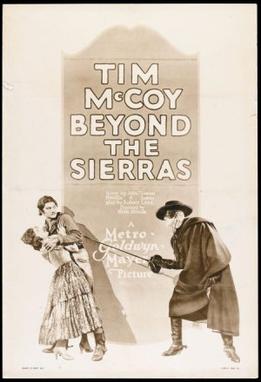
Apparently, the United States government sends secret agent, Tim McCoy to Spanish California. His character is only credited as “The Masked Stranger”, and his actual name is never revealed in the motion picture. McCoy must stop the evil Americano, land grabber “Owens”, portrayed by Roy D’Arcy, who is after a land grant that includes a Gold Mine. While, romancing “Don Carlos de Vallle’s”, portrayed by Richard Neil, daughter, “Rosa”, portrayed by Sylvia Beecher.
A year before “Beyond the Sierras” was released. Something took place that was going to affect Tim McCoy’s future with “MGM”.
—-Al Jolson was heard talking in “The Jazz Singer”, released on October 6, 1927—
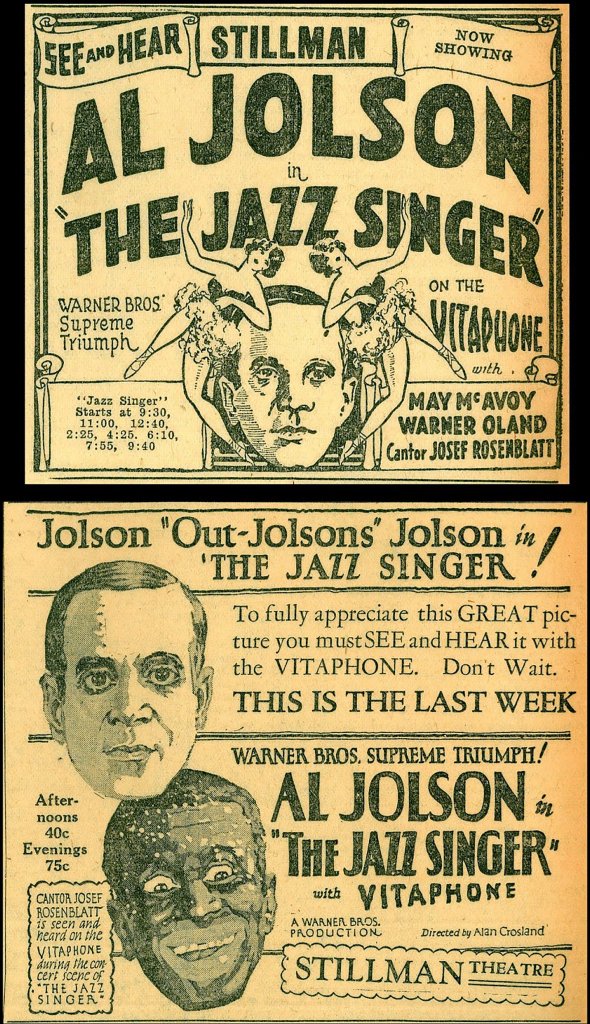
Every major studio, and some of the minor’s, WERE IN SHOCK, over what a few improvised words seem to predict for the American motion picture industry:
“WAIT A MINUTE, WAIT A MINUTE, YOU AN’T HEARD NOTHIN’ YET!”
To illustrate what “The Jazz Singer’s” immediate impact on “Metro-Goldwyn-Mayer’s” production schedules, besides the cost of new sound equipment. The following paragraph is from my article about the Film Editor on Joan Crawford’s, 1928, silent version, of “Rose Marie”. The article is entitled “CARL PIERSON FORGOTTEN FILM EDITOR”, and can be found at:
https://www.bewaretheblog.com/2015/12/carl-l-pierson-forgotten-film-editor.html
“Skipping the next movie he was to work on, and Carl moved to a potential, 1929 release, of Jules Verne’s “The Mysterious Island”. Carl Pierson was the only editor on this major “MGM” production. This film would become a part, “Silent”, shot before the rush to sound, and part “Talkie”. Actually, according to an article in “Famous Monsters of Filmland”. The picture had started shooting in 1926, and ran into major production problems. Thereby, postponing its final shooting until “Talkies” had arrived. So, the film would became one of many hybrids of the transition period from silent to sound motion pictures. Another new factor, here, for Pierson, was that “The Mysterious Island”, had been hot in two strip technicolor.”

“MGM”, started, in 1928, making the switch to “Sound”, by putting a synchronized sound track, no dialogue, on “White Shadows of the South Seas”, released July 31, 1928. Next, “MGM” released a part talkie sound film,. “Alias Jimmy Valentine”, on November 15, 1928. The studio’s first “ALL TALKIE/SOUND” picture was the musical “The Broadway Melody”, released on February 1, 1929.
The “MGM” executives wanted to cut their production costs, by any means, on films being shot, or planned. Motion Pictures in production, if possible, were now shot as silents, or not at all, if actual filming hadn’t begun. Sound films were going to be expensive, and still could only be seen in movie theaters that had purchased sound equipment. In some cases, to still profit, a particular major motion picture was shot in both a sound and silent version.
Tim McCoy’s contract was coming up, and the it wasn’t renewed. Some say it was over a salary increase, others, that Westerns for “MGM” weren’t profitable. Whatever the real reason, after, the release of 1928’s, “The Law of the Range”. Tim McCoy would be seen in eight-additional feature films, and one short subject, to complete his current contract.
TIM MCCOY’S CARRER OFFICIALLY ENDED AT “MGM”, with the May 11, 1929, release of “The Desert Rider”. Now, having considered his movie career ended, he returned to the “Eagle’s Nest”, once more.
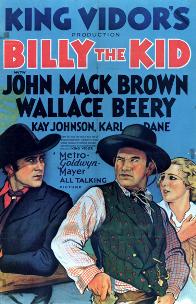
Seventeen-month’s later, “MGM” released its first “All Talkie Western”, 1930’s, “Billy the Kid”, starring the unknown, John Mack Brown aka: Johnny Mack Brown, and Wallace Beery.
FATE IS A FUNNY THING TO CONTROL:
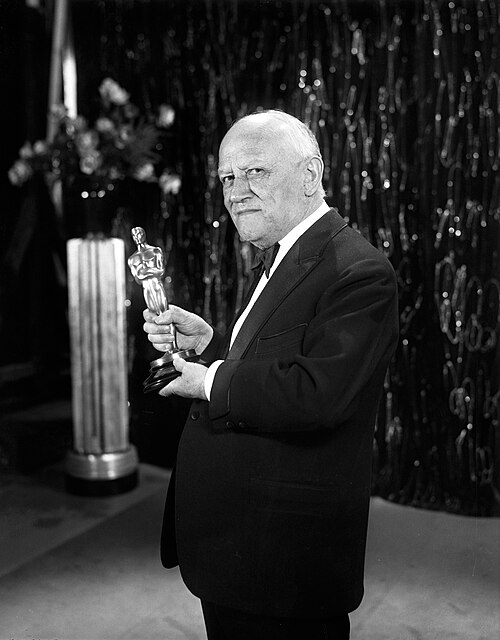
However, another “Hollywood” studio, “Universal Pictures”, made contact with the Wyoming Rancher/Actor. The studio’s owner and founder, Carl Laemmle , below, personally made the contact, and asked Tim McCoy to star in the “Universal’s” first Wester Serial.
THE INDIANS ARE COMING Chapter One: Pals in Buckskin was released on October 10, 1930. This was the first “All-Taking” Chapter Serial.
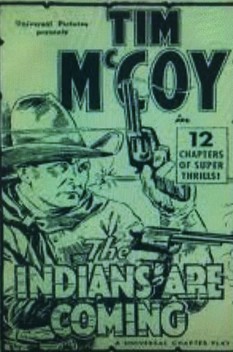
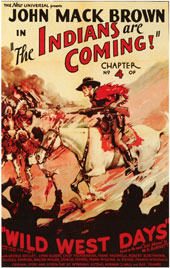
Before I go any further, I want to clear up a little title confusion. There are reviewers that mention that John “Johnny” Mack Brown starred in “The Indians Are Coming”, and not Tim McCoy. This confusion comes from the fact that Johnny Mack Brown, starred in a 1938, “Universal Pictures”, 15-Chapter, Western Serial, “Flaming Frontiers”, and Chapter 12, is entitled, “The Indians Are Coming”. To add to this confusion, is that John Mack Brown also starred in the 13-Chapter serial, “Wild West Days”. Where, as the following poster indicates, “Chapter 4” was, “The Indians Are Coming”.
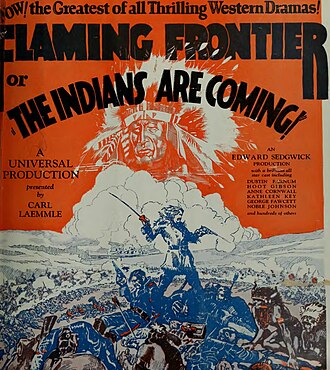
The first use of the line, “The Indians Are Coming” and the title, “Flaming Frontier” by “Universal Pictures”, was in the title of the Hoot Gibson, 1926, Silent Western, about “Custer’s Last Stand”, “Flaming Frontier, or The Indians Are Coming”.
The Three-Hour-and-Twenty-Minute Chapter Serial, was based upon “Buffalo Bill Cody (William F. Cody’s) “The Great West That Was”. Which was his last autobiographical work, published in two parts in “Hearst’s Magazine’s”, August 1916, and July 1917, after his death on January 10th.
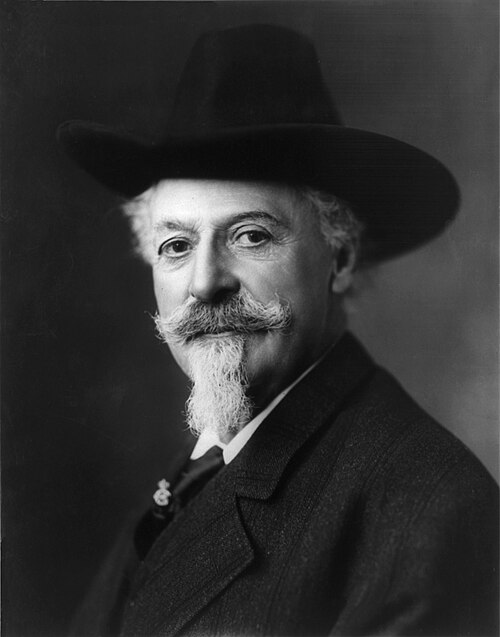
The writing credits are interesting and reflect the period of the first sound/talking motion pictures.
William Lloyd Wright was the “Writing Supervisor”. This was Wright’s last motion picture that he worked up. There were just eleven since 1915, but the photo journalist had written a text book used by the “New York Institute of Photography”.
Ford Beebe billed as Ford I. Beebe was working on the screenplay’s continuity. He would write 143-screenplays, between 1916 and 1959. He also directed 98-feature films and serials, including 1938’s, “Flash Gordon’s Trip to Mars”, 1939’s, “The Phantom Creeps”, 1939, “Buck Rodgers”, 1940’s, “Flash Gordon Conquers the Universe”, and 1944’s, “The Invisible Man’s Revenge”, all of which he was the primary screenplay writer.
George H. Plympton also did screenplay continuity. He would write 302-screenplays between 1912 and 1966. Among his work was the first “Flash Gordon” serial in 1936, both the 1940 “Green Hornet”, and “The Green Hornet Strikes Again”, 1942’s, “Captain Midnight”, 1948’s, “Superman”, and 1949’s, “Batman and Robin”.
The Chapter Serial was both Produced and Directed by Henry MacRae. Between 1912 and 1933, MacRae directed 164 films, between 1917 and 1944 he produced 67-films, and between 1913 and 1936, he wrote 38-screenplays, all for “Universal Pictures.
The Main Credited Cast:
Tim McCoy portrayed “Jack Manning”.
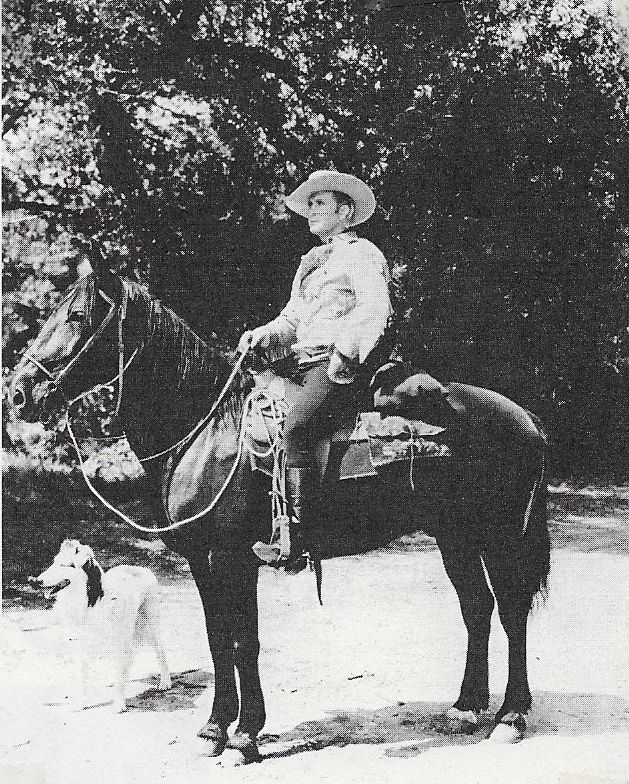
Allene Ray portrayed “Mary Woods”. Ray was known for action serials, she had been born on a ranch outside of Devine, Texas, rode horses since a little girl, and was known for taming bucking bronco’s. She appeared in her first western short, “Crossed Trails”, in 1917, as the star. Her career totaled only 34 motion pictures, and she retired and became a successful real estate broker.
Francis Ford portrayed the dual roles of brothers, “George” and “Tom Woods”. As an actor, Francis Ford, appeared in 497-roles, between 1909 and 1953. Francis was upstaged by his young brother, director John Ford, and appeared in some of his classic films. My article is “FRANCIS FORD, Not John Ford: The Forgotten Older Ford Brothers” an interesting read at:
https://www.bewaretheblog.com/2023/07/francis-ford-not-john-ford-forgotten.html
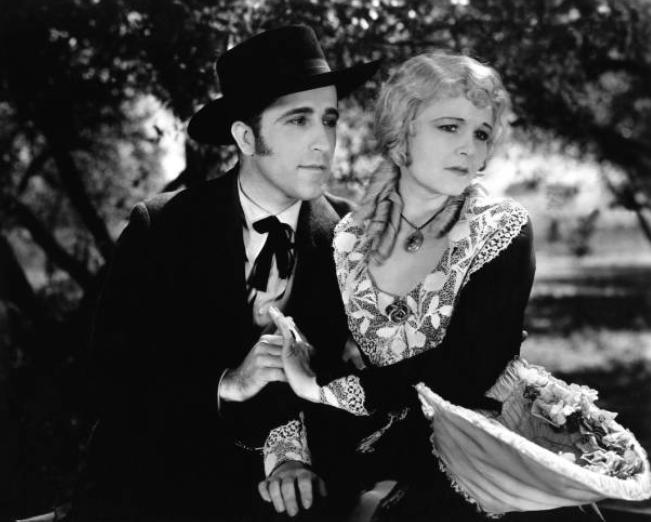
Above, Francis Ford as “Tom Woods”, father of Allene Ray’s “Mary Woods”. There are no scenes with both brothers together. To tell them apart are their personalities. “Tom” is quieter, with a mild personality, and is more dignified, living with his wife in “Hillsdale”. While,”George Woods” is a prospector, that struck gold, and lives in “Gold Creek”. His personality is the exact opposite of his brother, being very boisterous, rowdy, always loud.
Wilbur McGaugh was billed under his film name of “Don Francis”, and portrayed “Rance Carter”. McGaugh only acted in 28-motion pictures, but he was both an “Assistant Director”, or “Second Unit Director, on a combination of movies and television title starting in 1923. I said titles, because the title “Adventures in Paradise” were 23-episodes, and “Peyton Place”, 28-episodes. He also directed 6-television shows. The following photo comes from “The Files of Jerry Blake”, and is the only photo I have found of McGaugh/Francis at:
https://filesofjerryblake.com/2015/09/16/the-indians-are-coming/
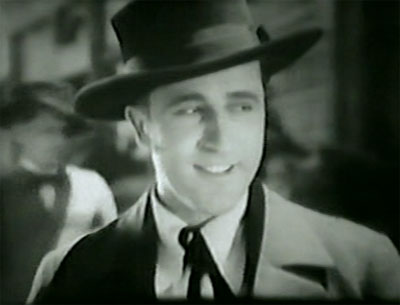
For a more detailed look at this motion picture, I suggest my reader go to “The Files of Jerry Blake”, linked above.
Charles F. Royal billed as Charles Royal portrayed “Uncle Amos Woods”. Royal only appeared in this one Chapter Serial. He was a screenplay writer that between 1931 and 1957, co-wrote 40-screenplays. Below, Royal passes on some information to Francis Ford as “George Woods”.
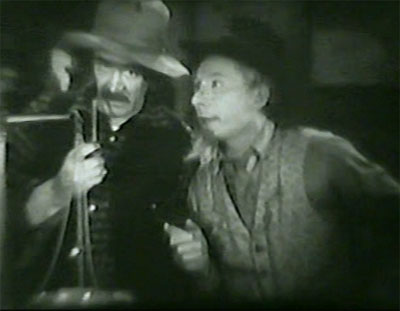
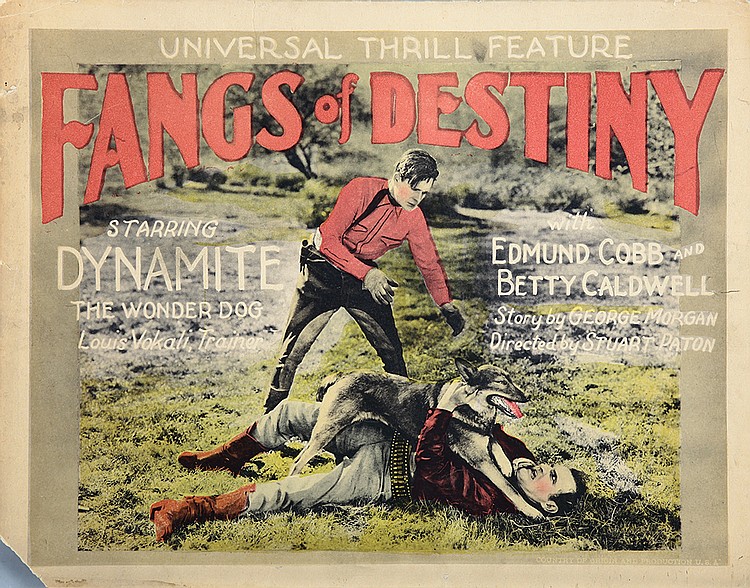
The last fully credit performer was “Dynamite the Dog”, portraying “Pal -Jack’s Dog”. However, I could not locate any photos of him in this feature, his last of six. The following lobby card is from the actor’s first motion picture, in which he had the leading role.
The Basic Plot Stretched Over “12-Exciting Chapters”:
- Pals in Buckskin
- A Call to Arms
- A Furnace of Fear
- The Red Terror
- The Circle of Death
- Hate’s Harvest
- Hostages of Fear
- The Dagger Duel
- The Blast of Death
- Redskin’s Vengeance
- Frontiers Aflame
- The Trail’s End
Our hero, “Jack Manning”, arrives, in the midwestern town of “Hillsdale”, with a message from “George Woods”, for his twin brother, “Tom Woods”. “George” has struck it rich, out west, near the town of “Gold Creek, California”. “George” wants “Tom”, and his niece “Mary” to come there. To prove he’s not lying, “Jack” has a sample of “George’s” gold. Also, present is “Uncle Amos”, a braggart, story teller, and the families elder.
Overhearing about the gold, is the villain of this piece, “Rance Carter”. “Tom” and “Mary” are to travel by wagon train to California, accompanied by “Jack”. It is obvious to “Rance” that there is the start of romance between “Mary” and “Jack”, and he needs the California cowboy out of the way. So, he can romance “Mary”, and get his hands on her Uncle’s Gold. “Rance” frames “Jack” for the alleged theft of “George’s” gold, and “Jack” is jailed. The wagon train now leaves with “Tom”, “Mary”, and “Rance” on it, but “Jack” is able to prove his innocence and is released, and goes after the wagon train.
“Rance” arranges for the wagon train to be attacked by Cheyenne’s.
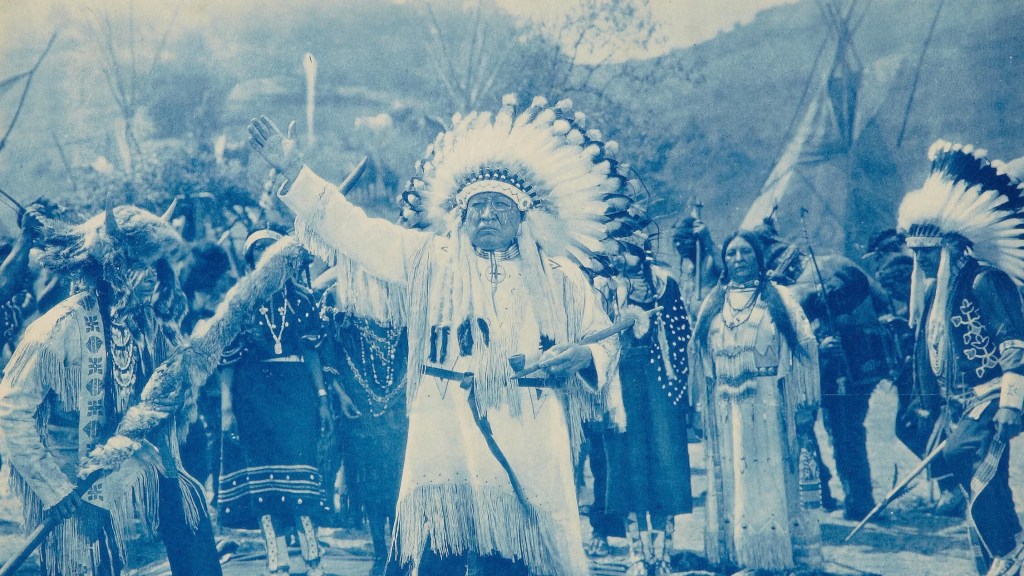
Above, Cheyenne Chief Thunderbird, actually Chief Richard Davis Thunderbird. He was an uncredited “Indian”, in 1923’s, “The Covered Wagon”.
The attack on the wagon train, is actually footage from 1926’s, “Flaming Frontier”.
At the Climax:
“Rance’s” extortion plot that claimed that “Mary Woods” owed him money, is defeated by “Jack” and “Uncle Amos”. Having discovered the truth that what was owed had been paid off long ago. The is revealed after in the local bar of “Gold Creek”, after one of “Rance’s” henchmen attempted to kill “Jack” with a rifle shot through a window. Next, “Rance’s” henchmen, leave him, after learning the truth that he is a coward, and a fist fight between “Rance” and “Jack” take place. It ends with our hero winning the fight, and “Mary Woods”.
“The Indians Are Coming” was followed by one more “Universal Pictures” cliff-hanger, that took Tim McCoy from riding a horse, to riding a fire engine.
HEROES OF THE FLAMES premiered in London, England, on April 17, 1931
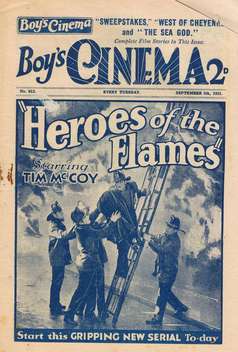
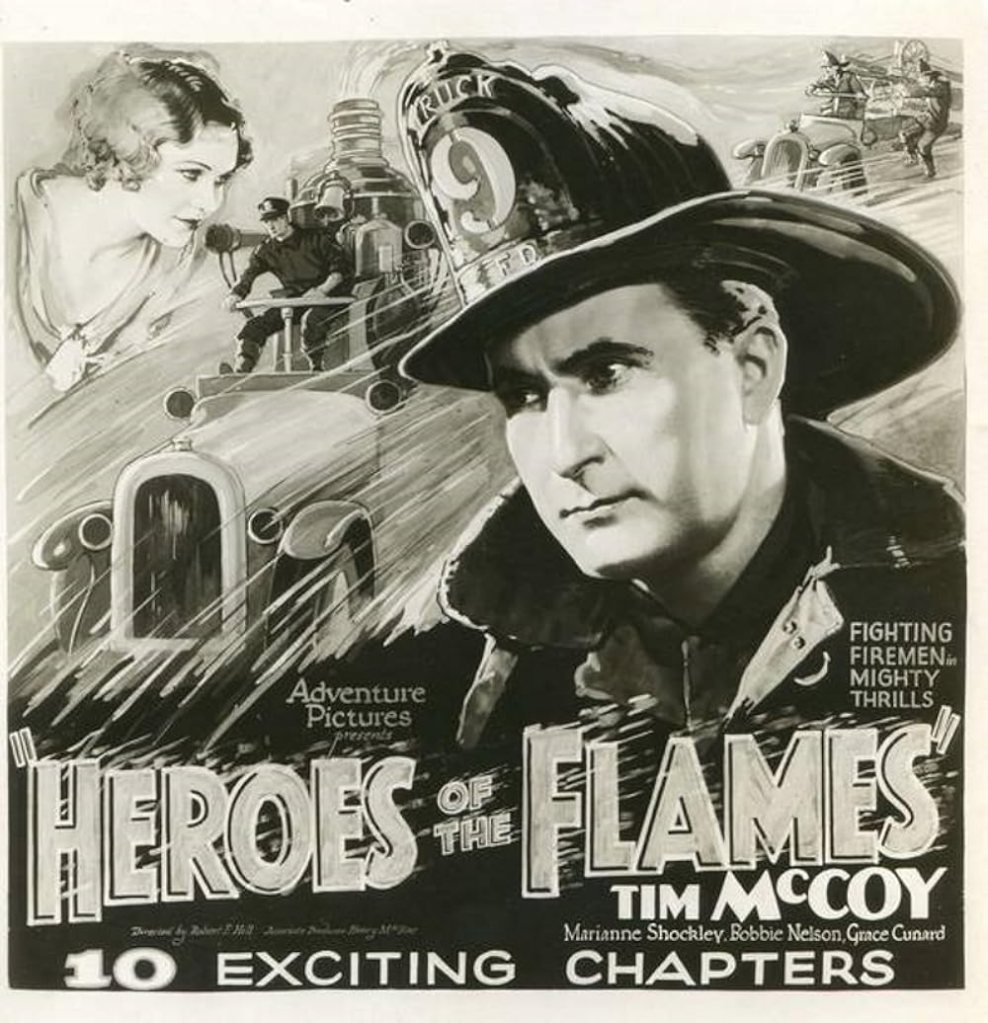
This was a routine cliff-hanger that had at last one major cast member caught in a burning building in 7, of the 10-Chapters. Tim McCoy’s firefighter, “Bob Darrow” has created a new fire fighting flame retardant and the villain, firefighter, “Don Mitchell”, portrayed by Gayne Whitman, is after it. The leading lady was Marianne Shockley portraying “June Madison”. Shockley appeared in a total of 25-film-roles, between 1930 and 1955, which 16 were short subjects. She also was heard on radio, especially as the first “Nikki Porter”. the secretary of “Ellery Queen”, from 1939-1944.
There are three names of interest in “Heroes of the Flames”.
Andy Devine had the fully credited role of a “Fireman”, his 22nd. My article is “ANDY DEVINE: “Hey, Wild Bill, Wait for Me” at:
https://www.bewaretheblog.com/2019/07/andy-devine-hey-wild-bill-wait-for-me.html
The other two actors were both in uncredited roles.
Walter Brennan had a “Bit Part in Chapter 12”. This was Brennan’s actual 39th on-screen role. By his final role, seen after his death, that number would be 244, which does not reflect that his role in “The Beverly Hillbillies” would be seen in 224-episodes of that television series.
Bruce Cabot’s first on-screen appearance was in a “Bit Part in Chapter 7”. This “bit-part” would be followed, 8-feature films later, portraying “Jack Driscoll” opposite Fay Wray and Robert Armstrong, in 1933’s, “King Kong”.
On July 20, 1931, Tim McCoy divorced Agnes. The awards to his wife were very large, Agnes received a large portion of his working “Eagle’s Nest Ranch”, complete custody of their children, and a monthly amount of 200, 1931 dollars, or $4,394, 2026 dollars.
His name was Harry Cohn, he was the co-founder, president, and production director for “Columbia Pictures”. “Columbia” was known for it lower budgeted picture, but of good quality. When he heard the double, 1931, fate of Tim McCory, no longer with “MGM”, only a two-picture deal with “Universal”, and his divorce, he offered the actor a contract.
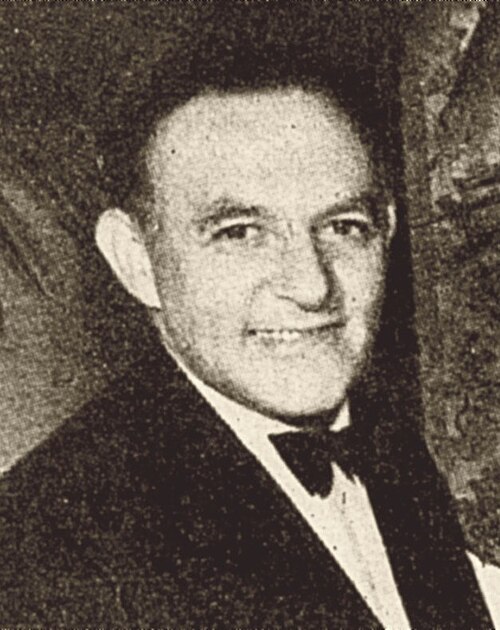
On August 18, 1931, filming began on Tim McCoy’s first motion picture for “Columbia Pictures”.
THE ONE WAY TRAIL released October 15, 1931
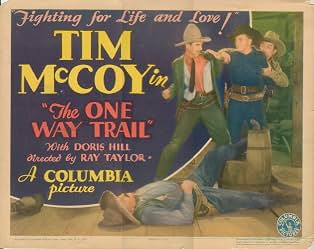
This was a formula Western, popular with the studio. Tim McCoy is a reformed gambler named “Tim Allen”. He finds his brother dying from a gun shot, and b before he dies, names his killer. Next, “Tim” is looking for the named man, and finds him using an alias, leading to the climatic showdown.
Eight “Columbia” westerns found Tim McCoy in:
TWO-FISTED LAW released on June 8, 1932
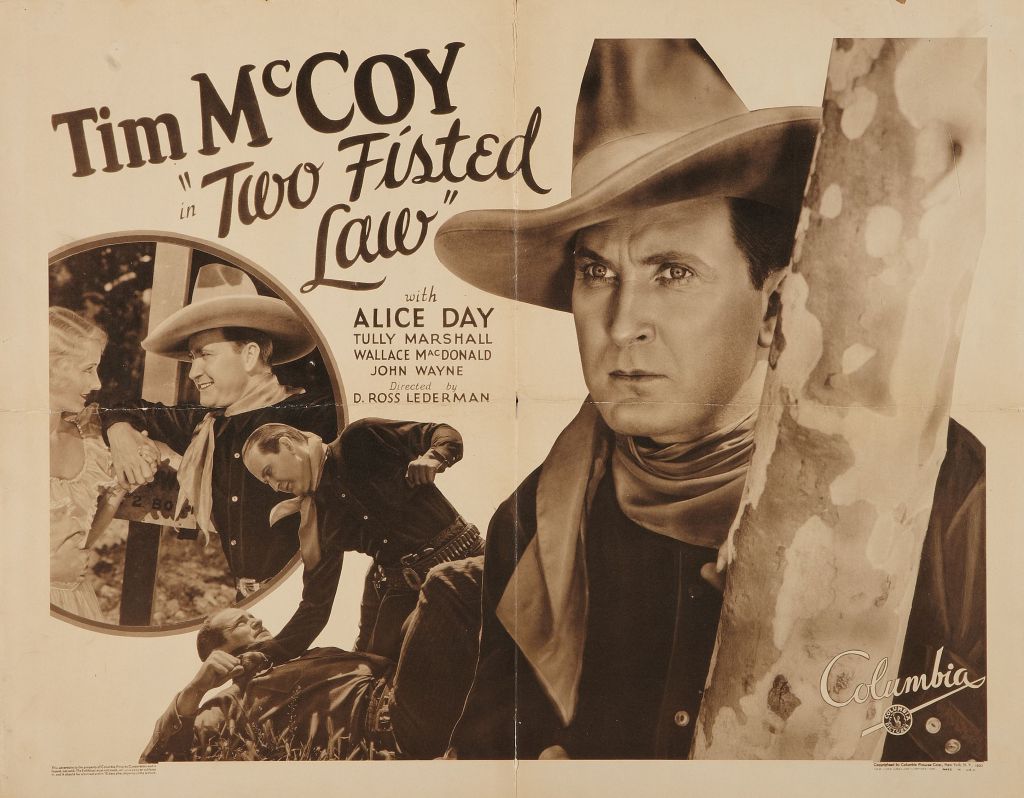
The picture was directed by D. Ross Lederman. Whose fourth film was 1928’s, “Rinty of the Desert”, starring the original “Rin-Tin-Tin”. He also was directing Tom Tyler, and Buck Jones westerns, but his proceeding two features starred Tim McCoy.
The story/screenplay, was by William Colt MacDonald. His 64 screenplays were all westerns, besides Tim McCoy. MacDonald wrote for the very popular “Three Mesquiteers” series, that starred in 1941’s, “Gauchos of El Dorado”, Bob Steele, Tom Tyler, and Rufe Davis, but changed actors as the series progressed. My article is, “An Overview of “THE THREE MESQUITEERS” at:
https://www.bewaretheblog.com/2021/11/an-overview-of-three-mesquiteers.html
Tim McCoy portrayed “Tim Clark”. McCoy had just been seen in the “B” western, 1932’s, “The Riding Tornado”, and would follow this picture with 1932’s, “Cornered”.
Alice Day portrayed “Betty Owen”. Day started her career as one of the “Sennett Bathing Beauties”, and between 1923 and 1932, she appeared in 66-motion pictures.
The following picture is more interesting than the one line plot for the motion picture on the website, “IMDb” at:
https://www.imdb.com/title/tt0023631/?ref_=ttfc_ov_bk
After Rob Russell steals Tim Clark’s ranch, Clark starts prospecting for silver.
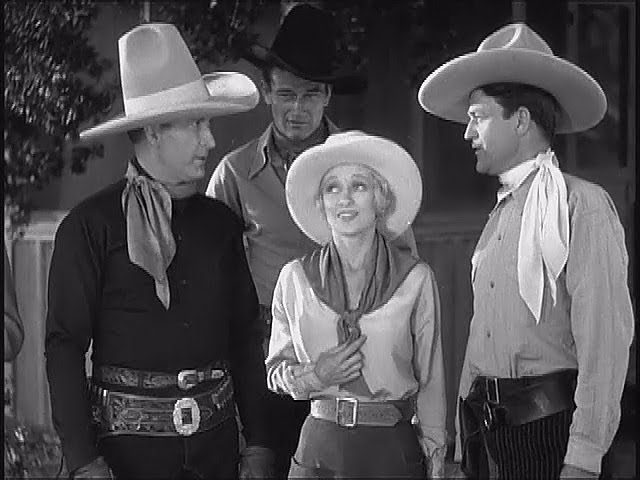
On the left, portraying crooked “Sheriff Deputy Bendix”, is Walter Brennan, to his right, is Alice Day portraying “Betty Owen”, and to her right is Tim McCoy portraying “Tim Clark”. HOWEVER, standing behind Bennan and Day, is 4th billed, on the above poster, but 5th-billed on the “Official Cast Listing”, John Wayne. Portraying, Tim McCoy’s ranch hand, nice choice of name, “DUKE”!
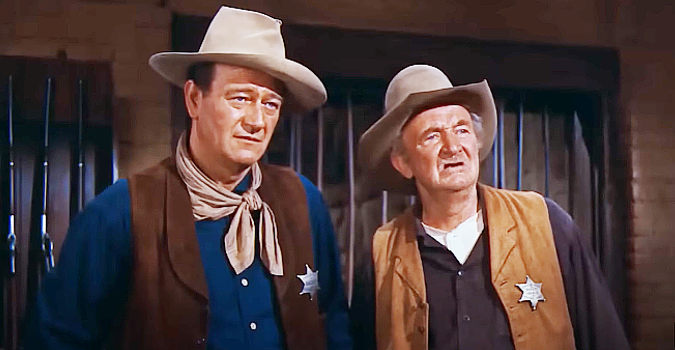
Walter Brennan and John Wayne would be reunited 27-years later, in Howard Hawks’s, 1959 classic, ‘”Rio Bravo”. Speaking of their reunion, my article is “Howard Hawks’ ‘RIO BRAVO’ Remade (?) as ‘EL DORADO’ and ‘RIO LOBO’ Starring John Wayne” found at:
https://www.bewaretheblog.com/2017/10/howard-hawks-rio-bravo-remade-as-el.html
Back to this motion picture, apparently Tim McCoy and John Wayne did not get along. This led to Wayne confronting Harry Cohn, and stating he would never work for “Columbia Pictures” again, and he never did.
“Cornered” was followed with another motion picture, with two interesting cast member’s. Who are remembered, but not for western’s. Along with an overlooked character actor. That I want to introduce my readers too. Who had an interesting pair of cousins.
THE WESTERN CODE released September 16, 1932
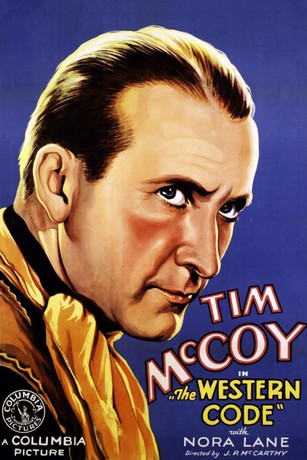
This was another story from William Colt MacDonald, but unlike 1931’s, “Two-Fisted Law”, he did not also write the screenplay. The screenplay was written by Milton Krims, who had just written the Buck Jones feature, 1932, “South of the Rio Grande”.
When you went to see any of the 1930’s and most of the 1940’s Westerns, the plots were basically the same. Bad man, usually wearing a “Black Hat”, is either trying to take over some young woman’s ranch, or bad man runs an outlaw gang. In either case, it’s up to the good guy, using wearing a “White, or light Grey, Hat”, to get the bad man and the girl. According to the “IMDb” website for this motion picture at: https://www.imdb.com/title/tt0023682/?ref_=ttfc_ov_bk
Lawman Tim Barrett, Tim McCoy, rides to Carabinas to rescue Polly Loomis, Nora Lane, whose mother died and left everything to her lecherous stepfather, Nick, Wheeler Oakman. Nick wants to marry his stepdaughter, who fears violence if her hot-blooded brother Dick, Dwight Frye, finds out.
I said there were two interesting actors I wanted to mention. I already named hi, but if the name is not familiar to my reader, or is, but his career really isn’t:
Dwight Frye portrayed “Dick Loomis”. Frye had just been seen in a long forgotten mystery, 1932’s, “By Whose Hand?”. Dwight Frye would originate the on-screen character of Dashiell Hammett’s, “Wilmer Cook”, in the 1931, original version of “The Maltese Falcon”. However, it is portraying “Renfeld” in 1931’s, “Dracula”, and “Fritz” in 1931’s, “Frankenstein” that he is remembered. My article is “DWIGHT FRYE: Overlooked Horror Icon” at:
https://www.bewaretheblog.com/2019/07/dwight-frye-overlooked-horror-icon.html
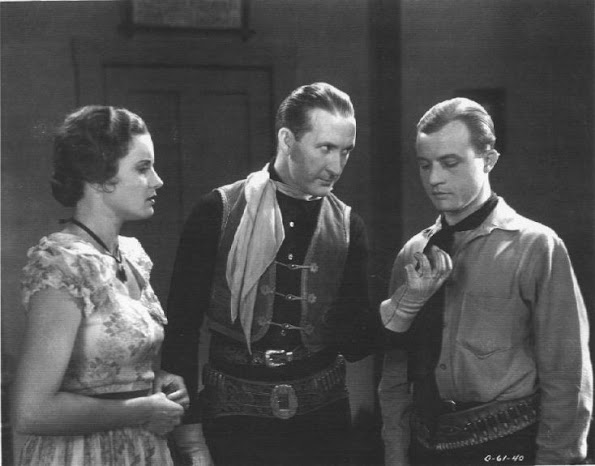
Above left to right, Nora Lane, Tim McCoy, and Dwight Frye.
Misha Auer, born Mikhail Semyonovich Unkovsky in St. Petersburg, the Russian Empire, portrayed “Chapman”. He’s a “second level bad guy”, that supports “NicK”. There are no surviving photos of Auer in this role. In 1936, Auer would be nominated for the “Academy of Motion Picture Arts and Sciences, Best Supporting Actor Oscar”, for his performance in the screwball comedy, “Our Man Godfrey”. His earlier works include the 1932, “B” Horror film, “The Monster Walks”, the “Hollywood” biography, 1932’s, “Rasputin and the Empress” that starred Lionel, John, and Ethel Barrymore, both Cecil B. DeMille’s, 1932, “The Sign of the Cross”, and 1935’s, “The Crusades”. Also the 1935, biography of, “Clive of India”. starring Roland Coleman and Loretta Young, with 14th-billing as “King Suraj Ud Dowlah”, and Leo Tolstoy’s, “Anna Karenina” starring Greta Garbor and Fredric March as the uncredited “Mahotin”.
In all, Misha Auer, appeared in 177 motion pictures between 1928 and 1967, in various size roles.
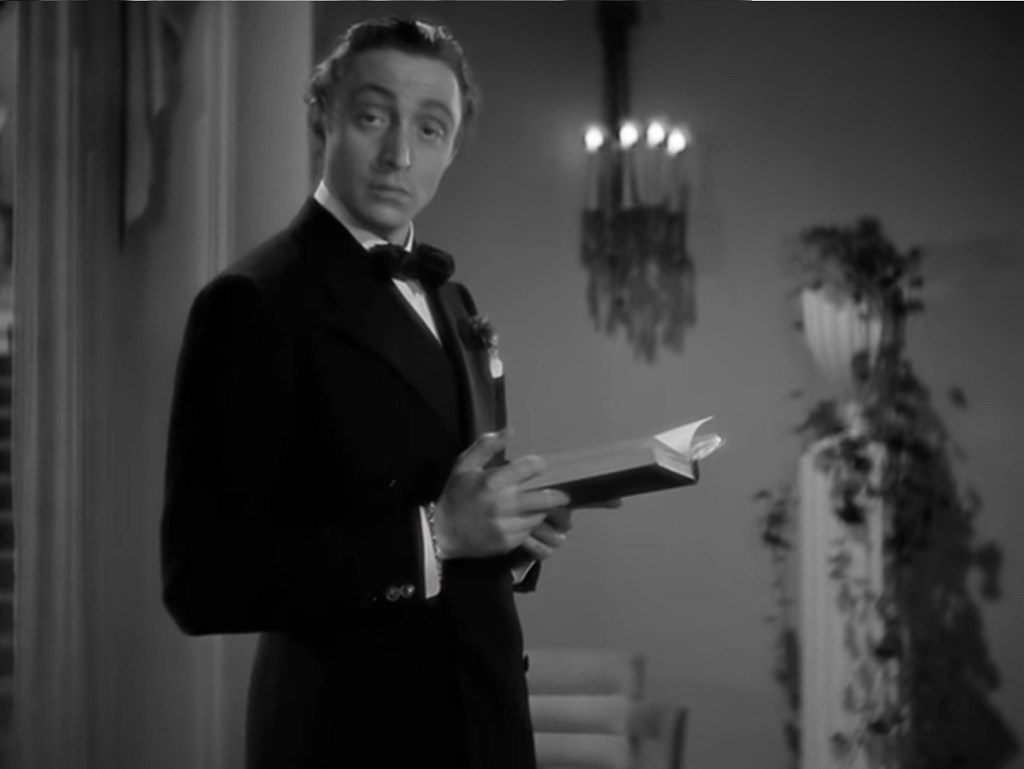
Above, Misha Auer in “Our Man Godfrey”.
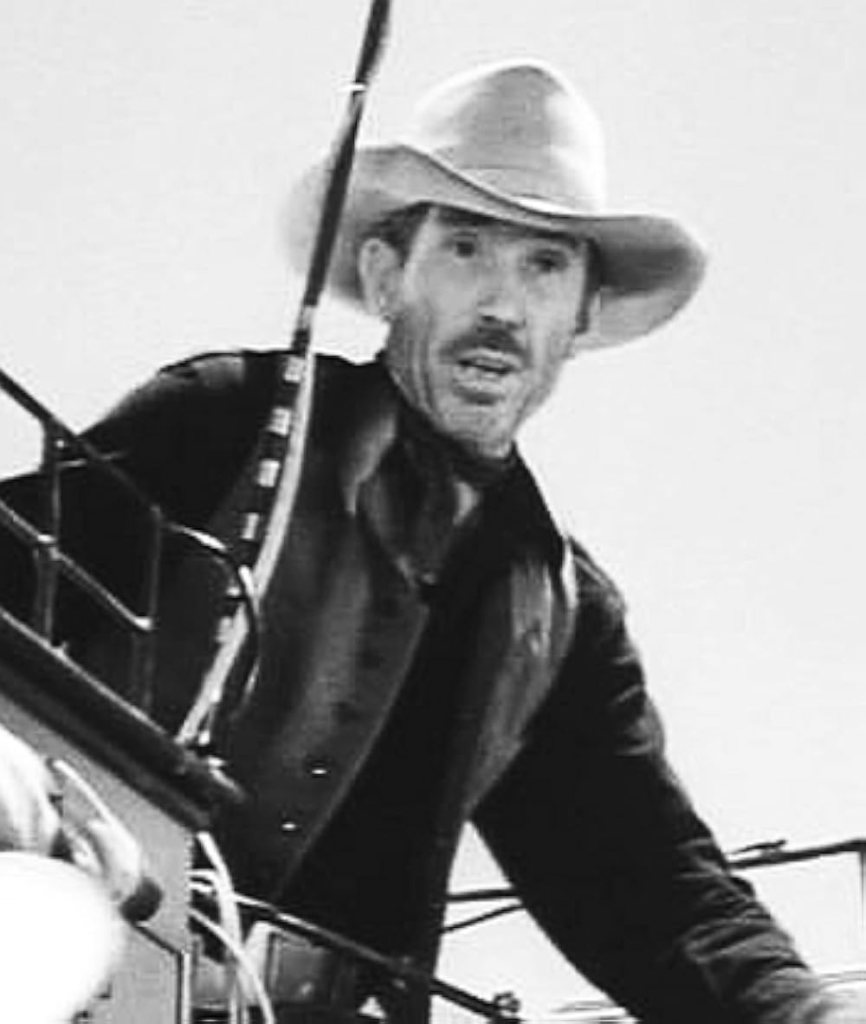
As to that overlooked character actor. He was, “Cactus Mack”, portraying an “uncredited lyncher”.
This is were the fun begins:
His real name is Taylor Curtis Mc Peters, no, it’s Curtis Taylor Mc Peters. He was born in Otero County, New Mexico, no, it was in Coke County, Texas. Mc Peters was known as the western actor/musician, “CACTUS MACK”. His cousin was previously mentioned actor/singer, Glenn Strange, their mother’s were sisters. No, his cousin was “B” Singing Cowboy Hero, Rex Allen, Allen’s father was married to one of the sisters.
From my above linked article on George “Glenn” Strange:
THE ARIZONA RANGERS
We know as fact, that both George and Taylor became members of “The Arizona Wranglers” Western singing group. That starting in 1929, toured the country and performed at Fairs and Rodeo’s.

“Above left, with the harmonica in his mouth, is six-foot, five inch, George, now going by the name of Glenn Strange. Given the nickname, “Pee Wee”, by the group. To his immediate right, on guitar, is Taylor, saying his name is Curtis McPeters, but going by his nickname, “Cactus Mack”.
After “The Western Code”, Tim McCoy made 22 more films, not all westerns, for “Columbia Pictures”. His last for the studio was “Riding Wild”, released on June 28, 1925.
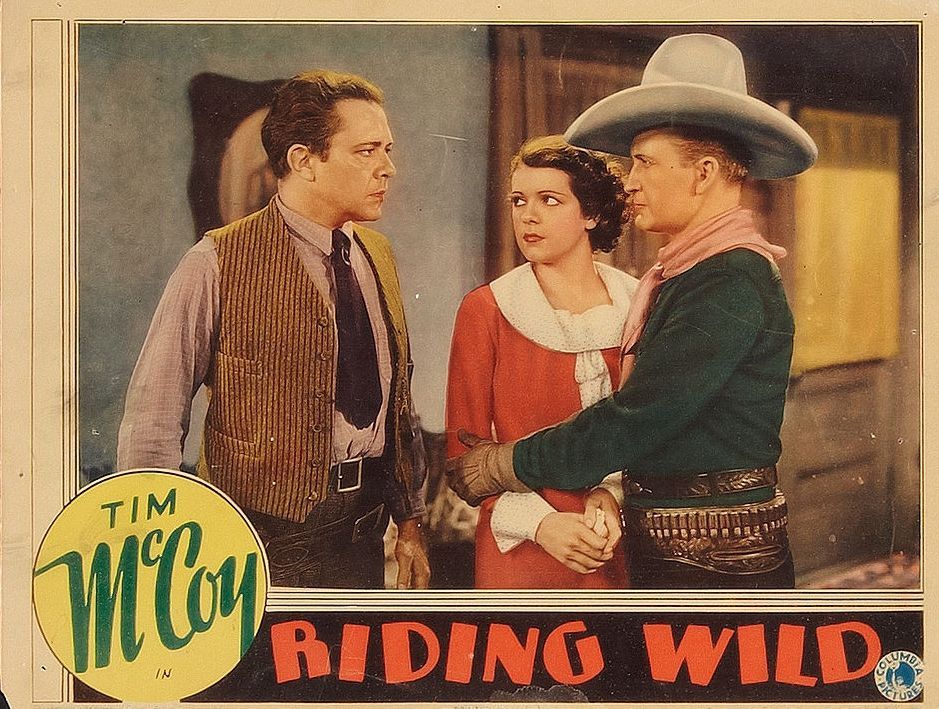
Above Niles Welch portraying “Clay Stevens “ who wants to start a range war between the “Big Ranchers” and the “Nesters (Homesteaders)”, Billie Seward portrayed “Jane McCabe”, and Tim McCoy played the hero, “Tim Malloy”, and his EVIL TWIN, working for “Stevens”, “Tex Ravelle”
There are several stories about why Tim McCoy left “Columbia Pictures”at the end of his contract. The two major ones, he was let go, because he was too old and Harry Cohn wanted a young actor, and hired Charles Starrett. McCoy was 44-years-old, Starrett was 32-years-old. Another, simply says Tim McCoy wanted a pay raise, and a new contract, and Cohn refused. My favorite is Tim McCoy wanted to join the circus. Apparently, McCoy wanted to perform live in a circus during May through November and film during the rest of the year, but Cohn refused and the actor left.
Enter, independent producer, Sam Katzman, who agreed to Tim McCoy’s request that he be paid the same salary as at “Columbia Pictures”, 4,000, 1935 dollars a week. Those 1935 dollars would equate, as of this writing, to 97,504, 2026 dollars.
For those of my readers unfamiliar with the name of Sam Katzman, my article is, “Superman” Meets “The Giant Claw” to the Tunes of “Bill Haley and the Comets”: Executive Producer Sam Katzman”, found at:
https://www.bewaretheblog.com/2018/10/superman-meets-giant-claw-as-earth-vs.html
Tim McCoy’s first motion picture for Sam Katzman’s “Puritan Pictures” was:
THE MAN FROM GUNTOWN released August 5, 1935
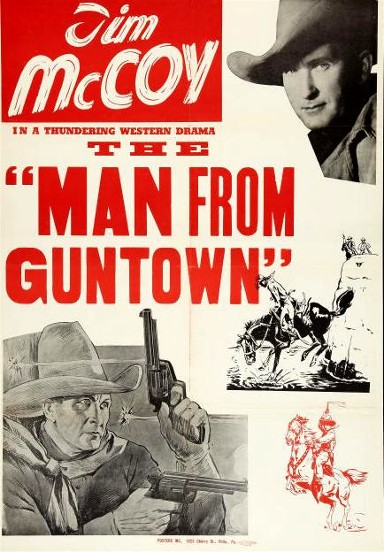
What makes this “B” Western above some of the other routine screenplays is director and co-writer Ford Beebe. As a director, Beebe started with shorts in 1921, and had a 96-film career when he retired in 1955. As a writer and co-writer, he started in 1916, and when he stopped writing screenplays in 1959, his total was 143. His 1930’s work includes the Harry Carey, 1932 version of James Fenimore Cooper’s, the “Last of the Mohicans”, 1935’s, “The Adventures of Rex and Rinty” that starred “Rex, King of the Wild Horses” and “Rin Tin Tin, Jr., Buster Crabbe’s, 1938’s,”Flash Gordon’s Trip to Mars”, and, Bela Lugosi’s 1939 “The Phantom Creeps”.
Tim McCoy portrayed “Tim Hanlon”.
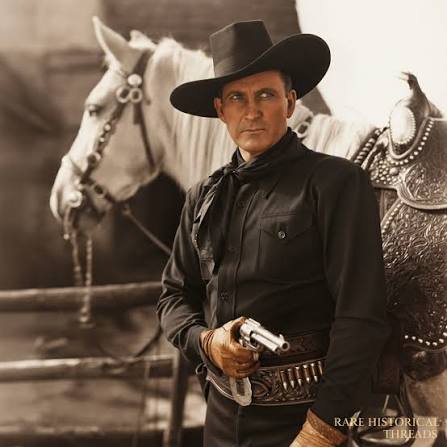
Billie Seward portrayed “Ruth Arthur”. Seward had just been seen in “B” Cowboy Ken Maynard’s, 1935, “Trails of the Wild”, and would follow this feature film with Sidney Toler’s, 1939 “Charlie Chan at Treasure Island”.
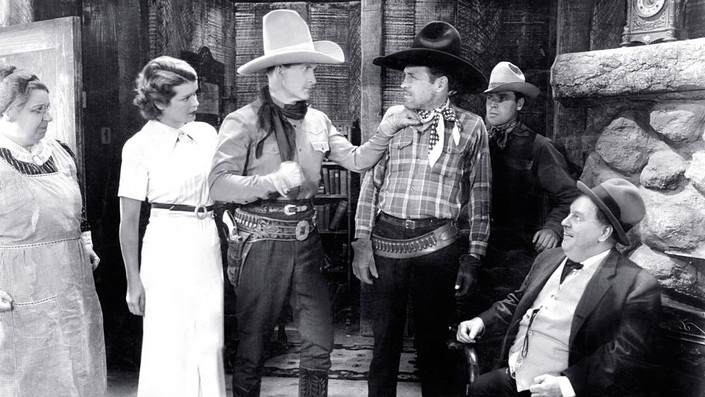
Above left is Eva McKenzie portraying “Aunt Sarah”, next is Billie Seward standing to the left side of Tim McCoy. I could not locate the villain Tim is addressing, but Robert McKenzie portraying “Eric W. Gills”, seated on the right.
Instead of the repeated plot of the villain, as in several of the Tim McCoy films portrayed by Wheeler Oakman, here as “Henry DeLong”, after the young woman’s family ranch. In this picture, he is after the family dam controlling the water for the area.
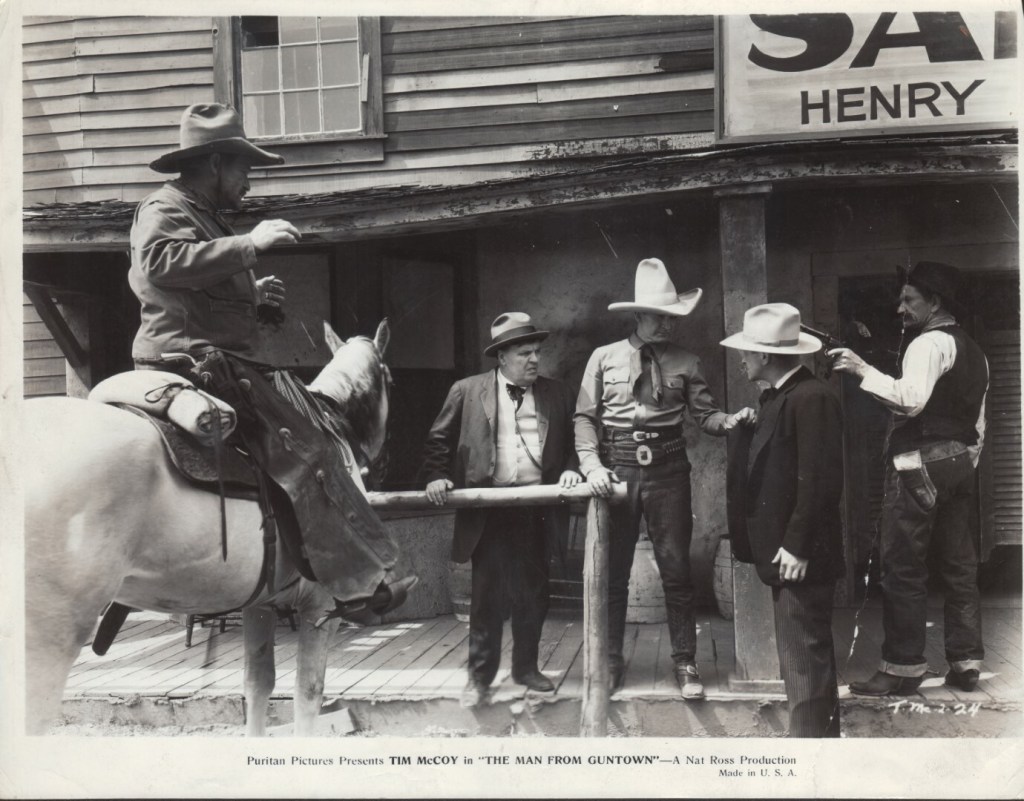
1936 was a very interesting year for “Circus Performer Tim McCoy”.
Tim McCoy made a deal with the “Ringling Brothers Circus” and Sam Katzman. Basically he would perform on the road with the circus, and during their off times, film motion pictures, a total of 9, according to the “IMBd” website at:
https://www.imdb.com/name/nm0003706/?ref_=tt_ov_3_1
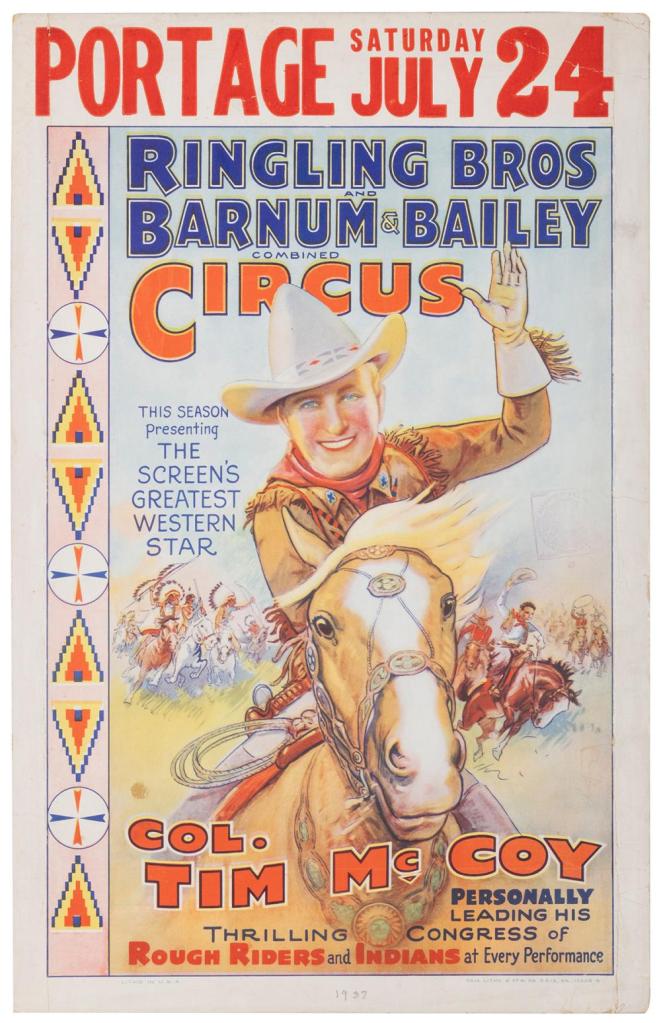
The following photograph and description comes from the website, “Art Blart”, at:
https://artblart.com/tag/col-tim-mccoy-and-his-congress-of-rough-riders-of-the-world

“Edward J. Kelty (American, 1888-1967)
Century Photographers 110 W 46 NYC
Col. Tim McCoy and his Congress of Rough Riders of the World Featured on the Ringling Brothers and Barnum & Bailey Circus
Newark. N.J. June 11th 1935
Gelatin silver print”
Tim McCoy’s time with the “Ringling Brothers Circus” ended, when the circus went into their “Winter Quarters” for 1937. During the year, he hadn’t made a single motion picture, and now, he made a contract with Maurice Conn at “Monogram Pictures”.
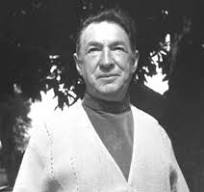
Having gone from “Metro-Goldwyn-Mayer” to “Monogram”, was a sign of what the major studio’s thought of Tim McCoy’s bank-ability.
“Monogram Pictures” was a “POVERTY ROW STUDIO”. In short, they had no physical studio, but an office on Gower Street, between Hollywood Boulevard and Sunset Boulevard. “Monogram” would take their cast and crew to an outdoor location to film, or rent filming space at a “Movie Ranch” under a more controlled situation. Should they need indoor scenes shot, the studio rented a sound stage, or used already created sets on one of the movie ranch’s.
A very major outdoor location was, about 10-minutes east of my house, Vasquez Rocks. My reader might be surprised as to which movies and television shows were shot there over the years. My article is “VASQUEZ ROCKS: The Most Important Pile of Rocks in Motion Picture History”, at:
https://www.bewaretheblog.com/2018/08/vasquez-rocks-most-important-pile-of.html
Prior to 1937, there were only two movie ranch’s, both located around Chatsworth, in the Santa Susana Mountains. The two were, the “Iverson Movie Ranch”, established in 1912, and closed in 1960, because of the building of the “118-Freeway”. The “Spahn Movie Ranch”, established in 1920 , by Silent Cowboy Star, William S Hart, initially, to film his own movies. The demise of the “Span Ranch”, happened about the same time as “Iverson”, but, in 1969. The one time movie ranch gained an infamous reputation. My article is, “The Spahn Movie Ranch, Sharon Tate, the LaBianca’s and Helter Skelter”, for some to relive at:
https://www.bewaretheblog.com/2020/03/the-spahn-movie-ranch-sharon-tate.html
In 1937, “Corriganville”, owned by “B” cowboy actor, Ray “Crash” Corrigan, was established in Simi Valley. Still, within the Santa Susana Mountains. Starting in mid-1937, “Monogram Pictures” leased some land, from Frank and Hortense Walker, in Placerita Canyon, about 10-minutes west of my house, in Newhall, and established the “Monogram Movie Ranch”.
Much later, in 1952, Gene Autry, would purchase the actual land that “Monogram” had leased, and renamed it, “Melody Ranch”. Also in the Placerita Canyon area,Walt Disney bought 890-acres for his “Golden Oak Movie and Television Ranch”, to film “Davy Crockett”, “The Adventures of Spin and Marty”, and other features.
The first motion picture Tim McCoy made for “Monogram Pictures” was:
WEST OF RAINBOW’S END released on January 12, 1938
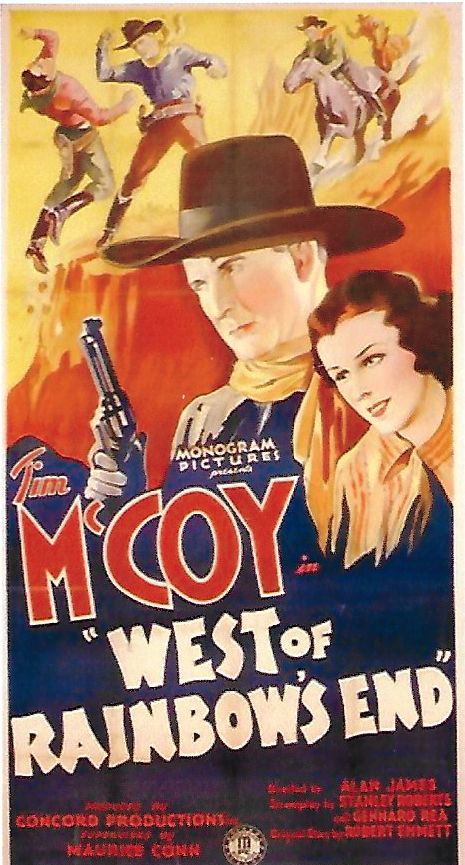
To illustrate the speed of making a “Monogram Western”. Especially, when you were putting together a traveling,“Wild West Show”, at the same time.
After the release of “West of Rainbow’s End”, on April 8, 1938, “Code of the Rangers”, was released, followed on April 30, 1938, with, “Two Gun Justice”. While, between the two films, on April 23, 1938, was the first performance of “COL. TIM MCCOY’S WILD WEST AND ROUGHT RIDERS OF THE WORLD”. A show, that Tim McCoy had modeled in the style of “Buffalo Bill Cody’s” impressive productions. McCoy’s audience would see authentic cowboys, military riders, and bringing to American cities, real Native American performers.
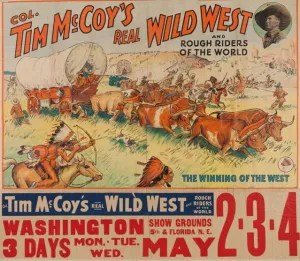
The size of McCoy’s production rivaled “The Ringling Brothers”, as the following photo in Washington D.C., May 4, 1938, of his cast shows, and that was part of his unplanned problem.
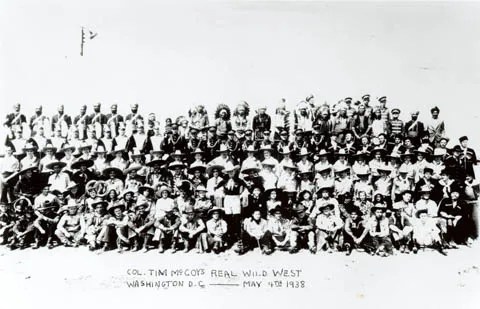
“COL. TIM MCCOY’S REAL WILD WEST” had its first public appearance on April 14, 1938, in Springfield, Missouri. It closed, 20 days later, in Washington, D.C. on May 4th.
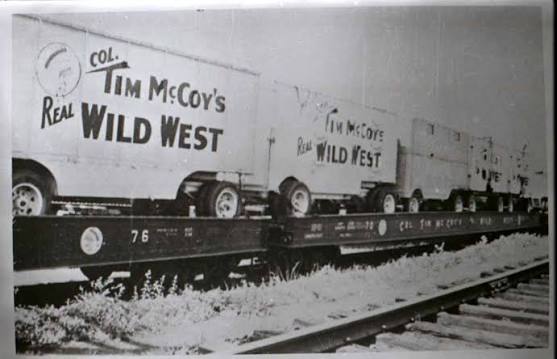
It had cost 300,000, 1938 dollars, to fund the show. As of this writing that is equal to 7,105,361, 2026 dollars. One-Third of that sum came from Tim McCoy.
The production just suddenly folded, and collapsed in Washington, D. C., due to high production costs, and low ticket sales. This last point, ticket sales, were what McCoy, and the, other investors counted upon to recover their investment’s and make a profit. What no one apparently considered, they were 9-years into “The Great Depression”, and people could not afford the tickets. 75-cents for adults, and 50-cents for children. Again, to inform my reader, those two prices would be, as of this writing, $17.76, and, $11.84.
TIM MCCOY WAS BANKRUPT! Performer’s, except the Native American’s, received just five dollars and a thank you from McCoy. The “Bureau of Indian Affairs” had to pay the Native American actors and arrange their transportation to their reservations.
Twenty-three-days after the closing of his Wild West show, saw the release of:
PHANTOM RANGER released on May 27, 1938
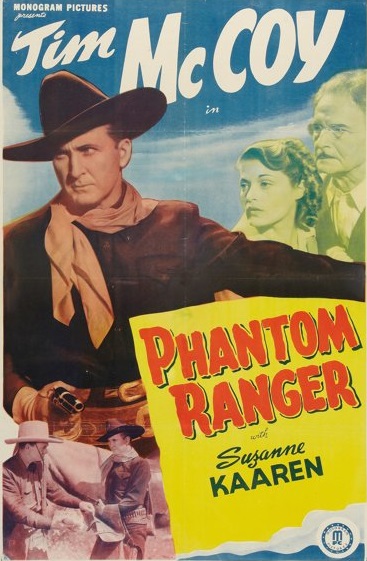
This motion picture was filmed at both the “Iverson Movie Ranch”, and ‘Corriganville”, and according to the trade paper “Film Daily”:
https://archive.org/details/filmdail73wids/page/n9/mode/2up
“Phantom Ranger” was in production during the week of February 26, 1938, and filming in March, at the “Iverson Movie Ranch”.
Two writers created the story, Stanley Roberts, had just worked on the story for, 1938’s, “Code of the Rangers“, and would followed with the next “3 Mesquiteers” film, 1938’s, “Heroes of the Hills”.
Joseph O’Donnell worked with Roberts on the story, but also wrote the screenplay. He had worked on singing cowboy, Fred Scott’s, western, 1938, “Songs and Bullets”, and followed this film with the 1938 drama, “Reform School”.
The picture was directed by Sam Newfield. Newfield had just directed the Bob Steele western, 1938’s, “The Feud Maker”, and followed this feature with Jack Randall’s, 1938, “Gunsmoke Trail”.
Tim McCoy portrayed “Tim Hayes”.
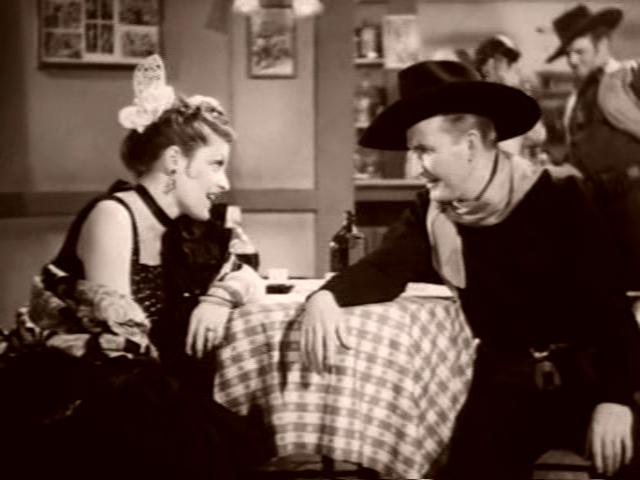
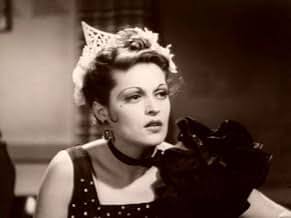
Suzanne Kaaren billed as Suzanne Karen portrayed “Joan Doyle”. The Brunette just had 12th-billing in 1938’s, “Blondes at Work”, and followed this film with the uncredited role of the “Woman in the lobby”, in the Jeanette MacDonald and Nelson Eddy musical, 1938’s, “Sweethearts”.
Karl Hackett portrayed “Sharpe”. Hackett had just been in 1938’s, “The Feud Maker”, and followed this movie with the singing cowboy, Gene Austin in 1938’s, “Songs and Saddles”. The following still comes from the “Iverson Movie Ranch” website at: http://iversonmovieranch.blogspot.com/2019/03/
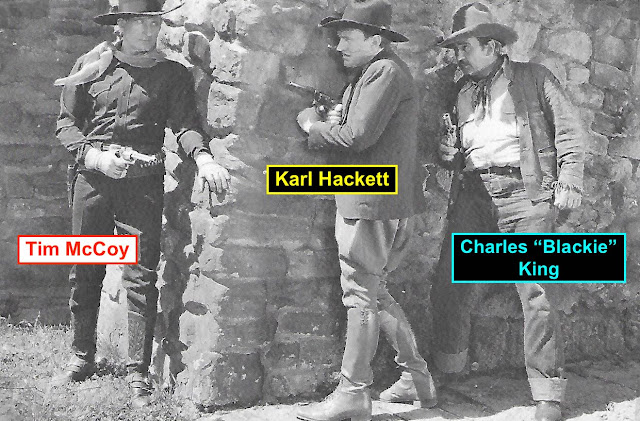
Above, Charles “Blackie” King portrayed “Dan — Henchman”. King was just seen in 1938’s, “Songs and Bullets”, and followed this feature film with 1938’s, “Songs and Saddles”.
John St. Polls portrayed “Pat Doyle”. St. Polls had just been seen in the 1938, crime drama, with the original name of “International Crime”. He followed this motion picture with a movie pushing western writer Zane Grey’s name, but not really his story, 1938’s, “The Mysterious Rider”.
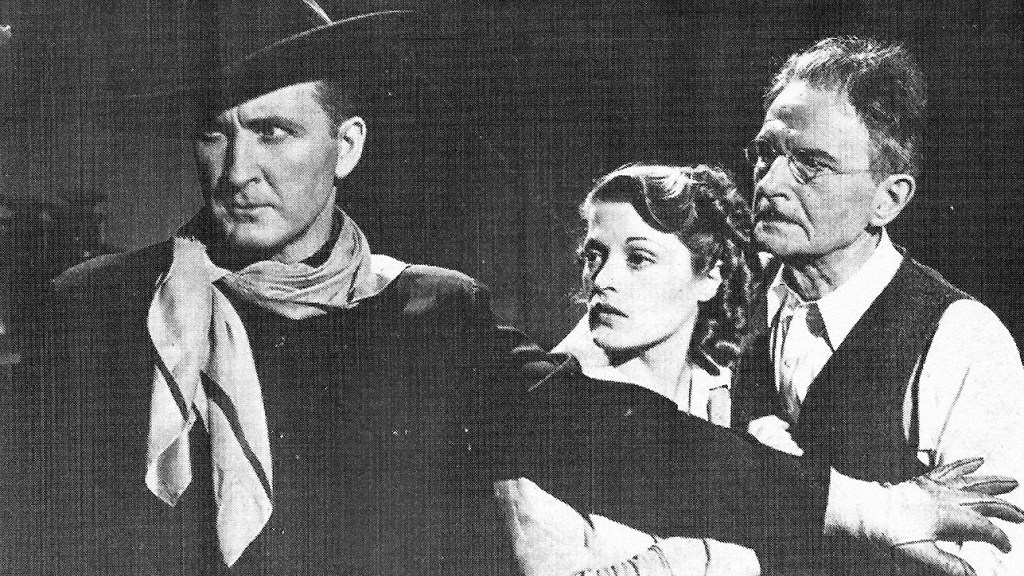
Above, Tim McCoy, Suzanne Karen, and John St. Polls.
The Plot of This G-Men Western”
While this story appears to take place in the small Arizona, town of Topek. with cowboys and a Wild West look to it. The screenplay is set in 1938.
The plot has the villain, “Sharpe”, kidnap a Treasury Department engraver named “Pat Doyle”. “Sharpe” forces “Doyle” to create, perfect plates to make fake money for his counterfeit operation. The entire United States is being flooded with this money. However, the clever engraver put one over on “Sharpe”, and the Federal Bureau of Investigation discovers a miniature town embedded in the bills pointing to Arizona. The Phantom, FBI, Ranger, “Tim Hayes” is sent to investigate, stop the counterfeit operation, rescue the kidnapped engraver., and romance the saloon girl. All within a running time of 53-minutes.
Tim McCoy had made another change of motion picture companies. He was now under contract to Sam Katzman’s own, “Victory Pictures”. Which both made, and distributed, “B” Westerns, starring McCoy, and Bob Steele, among other lesser remembered cowboy heroes.
In October of 1938, the first of a series of ten-motion-pictures, with Tim McCoy portraying the character of “Captain William ‘Bill’, ‘Lightning’ Carson”, or a variation of the name was released.
LIGHTNING CARSON RIDES AGAIN released October 10, 1938
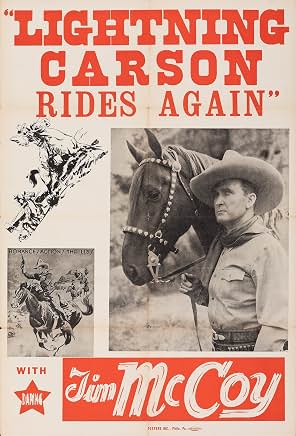
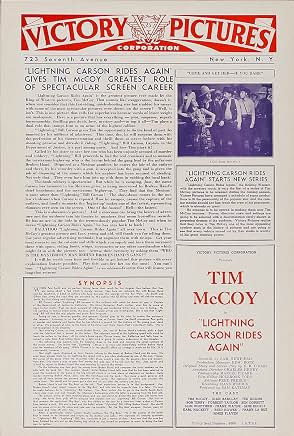
The reason for this title, was that back on April 15, 1936, Sam Katzman’s “Puritan Productions”, had released “Lightnin’ Bill Carson”, starring Tim McCoy, from Katzman’s short lived, “Screencraft Productions”.
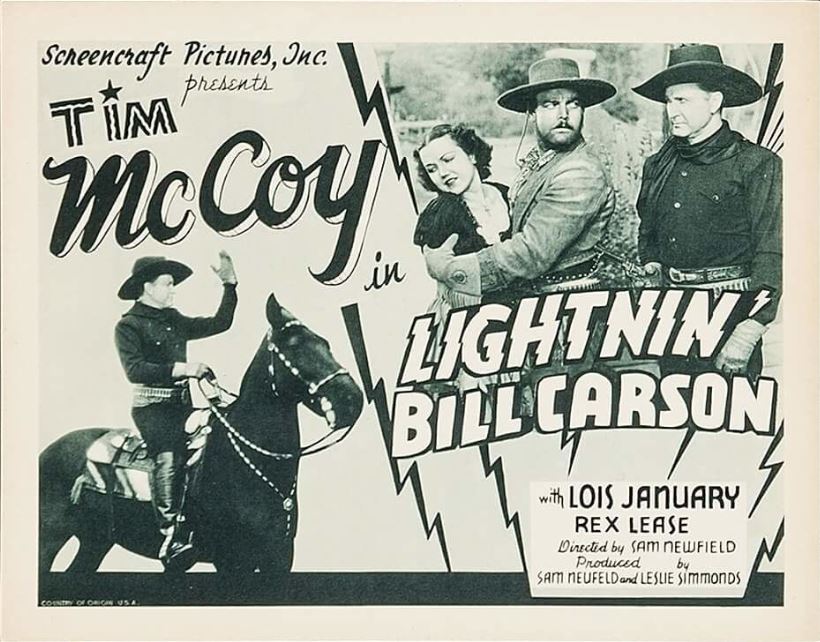
Sam Newfield was directing, he had just directed the forgotten 1938, “Frontier Scout”, with the equally forgotten George Houston. He followed this picture with the second one in the series, 1938’s, “Six-Gun Trail”, with Tim McCoy, as “Captain William Carson”.
Isadore Bernstein wrote the screenplay. He was the West Coast manager for Carl Laemmle and credited for actually putting “Universal Pictures” on the map. He was also Laemmle’s brother-in-law. Isadore also wrote the second screenplay for the series.
The tenth and final picture of the series was:
TRIGGER FINGERS released on November 4, 1939
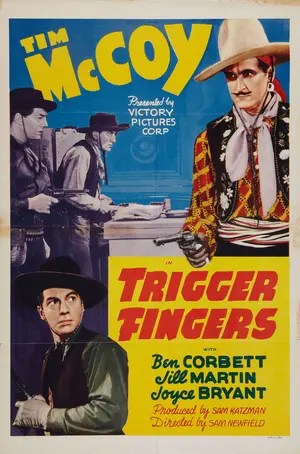
Above right, Tim McCoy dressed as a leader of a band of gypsies, his men also, as they go after the bad guy. In 7 of the series, Ben Corbett portrayed McCoy’s sidekick, “Magpie”.
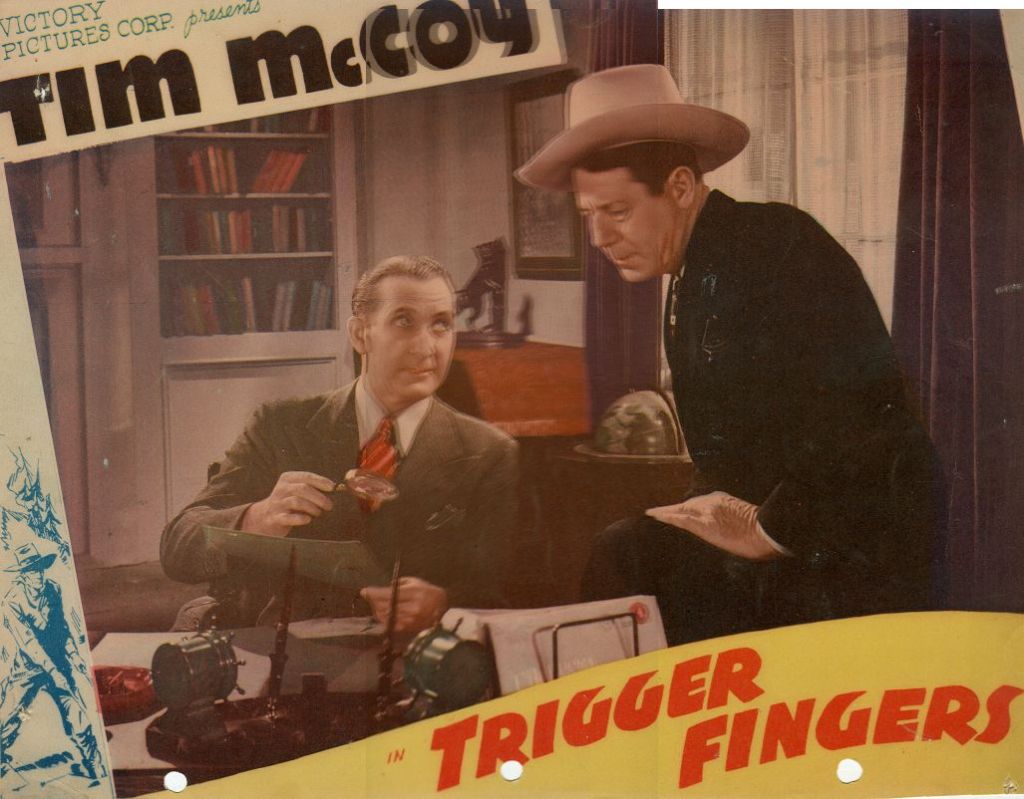
Above Tim McCoy seated speaking to Ben Corbett.
The picture that immediately followed had one of those, I know that face villains/henchmen, but what’s his name?
TEXAS RENEGADES had its premiere on January 11, 1940, and its official release on January 17th.
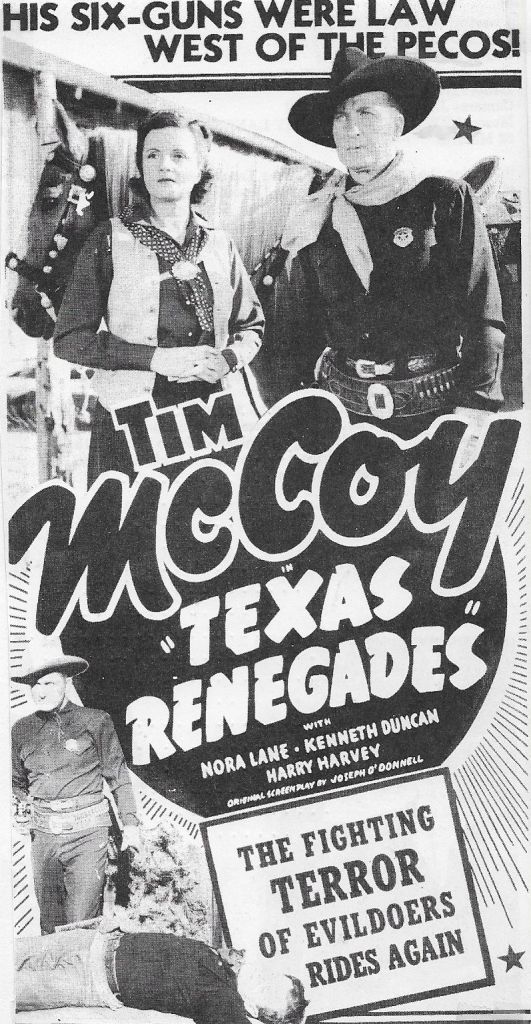
In this picture, Tim McCoy portrayed United States Marshal, “Silent’ Tim Smith”. Who Is sent to the town of Rawhide to stop cattle rustlers. Along the way, the rustlers kill the wrong man, and “Smith” places his identification on the body and assumes the identity of a wanted criminal, “Lefty Higgins”, and is accepted into the gang. However, the real “Lefty Higgins”, portrayed by Earl Gunn shows up, and the story proceeds as any formula “B” Western.
Now, for that “Face” you know, but not his name. That is Canadian, Kenneth Duncan MacLachlan, known professionally as Kenne Duncan, often misspelled as Keene Duncan, portraying “Bill Willis”, but billed as Kenneth Duncan. “Willis” the henchman that is in “Silent Smith’s” face almost in ever scene involving the rustlers.
Which fits Kenne Duncan’s nickname of, “The Meanest Man in the Movies”.
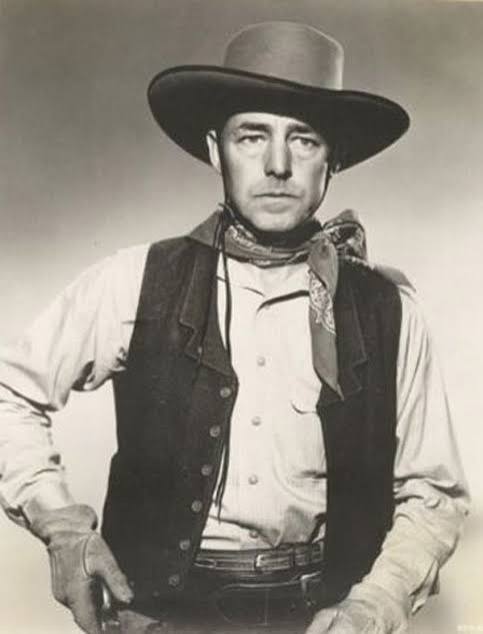
Keene Duncans villainous face was associated with “166-B-Westerns”, but it was also seen, even briefly, in 1938’s, “Flash Gordon’s Trip to Mars”, 1939’s, “Buck Rodgers”, 1941’s, “The Adventures of Captain Marvel”, 1943’s, “Batman”, 1944’s, “Captain America”, and even Bud Abbott and Lou Costello’s, 1941, “Buck Privates”. Not to forget he appeared in five movies by his friend, Ed Woods’s, 1952’s, “Trick Shooting with Kenne Duncan”, `1953’s, “Crossroad Avenger: The Adventures of the Tucson Kid”, 1954, “The Lawless Rider”, 1959’s, “The Night of the Ghouls”, and, 1960’s, “The Sinister Urge”.
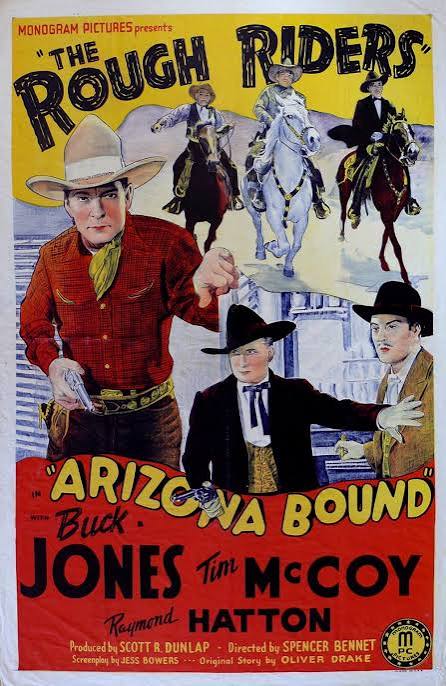
Returning to Tim McCoy, my reader would find him, next, “Arizona Bound”, released on July 19, 1941.
“B” Cowboy star, Buck Jones’s popularity was declining, singing cowboys were all the rage now. Even, “John Wayne Was a Singing Cowboy: Singing Cowboys and Cowgirls in the Movies and on 1950’s Television “, my article on this change in “B” Westerns can be read at:
https://www.bewaretheblog.com/2022/07/john-wayne-was-singing-cowboy-singing.html
Buck was 50, and had been making movies since 1914. He went to his friend, Scott R. Dunlap, the production manager at “Monogram”, and the two came up with an idea. Jones contacted Tim McCoy, whose career was declining over the popularity of those singing cowboys, he also was 50. Next, Jones approached Raymond Hatton, who was a major western character actor. Hatton’s career was possibly in worse shape than the other two, he was the oldest, at 54.
The plan that Dunlap and Jones had come up with, was to team the three as “The Rough Riders”, no connection to the “Spanish American War”, portraying three retired, “United States Marshalls”. Who come together to fight crime in the Wild West.
“Monogram Pictures”, deliberately modeled “The Rough Riders”, after rival studio “Republic Pictures”, “Three Mesquiteers“, that Hatton had been a part of, from June 27, 1939 through August 29, 1940.
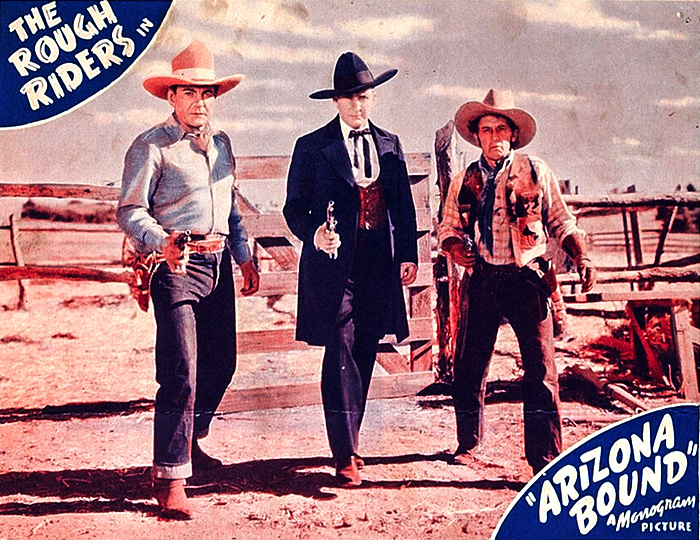
Above left to right, Buck Jones portraying “Marshall Buck Roberts”, Tim McCoy portraying “Marshall Tim McCall”, and Raymond Hatton portraying “Marshall Sandy Hopkins”.
The original story for the screenplay, came from Oliver Drake. By this time, Drake was both a writer and director of westerns. His last story for a screenplay, was for singing cowboy, Dick Foran’s, 1941, “Riders of Death Valley”. His next story was for Ray “Crash” Corrigan’s, 1941, “Fugitive Valley”.
The screenplay, itself, was by Adele Buffington. Before this feature, she had come up with the story idea for 1939’s, workplace drama, “Beauty for the Asking”, starring dramatic actress Lucille Ball, Patric Knowles, and Donald Woods. Buffington followed this picture, by coming up with the story idea, and writing the screenplay, for the second “Rough Riders” movie, 1941, “The Gunman from Bodie”.
The motion picture was directed by Spencer Gordon Bennett. He had just directed the Tex Ritter, 1941, “Ridin’ the Cherokee Trail”. He would follow this feature film by directing, the second “Rough Rider” feature film.
Luana Walters portrayed “Ruth Masters”. She was a movie, “Western Heroine”, in several films, and had just been seen in “Wild Bill Elliott’s”, 1941, “Across the Sierras“, and followed this feature film with one of her non-western entries, 1941’s, “No Greater Sin”.
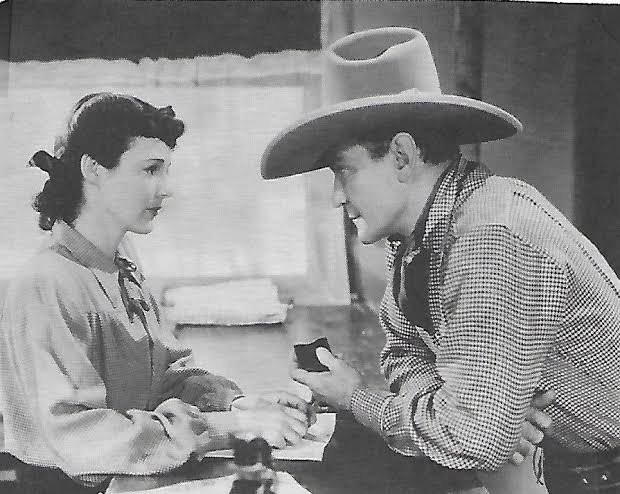
Above, Luana Walters and Buck Jones.
Tristram Coffin portrayed “Steve Taggart”. Coffin would co-star with Luana Walters, and Bela Lugosi in 1942’s, “The Corpse Vanishes”. While, in 1949, he was the first actor to put on “Republic Picture’s” rocket powered flying suit, as the “King of the Rocket Man”, but here, he was just another bad guy.
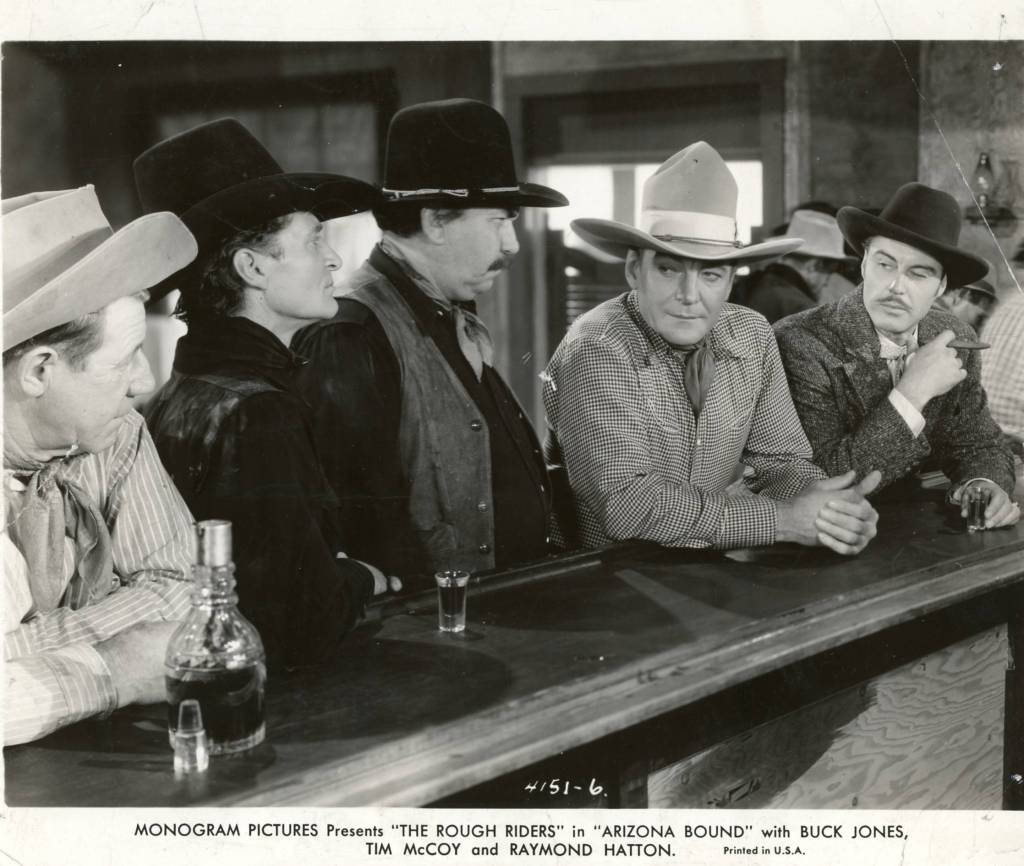
Above right, Buck Jones, and Tristram Coffin.
Dennis Moore portrayed “Joe Brooks”. Moore had just been in the Bob Steele, 1941, “Billy the Kid in Santa Fe”, and followed this picture with “The East Side Kids”, comedy, 1941’s, “Bowery Blitzkrieg”.
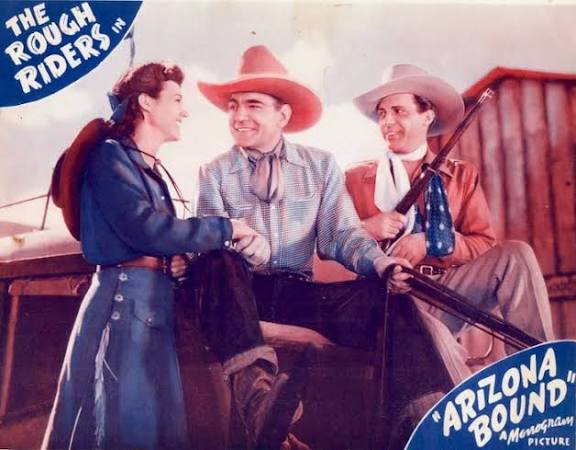
Above, Luana Walters, Buck Jones, and Dennis Moore.
The Basic Action Plot:
“Ruth Masters’s” father has been killed, her fiancé, “Joe Brooks”, was wounded, her Arizona stage line is collapsing. What’s left for her? Other than selling it to saloon owner, “Steve Taggart”?
A retired United States Marshall named “Buck Roberts”, at that very moment in “Ruth’s” life, rides into Mesa City, Arizona, with a heard of cattle to sell. “Buck” meets a preacher by the name of “Tim McCall”, who hates people selling whiskey on Sunday’s, especially “Taggart”. “Buck” offers “Ruth”, to drive her next stage with the gold shipment, and accompanied by her brother, “Joe”. There’s another cattleman, “Sandy Hopkins”, who also offers to help “Ruth” out, and the three leave Mesa.
A mask man robs the stage of the gold shipment, and the townspeople decide that “Buck” was in on it. The preacher helps capture “Buck Jones”, but “Joe” reveals that the gold was hidden by “Buck”, before they go very far and it’s all safe.
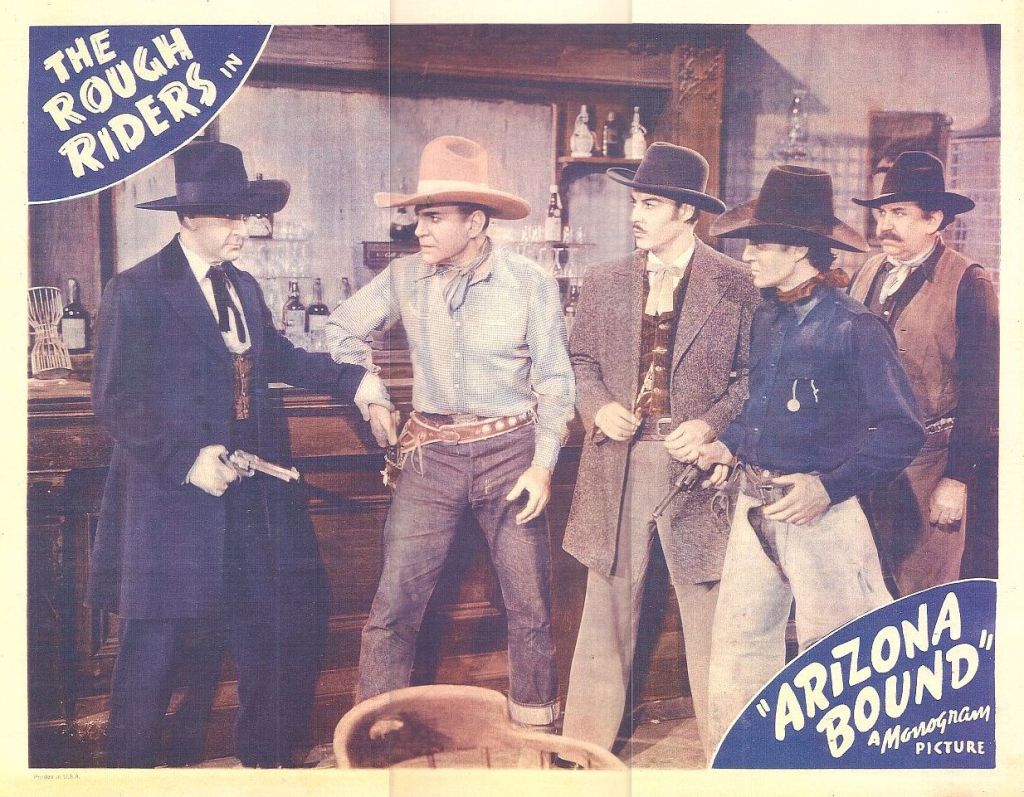
In the end, the “Rough Riders” reveal themselves as three ex-United States Marshals working together to bring down Saloon Owner, “Steve Taggart” and his gang. The film ends with the three riding out of town, and going their separate ways until they’re needed again.
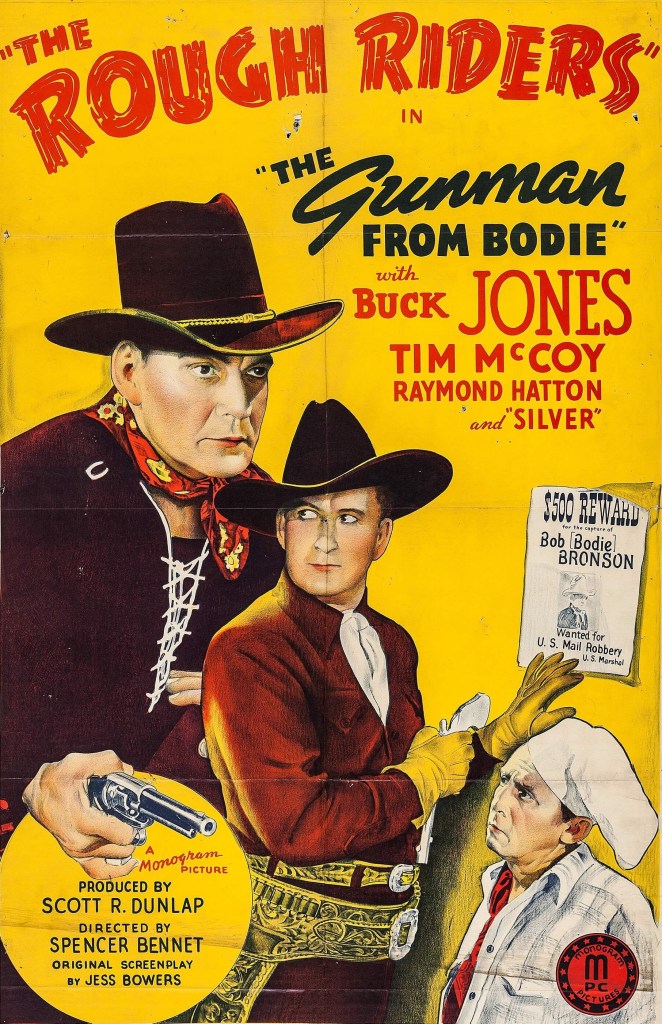
The previously mentioned, “The Gunman from Bodie”, is showing as having had a special premiere on September 19, 1941, but there is no record of it taking place, or where. From this point forward, notice that Buck Jones’s horse, “Silver”, is getting screen and poster credit.
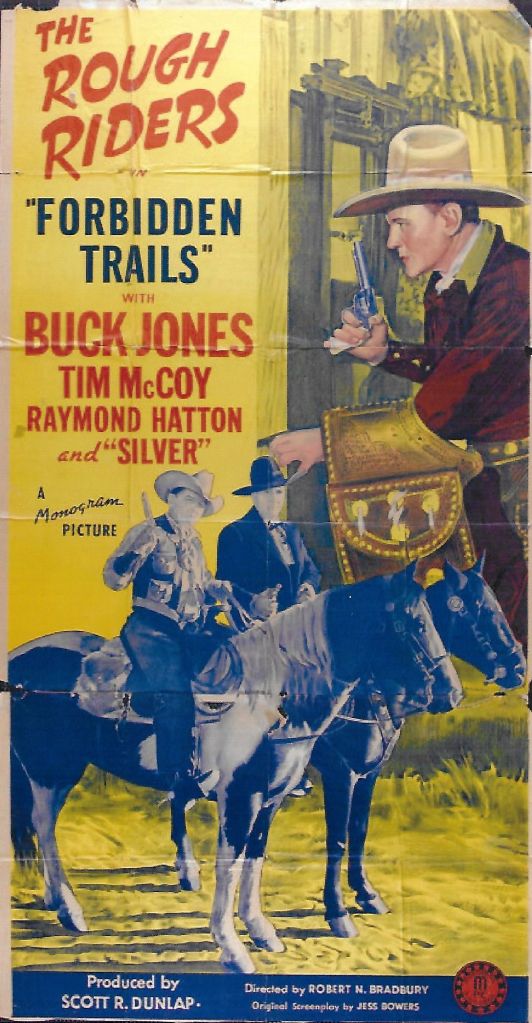
On December 7, 1941, the “Imperial Navy of Japan”, attacked “Pearl Harbor”, Hawaii. 18-days later, December 25th, “Forbidden Trails”, the 3rd-entry, in the “Rough Riders” series, was released.
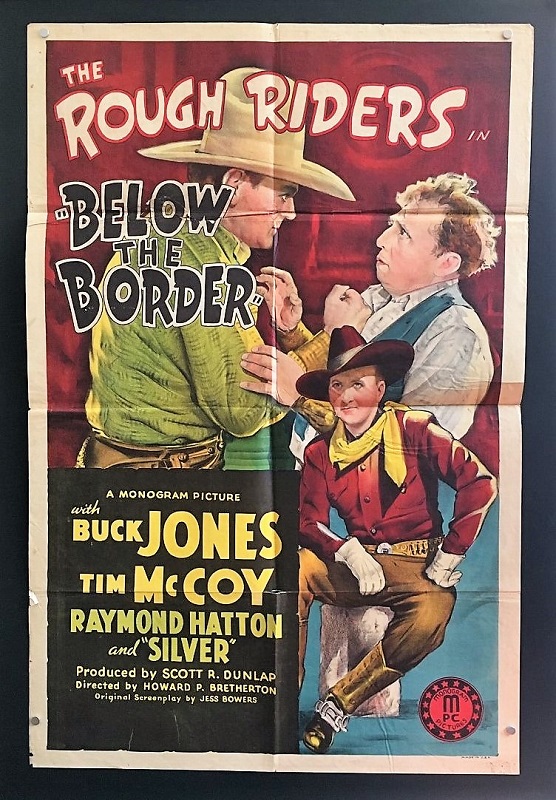
“Below the Border”, the 4th film in the series, was released on January 30, 1942.
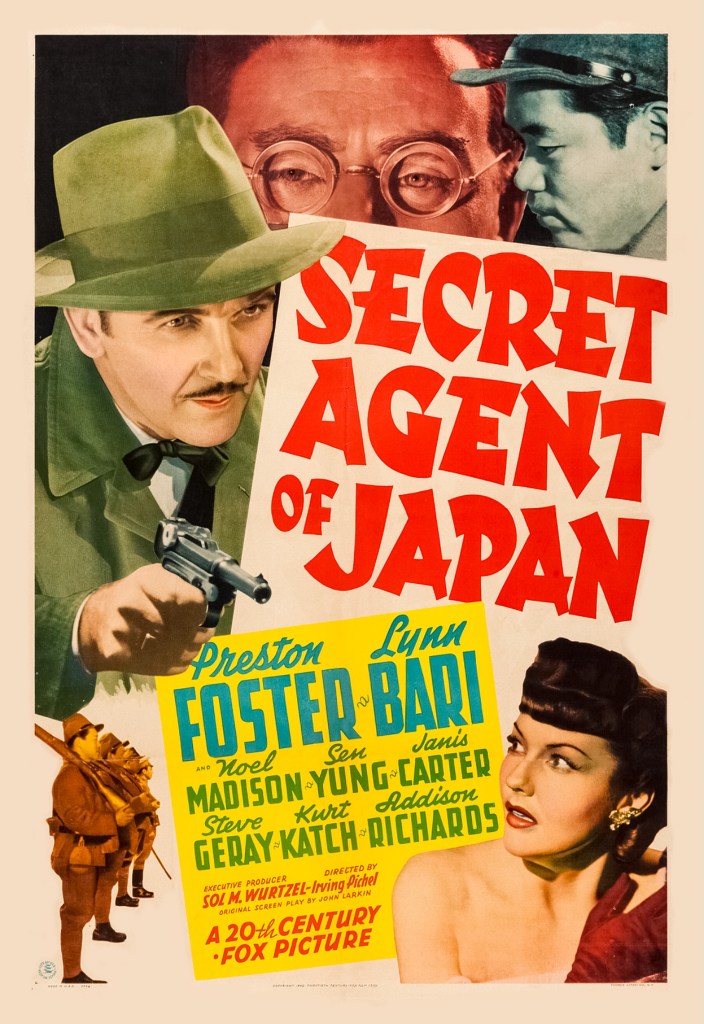
The first piece of “Hollywood”, anti-Japanese propaganda, over the Pearl Harbor surprise attack, came from the major studio, “20th Century Fox”. The picture was released on March 21, 1942, and entitled, “Secret Agent Japan”.
The 5th-entry of the “Rough Riders” series, “Ghost Town Law“, was released six days later on March 27, 1942.
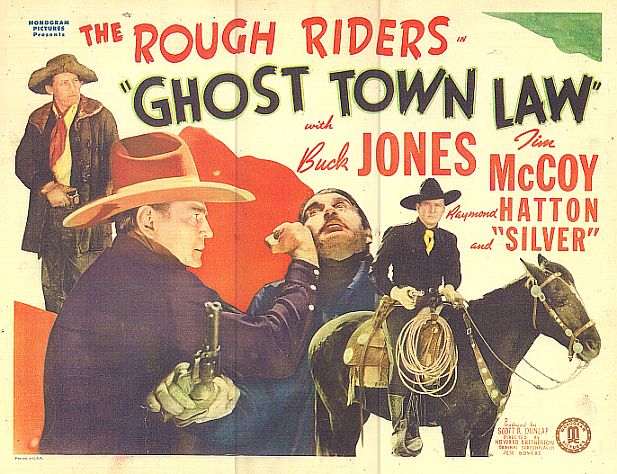
Although there were 3-more movies in the series to be made. “Colonel Tim McCoy”, ran for the Republican Wyoming Senate nomination, starting his campaign on March 31, 1942. One of the interesting points of his candidacy, was that he payed for, setting up the first statewide radio hook-up. However, there were five other candidates, Business man, Edward V. Robertson, the former President of Wyoming University, Arthur G. Crane, the former Mayor of Rock Springs, Walter A. Muir, and the former Wyoming Governor, Alonzo M. Clark.
On May 22, 1942, “Down Texas Way” was released.
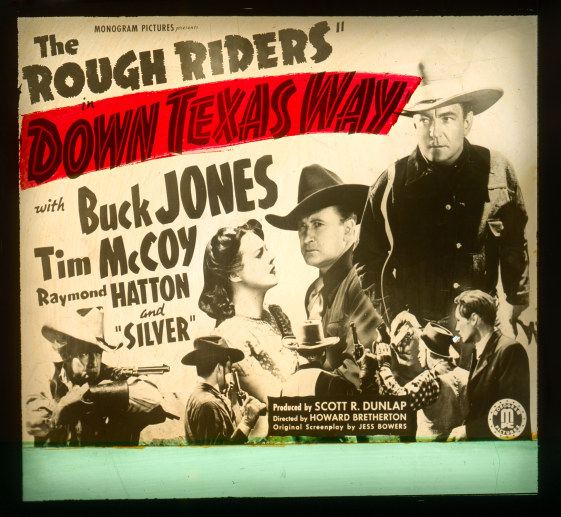
On August 18th, the “Republican Primary” was held, and Tim McCoy came in third.
| Candidate | Votes Received | Percentage of Vote |
|---|---|---|
| Edward V. Robertson | 8,128 | 27.77% |
| Arthur G. Crane | 7,614 | 26.02% |
| Tim McCoy | 6,854 | 23.42% |
| Walter A. Muir | 3,467 | 11.85% |
| Ralph R. Crow | 1,796 | 6.14% |
| Alonzo M. Clark | 1,408 | 4.81% |
On August 21, 1942, “Riders of the West” was released. THE DAY BEFORE, Tim McCoy re-enlisted in the regular Army, using his reserve commission of “Lieutenant Colonel”. Also, on August 20th, the filming of the final picture in the “Rough Riders” series started shooting at the Placenta Canyon, leased, “Monogram Ranch”.
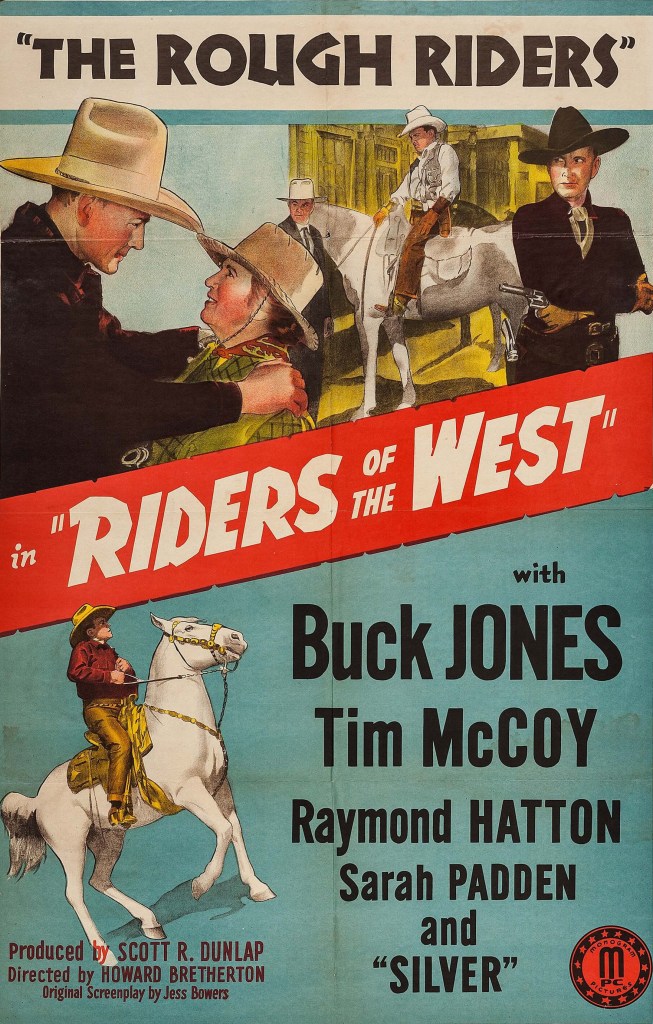
“West of the Law”, would be released on October 2, 1942
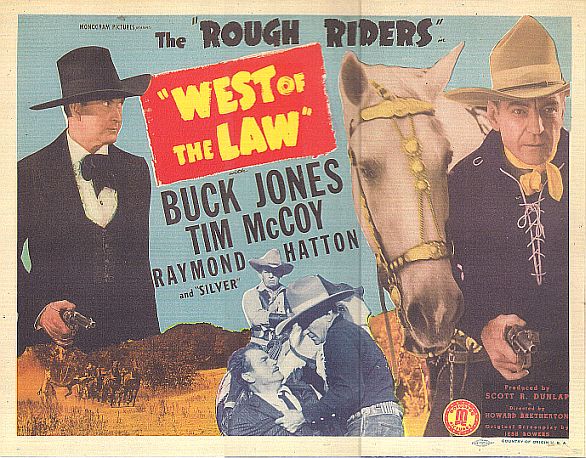
While, later in October, “Reserve Lieutenant Colonel Tim McCoy”, reported to “Fort Washington, Maryland”, for a refresher course. It was designed to use his name recognition, as a liaison to European Armies, from the United States Army and Army Air Corps.
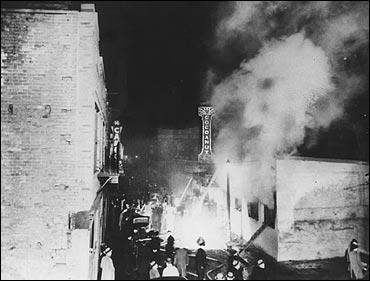
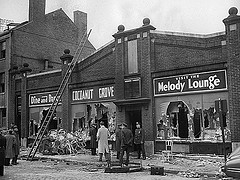
On November 30, 1942, Buck Jones was killed as one of the 492 people who burned to death, in Boston, Massachusetts. “Coconut Grove Fire”. Below, the fire, and the night club after it was out.
The third member of the “Rough Riders”, Raymond Hatton continued his on-screen career through 1971, for a total of 428 motion picture and television roles. Fans of director Rodger Corman, know Hatton as a the prospector, “Pete”, in 1956’s, “The Day the World Ended”. He died at the age of 84, on October 21, 1971.
Tim McCoy, left the service on, November 15, 1945, as a “Full Colonel”. On his uniform were both the “World War One”, and “World War Two”, “Victory Medals”, the “American Campaign Medal”, and the “European – African – Middle Eastern Campaign Medal”, “Legion of Merit”, “Bronze Star Medal”, “Army Commendation Medal”, and the French Air Medal, “Médaille de l’Aéronautique”.
The following photo is from the website “Alchetrom.com”, at:
https://alchetron.com/Tim-McCoy
It illustrates a major mistake that researchers still make. This is CHARLES MCCOY, a “Seaman First Class”, on the “USS Grenadier (SS-210)”, a submarine that was attacked by the Japanese in the “Strait of Malacca”, on April 22, 1943. McCoy became a “POW” until Japan’s formal surrender, in August 1945.
Unfortunately, Charles had the nickname of “TIM”. This post does not have one piece of information about Charles “Tim” McCoy”, but uses Western Actor’s, Tim McCoy’s.
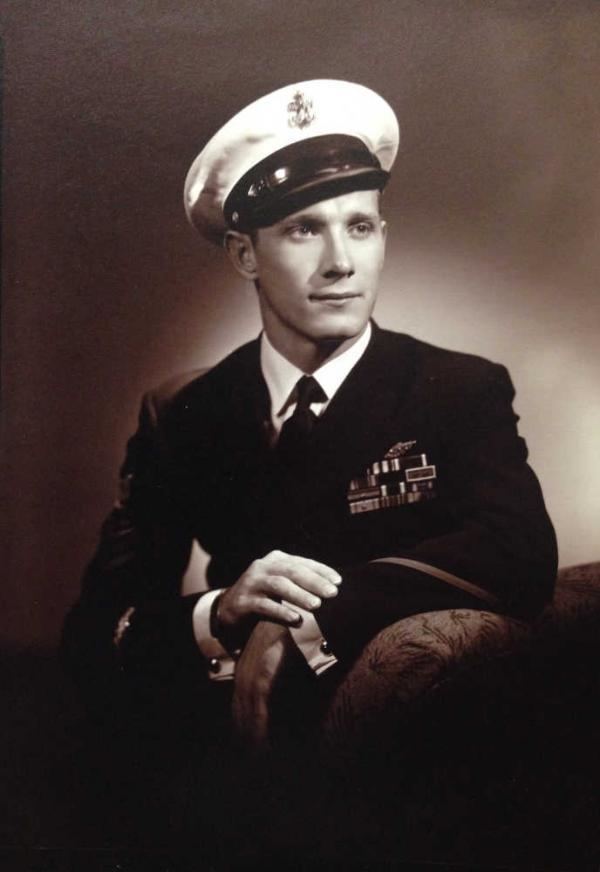
The Lubbock Texas, website for the “Lubbock Avalanche Journal” newspaper, has Charles McCoy’s actual story for those of my readers who are interested at:
Back in Wyoming, our, Colonel Tim McCoy, sold his remaining part of the, “Eagle’s Nest”, and left the state for good. At a forgotten, 1944, “Hollywood Dinner Party”, Tim McCoy, met Inga Marie Arvad Petersen, a women with an interesting past.
In 1931, Copenhagen, Denmark, Inga Marie Arvad Petersen, was selected by the Danish newspaper, “Berlingske”, as their “Beauty Queen”.
Approximately, two-years later, Inga Arvad, become a correspondent for Denmark’s largest newspaper, “Berlingske Tidende”.
In 1935, she out-scooped the other correspondents, by announcing that, Nazi Luftwaffe Commander-in-Chief, Hermann Göring, was marrying popular German actress, Emmy Sonnemann. The scoop got Inga an invitation to the wedding. This led to being granted a private interview with Adolph Hitler, and in 1936, she was his personal guest at the “Berlin Summer Olympic Games”.
In 1940, Inga came to the United States, and was accepted by New York’s, “Columbia University School of Journalism“. She graduated one year later, and became a columnist in Washington, D.C. for the “Times-Hearld”. One of her co-workers, Katherine, introduced Inga to the co-worker’s brother, “Jack”. Katherine, and actually John’s last name was KENNEDY.
Because of the sibling’s father, Joseph Patrick Kennedy’s political ties and position. The “Federal Bureau of Investigation” investigated Inga Arvad, based upon her closeness to Hitler as a “Nazi Spy”, she was found to be clear. Even Joseph Kennedy investigated the woman his son was having an affair with, and cleared her..
The Second World War came, and on August 2, 1943, “Lieutenant J. G. John Fitzgerald Kennedy’s, “PT 109” was cut in half by the Japanese Destroyer Amagiri.
On, January 13, 1944, “The Pittsburgh Press”, published an interview with “Jack” by correspondent, Inga Arvad, about his experiences with “PT-109” and his saving member of its crew.
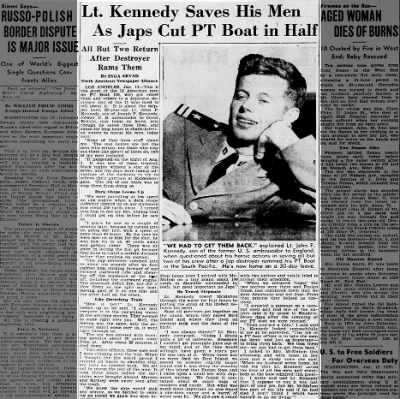
The affair between Inga and JFK ended, by him, because he wanted to get into politics and having a girlfriend with ties to Hitler would be detrimental to his future.
On February 14, 1947, Tim McCoy and Inga Arvad were married, although both claimed they were married the previous year, but there is no record of that marriage. They would have two boys, Ronald, and Terence McCoy.
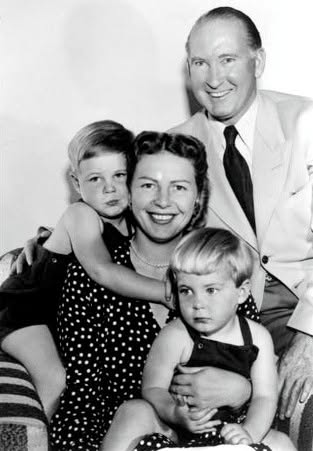
KTLA TELEVISION PRESENT’S THE TIM MCCOY SHOW:
The following, through “The Telecopter”, is modified from my article, “TV NEWS B. C. (B4 CABLE)”, found at:
https://www.bewaretheblog.com/2019/11/tv-news-bc-b4-cable.html
“KTLA: The First Commercially Licensed Television Station In The Western United States.
Being a born and raised Los Angeles “Deadhead”. When I was old enough to watch television, “KTLA”, Channel 5, was a favorite. The station was originally “Experimental Television Station W6XYZ” founded in 1939. However, it wasn’t until September 1942 that “W6XYZ” made it first “Experimental Broadcast”.
On January 22, 1947, “W6XYZ” became “KTLA-TV”, and made its first commercial broadcast in Los Angeles, if you owned a television set you saw it.
Other stations would follow “KTLA”, in what would become a major television market. It took two years and seven months from the station’s first commercial broadcast for the last of the major network, “ABC”, to arrive.
By September 1947, Los Angeles was estimated to have between 350 to 600 television sets for the entire cities population. To give my reader a perspective of the number of Television Sets vs The Population of Los Angeles in 1947. The U.S. Census Bureau stated, Los Angeles had a 1940 population of 1,504, 277, that grew in 1950 to 1,970,358. The actual 1947 population lies somewhere between those two figures, but shows that approximately only .01 to .03 percent of the total Los Angeles population had TV sets.
“KTLA” was a leader in National News Broadcasting Innovation. In 1952, Stan Chambers, became the first newscaster to do a live broadcast of a Nevada Atomic Bomb Test.
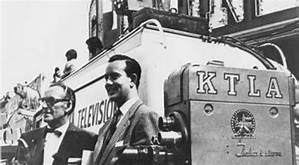

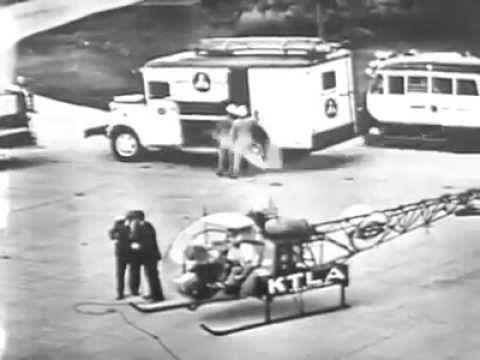
In 1958, “KTLA”, became the first television station to use a helicopter. They now called “The Telecopter”, to carry video broadcasting equipmentto cover news events as they were occurring.”
In February 1950, before “KTLA” covered the Atomic Bomb Test, was the premiere of the Two-Hour Hybrid, part live, part film, “THE TIM MCCOY SHOW”. The program was seen every afternoon, except Sundays, at 5 PM, and was aimed at a young after school audience.
The original “KTLA” program, had Tim McCoy, and his main co-host, Iron Eyes Cody, speaking to the program’s young audience about Native American Culture, and Folklore. The first half-hour, would be followed by a “B” Western. During that first live part, interesting facts about the movie about to be shown. Such as the construction of real “Covered Wagons”, for a showing of the 1923, motion picture, “The Coverage Wagon”.
Who was Iron Eyes Cody?
My short article, “Native Americans, Hollywood Style” begins:
“I Never Knew Cochise’s Son Looked Like Rock Hudson.”

My reader will find that article at:
https://www.bewaretheblog.com/2015/08/native-americans-hollywood-style.html
Colonel Tim McCoy insisted upon using real Native American actors in his films and, as I have mentioned, at times, acted as their translator.
From my lined article, comes the following paragraph:
“On Earth Day April 22, 1970, a Public Service Video came out on television. The video was called, “The Crying Indian”. What better way to speak about the danger to our environment? Than having a recognized, iconic, Native American actor, “Iron Eyes” Cody, a member of the Cherokee Tribe, shed a tear for our planet’s environment?“
Here is the link to that Public Service Spot:
https://www.youtube.com/watch?v=j7OHG7tHrNM
Iron Eyes Cody’s 221-acting roles started in director Cecil B. DeMille’s, 1925, “The Road to Yesterday”, with the uncredited role of “The Indian”. The following year, he was both the uncredited “Young Indian at Dunking”, in actress Lillian Gish’s, “The Scarlet Letter”, and the “Indian”, in Tim McCoy’s, “War Paint”, which I previously mentioned. According to, Native American, Iron EyesCody, his father was Cherokee, and his mother Cree.
Here are four pictures of the actor over his acting career:
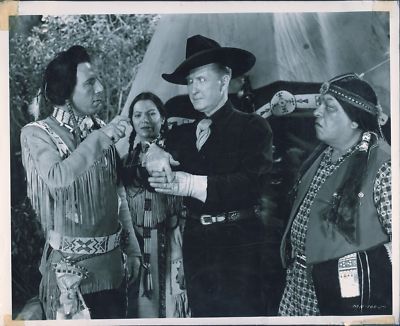
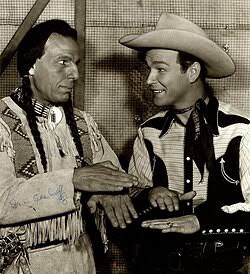
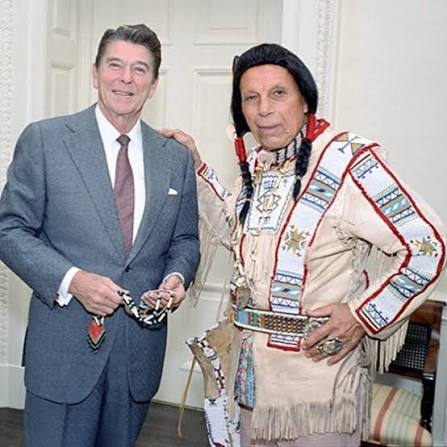
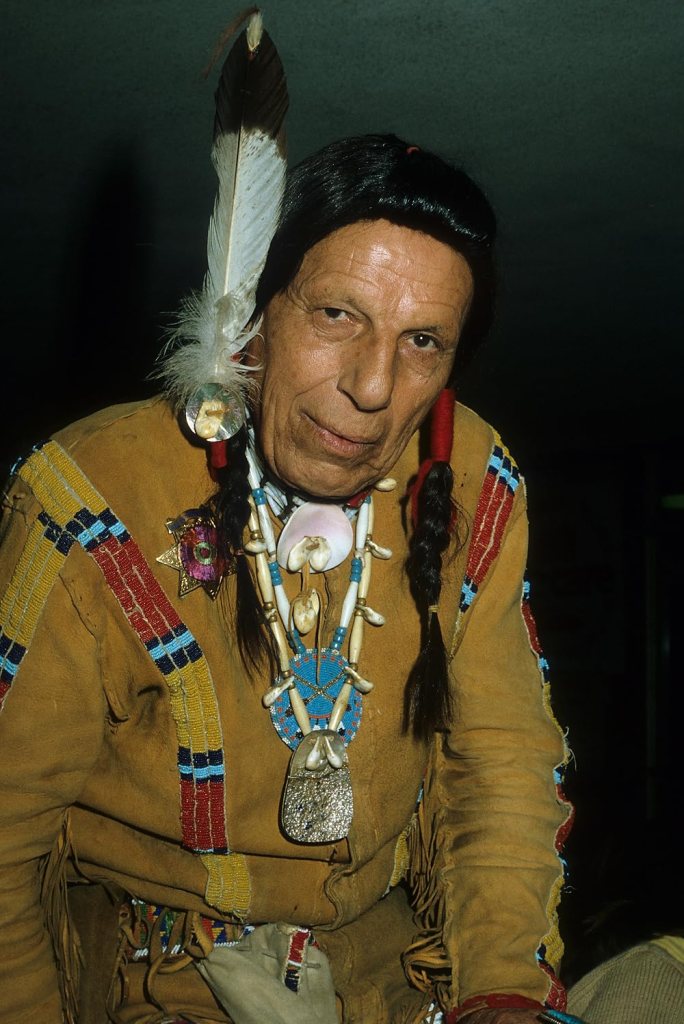
Returning to my article, “Native Americans Hollywood Style”, my reader finds:
“A surprise came to Hollywood, and even, sadly, the Native American community. Who had honored him for his accomplishments for Native American rights. When “Iron Eyes” Cody passed away, on January 4, 1999, and his Birth Certificate was revealed. The man who said he was the son of a Cherokee father and a Cree mother, was actually Espera Oscar de Corti. An Italian American, born, April 3, 1904, in Kaplan, Louisiana. For 69 years he had scammed the world into believing he was a Native American, and most sadly, the community who believed in him, as their most visible representative.
The other co-host on “The Tim McCoy” show, from time to time, was Chief Yowalchie. He was an actual member of the Yakama Tribe, an actual Native American Chief, born on the reservation located near Yakama, Washington, as Daniel Simmons. Both his parents, John W. Simons, and Lucy Riddle, are of Puyallup Native American Heritage, and had land on the Yakima Reservation. Before becoming an actor, Daniel Simmons learned opera under the teachings of Italian Operatic Baritone, Pasquale Amato. He sang opera at the “White House” for both President Hoover, and President Franklin Roosevelt. Daniel, became an actor, portraying a credited, “Indian Scout”, in 1923’s, “Kentucky Days”. His acting career ended, as an uncredited “Medicine Man”, in 1966’s, “Nevada Smith”, with 100-film-roles to his credit.
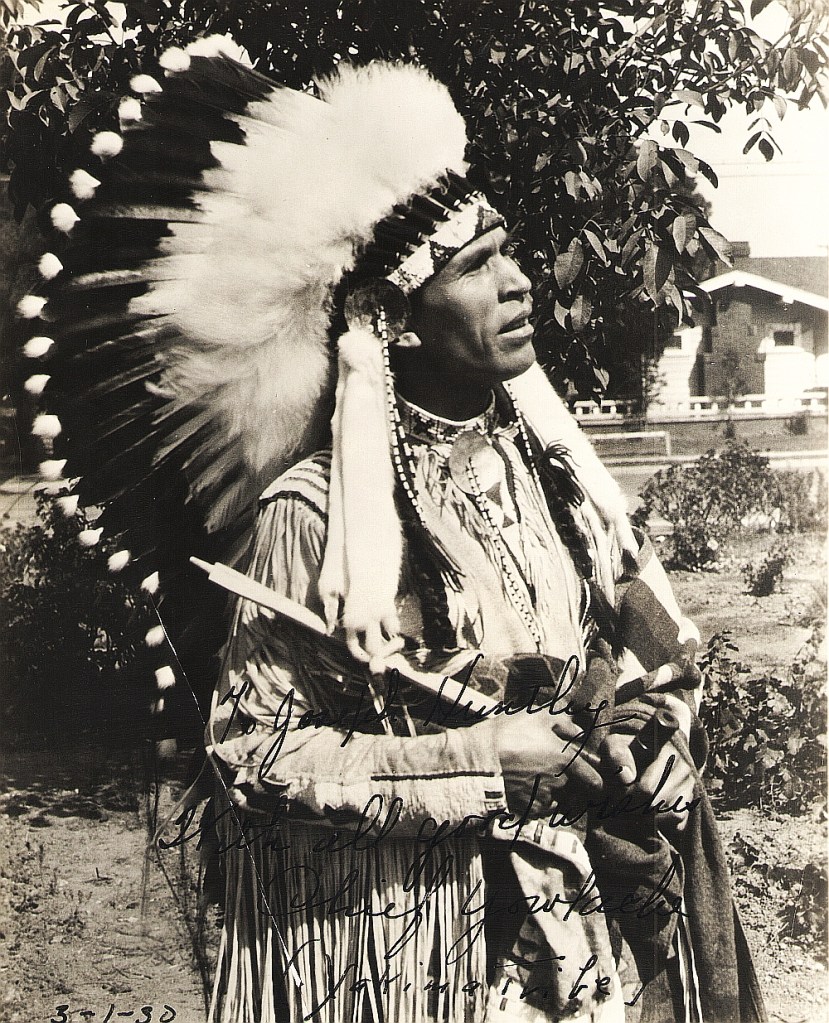
For “KTLA”, Tim McCoy made, when the program ended its run in 1952. Depending upon whose math you use, somewhere between 500 and 600 episodes . As these were “Live Half-Hours”, no film, or kinescope’s were made.
Next, for 1952 – 1953, Tim McCoy moved to local Los Angeles “Columbia Broadcast System (CBS)” station “KNXT Channel 2”. He had two shows, “The Time McCoy Show” and “Tim McCoy’s Wild West”.
| Feature | The Tim McCoy Show | Tim McCoy’s Wild West |
|---|---|---|
| Broadcast Days | Saturdays only. | Weekdays (Monday through Friday). |
| Cast / Format | Featured Tim McCoy alongside his co-host Iron Eyes Cody, preserving their original stage chemistry. | A strict one-man show hosted solely by Tim McCoy without a sidekick. |
| Primary Focus | Blended historical storytelling with classic Western film clips and theatrical screenings. | Focused entirely on live historical lectures, teaching authentic frontier history, and Native American culture. |
The following comes from article, “Children’s TV in 1950’s L.A.: Sheriff John, Engineer Bill, Skipper Frank, Tom Hatten and Others” at”
https://www.bewaretheblog.com/2016/10/childrens-tv-in-1950s-la-sheriff-john.html
WEBSTER WEBFOOT
On September 5, 1952 KCOP Channel 13 premiered “The Webster Webfoot Show” starring “Uncle Jimmy” Weldon and his ventriloquist dummy a duck named “Webster Webfoot”.
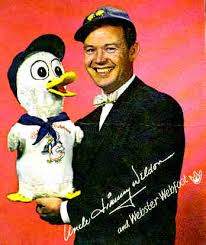
The show had a large audience and several children were seated on a bleacher to interact with Webster. Webster always said “He was three, but he was tough”.
In 1956, the two left KCOP, and Los Angeles for Fresno to appear on KFRE-TV and than Webster and “Uncle Jimmy” left for New York and the NBC flagship station WRCA-TV to replace Shari Lewis and her puppet “Lamb Chop”. The two returned in 1959 to KCOP and I was able to get tickets for me and two of my neighbors to be on the show. I was a little old at the time for the group on stage at 12. However, I also brought my own homemade version of “Webster” and the two of them interacted after the show ended it live performance that day.
If you want to know how Webster Webfoot sounded. Just see any “Hanna-Barbera” cartoon with “Yakky Doodle” the little duck in it.”
I bring “Webster” up, because he was up against Tim McCoy for a local “Emmy” award for “Best Children’s Show”. McCoy was on record, and often quoted, as saying:
“I’ll be damned if I’m going to sit there and get beaten by a talking duck!”
So, he didn’t go to the award ceremonies, and when the envelope was open, and the winner’s name read. It was Colonel Tim McCoy.
Elizabeth Taylor’s last husband, Michael Todd, made a major version of French author, Jules Vernes’s, “Around the World in 80 Days”, released on October 17, 1956.
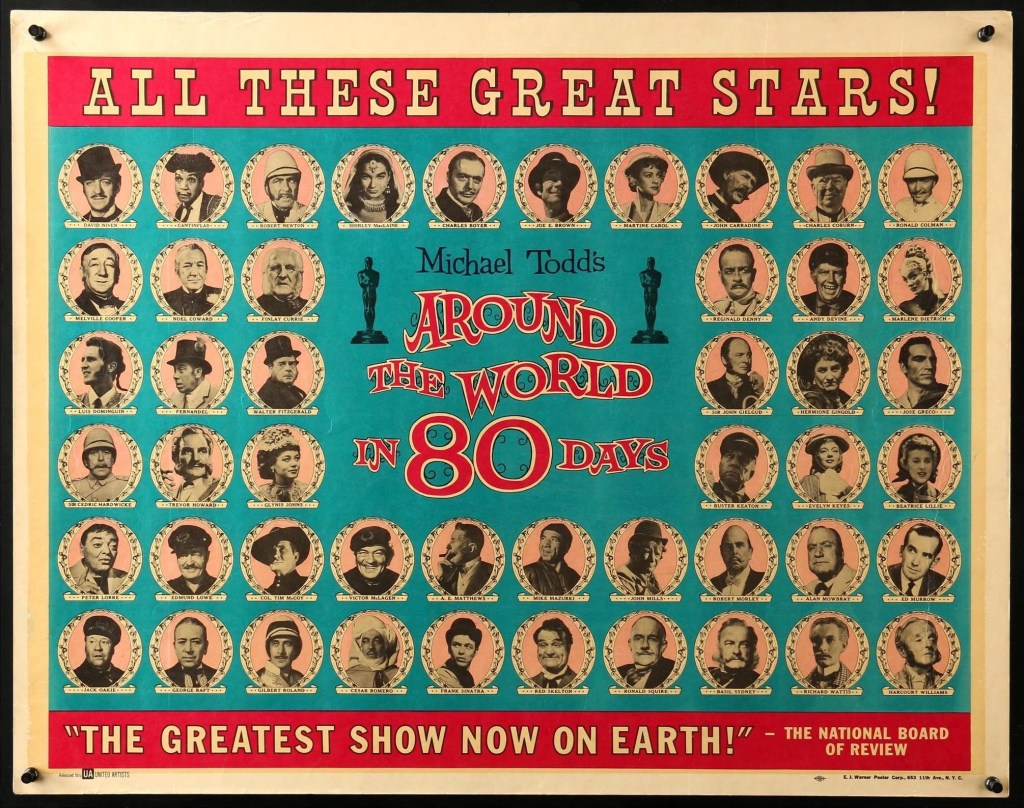
In it, Colonel Tim McCoy portrayed portrayed a United States Cavalry officer, named, “Colonel Tim McCoy”.
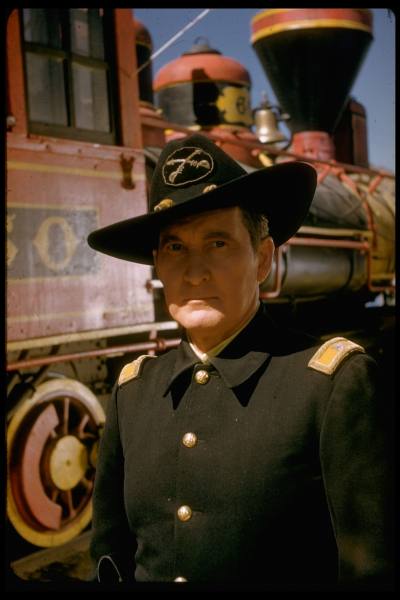
Tim McCoy died on, January 29, 1978, at the Raymond W. Bliss Army Medical Center of Fort Huachuca, in Sierra Vista, Arizona, he was 86-years-old.


Leave a comment