One born in 1933, the other in 1954, but TODAY, mention their name’s, and the EARTH TREMBLES!“. This is a look at how two of the greatest fictional monsters to walk this planet were created.
THE EIGHTH WONDER OF THE WORLD
PART ONE: THE SPY
IF YOU THINK “KING KONG” WAS EXCITING. YOU DON’T KNOW THE REAL LIFE OF ITS PRODUCER, MERIAN CALDWELL COOPER
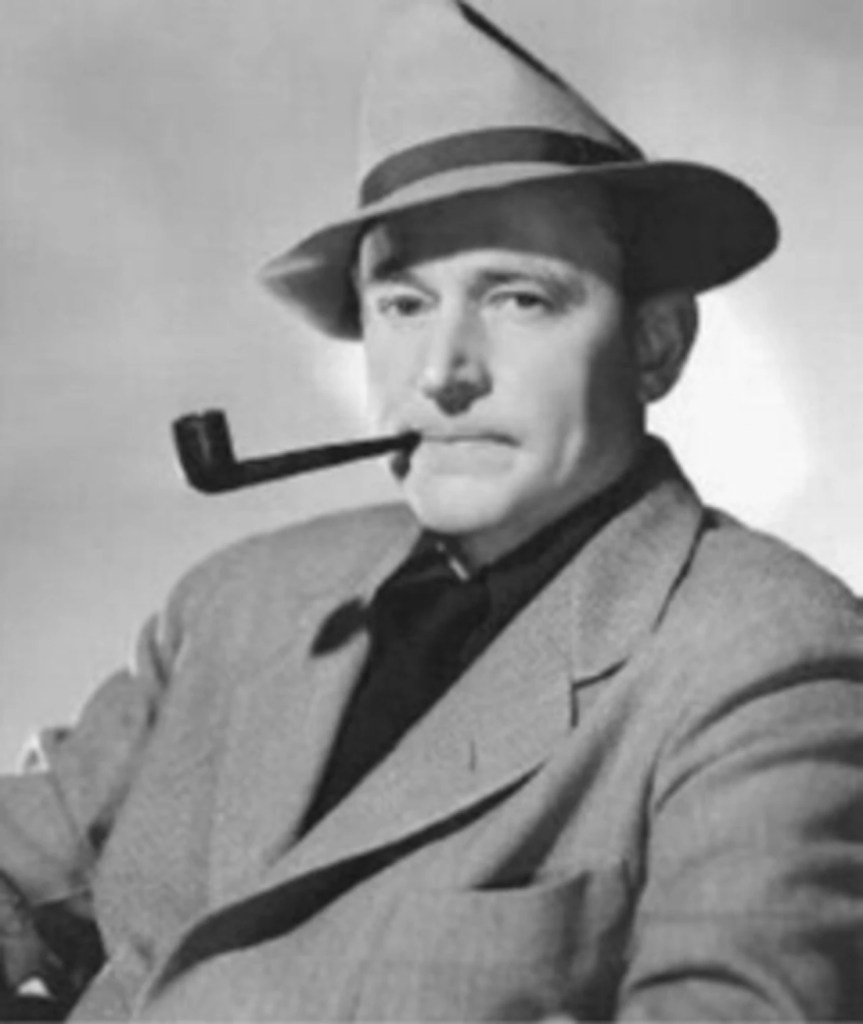
Had Hollywood filmed his life, you probably wouldn’t have believed what you were seeing.
Cooper’s life started with his birth on October 24, 1893 in Jacksonville, Florida. His father was an American of English decent John C. Cooper, and his mother was Mary Caldwell of Jacksonville. His parents would have their son educated at the “Lawrenceville School” located in Lawrenceville, New Jersey. Founded in 1810 Lawrenceville is one of the oldest co-educational college preparatory schools for ninth through twelfth grades in the United States.
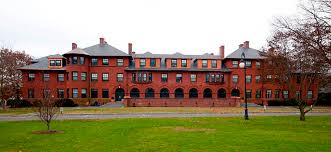
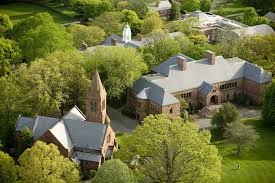
After graduating Lawrenceville in 1912. Merian Caldwell Cooper was admitted to the United States Naval Academy at Annapolis, Maryland. While at the Academy, Cooper learned to fly, and planned to become a Naval Aviator upon graduation. However, after he discovered that the Navy’s position on the potential of air power differed from his vision, he resigned from the Academy. At this time, to the Navy, a plane was good for scouting the enemy, but not as an instrument of fighting any countries navy. This was the unsinkable Battleship theory that future General of the Army Air Corp Billy Mitchell would disprove after the First World War, and face Court Marshall over his action.
Cooper, in 1916, joined the Georgia National Guard. Where he found himself, more to his liking, under Army General John J. “Black Jack” Pershing fighting Pancho Villa, and becoming known to the Mexican people as a “Gringo”. Which was based upon the color of his Green Army Uniform,
The United States entered World War One on April 6, 1917, and Merian Caldwell Cooper returned to the Air in the fledgling Army Air Corp. He qualified as a “de Havilland DH-4“, bomber pilot. I do not know the date, but on a mission Merian C. Cooper was shot down by the German’s and finished World War One as a prisoner of war.
After the war had ended most, American’s were glad to be heading home, but not Cooper. Instead of leaving Europe, he went to Poland, and joined their Air Force. Poland was engaged in a war with Russia. Merian C. Cooper would serve in the “Kosciuszko Squadron”, made up of American flyers, who wanted to help Poland. Déjà vu set in on July 26, 1920, when Cooper was shot down, and spent six months as a prisoner of the Soviets. This was probably at Lubyanka, which was both a Soviet Prison, and the Headquarters of the KGB.
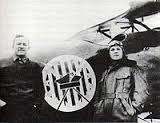
Just prior to the end of the war, he managed to escape, and made it into Latvia. For his service he would receive the highest Polish military decoration the “Virtuti Militari”. Below, is a photo of Cooper with Cedric Faunterlroy. in the Polish Air Force. Cooper is on the right in full flying uniform.
Here is a great rumor never confirmed, but very possible. Merian C. Cooper was never shot down in Poland, but crashed on purpose to be sent to Lubyanka.
According to the rummer, Merian C. Cooper was on a secret mission for the United States Government as an agent of “The Office of Strategic Service (O.S.S.). The mission was to spy on the KGB and obtain as much information as possible on that organization. Which the United States government knew very little about.
During his imprisonment Merian C. Cooper wrote an autobiography of his life to that point. The title was “The Things Men Die For” written by “C”. It would be published in 1927.
On April 10, 1930, a movie, “Gwiazdzista eskadra (The Starry Squadron)”, directed by Leonard Buczkowski, and written by Janusz Meissner, was released in Poland. This is a love story about an American flyer who fought in the Russo-Polish War and loved a Polish girl. The flyer was part of the “Polish 7th Escadrille” better known as “”Kosciuszko Squadron”. All known prints would be destroyed by the Soviets.
This movie was based upon Merian C. Cooper during the war. According to “The Things Men Die For”, while in Poland, with actress, Marjorie Crosby-Słomczyńska, he would father Polish translator, and detective fiction writer, Maciej Stomczyriski.
PART TWO: THE CINEMATOGRAPHER
While in the “Kosciuszko Squadron”, Cooper met Ernest B. Schoedsack, a film producer, director and cinematographer. The two, along with another film maker, Marguerite Harrison, went to Iran in 1924 to make a motion picture. That film would be the start of Merian C. Cooper’s film career, when it was released on March 20, 1925.
Schoedsack, started his motion picture career in 1915, as a cameraman for producer Mack Sennett.
His first short for Sennett, as Cinematographer, was 1915’s, “Her Painted Hero”.

In 1916, Ernest B. Schoedsack joined the “United States Army Signal Corps”, as a cameraman, and served in France, flying and filming, during combat missions.

His eyesight had been severely damaged during the war, but after it ended. Schoedsack toured Europe with his camera, and met another Signal Corps Vet, Merian C. Cooper.
Fate entered both Cooper’s and Schoedsack’s lives≥ As both men were hired by the “New York Times”, but for different reasons. With their backgrounds, the paper put them together on a special assignment.
In January 1923, the paper booked passage for the two men on the ship the “Wisdom II”. Their assignment was supposed to be, a round the World photographic tour, for the paper’s magazine, “Asia”.
However, in February, Cooper, Schoedsack, the “Wisdom’s” crew, and other the passengers were attacked by Asian Pirates. The pirates took what they wanted, and burned the “Wisdom” down. After being rescued by a passing merchant ship, and returning to New York. Merian C. Cooper would write a story about these events for “Asia” magazine.
Next, both men left the “New York Times”, and formed a partnership to make documentary motion pictures in Asia.
In, August 1923, Marguerite Harrison, allegedly a journalist, showed up in Angora, today’s, Ankara, Turkey, at the base camp for the documentary that Cooper and Schoesack were preparing to shoot. The subject matter was a branch of the Bakhtari People of Persia. Who seasonally moved their cattle to higher and greener pastures.
Harrison presented the two men, who shared directing the feature, $5,000 to help finance the project. Asking them to allow her to cover their production during the shoot. Merian C. Cooper immediately agreed, but, Ernest B. Schoedsack couldn’t figure out why she showed up in the first place? He would complain the Marguerite Harrison did absolutely nothing, but appear on film.
Cooper probably knew the truth, because both Harrison and, it is believed, Cooper, were spy’s working for the “Office of Strategic Services (OSS)”, the forerunner of the “C.I.A.”. Marguerite Harrison was investigating a murder of an American diplomat, and was using the documentary as her cover.
What both men didn’t know, was back on November 21, 1922, Harrison had been arrested and until, February 20, 1923, spent time in a Russian prison. Once free, after a small time to rest, she received new orders, and joined the Angora production.
Below, Merian C. Cooper, Marguerite Harrison, and Ernest B. Schoedsack.

On March 20, 1925, the first on-screen collaboration between Ernest B. Schoedsack and Merian C. Cooper appeared.
“Grass: A Nation’s Battle For Life”, was distributed by “Paramount Pictures”.

PART THREE: MRS. ERNEST SCHOEDSACK
Ruth Rose, was the daughter of playwright, Edward E, Rose, and a one-time Broadway ingenue, Clara Frances Oakley Rose.
February 11, 1925, saw Ruth Rose working as the official historian for the “New York Zoological Society”. She was on an expedition to the Galapagos Islands, on-board the ship, “Arcturus”. The expedition was led by American naturalist, ornithologist, marine biologist, and entomologist, Charles Willian Beebe. There is some confusion, as some sites claim the expedition took place in 1926, but that was the year Beebe published his book about it.
The actual dates of the expedition were the aforementioned, February 11, 1925, through, July 30, 1925.
The crew of the “Arcturus”, was made up of members of the “Wildlife Conservation Society”, that Ruth Rose was a member. Also on this expedition was Ernest B. Schoedsack, the official cinematographer.

Above, Ruth Rose, holding the monkey, “Chiriqui”, admiring the work of Isabel Cooper, no relation to Merian C. Cooper.
On this voyage, Ruth, and, Ernest, first met, and fell in love. They would be married in 1926, according to some websites, or where just partners through their life, according to others. Either way they stayed together until her passing in 1978.

On April 29, 1927, Schoedsack and Cooper released another of their documentaries, “Chang: A Drama of the Wilderness”, about a poor farmer in Northern Thailand. It was also distributed by “Paramount Pictures”. After which, the two decided to make a feature film for release by Paramount, see Fay Wray below.
PART FOUR : THE SCREENPLAY
His name was Richard Horatio Edgar Wallace, known to fans as his 170 novels, short stories, plays, and screenplays around the world, as just Edgar Wallace.
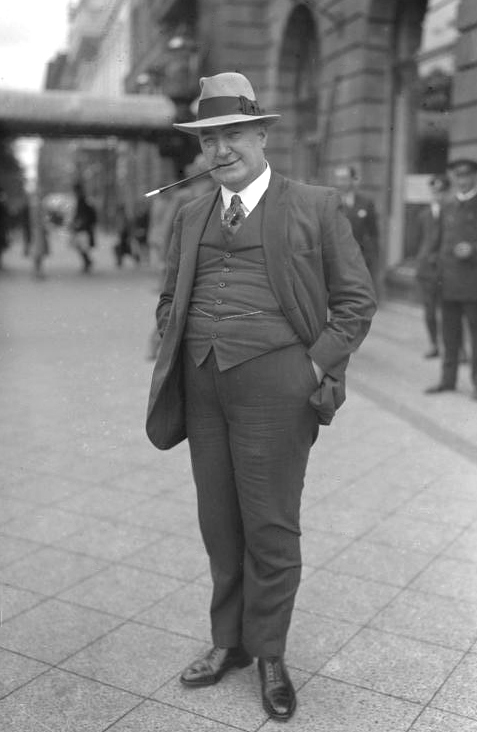
Merian C. Cooper hired Edgar Wallace to write a screenplay. However, the author passed away, February 10, 1932, before completing it.
According to “Wikipedia”, at https://en.wikipedia.org/wiki/Edgar_Wallace#Writing
The:
“first draft of original screenplay entitled “The Beast”, 110 pages) While the script was not used in its entirety, much of it was retained for the final screenplay. Portions of the original Wallace screenplay were published in 1976. The complete original screenplay was published in 2013 in Ray Harryhausen – The Master of the Majicks, Vol. 1 by Archive Editions in Los Angeles. The Delos Lovelace transcription remains the official book-length treatment of the story.”
Below the cover of the “First Edition”, novelization, by Delos W. Lovelace. The book was published, three-months prior to the pictures release, by Grossett and Dunlap, in December1932,


Next, James Ashmore Creelman, who had co-wrote “The Most Dangerous Game”, was hired to write the screenplay, and with Merian C. Cooper developed the “Beauty and the Beast” theme. He also moved Edgar Wallace’s “Madison Square Garden”, climax to a major Broadway Theatre. He changed Wallace’s big game hunter, to the motion picture producer, “Carl Denham”, and turned the female lead into a the out of work actress, named “Ann Darrow”.
HOWEVER, he kept clashing with Merian C. Cooper, and in, July, 1932, Creelman walked off the project.
Probably, the best thing that could have taken place, and Ruth Rose “Schoedsack“ took over as the screenplay writer, keeping Creelman’s structure in tact, but:
- She threw out all of Creelman’s dialogue, and made it a simple, “Punchier”, and more realistic tone.
- She kept the idea of a movie producer, but changed the character. It was obvious to anyone who knew Merian C. Cooper, that “Carl Denham” was Cooper.
- She did not like Creelman’s “Ann Darrow”. Anyone watching the character once at sea, recognized Ruth Rose instead of either Wallace, or Creelman’s stiff character.
- The climax was now on the “Empire State Building”.
PART FIVE: THE ANIMATOR AND THE MODEL BUILDER
Their names were, Oakland, California, born, Willis Harold O’Brien, whom everyone called, “Obie”, and, Coahulia, Mexico, born, Marcel Delgado.
At the same time that Marcel Delgado, below, was taking sculpturing, and art lessons, at the “Otis Arts Institute”, in Los Angeles, and now known as “Otis College of Art and Design.”
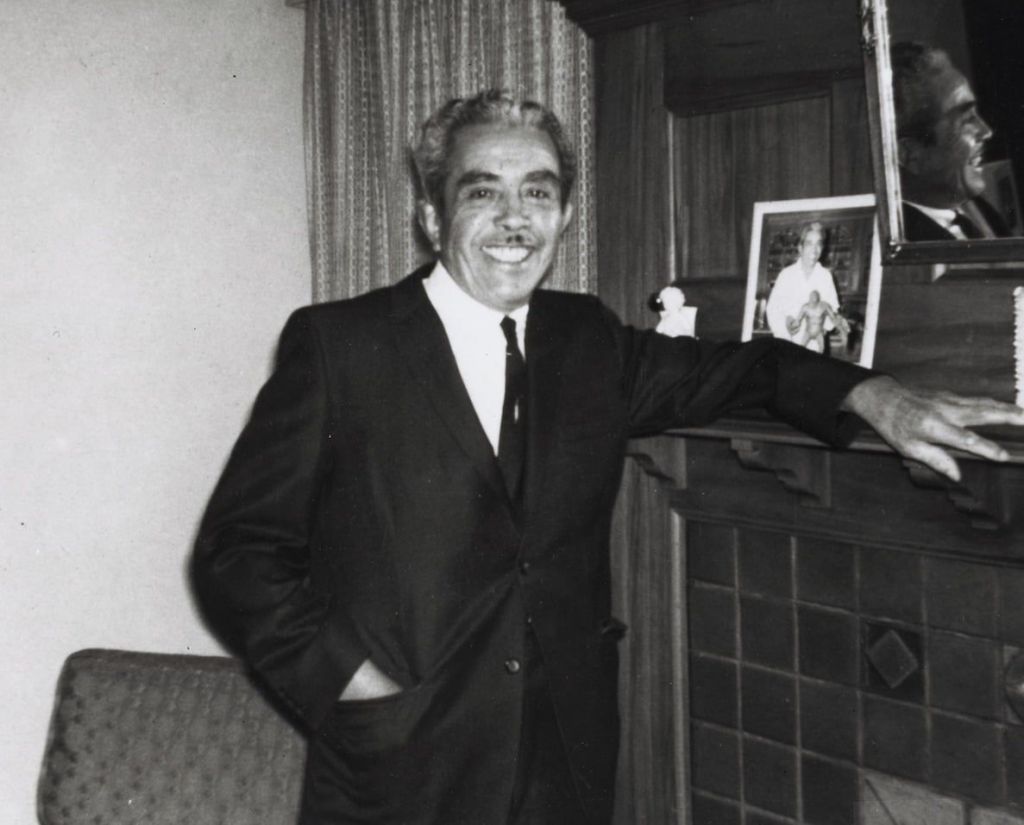
Willis O”Brien realized a need for a sculptor on a film he was about to start work on.
“Obie”, because of his work on such Dinosaur shorts for the “Edison Company”, as, 1917’s, “R.F.D. 10,000 B.C.”, and the 1918, classic, “The Ghost of Slumber Mountain”, had been hired by “First National Pictures”, to turn Sir Arthur Conan Doyle’s, “The Lost World”, into a feature film.
Creating his Prehistoric creatures for those previous few minute long films required only wooden armatures, which could break easily. O’Brien knew he needed metal armatures with the ability to be moved into different positions, and that was above him at the time. Making inquiries, he was led to the “Otis Institute”, and a student named Marcel Delgado.
From Ray Harryhausen’s excellent book “A Century of Stop Motion Animation”:
“Before Delgado began work on the models. Obie designed more technically advanced ball-and socket armatures made of aluminum which improved on the previous designs, allowing for smoother animation and better rigidity during photography. Delgado made clay models of the main creatures based on Obie’s drawings to work from and began to construct the bodies on the armatures. He started by placing rough rubber muscles on various parts of the armature (if a bladder was to be used this would of course be inserted first) which would stretch and change shape realistically when the joints were moved to different positions. He then stuffed the metal ribcage and the outer area of the armature with cotton, forming the basic shape of the animal which was then covered with latex rubber. Finally the models were painted in colours that would ‘reflect’ best in black and white photography. Although relatively crude by today’s standards the models were state of the art in the early 1920’s and today still have a quality of innocence and charm”
THE LOST WORLD released on February 8, 1925
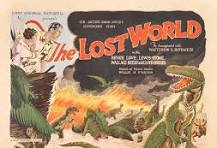
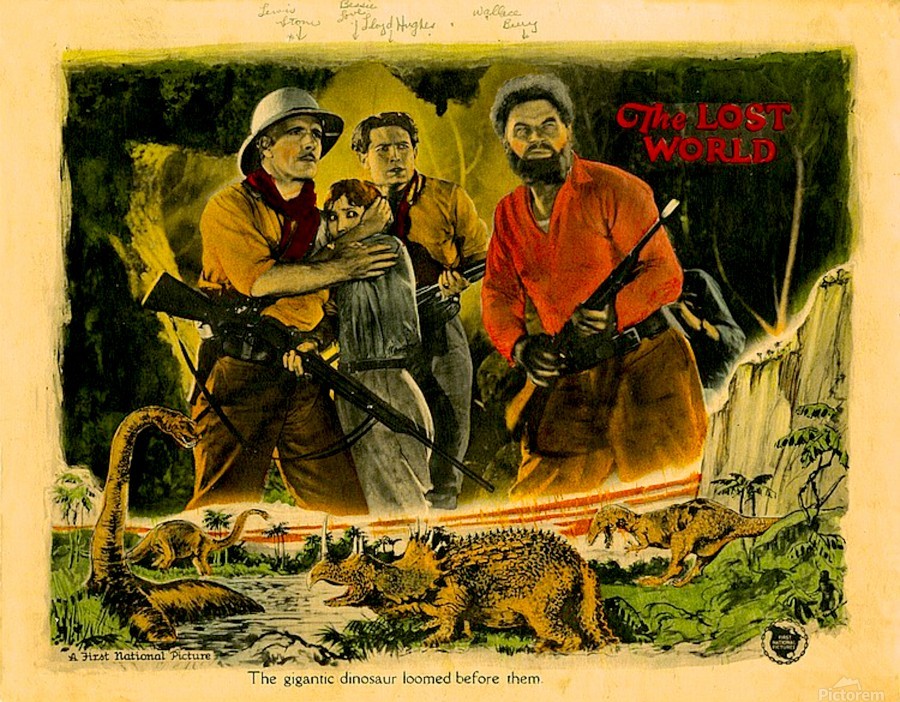
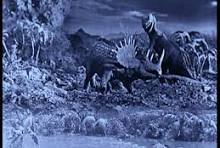
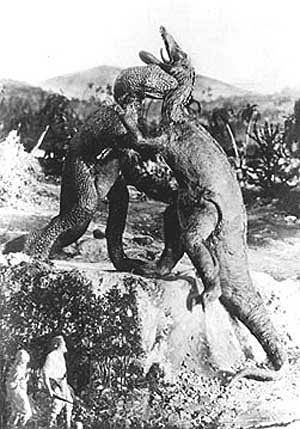
What Marcel Delgado did between 1925, and ,1931 when work began on “King Kong” I can find no references. We know that Obie worked on a series of cancelled projects for First National Studios, two of which, were entitled “Atlantis”, and “Frankenstein”. One has to wonder what his version of Mary Wollstonecraft Shelley’s novel would have looked like? As it would have pre-dated “Universal Studio’s”, James Whale, production, starring Boris Karloff, and Colin Clive.
We know, that O’Brien and Delgado, started work in 1931, for “RKO Pictures”, on a cancelled project, entitled “Creation”.
Does the following sound somewhat familiar?
“Creation”, was about modern men encountering dinosaurs on an island. Only 20 minutes of footage was shot, and apparently, only 4 minutes of it is still around today.
Of interest, is to who it was that cancelled Willis O’Brien’s “Creation”, for the studio. He was “RKO’s Head of Production”, Merian C. Cooper.
Oh, the man who cancelled O’Brien’s film was RKO Studio’s head of production Merian C. Cooper. He was afraid the film sounded too close to his own pet project about a giant gorilla battling Komodo dragons, and the pre-work on “King Kong” started on October 10, 1931.
Next, came the casting:
PART SIX: THE ACTRESS
Merian C. Cooper wanted actress Dorothy Jordan for “Ann Darrow”, but Jordan refused. She would never work next to an animal.
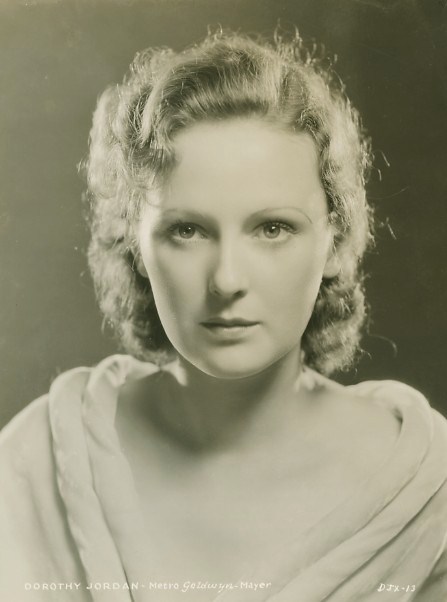
How one thinks of an “Animal” is up to my reader, because on May 27, 1933, Dorothy Jordan married Merian C. Cooper, and the stayed together until his death in 1973.
Next, Cooper, wanted Jean Harlow for the role, but she was under “Exclusive Contract” to “Metro-Goldwyn-Mayer”, and they would not release her to “RKO”.
Cooper and Ernest Schoedsack needed to cast the role, the two thought things over, and approached DARK HAIRED actress Fay Wray, see below, for a double acting job. Wray would play “Ann Darrow” wearing a blonde wig in “The Beast” the film’s still working title,, by day, and “Eve Trowbridge”, in her normal hair color at night, in “The Most Dangerous Game”, she accepted.
Ten years before the classic “Korda Brothers” production, was one of the last feature films of the silent era.
“THE FOUR FEATHERS” was released in June 1929, and was Merian C. Cooper and Ernest Schoedsack’s production of the 1902, A. E. W. Mason novel.
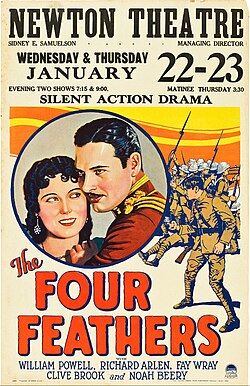
A third producer, Lothar Mendes, was involved in both funding the production, and directing with Cooper, and Schoedsack. Their motion picture was one of the last major films of the silent era, and would be released with a “Movie Tone” soundtrack, containing music and sound effects. Cooper and Schoedsack wanted to shoot the movie as a talkie, and “Paramount Pictures” purchased those rights to do just that. However, studio head, Adolph Zukor, insisted the picture would be shot as a silent film against the two producer’s plans.
The story is set in the Sudan, in 1885, as the British fight the armies of “The Mahdi”. This screenplay, as in the novel, takes place after British General Charles “Chinese” George Gordon’s death, January 26th, by the “Mahdi’s” forces, and the Fall of Khartoum.
For realism, Merian C. Cooper, Ernest Schoedsack and his wife, Ruth Rose Schoedsack, went to both Tanzania, and the Sudan, shooting background, footage to add realism to a movie shot mainly in California’s, “Imperial County”, and “Palm Spring’s”.
William Powell portrayed “Captain William Trench”. Powell would go on to star in “The Thin Man” series of mysteries ,opposite Myrna Loy, among other films.
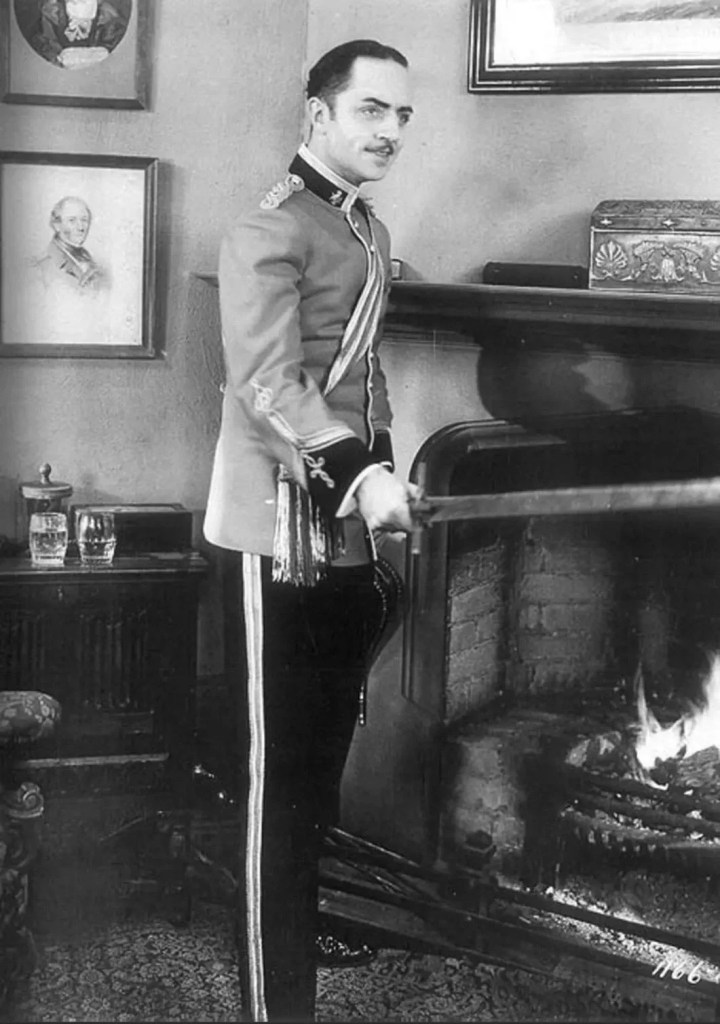
Richard Arlen portrayed “Lt. Harry Haversham”. Arlen had co-starred with Charles “Buddy” Rodgers, and Clara Bow, in 1927’s, “Wings“, the first “Best Picture” winner, directed by William “Wild Bill” Wellman. Arlen had just been in the film-noir thriller, 1929’s, “Thunderbolt”, directed by Joseph von Sternberg.
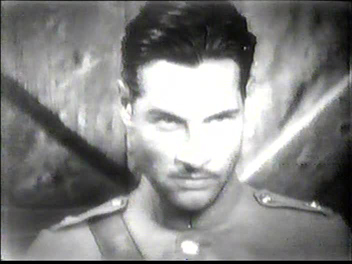
Clive Brook portrayed “Lt. Jack Durrance”. Also, in 1929, he portrayed the title character in “The Return of Sherlock Holmes”, and repeated the character in 1932’s, “Sherlock Holmes”.
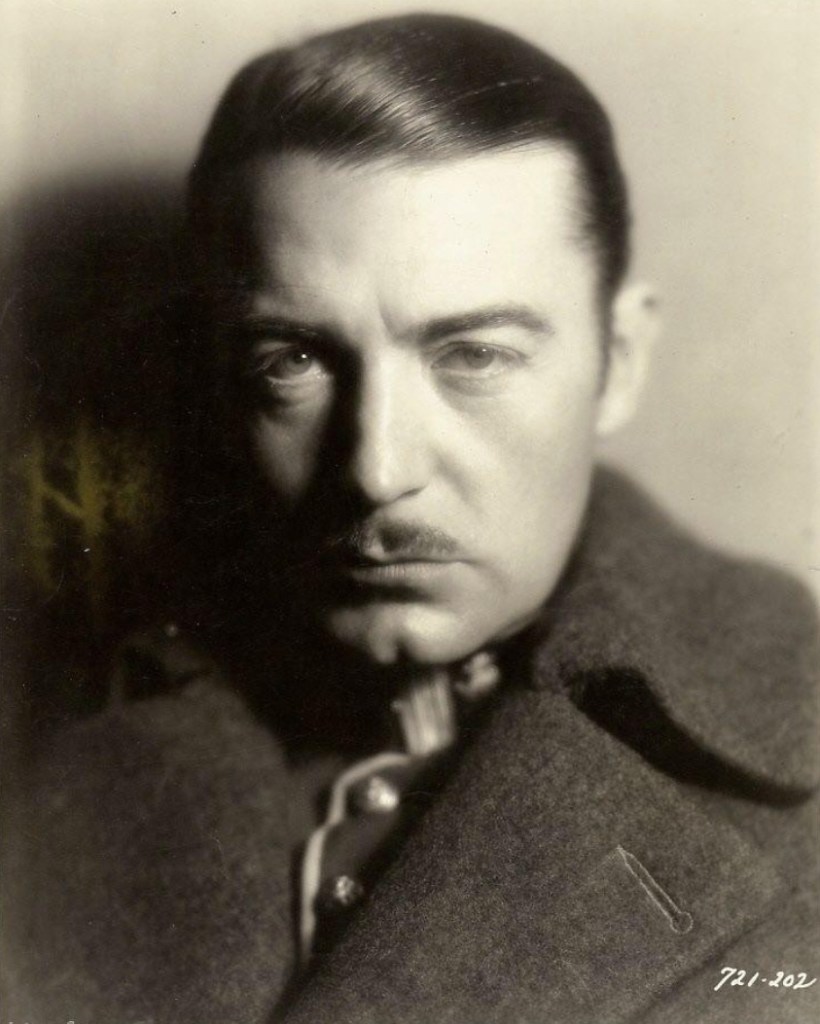
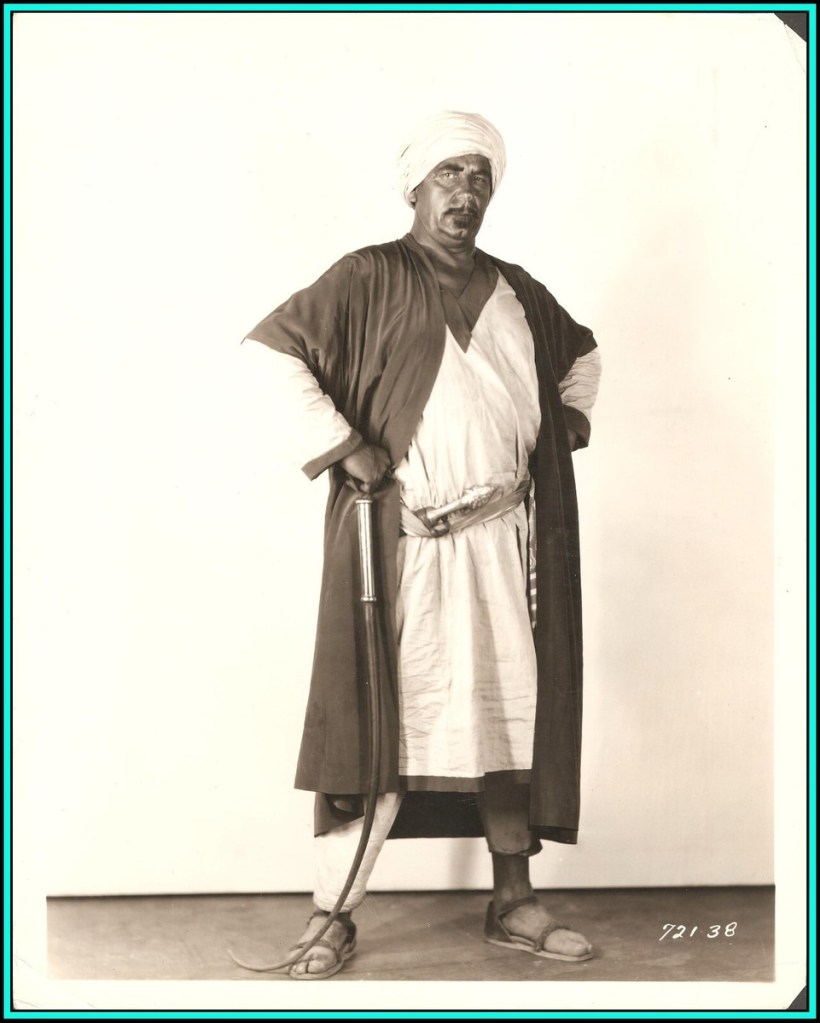
Noah Beery portrayed a “Slave Trader”. Beery, brother of Wallace, was known for portraying villains in silent adventure drama’s, such as 1920’s, “The Sea Wolf”, and 1926’s, “Beau Geste”.
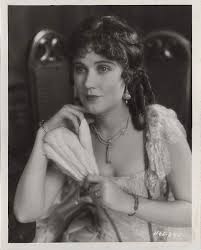
Fay Wray had just been seen opposite Richard Arlen in 1929’s, “Thunderbolt”. In this feature film, Fay Wray portrayed “Ethne Eustace”. She had been filming movies since 1923. This was her first meeting with Cooper and Schoedsack. Below are two stills, the first with Richard Arlen.
The Very Basic Story starts with two children, “Harry Feversham” and “Ethne Eustace”, from a military family, playing. They promise to marry when they grow up. “Harry’s” father has told him a story about a soldier who ran away from the unit during an engagement. “Harry” father gave him a “White Feather” as a sign of disgrace and he commits suicide. Switch to the grown up, “Harry” and “Ethne”, he joins the “Royal West Kent Regiment”, In the regiment he has three good friends, but when he learns they are to be deployed to “Soudan Expedition”, to go after the “Mahdi”, “Harry” resigns from the army and receives “Three White Feathers” from his three friends, and the fourth from “Ethne”. Before his father dies, he gives his son a pistol, and tells him to shoot himself. Instead, he goes to the Sudan to prove his courage, saves an imprisoned “Trench”, and warns the regiment of a major ambush, saving them. Unlike the novel, “Harry” and “Ethne” are reunited in a “Hollywood” ending.
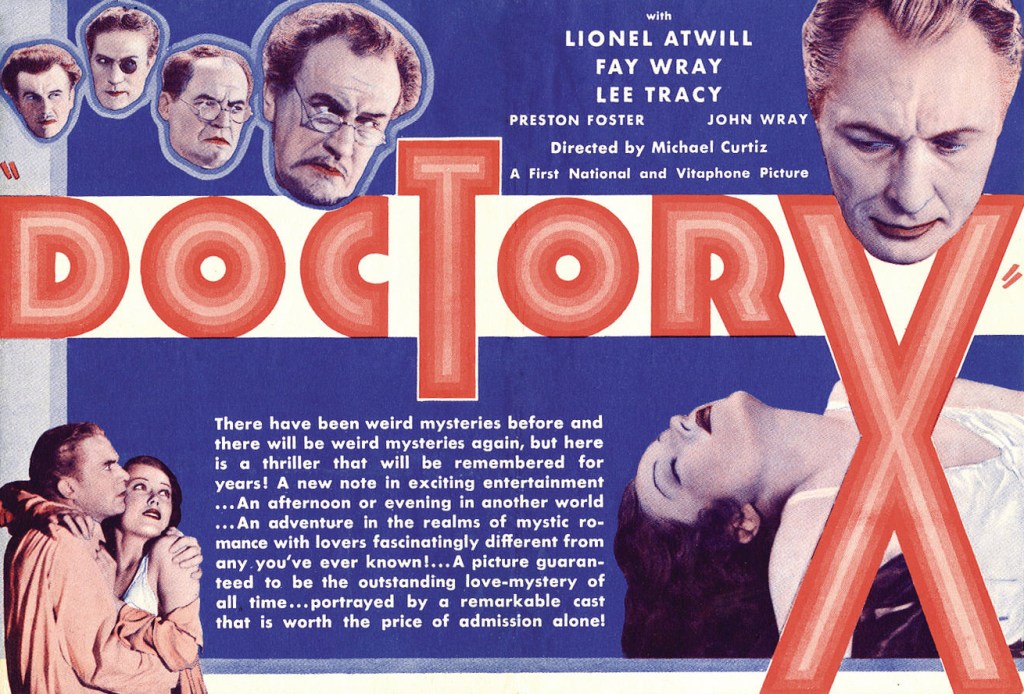
On August 3, 1932, Fay Wray, showed some of her future “Ann Darrow”, opposite Lionel Atwill, in the first, All-Technicolor, Horror, motion picture, “DR. X”.
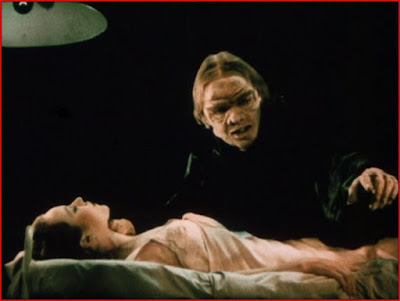
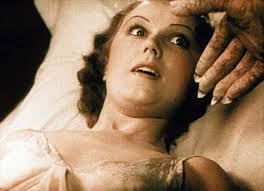
On, September 16, 1932, Fay Wray appeared in her second motion picture from the team of Merian C. Cooper and Ernest B. Schoedsack, “THE MOST DANGEROUS GAME”, also included two actors who would join her in “King Kong”. As with, “Dr. X”, her second picture, is considered a classic of the period, and has not been topped by several remakes.
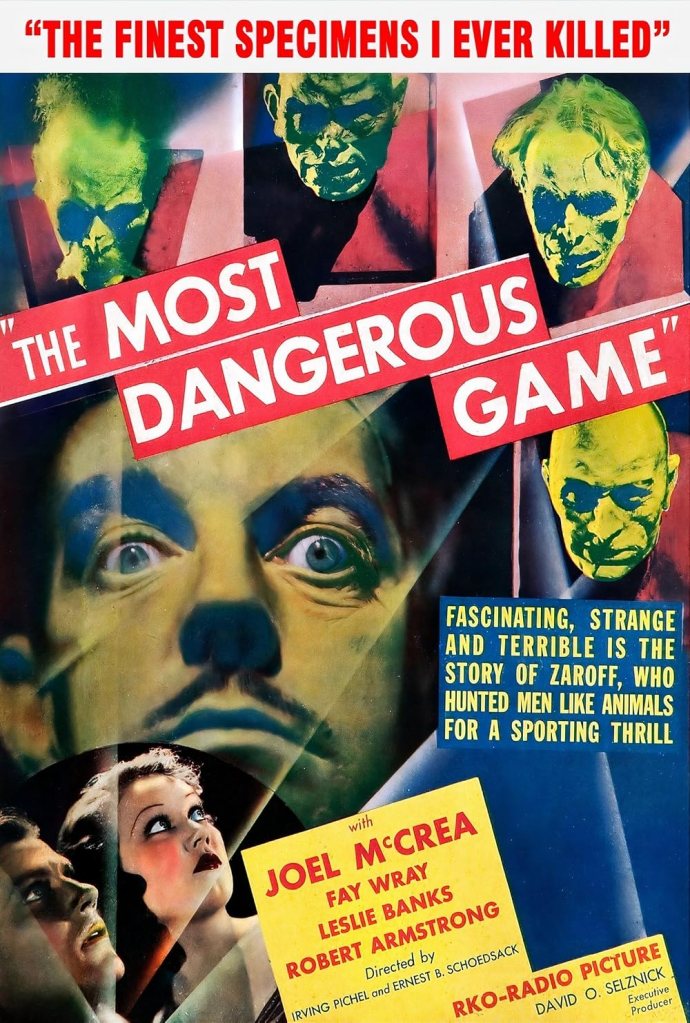
The original 1924 short story, which I read in Junior High School, wasby Richard Connell. Here, it was reworked by James Ashmore Creeman. Who added additional ship wrecked characters to the original one character.
The motion picture was directed, mainly, by the forgotten Irving Pichel, and Schoedsack. Pichel was a director, producer, and actor. My article is “Irving Pichel: Producer, Actor, Director, and the Guardian of a Vampire” found at:
Fay Wray portrayed “Shipwrecked Society Girl, Eve Trowbridge“.
Joel McCrea portrayed “World Renown Huunter, Robert “Bob” Rainsford“. McCrea, who would become associated with 1940 and 1950’s, Western movies, had just co-starred with Dolores del Rio, in the jungle love story, 1932’s, “Bird of Paradise”. In 1936, he co-starred in “These Three”, with Miriam Hopkins, and Merle Oberon, portraying teachers that a malicious student lies claims are Lesbians.
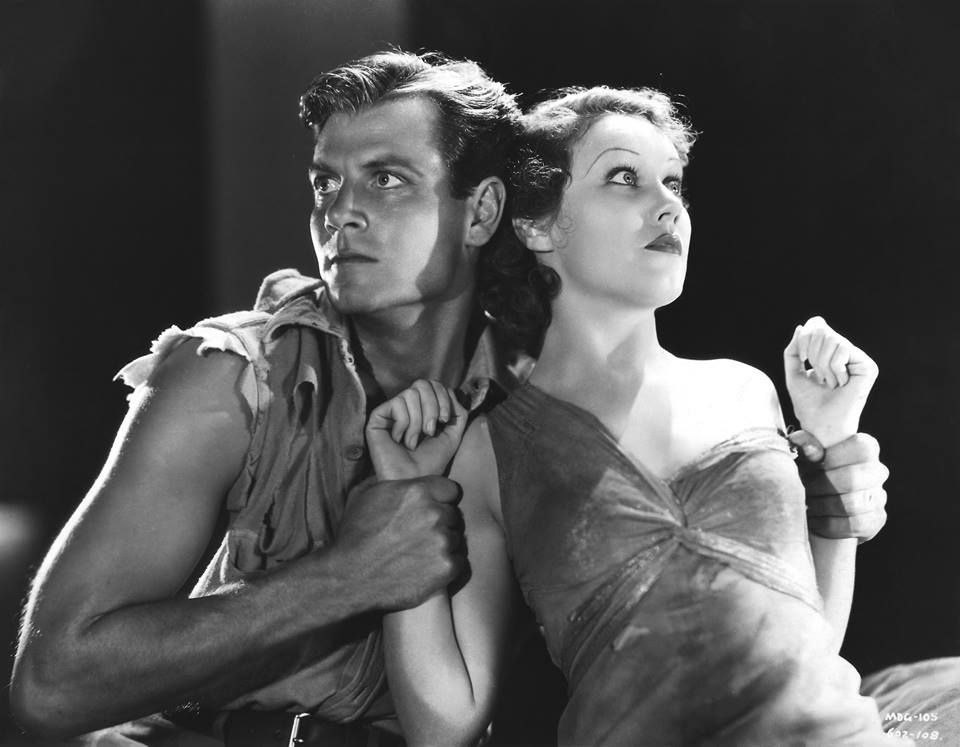
Leslie Banks portrayed “Big Game Hunter Count Zaroff”. West Derby, Liverpool, England, born Banks, was appearing on-screen for only the second time since the his first film, 1921’s, “Experience”, where he was uncredited. Prior to that movie, and after, until this one, he was a known British stage actor.
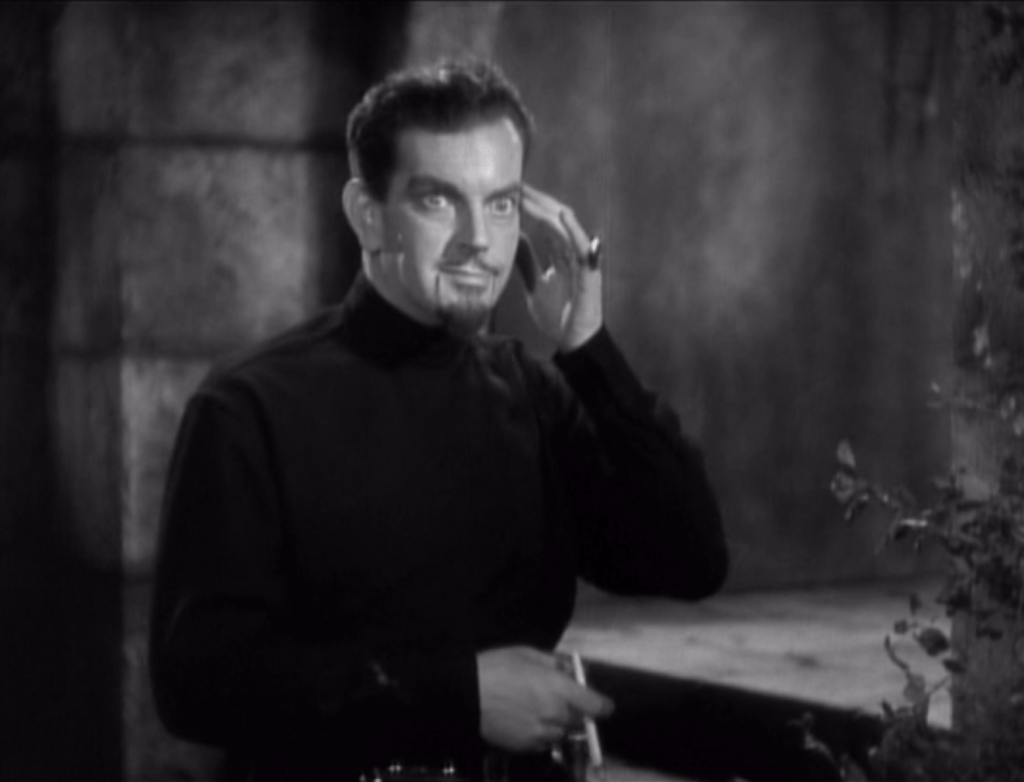
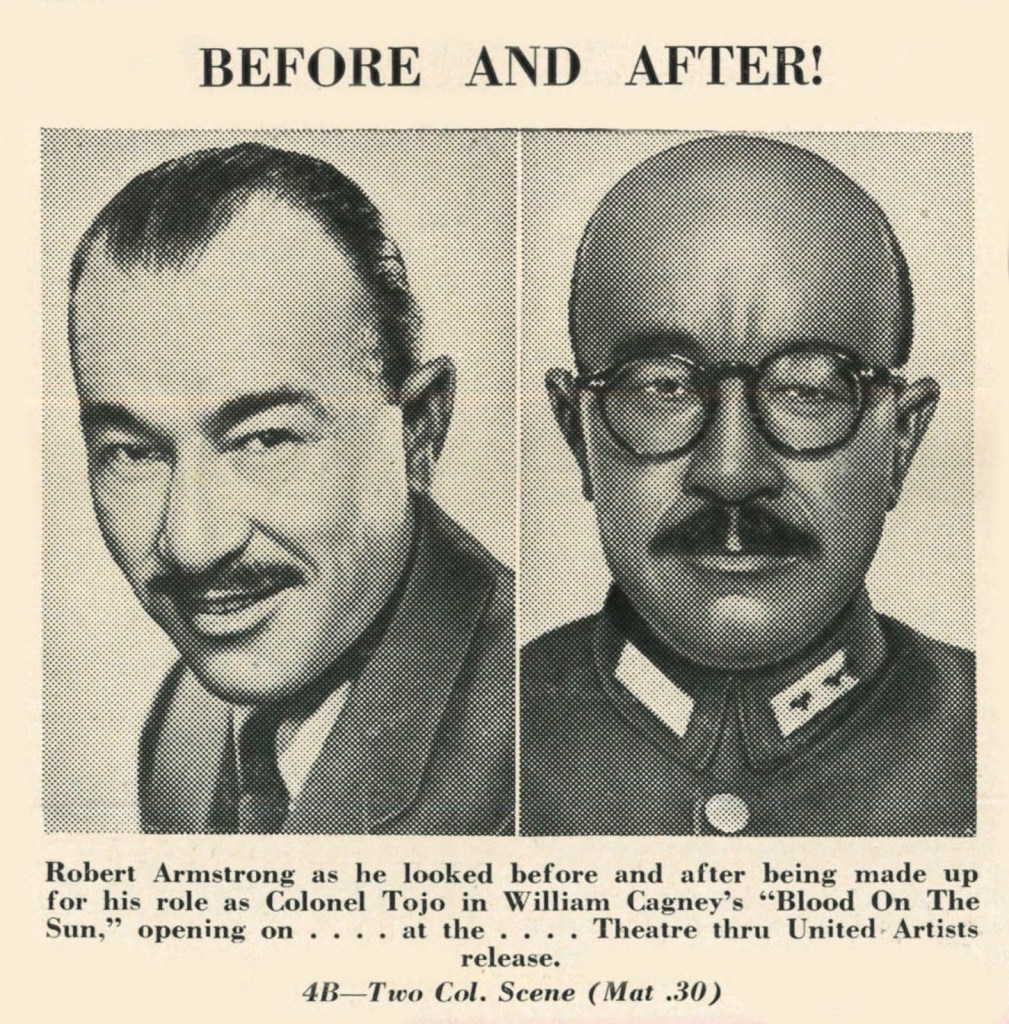
Robert Armstrong portrayed “Eve Trowbridge’s brother, Martin Trowbridge”. He had just been seen in the long forgotten, adventure drama, 1933’s, “Above the Clouds”. During the Second World War, “Armstrong”, became the hated Japanese Prime Minister, Hideki Tojo, in the James Cagney movie, 1945, “Blood on the Sun”, set in 1929.
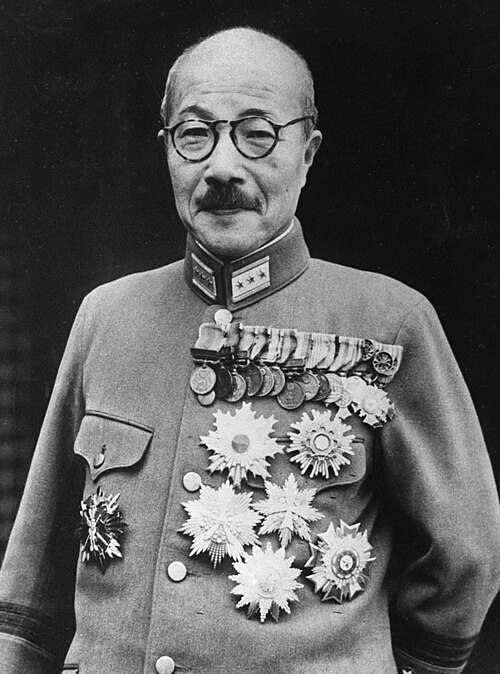
Above, Tojo, in 1941, below, Robert Armstrong as the same man in 1929.
I speak to his 1933, “King Kong”, role, and many of the actor’s other roles in my article, “ROBERT ARMSTRONG: It Wasn’t All ‘The Eighth Wonder of the World’, His Brat, and Joe” at:
https://www.bewaretheblog.com/2020/08/robert-armstrong-it-wasnt-all-eighth.htm
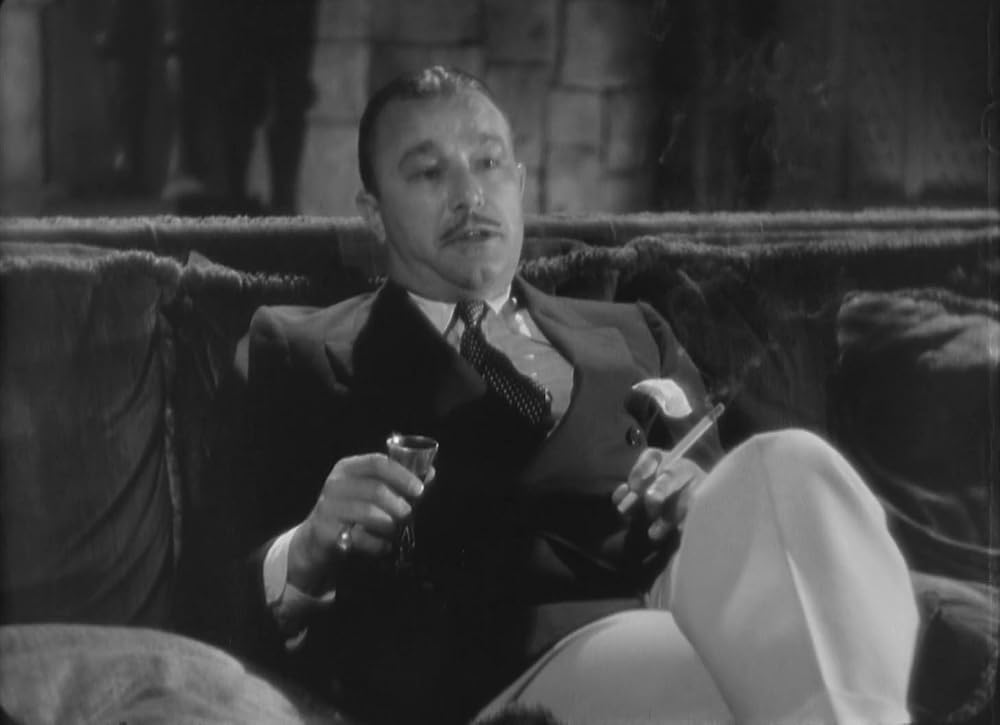
Nobel Johnson portrayed “Count Zaroff’s henchman, Ivan”. The African American actor would appear in 145-feature film’s since 1915. Such as, 1932’s, “Murders in the Rue Morgue”, starring Bela Lugosi, and as “The Nubian”, in the Boris Karloff’s, 1932, “The Mummy”. Over his career, the actor would play more Native American roles than any Native American actor. They include the role of the “War Chief, Red Shirt” in director, John Ford’s, “She Wore A Yellow Ribbon”. Like Robert Armstrong, I will speak to Nobel Johnson’s role in “King Kong” shortly. My article is “Noble Johnson: African-American Pioneering Actor”, at:
http://kinescopedreams.blogspot.com/2015/06/noble-johnson-african-american-pioneer.html
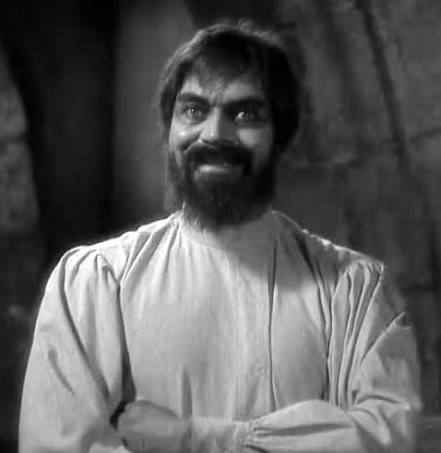
For the screenplay, as in the short story, “THE MOST DANGEROUS GAME”, is of course, “MAN”!
The story opens on board a luxury yacht, and a conversation that is going on with big game hunter “Bob Rainford”. He’s asked how he would feel to switch places with the animals he hunts? He never gets to fully answer the question. As the yacht runs a ground in a channel by an island, and sinks. “Bob” swims to the island’s shore as the only survivor.


On the island, “Bob” comes upon a chateau owned by an expatriate Russian Count named, “Zaroff”. There he meets the “Count’s other guest’s“, including brother and sister, “Martin” and “Eve Trowbridge”, two sailors, and “Zaroff’s” servant “Ivan”.

“Zaroff” knows of “Rainsford” fame as a big game hunter, and reveals that he is a game hunter, himself of one type of game only. What “Zaroff” calls = “The Most Dangerous Game”, but leaves his statement there.
“Eve” informs “Bob”, that the two sailors that came ashore, with her and her brother, have disappeared. Their disappearance came after the two sailor’s entered the Count’s trophy room.
Which “Zaroff” told the four was no to be entered.
During the night, “Eve’s” alcoholic brother “Martin” disappears.The Count now appears with the body of “Martin Trowbridge”. Later, during the dark of night, “Eve” and “Bob” enter the trophy room. There they find that “Zaroff’s” hunting trophies are the heads of people he killed.

“Zaroff” appears, and asks”Bob Rainsford” to join him on his hunts.
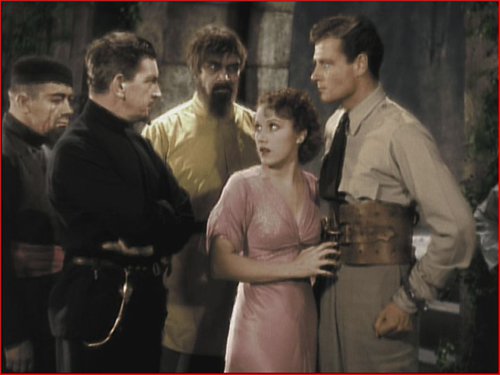
Instead, “Bob” calls him a madman, is restrained. He and “Eve” now become the “Game” that “Count Zaroff” will hun that night. Should he survive until 4 A. M., he will be given the keys to he boat house and is free to leave the island. However, “Zaroff” adds that he has “NEVER LOST A GAME OF OUTDOOR CHESS”.
“Rainsford” sets a trap for “Zaroff”, but he discovers it and what becomes a dangerous game of cat and mouse starts.
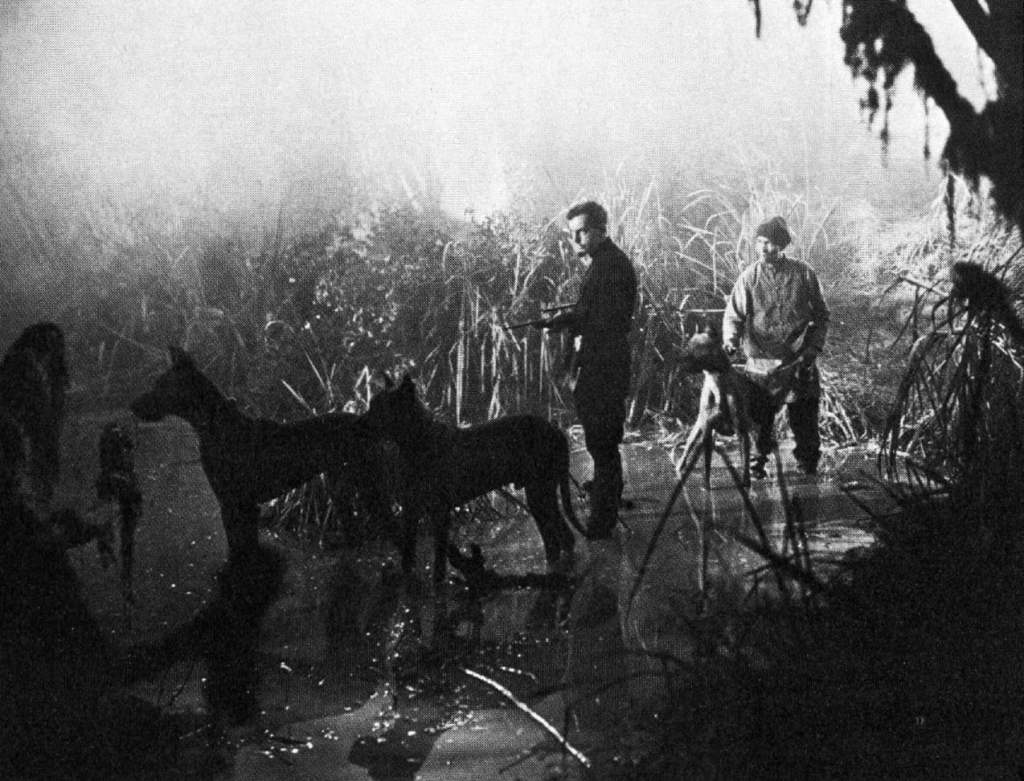


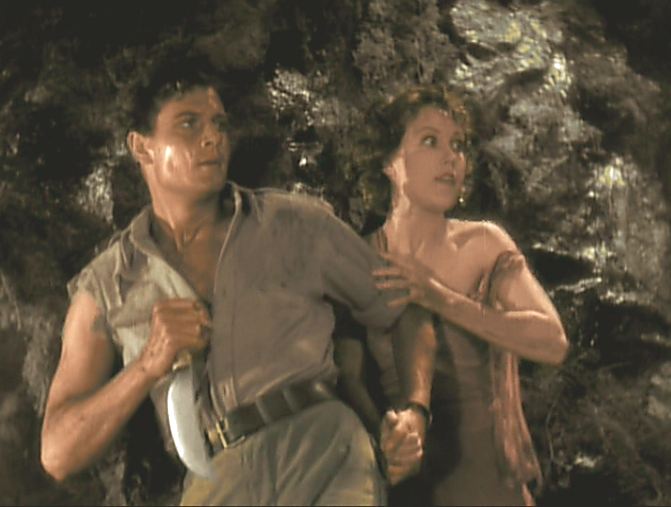

The climax begins with “Bob” and “Eve” trapped on a cliff, and one of “Zaroff’s” hunting dogs goes for “Bob”. The Count fires his gun at “Rainsford”, and with the hunting dog, they go over the cliff. “Count Zaroff” now takes “Eve” back to his house.
After 4 A.M., “Bob” appears and tells “Zaroff” that he killed the dog, not him. The Count admits defeat and presents “Bob Rainsford” with the keys to the boat house. However, has noticed that the “Count Zaroff” holds a gun in his other hand behind his back. A fight with “Count Zaroff” begins, and is enjoined by “Ivan” and the dog handler, “Tartar”, portrayed by Steve Clemento. The result is that “Count Zaroff” is mortally wounded and his two henchmen killed. Taking the keys to the boat house.”Bob” and “Eve” take a boat and start to leave the island. In a high window, the Count takes aim at them with his bow, but instead falls out of it into the pack of hungry dogs.
PART SEVEN: FIVE OTHER ROLES
As I mentioned above:
ROBERT ARMSTRONG portrayed “Carl Denham”. Merian C. Cooper had him always in his mind for the role. According to “King Kong Wiki” at:
https://kingkong.fandom.com/wiki/Carl_Denham
“Cooper wanted an actor who could project a relentless, rapid-fire, take-charge, and slightly unhinged obsession with getting the shot, mirroring his own personality.”
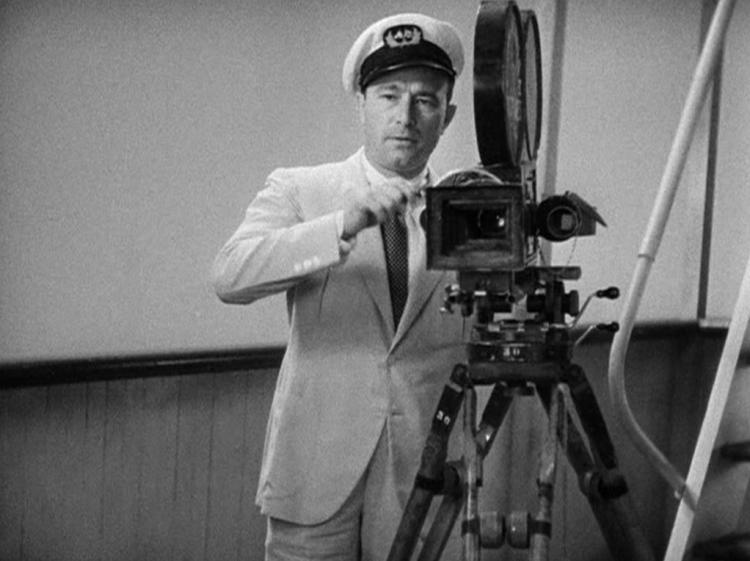
Which is how Ruth Rose wrote the role, and dialogue for the character, as I mentioned above, and like Fay Wray, Armstrong, had double duty filming “The Beast”, during the filming of “The Most Dangerous Game. However, before 1933 was over, Armstrong repeated his role of “Carl Denham” in “Son of Kong”.
Joel McCrea was the first choice for “Jack Driscoll”. However, his management team demanded more money than “RKO Studio’s” was willing to pay him. So, to McCrea’s agent’s, who thought they would give in, because of the teaming with Wray in “The Most Dangerous Game”. Came surprise, as the studio dropped him from consideration.
BRUCE CABOT portrayed “Jack Driscoll”. Recently, discovered by David O. Selznick, Cabot had only entered the “Hollywood” film industry with an uncredited role in the Tim McCoy firefighter’s movie, 1931’s, “Heroes of the Flames”. He had been offered the role of “Jack Driscoll”, because the thinking was that the unknown, Cabot, could bring a rugged, athletic presence to the role of the “Venture’s First Mate”. Also, more realistically, he salary was very low.
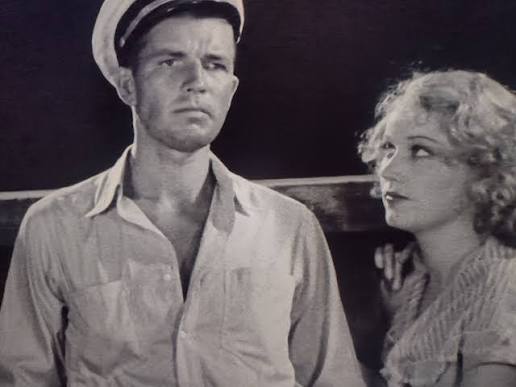
Above, Bruce Cabot and Fay Wray.
Frank Reicher portrayed “Captain Englehorn”. Mention the name of Munich, Germany, born Franz Reicher, and my reader is sure to ask, WHO? Mention his character name of “Captain Englehorn”, and my reader is sure to answer, “KING KONG”! Like Robert Armstrong, Frank Reicher was back in character for 1933’s, “Son of Kong”. In 1940, the actor was in the classic Technicolor, Science Fiction, “Dr. Cyclops”. In 1942, it was “Universal Pictures”, “Night Monster”, in the same year it was their, “The Mummy’s Tomb”, in 1944, “The Mummy’s Ghost”, and in 1944, Frank Reicher was a guest in “The House of Frankenstein”. My article is “Frank Reicher: B4 ‘King Kong’ 2 TV’s ‘Superman”, at:
https://www.bewaretheblog.com/2024/08/frank-reicher-b4-king-kong-2-tvs.html
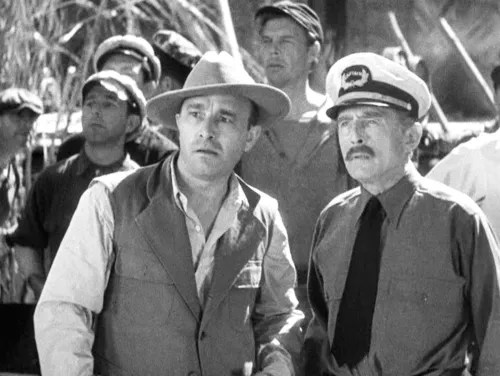
Noble Johnson, also had double film duty, portraying the “Native Chief of Skull Island”. Made him saying some made-up Native language by Ruth Rose. Back in 1916, the actor was in both D. W. Griffith’s, “Intolerance”, and the first motion picture that used an underwater camera, the silent version of Jules Verne’s, “20,000 Leagues Under the Sea”. He portrayed “Ahmed”, in 1929’s, “The Four Feathers”, and “Queequeg”, in the 1930 version of Herman Melville’s, “Moby Dick”, starring John Barrymore. Johnson was “Wassao” in the 1946, Western, “The Plainsman and the Lady”, staring “Wild Bill” Elliot and Vera Ralston. Along with the other film’s I previously mentioned in a career of 145-roles.
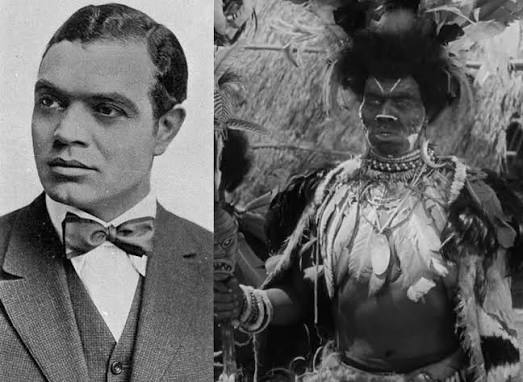
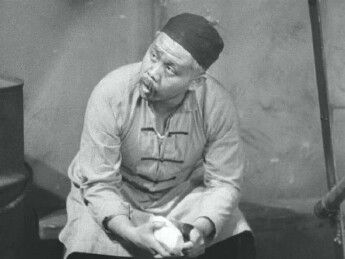
VIICTOR WONG portrayed “Charlie the Chinese Cook”. This was the Chinese-American actor’s 3rd role of 37, and he would have a more expanded role in this picture’s sequel, 1933’s, “Son of Kong”. In “Kong”, his role was to have been just the one scene of finding “Ann Darrow” missing from the “Venture”, and running around yelling:
“All hands on deck! Everybody on deck!”
Instead, his role was enlarged, because Cooper and Schoedsack liked how he was playing it. He would have a large supporting role in “Son of Kong”.
PART EIGHT: THE PIECES COME TOGETHER
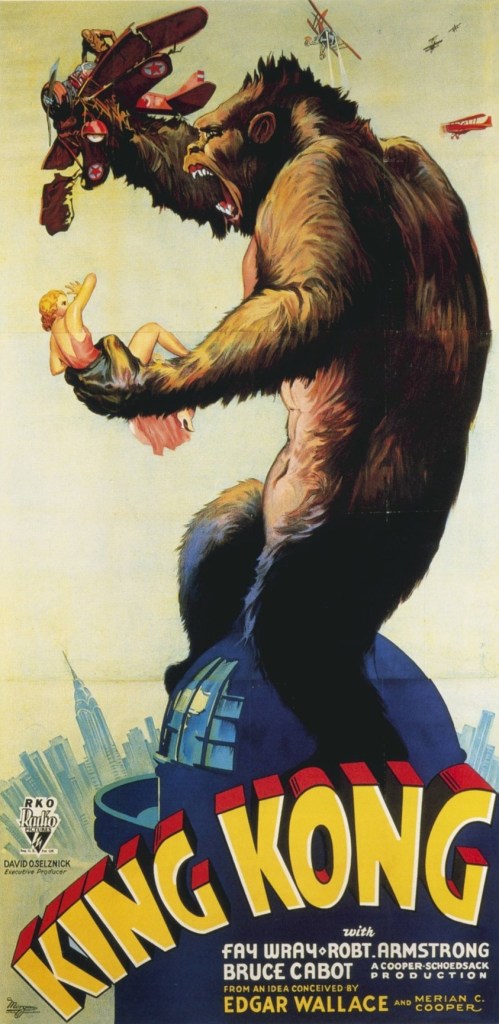
A Very Basic Look at the Screenplay for Those Who Might Have Never Seen the Movie:
Wild life documentarian, “Carl Denham”, has hired, “Captain Englehorn’s”, ship, “The Venture”, to go to an unknown destination to make his latest motion picture. However, the producer and director are faced with two problems. He doesn’t have a leading lady, and funding is about to be cut off.

“Denham” discovers a woman about to steal an apple, because she hasn’t eaten for days. (Remember, this was filmed during “The Great Depression” and is initially set in New York City.)
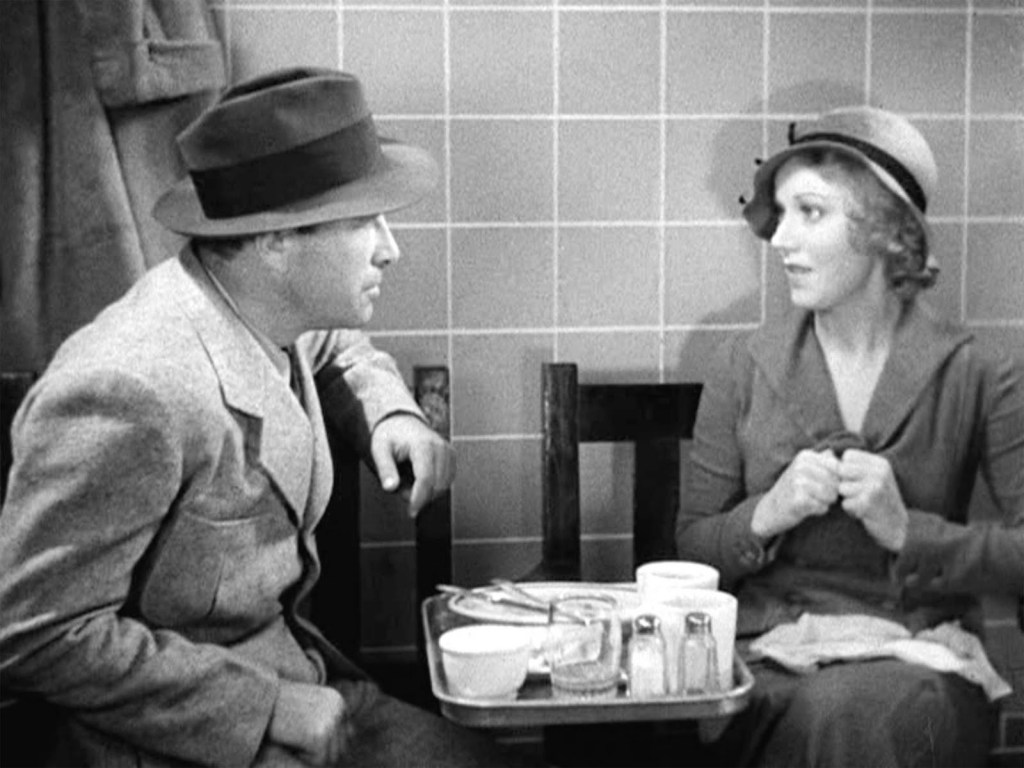
He convinces, “Ann Darrow”, an out of work stage actress, that he is an honest filmmaker, and wants her to go on a great adventure as his leading lady. “Carl Denham” promises “Ann Darrow”:
“THE THRILL OF A LIFE TIME!”
Out at sea, “Denham” starts making screen tests, and first mate “Jack Driscoll”, begins to show a concern for “Ann”. Wondering what it is that “Carl Denham” expects her to see? When he tells “Ann”, to imagine seeing something, the he has her keeping looking up, higher and higher, than screaming, as if her life depends on that.
After test shooting is completed, after “Carl Denham” finally reveals the “Venture’s” destination.


“Denham” has a map of, that he got from a non-mentioned ship captain (See “Son of Kong”), of an island that is not on any known charts. Next, he asks “Captain Englehorn” if he ever heard of “KONG”? To which “Englehorn” replies, yes, a native superstition, but “Denham” claims whatever “Kong” is? It lives on an island shaped like a “Skull”.
The “Venture” arrives at “Skull Island”, and “Denham” takes “Ann” with them. Although, “Jack” is against it, until they check the shoreline out and a little ways into the obvious jungle that was observed from the ship.
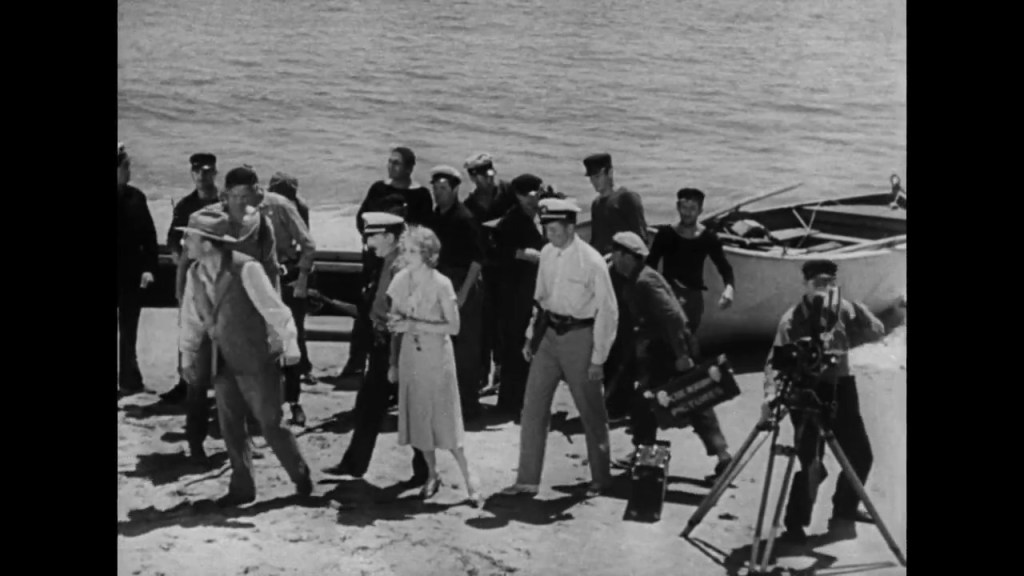
“Carl Denham”, with a camera crew, “Captain Englehorn”, the concerned first mate, “Jack Driscoll” and the reason of his concern, “Ann Darrow”, now on the beach, hear the sound of drums, and go to investigate.
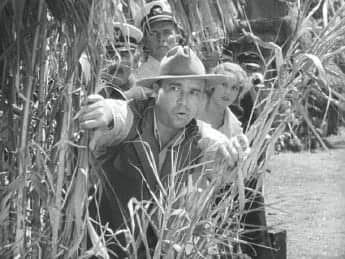

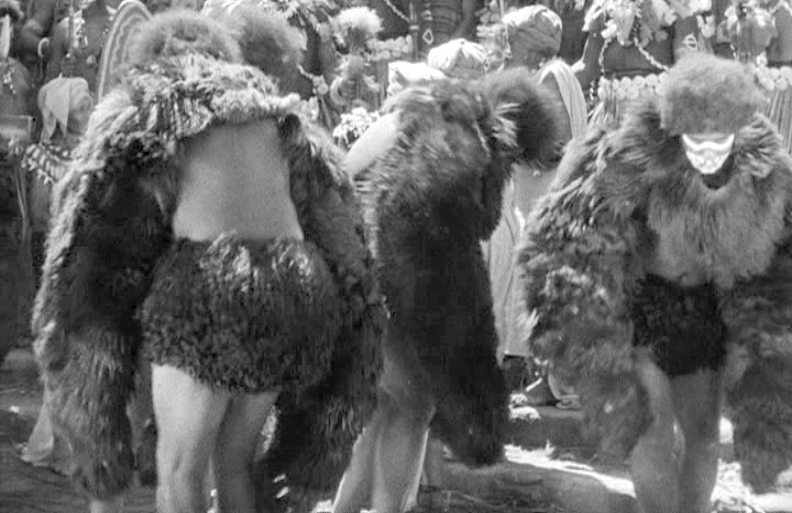
There, they watch some type of native ceremony, with a young woman at the center of it. This is taking place in front of a giant gate, on an even larger wooden wall. A wall made eons ago, obviously built to keep something out. As they listen, they hear the word “Kong”, repeated, over and over, and see men dressed as gorillas.
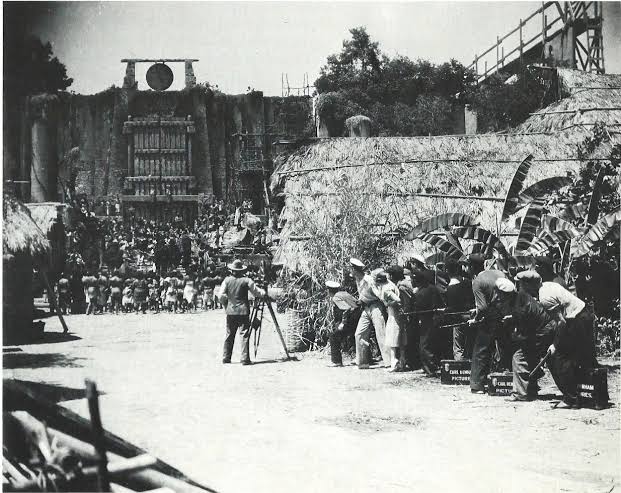
Next, “Carl Denham” has his camera crew bring it to him, and starts filming the ceremony. SUDDENLY, it stops, as the “Native Chief”, and the “Witch King”, portrayed by Steve Clemento, spots “Denham” and the others.
“Denham” has “Englehorn” attempt to speak to the natives, as he kind of recognizes their words. Asked as to who is the young woman sitting on a Dais is? “Englehorn” receives the responses from the “Native King”, that she is “The Bride of Kong”, portrayed by Francis Curry.
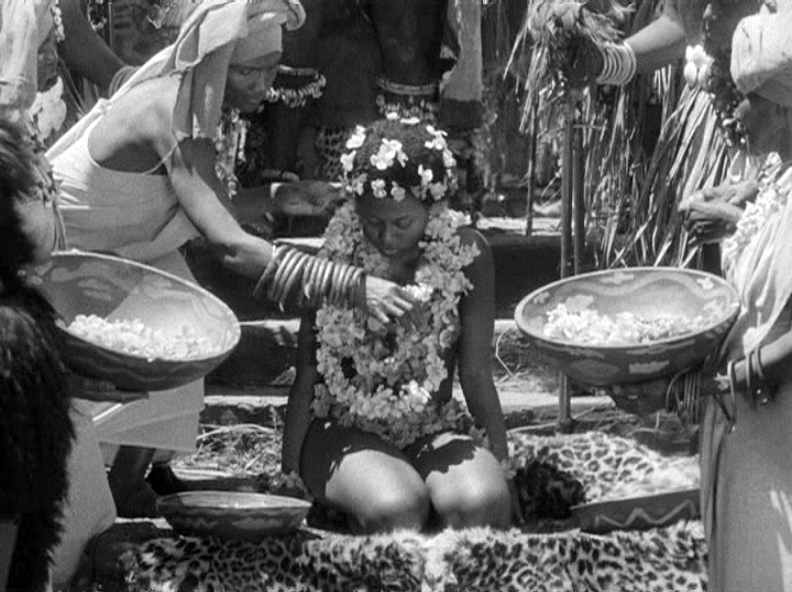

Next,, it becomes obvious that the natives are interested in Blonde, White Skin, “Ann Darrow”, and “Denham” tells “Captain Englehorn” to get her back to the ship, fast.
Everything seems calm on board the “Venture” that night. In the water, around the vessel, native canoes arrive, and several of the “Skull Island” native’s slip on board, one native loses a bracelet, but they succeed in kidnapping “Ann”. On deck, for a breath of air, “Charlie the Cook”, discovers the bracelet, and gives the alarm. “Denham”, “Driscoll”, and “Englehorn”, now lead some of the crew back to the native village for a rescue of “Ann Darrow”, and they enter it.
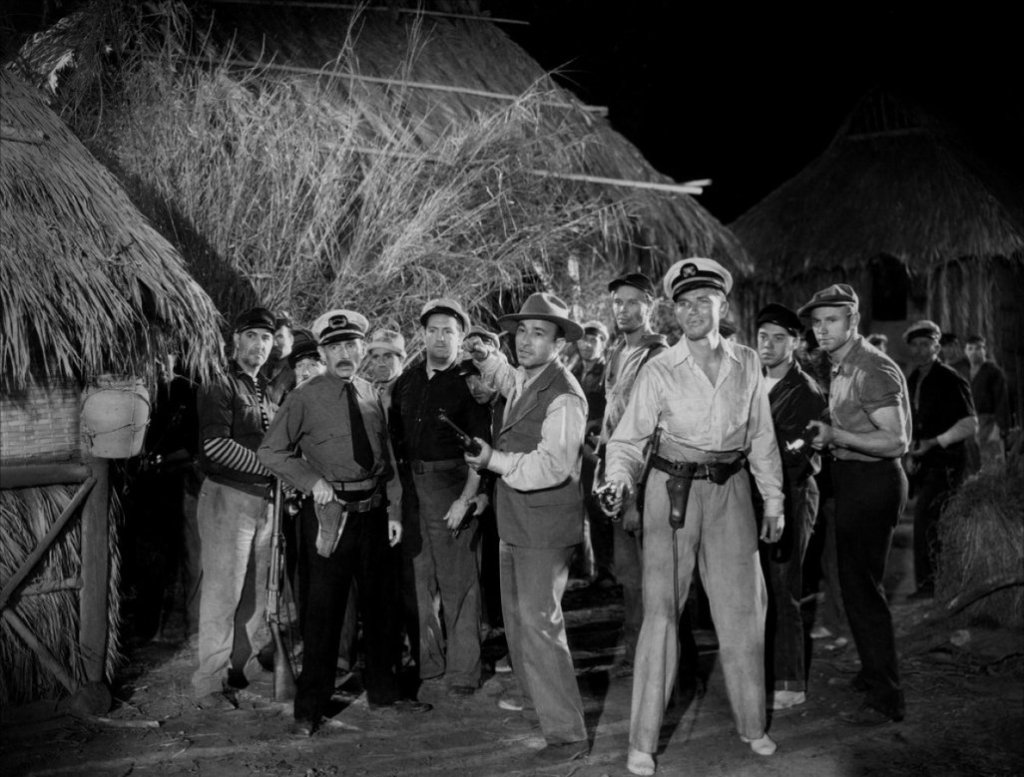
It is too still, and walking up to the Great Wall, look outside to see two natives under the “Witch King’s” directions, tying “Ann Darrow” to some type of ancient looking, sacrificial structure. As the “Chief of Skull Island” looks on with approval.

This is followed by the native chief standing by a gong and striking it several times, and then silence follows. Moments later, the jungle starts to part and “KONG”, a giant gorilla reveals himself.

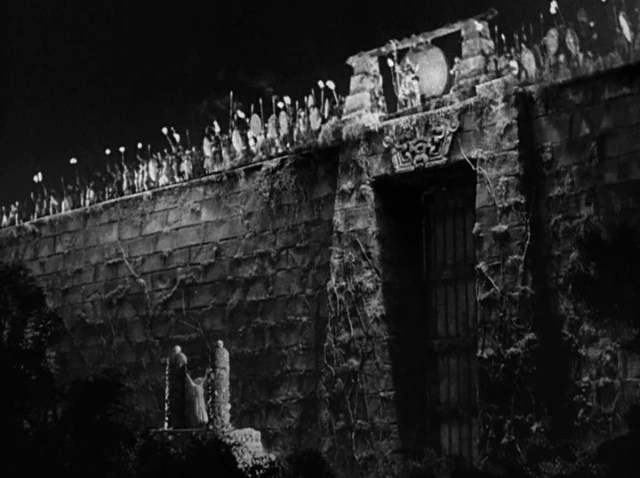
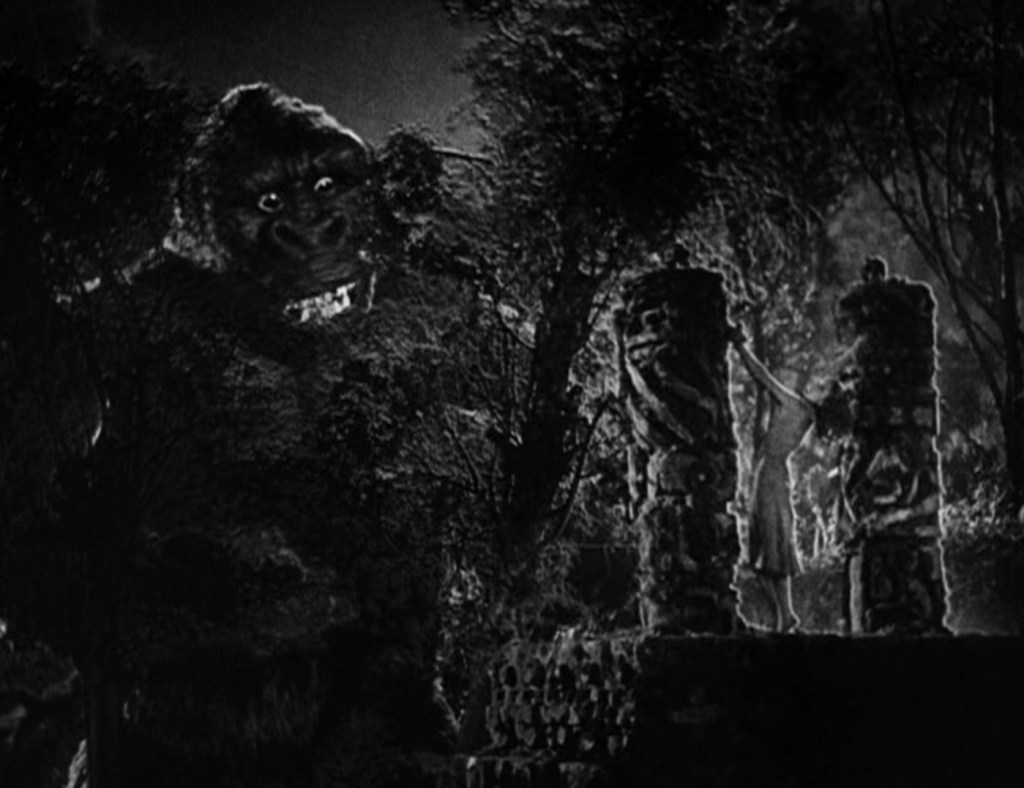
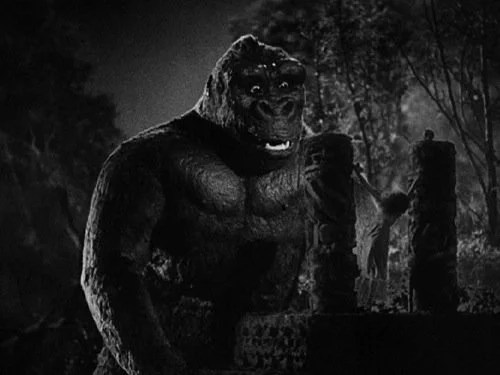

“Kong” moves to the screaming “Ann Darrow”, pulls her free, and heads back into the jungle.

“Driscoll” leads a rescue party into the jungle, while “Denham”, “Englehorn”, and other crew members guard the wall on the village side.
While, out in the jungle the rescue party are attacked by dinosaurs, and giant insects in a cave below a log they had to cross.
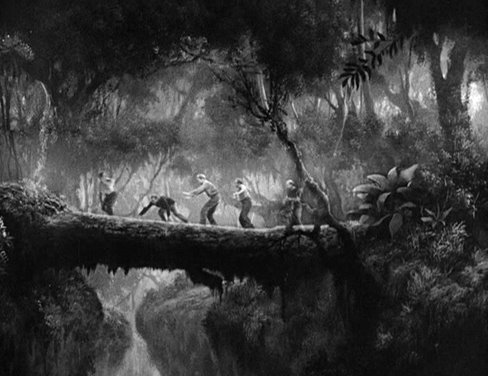
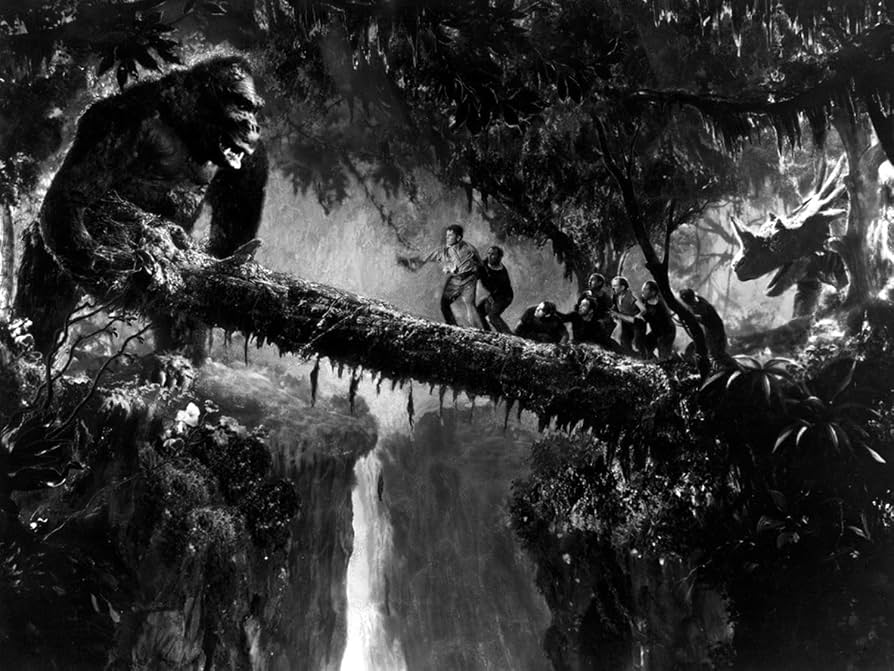
A major portion of this sequence was originally edited out. This comes after “King Kong” had turned the log over, causing members of the rescue party to fall off into a spider pit. Where, O’Brien and Delgado creatures eat them.
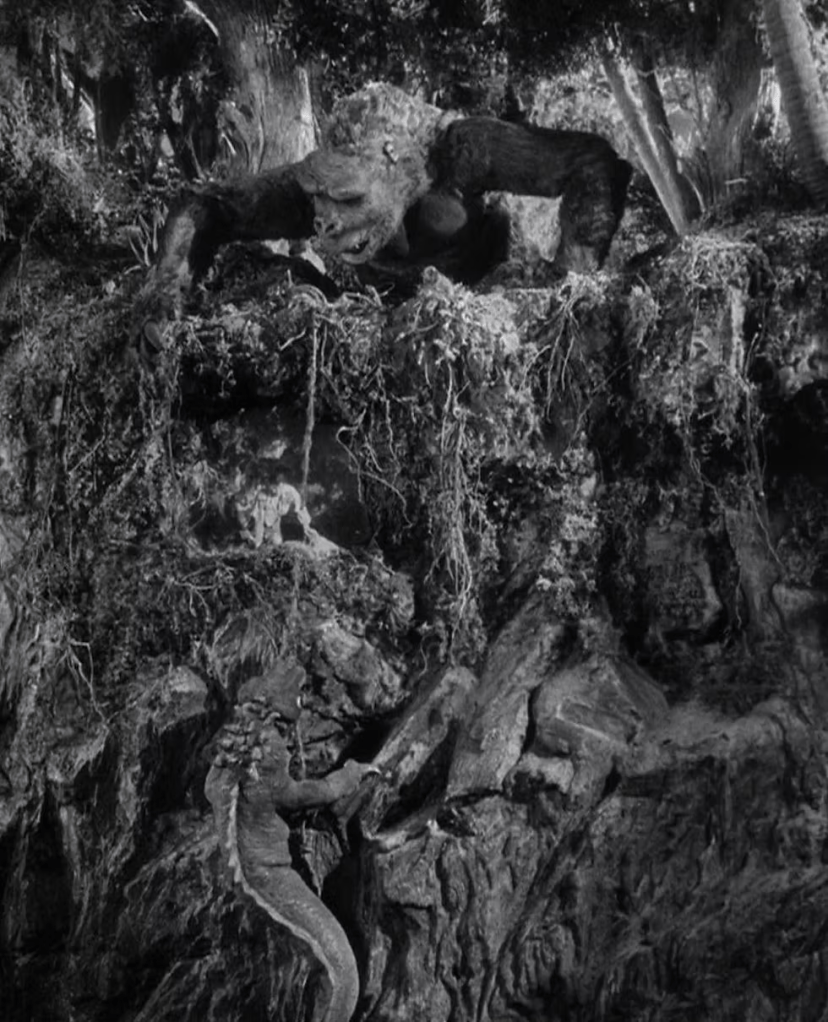
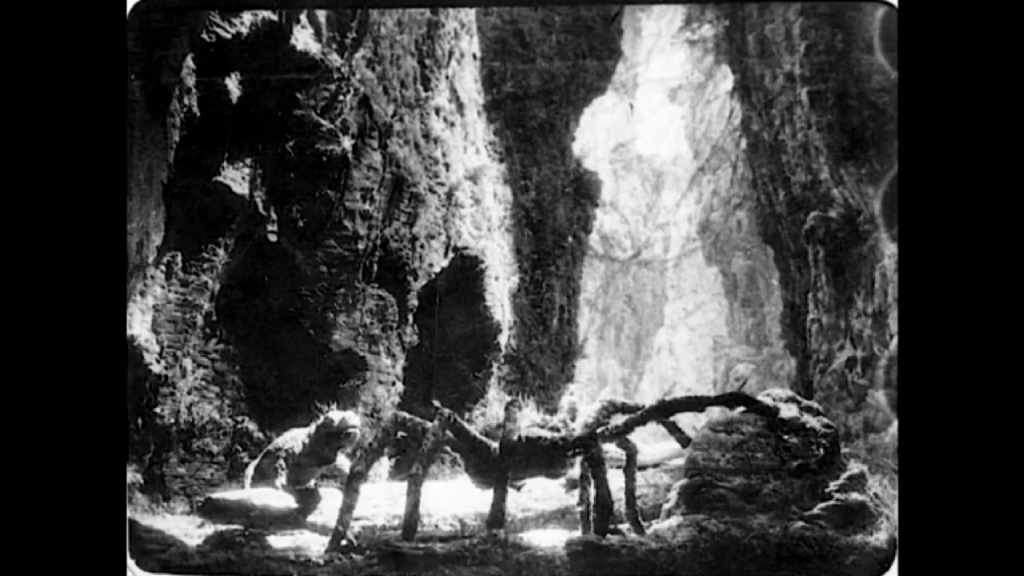
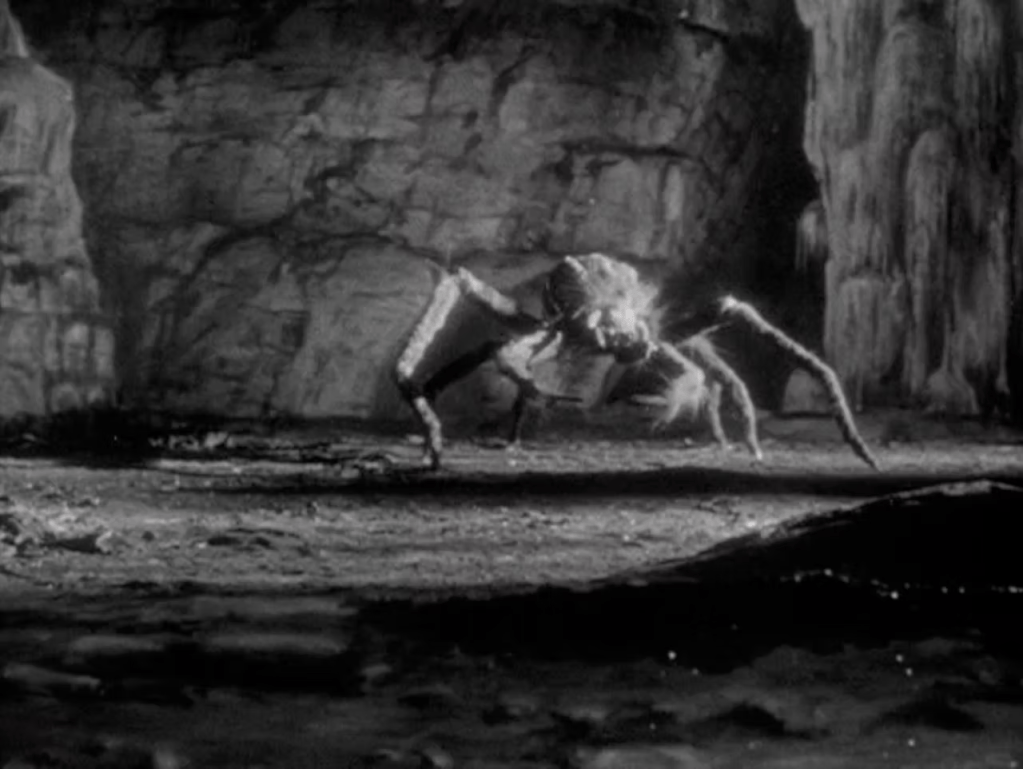
“Jack Driscoll” is the only one seemingly left alive. At which point, “Carl Denham”: arrives, and they exchange words from each side of the now open spider pit. “Denham” leaves for the village and “Driscoll” heads further into the jungle. While, “Ann” is being carried by “Kong”, placed into a tree to witness the giant gorilla fight a Tyrannosaurus.
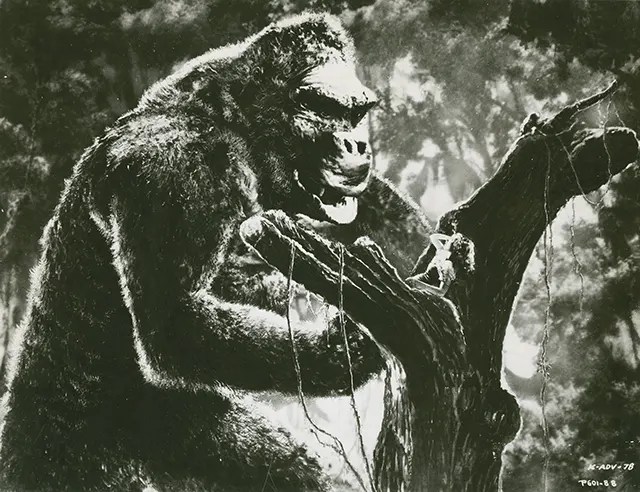
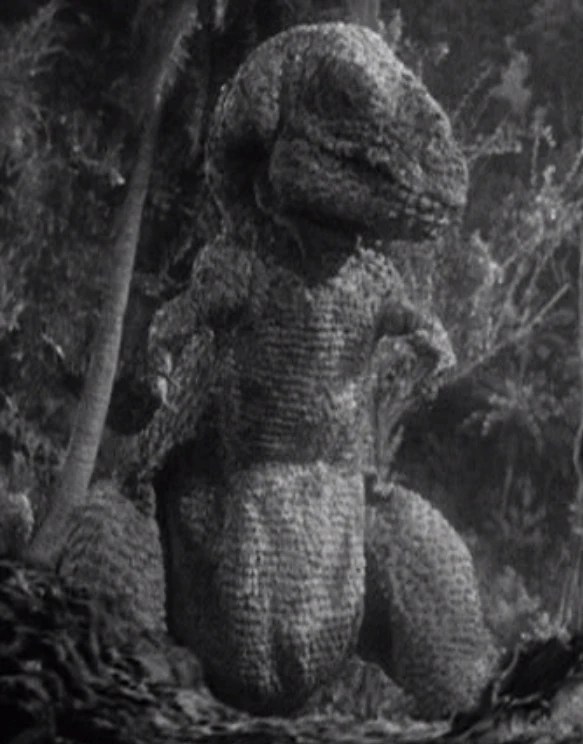
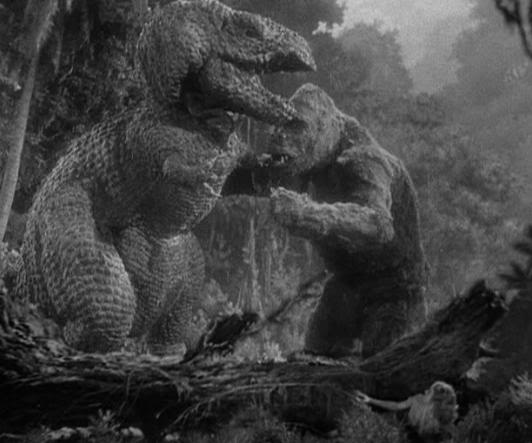
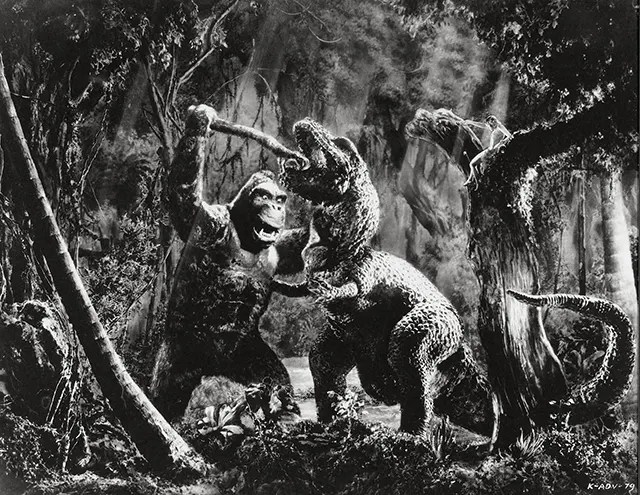
“Driscoll” now catches up with “Kong” and “Ann” and watches the giant gorilla enter a cave., Where he fights a giant snake, and then takes “Ann Darrow” up to to a cliff ledge overlooking a river.
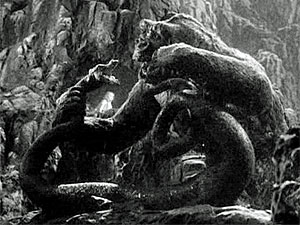
“Jack” is able to climb up the inside of “Kong’s” cave to the ledge he has “Ann” upon, and while the giant gorilla is engaged with a Pteranodon, rescues her.
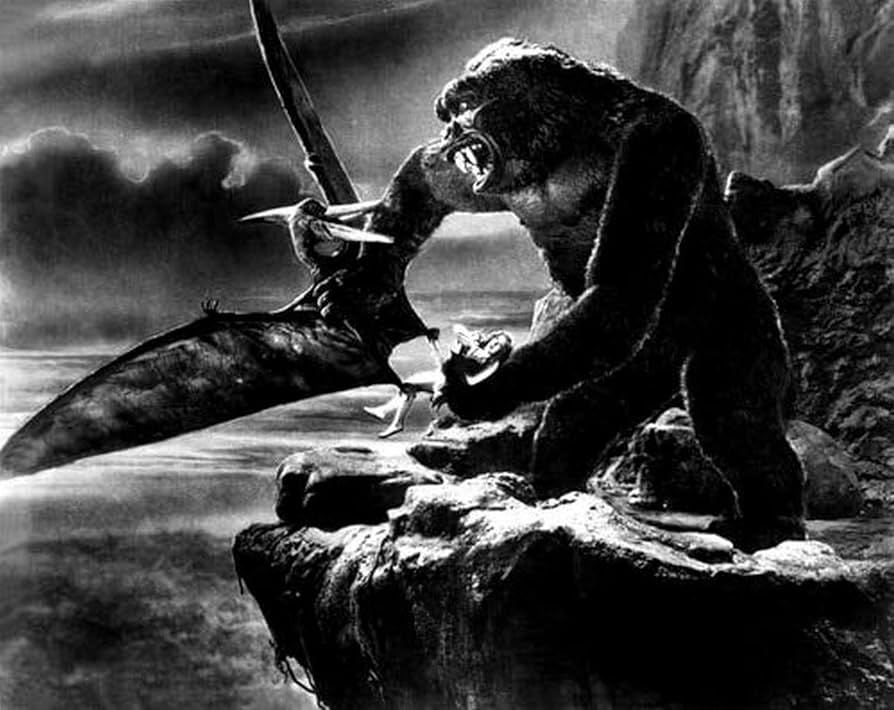
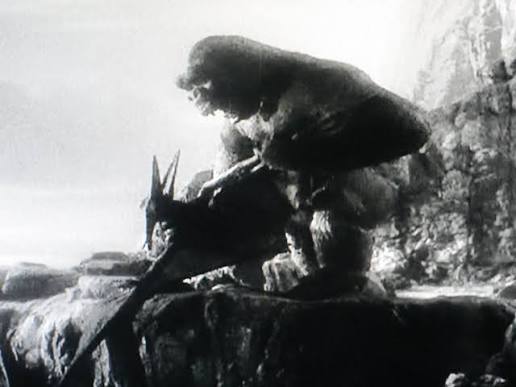
The two jump into the water below the ledge, and now it’s a race back to the village with “Kong” in pursuit.
The two make it back into the village and perceived safety. Where the villagers have been in hiding, and “Englehorn” and “Denham’s” crew seems to have free run.

Next, “Kong” appears and starts to push the huge gate. The villagers appear to help the “Venture’s” remaining crew hold the gate shut, but “Kong” breaks through and starts a rampage killing crew members, and villagers, to get to his bride.


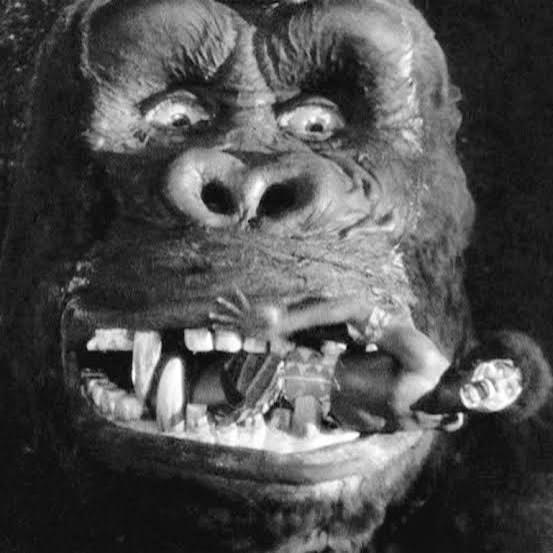
“Ann” had been taken back to the ship, and gas grenades that had been brought to the beach are used upon “Kong”. It is there that the giant gorilla goes down, and the shown, “Carl Denham”, gets the idea of taking him to New York City. As an attraction to raise lots of money for everyone on the “Venture”.
Opening night for “Kong, the Eighth Wonder of the World” has a theater full of people, “Carl Denham” introduces “Ann” and “Jack”, the curtain opens, and the audience now sees “KONG”. Once a “KING” among the natives of “Skull Island”.

The camera reporters come on stage, but the flash bulbs frighten “King Kong” , and he breaks free.

Panic now reigns supreme over New York City, as the giant gorilla runs amok.
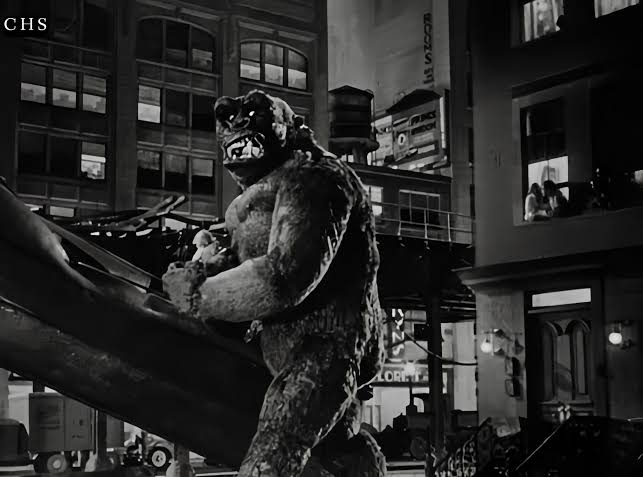
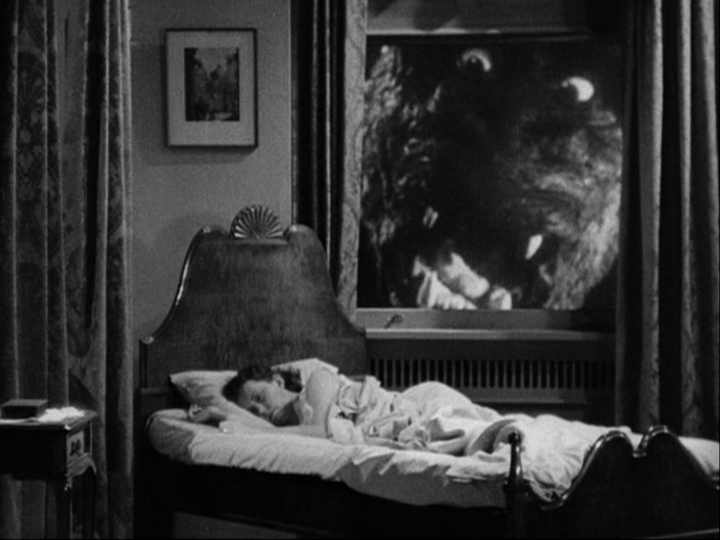
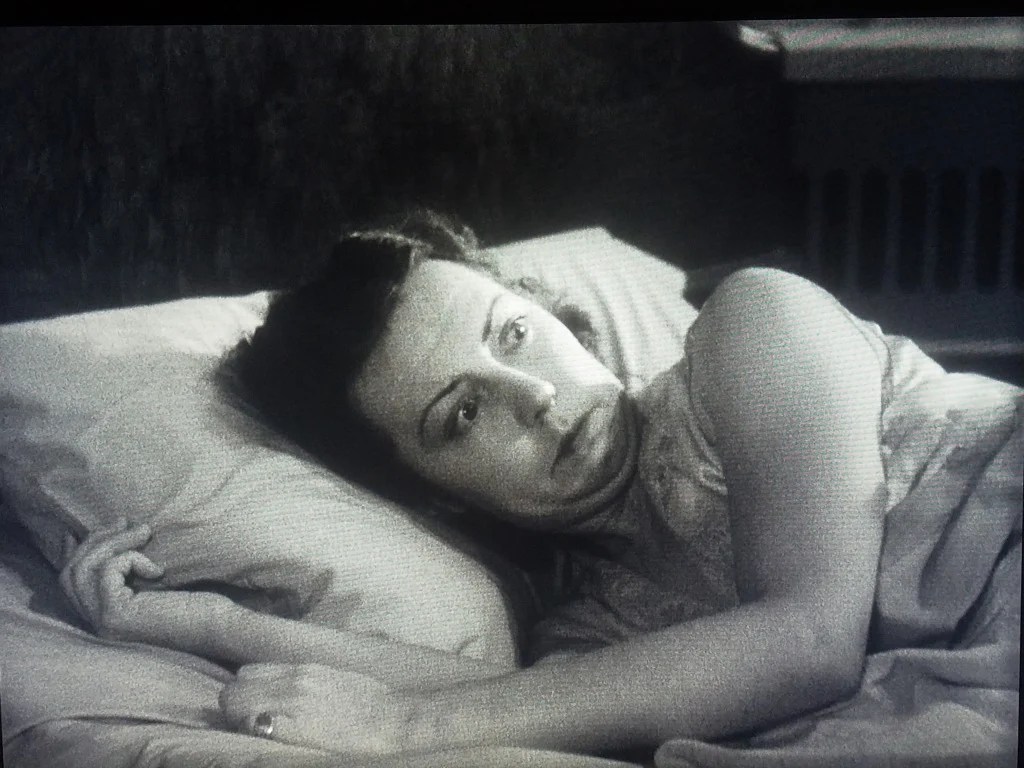
The sleeping women seen, above, and below has been identified, but not confirmed, as Fay Wray’s stunt double, Polly Wagner McCourtney. She is taken by “Kong” from her hotel bed and dropped to the ground several stories below.
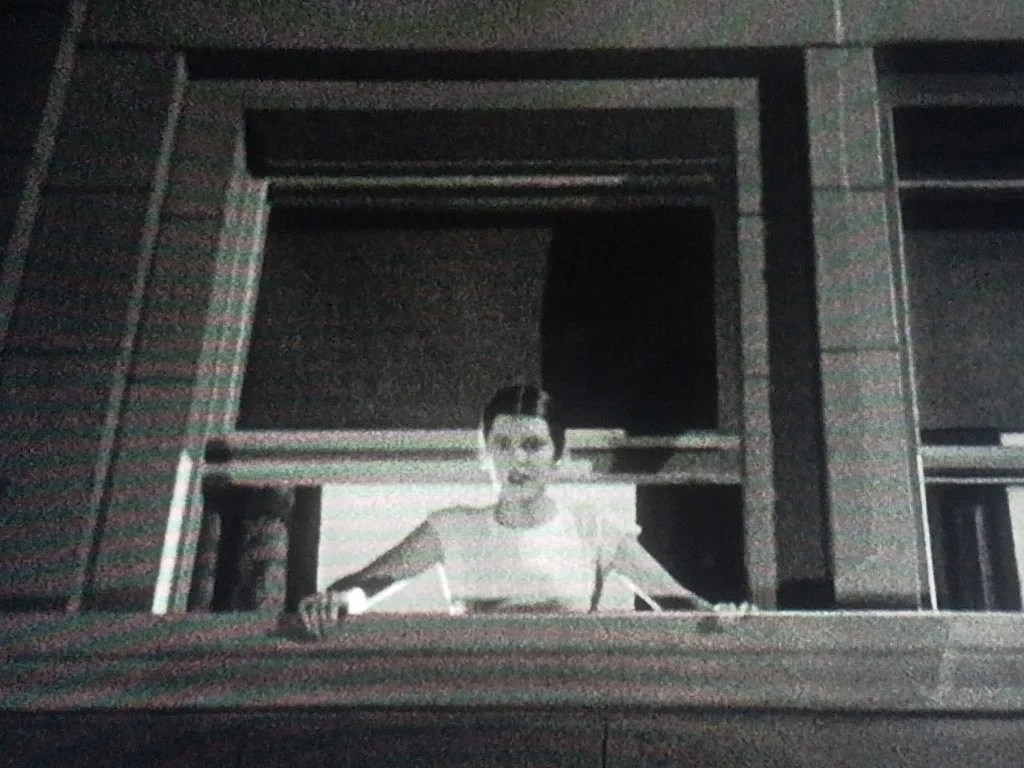
The above women screaming from the window is Sandra Shaw, aka: Veronica Balfe, soon to become Gary Cooper’s wife.
“King Kong” finds “Ann”, with “Jack”, and takes her.
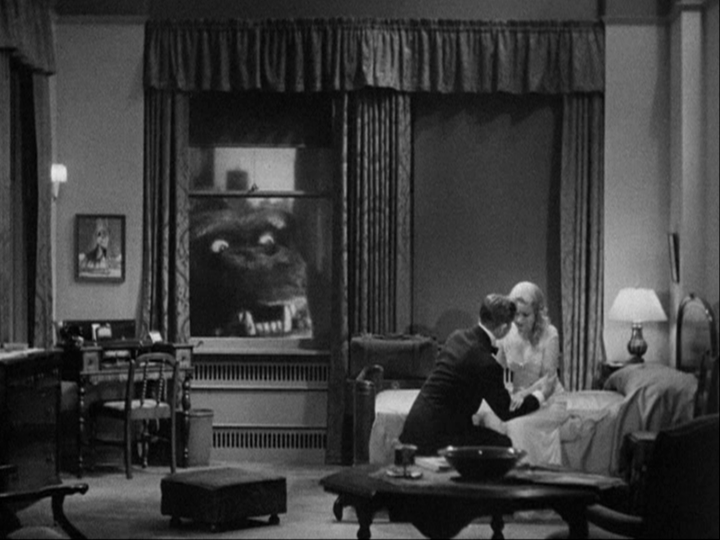
Looking for familiar territory, “Kong” climbs the Empire State Building.
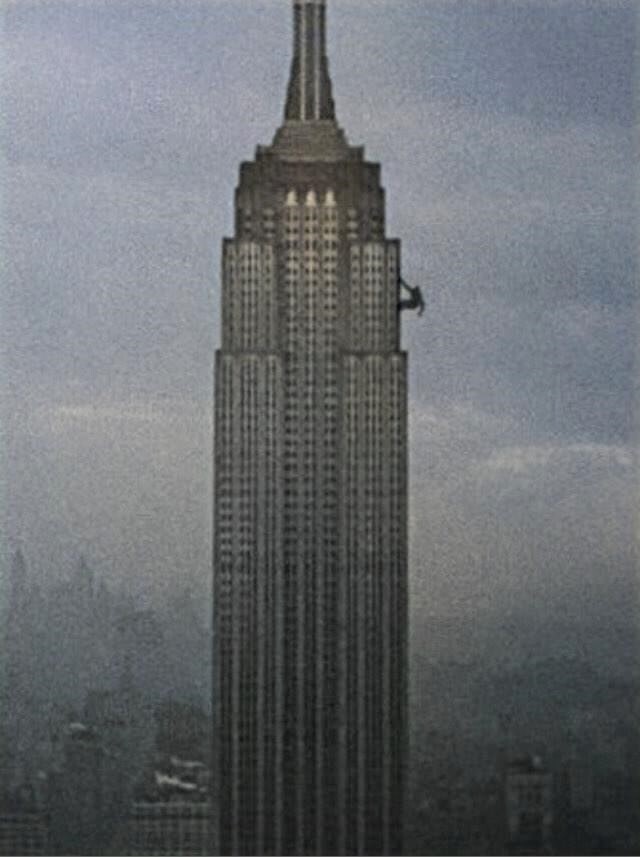
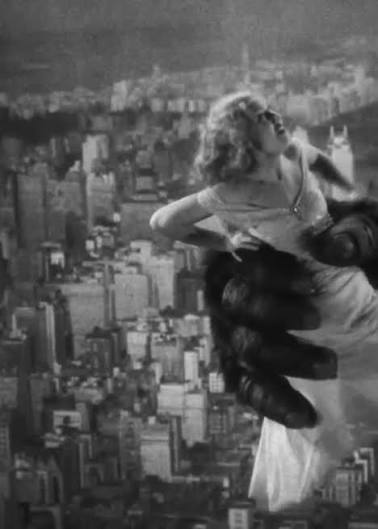
“Jack Driscoll” starts to work his way to the top of the building to rescue “Ann”. As the Army Air Force is sent into the skies of New York City to shoot and kill the homesick giant gorilla.
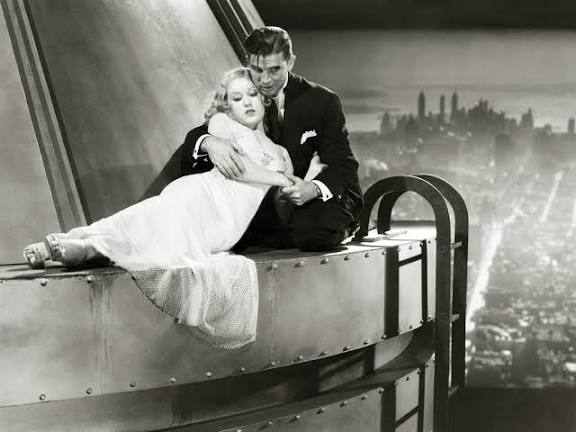
Fighting the biplanes, “Kong” puts “Ann Darrow” down on a ledge, “Jack Driscoll” is able to reach her, and the two enter the building to safety.
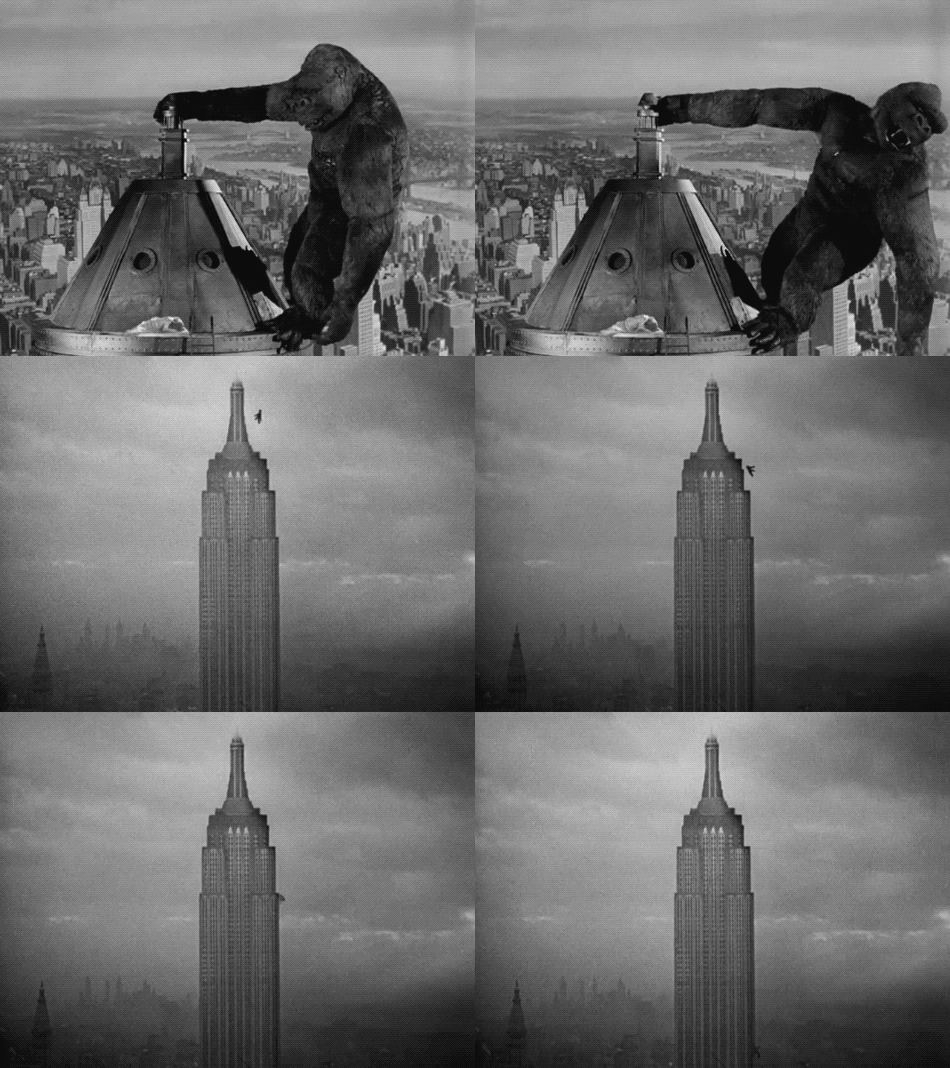
As a biplane takes aims, shoots, and ‘KING KONG” falls to his death on the street in front of the “Empire State Building”.
Looking over the body of “King Kong”, “Carl Denham” replies, “NO!”. To the “Police Captain”, portrayed by G. Raymond Nye. Who makes the claim that it was the airplanes that finally got, “KONG, THE EIGHT WONDER OF THE WORLD”.
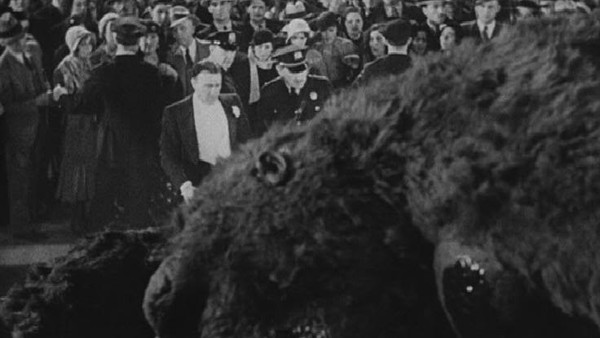
Next, “Carl Denham” corrected the “Police Captain”, saying:
“That it was BEAUTY that KILLED THE BEAST!”
Both characters got it wrong:
The audience had clearly seen the pilot, and gunner, of the biplane that shoots “King Kong” off of the “Empire State Building”.

The pilot was portrayed by Merian C. Cooper, and the gunner by Ernest Schoedsack.
The two felt that, THEY HAD CREATED “KING KONG”, and that, ONLY THEY COULD KILL HIM!
I now move my reader approximately 6,660 miles from New York City.
ゴジラGOJIRA: THE STORY OF THE LIVING NUCLEAR BOMB
PART ONE: THE REAL CREATOR OF THE ATOMIC BOMB
His name was Herbert George “H. G.” Wells.

When most people, around the world, think of novelist and historian H. G. Wells. They mostly associate him with three novels, “Time Machine, An Invention”, published in 1895, “The Invisible Man”, published in 1897, and “The War of the Worlds”, published in 1898. All three works have been turned into, each, several motion picture’s, and television drama’s.
Wells wrote two motion picture screenplays. His First screenplay, was the classic, 1936, “Things To Come”. In which, “H.G.”, as he was also known by, had predicted the Second World War, a full, three-years-prior , to the invasion of Poland by Adolph Hitler . Which started the actual war.
His Second screenplay, was a Noel Coward style morality play, 1937’s, “The Man Who Could Work Miracles”. For those of my readers interested in most of the on-screen interpretations of the author, my article is:
“H.G. WELLS On the Motion Picture and Television Screens”, found at:
http://www.bewaretheblog.com/2019/06/hg-wells-on-motion-picture-screen.html
However, I am not interested in those three novels, or H.G. Wells’s other works covered in my above article.
Written in 1913, with the complete title of “The World Set Free, A Story of Mankind”, was a prediction made by Wells, NINETEEN-YEARS-BEFORE THE EVENT ACTUALLY TOOK PLACE.
The following is from that story:
“The problem which was already being mooted by such scientific men as Ramsay, Rutherford, and Soddy, in the very beginning of the twentieth century, the problem of inducing radio-activity in the heavier elements and so tapping the internal energy of atoms, was solved by a wonderful combination of induction, intuition, and luck by Holsten so soon as the year 1933.“
The actual “Splitting of the Atom”, took place on April 14, 1932, one-year-earlier than H. G. Wells predicted in his novel.

The three scientists mentioned in the above paragraph from the 286-page novel, were real.
Ramsay, was actually Sir William Ramsay, the Scottish chemist who received the 1904, “Nobel Prize in Chemistry”, for his work in gases. The discovery of what Ramsay named “Argon”.

Rutherford, was actually Ernest Rutherford, 1st Baron of Rutherford of Nelson. A New Zealand scientist that was recognized as, according to “Michigan State University”, “The Father of Nuclear Physics”. He received the 1908, “Noble Prize in Physics”.

Soddy, was actually Frederick Soddy. Who proved the existence of isotopes of certain radioactive elements, and the disintegration of uranium. He would receive the 1921, “Noble Prize in Chemistry”.
With Rutherford, the two proved that radioactivity is due to the transmutation of elements, aka: today, nuclear reactions. In his 1926 book, “Wealth, Virtual Wealth and Debt”, Soddy references H.G. Wells’, “The World Set Free”.

There is a direct relationship between “The World Set Free” and the development of nuclear weapons.
PART TWO: TRINITY
Hungarian born physicist, and inventor, Leo Sailard, read the novel in 1932, the same year the neutron was discovered. In 1933, crediting the H.G. Wells work for giving him the idea. Leo Sailard conceived the concept of a nuclear chain reaction, and in 1936, actually patented that idea.
It was Leo Sailard ,who wrote the 1939 letter for Albert Einstein’s signature, which led to the creation of “The Manhattan District Project”. (See the next section of this article).

May reader can read, as of this writing, “The World Set Free” at:
https://www.gutenberg.org/files/1059/1059-h/1059-h.htm
The long Preface to this edition was written by H. G. Wells, at Easton Glebe, Dunmow, the United Kingdom, in 1921, and begins:
“The World Set Free was written in 1913 and published early in 1914, and it is the latest of a series of three fantasias of possibility, stories which all turn on the possible developments in the future of some contemporary force or group of forces. The World Set Free was written under the immediate shadow of the Great War. Every intelligent person in the world felt that disaster was impending and knew no way of averting it, but few of us realised in the earlier half of 1914 how near the crash was to us. The reader will be amused to find that here it is put off until the year 1956. He may naturally want to know the reason for what will seem now a quite extraordinary delay. As a prophet, the author must confess he has always been inclined to be rather a slow prophet. The war aeroplane in the world of reality, for example, beat the forecast in Anticipations by about twenty years or so. I suppose a desire not to shock the skeptical reader’s sense of use and wont and perhaps a less creditable disposition to hedge, have something to do with this dating forward of one’s main events, but in the particular case of The World Set Free there was, I think, another motive in holding the Great War back, and that was to allow the chemist to get well forward with his discovery of the release of atomic energy. 1956—or for that matter 2056—may be none too late for that crowning revolution in human potentialities.”
The novel tells the life of a scientist named “Holsten”. Who sees both the good and evil of his discovery of “Atomic Energy”.
The following two paragraphs come from “Chapter The First, The New Source of Energy”:
“Holsten, before he died, was destined to see atomic energy dominating every other source of power, but for some years yet a vast network of difficulties in detail and application kept the new discovery from any effective invasion of ordinary life. The path from the laboratory to the workshop is sometimes a tortuous one; electro-magnetic radiations were known and demonstrated for twenty years before Marconi made them practically available, and in the same way it was twenty years before induced radio-activity could be brought to practical utilisation. The thing, of course, was discussed very much, more perhaps at the time of its discovery than during the interval of technical adaptation, but with very little realisation of the huge economic revolution that impended. What chiefly impressed the journalists of 1933 was the production of gold from bismuth and the realisation albeit upon unprofitable lines of the alchemist’s dreams; there was a considerable amount of discussion and expectation in that more intelligent section of the educated publics of the various civilised countries which followed scientific development; but for the most part the world went about its business—as the inhabitants of those Swiss villages which live under the perpetual threat of overhanging rocks and mountains go about their business—just as though the possible was impossible, as though the inevitable was postponed for ever because it was delayed.”
“It was in 1953 that the first Holsten-Roberts engine brought induced radio-activity into the sphere of industrial production, and its first general use was to replace the steam-engine in electrical generating stations. Hard upon the appearance of this came the Dass-Tata engine—the invention of two among the brilliant galaxy of Bengali inventors the modernisation of Indian thought was producing at this time—which was used chiefly for automobiles, aeroplanes, waterplanes, and such-like, mobile purposes. The American Kemp engine, differing widely in principle but equally practicable, and the Krupp-Erlanger came hard upon the heels of this, and by the autumn of 1954 a gigantic replacement of industrial methods and machinery was in progress all about the habitable globe. Small wonder was this when the cost, even of these earliest and clumsiest of atomic engines, is compared with that of the power they superseded. Allowing for lubrication the Dass-Tata engine, once it was started cost a penny to run thirty-seven miles, and added only nine and quarter pounds to the weight of the carriage it drove. It made the heavy alcohol-driven automobile of the time ridiculous in appearance as well as preposterously costly. For many years the price of coal and every form of liquid fuel had been clambering to levels that made even the revival of the draft horse seem a practicable possibility, and now with the abrupt relaxation of this stringency, the change in appearance of the traffic upon the world’s roads was instantaneous. In three years the frightful armoured monsters that had hooted and smoked and thundered about the world for four awful decades were swept away to the dealers in old metal, and the highways thronged with light and clean and shimmering shapes of silvered steel. At the same time a new impetus was given to aviation by the relatively enormous power for weight of the atomic engine, it was at last possible to add Redmayne’s ingenious helicopter ascent and descent engine to the vertical propeller that had hitherto been the sole driving force of the aeroplane without overweighting the machine, and men found themselves possessed of an instrument of flight that could hover or ascend or descend vertically and gently as well as rush wildly through the air. The last dread of flying vanished. As the journalists of the time phrased it, this was the epoch of the Leap into the Air. The new atomic aeroplane became indeed a mania; every one of means was frantic to possess a thing so controllable, so secure and so free from the dust and danger of the road, and in France alone in the year 1943 thirty thousand of these new aeroplanes were manufactured and licensed, and soared humming softly into the sky.”
Conversely, the following comes from “Chapter The Second, The Last War”
“The gaunt face hardened to grimness, and with both hands the bomb-thrower lifted the big atomic bomb from the box and steadied it against the side. It was a black sphere two feet in diameter. Between its handles was a little celluloid stud, and to this he bent his head until his lips touched it. Then he had to bite in order to let the air in upon the inducive. Sure of its accessibility, he craned his neck over the side of the aeroplane and judged his pace and distance. Then very quickly he bent forward, bit the stud, and hoisted the bomb over the side.
‘Round,’ he whispered inaudibly.”
“The bomb flashed blinding scarlet in mid-air, and fell, a descending column of blaze eddying spirally in the midst of a whirlwind. Both the aeroplanes were tossed like shuttlecocks, hurled high and sideways and the steersman, with gleaming eyes and set teeth, fought in great banking curves for a balance. The gaunt man clung tight with hand and knees; his nostrils dilated, his teeth biting his lips. He was firmly strapped….”
“When he could look down again it was like looking down upon the crater of a small volcano. In the open garden before the Imperial castle a shuddering star of evil splendour spurted and poured up smoke and flame towards them like an accusation. They were too high to distinguish people clearly, or mark the bomb’s effect upon the building until suddenly the facade tottered and crumbled before the flare as sugar dissolves in water. The man stared for a moment, showed all his long teeth, and then staggered into the cramped standing position his straps permitted, hoisted out and bit another bomb, and sent it down after its fellow.”
“The explosion came this time more directly underneath the aeroplane and shot it upward edgeways. The bomb box tipped to the point of disgorgement, and the bomb-thrower was pitched forward upon the third bomb with his face close to its celluloid stud. He clutched its handles, and with a sudden gust of determination that the thing should not escape him, bit its stud. Before he could hurl it over, the monoplane was slipping sideways. Everything was falling sideways. Instinctively he gave himself up to gripping, his body holding the bomb in its place.”
“Then that bomb had exploded also, and steersman, thrower, and aeroplane were just flying rags and splinters of metal and drops of moisture in the air, and a third column of fire rushed eddying down upon the doomed buildings below….”
Like many of the stories of Herbert George Wells, it is the world’s scientists that come together to set up a new Utopia for mankind. His 1936 screenplay for “Things To Come”, takes that concept to its maximum.
The following is from “Chapter The Fourth, The New Phase”, of “The World Set Free”:
The task that lay before the Assembly of Brissago, viewed as we may view it now from the clarifying standpoint of things accomplished, was in its broad issues a simple one. Essentially it was to place social organisation upon the new footing that the swift, accelerated advance of human knowledge had rendered necessary. The council was gathered together with the haste of a salvage expedition, and it was confronted with wreckage; but the wreckage was irreparable wreckage, and the only possibilities of the case were either the relapse of mankind to the agricultural barbarism from which it had emerged so painfully or the acceptance of achieved science as the basis of a new social order. The old tendencies of human nature, suspicion, jealousy, particularism, and belligerency, were incompatible with the monstrous destructive power of the new appliances the inhuman logic of science had produced. The equilibrium could be restored only by civilisation destroying itself down to a level at which modern apparatus could no longer be produced, or by human nature adapting itself in its institutions to the new conditions. It was for the latter alternative that the assembly existed.”
PART TWO: THE FIRST NUCLEAR BOMB
The following paragraph comes from the website “Privatdozent”, and the article, “The Eccentricities of J. Robert Oppenheimer”, written by JØRGEN VEISDAL, found at:
https://www.privatdozent.co/p/the-eccentric-and-ingenious-father-4ea
“The now famous Einstein-Szilárd letter was written at the initiative of Hungarian nuclear physicist Leó Szilárd with help from Edward Teller and Eugene Wigner in 1939. It was signed by Albert Einstein and sent to the President of the United States, Franklin D. Roosevelt in October 1939. The letter argued that the United States should engage in uranium research. Its writing was motivated by the news of the discovery of uranium fission by Otto Hahn and Fritz Strassmann nine months prior.”

Above, Szilard and Einstein and, below the letter that was signed and sent to the President.

The following is the next of the letter.
“Sir:
Some recent work by E. Fermi and L. Szilard, which has been communicated to me in manuscript, leads me to expect that the element of uranium may be turned into a new and important source of energy in the immediate future. Certain aspects of the discussion which has arisen seem to call for watchfulness and, if necessary, quick action on the part of the Administration. I believe therefor that it is my duty to bring to your attention the following facts and recommendations:
In the course of the last four months it has been made probable — through the work of Joliot in France as well as Fermi and Szilárd in America — that it may become possible to set up a nuclear chain reaction in a large mass of uranium, by which vast amounts of power and large quantities of new radium-like elements would be generated. Now it appears almost certain that this could be achieved in the immediate future.
This new phenomenon would also lead to the construction of bombs, and it is conceivable — though much less certain — that extremely powerful bombs of a new type may thus be constructed. A single bomb of this type, carried by boat and exploded in a port, might very well destroy the whole port together with some of the surrounding territory. However, such bombs might very well prove to be too heavy for transportation by air.
The United States has only very poor ores of uranium in moderate quantities. There is some good ore in Canada and former Czechoslovakia, wile the most important source of uranium is Belgian Congo.
In view of this situation you may think it is desirable to have some permanent contact maintained between the Administration and the group of physicists working on chain reactions in America. One possible way of achieving this might be for you to entrust with the task a person who has your confidence and who could perhaps serve in an inofficial capacity. His task might comprise the following:
a) to approach Government Departments, keep them informed of the further development, and put forward recommendations for Government action, giving particular attention to the problem of securing a supply of uranium ore for the United States;
b) to speed up the experimental work, which is at present being carried on within the limits of the budgets of University laboratories, by providing funds, if such funds be required, through his contact with private persons who are willing to make contributions for this cause, and perhaps also by obtaining the co-operation of industrial laboratories which have the necessary equipment.
I understand that Germany has actually stopped the sale of uranium from the Czechoslovakian mines which she has taken over. That she should have taken such early action might perhaps be understood on the ground that the son of the German Under-Secretary of State, von Weizsäcker, is attached to the Kaiser-Wilhelm-Institut in Berlin where some of the American work on uranium is now being repeated.
Yours truly,
Albert Einstein“
Two-years to the month of his receipt of the letter, on October 2, 1941, President Franklin Delano Roosevelt authorized a crash program to make an atomic bomb. This was in coordination with the United Kingdom, and Canada’s, “Tube Alloys” program.
What became “Tube Alloys”, had started as two groups of scientists in two countries. The United Kingdom’s research began at “Cambridge University” in 1932. The French group began in Paris, in February 1939, and suggested that uranium could create a self-sustaining nuclear chain reaction.
Although the term “Atom Bomb” was familiar to the British public from the H.G. Wells novel, “The World Set Free”. It was the Paris group that actually agreed,, that the atomic bomb of that novel, was now possible, and related their findings to the British group. The Paris group, also had discovered the possibility of using heavy water, but the German army was on the move. On, June 19, 1940, as the Nazi army invaded France, the scientists and their equipment crossed the channel to London, and combined with the British scientist’s, to form “Tube Alloys”.
Below left to right, the scientific advisor to the British prime minister, Frederick Alexander Lindemann, 1st Viscount Cherwell, next to him is, Air Chief Marshal, Sir Charles Portal, followed by Admiral to the Fleet, Sir Dudley Pound, and Prime Minister, Winston Churchill. All where watching a demonstration in June 1941, from the “Tube Alloys”, scientist’s related to nuclear energy.

In the United States, on October 2nd, President Franklin Delano Roosevelt, met with “Secretary of War”, Henry L. Simpson ,and other cabinet members. Later, Simpson, and the “Chairman of the Joint Chiefs”, Fleet Admiral William D. Leahy, also met with the President, to discuss “FDR’s” request for the creation of an atomic bomb.
Their meeting was followed by another between, Fleet Admiral Leahy, and the Army Chief of Staff, George C. Marshall. Marshall would give the assignment to build the first Atomic Bomb to the “United States Army Corps of Engineers”, under, “Chief of Engineers, Major General Eugene Reybold”. Discussions were held as to best means of accomplishing the creation of an atomic bomb.
On June 12, 1942, Reybold, assigned the project, now code named, “DSM, Development of Substitute Materials”, to Colonel James C. Marshall, below, no relation to the Army Chief of Staff. Who would head the atom bomb project, as it pertained to construction of facilities and security.

Colonel Marshall, would eventually, work in coordination with the “Corps of Engineers Construction Division”, under the command of,Major General Thomas M. Robbins, and his assistant. The more popularly known Leslie Groves, below, at the time, having the temporary rank of Brigadier General. Groves believed that the code name, “Development of Substitute Materials”, would draw a large amount of attention with people inquiring as to what the “Substitute Materials” might be?

It was normal “Corps of Engineer’s” policy to name a command based upon the location of its headquarters. As both, Brigadier General Groves, and Colonel Marshall ,were now located at 270 Broadway, in an unidentified office, on the fifth floor of a New York City office building in Manhattan, (see the tall building in the following picture). In June 1942, they suggested a new code name, and “The Manhattan Engineering District” was created.

The following September, temporary Brigadier General Leslie Groves, was placed in overall command of what was now called “The Manhattan Project”.
In October 1942, the military was ordered to obtain land for a scientific facility in Tennessee. By November, United States Marshalls were posting notices on people’s homes, using imminent domain, to take over the land owned by more than 1,000 families in the community of Oak Ridge.
On paper, within the “Department of Defense”, and the “Pentagon”, both temporary Brigadier General Leslie Groves and Colonel James C. Marshall, were indicated as overseeing “The Manhattan Project”. That was a military technicality, because shortly the real person who would take charge would arrive. He was completely unknown to either army officer, and was a civilian scientist named Julius Robert Oppenheimer.
However, the United States government already knew of J. Robert Oppenheimer, since October 21, 1941, two-months before Pearl Harbor.
On that October 21st, the 1939 “Noble Prize” winning physicist, Ernest Lawrence, below, had brought Oppenheimer in on the President’s project.

Leslie Groves first met J. Robert Oppenheimer in October 1942, and was initially put off by the eccentric professor and physicist. However, Groves was no dummy, and realized, Oppenheimer, was the best man for the next phase of the project. THE ACTUAL CREATION OF A NUCLEAR WEAPON!

The original nuclear research project had started in February 1940, in the basement of “Pupin Hall”, at “Columbia University”, in New York City, and luckily hadn’t blown-up the University, or the entire city for that matter.

Above, Enrico Fermi, and his team in the “Pupin Hall” basement. After the first successful nuclear fission experiment in the United States.
However, the first question for Groves was:
WHERE DOES ONE BUILD AND TEST A NUCLEAR BOMB?
The idea of building what was now called “Project Y” at Oak Ridge. Had been the “Secretary of Defense’s” idea, and was agreed upon by the “Pentagon”. However, it would be Oppenheimer that convinced Groves that they needed an unpopulated area to test the, once created, nuclear weapon for two reasons.
First, it was easier to keep what they were doing secret.
Second, no one knew what would happen, once the bomb was detonated.

Above, Groves and Oppenheimer, at the time of finding a site for the construction of a atomic bomb.
The answer to Leslie Groves’s question, also came from J. Robert Oppenheimer. Who loved riding horses in the State of New Mexico. This went back to his, 1922, stay while recuperating from illness. Oppenheimer, took Groves, out to the vacant, and vast, New Mexico countryside, that he had enjoyed riding in. This was followed by the two taking a group of “Department of Defense”, and “Pentagon” officials, to the proposed site. Approval was given, and work on constructing the Los Alamos, New Mexico, laboratory site began.

Working with Colonel Marshall, Oppenheimer designed the Los Alamos facility. Which would include housing, and schools, for the families of the scientists that would be needed, as an incentive to come to work there.
Of concern to Army Brigadier Leslie Groves was another question. Would all the needed “Noble Prize” winning scientists agree to work for the non-“Nobel Prize” winning J. Robert Oppenheimer? The answer was that, “Oppie’s”, as he was known, reputation over rode any “Noble Prize” concerns to the scientists. The eccentric scientist became the “Director of the Los Alamos Laboratory” and in sense, the two military officers on-site superior.

Above, the I.D. photo for J. Robert Oppenheimer at Los Alamos.
Hans Albrecht Bethe, his I.D. photo is below, was a German-American theoretical physicist that “Oppie” made the head of “The Theoretical Division” at Los Alamos. In 1991, Bethe published a non-fiction work entitled, “The Road to Los Alamos”, available on line to read at:
https://archive.org/details/roadfromlosalamo00beth

I turn to Hans Bethe’s book, and another scientist at Los Alamos, for a description of “Oppenheimer”, as a leader in the development of the first nuclear weapon. The scientist was, Victor “Viktor” Frederick “Viki” Weisskopf, an Austrian born theoretical physicist. Who was the, “Deputy Division Leader of the Theoretical Division of the Manhattan Project”. His I.D. photo is below:

Below, Weisskopf was quoted by Bethe, concerning classes, and presentations by J. Robert Oppenheimer ,to both the other scientists, and the military, including Groves, and, Marshall:
“Oppenheimer directed these studies, theoretical and experimental, in the real sense of the words. Here his uncanny speed in grasping the main points of any subject was a decisive factor; he could acquaint himself with the essential details of every part of the work.”
“He did not direct from the head office. He was intellectually and physically present at each decisive step. He was present in the laboratory or in the seminar rooms, when a new effect was measured, when a new idea was conceived. It was not that he contributed so many ideas or suggestions; he did so sometimes, but his main influence came from something else. It was his continuous and intense presence, which produced a sense of direct participation in all of us; it created that unique atmosphere of enthusiasm and challenge that pervaded the place throughout its time.“
As mentioned, as having given input to the letter, that was signed by Albert Einstein and was now part of “The Theoretical Division”, was Austrian-Hungarian born Edward Teller. According to the website for “Atomic Heritage Foundation”: https://ahf.nuclearmuseum.org/ahf/profile/edward-teller/
“Teller joined the Los Alamos Laboratory in 1943 as group leader in the Theoretical Physics Division. Teller became interested in the possibility of developing a hydrogen bomb after Enrico Fermi suggested that a weapon based on nuclear fission could be used to set off an even larger nuclear fusion reaction. Teller continued to push his ideas for a fusion weapon throughout the project despite physicists’ skepticism that such a device could ever work.”

Above, the photo I.D. for Edward Teller
When Hans Bethe was selected as Director of the Theoretical Division, Teller became frustrated, and refused to enagage in calculations for the implosion mechanism of the fission bomb. This caused tensions with other physicists at Los Alamos, as additional scientists, had to be employed to do that work, including Klaus Fuchs, who was later revealed to be a Soviet spy.
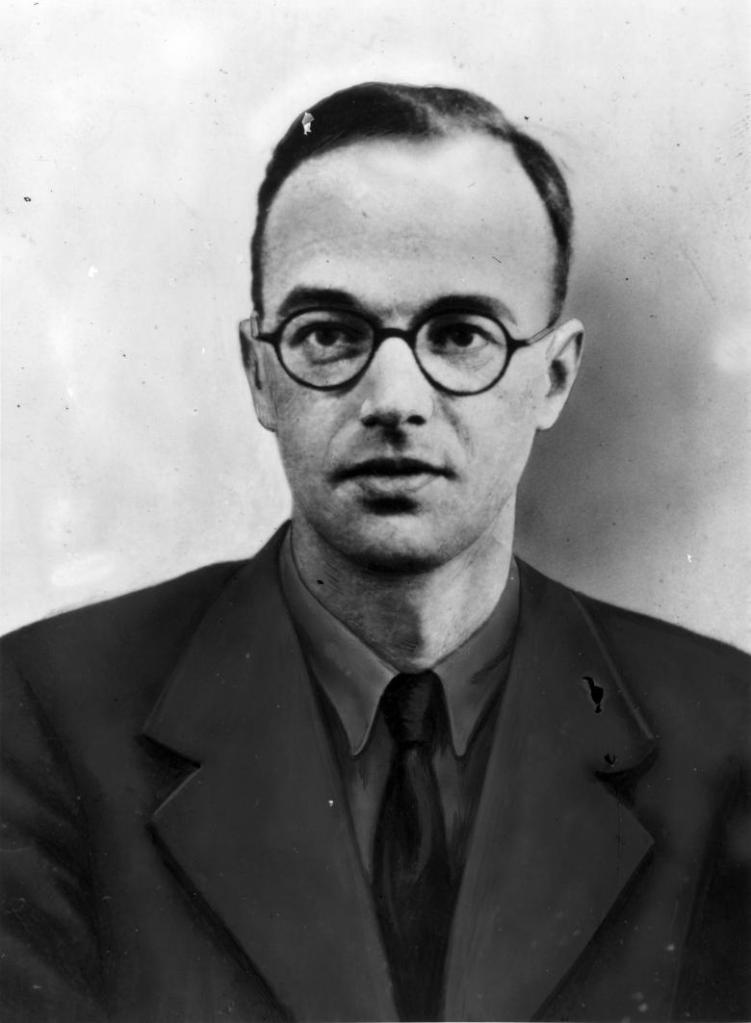
According to author Richard Rhodes, in his 1995, non-fiction work, “Dark Sun: The Making of the Hydrogen Bomb”. While the design of, and the type of nuclear material required was being debated at Los Alamos by Oppenheimer and others.
Italian-American physicist, Enrico Fermi, had followed his work at “Columbia University”, by moving to the “University of Chicago”, on a second assignment for “The Manhattan Project”. There ,he had built the first artificial nuclear reactor, code name, “Chicago Pile – 1”, and succeeded making the first self-creating nuclear chain reaction.

On May 25, 1943, according to Richard Rhodes, J. Robert Oppenheimer formally responded in a letter to Enrico Fermi’s suggestion that the United States use radioactive material to poison German food supplies. The written reply contained a question to the physicist, could Fermi produced enough “Strontium” and keep it secret? Rhodes quotes Oppenheimer as saying in the letter:
I think we should not attempt a plan unless we can poison food sufficient to kill a half a million men.
Now, Fermi arrived at Los Alamos and joined with Edward Teller supporting the creation of a
hydrogen bomb, opposing J. Robert Oppenheimer.
Below, Enrico Fermi’s Los Alamos photo I.D.

Two meetings, had been held in, June, and, July 1942, called by Oppenheimer and Fermi, and held respectively at the “University of Chicago”, and the “University of California, Berkeley”. The assembled scientists at both, included Teller, and Bethe. It was decided that a fission bomb was theoretically possible, and that was the goal of the group. However, once again, Teller,and, Fermi pushed for a fission bomb, or as it was referred too, the “Super Bomb”. However, at each subsequent meeting, the proposed “Super Bomb” was blocked by Hans Albrecht Bethe. Next, Teller warned Oppenheimer of the theoretical possibility that when the bomb is set off, it would ignite the atmosphere, because of a hypothetical fusion reaction of nitrogen nuclei. Yet, he kept pushing his “Super Bomb” over the fission bomb.
Two types of “Fissile Material”, material that can undergo nuclear fission, “Uranium 235”, and, “Plutonium 239”, were considered. The idea of testing the bomb was brought up during discussions at Los Alamos in January 1944. Oppenheimer bought into it, and convinced Groves. After further discussions, authorization came down to test a small yield bomb. The nuclear fission material would be plutonium.
There were eight possible test sites, and after several different groups surveyed them. The chosen test site was the northern portion of the “United States Air Force’s Alamogordo Bombing Range”. Which would be renamed, White Sands, New Mexico.
The test bomb was code named “Gadget”, and before it was tested, a rehearsal took place. Which at first, J. Robert Oppenheimer, was initially against, but after the successful test. He stated it was a good thing that everyone was assured of their job and how it worked.
The following is from the “Air Force Nuclear Weapons Center” website:
https://www.afnwc.af.mil/About-Us/History/Trinity-Nuclear-Test
“The world’s first nuclear explosion occurred on July 16, 1945, when a plutonium implosion device was tested at a site located 210 miles south of Los Alamos, New Mexico, on the plains of the Alamogordo Bombing Range, known as the Jornada del Muerto. The code name for the test was “Trinity.”
Hoisted atop a 100-foot tower, a plutonium device, called “Gadget,” detonated at precisely 5:30 am over the New Mexico desert, releasing 18.6 kilotons of power, instantly vaporizing the tower and turning the surrounding asphalt and sand into green glass, called “trinitite.” Seconds after the explosion, an enormous blast sent searing heat across the desert, knocking observers to the ground.
Reports from witnesses came from as far as 200 miles away. A forest ranger 150 miles west of the blast said he saw a flash of fire, an explosion and black smoke. An individual 150 miles north said the explosion “lighted up the sky like the sun.”
A U.S. Navy pilot flying at 10,000 feet near Albuquerque, New Mexico, said it lit up the cockpit of his plane and was like the sun rising in the south. When he radioed Albuquerque Air Traffic Control for an explanation, he was simply told, “Don’t fly south.” After the test, the Alamogordo Air Base issued a press release that stated simply, “A remotely located ammunition magazine containing a considerable amount of high explosives and pyrotechnics exploded, but there was no loss of life or limb to anyone.” The actual cause of the blast was not disclosed until after the U.S. bombing of Hiroshima, Japan, on Aug. 6.”
It should be noted that the actual bomb dropped, August 6, 1945, on the Japanese city of Hiroshima, was not the plutonium type tested as “Gadget”, but the untested, “Uranium-235” atomic bomb.
While on August 9, 1945, the plutonium type atomic bomb was dropped on the Japanese city of Nagasaki.

Above left, the mushroom cloud of Hiroshima’s “Uranium-235”. Above right, the mushroom cloud of Nagasaki’s “Plutonium 239”.
What would weigh upon J. Robert Oppenheimer, “The Father of the Atomic Bomb” for the rest of his life was:
Hiroshima:
- 70,000–126,000 civilians killed
- 7,000–20,000 soldiers killed
- 12 Allied prisoners of war
Nagasaki:
- 60,000–80,000 killed (within 4 months)
- 150+ soldiers killed
- 8–13 Allied prisoners of war
Bringing about Robert J. Oppenheimer’s famous quote:
“NOW I AM BECOME DEATH, THE DESTROYER OF WORLDS”
PART THREE: THE 第五福龍丸 DAIGO FUKURYU MARU
March 1, 1954, was the date that Edward Teller’s, 1943, argument became reality, and he was, officially, “The Father of the Hydrogen Bomb”. It took place on Bikini Atoll, where the “First Hydrogen Bomb”, code named, “CASTLE BRAVO”, was detonated.
Below, is the final form of the “Castle Bravo H-Bomb”.

Once again, an American nuclear weapon would affect the people of Japan, but without ever touching the island itself. HOWEVER, an incident took place, that directly led to the creation of an allegorical nuclear bomb.
In October, 1953, the scientists worked their math, studied the historical weather reports for the area, looked at “THEIR”, projected yield for the bomb, and with other factors, determined how much area around “Bikini Atoll” would be safe from the blast. Their calculations would be updated as the scheduled date for the test was pushed out. However, on October 10, 1953, the United States Navy issued a “Danger Zone Notice”, based upon Edward Teller, and the other scientist’s calculations, at the time.
The fishing boat was built in March 1947, and named the “第七事代丸 (Kotoshiro Maru)”. It was the seventh boat of that name. The boat was commonly translated as the “Dianana Kotoshiro #7”, and was originally used as a bonito fishing boat out of the Misaki fishing harbor. In 1953, after being remodeled as a tuna fishing boat, it was moved to Yaizu Port, in Shizuoka Prefecture, and operated out of that harbor. The “Tuna Boat” was renamed the “第五福龍丸 Daigo Fukuryu Maru”, the fifth boat of that name, and either translated as “Fifth Lucky Dragon”, or the more familiar “Lucky Dragon #5”.
On January 22, 1954, the “Daigo Fukuryu Maru #5” left port for a planned normal long ocean voyage to the fishing grounds off of “Midway Island”, 2,267 miles from Japan.

According to the website, “The Wayback Machine”, it appears “Fate”, if you believe in it, intervened with the “Daigo Fukuryu Maru #5”:
http://www.pcf.city.hiroshima.jp/virtual/VirtualMuseum_e/exhibit_e/exh0503_e/exh05032_e.html
“The crew were fishing in the Midway Sea when they lost most of their trawl nets to the sea. They altered their course southward near the Marshall Islands, and encountered a Bikini hydrogen bomb test on March 1.”
According to Martha Smith-Norris in her 1997, “Only as Dust in the Face of the Wind”: An Analysis of the BRAVO Nuclear Incident in the Pacific”. Which was published in “The Journal of American-East Asian Relations Vol. 6, No. 1”. https://www.jstor.org/stable/23612829
The “Daigo Fukuryu Maru #5” was operating, at least, 14-miles outside the United States Navy’s posted “57,000 square mile Danger Zone”. Additionally, possibly because of the tuna boat’s size, it was not detected on either radar, or by Navy spotter planes.
At 6:45 AM, March 1, 1954, the crew saw the sky light up from the “Castle Bravo H-Bomb”, below, and two factors brought the white ash of the fallout, they would call, “Shi no hai (死の灰, death ash), to them.


The First Factor against the crew of the “Lucky Dragon #5”, was that the “Castle Bravo H-Bomb” was calculated, by Edward Teller and the other scientific minds of the program, to have a maximum yield of Six Megatonnes of TNT .
THE SCIENTISTS GOT IT WRONG!
The actual yield was 2.5-times-greater than Six Megatons of TNT, it was FIFTEEN MEGATONS!
Making the “Danger Zone”, needing to be, at least, two and a half times larger than posted.
The Second Factor against the crew of the “Lucky Dragon #5” was the wind. It changed from its predicted direction, and blew towards the tuna boat and not away from it.
Each member of the crew of the “Daigo Fukuryu #5” received a radiation dose of 300 RADS as the “SHI NO HAI” passed over them.
Getting a little scientific here to explain 300 RADS to my reader:
The following is from Page 17, out of 22, from the website “atomicarchive.com”.
https://www.atomicarchive.com/history/hydrogen-bomb/page-17.html
The following graph indicates where the “Daigo Fukuryu Maru” was located in relation to “ground-zero” for the “Castle Bravo” detonation. Along with the estimated amount of “RAD’s (radiation Absorbed Dose)”, each member of the crew was exposed too, indicating 300.

Castle BRAVO Fallout
The following comes from the website for the “United States Nuclear Regulatory Commission”.
https://www.nrc.gov/reading-rm/basic-ref/glossary/rad-radiation-absorbed-dose.html
The purpose of these sections, that I have combined from three different articles, is to (1). Explain what a “RAD” is, (2). What a “Millirem” is, and (3). How many “RAD’s” a normal person gets in a year. As compared to what the crew of the “Daigo Fukuryu Maru” received, from their direct expose to the “Castle Bravo H-Bomb”:
A “RAD” is:
“One of the two units used to measure the amount of radiation absorbed by an object or person, known as the “absorbed dose” which reflects the amount of energy that radioactive sources deposit in materials through which they pass. The radiation-absorbed dose (rad) is the amount of energy (from any type of ionizing ratiation) deposited in any medium (e.g., water, tissue, air). An absorbed dose of 1 rad means that 1 gram of material absorbed 100 ergs of energy (a small but measurable amount) as a result of exposure to radiation. The related international system unit is the gray (Gy), where 1 Gy is equivalent to 100 rad.
Measuring Radiactivity:
There are four different but interrelated units for measuring radioactivity, exposure, absorbed dose, and dose equivalent. These can be remembered by the mnemonic R-E-A-D, as follows, with both common (British, e.g., Ci) and international (metric, e.g., Bq) units in use:
- Radioactivity refers to the amount of ionizing radiation released by a material. Whether it emits alpha or beta particles, gamma rays, x-rays, or neutrons, a quantity of radioactive material is expressed in terms of its radioactivity (or simply its activity), which represents how many atoms in the material decay in a given time period. The units of measure for radioactivity are the curie (Ci) and becquerel (Bq).
- Exposure describes the amount of radiation traveling through the air. Many radiation monitors measure exposure. The units for exposure are the roentgen (R) and coulomb/kilogram (C/kg).
- Absorbed dose describes the amount of radiation absorbed by an object or person (that is, the amount of energy that radioactive sources deposit in materials through which they pass). The units for absorbed dose are the radiation absorbed dose (rad) and gray (Gy).
- Dose equivalent (or effective dose) combines the amount of radiation absorbed and the medical effects of that type of radiation. For beta and gamma radiation, the dose equivalent is the same as the absorbed dose. By contrast, the dose equivalent is larger than the absorbed dose for alpha and neutron radiation, because these types of radiation are more damaging to the human body. Units for does equivalent are the roentgen equivalent man (rem) and sievert (Sv), and biological dose equivalents are commonly measured in 1/1000th of a rem (known as a millirem or mrem).
For practical purposes, 1 R (exposure) = 1 rad (absorbed dose) = 1 rem or 1000 mrem (dose equivalent).“
What’s an Average RAD Dose Per Year for a Human?
On average, Americans receive a radiation dose of approximately 0.62 rem (620 millirem) each year.
Half of this dose comes from natural background radiation. Most of this background exposure comes from radon in the air, with smaller amounts from cosmic rays, and the Earth itself. The other half (0.31 rem or 310 mrem) comes from man-made sources of radiation, including medical, commercial, and industrial sources. In general, a yearly dose of 620 millirem from all radiation sources has not been shown to cause humans any harm.
Below is OISHI MATASHICHI (大石又七 Matashichi Oishi), one of the surviving crew members of the “Lucky Dragon #5”. His non-fiction work, published in Japan, on January 1, 1991, is entitled:
“死の灰を背負って―私の人生を変えた第五福竜丸 (Carrying the ashes of death – Daigo Fukuryumaru that changed my life)”


According to Matashichi Oishi:
He had taken a “lick of the dust” that fell on the tuna boat. Which he described as like 粉雪 (“powdered snow”), but “gritty without taste”. That “powdered snow”, stuck to the ship, the crew’s bodies, got into their nasal passages, irritated their eyes, entered their ears, and even got into their underwear.
March 1, 1954, ended with the crew starting to experience sickness from their exposure to the “Shi no hai”. This included headaches, nausea, diarrhea, dizziness, and increasing pain, all signs of radiation sickness.
A member of the crew took a small bag, put some of the ash in it, and hung it on the end of his bed to show investigators. His sample, along with others, would be studied at “Tokyo University” and be determined to have come from a hydrogen bomb.
According to Matashichi, the United States scientists, and military personal, overseeing the “Castle Bravo Test”, were both surprised by these results and, at the time, and CLAIMED THEY HAD NOTHING TO DO WITH IT.
WHY?
Because the “Castle Bravo Test” was supposed to be “TOP SECRET”, and therefore, DIDN’T EXIST!
March 3rd saw the crew experiencing blisters appearing on their skin in the spots the ash had touched and their faces started to turn dark. By March 8th, members of the crew started to loose their hair. March 12th saw unexpected rough seas, that caused the “Unlucky Dragon #5” to dock late, on the night of March 14th, at the Yaizu Port.
That late docking was actually fortunate, as the normal removal of the tuna would have immediately started. As a result, the majority of the contaminated tuna was not removed to be processed, before the radiation was discovered.

Although the following still doesn’t seem to reflect panic, there was, once word got out about the tuna brought back to Japan by the “Daigo Fukuryū Maru #5”. It took days to calm the populace and major radiation tests with geiger counters were performed.

Initially, on March 14, 1954, the crew were taken to the “Yaizu Public Hospital” and Dr. Oi Toshiaki (Toshiaki Oi), not realizing he was dealing with radiation poisoning, treated the tuna boat crew’s faces with zinc ointment, and sent them to their homes.
The following morning, March 15th, the seven crew members considered elderly, were sent to “Tokyo University” for treatment. An examination of deck hand Yūichi Masuda (増田祐一), found his bone marrow at half of normal.
Japanese biophysicist, Nishiwaki Yasushi, below, was in Osaka, with his American wife, Jane Fischer Nishiwaki, when the “Daigo Fukuryu Maru #5” returned to port.
According to a November 2015 article in the “中國新間可heGhuugolu§himbum”: https://www.hiroshimapeacemedia.jp/?p=53448
“Reading about the incident in a newspaper on March 16, Dr. Nishiwaki, took a night train from Osaka to Yaizu, Shizuoka Prefecture. The following day, he began collecting substances from the boat and the crew members and measuring their radiation levels.”

After examining the tuna boat, Dr. Nishiwaki, ordered that the “Lucky Dragon #5” be relocated it an isolated area.

Nishiwaki went to see the seven crew members. He discovered high levels of radiation in the men’s hair, and ordered the hair be cut off. These crew members were ordered by Nishiwaki Yasushi, to be quarantined in “Yazizu North Hospital”, and their clothes buried on the hospital property.

Next, Nishiwaki Yasushi wrote a detailed letter, to the current head of the “United States Atomic Energy Commission” about the “Daigo Fukuryū Maru #5” incident. He stated that the seven crew members he had examined, suffered from acute radiation sickness. He wanted to know how to treat them, and the other members of the crew in Tokyo? Additionally, other Japanese scientists had sent letters asking for the same information.
Not one letter writer, received notification of the receipt of their letters from the “AEC”. However, two American medical students, were sent to Japan.
Later, seven crew members would also be transferred to “Tokyo University”. The crew stayed at the University for treatment, for a minimum of fourteen months, with some longer, still being observed.

Around August 20th, the condition of radio operator, crewman Kuboyama Aikichi worsened.


By August 29th, he had developed meningitis, he became violent, had to be tied to the floor, and was delirious.
On September 23, 1954, Kuboyama Aikichi, became the first member of the “Daigo Fukuryū Maru #5” to die.
During the following year, on May 22, 1955, the remaining twenty-two-members of the crew of the “LUCKY DRAGON #5” were released from the hospital, but met with another unexpected problem that affected the rest of their lives.
They were badly treated by the Japanese public in the same way as those survivors of both Hiroshima and Nagasaki. To the general public, the crew of the ,“Daigo Fukuryu Maru #5”, were now, “被爆者 Hibaku-sha (Atom Bomb Survivors)“, and shunned. BECAUSE everyone knew that radiation was contagious, and you needed to stay away from these carriers.
However, unlike the public, the Japanese Government didn’t look upon them as “Atom Bomb Survivors”, and as a result. They were not permitted the same financial compensation as the survivors of the two American Atomic Bombs.
PART FOUR: THE LIVING NUCLER BOMB
“Toho Studio’s” producer, Tomoyuki Tanaka, during March of 1954, had set up a motion picture production to be filmed in Indonesia. He was in country, working out the final details of what was to be called, “栄光のかげにEiko no Kanatani (In the Shadow of Glory”, but the production was stopped. The Indonesian government refused to grant visas to the Japanese stars. Sometimes “FATE” works in mysterious ways.
Very down, over the time he had wasted in Indonesia, Tomoyuki Tanaka, according to many film historians and reviewers, was looking out of a window on the commercial airplane that was taking him back to Japan. Gazing at the night sky, and staring down at the dark Pacific Ocean and Sea of Japan below the plane. The “Toho Studio” Producer, started to think about what he could substitute for “Eiko no Kanatani “?
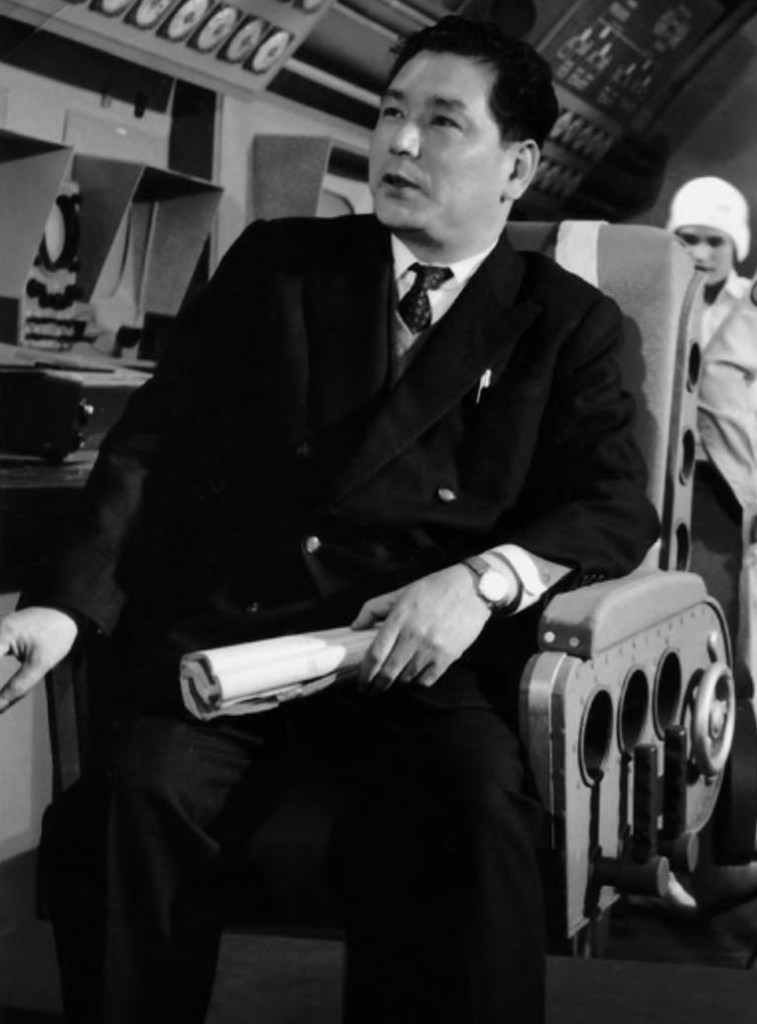
As the story goes, Tomoyuki Tanaka, began to think about, what might be lurking below the water’s surface UNSEEN by man. He decided to replace his Indonesia adventure with a simple monster on the loose story.
The power of a motion picture is sometimes underestimated. Initially only the Asian world, and possibly, Asian movie theaters in the United States, and the United Kingdom, might have shown this motion picture.
Tanaka’s motion picture would be released, only, SEVEN-MONTHS, after the “CASTLE BRAVO H-BOMB” and the “Daigo Fukuryu Maru” incident. To the Japanese theater goer, this “Kaiju (Giant Monster)”, motion picture wasn’t like Ray Harryhausen’s, 1953, “The Beast from 20,000 Fathoms”. Where the “Rhedosaurs” runs amok in New York City, or 1933’s, “King Kong”, does the same.
To the average Japanese citizen, “GOJIRA” WAS “LITTLE BOY” and “FAT MAN”. The Atomic Bombs dropped on Hiroshima and Nagasaki, that thousands remembered to well.
The movie:
ゴジラGOJIRA premiered in Nagoya, Japan, on October 27, 1954

Speaking of Ray Harryhausen’s creation. Many sources, over the years, have written that, besides his airplane flight home story. Tomoyuki Tanaka was inspired by the Ray Bradbury, stop-motion-animated, 1953, “The Beast from 20,000 Fathoms”
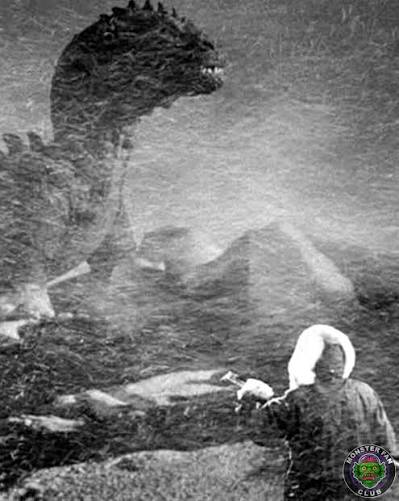
That idea is backed-up by writer Shigeru Kayama, hired by Tomoyuki Tanaka, to write a story line for his new motion picture. Kayama, turned in a 50-page,story treatment entitled “海底二万哩から来た大怪獣 (Kaitei Niman Mairu kara kita Daikaijū)”. Which is translated into English, depending upon the source, as “A Large Monster That Came from 20,000 Miles Under the Sea”, “The Giant Monster from 20,000 Miles Beneath the Sea”, or even, “The Big Monster from 20,000 Miles Underneath the Sea”. In May of 1954, “Toho Studios” changed the title to “Project G”. This was to keep competitor movie companies, and newspaper movie reviewers, in the dark, as to what Tomoyuki Tanaka was up too.
Shigeru Kayama, is in the first photo below, and Takeo Murata, second photo, together were to write the screenplay b based upon Kayama’s storyline. The two writers spent, three-weeks in June 1954, creating the story.
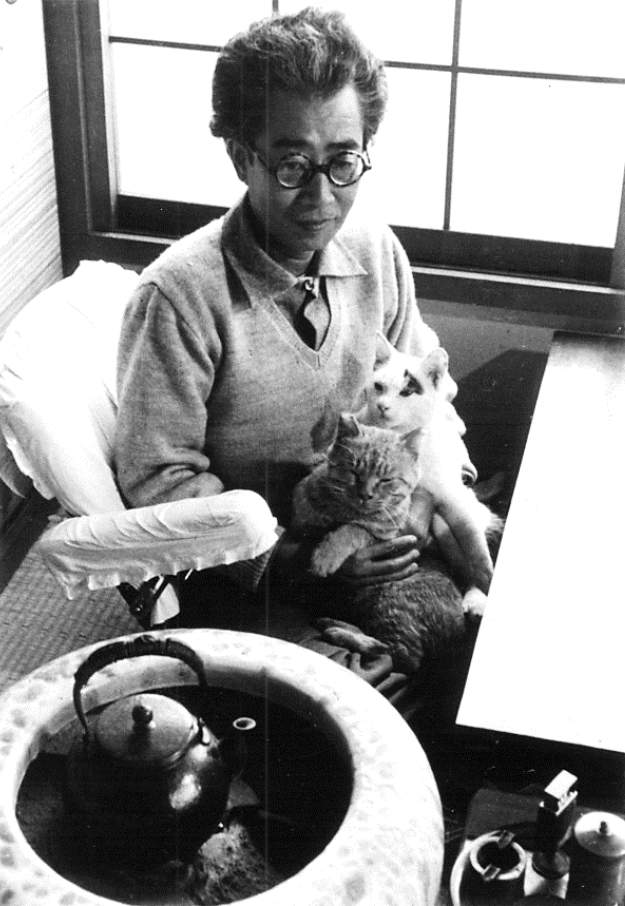
There also was, between July to September 1954, an 11-part radio promotional drama on “Nippon Hoso”, “怪獣ゴジラ Kaiju Gojira”, writen by Shigeru Kayama.
The Film’s Director:
In August 1933, while Ishiro Honda, was still in school. Iwao Mori, the “Executive in Charge of Production”, for “Photographic Chemical Laboratories (PCL)”, hired the student. However, the following year, Honda was drafted into the Japanese Imperial Army, he was twenty-three-years-old, as seen below. He, next, found himself stationed in China, and one morning, Ishiro Honda found himself being considered, by the Japanese Army high command, as a participant in his commanding officer’s,1936 coup, against the Japanese government. Honda had not been a participant, but he was a soldier under that officer. Any soldier of that officer’s command was now to be watched. Just as suddenly, Ishiro Honda, was told he was out of the army, and was sent back to Japan. Where he resumed work at “PCL”. Just as suddenly, the army recalled him to China. Then, it was back to Japan and “PCL”, until the war ended, and “Ishiro Honda” was officially discharged.

It was Ishiro Honda’s wartime experiences, as weird as this seems to be, that Tomoyuki Tanaka believed made Honda better able to understand the anti-nuclear-war-themes of “Gojira”. As compared to the more experience directors at “Toho Studios”.

After reading the screenplay, Ishiro Honda, now co-wrote, the final screenplay draft with Takeo Murata, or it seemed.
Both producer Tomoyuki Tanaka,and special effects director Eiji Tsuburaya had further input into the final storyline. The two made a decision to turn “Dr. Yamane’s” assistant, his daughter, into a large role and create a love story for her. She’s in love with a salvage ship captain in the revised screenplay.
Eiji Tsuburaya goes back to the start of the Second World War. Below is a shot of Eiji Tsuburaya’s staff creating the realistic model of Pearl Harbor as it looked on December 7, 1941.
Below, Ishirō Honda holds a “Gojira” puppet as he speaks to Eiji Tsuburaya to his immediate right.
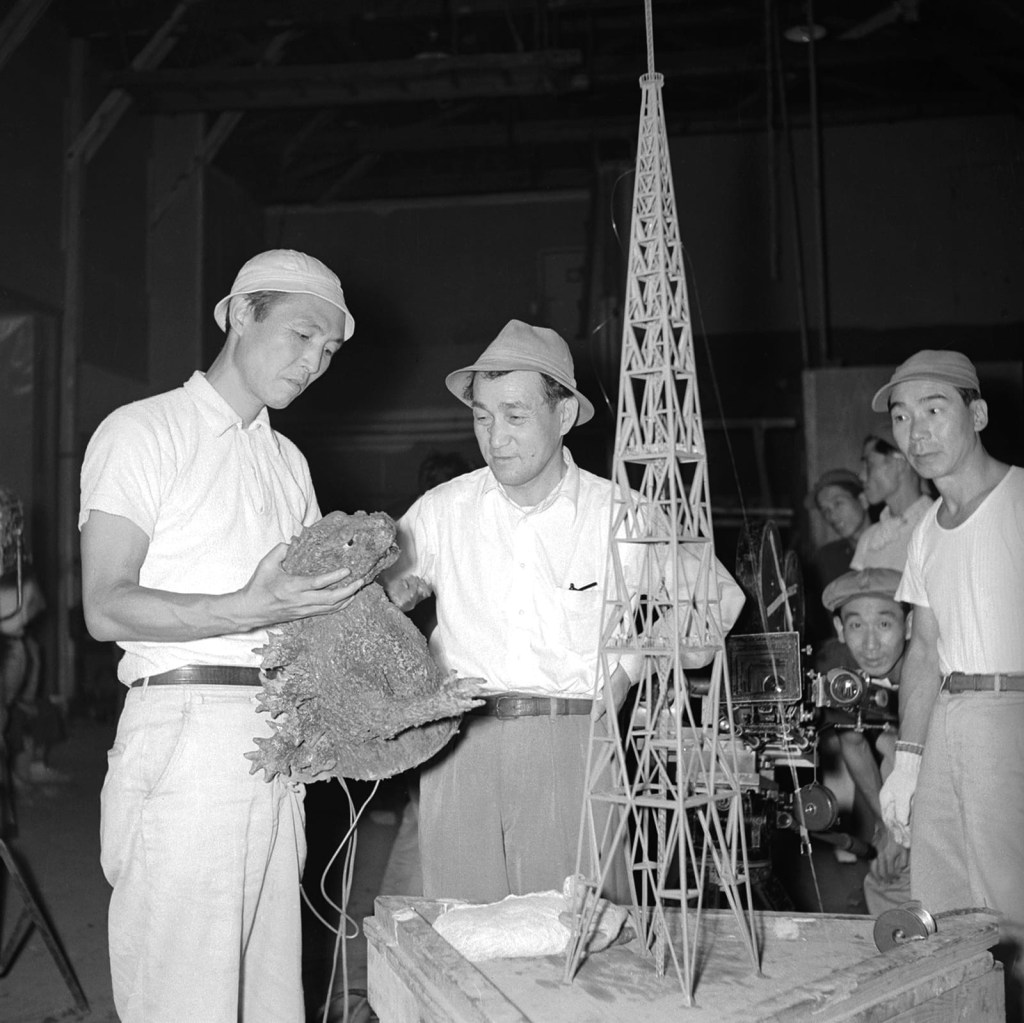
Which brings me to the cast and the fact that everything that occurs in the story revolves around that love triangle in some way. Giving the Japanese audience three people, like themselves, to identify with.
The Cast of the Love Triangle:
Akira Takarada portrayed “Salvage Ship’s Captain, Hideto Ogata”. This was only his third-feature-film and all three were in 1954. In 1955, he co-starred in Ishiro Honda’s horror film, “Ju jin yuki otoko (Beast Man – Snowman)”.

Momoko Kōchi portrayed “Emiko Yamane”. This was the actresses sixth on-screen role, and she would repeat her role of “Emiko Yamane”, as an elderly lady in 1995’s, “ゴジラVSデストロイア Godzilla vs Destoroyah”. Kochi, also co-starred, once more with Akira Takarada, in Ishiro Honda’s, “Ju jin yuki otoko (Beast Man – Snowman)”. My article about her film career is “河内 桃子, Kōchi Momoko (Momoko Kōchi): Japanese Horror and Science Fiction”, found at:
http://www.bewaretheblog.com/2022/08/kochi-momoko-momoko-kochi-japanese.html

Akihiko Hirata portrayed “Dr. Daisuke Serizawa”. The actor is known for portraying the character of “Seijuro Yoshioka”, in director Hiroshi Inagaki’s, classic, 1954, “Samurai I”, 1955’s, “Samurai II”, and 1956, “Samurai III”.

Three Other Main Roles:
Takashbi Shimura portrayed “Dr. Kyohei Yamane”. Shimura first motion picture was in 1934, and he became a regular in director Akira Kurosawa’s acting troop. His films for the director include 1950’s “Rashomon”, 1951’s, “The Idiot”, 1952’s, “Ikiru”, and 1954’s, “Seven Samurai”. Previously he was in director Ishiro Honda’s, 1953, biographical film about Japanese “Admiral Yamamoto”, “Taiheiyo no wash (Eagle of the Pacific)”. He also had a cameo role as “Dr. Yamane” in the second “Gojira” feature film, 1955’s, “ゴジラの逆襲 Godzilla’s Counter Attack aka: Godzilla Raids Again aka: American re-edit, 1959’s, “Gigantis the Fire Monster”.
My article on this outstanding actor is “志村 喬, Shimura Takashi (Takashi Shimura): He Wasn’t Just “Dr. Yamane” in 1954’s GOJIRA” to be read at:
https://www.bewaretheblog.com/2024/11/shimura-takashi-takashi-shimura-he.html

Toyoaki Suzuki portrayed “Shinkichi Yamada”. He is only shown with a total film career of thirteen on-screen appearances. That total is misleading, because they include this motion picture, the 1956, American re-edit, “Godzilla, King of the Monsters”, and the French, 1957, re-edit, entitled “Godzilla”. Along with a three-part motion picture continuing series.

Above left, Toyoaki Suzuki, with Kokuten Kodo, billed as Keninori Kodo, portraying “The Old Fisherman”.
Sachio Sakai portrayed “The Newspaper Reporter Hagiwara”. Between 1947 and 1991, character actor Sakai appeared in 165-roles. These included Akira Kurosawa’s, 1948, “Drunken Angel”, 1952’s, “Ikiru”, and 1954’s, “The Seven Samurai”. For Ishirō Honda, there was 1953’s, “Eagle of the Pacific”, and 1955’s, “Beast Man – Snowman”. Sakai was also in Hiroshi Inagaki’s, 1955, “Samurai II”, and 1956’s, “Samurai III”. His major supporting role was reduced to being seen in two scenes in passing, in the American re-edit, starring Raymond Burr as “Reporter Steve Martin”, 1956’s, “Godzilla, King of the Monsters”.

The actual shooting of the motion picture started May 1954. In October, of that year, the Nagoya premiere audience, were the first to know what Tomoyuki Tanaka, Ishiro Honda, and Eiji Tsuburaya’s story was really about.
That Story:
The story starts with the freighter “Eiko-maru”, being destroyed by a blinding flash of light that destroys the “Eiko-maru” and its crew.


Should the audience not be sure of what they’re watching. The number FIVE on the life preserver, in the above two stills, confirms the fact to any adult Japanese audience member, that they are watching the “Daigo Fukuryu Maru” incident they’ve been reading about in the newspapers.

Cut to “Emiko”, and “Ogata”, in his apartment, discussing her arranged marriage to “Dr. Serizawa”, and what effect it might have upon their love for each other. In the middle of their conversation, the phone rings, it’s the Coast Guard about the mysterious sinking of the “Eiko-maru”, and the salvage captain must leave.

A second ship, the “Bingo-maru”, was sent to find survivors of the “Eiko-maru”, but is also lost as the sea just boils around it and the ship bursts into flames. A fishing boat from Odo Island is also destroyed, but a survivor, on a make-shift raft,“Masaji Yamada”, portrayed by Red Yamamoto, the brother of “Shinkichi Yamada”, may have seen some creature.
Next, reporters arrive by helicopter, including “Newspaper Reporter Hagiwara”, and start to interview the islanders. That night, sitting with the “Old Fisherman”, and watching an ancient ceremony to keep evil away from the island. “Hagiwara” learns that long ago the villagers would send a young girl out on a raft to satisfy their God, a creature named “Gojira”!
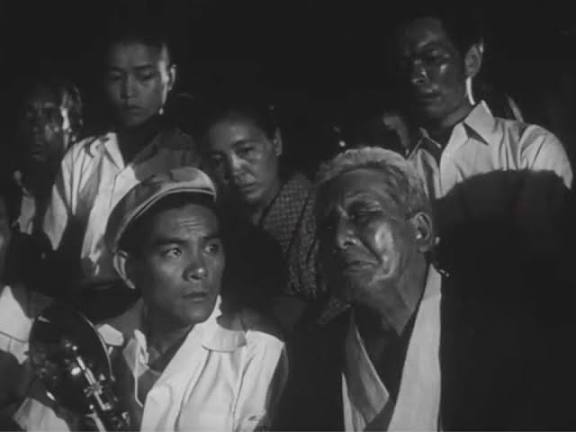
Later that night, during a violent storm, something comes out of the sea, and kills “Shinkichi’s” brother “Masaji” and his wife. It is believed whatever came out of the sea, crushed the helicopter by stepping on it, according to newspaper reporter “Hagiwara”. Which was his part of his testimony in front of the “National Diet”, during their hearing with the Odo Island villagers, Over the events during the storm, and the strange disappearance of people and animals.
The government asks Paleontologist “Dr. Kyohei Yamane” to head a scientific investigation of the Odo Island incident. Accompanying him is his assistant “Dr. Tanabe”, portrayed by Fuyuki Murakami, “Kyohei’s” daughter, who acts as a secretary, and “Hideto Ogata”.
Among the village’s destruction is a large footprint containing a radioactive trilobite.

While attempting to get the villagers away from the radioactive footprint, the alarm bell starts to ring, and “Dr. Yamane”, “Emiko”, “Hagiwara”, and others head toward the top of a small hill. Suddenly, from looking at them from over the top, is a dinosaur-like creature’s head. As it roars, everyone just stops, most turn around, and run back down the hill toward the village.


The dinosaur turns around and goes back to the sea, as “Dr. Yamane”, “Emiko”, “Ogata”, “Hagiwara”, “Shinkichi”, and “Dr. Tanabe go to the hill top and look down at the giant footprints the dinosaur-like creature has left.

Next, “Dr. Yamane” addresses the Japanese “National Diet” about the creature the Odo Islanders call “Gojira”. He explains that this is a living Jurassic Age dinosaur, that has been exposed to the HYDROGREN BOMB ( There were only two-tests, “Mike”, back on November 1, 1952 that disintegrated an entire small Pacific Island. The second was “Castle Bravo” that was detonated only two-months before the start of production on this feature film ). He adds that “Gojira” stands 164-feet-tall.


Meanwhile, more ships are lost that ignored the warnings to stay clear of the Sea of Japan. The Japanese Navy has ten frigates drop depth charges, but there is no sign of “Gojira”. The Japanese official’s once more turn to Paleontologist “Dr. Yamane” for ways to kill the allegorical atomic bomb. He replies that “Gojira” survived the hydrogen bomb, he can’t be killed, and should be studied instead.
Meanwhile, “Emiko” and “Hideto” have come to a decision! She will tell “Dr. Serizawa” that their marriage cannot be, because she loves and plans to marry “Ogata”. Before “Emiko” leaves for “Serizawa’s”, “Hagiwara” arrives and asks if she would introduce him to the noted scientist. “Emiko” agrees, but warns “Hagiwara” that “Serizawa” might not want to speak to a newspaper reporter.

As “Emiko” thought, “Dr. Daisuke Serizawa” is very polite, but evasive when “Hagiwara” attempted to ask about any current experiments the scientist was working on. The newspaper reporter thanks him for his time and leaves. “Emiko” remains and “Serizawa” now reveals, to the woman he loves, his secret invention that weighs heavily upon him.
The two go downstairs and “Serizawa” unlocks the door to his laboratory and they enter. As “Emiko” looks around she sees a very large fish tank with assorted varieties within it. Next, “Serizawa” gets out what looks like large white pellets and drops one in the fish tank. The water slowly starts to boil and suddenly the audience sees a look of shock on “Emiko’s face, but what she saw is not revealed.


“Emiko” promises never to reveal what she has seen and leaves without mentioning her engagement to “Ogata”. She returns home, “Shinkichi” is apparently living with her and her father, talking to the young Odo Islander is “Ogata”. They watch, as if in a trance, “Emiko” arrives and goes through the motions of entering the kitchen and putting on an apron. Her father enters the room with the two men and asks if “Emiko” has returned? She answers yes and brings out three beers.
Cut, as “Gojira” appears in Tokyo Bay and attacks the Shinagawa area, as the three men rush from the house and join others watching “Gojira” on a hill. The attack on the city shows the allegorical atomic bomb, as a nuclear like stream comes from the dinosaurs mouth, and burns some buildings and kills some people.


“Gojira” returns to the Sea of Japan as stunned people on the hill look on.
International experts are consulted and the “Japanese Defense Force” builds a 98-foot-tall, 50,000-volt electrical fence along the coast that “Gojira” would have to go through. According to the experts should “Gojira” attempt to enter, the switch will be thrown and he will be electrocuted. At the same time the Navy is heavily deployed within the Sea of Japan and is patrolling Tokyo Bay.
All creating a bad time for “Ogata” and “Emiko” to raise the question of their marriage to her father. Who still believes there is still an opportunity to study the creature, but the young salvage ship captain doesn’t agree with his future father-in-law and supports the actions being taken against “Gojira” by the government.

“Emiko’s” father retires to his study and she enters and listens, as the paleontologist reflects upon the need to study “Gojira” and find out how he survived.


“Emiko” turns off the light, leaving her father with his thoughts.

“Gojira” attacks Tokyo once more, but with a vengeance.

The electrical fence doesn’t stop his nuclear breath. As now, Tokyo becomes the allegorical Hiroshima, to “Gojira’s” allegorical hydrogen bomb.


Nothing stops “Gojira” and after he has disappeared below the waves of Tokyo Bay. The hospitals overflow with the injured and dying. It is at this point that “Emiko” makes the decision that will save Japan and tells “Ogata” about what she saw that day at “Dr. Serizawa’s”.
“Daisuke” dropped the white pellet into the fish tank, the water started to boil, next in an instant all the flesh was removed from the fish, leaving floating skeletons.
The two go to convince “Serizawa” to use his “Oxygen Destroyer” to destroy “Gojira”, but “Daisuke” refuses and is angry that “Emiko” violated his confidence by telling “Hideto” about it, after promising to keep his discovery secret.

“Dr. Daisuke Serizawa” now mentions the thing that is weighing down upon him. He was looking for a way to increase oxygen and its uses, but instead created a destroyer of oxygen. His fear of other nations getting his discovery and turning it into a weapon is behind his refusal of revealing it.

An argument between “Ogata” and “Serizawa” turns into a fight and “Hideto” is injured. “Daisuke” apologizes and starts to collect his papers on the “Oxygen Destroyer” as “Emiko” tends to the man, “Serizawa” realizes she loves.

On “Dr. Serizawa’s” television, pictures of the destruction by “Gojira” are being shown, and then a young girl’s chorus sings a prayer for Japan.


What he is seeing gets through to “Serizawa”, he burns all his notes on how to make the “Oxygen Destroyer”, and the three leave. On board a Navy ship “Serizawa” and “Ogata” prepare to dive into Tokyo Bay and destroy “Gojira”.

Both men put on heavy deep sea diving suits and with the “Oxygen Destroyer” descend into the sea. They locate “Gojira” and the devise is deployed as their ascent begins, but “Serizawa” tells “Ogata” he wishes him and “Emiko” happiness and cuts his own airline.

“Ogata” makes it up safely, but because of “Dr. Serizawa’s” fear of his discovery being turned into a weapon. He sacrifices his life to keep his secret from ever being recreated.


The film ends with “Emiko” looking into the sea.


Leave a Reply