The title of this article reflects three things: 1. The “Grammy Hall of Fame” inducted, 1941 original song version, by Lena Horne. 2. The title of a 1943 motion picture with Lena Horne. 3. “The Federal Bureau of Investigation”, Communist Witch Hunts”, within the motion picture industry, and their charges against Lena Horne.
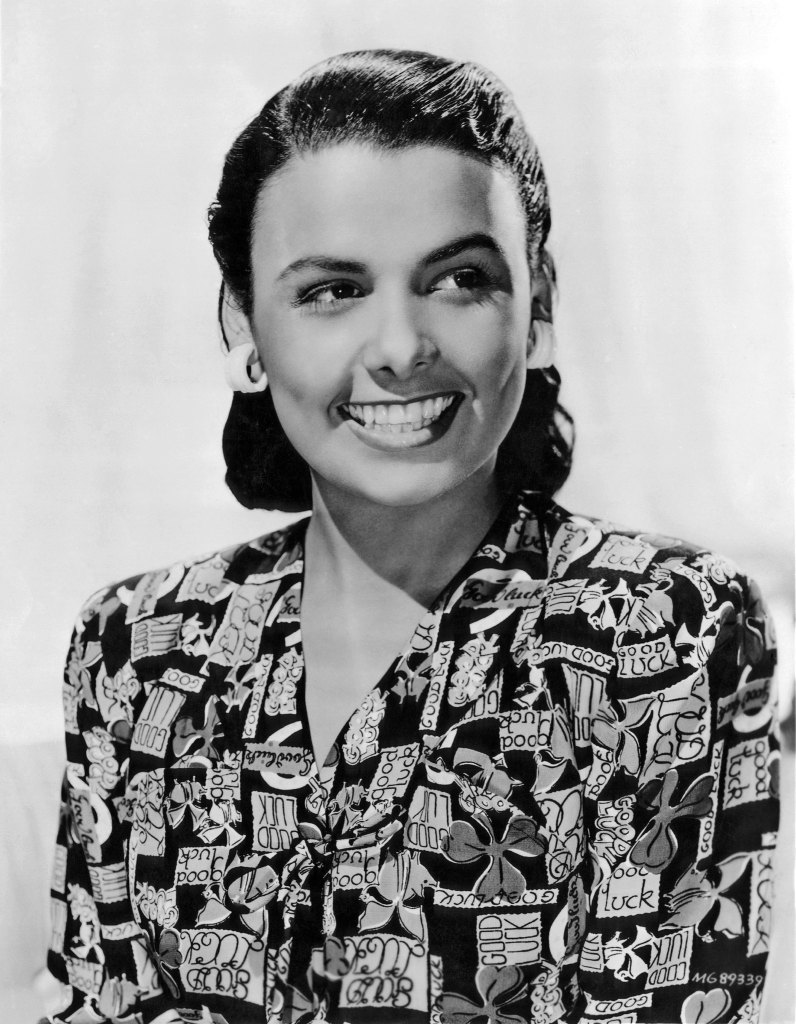
PART ONE: GROWING UP
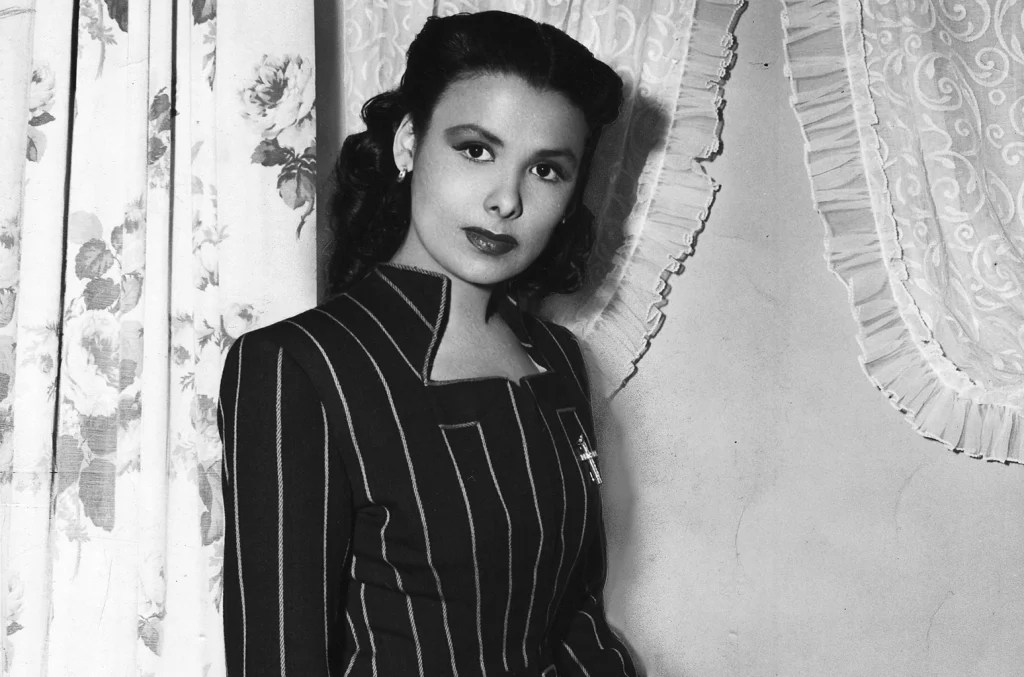
Lena Mary Calhoun Horne was born on June 30, 1917, at 519 Macon Street, in Bedford-Stuyvesant, Brooklyn, to Edwin Fletcher “Teddy” Horne Jr. and Edna Louise Scottron Horne.
“Teddy” had once owned a hotel and restaurant, but he was a gambler.
While, Edna was a member of a “Black Theatre Group” and traveled extensively.
Both of Lena’s parents were of the same mixed race’s, African-American, European-American, and Native-American.
When his daughter reached three, “Teddy”, up and left, for the “Upper Middle Class African-American” community known as the Hill District, in Pittsburg, Pennsylvania. The district, prior to the First World War, was the center for Jazz in the state.
“Edna”, was still a traveling actress, and she now placed her daughter with Lena’s paternal grandparents, Cora Catherine Calhoun Horne, and Edwin Horne, Senior. The two, actually, would raise their granddaughter. Cora was a founding member of the “National Association of Colored Women’s Clubs (NACWC)”, founded in July 1896. Lena’s grandparents were also, early members, of the “National Association for the Advancement of Colored People (NAACP)”.
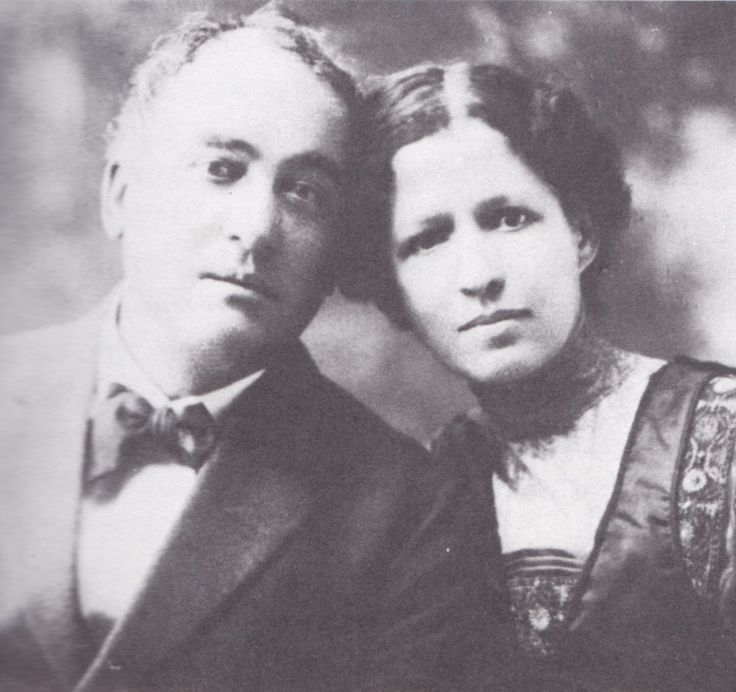
Above ,Edwin Horne, Sr. and Grandma Cora.
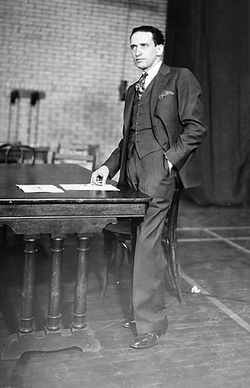
However, their care was interrupted two-years later, when Lena turned five. Edna suddenly decided she wanted her daughter to travel with her, but this turned into leaving the young girl in boarding houses, and with different Georgia relatives. In 1927, ten-year old Lena was given some semblance of structure. When Edna, placed Lena with her Uncle, Frank Smith Horne, the “Dean”, and “Acting President” of the “Fort Valley High and Industrial School”, in Fort Valley, Georgia. Frank Horne, was a “Harlem Renaissance poet”, and a important member of President Franklin D. Roosevelt’s, “Black Cabinet.”
Lena moved once more with her mother to Atlanta, but when she turned 12, the two returned to New York, and her grandparents. She would attend “Girls’ High School”, at 475 Nostrand Avenue, in Brooklyn.
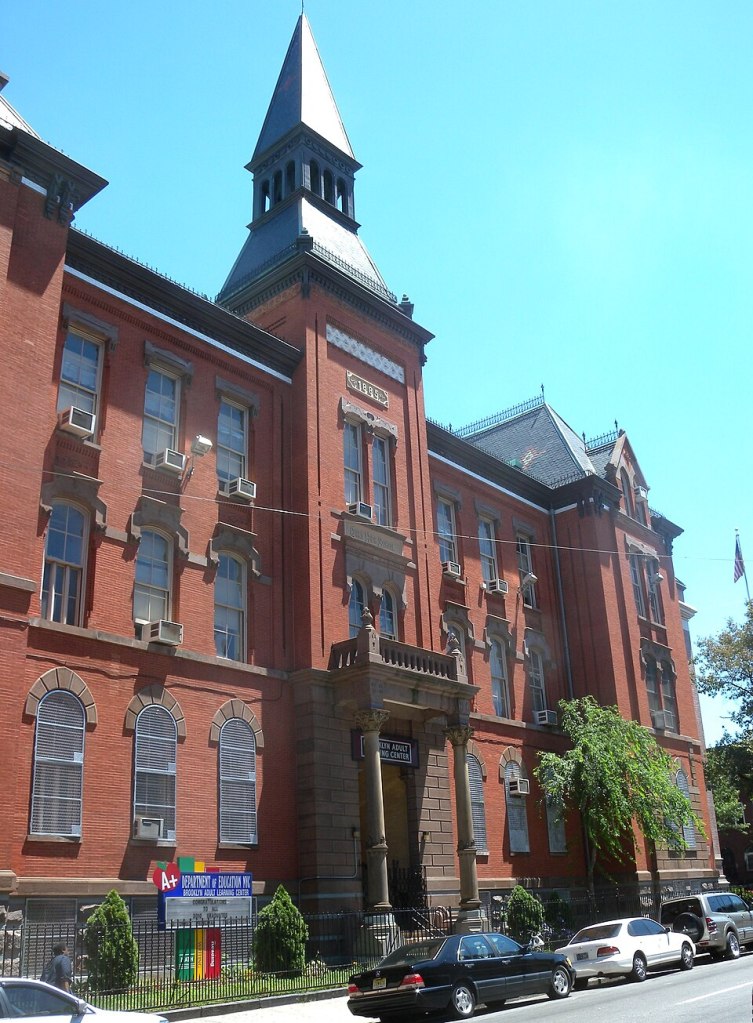
However, at 16-years-of-age, Lena Horne, dropped out of high school.
PART TWO: BECOMING LENA HORNE
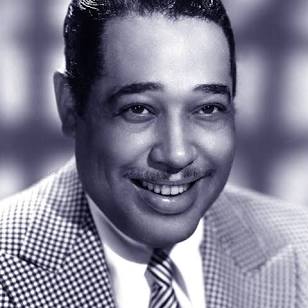
When Lena Horne turned 18, she moved in with her father. There, the young women learned music, from those living around her father. Four, of her known teachers, were William Thomas Strayhorn, better known as Billy Strayhorn. Who composed, among other work, for Edward Kennedy “Duke” Ellington, “Take the ‘A’ Train”, “Chelsea Bridge”, and the “Lush Life”. “Duke Ellington” also taught the young singer, as she learned from Strayhorn.
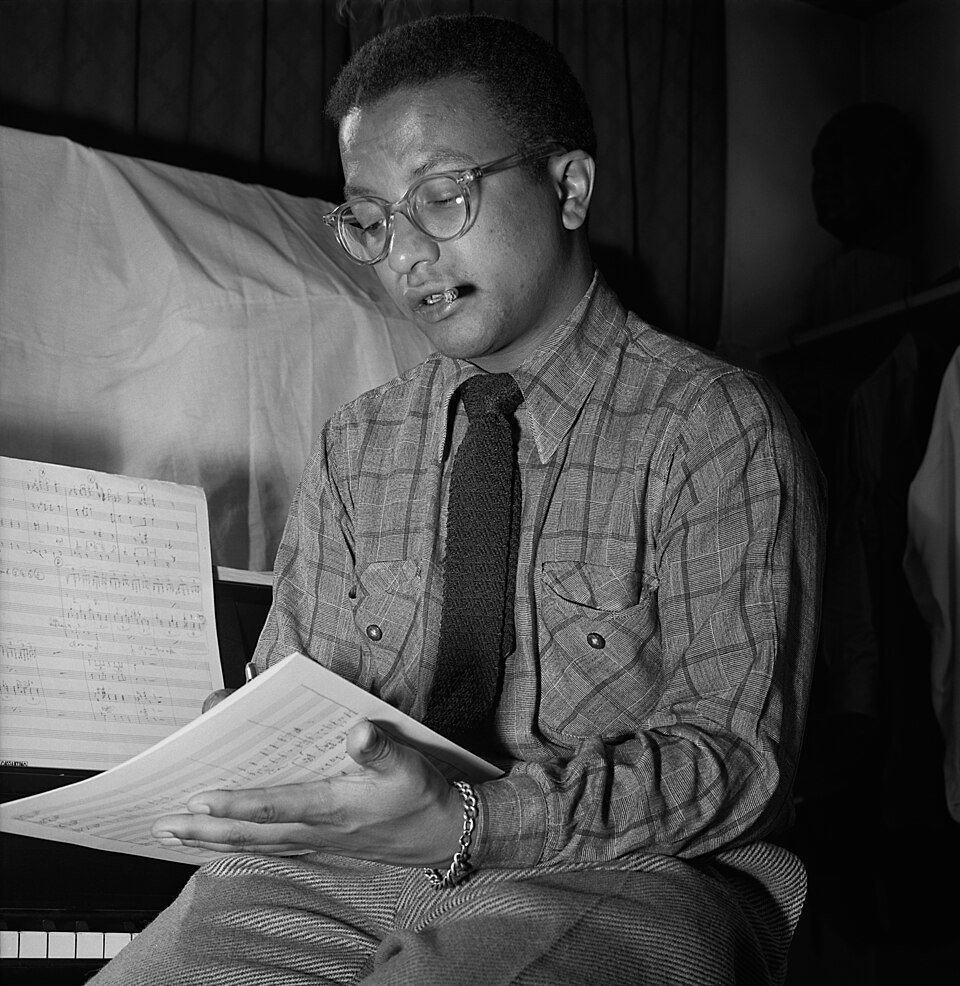
Above, William Thomas Strayhorn, below, Duke Ellington.
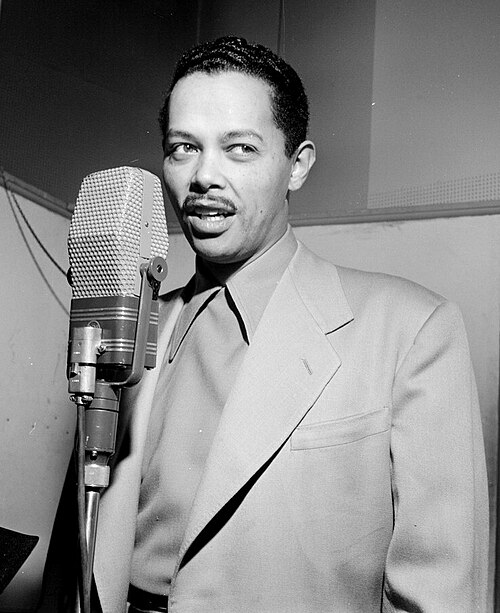
Another of her known teachers was, William Clarence “Billy” Eckstine. The future band leader, singer of pop, American Jazz, bebop, during the “Swing Era”.
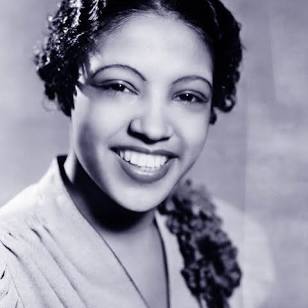
The young singer was also tutored on style by innovative Jazz vocalist, Maxine Sullivan.
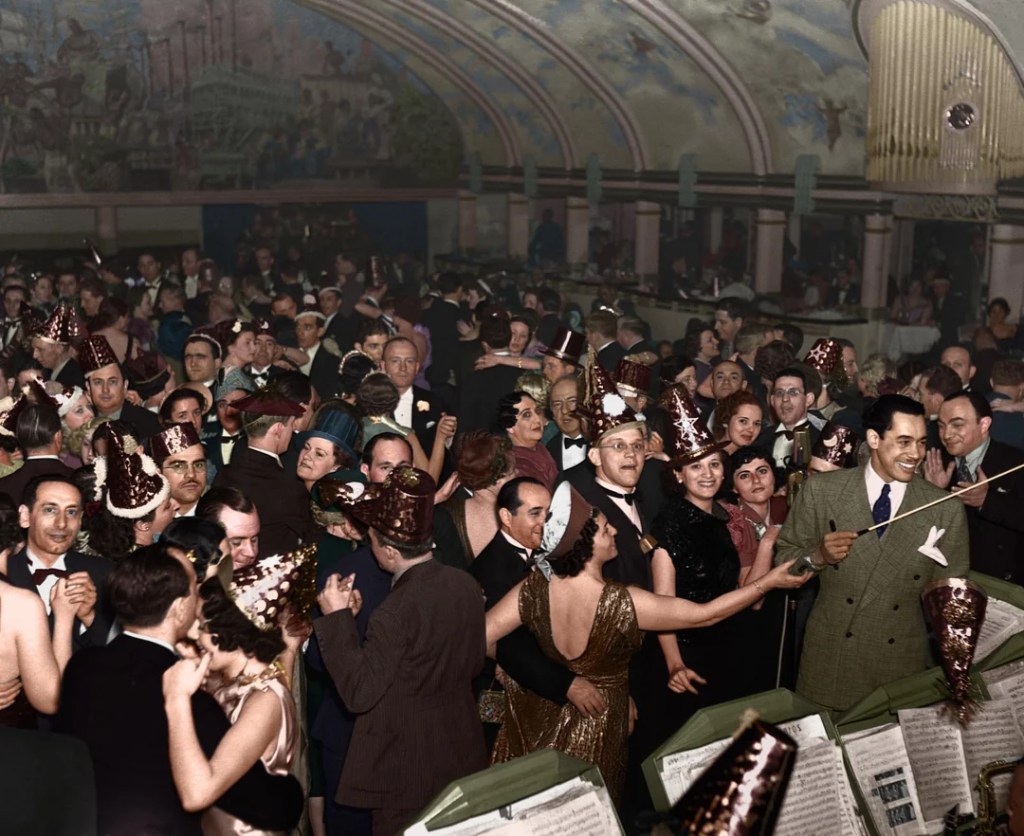
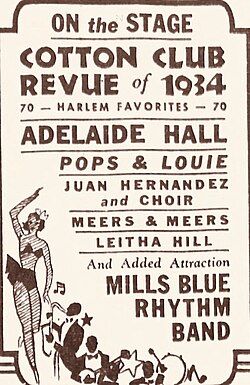
During the fall of 1933, Lena Horne took a major career step. She joined the chorus line of New York City’s, original, “Cotton Club”, in Harlem, at 142nd Street and Lenox Avenue. At that time, the music was provided by “Cab Calloway and his Orchestra“. It should be noted, although the majority of the performers at the Harlem Night Club, were African-American. Due to segregation, the audience were, All-White, and you would never find a “Colored” audience member enjoying both the entertainment and dinning.
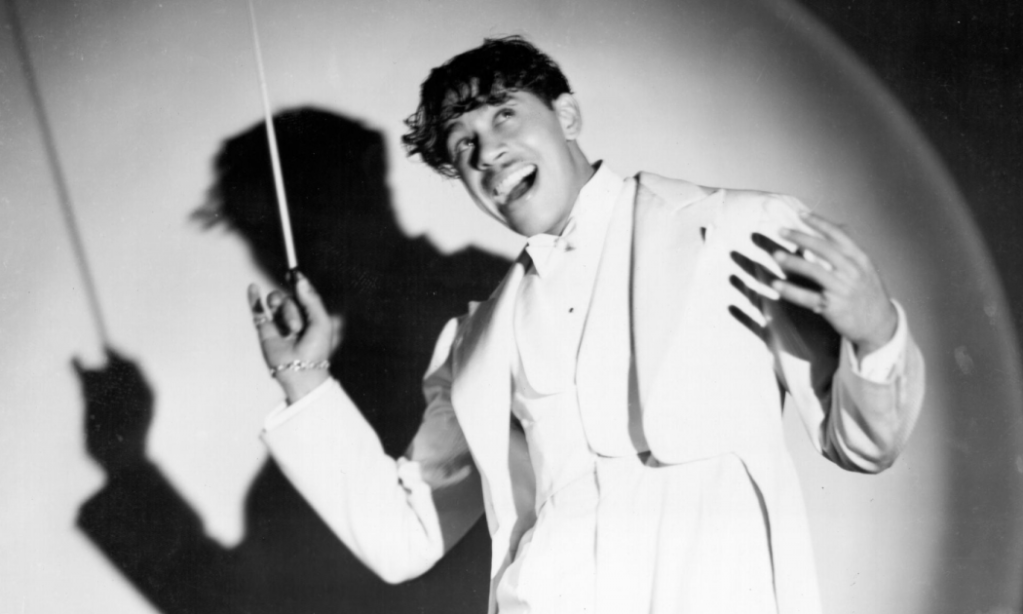
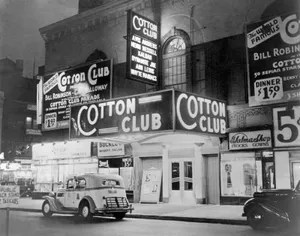
Below, a photo from New Year’s Eve, 1937, at the “Cotton Club”, with Cab Calloway leading his orchestra, and the still All-White audience.
Returning to 1934:
Avon Long and another dancing, and singing partner, were to introduce the Harold Arlen and Ted Kohler song, “As Long, As I Live”.
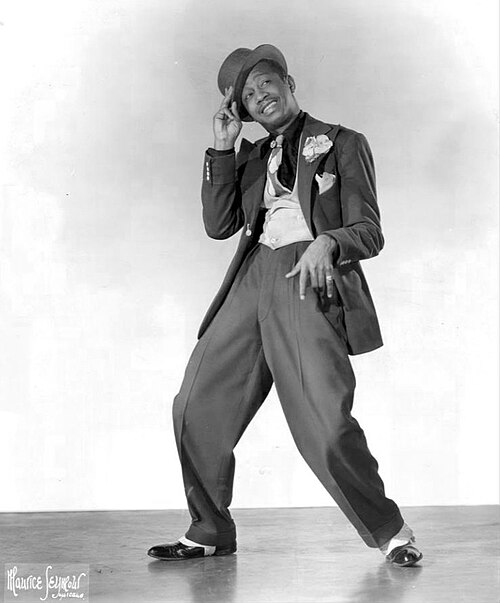
We don’t know, if the other performer fell ill, or suddenly quit the show. Avon Long now needed a dancing partner, and headliner, Adelaide Hall, used her power to move Lena Horne from the chorus to Long’s dance partner.
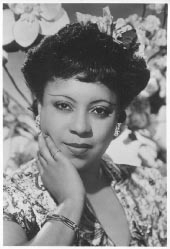
Hall took Horne under her wing, and became the 18-year-old-singer’s mentor. While, Lena Horne became Avon Long’s dance partner for the reminder of the run.
In 1935, Lena Horne was an uncredited dancer with Avon Long, in the 8-minute short film, “Cab Calloway’s Jitterbug Party”.
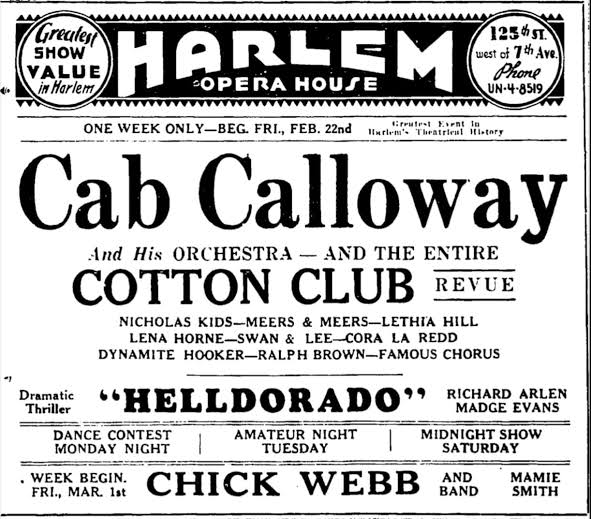
Also, during 1935, Lena Horne, left the “Cotton Club” and joined the “Noble Sissle Orchestra”. She is seen below with Noble Sissie.
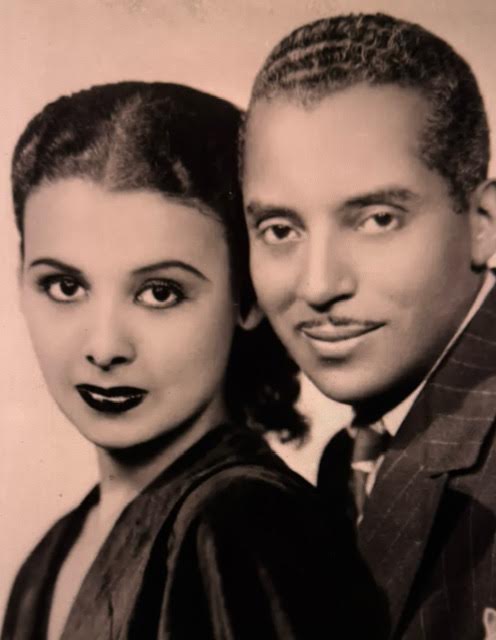
On March 11, 1936, Lena Horne‘s, first recording session took place with “Noble Sissle Orchestra”, but on the released record, her name was spelled as HELENA HORNE.
PART THREE: MARRIAGE’S, FAMILY, AND THE MOVIES
In January 1937, Lena Horne, married Lous Jordan Jones. He worked for the Pittsburgh Coroner’s Office, as a clerk. However, Louis, was also a runner for Edwin Horne’s, apparent, gambling business. He either picked up the actual bets, or brought the winner, their money.
In actuality, Lena’s father’s gambling business, was a front. It was part of the way the Pittsburgh, African-American” community, had to raise money to fight the White controlled political machinery within the city, and Pennsylvania, as a whole.
Louis Jones was also a “Political Operative” for the Pittsburgh African-American Community, and wanted to become a “State Representative”.
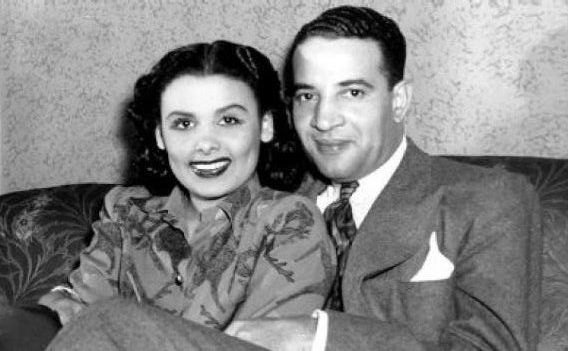
Their daughter, journalist and author, Gail Horne Jones Lumet Buckley, was born on December 21, 1937. Their son Edwin Fletcher “Teddy” Jones, was born on February 7, 1940. He graduated a teaching degree from “USC”, but sadly, died at the age of 30 from kidney disease.
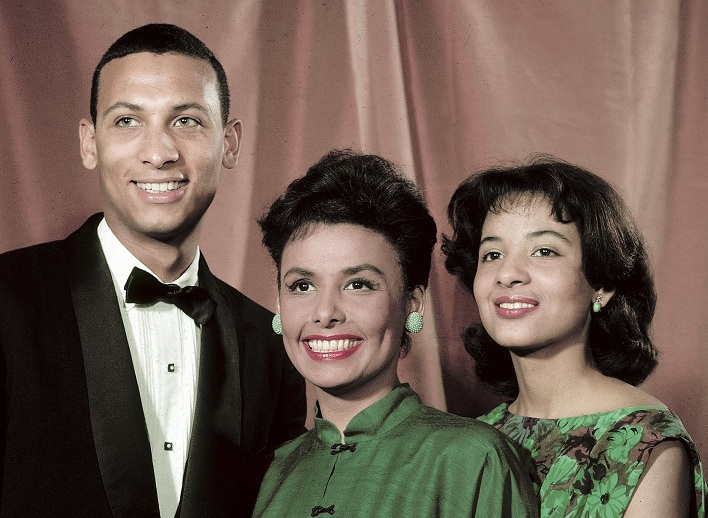
Above, “Teddy”, Lena, and Gail Horne.
Also, in 1940, Lena separated from Louis, but their divorce would not become final until June 15, 1944.
Back in 1938, Lena Horne made her first major motion picture.
THE DUKE IS TOPS released June 8, 1938, the movie would be re-released in 1944 as “THE BRONZE VENUS”
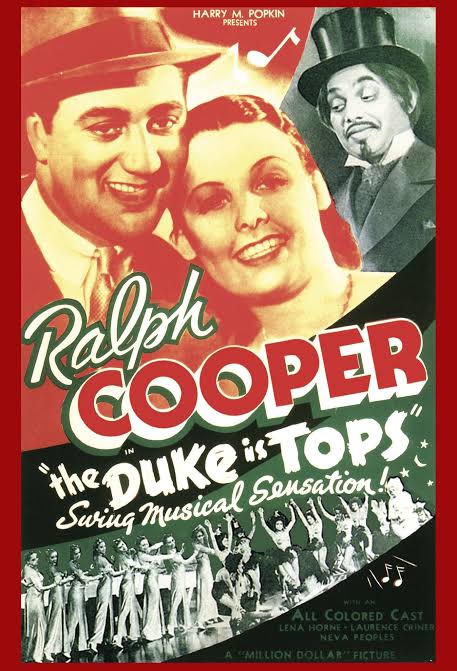
Notice the differences’s in billing between the original, 1938, release poster, and the 1944 poster.
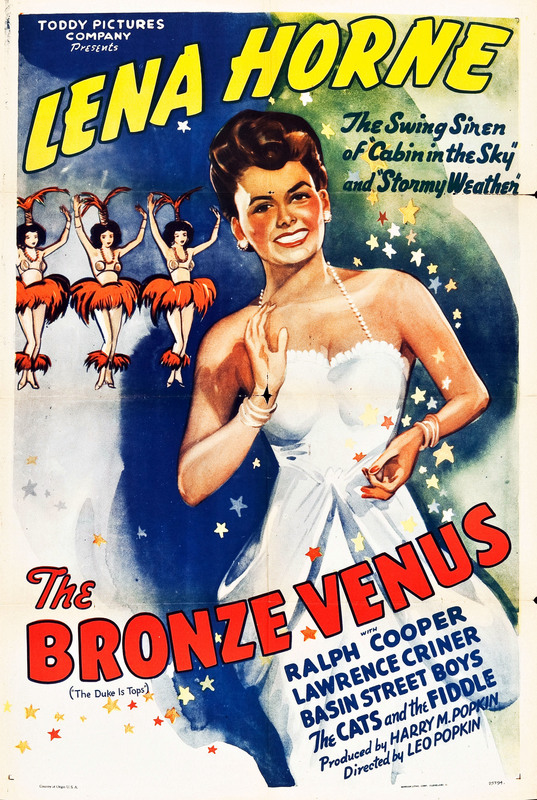
The motion picture originally starred Ralph Cooper, portraying “Duke Davis”. Cooper, also co-wrote the screenplay, and co-directed the motion picture. He had just been seen in the non-musical, “All-Negro”, 1937, “Gangsters on the Loose”, aka: “Bargain with Bullets”. For which he wrote the story and screenplay, himself.
Lena Horne portrayed “Ethel Andrews”.
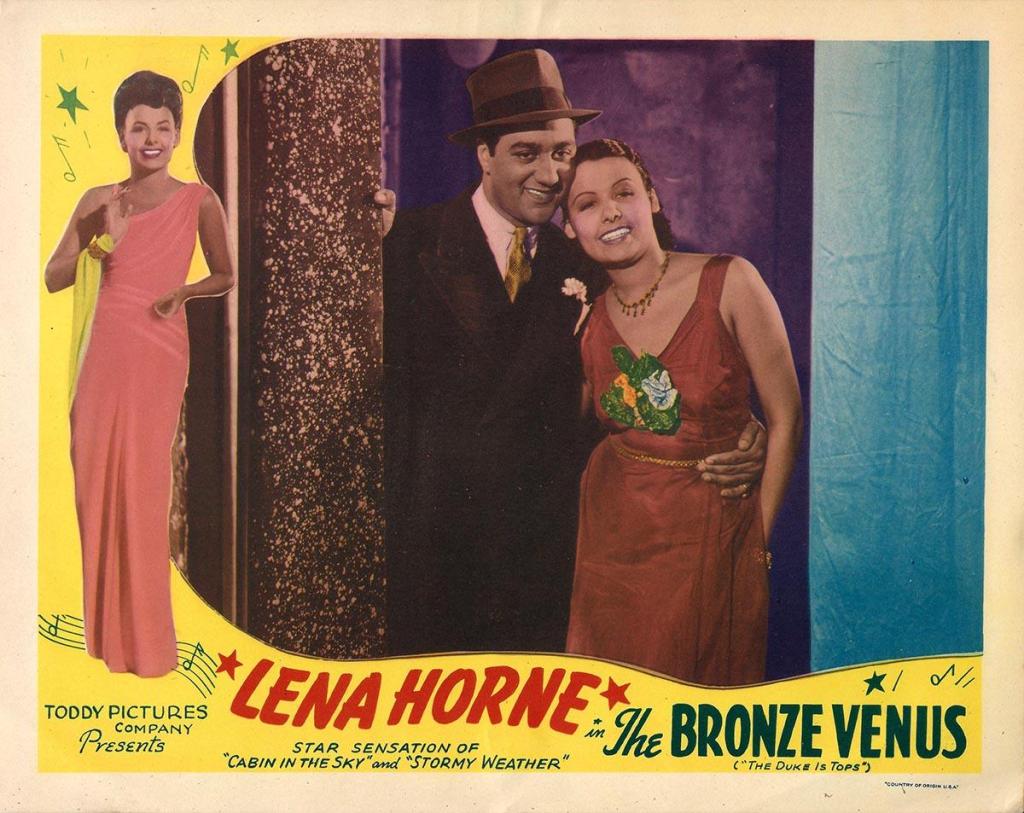
The picture was aimed at the African-American audience, to play at segregated “Black Movie Theater’s”. The plot line was very familiar, “Duke” is a stage show promoter in love with “Ethel Andrews”, whom he billed as ‘The Bronze Venus”. Word, the New York City promoter’s are interested in offering “Ethel” a chance to enter “The Big Leagues”, but she is refusing the offers to stay with “Duke”. In a selfless act, “Duke” creates an incident to force “Ethel” to leave for New York. She does, and without his star, “Duke’s” show closes. He now can only find work with a Medicine Show owner, owned by “Doc Dorando”, portrayed by Laurence Criner. However, “Ethel Andrews’s” appearance in a flop, “Duke” goes to New York, and this leads to the happy ending of the two being reunited and re-establishing his old show.
This was a musical, with Six Songs, by Harvey Brooks and Ben Ellison. Reviewers, and film historians, on Lena Horne’s career, point to one specific song lyric, reflecting herfuture.
The song was, “Don’t Let Our Love Song, Turn Into A Blues”.
The lyric was, “True love will guide us through STORMY WEATHER.” The following link will take my reader, as of this writing, to the full movie of “The Duke Is Tops”.
In 1940, besides her problems with Louis coming to a head, Lena switched orchestra’s. She now sing with Charlie Barnet, one of the first band leaders to integrate his group of musicians and singers.
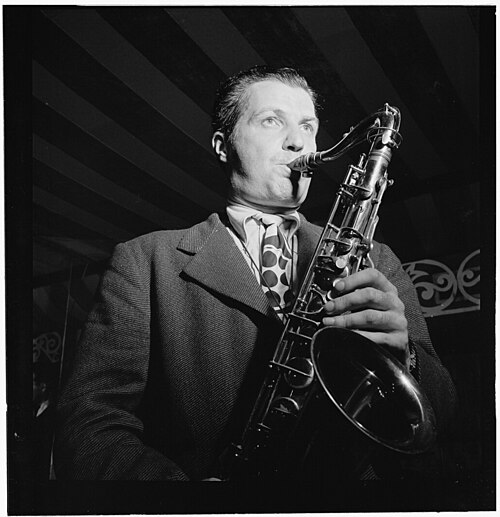
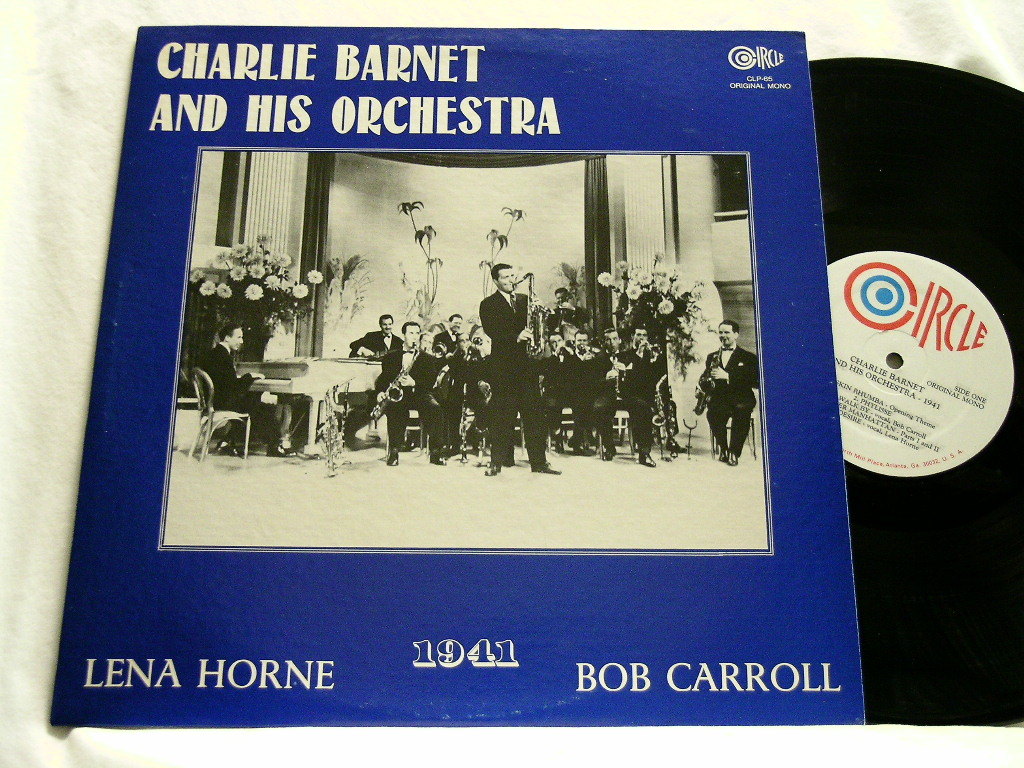
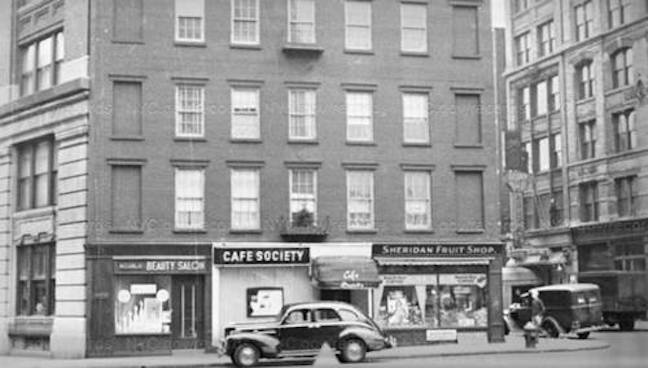
Lena did not like the traveling, and left the band. She went to work at the New York club, “Cafe Society”, in March 1941, and the shaping of Lena Horne’s “Political Identity”, see “Part Four”.
At about this time, Lena replaced Dinah Shore as the featured vocalist on the popular “National Broadcasting Company (NBC)”, hot- jazz (dixieland) radio program, “The Chamber Music Society of Lower Basin Street”. Which was heard on “NBC’s, Blue Network”, broadcast from “Radio City”.
On the program, listeners heard Lena Horne performing classic blues tracks, that included “Beale Street Blues”, “Aunt Hagar’s Blues”, and “Careless Love”. She also started recording on the “RCA Victor” label, and would keep on doing the same after she left the radio program, only six-months from her first appearance.
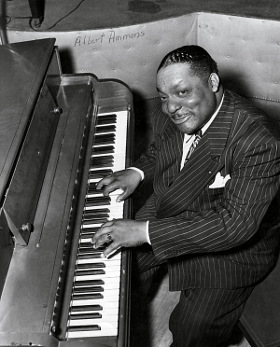
Lena Horne made a 13-minute independent short, “Boogie-Woogie-Dream”, in September 1941. However, confusion sets in, when it wasn’t completed and released until July 6, 1944. Along with Lena, were Albert Ammons, a pianist known for his boogie-woogie, and blues.
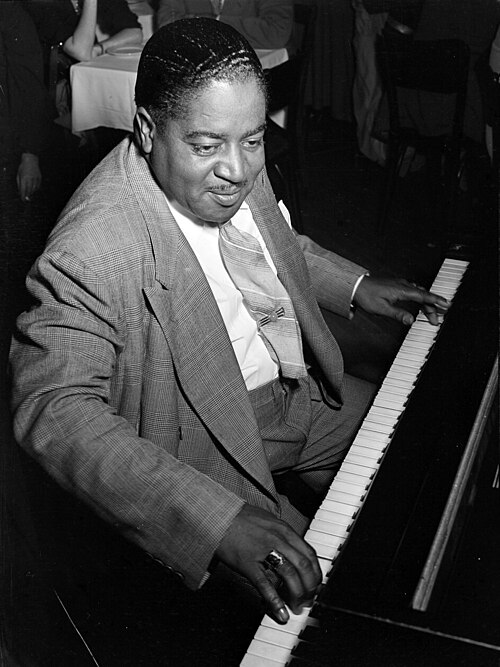
Kermit Holden “Pete” Johnson, a pianist, also known for his playing of boogie-woogie, but also jazz.
Theodore Shaw “Teddy Wilson” and his orchestra.
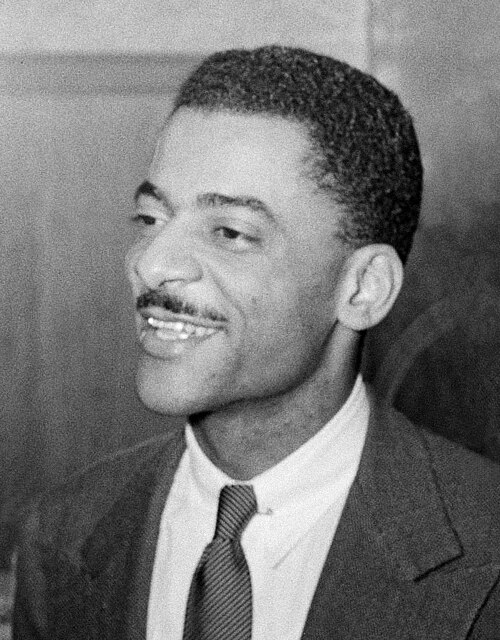
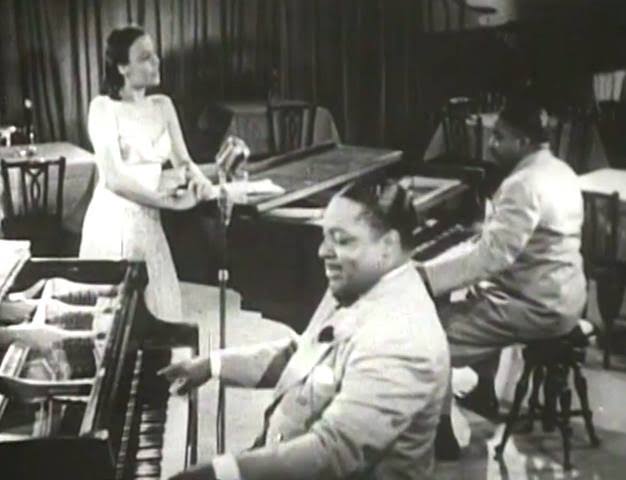
As of this writing, the following link will take my reader to “Boogie-Woodie Dream”
https://en.wikipedia.org/wiki/File:Boogie_Woogie_Dream_(1944).webm
On December 7, 1941, the Empire of Japan attacked Pearl Harbor, Hawaii, and the United States, officially, entered the Second World War.
Also, at this time, Lena Horne recorded, on December 15, 1941, accompanied by Lou Bring and his orchestra, the definitive version of “STORMY WEATHER”, written by Arnold Arlen and Ted Koehler. On the lipide of the record, was the Ira and George Gershwin, “The Man I Love”.
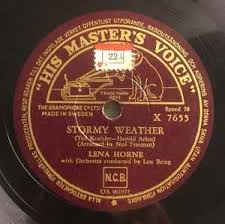
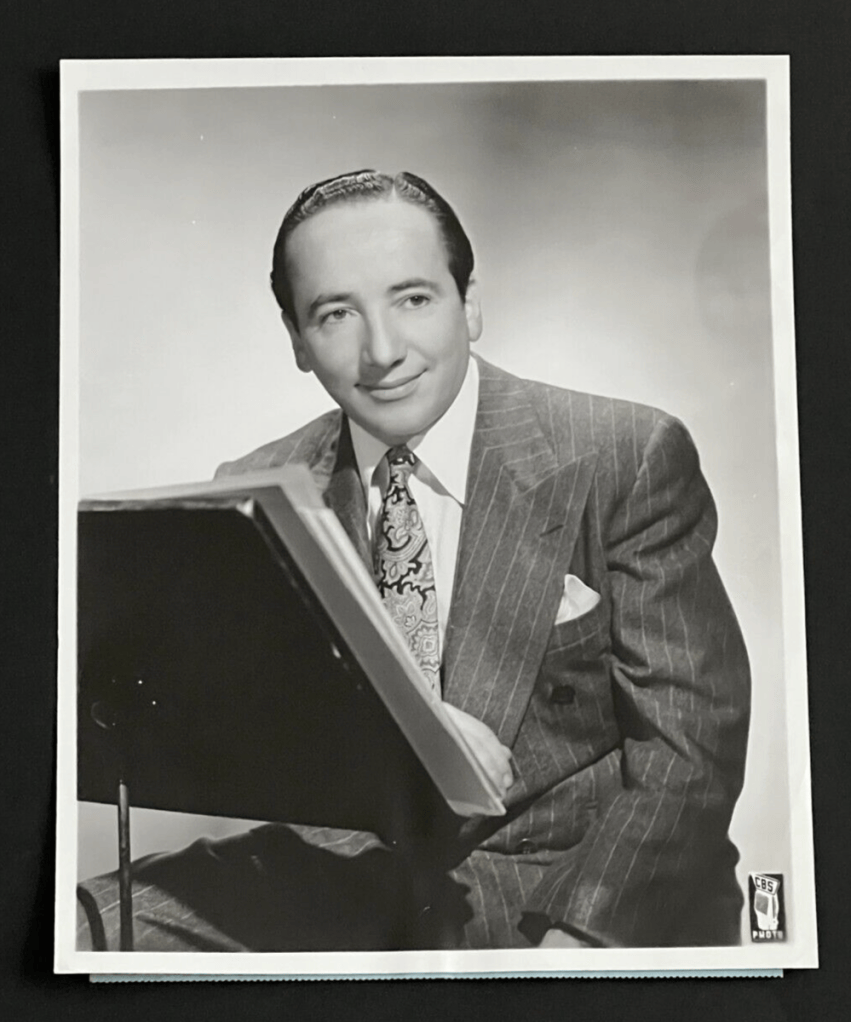
Below, Lou Bring.
Lena left New York for Los Angles, and in, January 1942, was her debut at “Felix Young’s Little Troc “, on Hollywood’s, Sunset Strip. The following comes from an article found on the “West Hollywood” history website at:
westhollywoodhistory.org
“1942: Hollywood Discovers Lena Horne on the Sunset Strip”, at:
“In Los Angeles, real and imagined sightings of Japanese submarines and aircraft prompted officials to order blackouts in areas within fifteen miles of the coast, which included the Strip. The blackout put a damper on nightlife, but Felix Young forged ahead in his quest to find a new space on the Strip for Café Trocadero, now reimagined as a Cotton Club-style showcase for African American acts. Before the war, Young had signed three big acts – Ethel Waters, Duke Ellington and the Katherine Dunham dance troupe – along with an unknown singer, twenty-five-year-old Lena Horne, whom he had discovered in New York. In January, he leased the former Sphinx Club building at 9236 Sunset, near the Beverly Hills border. He hired a set designer to transform the small space into what a reviewer called “a rococo jewel box.” In spite of the fact that the Sphinx Club had been closed in a gambling raid two years earlier, Felix set up a room for gaming upstairs.”
Between the making of, and actual release of “Boogie-Woodie Dream”. Lena Horne would make 8-musical feature films ,and get a contract with “Metro-Goldwyn-Mayer”. As in the first half of the 1950’s, the studio was into making major musicals, and Lena Horne’s first film, under her contract, was the film version of a Cole Porter Broadway production:
PANAMA HATTIE released in September 1942
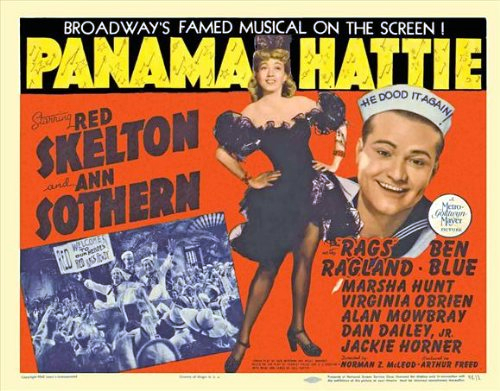
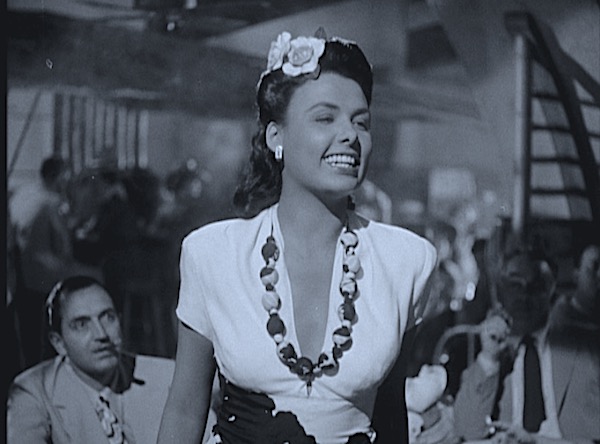
Lena Horne had the uncredited role of a “Singer in Phil’s Place”. She sang Cole Portrer’s, “Just One of Those Things”, written not for his, 1940 musical, “Panama Hattie”, but Porter’s, 1935 musical, “Jubilee”. This was only one of four actual Cole Porter songs used in the eleven songs in the movie.
Next, came a “Metro-Goldwyn-Mayer” motion picture directed by Vicente Minnelli, that illustrated what you could do on Broadway, but not in a 1943 motion picture.
CABIN IN THE SKY opened in a limited run on March 24, 1943
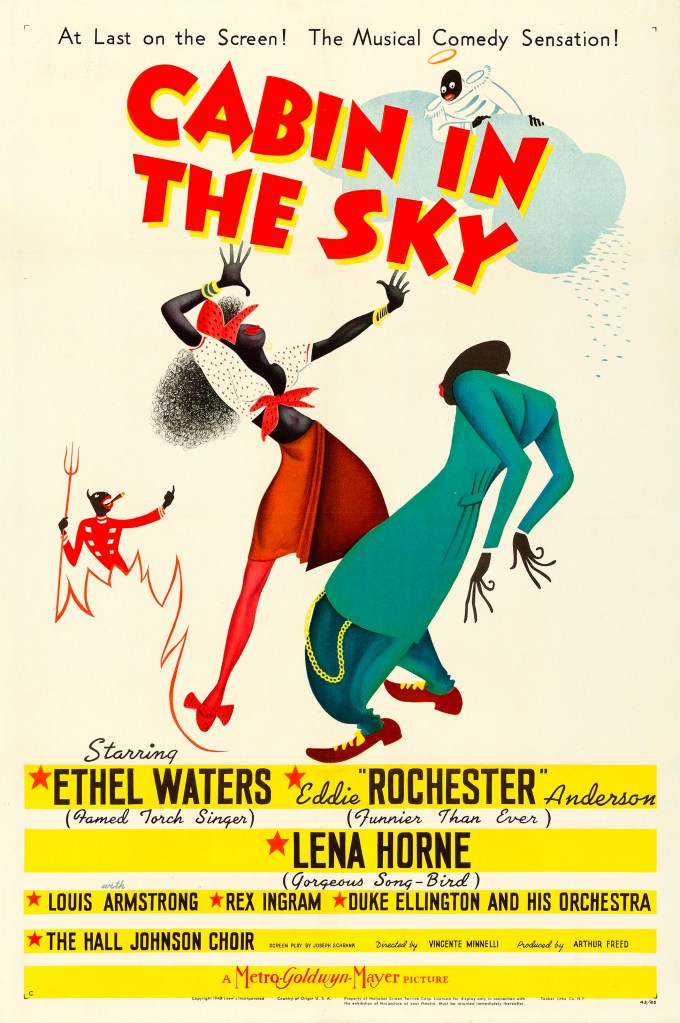
The cast were all All-African-American’s, including members of the originalBroadway cast. Which presented viewing problems in the Segregated American South and some non-southern cities. Either pushed into “Black Movie Theater’s”, or banned completely.
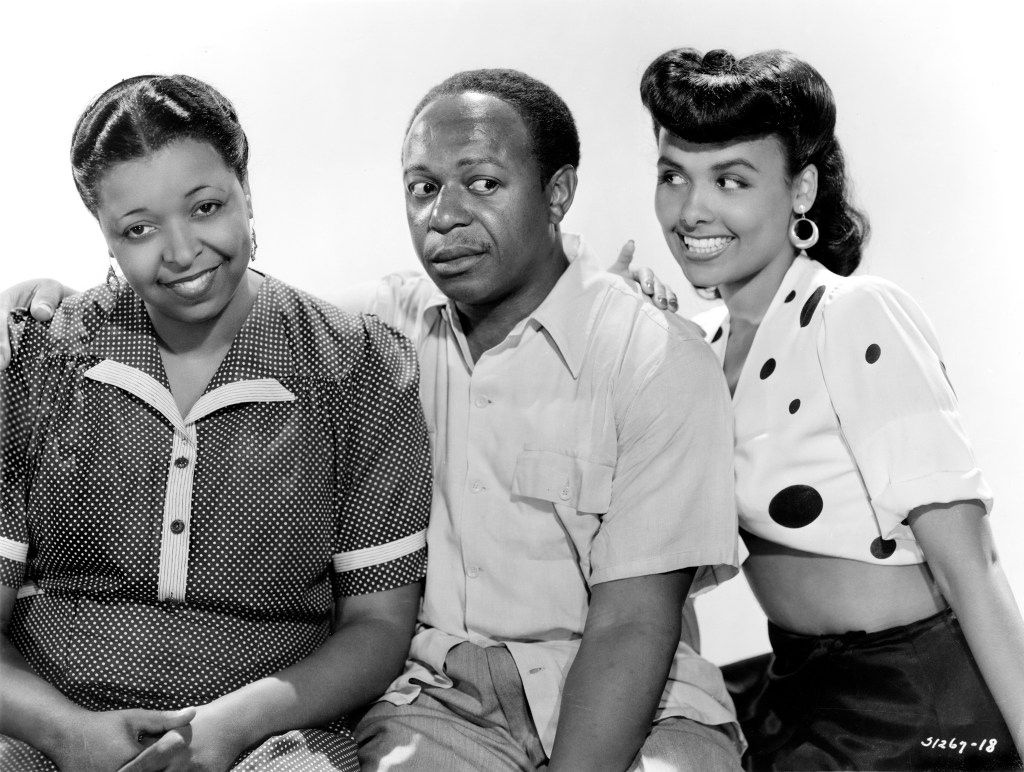
Ethel Walters repeated her original Broadway role of “Petunia Jackson”.
Edmund Lincoln “Eddie Rochester” Anderson portrayed “Little Joe Jackson”.
Lena Horne portrayed “Georgia Brown”.
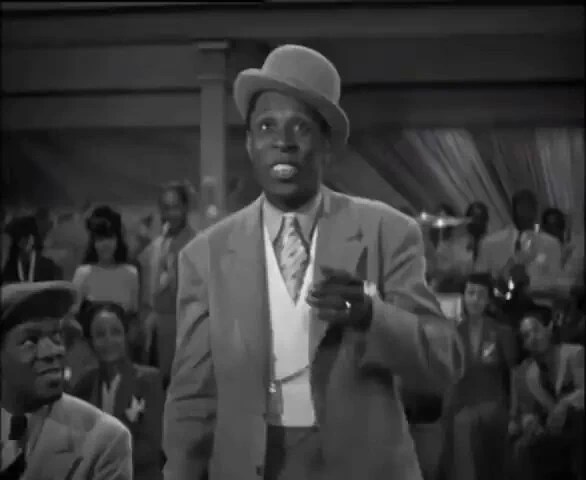
Rex Ingram repeated his original Broadway role of “Lucius/Lucifer Jr.”
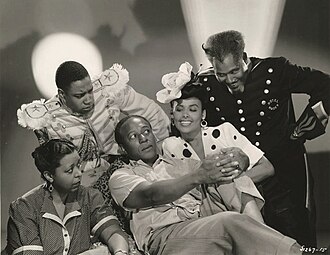
Above seated left to right, Ethel Walters, Eddie ” Rochester” Anderson, and Lena Horne. Standing in White is Kenneth Spencer portraying “The General/Reverend Green”, and in Black, Rex Ingram.
The basic plot, has “Little Joe”, a well meaning husband, being killed over his gambling debts by the “Big Shot”, “Domino Johnson”, portrayed by stage actor, John William Sublett professionally known as John W. Bubbles, and billed in this movie just as “Bubbles”.
On “Joe’s” death bed, he is resurrected, and given six-month’s to redeem himself, and enter “HEAVEN”, if not. e will go to “HELL”. Monitoring “Joe” is the “General”, but out to take him is “Lucius”. Who will attempt to manipulate “Joe”, and his loving wife “Petunia”. “Lucius” has one more card to play, making “Joe” wealthy and introducing him to “GOLD-DIGGING”, “Georgia Brown”.
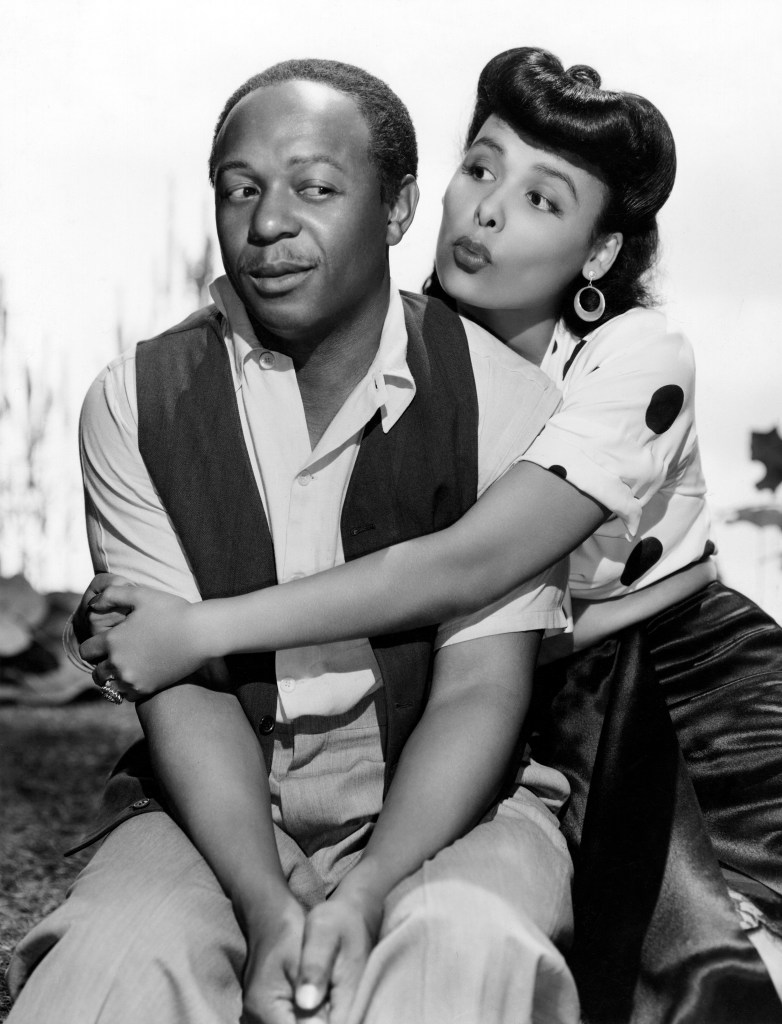
Before Vincent Minnelli started filming, he sent the Joseph Schrank screen play to the “NAACP” for approval, and received it, for his treatment of the “Black Experience”.
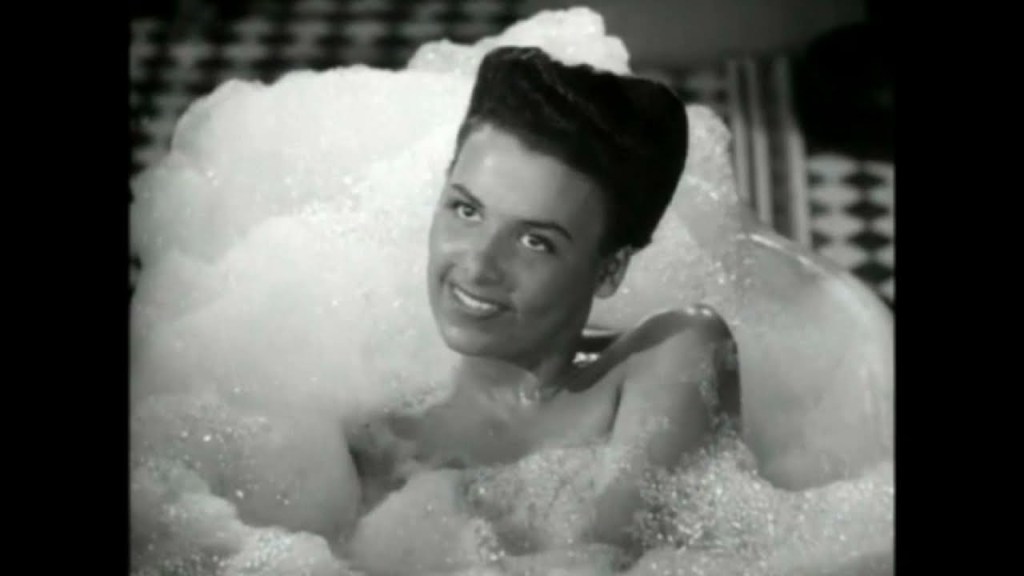
One number featuring Lena Horne taking a bubble bath and singing “Ain’t It the Truth”, according to Lena Horne, in the “MGM” documentary, “That’s Entertainment III”, it was the consensus, that showing a “Black Girl” singing in bath, went beyond “the bounds of moral decency of 1943”.
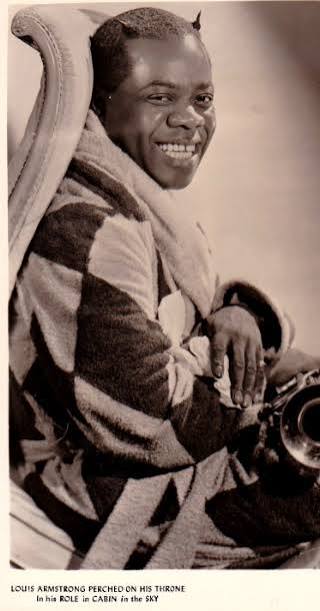
One of “Lucifer Junior’s” minions was played by Louis Armstrong, but his, now bath sequence of “Ain’t It the Truth”, was also edited out of the picture, eliminating Armstrong’s only color song.
European countries that received the radio broadcasts.
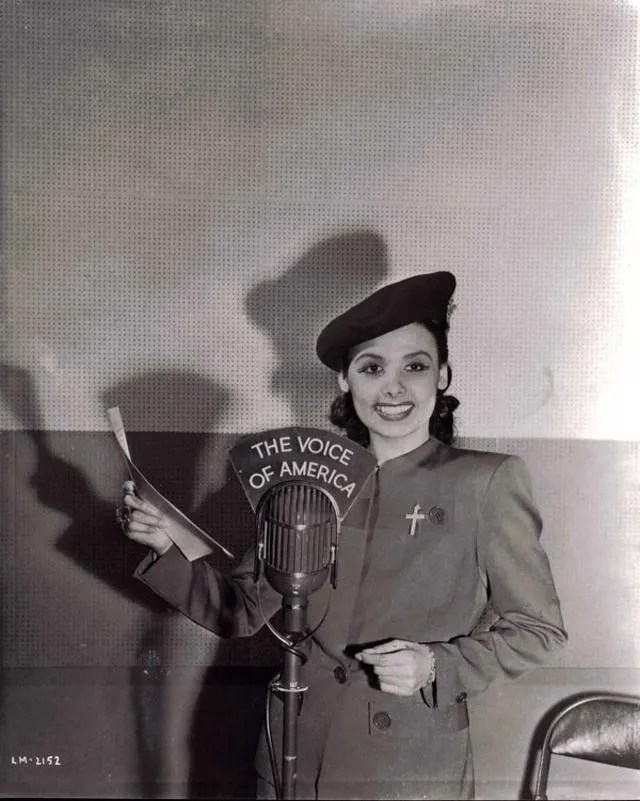
She also toured with the “United Services Organizations (USO)” in of all places, at the “United States Army Camp Robinson”, in North Little Rock, Arkansas, in the deep, segregated south.
The following two paragraphs are from the website, “medium.com” in the article:
“The Time Lena Horne Defied the U. S. Military”, by Dara Starr Tucker:
“At the height of the Second World War in the early 1940s, singer Lena Hornewas working with the USO, entertaining troops at North Little Rock’s Camp Robinson. When she came out on stage, she noticed something right away that really bothered her — all the white soldiers were sitting up front, and all the Black soldiers were in the back. Well, in the segregated South in the 1940s, that wouldn’t have been so unusual, but in this case, white American soldiers were not being given priority over Black ones. Those soldiers seated up front were actually enemy combatants — they were members of the German and Italian militaries, and not only were they given the opportunity to hear world-class singers like Lena Horne, but they were also being given preferential treatment over men serving in the U.S. military who happened to be Black.“
When Lena Horne realized what was happening, she immediately headed to the back of the room and sang exclusively to the Black soldiers, with her back turned to the POWs. After a few songs, she became so disgusted with the situation that she refused to perform the rest of the show and left the hall entirely.”
Loaned by “Metro-Goldwyn-Mayer” to “20th Century Fox” was a sign of how popular Lena Horne was:
STORMY WEATHER premiered in New York City on July 21, 1943
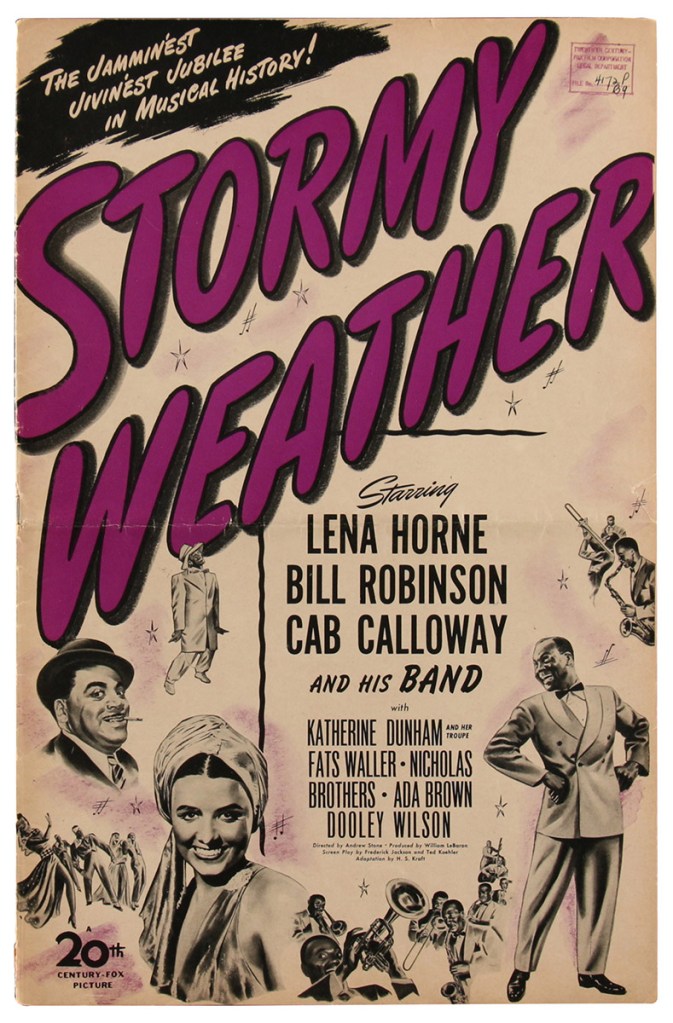
The original story idea, came from two writers. Jerry Howin, he had just co-written the Douglas Fairbanks, Jr, and Basil Rathbone drama, 1939’s, “The Sun Never Sets”, and by Seymour Robinson. Who wouldn’t write anything else until a script for the June 4, 1955, television series episode of, the “Damon Runyon Theatre”, “Lonely Heart”.
Their story would be adapted for a screenplay by H. S. Kraft. Who had written, or adapted anything for a motion picture since 1937’s, “Champagne Waltz”, featuring the than popular, “Metropolitan Opera”, mezzo-soprano, Gladys Swarthout, and actor Fred MacMurray.
The actual screenplay was written by two other writers, Fredrick J. Jackson, had just co-written 1941’s, “This Woman is Mine”, starring Franchot Tone, John Carroll, and Walter Brennan. Ted Koehler, this was his only actual screenplay, but yes, he is the song writer of “Stormy Weather”. Normally, he wrote music for Broadway, and motion pictures. Which he had previously done for the Jimmy Durante, 1938, “Start Cheering”.
The motion picture was directed Andrew L. Stone. Stone had just directed the Allan Jones, and Susana Foster, in 1941, “There’s Magic in Music“. He followed this feature with the comedy musical, 1943’s, “Hi Diddle Diddle”, staring Adolphe Menjou, and Martha Scott.
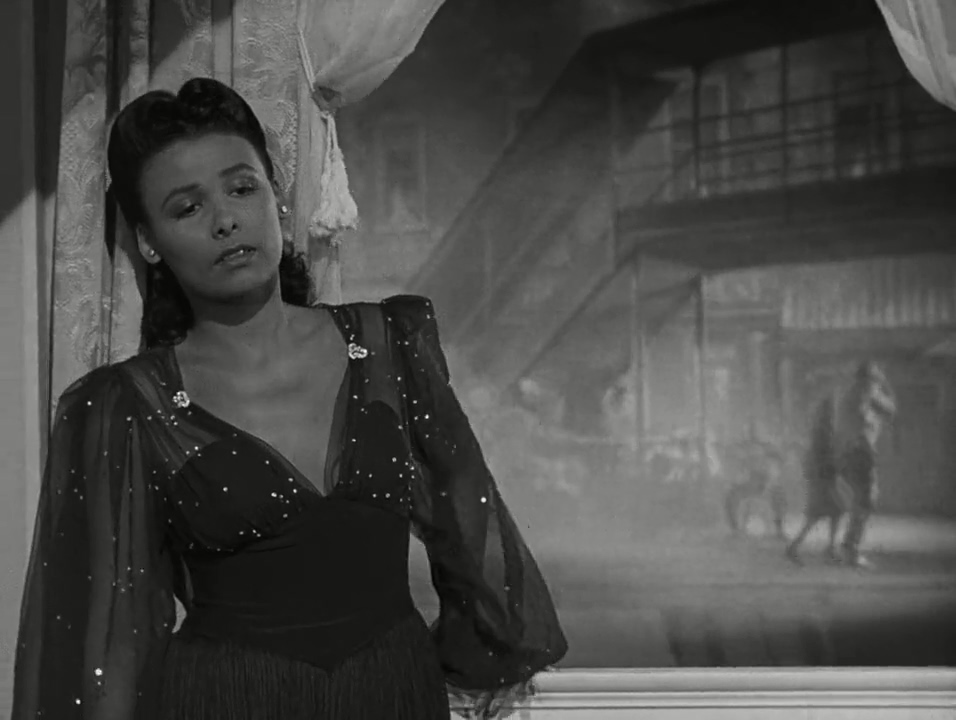
Lena Horne portrayed “Selina Rodgers”.
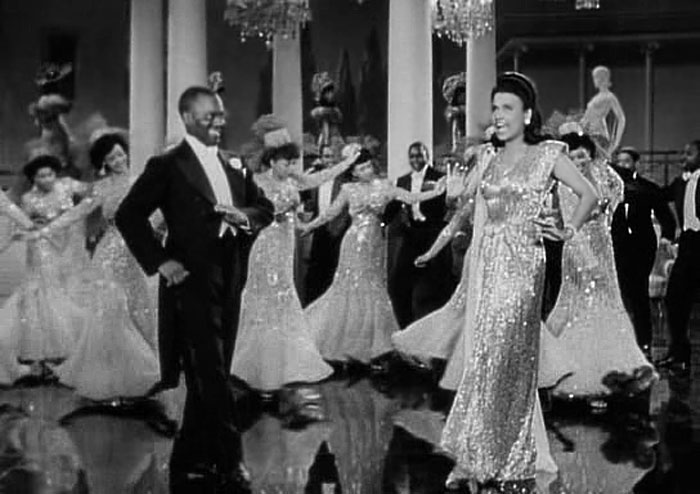
Bill “Bojangles” Robinson portrayed “Bill Williamson”. Which is interesting, DELIBERATE casting, as the somewhat, fictional screenplay was based upon his life.
Other’s from the above poster:
Cab Calloway and His Cotton Club Orchestra as themselves,
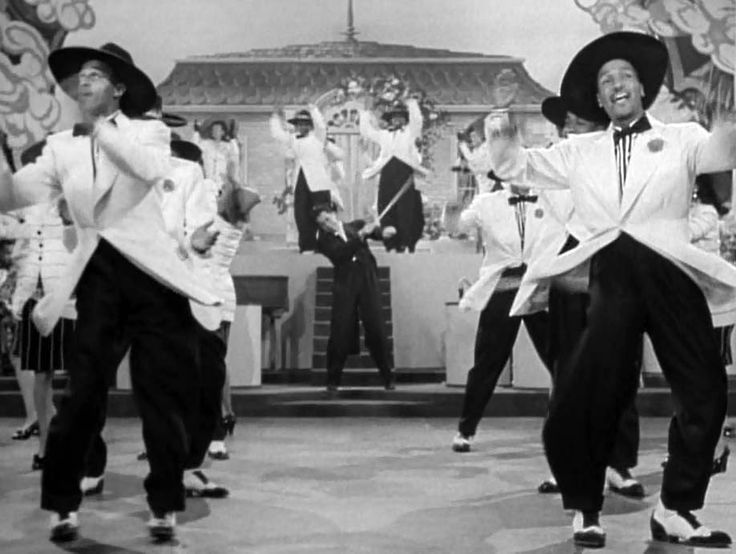
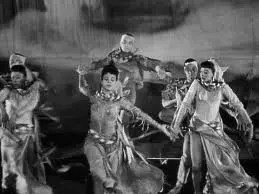
Katherine Dunham and Her Troupe portraying the dancers.
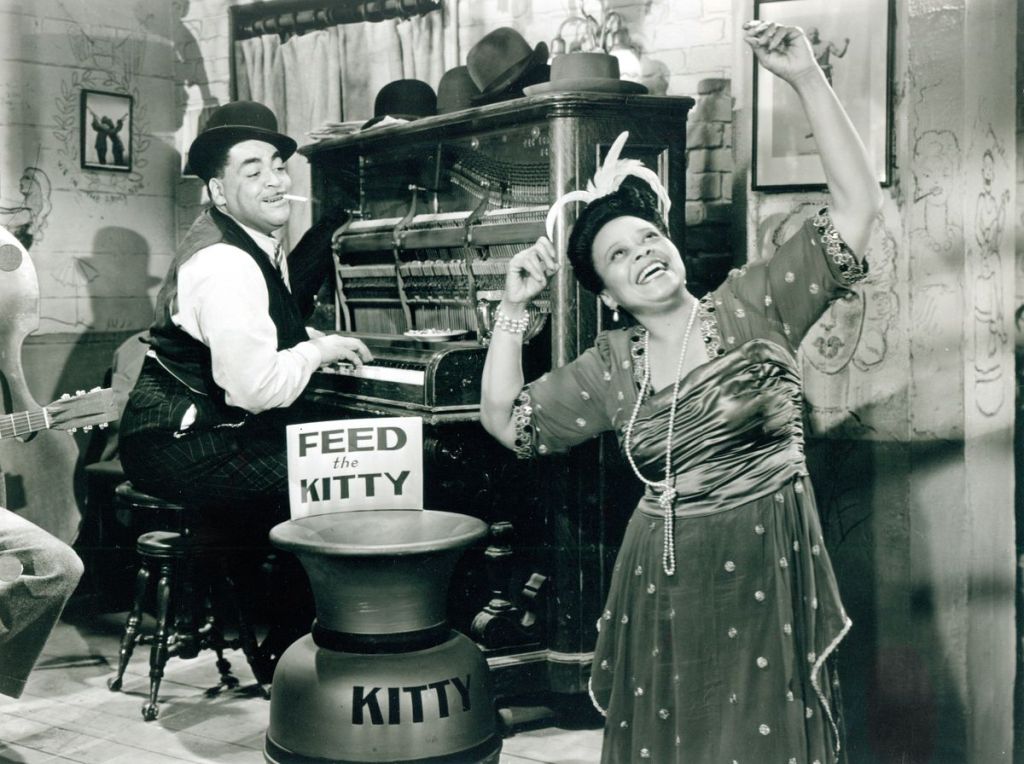
Fats Waller as himself, with Ada Brown billed as “A singer”.
Dooley WIlson portraying “Gabe Tucker”. Wilson is best remembered as “Sam, the Piano Player” in 1942’s, “Casablanca”. Trivia, Wilson faked it, as he didn’t play a piano.
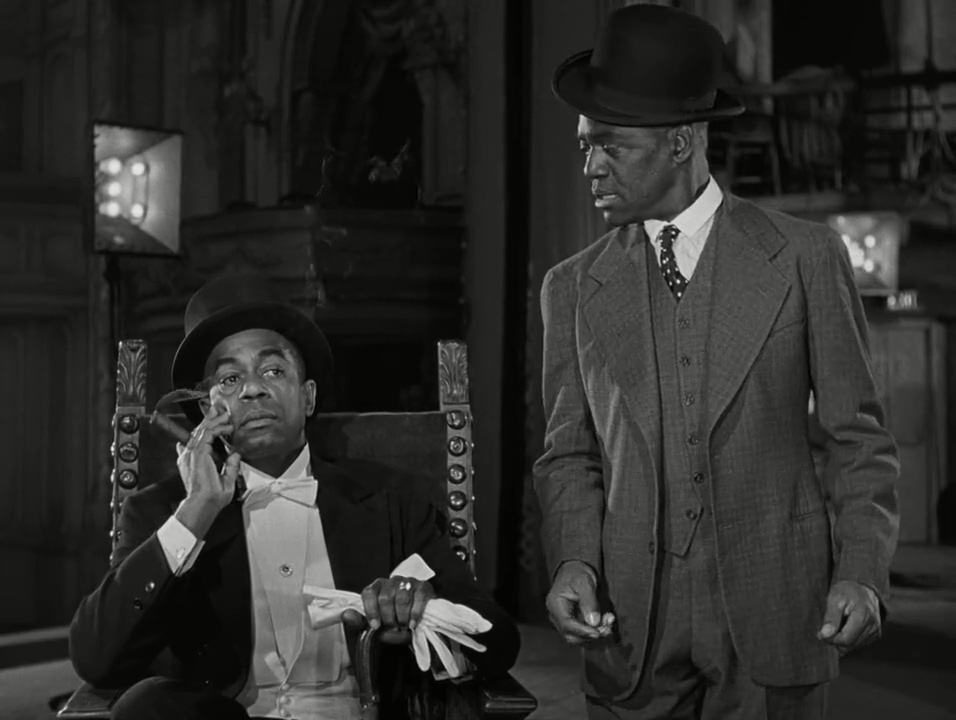
Above, seated is Dooley Wilson, standing is Bill “Bojangles” Robinson
At the time of this writing, the following link takes my reader to an “Instagram” posting of Lena Horne singing “Stormy Weather” from the movie.
https://www.instagram.com/reels/DYJSvM2NhrH
The story is a routine “Hollywood” biography, that adds the fictional girlfriend for this version of Bill “Bojangles” Robinson, “Selina”. However, it is these performances that is the movie.
The following link, as of this writing, will take you to the website, “Letterboxd” and the means to enjoy this motion picture.
https://letterboxd.com/film/stormy-weather
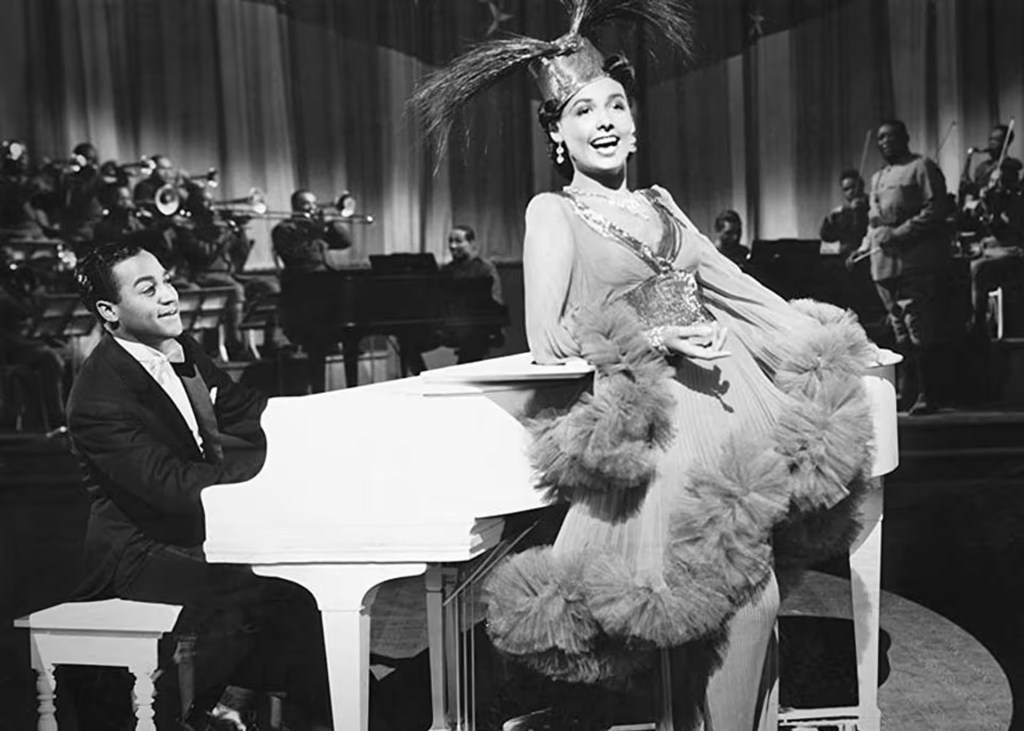
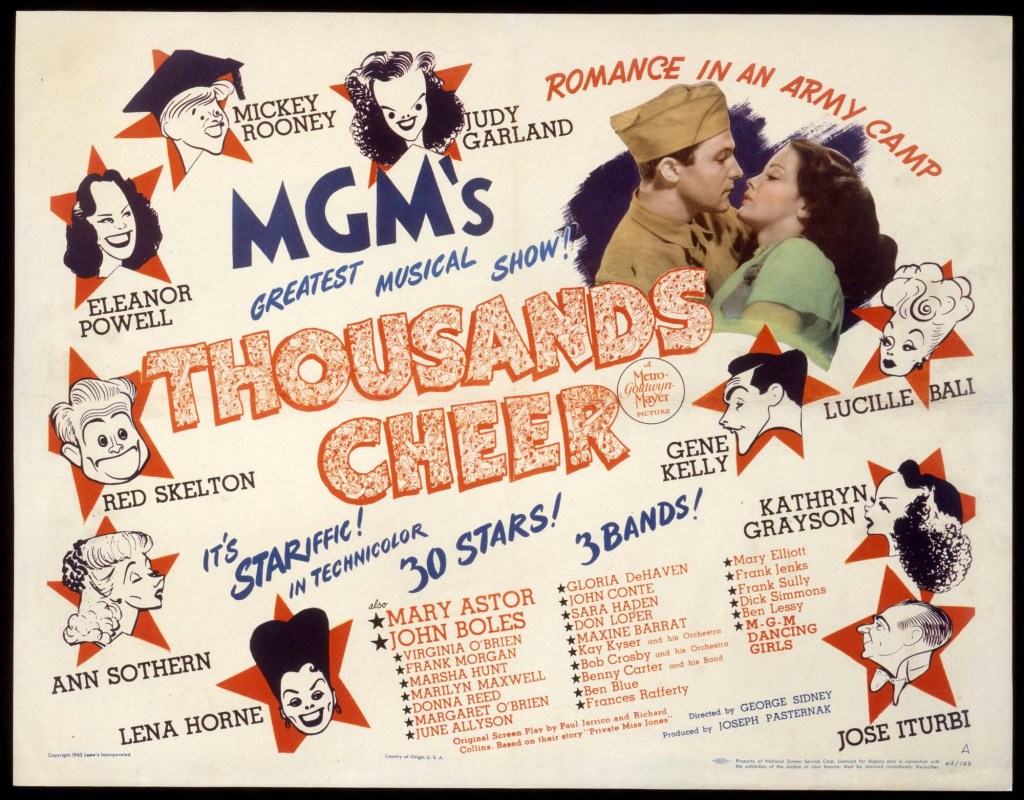
Now, the “MGM” executives recognized Lena Horne’s star power, and “Stormy Weather” was followed by the Kathryn Grayson and Gene Kelly, 1943, “Thousands Cheer”. In which, Lena Horne, as Lena Horne, was one of 30-stars that had a cameo appearance. In her case, she sang “Honeysuckle Rose”.
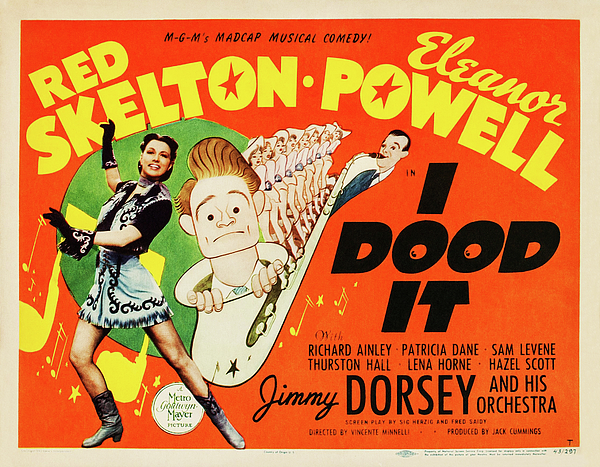
Next, was another cameo of Lena Horne appearing as herself, in the Red Skelton and Elenor Powell musical comedy, 1943’s. “I Dood It”. She sang the song “Jericho”.
Lena Horne ended 1943, with her 3rd cameo appearance in an “MGM” Musical”, Kay Kayser’s 1943, “Swing Fever”, singing “You’re So Indifferent”.
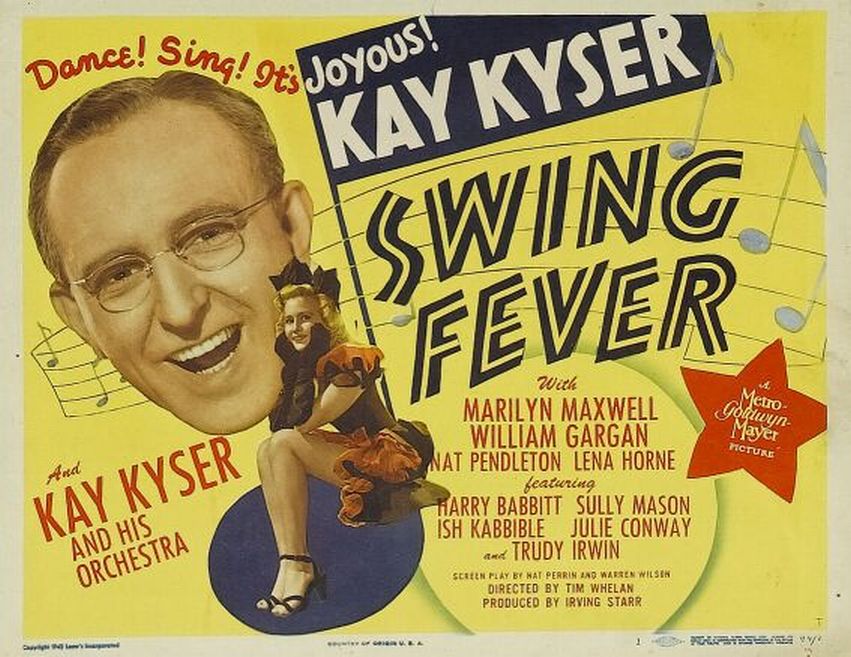
In 1943, Lena Horne, become the FIRST AFRICAN-AMERICAN ELECTED TO THE BOARD OF DIRECTORS, OF “THE SCREEN ACTOR GUILD (SAG)”. Something, even at the started of that year, that was considered impossible, for a “Colored” member. Also, her activism was started to being recognized by the guild’s membership.
Listed in 7th-position on the “Official Cast List”, but with 5th-billing on the following poster, was Lena Horne in the role of “Fernway de la Fer”.
BROADWAY RHYTHUM released April 13, 1944
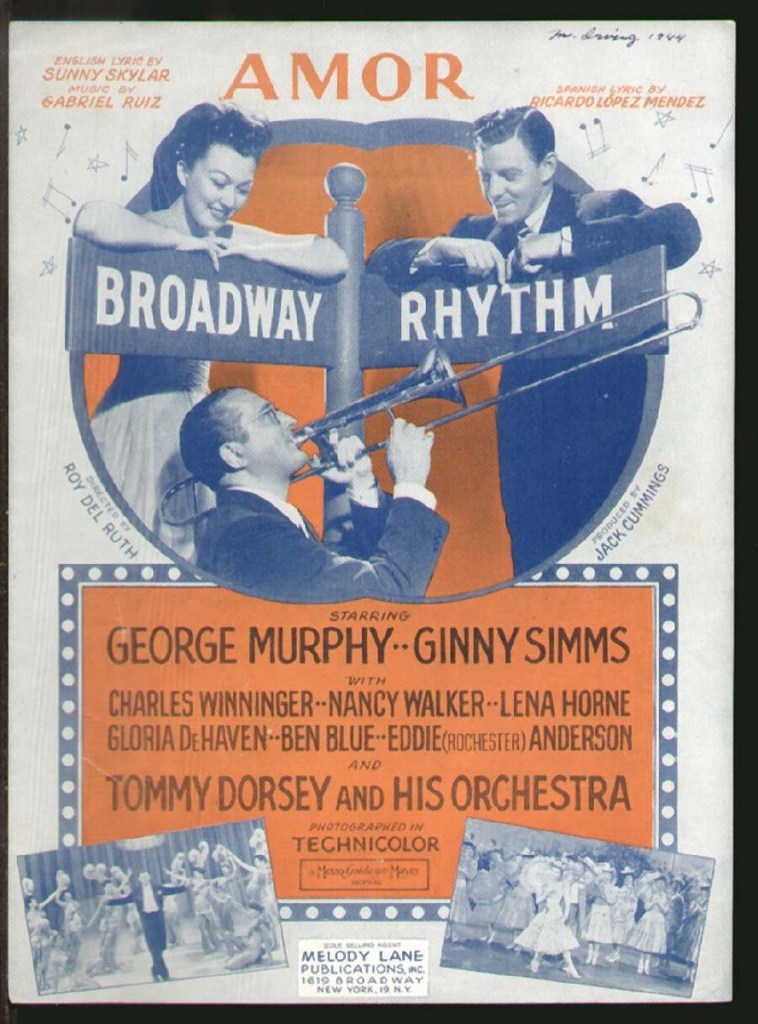
The motion picture starred George Murphy, who had just starred in the Irving Berlin musical, 1943’s, “This Is the Army”, and popular “Big Band” singer, Ginny Simms in her 7th, of 11, on-screen appearances.
Even with either 7th, or 5th-billing, Lena Horne was being used for name recognition only to bring in a potential audience.
In fact, the two used pieces of film with her, had actually been shot for the motion picture, “Broadway Melody of 1943”, but the movie was never completed and released. They were just edited into this 1944 movie.
Additionally, these two, “Stand Alone” song numbers, were also designed to be easily removed for showing the motion picture in the “Segregated South”.
The first of the two songs, had Lena Horne, singing the intimate, “Somebody Loves Me”, written and composed by George Gershwin, Buddy DeSylva, and Ballard MacDonald.
While, her second musical number, was a major production number. The original filmed sequence was a fast paced, high energy, latin style, number, called “Brazilian Boogie”. The song was written by Hugh Martin and Ralph Blane and was performed by Lena Horne. It leads into a dance, a combination of Latin Samba and American Swing. However, this was all edited down in size for this movie, and concentrates more on the duet dance number and Lena’s singing.
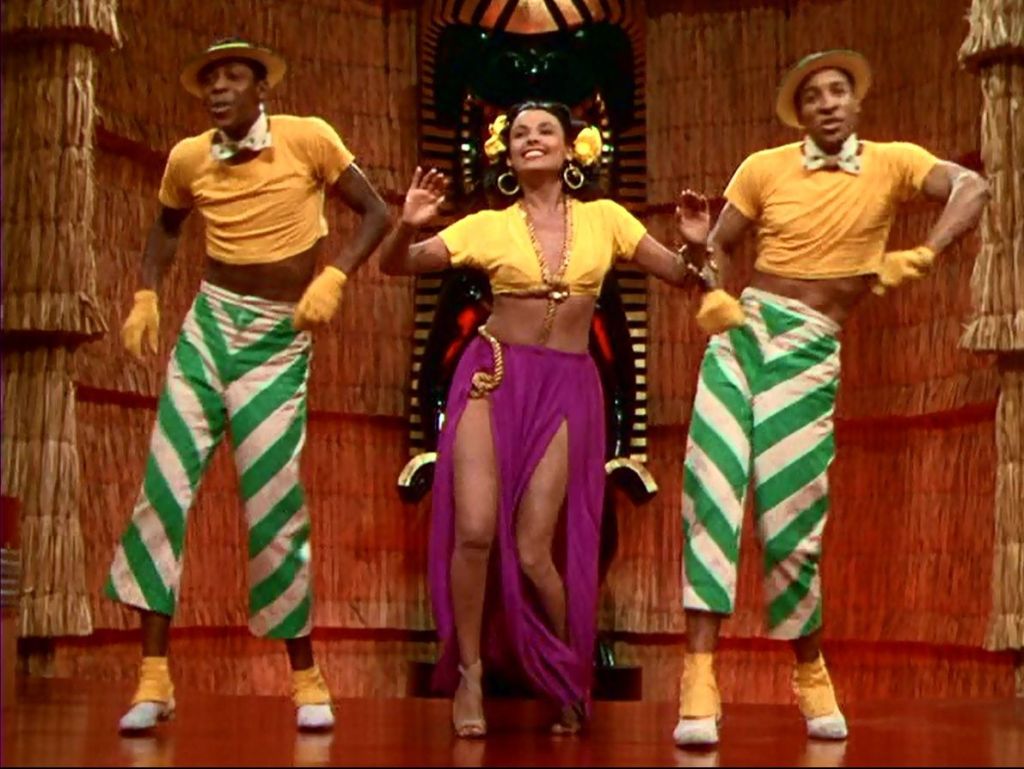
Then there was a romantic subplot with a courtship scene, between Lena Horne and Eddie “Rochester” Anderson’s “Eddie”, but it was completely removed from the motion picture to:
“Prevent Upsetting White Audience’s in the South”.
In 1944’s, “Two Girl’s and a Sailor”, Lena Horne wasn’t either of the three, but appeared as Lena Horne. The three, were June Allyson, Van Johnson, and Gloria DeHaven. However, she sang a rendition of the 1915 song, “Paper Doll”, by Johnny S. Black. The only reason she was in this picture was to perform this one song, which had been #1 on the “Billboard Charts” for 12-weeks by the “Mills Brothers”, and she was under contract to “MGM”, to do whatever picture and role they assigned her.
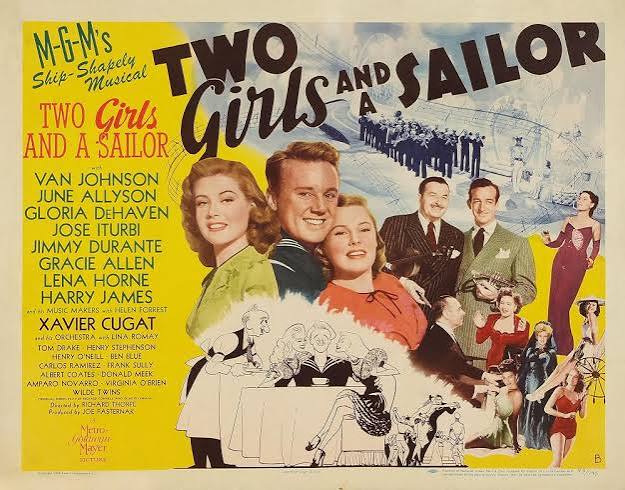
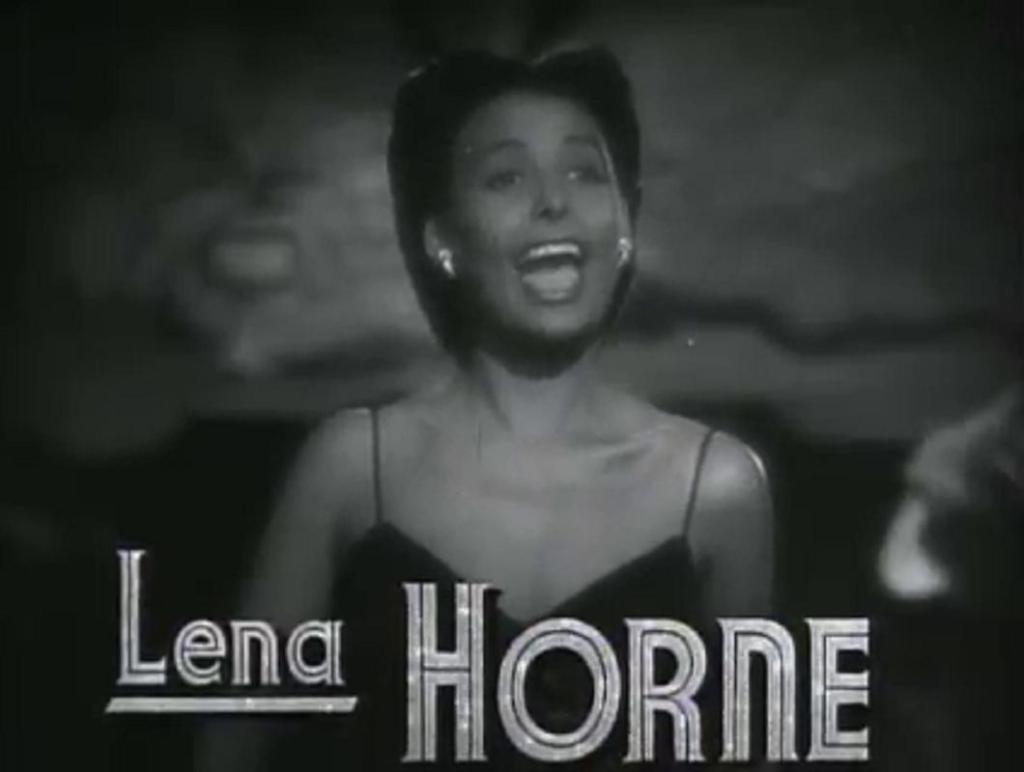
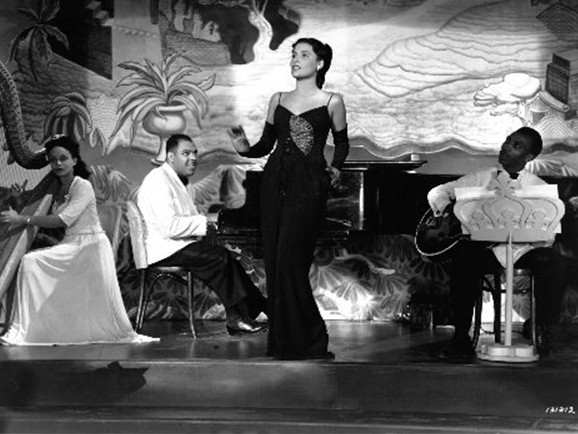
Back in 1935, William Powell portrayed Florenz Edward Ziegfeld, Jr. in “Metro-Goldwyn Mayer’s” “The Great Ziefgfeld”. Now he was back, ten-years later, as Ziegfeld in heaven looking down on the:
ZIEGFELD FOLLIES premiering in Boston, Massachusetts, on August 13, 1945
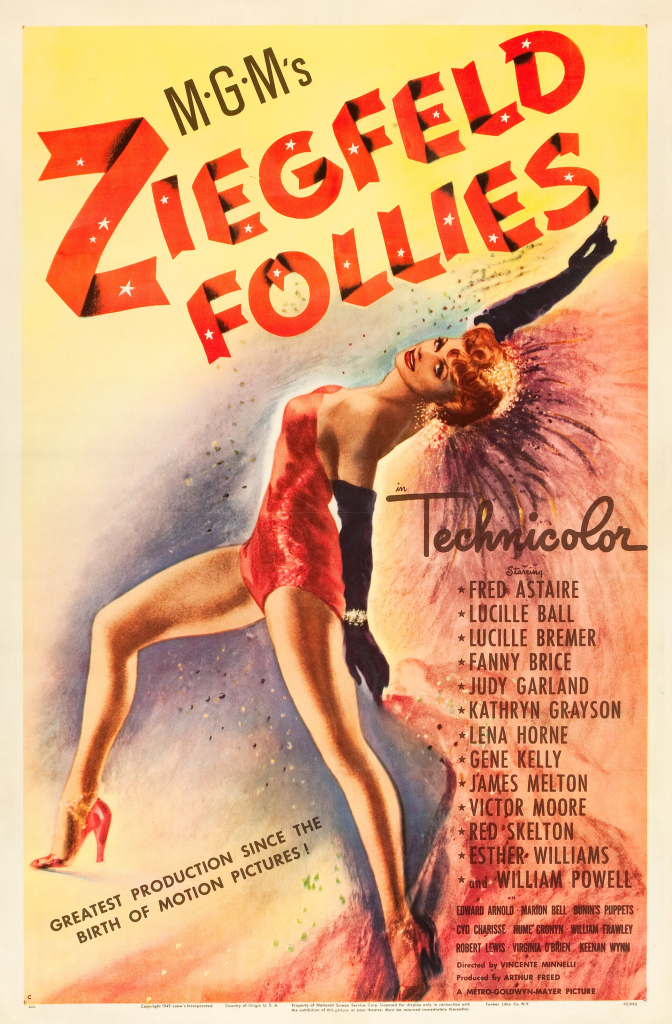
This was basically what the picture’s title implied, 25-Stars participating in a “Ziegfeld Follies” stage show.
For her part, Lena Horne, was seen in a Caribbean Bar, singing “Love”, composed by Hugh Martin and RalphBlane.
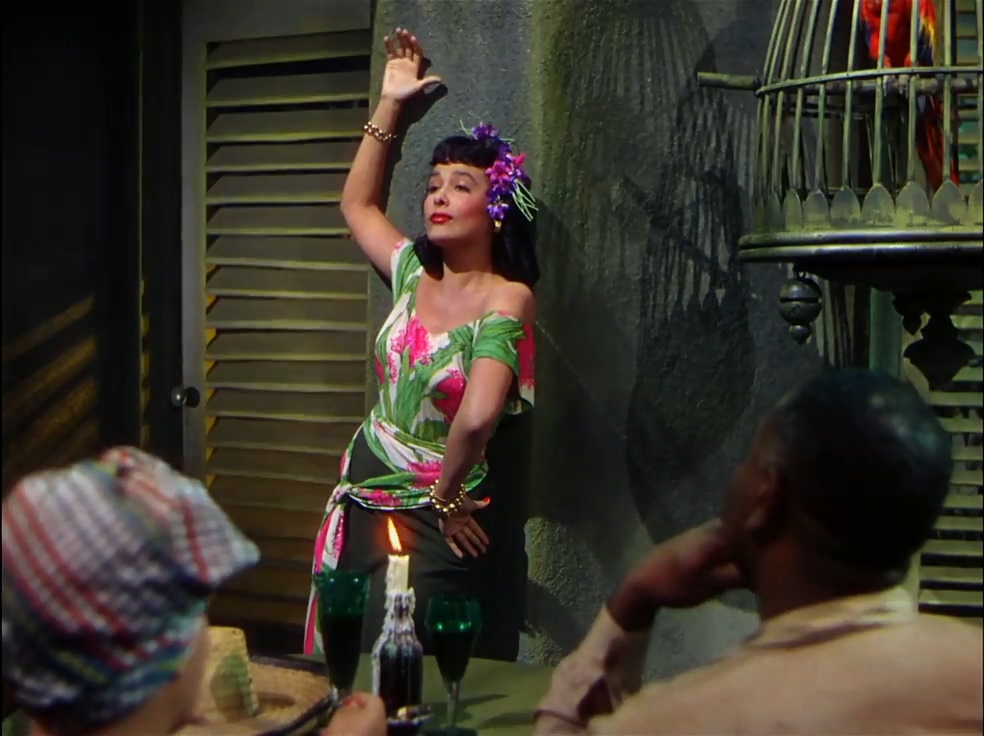
Next, “MGM” put Lena Horne in their fictional biography of composer and song writer, Jerome Kern.
TILL THE CLOUDS ROLL BY premiered in New York City, on December 5, 1946
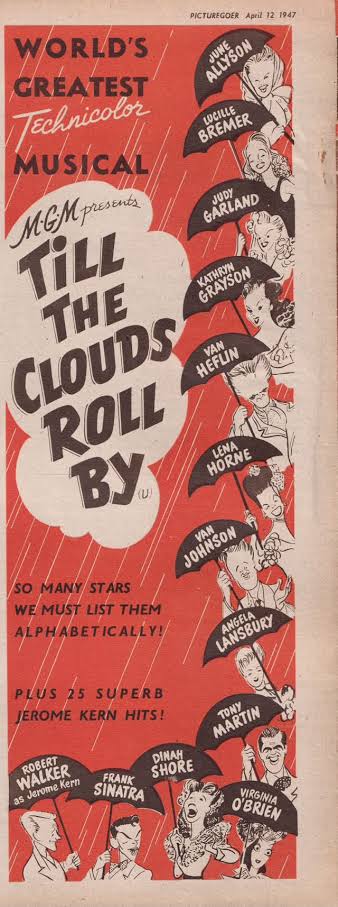
Within the screenplay, was a large section of Jerome Kern’s classic stage musical, “SHOW BOAT”. Which had the dialogue written by Oscar Hammerstein II.
Lena Horne’s sequence in, “Till the Clouds Roll By”, had her portraying, “Julie LaVerne”, from “Show Boat“. An the viewing audience heard her singing, “Can’t Help Lovin’ Dat Man”.
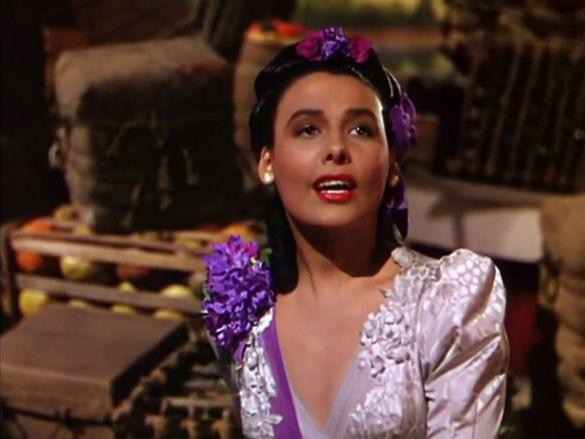
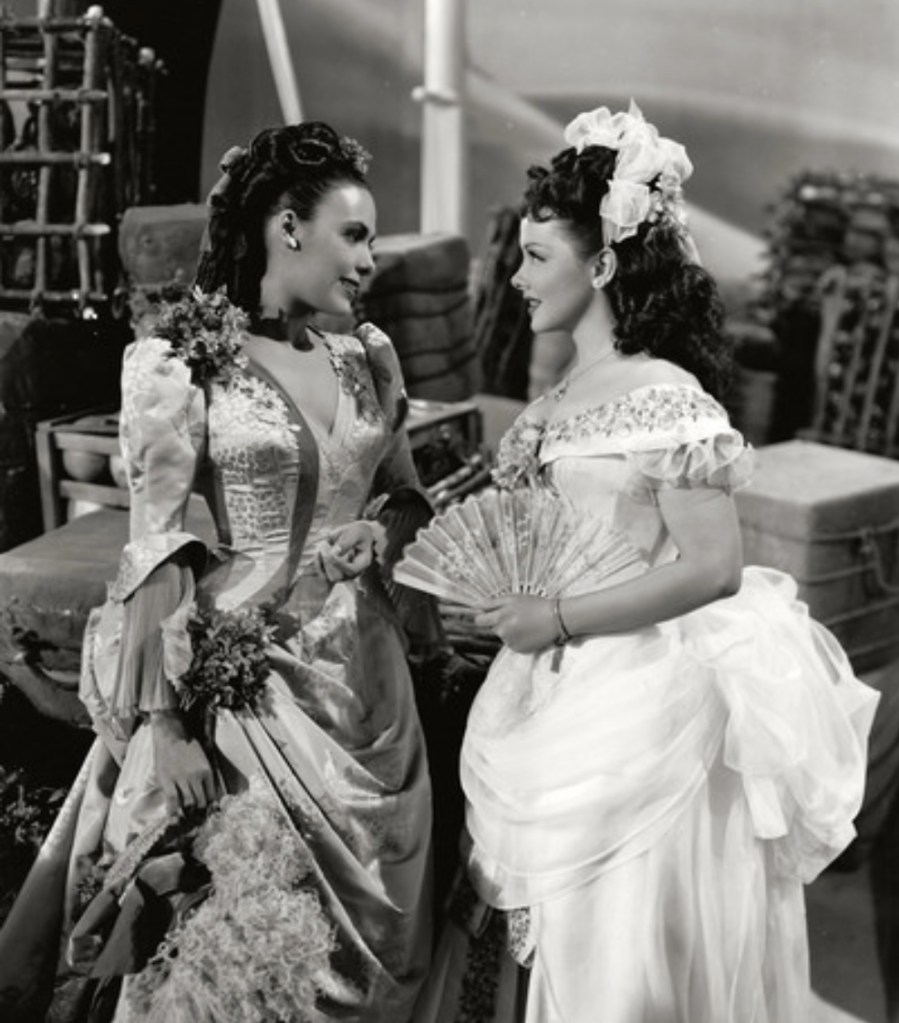
Above left, Lena Horne, speaking to Kathryn Grayson portraying “Magnolia Hawks”.
Lena Horne, also recorded two other songs, “Why Was I Born”, and “Bill” from “Show Boat”. Both songs were edited out of the released motion picture.
In 1938, “MGM”, had obtained the rights to the Jerome Kern and Oscar Hammerstein II’s musical. In 1946, producer Arthur Freed, produced a Broadway revival of the original musical, and produced “Till the Clouds Roll By”. In early 1950, Freed, and, “Metro-Goldwyn-Mayer”, decided to actually film “Show Boat’.
Lena Horne requested the role of “Julie LaVerne”, mentioning what the casting director already knew. That she had sang, three of Julie LaVerne’s songs, in “Till the Clouds Roll By”.
However, “MGM”, had been thinking of Judy Garland, for the part, but according to the story. Garland, dropped out of the production, for personal reasons. In actuality, her contract with “MGM”, “ABRUPTLY” ended in June 1950. Right, when shooting was to begin. The term, “Abruptly”, referred to Judy’s years of health issues, and being fired from, 1951’s, “Royal Wedding”. For that feature film, Judy Garland, had replaced June Allyson, who had just found out that she was pregnant. However, Garland, started missing days of work, claiming she was ill, and would be replaced by, Jane Powell, opposite Fred Astaire and Peter Lawford.
Ava Gardner, below, not Lena Horne, would be cast as “Julie LaVerne”. As would be noticed, 2nd-billed, Ava Gardner, never sang the Jerome Kern and Oscar Hammerstein III’s song. Her singing voice was dubbed by Annette Warren, a jazz vocalist, second picture below.
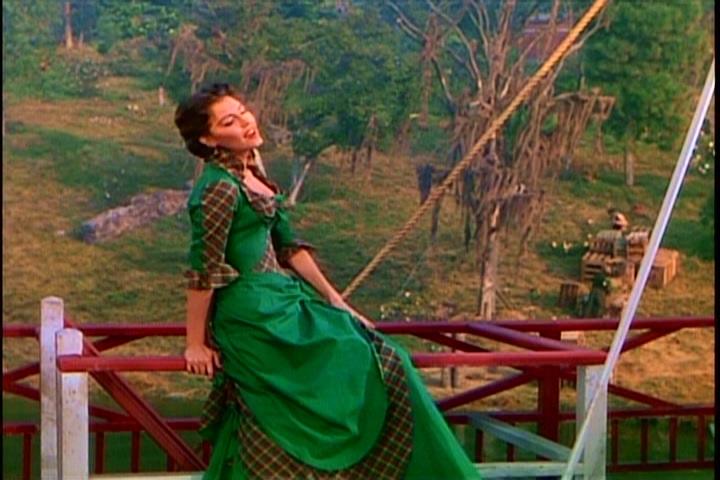
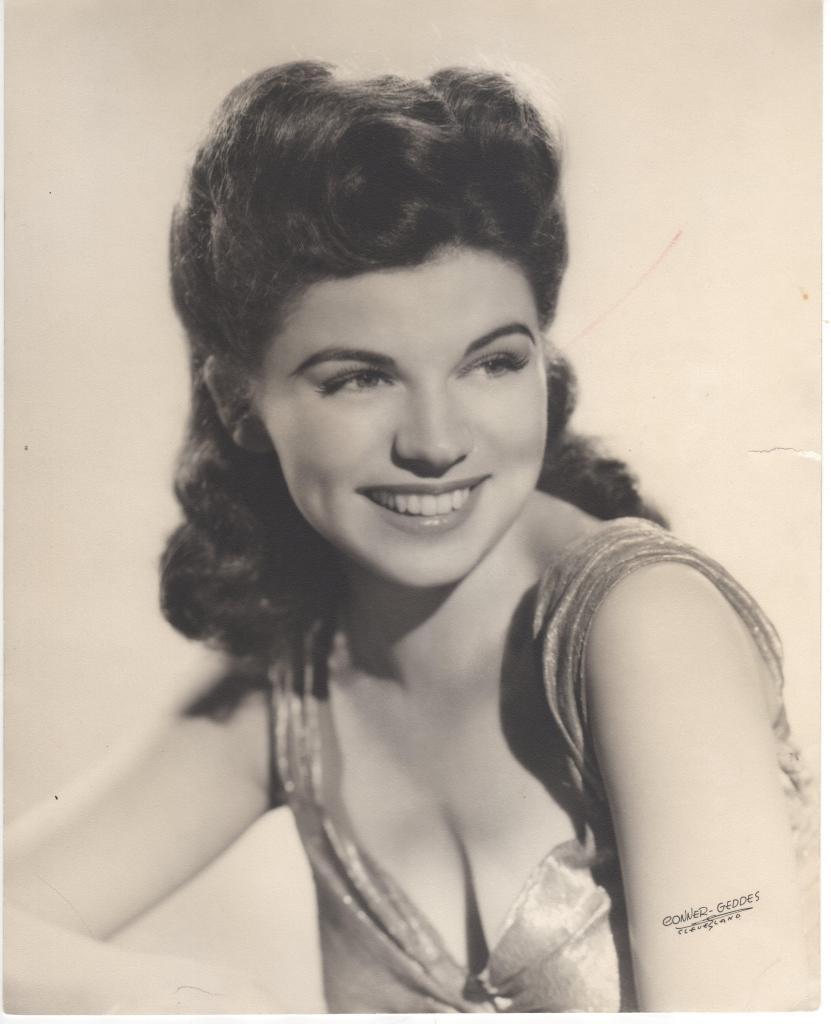
The real reason for not casting, Lena Horne, as “Julie LaVerne”, was that the “MGM Executives”, had a fear that White audiences in the Southern States would boycott the movie. To the Executives, this would be the result of having a, “BLACK ACTRESS”, portraying “JULIE LAVERNE”. Such a boycott, would impact on the picture’s box office receipts.
What seems to have never been considered, by the “MGM” executives, in defense of Lena Horne portraying the role. Is the fact that “Julie LaVerne” is a African-American singer, and as written, is married to a “WHITE MAN”, her dancing partner, “Steven Baker” .
Instead, of casting Lena Horne, the Executives felt, it would be safer, by having a WHITE ACTRESS WITH HER FACE DARKENED, portraying, “Julie LaVerne”, in their “Show Boat”. Additionally, to appease Joseph Breen, of the “Hays Censorship Office”, the idea of, miscegenation (interracial marriage or relations), going back to Edna Ferber’s, 1926 novel, would be very toned down.
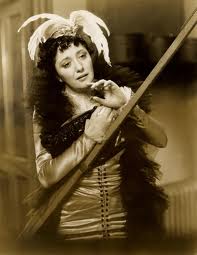
Additionally, screenplay writer, John Lee Mahin, rewrote, almost all of Oscar Hammerstein II’s original dialogue for the “MGM” feature version. While, Oscar Hammerstein II, wrote the screenplay for the excellent, previous, 1936, version, directed by James Whale, 1931’s “Frankenstein” and “Dracula”, with the great “Torch Singer”, Helen Morgan, also white, but the original stage “Julie LaVerne”.
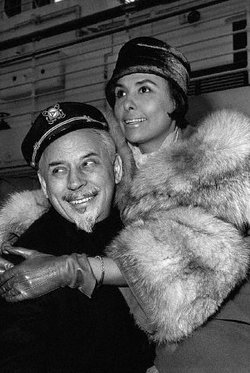
Back in December, 1947, while in Paris, France, both under contract to “MGM”, Lena Horne married musician, composer, conductor and arranger, Leonard George Hayton, known for wearing a “Captain’s Hat” in a rakish angle. Two would stay married until his death on April 24, 1971, at the age of 63.
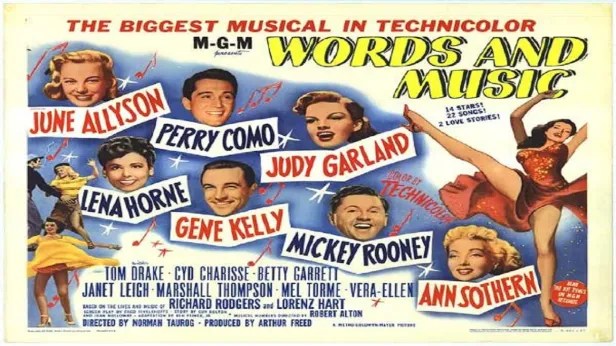
On December 8, 1948, in New York City, was the premiere of “MGM’s” fictional biography of composter Lorenz “Larry” Hart, and his partner, Richard Rodgers, “Words and Music”.
Below, Lena Horne’s picture from the trailer for the motion picture.
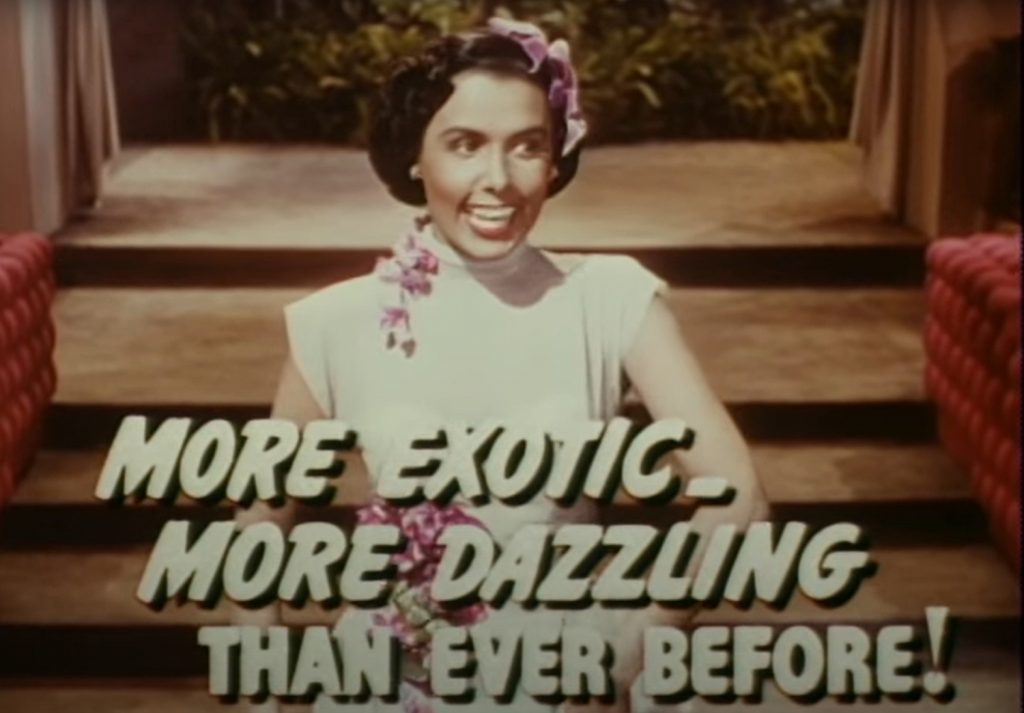
The above wording, makes Lena Horne’s appearance in the picture very interesting, BUT, again, her two songs by Rodgers and Hart, “The Lady is a Trump”, and “Where or When”, were designed for easy removal in the Southern United States. So, as to not up set the White Segregationists. As would be the removal of the above clip from the picture’s trailer.
PART FOUR: THE FEDERAL BUREAU OF INVESTIGATION VS LENA HORNE
Before I look at how Lena Horne became a, “COMMUNIST AGENT”, according to the “FBI”. My following linked article, will give my uniformed reader, the background about “Hollywood and the Second Red Scare”, that fellowed the end of the Second World War.
The title is:
“MCCARTHYISM: LIGHTS, CAMERA, COMMUNISTS IN THE MOTION PICTURE INDUSTRY” to read at:
https://www.bewaretheblog.com/2025/08/mccarthyism-lights-camera-communists-in.html
Back in 1941, as I wrote above, Lena Horne started to appear at the “Cafe Society”. There was more to the club’s name than met the eye.
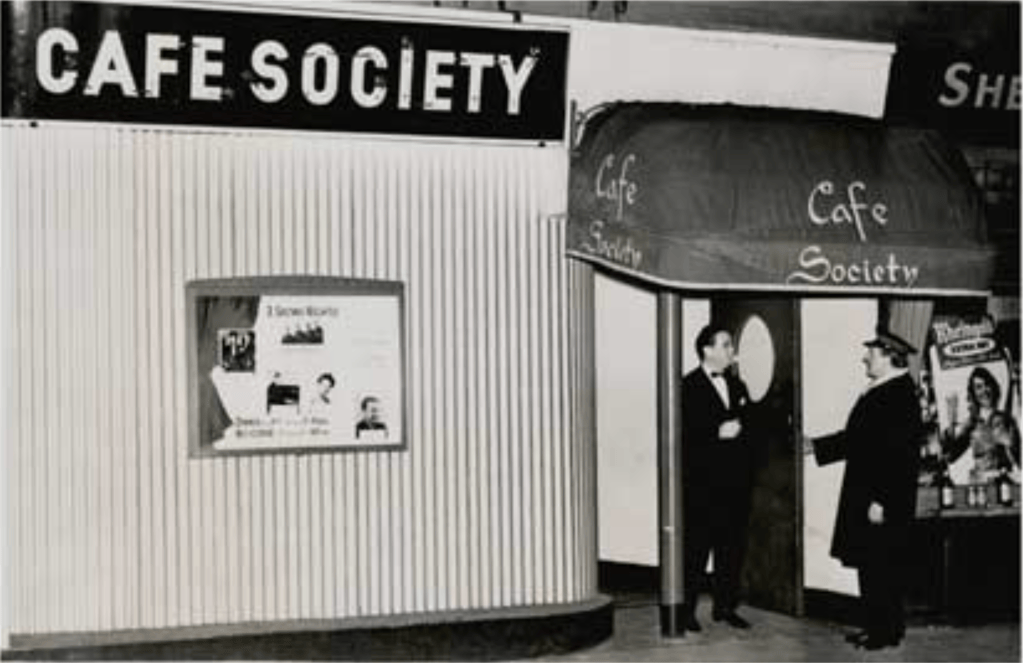
From “The Bowery Boys Podcast” website’s, “The story of Café Society where Billie Holiday found her song”, comes this description:
“In the 30s Midtown Manhattan clubs were alight with the bourgeoisie, tuxes and evening gowns, tables and banquettes of rich white people drinking champagne, and often entertained by Black performers borrowed from the Harlem music scene.
It was putting on the ritz, it was dancing cheek to cheek.
It was embodied within the phrase ‘café society‘, coined by the one of the scene’s wittier celebrities Claire Booth Luce, playwright of The Women and a darling toast of Broadway.
But there was also something saccharine and square — and segregated — about those Midtown haunts. Things were wound too tightly.”
It was at “Cafe Society”, where Lena Horne, met bass-baritone, concert artist, actor, activist, and football player, Paul Leory Robeson. A political leftest, who would reshape Lena Horne’s identity, into a major, “Black”, social activist.
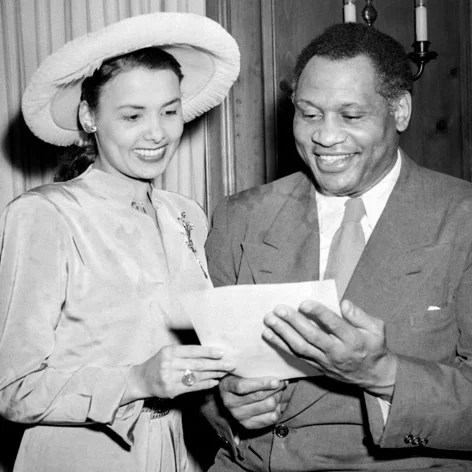
My article about Lena’s mentor, is entitled, “PAUL ROBESON Before ‘Ol’ Man River’ To After Joseph McCarthy ‘The Artist Must Elect To Fight”, found at:
https://www.bewaretheblog.com/2019/05/paul-robeson-before-ol-man-river-to.html
Although, both were leading entertainers in the African-American community, it wasn’t their musical connection that brought the two together, but rather their politics. In 1937, the two were founding members of the “Council on African Affairs (CAA)”, founded as the “International Committee on African Affairs”.
Back in 1934, First Lady, Eleanor Roosevelt, had jolted the country, by joining the “NAACP”. The wife of the President of the United States was fighting for the “Costigan-Wagner anti-lynching bill”. While her husband, President Franklin Delano Roosevelt, wasn’t pursuing the bill to end the lynching of Black American’s. He did not want to upset his White, powerful, Southern, donors.
In 1939, the First Lady resigned from the “Daughters of the American Revolution”. This was over the group’s president, White, Sarah Corbin Robert, seen first below, denying a concert in the “DAR’s Constitution Hall”, second below, to be given by famed American contralto, Black, Marian Anderson, third below.
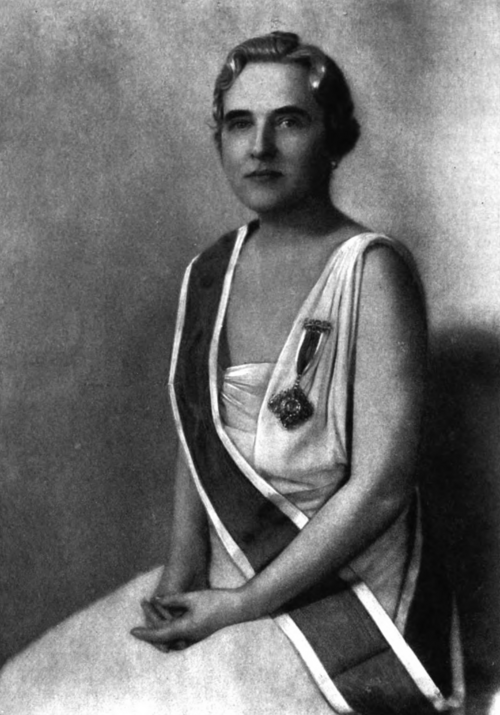
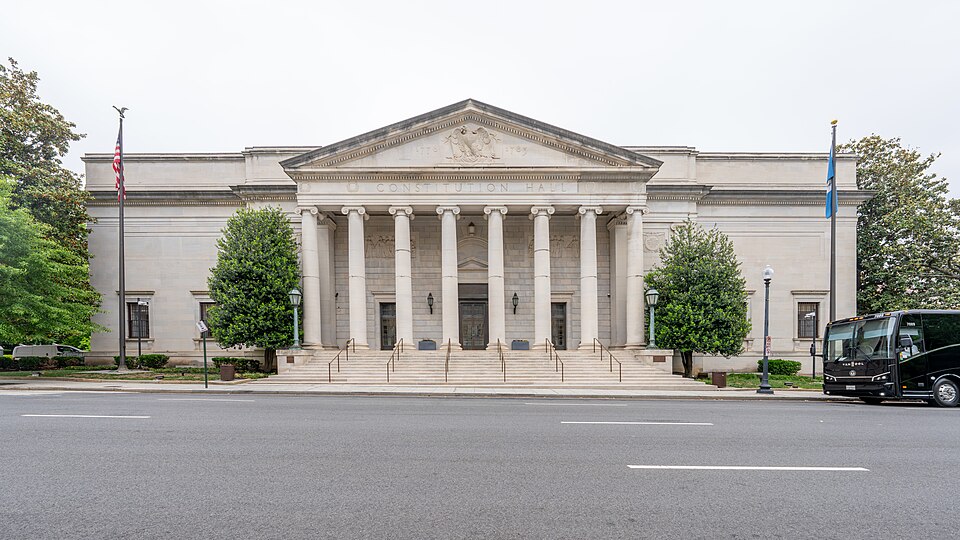
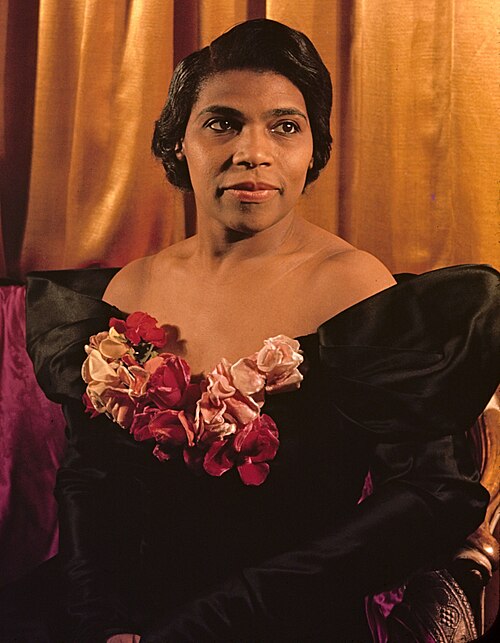
During 1943, Lena Horne met several times with the First Lady. She was pushing for Eleanor’s help in getting the President and Congress to pass any anti-lynching law. “FDR”, would NEVER SIGN, or ask Congress to bring up such a bill.
At about this time, Lena Horne was a member of the “Joint Anti-Fascist Refugee Committee (JAFRC)“. That humanitarian and political organization was founded in 1941, in New York City. The organization’s goal included providing medical aide and the rescuing of refugee’s from the “Spanish Civil War”, July 17, 1936 to April 1, 1939. They also provided medical aide and the rescuing, of anti-fascists living in either, Vichy, France, or, North Africa during the Nazi occupation. Besides Lena Horne, supporters of the group included, Albert Einstein, Leonard Bernstein, Lillian Hellman, Langston Hughes, and Orson Welles.
However, while, the other above names might be members, or supporters of the group. Lena Horne went further, she was filing, lawsuits against segregated motion picture theater owners.
Then, there was the rally organized by the “Council on African Affairs (CAA)”, June 6, 1946 in New York City’s, “Madison Square Garden”. The group’s theme was, “Big Three Unity for Colonial Freedom”.
The “Big Three”, were the United States, Great Britain, and the Soviet Union. The “CAA”, wrongly thought, that as the “Big Three” had worked together during the Second World War. They would work together, after the war.
The rally’s publicity played off two names that were to appear in “The Garden”.
Lena Horne’s appearance was for “HOLLYWOOD GLAMOUR”, and her purpose was to attract attendees. It is estimated she was responsible for, at least, 20,000 attendees.
At the rally, Paul Robeson, gave the “Chairman’s Address”. He linked the Civil Rights Struggles in the United States, directly to the miner’s strikes in South Africa for equality at the time . He also argued, that the United States’s, Cold War posturing, was nothing more than a cover to perpetuate “Colonial Subjugation“.
Lena Horne would sing spirituals, and jazz standards. All designed to set an emotional defiant tone. These songs came as interludes between the anti-colonial speeches.
We know she sang her signature piece, “Stormy Weather”. Which now reflected a mood of social unrest as an enduring struggle.
We don’t know the exact other songs Lena Horne sang, but it is believed they included W. C. Handy’s, “St. Louis Blues”, and the Jerome Kern and Oscar Hammerstein II’s, “Can’t Help Lovin’ Dat Man”.
During the rally, and other previous events, including Lena Horne’s appearances at the “Cafe Society”, J. Edgar Hoover’s “Federal Bureau of Investigation Agents”, were taking notes on Lena Horne, and Paul Robeson. They would move on Robeson, June 12, 1956, calling him before “The House Committee on Un-American Activities(HUAC)”. He was branded a “Communist”, and would leave the United States for Great Britain. It would take until June 16, 1958, and the “Supreme Court” ruling of “Kent vs Dulles”, until his United States Passport was reissued.
As for Lena Horne, she was never called before the “HUAC”, but according to the “FBI”,. was a “Communist Agitator”, based solely on her political activism.
HOWEVER:
This was all caused by the “Second Red Scare” newsletter, called, “Counterattack: The Newsletter of Facts On Communism”. It was initially given out, to selected Congressional and news media members on May 7, 1948 . The newsletter was by subscription only, and mimeographed. Yet, this was a very powerful anti-Communist publication. It was published by Three powerful Ex-FBI Agents, tied to a major television network:
https://en.wikipedia.org/wiki/Counterattack_(newsletter)#cite_note-HUAC-10
John G. Keenan: Ex-FBI agent, publisher of Counterattack, and ABC Inc. president.
Kenneth M. Bierly: Ex-FBI agent, ABC Inc. vice president.
Theodore C. Kirkpatrick (AKA “Ted Kirkpatrick”): Ex-FBI agent, managing editor and chief spokesperson of Counterattack (known as “Mr. Counterattack”) and ABC secretary-treasurer.
On June 22, 1950, “Counterattack”, mimeographed an article entitled: “Red Channels”, “The Report of Communist Influence in Radio and Television”. The three ex-FBI agent’s, published a list of “Hollywood” entertainment names, that they claimed, without any factual back-up, were all “Communists”.
Right after their list came out, the “House Committee on Un-American Activities”, began their attack on the American Motion Picture Industry. The first people called to appear in front of the “HUAC”, were based solely upon “Counterattack’s list. Frightened studio executives, not wanting to be blamed for having Communist’s in their studios, started “BLACKLISTING” the “HUAC’s” charged members of their industry. Both entities overlooking that “FDR”, and the United States government, wanted American’s to support our Second World War ally, the Soviet Union. As the best means to show that support. Many American’s joined the “CPUSA (Communist Party USA)”, during the war, but never, even once, attended a “Party” meeting, or any other function, and forgot about joining.
The anti-Communist frenzy, see my linked article on Joseph McCarthy, resulted in Lena Horne being “BLACKLISTED”, and FIRED by the executives at “Metro-Goldwyn Mayer”. Although, as I just said, she was NEVER WAS CALLED TO APPEAR, OR CHARGED BY, THE HUAC.
Why did the “FBI” look at Lena Horne? This was the result of Four instances over her career:
The First, was simply that Lena Horne was a close friend of Paul Robeson, and appeared on stage at the “Cafe Society”.
The Second, was that Lena Horne had signed the “UNITED NATIONS PETITION”: “WE CHARGE GENOCIDE: THE CRIME OF GOVERNMENT AGAINST THE NEGRO PEOPLE”, dated December 17, 1953. Brought to the “UN”, by Paul Robeson and William Patterson, from “The Civil Rights Congress (CRC)”. The following is from the website the “ZINN EDUCATION PROJECT”, at
https://www.zinnedproject.org/news/tdih/we_charge_genocide_petition/
“The book-length petition documented hundreds of lynching cases and other forms of brutality and discrimination, evincing a clear pattern of government inaction and complicity.”
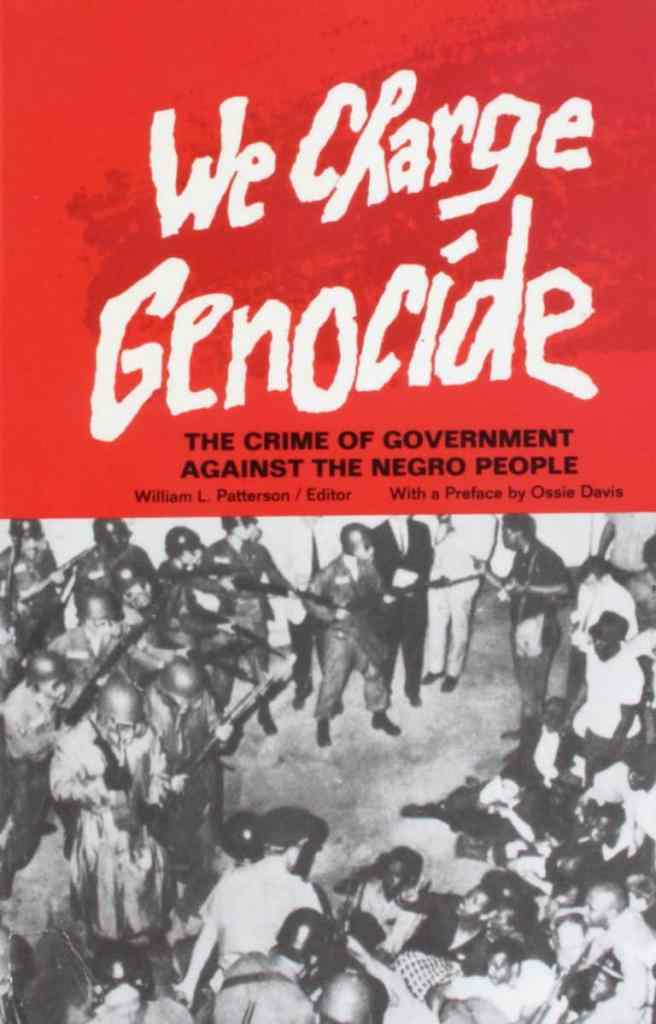
“It charged that in the 85 years since the end of slavery more than 10,000 African Americans were known to have been lynched (an average of more than 100 per year), and that the full number can never be known because the murders are often unreported.”
The Third event, was that Lena Horne, had performed for the Blacklisted “Hollywood Ten”, again see my McCarthy link.
The Fourth reason for Lena Horne being “Blacklisted”, by “MGM”, was HER OUTSPOKEN REFUSAL OF JIM CROW SEGREGATION. Horne’s performance for the “Black Soldier’s”, mentioned above, during the Second World War, was considered as proof by the industry executives at “Metro-Goldwyn-Mayer”.
On July 14, 1950, the movie “Duchess of Idaho”, a comedy musical starring Esther Williams and Van Johnson opened. Both Lena Horne and Eleanor Powell appeared in cameo’s as themselves. The movie had been filmed in October through December 1949, prior to Lena’s “Blacklisting”.
IF the motion picture industry didn’t want Lena Horne, Lena re-established herself as a primary Night Club act. That act in Las Vegas, Nevada, singing, “If You Can Dream”, was partly used for the motion picture, 1956’s, “Meet Me in Las Vegas”, as were the acts of Frank Sinatra, Debbie Reynolds, and Sammy Davis, Jr.
Between 1968 and 1969, Lena Horne guest cameoed on television’s “Rowan and Martin’s Laugh-In”, three times.
Then came a dramatic role in director Don Siegel’s, (Maybe), Western, “Death of a Gunfighter”, released first in Italy, on April 24, 1969, in West Germany, the next day, but in the United States on May 8, 1969.
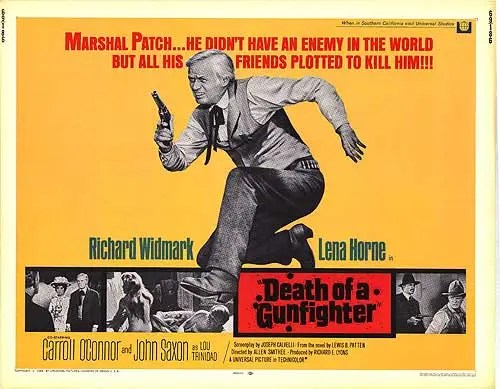
The director (?) of the motion picture was Robert Totten, a television director, who had one too many arguments with Richard Widmark, and walked off the picture. Don Siegel was brought on board and he filmed the majority of the motion picture, but did not want his name on the movie. Which would have eliminated Totten’s work. So, the on-screen director became “Allen Smithee”. You might have seen this fictional name used by many directors who don’t want to be associated with a movie, especially when their work is edited for television, or in-flight movies.
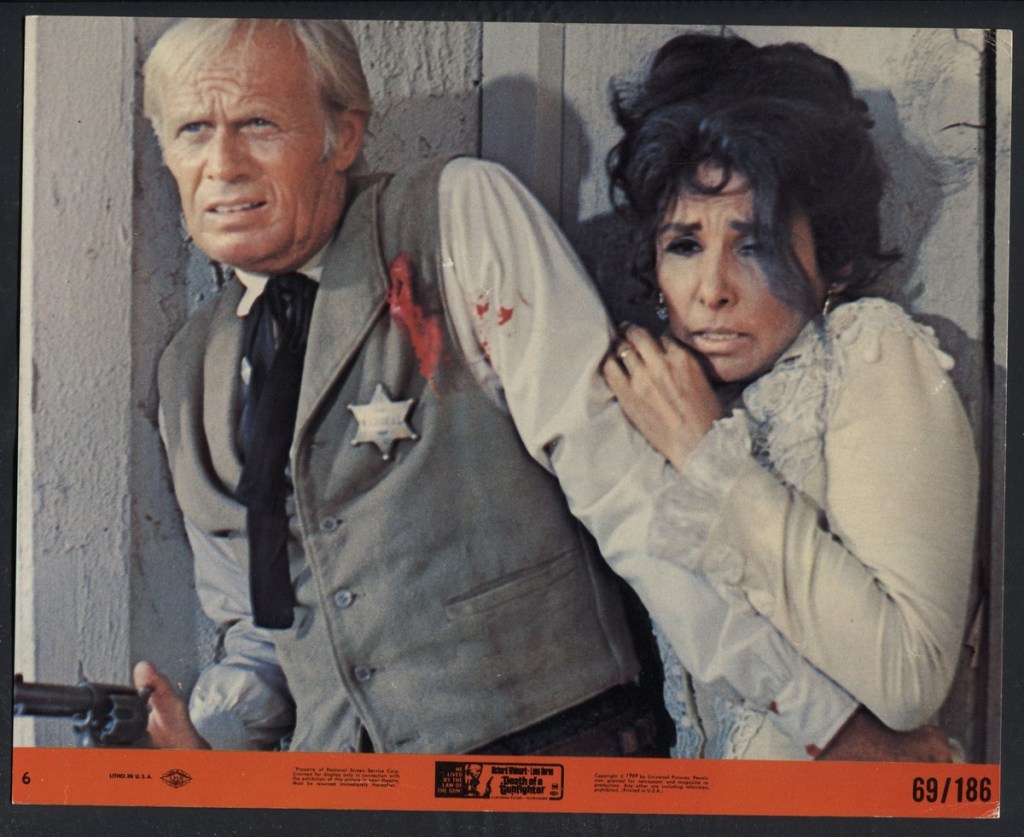
Richard Widmark portrayed “Marshall Frank Patch”. He had just starred in director Don Siegel’s, cop crime drama, 1968, “Madigan”, and the reason Siegel was asked to take over directing “Death of a Gunfighter”.
Lena Horne portrayed “Claire Quintana”. Her next on-screen appearance would be in a television episode of “Sanford and Son”, on January 12, 1973, with the original title of “A Visit from Lena Horne”.
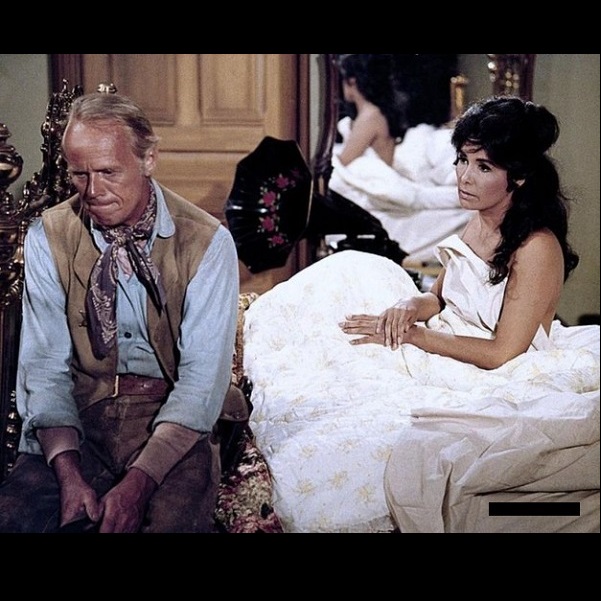
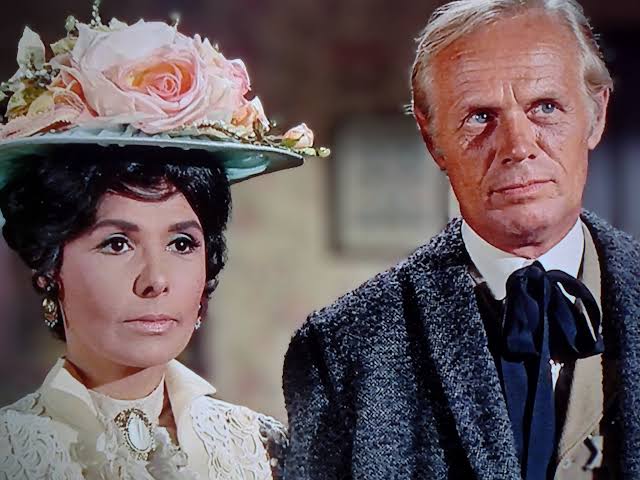
Above, Richard Widmark and Lena Horne.
The setting is Texas at the turn of the 19th Century, in the town of Cottonwood Springs, the town leaders are looking at the 20th Century. They’re ready for the change, but have a small problem, “Town Marshall Frank Patch”.
“Patch” is a very good Marshall, but he belongs in the 19th Century fighting at the “O. K. Corral”, or as a participant of the “Lincoln Country, New Mexico, War, along side “Pat Garrick” and “Billy the Kid”.
After “Patch” kills drunken, “Luke Mills”, portrayed by James Lydon, in self defense. The city council, although recognizing the shooting was legal, decide it’s time for the Marshall to go. So, the 20th Century thinking city council can start to establish a “Police Force”. However, “Patch” reminds them, that they agreed that he could have the position until he decided to leave, and he’s not ready.
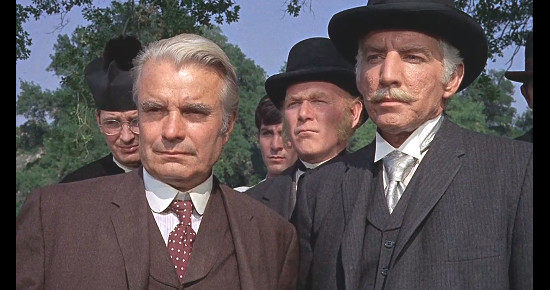
The city council, next gets “County Sheriff Lou Trinidad’, portrayed by John Saxon, a protege of “Frank Patch” to talk him into leaving. “Trinidad”, after speaking to “Patch”, bows out of getting between his mentor and the town’s council.
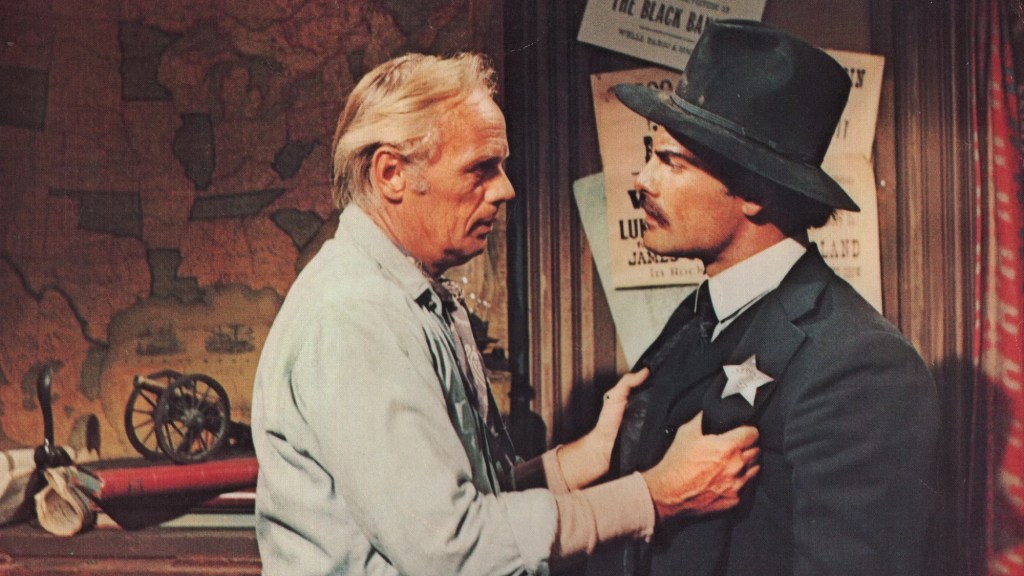
Now, some of the councilmen bring up the idea of murdering the Marshall.
Next, “Councilman Andrew Oaxley”, portrayed by Kent Smith, a cowardly lawyer, who was humiliated by “Patch” at the ad-hoc firing meeting, Now plans to ambush “Patch” and kill him, to prove to his grown son he isn’t the coward the son believes he is. This backfires, and “Oaxley”, is trapped in his own room by “Patch”, and turns the rifle he was going go to kill “Patch” with, on himself.
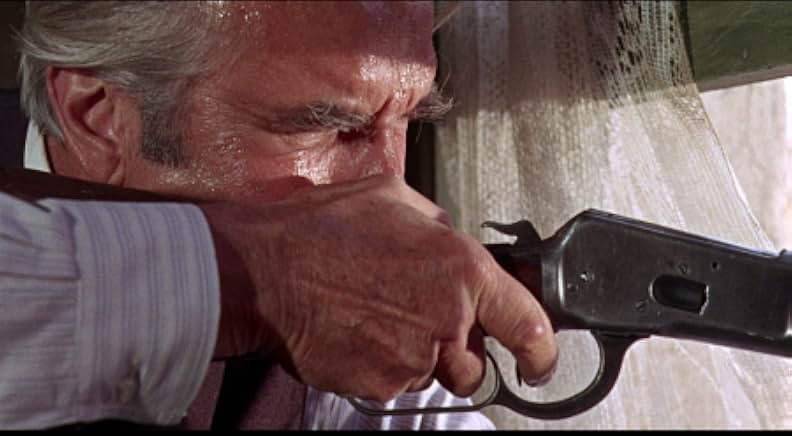
Lena Horne is part of the on-going subplot. She portrays the brothel owner, “Claire Quintana”, the woman “Frank Patch”, loves, and will marry, at this point of the story. Their marriage takes place on the same day as “Luke Mills” funeral.
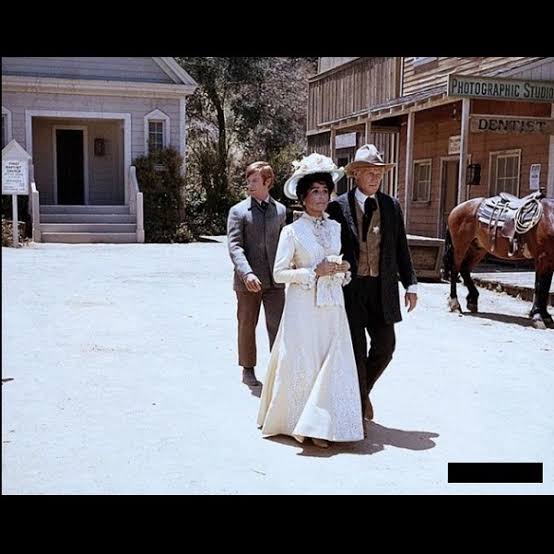
Egged on by the remaining councilmen, “Will Oxley”, portrayed by Mercer Harris, will attempt what his father didn’t do, and this will keep the responsibility away from the city council,
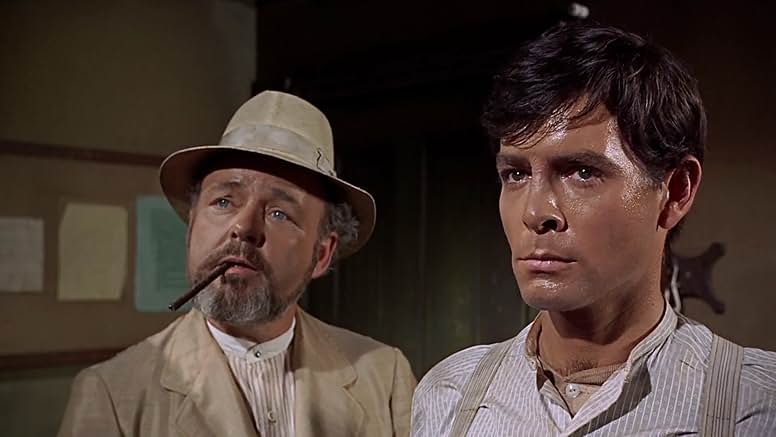
Above, Carrol O’Connor portraying “Lester Locke”, and Mercer Harris.
However, “Will” breaks from the Councilmen’s plan, and attempts to kill “Frank Patch” by himself. Instead, he is mortally wounded and will he is dying. “Frank” reveals that “Will’s” father had shot a man in the back years ago. “Frank Patch” agreed to cover the murder up, if “Andrew Oxley, agreed to raise the dead man’s son as his own.
The climax comes, as “Patch” goes after saloon owner and main instigator of the plot to murder him, “Lester Locke”. “Frank”, wounds, captures, and jails the saloon owner. “Patch” now states he’s going after the other councilmen, but knows he may be killed.
After stopping at the church, “Marshall Frank Patch” leaves, and is shot and killed, on the main street of 20th Century bound, “Cottonwood Springs”, by men on the rooftops.
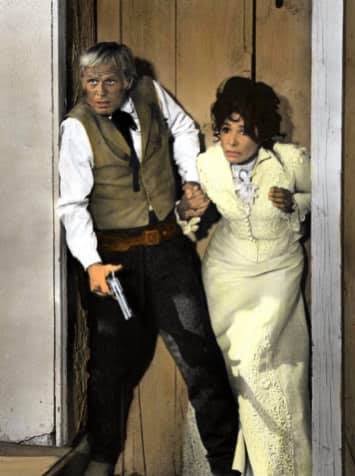
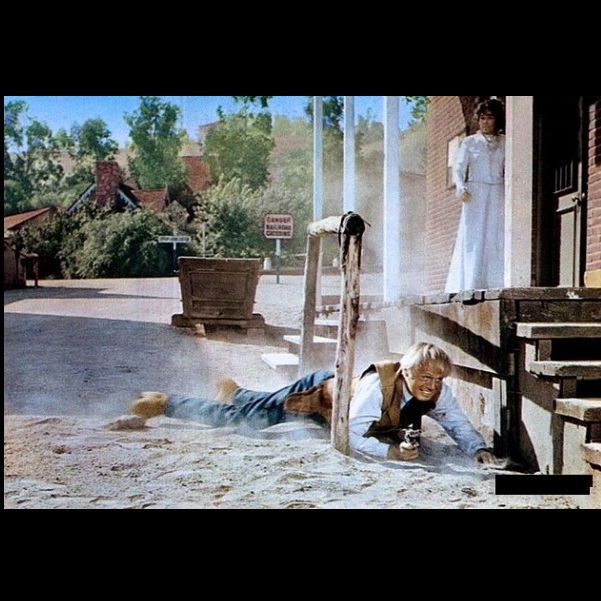
That night, “Claire Quintana Patch” is seen leaving “Cottonwood Springs”.
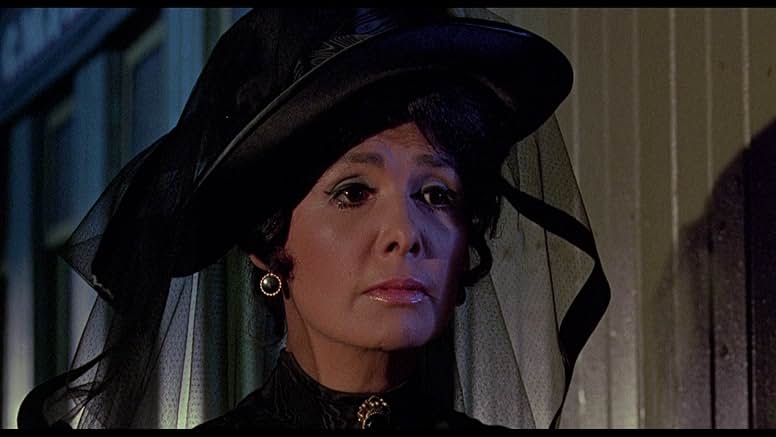
At dramatic moments within 1969’s, “Death of a Gunfighter”, Lena Horne’s voice is heard singing “Sweet Apple Wine“, by Carol Hall and Oliver Nelson.
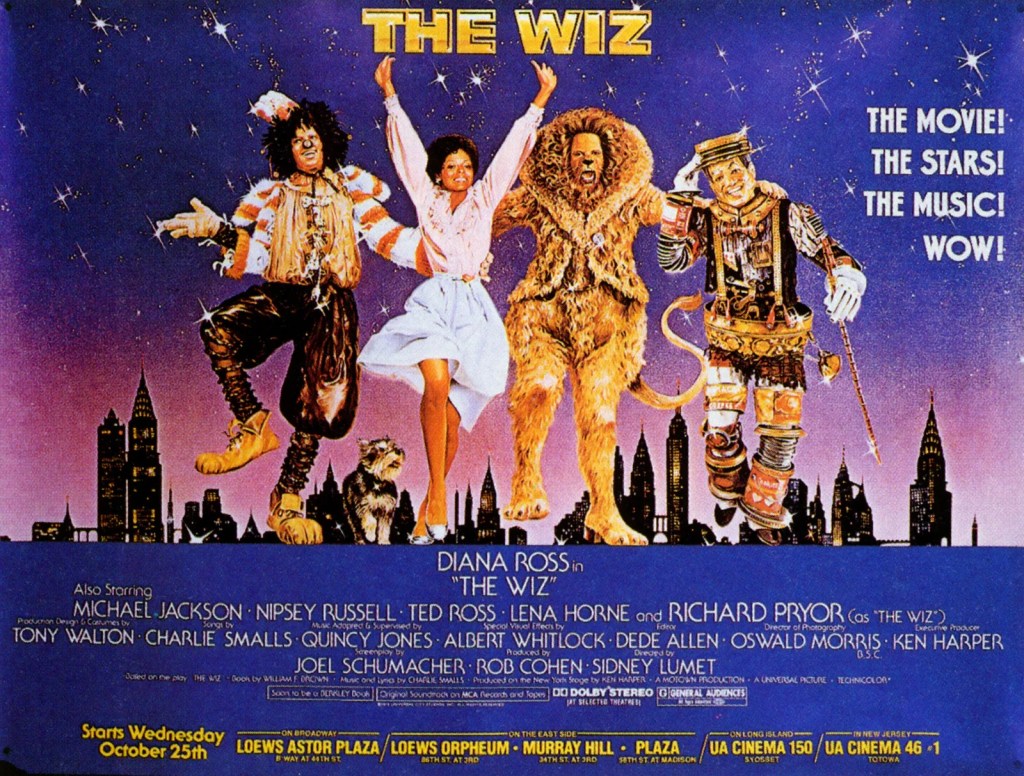
Next, Lena Horne was heard and seen, as “Glinda the Good”, in the 1978 motion picture version of the award winning Broadway musical, “The Wiz”, that opened on-screen, October 24th.
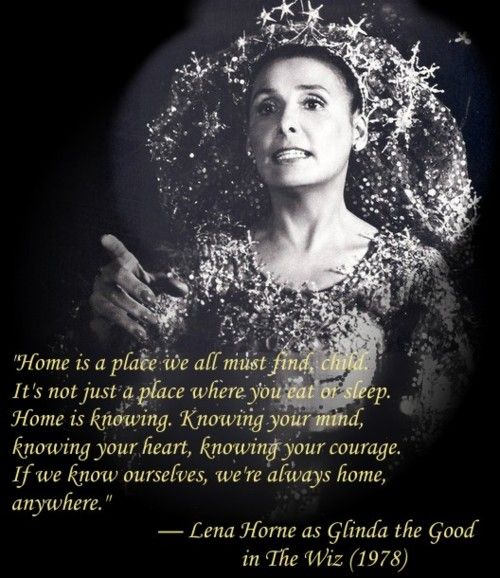
On May 9, 2010, in New York City, Lena Horne passed away.
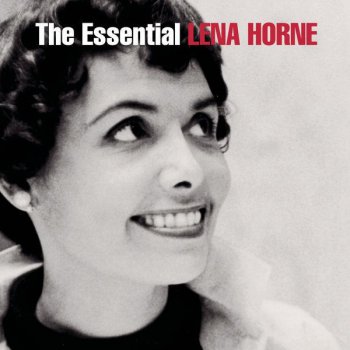
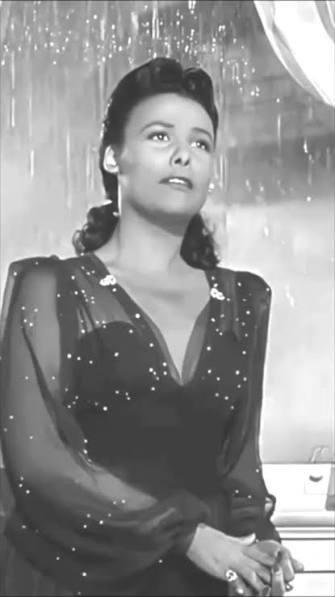
Don′t know why there’s no sun up in the sky
Stormy weather since my man and I ain′t together
Keeps raining all the time
Life is bare, gloom and misery everywhere
Stormy weather, just can’t get my poor self together
I’m weary all the time, the time
So weary all the time
When he went away the blues walked in and met me
If he stays away old rocking chair will get me
All I do is pray the Lord above will let me
Walk in the sun once more
Can′t go on, all I have in life is gone
Stormy weather since my man and I ain′t together
Keeps raining all the time
Keeps raining all the time
I walk around heavy-hearted and sad
Night comes around and I’m still feeling bad
Rain pouring down blinding every hope I had
This pittering, pattering, beating and spattering drives me mad
Love, love, love, love
This misery is just too much for me
Can′t go on, everything I had is gone
Stormy weather since my man and I ain’t together
Keeps raining all the time
Keeps raining all the time
Writer(s): Harold Arlen, Ted Koehler


Leave a Reply