You have to start somewhere, especially, if you’re a “Contract Player” at a motion picture studio, such as “Warner Brothers”. So it was, James Francis ‘Jimmy’ Cagney, Jr.
James Cagney only had 70 motion picture and television roles between 1931 and 1984. 34 of these were in the decade of the 1930s. This is a small look at some of those feature films.
Above, 3rd-billed,James Cagney in his first motion picture, 1930’s, “Sinners’ Holiday”, portraying “Harry Delano”. He was offered the role, after impressing Al Jolson. Who had watched Cagney in the 1929, original play, “Penny Arcade”, and acquired the film rights to it. Al Jolson, would produce the play as the motion picture, “Sinners’ Holiday”.
The actor was born on July 17, 1899, in New York City, and was the second of seven children, two had died within months of their birth, to James Francis Cagney, Sr. and Carolyn Elizabeth Nelson Cagney.
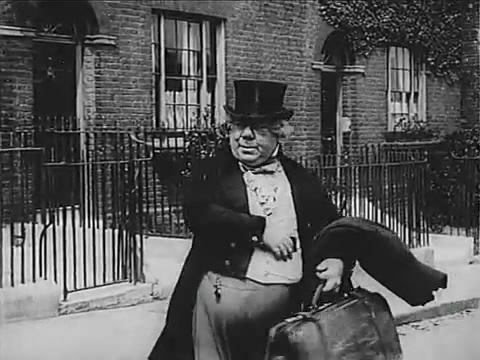
As a boy he had started tap dancing and earned the nickname of “Cellar-Door-Cagney”, because he would tap dance on slanted cellar doors. While visiting his Aunt in Brooklyn, the young tap dancer would climb over the fence between his Aunt’s house and the “Vitagraph Studios”. To watch the filming of popular comedian actor, John Bunny’s short subjects.
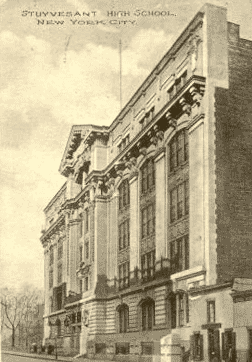
James Cagney would graduate from Stuyvesant High School in 1918.
After graduation, “Jimmy” became an art major at “Columbia College”, started to learn the German language, and joined the “Student Army Training Corps”, but had to drop out of both. This was after his father died in 1918, during the, “Great Influenza Epidemic“, that lasted through 1920.James Cagney took up a variety of odd jobs to help his family, and while working for the “New York City Public Library”, he met Florence James.
Florence, with her husband, Burton, were strong proponents of their theatre arts having a social mission. She guided the young man at the start of his acting career.
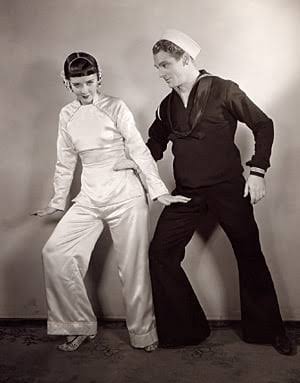
In 1919, James Cagney was working in “Wanamaker’s Department Store”. As the story goes, a friend told him about a play, “Every Sailor”, that was looking for dancers. Cagney went to the try out, worried because he only knew one tap dancing step, called the “Peabody”. It turned out to be the most complicated tap step to learn, and the producer hired him. James Cagney would watch the other dancers, and remember their steps with his photographic memory.
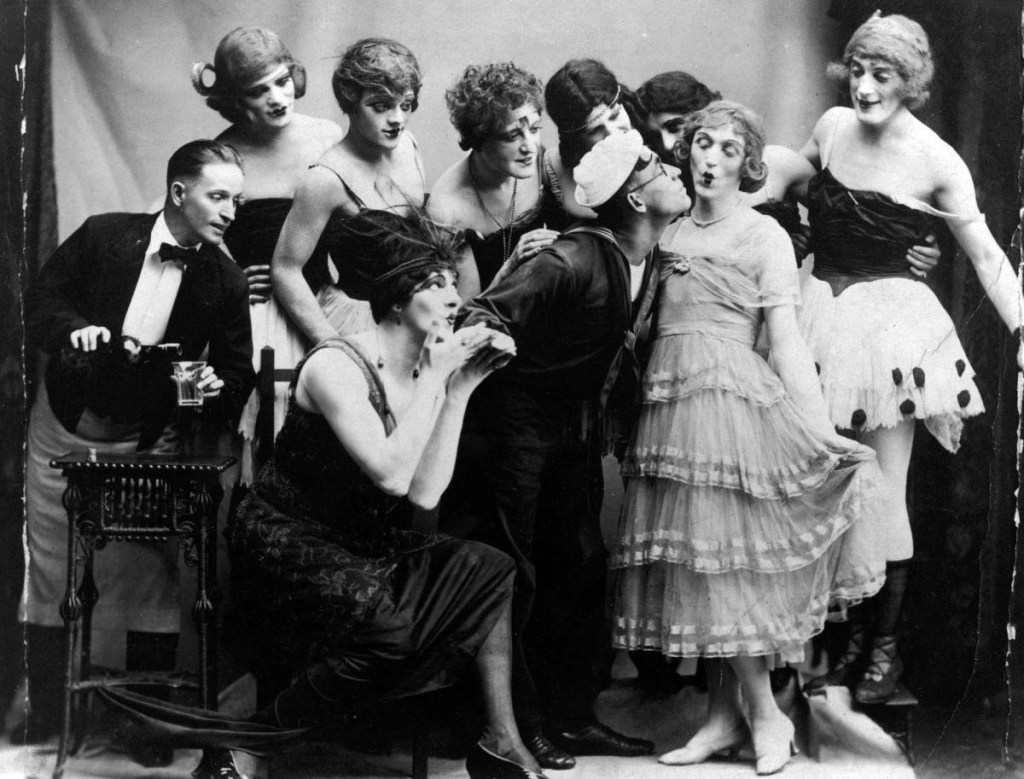
Below, James Cagney’s first acting role was in the chorus of “Every Sailor”. That is Cagney, in drag, standing second from the left, below. n All the women were male dancers.
James’s mother was very proud of her son’s performance on stage, but she wanted him to finish college. After two months in the chorus of “Every Sailor”, he quit the production. In difference to his mother’s wishes, James Cagney, Jr., got a position as a “Runner” for a New York City brokerage house, for $35 a week,(equal to $681 dollars as of this writing).
However, he still looked for work on stage, and found it.
On September 28, 1920, producer William B. Friedlander’s production, “Pitter Patter”, opened on Broadway, at the “Longacre Theatre”.
In the chorus was James Cagney, now making $55 a week, (equal to $926 as of this writing). Each week, James sent his mother $40 for the family.
Also, in the chorus, of “Pitter Patter”, was 20 years old, Frances Willard “Billie” Vernon, the two would marry on September 28, 1922, and remain together, until death did depart them, with James’s, on March 30, 1986.
During 1940 the couple adopted a son whom they named James Francis Cagney III, and later a daughter, Cathleen “Casey” Cagney. Both Cagney children would become estranged from their father.
Returning to the legitimate stage, after the 32-week run of “Pitter Patter”, the couple started touring in the vaudeville circuits, and at times, separately, on different ones. For one of the troupes Cagney took over a spot on, was for Archibald Alec Leach, who would change his name to Cary Grant.
In 1924, the Cagney’s moved to Hawthorne, a suburb of Los Angeles. The move served two purposes, James was finally to meet his mother-in-law, who had moved to Hawthorne from Chicago. The second was to look at entering movies, but that failed, as did the Cagney’s dance studio. The couple borrowed money and moved back to New York.
In 1925, James Cagney auditioned for, and got his first dramatic role. On September 7, 1925, he portrayed hobo, “Little Red”, with third-billing, in playwright Maxwell Anderson’s. “Outside Lookin In”, opening at the “Greenwich Village Theatre”. This was followed by another play and the opening of another dance studio, which he would close out of exhaustion from performing on stage and teaching.
On May 28, 1928, James Cagney was 4th billed in the musical, “Grand Street Follies of 1928”, that ran for, 144 performances, through October 1st, at the “Booth Theatre”, on Broadway, starring Vera Allen. For that production, the choreography was created by James Cagney. He followed that musical with “The Grand Street Follies of 1929”, all leading to the play
Another play, “Broadway”, followed, that the producer and director were forcing James Cagney to play the leading role as the previous actor, Lee Tracy, had created it, dialogue delivery and actions exactly. This almost pushed the actor to the breaking point of leaving the profession. Tracy would go on to be a motion picture actor, and in 1932, he co-starred with Lionel Atwill and Fay Wray, in the first all technicolor horror movie, “Dr. X”.
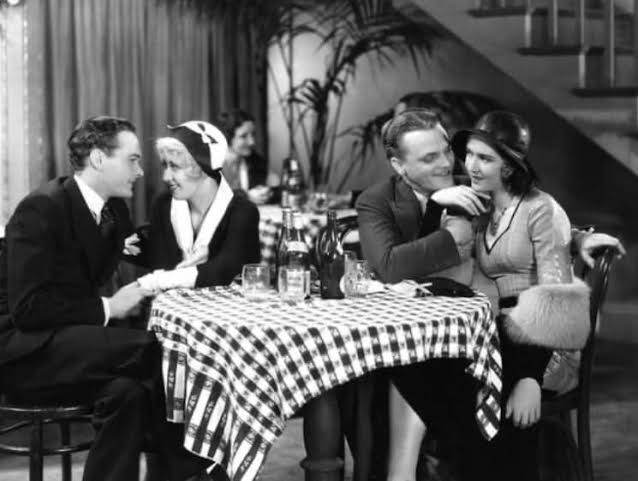
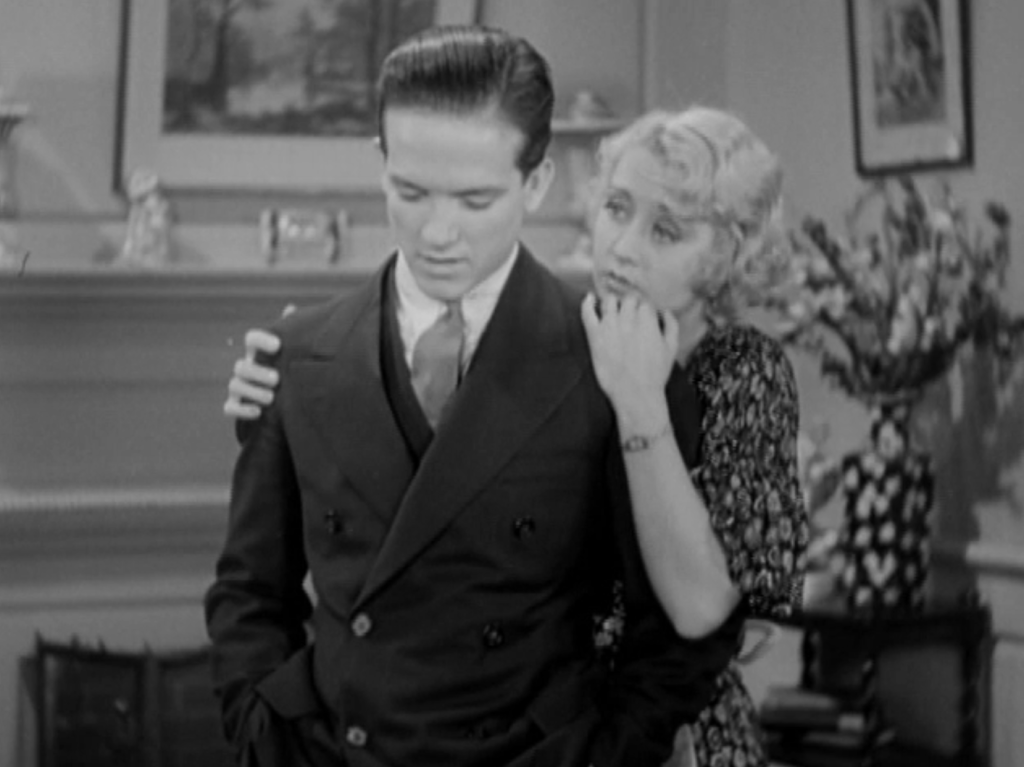
However, on October 21, 1929, James Cagney opened on the stage at the “Cort Theatre”, portraying 3rd-billed, “Elwood”, opposite, 2nd-billed, Joan Blondell , portraying “Etta”, in “Maggie the Magnificent”. On March 10, 1930, both Cagney and Blondell, would open at the “Fulton Theatre“, in “Penny Arcade”. One of their performances was seen by Al Jolson, and as I mentioned at this article’s beginning. “The Jazz Singer” turned producer, would turn that play into the 1930 feature film, “Sinners Holiday”. Featuring the two original performers appearing in their first on-screen roles, seen below.
Two forgotten motion pictures followed. Lew Ayres, who had just been in the classic anti-war drama, 1930’s, “All Quiet on the Western Front”, portrayed 1st-billed, “Louis Ricarno”, in the 1930 crime drama, “The Doorway to Hell”. James Cagney was 5th-billed “Steve Mileaway”. Next, in director William “Wild Bill” Wellman’s,1930, ‘Other Men’s Women”, James Cagney was 4th-billed, portraying “Ed”. All leading to:
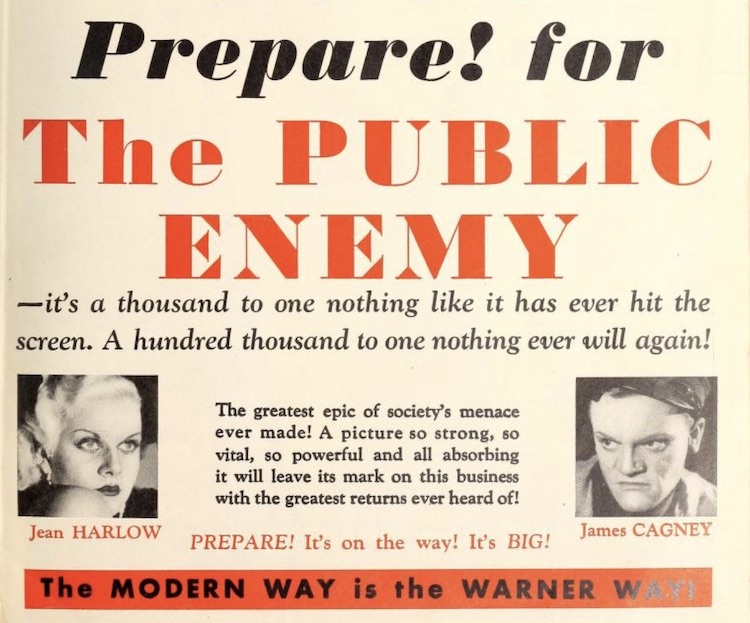
THE PUBLIC ENEMY premiering in New York City on April 23, 1931
There was an unpublished novel entitled “Beer and Blood”, written by two former newspaper reporters, John Bright, and Kubec Glassman≥ The two, now screenplay writers, were witnesses to some of Al Capone’s actual activities in Chicago. Their novel was based upon the real people they knew in that city.
The unpublished novel was turned into a screenplay by Harvey F. Thew. He had just done the same for Barbara Standwyck’s, 1931, “Illicit”, and followed this feature film, by adapting a storyline into a screenplay, for director Michael Curtiz’s, overlooked horror movie, starring John Barrymore, 1931’s,”Mad Genius”.
The motion picture was directed by the previously mentioned William “Wild Bill” Wellman. During the First World War, he flew for the French, long before the United States joined in. As a motion picture director, Wellman, directed the first winner of the “Best Picture Academy Award”, the First World War Air Force, motion picture, 1927’s, “WINGS”. My article is “WILLIAM A. “WILD BILL” WELLMAN: “3” with JOHN WAYNE: “Island in the Sky”, “The High and the Mighty” and “Blood Alley”, for your reading at:
According to “Warner Brother” documents, as this was a pre-Motion Picture Code feature film, director, Wellman had promised studio head Jack L. Warner that:
“I’ll bring you the toughest, most violent picture you ever did see”.
Some of the Cast Members:
James Cagney portrayed “Tom Powers”.
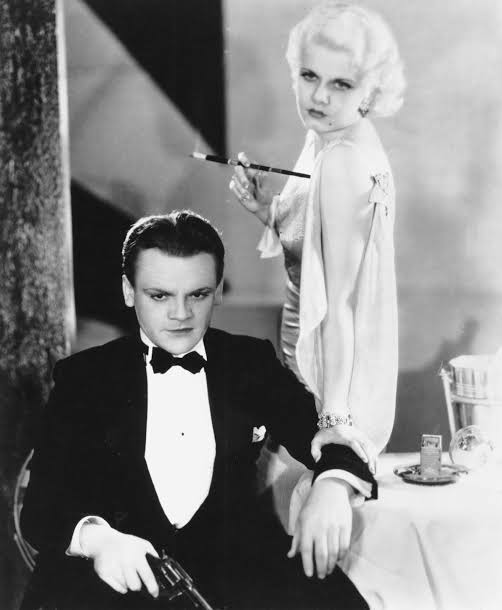
Jean Harlow portrayed “Gwen Allen”. “THE Platinum Blonde” had just co-starred with Wallace Beery, Lewis Stone, and Johnny Mack Brown, in the “True Crime” movie, 1931’s, “The Secret 6”. Three movies later, she would co-star with Loretta Young in the 1931 movie, “Platinum Blonde”. I wrote about the actress and the war between two studios to make a biographical film about her. That article is “JEAN HARLOW: The 1965 Biographical Race Motion Picture Race”, I remember it well, found at:
Edward Woods portrayed “Matt Doyle”. This was only Woods second motion picture out of twelve through 1938. Woods was a legitimate stage actor, and after his film career ended. He became a producer, director, and production manager for both the Broadway “Schubert Organization”, and “20th Century Fox”.
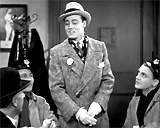
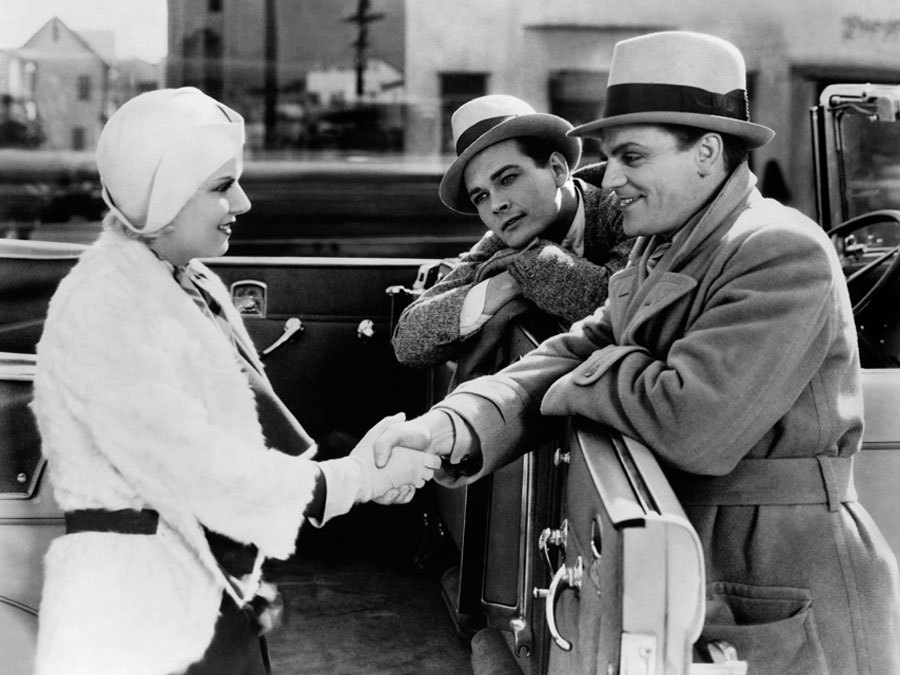
Above left, Cagney, with Woods.
Joan Blondell portrayed “Mamie”. Blondell had just appeared in 1931’s, “God’s Gift to Women”, described as a “Dark Romance, Comedy” on “IMDb”. Prior to that movie, she was 6th-billed in Barbara Stanwyck’s, 1931, “Illicit”. She followed this picture with 4th-billing in 1931’s, “My Past”.
I want to mention an “UNCREDITED” actress in this picture. Who would have a classic scene that is mentioned over others from the picture.
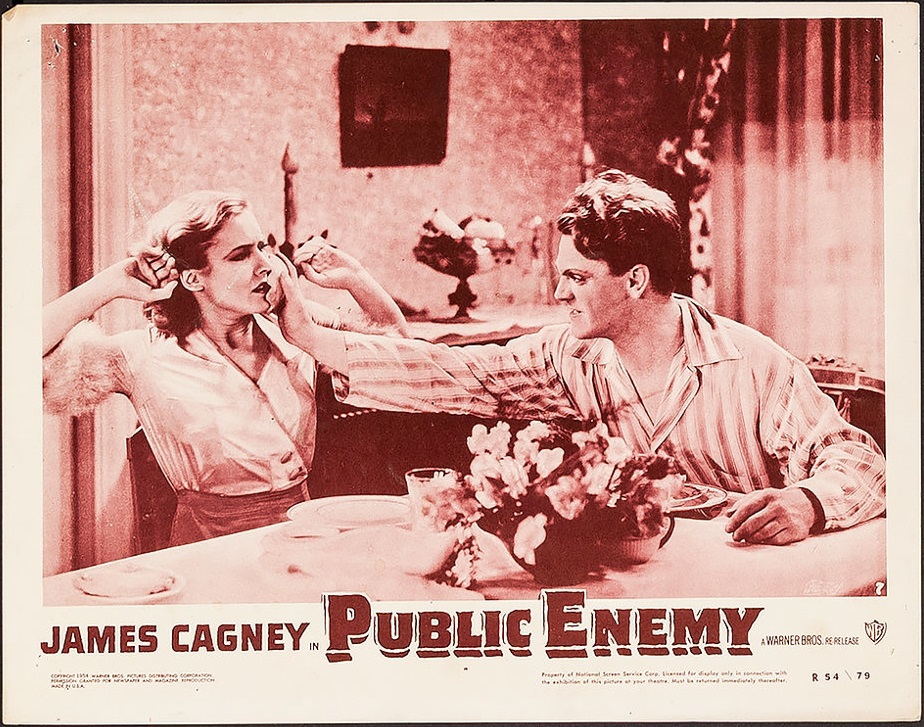
Mae Clarke portrated “Kitty”, who at the breakfast table gets a Grapefruit in her face by James Cagney. This was not planned, or scripted.
Two movies later, Mae Clarke starred in director James Whale’s, 1931, “Waterloo Bridge”. Two movies after that picture, and director James Whale had Mae Clarke cast as “Elizabeth”, in 1931’s, “FRANKENSTEIN”.
The Rise and Fall of a “Public Enemy”:
The movie opens with the following on the screen:
“Foreword · It is the ambition of the authors of “The Public Enemy” to honestly depict an environment that exists today in a certain strata of American life, rather than glorify the hoodlum or the criminal. While the story of “The Public Enemy” is essentially a true story, all names and characters appearing herein, are purely fictional.”
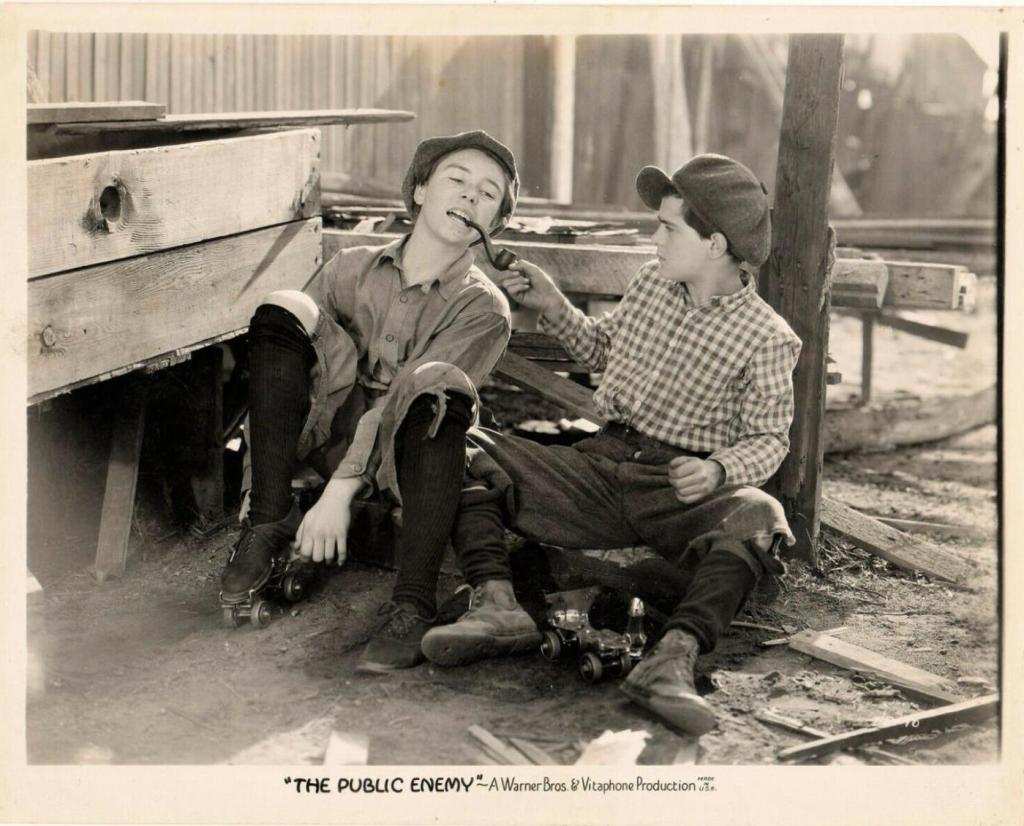
The audience now meets two young boys, “Tom”, portrayed by Frank Coghlan, Jr.. Who would portrayed “Billy Batson”, the young adventurer who learns the magic word, “S.H.A.Z.A.M.” and turns himself into the title character of the 1941, Chapter Serial, “The Adventures of Captain Marvel”.
While, “Matt”, was portrayed by Frankie Darrow. Who would co-star with Gene Autry, in the 1935 Chapter Serial, “The Phantom Empire”, fighting against the survivors of Mu attempting to conquer the world. In 1956, Frankie Darro, was inside the body of “Robby the Robot”, in the classic science fiction, “Forbidden Planet”.
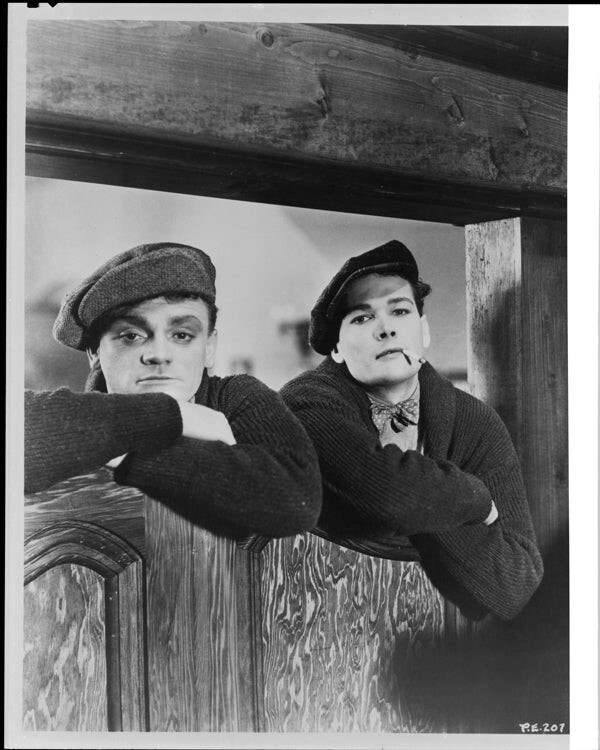
Above left. Frank Coghlan, Jr. and Frankie Darrow.
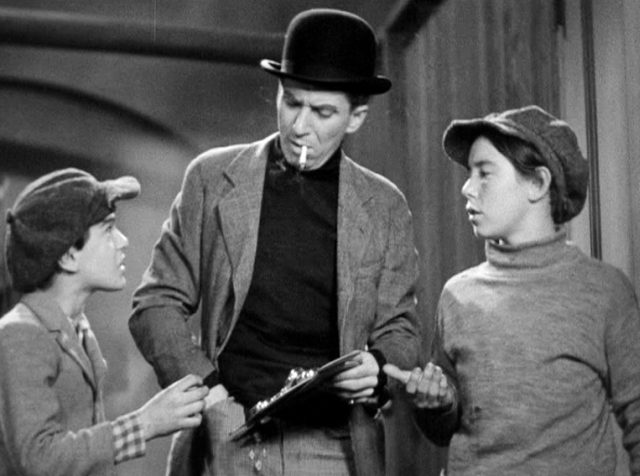
The two life long friends are petty thieves selling their acquisitions to “Putty Nose”, portrayed by Murray Kinnell.
“Putty Nose” asks the boys to join his gang on a fur warehouse robbery. Everything goes wrong, when “Tom” is startled by a taxidermied bear, and shots it. Unfortunately, his gunshot alerts the nearly police and a shoot out results in the death of “Larry Dalton”, the actor is not named on “Official Cast Listing”. “Putty Nose” told the boys he would protect them, but they discover he fled.
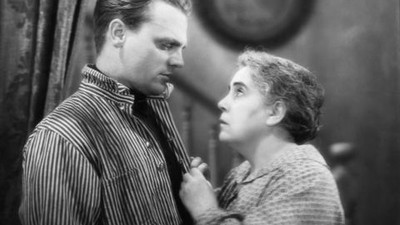
“Tom’s” “strait laced” brother, “Mike”, portrayed by Donald Cook, attempts to get his younger brother to stop his criminal activities. Both are keeping them away from their mother, “Ma Powers”, portrayed by Beryl Mercer. Move forward to 1917, and the United States enters the First World War. “Mike” enlists in the Marines, but “Ma” makes “Tom” promise not to enlist.
Movie three-years forward, and “Prohibition” comes into play, and gangster, “Paddy Ryan”, portrayed by Robert Emmett O’Connor, billed a Robert O’Connor, asks “Tom” and “Matt” to become salesmen for his bootlegging business.“Salesmen” is another word for an “Enforcer”.
Meanwhile, “Paddy” joins the crime organization of major gangster, “Samuel ‘Nails’ Nathan”, portrayed by Leslie Fenton.
The bootlegging business now becomes were lucrative and “Tom” and “Matt” start to flaunt their new found wealth. While, “Mike”, on leave, finds out that his brother’s income isn’t from politics , but legging. This leads to a small war of words between the two brothers. “Mike”, tells “Tom”, his so-called success is nothing more than from “Beer and Blood”. While, “Tom” replies to the uniformed Marine:
“Your hands ain’t so clean. You killed and liked it. You didn’t get them medals for holding hands with them Germans.”
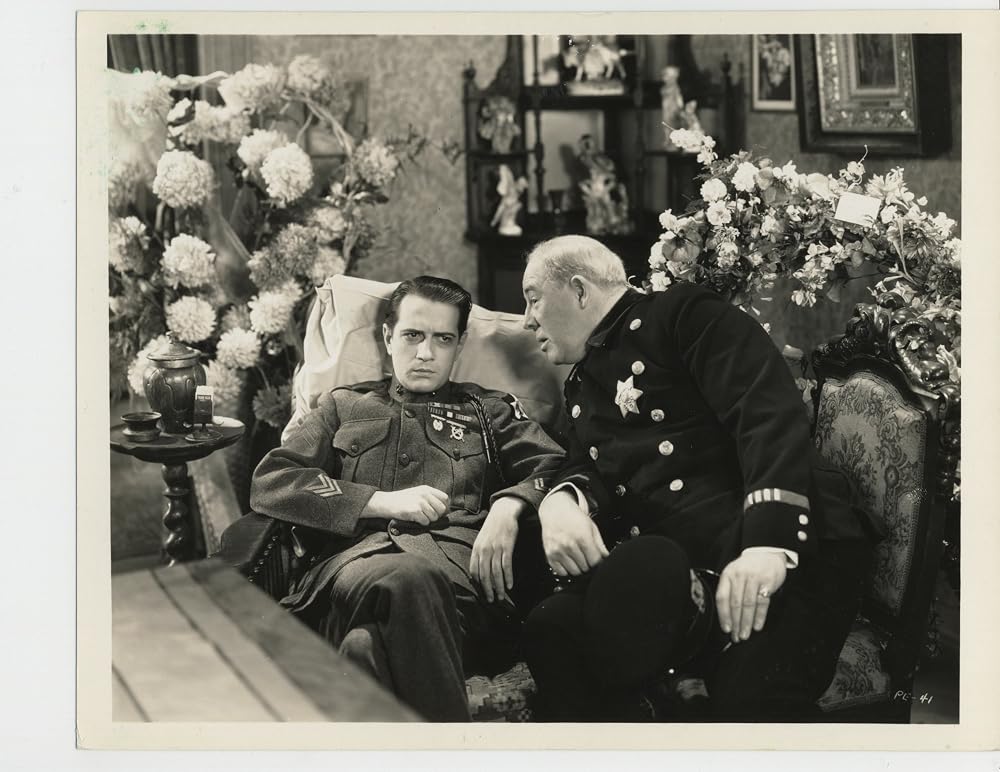
Above Donald Cook and Robert Homan’s portraying “Police Officer Pat Burke”.
“Tom” now has a girlfriend named “Kitty”, and “Matt’s” is “Mamie”.
However, “Kitty” complains to much for “Tom”, and he will drop her, after pushing a grapefruit in her face. He now takes up with “Gwen Allen”.
At a wedding reception given for “Matt’s” wedding to “Mamie”, “Putty Nose” is spotted and both “Tom” and “Matt” follow him home. Begging for his life, “Putty Nose” plays a song the boys liked on his piano, but “Tom” shoots him in the back to the surprise of “Matt”.
A series of events take place.
First, “Tom” gives his mother a large wad of money, but “Mike” rejects the “Ill gotten gift”. “Tom” in response, tears the bills up and tosses them in his brother’s face.
Second, “Nails’ Nathan” dies from a horse racing accident. “Tom” buys the horse that caused the accident and shoots it.
Third, a gang war breaks out, started by rival gang leader, “Schemer’ Burns”. Who is never seen on-screen. “Paddy” get his gang holed up, unseen, in an apartment, while he goes to negotiate with “Burns”. However, “Paddy” is seen leaving the apartment building by one of “Burns’s” men.
After every one gets drunk in the apartment. “Paddy’s” girlfriend, “Jane”, portrayed by the uncredited Mia Marvin, is drinking with “Tom”, but he’s not interested with her. However, she helps him go to the up the stairs to a bedroom to lay down, and brings him another drink.
“I thought you’d like a little nightcap, Tommy. You don’t need to feel ashamed in front of me, Tommy. Here, let me help you.“.
However, he doesn’t want anything to do with “Paddy’s” girl.
“No! I don’t need any help“, but passes out. The next day then following conversation takes place between the two, starting with “Tom” who is coming downstairs:
Tom – “I ain’t hungry. Pour me some coffee, will you, and make it black.“ Jane – “You aren’t sorry are you?“ Tom – “Sorry? Sorry about what?“ Jane – “For last night.“ Tom – “What do you mean? For getting drunk?“ Jane – “Aren’t you the little play actor.” Tom – “Wait a minute… Do you mean that… Why you…!“
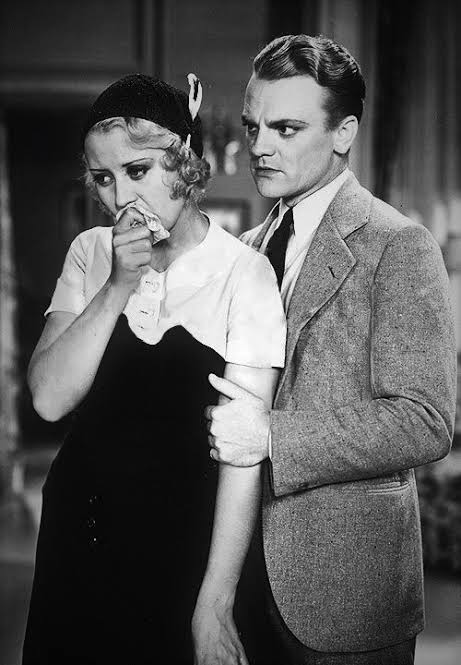
Followed by “Tom” SLAPPING “Jane” across the face, and shocking the 1931 audience. However, this was planned to establish that “Tom Powers” was a completely unhinged and dangerous sociopath.
I remind my reader, that this motion picture was Pre-Motion Picture Code, and anything went, even nudity. See, 1931’s, “The Maltese Falcon”, or Cecil B. DeMille’s, 1932, “Sign of the Cross”.
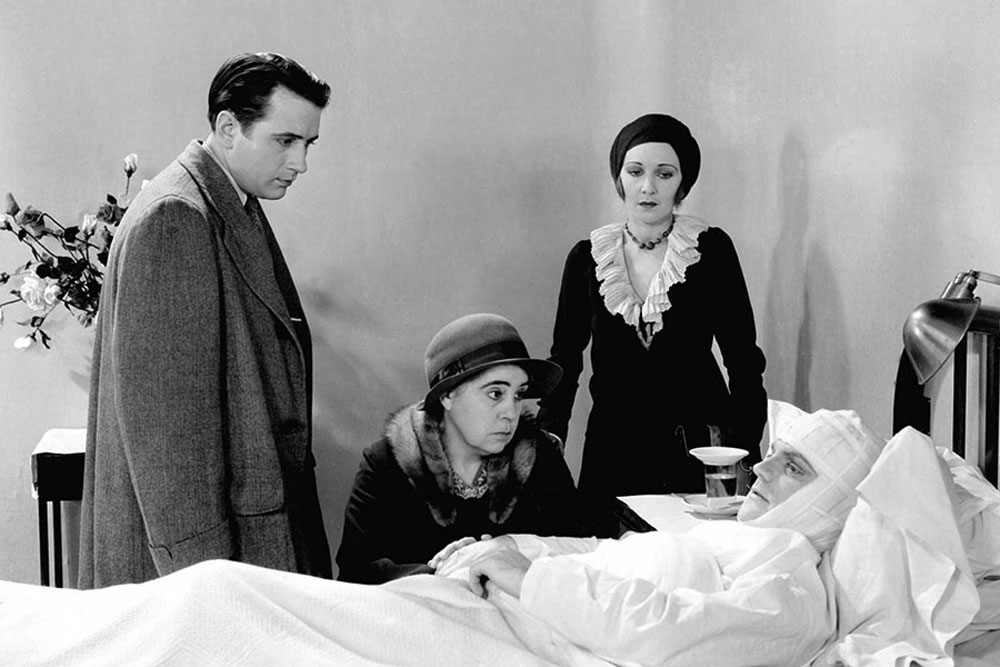
Back to the screenplay, after getting dressed, “Tom” leaves the apartment followed by “Matt”. As soon as “Matt” steps out the front door, he is gunned down by massive machine-gun fire. “Tom” barely escapes, gets two 38’s, planning to single-handedly get even with “Burns” and his men. However, he is shot and ends up in the hospital, visited by his mother, brother, and “Molly”.
“Tom” reconciles who his brother, and agrees to reform, and go straight.
Now the story goes for the climax:
“Paddy” by the “Power’s” home to inform “Mike” that “Tom” has been kidnapped out of the hospital by “Burns” and his mob. “Paddy” also informs “Mike”, that he has told”Burns” that he plans to leave the rackets, in the hope that the other will let “Tom” go.
Next, the phone rings, and someone from “Burns’s” gang, informs “Mike” that “Tom” will be returning shortly. “Ma Powers” is overjoyed and starts to make plans for a homecoming for her son.
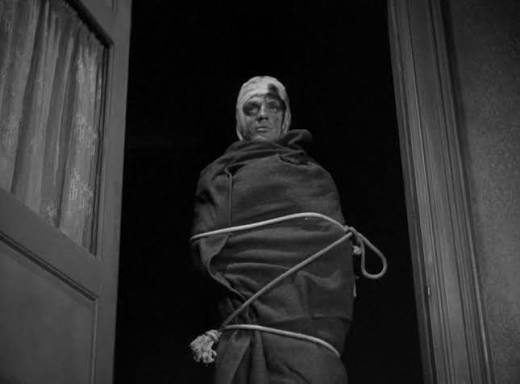
There’s a knock on the front door, “Mike” opens it to find “Tom’s” tied up body.
The dead “Tom’s” body falls forward to the floor. “Mike” walks toward “Tom”, with the camera remaining on his brother’s lifeless body.
A caption appears on the screen:
“The end of Tom Powers is the end of every hoodlum. “The Public Enemy” is not a man, nor is it a character — it is a problem that sooner or later we, the public, must solve.”
James Cagney had become a star for “Warner Brothers”. This was the direct result of “The Public Enemy”. Two films later, was a motion picture with an interesting meeting of leading actors, and, one also, interesting “Uncredited” actor.
“Warner Brothers” had used:
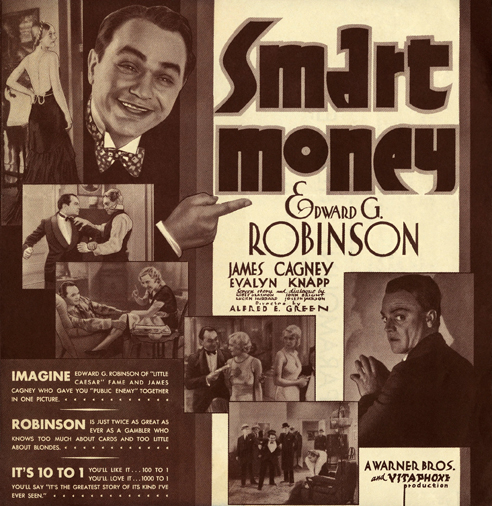
SMART MONEY premiering in Philadelphia, Pennsylvania, on June 11, 1931
To begin with, it took Four writers to come up with the story and screenplay.
Ex-newspaper writers, Kubec Glasmon and John Bright were both back. Added to the screenplay writing was Lucien Hubbard, who had written the screenplay for Lionel Barrymore’s version of Jules Verne’s, “The Mysterious Island”, released as a hybrid silent/sound feature in 1929. He would also co-write, the 1931, “Maltese Falcon”.
The fourth writer was Joseph Jackson, who had just co-written 1931’s, “God’s Gift to Women”, and would co-writer, director William Wellman’s, 1931, “Safe in Hell”, which co-starred Donald Cook.
Alfred E. Green was the director, he had just directed the George Arliss, 1930, “Old English”, and followed this feature with 1931’s, “Men. of the Sky”, with the forgotten Irene Delroy, and Bramwell Fletcher, of the 1932’s, “The Mummy”.
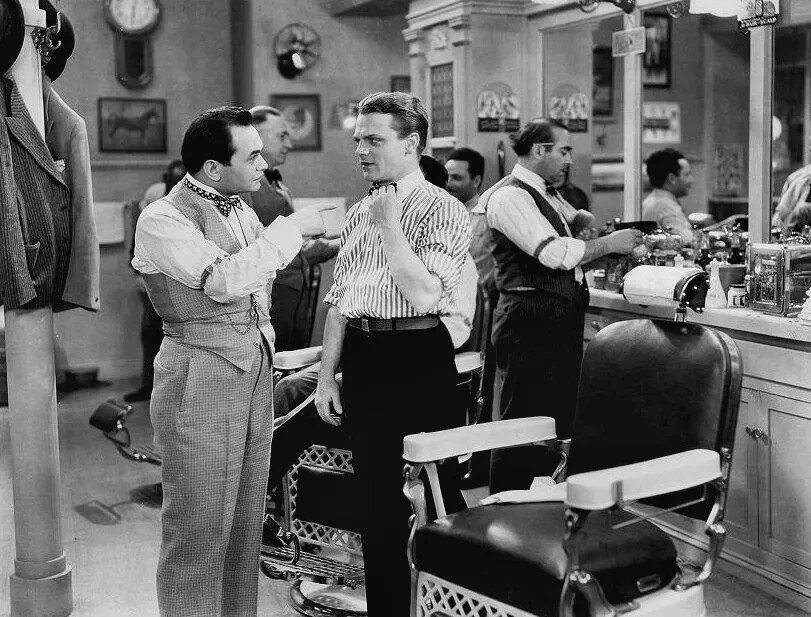
The main star was Edward G. Robinson portraying “Nick ‘The Barber’ Venizelos”. Robinson was just seen in director Mervyn LeRoy’s, gangster classic, 1931’s, “Little Caesar”, based upon the W. R. Burnett, see my article, novel.
James Cagney portrayed “Jack”. Cagney just was seen with 5th billing, in the George Arliss, and Florence Arliss, 1931, “The Millionaire”. He would follow this feature with 1931’s, “Blonde Crazy”, co-starring with Joan Blondell.
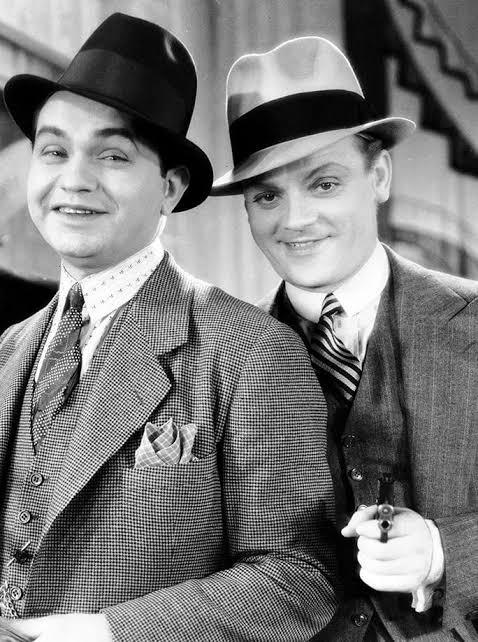
“Smart Money” is the only motion picture that Cagney and Robinson were in together.
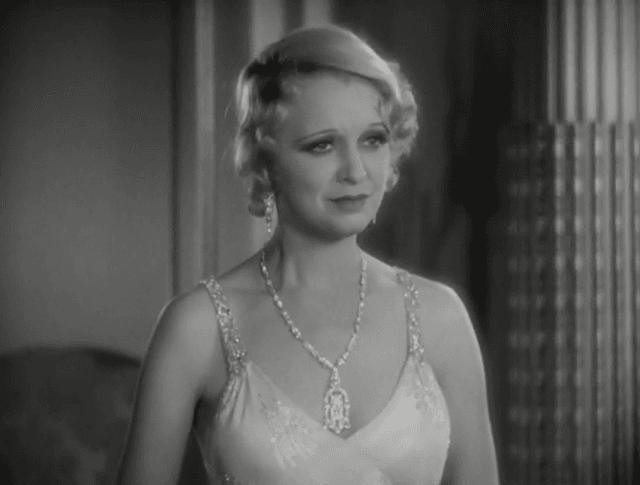
Evalyn Knapp portrayed “Irene Graham”. Knapp had just been seen in 1931’s, “The Millionaire”, Later in 1931, Knapp was in the James Cagney, and Loretta Young, crime drama romance, “Taxi”. In 1934, she co-starred, with 3rd-billing, after Ken Maynard, his horse, “Tarzan”, in the “B” western, “In Old Santa Fe”. The movie contained the film introduction a singer named Gene Autry.
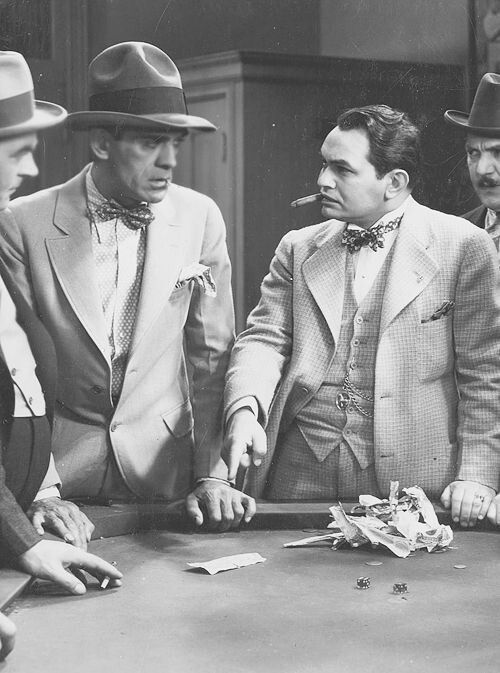
I mentioned an “Uncredited Actor”, his name was Boris Karloff portraying “Sport Williams”. Karloff had just had 5th-billing as “Cokey Joe”, in the Richard Dix and Jackie Cooper, 1931, crime drama, “Young Donovan’s Kid”. He was 8-motion pictures away from director James Whale’s, 1931, “FRANKENSTEIN”. My article is “Boris Karloff: There Was More Than Horror Movies (January 15, 1919 to July 20, 1958)” found at:
“Nick ‘The Barber’ Venizelos”, is a small-town gambler, and is an actual barber with an illegal poker game running in the backroom. He is so lucky at the game, that it is suggested he go to “The Big City”, and take on gambler “Hickory Short”, portrayed by uncredited Ben Taggart.
“Nick” comes up with half of the $10,000 stake. While his, overly confident, that “Nick” will win friends, put together the other half. Next, “Nick” leaves his business with his associate, “Jack”, and takes the train to the city.
He learns from “Marie”, portrayed by Noel Francis, the pretty blonde working the cigar stand, where “Hickory’s” game is playing and goes there. 5th-billed Francis is the most interesting character in the movie.
“Nick” buys into the card game, but loses everything.
Back at the barber shop, “Nick” learns from the newspaper, that the real “Hickory Short” was just released from prison in Florida. So, who was he gambling with?
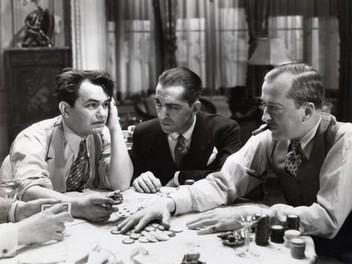
The answer is a con-man named “Sleepy Sam”, portrayed by Ralf Harolde, seen above to Robinson’s immediate right.
“Nick” now knows that “Marie” is in on the con, in fact, she’s “Sam’s” girlfriend. Stupidly, “Nick” goes back to “Sam” and demands his money back, but instead is batten up by “Sam” and the other fake poker players, landing in the hospital.
Once released from medical care, “Nick ‘The Barber’ Venizelos”, PLANS REVENGE!
First, he returns to barbering to start to raise his stake. Six months pass, and “Nick” is ready for his revenge. Next, “Sleepy Sam” and his gang is tracked down, “Nick” proposes a one-man-one poker game until either “Sam”, or “Nick” has all the money. At which point, the barber brings out $50,000. Which at the time of this writing, inflation kicks in, and “Nick’s” money is equal to $1,110,233.55.
“Nick” insists on fresh still sealed deck of cards, and “Sleepy Sam” agrees. When the game ends, “Nick” is the winner, but “Sam’s” con artists reach for their guns. Just before any of them can shoot, “Jack” accompanied by others, breaks into the room with their guns drawn. At which point, “Nick” gloats that he cheated better than “Sam”, by using shaved cards.
This is followed by “Nick” becoming extremely successful and will known in “The Big City”. Newspaper columnist Walter Winchell, not shown in the movie, write the rumor is that “Nick” has beaten “Hickory Short” winning $300,000, equal as of this writing to $6,661,401.32.
“Nick” becomes the “King of Illegal Gambling” in “The Big City”. His right-hand-man, is still “Jack”.
HOWEVER, “Nick” still has one weakness, “Blonde Women”, and as their driving by, the are stopped. “Nick” is told that a woman was fished out of the water and almost drowned. Could help and take her to the nearby hospital, of course she is blonde, and her name is “Irene Graham”, as co-star Evalyn Knapp finally makes her appearance.
“Nick” takes “Irene” to his mansion to recover, after she does, he insists she stay there as long as she wants. This is over the suspicious “Jack’s” concerns and comments about her. After time, “Irene” reacting to “Nick’s” kindness, reveals she is actually was fleeing from a charge of blackmail, but he isn’t concerned about that.
After succeeding in getting even with “Sleepy Sam”, turning his barbershop card game into the massive illegal operation he is now running. “Nick Venizelos” believes he is untouchable, and even brags about it.
However, “District Attorney Black”, portrayed by the uncredited Morgan Wallace is forced, by public opinion, he is up for re-election, to take action against “Nick”. He starts by arresting “Irene”, and then wants her to co-operate with him to get “Nick”, or he will prosecute her. She refuses at first, but after more pressure, relents≥ There are laws about illegal racing, and she will put a racing form in “Nick’s” coat. Then the D.A. can put him in jail for a month and raid his gambling house.
“Jack” learns about this, but when he warns “Nick” about what “Irene” is being forced to do. The other becomes furious, calling “Jack” a liar, and in his rage, “Nick” knocks “Jack” to the floor. The raid comes off just after “Jack’s” warning is delivered. “Nick” is arrested, and it is discovered that “Jack’s” fall to the floor, has accidentally caused his death. Shocked, about “Jack’s” death, and blaming herself. “Irene” asks “Nick” for his forgiveness, and he generously gives it to her. “Nick ‘The Barber’ Venizelos”, is sentenced to 10-years in prison.
Following the previously mentioned, 1931, “Taxi”, was a racing sports drama. Once again, co-starring Joan Blondell.
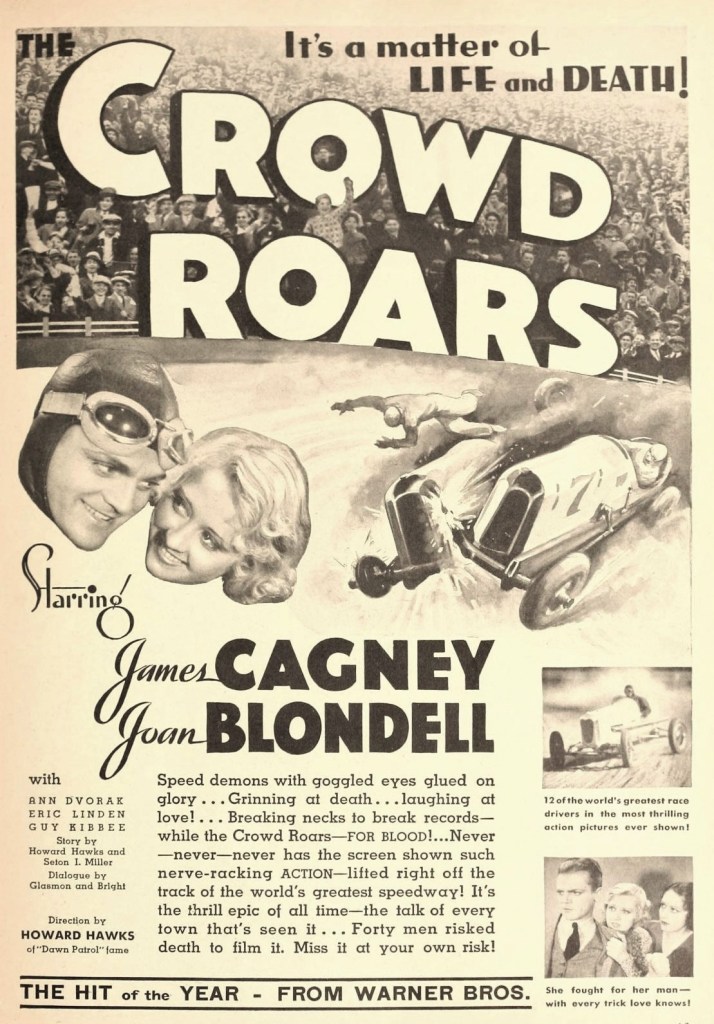
THE CROWD ROARS released First in London, England, on April 13, 1932
The original story was by director Howard Hawks.Hawks, whose “Winchester Productions”, in 1951, made the classic science fiction motion picture, “The Thing From Another World”, had just directed 1932’s, “Scarface”, starring Paul Muni in an obvious Al Capone take off. My article is “Howard Hawks’ “RIO BRAVO” Remade (?) as “EL DORADO” and “RIO LOBO” Starring John Wayne” found at:
There were four writers that turned Hawks’s story into a screenplay. Two, have become very familiar to my reader, John Bright, and Kubec Glasmon, both just adding realistic dialogue to the screenplay. The two main screenplay writers were Niven Busch, billed as Nevin Busch, and Seton I. Miller, who had worked on Hawks’s, 1932, “Scarface”.
The Four Leading Actors:
James Cagney portrayed “Joe Greer”. This film was Cagney’s 1st sports motion picture. He would immediately follow it, switching from auto racing to the boxing ring with 1932’s, “Winner Takes All”.
Joan Blondell portrayed “Anne Scott”. Blondell had just been seen in the screwball comedy, a popular comedy type during the 1930’s, 1932’s, “The Greeks Had a Word for Them”.
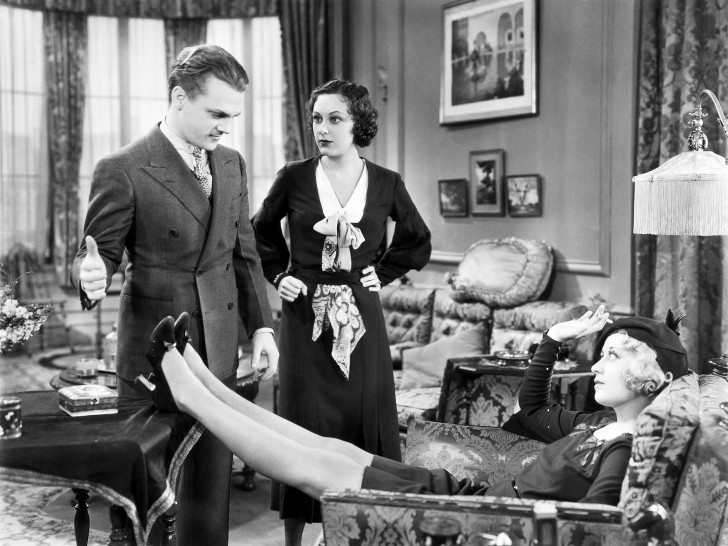
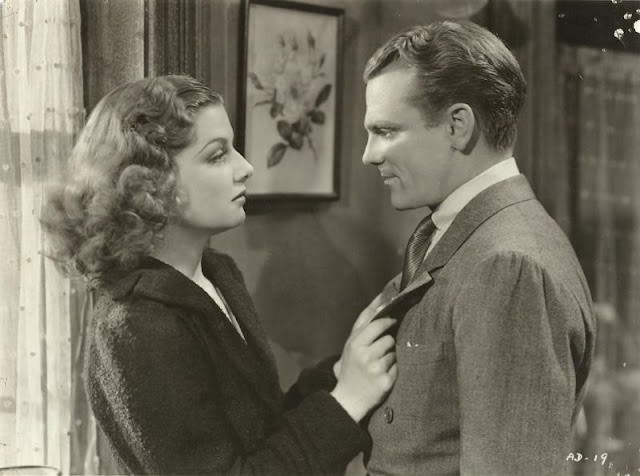
Ann Dvorak portrayed “Lee Merrick”. Dvorak had shocked many a movie goer with her role of Paul Muni’s sister, “Cesca”, in Howard Hawks’s, 1932 “Scarface”. There is no doubt that the brother and sister are sexually active with each other. She followed this picture with another crime story, 1932’s, “The Strange Love of Molly Louvain”.
Above standing is Ann Dvorak staring at James Cagney, who in turn, is telling Joan Blondell to get out.TRIVIA: Shooting began with Dvorak and Blondell in the other’s roles, but it became clear that the actresses would be better by switching roles, and Hawks did just that.
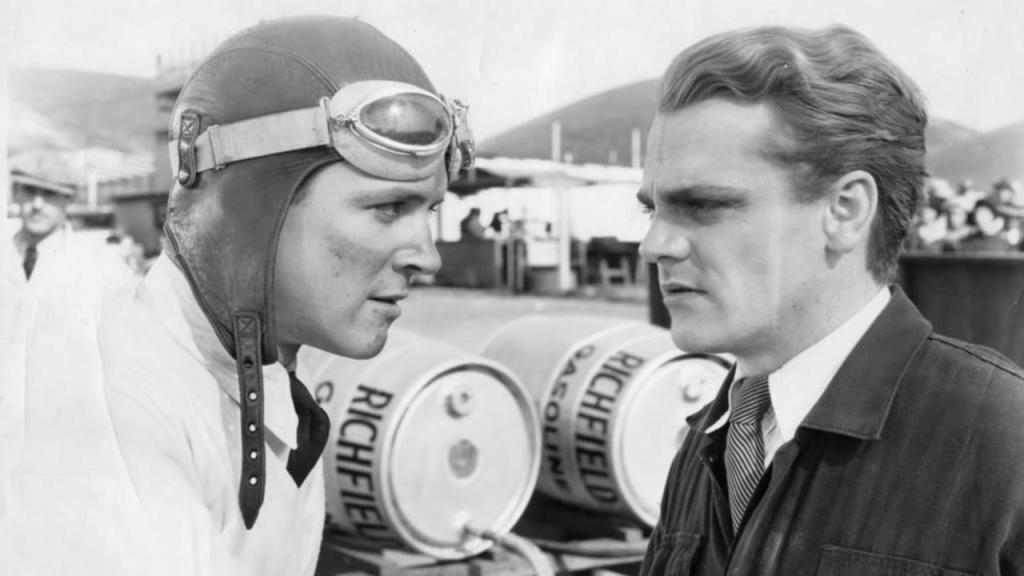
Eric Linden portrayed “Edward ‘Eddie’ Greer”. Linden had just co-starred with Helen Twelvetrees in 1932’s, “Young Bride”, and followed this feature with 1932’s, “Roadhouse Murder”.
The Plot:
This is one of a dozen auto racing movies made during the 1930s, including a remake of this exact film in 1939, but starring Ann Sheridan as “Frankie’ Merick”, and Pat O’Brien as “Joe Greer”, and John Payne as “Eddie Greer”.
The plot is predictable, International Racing Champion, “Joe Greer” returns home to appear in an exhibition race featuring his younger brother “Eddie”.
“Joe” is obsessed with protecting his younger bother, who dreams of becoming an auto race champion. However, “Joe’s” concerns for his brother, interferes in his younger brother’s relationship with “Anne Scott”.
This misplaced concern also causes a rift between “Joe” and his longtime girlfriend, “Lee Merrick”.
This tension now transfers into the actual race.
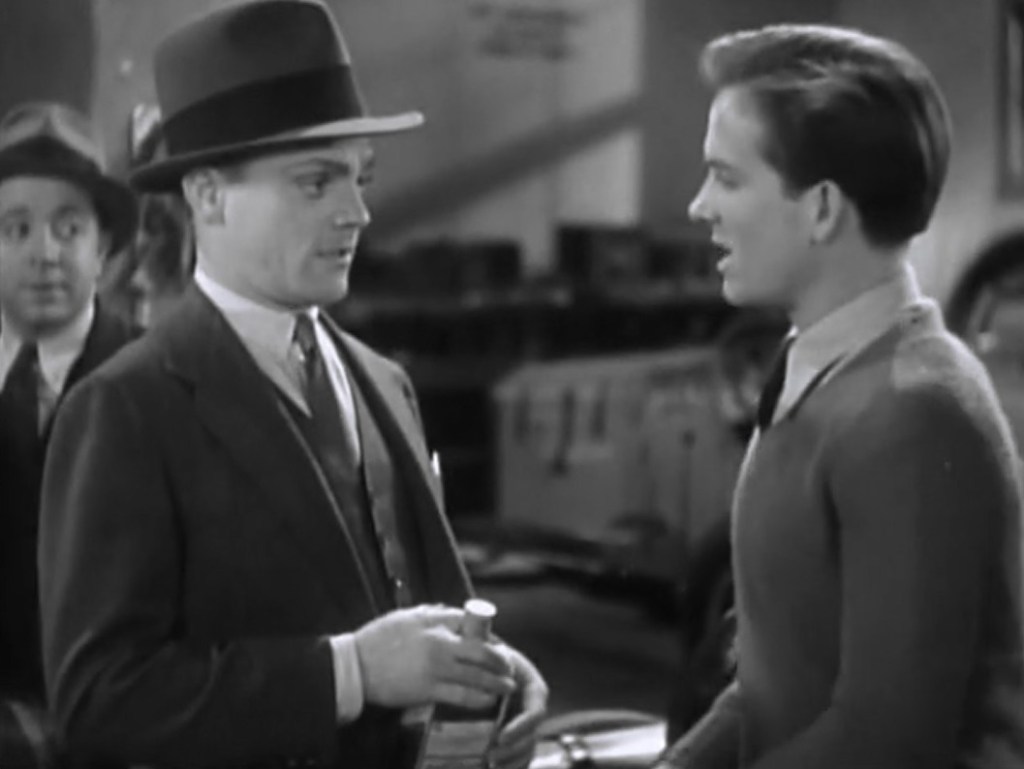
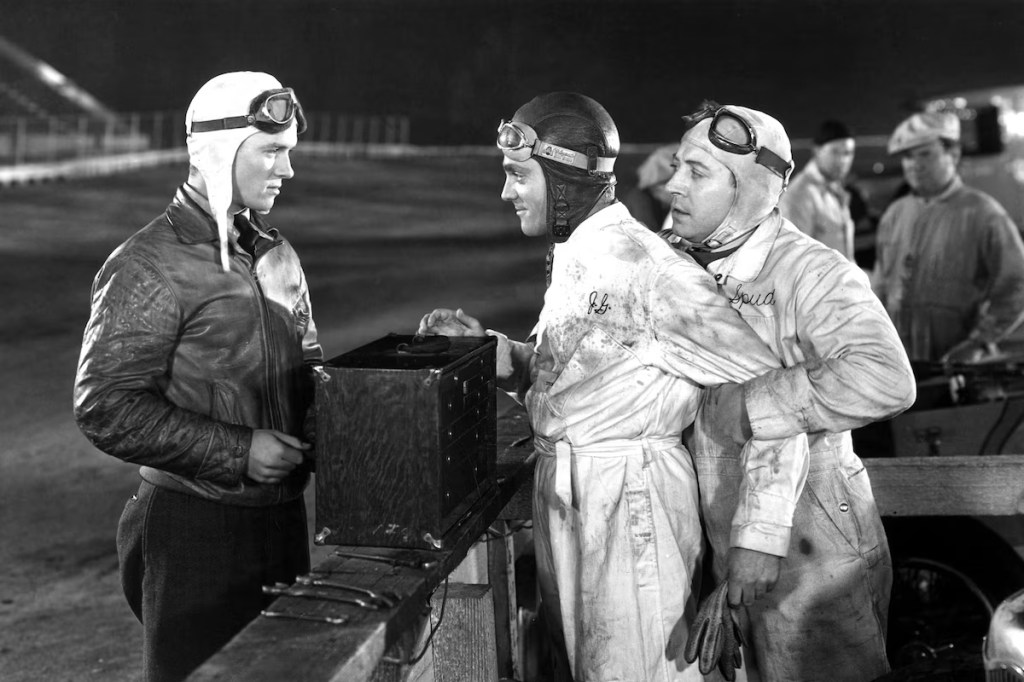
Above left to right, Eric Linden, James Cagney, and Frank McHugh portraying “Spud’ Connors”.
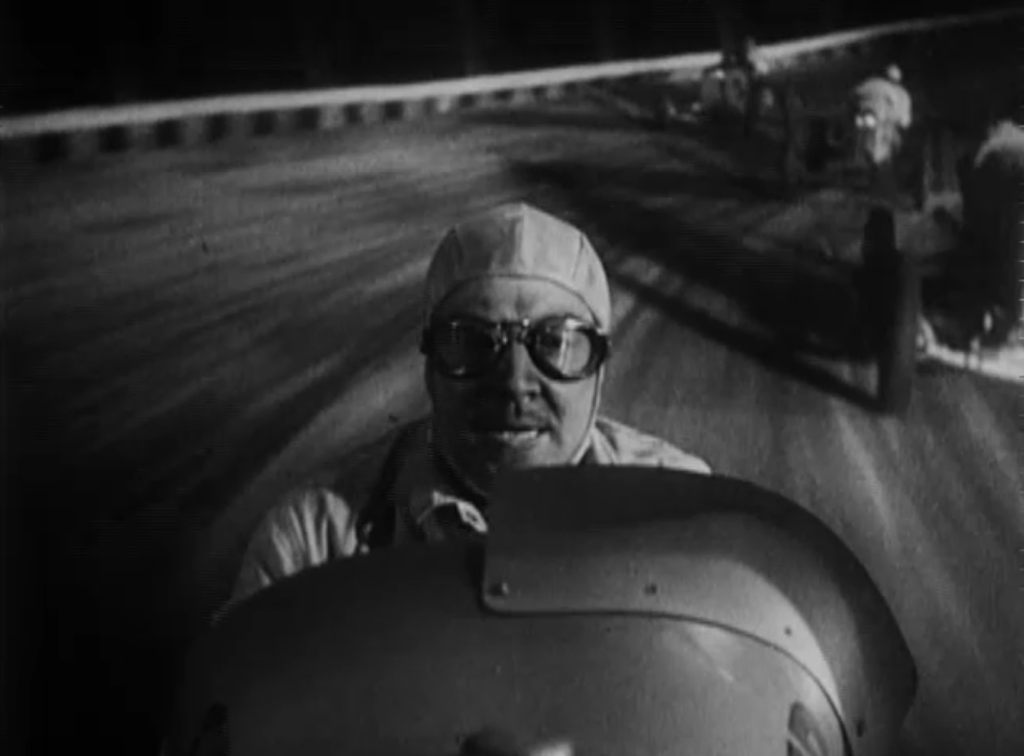
The race takes place, but during it, “Spud’ Connors” wrecks. The car breaks out in flames and he is burned to death.
However, the race is not stopped, and “Joe Greer” keeps driving through the flames across the track lap after lap. While, lap after lap, “Joe” starts to lose his will to race, and blames his aggressive, must-win, racing for “Spud’s” death. “Joe Greer” watches as his brother win the race.
Now, “Eddie” rises in the race world, and the two brothers seem to go their separate ways. As “Joe Greer’s” world collapses around him. However, in the end, “Lee” still loves “Joe”, and it is the power of love, that brings “Joe Greer”, back to “Lee”, and his “Eddie”.
Five movies later, James Cagney was back in his vaudeville days and tap dancing. As he met the dancing choreography of Busby Berkeley. For those of my readers who have no knowledge of this choreographer, my article is, “Busby Berkeley: Imagination In Dance On The Silver Screen!” at:
The following is modified from the above linked article.
FOOTLIGHT PARADE premiered on September 30, 1933
The original story came from two uncredited writers, Robert Lord, and Peter Milne. Both were known for their dramatic screenplays, and neither had worked on musical features.
While the actual screenplay was written by two other writers. The main credited writer was Manuel Self, who also had no musicals to his credit. However, James Seymour, had worked on the 1930 musical, “Swing High”, and both the 1933 musicals “42nd Street”, and “Gold Diggers of 1933”.
Lloyd Bacon directed the motion picture, and had directed 1933’s, “42nd Street”.Prior to that film, he had directed the musical drama, 1932’s, “Crooner”, starring 1931’s, “Dracula’s” “Jonathan Harker”, David Manners, and Ann Dvorak.
After begging the “Warner Brothers” executives for over two straight years, song and dance man, James Cagney, finally was seen in his first musical as “Chester Kent”. Before this picture, Cagney was in the 1933 crime drama, “The Mayor of Hell”, and afterwards, the comedy crime feature, 1933’s “Lady Killer” co-starring with Mae Clarke.
Joan Blondell portrayed “Nan Prescott”.Blondell was just in the 1933 comedy, “Goodbye Again”, co-starring Warren William. She would follow this picture with the 1933 comedy, “Havana Widows”, co-starring Glenda Farrell, and Guy Kibbee.
Ruby Keeler portrayed “Bea Thorn”.Keeler had just been seen starring in both, the 1933 musical classic, “42nd Street”, followed by “Gold Diggers of 1933”.Ruby Keeler, would follow this feature with 1934’s “Dames”, co-starring with Joan Blondell, and Dick Powell.
Above, Ruby Keeler and James Cagney, in the “Shanghai Lil” number. This was the only musical number featuring Cagney. The following link takes my reader to that dance sequence with Ruby Keeler.
Dick Powell portrayed “Scotty Blair”.Powell had followed “Gold Diggers of 1933” with two musical shorts, 1933’s “Sky Symphony” and “The Road is Open Again”. After this feature he had first billing in a sport’s drama, 1933’s “College Coach”, co-starring with Ann Dvorak, and Pat O’Brien.Dick Powell became a successful motion picture director starting in the 1940’s. However, one of his motion pictures has becomes associated with the effects of nuclear fallout. That story is part of my article, “Tomoyuki Tanaka’s GOJIRA (1954), Howard Hughes’ THE CONQUEROR (1956), Nuclear Fallout and Two Motion Pictures!” at:
Guy Kibbee portrayed “Silas Gould”.Kibbee had just co-starred with Warren William and May Robson in the 1933 comedy “Lady for a Day”. Which was directed by Frank Capra and was based upon a Damon Runyon story. He would follow this picture with 1933’s “Havana Widows”.
Above, Guy Kibbee with James Cagney.
The Music First and Story Second, Plot:
The plot was very thin, and the movie didn’t do as well as either, “42nd Street”, or “Gold Diggers of 1933”, for “Warner Brothers”.
The audience first meets Broadway musical producer, “Chester Kent”. Whose Broadway career is failing, and he decides to move to Hollywood to film “Prologues”. A “Prologue”, was a musical short that was shown before the main feature started.
“Kent’s” secretary, “Nan Prescott”, has fallen in love with her boss. Who doesn’t seem to notice, that “Nan” is doing everything she can to help his career. While, “Kent’s” business partners have a possible big deal with the largest movie theater group in the country, IF “Chester Kent” can come up with three big production “Prologues”.
ENTER THE CHOREOGRAPHY OF BUSBY BERKLEY:
The “By a Waterfall” number featured 300 swimmerschoreographed by Busby.
Below, secretary Joan Blondell interacts with her boss James Cagney.
The following stills are from the “Kitty Kat” number:
Below, Ruby Keeler and Dick Powell, the secondary love story.
James Cagney had been right about putting him in a musical. “Footlights Parade” cost “Warner Brothers” an estimated $703,000, 1933 dollars to make. The picture’s final world wide box office was 2.4 million, 1933 dollars.
Two films later, and James Cagney was in a “Screwball Comedy”.
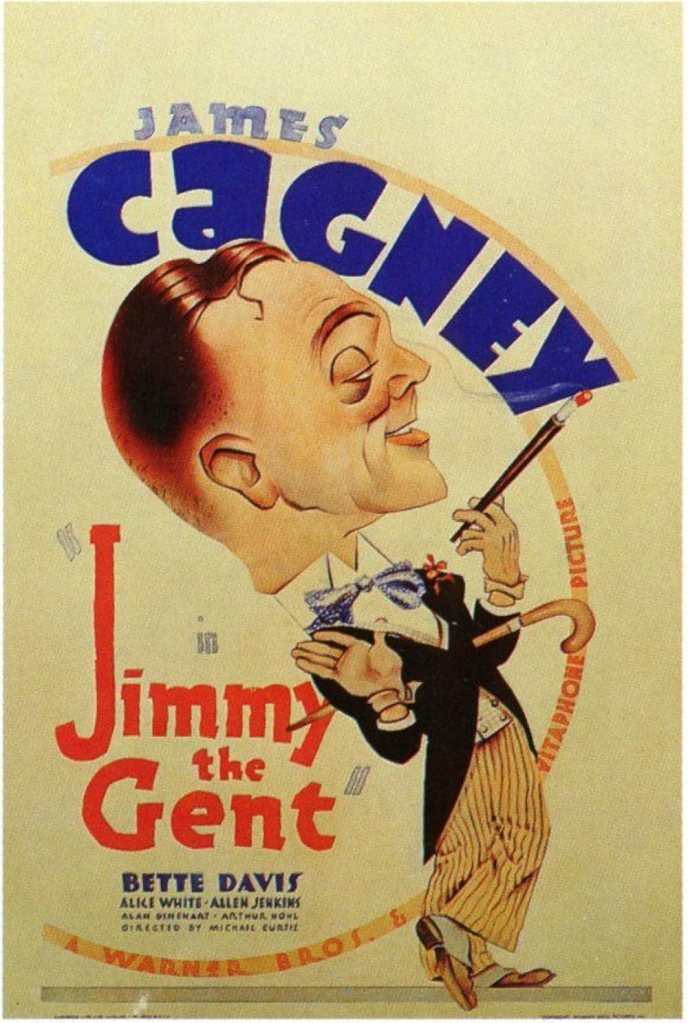
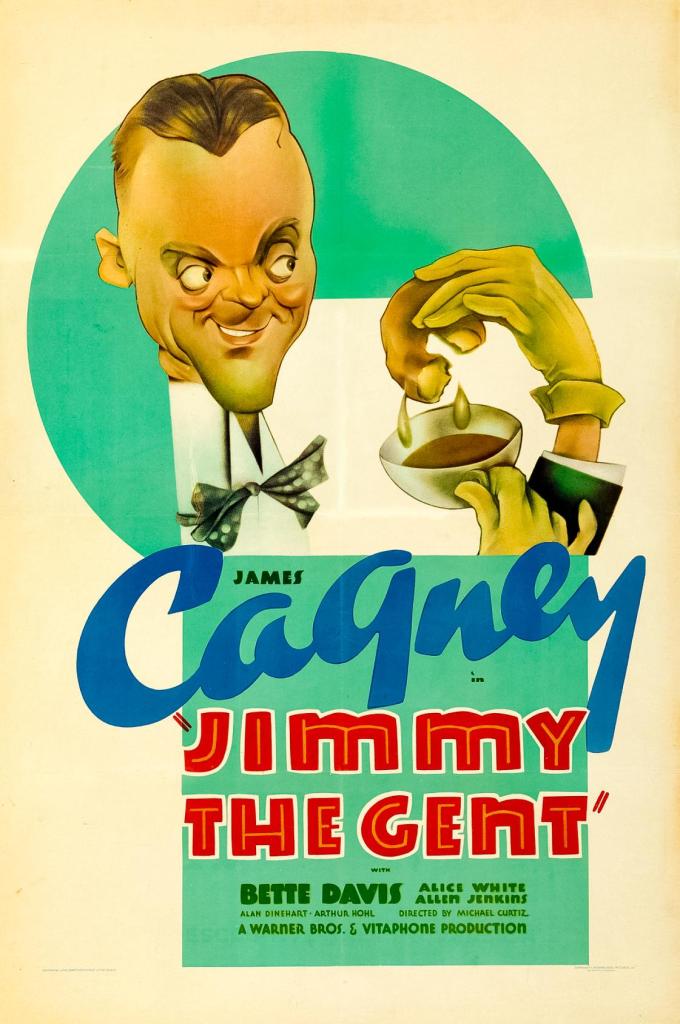
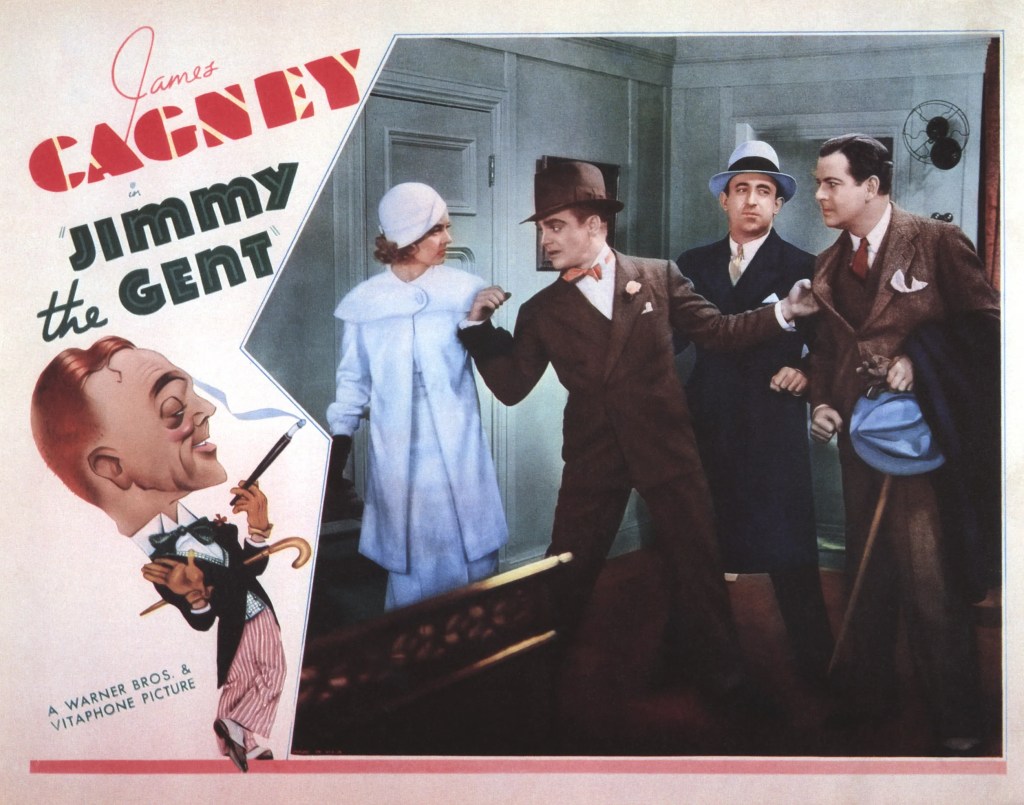
JIMMY THE GENT premiered in London, England, on March 9, 1934
Writers, Laird Doyle and Ray Nazarro came up with a story entitled, “The Heir Chaser”. Which was the original working title for this feature film. The screenplay was written by Bertram Millhauser, billed as Bertram Milhauser, dropping one of the “L’s” of his last name.
The motion picture was directed by Michael Curtiz, who had just directed 1934’s, “Mandalay”. Curtiz had previously directed the first all-technicolor horror movies. Both starring Lionel Atwill, and the still unknown Fay Wray. The two films were 1932’s, “Dr. X”, and 1933’s, “Mystery of the Wax Museum”.
James Cagney portrayed “Jimmy Corrigan”. Cagney had just portrayed a retired gangster that makes it big in “Hollywood”. Only to have his past catch up with him, in 1933’s, “The Lady Killer”, co-starring with Mae Clarke, without the grapefruit.
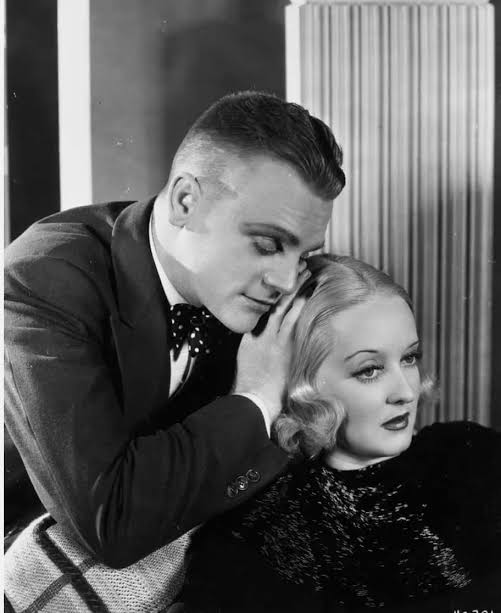
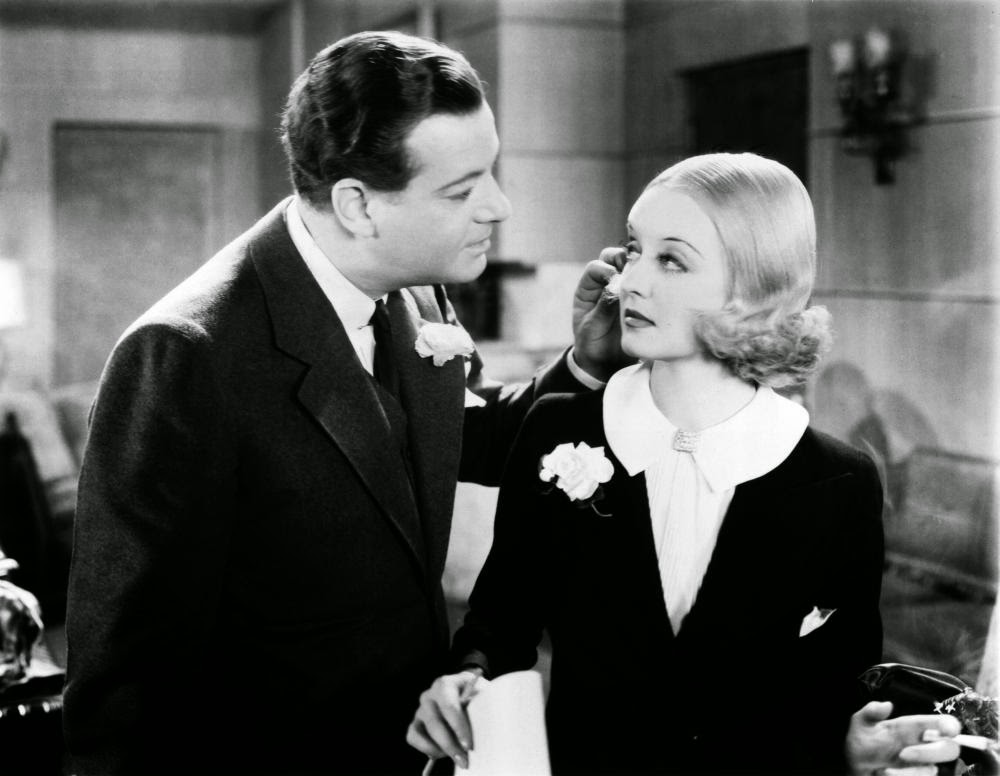
Bette Davis portrayed “Joan Martin”. Davis was still two films away from her break-out role. After appearing in 23-roles, Davis was still not considered a major “Warner Brothers” star, but after the 1934 production of W. Somerset Maugham’s, “Of Human Bondage”. Ruth Elizabeth “Bette” Davis’s career finally began to move upwards.
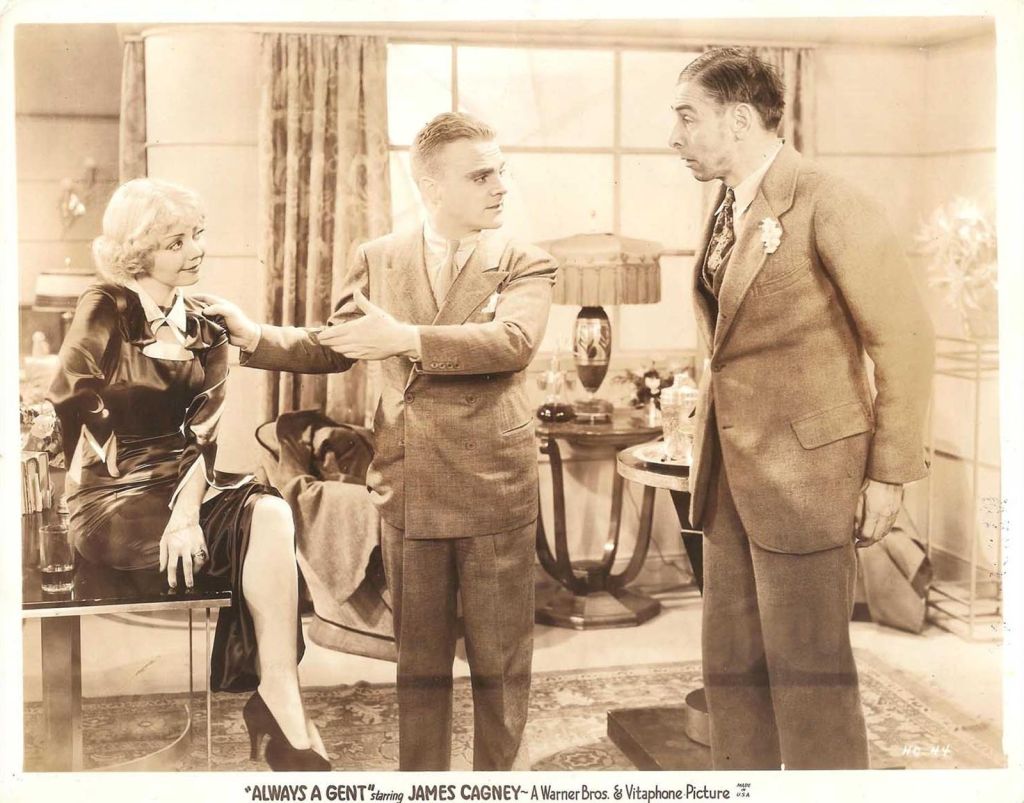
Not to put Bette Davis down, at this point in her motion picture career, but the role of “JOAN MARTIN”. Had been, designed and dialogued, for JOAN BLONDELL. The delivery required a “Repartee” response between Blondell, and Cagney. That the two had been perfecting over SIX PREVIOUS FILMS. However, depending upon whom you read. Joan Blondell had either a heavy film work load, or was suffering from “Health Problems”. Which caused the studio to move Bette Davis into the role with the first name of “JOAN”.
Actually it was both:
Production of “The Heir Chaser” started in November 1933, the same month and year of this picture, and filming began in mid-December, 1933.
However, according to the “Turner Classic Movies” website at:
“Near the end of shooting in December 1933, Joan Blondell suffered a serious bout of peritonitis. Press reports at the time attributed her hospitalization to an emergency appendectomy, though later biographies noted it resulted from complications following a medical procedure.”
As Joan Blondell could not work two feature films at the same time. Bette Davis was put in just prior to the start of shooting. The “Repartee” of the screenplay, comes off a little better than O.K., because Davis was slightly out of her element. However, Cagney and Davis would be reunited in another screwball comedy, 1941’s, “The Bride Came C.O.D.”. Blondell and Cagney would be reunited with 1934’s, “He Was Her Man”.
Allen Jenkins portrayed “Louie”. Jenkins had just co-starred with Joan Blondell and Pat O’Brien, in the farce, 1934’s, “I Got Your Number”, and followed this picture with the crime drama, 1934’s, “Whirlpool”.
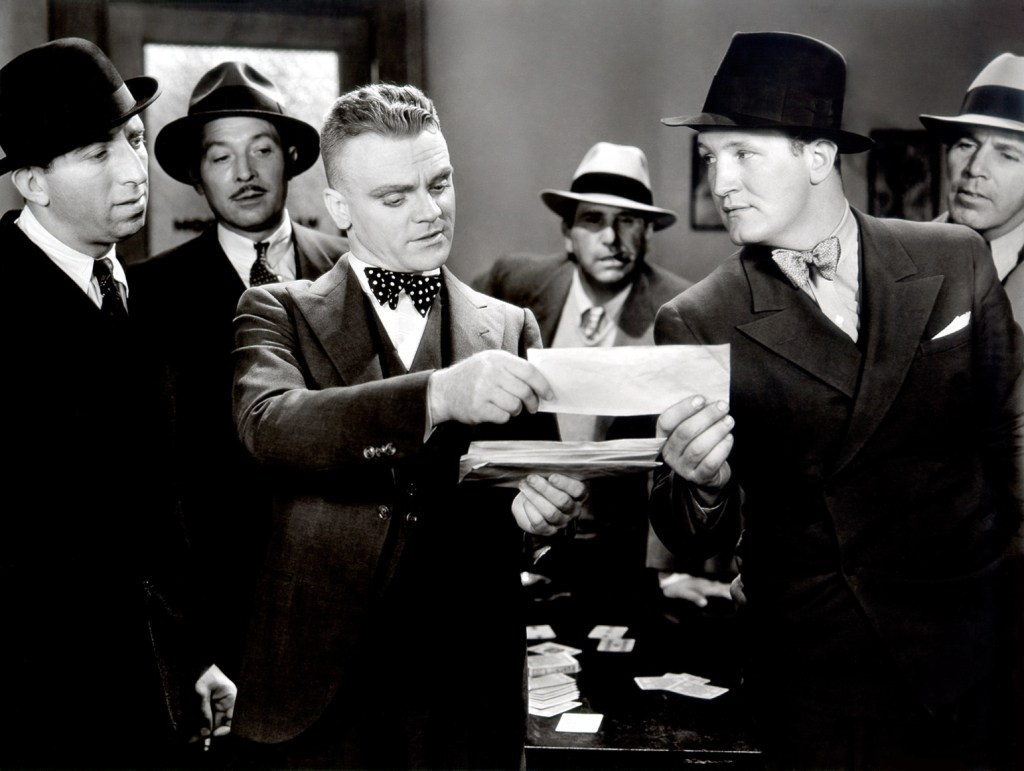
Front row left, Allen Jenkins, James Cagney, and Joe Sawyer, portraying “Mike”, and recognizable to fans of 1950’s science fiction as one of the lineman in 1953’s, “It, Came from Outer Space”, or the television series, “The Adventures of Rin-Tin-Tin”, as “Sergeant Biff O’Hara”. Between Cagney and Sawyer, is possibly Arthur Hohl portraying “Joe Rector”. I could not find the names of the other two actors in the above still.
Alan Dinehart portrayed “Charles Wallingham”. Dinehart had just been seen in the 1934 crime drama, “The Crosby Case”, and followed this movie with the crime comedy, 1934’s, “A Very Honorable Guy”.
The Thin Plot:
“Jimmy Corrigan” runs a “Hollywood Agency”, not looking for motion picture, or stage talent, BUT heirs of those people who have died without a “Will”. He then provides those handling the estate with a phony heir, who collects the money from the estate, and “Jimmy” gets his large fee for finding the heir.
Above, Bette Davis, James Cagney, and Arthur Hohl.
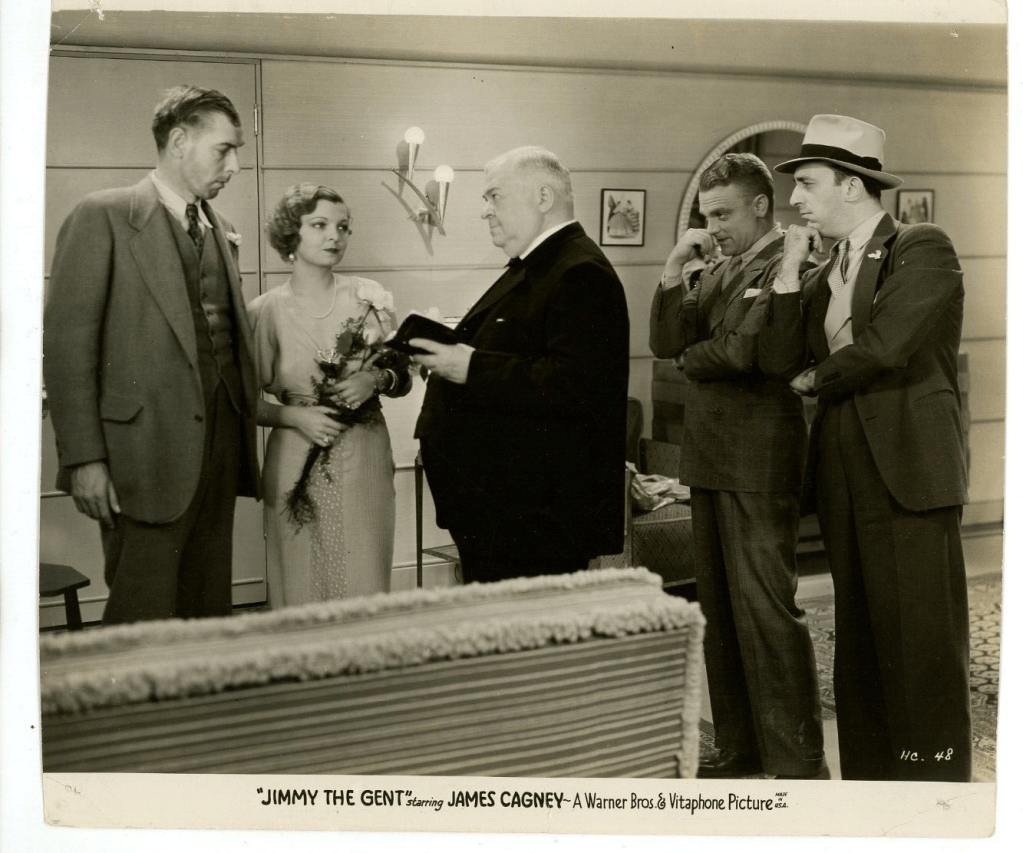
Above one of the fake weddings to get the inheritance, with Arthur Holly, James Cagney, and Allen Jenkins.
“Jimmy’s” ex-girlfriend, “Joan Martin”, has left him to join the “Legitimate” heir search company owned by “Charles Wallingham”.
A crook, “Jimmy”, smells a con, and investigates the “Legitimate Wallingham”. to find an even bigger crook then himself. “Jimmy the Gent” will expose the other to “Joan”, and promise to go straight if she will have him again.
Returning to the fact that the studio wouldn’t wait for Joan Blondell, and rushed Bette Davis into the role. It has been reported that neither Cagney, nor Davis, liked working with each other.
Someone at “Warner Brothers” got it in their head that James Cagney would look good in a film based upon a William Shakespeare play. Actually, almost every contract player not assigned to another project was assigned to the motion picture version of:
A MIDSUMMER NIGHT’S DREAM premiering in both New York City, and London, England, on October 9, 1935
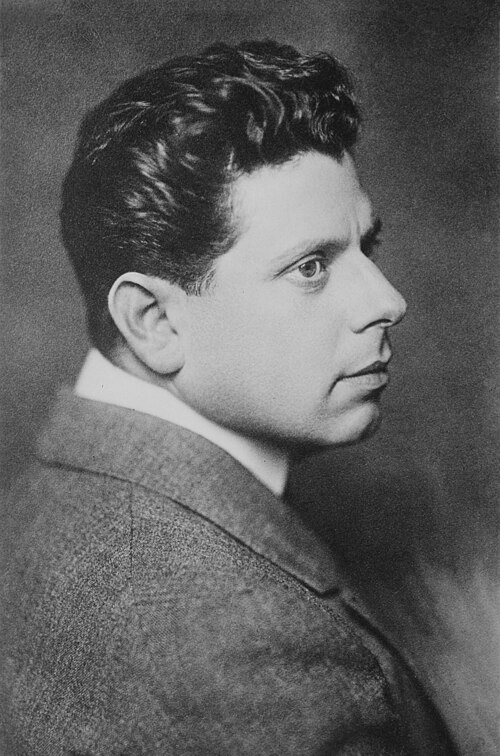
Back in 1600, British playwright William Shakespeare wrote “A Midsummer Night’s Dream”. In March 1933, Austrian born, Jewish, Legitimate Stage and Motion Picture Producer and Director, Max Reinhardt (born Maximillian Goldmann, fled Nazi Germany.
In September 1934, Max Reinhardt produced and directed a live performance of Shakespeare’s play at the “Hollywood Bowl”. The September 18th issue of the “Los Angeles Evening Citizen News”, which would become the “Los Angeles Times“, had this to say about Reinhardt’s production of Shakespeare:
“on the scale of a small military operation, the production featured an ensemble of more than 400 artists, including 18 principals, 60 or so dancers and several hundred extras. The Bowl was reconfigured for the occasion. The band shell was dismantled and put in storage. A gigantic stage was built and covered with green sod, heavy foliage and oak trees shipped in from Calabasas”.
There were two writers who “ARRANGED FOR THE SCREEN”, the Shakespeare play. The first was Charles Kenyon, who was the only writer on the romantic comedy, 1935’s, “The Goose and the Gander”. He followed this film by co-writing, the Leslie Howard, Humphrey Bogart, and Bette Davis, 1936, “The Petrified Forest”.
Mary C. McCall, Jr. had just co-written the Joan Crawford drama, 1935, “The Women in Red”. She followed this picture with the Paul Muni and Ann Dvorak, drama, 1935’s, “Dr. Socrates”.
There were 2-credited directors on the motion picture. This was caused, because Max Reinhardt did not speak English. His friend director and screenplay writer, William Dieterle, had left Germany and came to the United States in 1930. Dieterle translated all of Reinhardt’s directions to the cast.
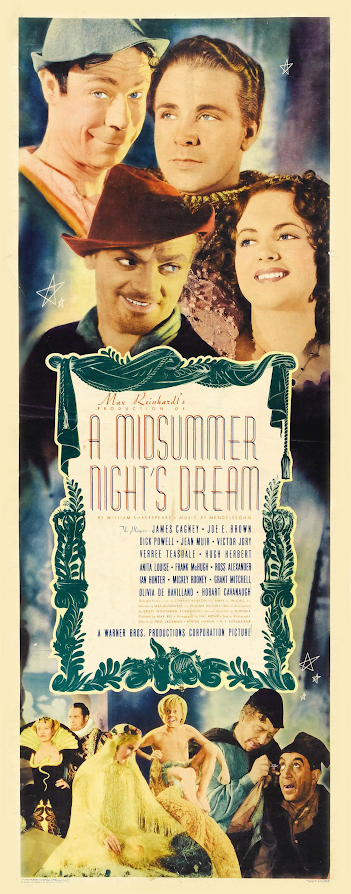
According to the above poster, the first actor listed was James Cagney. Who portrayed “Bottom – the Weaver”. Ah, the power of the public to recognize an actor. In actuality, James Cagney was listed 11th on the “Official Cast Listing”, but that position on the poster would have lost “Box Office”.
A Selection of some of the other actor’s, not necessarily in the order of either the “Official Cast Listing”, or the above poster.
Dick Powell portrayed “Lysander – In Love with Hermia”. The critics and public felt he was wrongly cast for the role and Powell is on record as agreeing. Singer, Dick Powell, proceeded this movie with the comedy, 1935’s, “Page Miss Glory”, starring William Randolph Hearst’s mistress/partner Marion Davies. Her story is worth mentioning, my article is, “Marion Davies: Actress, Philanthropist, and the Mistress of William Randolph Hearst”, at:
Dick Powell’s next feature film was the comedy musical, 1935’s, “Thanks a Million”, co-starring with Ann Dvorak comedian Fred Allen.
Olivia de Havilland, billed as Olivia de Haviland, portrayed Powell’s love, “Hermia”.She was one of only two actors in this motion picture who also appeared in the 1934 “Hollywood Bowl” performance.
Film historian, Gene Brown, is credited in his 1995, “Movie Time: A Chronology of the Movie Industry from its Beginnings to the Present”, as stating this was Olivia de Havilland’s first motion picture. That is incorrect, she had two films prior to this, the comedies, both 1935’s, “Alibi Ike”, and “The Irish in Us”. Her next feature film was co-starring with Errol Flynn in 1935’s, “Captain Blood”.
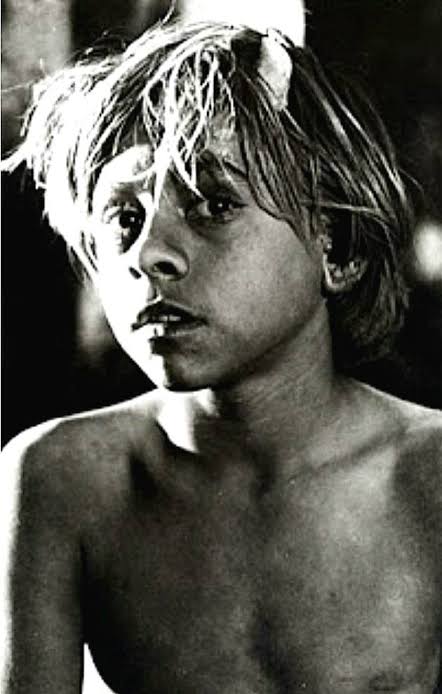
Mickey Rooney portrayed “Puck, or Robin Goodfellow – a Fairy”. He was the other actor, from the original “Hollywood Bowl” performance, that was recreating their roles.
Rooney had just co-starred with Ralph Bellamy in the drama, 1935’s, “The Healer”, and followed this picture with the William Powell drama, 1935’s, “Rendezvous”. My article is “Judy Garland and Mickey Rooney: Their Movies Together”, at:
Joe E. Brown portrayed “Flute – the Bellows – Mender”. Brown had the title role of 1935’s, “Alibi Ike”, right before this feature film. The comedian followed this picture by co-starring with Joan Blondell in the 1936 comedy, “Sons o’ Guns”. Who could forget the comedian portraying “Osgood Fielding III”, falling in love with Jack Lemmon in drag, in director Billy Wilder’s, 1959, “Some Like It Hot”. With Lemmon’s co-stars, Tony Curtis and Marilyn Monroe.
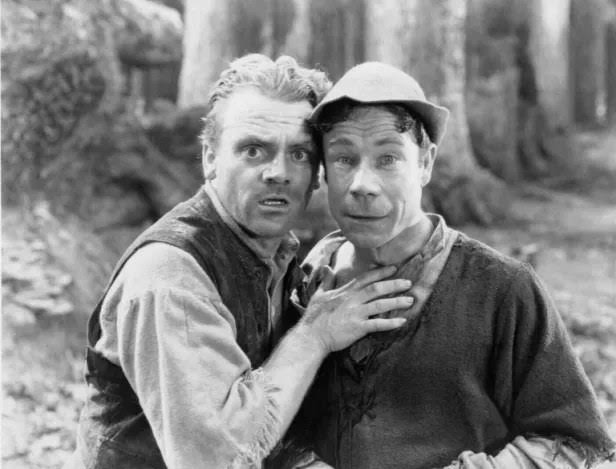
Above, James Cagney and Joe E. Brown.
Victor Jory portrayed “Oberon – King of the Fairies”. Jory became a familiar face as the villain, or villainous characters. Some of these roles include “Injun Joe” in 1938’s, “The Adventures of Tom Sawyer”, the “overseer, Jonas Wilkerson” in 1939’s, ‘Gone with the Wind”, and, “Ike Clanton” in 1942’s, “Tombstone: The Town Too Tough to Die”.
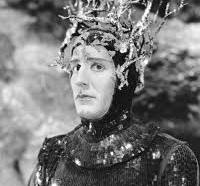
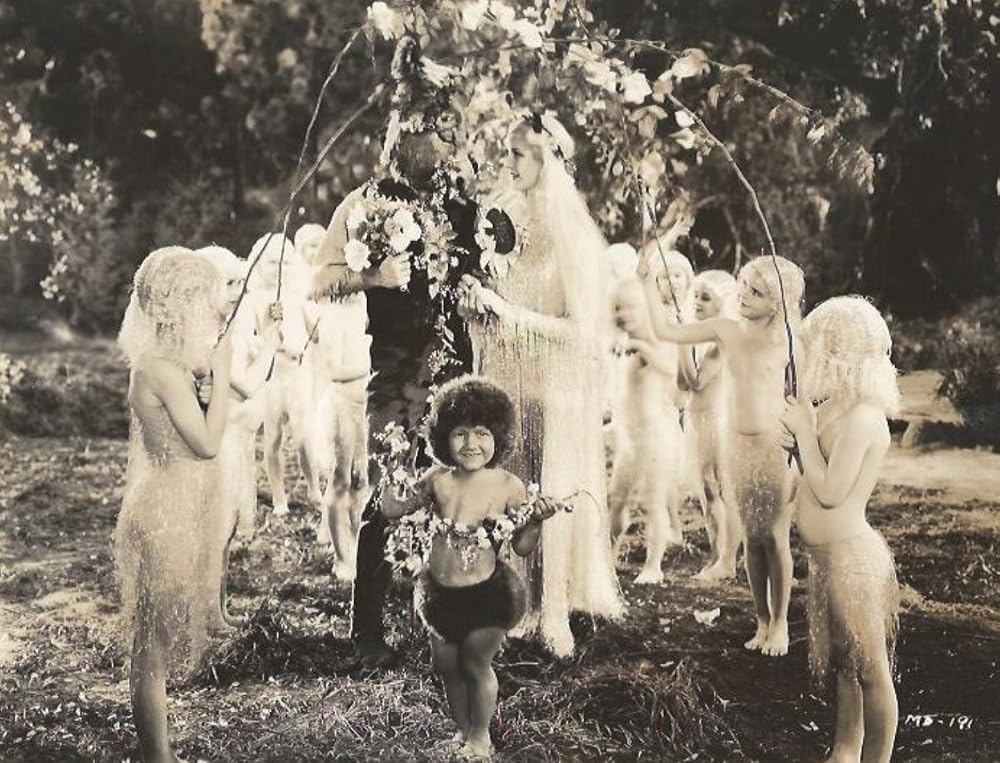
Billy Barty portrayed “Mustard seed – a Fairie”. Barty had just portrayed “A Baby” in director James Whale’s, 1935, “The Bride of Frankenstein”. Between 1927 and that move, Billy Barty has appeared in 41-Mickey McQuire shorts starring Mickey Rooney.
Anita Louise portrayed “Titania – Queen of the Fairies”. Louise was just seen in the musical comedy, 1935, “Here’s to Romance”, she would play “Annette Pasteur” in 1936, “The Story of Louis Pasteur”, opposite Paul Muni.
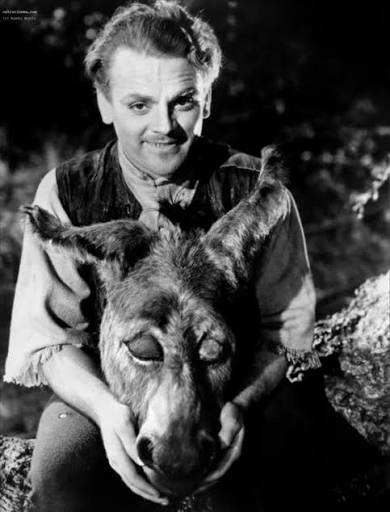
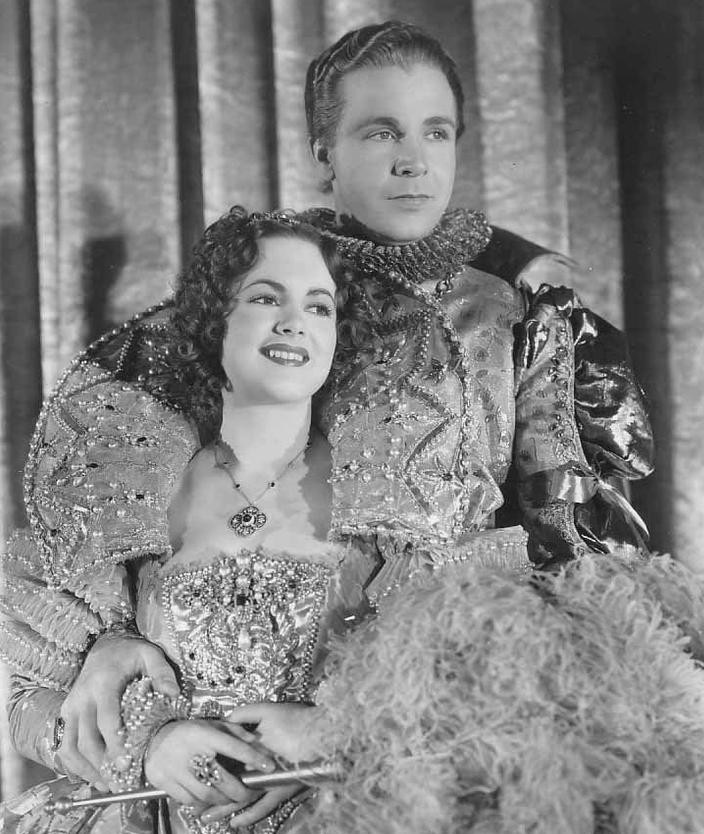
Standing in front is Billy Barty, facing Anita Louise wearing a Donkey Head is James Cagney.
The motion picture was a box office failure, although James Cagney and others, did get very good revues for their performances. The “Roadshow Release” ran 143-minutes, with an overture and exit music. However, some reviews state it was only 133-minutes and was shorten to 118-minute version for “General Release”.“Turner Classic Movies” ran the 133-minute version as the “Complete Motion Picture”.
“The film was banned by the Ministry of Propaganda in an infamous example of censorship in Nazi Germany. This was due not only to Joseph Goebbel’s belief that the filmmaking style, which drew heavily upon German expressionist cinema, was degenerate art, but even more so due to the Jewish ancestry of director Max Reinhardt. For precisely the same reason, everything by Classical music composer Felix Mendelssohn and soundtrack arranger Erich Wolfgang Korngold had already been banned by Goebbels Ministry as allegedly degenerate music.”
“A Midsummer Night’s Dream” was followed for James Cagney in the Clark Gable and Charles Laughton classic, 1935’s, “Mutiny on the Bounty”. HOWEVER, don’t look for him, as Cagney was in the “UNCREDITED ROLE” as an “Able-Bodied- Seaman” in background shots. I was unable to find a still with him in it. Movies about the mutiny, included one from Australia with Errol Flynn. For those of my readers who might be interested in the real story vs Hollywood. My article is “The Mutiny on the ‘HMAV (His Majesty’s Armed Vessel) Bounty’ in Motion Pictures” andcan be read at:
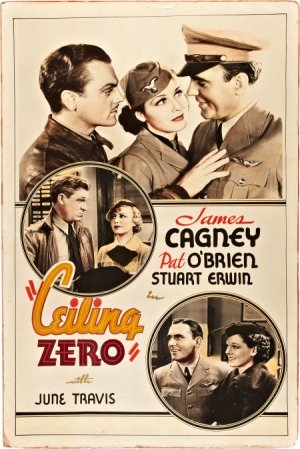
Now came a contract dispute with “Warner Brothers”. James Cagney had just made, 1936’s, “Ceiling Zero” with Pat O’Brien, their 3rd motion picture together. However, the studio violated Cagney’s contract and gave O’Brien top billing. Although the posters for the film had Cagney’s name over O’Brien’s. The studio advertised the reverse in newspapers, on theater marquee’s, and in radio promotions. James Cagney took the studio to court and the ruling was that “Warner Brothers” had clearly violated their contract with the actor.
James Cagney left “Warner Brothers”, and purchased a 100-acre farm to work in “Martha’s Vineyard”. A dream he had since a young man. However, in 1936, he also met Edward Lee Alperson of “Grand National Films”.Alperson approached James Cagney to make pictures for the Independent Production Company. The offer was $100,000 per picture, plus 10% of the profits. He, then, made the 1936 movie, “The Great Guy”, a film noir about an investigator for the “Bureau for Weights and Measures” exposing crooked businessmen. This was the first on only two films before, James Cagney returned to “Warner Brothers”. It should be noted that in 1939, “Grand National Films” was liquidated, and forgotten.
James Cagney returned to “Warner Brothers”, and in 1939, “Grand National Films” was liquidated.
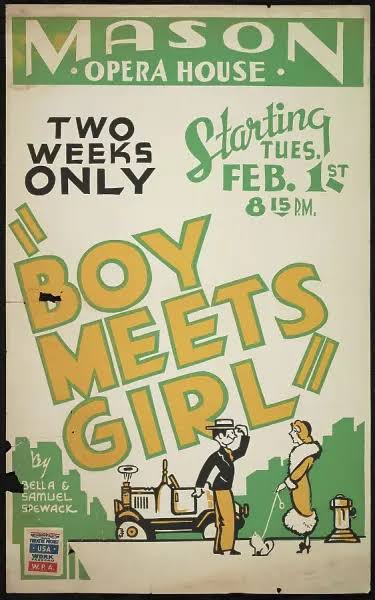
On November 27, 1935, at Broadway’s “Cort Theatre” was the premiere of a play, “Boy Meets Girl”, written by Bella and Samuel Spewack.The play was written as part of United States President Franklin Delano Roosevelt’s “Federal Projects”, to bring theater to American’s during the “Great Depression”.
James Cagney’s return to “Warner’s”was in the film version of the “Federal Projects” play.
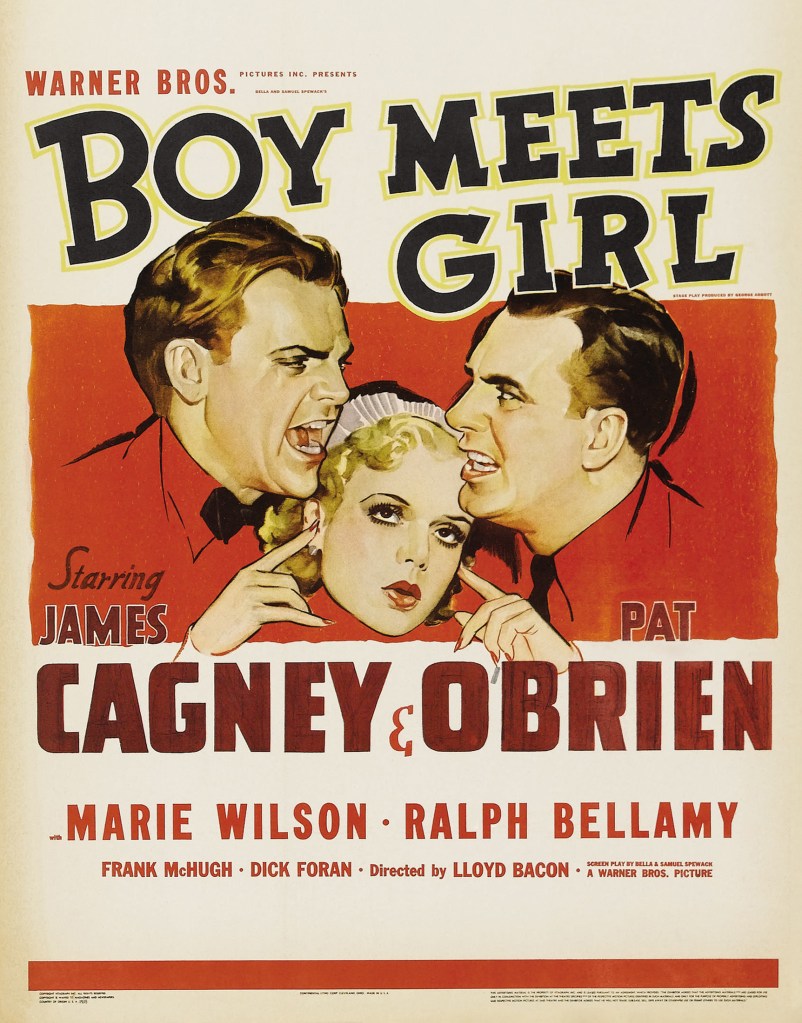
BOY MEETS GIRL premiered in New York City, on August 26, 1938
James Cagneywas back to his old contract position on this motion picture, BUT NOTE, above, who is his co-star.
The plot of this picture is nothing more than a comedy farce designed to cheer-up the “Great Depression” audience, for its, 86-minutes of running time.
Two screenwriters, Cagney and O’Brien, are in a rut. They come up with a story idea starring a bankable cowboy, Dick Foran, and the baby of the studio’s waitress, Wilson.
This was a Lloyd Bacon, directed motion picture. I already mentioned his 1933’s, “Footlight Parade”, but another of Bacon’s musical’s was with “White-Black Face” comedian, Eddie Cantor, in 1934’s, “Wonder Bar”.
A Select Look at Some of the Cast Members:
James Cagney portrayed “Robert Law”.Cagney was last seen in the second of his two motion pictures for “Grand National Films”. The picture was a, 1937, musical entitled, “Something to Sing About”. He portrayed a New York Band Leader, “Thadeus McGillicuddy aka Terry Rooney”. Who comes to Hollywood to make movies, but only his own way.
Pat O’Brien portrayed “J. C. Benson”. He had just been seen in 1938’s, “Cowboy from Brooklyn”, described as a comedy, musical, romance, sports, western. The movie co-starred Dick Powell portraying an actor wanting a radio job, but must prove he’s a real cowboy.
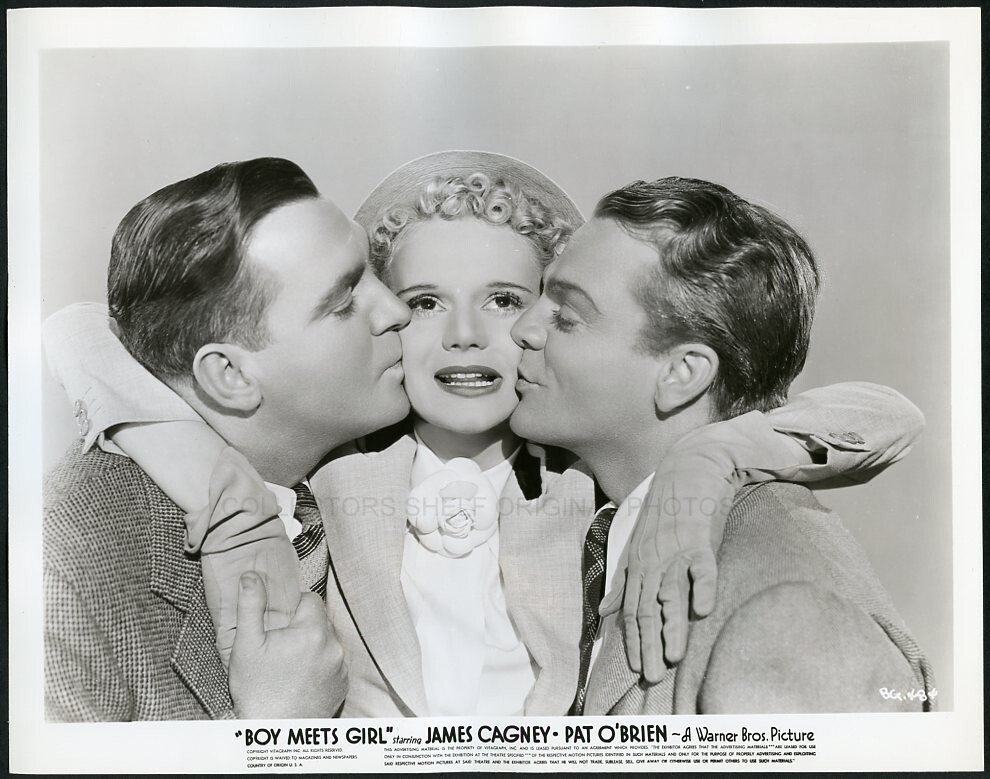
Marie Wilson portrayed “Mrs. Susan ‘Susie’; Seabrook”. Wilson had just been in the Carole Lombard and Ralph Bellamy farce, 1938’s, “Fools for Scandal”. Marie Wilson would follow this movie by co-starring with Ann Sheridan and Margaret Lindsay, in the 1938 musical, “Broadway Musketeers”.
Left to right, Pat O’Brien, Marie Wilson, and James Cagney in a publicity still.
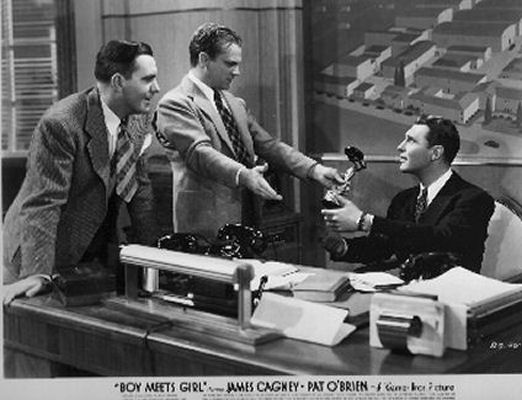
Ralph Bellamy portrayed “C. Elliott Friday”. Bellamy had 3rd billing behind Fred Astaire and Ginger Rodgers, in 1938, “Carefree”. The actor followed this role co-starring with Anne Shirley and Nan Grey in 1938’s, “Girl’s School”.
Above left to right, Pat O’Brien, James Cagney, and Ralph Bellamy.
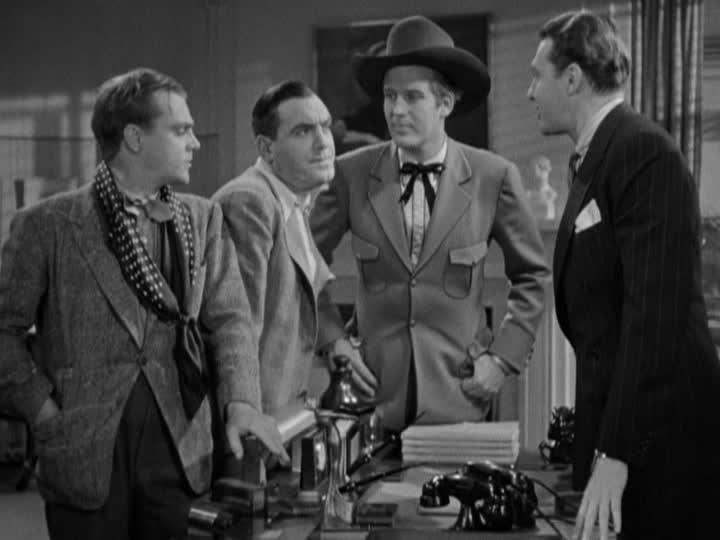
Dick Foran portrayed “Larry Toms”. Fornan was a singing cowboy in 1930 westerns. However, to “Universal Pictures” horror fans, Foran co-starred with Lon Chaney, Jr. in the first two motion pictures featuring “Kharis, the Mummy”. My article featuring Dick Foran is, “John Wayne Was a Singing Cowboy: Singing Cowboys and Cowgirls in Movies and on 1950’s Television”, to read at:
Above left to right, James Cagney, Pat O’Brien, Dick Foran, and Ralph Bellamy
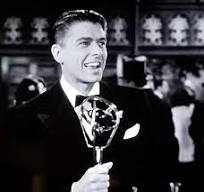
Ronald Reagan portrayed “An Announcer”. Reagan was just in the previously mentioned 1938’s,“Cowboy from Brooklyn”. The future “President of the United States”, followed this movie, starring in 1938’s, “Girls on Probation”. My article is “RONALD REAGAN MOTION PICTURE AND TELEVISION ACTOR” found to read at:
Carol Landis was “Uncredited” portraying a “Commissary Cashier”. In 1940, she co-starred as “Loana”, opposite Victor Mature’s, “Tumak”, in “One Million B. C.”. At this time, Landis was on husband number 2, actually the same as number one, after her mother at her first marriage annulled. In all she was married to 4-husband’s. In 1941, Carol Landis once again with Victor Mature, and also, Betty Grable. Co-starred in an excellent classic film-noir crime drama featuring Laird Cregar, “I Wake Up Screaming”.
Immediately following “Boy Meets Girl”, found James Cagney with his first meeting with another “Warner Brothers” contract player. Who had recreated his Broadway role of “Duke Mantee”, in 1936’s, “The Petrified Forest”, starring Leslie Howard, and Bette Davis.
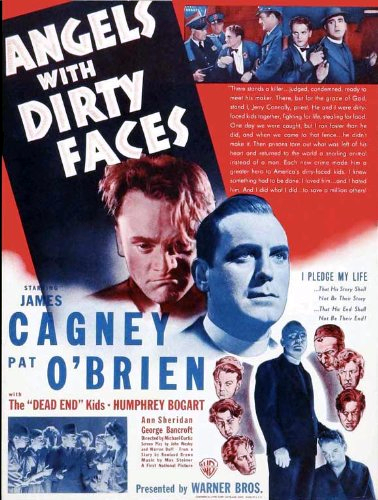
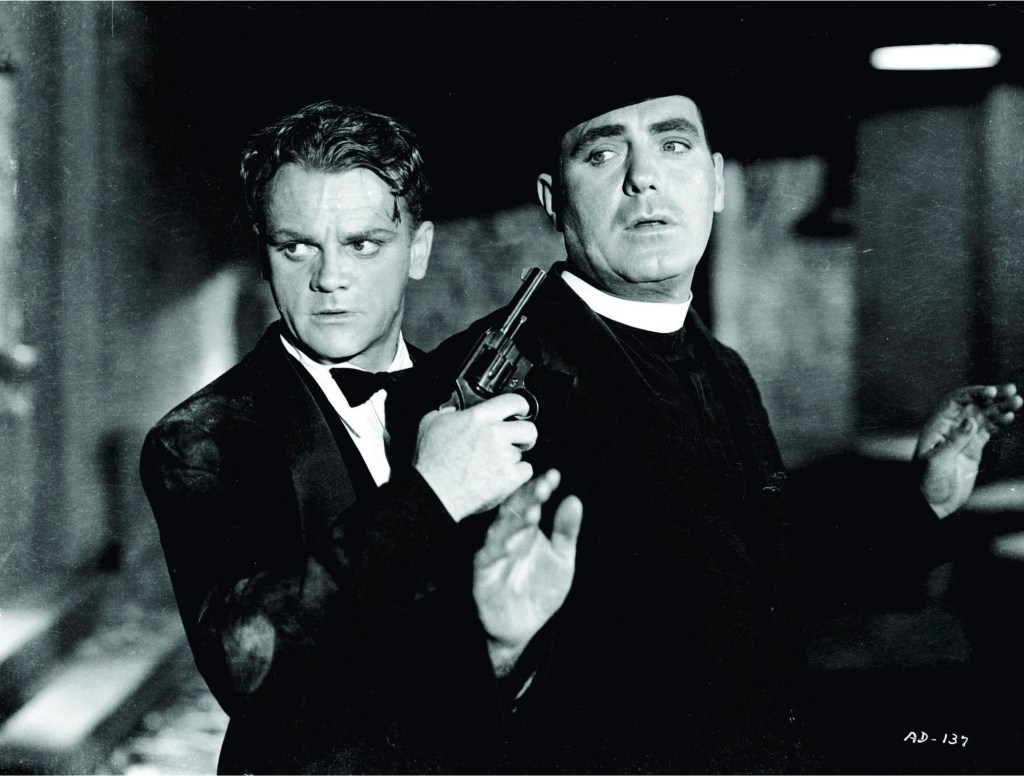
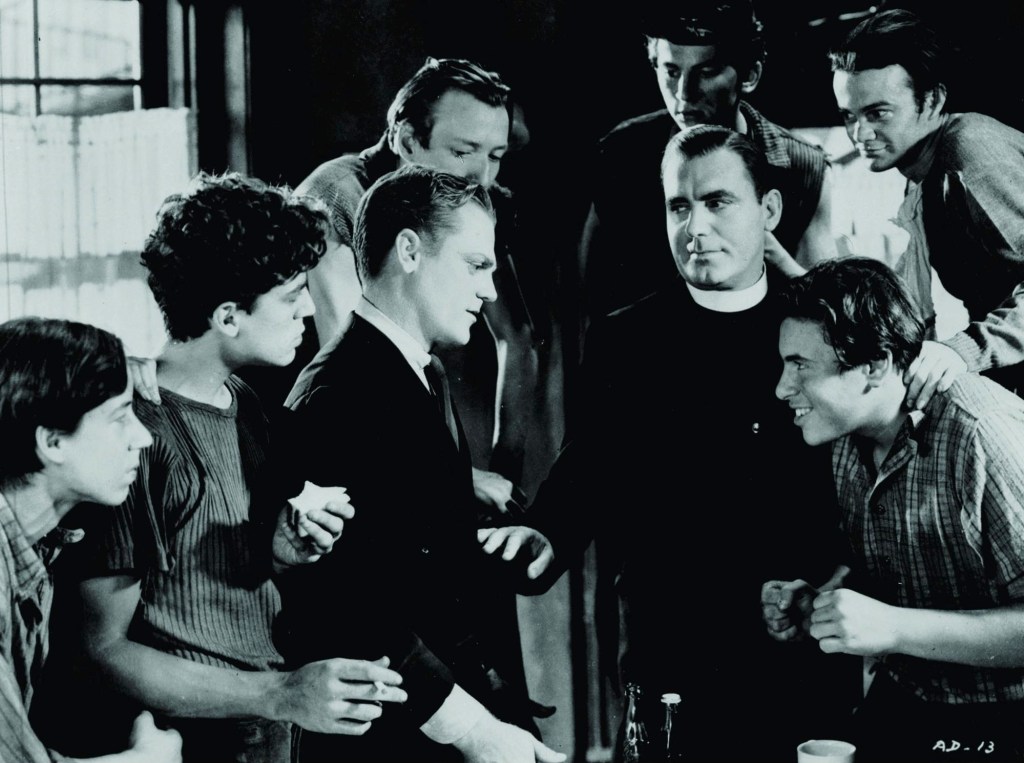
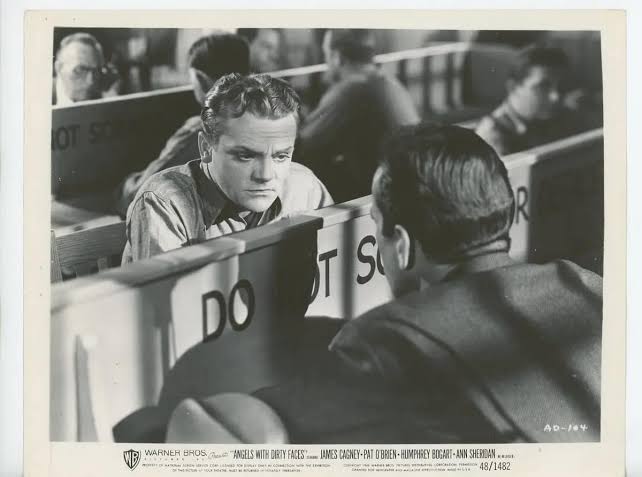
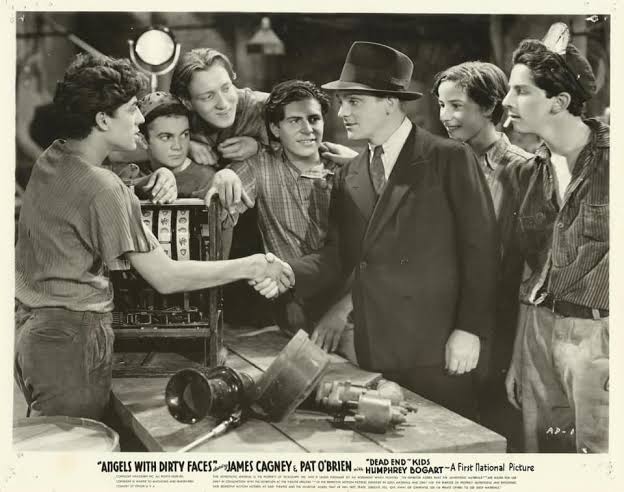
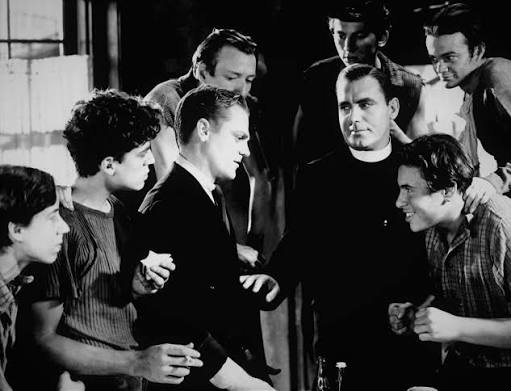
ANGELS WITH DIRTY FACES premiered both in Poland, and Reno, Nevada, on November 26, 1938
The story was by Rowland Brown. He had just co-wrote the Jackie Cooper crime film, 1937’s, “Boy of the Streets”, he followed this movie with the George Raft, Ellen Drew, drama, 1939’s, “The Lady’s from Kentucky”.
The screenplay based upon Brown’s story was by two writers. John Wexley wrote the Broadway play “The Last Mile”, about an innocent sent to prison and involved with a prison riot. That was made into both a 1932, and 1959 motion picture. Warren Duff co-wrote the screenplay for James Cagney’s, 1935, “The Frisco Kid”, set in 1852 San Francisco. Duff was the main writer on director Lloyd Bacon’s musical, “Gold Diggers of 1937”, starring Dick Powell and Joan Blondell.
The motion picture was directed by Michael Curtiz, who had just directed Claude Rains and John Garfield in 1938’s, “Four Daughters”. Curtiz followed this motion picture with 1939’s, “Dodge City”, a western starring Errol Flynn, Olivia de Havilland, and Ann Sheridan.
Selections of the Cast:
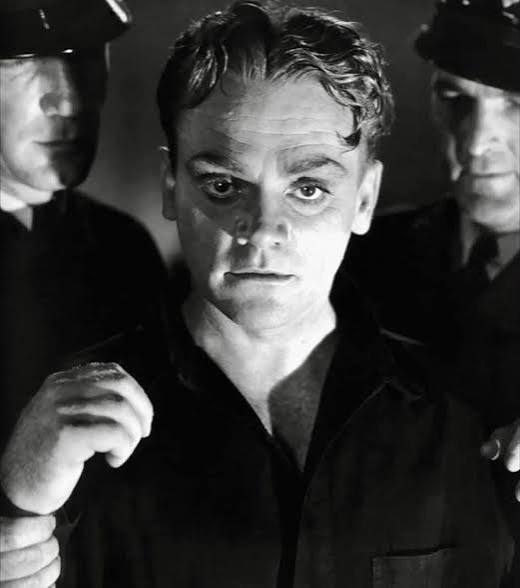
James Cagney portrayed “William ‘Rocky’ Sullivan”.
Pat O’Brien portrayed “Jerry Connolly”. O’Brien had just been in the Busby Berkeley directed musical, 1938’s, “Garden of the Moon”. He followed this picture with the 1939 drama, “Off the Record”, co-starring Joan Blondell.
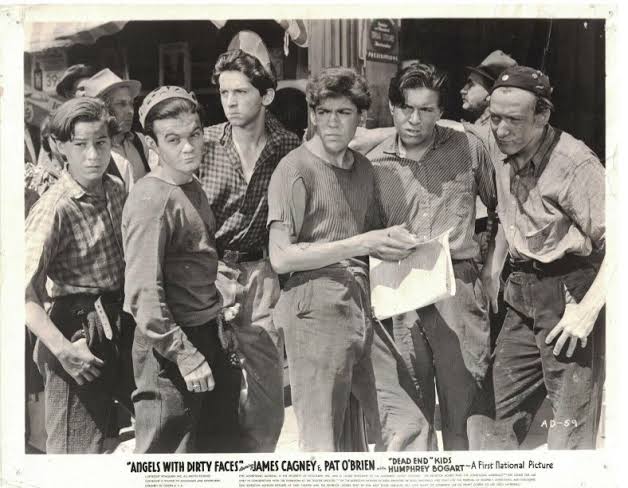
There was an October 1935, Broadway play, entitled, “Dead End”, about a group of people living at a street’s “Dead End” in New York City. It ran for two-years, and in 1937, was turned into a motion picture. For that entire run of the play, there was a group of young actors that became known as “The Dead End Kids”. They would appear again in this movie, as the titles, “Angels with Dirty Faces”. They included:
Billy Halop as “Soapy”, the leader of the boys.
Bobby Jordan as “Swing”. He was an army buddy of my father, and I remember going to his house during the early 1950s. Up until Bobby’s divorce from Lee, in 1957.
Leo Gorsey portrayed “Bim”, and he would become the group’s leader after Halop left, and they became, “The East Side Kids”, and then, “The Bowery Boys”.
Gabriel Dell portrayed “Pasty”.
Huntz Hall portrayed “Crab”.
Bernard Punsly portrayed “”Hunky”.
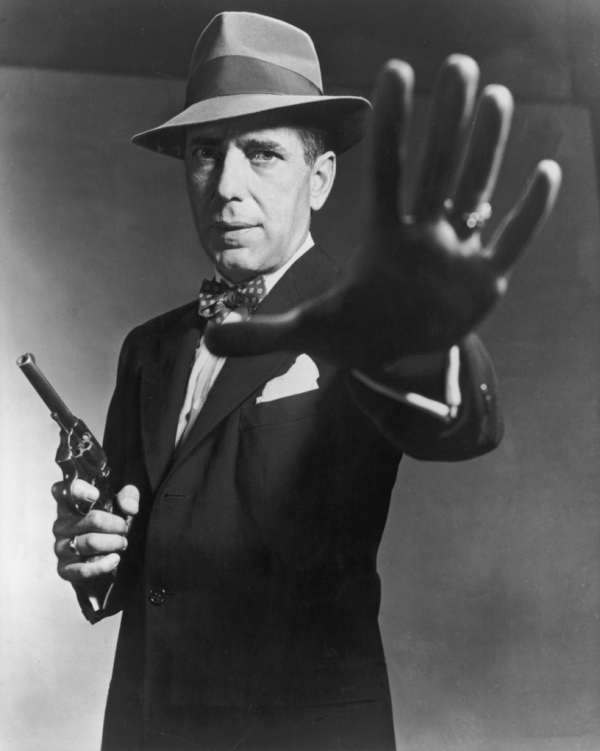
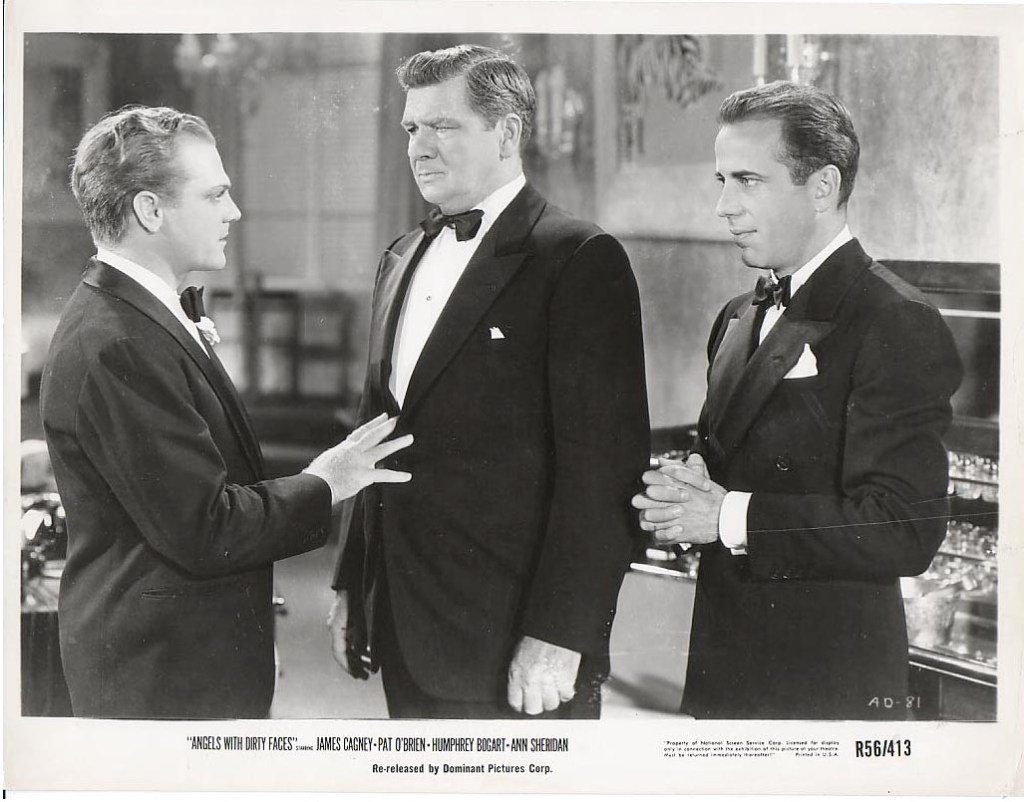
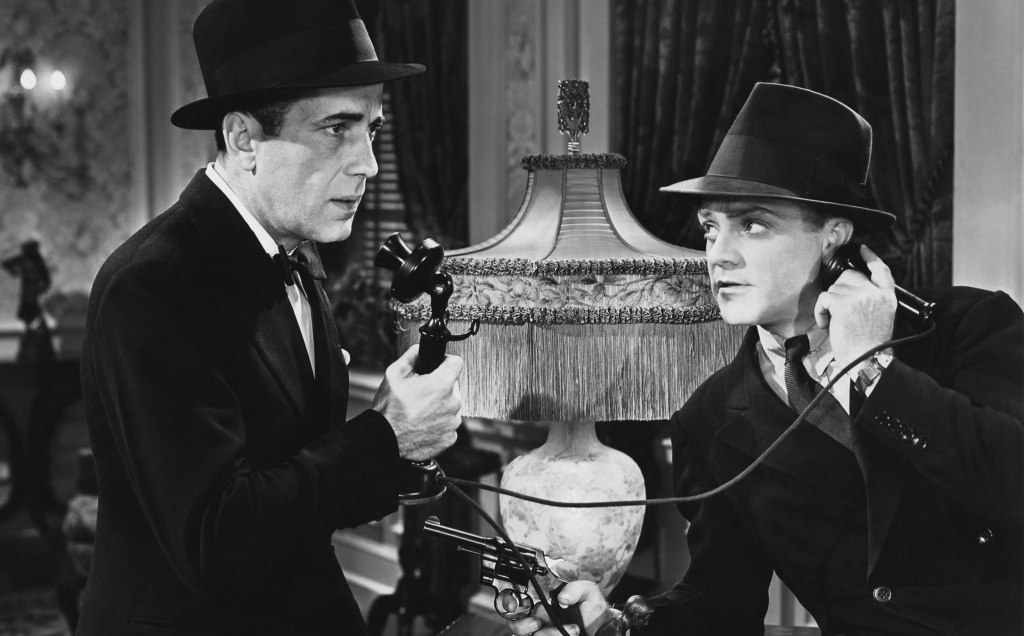
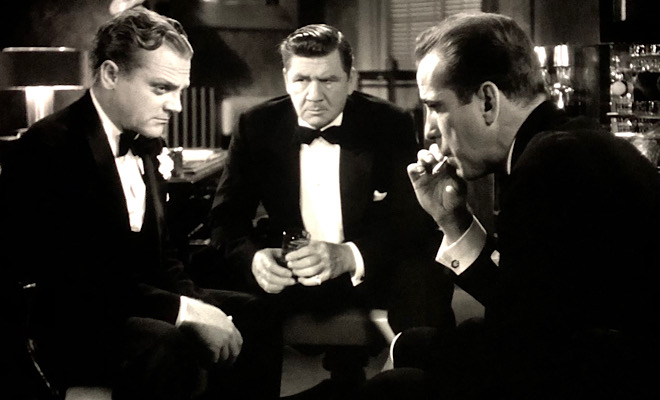
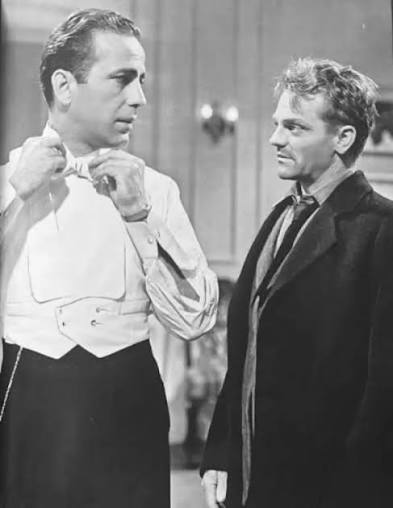
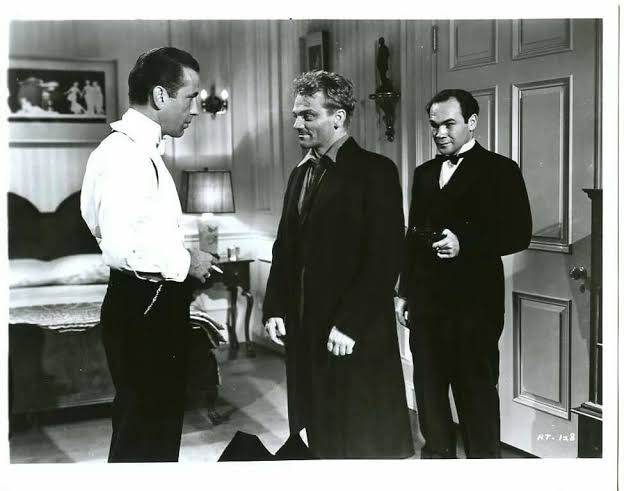
Humphrey Bogart portrayed “James Frazier”. This was his first film with James Cagney. In 1937, Bogart portrayed “Baby Face’ Martin” in “Dead End”. He had just portrayed “Rocks Valentine” in “Edw. G. Robinson’s”, 1938, “The Amazing Dr. Clitterhouse”. My article is “HUMPHREY BOGART: Horror Movie Actor” at:
Ann Sheridan portrayed “Laury Ferguson”. Sheridan had just co-starred in the previously mentioned 1938, “Broadway Musketeers”. She followed this feature film with the previously mentioned 1939, “Dodge City”. In 1940, the actress co-starred with George Raft, Ida Lupino, and Humphrey Bogart, in the classic crime film noir, “They Drive By Night”.
George Bancroft portrayed “Mac Keefer”. Bancroft had just appeared in 1938’s, “Submarine Patrol”, and followed this feature film portraying “Marshall Curley Wilcox”, in director John Ford’s, 1939, “Stagecoach”.
Above left to right, James Cagney, George Bancroft, and Humphrey Bogart.
The Basic Storyline:
In 1920, the audience meets three young people. There is the two Irish American boys, “Rocky Sullivan”, portrayed Frankie Burke, and “Jerry Connolly”, portrayed by William Tracey, and “Laury Ferguson”, portrayed by Marilyn Knowlden, whom “Jerry” pushes around for bothering him. The boys attempt to rob a box car of fountain pens. “Rocky” is caught, but “Jerry” gets away. “Rocky’ is sentence to Reform School. Move 15-years later, and Cagney and O’Brien take over the roles.
“Rocky” is arrested for armed robbery. His lawyer, is “Jim Frazier”, who is also a co-conspirator.
“Frazier” talks “Rocky” into taking the rap for the robbery alone, and in exchange for not pointing the law to him, “Frazier” will hold onto “Rocky’s” $100,000, equal as of this writing to $2,393,695.04 until he gets out.
After getting out, “Rocky” goes to his old neighborhood and visits “Jerry”. Who is now a Catholic Priest, and rents a room at a boarding house run by “Laury”.
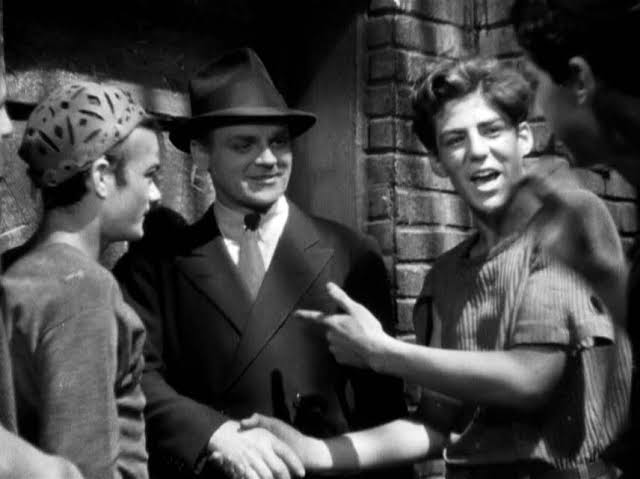
Next, he goes to “Frazier’s” casino to get his $100,000. “Frazier” claims not to have known of “Rocky’s” release and promises to have the $100,000 by weeks end, but give him $500 as spending money. As he walks, “Rocky” is pickpocketed by a gang of teenage boys. He follows them right to his own old hideout. There he retrieves his wallet and money and learns that these boys idolize him.
“Rocky” invites the boys to join him for dinner, and while they’re eating, In walks “Jerry” wanting to know why the boys aren’t playing basketball?
With “Rocky’s” help, the boy’s start practicing basketball and this leads to a game with another team. As “Laury” and “Jerry” watch the game, she tells him of her concern about how the boys are listening to “Rocky”, creating a negative influence on the boys “Jerry” is trying to save from a life of crime.
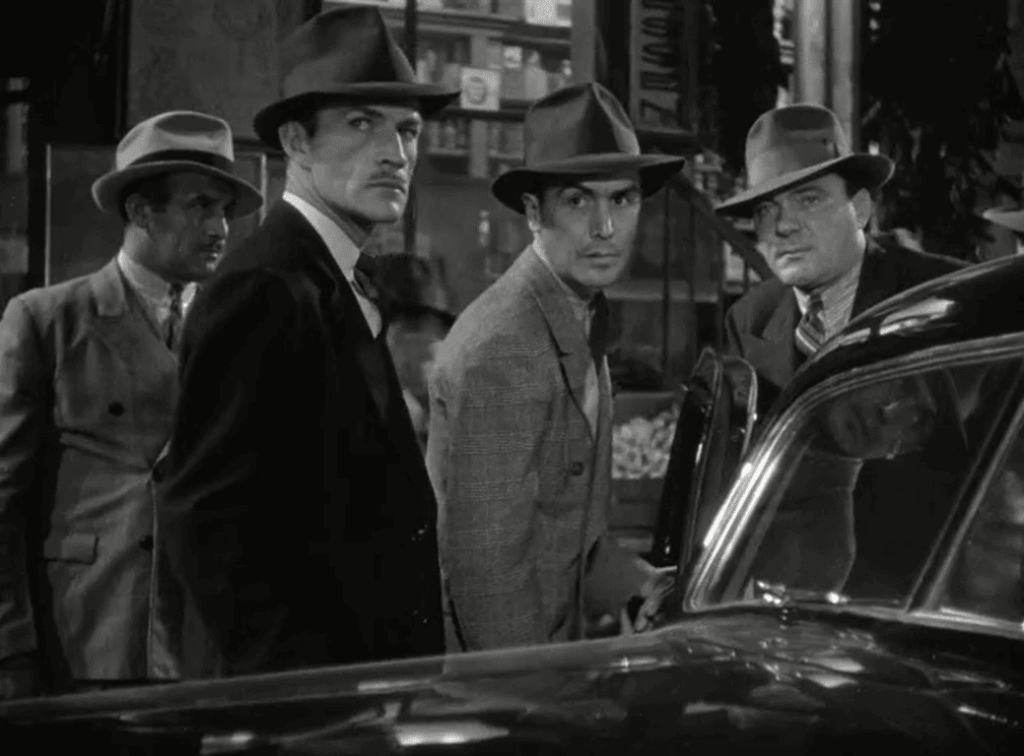
While all the above is taking place, “Jim Frazier” send a hit squad to eliminate his problem, “Rocky”.
However, “Frazier’s” men are not very good at trailing, and “Rocky” outwits them. “Rocky’s” retaliation is raiding “Jim Frazier’s” house, kidnapping him at gun point, taking another $2,000, and a ledger.
Next, “Rocky” goes to “Frazier’s” business partner, “Mac Keefer”, and requests $100,000 in exchange for “Frazier”. “Mac Keefer” gives him the money, and than calls the police after “Rocky” leaves.
The police arrest “Rocky” and he begins to mock them over their lack of evidence to “Mac Keeper’s” call. “Frazier” informs “Mac Keefer” that “Rocky” has the ledger. Which forces “Jim Frazier” to call the police to state there was a misunderstanding and this frees “Rocky”. Meanwhile, “Jerry” learns of the kidnapping and decides to go to the newspaper to expose corruption in New York.
Over the radio, “Jerry” attacks corruption in New York, and named “Rocky”, “Frazier”, and “Keefer”. Both “Frazier” and “Keefer” inform “Rocky” that nothing will happen to “Jerry”.
Next, “Rocky” learns that both “Frazier” and “Keefer” planned to kill him and “Jerry”. So, he did the reverse, and killed “Frazier” and “Keefer”. “Rocky” makes his way to a abandoned warehouse, murders a police officer and a stand off follows.
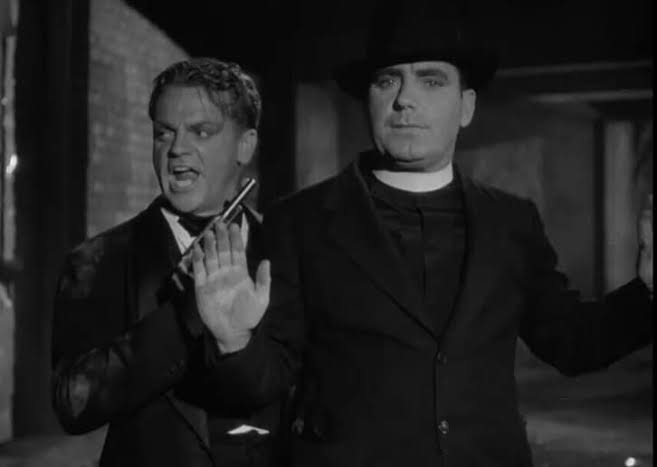
“Jerry” arrives at the warehouse and convinces the police that he can get “Rocky” to surrender’ The police agree, and “Jerry” enters the warehouse and sees the “Rocky” is trapped inside with no way out other than taking on the police. Instead, it “Rocky” that takes “Jerry” hostage.
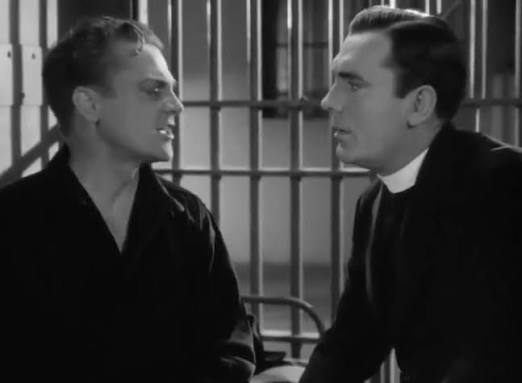
However, while attempting to get away, “Rocky” is shot in the leg and captured. A trial is held, and “Rocky” is convicted of double murder and sentenced to death. “Jerry” visits “Rocky” right before his execution.
He asks his boyhood friend, and finally realizes “Laury’s” fear about “Rocky”s” image on the boys. He asks him to BEG FOR MERCY on the way to the death house. Adding, that this will ruin the romantic gangster image he has given the boys of a gangster lifestyle,. but “Rocky” refuses the request. He adds that his reputation is all he had left.
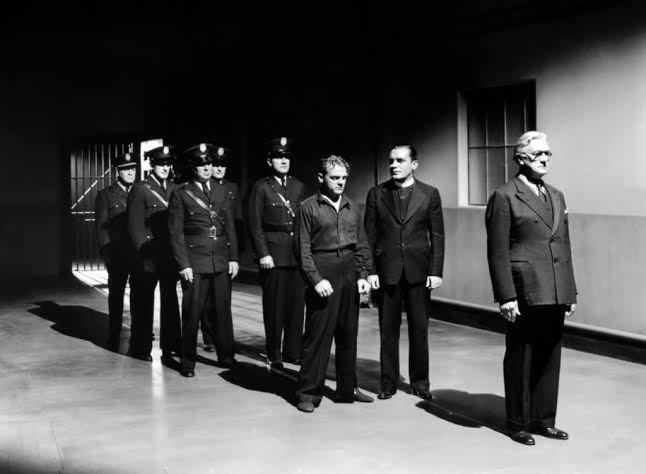
As they enter the execution chamber, “Rocky” shakes “Jerry’s” hand and wishes him well.
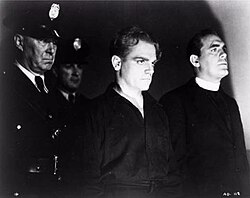
SUDDENLY, “Rocky” breaks down, begging and screaming for mercy, and seemingly dying a coward’s death. “Soapy” and the gang read the newspaper report about how “William ‘Rocky’ Sullivan” turned “YELLOW”.
The gang doesn’t know what to think about the gangster life style, or”Rocky”. “Jerry” comes over to the gang, and asks them to join in a prayer for:
“a boy who couldn’t run as fast as I could”
After a movie like “Angels with Dirty Faces”, could you imagine both James Cagney, and Humphrey Bogart is a WESTERN?
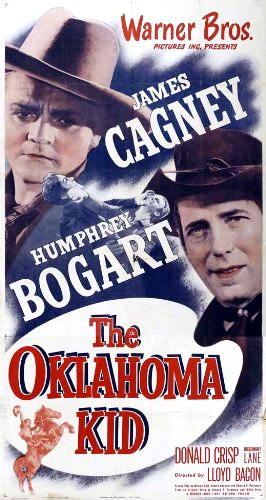
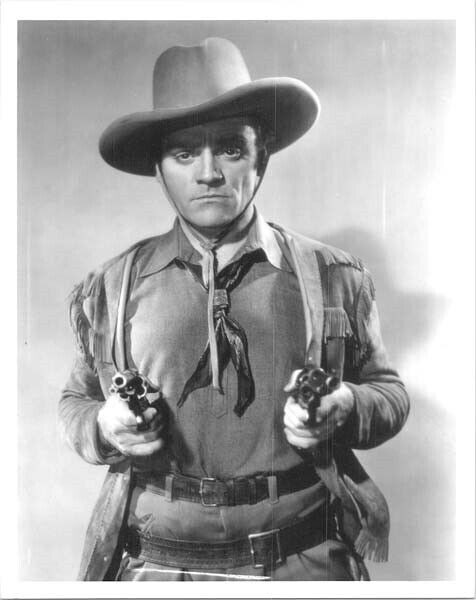
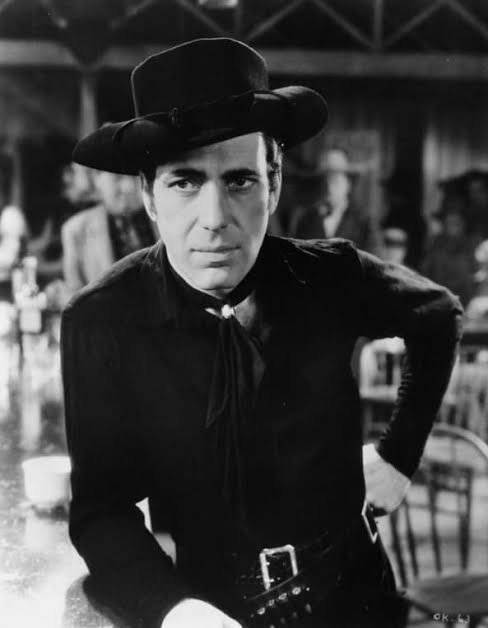
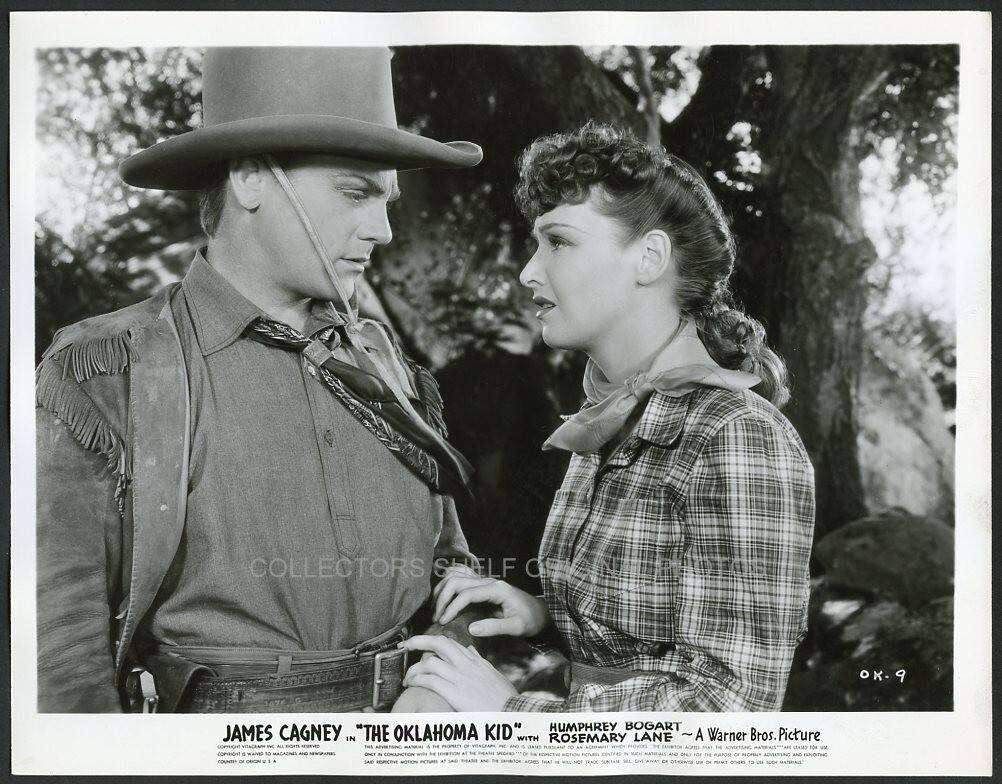
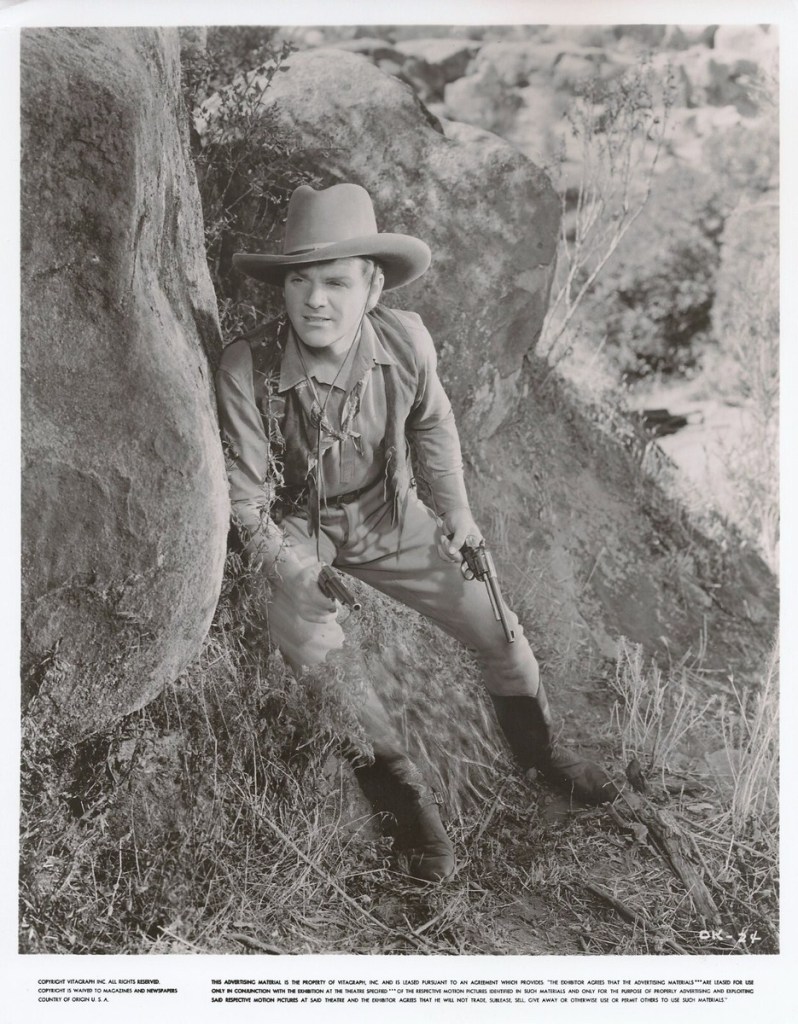
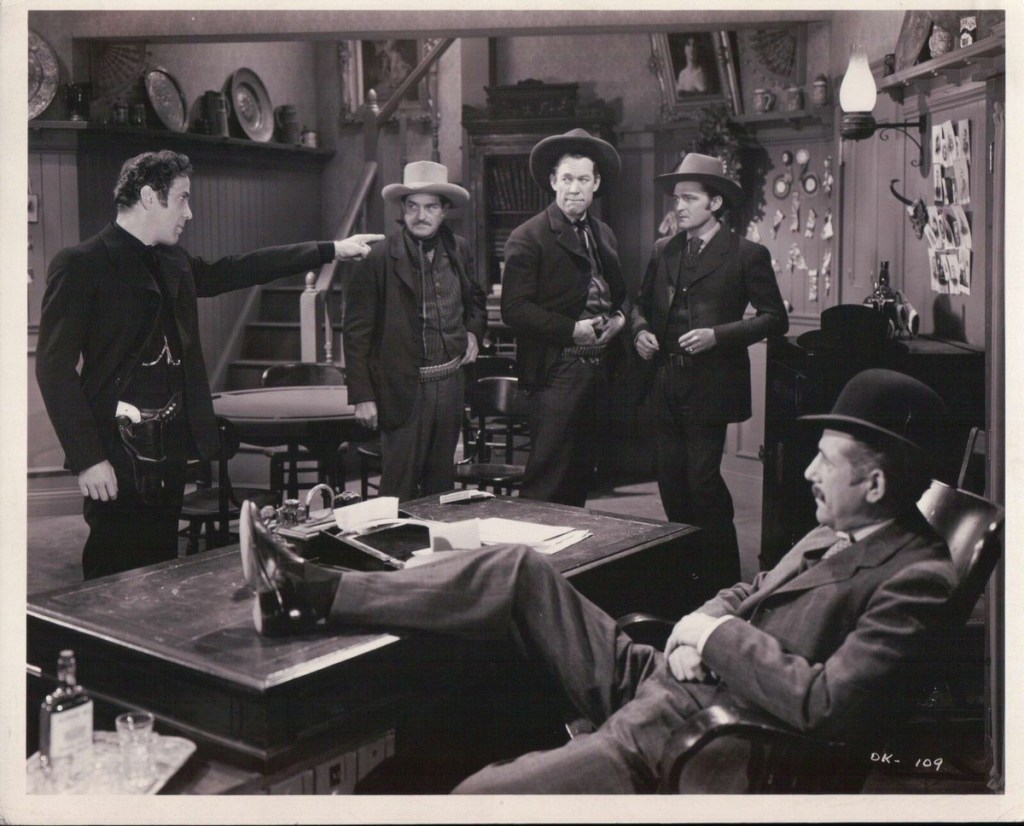
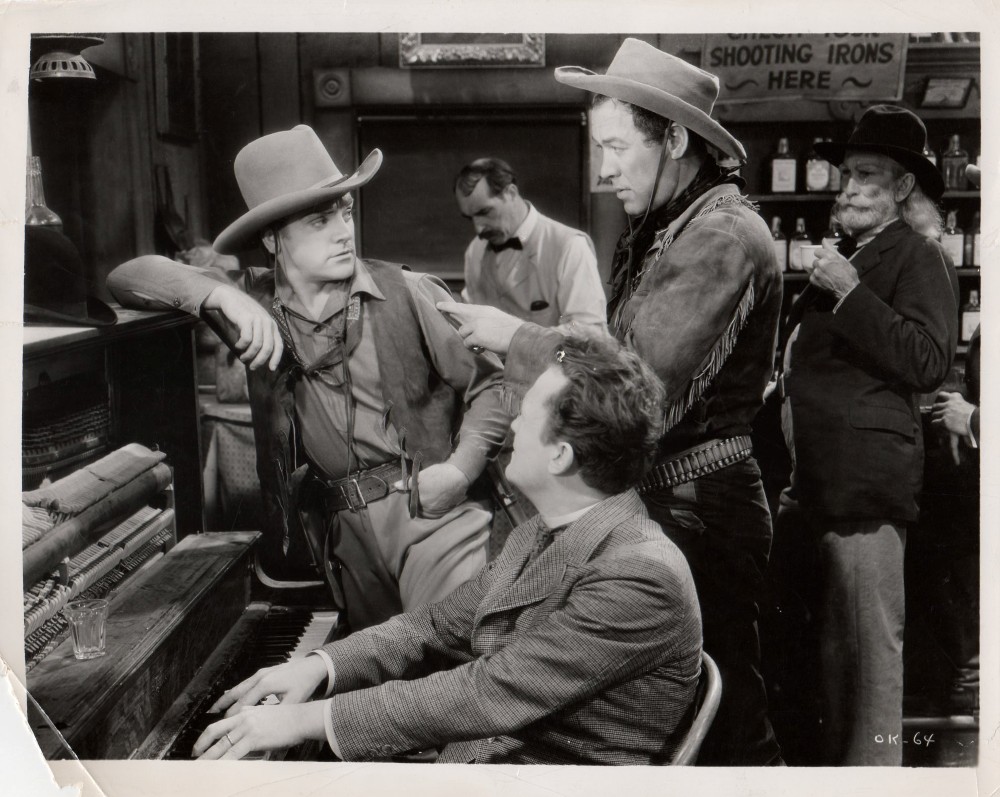
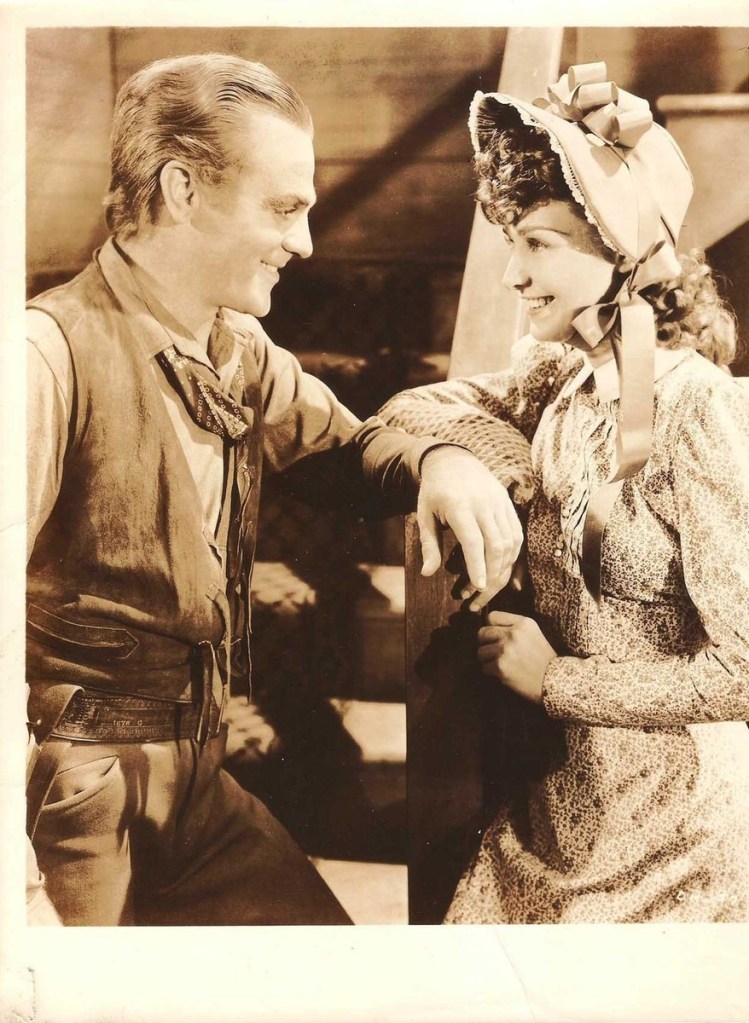
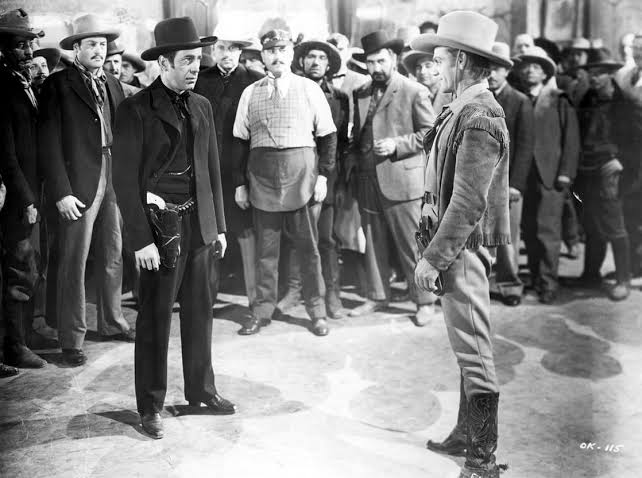
THE OKLAHOMA KID premiered, of course, in both Oklahoma City, and Tulsa, Oklahoma, on March 3, 1939
Above, proof that what the publicity department states on a poster. Is not always what the motion picture actually shows, below.
The original story, which keeps in historical events, was from two writers. Edward E. Paramore, Jr. was billed as Edward Paramore. He was a writer of western screenplays that included the dialogue for the Gary Cooper, 1929, “The Virginian”, the screenplay for the Chester Morris, Lewis Stone, and Walter Brennan, 1936 version of “The Three Godfathers”, and was co-writer on, 1939’s, “Man of Conquest”, starring Richard Dix portraying “Sam Houston”.
Wally Kline billed as Wally Klein, co-wrote only six screenplays, that included only two westerns. Besides this picture was the Errol Flynn and Olivia de Havilland, 1941, “They Died with Their Boots On”, about General George Armstrong Custer.
There were actually three screenplay writers starting with Edward Paramore. The other two writers were the previously mentioned, Warren Duff, and Robert Buckner, who co-wrote the screenplay for 1939’s, “Dodge City”, and would co-write the Errol Flynn and Miriam Hopkins western, 1940’s, “Virginia City”.
The motion picture was directed by Lloyd Bacon. Who had just directed Olivia de Havilland, George Brent, and John Payne, in 1939’s, “Wings of the Navy”, and followed this movie with 1939’s, “Indianapolis Speedway”, starring Pat O’Brien. Ann Sheridan, and John Payne, and was a remake of James Cagney’s, 1932, “The Crowed Roars”.
Members of the Cast:
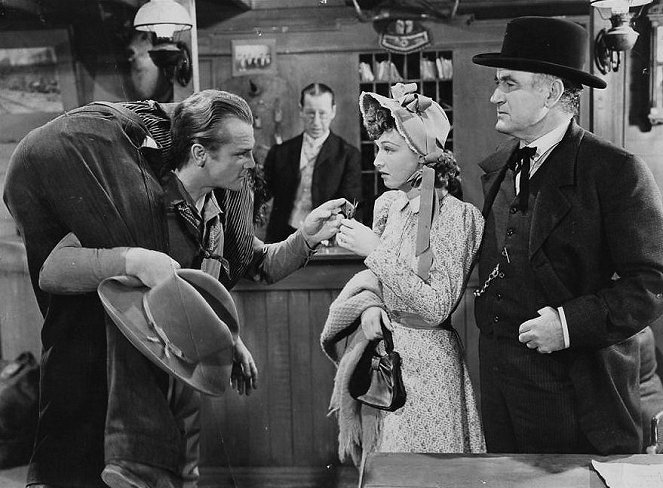
James Cagney portrayed “Jim Kincade”. Cagney followed this feature film by co-starring with George Raft, in the prison psychological crime drama, 1939’s, “Each Dawn I Die”.
Humphrey Bogart portrayed “Whip McCord”. “Boggie” had just been seen in 1939’s, “King of the Underworld”. He would follow this feature with the 1939, gangster film-noir, “You Can’t Get Away with Murder”. In 3-years, Humphrey Bogart would appear in one of his most remembered roles. My article about that role is, “The Stuff That Dreams Are Made Of” : The Maltese Falcon in Writing and on the Motion Picture Screen”, found at:
Rosemary Lane portrayed “Jane Hardwick”. Lane would co-star with Humphrey Bogart in 1939’s, “The Return of Dr. X”. She had just been seen opposite John Garfield, in the 1939 crime drama, “Blackwell’s Island”.
Donald Crisp portrayed “Judge Hardwick”. Crisp had just been in the Errol Flynn, 1938, Second World War, “Dawn Patrol” with Basil Rathbone, and David Niven. He would follow this feature film with director William Wyler’s, 1939, production of Emily Bronte’s, “Withering Heights”, starring Laurence Olivier, Meryl Oberon, and David Niven.
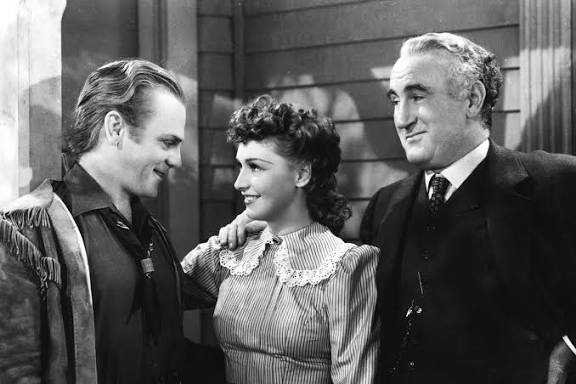
Above left to right, James Cagney, Rosemary Lane, and Donald Crisp.
Ward Bond portrayed “Wes Handley”. Bond was an uncredited “Police Man” in 1939’s, “Son of Frankenstein”, he would be “Bud Taylor” in 1939’s, “Dodge City”, and Humphrey Bogart would have to deal with him as “Detective Tom Polhaus” in 1941’s, “The Maltese Falcon”. My article is, “Ward Bond, of Director John Ford’s Stock Company” at:
Fact, on August 19, 1893, President Grover Cleveland signed a law to permit the sale of land in what was known as the Oklahoma,Cherokee Strip.
Money for the purchase of land in the Cherokee Strip is traveling by train into the Oklahoma Territory. The train arrives, and the money is loaded onto a Stagecoach which is robbed by “Whip McCord’s Gang”. The gang, in turn, are ambushed and robbed by the “Oklahoma Kid”.
As settlers now start pouring into the Cherokee Strip in what became,known, fact, as The Land Rush of 1899.
HOWEVER, before the settlers are permitted to start the 1899 Land Rush. “WhipMcCord” and his associates sneak through the guarded area to stake a claim. The settlers are now permitted in, and “John Kincaid”, portrayed by Hugh Sothern, below- – – –
– – – -and his son, “Ned”, portrayed by Harvey Stephens, confront “McCord” for the land he illegally obtained. “Whip” will let them have the large land area, IF, in exchange. He can place a saloon in their proposed town? Along with having the only gambling rights. The land is developed, and “Kincaid’s” town, is named “Tulsa”.
Under “Whip McCord’s” influence, the town becomes corrupt and violent acts are a daily occurrence. Hoping to bring law and order, “Judge Hardwick” and “Ned”, plan to get “John” elected Mayor, but when another candidate for Mayor is murdered. “Whip McCord” is able to frame “John Kincaid” for the murder.
Next, the “Oklahoma Kid” reads about the arrest and heads for Tulsa. After sundown, he rides into town, and goes to the jail. There he confronts “Sheriff Abe Collins”,portrayed by Abe Boteler, put the Sheriff in a cell, and takes the keys to free “John Kincaid”, but “John” won’t leave it. Even if, his other son, “Jim Kincaid” aka: “The Oklahoma Kid” wants him too. “John” believes in law and order, even if “Jim” seems not too. “Jim” leaves his father in the jail cell, and also leaves Tulsa before the Sheriff Deputies can discover what happened and go after him.
While the above events are unfolding the subplot is developing. “Ned” has been courting “Judge Hardwick’s” daughter “Jane”. “
“Whip” discovers that “John Kincaid” has a second son, who just happens to be “The Oklahoma Kid”, and comes up with a plan to get rid of “John”.
Going over to his saloon, “Whip” uses this information to stir up a mob. Led by three of “McCord’s” men, the mob enters the jailhouse, gets “John Kincaid”, and hangs him over the outside balcony of the jailhouse.
“McCord” made one mistake, he didn’t count on the return of “JIM KINCAID” tracking down three of his men. Starting with finding “Wes Handley” in a saloon, and after “Handley” confronts him, is killed by the “Oklahoma Kid”.
“Jim”, next, tracks him down “Indian Jack Pasco”, portrayed by Trevor Bardette, in another saloon. Where “Pasco” draws his gun first and is shot dead.
“Ed Curley”, portrayed by Lew Harvey, is cornered at a farmhouse, and “John Kincaid’s” son kills him in a shootout, after Curley reaches for his weapon.
However, he captures a fourth, “Ace Doolin”, portrayed by Edward Pawlry, and returns to town with him to testify against “Whip McCord”. “Jim” now discovers that “Ned” has become the new Sheriff, as a result of the same election their father was trying to become the Mayor in. In town, an unexpected event takes place, “Jim” meets “Jane Hardwick”, and finds himself attracted to her. A love triangle starts to develops, as the “Oklahoma Kid” starts to think of settling down.
Everything is leading to the climax as brothers “Jim” and “Ned Kincaid” look to take down “Whip McCord”. The brothers enter “McCord’s” saloon to arrest him, but “Ned” is mortally shot by “Whip” and “Jim” and “Whip” start a fist fight.
“Whip” has “Jim” down, and points his gun to kill him. When, “Ned” fires and kills “Whip McCord”, and then dies in his brothers arms.
“Jane” asks “Jim” to stay, but the “Oklahoma Kid” is no more. Now “Jim Kincaid” plans on going forward to the “Arizona Territory”. As “Judge Hardwick” arrives and hears “Jim’s” plans for his future.
“Jane” brings up that a man should not take on the “Arizona Territory” alone, and the picture ends with “Judge Hardwick” performing his daughter’s marriage to “Jim Kincaid”.
The final feature film for James Cagney for the “DECADE OF THE 1930s” was:
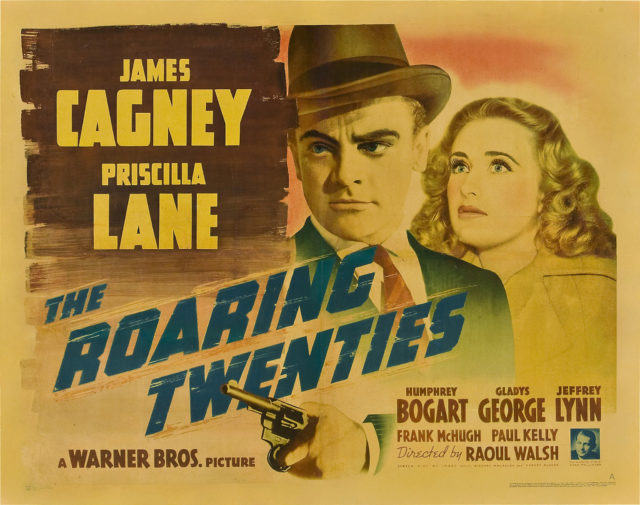
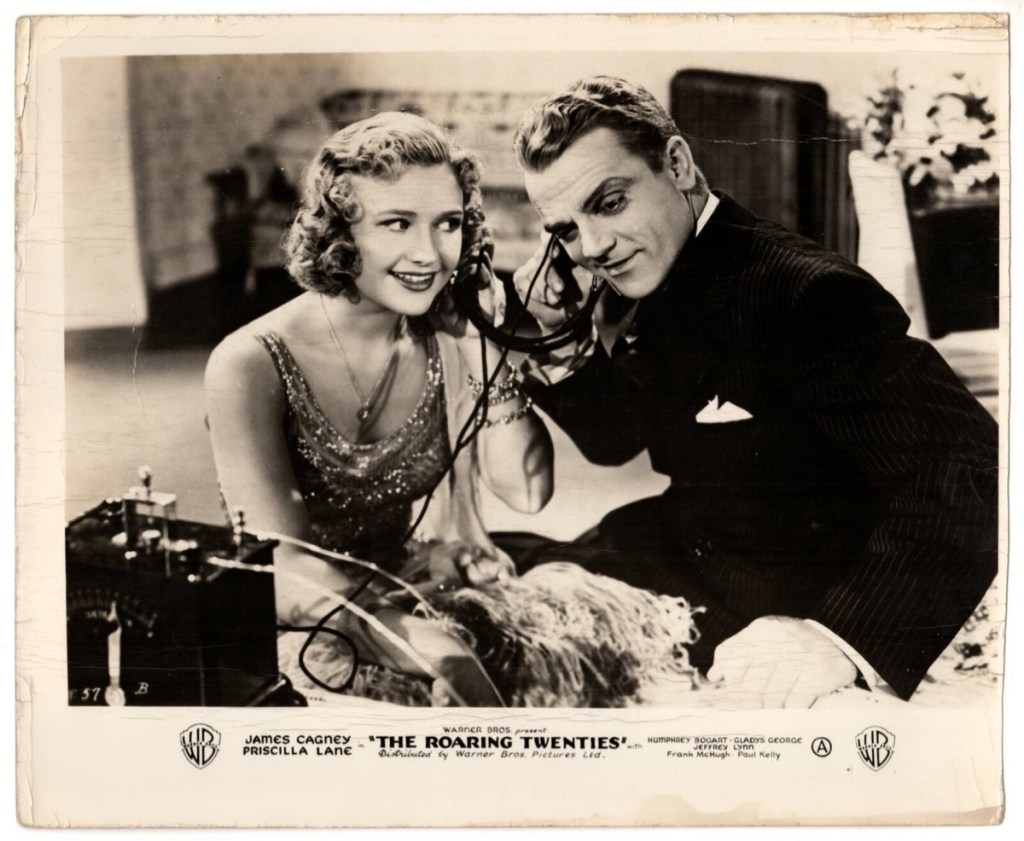
THE ROARING TWENTIES premiered in Hartford, Connecticut, on October 25, 1939
Mark Hellinger came up with the story. Newspaper columnist Hellinger’s closest friends included, Walter Winchell, Florenz Ziegfeld, Texas Guinan, Dutch Schultz, and Legs Diamond.
The screenplay was by three writers, Jerry Wald would become a major Hollywood Producer, and his 71 produced movies include Humphrey Bogart’s, 1943, “Action in the North Atlantic” co-starring Raymond Massey, Joan Crawford’s, 1945, “Mildred Pierce”, co-written by William Faulkner, the Humphrey Bogart, Edward G. Robinson, and Lauren Bacall, 1948, “Key Largo”, and the Paul Newman and Orson Welles, 1958, version of William Faulkner’s, “Long Hot Summer”. His 44 screenplays included the previously mentioned, 1940, “They Drive By Night”, the James Cagney, Ann Sheridan, and Humphrey Bogart, 1940’s, “Torrid Zone”, and the Susan Hayward and Robert Mitchum, 1952, “The Lusty Men”.
Richard Macaulay and Jerry Wald had just written the musical comedy, 1939’s,”On Your Toes”. Macaulay would co-write with Wald, 1940’s, “Torrid Zone”, as he also co-wrote, 1940’s, “They Drive By Night”.
The third writer was Robert Rossen. In 1956, he produced, directed, and wrote the excellent historical biography, “Alexander the Great”. That starred Richard Burton in the title role, Fredric March as his father, and Claire Bloom as his mother. In 1949 he co-wrote with Pulitzer Prize Winner, Robert Penn Warren, the screenplay based upon Warren’s novel, “All The King’s Men”.
The motion picture was directed by “One-Eyed” Raoul Walsh. He started directing in 1913, and was also an actor. Contrary to some stories, it was Walsh, while filming the 70mm, 1930 western, “The Big Trail”, that named his new star John Wayne. He had just directed the Dorothy Lamour and Lloyd Nolan, comedy musical, 1939’s, “St. Louis. Blues”, and followed this picture with the19 Claire Trevor, 1940, American Civil War semi-classic, “The Dark Command”, with he co-stars, John Wayne and Walter Pidgeon.
The Two Stars:
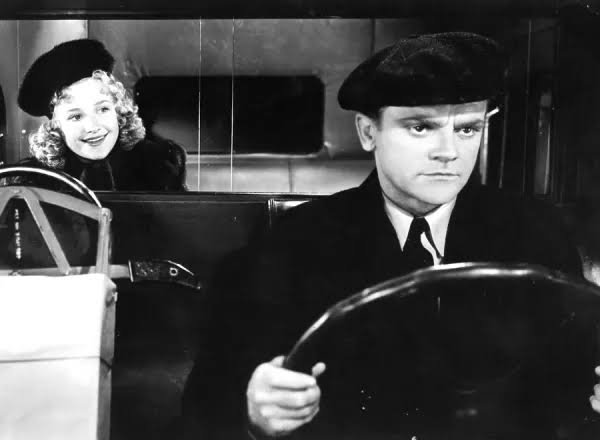
James Cagney portrayed “Eddie Bartlett”.
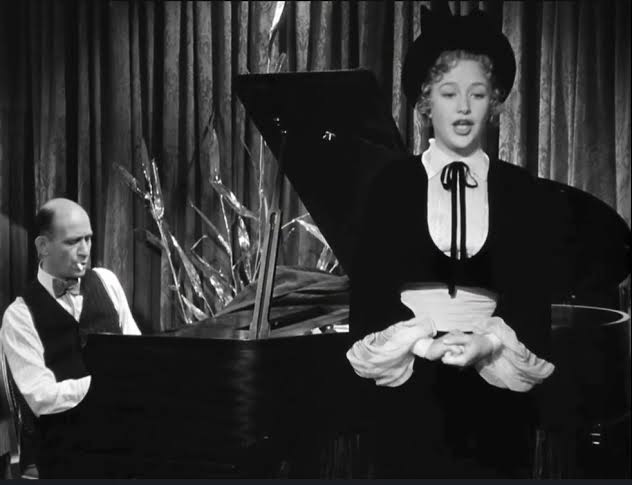
Priscilla Lane portrayed “Jean Sherman”. Lane had just co-starred with John Garfield, in film noir, crime drama, 1939’s, “Dust Be My Destiny”. She followed this motion picture by co-starring with two of her other three singing and acting sisters, Rosemary Lane, and Lola Lane, in authoress Fannie Hurst’s, 1939, “Four Wives”. The fourth wife was actress/singer, Gale Page.
Featured Players:
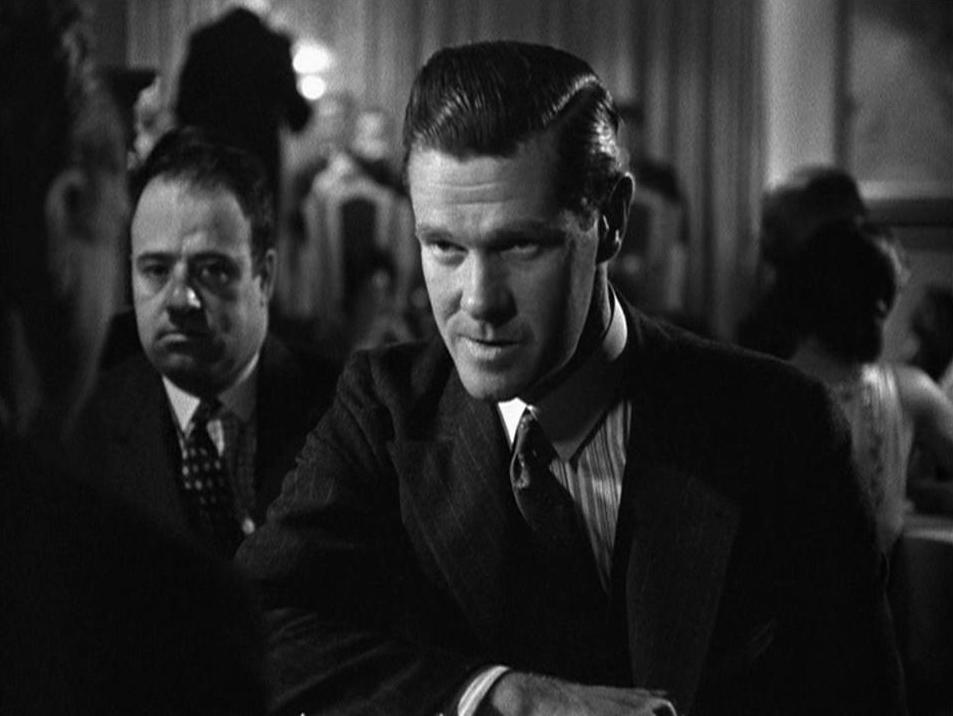
Humphrey Bogart portrayed “George Hally”. Bogart had just been seen co-starring with Bette Davis and George Brent, in 1939’s, “Dark Victory”. He followed this feature with 1939’s, “The Return of Dr. X”. My article is “Boggie’ and Bacall: Their Films Together” at:
Gladys George portrayed “Panama Smith”. George won the “Academy of Motion Picture Best Actress Oscar” for 1936’s, “Valiant IS the Word for Carrie”. Then, Hollywood, reduced her to supporting actress roles. She had just been seen with 6th-billing in Richard Greene’s forgotten, 1939, “Here I Am a Stranger”, and followed this motion picture with 3rd-billing in director Lloyd Bacon’s, 1939, “A Child is Born”.
Jeffrey Lynn portrayed “Lloyd Hart”. Lynn had just been seen in director Lloyd Bacon’s, 1939, “Espionage Agent”, and followed this movie with 1939’s, “A Child is Born”.
Above, Jeffrey Lynn with Gladys George.
The Basic Story:
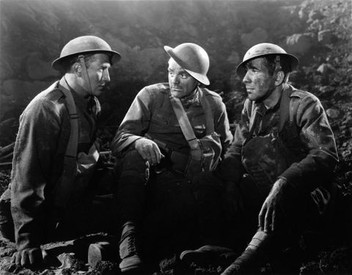
It’s the last days of the First World War, and three soldiers, unknown to each other until meeting in a fox hole are, “Lloyd Hart”, “George Hally”, and “Eddie Bartlett”.
The war ends, but work is hard to find.
Eventually, “Lloyd” becomes a lawyer, “Eddie” a cab driver, and “George” a bootlegger.
While unknowingly delivering a package of liquor in his cab to “Panama Smith”. “Eddie” is arrested.
“Panama” pays his fine with a little extra, removing the arrest record. In reciprocation, at her trial, “Eddie” helps “Panama” get an acquittal. Next, the two go into business as bootleggers. With “Panama’s” money, “Eddie” put together a fleet of cabs as a front to move liquor to their customers.
“Eddie” looks up “Lloyd”, and he becomes the lawyer for both “Eddie” and ‘Panama Smith”.
“Eddie” now encounters “Jean Sherman”, a girl he was corresponding with during the war.
He gets her a job singing at the same saloon that “Panama” works at.
After a short time, “Eddie” gives “Jean” an engagement ring, he asks her to keep it secret until he raises enough money to quit the criminal rackets he’s in.
“Eddie” and some of his henchmen hijack a shipment of liquor intended for another bootlegger, “Nick Brown”, portrayed by Paul Kelly, who refused to cooperate with him.
In charge of the highjacked liquor is “George”, who proposes that the two become partners. Back at “Eddie’s” house, the two call the police and inform them about one of “Nick’s” major liquor shipments.
After the shipment is confiscated, “Eddie” and “George” raid the police warehouse to steal it. However, as they’re leaving, “George” recognizes a security guard as an old army soldier he disliked, and in cold blood, murders him. After learning of the murder, “Lloyd” decides to cut ties with “George”, but his life is threatened, should he tell anyone.
Meanwhile, “Eddie” sends “Danny Green”, portrayed by Frank McHugh, to “Nick”, to arrange a truce. Instead, “Danny’s” corpse is dropped off in front of “Panama’s” club. “Eddie” goes after “Nick”, but jealous over “Eddie’s” increasing power, “George” informs “Nick”, who sets a trap. A gunfight erupts, and “Eddie” kills “Nick”, and now suspecting it was “George” behind the trap. However, “Eddie” has no proof that “George” informed “Nick”, so he just dissolves their partnership.
“Eddie” next discovers that “Jean” never loved him, but loves “Lloyd”. This is followed with the 1929 Stock Market Crash, ands “Eddie” loosing everything. He is forced to sell his cab company to “George” at a price far bellow its value. “George” mocking his one time friend and partner, leaves “Eddie” one cab to go back into being a cabby.
One take, cab driver “Eddie Bartlett” picks up a fair, it is “Mr”. and “Mrs. Lloyd Hart”, and their son. “Eddie” is told that “Lloyd” now works at the District Attorney’s Office and is working up a case against “George”. “Eddie” become despondent and an alcoholic, still is in love with “Jean”.
“Jean” now discovers that “George” plans to have “Lloyd” killed. She goes to “Eddie” to plea with him to help save her husband. At first, “Eddie” will not help, but his old business partner and close friend, “Panama Smith”, convinces him to help “Jean”. “Panama” and “Eddie Bartlett” head for “George’s” house in his cab. She waits for him outside, and he goes inside. “George” again mocks “Eddie”, this time over his shabby looks, and decides to have him killed.
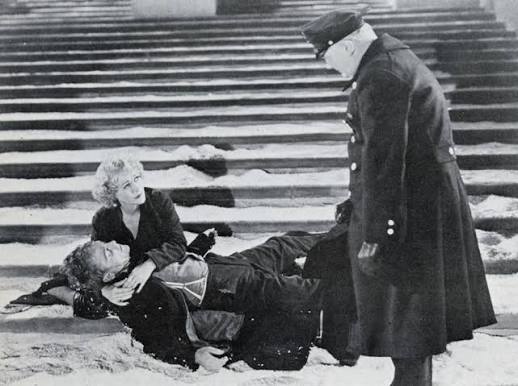
A gunfight takes place, and “Eddie” is able to kill “George” and some of his men. “Eddie” runs outside, but is shot by one of “George’s” other men. “Eddie” manages to make it to the steps of a nearby church, where he collapses, and dies in “Panama’s” arms.
A police officer asks who is he? She replies:
“He used to be a big shot.”
I started this article by mentioning that during the decade of the 1930s,James Francis ‘Jimmy’ Cagney, Jr., made one motion picture less than half his total film and television roles.
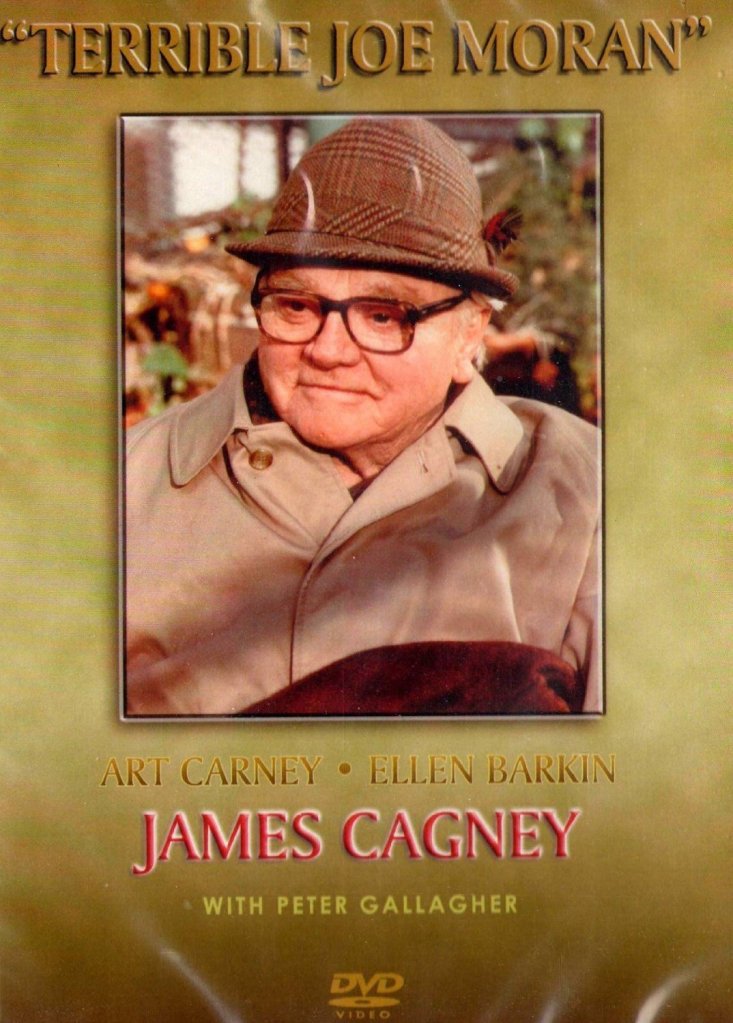
James Cagney’s final role was in a made for television movie, “Terrible Joe Moran”. The story had been originally written for a woman, to be portrayed by Katherine Hepburn, but she turned it down. The role was rewrittento be about an aging boxer in a wheel chair.
James Cagney needed the wheel chair, and never completely confirmed. Sadly, that he slurred his words, and impressionist, Rich Little, was the voice the viewers heard.








Leave a Reply