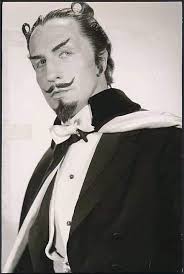
His name was VINCENT LEONARD PRICE, JR, and he frightened other’s and myself during the 1950’s. This is a look at an an actor, who could raise an eyebrow, and send shivers to a whole movie theater audience.
Before there was Horror, there was the “Mayflower”, “Cream of Tartar”, and some candy. Vincent, was a desendent, by his paternal grandmother, to Peregrine White, the first boy born on the Pilgrim’s ship, the “Mayflower”, and the first known child born to the Pilgrim’s in America. His father’s father was Vincent Clarence Price, who invented the first cream-of-tarter based baking powder and secured the Price family’s fortune. On the other hand, he was the youngest of the four children of Vincent Leonard Price and his wife, Marguerite Cobb “Daisy” Wilcox Price. Oh, and, “Junior’s” father, was also the president of the “National Candy Company”. Prior to its sale in 1948, the biggest manufacturer of candy in the United States.
In 1933, Vincent graduated from “Yale University” with a degree in English, and a minor in art. He crossed the pond during 1934, planning to begin art classes at London’s, “Courtauld Institute of Art”. However, that career direction ended, when he was bitten by the acting bug. Appearing on stage, at London’s, “Gate Theatre”, in the cast of a 1935 revival, of the Maurine Dallas Watkins, 1926 play, “Chicago”. He followed it, by portraying “Prince Albert”, at the “Gate”, in playwright Laurence Housman’s, “Victoria Regina”. Returning to the United States, and still in 1935, 24-years-old, Vincent Price, opened on Broadway, at the Broadhurst Theatre,again, as “Prince Albert”, in “Victoria Regina”, starring Helen Hayes as “Queen Victoria”. In 1937, he returned with the play, once more starring Hayes, and at the Broadhurst. Moving to, 1938, Vincent Price appeared with Orson Welles’s, “Mercury Theatre”, in both George Bernard Shaw’s, “Heartbreak Hotel”, and the Elizabethan Play, “The Shoemaker’s Holiday”, by Thomas Dekker, into mid-1938, then:
VINCENT PRICE SIGNED A 1938 CONTRACT WITH “UNIVERSAL PICTURES” AND RELOCATED TO CALIFORNIA.
From September 1st through September 30, 1938, Vincent Price filmed his first motion picture. This was director Roland V. Lee’s, comedy romance, “SERVICE DE LUXE”, starring Constance Bennett, premiering in New York City, on October 12, 1938.
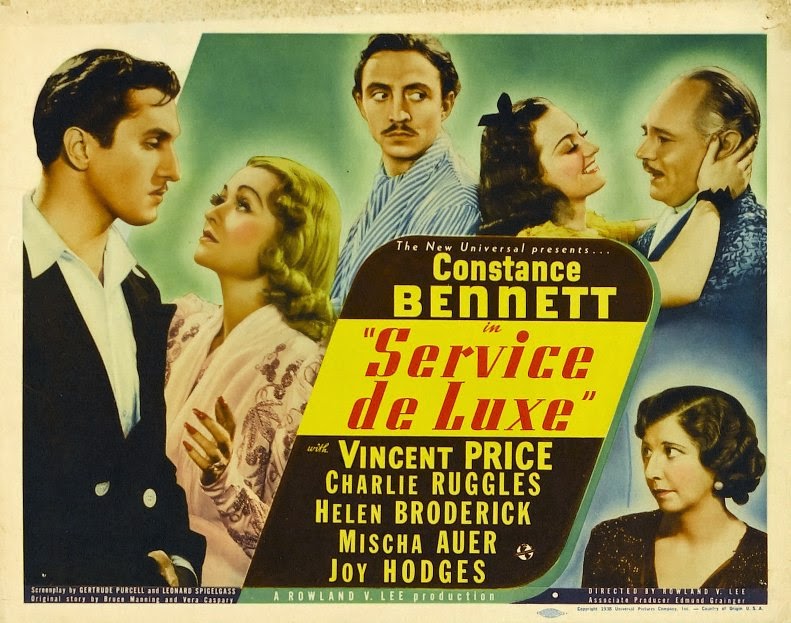
Of direct interest to this article are Vincent Price’s 3rd and 4th motion picture’s, HIS FIRST HORROR MOVIES!
Between 1592 and 1594, British playwright William Shakespeare wrote “Richard III”. This would be the source of Vincent Price’s first Horror movie.
The following comes from my article, “Basil Rathbone: From the Boer War to the Ghost in the Invisible Bikini” found at:
https://www.bewaretheblog.com/2023/05/basil-rathbone-from-boer-war-to-ghost.html
William Shakespeare did not write a Horror Story, but “Universal Pictures” did:
THE TOWER OF LONDON released November 17, 1939

The above poster’s date is incorrect and the poster was basically to promote, with the newspaper reviewers and “Hollywood Trade Papers”, the production.
The motion picture was directed by Roland V. Lee and reunited his two leads from that year’s “Son of Frankenstein”. Lee had just directed Rathbone and Douglas Fairbanks, Jr. in 1939’s, “The Sun Never Sets”, and would follow this feature with the Louis Hayward, Joan Bennett, and George Sanders, 1940, “The Son of Monte Cristo”.
Robert N. Lee wrote the screenplay and was the brother of the director. Lee was nominated for the “Best Screenplay, Academy Award” for 1931’s, “Little Caesar”, he had just written the Paul Robeson, 1937, “Jericho” aka: “Dark Sands”, and would write, for his brother, 1945’s, “Captain Kidd”.
The Six Leading Actors and Four Others:
Basil Rathbone portrayed “Richard, Duke of Gloucester/Richard III”. Rathbone had just appeared in the film “Rio”, and followed this feature with 1940’s, “Rhythm of the River”, a comedy musical, co-starring with Bing Crosby and Mary Martin, the original lead in Rodgers and Hammerstein’s “South Pacific” and the title role of the Broadway musical, “Peter Pan”.

Boris Karloff portrayed the created role of “Mord”, “Richard’s club-footed executioner”. Karloff had just starred in a First World War spy thriller, 1939’s, ‘British Intelligence”, directed by Terry O. Morse, the director of the Raymond Burr footage and the editor of that footage to turn the Japanese science fiction classic, 1954’s, “Gojira”, into the American monster on the loose, 1956, “Godzilla, King of the Monsters”. Boris Karloff followed this feature film with 1940’s, “The Fatal Hour”, another of his features as the American Chinese detective, “James Lee Wong”.

Barbara O’Neil portrayed “Queen Elyzabeth (Elizabeth)”. O’Neil had just co-starred with Charles Boyer and Irene Dunne, in 1939’s, “When Tomorrow Comes”, and followed this feature film portraying the mother of Vivien Leigh’s “Scarlett O’Hara”, in 1939’s, “Gone with the Wind”.

Ian Hunter portrayed “King Edward IV”. Hunter had just been in the musical drama, 1939’s, “Bad Little Angel”, and followed this film with the Fred Astaire and Eleanor Parker musical, 1940’s, “Broadway Melody of 1940”.
Vincent Price portrayed the “Duke of Clarence”. This was Vincent’s third motion picture and it was immediately proceeded by the Bette Davis and Errol Flynn, 1939, “The Privates Lives of Elizabeth and Essex”. Vincent Price would follow this film with the title role in 1940’s, “The Invisible Man Returns”.

Above, Vincent Price and Ian Hunter.
Nan Grey portrayed “Lady Alice Barton”. Grey had just been in the 1939 musical comedy, “The Under-Pup”, co-starring with Gloria Jean and Robert Cummings. She would follow this feature with 1940’s, “The Invisible Man Returns”, co-starring with Sir Cedric Hardwicke and Vincent Price.

Ernest Cossart portrayed “Tom Clink”. Character actor Cossart started out in movies in 1916. He had just been seen in 1939’s, “Lady of the Tropics”, starring Robert Taylor and Hedy Lamarr. He followed this feature film with 1939’s, “The Light That Failed”, starring Ronald Colman and Walter Huston.

John Sutton portrayed “John Wyatt”. Sutton just had an uncredited role in 1939’s, “The Private Lives of Elizabeth and Essex”, and followed this picture with the 1939 comedy, “Charlie McCarthy Detective”, starring ventriloquist Edgar Bergen, followed by portraying “Doctor Frank Griffin” in 1940’s, “The Invisible Man Returns”.

Leo G. Carroll portrayed “Lord Hastings”. Character actor Carroll had a distinguished career in several film genres. Among his varied roles include “Joseph” in director William Wyler’s. 1939, version of Emily Bronte’s “Wuthering Heights”, starring Merle Oberon, Sir Laurence Olivier, and David Niven. “Dr. Baker” in director Alfred Hitchcock’s, 1940, “Rebecca”, starring Sir Laurence Olivier, Joan Fontaine, and George Sanders, and also for Hitchcock, Carroll was seen in, 1941, “Suspicion”, starring Cary Grant and Joan Fontaine, 1945’s, “Spellbound”, starring Ingrid Bergman and Gregory Peck, and Alfred Hitchcock’s, 1959, “North by Northwest”, starring Cary Grant, Eva Marie Saint, and James Mason. Not to forget portraying televisions “Topper”, 1953-1955, portraying “Professor Gerald Deemer” in the 1955, cult science fiction, “Tarantula”, or portraying “Alexander Waverly” on televisions “The Man from U.N.C.L.E.”, 1964-1968, and in “The Girl from U.N.C.L.E.” 1966-1967.

Miles Mander portrayed “King Henry VI”. Overlooked character actor Mander had just portrayed “Aramis” in director James Whale’s version of French author Alexander Dumas’, “The Man in the Iron Mask”, starring Louis Hayward and Joan Bennett. In the 1940’s, Miles Mander would appear in two of Basil Rathbone’s “Sherlock Holmes” series. His other films included the George Sanders and Vincent Price, 1940, “The House of the Seven Gables”, based on the Nathaniel Hawthorne story. The Carole Lombard and Jack Benny, comedy, 1942’s, “To Be or Not to Be”, the 1942 drama, “Lucky Jordan”, starring Alan Ladd and Sheldon Leonard, 1942’s, “The Phantom of the Opera”, starring Claude Rains, Nelson Eddy, and Susana Foster. and 1943’s, “The Return of the Vampire”, starring Bela Lugosi, Frieda Inescort, and Nina Foch.

A Brief Synopsis of Murder for Power:
The year is 1483 and “Richard, the Duke of Gloucester” plays with dolls in a doll house, or is it a game of thrones? As he removes one doll, equaling one person in his way to becoming King of England.

Here is a review of the motion picture from “Modern Screen” magazine, dated February 1940:
Tower of London
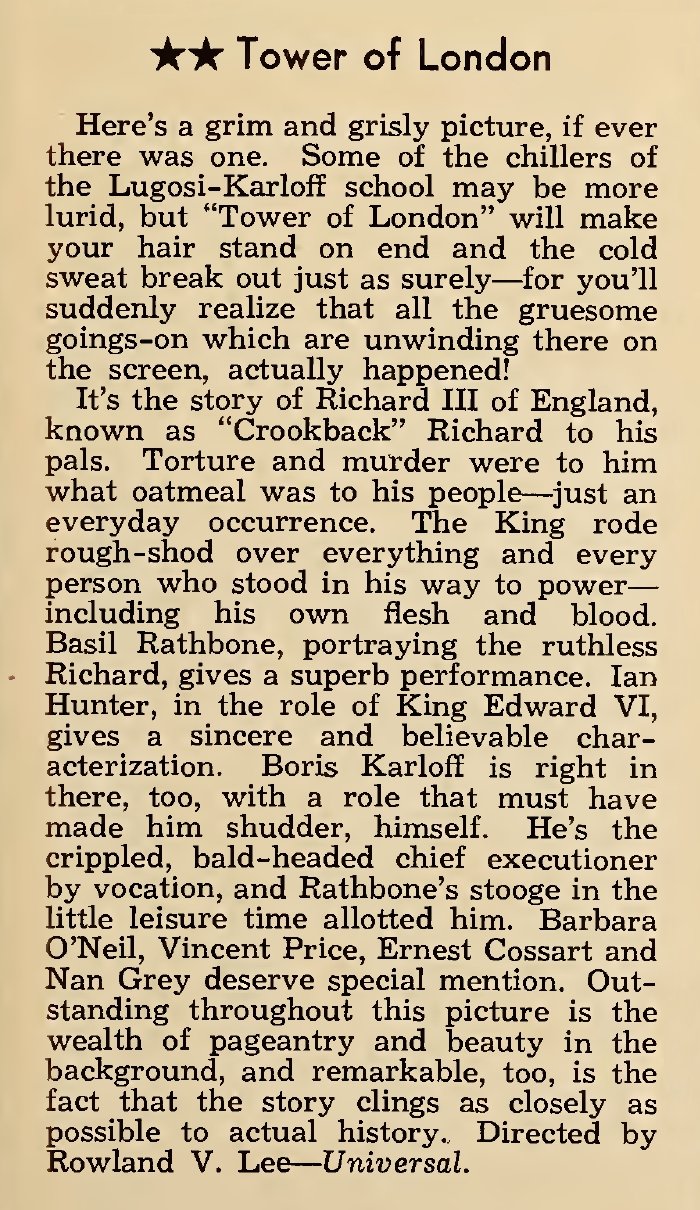
Here’s a grim and grisly picture, if ever there was one. Some of the chillers of the Lugosi-Karloff school may be more lurid, but “Tower of London” will make your hair stand on end and the cold sweat break out just as surely—for you’ll suddenly realize that all the gruesome goings-on which are unwinding there on the screen, actually happened!
It’s the story of Richard III of England, known as “Crookback” Richard to his pals. Torture and murder were to him what oatmeal was to his people—just an everyday occurrence. The King rode rough-shod over everything and every person who stood in his way to power—including his own flesh and blood. Basil Rathbone, portraying the ruthless Richard, gives a superb performance. Ian Hunter, in the role of King Edward VI, gives a sincere and believable characterization. Boris Karloff is right in there, too, with a role that must have made him shudder, himself. He’s the crippled, bald-headed chief executioner by vocation, and Rathbone’s stooge in the little leisure time allotted him. Barbara O’Neil, Vincent Prince, Ernest Cossart and Nan Grey deserve special mention. Outstanding throughout this picture is the wealth of pageantry and beauty in the background, and remarkable, too, is the fact that the story clings as closely as possible to actual history. directed by Rowland V. Lee.—
Returning to the Screenplay:
“Richard” first arranges for “John Wyatt”, who is in love with “Lady Alice Barton”, and is a cousin of “Queen Elyzabeth”, to be exiled to France.
“King Henry VI” is a weak monarch and “Richard” arranges for “Mord” to kill him.

The young prince’s, “Edward V”, 12-years-old, and “Richard” of Shrewsbury, “Duke of York”, 9-years-old, come for a visit. The film implies that the “Duke of Gloucester” had them placed in the Tower.

Below, the “Duke of Clarence” plotting with “King Edward IV”.

“Richard” gets the “Duke of Clarence” drunk and with the help of “Mord” drowns him in a barrel full of wine.


Meanwhile, “John Wyatt” returns to England to steal the royal treasure in the tower and bestow it on “Richard’s” rival, “Henry Tudor”, portrayed by Ralph Forbes, he is captured and tortured.


With the help of “Queen Elyzabeth” and “Lady Alice Barton”, “John Wyatt” escapes the dungeon with the royal treasure and takes it to “Henry Tudor”. In revenge, “Richard” orders “Mord” to kill the young princes in the tower.
“Henry Tudor” and his troops return from France and “The Battle of Bosworth Field” takes place ending with “Richard the Third’s” death and his executioner “Mord”.


As the story goes, director James Whale was in London watching a play, and heard an actor speaking his lines. That voice was what he needed for the 1933 production of H. G. Well’s, “The Invisible Man”, and the unseen Claude Rains was on his way to stardom.
That wasn’t quite the way Vincent Price became the title character of his second horror movie:
THE INVISIBLE MAN RETURNS released on January 12, 1940
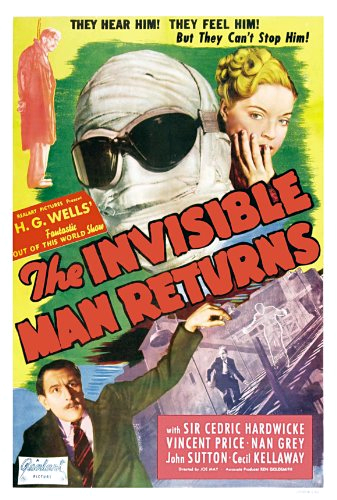
In 1939, “The Son of Frankenstein”, was doing very well at the box office and the corporation who now owned the “New Universal Pictures”. After forcing Carl Laemmle and his son out in 1936. After the successful release of director James Whale’s excellent version of the Jerome Kern and Oscar Hammerstein II’s, “Showboat”. Were thinking of making a sequel to 1933’s, “The Invisible Man”, starring either Boris Karloff, or Bela Lugosi in the title role. Next, a screenplay needed to be written, and W. P. Lipscomb, who had written both 1935’s, “Les Miserables”, “A Tale of Two Cities”, and 1938’s, “Pygmalion” was announced, and dropped. They next turned to still Kurt Siodmak still using his German spelling, for the story and he produced what was seen on-screen. With his name as Curt Siodmak, he solely wrote 1941’s, “The Wolf Man”, and with his brother, Director Robert Siodmak, made 1943’s, “Son of Dracula”. My article is, “CURT and ROBERT SIODMAK: Horror and Film Noir” found at:
https://www.bewaretheblog.com/2017/11/curt-and-robert-siodmak-horror-and-film.html
So, how did Vincent Price get the role?
According to the trade paper, “The Hollywood Reporter”, for June 29, 1940. The only requirement for the title role, was a:
young, good-looking contender even though he would remain invisible until the last reel.
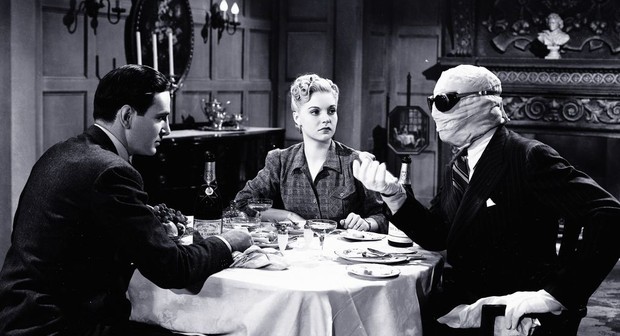
Above left to right, John Sutton portraying “Doctor Frank Griffith”, the brother of the original “Invisible Man”, Nan Grey portraying “Helen Manson”, and 2nd-billed, Vincent Price portraying “Sir Geoffrey Radcliffe”
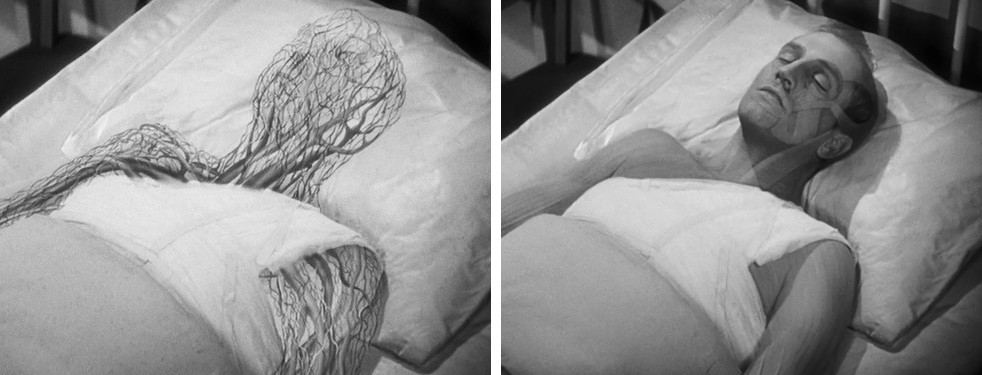
Vincent Price would appear, well at least his voice would be heard, in his last Horror movie, before the 1950’s.
For the record, VINCENT PRICE’S, 3rd HORROR MOVIE, wasn’t really FRIGHTENING, as, LAUGHABLE!
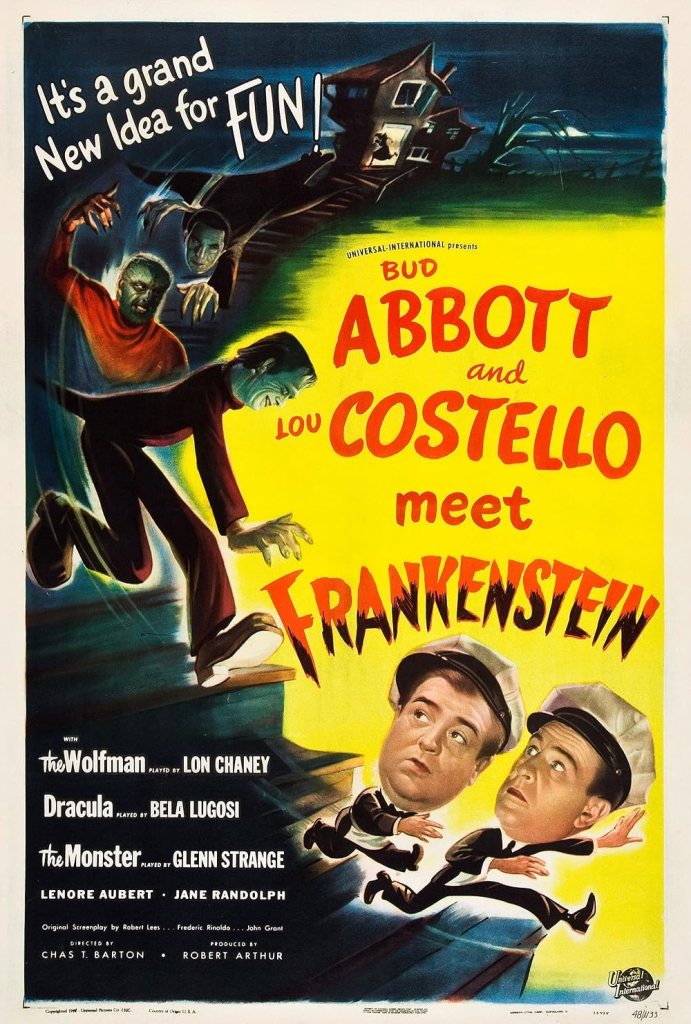
ABBOTT AND COSTELLO MEET FRANKENSTEIN released June 15, 1948
Escaping in a row boat that was tied at the castle’s dock, “Bud” and “Lou” believe they’ve finally gotten away from “Dracula”, the “Wolf Man”, and the (Frankenstein) “Monster”. When they hear, Vincent Price‘s voice, behind Bud Abbott:
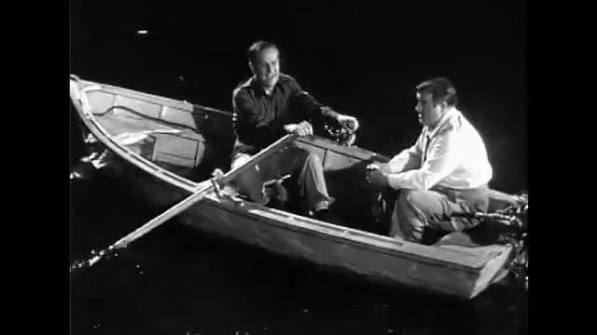
Oh, that’s too bad, I was hoping to get in on the excitement. (As the audience sees a cigarette floating in the air being lite by a match)
Bud Abbott: Who said that?
Vincent Price: Allow me to introduce myself, I am the Invisible Man.
The two jump into the river and the movie ends.
Back in 2015, I did an overview of the Abbott and Costello monster films. You can read my article, “Abbott and Costello Meet the Universal Studio Classic Monsters”, at:
https://www.bewaretheblog.com/2015/04/abbott-and-costello-meet-universal.html
The following comes from my article, “Lionel Atwill: The Legitimate Stage, Classic and Not So Classic Horror, and ‘Sherlock Holmes”, at:
https://www.bewaretheblog.com/2024/04/lionel-atwill-legitimate-stage-classic.html
Vincent Price made 1953’s “House of Wax”, but 21-years-earlier was the original version. Which I give my reader for comparison, with slight modifications to fit this article.
MYSTERY OF THE WAX MUSEUM Limited release on February 6, 1933

The motion picture was directed by Michael Curtiz. He had just directed the Spencer Tracy and Bette Davis, 1932, “20,000 Years in Sing Sing”, and followed this feature film with the romantic comedy, 1933’s, “The Keyhole”, starring Kay Francis and George Brent.
The screenplay was based upon the 1932 short story, “The Waxworks”, by Charles S. Belden.
The film’s actual screenplay was from two writers, Don Mullaly, who only wrote four screenplays, this was his second. The other writer, Carl Erickson, co-wrote the same four screenplays, and like, Mullaly, changed his profession.
Lionel Atwill portrayed “Ivan Igor”. Atwill followed this feature film with a forgotten mystery horror story, 1933’s, “Murder in the Zoo”, as a jealous husband who uses zoo animals to murder those he believes are in love with his wife. The film critic Leonard Maltin called that movie “astonishingly grisly” even for pre-motion picture code Hollywood.
Atwill’s make-up was designed by Max Factor, and applied by either of his two uncredited assistants, Ray Romero, or Perc Westmore.

Fay Wray portrayed “Charlotte Duncan”. Fay Wray’s next motion picture was the one she is most remembered for, 1933’s, “KING KONG”. She had appeared in entirely forgotten movies until her second billing in the 1934 Hollywood biography “Viva Villa!”, starring Wallace Beery as “Pancho Villa”, and then it was back to more forgotten feature films and television dramas such as “Perry Mason”. My article is “FAY WRAY BEFORE ‘KING KONG”, found at:
https://www.bewaretheblog.com/2015/11/fay-wray-before-king-kong.html

Glenda Farrell portrayed “Florence Dempsey”. Farrell started out in dramas, such as her third on-screen appearance, in the film that introduced Edward G. Robinson, 1931’s, “Little Caesar”, but had appeared on stage since she was seven. Farrell’s persona was the wisecracking blonde, and she turned that into the successful newspaper reporter, “Torchy Blane”, in 1937’s, “Smart Blonde”, that was the first in a series of six motion pictures.

Frank McHugh portrayed “Jim”. A vaudevillian and legitimate state actor, he started at ten with his parents traveling company, McHugh, usually provided comic relief, and first appeared on-screen in 1929. His career ended forty-years-later on an episode of the television western, “Lancer”.

Allen Vincent portrayed “Ralph Burton”. Vincent’s motion picture career totaled twenty-six films, with the exception of his sixth, this picture, all entirely forgotten.

The screenplay is bound to have comparisons with 1953’s, “House of Wax”, but, because, “Mystery of the Wax Museum” is set mostly in the year it was made, 1933. The picture reflects the year it was made, and as such, is very dated.
The Basic Screenplay:
The story opens in 1921, London, England, “Ivan Igor” runs a wax museum with historical recreations that is in financial difficulty. One evening he gives a tour to a friend, “Dr. Rasmussen”, portrayed by Holmes Herbert, and art critic, “Mr. Galatalin”, portrayed by Claude King. “Galatalin” is very impressed and promises to recommend “Igor” to the Royal Academy upon his return from Egypt, which he is leaving for in the morning.
Note: the wax statues are portrayed by actors and at times a slight movement occurs. In the following scene, that is Fay Wray portraying “Marie Antionette”.


The two men leave, and “Ivan’s” business partner, “Joe Worth”, portrayed by Edwin Maxwell, arrives and purposes that the two men burn down the museum and collect the $10,000 ($257,786 as of 2026) on the insurance policy. “Ivan” refuses, but “Joe” sets the building on fire and leaves, as “Igor” attempts to save his “children”.


Cut to 1933 New York City, and reports of a hideous figure stealing bodies from the morgue.

Newspaper reporter “Florence Dempsey” is on the verge of being fired by her boss, “Jim”, when she hears that a wealthy son, “George Winton”, portrayed by Gavin Gordon, is being held in jail as a suspect in the murder of his ex-girlfriend, “Joan Gale”, portrayed by Monica Bannister.

“Florence” goes to witness the autopsy of “Gale”, but the body has disappeared. Next, she visits “Winton” in jail, who convinces her that he’s innocent of the murder.
Meanwhile, “Ivan Igor”, is now living in New York, and is preparing to open his new wax museum. Because of his injuries from the London fire, “Ivan’s” hands do not work. He is now confined to a wheelchair, and depends upon the work of hired assistants, such as “Ralph Burton”, to create his wax figures.

“Ralph” happens to be engaged to “Florence’s” roommate, “Charlotte Duncan”.

“Florence” doesn’t approve of the match, because as nice a guy as “Ralph” is, he’s still a starving artist. Going with “Charlotte” to visit “Ralph” at the museum, “Florence” sees an uncanny resemblance to the wax figure of “Joan of Arc” and “Joan Gale”.

“Ralph” wheels out “Ivan” to meet “Charlotte”, and also introduces him to “Florence”. “Ivan Igor” seems to stare at “Charlotte”, apologizes to her explaining she is the exact duplicate of his, lost in the London fire, “Marie Antionette”.

Next, “Florence” is able to get “George Winton” released from jail, and talks him into helping her follow “Professor Darcy”, portrayed by Arthur Edmund Carewe, whom “Ivan Igor” said created “Joan of Arc”. The two follow “Darcy” to a derelict building that happens to be owned by “Joe Worth”. Who also happens to be in New York City. “Florence” enters the building, and goes downstairs and observes a hideous figure pushing a crate.
Returning to “George”, she finds him being interviewed by two detectives that were following him “Florence” tells the police that she’s found the body of “Joan Gale”, but just then “Darcy” leaves and the two detectives call for help and capture him. While, the crate turns out to be holding bottles of whiskey, because “Joe Worth” is now a bootlegger. At the police station, “Professor Darcy”, turns out to be an addict known as “Sparrow”, who works for both “Joe Worth” and “Ivan Igor”. However, his questioning becomes intense when the pocket watch of a missing judge is found in “Sparrow’s” pocket.

At the museum, “Charlotte” has come looking for “Ralph”, but he hasn’t gotten there yet. Next, “Ivan Igor” appears in his wheelchair, and is able to lure “Charlotte” to his underground laboratory and reveals that he can walk.
At the same time, “Ralph” arrives and lets in “Florence”, who is knocking on the museums front door. The two go over to a statue of “Voltaire”, and looking at a picture of a missing judge, realize they’re the same face.

While, back at the police station, “Darcy-Sparrow”, is telling the detectives that “Ivan Igor” is murdering people, and covering them in wax to make statues.
Cut to “Charlotte” facing the standing “Ivan Igor”, and in madness strikes his face. Which breaks off a wax covering, revealing the hideous creature that has been robbing the morgue and murdering people.


“Ivan Igor” uncovers the body of “Joe Worth”, and tells “Charlotte” that his search for the man who caused his burnt features was now over. The screaming “Charlotte’s” voice is heard by both “Ralph” and “Florence”, and leads them to “Igor”. There’s a short fight and “Ivan” knocks “Ralph” unconscious as “Florence” runs away.
“Ivan” places “Charlotte” on a table and straps her down. As he sets up the machine containing the hot wax to be poured over her, giving “Ivan Igor” the body of his “Marie Antionette” once more.


Just then, “Florence” and “Winton” return, followed by the police. A shot rings out, and “Ivan Igor” falls into the vat of hot wax, and just in time, “Ralph” regains consciousness, and saves “Charlotte” from the flowing hot wax.
Before I discuss Vincent Price’s version of “The Mystery of the Wax Museum”. The motion picture which truly launched him into becoming a Horror movie legend.
I have attached my article, which explains the history of the film process used by “Warner Brothers” to HEIGHTEN THE FEAR of the picture’s audience.
The article is “THIRD DIMENSION the Golden Age of 3-D Motion Pictures 1952-1955” to be found at:
https://www.bewaretheblog.com/2015/08/third-dimension-golden-age-of-3-d.html
HOUSE OF WAX premiered in New York City on April 10, 1953
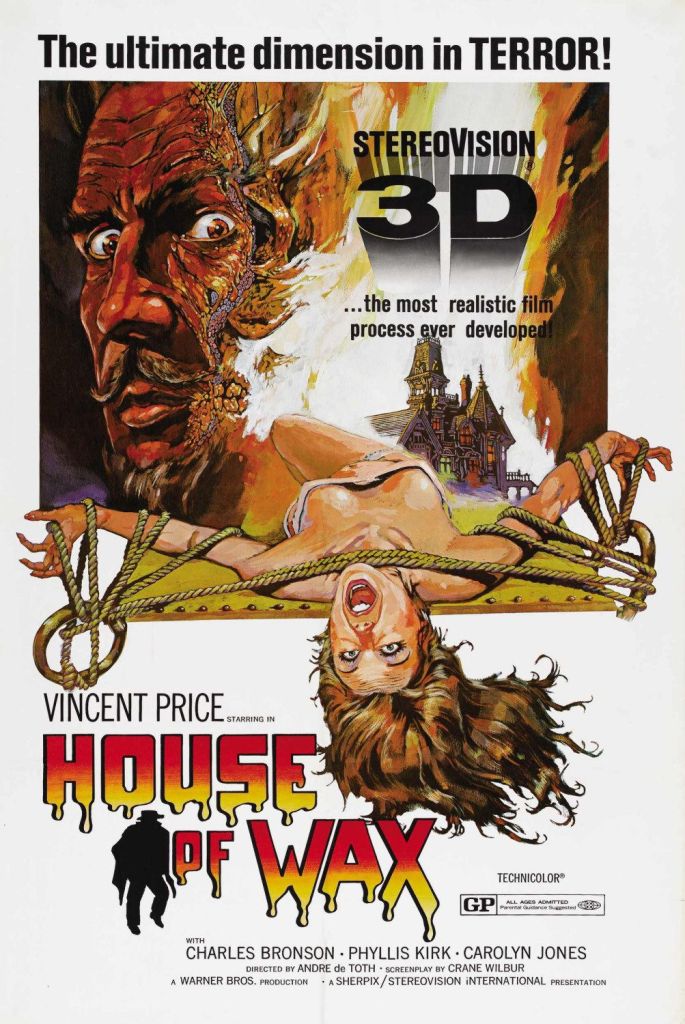
As with the earlier screenplay, the basic story came from Charles S. Belden’s, short story-three act play, 1932, “The Wax Works”.
Although this was considered a remake of 1933’s, “Mystery of the Wax Museum”. “B” Screenplay writer, Crane Wilbur, who was been writing since 1915, made the decision to change the year of the story. He moved it back to 1902, making his story a “Period Piece”. Instead, as with the first motion picture, keeping the story in the same year that the movie was made in.

Andre Toth was the interesting choice by “Warner Brothers” to direct their first 3-D motion picture. Quoting Vincent Price, in a December 9, 2007, article by Steve Biodrowski for “Cinefantastique”:
It’s one of the great Hollywood stories. When they wanted a director for [a 3D] film, they hired a man who couldn’t see 3D at all! André de Toth was a very good director, but he may not have been suited to direct a 3D movie. He’d go to the rushes and say ‘Why is everybody so excited about this?’ It didn’t mean anything to him. But he made a good picture, a good thriller. He was largely responsible for the success of the picture. The 3D tricks just happened—there weren’t a lot of them. Later on, they threw everything at everybody.
http://blog.cinefantastiqueonline.com/wordpress/retrospective-house-of-wax-1953/
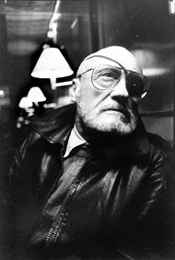
The Main Cast:
Vincent Price portrayed “Professor Henry Jarrod”. Price’s last five appearance had been in episodes of five different television anthology dramas. He would follow this film with three more single episodes of three different television anthologies. His last motion picture was in third position after Jane Russell and Victor Mature, in the Howard Hughes’s, crime film-noir, 1952’s, “Las Vegas”. His next motion picture role, after this feature film, was with 4th-billing in the 3-D crime film-noir, 1954’s, “Dangerous Mission”, starring Victor Mature.
Price’s make-up was designed and applied by Gordon Bay.
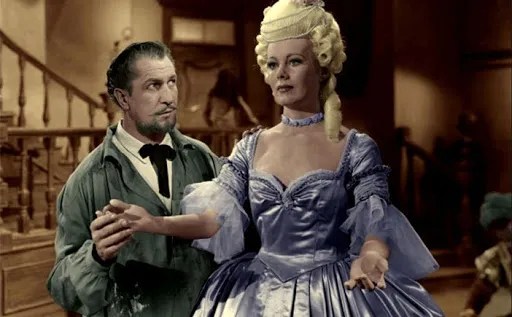
Above, Vincent Price with his “Marie Antoinette”, portrayed by an unknown actress.
Frank Lovejoy portrayed “Detective Lieutenant Tom Brennan”. Lovejoy had just co-starred with Edmond O’Brien and William Talman (Hamilton Burger on televisions’ “Perry Mason”, 1957-1966), in the film-noir crime drama, 1953’s, “The Hitch Hiker”, directed by Ida Lupino. Lovejoy followed this feature by co-starring with Joan Weldon (Dr. Patricia Medford in 1954’s “THEM), in the film-noir crime drama, 1953’s, “The System”.
Dabbs Greer portrayed “Police Sergeant Jim Shane”. Greer was just seen in 1953’s, “Trouble Along the Way”, a football comedy starring John Wayne and Donna Reed. He followed this film by playing a “Citizen of Rome”, in the 1953 version of William Shakespeare’s “Julius Caesar”, starring Marlon Brando and James Mason.
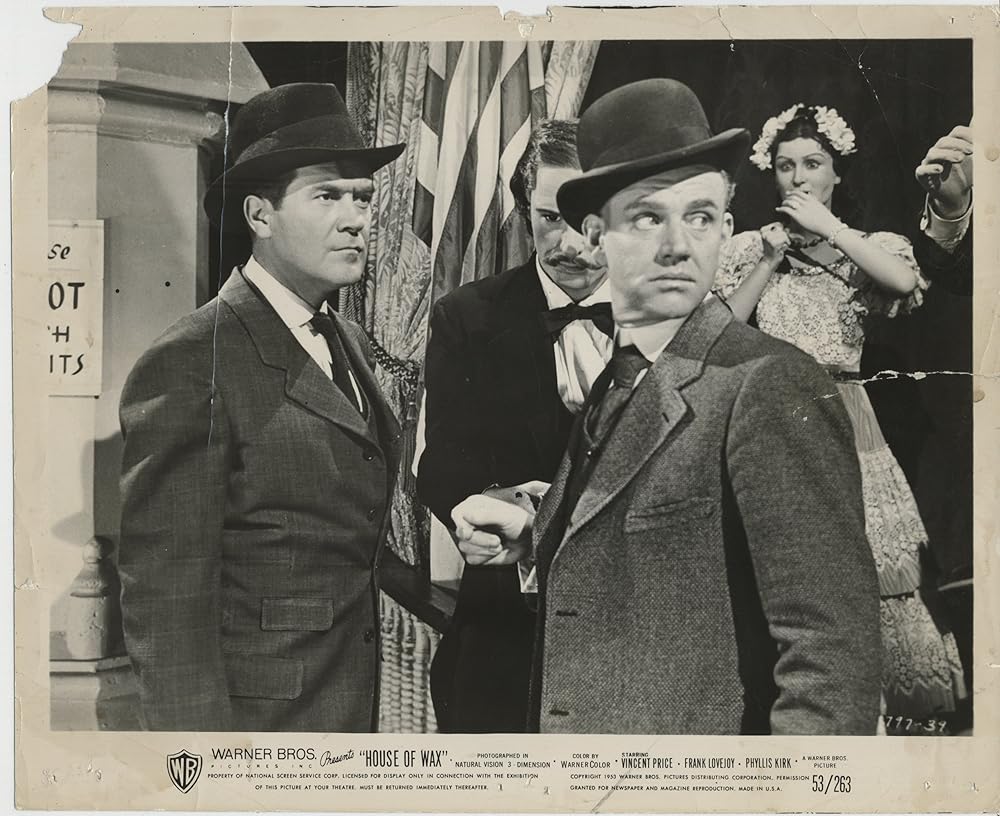
Above left, Frank Lovejoy, on his right is Dabbs Greer.
Phyllis Kirk portrayed “Sue Allen”. She had 4th-billing in the Alan Ladd, portraying “Jim Bowie”, and Virginia Mayo, 1952, “The Iron Mistress“. From 1957 through 1959, she was “Nora Charles” opposite Peter Lawford and a dog named “Asta, in televisions “The Thin Man”, based upon writer Dashiell Hammett’s detective series.
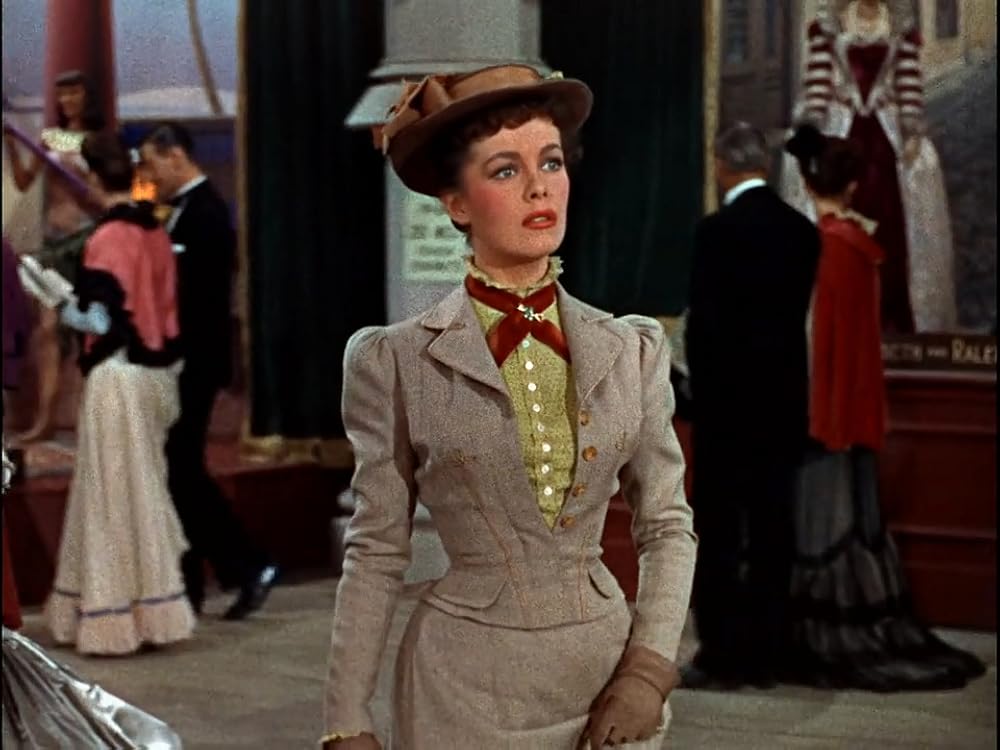
Carolyn Jones portrayed “Cathy Gay”. Jones get around before “The Adams Family”. She was an uncredited “Party Guest” in 1953’s, “War of the Worlds”, immediately before this movie. She was “Theodora ‘Teddy’ Beliec” in 1956’s, “Invasion of the Body Snatchers”, and Mickey Rooney’s wife, in the crime biography, 1957’s, “Baby Face Nelson”. She co-starred with Elvis, in 1958’s, “King Creole”, was “classically” “Morticia Adams”, on “The Adams Family”, from 1964 through 1966, and not to forget, she played three different villains on television’s “Batman”.
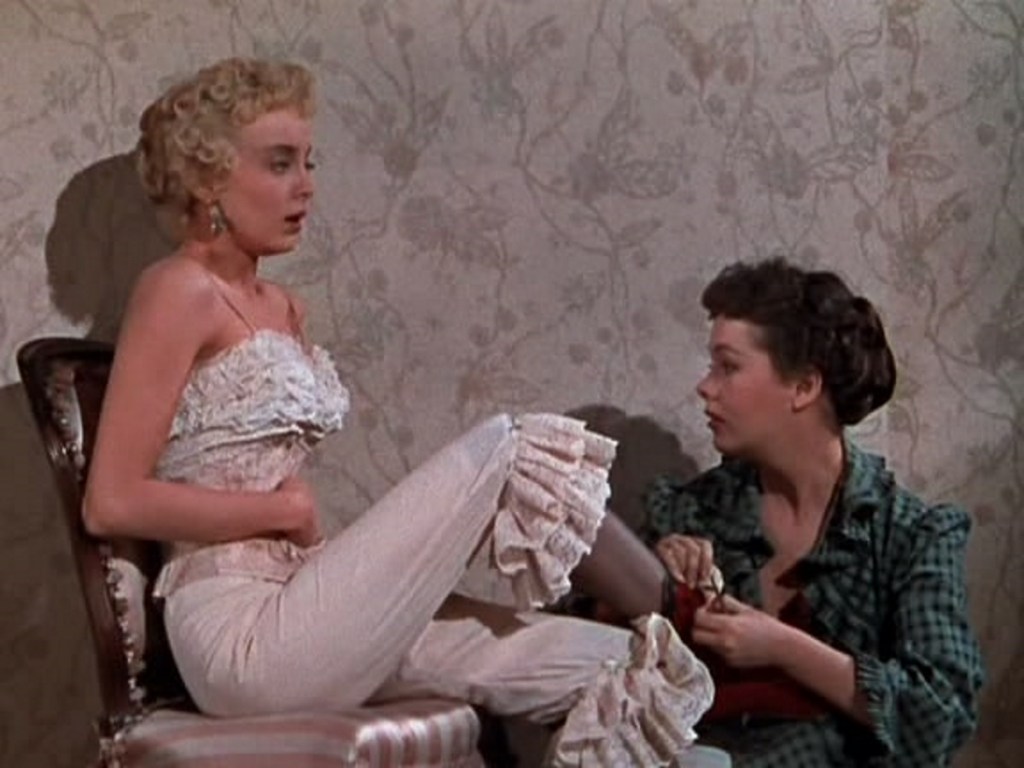
Above right is Carolyn Jones with Phyllis Kirk
Paul Picerni portrayed “Scott Andrews”. Picerni was just seen in the Virginia Mayo and Frank Lovejoy musical comedy, 1953’s, “She’s Back on Broadway”. He followed this feature with 4th-billing in the previously mentioned, 1953, “The System”. However, Paul Picerni was known to 1960’s television audiences as either “Lee Hobson”, or “Tony Liguri”, for 91-episodes of Robert Stack’s, “The Untouchables”.
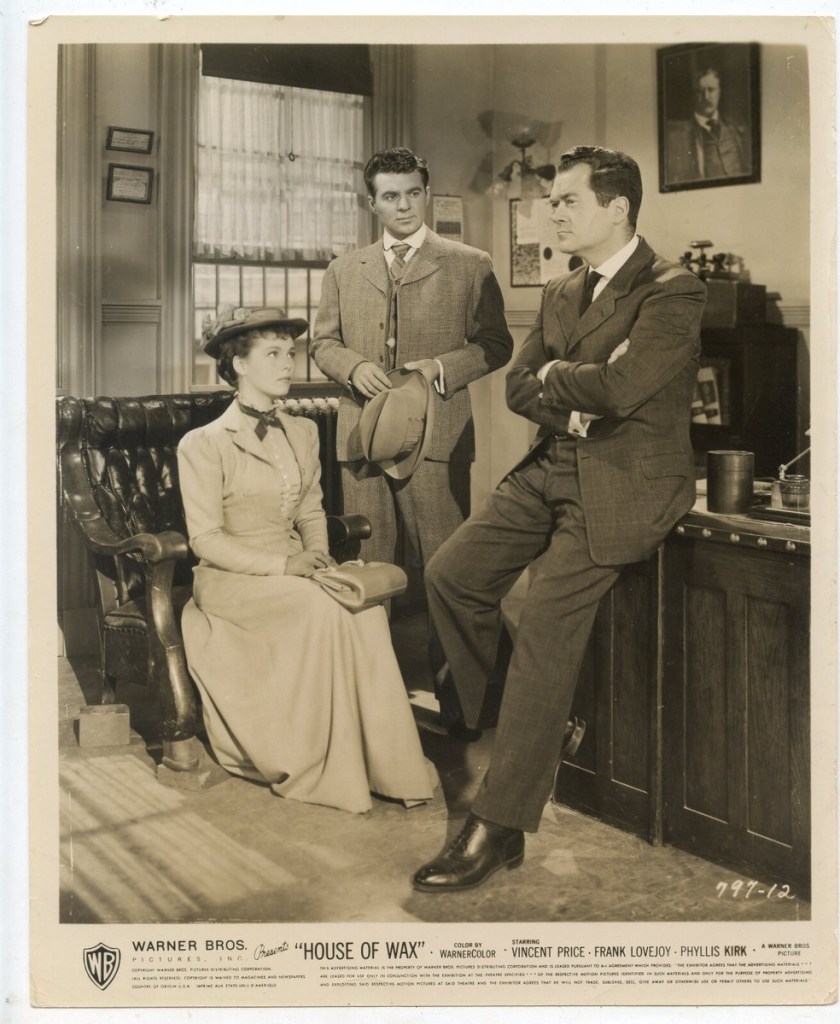
Above left to right, Phyllis Kirk, Paul Picerni, and Frank Lovejoy
Of interest to film fans is the actor portraying Vincent Price’s mute assistant, with the original name of “Igor”, Charles Buchinsky, before he became Bronson.
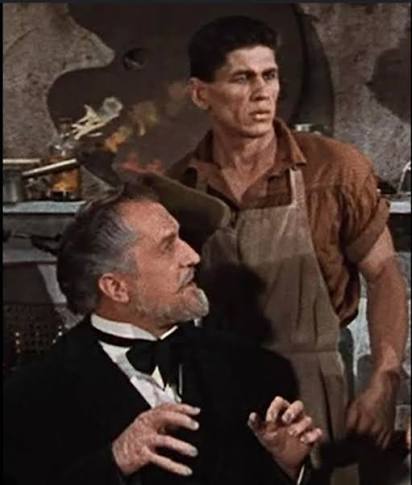
The Remake’s Screenplay:
The screenplay’s opening scenes are right out of “The Mystery of the Wax Museum”.
In New York City is the wax museum of “Professor Henry Jarrod”. There he has created images of historical figures, such as “Marie Antoinette“. However, the business is not doing well, and “Jarrod’s” business partner, “Matthew Burke”, portrayed by Roy Roberts, below left, wants him to make terrifying exhibits to draw in customers, but “Professor Jarrod” is strongly against that, and “Burke” threatens to end their business partnership, and mentions how much money the two could get from the insurance on the wax works, as he calls it.
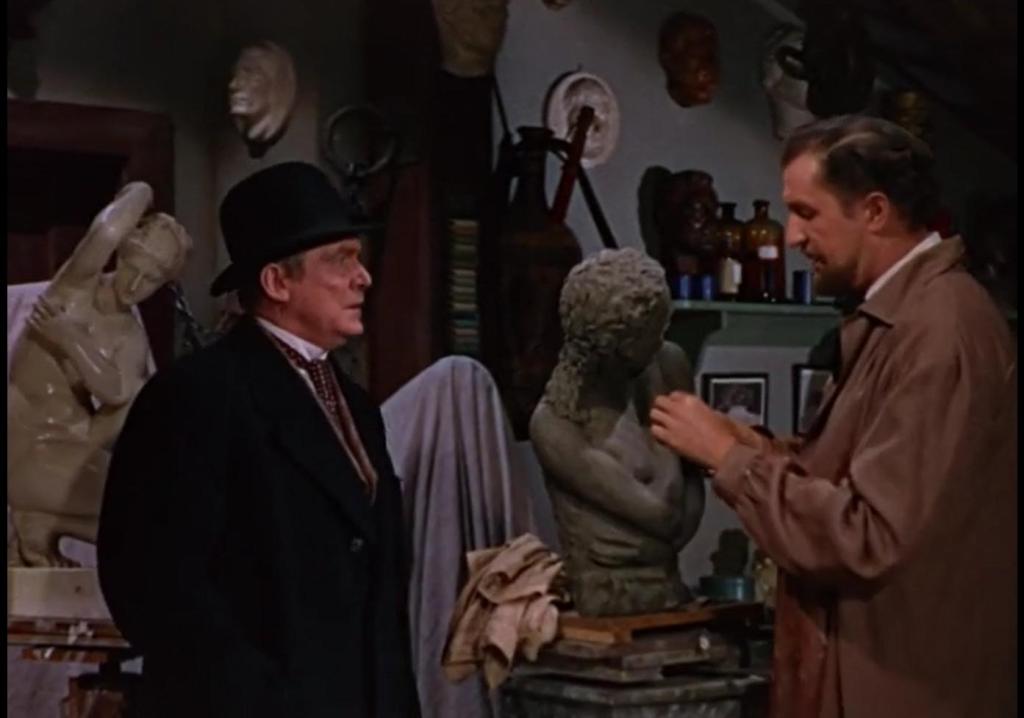
“Burke” leaves and “Jarrod” is visited by two men. One is a friend of “Professor Jarrod”, “Bruce Allison”, portrayed by Philip Tonge. Who introduces the sculptor to the wealthy art critic “Sidney Wallace”, portrayed by Paul Cavanagh, who offers to buy out “Burke”, but after he returns from Egypt, and they both leave.
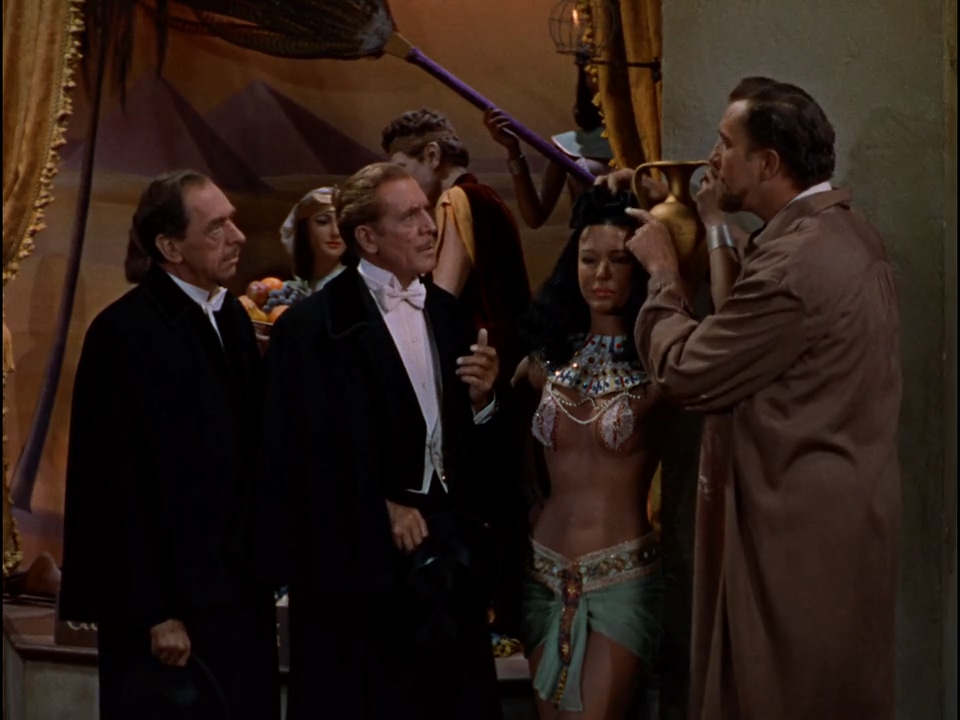
Above left to right, Phillip Tongue, Paul Cavanough, and Vincent Price.
At This Point, other than the year of the setting, Crane Wilbur’s screenplay starts to differ from “The Mystery of the Wax Museum”.
Meanwhile, “Burke” is out with his girlfriend, “Cathy Gaye”, but his mind is not on her.
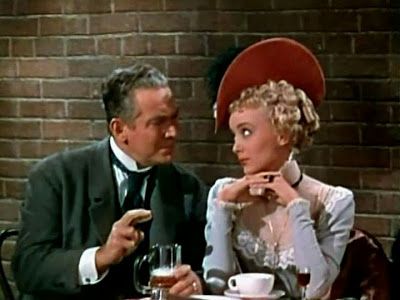
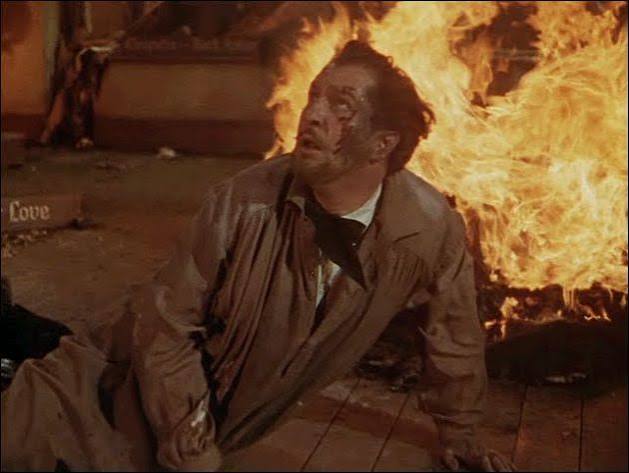
“Burke” leaves her and returns to “Professor Jarrod’s” wax works to set it on fire. The professor appears and the two argue and this turns into a fight, with “Jarrod” being knocked unconscious, “Burke” leaves, but “Professor Jarrod” regains consciousness as the wax works burns around him.
As of this writing, the following link to take my reader to the entire sequence:
https://www.youtube.com/watch?v=YToIZC1Y9pQ
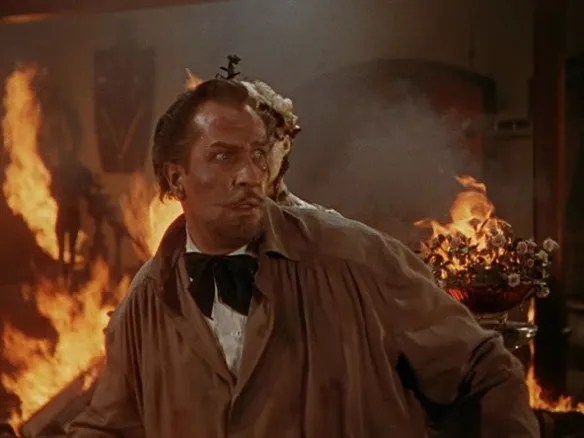
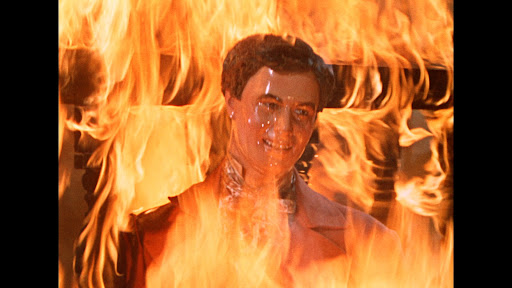
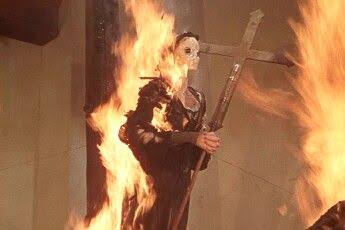
“Burke” has received the insurance money, when a disfigured man in a cloak murders him and stages his death like a suicide by hanging.
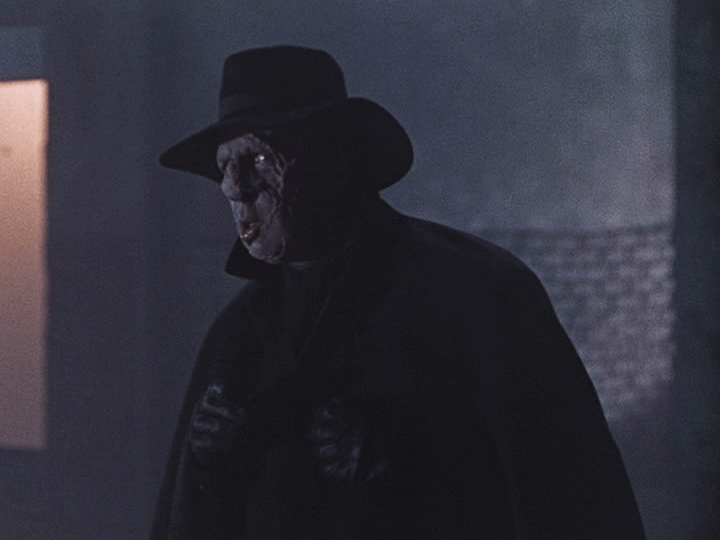
The cloaked man, now murders “Burke’s” girlfriend he had been spending his insurance money on, but before “Cathy Gay’s” murder can be staged as another suicide. The murderer is surprised by the arrival of “Cathy’s” roommate, “Sue Allen”.
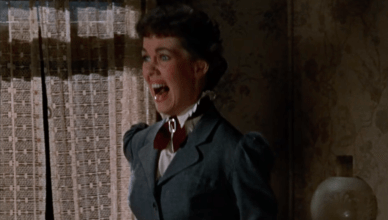
In a panic, “Sue Allen” runs out of the room and to the home of her friend, student artist and sculpturer, “Scott Andrews”. The police are called in and “Detective Lieutenant Tom Brennan” and his partner “Sergeant Jim Shane” come to the murder scene. “Cathy’s” body is taken to the morgue, but the cloaked man steals it.
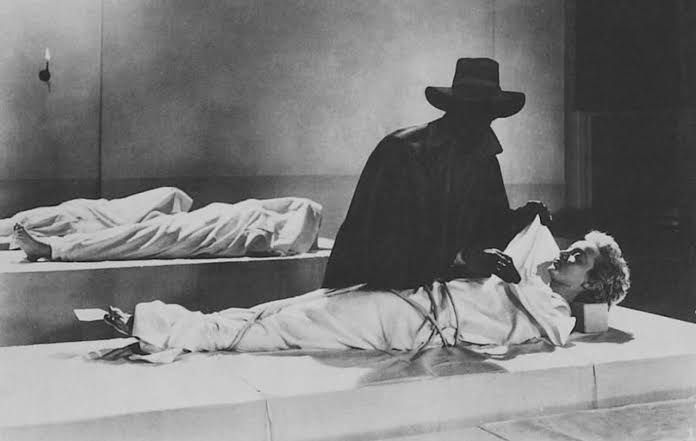
“Professor Jarrod” now meets the returning “Sidney Wallace”, and explains that the fire ruined his hands. However, his students are helping create his old exhibits and would like “Wallace’s” assistance in financing his “HOUSE OF WAX”!
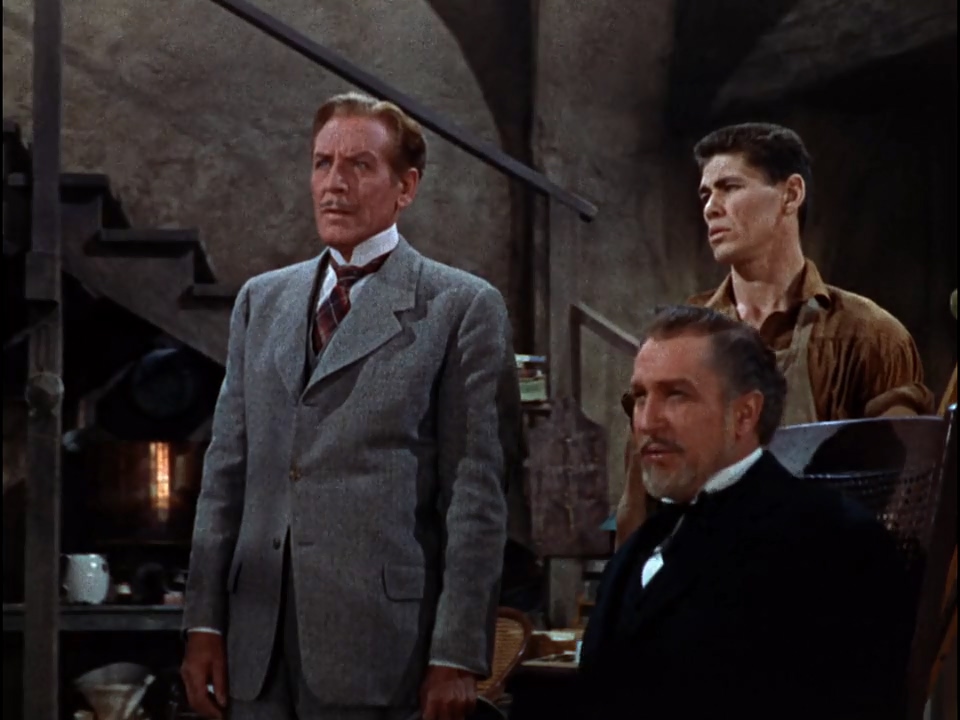
He explains that the new statues are down by his two students, the deaf mute, “Igor”, who has a tendency to make them all look like himself.
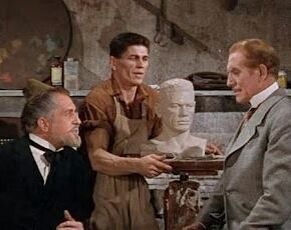
An his other student and assistant, alcoholic, “Leon Averill”, portrayed by the uncredited Nedrick Young.
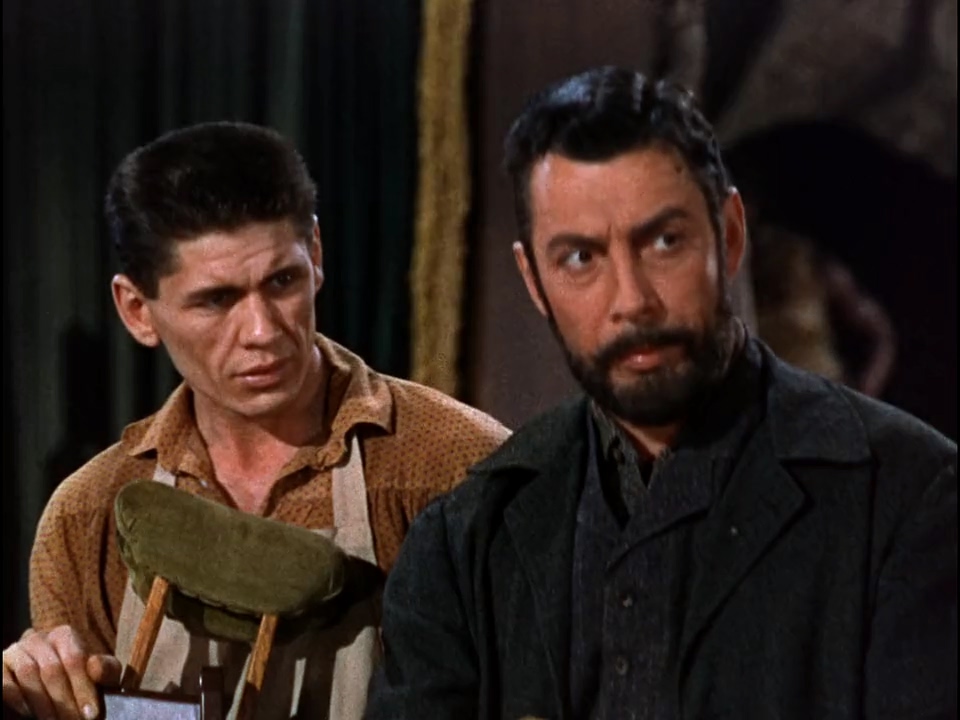
“Jarrod” now admits to “Wallace” that to satisfy the audience’s tastes for horror. He has set up a small exhibit, and one of the statues is of his late partner, “Burke”, who body has also disappeared from the morgue. “Wallace” will consider the proposition.
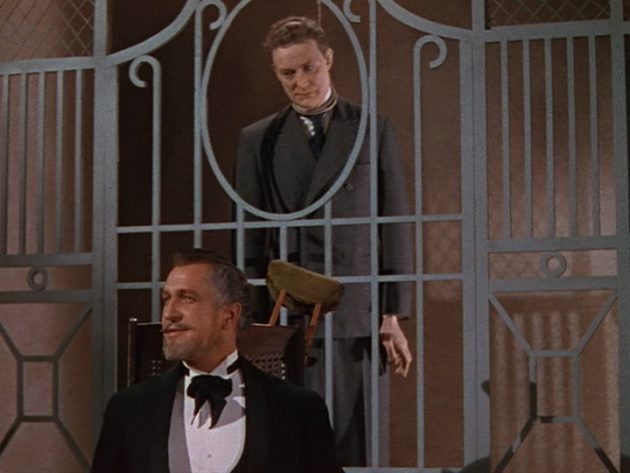
Meanwhile, “Professor Jarrod’s” new, “THE HOUSE OF WAX” opens, and outside is a “Barker”, portrayed by Reggie Rymal, entertaining the visitors with his ping-pong paddle.
This is the main sequence with something jumping off the screen directly at the audience. My reader must remember that the only other theatrical 3-D movie, to date, was Arch Obler’s, 1952, “Bwana Devil”, starring Robert Stack. There really wasn’t, until this scene, a planned scene to project something into the audiences faces, and IF you have a pair of those blue/red 3-D glasses, the first video is for you, if not, see the second.
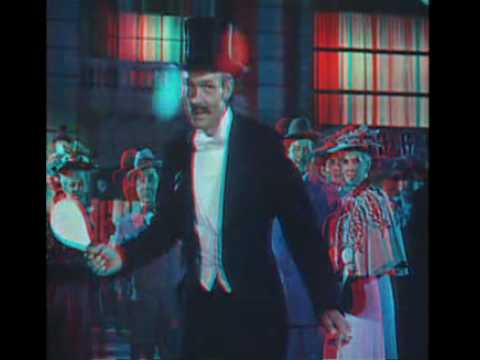
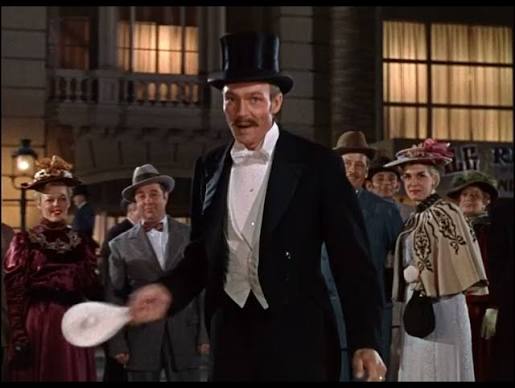
“Scott”, takes “Sue” to the grand opening of “The House of Wax”. The two meet “Sidney Wallace” and accompany him to meet the wheel chair bound “Professor Jarrod”. Both “Scott” and “Wallace” goes off to speak together.
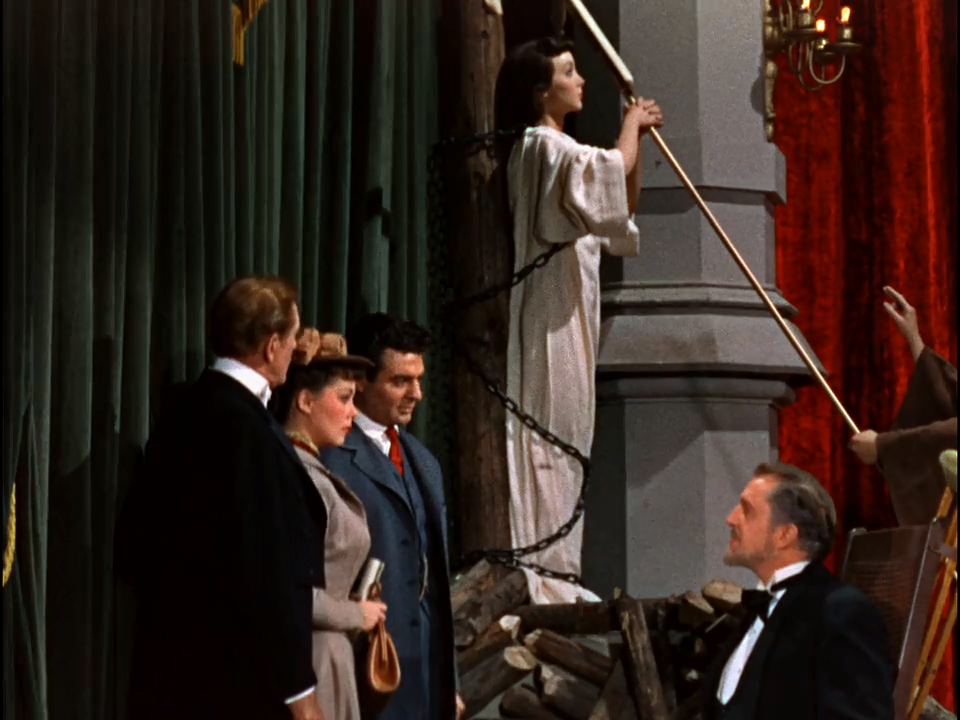
Waiting, “Sue” notices the figure of “Professor Jarrod’s” “Joan of Arc”. Becoming fixated with how much the statue resembles her roommate, “Cathy Gray”. She goes inside the ropes placed to keep people away from the statues. However, “Sue Allen” feels she’s being drawn to “Joan of Arc”, and needs to touch the face she sees At the same time, a very curious “Professor Jarrod” is observing “Miss Allen”, the embodiment of his lost “Marie Antoinette”.
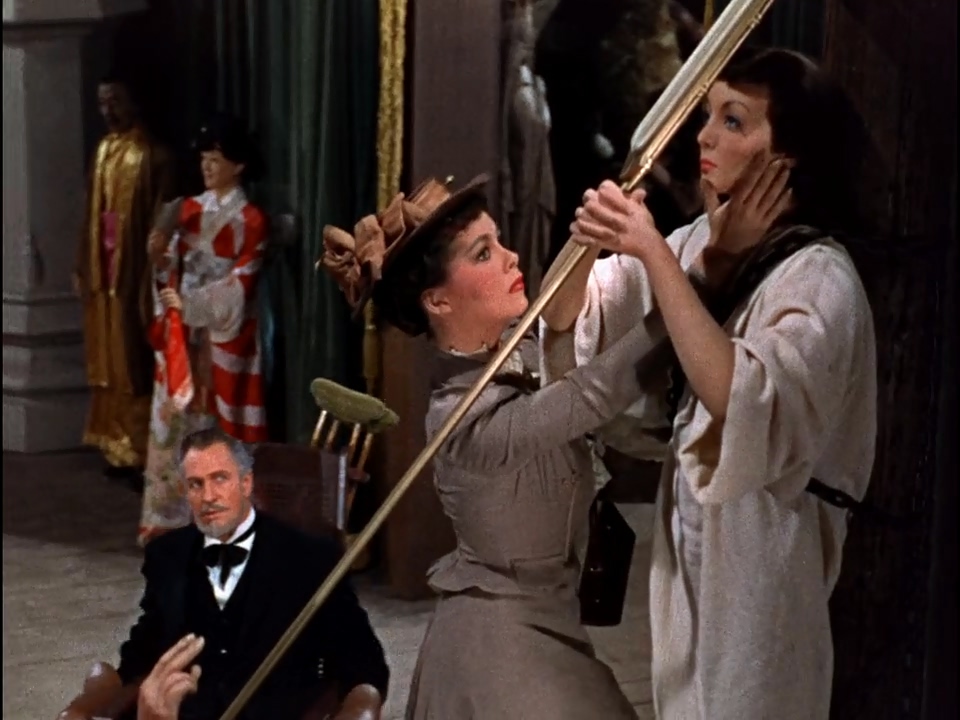
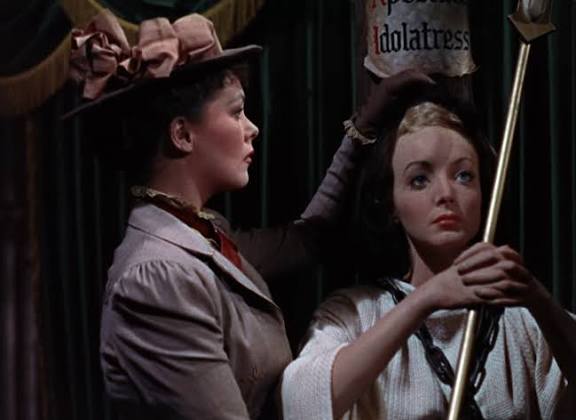
“Jarrod” makes his presence known, and “Sue Allen” goes out beyond the ropes and apologizes to the professor, but explains why she was so fascinated by the statue. He explains that “Sue” was right about “Cathy”, but he only used newspaper photos to construct the face.
A plan forms in “Jarrod’s mind, and after hiring “Scott Andrews” as a third assistant. “Jarrod” asks “Sue” to model for him as his new “Marie Antoinette”. She will think about it, but now goes to “Inspector Brennan”. Where she tells him that “Joan of Arc” has a pierced ear, just like “Cathy”, and so small, it will be impossible for him to see in a newspaper photograph. “Brennan” states he will investigate, and with “Sergeant Shane”, the two go to the “House of Wax”. Finding the exhibit of “Burke’s” suicide, the two remark how realistic it appears.
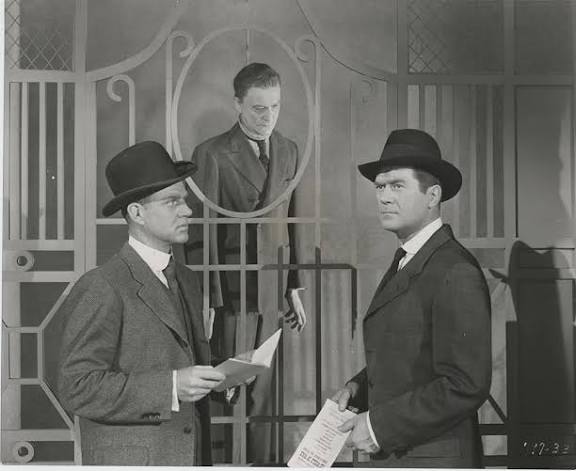
Next, the two go to the “Joan of Arc” statue and discuss how realistic it looks also.,
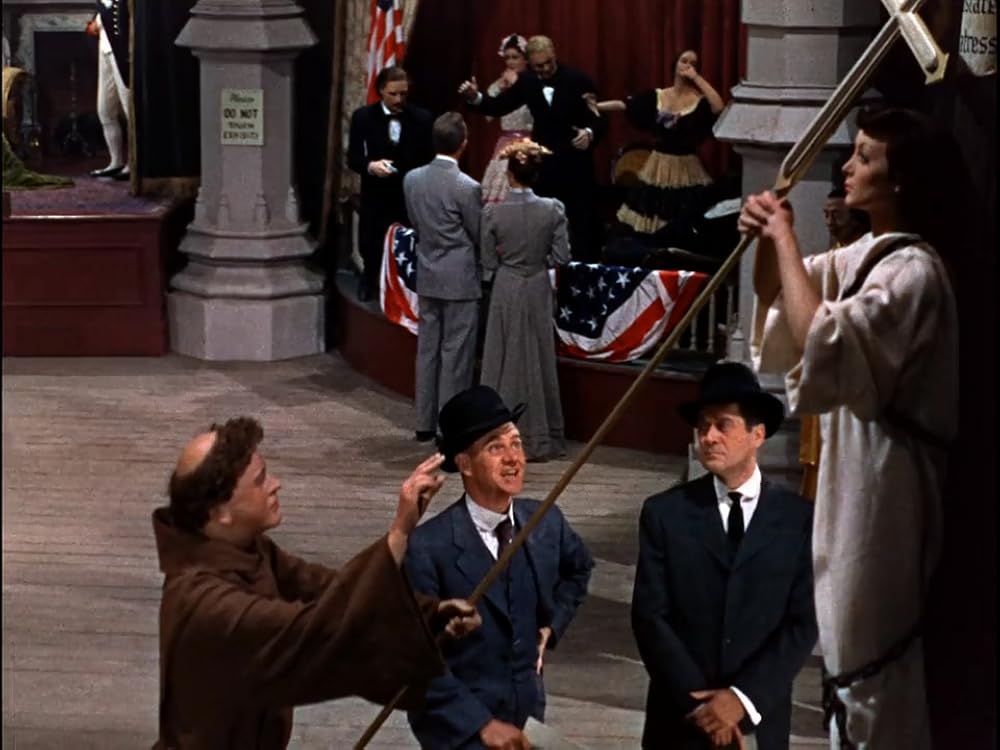
As the two continue to discuss the statue, “Leon Averill” walks by the two police officers, and “Jim Shane” recognizes him as parole-breaking, “Carl Hendricks”. Searching “Hendricks/Averill”, “Sergeant Shane” finds a pocket watch, that belonged to a missing attorney, and arrests him.
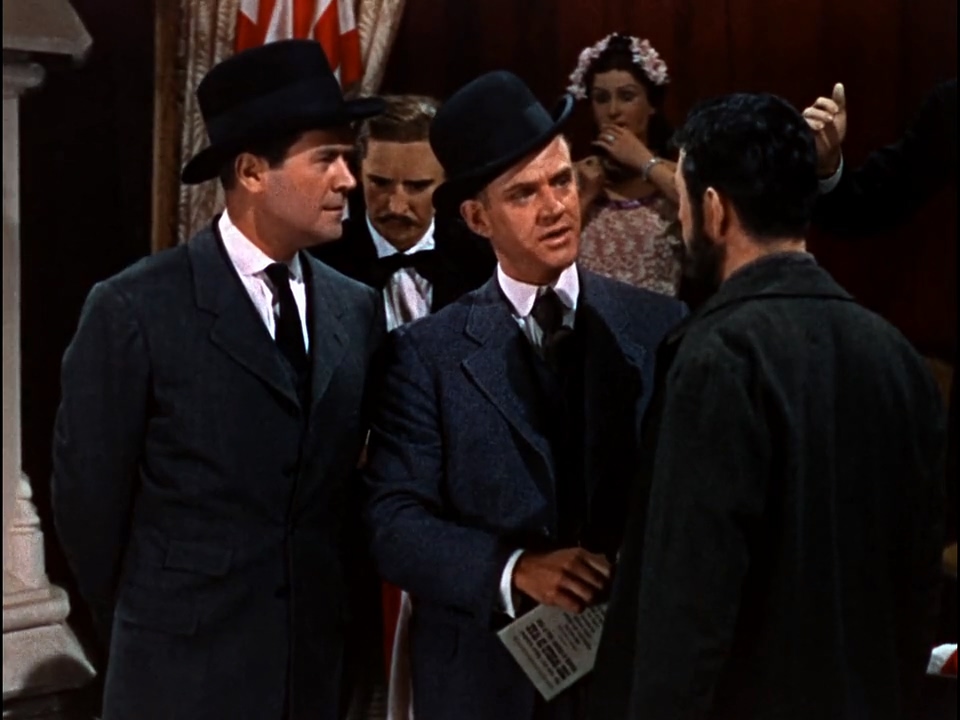
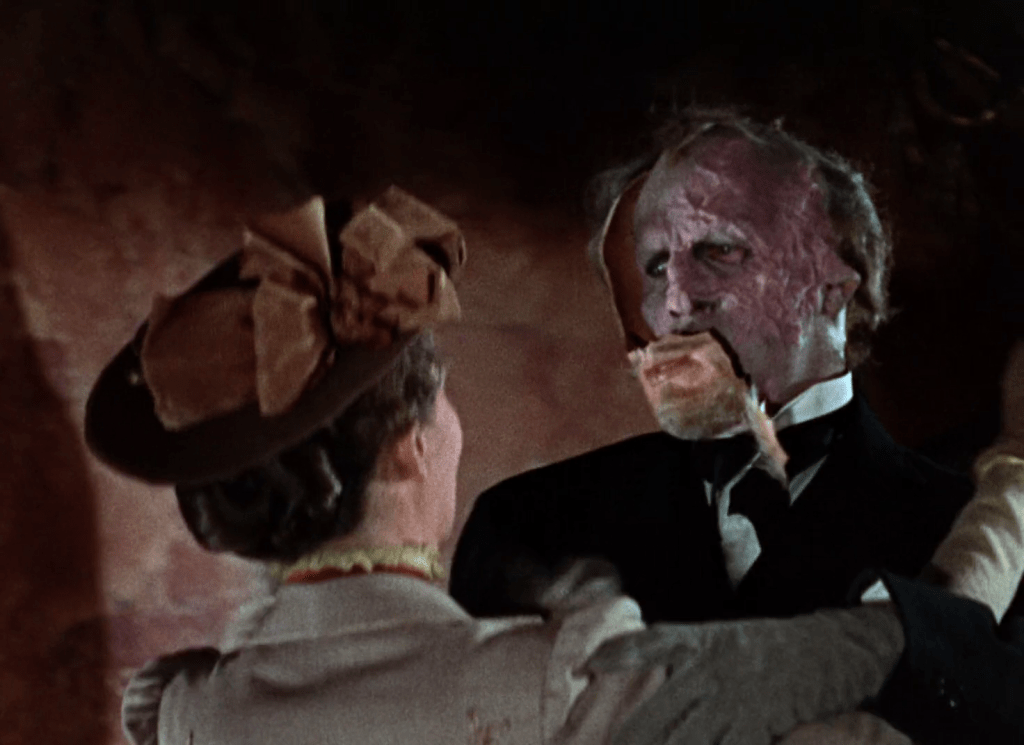
It is after hours at the “House of Wax”, and “Sue Allen” arrives to see “Scott Andrews”, but “Professor Jarrod” having heard she was coming, created an errand for “Scott” to go on. Believing she is alone in the room with the statue of “Joan of Arc”, decides to examine it even closer than before, and the truth that it is the body of “Cathy Gray” is shockingly revealed to her.
Next, at the time of this reading, the following linked video takes place, as Vincent Price’s “Professor Henry Jarrod” gets up from his wheel chair and captures Phyllis Kirk’s “Sue Allen”, but before she break off the wax masque he wear to hide his totally burned and scared face.
https://www.youtube.com/watch?v=OSqhnQwXO2Q
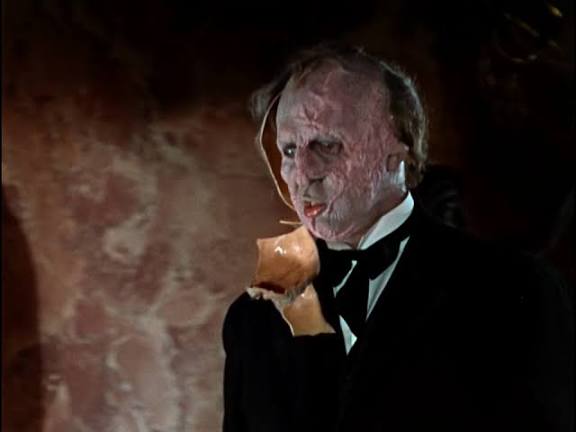
“Scott” returns to the “House of Wax”, but is attacked and knocked out by “Igor”.,
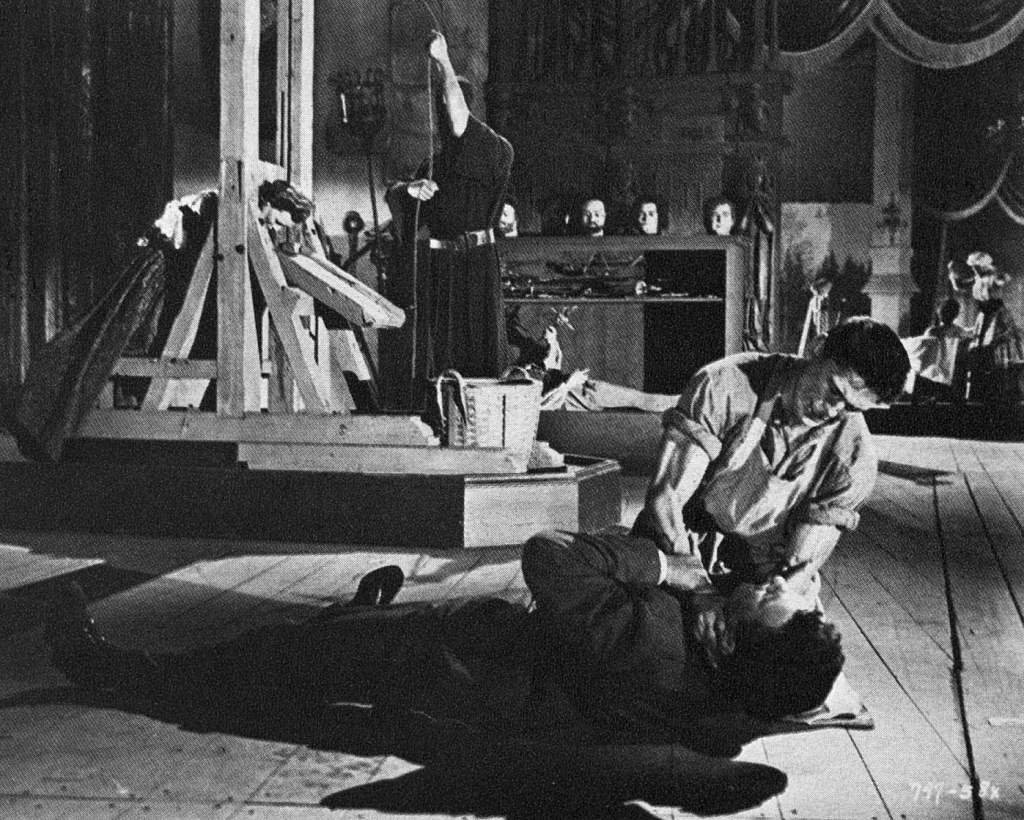
Meanwhile, “Brennan” and “Shane” finally get the truth out of “Leon Averill” aka: “Carl Hendricks”. “Henry Jarrod” was driven mad with the destruction of his original wax works and all the new statues are wax covered victims of “Professor Jarrod”.
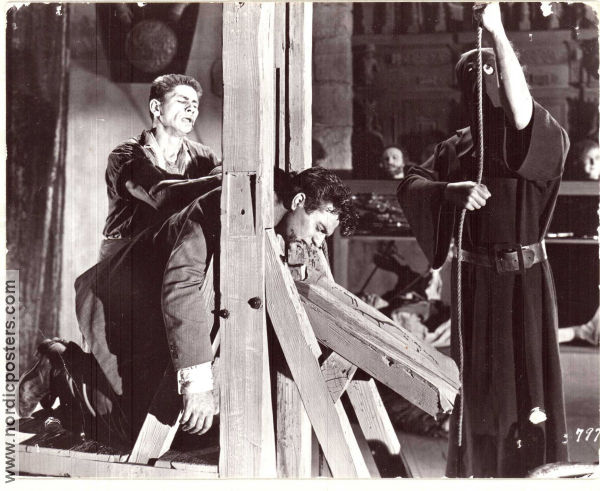
The two now hurry to “House of Wax”. The two arrive just as “Igor” is about to drop the guillotine blade on “Scott”, and shot “Igor”.
Now, the three need to find “Jarrod” and “Sue”. Down in the basement, the insane “Henry Jarrod” has “Sue Allen” strapped to a table and is preparing her to be coated with wax.
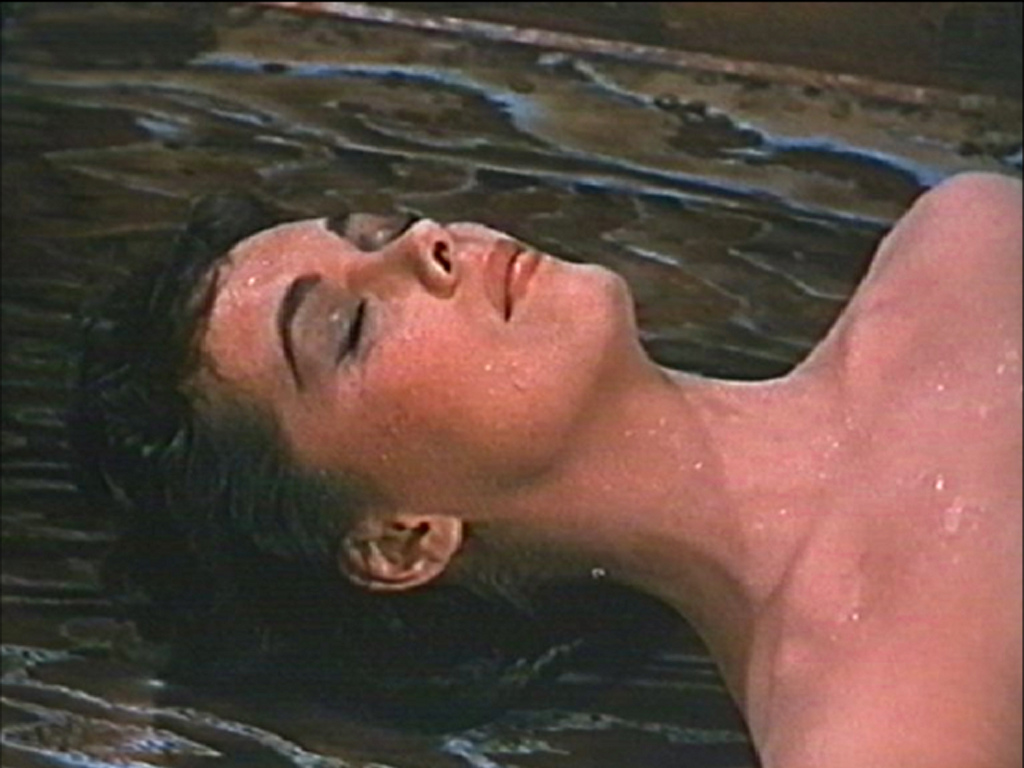
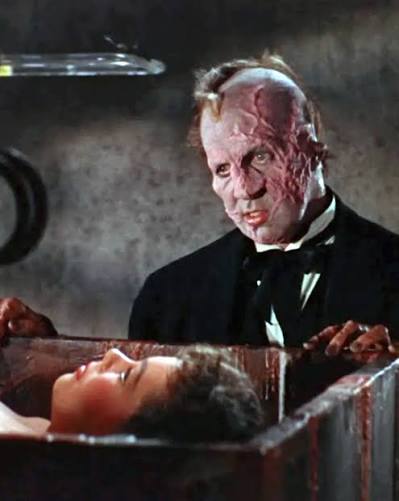
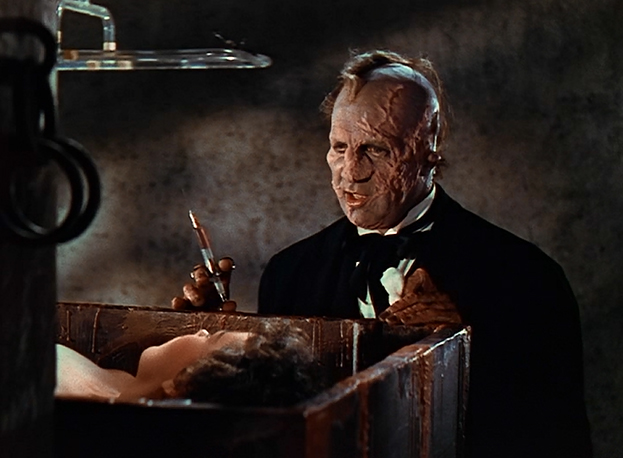
They arrive and there is a small fight and “Jarrod” falls into his own fat of hot wax drowning in it. “Detective Lieutenant Tom Brennan” does the proper gentleman thing, and takes a coat and covers the naked body of the drugged “Sue Allen” from the other two men’s view.
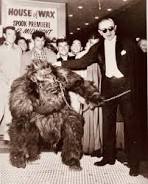
The Los Angeles premier took place on April 16, 1953, at the “Paramount Theatre”, 536 W. 6th Street, Los Angles, at MIDNIGHT! Producer Alex Gordon had a great idea for a stunt. Bela Lugosi was in need of money and wearing a cape, Gordon had actor Steve Calvert in a gorilla suit, in front of the movie theater.
I had mentioned the 3-D Adventure picture, “Dangerous Mission” was just after “The House of Wax”. It would be followed by Vincent Price’s, 3rd 3-D motion picture.
THE MAD MAGICIAN premiered in Los Angles on April 7, 1954
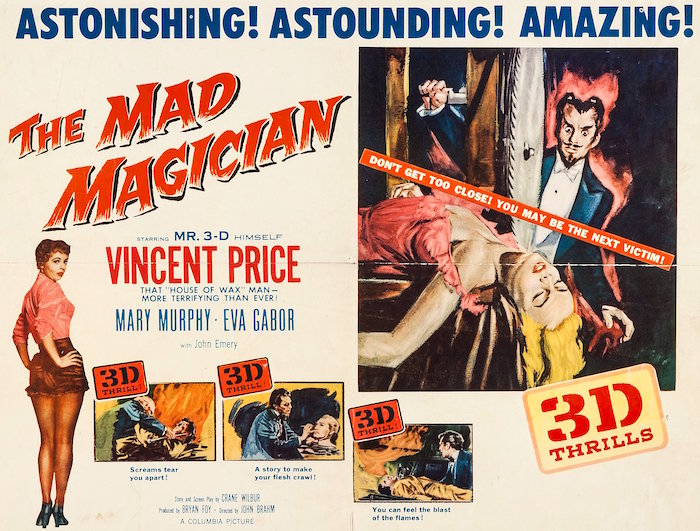
The story and screenplay was once more by Crane Wilbur. Between 1953’s, “House of Wax”, and this feature film was another picture directed by Andre DeToth, the film-noir, 1953’s, “Crime Wave”. Crane Wilbur followed this feature with 1955’s, “Women’s Prison”, starring Ida Lupio and Jan Sterling.
The motion picture was directed by John Brahm. Brahm had just directed Fernando Lamas, Arlene Dahl, and Gilbert Roland. He followed this feature by directing a television drama episode of the anthology program, “Cavalcade of America”.
The Three Leads:
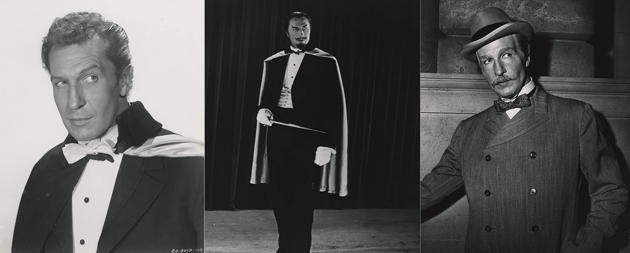
Vincent Prince, billed as “staring MR. 3-D himself”, portrayed “Don Gallico”. He would follow this movie with the “Uncredited Role” of the real “Casanova”, in the Bob Hope comedy, 1954’s, “Casanova’s Big Night”.
Mary Murphy portrayed “Karen Lee”. Three motion picture prior to this one, is Mary Murphy’s one rememberable role. She portrayed “Kathie Bleeker”, the young girl who changed Marlon Brando from bad to good, in 1953’s, “The Wild One”.
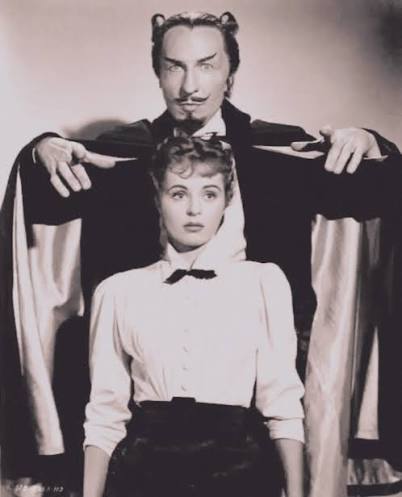
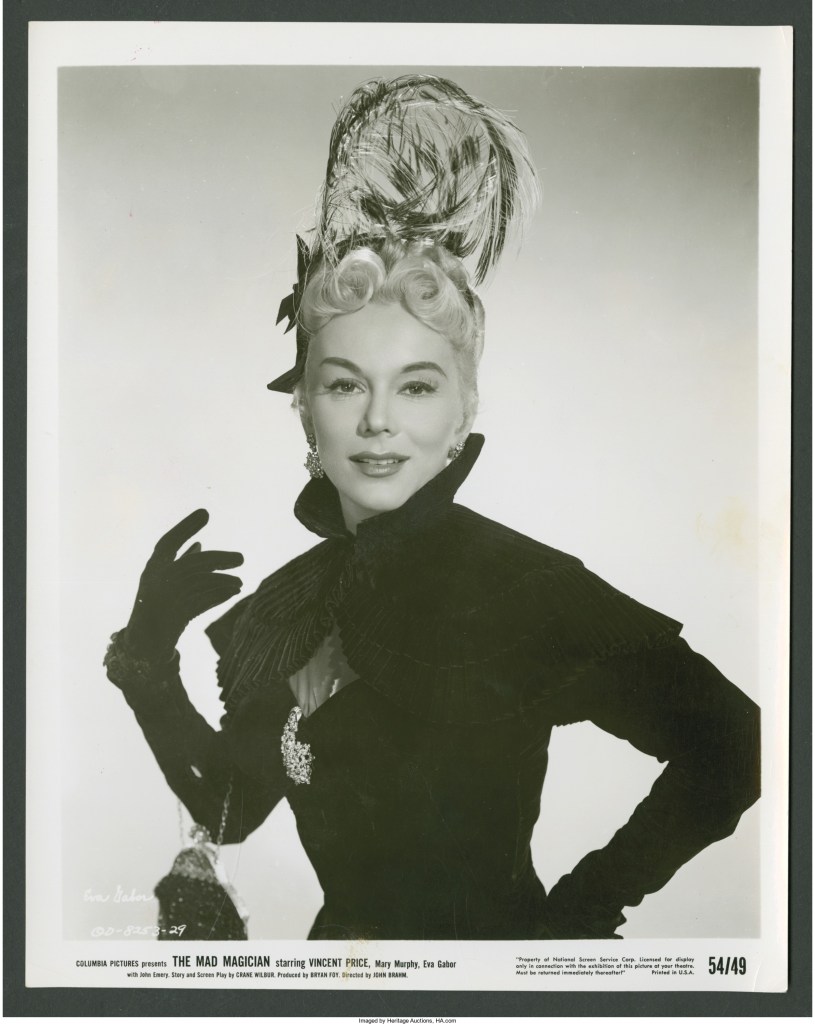
Eva Gabor portrayed “Claire Ormond”. had just been seen on the television anthology series “Studio One”. The youngest of the Hungarian born three Gabor sisters, Magda, Zsa Zsa, and Eva, and the first to migrate to the United States. She is remembered for the television series “Green Acres”, 1965 through 1971.
An Overview of the Screenplay, but is it Horror, or Just Homicidal Murdering?
The setting is the late 19th Century, and the audience meets “Don Gallico”, the actual creator of the illusions used by “The Great Rinaldi”, portrayed by John Emery, dreams about his own future as “GALLICO THE GREAT”!
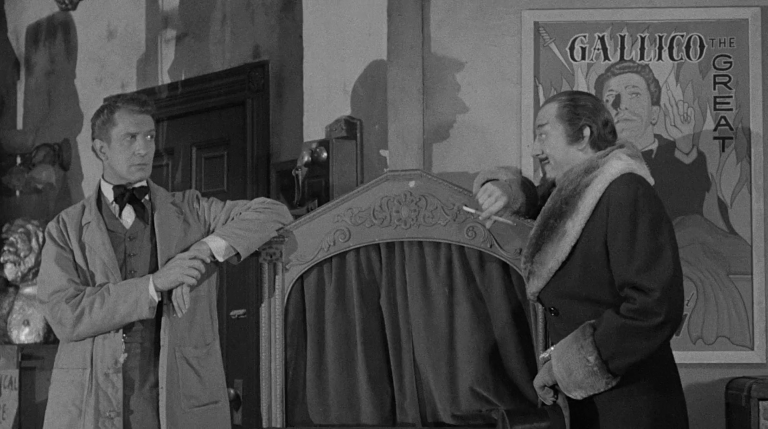
Above, Vincent Price and John Emery (1950’s “Rocketship X-M: Expedition Moon”, and 1957’s “KRONOS”)
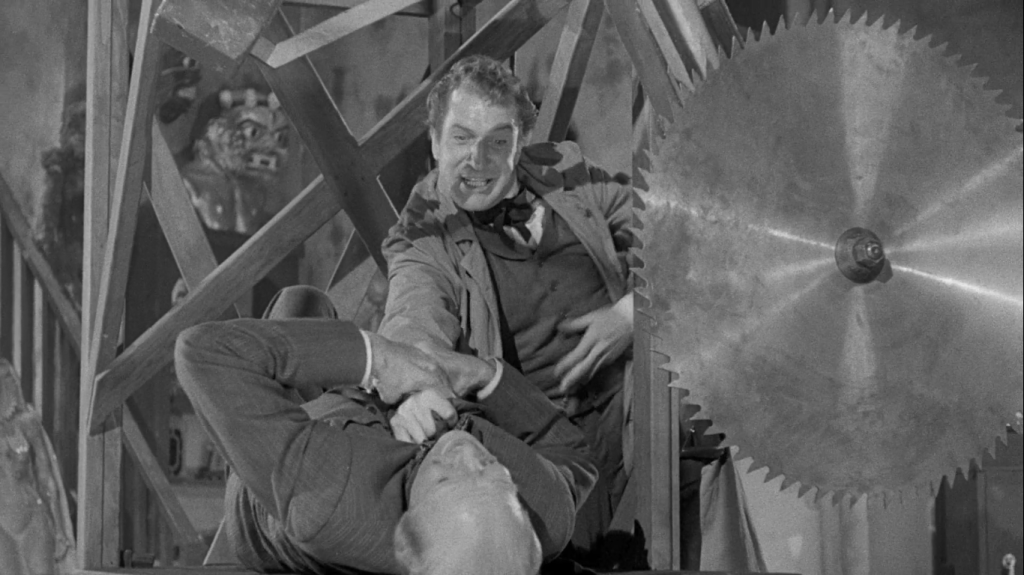
Disguising himself as “Rinaldi”, “Gallico” performs his first illusion, “The Lady and the Buzz Saw” on stage, but the performance is stopped by businessman “Ross Ormond”, portrayed by Donald Randolph, accompanied by his lawyer, with a cease and desist order.
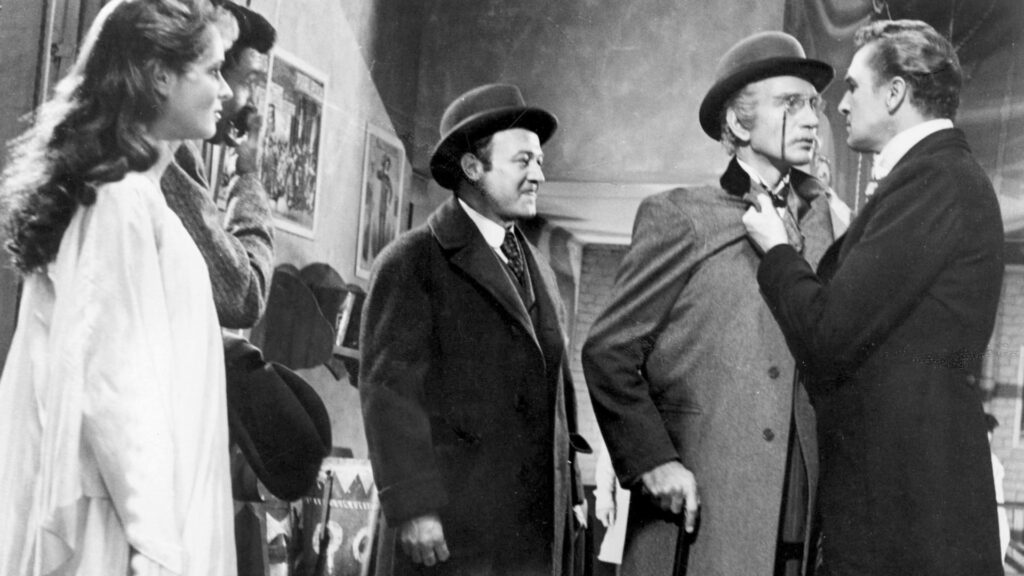
“Gallico” unknowingly signed a contract with “Ormond’s”, “Illusions, Inc”, that buried in the legalize, stated they owned every illusion and trick he ever made, or would make. There is another clause, he now works for “Illusions Incorporated”, and is given his own work space to create new illusions for “Ross Ormond”.
“Ormond” comes over to “Gallico” and tells him that he could have saved being embarrassed in front of his audience, had “Ormond” stopped “Gallico” from even using the buzz-saw, but instead, he wanted to assert his power over the would bed magician. This leads to a larger argument, as it is revealed the “Ross Ormond” is now married to “Don Gallico’s” wife, “Claire”. To which, “Ross” tells the other that “Claire” was always a gold-digger.
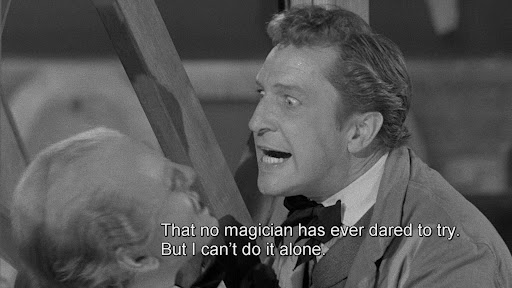
This drives “Gallico” mad, and he grabs and knocks out “Ormond”, and decapitates him with the buzz saw.
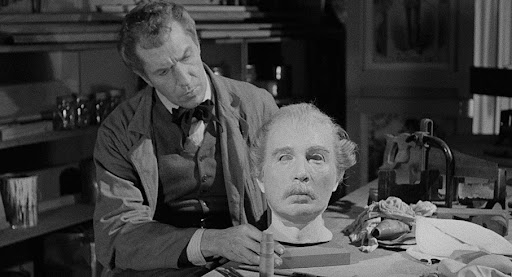
“Gallico” next places “Ormond’s” head in a bag to get rid of it.
The bag is mistakenly picked-up by “Don Gallico’s” assistant, “Karen Lee”, when she stops by on her way to meet her boyfriend, “Police Lieutenant Alan Bruce”, portrayed by Patrick O’Neal. “Karen” now forgets to she has the bag, and leaves it in a hansom cab, where the driver finds it and turns the head in the bag over to the police. While, “Gallico” lets the police think the bag belongs to “Karen Lee”, at the same time making “Lee” think the bag only contains a model head of her for an illusion he has been working upon.
The make-up artist that “Don Gallico” is, transform him himself into “Ross Ormond”,
He next, rents a room from mystery writer, “Alice Prentiss”, portrayed by Lenita Lane (A stage actress and wife of Crane Wilbur)”, and he husband, “Frank”, portrayed by Jay Novello (both, 1960 “Atlantis, the Lost Continent” and “The Lost World”).
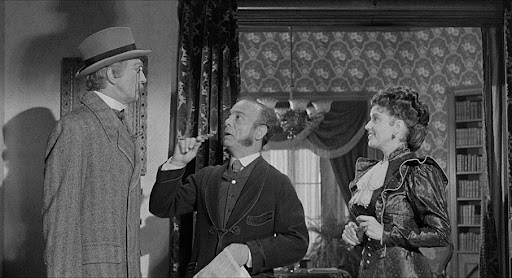
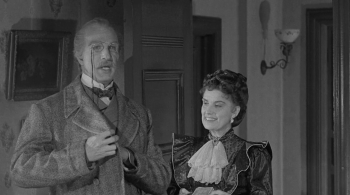
“Alice Prentiss” makes a comment about a bonfire party for a local sports teams win, and after disguising “Ormond’s” body as a dummy. “Calico” tosses it on the bonfire, but his skeletal remains are found the following day.
Meanwhile, “Claire Ormond” is searching for her missing husband, learns of the apartment, and goes there. Only to find that she’s looking at her ex-husband, “Don Gallico”, not her current husband.
“Claire” also realizes that “Don” must have murdered “Ross”. In responses, “Calico” strangles “Claire” to death, and leaves before “Alice” can arrive over “Clara’s” screams.
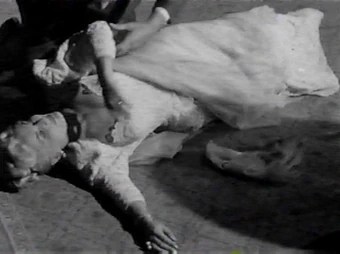
“Alice Prentiss” confirms that “Ross Ormond” rented the apartment and the police discover fingerprints that match those taken of “Gallico” personating “Ormond”. They come to the conclusion that “Ross Ormond” murdered his wife. However, “RInaldi”,during his questioning about “Claire Ormond’s” death, mentions that the police cannot be certain that the prints belong to “Ormond”.
If my reader, or the movie’s audience member, thought the sequence with “Ormond’s” head was too convenient a plot device. Try this plot device on:
“Gallico”, invites “Alice” and “Frank Prentiss” to see preview of his new show. and the premiere of a trick he calls “The Crematorium”. They know him through their “Surrogate Daughter”, “Karen Lee”. Who has been a boarder for a long time prior to the movie’s events and has become like a daughter to “Alice” and “Frank”. Adding in, that “Karen” is engaged to “Police Lieutenant Alan Bruce”. Who is investigating “Claire Ormond’s” murder.
The performance takes place, and it appears that “Gallico” was incinerated in a fiery furnace. After everyone has left, “Rinaldi” approaches “Gallico”, with his belief that, wearing a mask of “Ross Ormond”, the other murdered “Ormond”. To keep quiet. “Rinaldi” will get the use of all current and future illusions created by “GALLICO THE GREAT”. However, “Gallico” has another idea, murderers “Rinaldi”, places him in the crematorium, turns his body to ashes, and takes over “Rinaldi’s” tour in disguise.
Meanwhile, “Lieutenant Alan Bruce” is troubled by “Rinaldi’s” fingerprint comment. “Bruce” asks for other people to redo their fingerprinting, but “The Great Rinaldi” refuses.
Up in the apartment where the murder of “Claire Osmond” took place, mystery writer “Alice Prentiss’s” skills kick in. She realizes that “Don Gallico” was impersonating “Ross Ormond”, and tells her theory to “Alan Bruce”. The two now break into “Gallico’s” work space at “Illusions, Incorporated” to obtain his finger prints, but he returns before the two can leave.
The film’s climax has “Gallico” knocking out “Bruce” and placing him, tied down, on the platform that goes into “The Crematorium”.
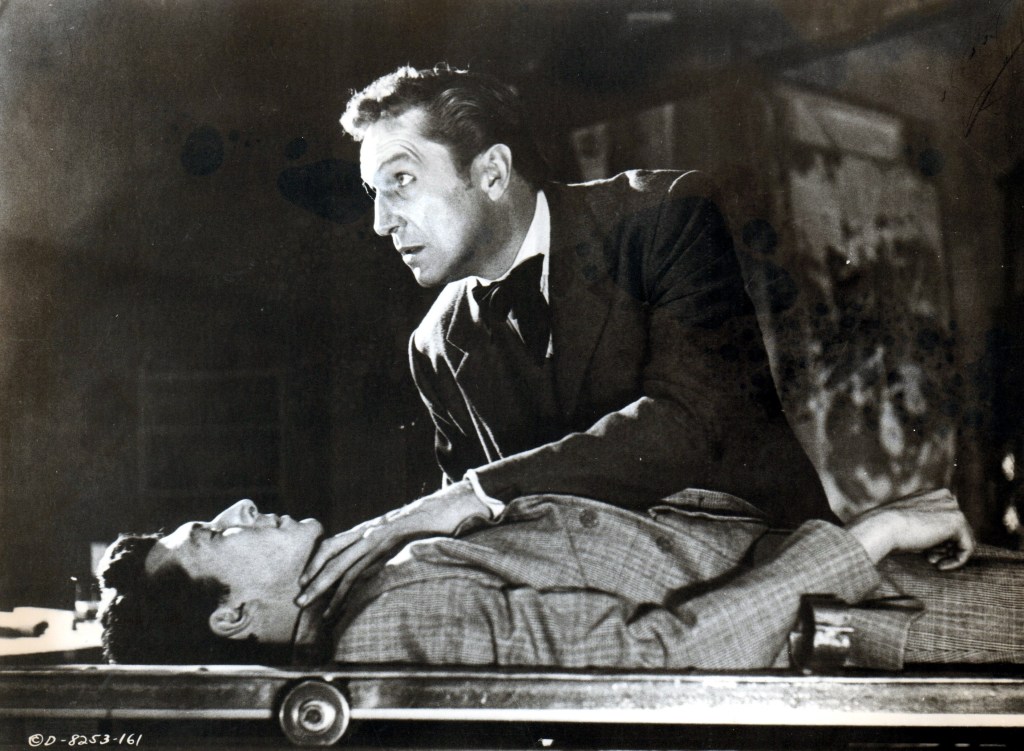
“Alice” sees “Karen” on the street below, and yells to her for help. “Karen” goes to the locked door and starts pounding on it. This distracts “Don Gallico”, and as the platform is slowly moving toward the furnace, “Alice Prentiss” is able to free “Alan Bruce”. Who is immediately attacked by “Gallico”, but “Police Lieutenant Alan Bruce” is able to knock out “Gallico the Great”, who falls on the platform and is taken into “THE CREMATORIUM” and a happening for everyone else.
From “Dennis Schwartz Reviews”, April 4, 2004, at:
https://dennisschwartzreviews.com/madmagician/
It was cheesy fun with a delightfully villainous Vincent, but the whole act was too tawdry and incredible to be swallowed whole and the melodramatic plot points were too contrived and the demented scenario too hokey.
Two appearances on television’s “Science Fiction Theatre”, eventually followed:
“Operation Flypaper”, January 14, 1956, was about documents disappearing as a time slip occurs. Vincent Price portrayed “Dr. Philip Raymond”.
“One Thousand Eyes”, September 7, 1956, was about a police scientist solving a murder with a special camera. Vincent Price portrayed “Police Sergeant Gary Williams”.
Both programs were followed by Vincent Price portraying “Baka”, in producer/director Cecil B. DeMille’s, biblical epic, “The Ten Commandments”, released on October 5, 1956.
As far as his roles went for this article, 1957, found Vincent Price having fun with one “Devilish” character in a dark fantasy science fiction. Released during the “Second Red Scare”, “McCarthyism”, and the building of backyard bomb shelters, in the United States. Therefore, I expect some of my readers will not connect the picture to Vincent Price and horror, but I ask you to put yourself in the Eisenhower America Mindset of the 1950’s, that I grew up in.
The following has major changes from its original version to adopt it for this article, but is found in its original form. As part of my article about “The Disaster Movie KIng”, Irwin Allen’s early works. Which included the Ray Harryhausen and Willis “Obie” O’Brien, 1956, “The Animal World”, entitled, “IRWIN ALLEN: The Story of ‘THE STORY OF MANKIND”, at:
https://www.bewaretheblog.com/2022/11/irwin-allen-story-of-story-of-mankind.html
THE STORY OF MANKIND released on November 8, 1957

The screenplay was based upon the 1921, non-fiction work, “The Story of Mankind”, by Dutch writer, Hendrik Willem Van Loon. The work follows the history of western civilization from prehistoric times to the early 20th century.
The motion picture was Produced, Directed, and Publicized, by Irwin Allen. By this time, Allen had only produced three very forgotten low-budgeted, “B” movies, but also, produced, directed, and written the narration for the “Academy Award” winning documentary, 1953’s, “The Sea Around Us”. That was based upon the world wide best selling, Rachel Carson book, about her studies of ocean life. Irwin Allen, had also written and directed, the previously mentioned, 1956, “The Animal Kingdom”.
Charles Bennett co-wrote the screenplay with Irwin Allen. Bennett had been writing screenplays since 1929, and among his work is director Alfred Hitchcock’s, 1934. “The Man Who Knew Too Much”, 1935’s, “The 39 Steps”, both 1936’s, “Secret Agent” and “Sabotage”, and 1940’s, “Foreign Correspondent”.
Below, the nineteen personalities, on Irwin Allen’s designed, for the 1957 movie audience, publicity poster, as seen above:
Ronald Coleman portrayed “The Spirit of Man”. Among his work, Coleman would star in 1926’s, Beau Geste”, director John Ford’s 1931 version of author Sinclair Lewis’ “Arrowsmith”, the 1935 version of author Charles Dickens’ “A Tale of Two Cities”, director Frank Capra’s classic version of the James Hilton novel, “Lost Horizon”, co-starring Jane Wyatt, 1937’s “The Prisoner of Zenda”, co-starring Madeline Carroll, and the 1950 comedy, “Champagne for Caesar”, co-starring Celeste Holm and Vincent Price.
Vincent Price portrayed “Mr. Scratch-The Devil”. This was his first motion picture since “The Ten Commandments”. During that period, Price had appeared in six different dramatic television episodes of four different anthology television programs. He would also be seen in Irwin Allen’s 1959, “The Big Circus”.

Above, Vincent Price points out something to Ronald Coleman.
Hedy Lamarr, below center, portrayed “Joan of Arc”, she was 44-years-old and Joan was 19-years-old. Vienna, Austria, born Hedwig Eva Maria Kiesler was first known for the 1933, “Ekstase (Ecstasy)”, when the 18-years-old actress has some nude scenes and other strong sexual ones. It would be five-years before she appeared on-screen again in 1938’s, “Algiers”, co-starring Charles Boyer. Probably her best remembered other role was as “Delilah”, the Biblical temptress, in director Cecil B. DeMille’s, 1949, “Samson and Delilah”.

The Three Marx Brothers:
Groucho Marx portrayed “Peter Minuit”. Besides the 13-comedy-movies he made with his brothers, Julius Henry Marx is known for his radio program turned television show, “You Bet Your Life”, from 1947 through 1961.

Harpo Marx portrayed “Sir Isaac Newton”. Adolph “Arthur” Marx did speak, but not in the comedies with his brothers on-screen, or on-stage. He was an accomplished harpist, mime artist, and always wore a red wig.

Chico Marx portrayed a “Monk”. Leonard Joseph Marx was an accomplished pianist, and in their movies, some also with fourth brother “Zeppo”(Herbert Manfred Marx), such as 1929’s, “Cocoanuts”, and 1930’s, “Animal Crackers”, Leonard played the uneducated, but charming con-man.

Virginia Mayo portrayed “Cleopatra”. Virginia Clara Jones started out with three-years in vaudeville and became Virginia Mayo for her Broadway role in comedian Eddie Cantor’s “Banjo Eyes”. In 1943, she made her first feature film, “Jack London”, starring Michael O’Shea and Susan Hayward. Mayo was one of the six stars of director William Wyler’s classic drama, 1946’s, “The Best Years of Our Lives”, and followed with the Danny Kaye, classic comedy, 1947’s, “The Secret Life of Walter Mitty”, in 1951, she co-starred with Gregory Peck, in author C.S. Forester’s, “Captain Horatio Hornblower”.

Agnes Moorehead portrayed “Queen Elizabeth I”. In 1938, Agnes Robertson Moorehead first appeared on radio, in Orson Welles’ “Mercury Theatre” production of author Bram Stoker’s, “Dracula”, as “Mina Harker”. Her first on-screen appearance was in Orson Welles’, 1941, “Citizen Kane”, as the mother of “Charles Foster Kane”, and she made a second on-screen appearance in Welles’, 1942, “The Magnificent Ambersons”. From 1964 through 1972, television audiences knew Agnes Moorehead as “Endora”, on “Bewitched”.

Peter Lorre portrayed “Nero”. Austrian-Hungarian actor Laszlo Lowenstein shocked the world in director Fritz Lang’s, 1931, “M”, but like Lang the director. The actor left Germany with the rise of Hitler and made his way to the United Kingdom to appear in director Alfred Hitchcock’s, 1934, “The Man Who Knew To Much”, then in the United States, and the excellent horror film, 1935’s, “Mad Love” with Colin Clive and Francis Drake. Peter Lorre would also be seen in Irwin Allen’s, 1959, “The Big Circus”.
Peter Lorre’s, Japanese detective, “Mr. Moto” is part of my article, “Boris Karloff, Peter Lorre, Warner Oland, Sidney Toler: “3” Famous Asian Literary Detectives Portrayed By Non-Asian Actors”, found for sleuths, at:
http://www.bewaretheblog.com/2020/04/boris-karloff-peter-lorre-warner-oland.html

Charles Coburn portrayed “Hippocrates”. Character actor, Charles Douville Coburn was a three-time Academy Award nominated actor and during the 1940’s, Vice-President of the “Motion Picture Alliance for the Preservation of American Ideals”. This was a group dedicated to prevent the leftist infiltration of, and the forcing of their beliefs on Hollywood. Among Colburn’s feature films were 1939’s, “The Story of Alexander Graham Bell”, 1941’s, “The Devil and Miss Jones”, 1942’s, “Kings Row”, 1943, “Heaven Can Wait”, 1952’s, “Monkey Business”, and 1953’s, “Gentlemen Prefer Blondes”.

Sir Cedric Hardwicke portrayed the “High Judge”. Although Sir Cedric Webster Hardwicke first appeared on the London stage in 1912, he served with the British Expeditionary Force during the First World War in France and was one of the last to leave that country. His first feature film was 1926’s, “Nelson”, portraying “Admiral Horatio Nelson”, in 1933, Hardwicke co-starred with Boris Karloff and Ernest Thesiger in the horror feature, “The Ghoul”, 1936, saw him in the H.G. Wells written screenplay, “Things to Come”. Sir Cedric Hardwicke joined “Universal Pictures” major franchise with 1942’s “The Ghost of Frankenstein”, followed by the classic “Jack the Ripper” novel, “The Lodger”, in 1944.

Cesar Romero portrayed a “Spanish Envoy to Queen Elizabeth’s Court”. The 6’3” Cesar Julio Romero, Jr. was a New York City born boy that joined the United States Coast Guard during the Second World War. In 1939, Romero took over for Warner Baxter in the title role of “The Cisco Kid and the Lady”. That same year he portrayed “Doc Holiday”, opposite Randolph Scott’s “Wyatt Earp”, in “Frontier Marshall”, the second sound picture about “The Gunfight at the O.K. Corral”. His work included the 1951, science fiction film, “The Lost Continent”, four episodes of Walt Disney’s “Zorro”, and of course, becoming television’s “The Joker”, in 22-episodes of “Batman” and in the movie version of the television series. Cesar Romero also co-starred in Japanese movie studio, Toho’s, science fiction feature, 1969, “Latitude Zero”.

Dennis Hopper portrayed “Napoleon Bonaparte”. The young actor became a friend of art collector Vincent Price and acquired an interest in fine art. The future director, co-writer, and co-star of 1969’s, “Easy Rider”, had 9th-billing in his friend James Dean’s, 1955, “Rebel Without a Cause”, and moved to 8th billing in Dean’s, 1956, “Giant”. In 1957, the young actor portrayed “Billy Clanton” in director John Sturges’, 1957, “The Gunfight at the O.K. Corral”, starring Burt Lancaster and Kirk Douglas.
Marie Windsor portrayed “Josephine Bonaparte”. Emily Marie Bertelsen was known as a “femme fatale” in classic film-noirs such Sterling Hayden’s, 1956, “The Killing”, directed by the unknown Stanley Kubrick. However, to cult science fiction fans, Windsor will always be associated with the 1953, 3-D, “Cat-Women of the Moon”. Not to forget 1955’s, “Abbott and Costello Meet the Mummy”, or director Roger Corman’s, 1956, “Swamp Women”.

Above, Marie Windsor and Dennis Hopper.
Marie Wilson portrayed “Marie Antoinette”. Katherine Elizabeth Wilson was a radio, film, and television actress. She is best remembered for portraying scatterbrained “Irma Peterson”, first on the radio program, “My Friend Irma”, April 11, 1947 through August 23, 1954. Next, in the 1949 motion picture, “My Friend Irma”, and again in the 1950 movie, “My Friend Irma Goes West”, along with the television series, “My Friend Irma”, 1952 through 1954. Speak to type-casting!

Helmut Dantine portrayed “Marc Anthony”. At 18-years-old, in 1938, Austrian born Helmut Guttman was rounded-up and interned in a Nazi Concentration Camp outside of Vienna. Using their influence, his parents were able to get their son out of the camp and flown to California. He started learning acting at the prestigious “Pasadena Playhouse”, and was spotted by a talent-scout for “Warner Brothers”. In 1942, he played a “German Flyer” in “Mrs. Miniver”, starring Greer Garson and Walter Pidgeon, and a German, in 1942’s, “Casablanca”. Fans 1950’s science fiction know Helmut Dantine as 1954’s, “Stranger from Venus”, co-starring Patricia Neal in a British rip-off of 1951’s, “The Day the Earth Stood Still”, that also co-starred Patricia Neal.

Edward Everett Horton portrayed “Sir Walter Raleigh”. Edward Everett Horton, Jr. made his first on-stage appearance in “Columbia University’s 1909 Varsity Show”. In 1928, he co-starred in the Edgar Wallace horror mystery, “The Terror”, and would become a 1930’s comedy star. Edward Everett Horton was “The Mad Hatter”, in “Paramount Picture’s”, 1933, version of author Lewis Carrol’s “Alice in Wonderland”, with other of the author’s characters being played by Gary Cooper, Cary Grant, W.C. Fields, and Sterling Holloway. Of course, if you’re a child of the 1960’s, you recognize Horton’s voice as the narrator for the “Fractured Fairy Tales”, on “Rocky and Bullwinkle”, 1959 through 1963.

Above, Edward Everett Horton is on the far right.
Reginald Gardiner portrayed “William Shakespeare”. William Reginald Gardiner first appeared on-screen as a “Dancer” in director Alfred Hitchcock’s, 1927, “The Lodger: A Story of the London Fog”, “Hitch’s” silent Jack the Ripper movie. That unnoticeable career start would lead to supporting roles in 1938’s, “Marie Antoinette”, starring Nora Shearer and Tyrone Power, 1940’s, “The Great Dictator”, starring Charlie Chaplin, the Bette Davis, Ann Sheridan, and Monte Wooley, 1942, “The Man Who Cam to Dinner”, and 1948’s, “Fury at Furnace Creek”, starring Victor Mature and Coleen Gray, among other films and television appearances.

Cathy O’Donnell portrayed “An Early Christian Woman”. Ann Steely was born in Siluria, Alabama, and in 1946, under her on-screen name, appeared in director William Wyler’s highly acclaimed motion picture about returning Second World War vets, “The Best Years of Our Lives”. O’Donnell’s role was the high school sweetheart, “Wilma Cameron”, of Navy vet, “Homer Parrish”, portrayed by real-life, double amputee, Harold Russell. In 1951, O’Donnell was 4th-billed in William Wyler’s hard hitting “Detective Story”, starring Kirk Douglas, Eleanor Parker, and William Bendix, and in 1959, she played Charlton Heston’s sister in William Wyler’s “Ben Hur”. Cathy O’Donnell, by that time was married to William’s older brother Robert Wyler.

I take writer’s privilege and add six more members of the cast for my readers to know.
John Carradine,seated below, portrayed “Pharaoh Khufu”. Shakespearian trained actor Raymond Reed Carradine claimed that he tested for the title role in director Tod Browning’s, 1931, “Dracula”, but there is no record of a screentest. He would play the count three other times, for “Universal Pictures”, he was “Baron Latos/Dracula” in both 1944’s, “House of Frankenstein” and, 1945’s, “House of Dracula”. In 1966, Carradine again portrayed the Transylvanian count in “Billy the Kid vs Dracula”.

Henry Daniell, below center, portrayed “Pierre Cauchon – Bishop of Beauvais”. Charles Henry Pywell Daniell was a British character actor’s character actor. Among his varied roles are “Sir Robert Cecil”, in the Bette Davis, Errol Flynn, 1939, “The Private Lives of Elizabeth and Essex”, “Garbitsch”, in Charlie Chaplin’s, 1940, “The Great Dictator”, “Anthony Lloyd”, in the Basil Rathbone, Nigel Bruce, 1942, “Sherlock Holmes” feature, “The Voice of Terror”, “Dr. Wolfe ‘Toddy’ MacFarlane”, in producer Val Lewton’s classic version of author Robert Lewis Stevenson’s “The Body Snatcher”, directed by Robert Wise and co-starring Boris Karloff.

Above, Henry Danielle listens to Hedy Lamarr’s “Joan of Arc”.
Nick Cravat portrayed the “Devil’s Apprentice”. Nicholas Cuccia, while at a New York summer camp to get boys out of the city environment for a while. Met another boy who became his lifelong friend, named Burt Lancaster. The two literally would run away and join the circus and as an acrobatic team appeared together in Lancaster’s 1950, “The Flame and the Arrow”, and 1952’s, “The Crimson Pirate”, considered the model for both actor Johnny Depp’s “Captain Jack Sparrow” and “The Pirates of the Caribbean” series. Cravat also appeared with Lancaster in 1958’s, “Run Silent, Run Deep”. My article, “Burt Lancaster: Circus Acrobat Turned Actor”, speaks to Nick Cravat and Lancaster’s circus performances and films. It can be read at:
http://www.bewaretheblog.com/2016/04/burt-lancaster-circus-acrobat-turned.html

Anthony Dexter portrayed “Christopher Columbus”. Walter Reinhold Alfred Fleischmann resembled silent film idol Rudolph Valentino. In fact, his second on-screen appearance was the lead in producer Edward Small’s, 1951, “Valentino”. Dexter followed that motion picture with title role in 1954’s, “Captain Kid and the Slave Girl”, opposite Eva Gabor. In 1956, Anthony Dexter was “Luther Blair”, in the British science fiction film, “Fire Maidens of Outer Space”, in 1960, he was “Dr. Luis Vargas” in the science fiction “12 to the Moon”, and the following year he was “Herron” in another science fiction feature, “The Phantom Planet”.

Francis X. Bushman portrayed “Moses”. Francis Xavier Bushman’s first on-screen appearance was in a 1912 short, “My Friend’s Wife”. In 1925, the actor asked his friend, cowboy star and owner of half of the Santa Clarita Valley, William S. Hart, about playing a villain in an upcoming feature film. Bushman’s image had always been of a good person and he worried about how his fans would react. Hart told him to go for it, and cis X. Bushman became the unforgettable, “Messala”, opposite Ramon Novarro, in the title role of Civil War General and Governor of New Mexico, Lew Wallace’s “Ben Hur: A Tale of the Christ”. In 1966 he found himself both in the “Beach Party” series entry, 1966’s,”The Ghost in the Invisible Bikini”, and on televisions “Batman”.

Don Megowan portrayed “Early Man”. He was a character actor, that perhaps his best-known role, was the “Land Version of the Creature from the Black Lagoon” in 1956’s, “The Creature Walks Among Us”. Some of his other roles included “Colonel Travis” in “The Alamo” segment of Walt Disney’s “Davy Crockett”, the sheriff, in 1956’s, overlooked horror movie, “The Werewolf”, “Captain Kenneth Cragis” in the cult 1962, science fiction “The Creation of the Humanoids”, and the “Gum Chewer” in Mel Brooks’, 1974, “Blazing Saddles”. My article, “DON MEGOWAN: Portraying William Barret Travis and ‘The Creature from the Black Lagoon”, may be read at:
http://www.bewaretheblog.com/2021/12/don-megowan-portraying-william-barret.html

Overview of he Irwin Allen and Charles Bennett Screenplay:
Two angels appear in the sky as stars, and are discussing how man has invented the “Super H-Bomb”, 60-years, before they should have created it. The two note that mankind will be destroyed, if the bomb detonates. The angels report their discovery to the “High Tribunal of Outer Space”. The “High Tribunal” realizes that when the “Celestial Clock” strikes eleven, the “Super H-Bomb” will go off.

Irwin Allen’s screenplay now asks the question:
Will the “High Tribunal” prevent the bomb from going off, or should they let the human race face their created fate?
A decision to hold mankind on trial is agreed too.

The tribunal now calls for “The Spirit of Man” to defend the human race, and “Mr. Scratch (The Devil)”, who arrives with his apprentice devil, to prosecute the human race.


Above, Welsh character actor Tudor Owen swears in Ronald Colman and Vincent Price.
The “High Judge” of the tribunal instructs the defense and prosecutor that they may use any person from Earth’s history to make their case.
The witnesses have been assembled, and the “Spirit of Man” starts his case by first showing how man developed from a solitary people into communities. That in these communities, man developed both fire, with its uses for warmth and cooking their food, created the wheel, and shows the impact of the wheel and other inventions created by man, have on their communities.


“Mr. Scratch” argues that man’s downfall began almost immediately by creating envy and greed. He switches to Egypt during the “Old Kingdom” and “Pharaoh Khufu”. “Scratch” tells the tribunal that the Pharaoh murdered 100,000 men to build his tomb, the “Great Pyramid of Giza”, because man in his stupidity, worshipped villains as heroes.


While “The Spirit of Man” concedes “Mr. Scratch’s” point, he countered by reminding the prosecutor and the tribunal that the reverse was also true. By bringing up the story of “Moses” who led his people to freedom, and gave them “God’s Ten Commandments” upon Mount Sinai.


“Mr. Scratch” counters “The Spirt of Man”, by reminding him that the “Ten Commandments” were soon broken by war, rape, and other villainy. His example is the story of “Helen of Troy”, portrayed by Dani Crayne.

“Scratch” takes a similar position as he had with the building of the pyramid in Giza, by stating that thousands of men, Greek’s and Trojan’s died for “The Face That Launched a Thousand Ships”. While, admitting that myth and history are sometimes so intertwined that one cannot tell the difference between the two.
“The Spirit of Man” takes “Mr. Scratch” to ancient Greece to meet “Socrates”, “Plato”, and “Aristotle”, sculptors, and early astronomers, that had taken man’s thinking to a new level. He then introduces “Hippocrates”, the father of modern medicine, whose oath is still given to doctors today, and held inviolate by them.
“Mr. Scratch” doubles down, starting with “Cleopatra”, who killed her brother, manipulated “Julius Caesar”, portrayed by Reginald Sheffield, and betrayed “Marc Anthony”, before committing suicide to avoid being taken captive by “Augustus Caesar”.


Then, “Mr. Scratch”, brings up “Nero”, and the burning of Rome, claiming the citizens were content with “Nero’s” abuse of power. “The Spirit of Man” counters with Christian martyrs praying to God as Roman soldiers take them to their deaths in the arena. Adding that despite these brutal times, a new hope for man had arrived.


“Mr. Scratch” now presents “Attila the Hun”, whose armies marched against the Pope and organized religion. However, “The Spirit of Man” counters with the signing of the “Magna Carta”, and the legend of “King Arthur”, showing faith did survive.

Attacking “The Spirit of Man”, “Mr. Scratch” claims the treatment of “Joan of Arc” completely disproves his position, and he goes on to indict the entire Middle Ages.


“The Spirit of Man” again counters, by stating that the era gave birth to the Renaissance, a new age of thought, and “Leonardo da Vinci”.

“Mr. Scratch” counters that some of da Vinci’s inventions were forerunners of weapons of war, the flying machine, the submarine, and his version of a machine gun made with multiple rifles on a wheel firing each one as it turns.


“The Spirit of Man” counters by saying that da Vinci’s worked influenced “Christopher Columbus’s” voyage to the new world.

Which is immediately countered by “Mr. Scratch”, reminding “The Spirit of Man”, how Spanish explorer “Hernan Cortes (Cortez)” lead an expedition to the New World. That ended with the slaughter of the Aztec Indians, as Spain attempted to rule and terrorize the seas.
“The Spirit of Man” counters with “Elizabeth I”, warning the Spanish envoy of Spain continuing their attacks, and then “Francis Drake’s” sinking the Armada. He adds that the queen inspired “William Shakespeare”.


Speaking to the New World, “Mr. Scratch” mentions how “Peter Minuit” cheated the Indians out of Manhattan Island.


“Scratch” adds, that the colonies permitted slavery, and in Salem, people were hung and burned at a stake for being witches. Not to forget that “Sir Walter Raleigh” introduced tobacco to the “Old World”, and that the unsanitary conditions throughout Europe created plague.
To which, “The Spirit of Man” counters with the discoveries of medicines and advances in science, mentioning “Sir Isaac Newton’s”, discovery of gravity.


Next, “The Spirit of Man”, adds the story of the American founding fathers building a nation on the principle the all men are created equal. To which, “Mr. Scratch” again, doubles down, by calling to the witness stand, first “Marie Antoinette”, and next, “Napoleon Bonaparte”, to illustrate mankind’s lust for power and creed.


“Mr. Scratch” continues his argument about greed, by leaving Europe for America, and speaking to the land grabbing and gold fever that led to the Indian Wars, and the Civil War pitting brother against brother. “The Spirit of Man” argues that out of the American Civil War came “President Abraham Lincoln’s”, played by Austin Green, “Emancipation Proclamation”.

“The Spirit of Man” continues by mentioning the many inventors, such as “Alexander Graham Bell”, played by Jim Ameche, and musicians that followed, but “Mr. Scratch” is not impressed.
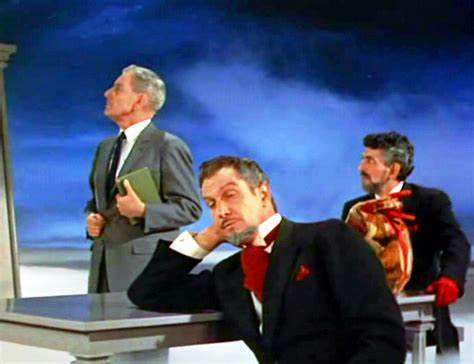
“Mr. Scratch” replies, by speaking to the “First World War”, and how the “Great Depression”, in Europe, created the opportunity for the rise of “Adolph Hitler”, played by Bobby Watson, and the “Second World War”.

The final session of the “High Tribunal of Outer Space” is called to session. The “High Judge” calls for summations, so that the judges can make a determination, as the “Celestial Clock” is nearing eleven o’clock, and the “Super H-Bomb” will explode.
.jpg)
“The Spirit of Man” tells the judges that humans have been misled by the followers of “Mr. Scratch”, but they have survived, and redirected themselves. He calls one last witness, “The Man of Tomorrow”, who is a baby, and argues, IF THERE IS NO TOMORROW, THE PAST MEANS NOTHING!
“Mr. Scratch” directs the judges to look closely at the toys around the baby, a gun and a sword.
However, “The Spirit of Man” demonstrates that when fired, the gun plays music, and the sword opens, because it’s a pencil box.
“The Spirit of Man” now brings out a Bible as an exhibit and reads:
FOR HIM THAT SOWETH RIGHTEOUS SHALL BE A SURE REWARD
and then rests his case.
The judges now go into deliberation and return with their verdict:
MAN’S GOOD IS EQUAL TO HIS EVIL
As such, they will reserve final judgement for a future date. The “High Judge” states that man’s destruction has been postponed, BUT the “High Tribunal of Outer Space” will reconvene on that unspecified later date.
For the record, “The Story of Mankind”, was the first real disaster movie, for Irwin Allen. According to the “New York Times”, November 9, 1957, the movie was:
a protracted and tedious lesson in history that is lacking in punch, sophistication and a consistent point of view.
I wrote an article about the trilogy of related motion pictures that make up the story of the “Delambre Family”. However, I am modifying only the first two motion pictures for this article, because Vincent Price is not in the third film.
My complete detailed article, starting with the writing of the original story for “Playboy Magazine”, which was the basis for the first feature film is entitled, “THE FLY: The 1958, 1959, 1965 Original Trilogy of Science Fiction/Horror”, and found at:
https://www.bewaretheblog.com/2021/12/the-fly-1958-19591965-original-trilogy.html
THE FLY released on July 16, 1958

The motion picture was directed by Kurt Neumann. Neumann also wrote screenplays, but not for this picture. Those screenplay’s, included 1936’s, “Dracula’s Daughter”, 1943’s “Return of the Vampire” and 1950’s “Rocketship X-M: Expedition Moon”, which he also directed. His other directing assignments, prior to this picture included, 1933’s “Secret of the Blue Room”, starring Lionel Atwill, Gloria Stuart, and Paul Lukas, 1957’s “She-Devil” starring Mari Blanchard, Jack Kelly, and Albert Dekker, and 1957’s”KRONOS”, starring Jeff Morrow, Barbara Lawrence, and John Emery.
The screenplay was by Australian author James Clavell, his major novels are, the 1962 World War 2 German prison camp, “King Rat”, the trilogy, 1966’s “Tai-Pan”, 1975’s “Shogan” and 1981’s “Noble House”, all best sellers and all turned into either successful motion pictures or mini-television-series. Clavel’s other motion picture work included co-writing the screenplays for 1963’s “The Great Escape”, 1964’s “633 Squadron” and 1965’s “The Satan Bug”. In 1967, James Clavel wrote the screenplay and directed Sidney Poitier’s, “From Sir with Love”.
The Main Cast:
Albert David Hedison, Jr. was billed as Al Hedison, but starting with producer Irwin Allen’s, 1960’s, version of Sir Arthur Conan Doyle’s “The Lost World”, he became David Hedison, and he portrayed “Andre Delambre”. Al Hedison had just been seen in the classic WW2 submarine thriller, 1957’s “The Enemy Below”, starring Robert Mitchum and Curt Jurgens.

Patricia Owens portrayed “Helene Delambre”. Owens had just co-starred with Robert Taylor and Richard Widmark in the 1958 western, “The Law and Jake Wade” and would follow this picture, co-starring with Audie Murphy and Eddie Albert, in 1958’s “The Gun Runners”. My article on that feature and the different film versions, including the Bogart and Bacall film, is “Ernest Hemingway’s ‘To Have and Have Not’ on the Motion Picture Screen and Radio”, that may be read at:
http://www.bewaretheblog.com/2021/10/ernest-hemmingways-to-have-and-have-not.html

Vincent Price portrayed “Francois Delambre”. Price had just been seen in a May 1958 episode of the television anthology series “Matinee Theatre”, entitled “Angel Street” and would follow this feature with a December 1958 episode of Richard Boone’s, “Have Gun – Will Travel”, entitled “The Moor’s Revenge”, with Price as an actor portraying William Shakespeare’s, “Othello”.

Herbert Marshall portrayed the added character of “Inspector Charas”. British actor Marshall had appeared in many different genres of motion pictures over his career. They included co-starring with Marlene Dietrich and Cary Grant in 1932’s “Blonde Venus”, Alfred Hitchcock’s, 1940 “Foreign Correspondent” co-starring with Joel McCrea and Laraine Day, and the 1941 “The Little Foxes”, co-starring with Bette Davis. For science fiction fans, Marshall appeared in the second and third entries to Ivan Tor’s “Office of Scientific Investigation” trilogy, 1954’s “Riders to the Stars” and the same years “GOG”. My article, “Ivan Tors, ‘Office of Scientific Investigation” Trilogy”. can be read at:
http://www.bewaretheblog.com/2016/07/ivan-tors-office-of-scientific.html

Above, Herbert Marshall and Vincent Price.
Charles Herbert portrayed the added character of “Phillipe Delambre”. Child actor Herbert would be in the 1958 science fiction “The Colossus of New York”, and star in producer William Castle’s, 1960, original “13 Ghosts”, but the young actor’s real life wasn’t what most of his fans imagined. My article about Herbert and another young actor, Richard Eyer entitled, “Richard Eyer and Charles Herbert: Youthful Actors”, can be found at:
http://www.bewaretheblog.com/2016/06/richard-eyer-and-charles-herbert-child.html

The James Clavel Screenplay:
In Monreal, Quebec, Canada, scientist and business partner of his brother “Francois”, “Andre Delambre”, is found dead with his head and one arm crushed by a hydraulic press beyond recognition.

“Francois Delambre” is called, and comes to the plant “Delambre Frere”.

“Francois” meets “Inspector Charas” and the two view “Andre’s” body.

“Francois” and police “Inspector Charas” go to the “Delembre Estate” and question “Andre’s” wife “Helene” about his death. Which she has confessed too without revealing any motive. “Helene” has also become obsessed with the buzzing sounds of flies, and tries to see them up close. Always looking for one with a white head!

“Dr. Ejoute”, played by Eugene Borden, is called in and arranges to have “Nurse Anderson”, played by Betty Lou Gerson, stay with “Mrs. Delambre” in both her medical capacity and for “Inspector Charas” to keep “Helene Delambre” from leaving the house alone.

“Francois” now trays a ploy on his sister-in-law, claiming he has captured a white-headed fly. His ploy works, and “Helene Delambre” tells her story, in a flashback, to her brother-in-law and the inspector.
The audience sees a very happy family of “Andre”, “Helene”, and their son “Phillipe”.

Scientist “Andre Delambre”, has been working on a “matter-transporter”. He calls a “disintegrator-integrator” in his home basement laboratory.

“Helene” is concerned that “Andre” is overworked and comes to the lab where he demonstrates his invention on a plate by sending it from one table-top chamber to another, but the words “made in Japan”. Demonstrate his major problem by coming out in reverse.


“Andre” believes he has fixed his creation and tests in on the family’s pet cat.

The cat disintegrates in the first chamber, but never reappears in the other one. However, the sound of a cat meowing is heard in different parts of the house as the invisible cat appears to be alive, but in some form of limbo.
To get his mind off his work, “Helene” asks “Andre” to accompany her to the ballet, but as he watches the production his mind is elsewhere, and “Andre Delambre” thinks he has solved his problem.


“Andre” now constructs two human size chambers and connects them to his computer system.

“Helene” is again concerned, because “Andre” went into his laboratory two days prior and has not come out or called her. She goes down to the basement and enters the laboratory to find her husband’s head draped in a black piece of cloth and what appears to be a deformity of his left hand that he hides inside a coat pocket.

“Andre” uses his typewriter, hitting one key at a time, to tell “Helene” his experiment worked once, and he was transported from one chamber to the other without incident. He decided to try it again, and unnoticed by “Andre”, a fly got into the first chamber with him. The fly got out of the laboratory and has a white head, “Helene” must find it and bring it back to him alive. He will not let her see his hand or touch the black cloth.
“Helene” now get their son “Phillipe” to help in the search for “The Fly”.

The search for the white-headed-fly is becoming impossible, at one time it was seen, but got away. Now in the laboratory “Andre” gets “Helene” to try an experiment. He wants her to transport him again, in the belief that this might correct the accident. The hooded “Andre” gets inside the first chamber, “Helene” sends him to the next still wearing his hood.


He steps out of the second chamber and “Helene” pulls the hood off of “Andre” to see—–


As the search for the white-headed fly continues, the fly’s brain is eliminating “Andre’s”.

“Helene” is now frantic, but more so is “Andre”!

“Andre” now comes up with the plan to kill himself with “Helene’s” assistance, before he loses all his humanity. At “Delambre Frere”, he sets the dials on the hydraulic press, something “Helene” wouldn’t know how to do, and shows her what to press. Next, “Andre Delambre” places his head and left arm in position.


“Helene’s” story ends with both “Francois” and “Inspector Charas” watching, as she is prepared to be taken to an asylum!

Walking into the garden, the two men are discussing what might really have happened, and are approached by “Phillipe”. Who says he has found the white-headed fly. They go over to a spider’s web, and about to be killed, is a fly with “Andre’s” head, crying out a classic line:
HELP ME! HELP ME!


“Inspector Charas” picks up a rock and kills both the spider and the fly. “Francois” turns to “Charas”, and calmly mentions to him. That if “Helene” is being committed to an asylum for killing a man with a fly’s head. Then shouldn’t he be committed to the same asylum for killing a fly with a man’s head?
The movie ends with “Helene” and “Phillipe” walking with “Francois” in the garden.
After appearing on “Have Gun Will-Travel”, Vincent Price met William Castle on a:
HOUSE ON HAUNTED HILL premiered in San Francisco, California, on January 14, 1959
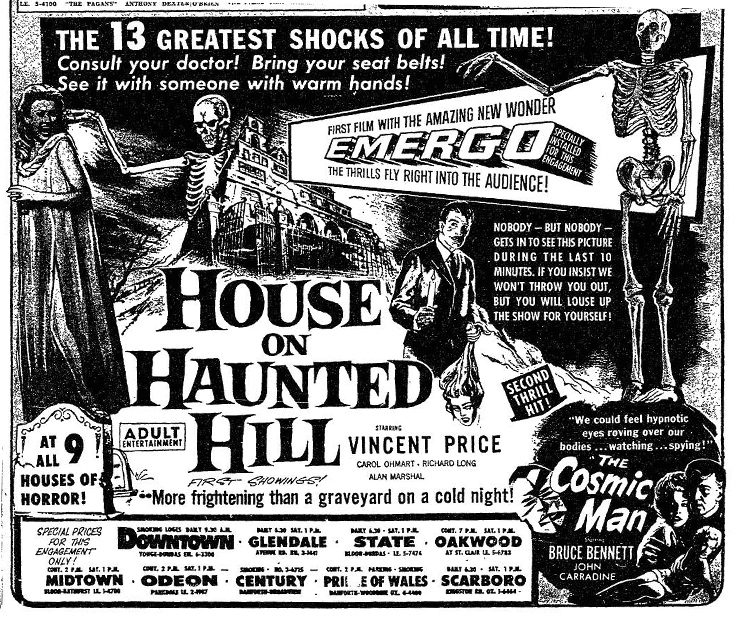
The motion picture was produced and directed by William Castle. There is more to William Castle’s career than a couple of Vincent Price gimmick movies. My article on that career is “A Tale of WILLIAM CASTLE the Motion Picture ‘GIMMICK KING” for your reading at:
https://www.bewaretheblog.com/2017/10/a-tale-of-william-castle-motion-picture.html
The screenplay and story came from Robb White. White had already written William Castle’s first gimmick horror movie, 1958’s, “Macabre”, and would write his next three movies.
Those Who Spent the Night at the “House on Haunted Hill”:
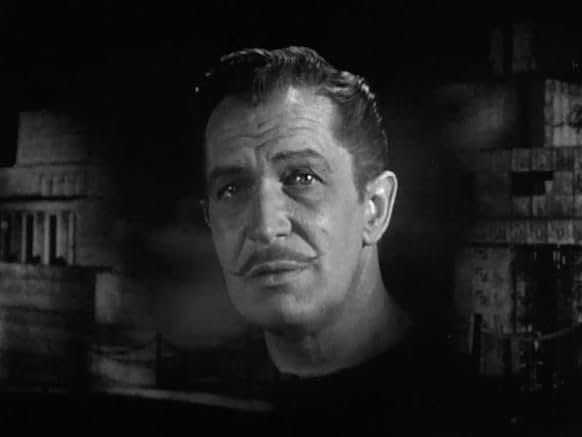
Vincent Price portrayed “Frederick Loren”. Price would follow this feature with producer Irwin Allen’s ripoff of Cecil B. DeMille’s, 1952, “The Great Show on Earth”, 1959’s, “The Big Circus”.
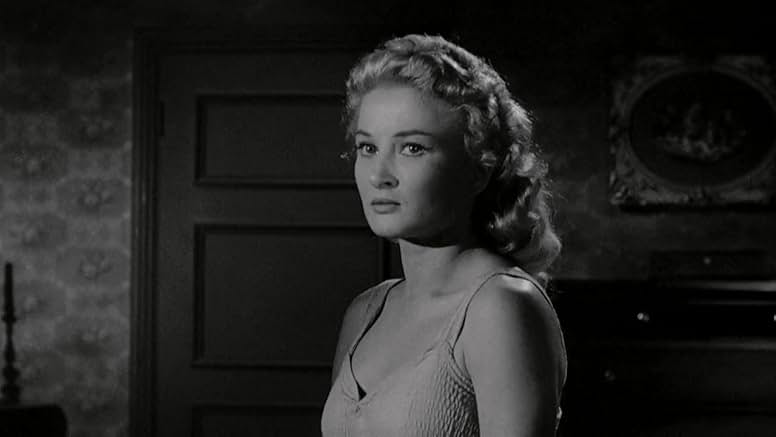
Carol Ohmart portrayed “Annabelle Loren”. This was the television actresses second motion picture, or only four. Between 1950 and 1974, Ohmart appeared in 50-episodes of different television programs without gaining a starring role.
Richard Long portrayed “Lance Schroeder”. Long had been appearing on-screen in roles of various sizes since 1946. However, from 1959-1960, following this motion picture, he starred on the on-season television detective series, “Bourbon Street Beat”, but from 1965 through 1969, he co-starred with “Miss Barbara Stanwyck”, on the television western, “The Big Valley”.
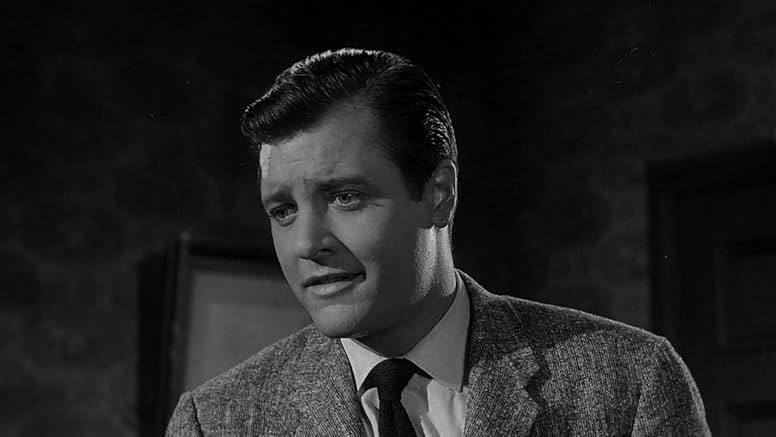
Alan Marshall portrayed “Dr. David Trent”. Marshall’s on-screen acting goes back to 1936, when he was 8th-billed behind John Carradine, in “The Garden of Allah”, starring Marlene Dietrich and Charles Boyer. By this time he was appearing on television shows and would appear in “Invitation of a Murder”, November 23, 1959, on Richard Long’s, “Bourbon Street Beat”.
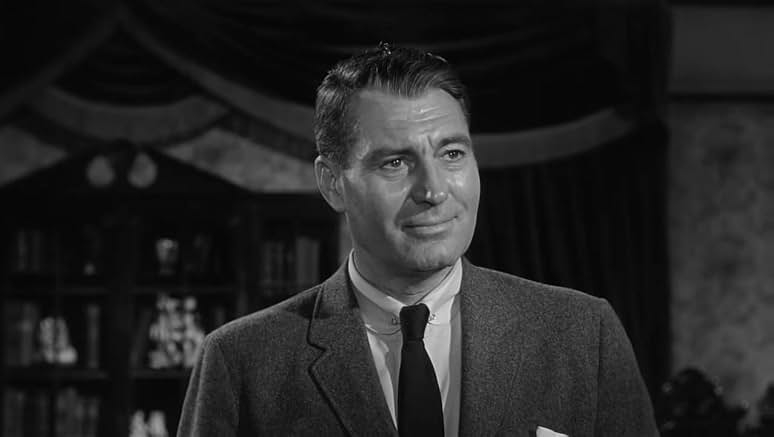
Carolyn Craig portrayed “Nora Manning”. The majority of Graig’s 50-roles, only 5 were in motion pictures, were small parts on television programs between 1955 and 1967.
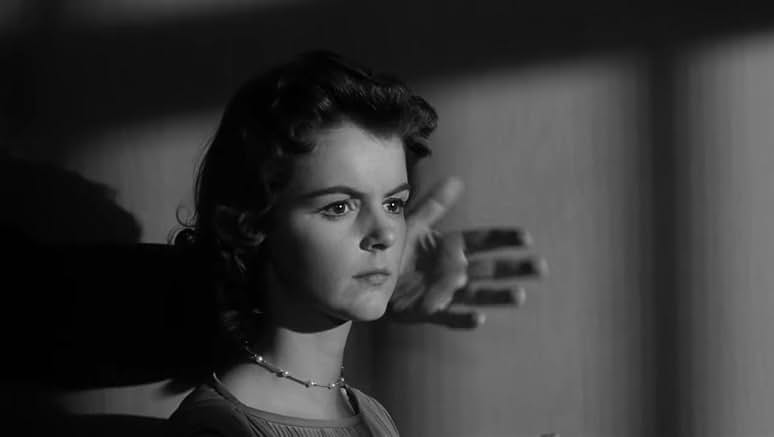
Elisha Cook, Jr. portrayed “Watson Prichard”. Character actor Cook is a familiar face to 1940’s movie lovers. As in just these three from 1941, “Sergeant York” starring Gary Cooper, “The Maltese Falcon” starring Humphrey Bogart, and “I Wake Up Screaming” starring Victor Mature. My article is “Elisha Cook, Jr: Film-Noirs, Westerns, Horror, Science Fiction and a Judy Garland Musical” to read at:
https://www.bewaretheblog.com/2025/05/elisha-cook-jr-film-noirs-westerns.html
Julie Mitchum portrayed “Ruth Bridges”. Mitchum was the sister of actor Robert Mitchum, and this was her 8th-motion picture and her last. She was a singer and piano player who entertained the troops during the Second World War. Julie Mitchum had her own television show during the early 1950’s, on KLAC-TV, before it officially became KCOP-TV, Channel 13, in the Los Angeles television market.

Above Elisha Cook, Jr. and Julie Mitchum.
The Housekeeper and Her Husband:
Leona Anderson portrayed “Mrs. Slydes”. Anderson started her short on-screen career in silents between 1915 and 1922. She was the youngest sister of the first motion picture Cowboy star, Broncho Billy Anderson, and appeared with her brother in 1915’s, “Broncho Billy’s Mexican Wife”. In nightclubs around the United States, Leona Anderson was known as a “Camp Singer” that wasn’t afraid of being the butt of jokes. In 1953, Anderson revived her comic singing career on televisions “The Ernie Kovacs Show”.

Above, Leona is getting the gist of what director William Castle wants for that great fright scene.
Howard Hoffman portrayed “Jonas Slydes”. Hoffman’s first on-screen appearance was in the 1945 made-for-television movie, “Marriage Proposal”. All 29 of his roles were on television, his last in 1967. I could not locate any other information about the actor.

The Scream Play, or Let the Fun Begin:
The movie opens as a group of five funeral cars are moving along a road to the front entrance of the “House on Haunted Hill”. Over the cars, two floating heads appear, one of Vincent Price, one of Elisha Cook, Jr.
Cook tells the audience the history of the house and about the Ghost’s that haunt it and says:
The ghosts are moving tonight, restless… hungry. May I introduce myself? I’m Watson Pritchard. In just a moment I’ll show you the only really haunted house in the world. Since it was built a century ago, seven people including my brother have been murdered in it, since then, I own the house. I’ve only spent one night there and when they found me in the morning, I… I was almost dead.

Next, Vincent Price introduces himself to the viewing audience as “Frederick Loren”, and that he is throwing a party for his wife. Although she doesn’t know even one of the guest’s her husband has invited, but each of these “Guest’s” are in need of money


The “Guests” are introduced with their backgrounds,as the audience sees each in their funeral cars:
Test pilot, “Lance Schroeder”, newspaper columnist “Ruth Bridges, psychiatrist “David Trent”, a worker from one of multimillionaire “Loren’s” many companies, “Nora Manning”, and the owner of the house, the previously seen”Watson Pritchard”.
At midnight, the solid metal doors will be locked by the servant’s, as they leave for the night, and the windows are all barred. No one will be able to leave the house until the servants return in the morning. One other point, there are no phones, and this is pre-cell phone 1959. So, once the doors are locked, there is no way any of “Loren’s Wife’s (?) Guest’s” can communicate outside of the house and ask for help!
It is also mentioned that should each “Guest” remain until morning, they will each get $10,000, equal, as of this writing, to $115,162.
The “Guest’s” are downstairs talking among themselves, and upstairs, the audience learns that “Annabelle Loren” doesn’t plan to leave her room and is upset over this “Party” with people she doesn’t know.


However, “Frederick” seems to threaten her, should she not attend the party and leaves.
Downstairs as the other’s talk and discover none of them has ever seen, let alone met, their host. “Watson Pritchard” is asked to speak to the murders. He shows them the large knife that was used in two murders, where the bodies were found, headless, and that the head’s were never found.

Then what appears to be blood drips onto one of “Ruth Bridges’s” hands and “Pritchard” looks up at what he says is dried blood on the ceiling, but it appears wet. It is passed over as a plumping leak by everyone, but “Watson”.
“Frederick Loren” enters the room, introduces himself, and excuses his wife for not being with him. He asks “Pritchard” to take the group on a tour of the house. In the basement, “Watson” shows them a vat of acid that a previous resident of the house used to depose of his wife after killing her. Asked if there’s still acid in it, he finds a dead rat in a trap and drops the rat’s body into the still active acid.
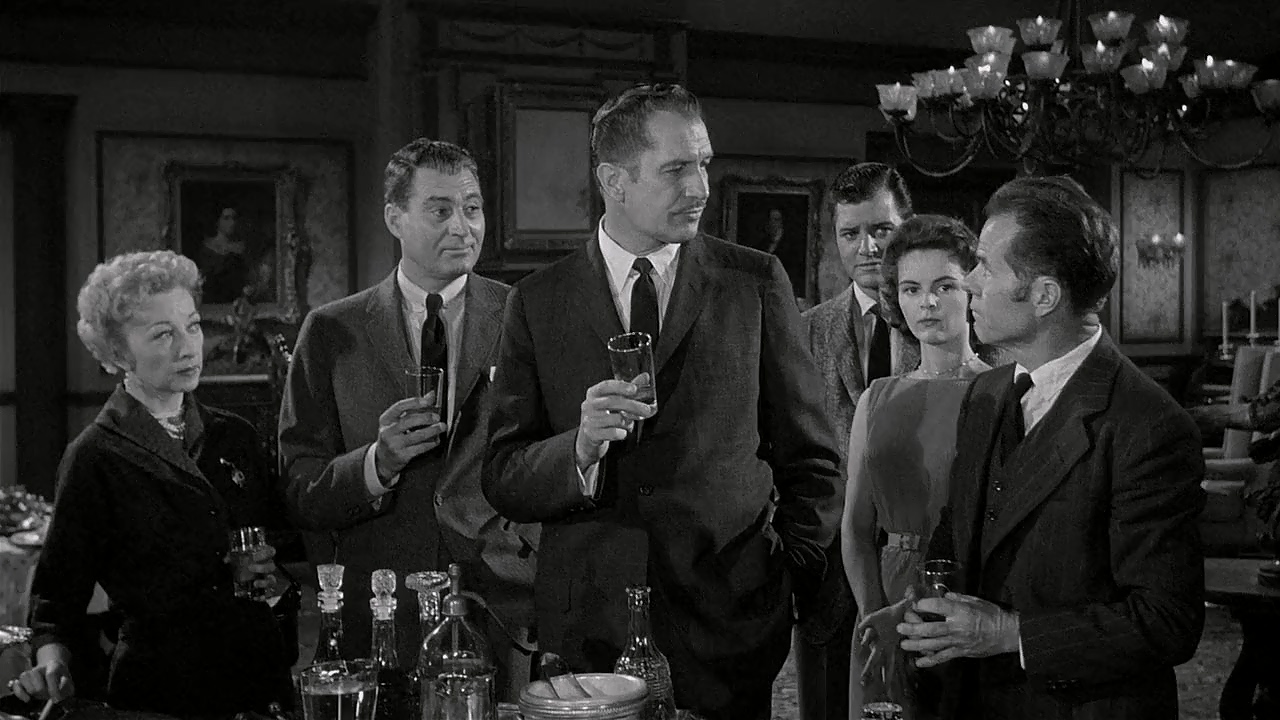
“Nora” excuses herself and goes upstairs to find her room. “Annabelle Loren” comes out of hers, introduces herself, and shows the other her room. Inside, “Annabelle” warns “Nora” about “Frederick”, telling the other that he’s up to something.

At the same time, the others are discussing the murders, and “Loren” remarks:

While the other’s continue to talk. “Nora” has come down and with “Lance”, decide to explore the house and go down to the basement.

The two find a dark room that is smaller inside than outside, and “Lance” re-enters it, only to have the door lock him in. “Nora” starts to look for him and enters another dark room, in which she is frightened by “A Ghost”.


“Nora” in a panic goes back upstairs and tells everyone that something happened to “Lance” and he’s in a locked room. They all go to the basement, but the door to the room “Lance” entered is now unlocked and they find him unconscious. He is helped by “Frederick” and “Trent” and the psychiatrist treats the wound on “Lance’s” head. “Annabelle Loren” makes her grand entrance. Next, “Nora” reacts to a couple standing in the hall, because one is her ghost. “Frederick” introduces the servants and comments that “Mrs. Slydes” is blind.

“Annabelle” gets “Lance” away from the others to speak to him. According to “Annabelle”, “Frederick” murdered his second and third wife, and his first, simply disappeared. She tells “Lance” she fears he is up to something tonight.
“Frederick” reveals that any party must have party favors and in this case, they’re loaded pistols in small coffins. He’s asked are they really loaded, and he takes one and shoots a vase across the room.


“Annabelle” doesn’t want hers, but “Fredrick” reminds his wife this was her idea and she takes the pistol.

Going back to the security of her room, “Nora” opens her cosmetic case and finds one of the heads of the two murdered people.

Again, in panic, “Nora” gets everyone to come back to her room to show them the head, but when “Watson Pritchard” opens the case, it’s gone. Did she imagine it?

“Lance” has gone upstairs to “Nora’s” room, searching, finds the head, and comes downstairs holding the fake head.

SPOILER ALERT FOR THAT ONE PERSON ON EARTH WHO HAS NEVER SEEN THIS MOTION PICTURE!
“Nora” wants out of the house and accompanied by “Fredrick Lorne” and the others goes to the front door, but It’s Locked and the clock shows only 11:55 PM! The servant’s, for some unexplained reason, have left five-minutes earlier than they were told too. “Nora” is trapped for the night along with the others.
Later, there’s a scream, and “Lance” and “Dr. Trent” run toward it. To find “Annabelle Lorne” has committed suicide by hanging herself. The two men take “Annabelle’s” body down, place it on her bed, in her room.

However, there was no way “Annabelle” could have hung herself, as there was nothing for her to have been standing upon. Which one of the remaining “Guest’s” is the murderer?
“Nora” finds “Lance”, and claims that an unseen strangler, had left her for dead.

Based on “Annabelle’s” warning to “Lance”, the two believe the murderer is “Frederick”. “Lance” tells “Nora” to stay out of sight in her room, locking the door, to let her attacker think she is dead.
Next, “Lance” and “Dr. Trent” tell everyone else to stay in their rooms, and if somebody comes in, shoot them. Because, if you’re innocent, you would not be out of your room, and the murderer would be admitting guilt by being out of their room.
This is followed by the ghost of “Annabelle Loren” appearing outside the window of “Nora Manning’s” room.

In complete terror, “Nora” takes her gun and heads for the basement. “Dr. David Trent”, breaks the rule of staying in his room, finds, and speaks to “Frederick Loren”. “Dr. Manning” concludes that the killer is about. Suggesting that the two should spilt up and search the house. Meanwhile, “Lance” discovers a secret room at the end of the second floor hall, but after entering, the door closes and he’s locked inside.
While, “Frederick” heads down to the first floor as agreed, “David” instead of searching the second floor, just enters “Annabelle’s” room. He approaches the bed with “Annabelle’s” body on it, but suddenly she awakes and is happy to see him.

The lovers plan is almost complete. “Frederick” is heading for the basement and the frightened “Nora”, who believes he’s the killer, is there with a loaded pistol. “Frederick” enters the basement with his pistol in his hand. “Nora”, sees him, impulsively fires her pistol, and kills “Frederick Loren” as the lovers planned all along. The still frightened young woman leaves the basement, as “Dr. David Trent” enters to dispose of the body of “Frederick Loren”.
SUDDENLY, THE LIGHTS GO OUT!
The lights are back on, and “Annabelle” now enters the basement to confirm the death of her husband. However, there is no body, and no “David”. As she looks around, from the vat of acid rises a skeleton.


The skeleton next walks toward the camera, and moments later”Frederick Loren”, emerges from the RIGHT SIDE CORNER of the basement where he was hiding in. Revealing that the skeleton that caused his wife’s death, was really some giant marionette
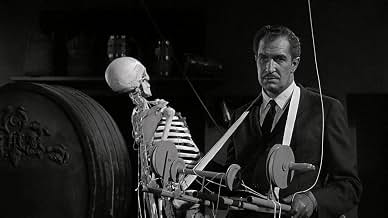
On the second floor, “Nora”, “Watson”, and “Ruth”, release “Lance” from the secret room. “Nora” admits that she has shot and killed “Frederick Loren”, but when the group goes to the basement. They find him alive and well, and he starts his explanation. By first telling “Nora” that her gun was always filled with blanks. He adds that “Annabelle” and “David” had been plotting to kill him, so she could inherit his fortune. However, he was aware of the plot and this party was a set-up to kill them. Both their bodies are in the vat of acid, and “Frederick Loren” is ready for justice to decide, if he is really guilty, or innocent?
The movie ends with “Watson Pritchard” convinced that there are now two new ghosts for the “House on Haunted Hill”, and that the other spirits had manipulated all the events that have transpired.

In first run theaters, in the RIGHT SIDE CORNER of the theater auditorium. There was a curtained off area that a wire ran out of, anchored on the opposite wall. At a specific time during the death of “Annabelle Loren”, “EMERGO” kicks in. Out of the curtained off area, a lighted plastic skeleton with flaming red eyes, moves over the audience. The skeleton reaches a point over the center of the auditorium, and then backs up, and returns behind the curtain. To correspond to Vincent Price’s “Frederick Loren’s” appearance on screen with the marionette skeleton he used to murder his wife.
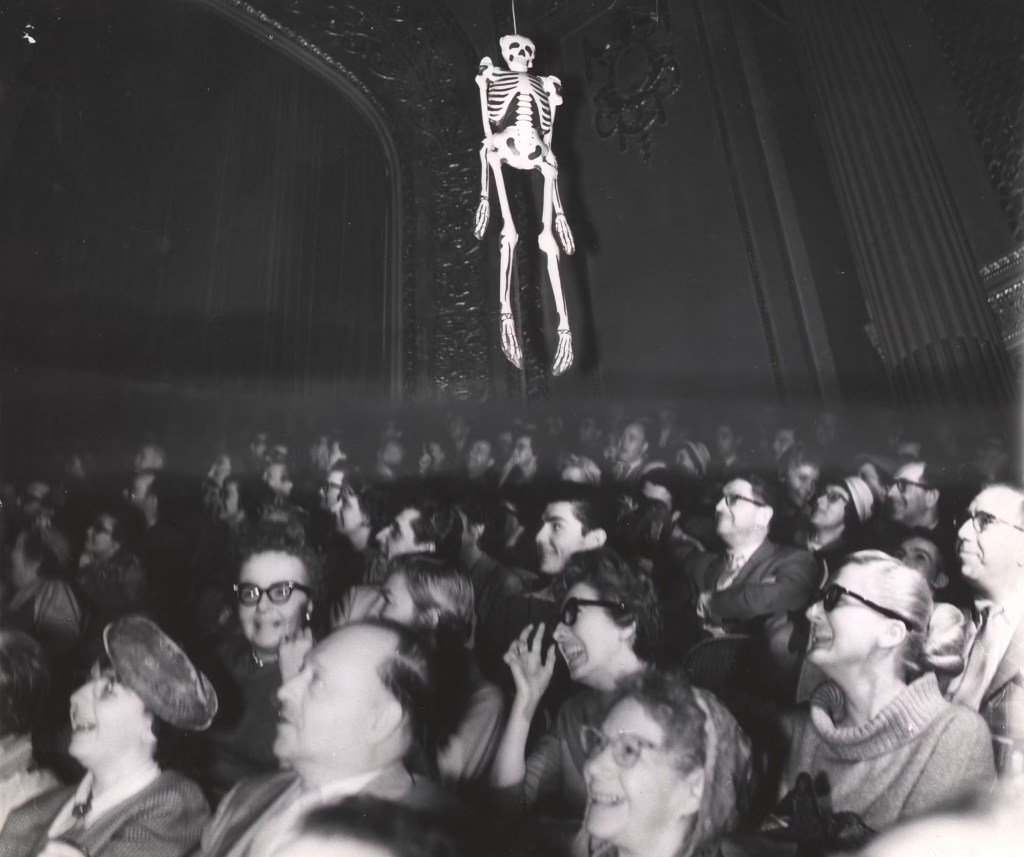
For Vincent Price, “The Big Circus”, was followed by the second entry to the “Delambre Family” story. Not as skillfully done as the first, but does provide solid entertainment.
RETURN OF THE FLY released on July 22, 1959

Above is the great, United Kingdom poster. Under the UK’s censorship rules, “The Return of the Fly”, was restricted to “Adults Only” aka: 16-years or older, in 1959.
The motion picture was written and directed by Edward Bernds. He also wrote and directed 1956’s, “World Without End”, and directed and co-wrote both 1958’s, “Space Master X-7”, and “Queen of Outer Space”.
The Main Cast:
Vincent Price returned as “Francois Delambre”. He would next be seen in the next William Castle picture I will mention.

Brett Halsey portrayed “Philipe Delambre”. Halsey was basically a television actor, although in 1959 in co-starred with Arthur Franz in the cult science fiction picture, “The Atomic Submarine” and in 1963, was in the horror entry, “Nathanel Hawthrone’s Twice-Told Tales”, that starred Vincent Price.

David Frankham portrayed “Ronald Holmes aka: Alan Hinds”. British actor Frankham, other than playing an uncredited British officer in Walt Disney’s 1957 “Johnny Tremain”, appeared only on American television. In 1961, he did co-star with Vincent Price, Charles Bronson, and Henry Hull, in Jules Verne’s, “Master of the World”,

In the above still, how good are your eyes? The prop cane in David Frankham’s hands was used at least once before, in 1941’s, “The Wolf Man”.
Herbert Marshall was supposed to reprise his role from “The Fly”, but was seriously ill at the time, instead:
John Sutton portrayed “Police Inspector Beecham”. Over his career, John Sutton, was seen in Cecil B. DeMille’s 1938, “The Buccaneer”, the Errol Flynn and Olivia de Havilland, 1939, “The Adventures of Robin Hood”, the Basil Rathbone, Boris Karloff and Vincent Price, 1939 “Tower of London”, and in 1940, with Vincent Price, it was “The Invisible Man Returns”.

Danielle De Metz portrayed “Cecile Bonnard”. This was her first on-screen appearance and then it was television afterwards.

Overview of the Edward Bernds Screenplay:
The setting is 15-years after the 1958 original’s story line, welcome to 1971, and now an adult, “Philipe Delambre” is determined to vindicate his father’s work on a “disintegrator-integrator”. The movie opens with the funeral of “Philipe’s” mother, “Helene Delambre” attended by his uncle, “Francois Delambre”.


“Francois” and “Philipe” are approached by a reporter named “Granville”, played by Jack Daly, asking questions about “Andre’s” experiments, and is asked to leave.

“Philipe” wants his uncle to help him restart his father’s work, but “Francois” refuses and advises him not to go there. As the two are returning to the “Delambre Estate”.

“Francois” visits his brother’s now musty basement laboratory. Just as it was the night that “Helene” followed “Andre’s” instructions to kill the part human, part fly, he had become, “Francos” is joined by “Philipe”.


Again, “Francois” refuses to help his nephew, restart his father’s work. As “Philipe” cannot perform all the work by himself. So, from “Delambre Frere”, “Philipe”, hires technician “Alan Hinds” to work on his project. The two men start on the clean-up of the laboratory.
“Philipe” loves “Cecile Bonnard”, the daughter of the estates housekeeper. “Cecile” lives with her mother on the second floor of the main house, and she, in turn, loves “Philipe”.
“Philipe” runs out of his own money, and the equipment is not yet ready for use. He again asks “Francois” for help, but he still refuses the young scientist with concerns of what might happen if the experiment is restarted. When his nephew threatens to sell his half of “Delambre Frere”, the other gives in.

“Alan Hinds” is really “Ronald Holmes” an industrial spy working for “Max Barthold”, played by Dan Seymour, seated bellow. One of the villains in director Howard Hawks’s 1944 “To Have and Have Not”, starring Humphrey Bogart and Lauren Bacall, and director John Huston’s, 1948 “Key Largo”, starring Bogart, Bacall, and Edward G. Robinson.


Above, “Philipe” and the reluctant “Francois”, above, start to go over “Andre’s” notes and designs. The son seems to have one fear, the sound made by a fly.
“Phillipe”, “Francois”, and “Alan” get the “disintegrator-integrator” system working and they dematerialize a guinea pig in the first chamber, but do not materialize it in the second chamber just then.

While “Phillipe” and ‘Franciois” are away, “Robert Holmes” starts putting together the paperwork he plans to steal for “Max Barthold”. A British agent that has been tracking down “Holmes” has entered the house unobserved and made his way down to the laboratory, the two fight and the agent is knocked out. Hearing the housekeeper upstairs, “Holmes” places the agent in the first chamber and dematerializes his body as a means of hiding him and replaces the paperwork.
Once he is alone again, “Robert Holmes” rematerializes the British agent. Only to find, that he has the paws of the guinea pig, and the guinea pig the agent’s hands. The guinea pig gets out and “Holmes” steps upon it, killing the guinea pig.


Above, “Robert Holmes”, next takes the body of the agent to the first floor, making sure no one sees him, puts the body in the trunk of the agent’s car, and drives the car go into the St. Lawrence River.
“Inspector Beecham” has been investigating the disappearance of the British agent. He has learned that “Robert Holmes” is using the alias of “Alan Hinds” to work with “Philipe Delambre”, and leaves his office for the “Delambre” estate.
At the “Delambre Estate”, “Robert Holmes” is confronted by “Philippe”. Who learns the truth about the other, and about “Max Barthold”,. “Philipe” goes for the pistol being held by the man he knew as “Alan Hinds”, and a fight takes place.

“Philipe” is knocked out and placed into the first chamber, but “Holmes” hears the sound of a fly. He knows of “Philipe Delambre’s” deathly fear of that sound. “Holmes” catches the fly, places it into the chamber, and dematerializes it with “Phillipe”. “Francois” has entered the basement laboratory, and is knocked out by “Holmes”. Who leaves with “Andre Delambre’s papers, and the notes of the other two, for “Max Barthold”.
Arriving at the “Delambre Estate”, “Inspector Beecham” is met by “Cecile Bonnard” who comes down from her room. The two cannot locate either “Phillipe”, or “Francois” in the upstairs area of the home and go to the basement laboratory. There they find the knocked out “Francois” and “Cecile” attends to him, while “Beecham” has found signs that the missing British agent was there at some time.

The recovered “Francois” realizes that the “disintegrator-integrator” was partly used, but whatever was sent through the machine has not been materialized in the second chamber. He finishes the process and “Philipe” materializes with the head and arm of a fly.


As the other three watch in horror, “Philipe” goes up the staircase, and after the two men responsible, “Robert Holmes” and “Max Barthold”. “Francois” has “Cecile’ and “Inspector Beecham” help him search for the fly, it is located, and placed in a jar with air holes.


“Philipe” enters the mortuary that is run as a front by “Max Barthold”, and kills him.


Next, he waits for the expected arrival of “Robert Holmes”, and kills him too.

“Philipe”, his mind starting to be influenced by “The Fly”, goes to the “Delambre Estate” and the upstairs room occupied by “Cecile”. She awakes, screams, and “Philipe” collapses on her bed.

“Francois” and “Inspector Beecham” get “Phillipe” down to the basement laboratory and into the first chamber. The fly is put in the first chamber with “Phillipe” and “Francois” starts the “disintegrator-integrator”, and both his nephew, and the fly dematerialize. They both rematerialize in the second chamber, the fly as it should be, and “Phillipe” as he should be, for this features happy ending.

Vincent Price’s next motion picture involved a return, but not to a “Fly”, but William Castle. As for Castle, he had a return to another gimmick.
THE TINGLER released July 29, 1959
This time I give my reader a choice of poster’s, United Kingdom, or United States?
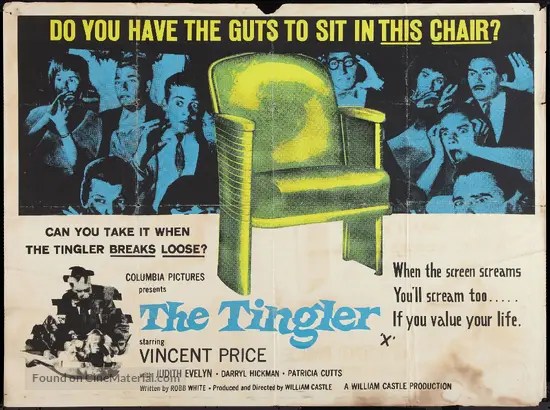
Above the United Kingdom, below the United States, either one gives you the chance to stop “The Tingler”. Just open your mouth and lungs and SCREAM!
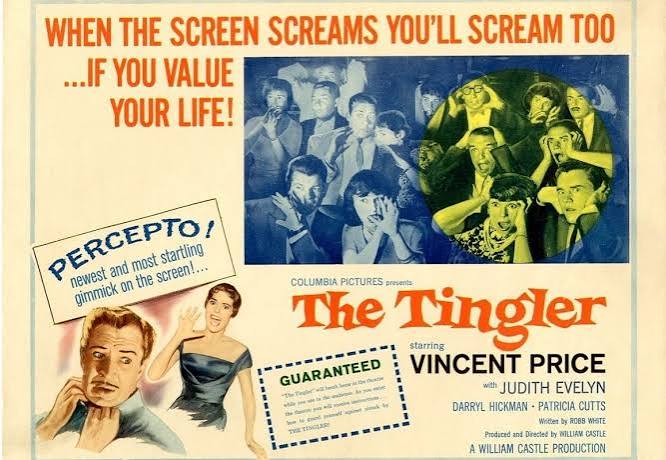
This was another screenplay by Robb White, that revolved around one of my actual youthful hunts, “The Silent Movie Theatre”, at 611 North Fairfax Avenue, Los Angles. Which I would learn was located directly across the street from my mother’s high school, “Fairfax High”.
If the movie theater you went to see “The Tingler” on it initial release, wasn’t a drive-in, or did not have “Percepto” installed. You never saw the movie open with producer and director, William Castle coming, on-screen, to address the audiences with:
I am William Castle, the director of the motion picture you are about to see. I feel obligated to warn you that some of the sensations—some of the physical reactions which the actors on the screen will feel—will also be experienced, for the first time in motion picture history, by certain members of this audience. I say ‘certain members’ because some people are more sensitive to these mysterious electronic impulses than others. These unfortunate, sensitive people will at times feel a strange, tingling sensation; other people will feel it less strongly. But don’t be alarmed—you can protect yourself. At any time you are conscious of a tingling sensation, you may obtain immediate relief by screaming. Don’t be embarrassed about opening your mouth and letting rip with all you’ve got, because the person in the seat right next to you will probably be screaming too. And remember—a scream at the right time may save your life.
The Main Cast:
Vincent Price portrayed “Dr. Warren Chapin”. He would next been seen in what the “IMDb” website describes as a “Horror Mystery Thriller”, we shall see.
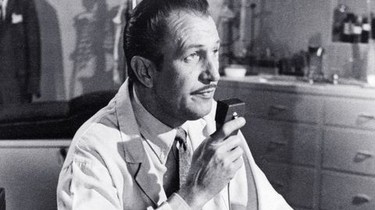
Judith Evelyn portrayed “Mrs. Martha Ryerson Higgins”. South Dakota born Evelyn was initially a radio actress for the “BBC” and Canadian, “CBC”. She started appearing on stage, and then screen in 1946. Judith Evelyn had major supporting roles in Alfred Hitchcock’s, 1954, “Rear Window”, and director Michael Curtiz’s epic 1954, “The Egyptian”. Along with director George Stevens’s, 1956, “Giant”, and director Richard Brooks’s version of Fyodor Dostoevsky’s “The Brothers Karamazov”, starring Yul Brynner in 1958.
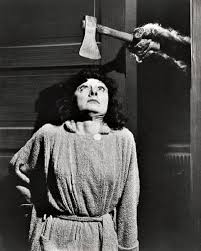
Darryl Hickman portrayed “David Morris”. Hickman’s career consisted of 151-roles, most bio’s say his first role was as Ronald Coleman’s son in 1937’s, “The Prisoner of Zenda”. It actually was as a child performer in the Robert “Bob” Cummings’s, 1936 musical romance “Three Cheers for Love”. HIs young brother, Dwayne is known more, basically because of his television series, “The Many Loves of Dobbie Gillis”, but older brother Darryl appeared in 3-episodes as “Dobbie’s” older brother, talk about type casting. Darryl is the dramatic actor of the two and among his films are 1941’s, “Men of Boys Town”, 1943’s, “The Human Comedy”, 1946’s, “Two Years Before the Mast”, 1949’s, “Any Number Can Play”, and 1953’s, “Island in the Sky”.
Pamela Lincoln portrayed “Lucy Stevens”. This was only her second feature film, and he remaining career’s 13-roles were on television.
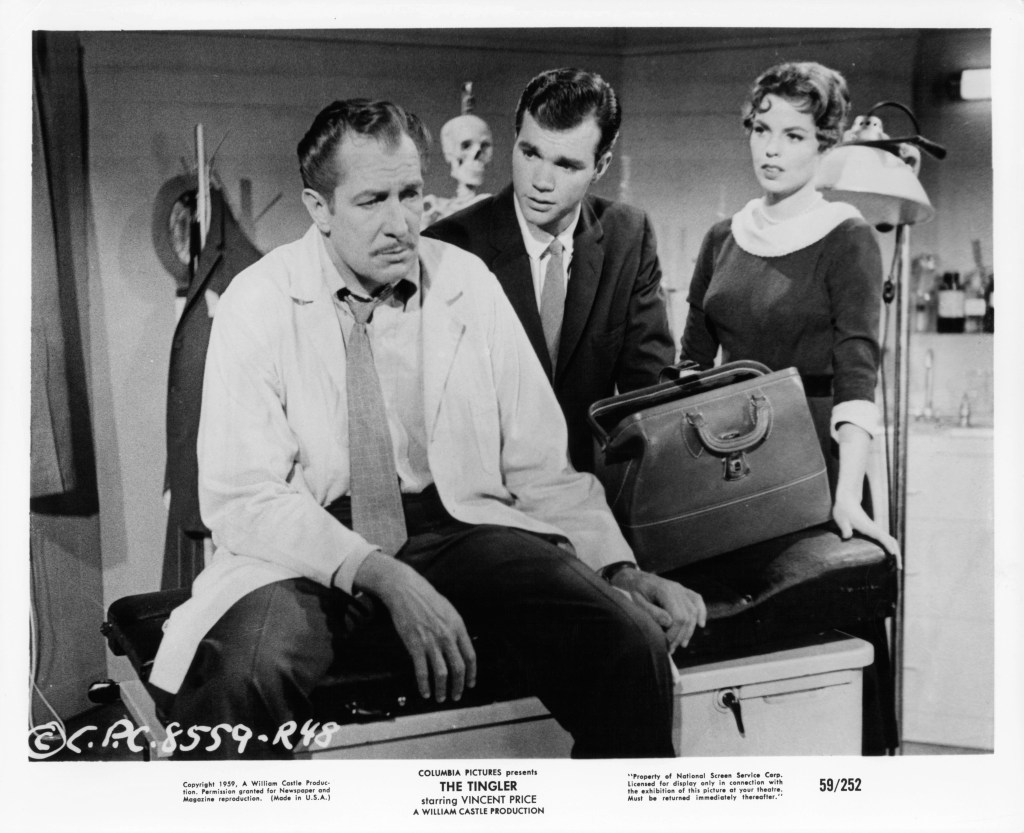
Above left to right, Vincent Price, Darryl Hickman, and Pamela Lincoln.
Patricia Cutts portrayed “Isabel Stevens Chapin”. The London born British actress appeared in roles on both sides of the pond, between 1946 and 1974. Her career was cut shot by what the British inquest rules as death from suicide, she was 48-years-of-age.
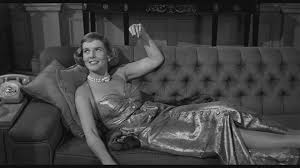
Philip Coolidge portrayed “Oliver ‘Ollie’ Higgins”. Coolidge was one of those faces in movies that you recognized, but could never put a name too. His careers as a supporting actor started with an uncredited role in the Dana Andrews 1947 true film-noir, “Boomerang!”, and ended 72-roles later, in the Dick Van Dyke, Edward G. Robinson, and Dorothy Provine, gangster comedy, 1968’s, “Never a Dull Moment”.
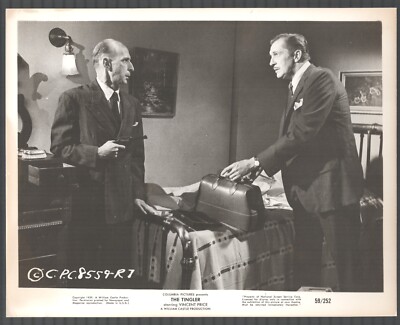
Above Philip Coolidge and Vincent Price
An Overview of “The Tingler”:
The movie begins, and pathologist, “Dr. Warren Chapin”, with his assistant, “Dave Morris”, discussing a theory “Chapin” has of a parasite that the human spine turns into under extreme fright. He calls the parasite “THE TINGLER”, for lack of a more appropriate name.
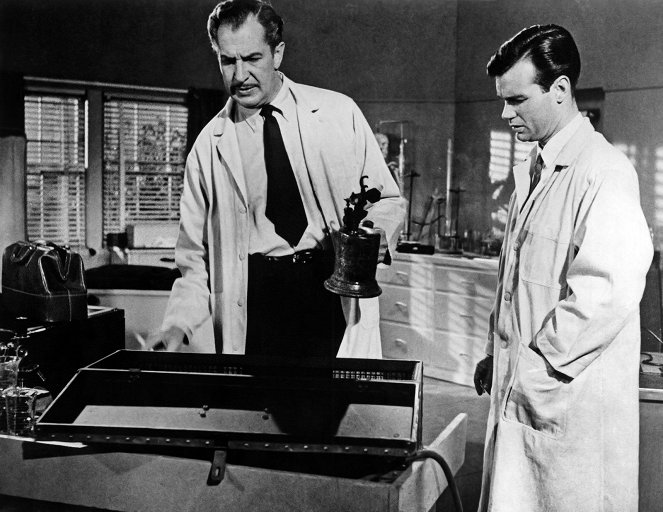
The only way, according to “Chapin”, for a person to stop the parasite is BY SCREAMING!
“The Silent Movie Theater” comes into play, because its owner, “Oliver Higgins”, happens to be an acquaintance of “Dr. Chapin”. On a visit with “Oliver ‘Ollie’ Higgins” and his wife, “Martha”, “Dr. Chapin” accidentally pricks his finger, and it starts to bleed. The reaction from “Martha Higgins”, is immediate nervousness, and a feeling of being uneasy at the sight of blood. Adding to that, “Martha” is both deaf and mute. In short she can’t scream. “Dr. Warren Chapin” believes she might have a visible “Tingler” within her.
To test his theories, “Dr. Chapin”, who believes his wife “Isabel” may be cheating on him. Sets her up as a test subject, by getting “Isabel” to believe he might murder her. Then, one evening, after she returns home from an obvious night out. “Warren” pulls out a pistol, aiming it at his wife, he fires the pistol. “Isabel” faints from fear, the pistol only contains blanks, and “Dr. Warren Chapin” takes his wife to the lab room with an X-ray machine to photo her spine. The next day, “Isabel” is on a slow burn, as “Warren” shows “David” the X-Ray’s with a visible “Tingler”.
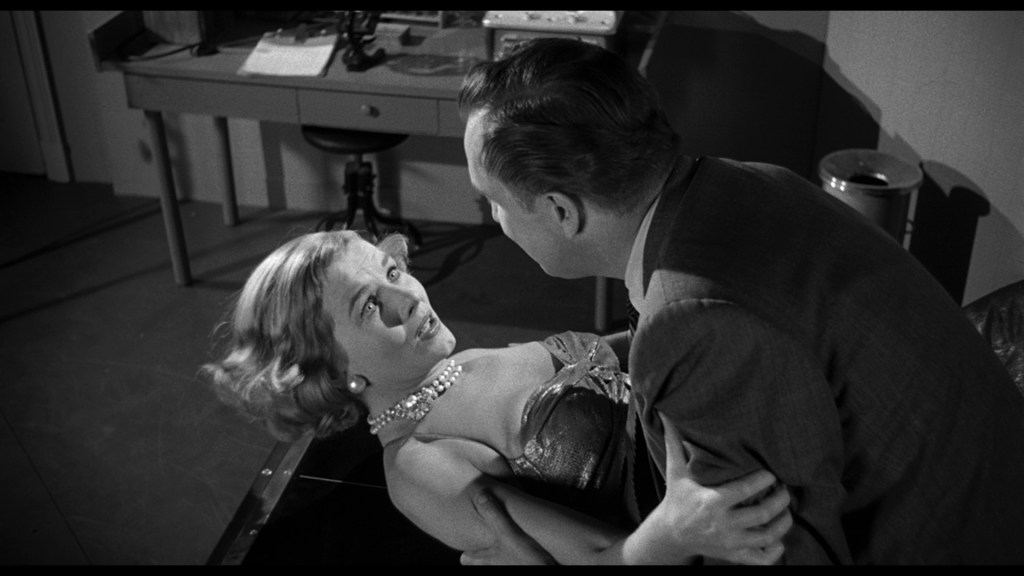
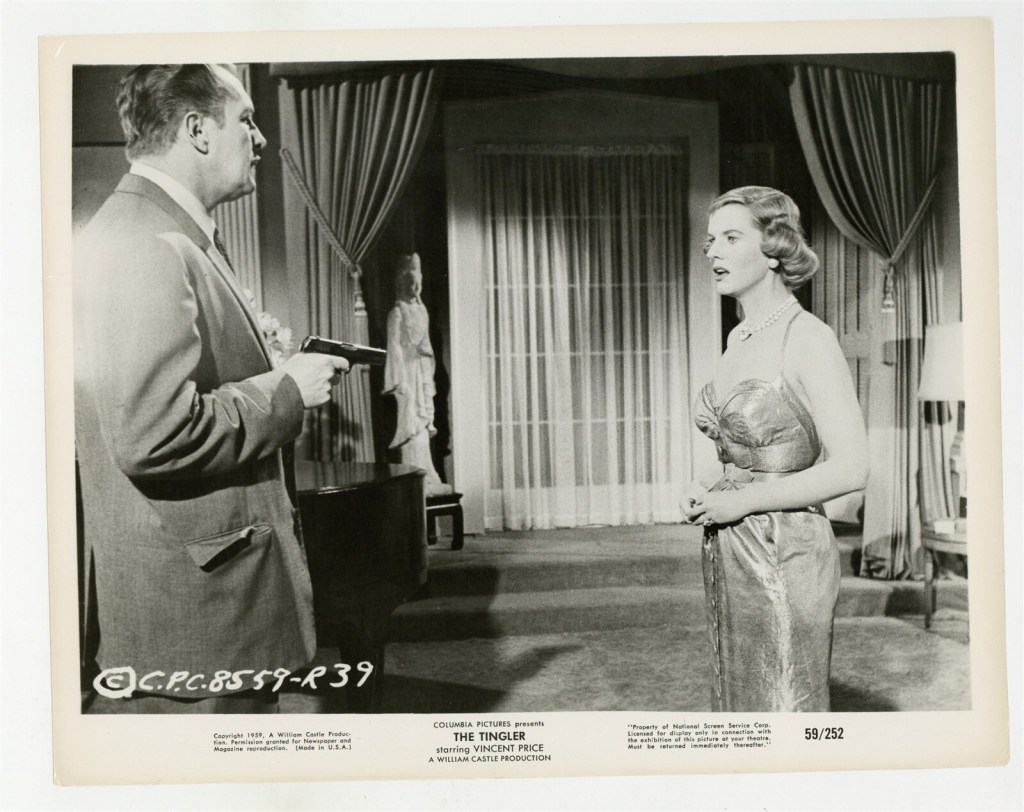
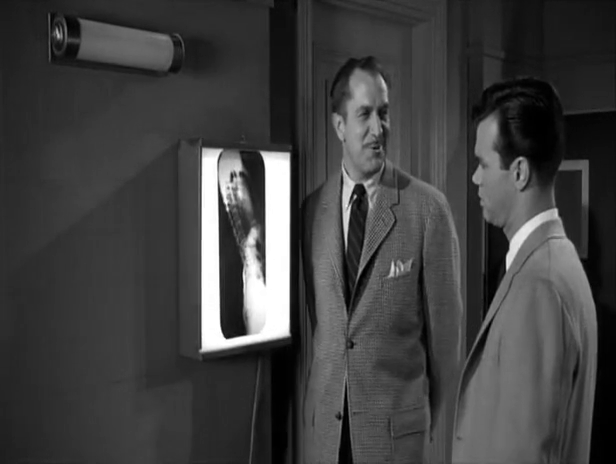
Later, David” tells “Warren” about a new drug that has the same effect on the nervous system as “LSD”. “Dr. Chapin”, that night, takes the drug himself, to induce fear, it doesn’t work as he hoped, and only forced him to scream and wake-up.
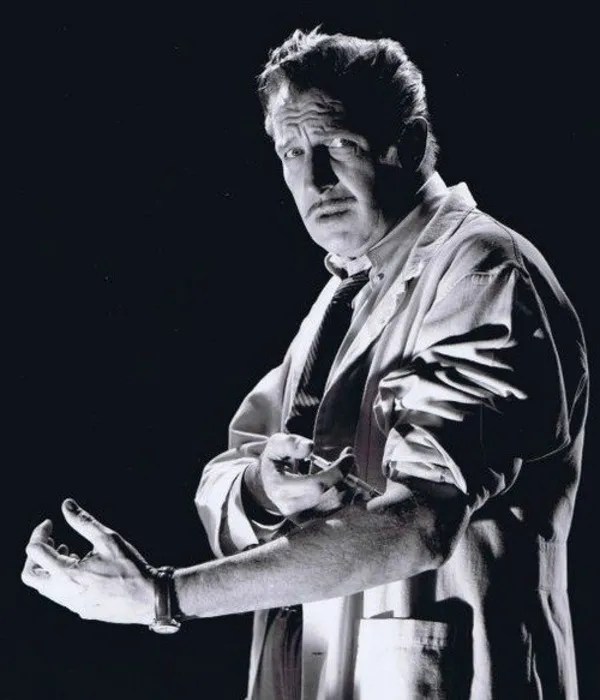
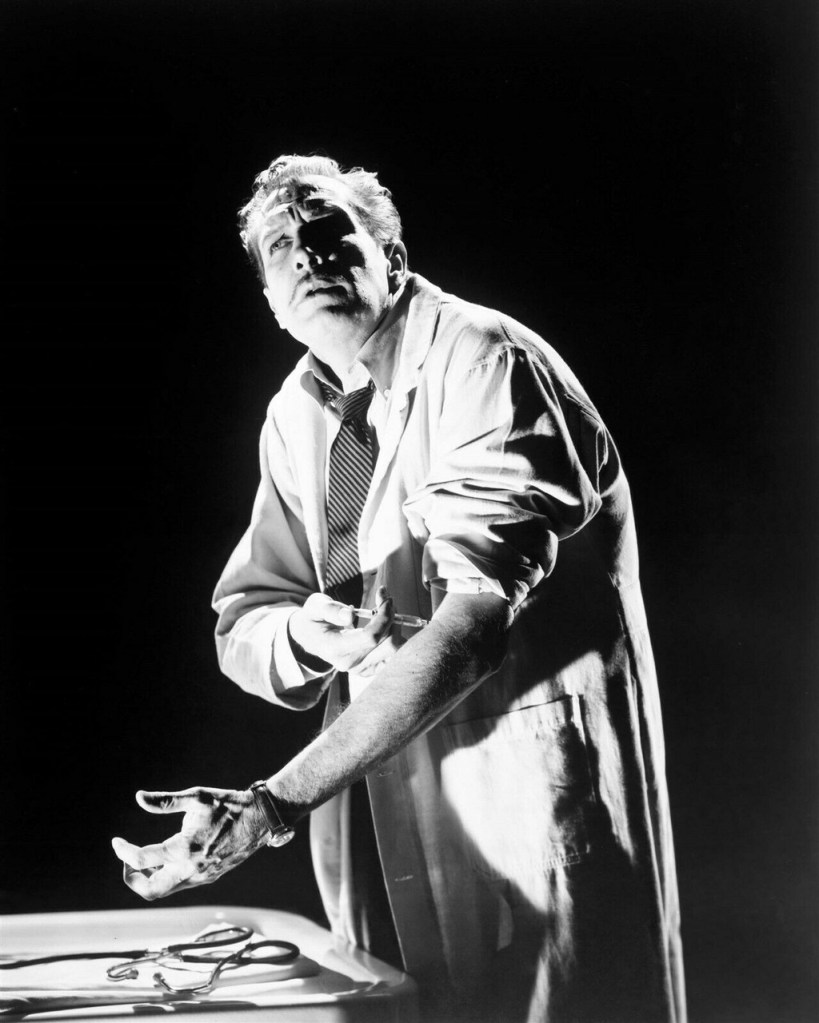
He decides to go and see “Martha Higgins” at “The Silent Movie Theater”. There he injects her with the serum, while covering the shot by giving her a prescription for barbiturates. However, the unexpected takes place, or is “Martha Higgins” hallucinating from the drug?
As “Martha” prepares for her bath, blood comes out of the bath tub facet, instead of her bath water. Then a hand followed by a skull like being rises from the tub. This is a great scene, when the black and white film uses a 1950’s trick of turning portions or the film into color.
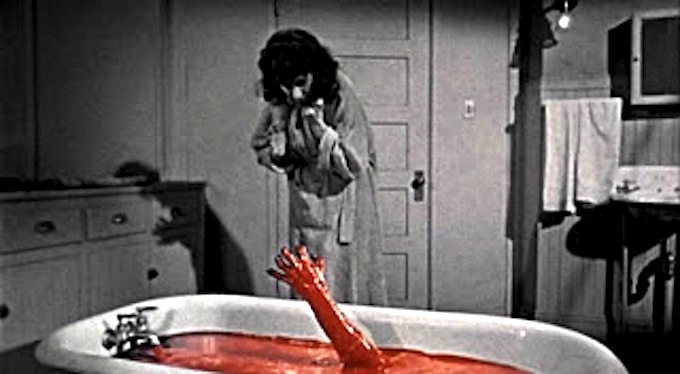
Next, rising out of the bath water is man with an almost “Skull Head”. She runs, but the”Skull Head Man” appears everywhere, and attempts to murder her.
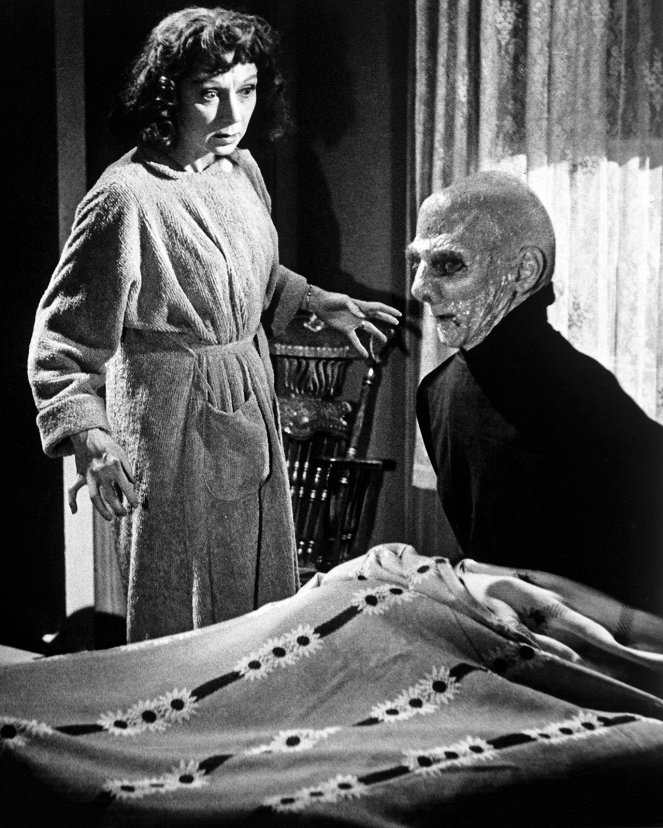
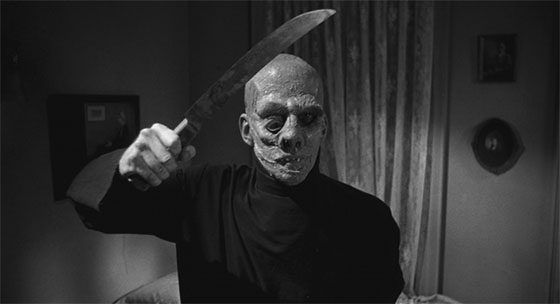
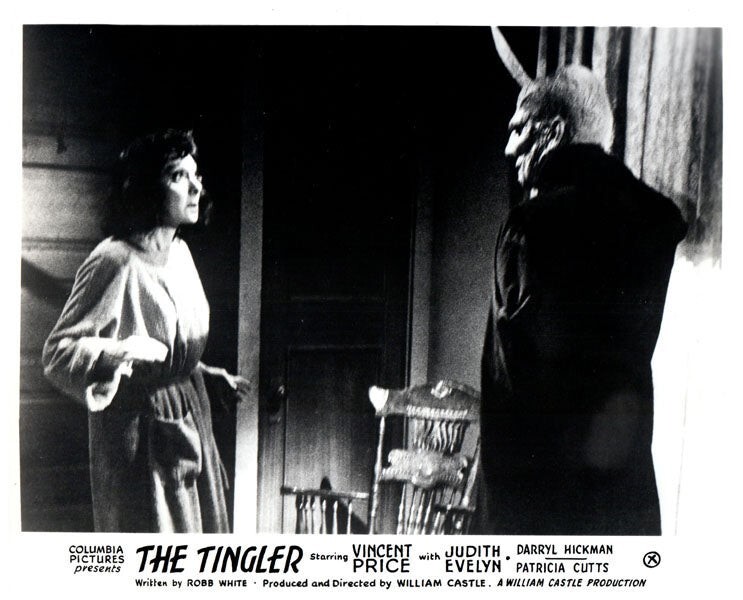
“Martha” dies from fright, and her husband calls “Dr. Chapin”, and after his preliminary examination, “Ollie” will takes his wife body to the doctor’s laboratory for an autopsy.
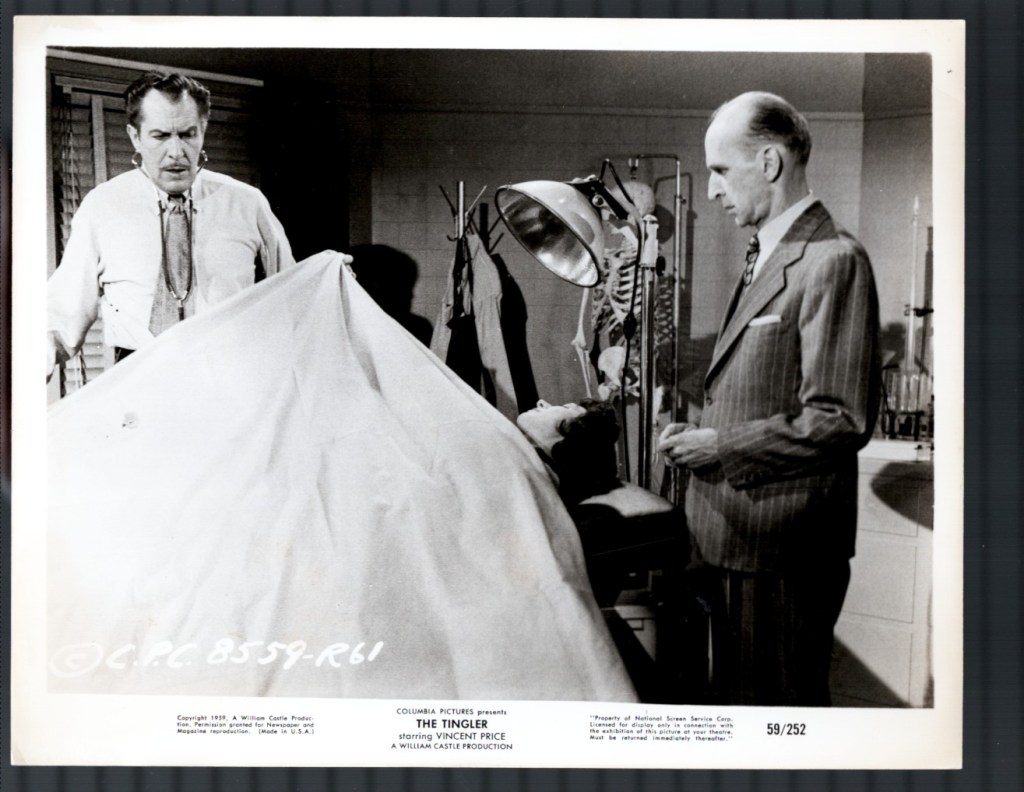
There, “Warren”, removes a “Tingler” from “Martha Higgins’s” spine, and he places the creature in a mesh cage. “Isabel” is repulsed by the creature, and while she’s at the bar. “Ollie” agrees to take his wife’s body back to their apartment and call the police and leaves. “Warren” not noticing what “Isabel is doing, ss she pours something into a glass, and fills it, and another with liquor. She offers the now drugged glass to her husband, Who starts to feel sleepy and goes to the couch and falls asleep. Next, “Isabel” lets the “Tingler” out of the cage, placing it near “Warren”.
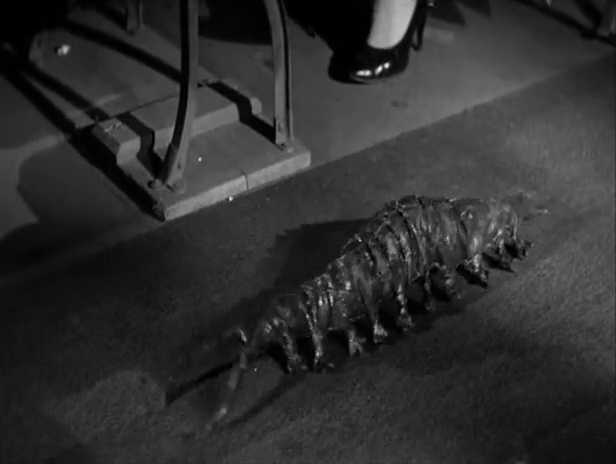
The creature slowly climbs the couch and gets onto “Warren’s” body moving toward his neck.
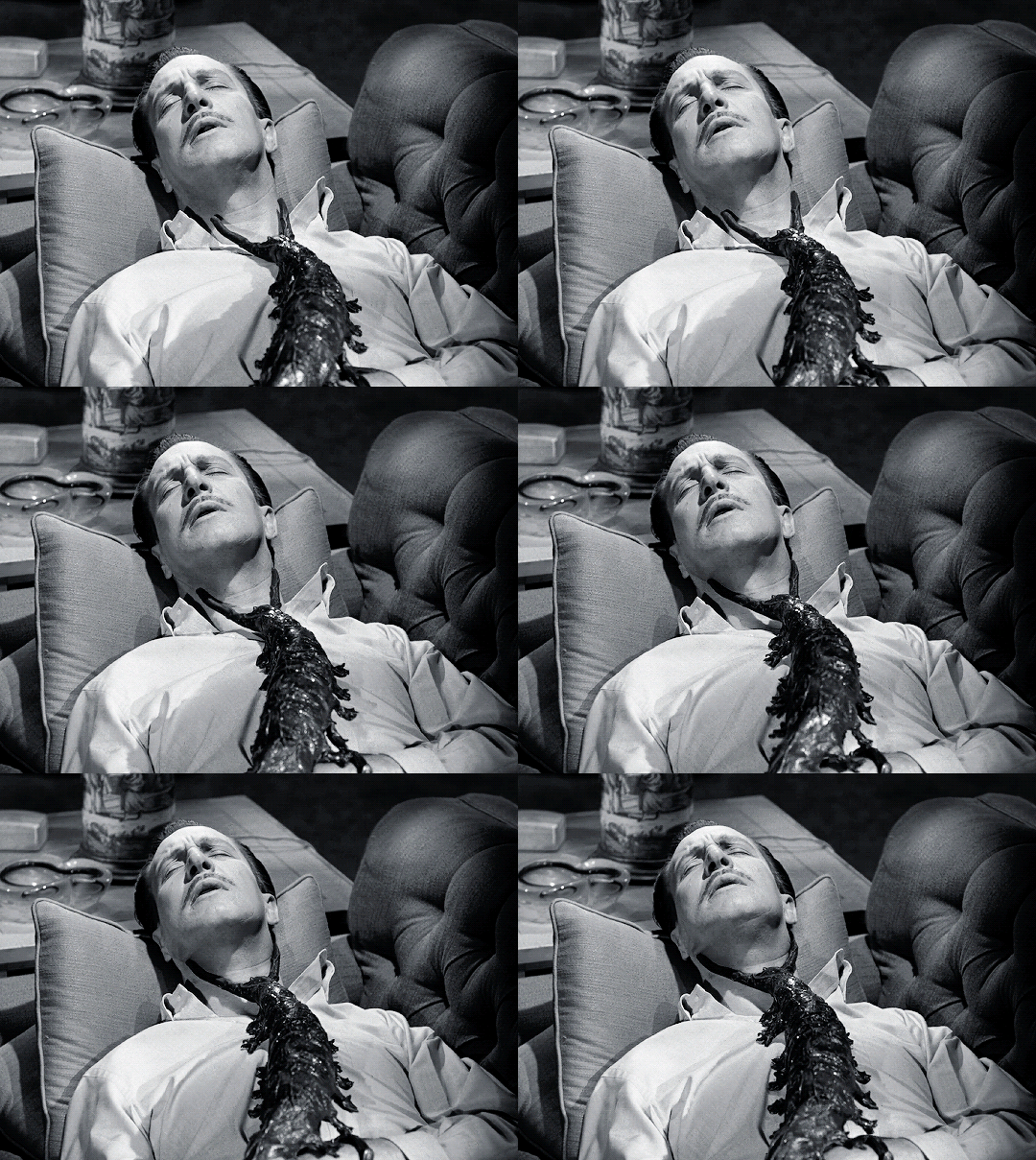
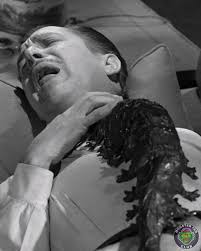
Just then, “Lucy Stevens”, “Isabel’s” sister, who is now living with her and “Warren”, comes home, sees “The Tingler and SCREAMS!”. Her scream stops the creature from moving, and gets “Dr. Chapin” to awake. The “Tingler” falls off the couch not moving and is placed back in the cage. The following morning
“David” finds the “Tingler” in its cage and “Warren” holding a blow torch. “David” is told that there is nothing that can kill the creature and “Warren” makes the decision not to show the creature to the scientific community, but put in back in “Martha’s” body and have her buried with it. “Lucy” enters to inform “Warren” that “Isabel” has left with all her clothing, jewelry, and any money she could find.
With the creature in its cage, “Dr. Warren Chapin” arrives at the second floor apartment of “Martha” and “Ollie Higgins” to find him packing and not having notified the police. It was “Ollie” that frightened his wife to death, knowing she could not scream for help. As the two men speak, “THE TINGLER ESCAPES ITS CAGE AND GOES FOR THE MOVIE THEATRE ONE FLOOR DOWN”.
Now comes the scene, of a group of people, watching a movie at “The Silent Movie Theater”, and ‘THE TINGLER GET LOOSE IN IT”.
Finally, it’s “PERCEPTO!”
All of a sudden, I am hearing people in the movie theater I’m in, joining the on screen screaming, including the girl next to me. William Castle’s gimmick has struck, but what is it?
Castle had purchased military surplus air-plane wing deicers. Which basically consist of a vibrating motor that by its vibrations cracks the ice off of the wings. He then had them attached to the underside of some of the seats in theaters showing the picture, and you had “Percepto”. As those seats started to vibrate unexpectedly scaring the person in them, during the sequence at the Silent Movie Theater.
No there were no electrical shocks as a lot of people reported, but when you’re engaged in a movie, and first you hear Vincent Price state:
SCREAM-SCREAM FOR YOUR LIVES- – – –
—-and at that exact moment, those vibrators are turned on. Well you can imagine the reaction.
On screen, “Warren”, helps the audience escape out of the theater. He next, captures the “Tingler” and replaces it in “Martha’s” body. “Ollie” now enters their bedroom, and the movement of the “Tingler” causes “Martha’s” body to sit up and stare at her husband.
The screen fades to black and the refine voice of Vincent “Dr. Chapin” Price tells those in my theater watching the picture- – – –Ladies and gentlemen, just a word of warning. If any of you are not convinced that you have a tingler of your own, the next time you are frightened in the dark… don’t scream.
Technically, “The Tingler” should be considered the last horror film of the 1950’s for Vincent Leonard Price, Jr.
However, when you have a murderer described :
to be a man with no face who murders women at night by ripping out their throats with steel clawsYou might want to reconsider.
THE BAT released August 9, 1959
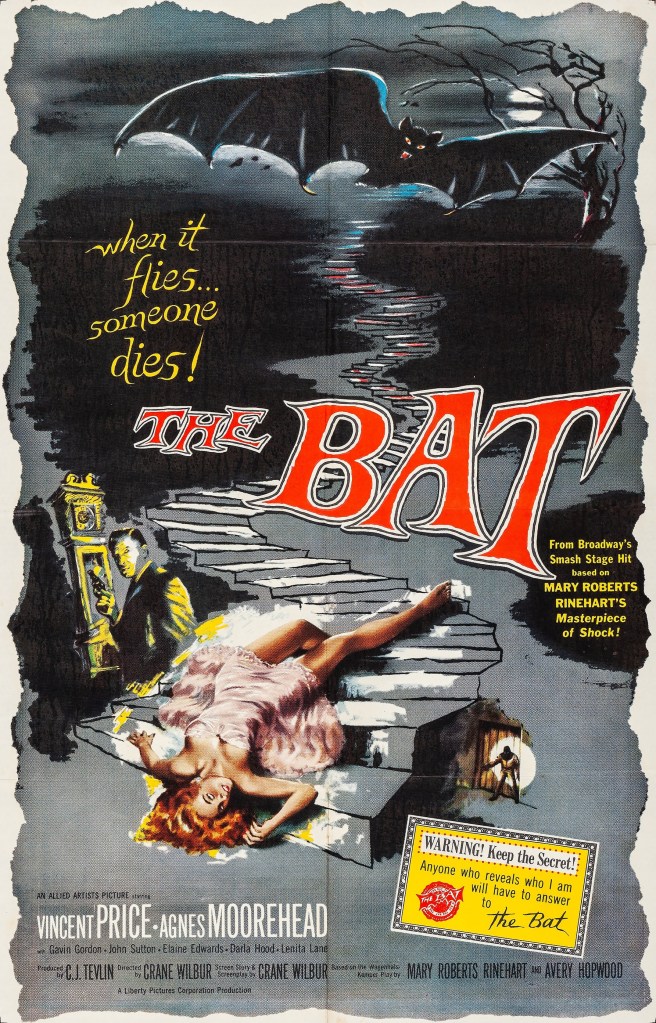
Before I speak directly to this version of authoress Mary Roberts Rinehart’s, 1908 novel, “The Circular Staircase”.
A little motion picture history is in order, and actually starts with a Broadway play from playwright Avery Hopwood, who had four plays simultaneously playing on Broadway, “The Gold Diggers”, “Spanish Love”, “Ladies Night (in a Turkish Bath)”, and had turned the novel into “The Bat”.
The first film version of Hopwood’s play, was the 1926 silent version. Some reviewers mention that Mary Pickford was the pictures producer. That is incorrect, although her brother, Jack Pickford, portrayed the role of “Bank Clerk – Brooks Bailey”. However, Mary Pickford’s film company, “United Artists”, founded with her husband Douglas Fairbanks, Sr., Charlie Chaplin, and D. W. Griffith, did release the movie, and did, own the film rights, and that may be causing the confusion.
The actual producer of record is Roland West, who also directed the picture. Another of West’s films was the 1925, comedy horror movie, “The Monster” starring Lon Chaney. A little more confusion comes to this story, because West, wrote the screenplay, produced, and directed, the first sound motion picture version of the play, 1930’s, “The Bat Whispers”, once again released by “United Artists”.
My reader my ask why I gave them all this backstory, and that answer comes from the “Turner Classic Movie” website about the movie:
in an era of films featuring “rampaging aliens and sinister ghouls”, The Bat’s period piece approach was not a crowd pleaser, although its reputation has improved over time.
The source was a period piece novel and play, not seen since 1930, 29-years prior to this films release, and it was added as the lower, second feature, of a double bill, to Britain’s “Hammer Films”, “The Mummy”, starring Vincent Price’s British horror competition, Peter Cushing and Christopher Lee.
Crane Wilbur wrote the new screenplay and directed the feature film.
An Interesting Cast that Included Some Old School Professionals:
Vincent Price portrayed “Dr. Malcom Wells”. One episode of television’s “Riverboat”, “Witness No Evil”, on November 1, 1959, ended the 1950’s for the actor.
Agnes Moorehead portrayed “Cornelia van Gorder”. Moorehead a founding member of Orson Welles’s “Mercury Theatre”, had portrayed the mother of “Charles Foster Kane”, in 1941’s, “Citizen Kane”, was “Mrs. Reed” in the classic 1941 version of Charlotte Bronte’s, “Jane Eyre”, was in 1948’s, “Johnny Belinda” starring Jane Wyman, and portrayed the mother of the future “Genghis Khan”, portrayed by John Wayne, in Howard Hughes’s, 1956, “The Conqueror”, and of course was “Endora”, on televisions “Bewitched” from 1964-1972.
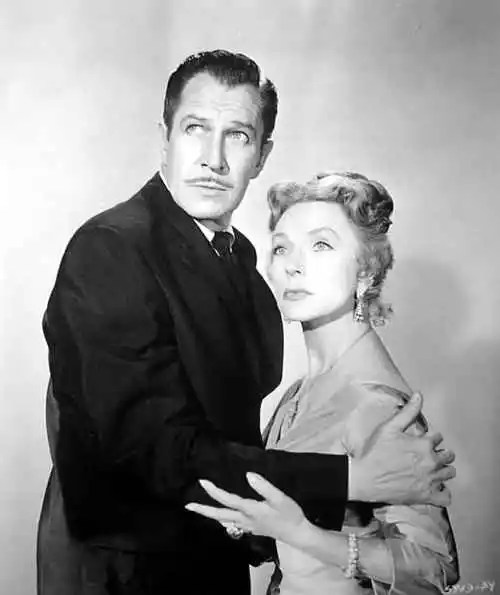
John Sutton portrayed “Warner – the Chauffeur”. Sutton had just been in the previously mentioned 1959, “Return of the Fly”, and followed this feature film with 6th-billing in the biopic of writer F. Scott Fitzgerald, 1959’s, “Beloved Infidel”, starring Gregory Peck and Deborah Kerr.
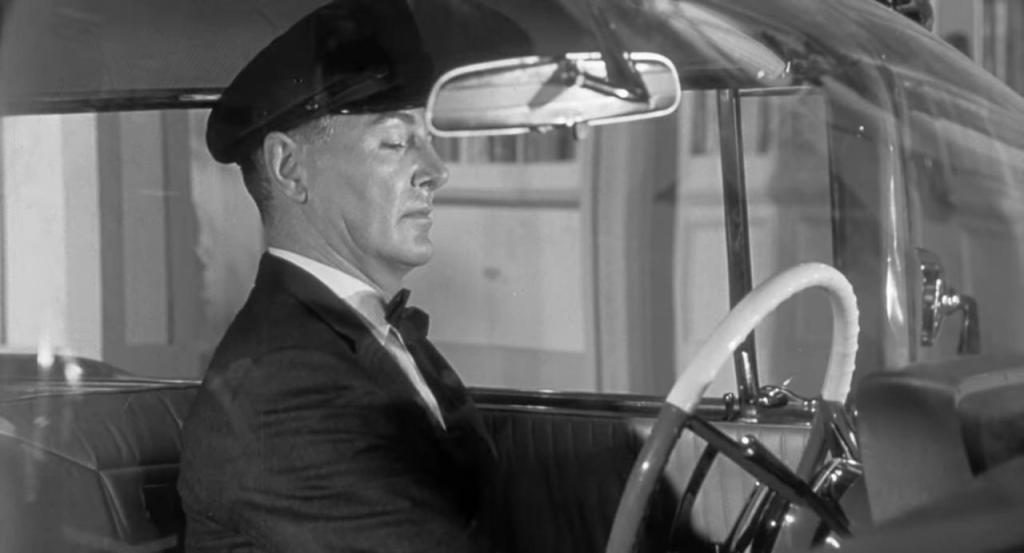
Lenita Lane portrayed “Lizzie Allen”. Mrs. Crane Wilbur had just been seen, as I’ve mentioned, in 1954’s, “The Mad Magician”.
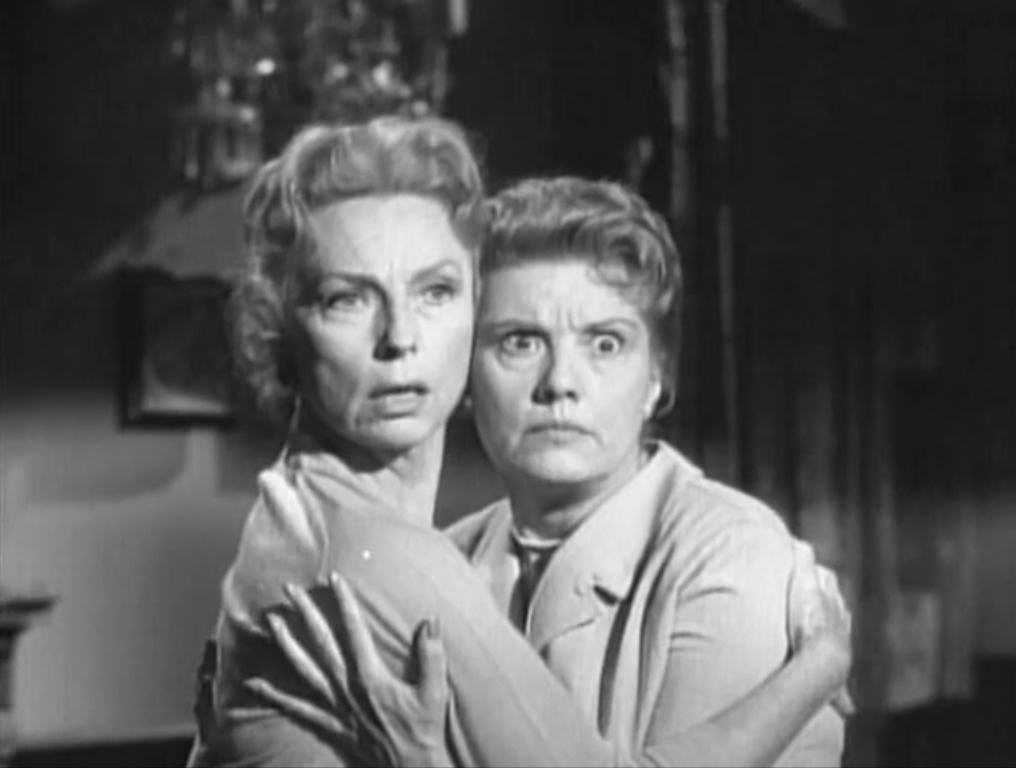
Above, Agnes Moorehead and Lenita Lane.
Darla Hood portrayed “Judy Hollander”. Don’t recognize the name, thank either “The Little Rascals”, or the “Our Gang” comedies. For seven years between 1943 and 1950, she did not appear on screen, but was married to her first husband. In 1957, Darla, married her second husband, and the two had three children. However, after a stroke, her husband was wheelchair bound. Then, on June 13, 1979, Darla died from heart failure at the age of 47.
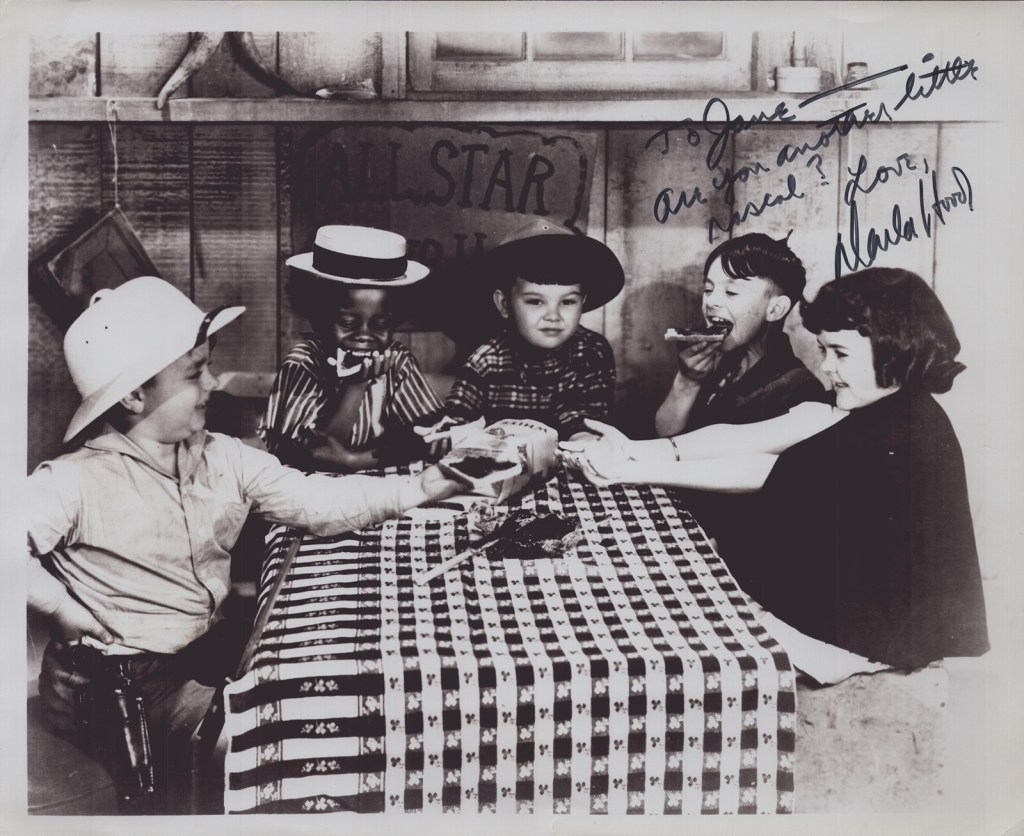
Above , Darla Hood with the gang, and below, in this motion picture.
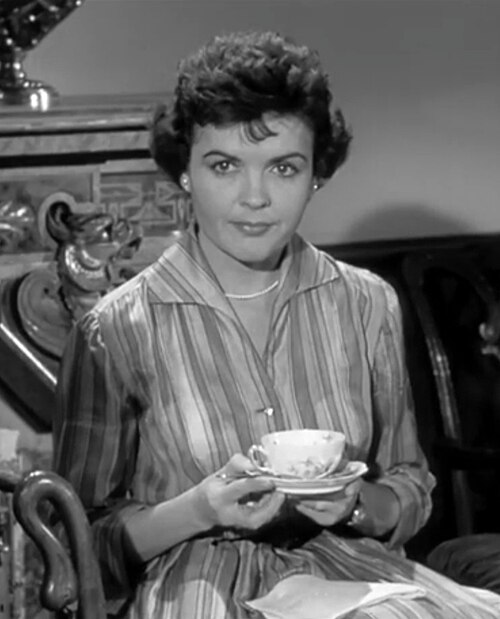
Gavin Gordon portrayed “Police Lieutenant Andy Anderson”. Gordon and started on-screen acting in 1929. His roles included “George Winton” in 1933’s, “The Mystery of the Wax Museum”, and “Lord Byron” in 1935’s, “Bride of Frankenstein”. Some of Gordon’s other movies were Alfred Hitchcock’s 1941, “Suspicion”, and 1946, “Notorious”, and the musicals, 1954, “White Christmas”, 1954’s, “There’s No Business Like Show Business”, and 1955’s “High Society”.
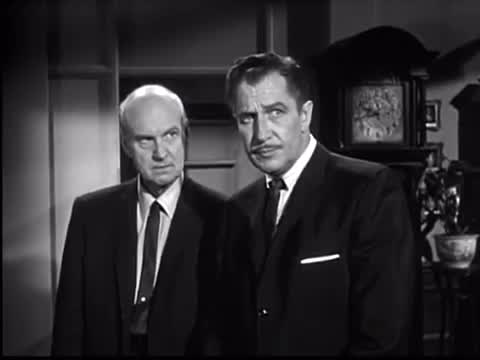
Above, Gavin Gordon and Vincent Price
Harvey Stephens portrayed “John Fleming”. Stephens started on stage, his main area of work, in 1920. He was a major Broadway supporting actor throughout his career. On screen, during the late 1930’s through the 1940’s, his main film genre was the western. Harvey Stephens appeared in westerns, such as the Joan Bennett and Randolph Scott, 1938, “The Texans”, the James Cagney and Humphrey Bogart, 1939, “The Oklahoma Kid”, the William Boyd, “Hopalong Cassidy”, 1940, “Stagecoach War”, and 1940’s, “When the Dalton’s Rode”.
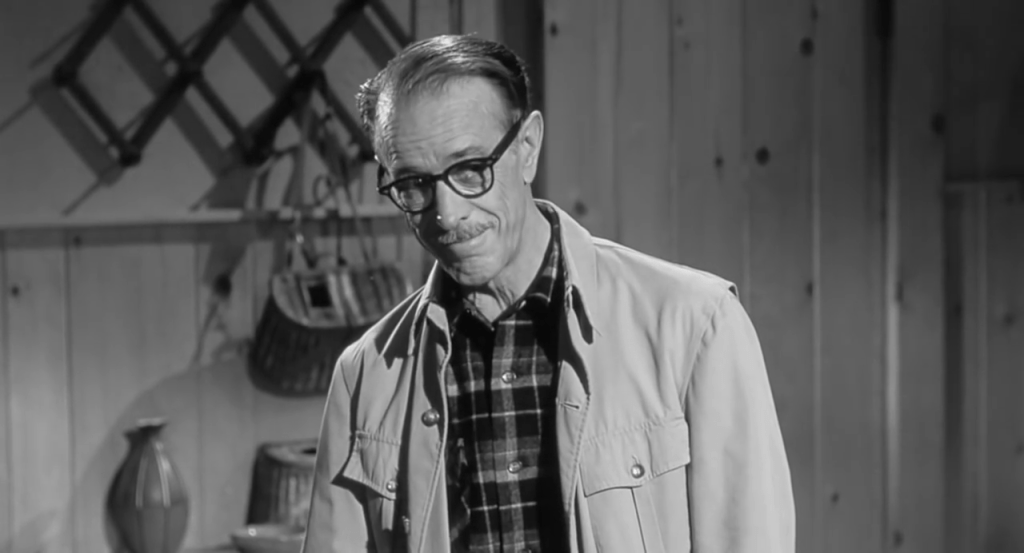
The Mystery:
Mystery writer “Cornelia van Gorder(can you say a version of Mary Roberts Rinehart?), rents a house, “The Oaks”, for the summer, from local bank president “John Fleming”. It comes with servants, including a chauffeur, and with her assistant, “Lizzie Allen”, they move in.
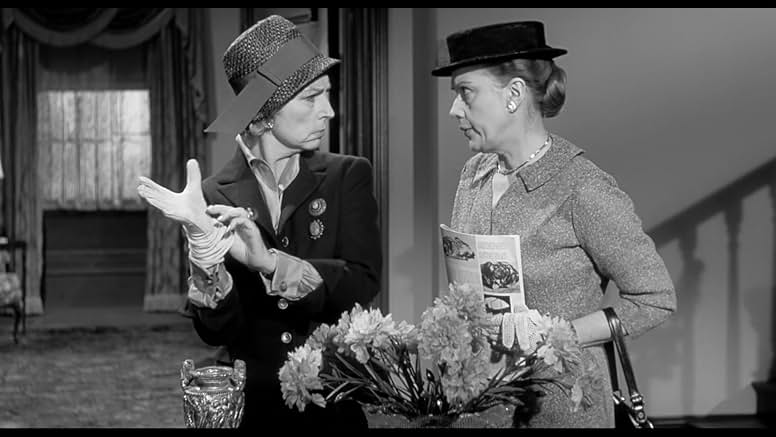
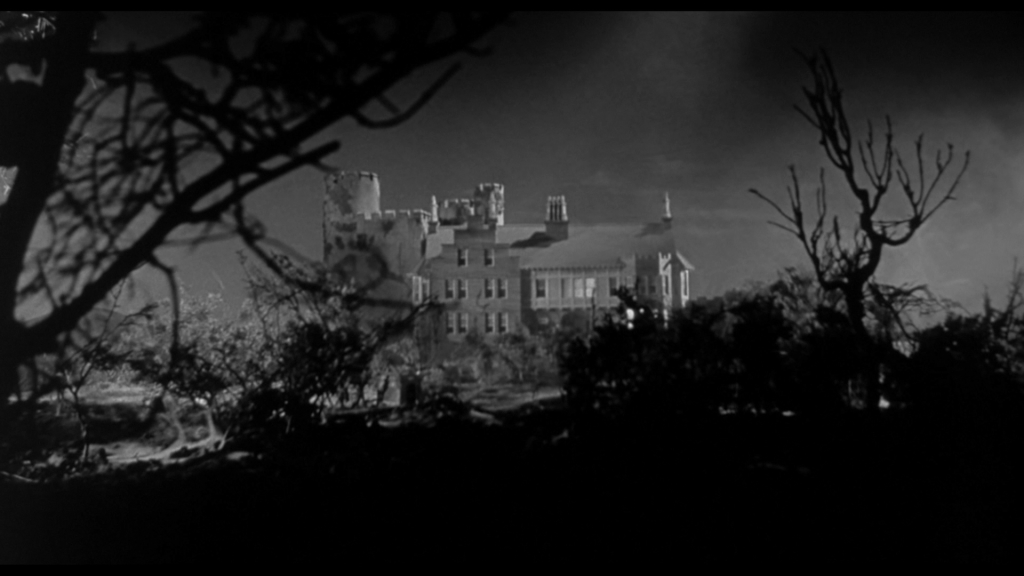
On a haunting trip, “John Fleming” confesses to “Dr. Malcolm Wells”, that he stoled over a million dollars in negotiable securities from the bank. “John” offers to split them in half, if his good friend, “Malcom”, will him fake his death. Should the Doctor not comply with this request, “Fleming” will kill him. Overlooked in “John Fleming’s” plan was the possibility that “Dr. Malcolm Wells” might now return the threat, and “John Fleming” is shot to death by “Wells”. Who covers up the murder and may, or may not know, where the securities are hidden.
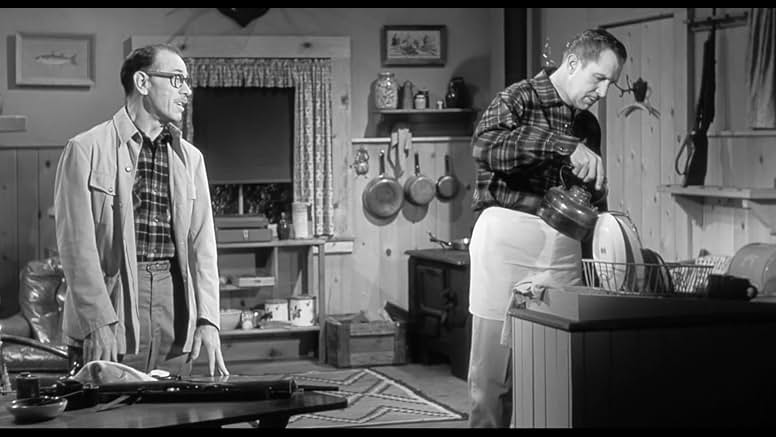
Some time later, the small community that “Cornelia van Gorder” has rented her summer house in, is being terrorized by a masked murderer that they have named “THE BAT”. This is because, he or she, leaves a stenciled, or drawn, outline of a bat with outstretched wings at each crime scene. Next, “Lizzie”, informs “Cornelia”, that all the servants have left out of fear, but the chauffeur has oddly remained.
As the two women proceed to lock up the house for the night, at a window, “Lizzie” sees the “Clawed Hand of the Bat” reaching through it. Its an attempt to get at the locking mechanism and open the window.
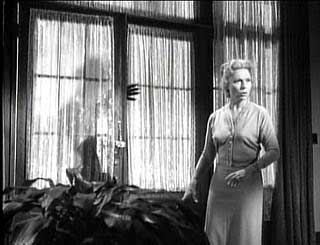
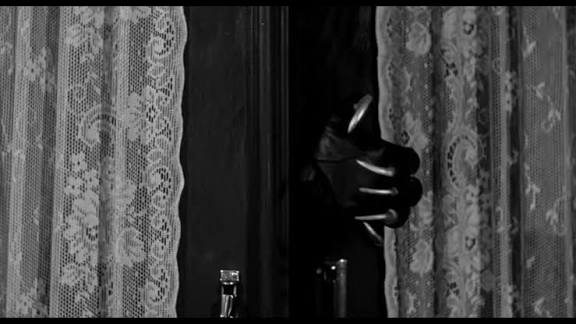
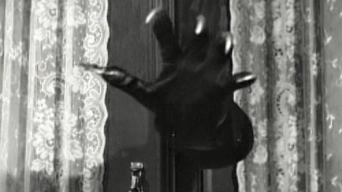
“Cornelia” gets on the phone and calls the police for help and is told that they will be right over. However, “The Bat” now breaks into “The Oaks”.
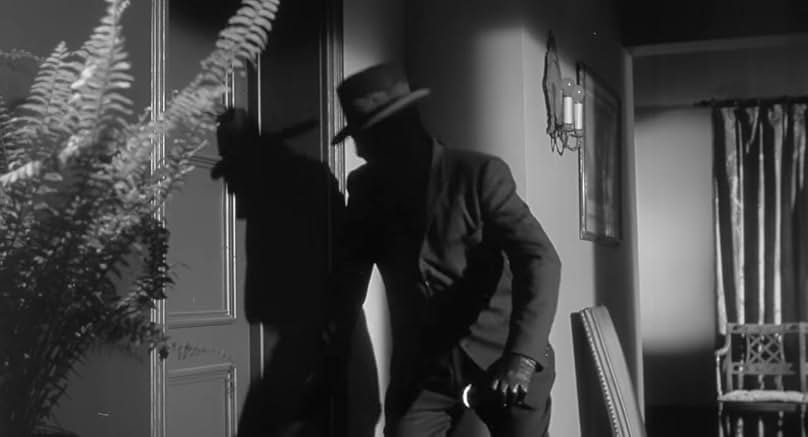
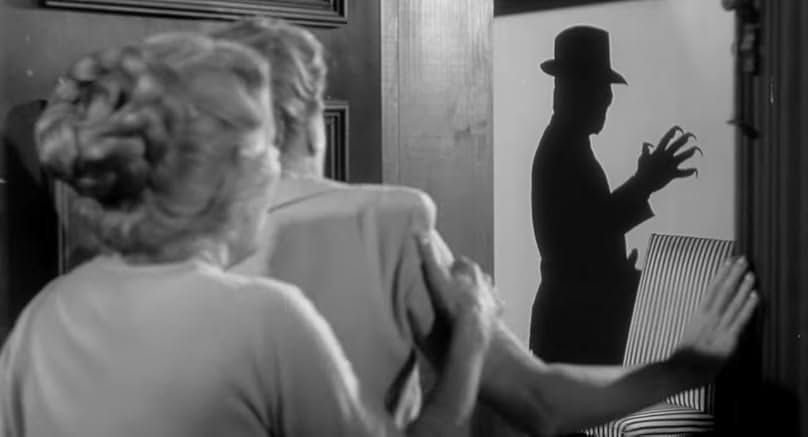
Where he releases a live bat in the house and it bites “Lizzie”. Who believes, she may get rabies, as “The Bat” has seemed to leave, “Cornelia” calls kindly “Dr. Malcolm Wells” to come and treat her friend and assistant.
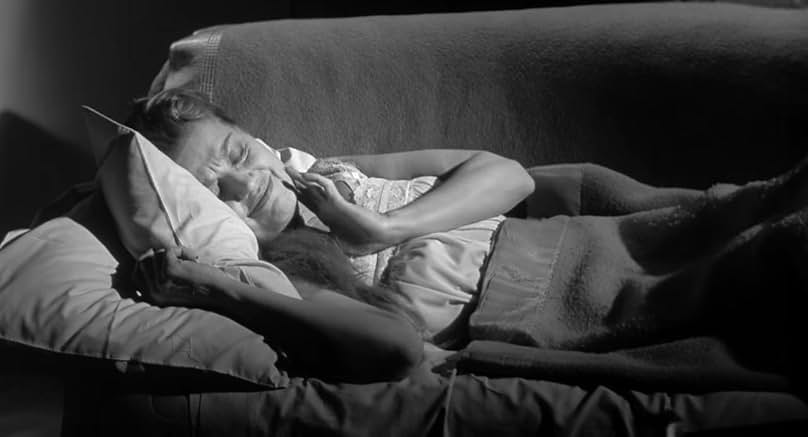
At the time of the phone call, “Dr. Wells” is in his laboratory experimenting on bats. Looking in through a window is “Police Lieutenant Andy Anderson”.
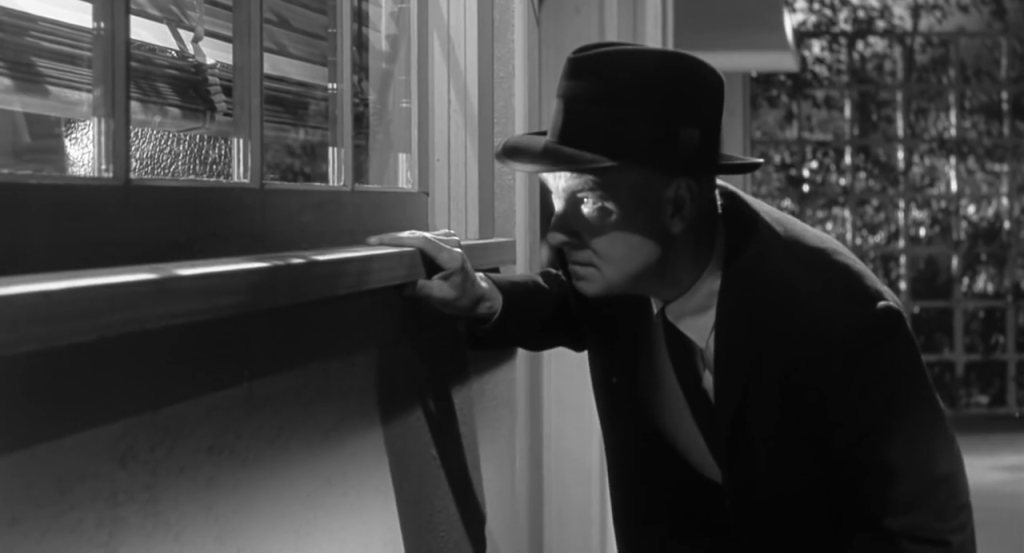
When the doctor leaves to answer “Cornelia’s” plea for medical assistance for “Lizzie”. The police lieutenant breaks into “Malcolm Wells’s” laboratory and searches the room, seemingly looking for something specific.
“Dr. Wells” arrives at “The Oaks” to examine the bat’s bite, and catches the actual bat that bit “Lizzie”.
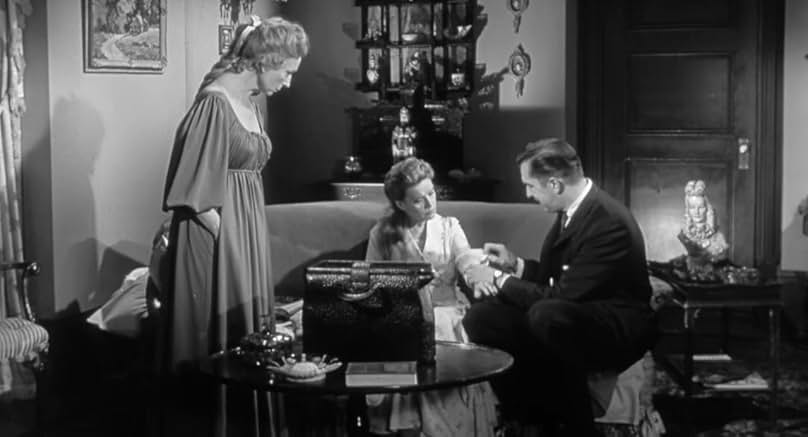
Shortly afterwards, “Lieutenant Anderson” arrives at “The Oaks”. He tells the two women and the doctor, that a police guard will be on duty the rest of the night. The mystery writer is now attempting to find out who “The Bat” actually is and solve the mystery.
The next day, “Cornelia van Gorder” is visited by “Dr. Wells”, who is at “The Oaks” to look at “Lizzie’s” bite. Also arriving, is “Dale Bailey”, portrayed by Elaine Edwards, and “Judy Hollander”, her associate, whom “Cornelia” and “Lizzie” had met at the bank when she signed the rental agreement.
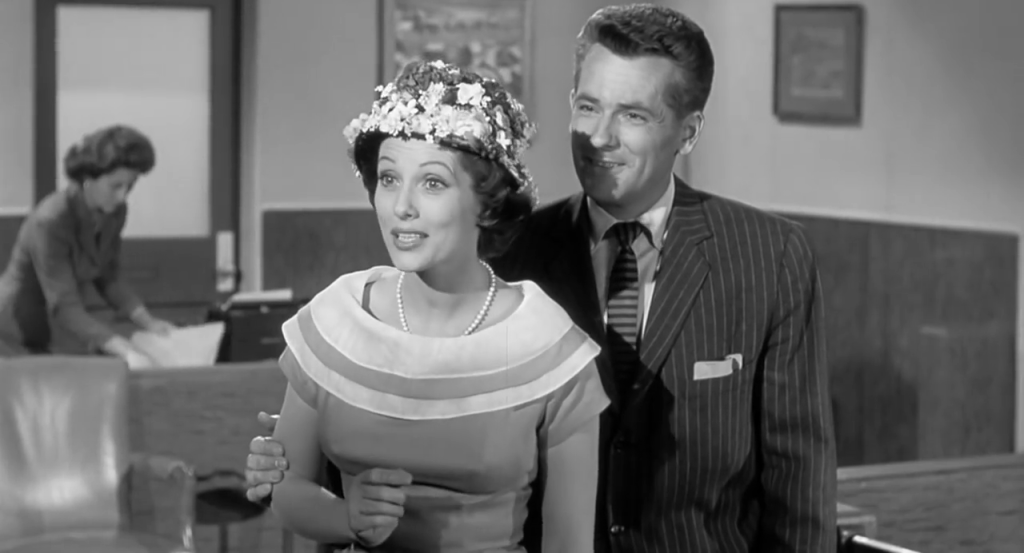
Above, “Dale”, with husband, is “Victor Bailey”, portrayed by Mike Steele. “Victor” works at the bank, and is the prime suspect in the theft of the securities. “John Fleming” had framed him for the theft and everyone is wondering where “Fleming” disappeared too? However, “Judy” also works at the bank, and is “Victor’s” primary witness for his defense.
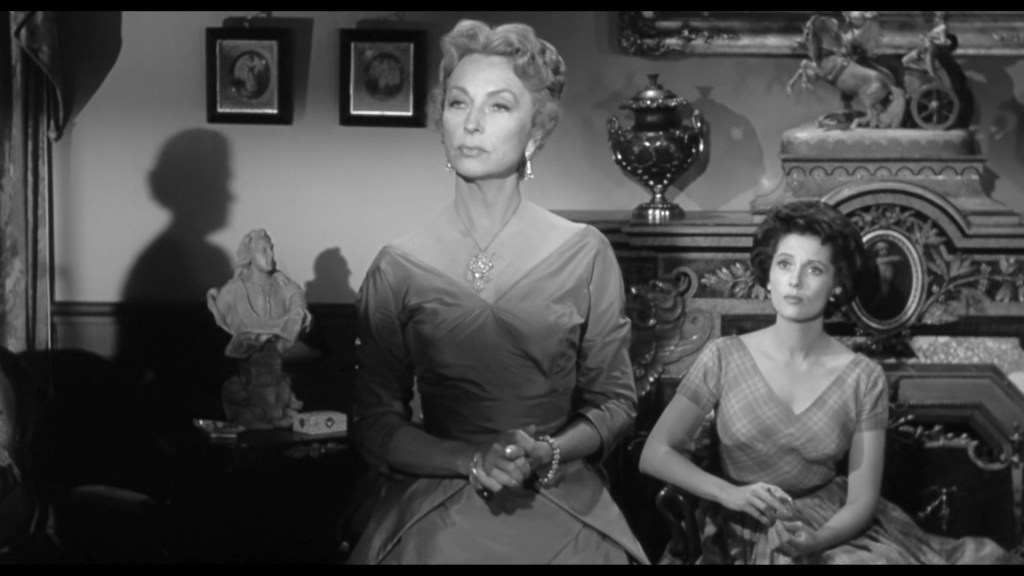
Above, Agnes Moorehead and Elaine Edwards, below, Darla Hood as “Judy”
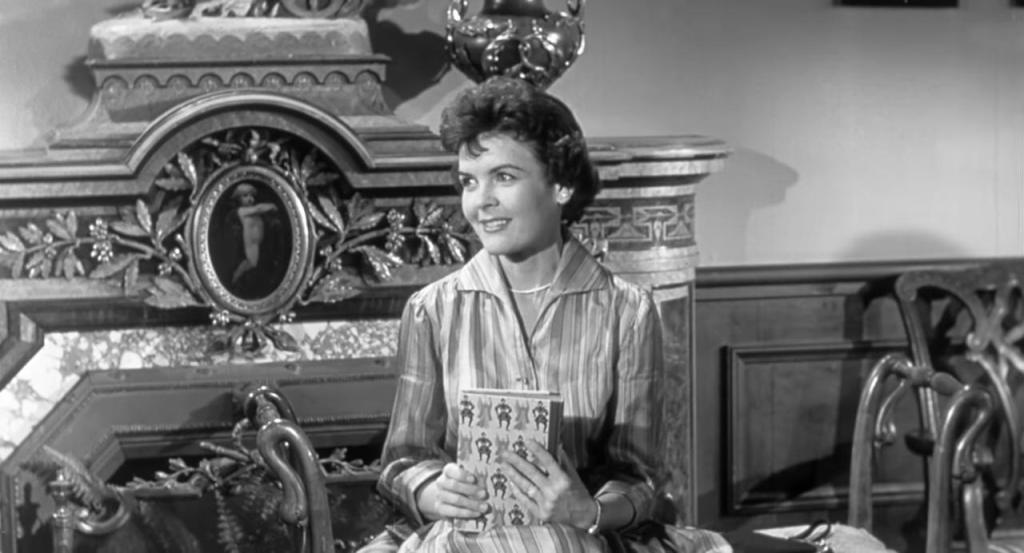
As the above is taking place, “Lt. Anderson” is visiting “Mark Fleming”, portrayed by John Bryant, the nephew and heir to “John Fleming”. While the two are meeting, “Cornelia” has “Dale” call her husband about location the “Blueprints” of “The Oaks”. “Cornelia van Gorder” believes there might be a secret room within “The Oaks”, the perfect place to hide the negotiable securities. “Dale” promises to help her husband locate them that night.
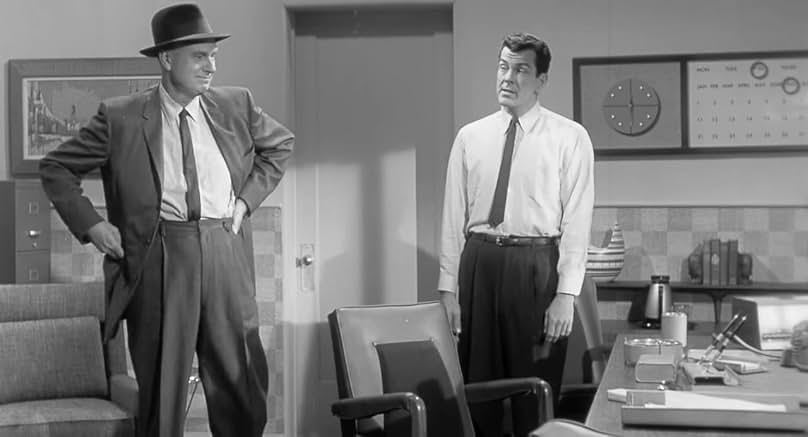
Meanwhile, “Cornellia” has hired new servants and promoted “Warner” from chauffeur to butler.
The following night, “Cornelia”, “Lizzie”, “Dale”, and “Judy” are having dinner at “The Oaks”.
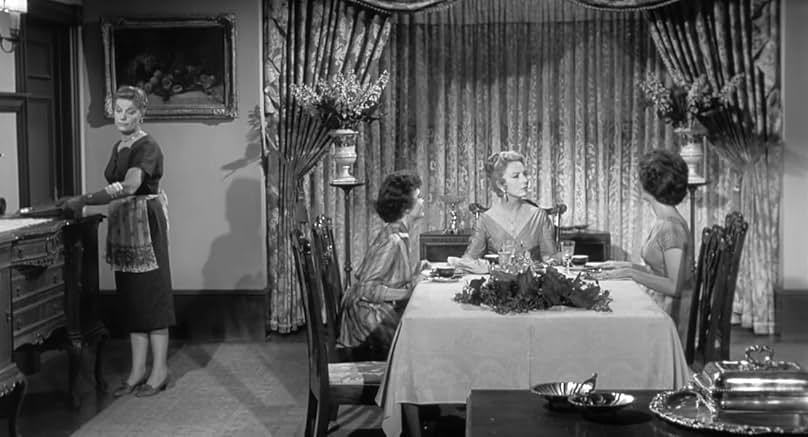
While, the dinner is proceeding, “Mark Fleming” sneaks into the house with the “Blueprints” to look for the secret room. However, instead, he meets “The Bat” and is killed.
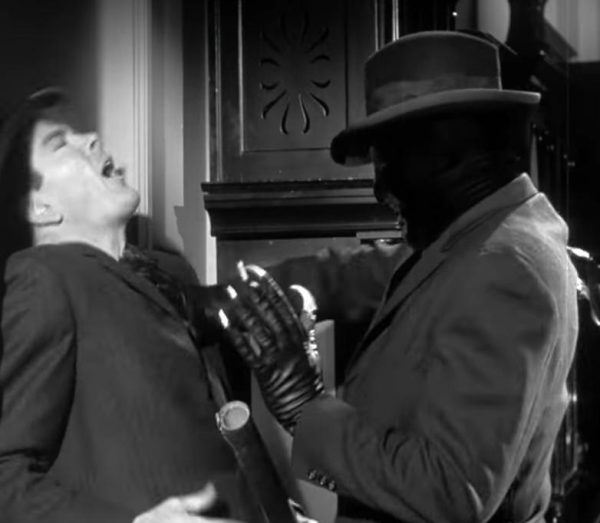
After “Mark’s” body is found, “Dr. Wells”, who is also the local coroner, and “Lt. Anderson” arrive to investigate the murder. “Andy” questions the women and “Warner”, he instructs “Cornelia” and “Lizzie” to stay in their rooms for the rest of the night, “Dale”, and “Judy” also are given rooms, but all four should lock their bedroom doors. For security, he will stay at “The Oaks”.
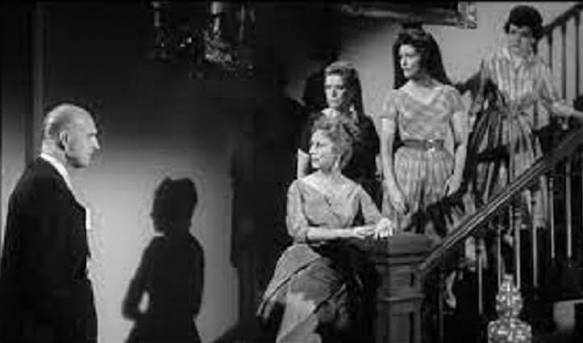
After the women go to bed, “Anderson” takes a flashlight and goes into the woods surrounding the house. He is being followed by “Warner”. Shortly, “The Bat” reenters “The Oaks”, cuts the phone lines, and goes to “The Secret Room” and starts to chisel a specific spot on a wall.
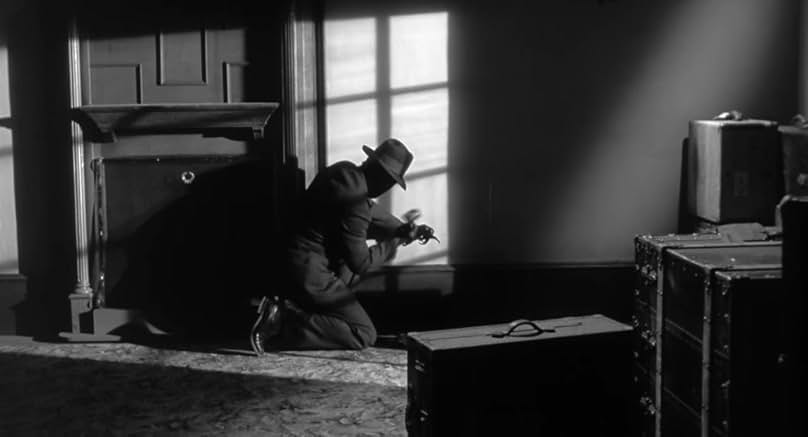
Hearing the noise, “Dale” and “Judy” go to investigate and “Judy” is killed by “The Bat”, who flees
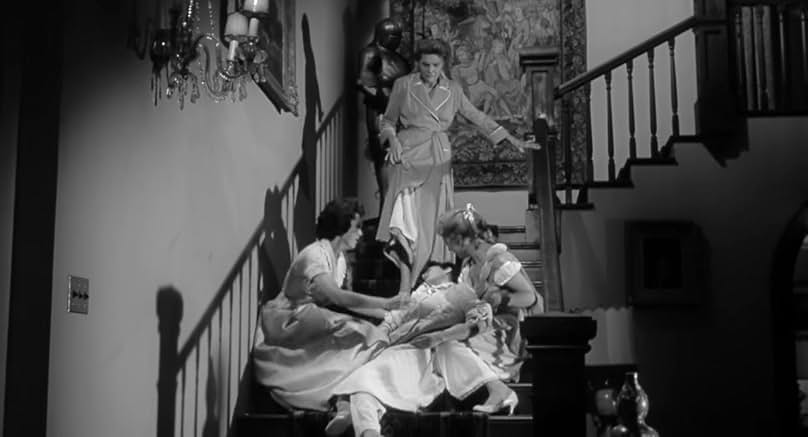
“The Oaks”. “Andy Anderson” comes in, having seen a man in the woods. He next recognizes “Warner” as being a suspect in a Chicago robbery, to which the other replies he wad acquitted. “Dr. Wells” now appear, claiming to have had an accident with his car in the nearby woods, “Anderson” now casts suspicions about the doctor.
After both “Anderson” and “Wells” leave, “Cornelia” goes up to the room “The Bat” was chiseling the wall in. Looking around that room, she discovers “The Secret Room”, but get herself trapped in it. However, her cries alert “Detective Davenport”, portrayed by character actor, Robert B. Williams, the officer “Anderson” assigned to watch through the night.
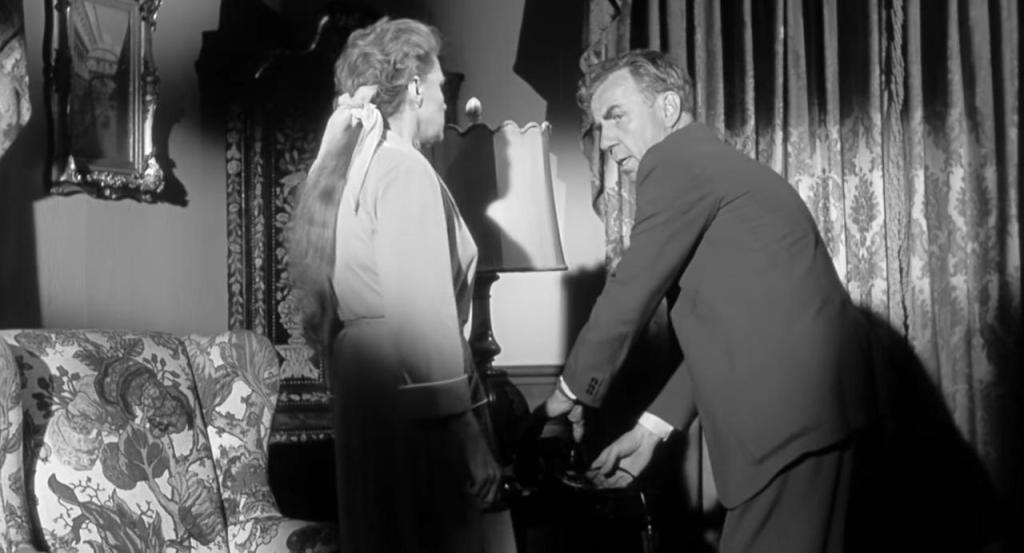
While the above is taking place at “The Oaks”, “The Bat” comes to the laboratory of “Dr. Malcolm Wells” to murder him. “Wells” pull out his gun and taunts “The Bat”. Whose identity he appear to have knowledge of.
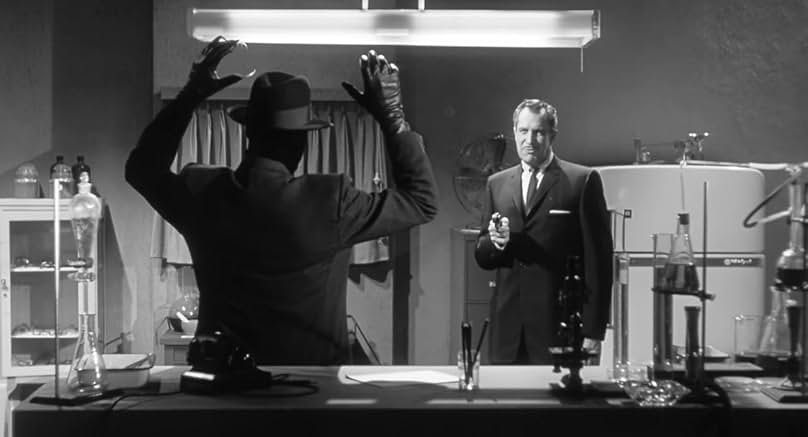
“Dr. Wells” tells “The Bat” he knows where the money is hidden, and after “The Bat” is killed, he will go and get it. “Malcolm” attempts to shoot “The Bat”, but instead they fight and during it, “Wells” is killed.
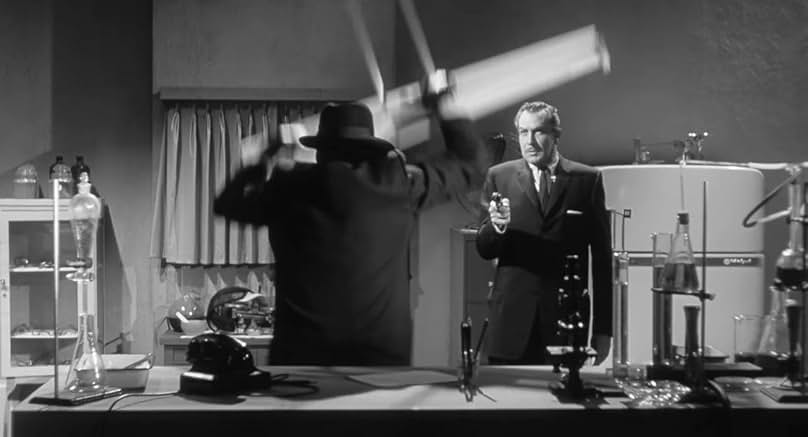
“The Bat” now leaves a fake suicide note framing “Dr. Malcom Wells” as “The Bat”.
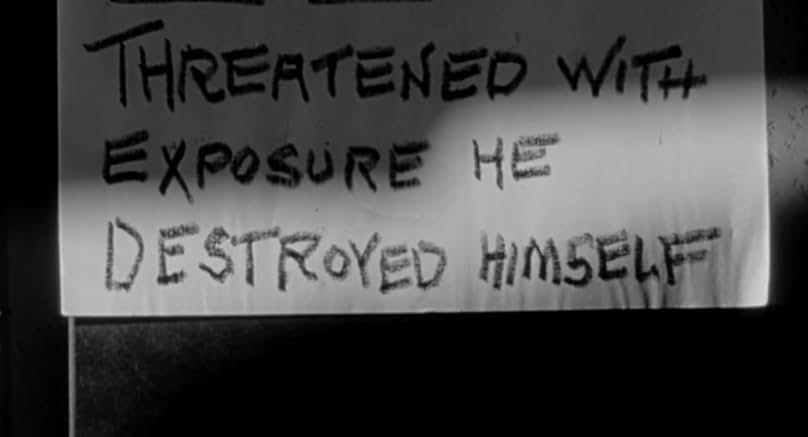
“The Bat” now returns to “The Oaks”, sets the garage on fire to draw those in the house to it. Mystery writer “Cornelia Van Gorder” sees the fire as a ruse. However, “Cornelia”, “Lizzie”, “Dale”, and “Detective Davenport” hide in “The Oaks” awaiting “The Bat” to appear.
SPOILER ALERT!
When confronted, “The Bat”, who wears a mask to make his face seem contorted, shoots “Davenport”, but how badly is not known. He next plans to murder the three women, but is shot dead by “Warner”.
“Warner” removes the mask to reveal “Police Lieutenant Andy Anderson”. He had financial problems, creating a motive to get the securities, which the detective had been notified had been turned to cash.
THE END!
Bob Kane and Bill Finger wanted to create a new character and both men had seen the 1930, “The Bat Whispers”. Their plan was to use the character from both the original play and that motion picture to become a dark justice fighter. As both are creatures of the night, like a bat.
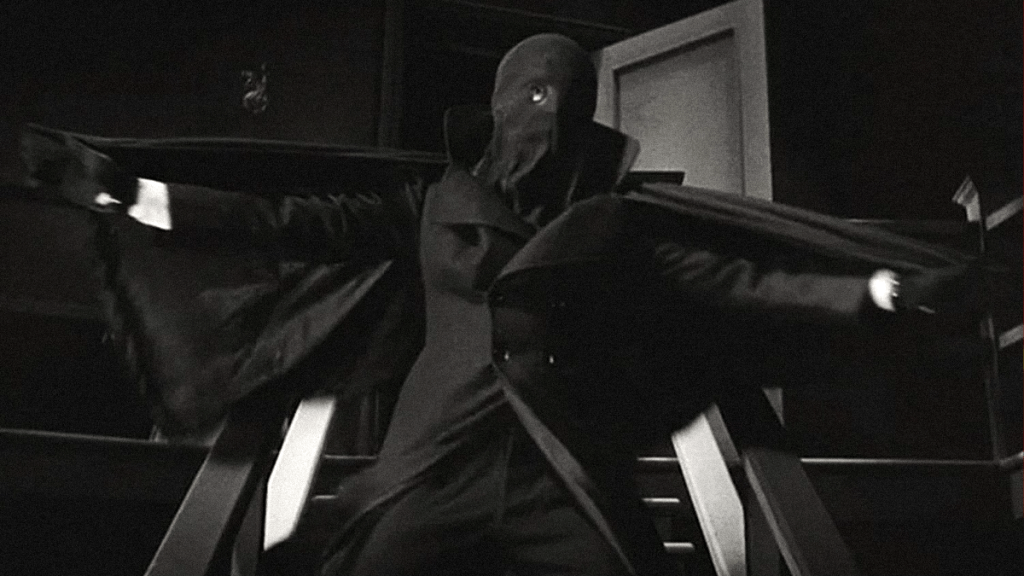
Four characteristics Kane and Finger used:
- Both “The Bat” and “Batman” hide a secret identity.
- They are creatures of the night and use “The Bat” as a simply of terror to those they hunt.
- Both had a signal, in “The Bat” it was a flashing light he uses, and in “Batman” it is the signal “Commissioner Gordon” uses
- Both have a costume like a bat with a cape like wings and wear a cowl.
The decade of 1960’s brought Vincent Price to the pinnacle of Horror and Science Fiction. My article is “Vincent Price: Poe, Hawthorne, and a Mouseketeer”. Found at:
https://motion-picture-history.com/2026/07/09/vincent-price-poe-a-mouseketeer-and-hawthorne/


Leave a comment