In the 1960’s, VINCENT LEONARD PRICE, JR. became the uncrowned “KING OF HORROR”. This is a look at those feature films that made “Dear Vincent” such a star. For those of my readers interested in his earlier works of Horror, my article is “Vincent Price: The 1950’s Horror of It All”, at:
The 1950’s ended with the Mary Roberts Rinehart based motion picture, 1959’s, “THE BAT!” Now Vincent Price was to meet producer, and director, Rodger Corman, and begin to create the terror of American author Edgar Allan Poe.
HOUSE OF USHER aka: THE FALL OF THE HOUSE OF USHER aka: THE MYSTERIOUS HOUSE OF USHER released on June 18, 1960
Above the “Cert X” poster from the movie censors of the United Kingdom. No one under 16-years of age could see the motion picture. While, at 13, I enjoyed this picture in Santa Monica, California.
Rodger Corman both produced and directed the motion picture. My article about him, is “Rodger Corman: 4 Westerns, 3 Aliens, a Gangster, Viking Women, the Beat Generation, and The End of the World” to be explored at:
Rodger Corman needed the right author to turn the 1839, Poe short story, “The Fall of the House of Usher”, into a screenplay. He choose Richard Matheson, the author of “I Am Legend”, and “The Shrinking Man”. My 2015 article on him is “Richard Matheson: The Screenplays and Treatments” at:
Vincent Price portrayed “Roderick Usher”. He had guest starred on four television series prior to this movie. He would follow this feature film with five more television appearances.
Mark Damon portrayed the visitor to the “House of Usher”, “Philip Winthrop”, Who is in love with “Roderick’s sister. Damon would stop acting, and become a producer for such productions as the interesting 1980, Science Fiction “The Final Countdown”, starring Kirk Douglas and Martin Sheen, the directors cut of the German, 1981, “Das Boot”, the 1983, James Bond film, “Never Say Never Again”,Sergio Leone’s, 1984, American gangster epic “Once Upon a Time in America”, and director John Huston’s, 1985,“Prizzi’s Honor”.
“Madeline Usher”, the sister of “Roderick” was portrayed by Myrna Fahley. Fahley had been a television actress since 1954 playing “Good Girl” roles. She was in an episode of “The Adventures of Superman”, four consecutive episodes of Walt Disney’s, “Zorro”, and an episode of the James Garner series “Maverick: Duel at Sundown”, with an unknown Clint Eastwood as a “Trigger Happy” villain.
Harry Ellerbe portrayed “Bristol”, the butler/servant of the Usher family for decades. Ellerbe had been a television character actor since 1950.
The Matheson Tribute to Poe:
The basic plot is true to Poe in many ways. “Winthrop” rides through the dead forest, that leads to the “House of Usher”. He wants to find out what happened to the woman he loves, “Madeline Usher”, and was engaged too.
The opening is a combination of models and footage shot at “Griffith Park” in Los Angeles. Corman, called his camera crew and Mark Damon, on their day off, to get over to “Griffith Park”. This was the morning after a major fire had threatened the “Los Angeles Zoo”, and wasn’t completely out yet. Rodger Corman had to call, and pay a costumer, to get Damon’s clothing to the site.
The result, sets a very dark and moody tone, to the final picture.
Upon arriving, “Philip Winthrop” is greeted by a seeming hostile “Roderick Usher“. When he hears that “Philip” is engaged to his sister. “Roderick” strongly opposes the marriage.“Philip Winthrop” is determined to speak to “Madeline”, but her brother will hear nothing of about that, and tells “Philip” to leave. He refuses and demands to see “Madeline”.
“Roderick” while not permitting “Philip” to see his sister, explains that the “Usher” family has had a cursed blood line for centuries. He takes “Philip” on a tour of “The House of Usher”, in the hope that will convince him to leave without seeing “Madeline”. The house appears, to “Philip”, to be coming apart from its age, not having been repaired, and enduring the weather conditions of the area it was built upon. However, “Roderick” counter’s “Philip’s” impressions, by telling him that the house’s decay is really part of the “Usher Curse”, and shows the visitor, paintings of his, and his sister’s, originally cursed ancestors. Telling the unwanted visitor about their history.
Now comes the reveal behind “The Brother’s refusal of his Sister’s marriage”. There is a secret about the beautiful “Madeline”, that under the circumstances, “Roderick” tells his sister’s suitor about. The family has a history of “catalepsy”, a disease that gives the appearance of death, and “Madeline Usher” suffers from it.
The two men get into another argument, because “Roderick” will still not let “Philip” see “Madeline”. When she walks into the room in her night gown.
After “Philip” meets “Madeline”, she seems not well, he believes by taking her back to Boston, she will become her old happy self. “Roderick” suggests she return to her room and rest, and to “Philip’s” surprise, she does.
“Roderick” knows he’ll want to see her again , and “Madeline” him, so he permits “Philip” to stay one night.
That night, the two men have dinner, and “Roderick Usher”, once again, attempts to get “Philip Winthrop” to leave without “Madeline”.
On his way to his room, “Philip” opens “Madeline’s” bedroom door, and finds her awake. He’s invited in, and he talks about taking her away and back with him to Boston. However, she seems off and stressed. She even brings up the “Usher Curse” and will not commit to leave with him.
That night, “Philip Winthrop” has nightmares about the “Usher Family”.
The following day, after having those nightmares, “Philip Winthorpe” goes again to “Roderick” about taking “Madeline” away from the unhelpful air that surrounds the “House of Usher“. Later, “Madeline” and “Roderick” get into a heated argument and the pressure of what has been happening since “Philip” arrived, has added to “Madeline’s” stress from the family curse, and she dies.
As they place “Madeline” into her coffin within the family crypt. “Roderick” for a moment thought he saw signs of life, and quickly has the coffin covered.
As “Philip” starts to leave the “House of Usher” on his third day there. It is he butler, “Bristol”, who tells him that he believes “Madeline” is still alive. “Winthrop” confronts “Roderick” with the possibility that “Madeline” had a cataleptic attack and was “buried alive”. This forces the brother to go to the crypt, and the three men find “Madeline Usher’s” coffin empty with bloody hand prints. The now insane “Madeline” is roaming the house.
“Madeline” murders “Roderick”.
“Bristol” dies in the fire “Madeline” has started. While “Philip Winthrop” escapes the end of the “House of Usher”. As the decayed mansion is seen sinking into the ground it was built upon.
His name was Jules Gabriel Verne and he produced going “Around the World in 80 Days”, and traveling “From the Earth to the Moon” in 1865. However, he also published in 1886, “Robur-le-Conquérant (Robur the Conqueror aka: The Clipper of the Clouds )” and its 1904, sequel, “Maître du monde (Master of the World)”. Below the cover of the first edition of “Robur the Conqueror”.
There are major similarities between Verne’s other character, “Prince Dakkar”, better known as “Captain Nemo” and “Robur”, and the “Nautilus” of the oceans, becomes the “Albatross” of the sky.
My article is “Jules Verne on the Motion Picture Screen” found at:
James H. Nicholson co-owner of “American International Pictures” hired Richard Matheson to take those two Jules Verne’s novels and created a screenplay. The result was:
MASTER OF THE WORLDreleased on May 24, 1961 in Honolulu, Hawaii
Once again, the above poster is for the British release. One does not normally think of “American International Pictures” for high quality motion pictures. However, “AIP’s” version of these two Jules Verne’s novel’sis an exception!
To begin with, as I just wrote, the screenplay was by Richard Matheson.
The excellent pace of the motion picture is because director William Whitney had co-directed some of the classic Cliff-Hanger’s. These include 1939’s “Daredevils of the Red Circle”, 1940’s “The Mysterious Dr. Satan”, 1941’s “The Adventures of Captain Marvel”, 1942’s “Spy Smasher”, and 1946’s “The Crimson Ghost”.
The Cast Was Perfectly Chosen:
Vincent Price portrayed “Robur”. Although Price was appearing on television shows at the time of production, September 1960, his next feature would be the 2nd in the Roger Corman “Poe Series”.
Charles Bronson portrayed “John Stock”. Even after having a major role in director John Sturges’s, Americanization of Japanese director Ikira Kurosawa’s1956 “The Seven Samurai”, into 1960’s “The Magnificent Seven”. Now, Charles Bronson, had mainly been appearing on television until this feature. His next feature film, 1961’s cavalry story, “A Thunder of Drums”, just gave the actor 6th-billing.
Henry Hull portrayed “Prudent”. Hull’s career included the title role of 1935’s, the “Werewolf of London”. Among his motion pictures are, the Tyrone Power and Henry Fonda, 1939 “Jesse James”, that feature’s sequel starring Henry Fonda, 1940’s “The Return of Frank James”, Alfred Hitchcock’s, 1944 “Lifeboat”, Errol Flynn’s, 1945, “Objective Burma”, and the 1949 version of Ayn Rand’s “The Fountainhead” starring Cary Cooper and Patricia Neal.
Mary Webster portrayed “Dorothy Prudent”. Other than the Jerry Lewis comedy from 1957′, “The Delicate Delinquent”, this is Webster’s only other motion picture, but she did appear on television from 1955 through 1963.
David Frankham portrayed “Phillip Evans”. Other than playing the villain in 1959’s “The Return of the Fly”, the actor basically worked on television.
Above, David Frankham and Mary Webster.
An Overview of Matheson’s Version of Jules Verne’s Novels:
The screenplay’s opening sequence is set in Morgantown, Pennsylvania, a voice is heard coming out of a volcanic crater reciting a biblical verse that frightens the residents.
Government agent, “John Strock”, is sent to investigate, and report back directly to the President of the United States. “Strock” attends a meeting of a balloon society that is hotly debating upon which end the propeller should go on the societies new flying machine, part boat, part large balloon.
On one side of the argument is an arms manufacturer named “Prudent”, and on the other side is a young balloonist named “Phillip Evans”. Between the two is “Evans” fiancée, “Dorothy Prudent”, the daughter of his verbal opponent.
“Strock” asks “Prudent” to test the societies propeller balloon vehicle over the dormant volcano. So he can observe the area the voice came from, and this is agreed too.
As the four passengers, “Dorothy” insisted on going, move over the volcano’s cone. Instead of a strange voice coming out of the volcano, a rocket appears, and its aimed directly at them.
The rocket hits the ballon portion of their air machine, and the societies new mode of air travel crashes inside the volcano’s cone. The impact has knocked out all four adventures. When they awake, they’re on board the “Albatross” and meet “Robur, the Master of the World”.
What follows is “Robur” discovering who “Prudent” is, and lecturing him against building his companies weapons of war (An obvious clone of “Prince Dakkar” from “20,000 Leagues Under the Sea”. Jules Verne was a steadfast opponent of war and militarism).
“Robur” states that:
“I am a man unto myself, Mr. Prudent, who has declared war against war! That is my purpose, sir! The purpose for which this ship was built! To end for all time the scourge of warfare!” (My reader should keep Richard Matheson’s words voiced by Vincent Price in mind).
“Strock” and the others observe “Robur’s” own declared war upon warships from an unknown country. He has the “Albatross” flying over a warship, and the voice heard from the volcano at the opening, now through a speaker system, quotes “Isaiah 13:4-5” to those on the decks of the warship:
“Come near, ye nations, to hear; And hearken, ye people… let the earth hear, and all that is therein. For the indignation of the Lord is upon all nations, and His fury upon all their armies. He shall utterly destroy them!”
Then he destroys the war ship and all on-board.
After a time, “Strock” starts to admire “Robur’s” goals, not his means of carrying them out, and will get the other three off the “Albatross”, before sabotaging the flying ship.
Remember, this picture came out at the height of the Vietnam War. In Richard Matheson’s screenplay, “Robur” has been turned into an idealist, who dreams of ending tyranny and war.
In the novel, “Robur”, only bombs one target, an African coronation that includes human sacrifice. Also “Strock” is only in the sequel to “Robur the Conqueror”, the “Master of the World”. Which is not about the “Albatross”, that was destroyed in the first novel, but a craft called “The Terror”. Which can change into a speedboat, submarine, automobile, or aircraft. Unfortunately, it’s not seen in this motion picture.
Richard Matheson ends his screenplay more like Walt Disney‘s, 1954, “20,000 Leagues Under the Sea”, than either of Jules Verne’s novels. “The Albatross (Nautilus)” has been damaged by “Stock”, planting explosives. However, like James Mason’s “Captain Nemo”, Vincent Price’s “Robur” prepares for the inevitable.
“Robur” orders his crew to abandon ship, but they refuse to leave their leader. Everyone gathers in his cabin and “Robur/Nemo”, reads a Biblical passage, Isaiah 2:4 to them. This is the biblical passage about turning swords into plowshares. “Strock” now escapes, as “The Albatross” crashes into the ocean and explodes. He joins the other three that he started this adventure with.
From the imagination of Jules Verne, I turn to the terror of Edgar Allan Poe.
THE PIT AND THE PENDULUM released on August 12, 1961
“I almost fear to tell the world of what they did to me. But tell I must, if only to warn others. You must hear of the Inquisition, of the trial, and of the torture — these monstrosities that nearly destroyed me. I shall tell you the story; but though I may tell you how it happened, I shall never be able to tell you why.” Edgar Allan Poe.
Producer and director Rodger Corman brought back Richard Matheson to create the story for the picture. As the original Edgar Allan Poe short story, is a narrative by a prisoner in the pit as the pendulum comes closer and closer to his body.
In the section of Poe’s original story I have quoted above. There is mention of “The Inquisition” being the source of the victim’s torment. For those of my readers who don’t know the length of what was officially called the “Tribunal of the Holy Office of the Inquisition”. The time period may surprise you as it ran from November 1, 1478 through July 15, 1834. Making it easy for Richard Matheson to create his screenplay.
The Five Leads:
Vincent Price portrayed “Nicholas and Sebatian Medina”. He would follow this motion picture with the 1961, Italian, “Nefertite. regiina del Nilo (Nefertiti, Queen of the Nile)”.
John Kerr portrayed “Francis Barnard”. Kerr broke from television roles for the controversial, was his character gay, 1956 “Tea and Sympathy”, co-starring with Deborah Kerr. Then back to television until he co-starred in the big budget motion picture version of Rodger’s and Hammerstein’s “South Pacific”, in 1958, and back again to television until this feature film.
Barbara Steele portrayed “Elizabeth Medina”. English actress Barbara Steele had started her film career with nine forgotten roles on both sides of the pond. Then she was cast as a witch in Italian Horror Master Mario Bava’s masterpiece, 1960’s, “La maschera del demonio (The Mask of the Demon), renamed for English speaking audiences as “Black Sunday”. Barbara Steele became, from this one film, an international horror star.
Luana Anders portrayed “Catherine Medina”. Anders is in one of my favorite cult films opposite Dennis Hopper, in Curtis Harrington’s 1961, “Night Tide”. She co-starred in Francis Ford Coppola’s first directing assignment, 1963’s, “Dementia 13”, and of course had a small role in 1969’s, “Easy Rider”.
Antony Carbone portrayed “Doctor Leon”. Carbone was a favorite of Rodger Corman, and appeared in 1959’s, “Bucket of Blood”, 1960’s, “Last Woman on Earth”, and 1961’s, “The Creature from the Haunted Sea”.
Matheson Does Poe, Act 2:
Set in the 16th Century, a young Englishman named “Francis Barnard”, has come to a foreboding Spanish castle on a cliff by the sea. He has come to find out what happened to his sister, “Elizabeth”, the wife of the master of the castle.
At the castle, “Francis” meets “Catherine Medina“, and the two will fall in love over the course of the story.
“Francis” will also meet “Catherine’s” brother, the master of the castle, “Nicholas Medina”.
“Nicholas” is tormented by the death of his wife, “Elizabeth”. However, there is a secret, that only his sister knows, about her brother.
The family secret, will be revealed, when “Catherine” tells “Francis” about the death of her mother “Isabella”, portrayed by Mary Menzies. This all happened when, ten-years-old “Nicholas”, portrayed by Larry Turner, had followed his father, “Sebastian (Vincent Price)”, down to the castle’s torture chamber and observed his mother cowering in a corner. He followed her eyes, and witnessed his father, “Sebastian”, beating his uncle “Bartolome”, portrayed by Charles Victor, with a red hot poker and calling out adulterer. This scene affected the mind of the boy. “Catherine” believes that her brother, also observed his father torture their mother to death.
Later, “Dr. Leon” reveals to “Catherine” and “Francis”, that “Don Sebastian” didn’t torture “Isabella” to death. According to “Dr. Leon”, “Don Sebastian”, placed “Donna Isabella” in a wall, ALIVE, and walled her in.
This is all brought out, because “Nicholas” claims he’s seeing “Elizabeth” walking the halls and in his room. “Dr. Leon” is concerned about his health, but these visions keep playing upon “Nicholas”. The thought that he buried “Elizabeth” alive, like his father, and she has escaped her coffin, has been planted in “Catherine’s” brother’s mind.
There is only one way to prove this isn’t true, and that would be to open “Elizabeth’s” coffin.
The tomb’s wall is broken open, and then everyone goes to the coffin.
It is opened and—
“Don Nicholas’” mind snaps, at the sight of “Elizabeth Medina’s” tortured body. He buriedFrancis Barnard’s sister,ALIVE!
Now the truth of the tale comes out.
The body is not “Elizabeth”, but as with “Isabella” and “Bartolome”. It is “Elizabeth” and “Dr. Leon”, who are, the adulterers. Further, it was their plan to drive “Nicholas” mad, and then have him either kill himself, or be committed. Leaving the two lovers with the castle.
However, the plan works too well, as “Nicholas” now believes he is “Don Sebastian”, “Elizabeth” is “Isabella”, “Dr. Leon” is “Bartolome”. Whom “Nicholas/Sebastian” first murders. However, in “Nicholas’s” mind is the replacing of “Dr. Leon” with “Francis”, as his, brother “Bartolome”.
“Elizabeth” adds to “Nicholas’s” insanity by tormenting him.
Yes, it is ironical, but your husband is now “Sebastian” in his mind, and you are “Isabella”. Instead of a wall, in the end, you get placed in the castle’s dungeon’s Iron Maiden, with your mouth taped shut.
As for “Francis”, he is captured by “Nicholas/Sebastian”, and it is “The Pit and the Pendulum”.
“Catherine” with a servant breaks into the torture chamber. There is a brief struggle with the servant, and “Nicholas” falls to his death. At the last minute, “Francis” is saved.
The story ends with “Catherine”, “Francis”, and the servant leaving the torture chamber. “Catherine” vows to seal it for good. None of them notice, or know about “Elizabeth”.
The fade out is a classic look of the taped mouth, Barbara Steele, in the Iron Maiden.
In 1989 interview for “Cinefantastque” Magazine, Barbara Steele is quoted as saying the following about Vincent Price:
“Our major confrontation where he strangles me was done in one take…He really went at me and I had the bruises on my throat to prove it. Afterward, he was so concerned he had hurt me—a perfect gentleman—a truly kind figure in spite of his image.”
On June 20, 1962,Vincent Price portrayed the fictional “Gilbert De Quincer”, in “Confessions of am Opium Eater”. Supposedly based upon the 1821, autobiography, by Thomas De Quincey, concerning his Laudanum addiction.
The picture is also known as “Souls for Sale”, “Secrets of a Soul”, and “Evils of China Town”. The movie rights was originally obtained by William Castle in December 1958, but he dropped out of the project. Other than the title, this cult movie has nothing to do with the original 1821 work.
The fictional “Gilbert DeQuincey” is hired by the editor of a Chinese newspaper to investigate the trafficking of Chinese Women within the United States.
The team of Vincent Price, Rodger Corman, and Richard Matheson could not escape Edgar Allan Poe for long.
TALES OF TERROR premiered in New York City for the “4th of July”, 1962
Rodger Corman had just directed the overlooked, psychological political thriller, 1962’s, “The Intruder”, starring William Shatner. He would also direct the next motion picture I will be mentioning.
Richard Matheson was writing for television and it wouldn’t be until 1963 that he wrote another Edgar Allan Poe screenplay.
The Four Main Acting Names:
Vincent Price appeared in all three “Tales of Terror”, portraying “Locke, Fortunato Luchresi, and Ernest Valememar“.
Peter Lorre portrayed “Montresor Herringbone”. Lorre had just been seen in two episodes of a forgotten, one season, 1961 television program. That starred a comedy actress who started back on 1929 radio, “The Gertrude Berg Show”.Peter Lorre followed this Poe film with Jules Verne in 1962’s, “Five Weeks in a Balloon”. My article is “PETER LORRE: Overlooked, or Forgotten Performances” found to enjoy at:
Basil Rathbone portrayed “Carmichael”. Rathbone had just co-starred in the Italian made, 1962, “Pontius Pilate”, and followed this feature film with a film Rathbone fans keep looking for, 1962’s, “Two Before Zero”. My article is “Basil Rathbone: From the Boer War to the Ghost in the Invisible Bikini” at:
“Tales of Terror” had three short visions of Edgar Allen Poe’s work under the screenwriting talent of Richard Matheson. The following are basic looks at these tales from a motion picture with a total running time of 89-minutes.
“MORELLA”
Vincent Price portrayed “Locke”, whose daughter comes to visit him. The daughter is “Lenora” portrayed by Maggie Pierce.
What should be a happy home coming for a a daughter, who has traveled from Boston, to be with her father is not. As “Locke” blames “Lenora” for the death, in childbirth, of his wife her mother “Morella”. However, “Locke” softens his attitude toward his daughter, as she reveals she is dying from a terminal illness.
There is a room in the house “Lenora” is told not to enter, but her curiosity takes over.
She will discover her mother’s decomposed corpse on the bed. One evil night, the spirit of “Morella”, portrayed by Leona Gage, returns.
“Lenora” kills her daughter and their bodies change places. “Morella” becoming beautiful, and “Lenora” a corpse.
A fire is started by “Morella/Lenora”, who murders her husband, but before the fire consumes the house.
“Morella’s” spirit returns to her corpse, and instead of the mother. The daughter is now seen lying over the murdered body of her father.
“Morella” was portrayed d by Mary Leona Gage.
Her life may be better than this movie. In 1957 Gage represented the State of Maryland in the “Miss U.S.A.” pageant and won. She was the first winner the state ever had, but a scandal broke out. A few days after the pageant end. Mary Leona Gage admitted being 18 and not the required 21. Adding she had been married twice and had two children. The crown was taken away from Gage and Maryland.
In November 1965 she was found unconscious from a drug overdose in an attempted suicide. Then spent three weeks in Southern California’s “Camarillo State Mental Hospital”. The actress would be married for a total of six times and have another child. She sang and danced in burlesque clubs and went back to acting obtaining this role.
THE BLACK CAT
Joyce Jameson portrayed “Annabelle”, in 1966, she was in the Elvis Presley film “Frankie and Johnny” and in 1975 was featured in Roger Corman’s classic “Death Race 2000” starring David Carradine.
The viewer meets “Montresor Herringbone”, portrayed by a perfect “Peter Lorre”, who hates his wife “Annabelle”, and her BLACK CAT!
“Herringbone” challenges, “Fortunado Lunchresi”, the world’s foremost wine taster to a duel of wines. Vincent Price steals the entire motion picture as”FortunadoLunchresi”.
“Fortunado” now takes the drunk “Montresor Herringbone’s” wife to his home, and the two become lovers.
“Herringbone” comes up with a plan to get them to his wine cellar. Where he drugs both and walls the two up.
HOWEVER,“Herringbone” makes one mistake, but of course that is revealed when he escorts the police down into the wine cellar. He has walled “Annabelle’s” BLACK CAT” up with his two victims.
The following is Poe’s ending to his “The Black Cat”.
“Of my own thoughts it is folly to speak. Swooning, I staggered to the opposite wall. For one instant the party upon the stairs remained motionless, through extremity of terror and of awe. In the next a dozen stout arms were toiling at the wall. It fell bodily. The corpse, already greatly decayed and clotted with gore, stood erect before the eyes of the spectators. Upon its head, with red extended mouth and solitary eye of fire, sat the hideous beast whose craft had seduced me into murder, and whose informing voice had consigned me to the hangman. I had walled the monster up within the tomb”.
THE FACTS IN THE CASE OF M. VALDEMAR
“Mr. Carmichael” is a hypnotist, portrayed by Basil Rathbone. He is called to the home of a man dying from a painful disease, “Mr. M. Valdemar”, portrayed by Vincent Price. “Carmichael” wants to be “Valdemar” into a trance to release his pain.
Above is, Debra Paget portraying “Helene”, the wife of “M. Valdemar”. In 1950, she portrayed the Native American girl James Stewart was in love with, and marries, in “Broken Arrow”. Paget was the Hebrew slave “Lilia” in Cecil B. DeMille’s, 1956, “The Ten Commandments”, the women married to Elvis Presley, in 1956’s, “Love Me Tender”.
The idea of putting the dying “M. Valdemar” in a trance goes against the beliefs of his physician “Dr. James”, portrayed by David Frankham. However, the dying man over rules both his “James” and his wife’s concerns. What neither knows, is “Mr. Carmichael” has plans of his own.
“Helene” is horrified to find out that“Mr. Carmichael” wants to marry her and control of her husband’s fortune. He plans to leave “Valdemar” in his trance state, which seems to be keeping alive with in it, FOREVER, if she doesn’t.
“M. Valdemar’s” body starts to dissolve, over time, under the trance. “Carmichael’s” mistake, is that he overlooked that even in a trance, “M. Valdemar” can hear. When he hears what “Carmichael” wants to do. In his trance state , “Valdemar” leaves his bed and kills the hypnotist.
All that remained of “M. Valdemar” was a pile of goo covering the other man’s body.
Should my reader have read my article about Vincent Price’s 1950 Horror films. They would know he appeared in “Universal Pictures”, 1939, “Tower of London”, starring Basil Rathbone as “Richard III”. Now, Rodger Corman decided to do his take on William Shakespeare ala Rowland V. Lee.
TOWER OF LONDON released October 24, 1962
The story was not by Richard Matheson, but by actor Leo Gordon. Who is better known for his tough guy villains in 201-films. Such as director Don Siegel’s, 1953, “China Adventure”, John Wayne’s, 1953’s, “Hondo” portraying Geraldine Page’s husband, 1954’s, “Riot in Cell Block 11”, 1956’s, “The Conqueror”, and Rodger Corman’s, 1967, “The St. Valentine Day Massacre”, but he also wrote, or co-wrote, 35-screenplays, such as Rodger Corman’s, 1963, “The Terror”, starring Boris Karloff and Jack Nicholson.
As an actor, Leo Gordon is seen as “LORD STANLEY“ in “Tower of London”. Below, in a typical cowboy role.
One of the co-writers was F. Amos Powell, who only co-wrote 6-screenplays. The main screenplay writer was Robert E. Kent, credited as James Gordon, who wrote 95, but also produced 44-films. Such as both 1958’s, “It, the Terror From Beyond Space”, and “Curse of the Faceless Man”.
Trivia: The dialogue coach for this production was Francis Ford Coppola.
Rodger Corman directed, and would do the same for the unusual Poe tale.
The Major Cast Unless:
Vincent Price portrayed “Richard, Duke of Gloucester”. He would follow with next unusual Poe tale.
Michael Pate portrayed “Sir Richard Ratcliffe“. Among his best known film roles are “William” in the 1953, “The Maze”, “Vittorio” in 1953’s.”Hondo”, originating “James Bond’s”, “Secret Agent Leiter”, in 1954’s, “Casino Royale”, on the television anthology series, “Climax”, and my personal favorite. The Mexican vampire western gun fighter, “Drake Robey“, in 1959’s, “The Undead”. My article is “Woody Strode and Michael Pate: Western Stalwarts” at:
Joan Freeman portrayed “Lady Margaret Stanley “. She had just been in Ray Milland’s, 1960, “Panic in the Year Zero”, and followed this picture with the two part, “The Magical World of Disney”, pirate program, 1962’s, “Mooncussers”.
Bruce Gordon portrayed the “Earl of Buckingham”. Gordon was also a villain in both movies and television. He is best known for portraying Chicago gangster, “Frank Nitti”, in 28-episodes of televisions “The Untouchables”.
Sandra Knight portrayed “Mistress Jane Shore”. Knight in 1958 was in Robert Mitchell’s classic moonshine runner film, “Thunder Road”. The same year she starred in the teen horror feature, “Frankenstein’s Daughter”, and she co-starred with Boris Karloff and Jack Nicholson, in Rodger Corman’s, 1963, “The Terror”.
Robert Brown portrayed the fictional “Sir Justin”. Brown had two minor roles in his first two films, one in 1948, and the other in 1953. He next appeared on-screen in an episode of a television show in 1957, and then sporadically in films, but mostly television, through 1994, for only 33-roles.
Above, Sandra Knight and to her right, Robert Brown.
The Basic Story Line:
It is 1433 in England, “Richard, Duke of Gloucester”, is surprised that his dying brother, “King Edward IV”, portrayed by Justice Watson, names their brother, “George, Duke of Clarence”, portrayed by Charles Macaulay, as protector for “Prince Edward”, portrayed by Eugene Mazzola, “Edward’s” son and heir, until he comes of age.
Above Charles Macauley and Vincent Price
“Richard” wants to be the protector, and secretly stabs “George” to death, but uses a knife bearing the crest of the “Woodville Family”. Thus framing the dying “Edward IV’s” in-laws.
Above left to right, Eugene Mazzola portraying “Prince Edward”,Donald Losby portrays “Prince Richard, the Duke of York”, Vincent Price portraying “Richard”, and Joan Camden portraying “Anne Neville, Duchess of Gloucester”, “Richard’s” wife.
“Anne” approves of the murder of “George”, and encourages her husband to take the throne of England, himself.
After the death of “King Edward IV”, “Richard” attempts to get “Mistress Shore”, “Queen Elizabeth’s (Eizabeth Woodville)”, portrayed by Sarah Selby, lady in waiting, to claim that the dead king’s two children, “Edward” and “Richard” are illegitimate.
“Misstress Shore” refuses, and “Richard” tortures her to death.
Above, Sandra Knight, Vincent Price, and Michael Pate as “Richard’s” henchman, “Sir Richard Radcliffe”. Which was a position the real “Radcliffe” appears to have done. In the 1939 version of “Tower of London”, the henchman is the fictional “Executioner” portrayed by Boris Karloff.
To explain the execution of “Mistress Shore”, “Richard” claims she was spreading a rumor that the two Prince’s were illegitimate. He now places them in his protective custody.
“Richard” is now visited by THREE GHOSTS, King Edward IV, the Duke of Clarence, and Mistress Shore. They tell him, that the three will be REVENGED AT BOSWORTH.Where he will be killed by a “DEAD MAN”!
The ghost of “Mistress Shore” now enters “Richard’s” wife, “Anne’s” body, and he strangles her thinking he is again killing “The Lady in Waiting”.
“Richard” now consults a Moorish physician named “Tyrus“, portrayed by Richard Hale.
“Tyrus” shows “Richard” visions of the future that includes a prophecy of him as “King”.However, “Tyrus” is disturbed by “Richard’s” deranged nature and warns the fictional, “Sir Jasper”. (I looked at the official cast listing and others. I could not find the character listed anywhere. However, this character may have actually been the fictional, “Sir Justin”. The name may have gotten mixed up by some reviewer’s error, and others have picked it up as a separate character).
Sorry for Spoiler Reality Check That Follows:
“Sir Jasper” goes to the women he loves, “Lady Margaret Stanley”, for her help in protecting the young princes. (Problem here, the real “Lady Margaret Stanley” wasn’t born until 1540, as “Lady Margaret Clifford”, and married “Henry Stanley, the 4th Earl of Stanley”.
The real cousin of “Richard the Third”, was actually “Lady Margaret Beaufort”. Her 4th husband was “Thomas Stanley”, 1st Earl of Derby, they married in 1472. He was involved with the, 1485, “Battle of Bosworth”, by not sending help to “Richard“).
Returning to Leo Gordon’s Screenplay:
“Sir Justin” manages to get the young “Duke of York”, and his mother out, but is captured with the child-king, “Edward”. “Lady Margaret” was sent to get aide for her father “Lord Stanley”, portrayed by Leo Gordon, is also captured and imprisoned by “Richard”.
The following still of Robert Brown as “Sir Justin” confirms “Justin” is also “Sir Jasper”
“Richard” spares “Sir Justin”, because he needs him to negotiate with “Stanley” who is withholding support for “The Protector”. Next, “Richard” forces the “Archbishop of Canterbury”, portrayed by Morris Ankrum, to turn over the “Duke of York” and his mother, the “Duchess of York”, portrayed by Sara Taft, who have asked for and were given, sanctuary, in Westminster Abbey.
Now, while the two princes sleep in their prison room inside the “Tower of London”. “Richard” and “Sir Richard Ratcliffe”, murder the two in their sleep. Followed by “Richard, Duke of Gloucester”, declaring himself, “RICHARD THE THIRD, KING OF ENGLAND”. Which is technically true, but not official.
Next, the ghosts of the two Princes attempt to lure “Richard” to his death on the battlements of the “Tower of London”, but “Richard” is saved from falling over by the “Duke of Buckingham”. After which, ” Buckingham” mentions to “Radcliffe” his doubts about the sanity of the King. He further suggests, the two should join “Lord Stanley”. Instead, “Radcliffe” informs “King Richard”, who proceeds to have the “Duke of Buckingham” tortured to death.
Meanwhile, “Tyrus” helps “Sir Justin” rescue “Margaret Stanley”, but during their escape, “Tyrus” is mortally wounded. However,”Justin” and “Margaret” make it to her father, “Lord Stanley”. They encourage him that the time is right to topple “Richard”. While, at the same moment, “Richard” is crowned “King of England”.
Above, Morris Ankrum, and Vincent Price.
For those of my reader who might be interested, my article is “MORRIS ANKRUM THE FACE OF 1950’S SCIENCE FICTION/HORROR MOVIES” at:
“Richard” is King, but he is still haunted by fear.
“Radcliffe” now informs him that “Stanley” has reached the village of Bosworth with an army, and “Richard” declares he will fight.
However, “Radcliffe” learns that “Lord Stanley” has been joined by the “Earl of Richmond”, no actor’s name is given, he advises “Richard” to flee. Which he does not and meets “Stanley” and “Richmond” on the fields of Bosworth.
His army defeated, “Richard” is left alone,
The Ghosts of “Richards” victims appear and he swipes at them, but on a hill top, “Stanley”, “Richmond”, and “Justin” watch his sword moving through empty air.
“King Richard the 3rd”, then attempts to mount a horse, slips and falls upon a battle-ax held by a DEAD SOLDIER.
“RICHARD’S” VICTIMS HAVE THEIR REVENGE!
Advertised as:
“THE SUPREME ADVENTURE IN TERROR”, was the next entry in Rodger Corman’s, Edgar Allan Poe series, or so the “American International Picture’s” publicity department called:
THE RAVEN that premiered in the “Movie Capital of the World, Brooklyn, New York, on January 16, 1963
According to Edgar Allan Poe the famous opening to his poem, “The Raven”, begins:
“Once upon a midnight dreary, while I pondered, weak and weary, Over many a quaint and curious volume of forgotten lore, While I nodded, nearly napping, suddenly there came a tapping, As of some one gently rapping, rapping at my chamber door. “ “’Tis some visitor,” I muttered, “tapping at my chamber door— Only this, and& nbsp;nothing more.” Ah, distinctly I remember it was in the bleak December, And each separate dying ember wrought its ghost upon the floor. Eagerly I wished the morrow;—vainly I had sought to borrow From my books surcease of sorrow—sorrow for THE LOST LENORE- For the rare and radiant maiden whom the angels name LENORE— Nameless here for evermore. And the&nb sp;silken sad uncertain rustling of each&nbs p;purple curtain Thrilled me—filled me with fantastic terrors never felt before; So that now, to still the beating of my heart, I stood repeating, “ “’Tis some visitor entreating entrance at my chamber door— Some late visitor entreating entrance at my chamber door;— This it is, and nothing more.” Presently my soul grew stronger; hesitating then no longer, “Sir,” said I, “or Madam, truly your forgiveness I implore; But the fact is I was napping, and so gently you came rapping, And so faintly you came tapping, tapping at my chamber door, That I scarce was sure I heard you”—here I opened wide the door;— Darkness there, and& nbsp;nothing more.”
Apparently, screenplay writer Richard Matheson had a somewhat unique view of on Poe‘s poem:
Lawrence French, in his 2012, “The Making of the Raven” relates the following quote from Matheson:
“After I heard they wanted to make a movie out of a poem, I felt that was an utter joke, so comedy was really the only way to go with it.“
After reading the screenplay, producer and director Rodger Corman was hooked, but it also required the right cast in on the joke, who could play it straight.
The Cast of “CHARACTERS” and not their roles I’m speaking too:
Vincent Price portrayed“Dr. Erasmus Craven”. He had just been seen in “The Tower of London” and followed this feature with the next one I will be mentioning.
Peter Lorre portrayed “Dr. Adolphus Bedlo”. Lorre had just been in the previously mentioned 1962, “Five Weeks in a Balloon”. He followed this picture with three different television appearances, before his next motion picture.
Boris Karloff portrayed “Dr. Scarabus”. Karloff had just appeared on 12 different television shows since his last feature film, 1958’s, “Corridors of Blood”. He would follow this movie with Rodger Corman’s, 1963’s, “The Terror”. My article is “Boris Karloff: There Was More Than Than Horror Movies (January 15, 1919 to July 20, 1958)” at:
Trivia: This was Boris Karloff’s second appearance in a motion picture using Poe’s poem as it’s title. In 1935 he co-starred with Bela Lugosi in “The Raven”.
Hazel Court portrayed “Lenore Craven (an interesting name choice by Matheson, and the one direct tie for his screenplay to Poe’s poem, partly quoted above)”. Court had just been in the only Poe film from Rodger Corman,without Vincent Price, 1962’s, “The Premature Burial”, co-starring with Ray Milland. Hazel Court next appeared in “The Fear”, Mary 29, 1964, written by Rod Serling, for his television program, “The Twilight Zone”. My article is “HAZEL COURT: Frankenstein’s Bride and Rodger Corman’s Evil Lady”, found at:
Jack Nicholson portrayed “Rexford Bedlo”. Nicholson is pretty much, “Abbott”, the straight man to the three “Costello’s”.
8th-billed Nicholson had just been seen in forgotten 1962 television movie, “Little Amy”, starring 9-year-old, forgotten, Debbie Megowan. He followed this picture with Rodger Corman’s, 1963. “The Terror”. My article is “Jack Nicholson Before ‘Easy Rider: Rodger Corman, Hell’s Angels, and Four Monkees” to read at:
Olivia Sturgess portrayed “Estelle Craven”. Sturgess was a television actress with 81-roles. She only made three additional motion pictures, and this was her third.
Except for “Straight Man” Nicholson. The two ladies, Court, and Sturgess, are just set pieces, like the furniture, required to make the story seem authentic.
The Richard Matheson Screenplay Performed with Straight Faces:
The picture starts in 1506, as a somewhat, befuddledSorcerer, “Dr. Erasmus Craven”. Who is still mourning the 1504 death of wife, “HIS LOST LENORE”. “Erasmus” claims to see her ghost walking through their rooms late at night.
While reading a book, there is A TAPPING AT HIS CHAMBER’S WINDOW, not door. Opening the window, a “Raven” flies into the chamber.
“The Raven”, speaking in Peter Lorre’s voice, claims to be another Sorcerer, named “Dr. Bedlo”. “The Raven” claims he was turned into this form by a third Sorcerer, the evil, “Dr. Scarabus”. This was because he lost a sorcerer’s duel. The “Bedlo-Raven” wants his body back, and gets “Craven” to help with a potion.
Roger Corman, after reading Richard Matheson screenplay, cast Peter Lorre as the title bird, and put him into a costume to match. The following link takes my reader, as of this writing, to the transformation scene of the Corman/Matheson “Lorre Raven”.
As this linked sequence shows, Rodger Corman turned Price, Karloff, and Lorre, loose. They were ad-libbing dialogue to Matheson’s original screenplay scenes. However, Corman discovered that Vincent Price reluctantly went with it, Lorre had no problems, but Boris Karloff didn’t like going off script too much. His dementia was, sadly, starting to show, and he was having a hard time remembering lines.
After getting back to his real body, “Dr. Bedlo” reveals that “Lenore” is not dead, but alive. She now lives with her lover, “Dr. Scarabus”.“Lenore’s Ghost”, seen by “Erasmus”, was his wife, coming back at night, to haunt and taunt him.
To “Craven’s” castle/home, “Dr. Bedlo’s” son, “Rexford Bedlo”, arrives after following his “Raven/Father“. His arrival will lead to “Craven’s” daughter, “Estelle”, meeting the handsome, somewhat awkward, “Rexford”, but romance must wait. Both father’s “Revenge” against “Scarabus” comes first.
All four now head forthe Castle of “Dr. Scarabus”.
There, now, living with “Lenore Craven”, is not what the Evil Sorcerer expected. As time passed, in short, she’s got him henpecked.
The four arrive at the castle of “Dr. Scarabus”, who greats them, and “Erasmus“, is reunited with his NOT SO LOST, “LENORE”!
However, “Scarabus” next ties them all up for torture, but a frightened “Dr. Bedlo” begs to be turned back into a “Raven” again, rather than being tortured. “Dr. Scarabus” agrees to the request, but that is his mistake, as the “Raven/Bedlo” is now able to chew open the ropes untying the others.
All of this leads to a battle of magic between “Dr. Craven” and “Dr. Scarabus” for the hand of “Lenore”. Who is enjoying the whole thing, with the “Two Kids”, in the balcony
Vincent Price and Boris Karloff play this duel so straight faced, that the laughs really work. Although, Price does “Ham-up” his character, but at the right times.
In the end, “Dr. Craven” wins the duel, but dumps “Leonore” on “Dr. Scarabus”. He’s delighted, she’s not, because he’s such a bore, “Rexford” gets “Estelle“, and “Dr. Bedlo” is still “THE RAVEN”!
The film fades out with “Lenore” in the entirely ruined castle, trying to ignore the love-sick, “Dr. Scarabus”, below.
He was French author Henri René Albert Guy de Maupassant, know simply as Guy de Maupassant.
In the Parisian literary newspaper, “Gil Blas”, on October 26, 1886, he published the original version of his short story “Le Horla”. The stated inspiration for H. P. Lovecraft’s, “The Call of Cthulhu”, published February 1928 in the magazine, “Weird Tales”.
THE DIARY OF A MAD MAN premiered in San Francisco on February 23, 1963
Guy de Maupassant‘s short story was produced and directed by Austrian born, Reginald Le Borg. He had started directing short subjects in 1936, and when he retired from directing in 1974, his film credits totaled 101.
The screenplay, as with Rodger Corman’s 1963 “Tower of London”, was by Canal Zone, Panama, born Robert E.Kent. Adding to the screenplays listed above, were entries in several “B” detective film series that included, “Charlie Chan”, Philo Vance”, and “The Falcon”. His other screenplays included the 1938 Chapter Serial, “The Spider’s Web”, 1941’s, “Bad Men of Missouri”, 1942’s, “The Loves of Edgar Alan Poe”,
The Two Man Roles:
Vincent Price portrayed “Magistrate Simon Cordier”. His next feature, that I will mention, starred an actress that Walt Disney decided what she could wear.
Nancy Kovack portrayed “Odette Mallotte DuClasse”.Kovack next portrayed “Media”, in stop-motion-animator, Ray Harryhausen’s, 1963, “Jason and the Argonauts”, and “Nellie Bly”, in the Elvis Presley, 1966’s, “Frankie and Johny”.
The Simple By Horrific Screenplay:
The funeral for “Magistrate Simon Cordier” is over and his pastor now reads to a selected group of people, “Simon’s” secret diary. This becomes the main screenplay, as the audience sees this fine French judge and sculptor come in contact with a “Horla”.Which is an invisible being that is capable through “Psychokinesis” to take possession of a person.
In this stories case, the honest magistrate, “Simon Cordier, visits “Louis Girot”, portrayed by Harvey Stephens. A man, “Cordier” sentenced to prison for a murder spree that “Girot” has always claimed he did not willingly do, that something possessed him. That was the “Horla” of the source material. Now, “Le Horla”, jumps from “Girot” to the man who sentenced him, “Cordier”. It will be revealed that this “Horla” is one of a race of evil beings that devote themselves to driving human’s insane.
The “Horla” now starts to ruin the magistrate’s life and he seeks help from “Dr. Borman”, an “Alienist (a psychologist)” portrayed by Nelson Olmsted. “Dr. Borman” suggests “Simon Cordier” take up a hobby, and returns to his old love of sculpture.
His model is a local woman, already married, named “Odette Malotte”.
As the modeling for the sculpture proceeds, she tells “Simon” that she doesn’t love her husband, but has fallen in love with him. He feels the same about her and an affair starts.
However, “Le Horla” objects to her, and mentally starts to tell “Cordier” that “Odette” is a gold digger out for his money and status. This pushes the magistrate into a conflict within himself. He believes himself to be an astute judge of character, which he takes to the bench, but IF what the “Horla” says is true about “Odette”? Then, he isn’t the astute judge he has always believed he was to try the cases brought before him.
The “Horla” wins, and the now insane “Magistrate Simon Cordier”, goes to “Odette Mallotte DuClasse‘s” home, and with a knife murders her, decapitates her, and tosses her headless body into the Seine River.
The body is found, but the police blame “Odette’s” husband, “Paul DuClasse”, portrayed by Chris Warfield.
In a moment of sanity, “Simon Cordier” finally realizes the “Horla” is real and decides it must be destroyed. He lures the “Horla” into his house, takes a burning oil lamp, and tosses it to the rooms curtains, setting them a fire. The evil being is destroyed, but so is the life of the magistrate.
The story returns to the pastor and his group after reading “Simon Cordier’s” diary. Some believe the “Horla” to exist, others that this is raving of a mad man. The pastor tells the group that wherever evil exists, “Le Horla” exists as well.
I now move from one form of insanity to another, SURFING from one my old haunts as a teenager.
The following is modified to fit this article. The unedited version is in my article “THE GHOST OF DRAGSTRIP HOLLOW MEETS THE GHOST IN THE INVISIBLE BIKINI: The Story of the BEACH PARTY Motion Pictures” for my reader to catch a wave at:
BEACH PARTY premiered in selected theaters on July 14, 1963
The motion picture was written and directed by co-producer Lou Rusoff. Who had written one of the last of the teen motorcycle gang movies, “The Ghost of Dragstrip Hollow”. Which I obviously look at in my article, and fans of 1950’s horror, will like, who “The Ghost” turns out to be.
The Cast:
Actor Robert “Bob” Cummings portrayed “Professor Sutwell”. Cummings had been acting since the 1930’s. He was Ronald Reagan’s lover, in 1942’s, “King’s Row”, a secret agent during the French Revolution in 1949’s, “The Black Book” and having an affair with Grace Kelly, in Alfred Hitchcock’s 1954 3-D feature “Dial M for Murder”. He was the star of television’s “Love That Bob (The Bob Cummings Show)” from 1955 through 1959.
Dorothy Malone portrayed “Marianne”. Malone had been acting since 1940. Yet it wasn’t until 1956 before she really became a major star. That motion picture had the actress opposite Rock Hudson in “Written on the Wind”. The picture was immediately followed, opposite, James Cagney, as “Lon Chaney’s” first wife, in 1957’s, “The Man of a Thousand Faces”. The actress also portrayed the wife of Robert Stack, in the exciting, 1960,“The Last Voyage”, about a luxury liner sinking.
Frankie Avalon portrayed, of course, “Frankie”.Avalon had only two major motion picture productions, John Wayne’s, “The Alamo”, in 1960, and Irwin Allen’s 1961“Voyage to the Bottom of the Sea”. At this time, Frankie Avalon was attempting to break free of his Teen Idol image, and that five week number one song from 1959, “Venus”.
Annette Funicello portrayed “Dolores (aka: “DeeDee)”. She first appeared on the original “Mickey Mouse Club”. Which premiered October 3, 1955 on ABC-TV.
“Legend” states that Walt made a condition to avoid a sexual image of a member of the “Disney Family”. Annette could not wear any swimsuits, or other clothing that SHOWED HER NAVEL. In short, no “Bikini’s”, popular with young girls at the beach, and especially those associated with surfing, were out.
Whatever the real story is, if there was one. While all the other young actresses would be seen in Bikini’s. Annette Funicelloworeconservative two piece bathing suits, and drew more attention to her body, than, if she was in a bikini.
Harvey Lembeck, center below,portrayed “Eric Von Zipper”. A comical parody of Marlon Brando’s character in 1953’s. “The Wild One”. Actor/comedian Lembeck. had appeared on Broadway, but most television viewers, at the time, knew him as “Corporeal Rocco Barbella” on the “Phil Silvers Show(You’ll Never Get Rich)” from 1955 through 1959.
Jody McCrea, the son of Western Actor Joel McCrea, portrayed, “Deadhead”. A reworking of one of the comical members of the “Hot Rod” gang in “The Ghost of Dragstrip Hollow”.
John Ashley portrayed “Ken”. Ashley had starred in teen aimed hot rod movies of the period, both 1957’s,“Dragstrip Girl”, and “Motorcycle Gang”, 1958’s,”Hot Rod Gang”, and the teen monster movie, 1958’s, “Frankenstein’s Daughter”.
Morey Amsterdam portrayed “Cappy”, the owner of the surfer hang-out “Capy’s”. Most television audiences knew him as “Buddy Sorrell” on television’s “The Dick Van Dyke Show” from 1961 until 1966, but he had appeared in two gangster movies, 1958’s,“Machine Gun Kelly” starring Charles Bronson and 1960’s,“Murder Incorporated” starring Stuart Whitman.
THE PLOT SUCH AS IT IS
Anthropologist “Professor Robert Orville Sutwell” has rented a beach home near “Cappy’s”, a known Surfer Hangout, so that can secretly study the “Teenage Mating Habits” of the young people that go there and surf the waves nearby. He has brought along his assistant, “Marianne”, who is against his study and secretly is in love with the Professor.
Meanwhile, enter “Frankie” and “Dolores”, they’re on the way to the beach house, the gang has rented, right next door to the “Professor”, of course.
Besides surfing there is dancing for “Sutwell” to observe. He decides to go and meet the teens,in as inconspicuous as possible, by also wearing a bathing suit.
The “Professor” and “Marianne” go to “Cappy’s” to observe the teens and the place is disrupted by the arrival of “Eric Von Zipper” and his “Ratz and Mice”. “Von Zipper” makes advances toward “Dolores”. “Frankie” can’t seem to stop him, and embarrasses himself to both “Dolores” and everyone present .
However, the “Professor”, uses one finger to temporarily paralyze “Von Zipper”. Who is carried out by the “Ratz and Mice” stiff as a board.
Below, “Marianne” is attempting to tell the “Professor” how ridiculous a man of his age is acting toward a teenage girl, “Dolores”. Who he is making his test subject.
“Dolores” convinces “Professor Sutwell” to shave off his beard and starts to change his attitude. Of course this upsets “Frankie”, and he starts going with “Ava”, portrayed by Hungarian born, Eva Six.
Things come to a head as “Eric Von Zipper”, and his “Ratz and Mice”, come into “Cappy’s” for the film’s climax.
“Von Zipper” and his group start a fight with the Surfers. During all the scenes inside “Cappy”s” there is a sleeping man. Who is the legendary “Big Daddy” of California surfing. Nothing, even this free for all fight disturbs him.
When the battle is won, and “Von Zipper” has been removed by the “Ratz and Mice”. While, “Frankie” and “Dolores” are back together again, and “Professor Robert Orville Sutwell” realizes he loves “Marianne.”.
Suddenly “Big Daddy” stirs and pushes his hat back and the audience see VINCENT PRICE.
Who then speaks only one line:
“THE PIT…BRING ME MY PENDLIUM, KIDDIES, I FEEL LIKE SWINGING”.
In the closing credits “American International” explained Price’s real reason for being in this picture with:
A Special thanks” to Vincent Price for appearing as Big Daddy – Soon to be seen in “The Haunted Palace”.
Following up on that plug, the following, untouched from how it appears in my article “A Little Filmed H.P. Lovecraft with a Touch of Derleth: Vincent Price, Nick Adams, Carol Lynley, and Sandra Dee” found for your reading at:
Director Roger Corman wanted to get away from his “Edgar Allan Poe Horror Tales” and turned to H.P. Lovecraft. However, Corman was dealing with “American International Pictures” and owners James H. Nicholson and Samuel Z. Arkoff. He became pissed off at them, because they turned his Lovecraft story into a Poe story.
Roger Corman wanted to film H.P. Lovecraft’s, “The Case of Charles Dexter Ward”. This short novel, only 51,500 words. somebody actually counted them, takes place in Rhode Island, in 1928. When the title character escapes a mental institution. The staff, who hardly check their patients, find his cell very dusty as if hadn’t been used for years. So how long has “Charles” been gone?
The investigation of “Ward’s” disappearance is conducted by the family doctor, “Marinus Bicknell Willet”. The doctor will discover that “Charles Dexter Ward” had spent many years looking for the grave of his ancestor “Joseph Curwen”. ” Curwen” was an eighteenth-century shipping-entrepreneur, an alleged Alchemist,Necromancer and mass murderer. A raid on “Joseph Curwen’s” estate, in the eighteenth-century, turned into a battle with not-quite-human figures and at the end of it. Every human involved in the raid still alive, was sworn to secrecy.
Further investigation, reveals that “Ward” found his ancestor’s ashes and through incantations brought him back from the dead. “Dr. Willet”, also discovered that “Curwen”, who closely resembled “Ward”, murdered him and assumed his life.
The story first introduced the “Cthulhu Mythos” character of “Yog-Sothoth”. It also was the first reference of H.P Lovecraft’s, “Necronomicon”, aka: the “Book of the Dead”, aka: the “Kitab al-Azif”.
It is believed that the character of “Charles Dexter Ward” was one of H.P. Lovecraft’s autobiographical characters.
However, as I mentioned, “American International Pictures” wanted the feature film to be part of Roger Corman’s Edgar Allan Poe series. Nicholson and Arkoff required that the screenplay include Poe references. In this case, Vincent Price, reads a couple of short stanzas from the poet’s April 1830 poem, “The Haunted Palace”. Which becamethe film’s title. Nowhere, on the above poster, will you find the name H.P. Lovecraft.
Looking at the film’s opening title and credits. Somebody goofed, and as this was an AIP film, nobody really cared, but, Edgar Allan Poe’s name appears as “EdgarAllen Poe”.
For those of my readers interested in Roger Corman’s Poe series. My article, “Quoth, “The Raven”, Rodger Corman”, may be read at:
The motion picture was from “Alta Vista Productions”, a “B” Company working in association with “American International Pictures”. The film would be distributed, Worldwide, by “AIP”.
The screenplay was by Charles Beaumont. Beaumont had been writing for television since 1954 and his first screenplay was Roger Corman’s, 1962, version of Edgar Allan Poe’s,“The Premature Burial”. Which is the only film in the series not starring Vincent Price, but Ray Milland. Additional dialogue came from one of Corman’s staff writers, without on-screen credit, Francis Ford Coppola. This was the third screenplay he worked on for Rodger Corman and was still prior to his first Directing assignment..
The motion picture was Directed by Corman, himself. Corman had just Directed 1963’s,“The Man with the X-Ray Eyes”, that also starred Ray Milland. He would next go to England and Direct the Poe motion picture, 1964’s,“The Masque of the Red Death”, starring Vincent Price and Hazel Court.
For those of my readers familiar, or not, with British actor Hazel Court, 1957’s, “The Curse of Frankenstein”, my article, “HAZEL COURT: Frankenstein’s Bride and Roger Corman’s Evil Lady”, can be read at:
Vincent Price portrayed the dual roles of “Charles Dexter Ward” and “Joseph Curwen”. Price had just been seen as “Big Daddy”, in 1963’s, “Beach Party”. That introduced third and fourth billed, Frankie Avalon and Annette Funicello in their first teaming-up. Vincent Price would follow this picture with AIP’s, Nathaniel Hawthorne based, 1963, “Twice-Told Tales”.
Above, Debra Paget with Vincent Price.
Debra Paget portrayed “Ann Ward”. Paget started on-screen acting in 1948, co-starred with James Stewart and Jeff Chandler in, 1950’s, “Broken Arrow”, was “Cosette” in 1952’s,“Les Miserables”, starring Michael Rennie and Robert Newton and was the girl Elvis was married to in his first motion picture, 1956’s, “Love Me Tender”. That same year Paget portrayed “Lilia”, the girl loved by John Derek’s “Joshua”, but taken away by Edward G. Robinson, in Cecil B. DeMile’s“The Ten Commandments”. In 1958, she co-starred with Joseph Cotton and George Sanders in the Jules Verne story, “From the Earth to the Moon”. After “The Haunted Palace”, Debra Paget left Hollywood and would marry Chinese Oil Executive, her third husband, Louis C. Chung, in 1964.
Lon Chaney portrayed “Simon Orne”. Chaney was just seen in an episode of the one-season, Richard Egan television series, “Empire”, and would follow this film with his third appearance on the television series, “Route 66”.
The role of “Simon Orne” was originally meant for Boris Karloff, but he was ill at the time of filming. So, Lon Chaney, Jr. was offered the role.
For my readers interested in Lon Chaney’s acting career. My article, “Lon Chaney, Jr. ‘Of Mice and Werewolves”, may be read at:
Frank Maxwell portrayed the dual roles of “Dr. Marinus Willet” and “Priam Willet”. Maxwell was basically a television character actor that did the occasional motion picture.
The Actual Screenplay:
The movie opens in 1765, and the audience in not in the novel’s state of Rhode Island, but in Arkham, Massachusetts. The towns people are suspicious of “Joseph Curwen”, whose “Grand Palace”, is on a hill overlooking the town, and they believe he is a warlock.
A young girl, played by Darlene Lucht, in a trance, is led to the “Palace” by “Curwen’s” mistress, “Hester Tillinghast”, played by Cathie Merchant.
There the girl is subjected to a strange ritual, and something rises out of a covered pit. Meanwhile, the residents of Arkham had observed the girl being led to the “Palace”. They storm it, find the girl apparently unharmed, but believe a spell was put on her to forget what happened. They take “Joseph Curwen” to be burned alive, but “Ezra Weeden”, played by Leo Gordon, asks the mob not to hurt “Hester”, whom he was to marry.
Before “Curwen” is burned alive, he places a curse on all the town’s inhabitants and their descendants.
The change in the years that the Lovecraft story takes place is again shown. As it only moves forward one-hundred-and-ten-years to 1875.
“Curwen’s”, great-great-grandson, “Charles Dexter Ward” and his wife “Ann” arrive in Arkham to take possession of “Curwen’s Palace”. The two are not welcomed by the towns people. Who have experienced deformed children being born over the decades since “Curwen” was burned to death.
However, for some strange reason, “Charles” feels he’s at home and knows the “Palace”. Then he discovers a painting of his ancestor and is struck by the resemblance to him.
“Charles” and “Ann” meet “Simon”, the caretaker, and he will convince the two to remain in the “Palace”. Next, the two befriend the local doctor, “Marinus Willet”. “Dr. Willet” tells “Charles” and “Ann”, the story of “Joseph Curwen”, mentions the “Necronomicon”, that was believed to be in his possession, and tells them the legend of the “Elder Gods, Cthulhu” and “Yog-Sothoth”. According to the doctor, it was “Joseph Curwen’s” plan to mate local woman to these “Elder Gods”, and create a race of super-humans. Instead, he created monstrosities. The townspeople are afraid that the curse has been fulfilled, and “Charles” is “Joseph”, returned from the grave.
“Charles” is now possessed by the spirit of “Joseph”, and joins with two other warlocks, “Simon”, and “Jabez Hutchinson”, played by Milton Parsons.
The three make plans, and the first is to resurrect “Hester”, but before this is done. “Joseph” attempts to rape “Ann”, and she seeks “Dr. Willet’s” help. “Joseph/Charles” tries to get the doctor to believe “Ann” is insane. While this is happening, the three warlocks do succeed in resurrecting “Hester”.
The climax comes as the townspeople discover the burned corpse of “Peter Smith”, played by Elisha Cook, Jr. The actor had played his character’s ancestor, “Micah Smith” in the opening segment. The citizens of Arkham now head for the “Palace” to burn “Joseph” once again.
“Dr. Willet” and “Ann” go to the dungeon in the hopes of rescuing “Charles”, but are ambushed by “Simon”, “Jabez”, “Hester” and “Joseph”. “Willet” is knocked out and the three warlocks take “Ann” to be a sacrifice to the creature in the pit.
The townspeople arrive and start to raze the “Haunted Palace”. In their rage, one of the townspeople destroys the portrait of “Joseph Curwin”, releasing “Charles Dexter Ward” from his possession. “Charles” is able to rescue his wife and urges the doctor to take her away from the “Palace”. With the “Palace” ablaze, “Simon” and “Jabez” grab “Charles”. “Ann” is now safe outside and “Dr. Willet” re-enters the burning “Palace”. He discovers that “Simon”, Jabez” and “Hester” have disappeared and saves “Charles”, but it is apparent that somewhere in the body of “Charles Dexter Ward” lives “Joseph Curwin”.
Now my faithful reader, a little Nathaniel Hawthorne:
TWICE-TOLD TALESreleased October 30, 1963
This feature is often believes to be part of Roger Corman’s “Edgar Allan Poe Series”, basically for two reasons. First, the main star is Vincent Price. Second, the screenplay is a three story format, as used, in “Tales of Terror”.
Rodger Corman was not involved with this picture in any way.
The executive producer was Edward Small. Small started in 1927, and some of his better known films are 1934’s, “The Count of Monte Cristo”, starring Robert Donat, the same years “The Man in the Iron Mask”, starring Louis Hayward and Joan Bennett, the 1948 version, of Robert Lewis Stevenson’s, “The Black Arrow”, also starring Louis Hayward. Later was the excellent, 1957, adaptation of the Agatha Christie novel, “Witness for the Prosecution”, starring Tyrone Power, Charles Laughton, and Marlene Dietrich. Then, there was the 1958, cult Science Fiction film, “It, the Terror from Beyond Space”,1962’s, “Jack the Giant Killer”, starring Kerwin Mathews, and Torin Thatcher. I didn’t mention Edward Small before, but he was executive producer of Rodger Corman’s,“The Tower of London”.
The screenplay was based upon three stories by Nathaniel Hawthrone, 1837’s, “Dr. Heidegger’s Experiment”, 1844’s, “Rappaccini’s Daughter”, and 1851’s, “House of the Seven Gables”.
The screenplay was written by the previously mentioned Robert E. Kent. Some more of his screenplays include, the 1939, serial “Flying G-Men”, the comedy from 1945, “Zombies On Broadway”, with a third billed Bela Lugosi, and the “Cleopatra” story from 1953, “Serpent of the Nile”. That starred flaming red head Rhonda Fleming, in a black wig, and Raymond Burr, as “Marc Anthony”. That feature was directed by William Castle.Robert E. Kent also wrote the excellent screenplay for 1956’s, overlooked, excellent, “The Werewolf”. That is compared favorably to Curt Siodmak’s, “The Wolf Man”, by film historians.
CThe picture was directed by Sidney Salkow. Salkow was a low “B” director of detective films and drama’s. Like many others, he became a television director in the early 1950’s. His movies include the 1940, and 1941, “The Lone Wolf” detective films, starring Warren Williams, as jewel thief turned detective “Michael Lanyard”.
DR. HEIDEGGER’S EXPERIMENT
Sebatian Cabot portrayed “Dr. Carl Heidegger”. Cabot had just finished the run of his television series, “Checkmate”, (1960-1962)”. He followed this picture by voice “Sir Ector”, in the Walt Disney animated feature, “The Sword in the Stone”.
Vincent Price portrayed “Alex Medbourne”.
Mari Blanchard portrayed “Sylvia Ward”. She was “Queen Allura of Venus”, in 1953’s, “Abbott and Costello Go to Mars”.Blanchard was next seen in the John Wayne and Maureen O’Hara in 1963, “McLintock!”.
Above left to right, Sebastian Cabot, Mari Blanchard, and Vincent Price
Note: the story was published in 1837, but the screenplay is set in 1859. Two elderly friends meet to celebrate “Dr. Heidegger’s” 79th birthday. “Carl Heidegger” and “Alex Medbourne”, come down to the crypt to visit the body of the doctor’s fiancee, “Sylvia Ward”,who died unexpectedly 38-years ago. The two men discover “Sylvia’s” body looking exactly as it did then, and “Heidegger” believes there’s a power in the water dripping into the coffin that preserve, but perhaps, reinvigorate the preserved object.
“Carl” finds a withered rose, puts some of the water on it, and the rose comes back in beautiful bloom.
The experiment starts with “Carl”, than “Alex” drinking the water and becoming young again.
The question now for “Dr. Carl Heidegger” is will it work on the dead “Sylvia”? “Carl” injects the liquid into the dead “Sylvia Ward” and she comes back to life.
“Carl” overhears “Sylvia” and “Alex” speaking and he discovers the two were lovers, and remembers that was why he poisoned in the first place.
“Carl” attacks “Alex”, and is accidentally killed and his dead body returns to its real age. This convinces “Alex”, that the water’s returning them to youth is only temporary. Next, “Sylvia” becomes a skeleton.
On “Alex’s” and “Sylvia’s” wedding day, because she is no longer in her coffin with the water flowing upon her, becomes a skeleton.
In panic, “Alex” rushes to the crypt to get more water, but finds that it has stopped flowing and he returns to his real age, now alone.
RAPPACCINI’S DAUGHTER
Vincent Price portrayed “Dr. Giacomo Rappaccini”.
Joyce Taylor portrayed “Beatrice Rappaccini”. Back in 1961, Taylor portrayed “Princess Antillia” in producer George Pal’s, “Atlantis the Lost Continent”. Immediately before this picture, she was in director William Castle’s, 1963, “13 Frightened Girls”.
Bret Halsey portrayed “Giovanni Guasconti”.Halsey portrayed “Philippe Delambre” in 1959’s, “The Return of the Fly”, also opposite Vincent Price as his uncle. In the 1959, cult science fiction film “The Atomic Submarine”, Halsey was “Dr. Carl Nielsen, Jr”. The following is also found in my look at Vincent Price’s 1950horror film’s, I linked at the start of this article. “THE FLY: The 1958, 1959, 1965, Original Trilogy of Science Fiction/Horror” found at:
In Padua, Northern Italy, ex-University Professor, “Dr. Giacomo Rappaccini” lives with daughter, “Beatrice”. He moved there, after his wife ran away with her lover, and he became a recluse. Afraid to loose his daughter also, he has treated her with an exotic plant extract that makes her touch “Deadly” from unwanted suitors.
Staying next door, is University student, “Giovanni Guasconti”. “Giovanni” sees “Beatrice” and falls in love with her, without meeting the young woman. However, her father’s treatment has made “Beatrice” a prisoner in her own home.
When “Giacomo” realizes there is a real attraction and love between “Giovanni” and “Beatrice”, he surreptitiously gives the young man the same plant extract so they can live together. However, when “Giovanni” realizes what is happening, he goes to his own University professor for an experimental antidote to the plant extract. In front of “Beatrice”, “Giovanni” takes the antidote, but it immediately kills him. Having lost her true love, “Beatrice Rappaccini” drinks the same experimental antidote, and joins “Giovanni Guasconti” in death.
Having now lost everything he loved, “Dr. Giacomo Rappaccini”, directly touches the plant and dies.
THE HOUSE OF THE SEVEN GABLES
Vincent Price portrayed “Gerald Pyncheon”.
Richard Denning portrayed “Jonathan Maulle”.Denning was the co-star of 1948’s, “Unknown Island”, both 1954’s, “Target Earth”, and “The Creature from the Black Lagoon”, and 1955’s, “Creature with the Atom Brain”. My article is “RICHARD DENNING: HIS SCIENCE FICTION AND HORROR FILMS”, will be found beside the “Black Lagoon” at:
Beverly Garland portrayed “Alice Pyncheon”. Garland had co-starred in Roger Corman’s 1956 “It, Conquered the World” and 1957’s “Not of this Earth”. She was also in 1959’s “The Alligator People”, but is also known for starring in the 1957 through 1958 television police drama “Decoy”. She portrayed Bing Crosby’s wife on “The Bing Crosby Show”, 1964 through 1965, Fred MacMurray’s wife on “My Three Sons”, 1969 through 1972, and appeared in nine episodes of 1977’s“Mary Hartman, Mary Hartman”. Beverly Garland, because of “Decoy”, is part of my article “Four Actresses Challenging TV’s Stereotyped Women’s Roles” at:
Jacqueline de Witt portrayed “Hannah Pyncheon”, the sister of “Gerald”. deWitt started her film career in producer Val Lewton and director Jacques Tourneur’s 1943, “The Leopard Man”. She would follow that picture in different “B” and “A” character roles. Among these were Alfred Hitchcock’s, 1945,”Spellbound” starring Ingrid Bergman and Gregory Peck, that same years “Saratoga Truck” starring Ingrid Bergman and Gary Cooper, 1950’s, “The Damned Don’t Cry” starring Joan Crawford, and 1955’s, “All That Heaven Allows”, starring Jane Wyman and Rock Hudson. Then like so many others, deWitt, turned to television programming for a living.
Above left is Vincent Price, and Jacqueline deWitt. Above right, are once more, Beverly Garland and Richard Denning.
After being absence from the family house for 17 years, “Gerald Pyncheon”, returns with his wife “Alice”. His sister, “Hannah”, has been living in the house all this time, and knows its secrets. She tells “Alice” about the curse, that “Matthew Mullie”, portrayed by Floyd Simmons, put on the “Pyncheon” men, for cheating him out of the house.
“Jonathan Mullie”, “Matthew Mullie’s” descendant, arrives and “Gerald” offers him the house in return for the location of a vault that contains valuable documents and deeds. However, “Jonathan” refuses, and “Alice” begins to be haunted by the spirit of the house. Which will lead her to the cellar, and a map of the location of the vault.
“Gerald” murders “Hannah” to become the sole heir to the house, and the deeds within the hidden vault.
Next, “Gerald” follows “Alice”, and knows about the map. He will trap “Alice” in the cellar, and leaves with the map.
“Gerald” next, follows the map to the study, opens the door to the vault he has sought, but just as he does, a skeletal hand comes out and kills him.
“Jonathan” who has been searching the house for both “Gerald” and “Alice”, finds her in the cellar.
“The House of the Seven Gables” now starts to shake as the curse has been broken, and “Jonathan” with the woman he has come to love, make it out, before the house collapses into dust.
The next motion picture that directly followed “Twice-Told Tales”, was meant to be a sequel to 1963’s, “The Raven”. “American International Pictures” reunited Price, Karloff, Lorre, and Rathbone, with that idea in mind.
COMEDY OF TERRORS premiered in Detroit, Michigan, on December 25, 1963
However, screenplay writer Richard Matheson had other ideas in his mind, and one was a bargaining chip. The “AIP” executives wanted a screenplay from him, as his popularity as a science fiction and horror author had gown, but he wanted a specific director for his latest screenplay, that wasn’t a sequel to the other.
In an interview found in Pat McGilligan’s, 1997, “Backstory 3: Interviews with Screenwriters of the 1960’s”. Richard Matheson is quoted as saying that he was: proud of that picture and of the fact that I got AIP [American International Pictures] to hire Tourneur. Earlier on, I had asked for Tourneur on one of my Twilight Zones … They said, ‘Well, he’s a movie director. I don’t think he can handle this time schedule …’. As I recall, he did the shortest shooting schedule of anyone—twenty-eight hours. He had this book with every shot in it and detailed notes. He knew exactly what he was doing every inch of the way. He was so organized.
For those few readers who have no idea who director, Jacques Tourneur, was, I will gladly educate you. Tourneur directed for producer Val Lewton, 1942’s, “Cat People”, 1943’s, “I Walked with a Zombie”, and 1943’s, “The Leopard Man”. In 1957, he directed “Night of the Demon” aka: “Curse of the Demon”. My article is “JACQUES TOURNEUR with Guest Stars, Gregory Peck, Robert Mitchum, Burt Lancaster, Dana Andrews, Steve Reeves, and Vincent Price” to explore his work at:
Peter Lorre portrayed “Felix Gillie”. Lorre was just in “The End of the World, Baby”, televised on, October 24, 1963, as part of the, “Kraft Suspense Theatre”, anthology series.He followed this feature with 1964’s, “Muscle Beach Party”, starring Frankie Avalon, and, Annette Funicello.
Boris Karloff portrayed “Amos Hinchley”. From 1954-1956, he was televisions “Colonel March of Scotland Yard”. In 1958. Karloff, was in three horror entries, “The Grip of the Stranger”, aka:, “The Haunted Strangler”, “Frankenstein 1970”, where he was the creator of the monster, and “Corridors of Blood”. On February 5, 1962, Boris Karloff was seen in the made-for-television version of the 1939, stage play, “Arsenic & Old Lace”. Having fun with a character ,the play said, looked liked Boris Karloff. Just prior to this motion picture, he had starred in Italian horror master, Mario Bava’s, 1963, “I tre volti della paura (The Three Faces of Fear)”. Which a British heavy metal band saw the English language dub in Paris, France, and took the English language title for their group’s new name, “Black Sabbath”.
Joyce Jameson portrayed “Amaryllis Trumbull”. She had appeared in “How to Get Rid of Your Wife”, December 20, 1963, on “The Alfred Hitchcock Hour”. co-starring with Bob Newhart and Jane Withers. She followed this movie with “Who Killed Jason Shaw?”, on televisions “Burke’s Law”, starring Gene Barry, January 3, 1964.
Joe E. Brown portrayed the “Cemetery Keeper”. Comedian Joe E. Brown started on-screen in 1927. As a young boy, in 1902, he ran away to join the circus, with his parent’s approval, and became an acrobat, and later he moved into vaudeville as a comic. In 1951, he portrayed “Cap’n Andy” in the Kathryn Grayson, Howard Keel, and Ava Gardner version of the Jerome Kern and Oscar Hammerstein II’s, “Show Boat”. In 1959, he portrayed “Osgood Fielding III”, who doesn’t care that Jack Lemon was a man in director Billy Wilder’s “Some Like It Hot”, co-starring Tony Curtis and Marilyn Monroe. He was just one of the many comedians in director Stanley Kramer’s, all-star comedy, 1963’s, “It’s a Mad Mad Mad Mad World”.
Basil Rathbone portrayed “Mr. John F. Black”. He had just been seen in one of the two versions of the same, 1962, Soviet Union science fiction film, “Planeta Bur (Planet of Storms)”, that Rodger Corman re-edited and dubbed into English with added English language footage directed by Curtis Harrington. This Rathbone version was 1965’s, “Voyage to the Prehistoric Planet”, with English language footage co-star, Faith Domergue. Not to be confused with the other version, 1968’s, “Voyage to the Planet of Prehistoric Women”, but with the English language footage featuring Mamie Van Doren, and shot by Peter Bogdanovich billed as Derek Thomas
This was a “BLACK (VERY DARK) COMEDY”, with an interesting idea that didn’t work.
According to Eunice Sudak, in her 2012 work, “The Making of the Raven”, Richard Matheson said of “The Comedy of Terror”:
It didn’t lose any money. They [AIP] told me that the title itself cost them a lot. It’s such a contradiction in terms, though. Terror sells and comedy makes them go away, so it’s like they’re walking in two directions at once. But I thought it was very clever to do a take off of Shakespeare’s, Comedy of Errors…. I think they were probably sorry they didn’t use a Poe title, because Poe had a certain marketability. I guess they couldn’t figure out how to market it. But it was the last one because I was getting tired of writing about people being buried alive, so I decided to make a joke about it
Plot Device #1: Waldo Trumbull”, acquired the ownership of a funeral parlor from his partner, “Amos Hinchley”.
“Waldo”, with his assistant “Felix Gillie”, to cut down expenses. Uses the same coffin one funeral, after another. When the deceases family leaves, they dump the decease, and reuse the coffin.
Plot Device #2: “Waldo” is a drunk, and abuses his wife,, “Amaryllis”. While “Felix Gillie” is in love with her and keeps making failed attempts to seduce her, but she still loves her husband.
Plot Device #3: “Amaryllis” is secretly poisoning her father, “Amos Hinchley”, to get his fortune. Enter, the funeral parlor’s landlord, “John F. Black”, wanting to evict “Waldo” for extremely overdue rent.
Which leads to “Waldo’s” plan of getting out of debt, by murdering a wealthy shipping magnate. Then, charging his family an exorbitant amount of money to bury him.
However, before “Plot Device #3” is put into effect, “Waldo” sends “Felix” to murder “Black”. This fails, when “Felix” enters the bedroom of “John F. Black”, expecting to find him asleep. Instead, “Black” is up, swinging a sword, and reciting “Shakespeare (a specialty of Basil Rathbone), and “Gillie” flees the house.
“Black” next suffers an apparent heart attack, a physician is called in and pronounces the landlord dead. However, “Black’s” servant, portrayed by Luree Holmes, warns the doctor that “John F. Black suffers from “Death-Like-Sleep” (A tossed in reference to Poe’s, “Premature Burial”, because that is what happens next.
In the mortuary, “Waldo” and “Felix” are preparing “Black” for burial. When “Amaryllis’s” cat, “Cleopatra”, portrayed by Rhubarb, awakes him. The two see him starting to escape, but “Waldo” knocks him unconscious, as “Black” suffers a second heart attack.
The Climax: The funeral for “John F. Black” proceeds without anyone else knowing he’s alive and he is placed within the family crypt. Next, “Waldo” has succeeded in burying a wealthy man and is counting his profits from the his, “Now Deceased” landlord. He is ignoring “Amaryllis”, and “Felix” makes another of his crude attempts to seduce her. She makes a decision, drop “Waldo”, and finally go with “Felix”. However, in the family crypt, “Black” awakes, gets an axe, and goes after “Waldo” and “Felix”. He arrives at “Mortuary Parlor”, “Amaryllis” faints from seeing “Black” with the axe, while the landlord starts to chase the two around. At the top of the second floor steps, “Felix” attempts to get around “Black” and falls down the stairs and is knocked out. “Waldo Trumbull” now shoots “John F. Black” dead. “Amaryllis” wakes up and seeing “Felix”, believes “Waldo” killed him. She threatens to call the police, and her husband starts to strangle her.
“Felix” awakens, and after “Waldo” claims killing “Amaryllis”, he takes a sword and goes after him. “Waldo” in turn, goes after “Felix” with a poker and strikes him down. “Black’s” servant arrives, sees the chaos, and goes for the police. “Waldo Trumbull” collapses from exhaustion as his wife and assistant revive. See the collapsed “Waldo”, and the two leave him finally as a couple.together.
“Hinchley”, who slept through everything, sees his partner “Waldo Trumbull” on the floor, and get some medicine to help him. “Hinchley” makes “Trumbull” drink it, and “Waldo” realizes he has just drank the poison his wife was trying to kill her father with. “Cleopatra” walks over to the body of the shot dead “Black”, only to have him have an allergic reaction to the cat.
Richard Matheson could not get away from Vincent Price, even if the motion picture was made in Italy.
THE LAST MAN ON EARTH released first not in Italy, but the United States on May 6, 1964
The following is slightly modified from my article “RICHARD MATHESON: His Short Story, “I Am Legend” on Film (X3)” to avoid the plague at:
This is an Italian and United States co-production.
The posters for this film, are in a word, strange. The English language version was released by “American International Pictures”, and they seemed to have taken a poster for Roger Corman’s, 1960“The House of Usher”, also starring Vincent Price, and reused it,
While, “20th Century Fox International”, that was releasing the picture in Italy, created the following”
The film was produced by one of the “Low Budget King’s”, Robert L. Lippert. In 1950, Lippert produced the classic Anti-Nuclear War Science Fiction movie “Rocketship X-M”, featuring Lloyd Bridges and Hugh O’Brien. In 1951, he produced “The Lost Continent” starring Cesar Romero, and the “Unknown World”. In 1955, Lippert produced the British Science Fiction classic, “The Quatermass X-periment”, based upon the BBC mini-series, and in 1958, the Vincent Price thriller “The Fly”, among other films.
Robert L Lippert filmed “The Last Man on Earth”, in Italy, with an Italian cast and crew to save money.
Initially, the son of the founder of Britain’s “Hammer Films”, Anthony Hinds, who had worked with Lippert on “Quartermass”. Had wanted to make the novel and purchased the rights from Richard Matheson. However, the very strict British Censors reviewed the novel, and refused Hinds, or any UK studio from turning the novel into a motion picture. Hinds then sold the rights to Robert L. Lippert.
Lippert had wanted to turn the novel into a feature film for a long time. He told Matheson, that German-American director Fritz Lang, 1927’s, “Metropolis”, 1929’s, “Women in the Moon”, and 1931’s, “M”, would direct the motion picture, but instead hired Sidney Salkow. Salkow had been directing “B” movies since 1936, and starting in 1952, was mainly directing episodes of television Westerns and Dramas. Not quite in the same league as Lang.
The Italian version of the story was directed by Ubaldo Ragona. Between 1955, and 1962, Ragona directed four motion pictures, and “L’Ultimo Uomo della Terra” was his third. Like many Italian, Spanish, and West German producers, directors, and actors of the period. Ragona would use the American sounding name of “Edward Dein”, on his films that were released in Italy, and Europe. This was to make the European audience think the production was from the United States. This technique was prominent in the 1960’s “Spaghetti Westerns”.
The initial English language screenplay was written by Richard Matheson, and William F. Leicester. Leicester was both an American television actor, and television Detective and Western script writer. This was his only motion picture.
When the film was about to be released, and appeared to have some changes from his original screenplay. They were probably the work of Leicester at Lippert’s direction. Richard Mathesonremoved his actual name from the credits and had the pen name of “Logan Swanson” substituted.
The Italian version, which had some changes beyond translating the English language screenplay to Italian. Had been written by Ragona, but using the name Ubaldo B. Ragona. I have never seen it, but it is possible there might have been added, or deleted scenes, and some nudity. However, the cast headed by Vincent Price remained the same in both film versions.
The Four Main Roles:
Vincent Price portrayed “Dr. Robert Morgan”.
Franca Bettola portrayed “Ruth Collins”. Bettola would have only 23 films to her credit between 1955 and 1993. All the motion pictures were made in Italy and with the exception of this picture, shot only in Italian. One other of her films is worth mentioning here, and that is 1961’s, “Orazi e Curiazi (Horatii and Curiatti)”. When the motion picture was dubbed into English, as 1964’s, “Duel of Champions”. The story set in the 5th Century, had the name “Horatii” changed to “Horatio”. The film actually starred Alan Ladd in that role. While the role of the “King of Rome”, was portrayed by actor Robert Keith, the father of actor Brian Keith.
Above, Franca Bettola as “Ruth Collins”. America actress and voice dubber Carolyn De Fonrsca, based in Rome, was Bettola’s voice for the English language version. The only role that English dubbing was required, as the actress only spoke Italian.
Emma Danieli portrayed “Virginia Morgan”. The Italian actress who would have only 16 roles to her film credit.
Above, Price and Emma Danieli as his wife “Virginia”.
Giacomo Rossi Stuart portrayed “Ben Cortman”. Rossi Stuart had played “Sergeant Rousseau” in the Buster Crabbe 1956 television series, “Captain Gallant of the Foreign Legion”. For that American production, Giacomo Rossi Stuart was billed as “Jack Ross”. In 1959, he was in the Italian monster movie “Caltiki, the Immortal Monster”, but billed in both the Italian and English language version as “G.R. Stuart”. In 1962, he was “Ishmael”, in director Robert Aldrich’s, “The Last Days of Sodom and Gomorrah”, starring Stewart Granger as “Lot”.
Above, Giaomo Rossi Stuart, and Vincent Price.|
The look of the film was by director of cinematography Franco Delli Colli. The use of black and white, instead of color, was also a perfect choice for the picture. It adds to the mood, with the heavy use of shadows and contrast.
An Overview of the Screenplay:
The year is 1968, and “Dr. Robert Morgan” wakes up to the same routine. He gathers his weapons and goes out haunting vampires. A pandemic virus has turned the World’s human’s into vampiric type creatures. That like those of legend, can not move in sunlight, are afraid to look at themselves in mirrors, and are repelled by garlic. “Dr. Robert Morgan” does his endless daily routine to stay alive, because he’s the only human left and by night, he is stalked by what were once his friends and neighbors.
At night, “Dr. Morgan” locks himself in his house, and he reflects upon his loneliness in this new world.
The movie flashbacks to how all this came about. In it, we see “Dr, Morgan”, his wife and daughter, and his friend “Ben Cortman”. “Ben” is like an “Uncle” to “Morgan’s” daughter.
Then plague starts to spread throughout Europe. “Morgan”, “Cortman”, and other researchers at the “International Science Institute” are attempting to find a cure for the unknown virus, but they must first determine how it works.
“Robert” and “Virginia’s” daughter contracts the disease and dies. This hits both parents hard and “Virginia” especially. The two take her body to the “burn pit” for cremation, as ordered by the authorities to stop the plague’s spread. Shortly afterwards, “Virginia Morgan” starts to develop symptoms, and “Robert” injects her with an experimental formula that doesn’t work.
When his wife dies, in his grief, “Dr. Morgan” doesn’t take her to the “Burn Pit”, but buries “Virginia” on their property without notifying the authorities. Later, she comes back as a vampire.
“Virginia” attempts to kill her husband, and he will destroy his wife by using a wooden stake through her heart. The disease spreads, and “Dr. Robert Morgan” comes to the conclusion that he is immune to the plague. “Robert” surmises that when he was in Panama, and was bitten by a vampire bat. That the bat carried the plague in an earlier form and it caused his immunity.
Returning to the present, “Dr. Morgan” is out haunting the vampires. Whose leader is “Ben Cortman”. “Ben” and his followers torment “Robert” at night, but he is safe in his home, that is now renovated into a fortress.
“Robert Morgan” has a ham radio set, and many a night, and day, has called out. Hoping that someone, somewhere, will respond, proving he is not “The Last Man on Earth”.
A dog appears in the neighborhood, “Morgan” follows it, but it runs away. The next day it appears on his door step, and he takes it in. Finally, he has companionship for his loneliness, but the dog has the plague, and dies. “Morgan” will bury the dog with a stake through its heart.
Later that day, “Robert Morgan” sees a women walking alone. She in turn, sees him, and starts to run away.
“Dr.Morgan” catches up with the women, named “Ruth”, and convinces her to come to his home. She is reluctant at first, but then accepts. “Morgan” is a little bit concerned about how she suddenly appeared after three years of his own loneliness.
At his home, “Morgan” waves some garlic in “Ruth’s” face, and she winces, but claims that she just has a weak stomach. She also appears to be able to look at herself in a mirror.
“Robert’s” belief that “Ruth” is actually infected is confirmed. When he sees her injecting a combination of blood and some vaccine to hold the infection from completely taking over the body. “Ruth” reveals that the combination helps people function normally, until, it starts to wear off, and another injection is required. “Ruth” explains that “Her People” are forming a new “Human Society”, and plan to kill all the vampires.
While “Ruth” sleeps, “Robert” transfuses his blood with her. When “Ruth” awakes, it is discovered that she is cured of the infection, and “Dr. Morgan” has confirmed his theory that his blood is the cure.
However, suddenly “Ruth’s People” attack his house killing the vampires outside, and entering it. In panic, “Morgan” takes a rifle, and flees, before the others can completely react.
“Robert” goes into a police station and takes some tear gas grenades and a launcher. His pursuers have gotten within rifle range, and start shooting at him. “Dr. Morgan” launches several of the tear gas grenades, and making his get away, sees a church, and enters it. However, he is now cornered, as “Robert” has been wounded and weakened. “Ruth’s People” enter the church and confront him. “Ruth” pleads to let him live, but the others, apparently afraid of him, won’t listen to her.
A spear is thrown at “Robert”, and he is staked to the altar by it, but before he dies. “Dr. Robert Morgan” tells this “New Society”, that they are nothing less than “Freaks” and that he is:
The Last TRUE Man on Earth!
As “Ruth” starts to leave the church, a baby is crying. She goes to it, picks the child up, and tells the baby not worry as everyone is safe. Implying that her “Cured Blood” through transfusions, will help it, and the rest of the human race.
Vincent Price next returned to “AIP’s” most marketable series, next to “The Beach Party” films. This was Producer and Director, Rodger Corman’s version’s of American author Edgar Allan Poe’s works:
THE MASQUE OF THE RED DEATH released in London, England, on June 24, 1964
Originally published as “The Masque of the Red Death: A Fantasy”, in May 1842. It opens with:
“THE “Red Death” had long devastated the country. No pestilence had ever been so fatal, or so hideous. Blood was its Avatar and its seal — the redness and the horror of blood. There were sharp pains, and sudden dizziness, and then profuse bleeding at the pores, with dissolution. The scarlet stains upon the body and especially upon the face of the victim, were the pest ban which shut him out from the aid and from the sympathy of his fellow-men. And the whole seizure, progress and termination of the disease, were the incidents of half an hour.”
Charles Beaumont was back as the main screenplay writer of the Sixth film of Roger Corman’s “Poe Cycle”. Beaumont had just been the main writer on Producer George Pal’s, 1964, “7 Face of Dr. Lao”, and would follow this feature film with the Robert Mitchem and Carroll Baker adventure film, 1965’s “Mister Moses”.
His co-writer was Robert Wright Campbell. Prior to this screenplay Campbell was the main writer on “Universal Studio’s”, 1957, biography of Lon Chaney, “The Man of a Thousand Faces”, starring James Cagney and Dorothy Malone. He switched to “American International Pictures” for Charles Bronson’s, 1958, “Machine Gun Kelly”, and Robert Vaughn’s, 1958, “Teenage Caveman”. Both films were directed by Roger Corman.
The Main Cast:
Vincent Price portrayed “Prince Prospero”, a Devil worshiper”.
Hazel Court portrayed “Juliana, the Prince’s mistress”.Court had just appeared in the previously mentioned,“Twilight Zone” episode, “Fear”. Hazel Court followed this picture, with 9th-billing, in the episode, “SpeaK for Yourself”, on American television series, “The Farmer’s Daughter”, December 4, 1964.
The film has had many negative comments, and ran afoul of the British censors. In a November 20,2007 retrospect, in “Cinefantastique”, author Steve Biodrowski , quoted Rodger Corman, on one of Hazel Court’s scenes that had to be removed.
“From the standpoint of nudity, there was nothing. I think she was nude under a diaphanous gown. She played the consummation with the Devil, but it was essentially on her face; it was a pure acting exercise. Hazel fully clothed, all by herself, purely by acting, incurred the wrath of the censor. It was a different age; they probably felt that was showing too much. Today, you could show that on six o’clock television and nobody would worry.“
Jane Asher portrayed “Francesca, a village girl”. In 1955, Jane Asher, portrayed the little girl playing with her dolls by the river. When, “Victor Carroon” comes up from below decks on the barge in “The Quatermass X-periment”. At this time of this role, Asher was the “Partner” of Paul McCartney, and that lasted into 1968. After reading Rodger Corman’s quote above about Hazel Court. Note: the still of a scene permitted in the picture with Jane Asher.
David Weston portrayed “Gino, Francesca’s lover”. Among his work was “Brother John”, in the Richard Burton and Peter O’Toole, 1964’s, “Becket”, he was “Arne”, in the Kirk Douglas and Richard Harris, 1965, “The Heroes ofTelemark”, and “Murphy”, in Roger Corman’s, 1971, “Von Richthofen and Brown”, and appeared in 7 episodes of the “BBC’s”, “Dr. Who”.
Nigel Green portrayed “Ludovico, Francesca’s father”. Green had portrayed “Hercules”, in stop-motion-animator Ray Harryhausen’s, 1963, “Jason and the Argonauts”, “Colour-Sergeant Bourne” in 1964’s, “Zulu”, the story of the actual defense of “Rorke’s Drift” by 150 British and Colonial soldiers against an estimated 3 to 4,000 Zulu warriors, and would be “Major Dalby”, in the 1965 movie version of British spy author, Len Deighton’s the “Ipcress File”, starring Michale Caine of “Zulu”.
Above left is David Weston and on his right, Nigel Green.
Patrick Magee portrayed “Alfredo”. Magee had just been seen in the 1964, British psychological crime thriller, “Seance on a Wet Afternoon”, starring American actress Kim Stanley. He portrayed “Army Surgeon Reynolds” in “Zulu”.
Above, Patrick Magee with Vincent Price
The RED DEATH Vists “Prince Prospero” and His Guests:
This story starts, as an old woman is approached by a man in a “Red Robe”.
The audience does not see his face, and the robed figure gives the old woman a white rose. The rose immediately turns red, and starts to bleed. The “RED DEATH” has come to Italy.
“Prince Prospero”, arrives in a village, and is confronted by two angry villagers over his rule and the village’s lack of food. They are “Gino” and “Ludovico”.”Prospero: immediately sentences the two to death, but “Ludovico’s” daughter, “Francesca”, begs to let them go. As “Prospero” eyes the young girl, he see the old woman from the film’s opening.
“Satanist Prince Prospero” realizes that the old woman is infected with the RED DEATH, and has the three villagers brought to his castle. Where he plans to wait out the plague,
At the Prince’s castle, is his mistress, “Juliana”. Upon seeing the beauty of the village girl, becomes very jealous, but she is ordered to instruct “Francesca” on the court’s proper etiquette. In this case, pure devil worship, and orgies.
However, Hazel Court’s death scene, comesearlier than one might expect. She goes to an alter to sacrifice herself to Satan, drinks a potion, and then has what is a trademark of Roger Corman in this series. A hallucination dream sequence, more like an LSD Trip, than anything else. After returning to the real world, she is attacked and killed by a falcon. Perhaps, she was too weird even for Satan.
“The Masque of the RED Death”, is the least successful of Roger Corman’s Edgar Allan Poe series. Executive Producer, Samuel Arkoff, may have identified the problem. As Corman said, in a 2013 interview with Lawrence French, in the “Introduction” to the film’s novelization. Sam thought the picture was:
too arty farty
Corman’s response to French was:
I think that is a legitimate statement. The fault may have been mine. I was becoming more interested in the Poe films as expressions of the unconscious mind, rather than as pure horror films.
Both Arkoff’s comment and Corman’s response come together in the climatic scene between “Prince Prospero” and the Red Robed Figure. Who has entered the castle.
“Prince Prospero” believes the figure to be an ambassador of Satan. When asked to reveal his face the figure replies:
There is no face of Death until the moment of your own death.
“Prospero” asks that “Francesca” be permitted to leave the castle and this is granted. He does not know that the Red Death had already told “Gino”, that she would be free to leave and that they would be the only survivors of the plague.
Then, “Prospero” sees the hidden face, and IT IS HIS OWN.
Like his guests, “Prince Prospero” will die.
“The Masque of the Red Death” was immediately followed by:
THE TOMB OF LIGEIA premiered in London, in November 1964.
“I Cannot, for my soul, remember how, when, or even precisely where, I first became acquainted with the lady Ligeia. Long years have since elapsed, and my memory is feeble through much suffering. Or, perhaps, I cannot now bring these points to mind, because, in truth, the character of my beloved, her rare learning, her singular yet placid cast of beauty, and the thrilling and enthralling eloquence of her low musical language, made their way into my heart by paces so steadily and stealthily progressive that they have been unnoticed and unknown.”
The final entry in Roger Corman’s “Poe Cycle”, starred Vincent Price, BUT he was not either the director, or writer’s choice for “Verden Fell”. The character was suppose to be between 25 and 30 years of age. Price was 53. Roger Corman had wanted Richard Chamberlain, who was 30, at the time. However, “American International Pictures” thought Chamberlain was not bankable and DEMANDED VINCENT PRICE.
Even though, as Corman tried to point out, that at the time, Chamberlain was starring in the, very popular television series, “Dr. Kildare” and was a recognized personality. He had been in the role since 1961 and the series would continue for another two years beyond this feature’s release. During the lead up to this film Chamberlain had appeared in two successful motion pictures. They were 1961’s cavalry picture, “A Thunder of Drums”, with Richard Boone and George Hamilton, and 1963’s, “Twilight of Honor”. A very well received courtroom drama with Claude Rains and Nick Adams.
In a July 8, 2014, interview with Joe Dante, Corman explained having to tell screenplay writer Robert Towne, who specifically did not want Vincent Price, was like. While attempting to make a joke about the forced upon him decision with:
Below, Vincent Price as 30 year old “Verden Fell”.
Among Robert Towne’s screenplay work, after this film, were 1967’s, “Bonnie and Clyde”, 1968’s,“Villa’s Ride” with Sam Peckenpah, 1972’s, “The Godfather”, 1974’s, “Chinatown”, and 1976’s, “Marathon Man”. This motion picture was Towne’s co-screenplay writer, Paul Mayersberg’s first picture, but he went on to write screenplays for 1976’s, “The Man Who Fell to Earth”, starring David Bowie, and another Bowie picture, 1983’s, “Merry Christmas Mr. Lawrence”.
Price’s co-star was Elizabeth Shepherd, portraying both “Rowena Trevanion”, and, “Ligeia”. At the time of this film, she was 28 years old. Shepherd was a major actress on British television. She was the original choice to play “Emma Peel” on the BBC series “The Avengers”, but after playing the role for a couple of episodes, left, and was replaced by Diana Rigg. Shepherd was also seen in “Damien: Omen 3”, in 1978, and the 2009, Hilary Swank biography of Amelia Earhart, “Amelia”.
Above , “Ligeia”, and below, as“Lady Rowena Trevanion”,
John Westbrook portrayed the third main character, “Christopher Gough”. Should you be a lover of Ralph Bakshi’s, 1978, “The Lord of the Rings”,as I am. Westbrook provided the voices for both “Treebeard” and “Lord Celeborn”, Westbrook was also in Roger Corman’s, “The Masque of the Red Death”, but you never saw his face. UNTIL, Vincent Price is seen in the Red Robe. It was Westbrook wearing it for the majority of the picture.
Poe’s Story is very short and Robert Towne had to expand it, like adding a “Possessed Black Cat”, to fit, even, a 81-minute final screenplay.https://poestories.com/read/ligeia
The film opens with the funeral of “Verden Fell’s” wife, “Ligeia”.
I break from the screenplay, to recommend that my reader go to the website, “Vincent Price Legacy, UK” and read about the location and the location shots for the “Abbey Home” of “Verden Fell” at:
Returning to the screenplay, just before the coffin, with a glass window to look upon “Ligeia”, is placed within the crypt.
A “Black Cat” jumps on the coffin, and has it taken the soul of “Ligeia”?
“Verden Fell” while mourning the death of his wife “Ligeia”, is also very frightened that her spirit has not died. “Fell” lives in an Abbey turned into a house.
“Ligeia” was an atheist and made many anti-God comments. “Fell” has a vision problem that forced him to wear dark glasses, out of doors, during daylight. “Fell’s” house is an old Abby, and this adds to the mood of “Ligeia”,who is still haunting the structure as “The Black Cat”.
The head strong, “Lady Rowena Trevanion”, on a fox hunt with the man she is to marry, “Christopher Gough”, and here father. Riding ahead on the “Fell” Abbey grounds, her horse is spooked and she falls off it, at the “Tomb of Ligeia”.
Coming to his late wife’s burial place, is “Verden Fell”. Just as “Christopher” arrives having been looking for her.
“Verden” offers his assistance and house, and carries the “Lady Rowena” into it and places her on a comfortable couch.
Above left to right, Derek Francis portraying “Lord Trevanion”, John Westbrook, and Elizabeth Shepherd
Starting on that moment, “Lady Rowena” becomes fascinated withthe deeply tragic, and at times, brooding “Verden Fell”, and this leads to her not marrying “Christopher”, but “Verden”.
However, at their home, “Verden” starts to disappear for hours at night, “Rowena” is having nightmarish visions about “Ligeia,” and there is that “Black Cat”, which may contain “Ligeia’s” spirit.
The Climax in Two Parts:
Part One: “Christopher” has become suspicious of “Verden’s” late night behavior. He takes it upon himself to investigate the crypt, and the body buried in the coffin. He discovers the “Ligeia” in the coffin is a wax figure, and now goes to the “Fell” Abbey home.
Part Two:
“Rowena” now discovers the secret room containing the corpse of“Ligeia”. “Verden” arrives, he has always been under a post-hypnotic suggestion to take care of the body of “Ligeia”. The spirit of “Ligeia” is within the “Black Cat”. However, “Verden” finally breaks “Ligeia’s” trance, kills the cat, takes her corpse and tosses it into the fireplace.
“Verden” seems cured of the control of “Ligeia’s” spirit, but now see “Rowena”, Trying to fight it, he believes he is seeing “Ligeia” and starts to strangle “Rowena”, as “Christopher” appears and knocks “Verden” out. He now takes the woman he loves and they escape the now burning Abbey.
Next, Vincent narrated a short about the history of “Tombstone Arizona”, entitled “Tombstone Histogram”. According to the website, “RoadsideAmerica.com” at:
The 25-minute film is: “Tombstone’s unofficial Newcomer Orientation”.
“But why Vincent Price? Wouldn’t Western stars of the day such as Walter Brennan or Gabby Hayes have been more appropriate (and less busy) than an actor cranking out low-budget horror films? Historamowner Bob Love told us that Price recorded the narration as a favor to Bob’s father, Harold Love, who, like Price, was a collector of Western art. [Tipster Lew Bresee also points out that, “Among Price’s many non-horror portrayals was the title role in Sam Fuller’s Baron of Arizona (1950).”
If you’ve not seen “Baron of Arizona”, which is based upon the true story of the man who claimed to own the entire “Arizona Territory” in 1874.
He followed the short with an episode of “The Jack Benny Program”, entitled, “Jack Appears on a Panel Show”, April 2, 1965, as panelist, Vincent Price, along with Angie Dickinson, and Dr. Joyce Brothers, as themselves.
Vincent Price’s next motion picture was a definite science fiction and horror combination. It was released in the United States as:
War-Gods of the Deep on May 26, 1965
However, the motion picture was filmed in the United Kingdom, and released one-month later, in June 1965, under the actual screenplay title of:
CITY UNDER THE SEA
The United Kingdom also released the movie to some of its territories in 1965 under the title “City in the Sea”, but I couldn’t locate any posters, or lobby cards under that specific title.
This was director Jacques Tourneur’s final motion picture.He would follow this motion picture with his last assignment, an episode of the forgotten television series, “T. H. E. Cat”. The title stands for actor Robert Loggia’s. (1958’s “The Lost Missile”, 1988’s “BIG”, and 1996’s, “Independence Day”) character of “Thomas Hewitt Edward Cat”. Tourneur’s episode, was number 15 of the program’s, one season, 26-episodes, shown on December 30, 1966, and entitled, “The Ring of Anasis”.
The original screenplay was written by American, Charles Bennett. He stated writing screenplays in 1929, and became that director’s personal writer. The movie was “Blackmail”, from a popular stage play by Bennett. Oh, the director, Alfred Hitchcock. Charles Bennett would continue to write “Hitch’s” early classic screenplays, 1934’s, “The Man Who Knew Too Much”, 1935’s, “The 39 Steps”, 1936’s, “Secret Agent”, 1936, “Sabotage”, and, 1940’s, “Foreign Correspondent”. Among his other work were director Cecil B. DeMille’s, 1942, “Reap the Wild Wind”, and 1947’s, “Unconquered“, and I would add a little touch of horror, 1957’s, “Night of the Demon” aka “Curse of the Demon”.
To cut production costs, the filming was moved from the United States to Pinewood Studios, in Buckingham Shire, England. It would be shot a long the coast off of Cornwall, and use the sets from the just filming, “Becket”. However, Bennett dropped out of the production, after , according to several different film historians, because “AIP” would not pay for his travel from California to England for any rewrites, as needed, on his screenplay.
A Short Overview of a Screenplay of Confusion:
As a result, “American International Pictures” hired another American screenplay writer, Louis M. Heyward. Who according to the same film historians, paid his own way across the pond. Heyward had been producing and writing children’s television programing since 1951. His only motion picture screenplay at the time,was “AIP’s”, own, 1964, “Pajama Party”, which he did not produce. When Heyward’s rewrites of Bennet’s screenplay was finished. There seemed to be nothing left of whatever Charles Bennett had written, but Louis Heyward followed the specific instructions of the studio’s executives in creating an Edgar Allan Poe story line.
Apparently, “AIP” felt there was still a lot of interest in their Rodger Corman, Edgar Allan Poe series. Although, Corman was not involved in this feature film. It was decided, with the United Kingdom’s distributor, “Warner-Pathe’s”, approval to name the film for a Poe poem to attract audiences. Even though thestory had nothing to do with his poem, “The City in the Sea”, published in 1845.
Sections of the poem, read by Vincent Price, were added to the screenplay. These sections would be read at the beginning and end of the film, as a GIMMICK. To be able to tell viewers that the screenplay was actually based upon Edgar Allan Poe.
The complete poem can be found on the website, “All Poetry”, at:
Lo! Death has reared himself a throne In a strange city lying alone Far down within the dim West, Where the good and the bad and the worst and the best Have gone to their eternal rest. There shrines and palaces and towers (Time-eaten towers that tremble not!) Resemble nothing that is ours. Around, by lifting winds forgot, Resignedly beneath the sky The melancholy waters he.
What about H. P. Lovecraft?
Neither, the opening on-screen credits for 1965, “War-Gods of the Deep”, or the British title, “City Under the Sea”, mention the H. P. Lovecraft novel, “The Shadow Over Innsmouth”, published in 1936. Which is part of the “Cthulhu Mythology”.
Yet, Louis M. Heyward’s screenplay for this motion picture, is considered to also be based upon that H. P. Lovecraft novel. Apparently, prior to, and after the movie’s release. Film critics mentioned the connection to the Edgar Allan Poe poem was just to the title, but not to the actual story as seen on screen. However, these same critics and reviewers, noted that a lot of the story is reminiscent of the Lovecraft’s novel. Along the small Massachusetts coast, over any Poe work. Creating, over time, a strong belief that the story was based upon the works of Edgar Allan Poe and H. P. Lovecraft, and any screenplay by either Bennett, or Heyward.
The novel can be read at the website, hplovecraft.com at:
During the winter of 1927–28 officials of the Federal government made a strange and secret investigation of certain conditions in the ancient Massachusetts seaport of Innsmouth. The public first learned of it in February, when a vast series of raids and arrests occurred, followed by the deliberate burning and dynamiting—under suitable precautions—of an enormous number of crumbling, worm-eaten, and supposedly empty houses along the abandoned waterfront. Uninquiring souls let this occurrence pass as one of the major clashes in a spasmodic war on liquor.
SO, for his last feature film, director, Jaques Tourneur, had a screenplay that mixed a a little Edgar Allan Poe, a little H. P. Lovecraft, and the overall idea of Louis Heyward. That pleased Samuel Z. Arkoff, and James H. Nicholson, the studio’s owners.
Interesting trivia for the addition of footage shot by Ishiro Honda for a Japanese movie:
Japanese director Ishiro Honda, in the fall of 1964, had a giant octopus, created by Japanese Special Effects Ace, Eiji Tsuburaya, for the original ending of フランケンシュタインの怪獣 サンダ対ガイラFurankenshutain tai Chitei Kaijū Baragon (Frankenstein vs Baragon the Subterranean Monster”). However, that ending was shelved, because of how bad the octopus looked. A new ending with the ground opening up during an earthquake and swallowing the combatants was used. That is also the way the edited feature, with toned down references to the Hiroshima Atomic Bomb dropping, arrived in the United States as 1966’s, “Frankenstein Conquers the World”.
“AIP” considered using some of the shelved octopus footing in “City Under the Sea”, but in the end made the same decision that Ishiro Honda had made. Although that octopus did show up in Honda’s sequel to his earlier feature film, フランケンシュタインの怪獣 サンダ対ガイラ Furankenshutain no Kaijū: Sanda tai Gaira (Frankenstein’s Monsters: Sanda vs. Gaira)”. Which was re-edited with the entire references that the two monsters came from the “Frankenstein Boy” of the first feature, being dropped in the American re-edit, as the 1970, English language, “War of the Gargantuas”. That was released in the United States, but kept intact in the Toho International English dubbing.
For the main actors, I am going with the United Kingdom billing,note, the slight difference on the above two posters.
Vincent Price portrayed “The Captain, Sir Hugh”.
David Tomlinson portrayed “Harold Tufnell-Jones”. The British stage, film and television actor, singer, and comedian, is probably best known for three roles, in three Walt Disney motion pictures. He was “George Banks”, in 1964’s, “Mary Poppins”, “Peter Thorndyke” in 1968’s, “The Love Bug”, and “Professor Emelius Brown”, in 1971’s, “Bedknobs and Broomsticks”.
Above, Vincent Price and David Tomlinson
Tab Hunter portrayed “Ben Harris”. Hunter was a teen heart throb, who like actor Rock Hudson, had to keep his homosexuality hidden from the public. It wasn’t until 2005, that the rumors were finally confirmed that he was gay. The actor had portrayed “Steamer Lane”, in one of the popular surfer films that had been created to compete with the “Beach Party” films. The movie was 1964’s, “Ride the Wild Surf”, and he co-starred with another teen heart throb, Fabian. Back in 1958, Hunter starred in director William Wellman’s, “Lafayette Escadrille”, based upon the director’s own experiences as an American flyer for the French in the First World War. Look at that films cast, and minor roles were portrayed by basically unknown actors, Clint Eastwood, David Janssen, Will Hutchens, and Tom. Laughlin.
Susan Hart portrayed “Jill Tregillis”. Among the actresses films were the already mentioned, “Ride the Wild Surf”, and “Pajama Party”. As far as “American International Picture’s” were concerned, she was the wife of co-owner and founder James H. Nicholson. They remained married until his death in 1972.
Above, Tab Hunter and Susan Hart.
The Basic FINAL Screenplay:
The story takes place in 1903, and American mining engineer, “Ben Harris”, is working on the Cornish Coast when a body washes a shore.
At a nearby hotel that night, “Ben”, speaks to a fellow American, the hotelier’s daughter, “Jill Tregillis”. Joining their conversation is the eccentric English artist, “Harold Tufnell-Jones”. As the three discuss the dead body, a mysterious man enters the hotel lobby, looks around, and disappears from inside the hotel. The three investigate, but cannot locate where the man went, or how he disappeared?
Later, that same night, “Jill” is kidnapped by a Gil Men, but the kidnapper has left a trail of water leading to a secret passageway.
“Ben”, “Harold” and “Harold’s” chicken, don’t ask, billed with full credit on the official cast listing, as “Herbert the Rooster”, enter the secret passage way, and follow it down to a system of caves below the hotel.
Next, the two men, and the rooster, are sucked into a pool of what, “Ben” and “Harold”, believed was just water. They next find themselves looking upon an underwater city. That, they will find out, was built by men. Who over time became the Gill Men that kidnapped “Jill”
The Gill Men’s city is now inhabited by a group of smugglers who have been living there since 1803. The dialogue, states they have been living in the city, for “over a century”. That dialogue error may be a minor oversight by Heyward. As his screenplay says the smugglers entered the city during 1803, making the time span not over, but within the century.
“Ben”, “Harold”, and “Herbert” are captured, and taken to meet “The Captain” of the smugglers, “Sir Hugh”.
He explains that his crew’s life span was increased, without aging, as a result of strange mixture of oxygen within the limits of the “City Under the Sea”. However, “Sir Hugh” and his crew” are faced with one major problem, the volcano that keeps the city going has become unstable. When “Sir Hugh” learns that “Ben” is a modern engineer, he imprisons the two men, until “Ben” can find a way to stabilize the volcano.
As to “Jill Tregillis”, she has been kidnapped, because she is the image of the “Captain’s” dead wife, “Beatrice”. Whom he believes has returned to him after these long years.
“Dan”, portrayed by Derek Newark, offers to guide “Ben” and “Harold” to the surface, if they will get his past crimes removed against him in a court of law.
The two agree to “Dan’s” terms, but “The Captain” finds out. He informs the three, that if the smugglers are exposed to sunlight. That they would age immediately, and die. They cannot leave the “City Under the Sea” due to decades of exposure to the mixture of oxygen keeping them alive. As punishment, “Dan” is sent to the surface in daylight.
“Ben” and “Harold” are “Granted an audience with his WIFE by Sir Hugh”, and meet the “Reverend Jonathan Ives”, portrayed by John Le Mesurier. The Reverend vanished several decades ago from Cornwall.
Realizing that “Ben” and “Harold” are untrustworthy, and are looking for ways to leave. “Sir Hugh” has the two tied up, and they will be given to the Gill Men as a sacrifice to their volcano God.
“Jill” and “Ives” untie the two, and the four head for the airlock. The are wearing diving suits that enable them to walk under the sea to a cave that has a tunnel up to the surface. At the airlock, the “Reverend Ives” says he will not go with the other three. They start the slow trek across the sea bottom to the cave, but the volcano starts having minor eruptions. Which are slowing them down, even more than the weight of the unaccustomed diving suits. “The Captain”, and his crew, are following, so that he can be reunited with his “Beatrice”. Another volcanic eruption takes place and part of the tunnel collapses. At the same time, the eruption buries “Sir Hugh’s” crew, who had just entered the tunnel. However, “Sir Hugh” continues to follow the other three, and heads for the surface. “Ben”, “Jill”, and “Harold”, along with his rooster are standing on shore in the sunlight. “Sir Hugh, the Captain” appears, and is hit with sunlight and rapidly ages and dies.
DR. GOLDFOOT X 3
Next, came two motion pictures and a short, featuring Vincent Price’s character of the evil, “Dr. Goldfoot”, or the “James Bond” villain, “Auric Goldfinger”, merging with Jerry Lewis?
#1: Dr. Goldfoot and the Bikini Machine released November 6, 1965
However, the title in the “United Kingdom” became simply, “Dr. G and the Bikini Machine” to avoid lawsuits from the movie company, “Eon”, who held the copyrights to “Goldfinger”, and the character of “James Bond”.
The film list the story being from writer “James Hartford”. However, he was the pen name for “American International Pictures” co-owner, James H. Nicholson.
There were two credited, and one, uncredited screenplay writers. The two credited were Elwood Ullman, he had co-written 1961’s, “Snow White and the Three Stooges”, 1962’s, “The Three Stooges Meet Hercules, 1962’s, “The Three Stooges in Orbit”, 1963’s, “The Three Stooges Go Around the World in a Daze”, and 1964’s, “The Outlaws Is Coming”.
Robert Kaufman had just written the Franklie Avalon, Dwayne Hickman, Deborah Walley, and Yvonne Craig’s, 1965, “Sky Party”.
The uncredited writer was Louis M. Heyward. Who had just written the English language screenplay to Italian Horror Master, Mario Bava’s, 1965’s, “Terrore nello spazio (Terror in Space)” into 1965’s, “Planet of the Vampire’s”.
The motion picture was directed by the perfect choice, Norman Taurog. Taurog started directing his 187-credits in 1920, and had just directed the musical military comedy, 1965’s, “Sergeant Dead Head”, starring Frankie Avalon and Deborah Walley. Among his films are Dean Martin and Jerry Lewis’s, 1951, “The Stooge”, 1952’s, “Jumping Jacks”, 1953’s, “The Caddy”, 1954’s, “Living It Up”, 1955’s, “You’re Never Too Young”, and 1956’s, “Partners”. Taurog had also directed the solo, Jerry Lewis in 1959’s, “Don’t Give Up the Ship”, and 1960’s, “Visit to a Small Planet”. Not to forget, Elvis Presley’s 1960’s, “G.I. Blues”, 1961’s, “Blue Hawaii”, 1962’s, “Girls, Girls, Girls”, 1963’s, “It Happened at the World Fair”, 1966’s, “Spin Out”, 1967’s, “Double Trouble”, 1968’s, “Speedway”, and 1968’s, “Live a Little, Love a Little”.
The Main Cast:
Vincent Price portrayed “Dr. Goldfoot”, the arch villain played at his evil comic best.
Frankie Avalon portrayed “Secret Agent, Craig Gamble”. Avalon had just been seen in both, 1965’s, “Sergeant Dead Head”, and, “How to Stuff a Wild Bikini”, and followed this feature with the race car drama, 1966’s, “Fireball 600”, co-starring Annette Funicello, and Fabian.
Daryl Hickman was “Secret Agent, Todd Armstrong”. Dwayne, not Darryl, Hickman, had just been seen, also, in both 1965’s, “Sergeant Dead Head”, and, “How to Stuff a Wild Bikini”.
Neither of our two secret agents looked anything like Sean Connery, but the target audience of Vincent Price’s evilness could care less. Especially when Vincent created his “FEMBOTS” in Bikini’s.
Susan Hart portrayed one of “Goldfoot’s, FEMBOTS” named “Diane”. She is sent to stop Frankie Avalon, before he knows she’s a robot. Hart had just been seen in 1965’s, “War-Gods of the Deep”, and her next feature film would be 1966’s, “The Ghost in the Invisible Bikini”.
Jack Mullaney was “Igor”, and was known for his comic roles and timing. Two of Mulaney’s films were Walt Disney’s original, 1961,“The Absent Minded Professor” and the Elvis Presley, 1965, “Tickle Me”. His television appearances were as a regular on 1958’s, “The Ann Southern Show”, 1962’s, “Ensign O’Toole”, and 1964’s, “My Living Doll”, about a pre-FEMBOT, female android named “Rhoda Miller”, and played by Julie Newmar.
Above the mad scientist gives “Igor” instructions.
Fred Clark portrayed “D.J. Pevney”, the two secret agent’s boss, but certainly no “M”, or “Alexander Waverly”.Clark had just been the Connie Francis, 1965 comedy, “When the Boys Meet the Girls”. He would next guest appear in “Feud in the Adams Family”, on November 26, 1965, on “The Adams Family” television program.
The Plot in One Paragraph (Not to Waste Paper):
This is a Hal Roach, “ADULT, OUR GANG COMEDY”. Don’t waste your time looking for James Whale’s, 1935, “Bride of Frankenstein”. Just go with the plot, of a (?)Mad Scientist, named, “Dr Goldfoot”. With his comic sidekick, “Igor” (This was 9-years before Mel Brooks’s, “Young Frankenstein”) building a group of female robots (FEMBOTS), to seduce, and rob wealthy men. “Goldfoot”, will be stopped by two inapt Secret Agents (Not at either a Laurel and Hardy, or Abbott and Costello level). That have been sent to stop him, and the picture ends with a Hal Roach style, “Keystone Cop’s Chase” through the streets of San Francisco.
As with most sight gag comedies, there are two that stick outto me.
In one, Vincent Price, does a self parody of himself, as, “Nicholas/Sebastian”, from Roger Corman’s, 1961, “The Pit and the Pendulum”. Using the original pendulum set, Vincent Price plans to cut-up, not with laughter, Dwayne Hickman’s “Todd Armstrong”, but at the precise moment. He is rescued by Frankie Avalon’s, “Craig Gamble”.
In the other sequence, Avalon and Hickman find one of the first versions of “Goldfoot’s” FEMBOTS. It’s, Annette Funicello, in a non on-screen credited cameo, and Kaufman has Frankie and Dwayne trying to figure out. Where they have seen Annette before?
The movie was supposed to follow the standard, Sam Arkoff, “AIP”,“Beach PartyFormula”, with musical numbers, but during production. The musical numbers were all dropped. There was a sequence shot with Vincent Price’s “Dr. Goldfoot” singing, but Arkoff cut it out. As Price’s song seemed to imply “Goldfoot” was gay. However, the way Price played him, was described in Tom Weaver’s, 2003, biography: “Susan Hart Double Feature Creature Attack: A Monster Merger of Two More Volumes of Classic Interviews”:
According to Hart:
“One of the best scenes I’ve seen on film was Vincent Prince singing about the bikini machine – it was excellent. And I was told it was taken out because Sam Arkoff thought that Vincent Price looked too fey. But his character was fey! By taking that particular scene out, I believe they took the explanation and the meat out of that picture… It was a really unique explanatory scene and Vincent Price was beautiful in it, right on the money.”
#2 ABC television, THE WILD WEIRD WORLD OF DR. GOLDFOOT, shown on November 18, 1965, 29-minutes in length. Although it ran 12-days after the release of “Dr. Goldfoot and the Bikini Machine”. This was designed as a promotional television show.
This special was supposedly shown in a time slot for the musical variety program “SHINDIG”. At the time, that program had a running time of 48 to 52-minutes. Leaving approximately 19-minutes for the introduction of this special and perhaps a song, or two. The date of this program was not one “SHINDIG” was normally on, so it was also a special edition of the program.
The producer and co-writer of the program was Louis M. Heyward.
The plot has “Dr. Goldfoot”, Vincent Price, using his “Bikini Machine” to capture a young man, “Malcolm Andrews”, portrayed by Tommy Kirk, whose brain stores infinite government information. Susan Hart was back as “Diane”.
Above, Vincent Price as “Dr. Goldfoot”, Susan Hart as “Diane”, and Aron Kincaid as “Agent 001/2”.
Above, out of focus, is a seated Tommy Kirk with Vincent Price
In the end, “Diane” turns against “Goldfoot” and helps “Malcolm”.
Above, Patti Chandler, Susan Hart, and Mary Hughes
#3: DR. GOLDFOOT AND THE GIRL BOMBSwasn’t released in the United States until November 9, 1966, because the motion picture is really a modified, 2nd version, ofan Italian spy comedy.
The Back Story:
The Italian producer Fulvio Lucisano wanted to make a sequel to his “James Bond” rip off starring Italian comedians, Franco Franchi and Ciccio Ingrassia. The movie he wanted to make the sequel too, was 1965’s, “Due mafiosi contro Goldginger (Two Mafiosi Against Goldginger)”.
However, Lucisano, didn’t have enough money to fund the production, and made a deal with James H. Nicholson. The condition for this deal, was that the Italian screenplay, could easily be changed into an American film, by adding, or deleting scenes.
In the Italian motion picture, “Le Spie Vengono Dal Semifreddo”, Vincent Price is billed third, as seen on the above poster and down, about two-thirds of the same poster, is the second American, the pop singer, Fabian.
In the original Italian film version, the main stars are, once more, Franco and Ciccio. Price’s “Goldginger”, isn’t a very large role, and Fabian’s, is almost non-existent. Which is what happened to the two Italian comedians in the American version.
While, “AIP” co-owner, Sam Arkoff, censored scenes of Vincent Price in “Dr. Goldfoot and the Bikini Machine”. This was actually an Italian foreign film and that was the excuse to turn Price loose. Below is Vincent Price as a “Dr. Goldfoot”, in drag, with his beard, hiding himself as a “Nun”.
The rewritten American screenplay was by Louis M. Heyward and Robert Kaufman. According to Heyward, he estimated that both screenplay’s were rewritten about nine times. As both the Italian, and American backers, had different ideas of what they wanted to see on screen.
The American title started out as “Dr. Goldfoot and the Love Bomb”. A reference to Stanley Kubrick’s ,1964,“Dr, Strangelove, or How I Learned to Stop Worrying and Love the Bomb”.
Then it became “Dr. Goldfoot and the S Bomb”, in reference to the “Sex Bomb” mentioned in the picture.
The second American lead was suppose to be Frankie Avalon, reprising his role of “Craig Gamble”, but his wife was having another baby and the actor wanted to be with her. So the role was offered to “Fabian Forte”, and the name changed to “Bill Dexter”.
Fabian, than, in the Italian original, became the butt of jokes by the stars Franco and Ciccio.
The English language versionwas shot at the same time as the Italian. Sometimes, within minutes of completing a scene, if it, or a form of that scene was to be used.
When the American film opened. The two Italian comedians were introduced with a mistaken spelling of Franco’s name on the actual film, but not on the poster for “Dr. Goldfoot and the Girl Bombs”.
The director of the American language version, who didn’t want to do it, but was stuck in a contract with Fulvio Lucisano to direct both versions≥ Seemed out of his element, as he was, Italian Horror Master, MARIO BAVA. Bava had directed the classic “La maschera del demonio (Mask of Satan)” in 1960. Which was released in the United States in 1961, as “Black Sunday”. His, 1961’s, “Ercole al centro della Terra (Hercules at the Center of the Earth)”, was released in the United States in 1964, as “Hercules in the Haunted World”, with Christopher Lee as the villain, and the classic science fiction, 1965’s, “Terrore nello spazio (Planet of the Vampires)”, was released in both Italy and the United States in 1965.
My article on both the work of Mario Bava and another Italian Master of Horror, Dario Argento, “Dario Argento and Mario Bava: Two Italian Masters” may be read at:
For those of my readers interested in the Foreign Language motion pictures of the late British actor, Christopher Lee. In which he spoke each language fluently. My article is “CHRISTOPHER LEE: His Foreign Language Motion Pictures 1959 to 1970” to enjoy at:
The American Screenplay: The evil “Dr. Goldfoot” is working with the Chinese Government to disrupt a scheduled North Atlantic Treaty Organization (NATO) war game. His idea is to use his FEMBOTS, as bombs, to blow up each of the NATO General’s involved.
One example of the difference, between the Italian version of the story and the American. Is that in the Italian version, the “Girl Bombs” are more brunette, a hair color favored in Italy, and in the American version there are more blondes.
Below, a gag photo, of Vincent Price with the mainly brunette group.
.
Below, Italian actress Laura Antonelli portrayed, “Rosanna”. The love interest for “Fabian”, in the English language version.
In the end of the English language version, “Dr Goldfoot” is attempting to start World War Three with a nuclear bomb dropped on Moscow, sounds a little “Kubrick”. As in the first picture, there is a frantic chase to stop him, but instead of San Francisco, the chase is in Rome.
Can you see “Dr. Goldfoot”, with killer living puppets? Actually, Vincent Price was “Professor Multiple”, and this was on an episode of Irwin Allen’s, television series, “Voyage to the Bottom of Sea”, October 1, 1967, entitled, “The Deadly Dolls”.
A puppeteer is invited on-board the “Seaview” to entertain the crew. Actually, the evil “Professor Multiple’s” puppets, are living dolls, and one by one the crew is being replaced by them. Can the only remaining humans, “Admiral Nelson”, portrayed by Richard Basehart, and, 1958’s, “The Fly”, David Hedison portraying “Captain Lee B. Crane”, save the day?
Above left to right, Richard Basehart, Vincent Price, and David Hedison
Starting on October 19, 1966, with the episode, “An Egg Grows in Gotham”, think the 1943 novel, and the 1945 movie,“A Tree Grows in Brooklyn”, was the first of 7-episodes. The would be spread through December 21, 1967, with “The Ogg Couple”, think the 1965 Neil Simon play, “The Odd Couple”, Vincent Price portrayed “Egghead”, on televisions, “Holy Dynamic Duo”, “BATMAN”, starring Adam West as “Bruce Wayne/Batman”and Burt Ward as “Dick Grayson/Robin”.
In 1966, Ronald Leslie Bassett, a British historian and writer of novels based upon actual events, published his historical horror novel, “Witch-finder Gerneral”, about “Mathew Hopkins”.
The British motion picture company “Tigon British FIlm Productions” acquired the rights to the historical novel, production began on September 18, 1967, because the picture would star Vincent Price, “AIP-England, Ltd”, contributed funds to acquire the the North American distribution rights.
The original British title on the posters and in newspaper publicity was “Witchfinder General”. However, on the motion picture screen, the British audience saw the film’s title as:
MATHEW HOPKINS: WITCHFINDER GENERALreleased in Manchester, England, on May 5, 1968
It is what the British censors did to this movie. That is more interesting, in many ways, than the actual screenplay seen by British audiences.
The story, and screenplay, was from two friends coming together to make the motion picture. This had already happened with their, 1967, “The Sorcerers”,from “Tigon British”, and also featuring, Ian Ogilvy. However, the leading actor was a switch from Boris Karloff to Vincent Price.
These two, long standing friends, were screenplay writer Tom Baker, this was both his second motion picture, and his last, that the cinematographer had written. Along, with the film’s director and co-screenplay writer, Michael Reeves.
The Main Cast:
Vincent Price portrayed “Matthew Hopkins”.
Ian Ogilvy portrayed“Cornet Richard Marshall”. Oglivy had just been seen in the comedy science fiction, 1967’s, “The Day the Fish Came Out”, and would follow this feature with “The Keep Killing Steed”, November 11, 1968, on British television’s. “The Avengers”, as “Baron Von Curt”.
Rupert Davies portrayed “John Lowes”. Davies followed this motion picture with the Christopher Lee entry, 1968’s, “Dracula Has Risen From the Grave”.
Above left, and below, is Robert Russell portraying “John Stearne” and Wilfred Brambell as “Master Loach”. Brambell had just been seen as “Albert Steptoe” in a new, “Christmas Special”, for the long running BBC television program, “Steptoe and Son”. Russell had just been seen in “Get-A-Way”, an April 24, 1968 episode of “The Avengers”.
Patrick Wymark portrayed “Oliver Cromwell”. Wymark has been appearing in different BBC dramas, and his next motion picture was the 1968 version of Alistair MacLean’s novel, “Where Eagles Dare”, starring Richard Burton and Clint Eastwood.
The Very Basic Plot:
The year is 1645, the “English Civil War (the Great Rebellion)” is in full force, and the English social order has broken down. “Matthew Hopkins”, a witch hunter, sees a means of taking advantage of the situation. He claims to have been made the “Witch-Finder General” for England, and with his assistant, “John Stearne”. “Hopkins” begins a reign of terror in the area of England known as “East Anglia“, that includes Norfolk, Suffolk, Cambridgeshire, and parts of Essex.
“Matthew Hopkins” and “John Stearne”, are using a con game based upon his alleged title of “Witch-Finder General. “Matthew Hopkins” would torture suspected witches into confessing,and then, charge the local magistrate’s for the service they have rendered them.
There will be a love story between the soldier, “Cornet Richard Marshall”, and “Sara Lowes”, portrayed byHilary Dwyer. That will bring down “The Witchfinder General”, Vincent Price, in one of his best roles since his early “Poe” series.
However, as I said, it is what the “British Censors” did to Michael Reeves’s motion picture that is interesting, and a reflection of the two-sides of “The Pond” in 1968.
Reviewing the final print, as Director Michael Reeves, wanted his feature film released. The “British Censors”,considered the movie, “unusually sadistic”. Michael Reeves would make cuts and present the picture to the censors twice, without their approval. The head Censor was a distant cousin of Reeves, John Trevelyan. After reviewing the 3rd re-edited film. Trevelyan still wanted more, and cut out two minutes. John Trevelyan would not even consider the “Cert X” rating, of no one under 16, not being able to view this motion picture.
Examples of what was removed in the two-minutes are:
Explicit shots of women burning at the stake, see the above still. A scene where a young couple is ambushed, the man is stabbed, and the woman faces attempted rape. A man being stabbed in the eye, followed by a water torture sequence.
Now we cross “The Pond” and:
THE CONQUEROR WORM premiered in Honolulu, Hawaii, on May 9, 1968
Notice two things familiar about the above poster?
The first is that the cast is the same as “Witchfinder General”, except Hilary Dwyer has been moved from 8th position on the United Kingdom poster, to 4th, on the United States poster.
The second is that this is an Edgar Allan Poe story.
I could care less about Ms. Dwyer’s credited position, but that second point has a story in itself. It was now 4-years since Vincent Price’s last “Edgar Allan Poe” release by “American International Pictures”, and Samuel “Sam” Arkoff was still stuck of the power of director Rodger Corman’s series of pictures. So, director Michael Reeves had now made another entry in the “AIP” series without knowing it.
What Arkoff did, was have Vincent Price record the “Poe” poem “The Conqueror Worm”. Portions of which, would be heard over the opening and closing credits of the motion picture.
However, what was no released under its new title, was the pre-British Censorship,entire original edit, of Director Michael Reeves feature film. The United States didn’t have the strict censorship rules of the United Kingdom. Any age could see the motion picture, if their parents let them.
The poem, found on “The Poetry Founddation’s” website at:
Next American Actor Vincent Price met British Actor Christopher Lee, for the first time in a bit of “Gothic Horror” about:
THE OBLONG BOX released June 11, 1969
The Edgar Allan Poe short story was first published in 1844.
The history of the screenplay is interesting and started with Michael Reeves writing the original treatment. In it, the “Markham Brothers” as twins, both portrayed by Vincent Price, but Reeves feel ill and the film’s producer, Gordon Hessler, stepped in and made several changes to the screenplay, but now brought in Lawrence Huntington, 1966’s, “The Vulture”. Christopher Wicking was making additional dialogue changes, but in 1970, wrote the screenplays “Scream and Scream Again”, with Price, Lee, and Peter Cushing, and Price’s, “Cry of the Banshee”.
The motion picture was directed by Gordon Hessler. Hessler had just directed American Hugh Marlowe in 1969’s, “The Last Shot You Hear”. He would follow this film directing both “Scream and Scream Again”, and “Cry of the Banshee”.w
Vincent Price portrayed “Sir Julian Markham”. Price had just been part of the cast of Elvis Presley’s, 1969, “The Trouble with Girls”. He would follow this feature film with an episode of the “BBC Play of the Month”, entitled “The Heiress”, October 12. 1969.
Above, Vincent Price and Peter Arne portraying “Samuel Trench”.
Christopher Lee portrayed “Dr. J. Neuhartt”. Lee had just portrayed the “Yellow Peril” himself, in British author Sax Rohmer’s, 1969’s, “The Castle of Fu Manchu”. He followed this picture by portraying the “Ship’s Vampire”, in the Peter Sellers and Ringo Starr, 1969, dark comedy, “Magic Christian”. My articles is “Boris Karloff, Christopher Lee: Fu Manchu the Movies” at:
Hilary Dwyer (Heath) portrayed “Lady Elizabeth Markham”. Dwyer had just co-starred with George Sanders and Maurice Evans in the alien invasion feature, 1969’s, “The Body Stealers”. She followed this feature with the action crime thriller, 1969’s, “The File of the Golden Goose”, starring Yul Brynner, and Charles Gray.
Rupert Davies, below, portrayed “Joshua Kemp”. Davies last motion picture, as he was appearing on British television, before, and after this movie, was 1968’s, “Crimson Cult”, starring Boris Karloff and Christopher Lee.
Alister Williamson portrayed “Sir Edward Markham”. Williamson was last seen in 1969’s, “The Last Shot You Hear”, He would follow this film with the uncredited role of an “Air Raid Warden”, in director Guy Hamilton’s, 1969, “The Battle of Britain”.,
The Basic Screenplay:
It is 1865 in England, having been disfigured, while in Africa, with a voodoo curse, placed upon him, for a transgression against an African Tribe. For the years after his return from Africa,”Sir Edward Markham” has been kept locked in a room by his brother, “Sir Julian”. “Sir Edward”, now, comes up with a grand plan to escape this captivity. He meets with the “Markham Family” lawyer, “Samuel Trench”, and the two plan to fake “Sir Edward’s” death.
With the help of “Trench’s” young associate, “Mark Norton”, portrayed by Carl Rigg. They hire a witch doctor name “N’Galo”, portrayed by Harry Baird, to come up with a potion that will make “Sir Edward” appear dead, even to a doctor.
“Edward” takes the drug, but before the lawyer can move him, “Julian” discovers the body of his brother. Quickly, he has the “DEAD” “Edward” placed in an “Oblong Box (Coffin)”. Embarrassed by how “Edward” looks, “Julian” next asks “Trench” to find a body to be used to represent his brother at a viewing.
“Samuel Trench” goes to “N’Galo” to help find a body, and they choose the voodoo doctor’s landlord, “Tom Hackett”, portrayed by Maxwell Shaw, and “Edward” now lays in state. Freeing “Julian” to finally marry the woman he loves, “Elizabeth”. When the body is no longer required, “Norton”, dumps it in a nearby river.
Next, “Sir Edward” is exhumed by grave robbers and taken to “Dr. Neuhartt”, whose illegal activities, other than the grave robbers, the law doesn’t know about. After the grave robbers leave, “Neuhartt” opens the coffins and meets the buried alive “Sir Edward Markham”.
Unlucky, for “Dr. Neuhartt”, is the fact that “Sir Edward” is very familiar with the doctor’s activities. Believing his associates are behind his “Premature Burial”, “Edward” blackmails “”Neuhartt”, is given a “Red Hood” to conceal his identity, and goes after the witchdoctor, with one word on his mind, REVENGE!
First on “Sir Edward Markham’s” list of revenge is “Mark Norton”, whose throat is sliced open, for failing to tell the location of the “N’Galo”. His killing spree begins and between murders, “Sir Edward”, starts a romance with “Dr. Neuhartt’s” maid, “Sally Baxter”, portrayed by Sally Geeson.
While searching for the family lawyer, “Samuel Trench”, “Sir Edward” is sidetracked by a couple of drunks, who bring him into a local pub. There he meets a prostitute named “Heidi”, portrayed by Uta Levka,
“Heidi” makes the mistake of attempting to steal “Sir Edward’s” money and he kills her.
The local police are called and the haunt for “The Crimson Hooded Killer” starts. Meanwhile, “Sir Julian Markham” has become suspicious of the body “Samuel Trench” had provided him as a proxy body for his brother. This is followed by “Joshua Kemp” telling him about a body that washed up on a river bank. “Julian Markham” confronts “Trench”, and learns the truth about where the body came from.
Later, “Samuel Trench” is dispatched by “Sir Edward”, but not before he informs him of the location of “N’Galo”. Hoping that the witch doctor can cure his face, “Edward”, learns the truth about what happened in Africa. It was “Julian”, not “Edward”, who had killed a child, but the African Tribe mistook, “Edward MARKHAM”, for “JULIAN MARKMAN”. Next, “N’Galo” is unable to help “Edward”, and this leads the enraged “Sir Edward” to attack the witch doctor. Who stabs “The Red Hooded, Sir Edward Markham” in the chest with a knife. “Sir Edward” retaliates, by tossing hot liquid in “N’Galo’s” face.
“Sir Edward” returns to “Dr. Neuhartt’s” home for treatment. When the doctor has finished, “Edward Markham” has been mistrusting the medical treatment “Neuhartt” has been giving him, and slits the doctor’s throat.
“Sir Edward Markham” now heads for “Sir Julian Markham”.
While this is transpiring, “Julian” learns from “Sally” the whereabouts of “Edward” and lives for “Neuhartt’s” house. Upon arriving, “Julian” finds the doctor close to death.
“Edward” returns to the ancestral “Markham” home and finds an upset “Sally”, over all the killings her former lover has done.
Two things are set in motion. First, pleading for her love, “Sir Edward” drags “Sally” out in the woods surrounding the house.
“Julian” now is giving chase carrying a double barrelled-shotgun. He hears a scream from “Sally”, who has finally removed “Edward’s” crimson hood, and, with the audience, sees his face for the first time (see the publicity photograph below).
“Julian” confronts “Edward” about his crimes, his brother lurches forward, and both barrels of the shotgun go off.
“Julian” leans over the drying “Edward”, who bites him on the hand.
Once again, “Sir Edward” is resurrected from his coffin, this time by a “VENGEFUL” “N’Galo”, but this time he is put six-feet-under, with no hope of escape, because he is still alive.
“Elizabeth” is looking throughout the “Markham” ancestral house for her husband. She finally finds him sitting with his back to her, in “Edward’s” old room.
“Elizabeth” asks her husband, why he’s in his brother’s room?
“Julian” turns toward his wife, and “Elizabeth” screams in fear, because “Julian’s” face is changing into what “Edward’s” face was like. The African Tribe’s poison has finally reached the right “Markham”.
My last Vincent Price motion picture, isn’t in reality, a Vincent Price motion picture. I will explain this weird statement, as my reader reads the following.
The motion picture contained three stories by Edgar Allan Poe and was an Italian/French co-operation.
The French title was “HISTORIES EXTRAORDINAIRES (EXTRAORDINARY STORIES)” The motion picture premiered on May 17, 1968 at the Cannes Film Festival, and then, started its general release in France on June 10th.
The Italian title was, “TRE PASSI NEL DELIRIO (SPIRTS OF THE DEAD)”premiering on July 27, 1968.
The International cast was lead by Jane Fonda, Peter Fonda, Brigitte Bardot, Alain Delon and Terrence Stamp. The three directors, who filmed one of the three Edgar Allan Poe stories, were in order, Roger Vadim, Louis Malle, and Federico Fellini.
The first segment of the film wasbased upon the Poe story, “Metzengerstein: A Tale in Imitation of the German”. Which was actually the first story published by Edgar Alan Poe, in Philadelphia’s, “Saturday Courier”, in 1832.
What makes viewing this segment of further interest, is it was directed by star Jane Fonda’s, then husband, Frenchdirector Roger Vadim. Jane Fonda’s co-star was her younger brother Peter.
“Countess Frederique de Metzengerstein” portrayed by Jane Fonda, is wicked as they come, and has been searching for true love. She meets “Baron Wilhelm Berlifitzing” portrayed by Peter Fonda, and is attracted to him. The problem here is that unknown to the Countess, because of a family feud in the past, he is her cousin. Vadim’s choice of having Peter Fonda play the Baron, makes this tale of possible sex between the two, gives this tale a twist on Poe not lost on the audience.
The Baron refuses the Countess’s advances, and in anger, she burns down his stables containing his, great love, horses.However,“Wilhelm”, was in the stable, and burns to death. While, a black horse escapes and “Frederique” captures it.
The horse is very wild, but the Countess decides to tame it for herself. While this is occurring, she discovers a torn tapestry, and has it restored. To her surprise, it contains a black horse looking exactly like the one from “Wilhelm’s” stable. Is the horse the ghost of the Baron seeking revenge?
During a thunderstorm, Frederique goes for a ride on the black horse. When lightening strikes, and starts a fire. She is unable to control the animal, and it carries her into the fire.
Roger Vadim used a style popular in France at the time for filming “Metzengerstein”. The style relies upon imagery more than dialogue. As a result, this segment contains narration to carry the story forward. Although of approximate equal length to the other two segments, “Metzengerstein”, seems overly long, partly due to the style Vadim utilized.
The second segment is “William Wilson” filmed by Louis Malle, and is based upon the 1839 short story of the same name. The piece stars French actor, Alain Delon, and French actress Brigitte Bardot.
The time is the early 19th century, and Northern Italy is under Austrian rule. One soldier named “William Wilson”, portrayed by Alain Delon, is seen running through the streets. As the audience sees, what might be a flashback, a man in a similar uniform falling from a church tower. “Wilson” arrives at the same church, and although not a Catholic, seeks out a Priest to confess his sin of murder. He begins to tell a Priest his confession, and as the story enfolds, the audience learns that he has a doppelgänger, who first appeared at the military academy the young “”Wilson” attends. When asked his name, the doppelgänger replies,”William Wilson”.
After a decadent card game with Brigette Bardot’s “Guiseppina”, and whipping her in front of the others present. “Wilson” is stopped from having her raped by his doppelgänger. Next, the real “William Wilson” confronts his other self, and stabs the doppelgänger in the heart, killing him. His confession completed and the Priest believing he is drunk and hallucinating. “Wilson” runs to the Church’s towers and climbs it. He then commits suicide, over his sin of murder by jumping off the tower of the “Palazzo della Ragione”. When the Priest approaches his body, the knife “William Wilson” stabbed his doppelgänger with, is in his own heart.
The third part of this trilogy of tales, is based upon, Edgar Allan Poe’s 1841, “Never Bet the Devil Your Head”, and was directed by Federico Fellini. The setting is present day Italy, and former Shakespearean actor, “Toby Dammit”, portrayed by Terrence Stamp, arrives in Rome. He is there, not because it’s a chance to revive his career lost to alcoholism, but for a promise of a Ferrari.
“Dammit” has been having strange visions of a little girl playing with a ball.
They started right after accepting a role in an Italian film. At a weirdly staged television interview, he mentions that he believes the girl is the Devil. During an Awards Ceremony, based upon the Oscars, “Toby” has reverted to his old self, and become drunk. However, much to his drunken delight, once the ceremony is over. “Dammit” is given the Ferrari. Ignoring the pleas of the producers, “Toby Dammit” gets in the car and speeds off.
Driving his Ferrari through the streets of Rome, it appears that all the people he sees are fake. Eventually, “Toby” finds himself in the countryside and as he speeds along crashes into a work zone at a collapsed bridge. He gets out of the car and looking across the ravine the bridge had once spanned. Toby Dammit sees the little girl with the ball, who has an evil smile on her face. He gets into the car and speeds in her direction, as the car suddenly disappears.
The viewer sees the roadway with a thick wire spanning it which is dripping blood. Next the audience sees the ball rolling by as the little girl walks by it and picks up Toby Dammit’s head.
This excellent motion picture, would not be shown in the United States or Canada. in its English language version, until July 23, 1969. It was released by “American International Pictures”, in a dubbed into English version, all the main actors spoke fluent English, under the translated Italian title, “SPIRTS OF THE DEAD”.
For the “AIP” release there was one small change:
Italian director, Federico Fellini, had a private, “Inside the Italian FIlm IndustryJoke”, built into his “Toby Dammit” segment. This was within the “Award’s Ceremony”, in which the director spoofed “Italian Spaghetti Westerns” and what he thought of them. With the approval of the director, Arkoff,removed 3.5 minutes of footage dealing with this subject. He believed that both American and Canadian audience would be bored,unless they were into Italian westerns, and those minutes slowed the entire segment down.
For those of my readers interested, I did a very short overview on “Spaghetti Westerns” in January 2015, as “American Western’s European Style”, found at:
SO, WHERE’S VINCENT? His name doesn’t appear on the above “American International” poster for the English language version. Actually, just over 11-years after the release of “The Conqueror Worm”, Sam Arkoff was still stuck on the success of the Rodger Corman “Poe” series.
His answer was a variation of what “AIP” did to turn 1965’s, “War-Gods of the Deep”, into an Edgar Allan Poe movie. However, here they had an Edgar Allan Poe motion picture, BUT Arkoff decided it needed Vincent Price to read the divided, 1827 poem, “Spirits of the Dead” at the opening and closing of the English language version. The complete poem is found at “allpoetry.com” at”
Thy soul shall find itself alone ‘Mid dark thoughts of the grey tombstone; Not one, of all the crowd, to pry Into thine hour of secrecy.
Be silent in that solitude, Which is not loneliness- for then The spirits of the dead, who stood In life before thee, are again In death around thee, and their will Shall overshadow thee; be still.
Vincent Price was the “UNCREDITED NARRATOR” of the “Spirits of the Dead”. Which the American censors gave an “R” rating. At the time, that meant, “No One Under 16 was Permitted” to see the movie.
At the, 2014, “Hollywood Horrorfest”, its founders, Miles Flanagan and Mary Victoria Price, Vincent’s daughter, created the “Vincent Price e Award”, aka, “The Price Award”.
Which celebrates:
“Vincent Price’s unique artistic and iconic legacy by honoring an artist whose work has achieved equally iconic status in the horror/fantasy genres.” This is a charitable foundation.


.jpg)
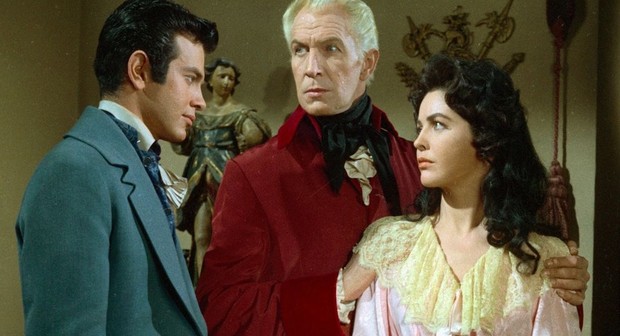
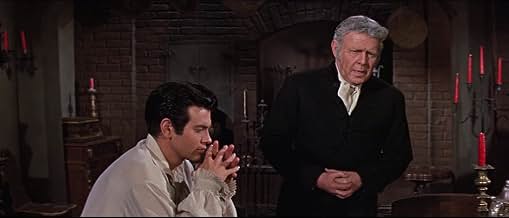
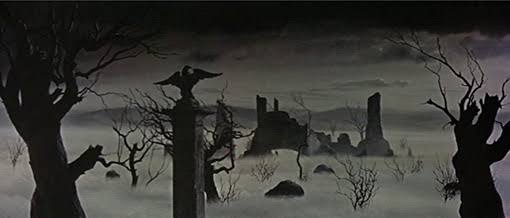
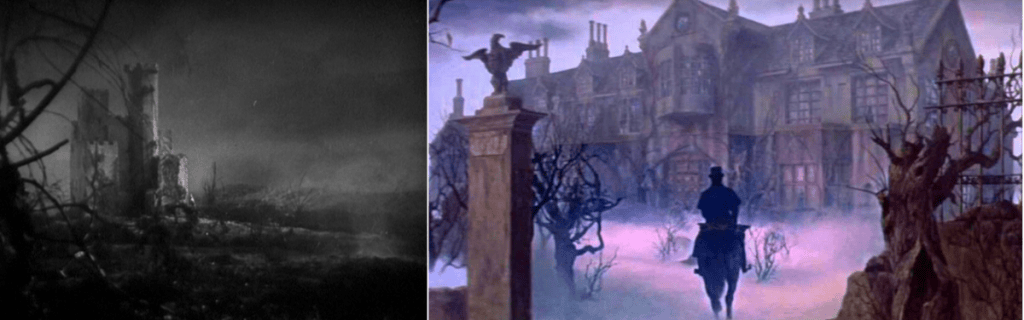
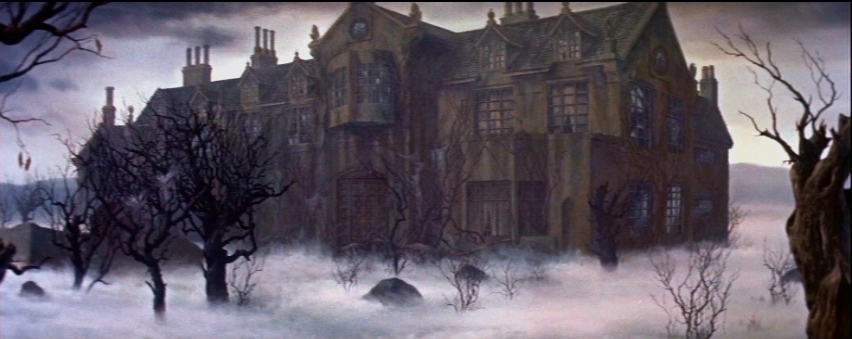


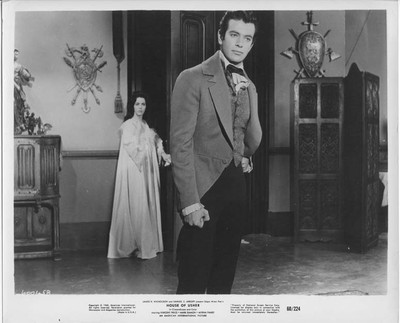
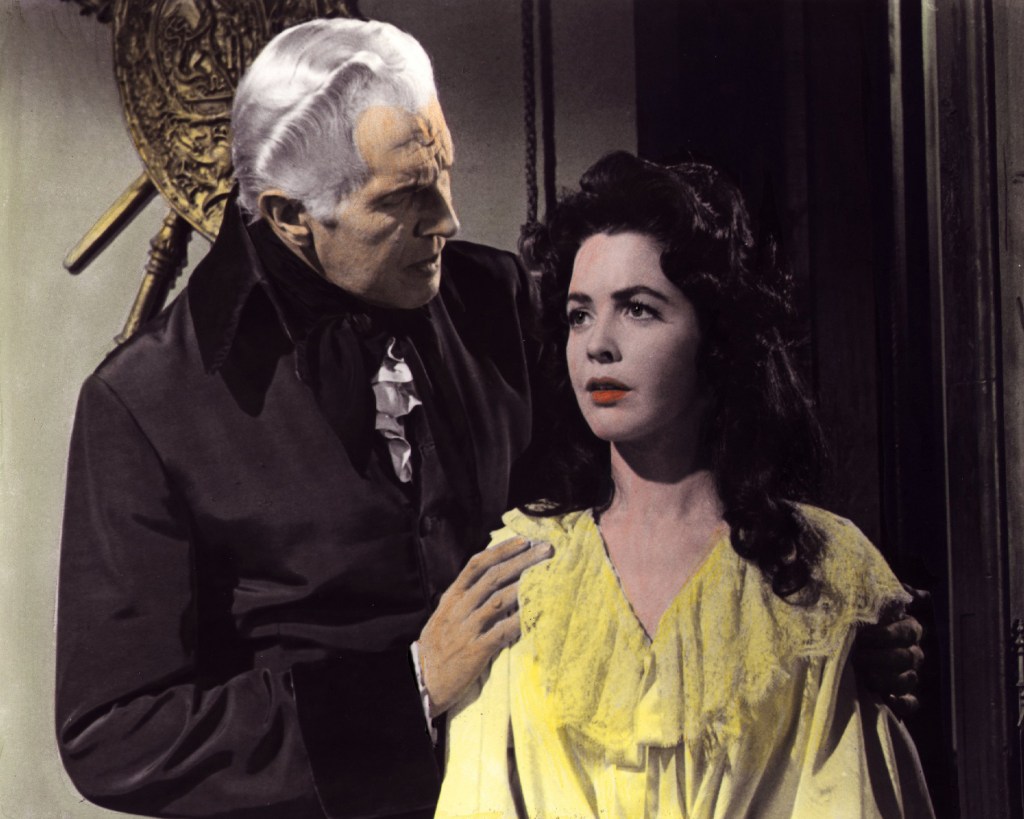
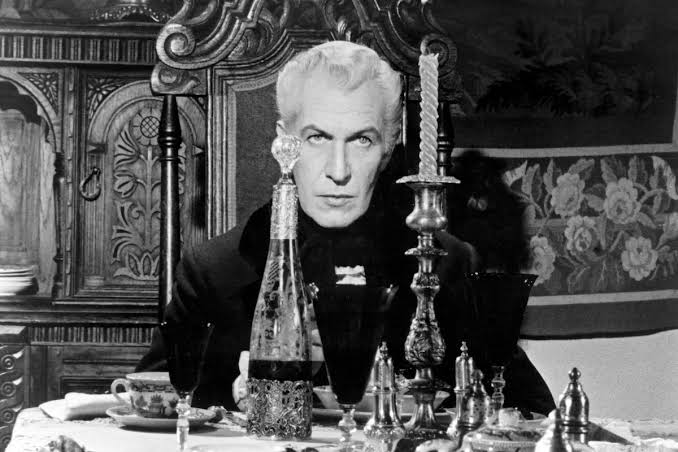
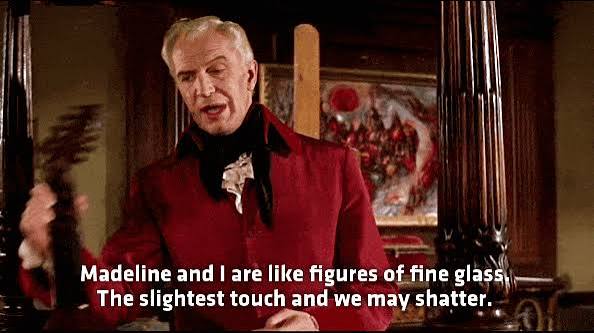
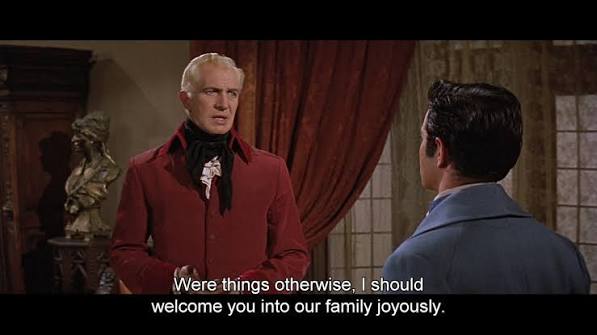
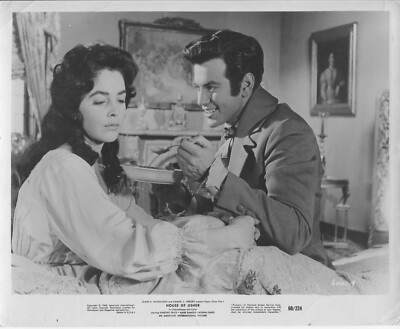
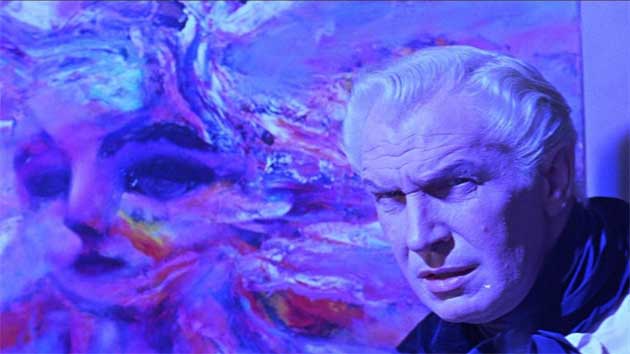
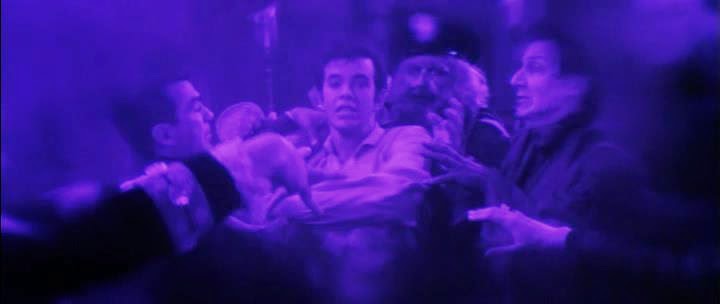
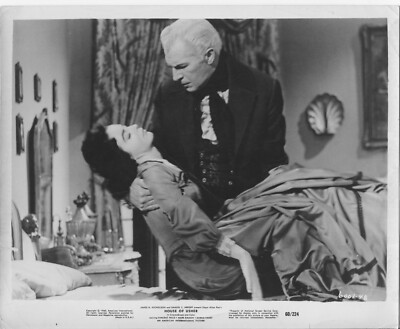
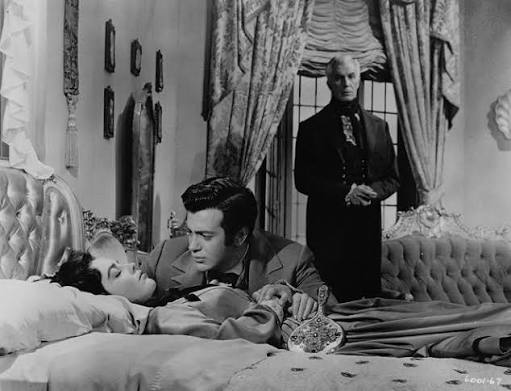
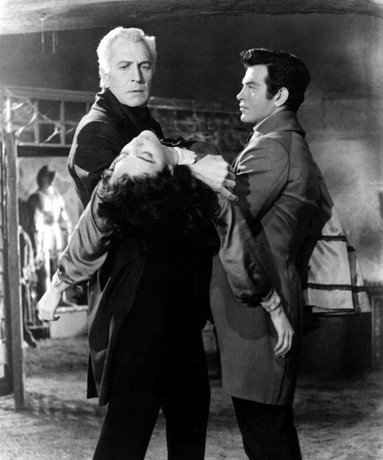
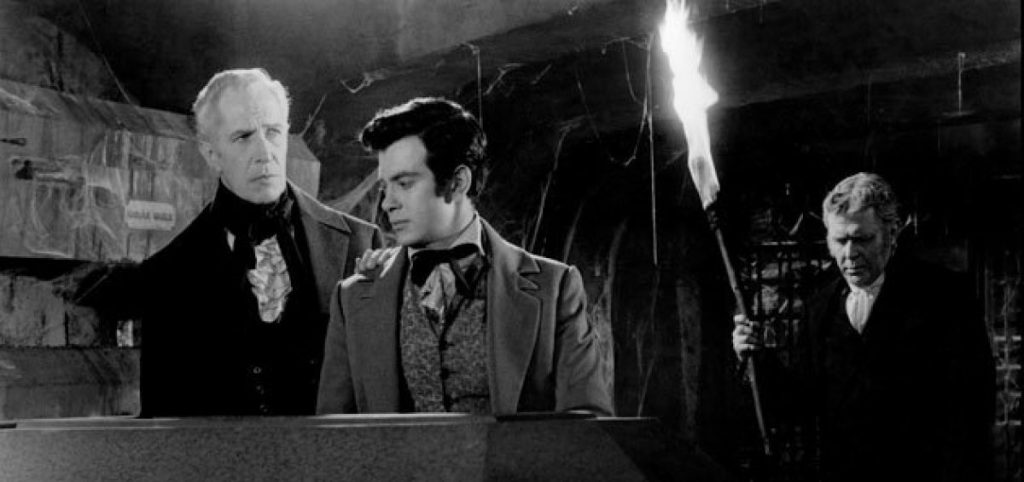
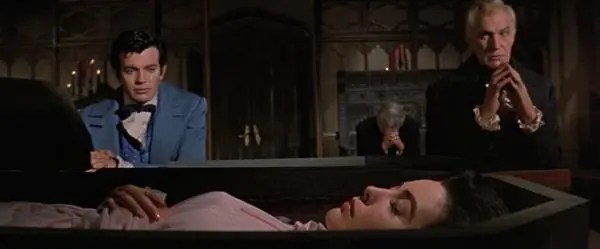

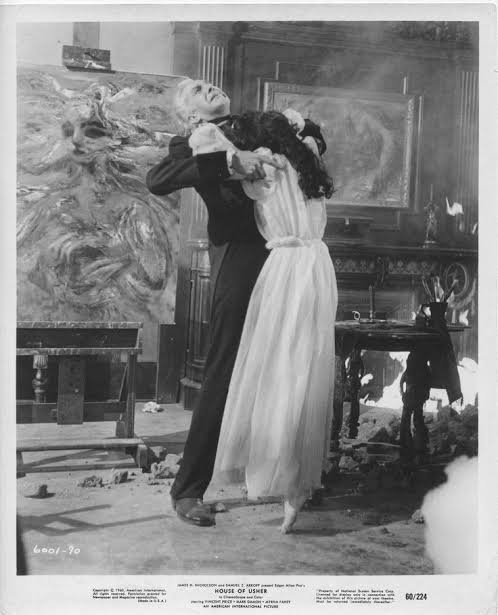

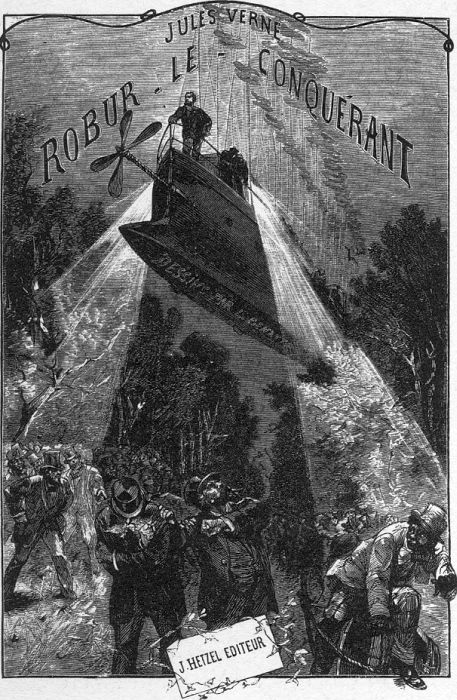
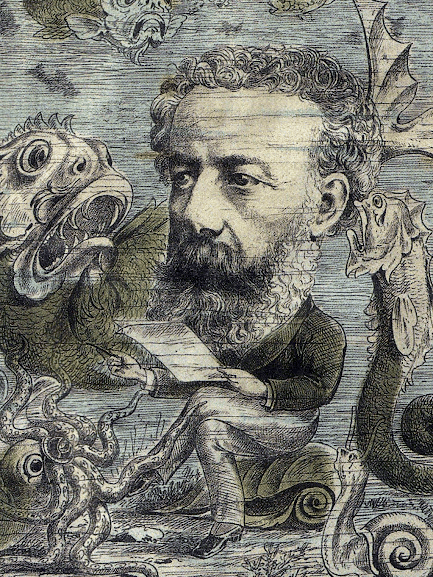


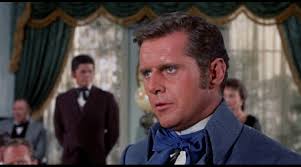
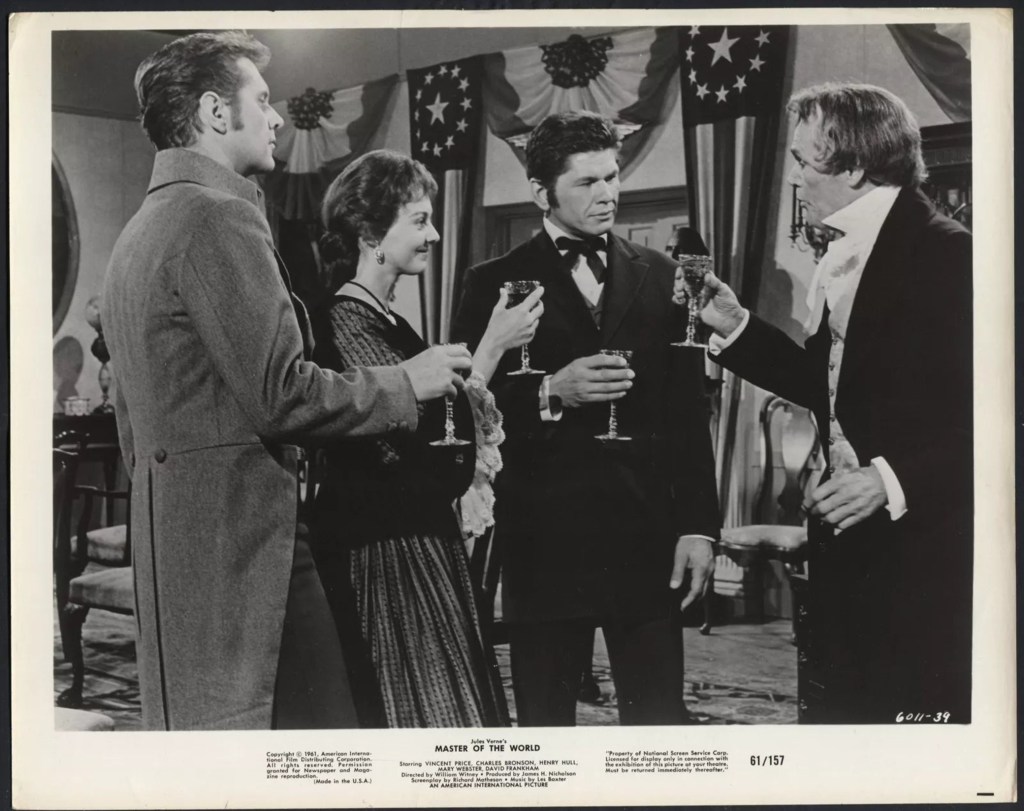

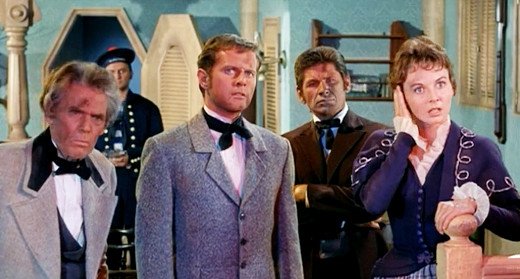
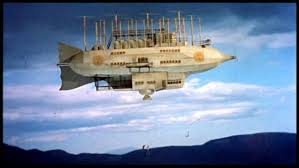

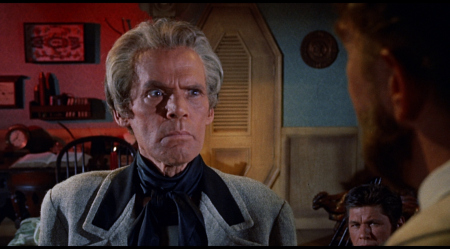
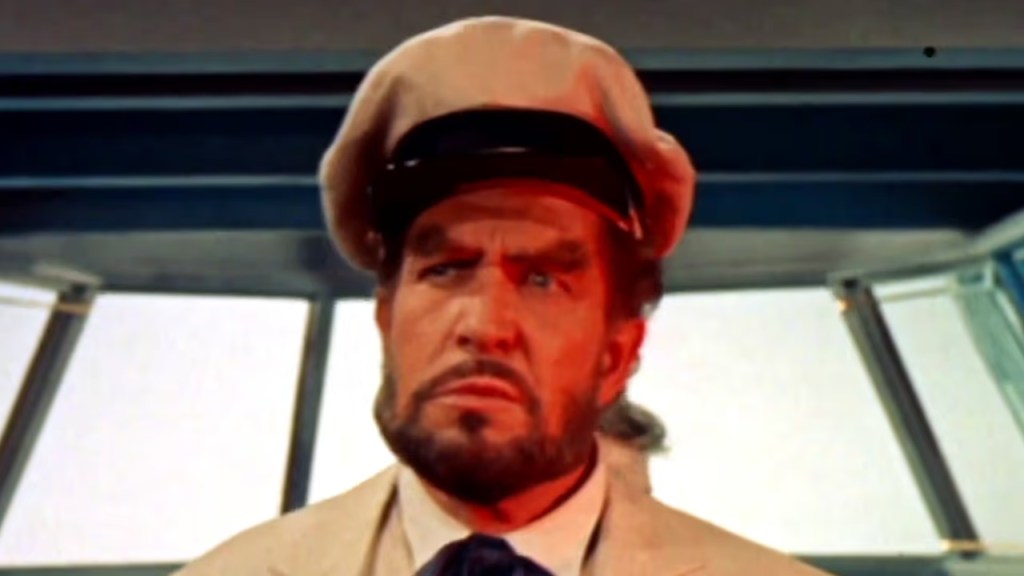
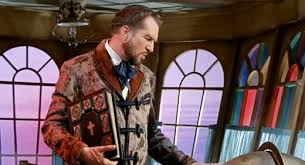
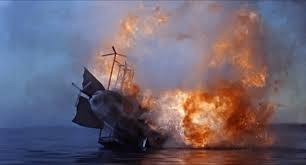


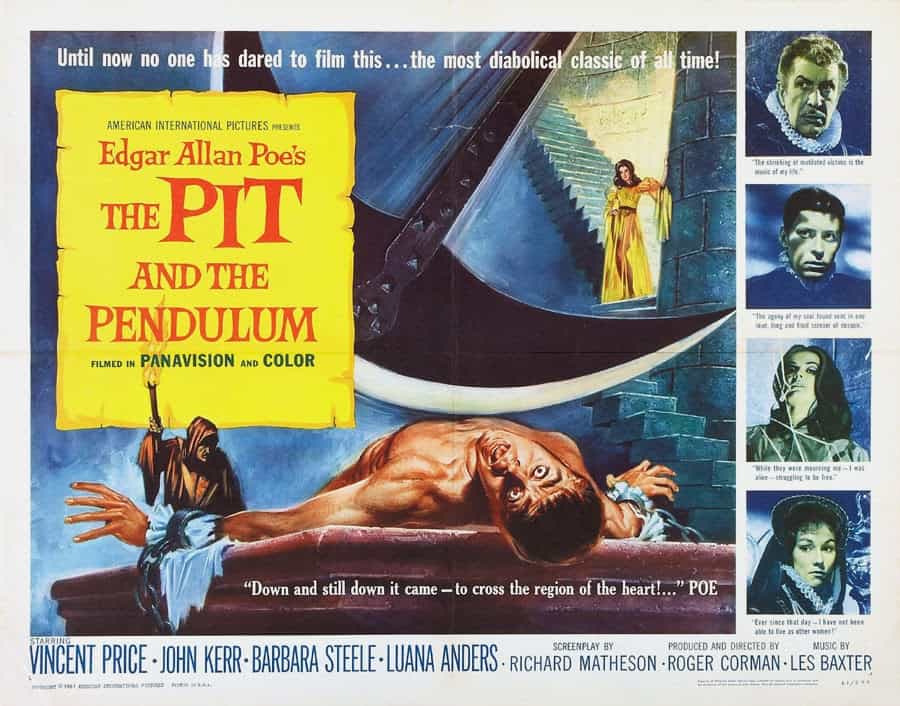
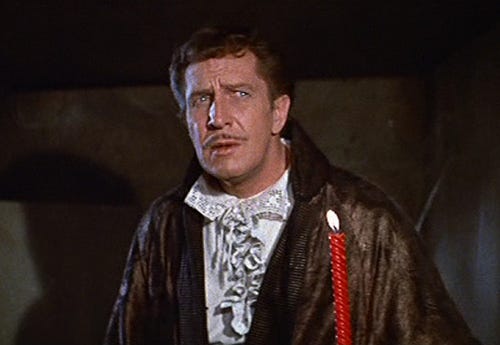
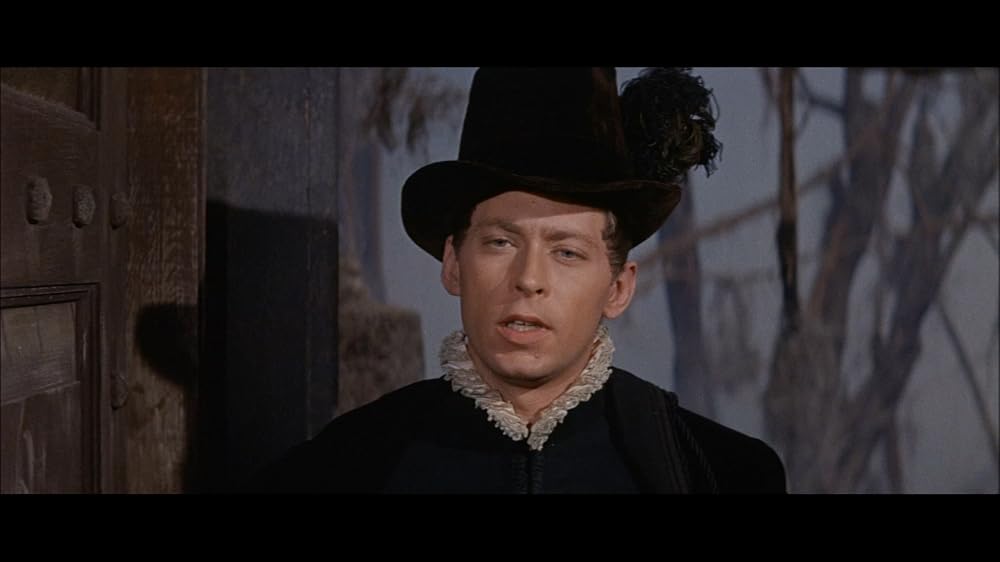
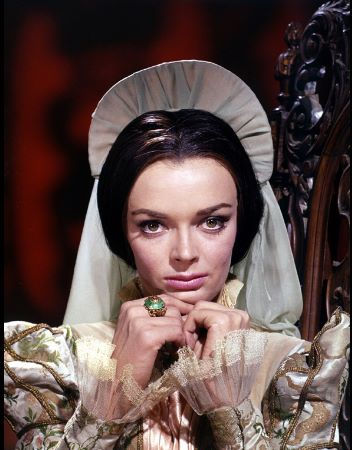
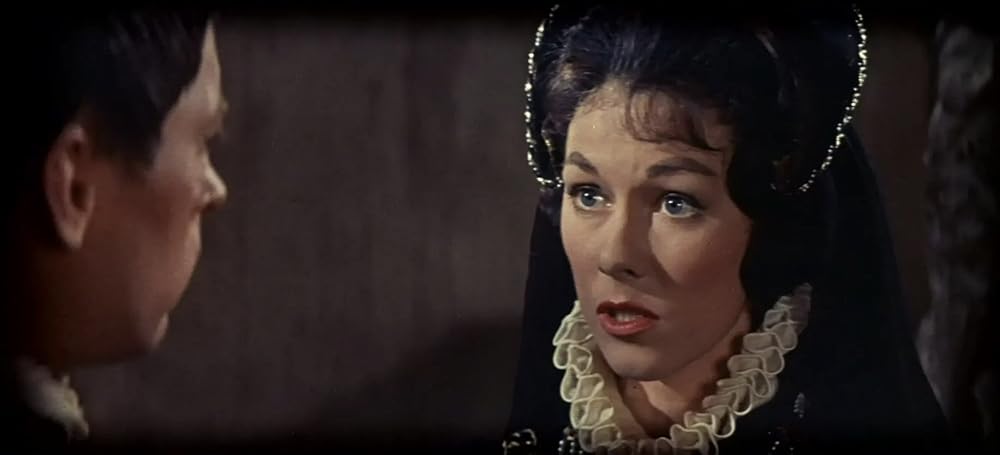
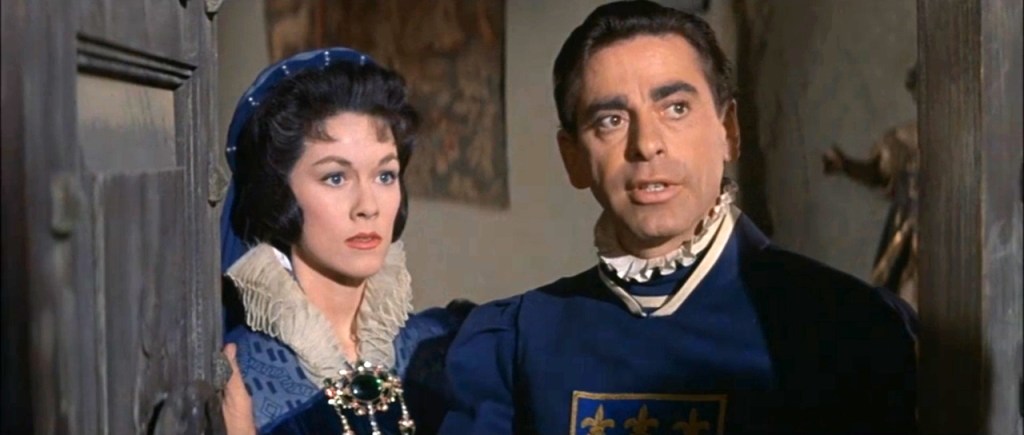

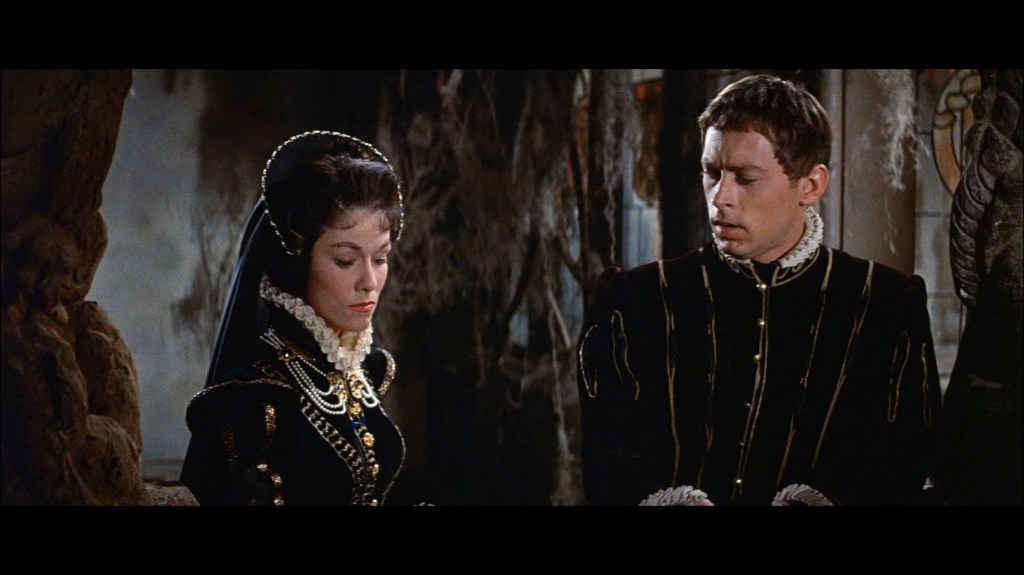
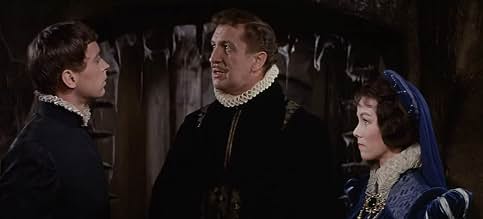


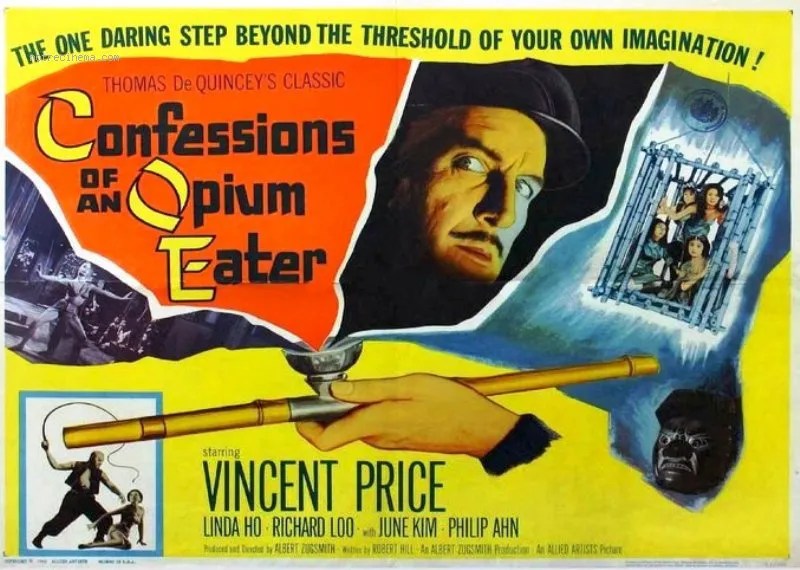
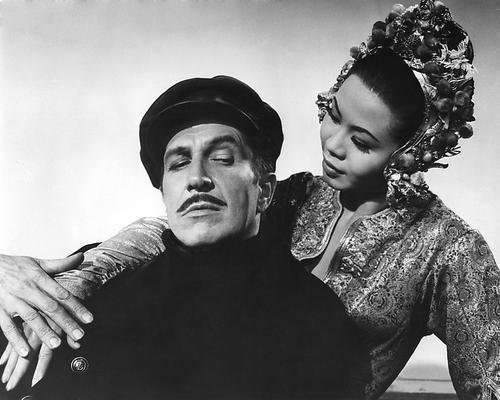
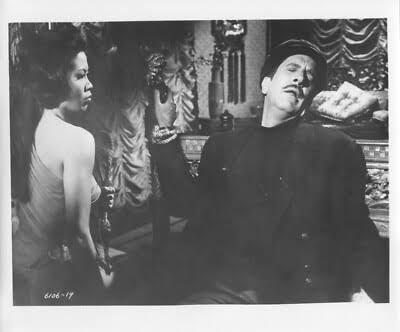

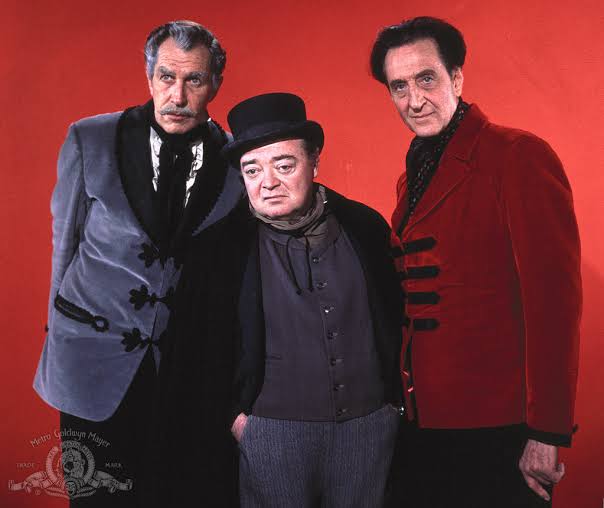

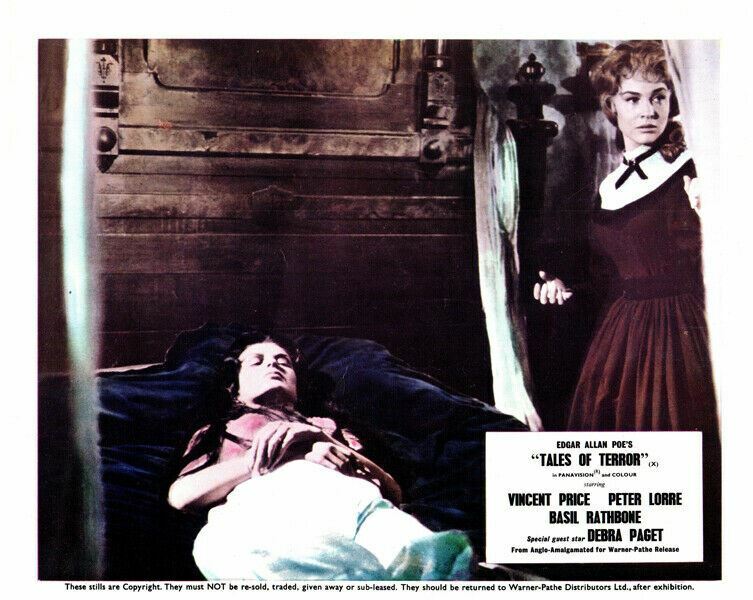
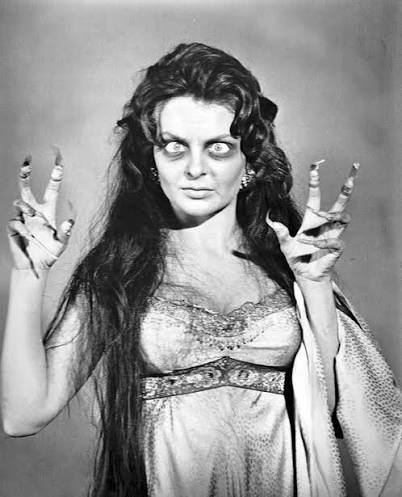

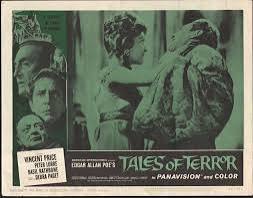
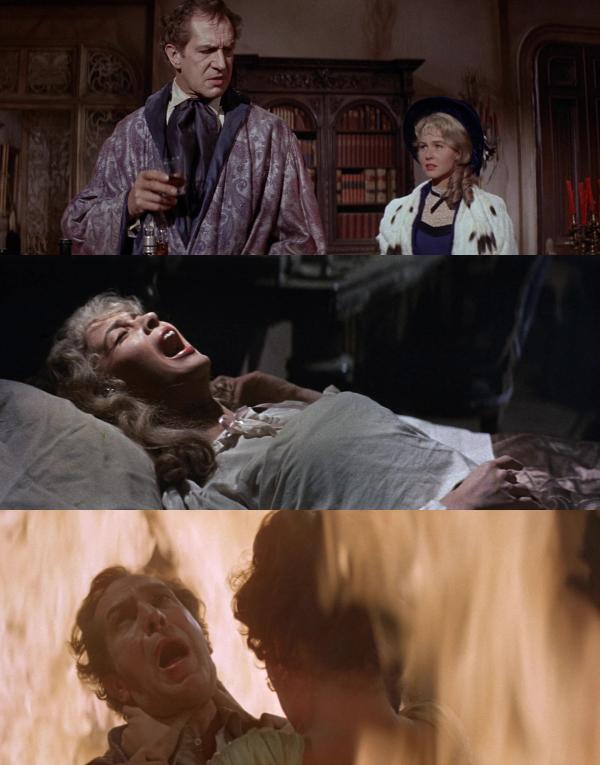
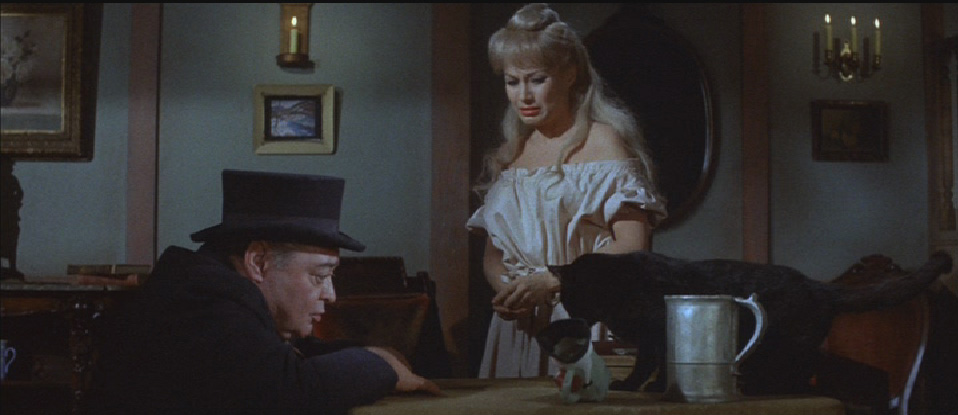

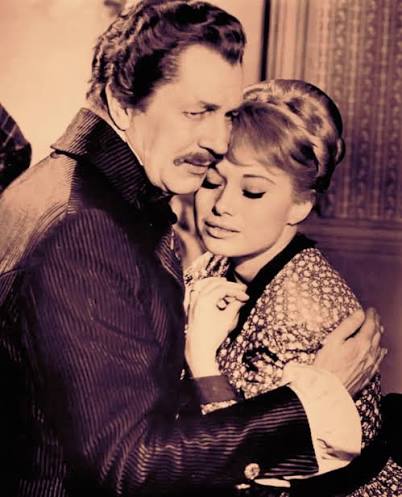
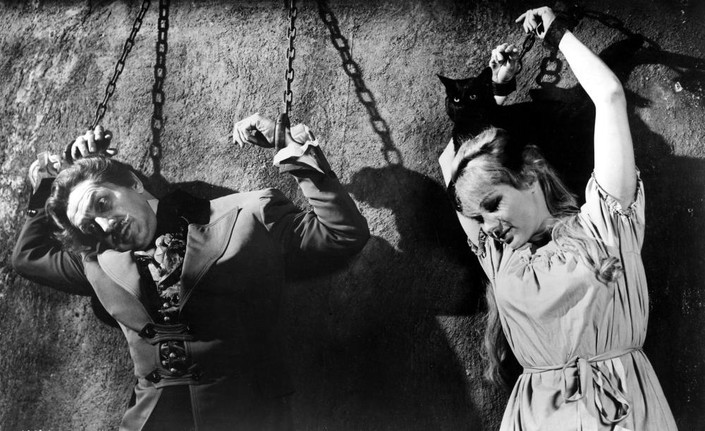

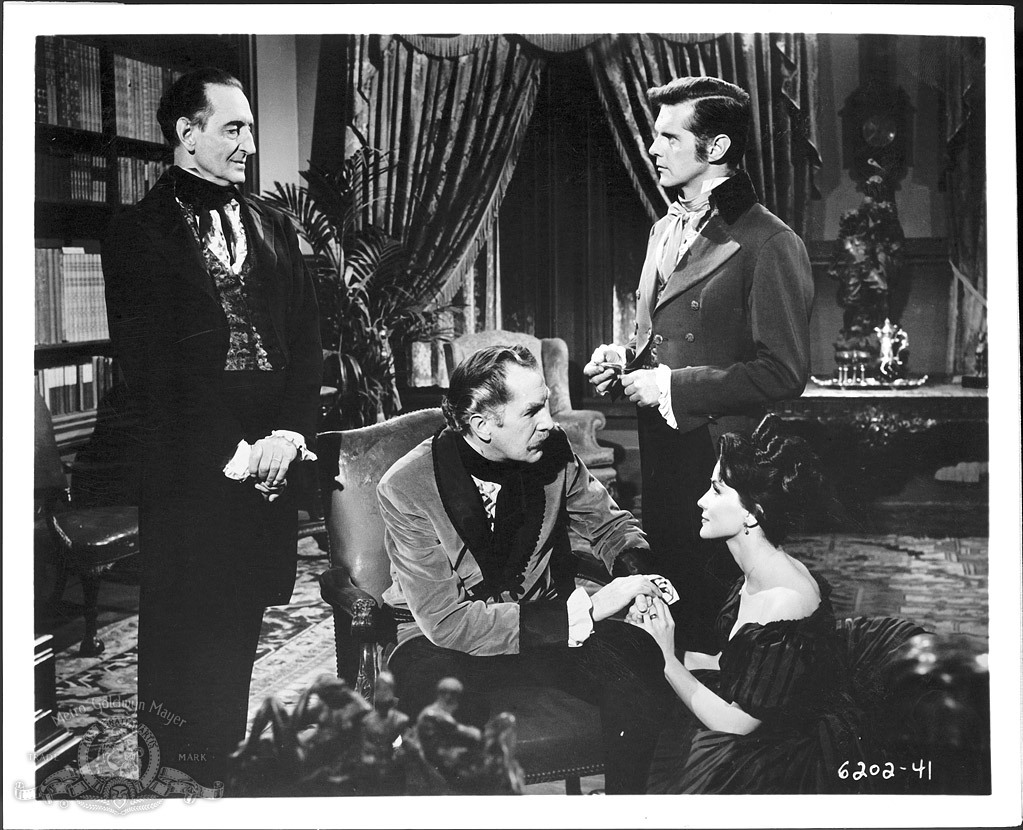
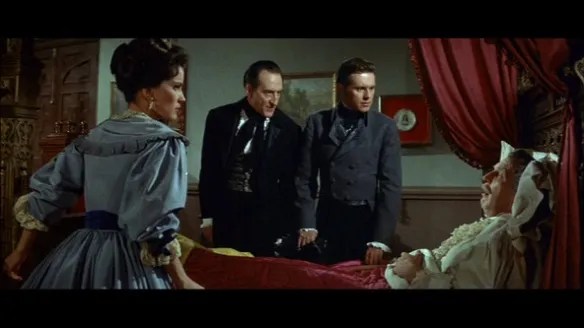
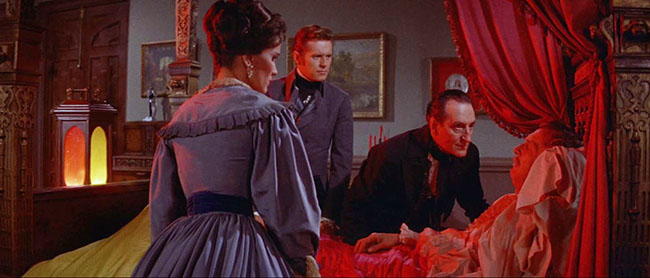


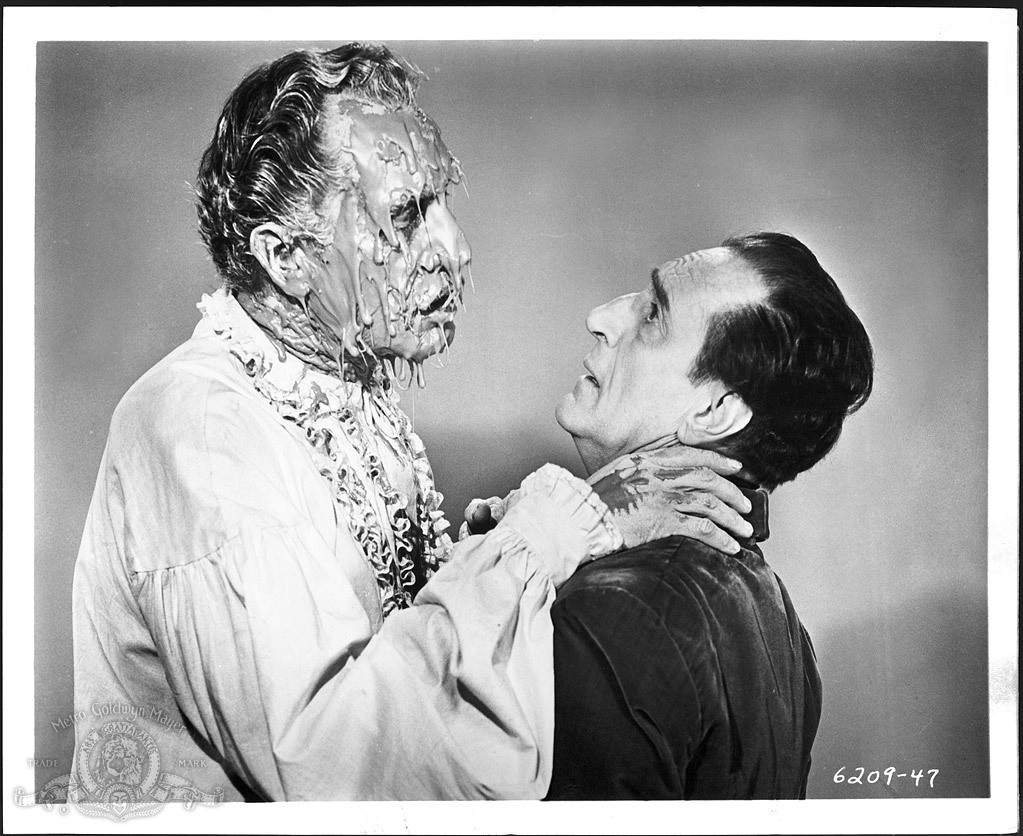
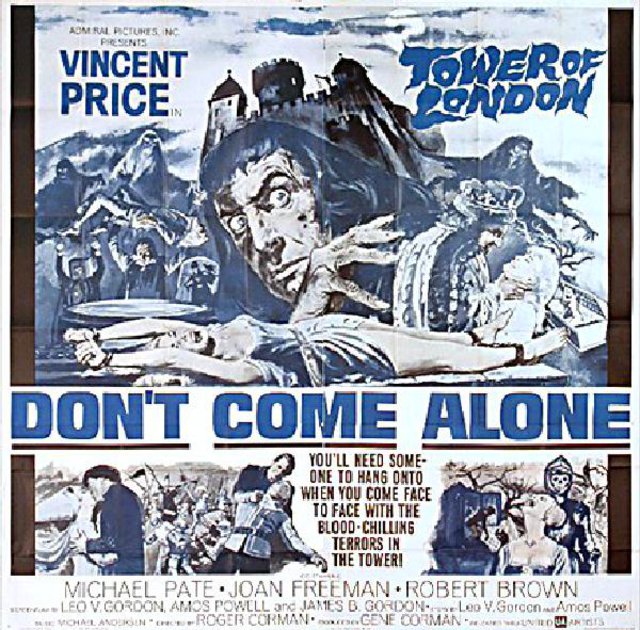
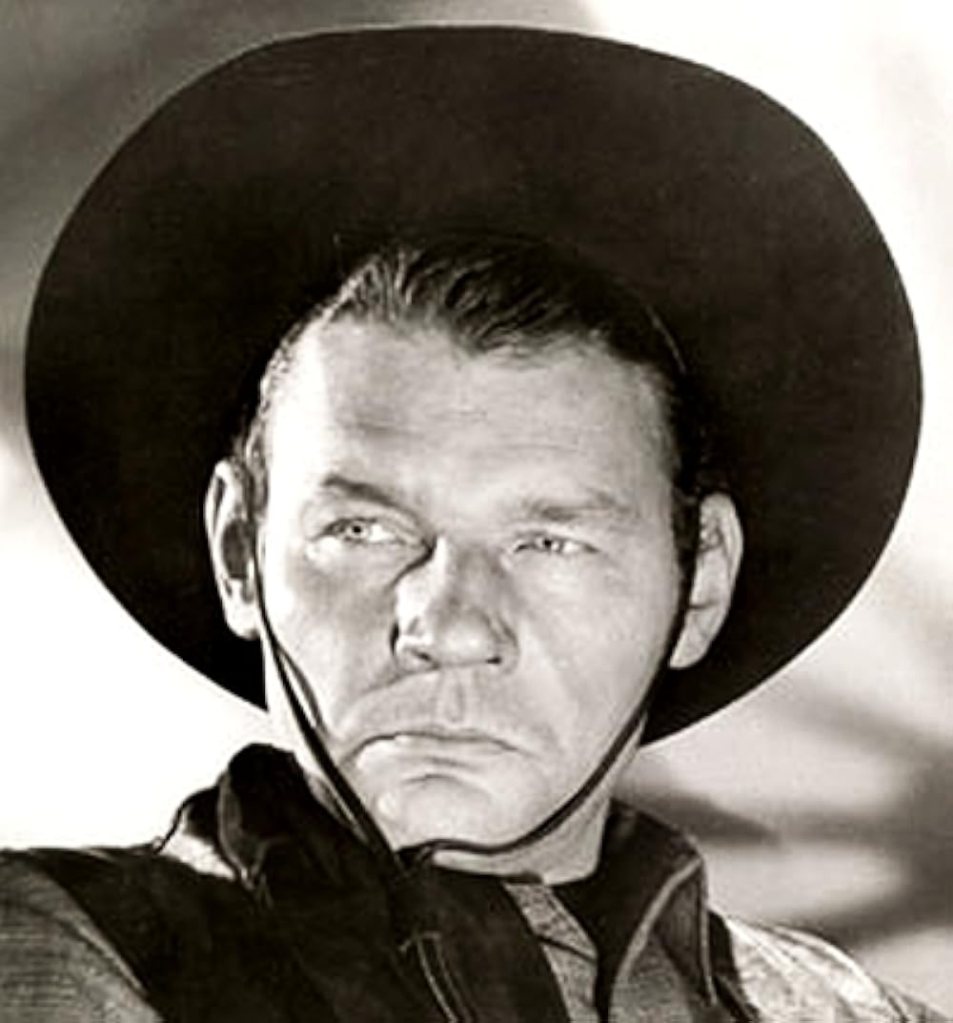
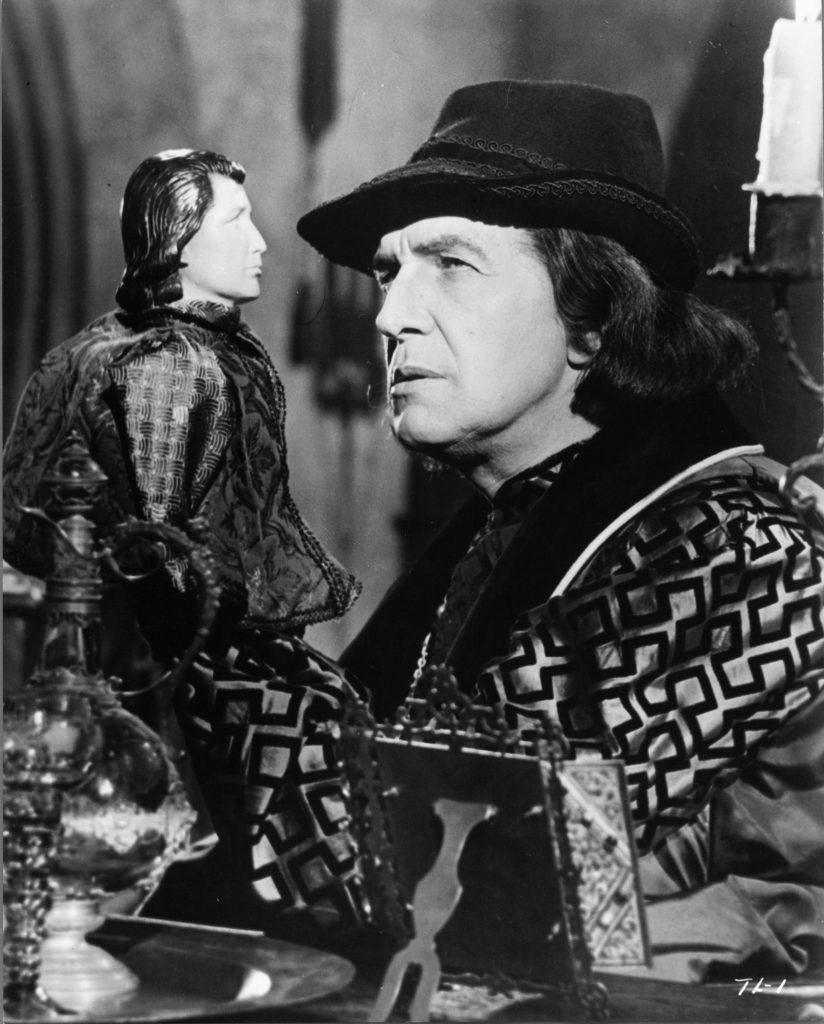
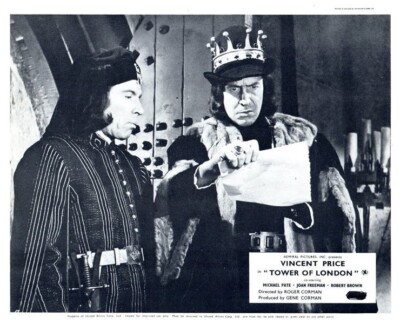
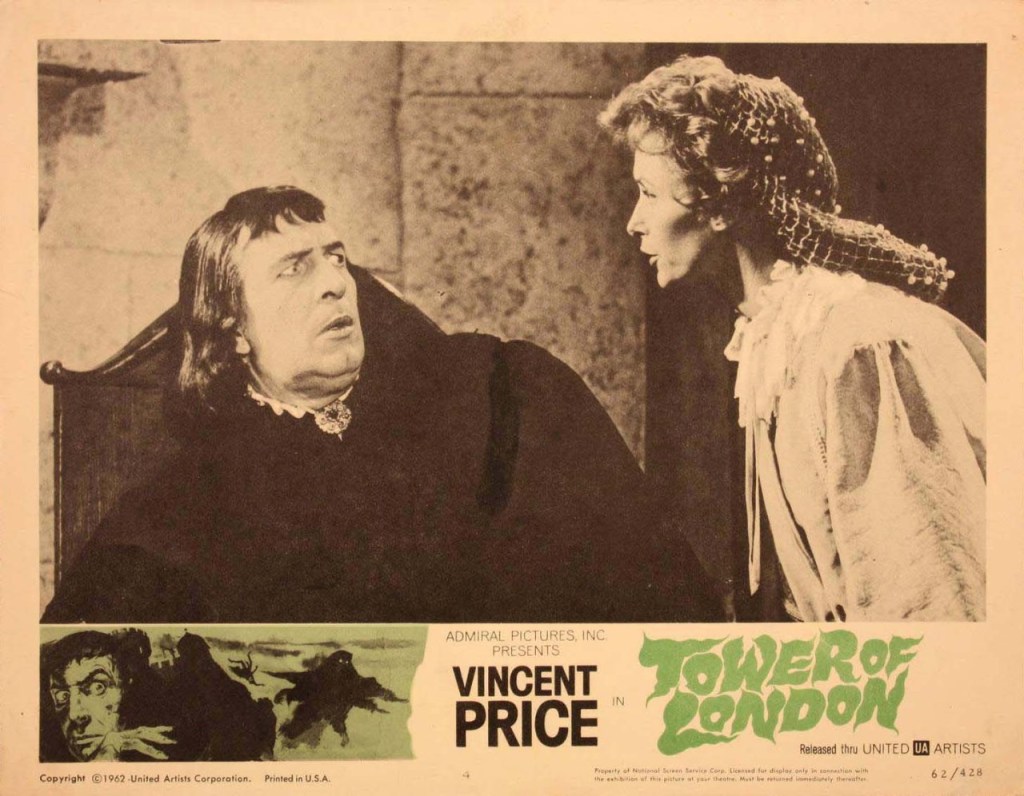
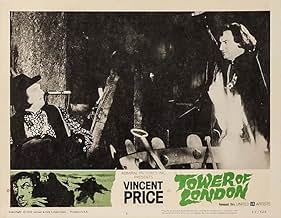
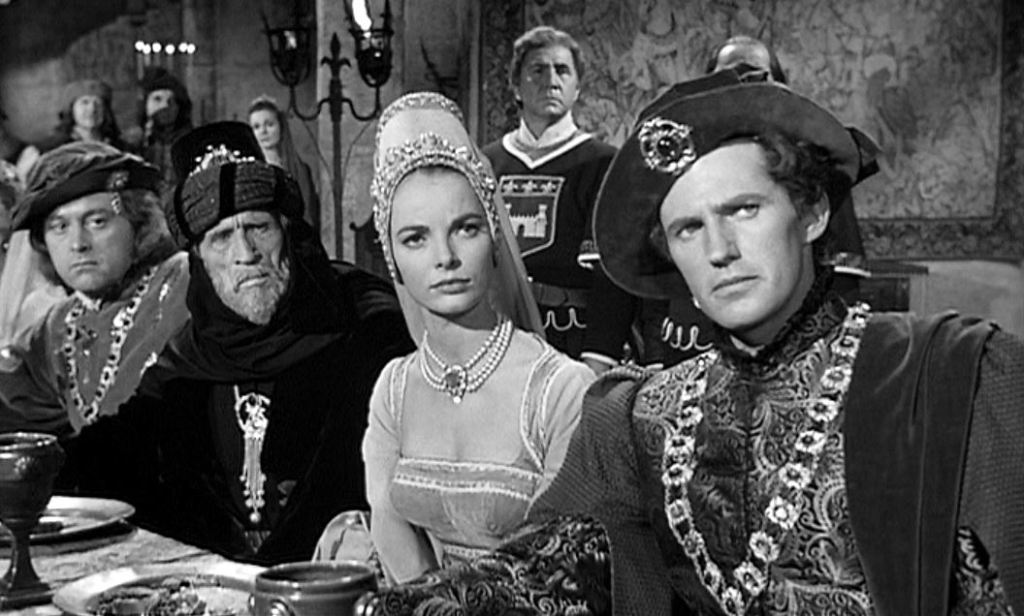
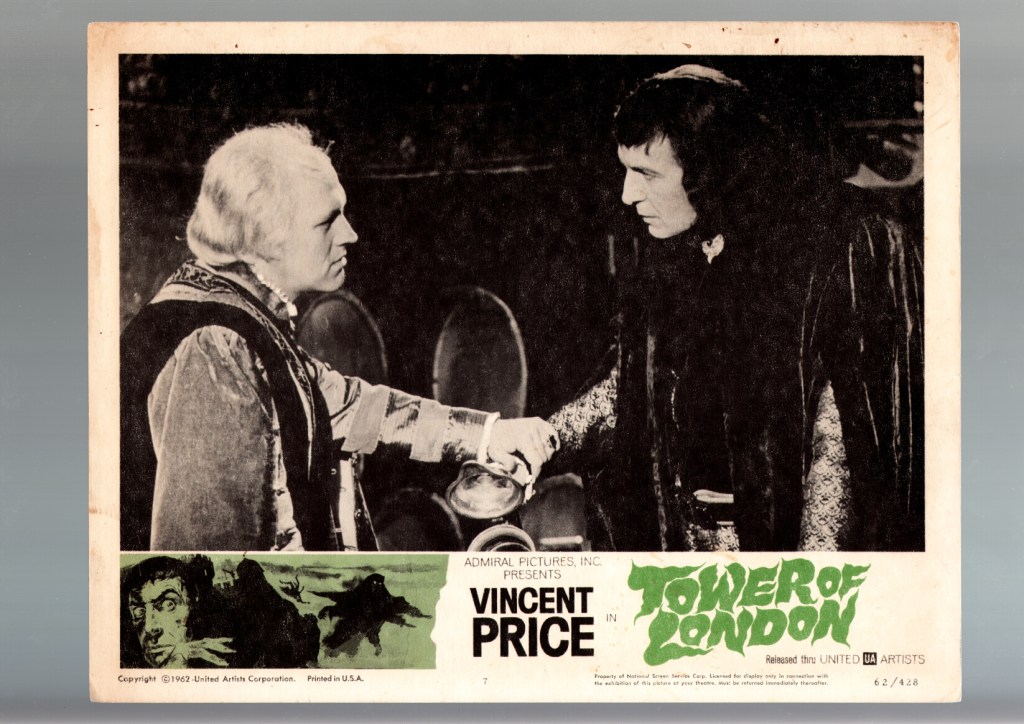
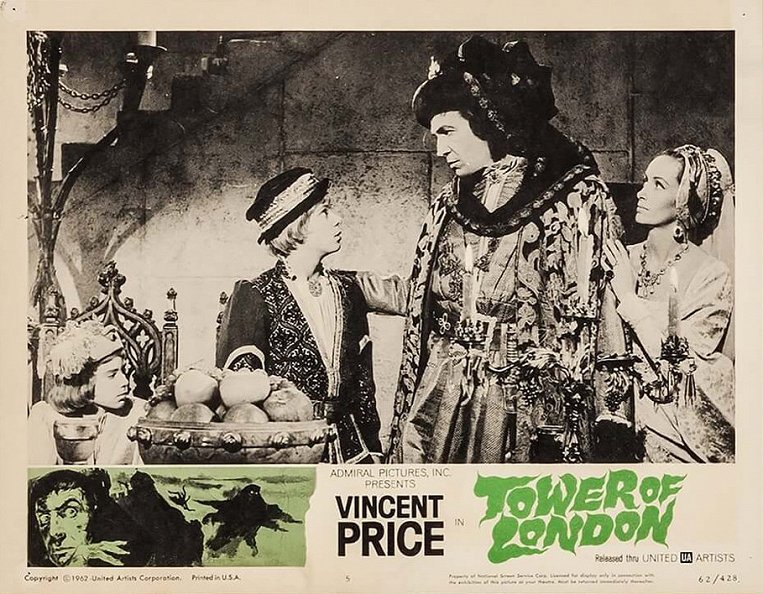
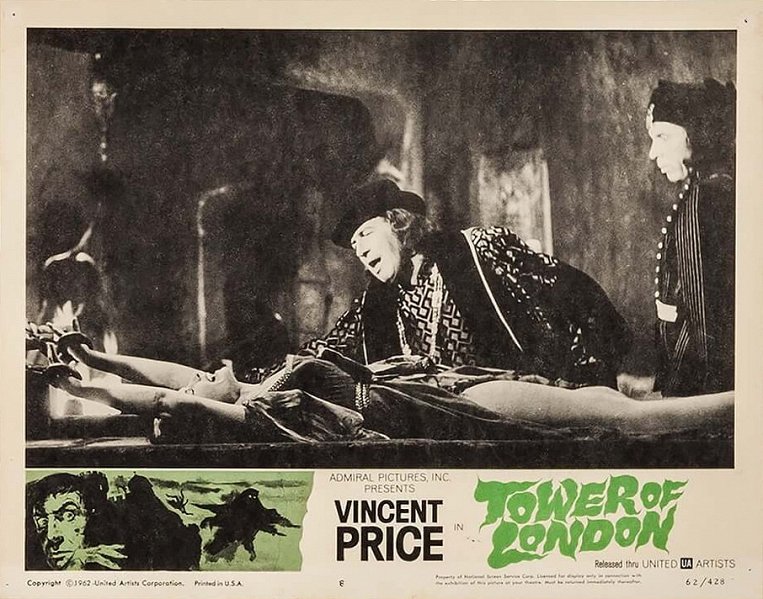
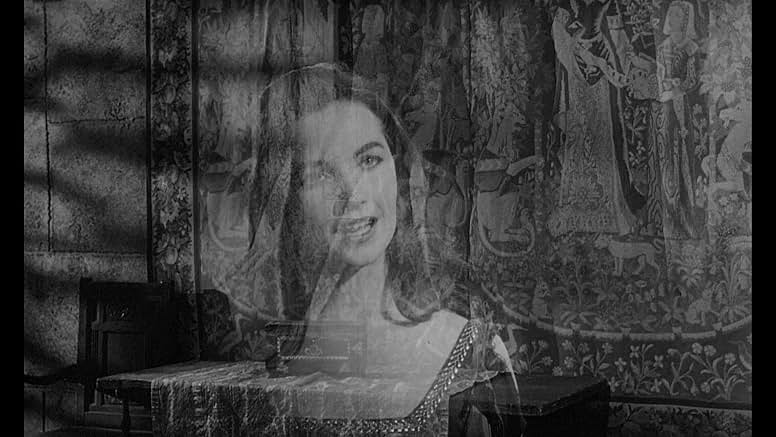
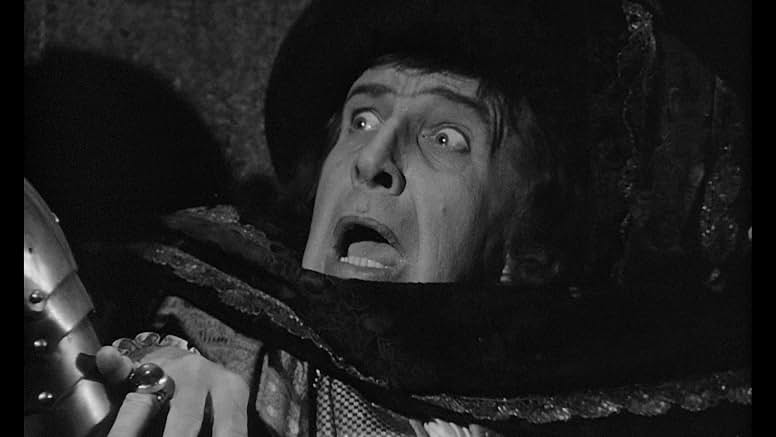
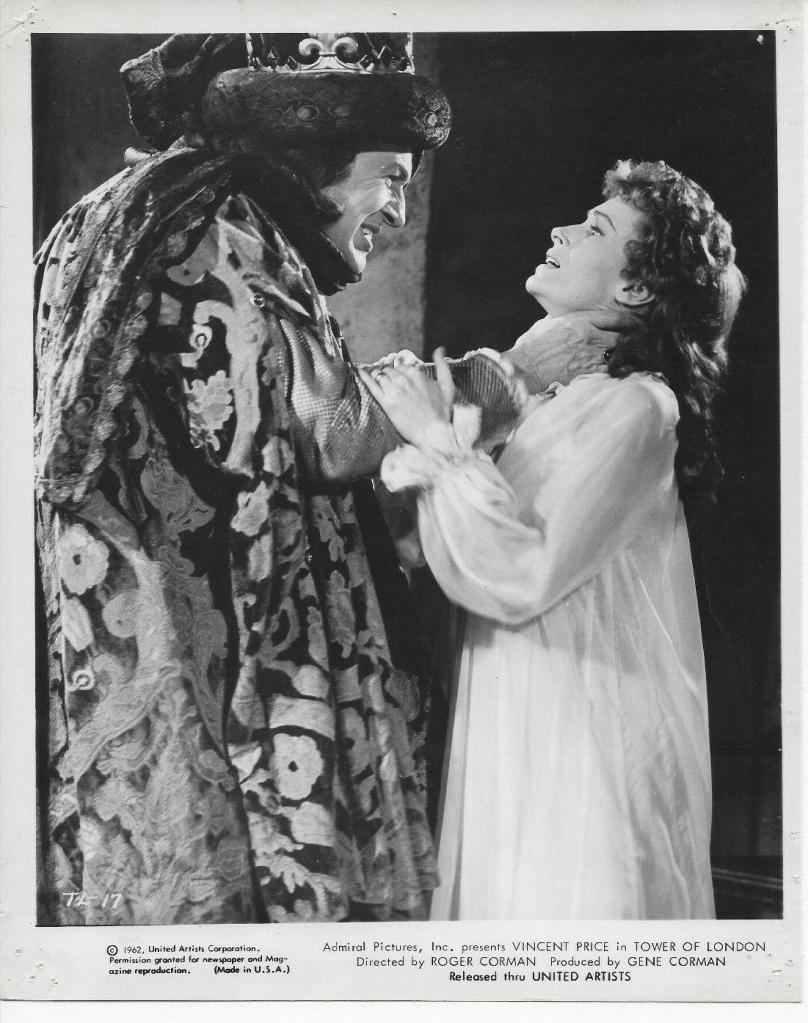
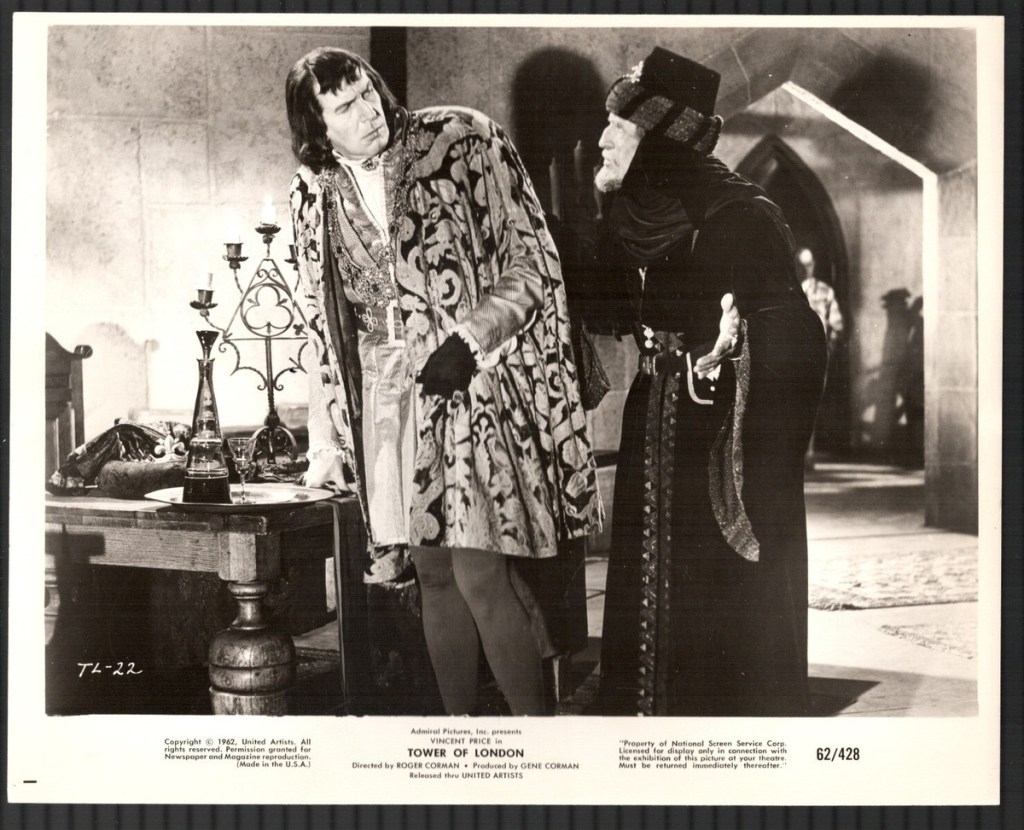
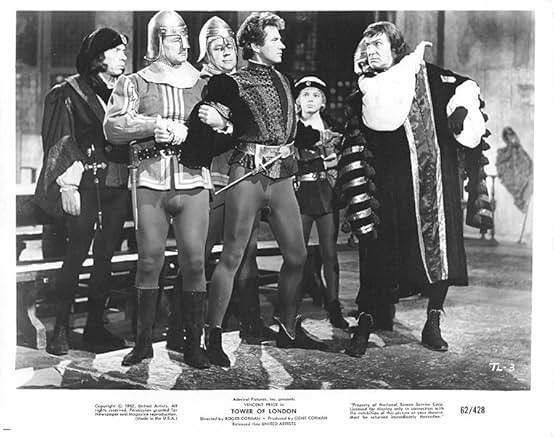
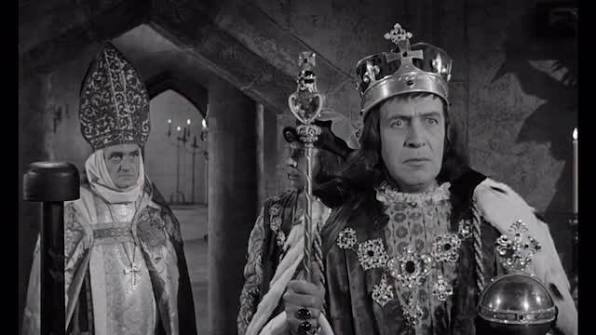
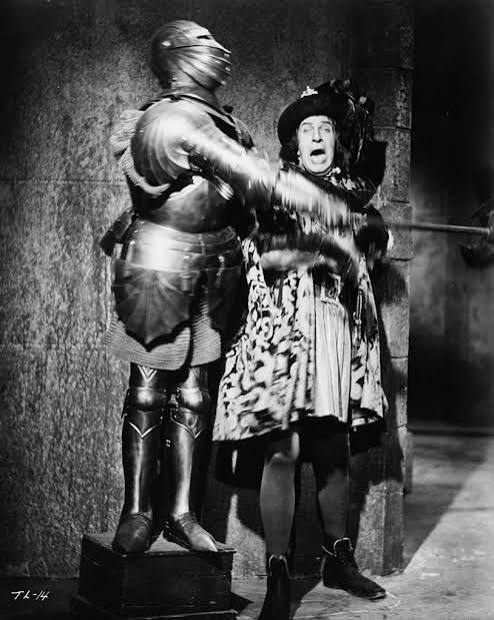
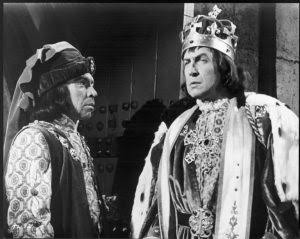
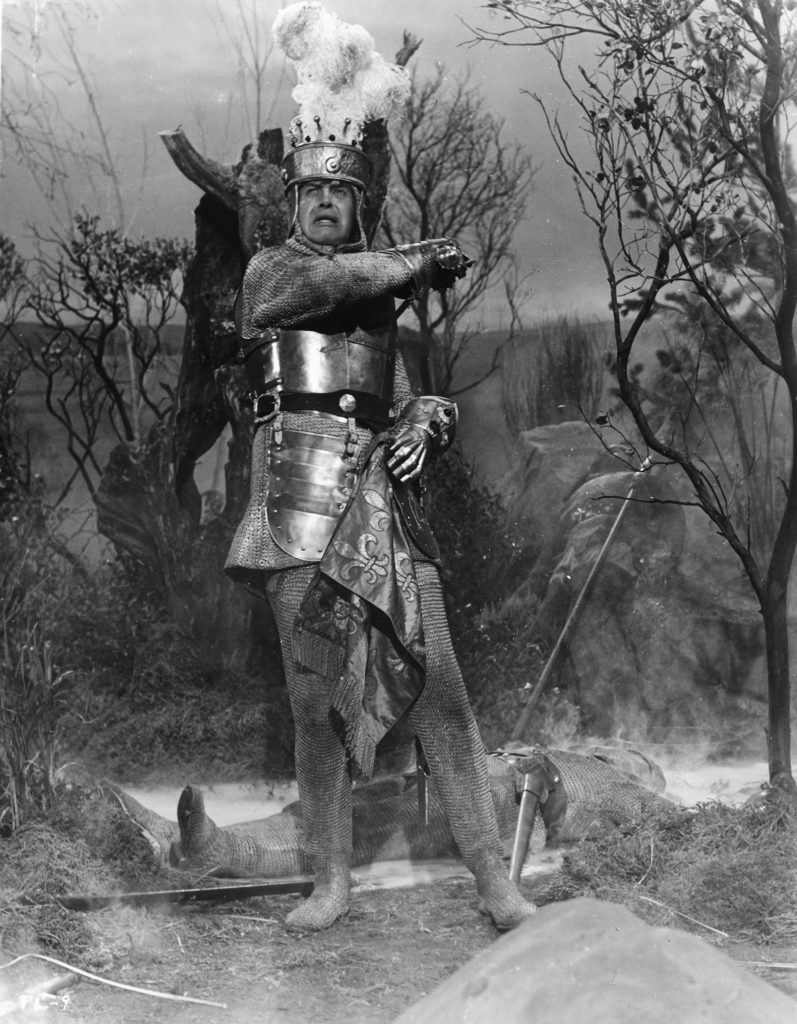

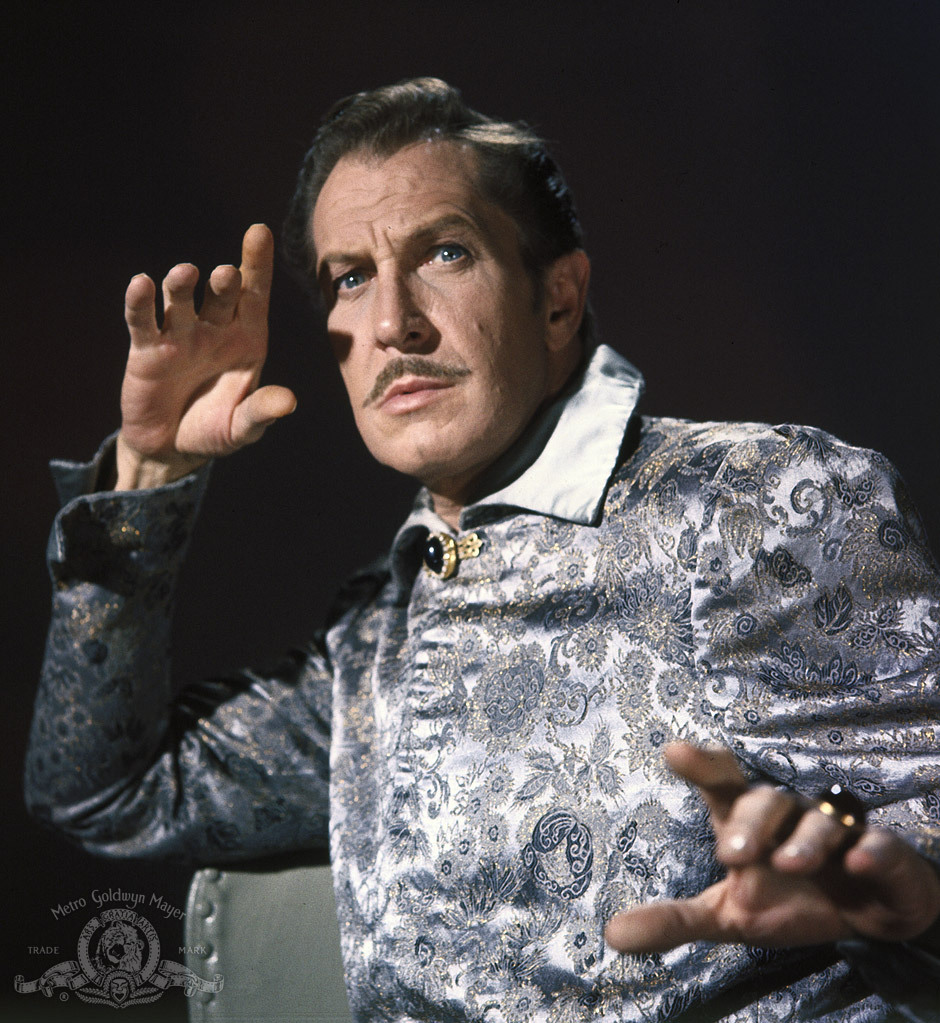
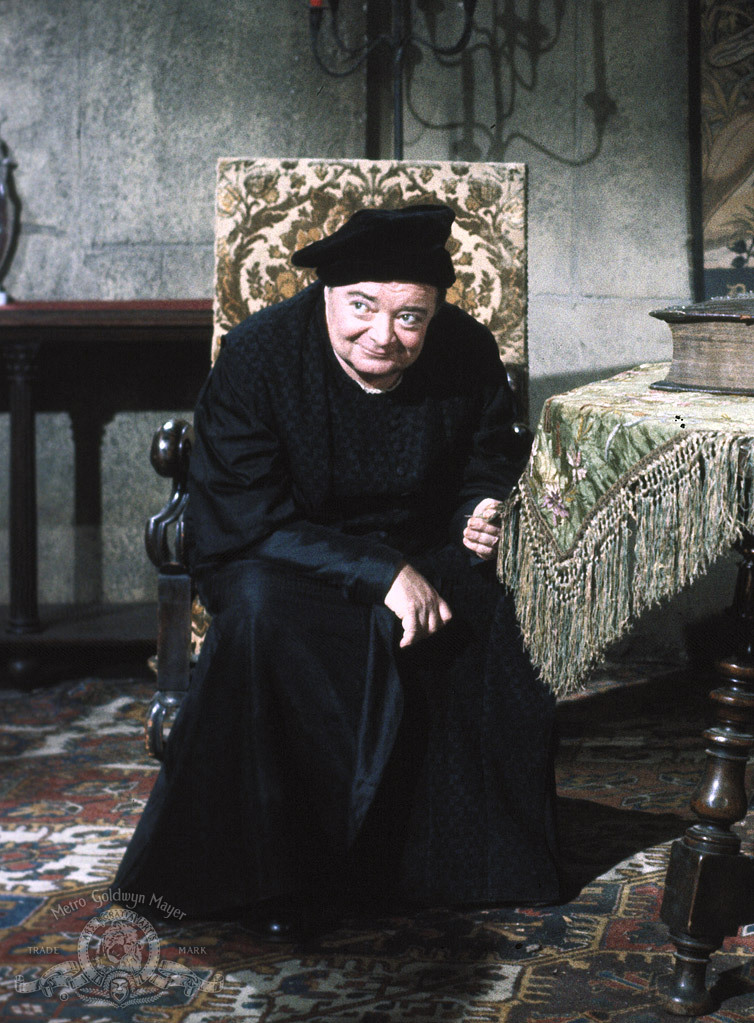

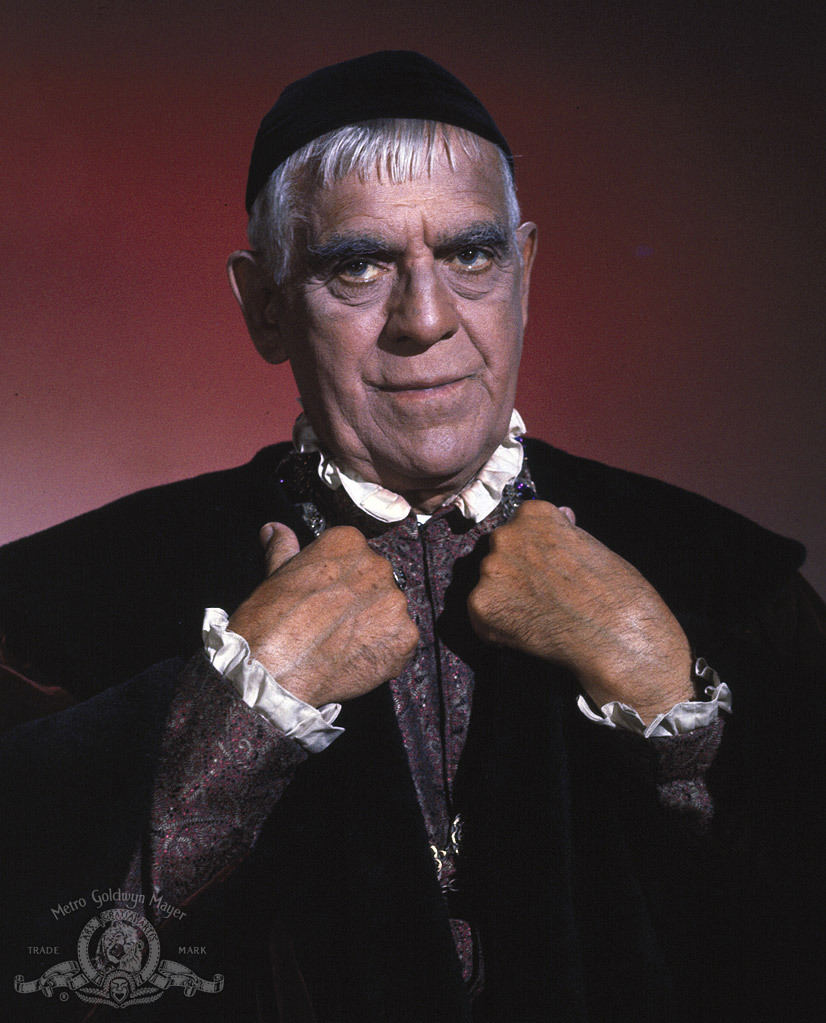
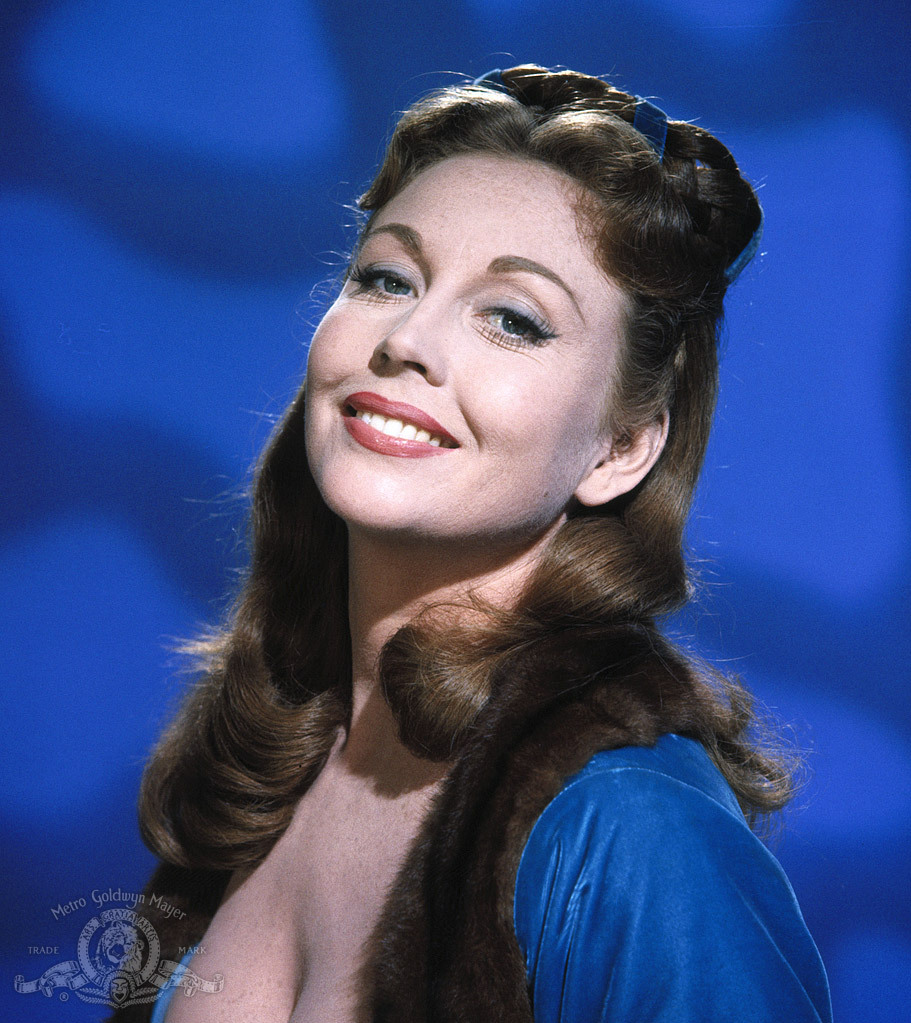
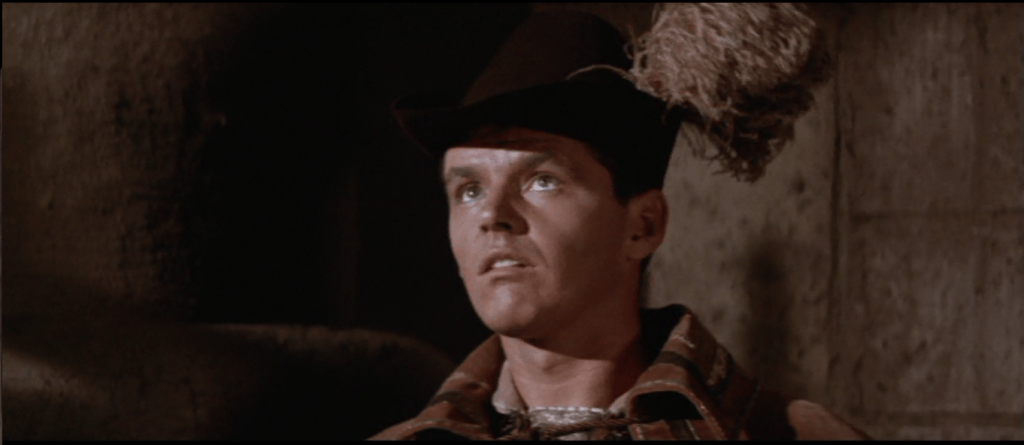


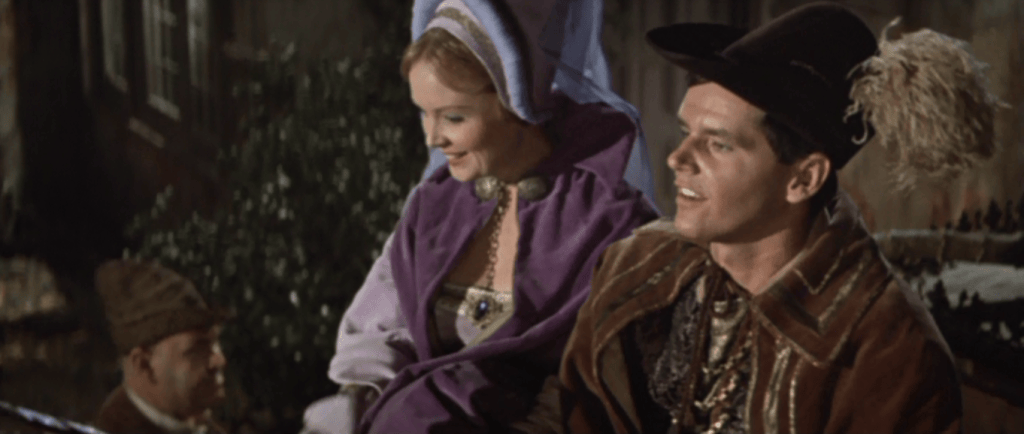
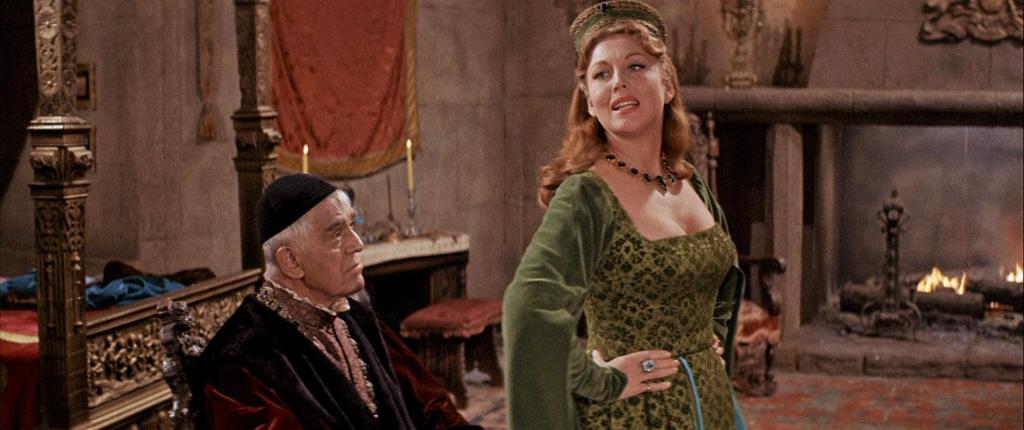


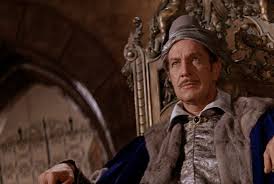

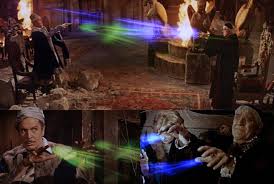

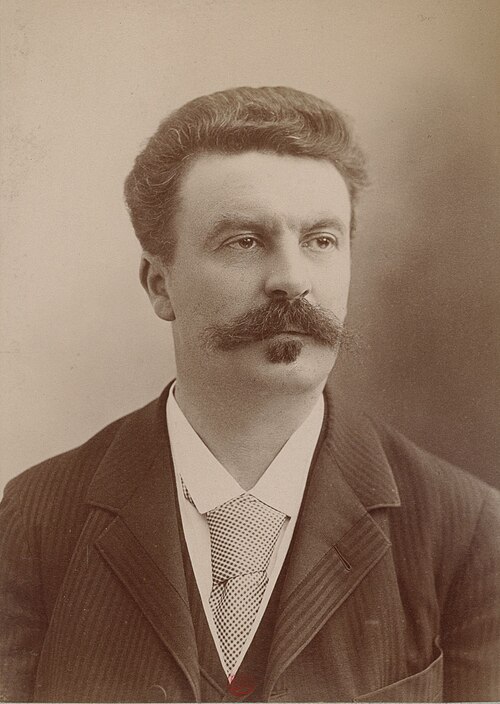
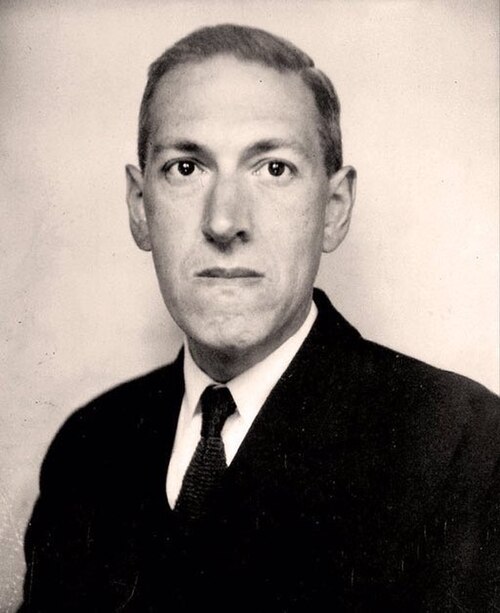
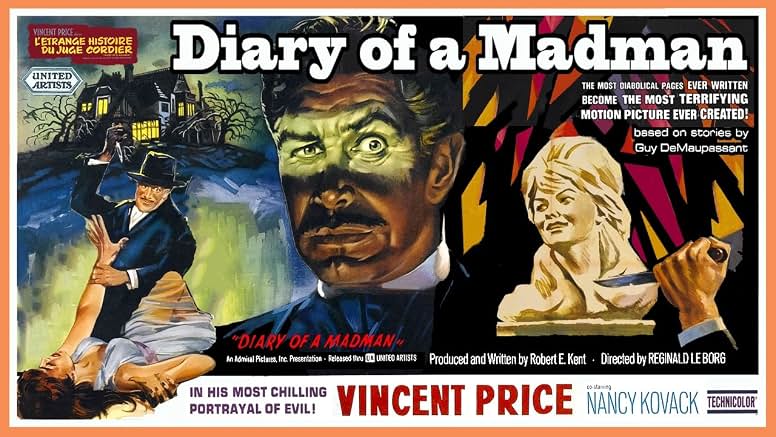
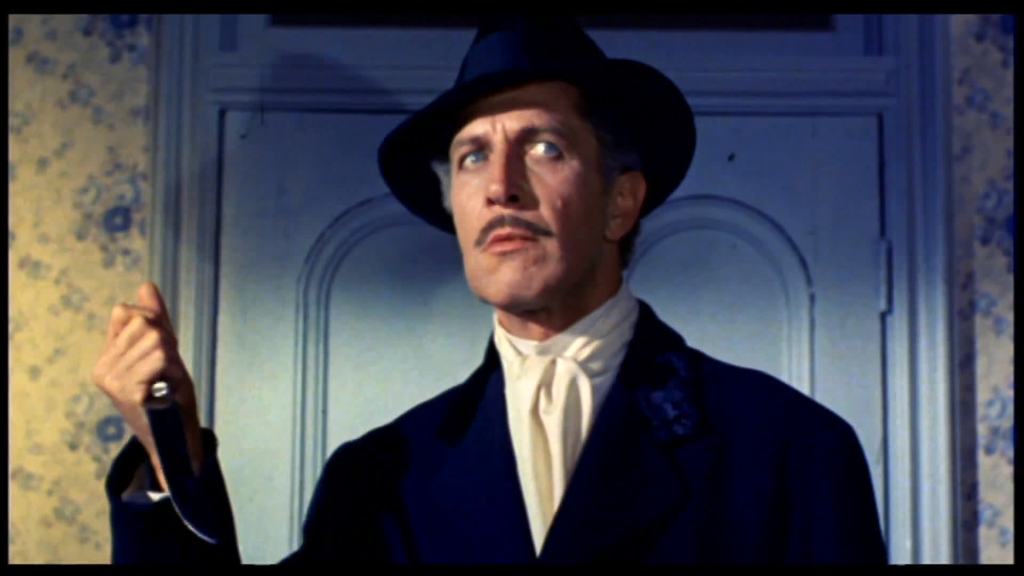
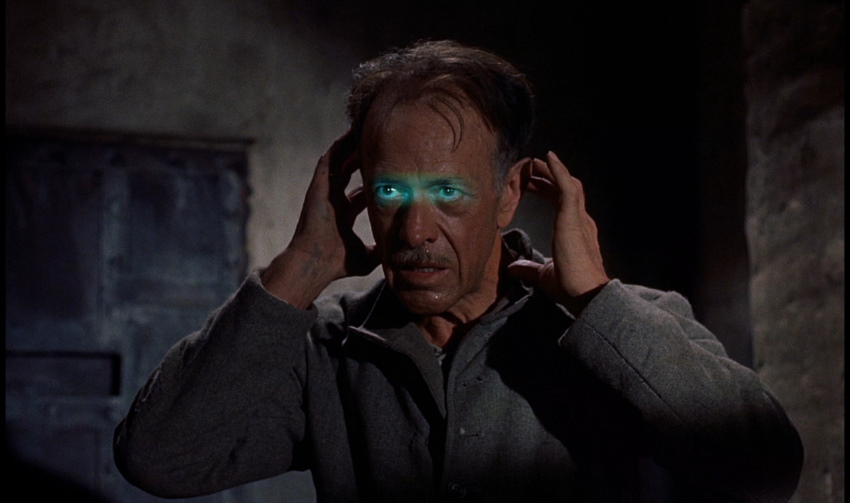
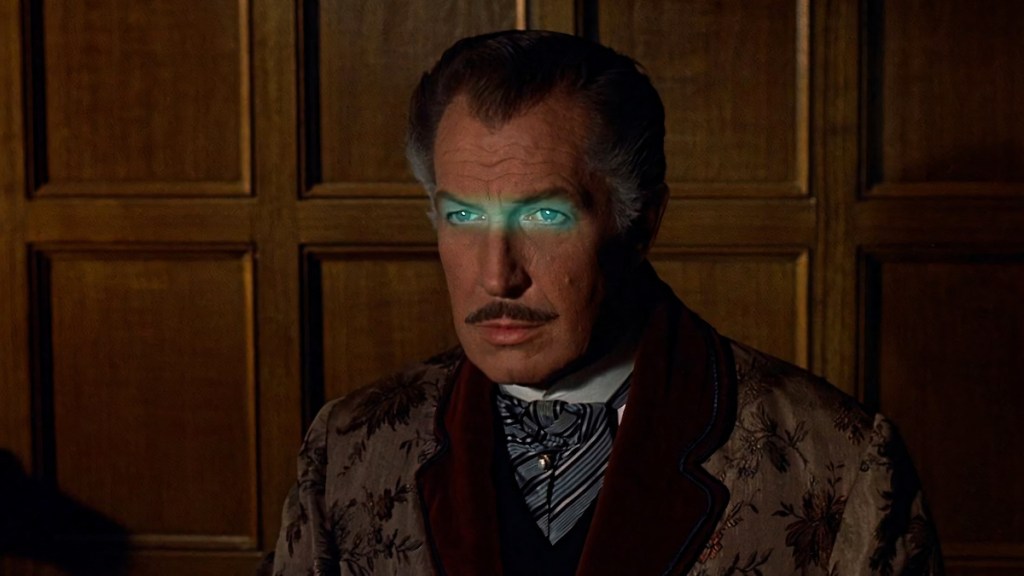
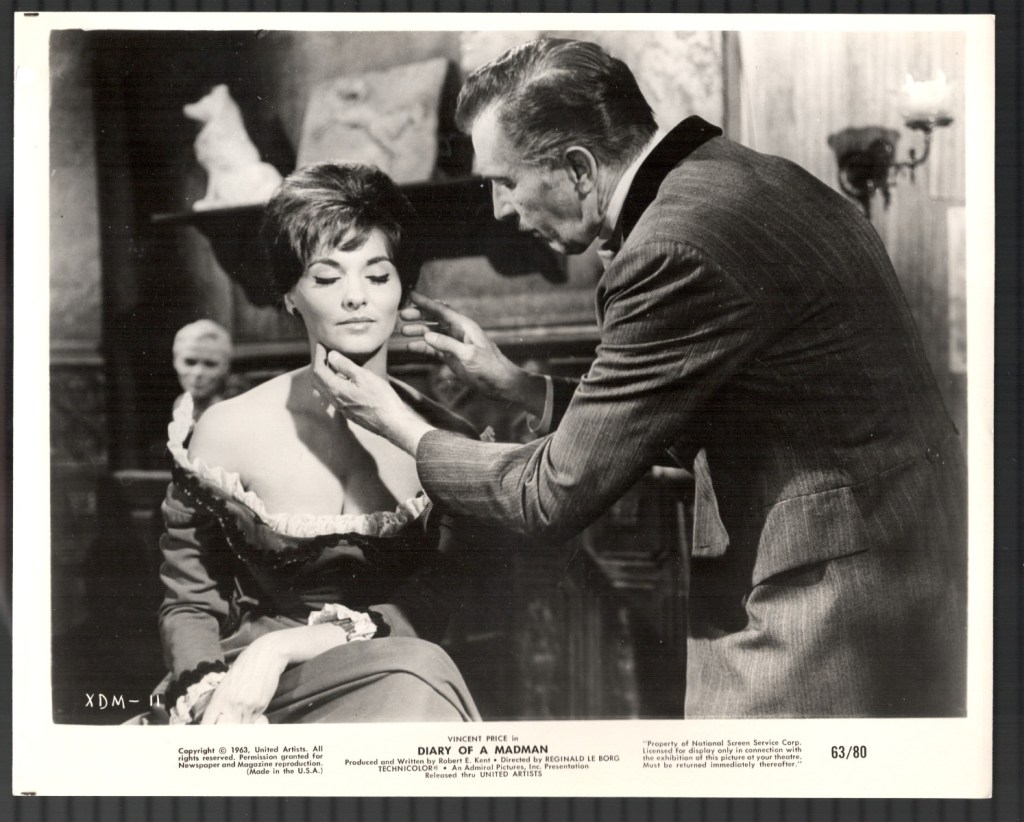
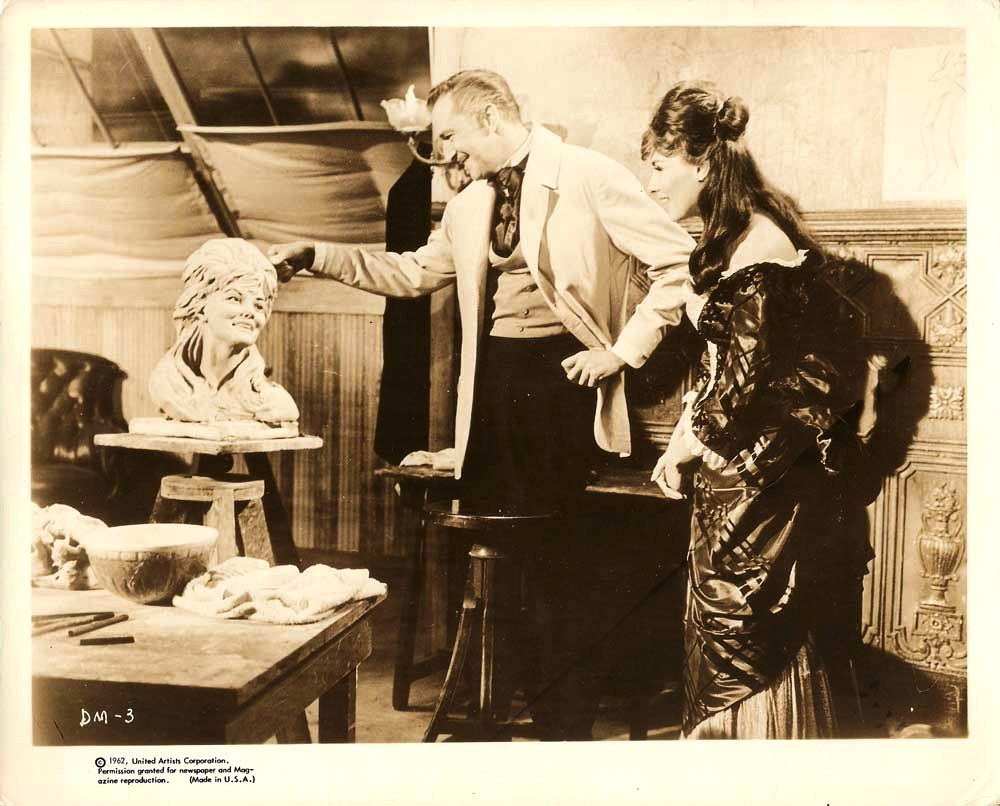
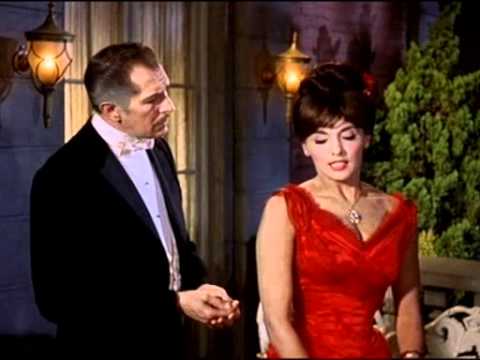
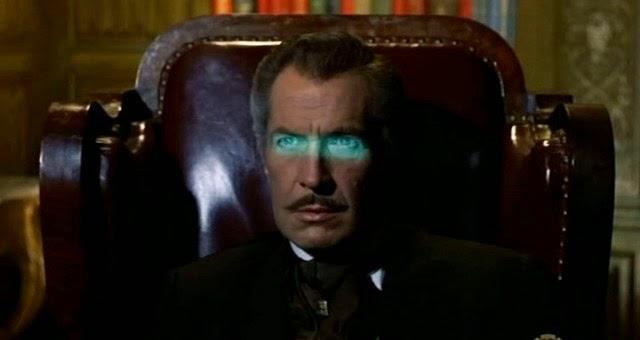
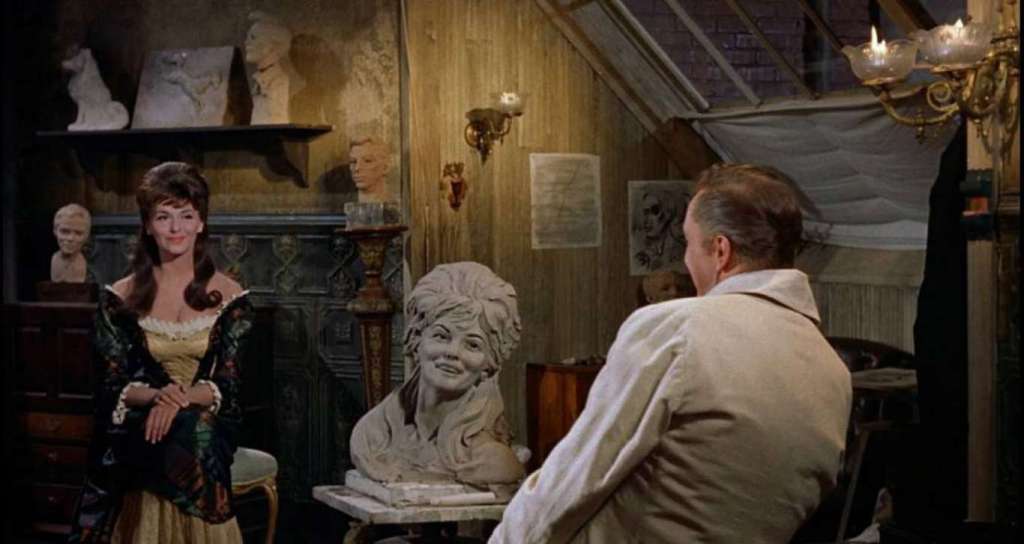
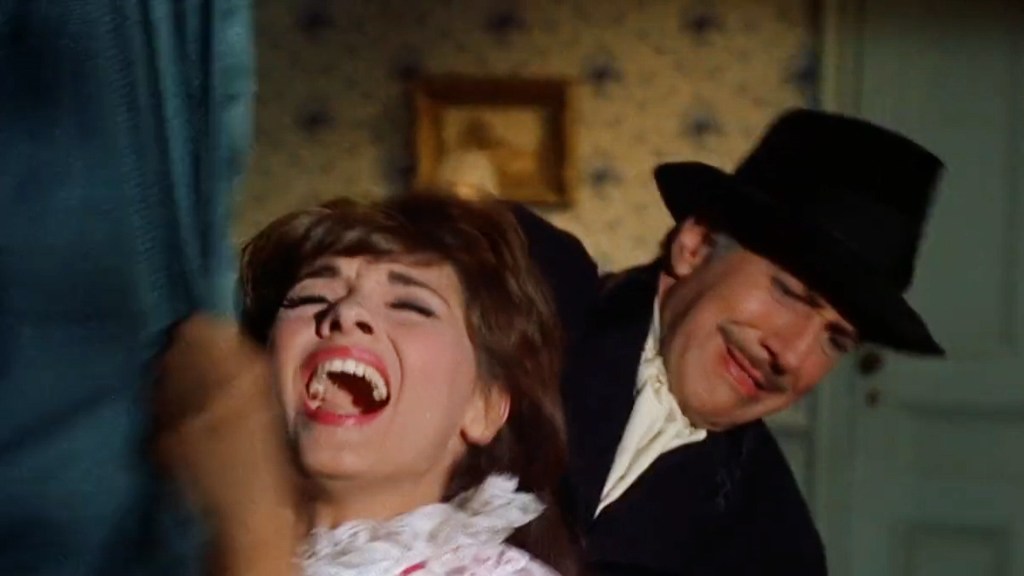
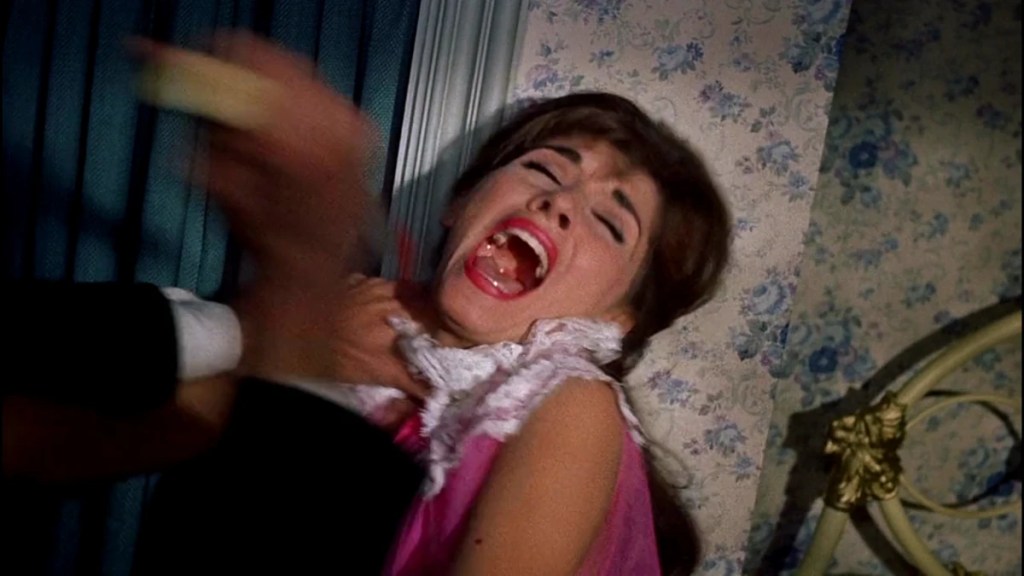
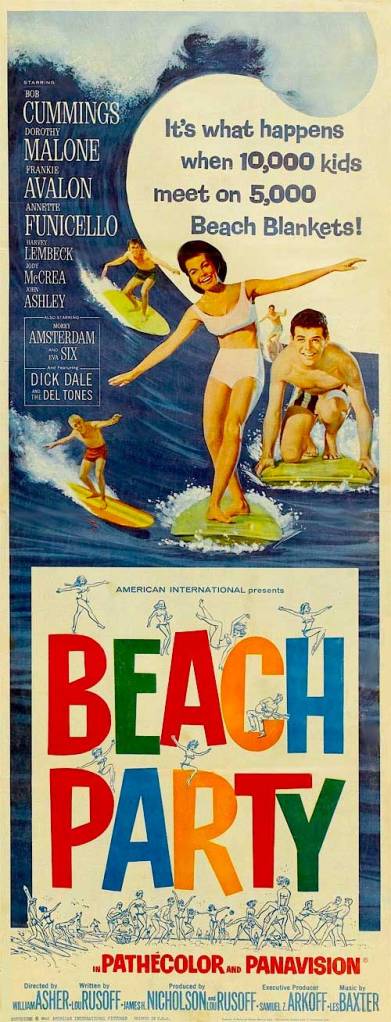
.jpg)


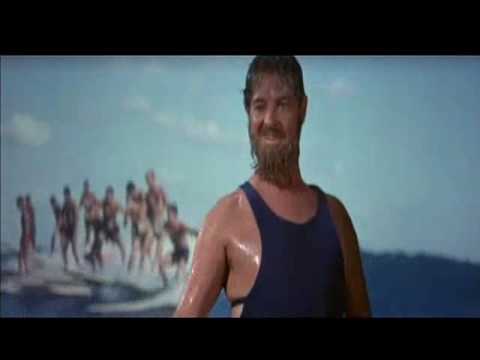
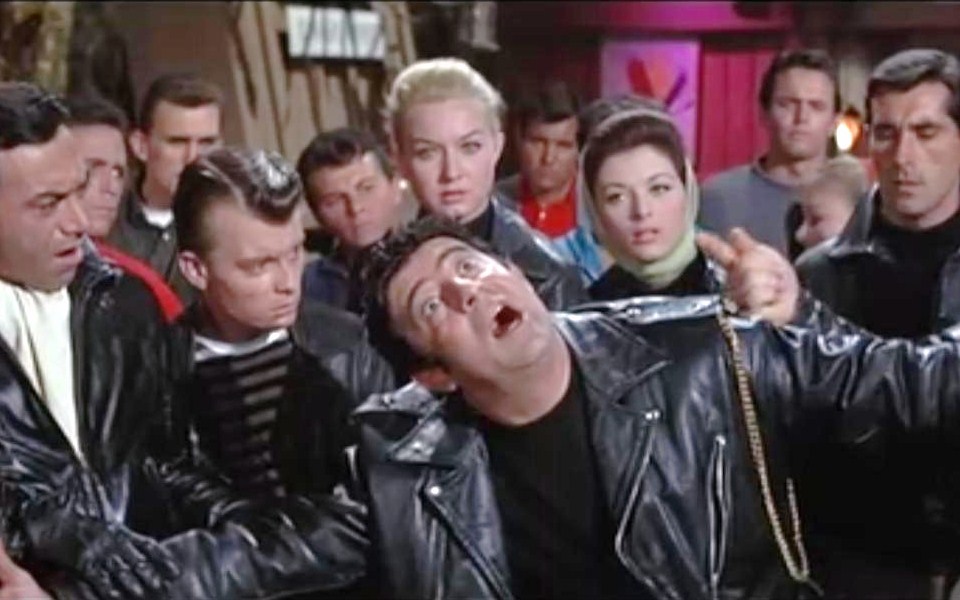


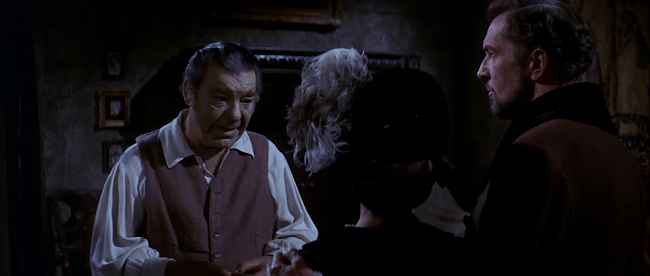


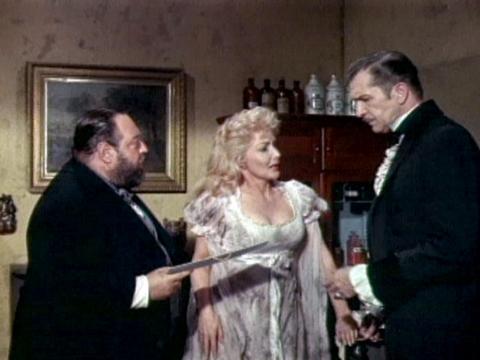
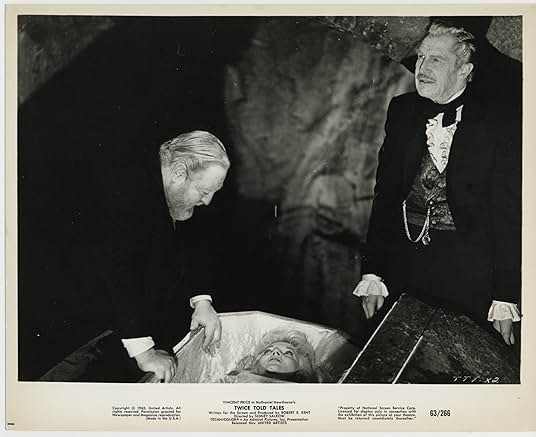
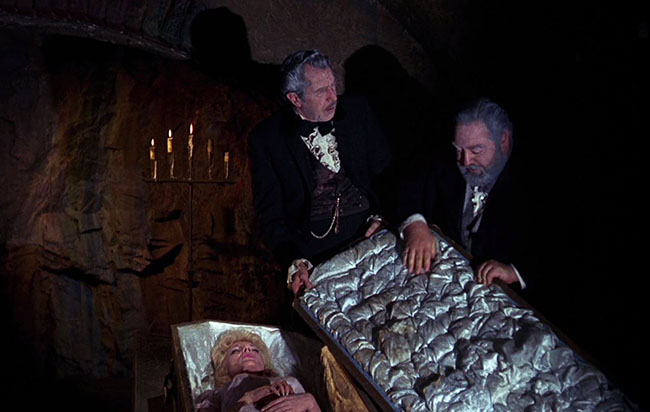
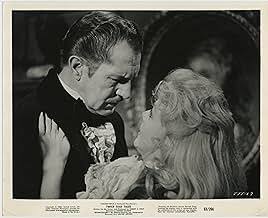
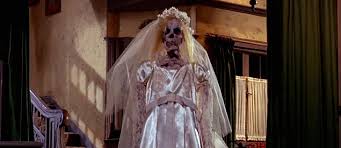
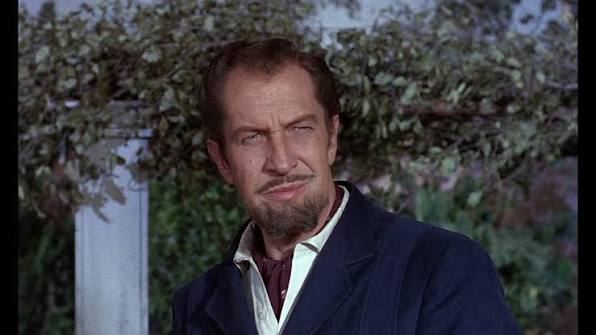
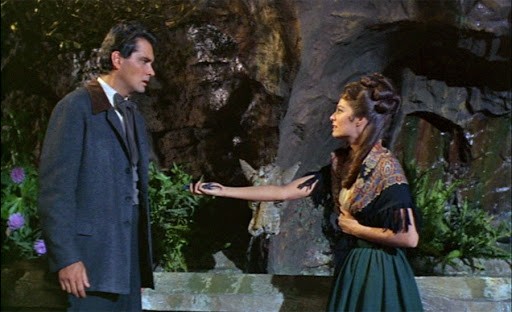
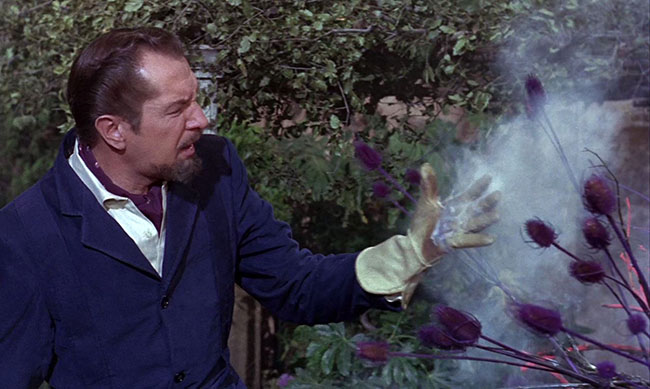
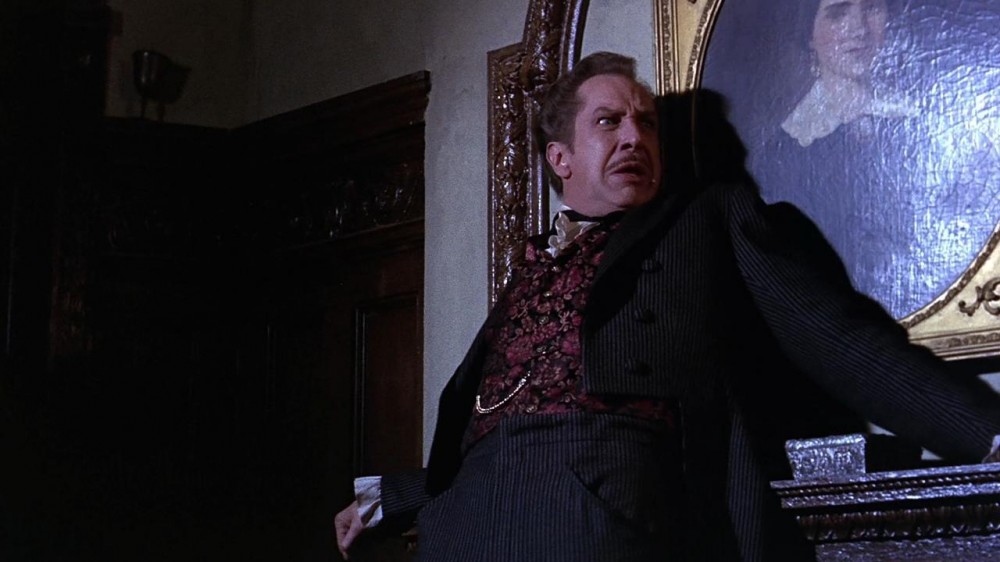


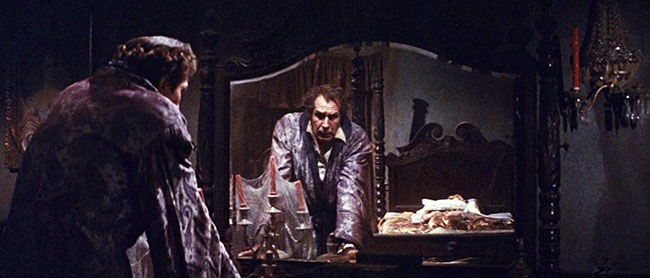
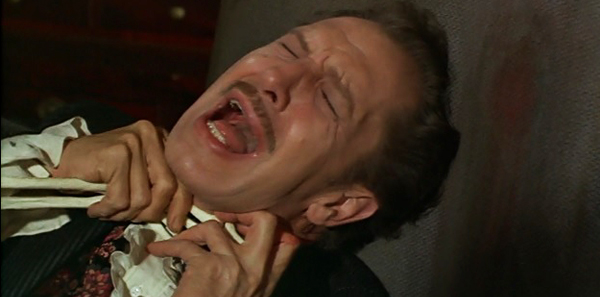


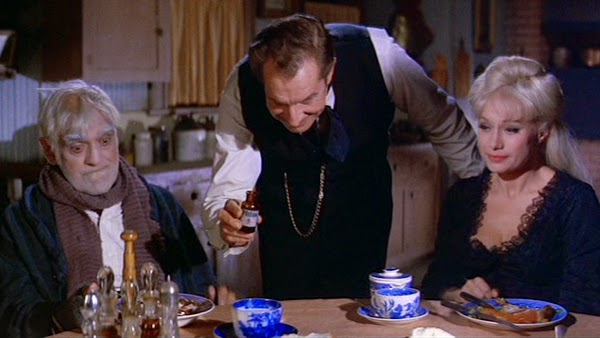
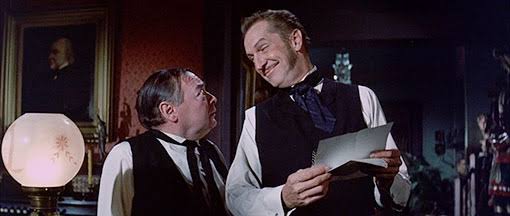
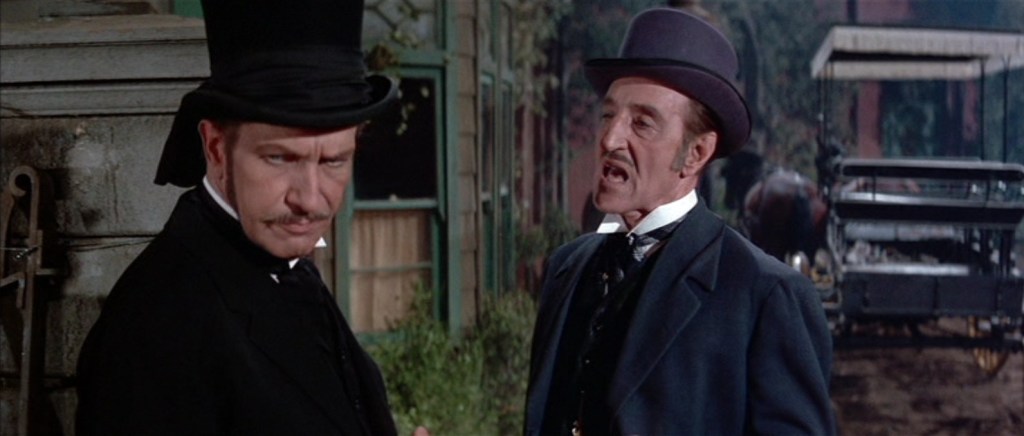

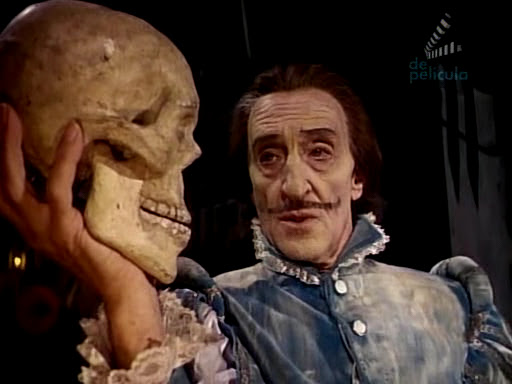

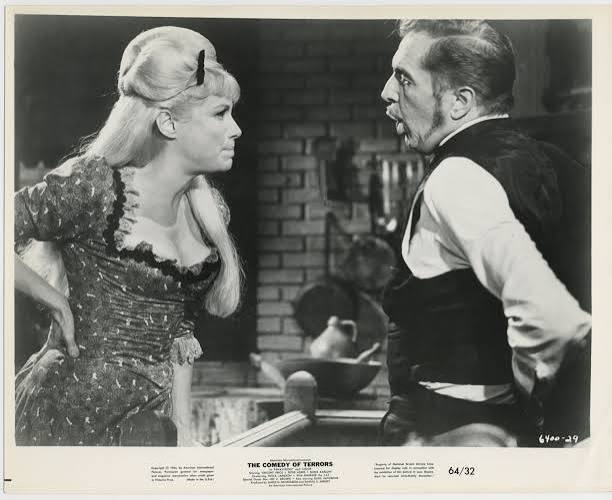
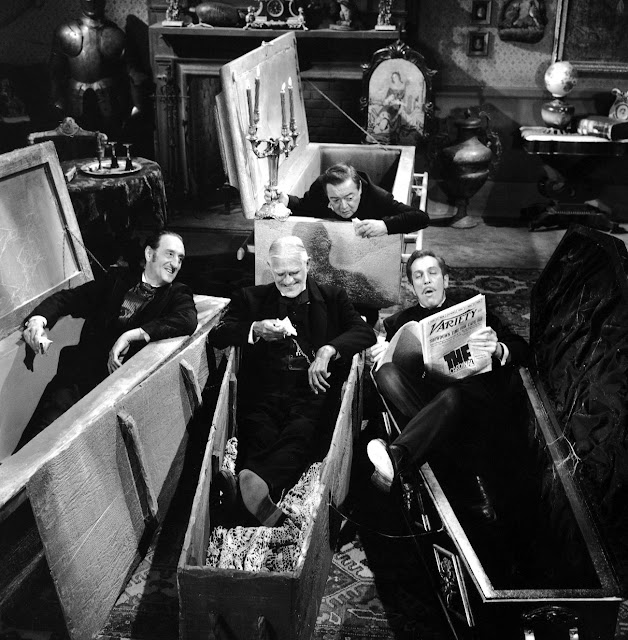


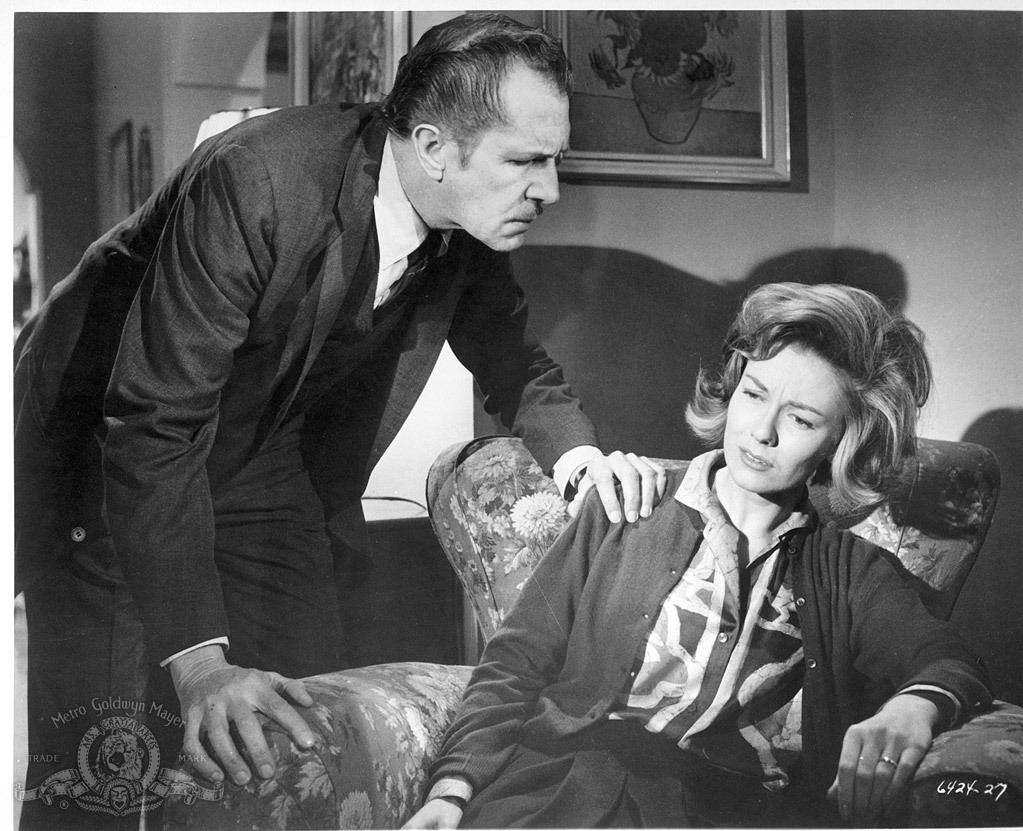




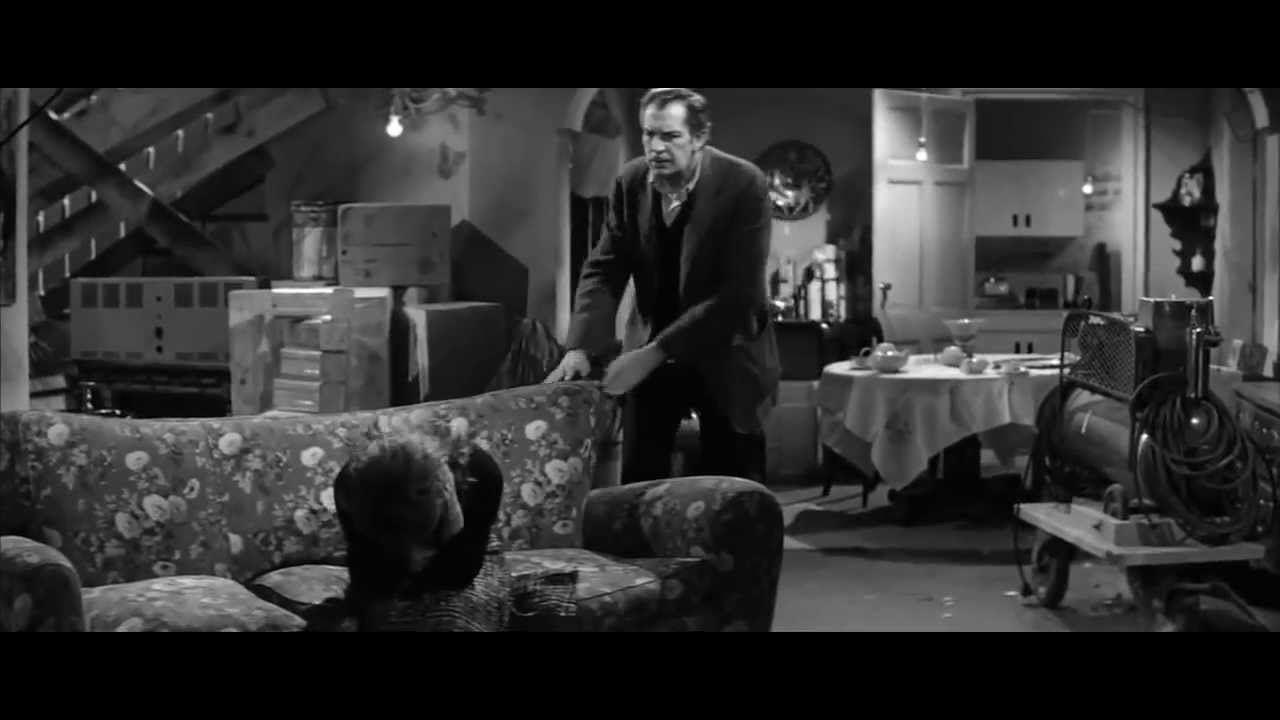

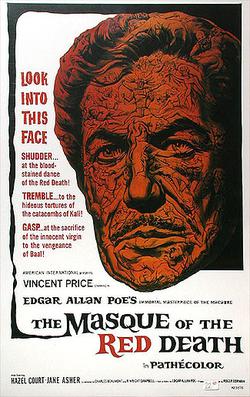
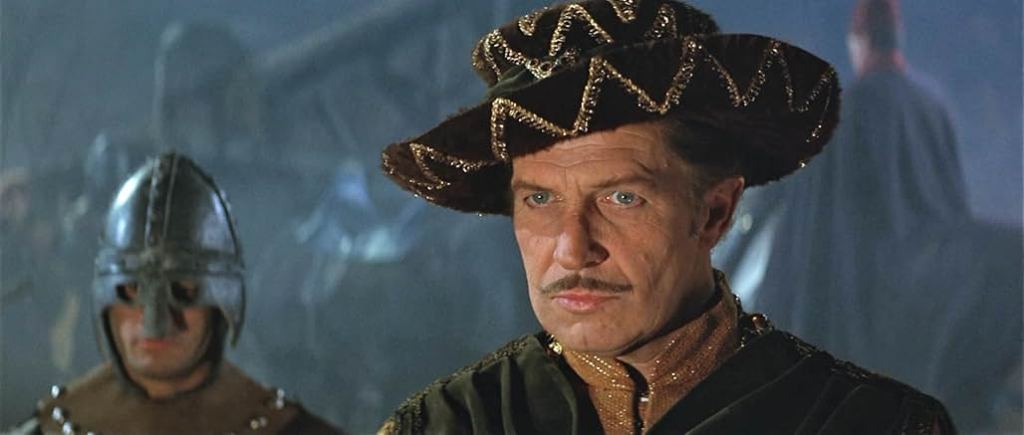
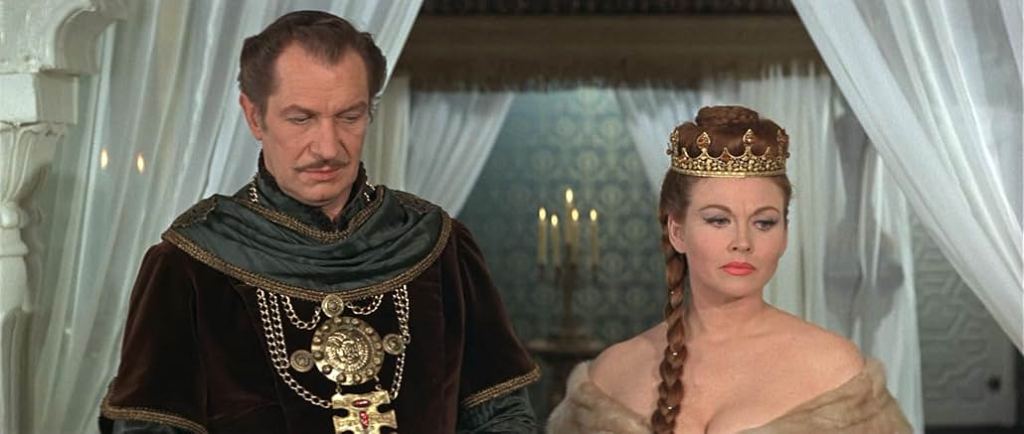
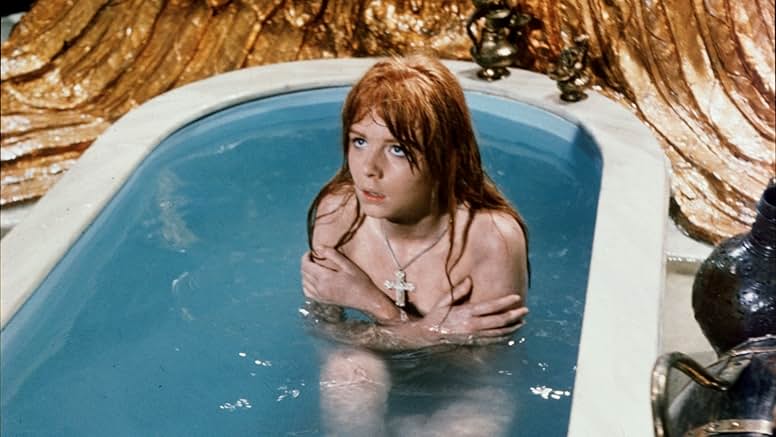
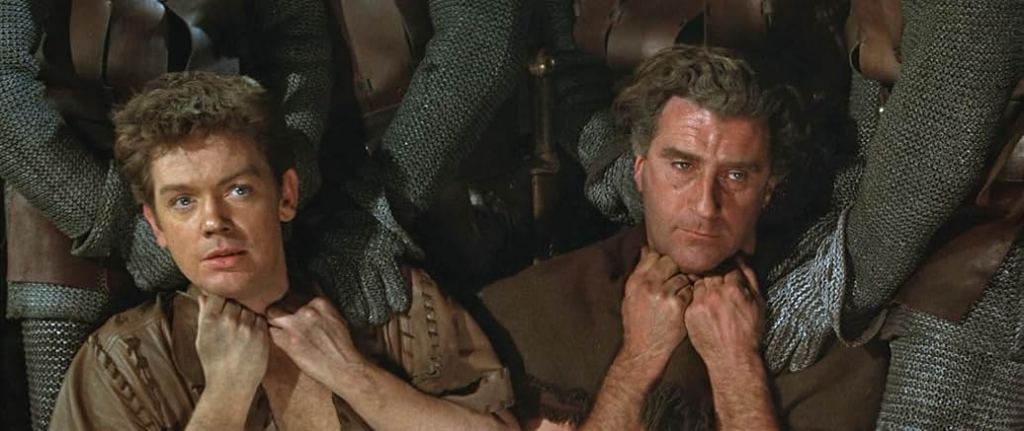
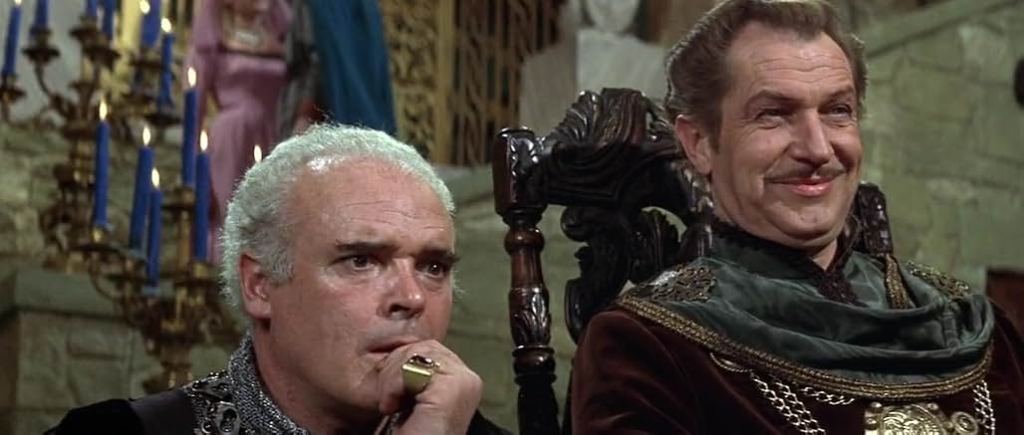

_NRFPT_02.jpg)



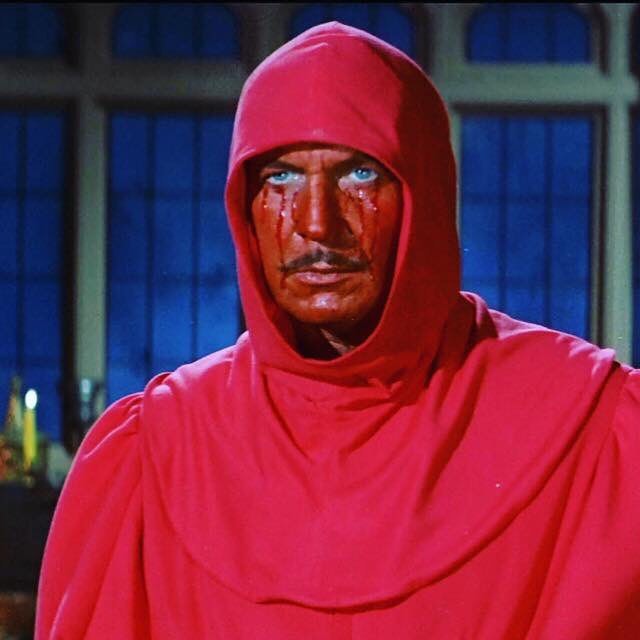

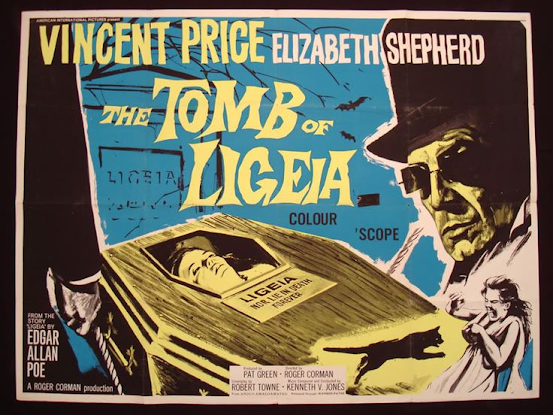


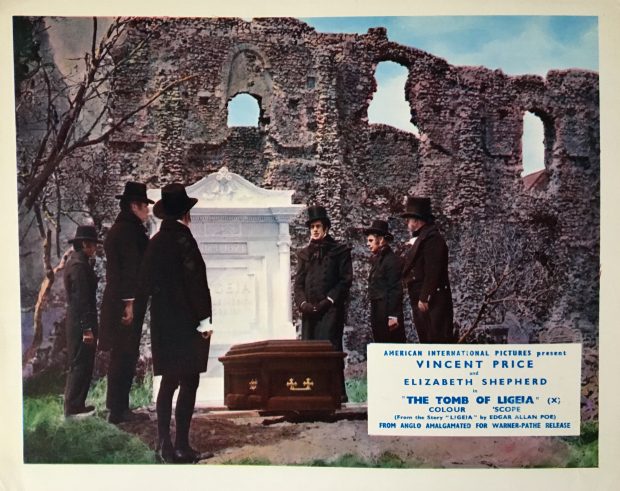

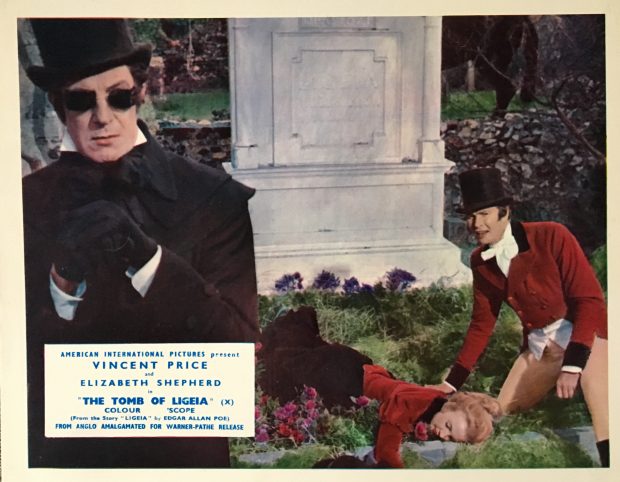
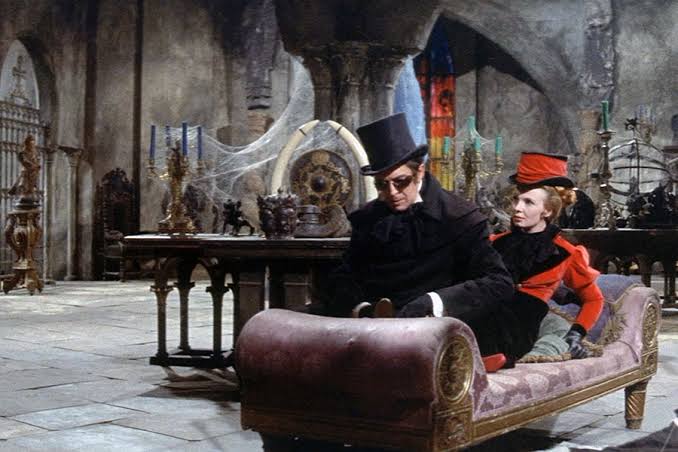
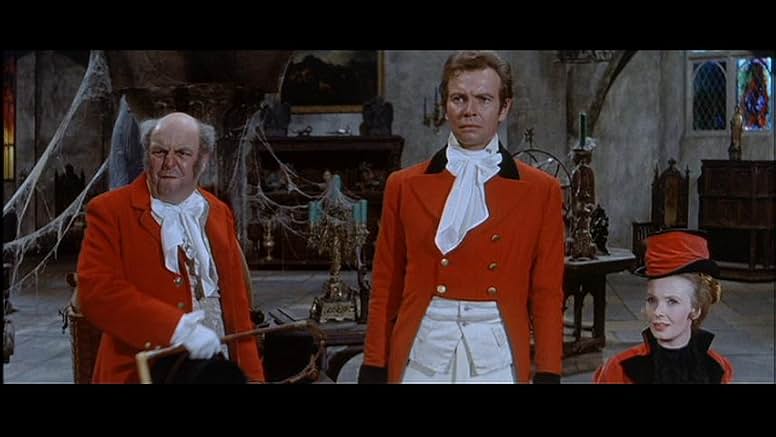
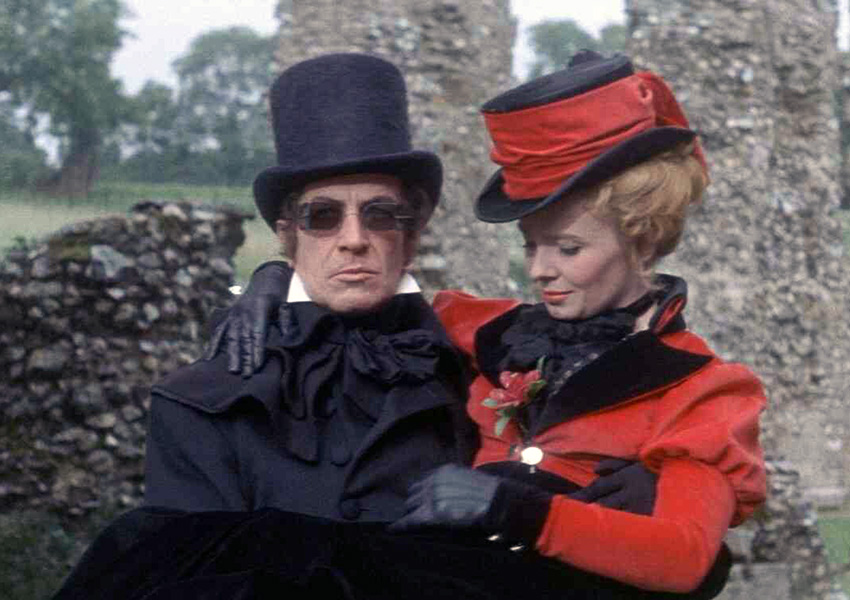

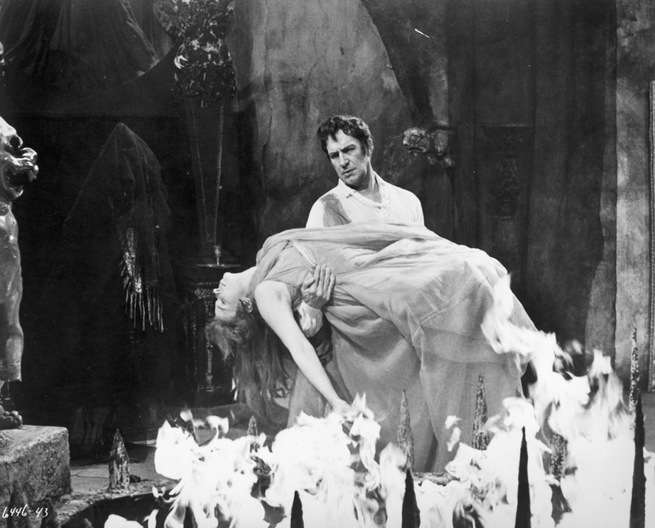
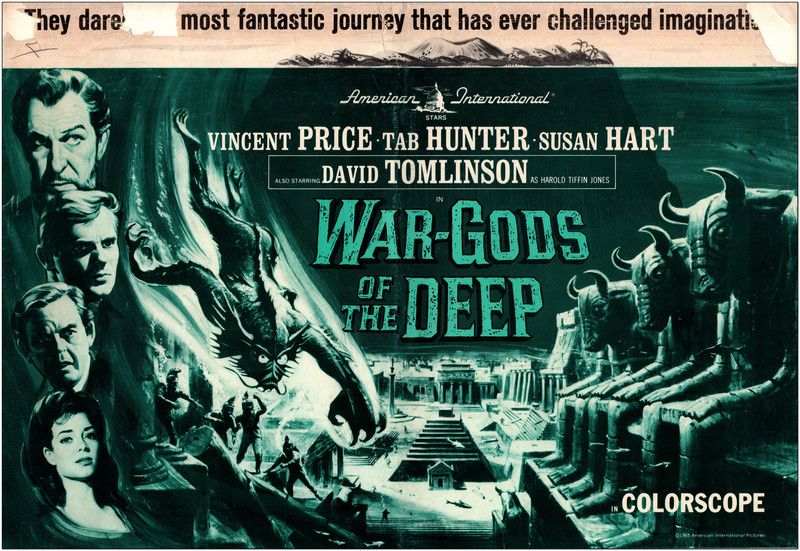


.jpg)

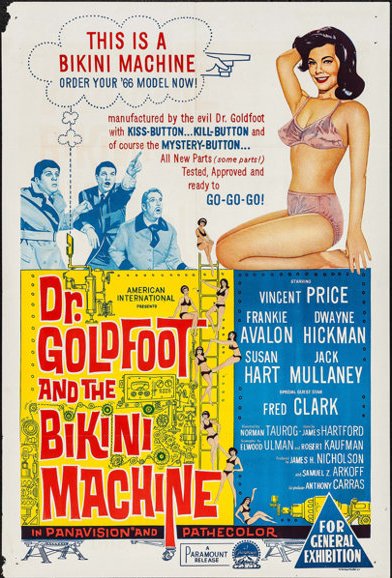
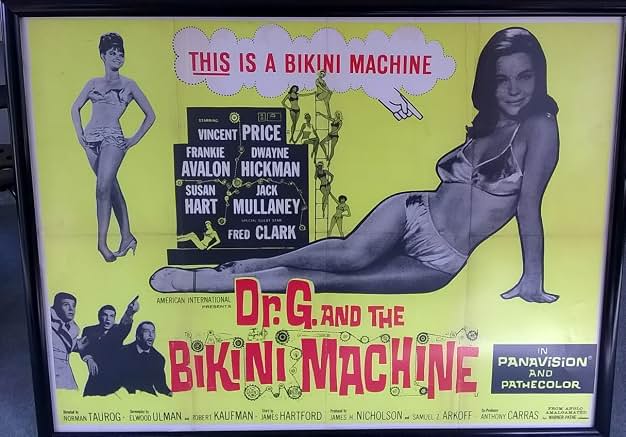

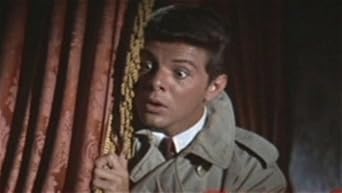
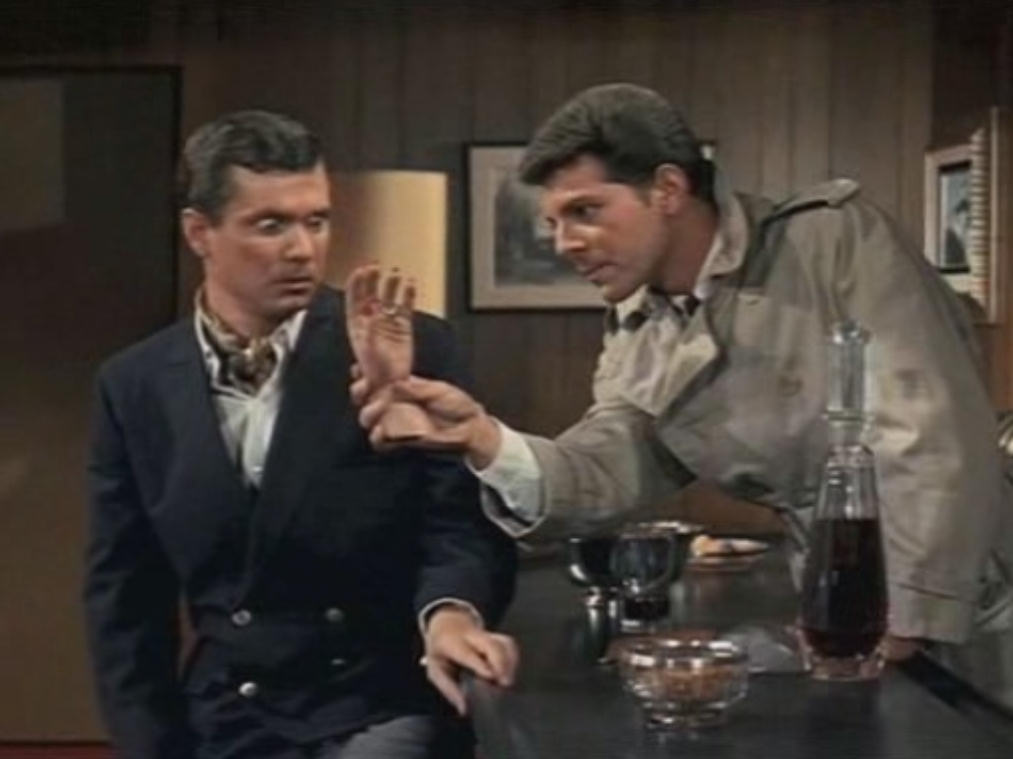

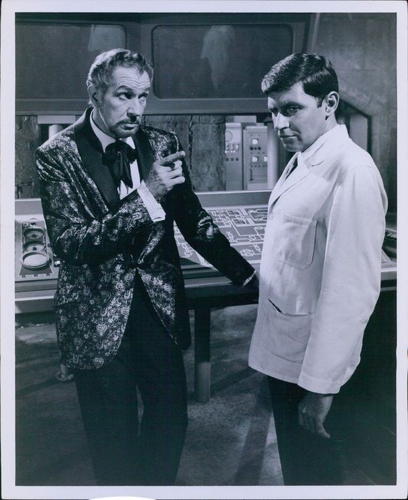


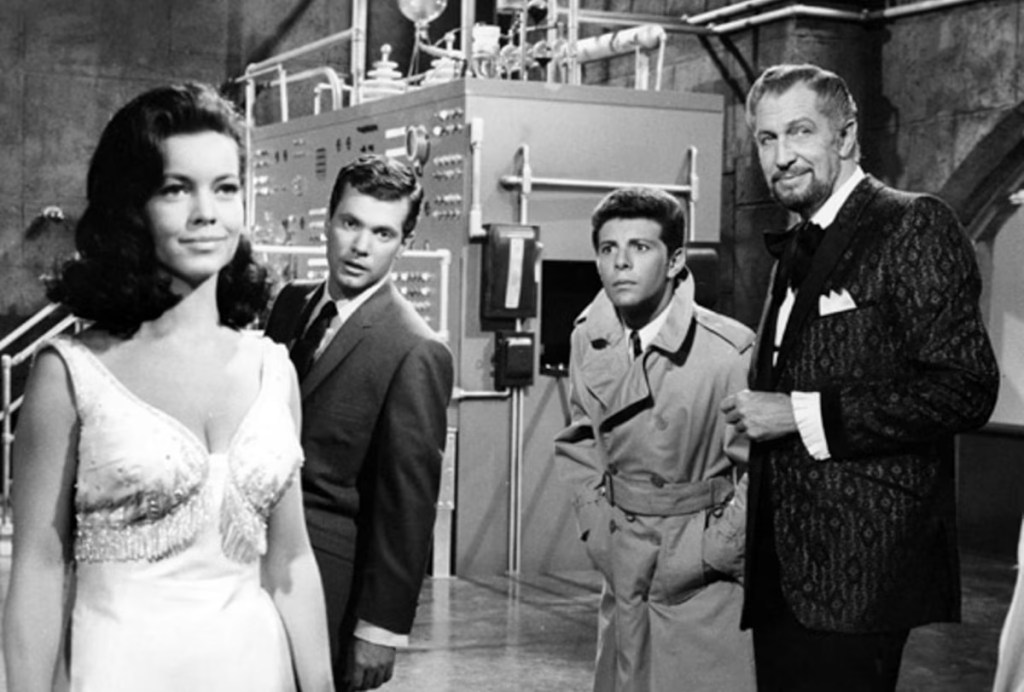

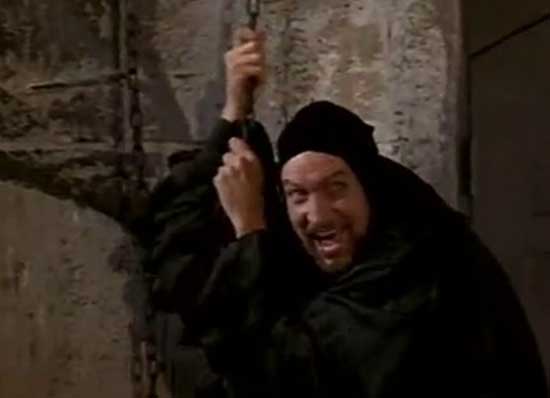
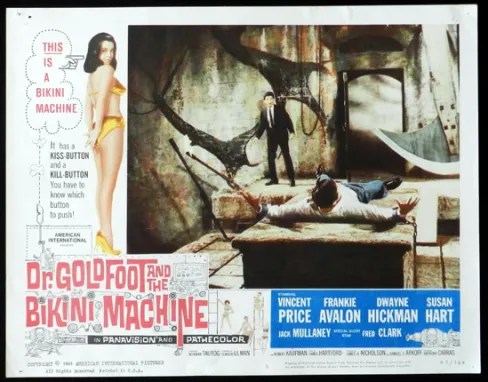

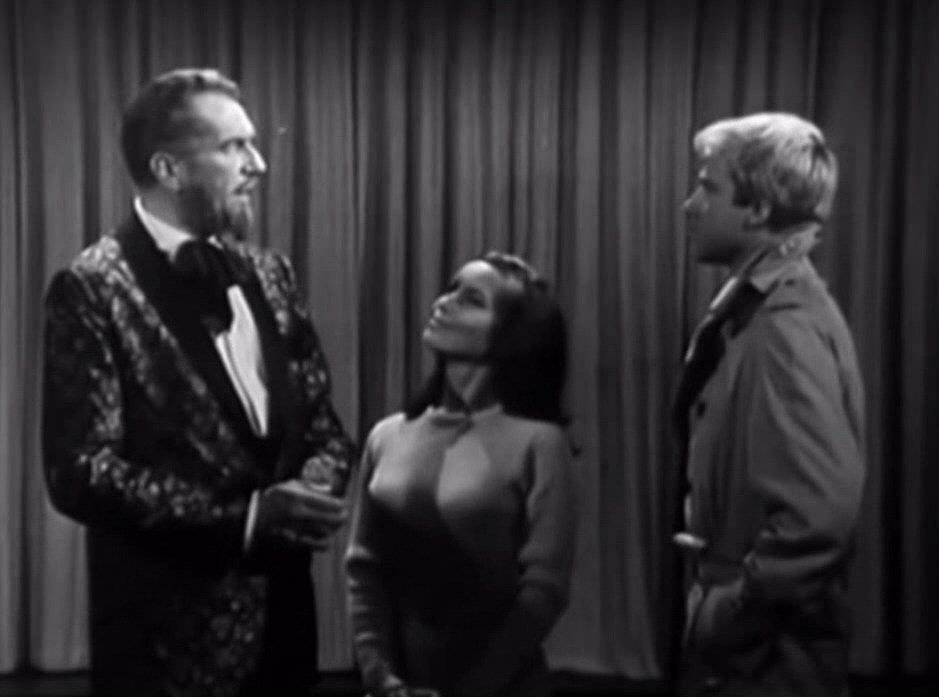
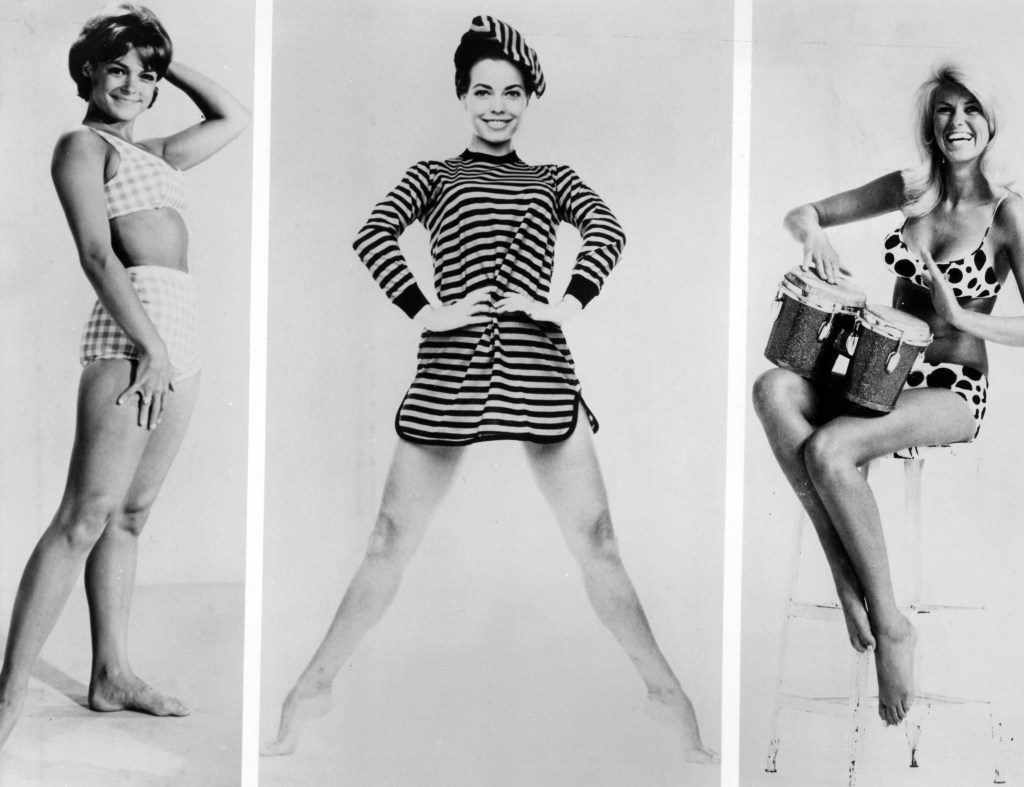
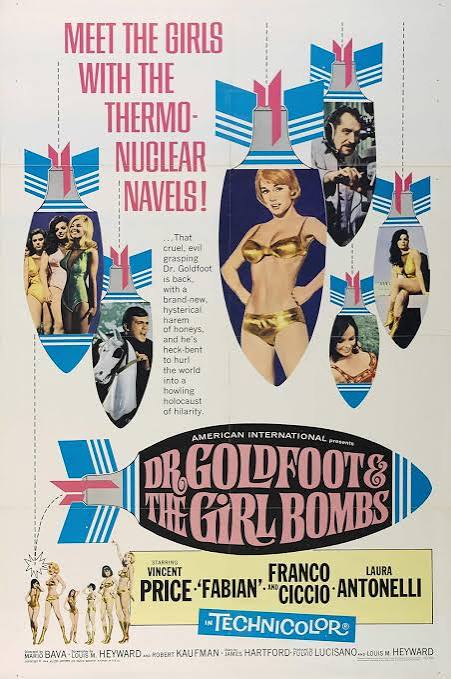
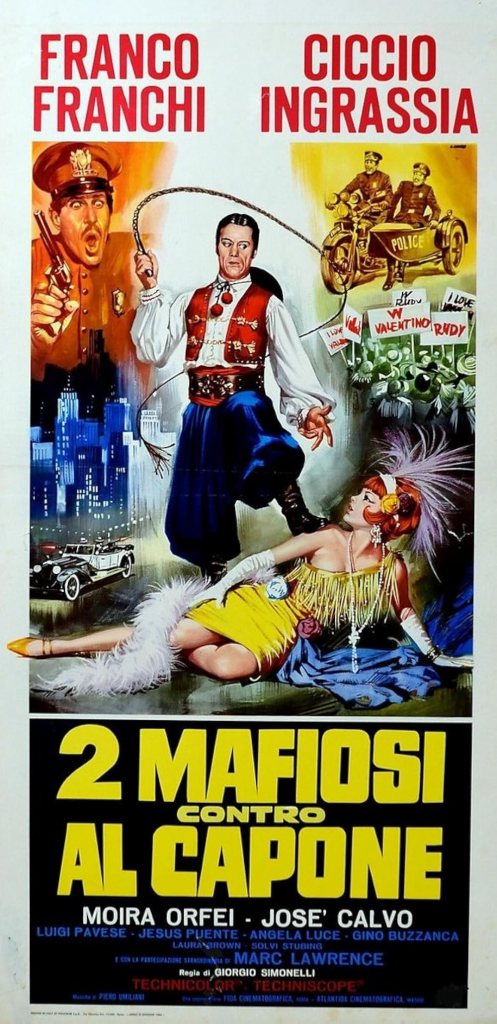

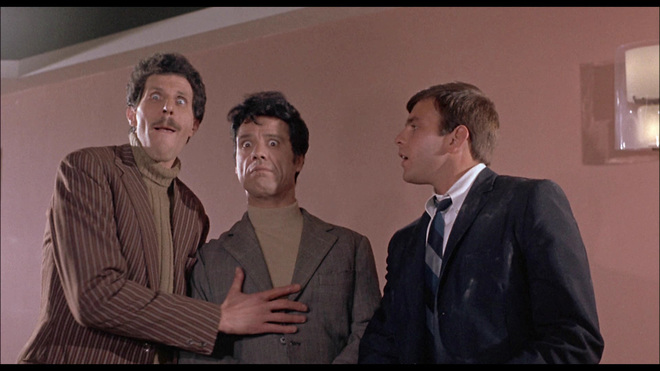


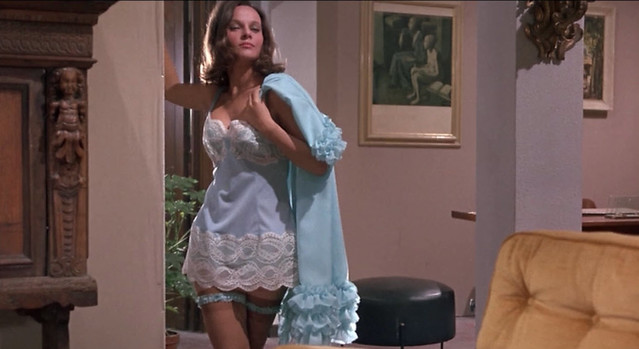
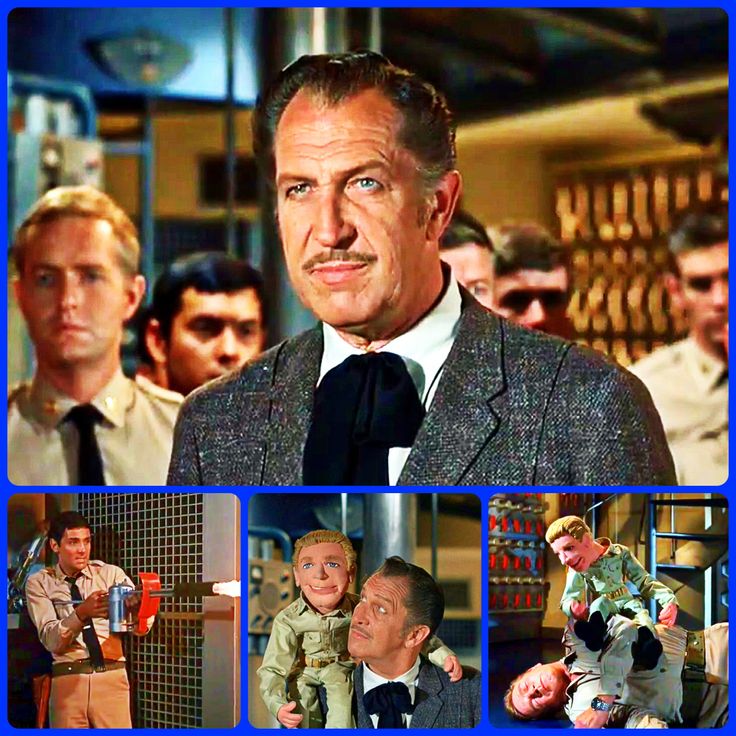
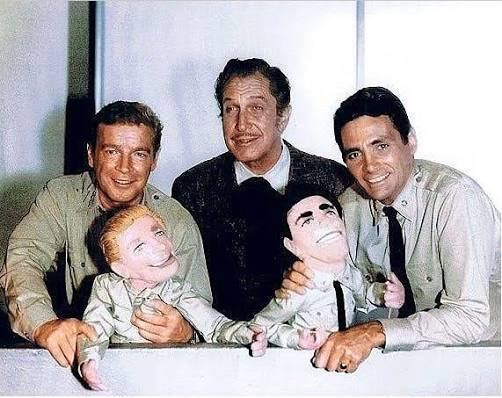
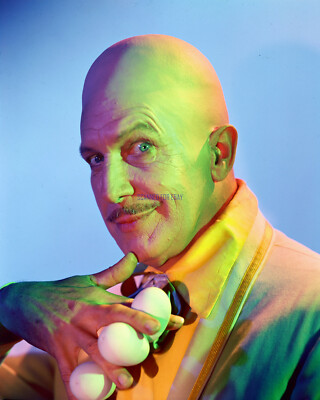
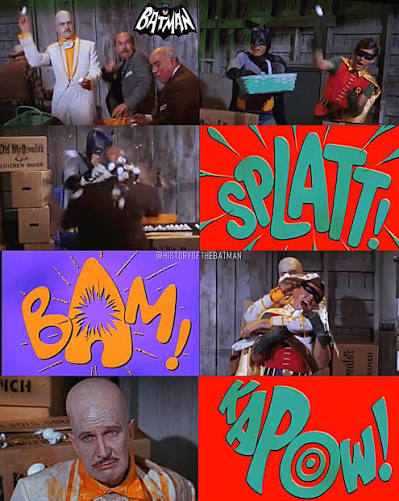
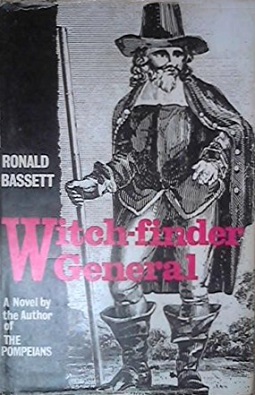
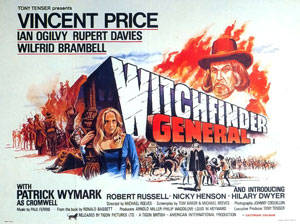
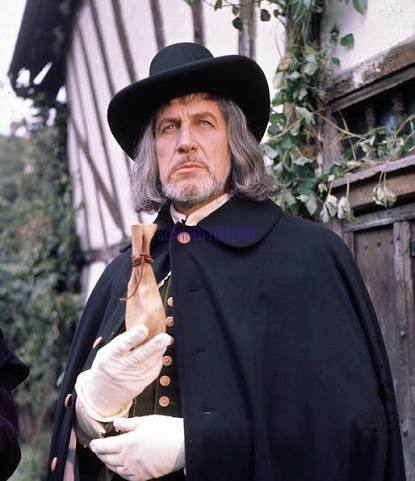
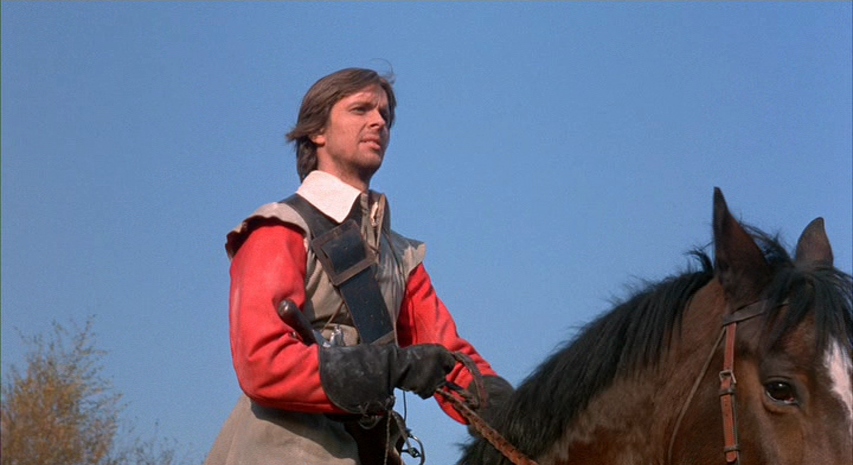
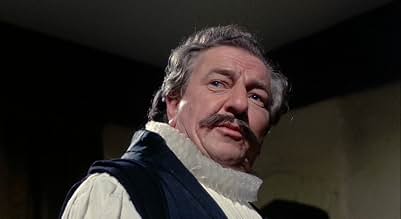
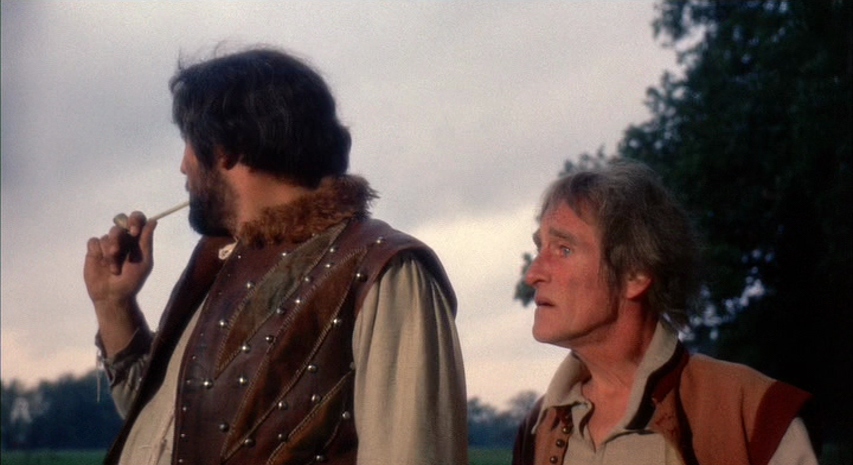
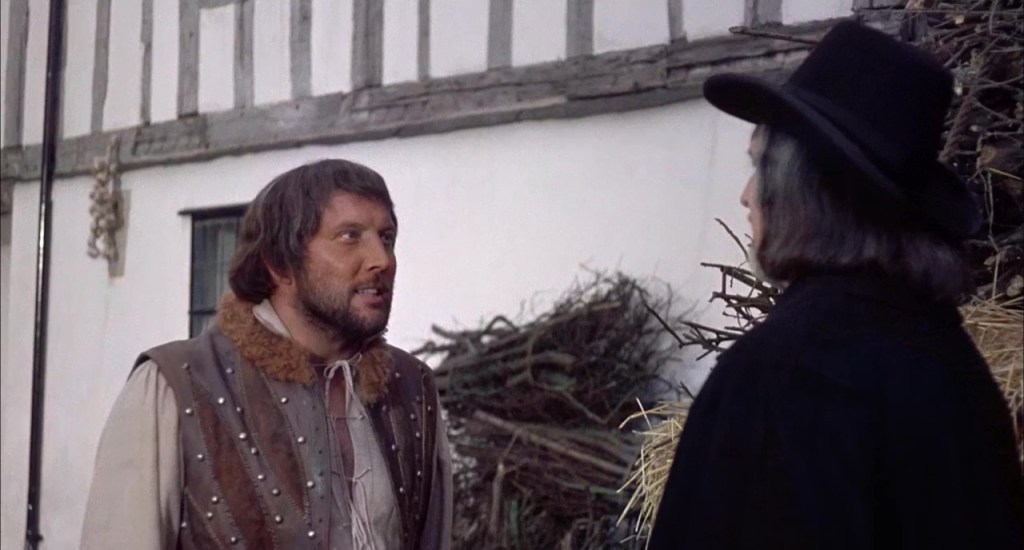
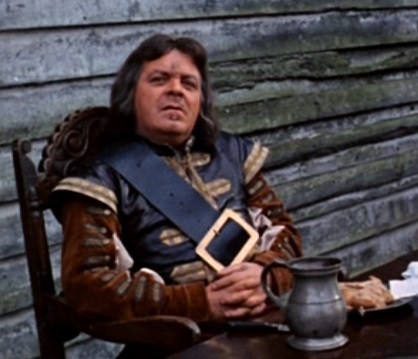
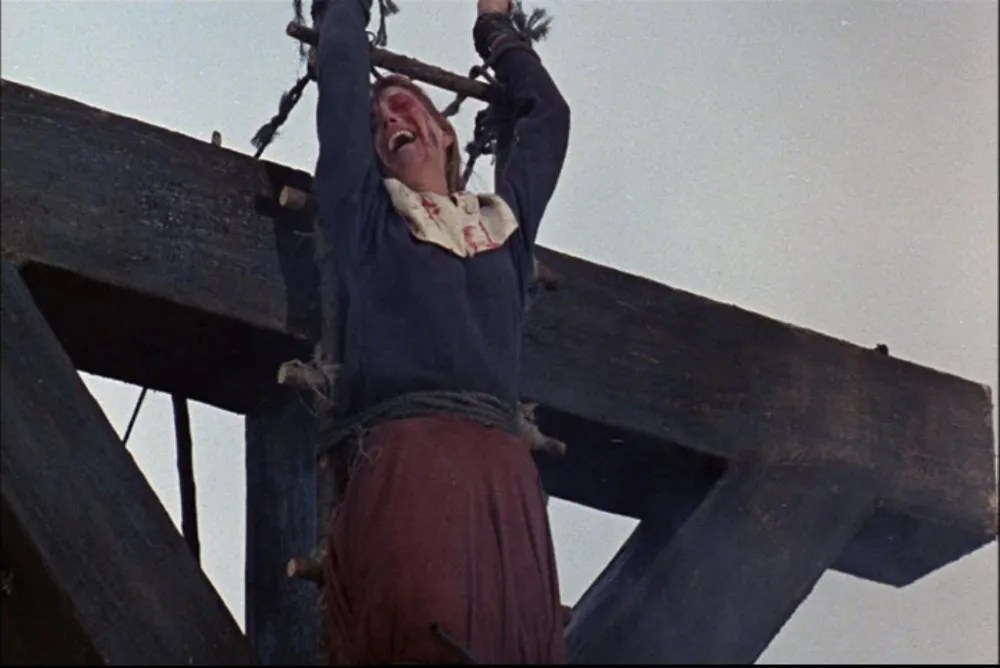
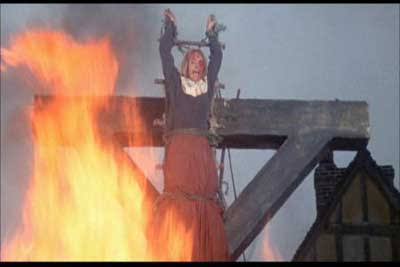
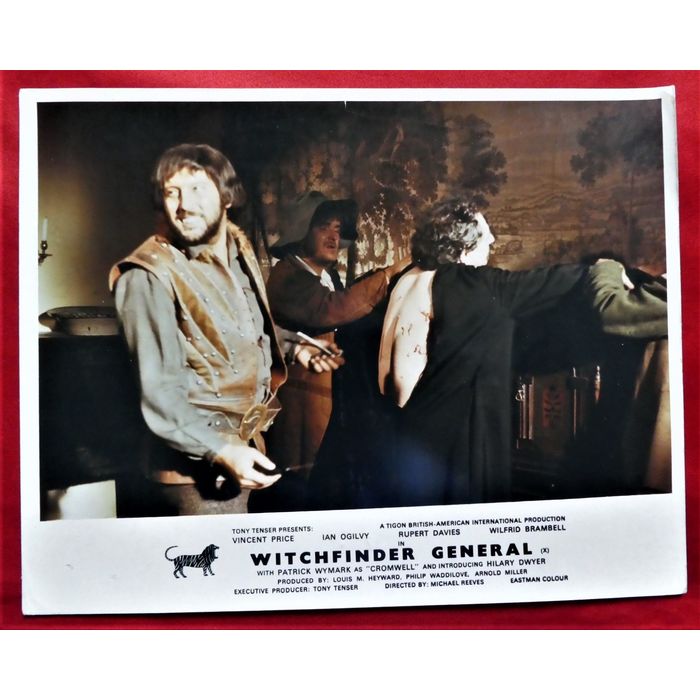
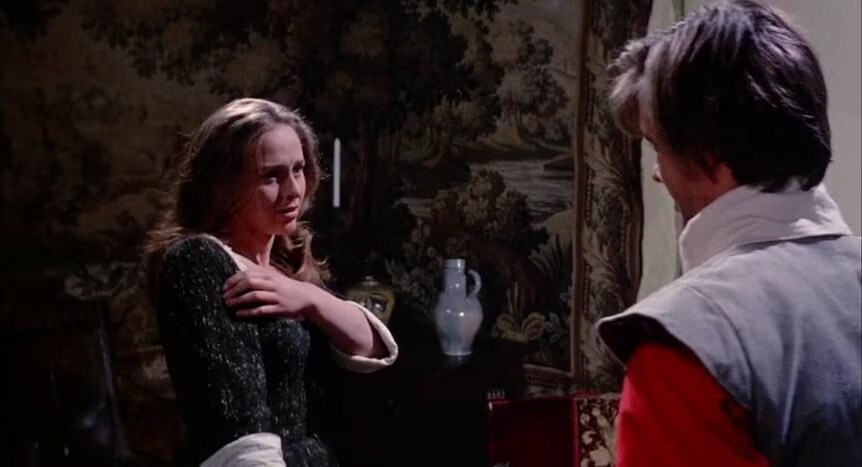
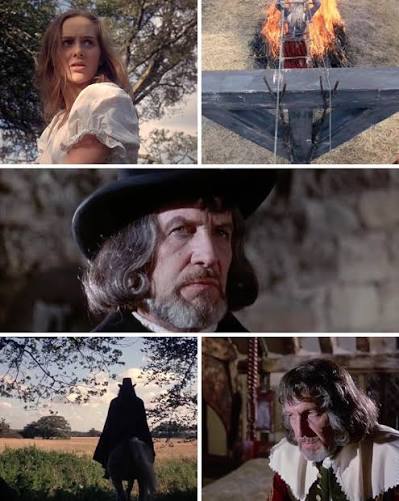
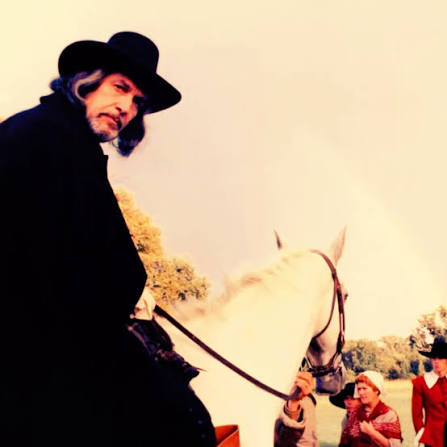
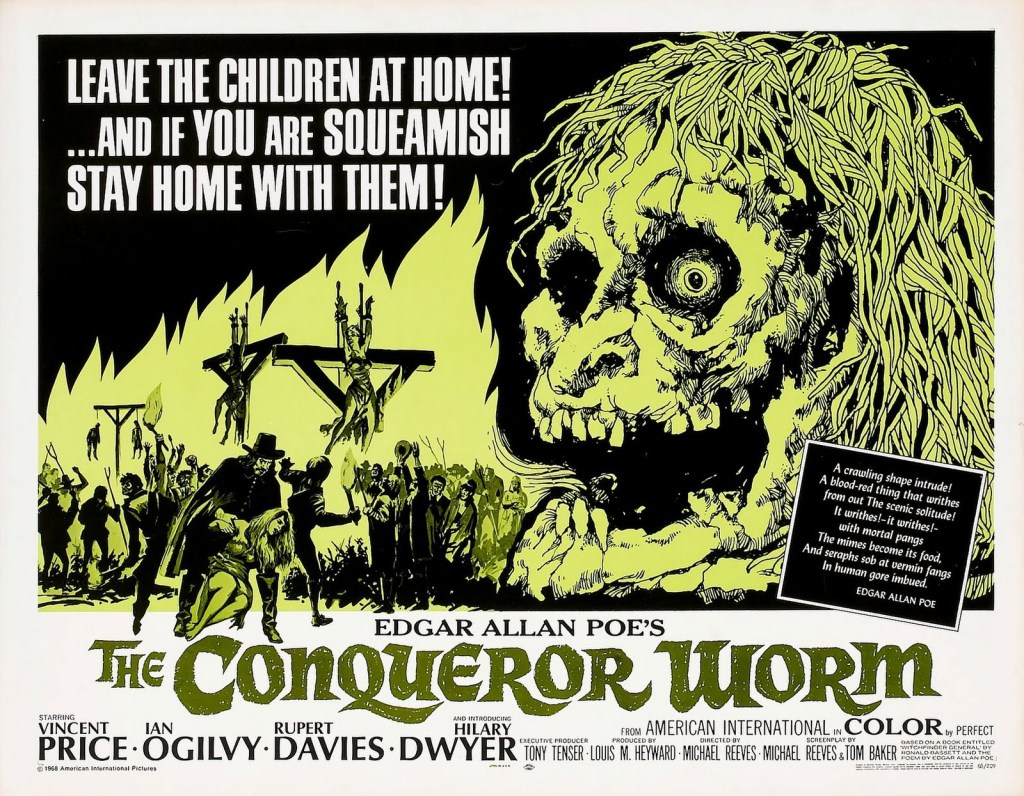
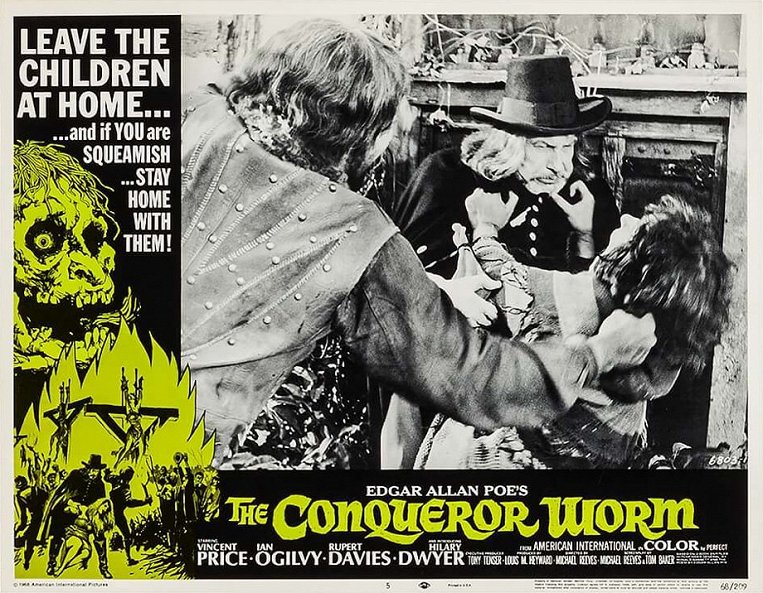
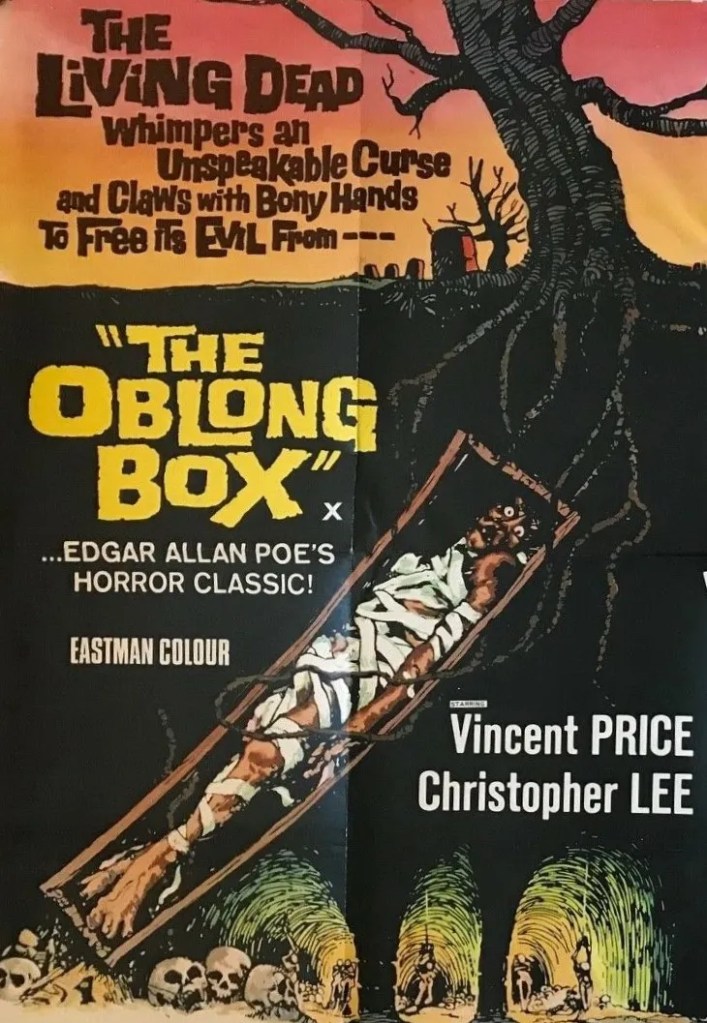
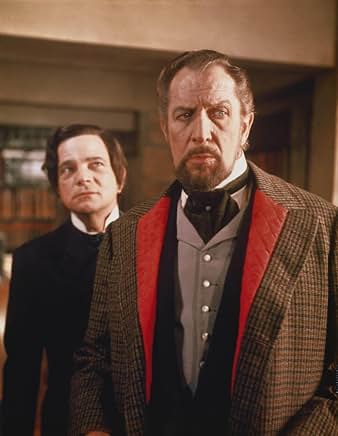
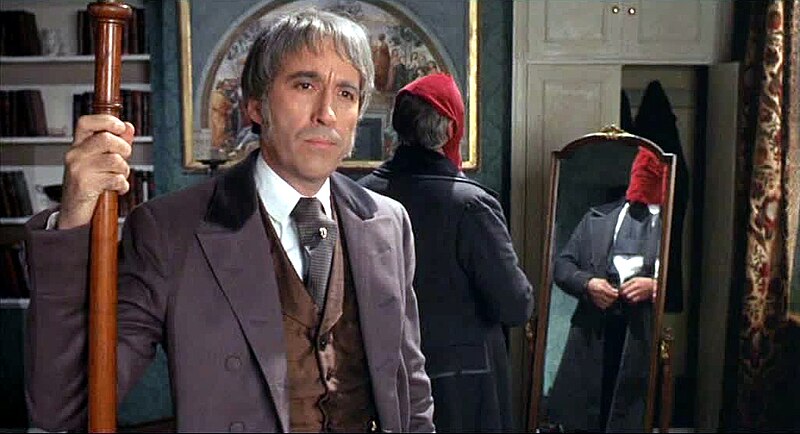
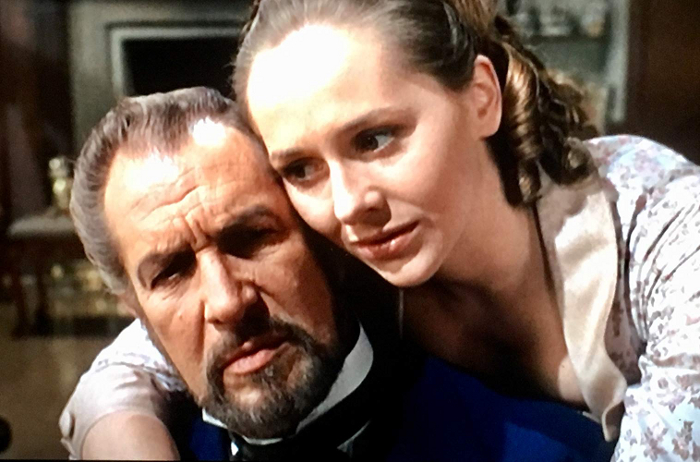
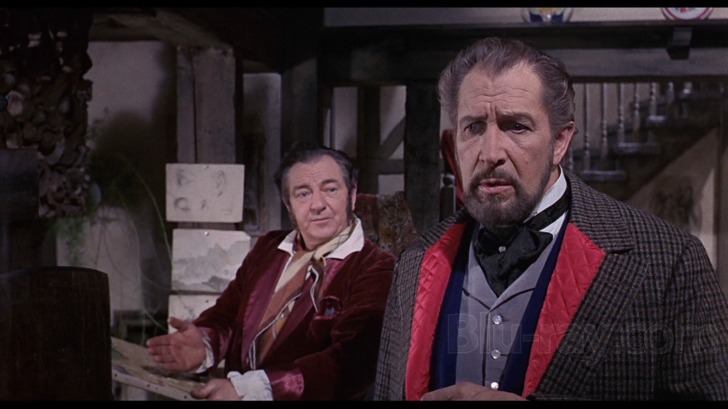
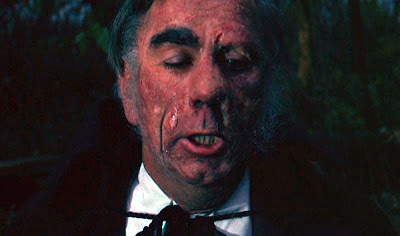
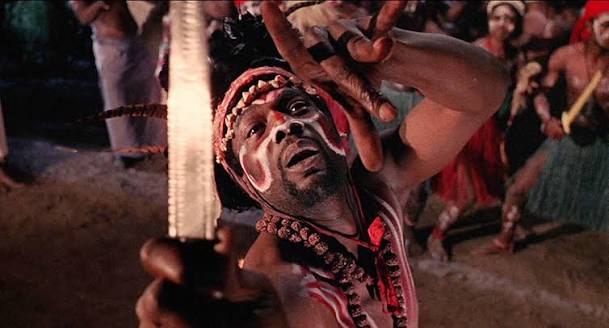
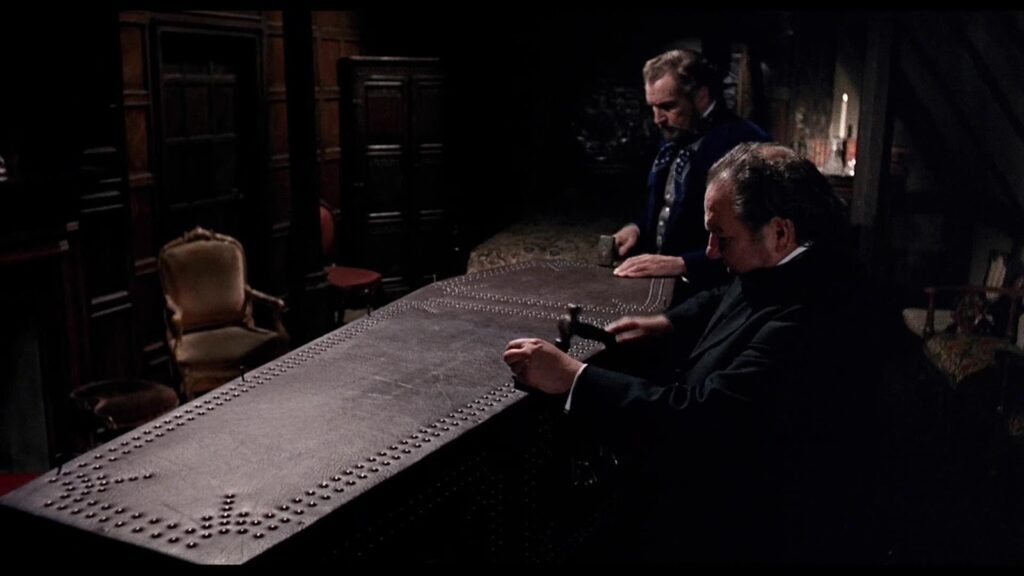
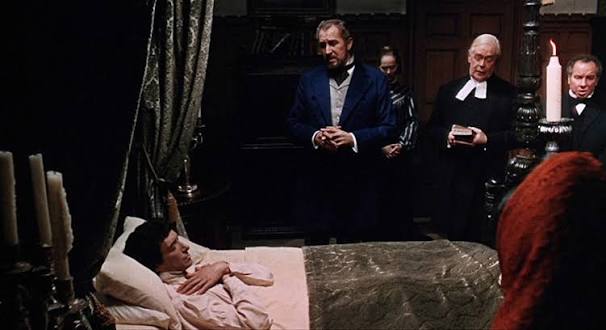
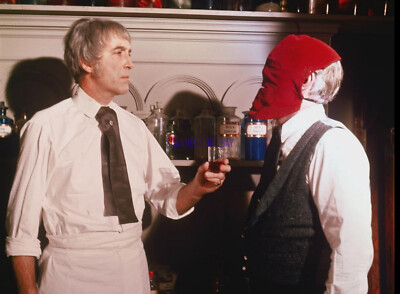
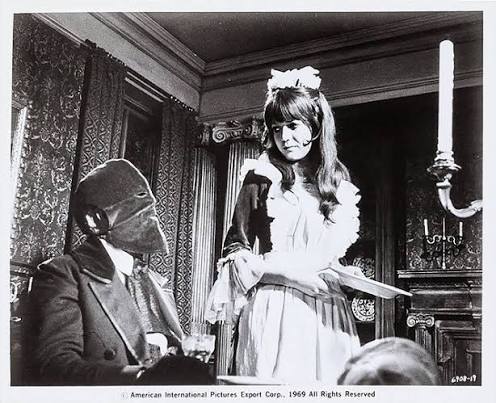
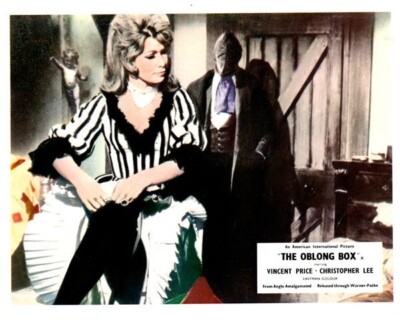
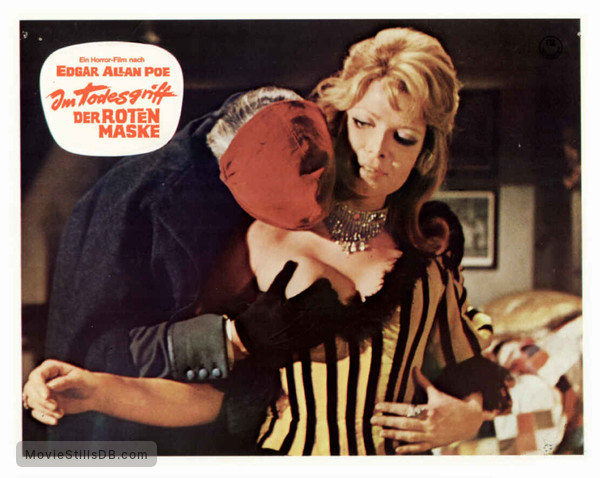
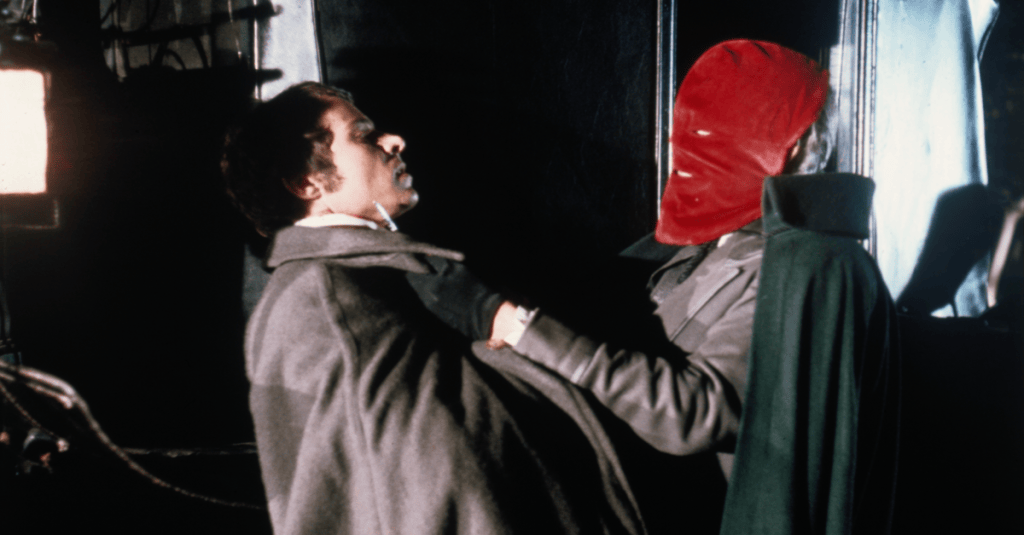
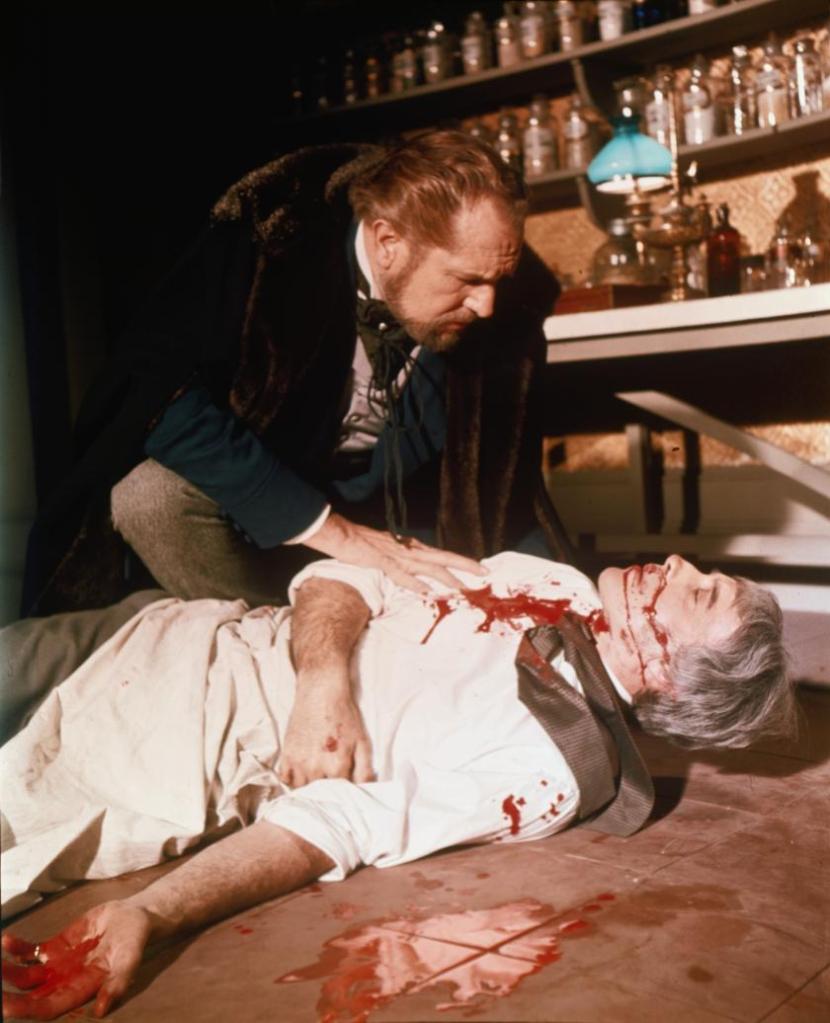
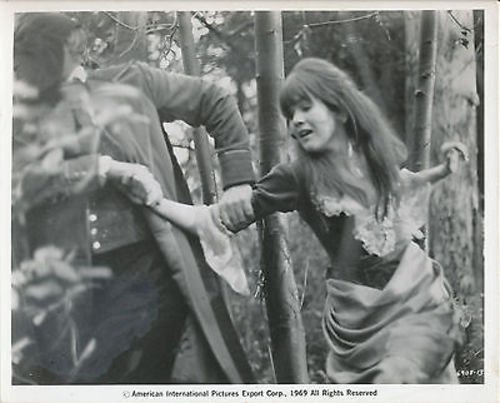
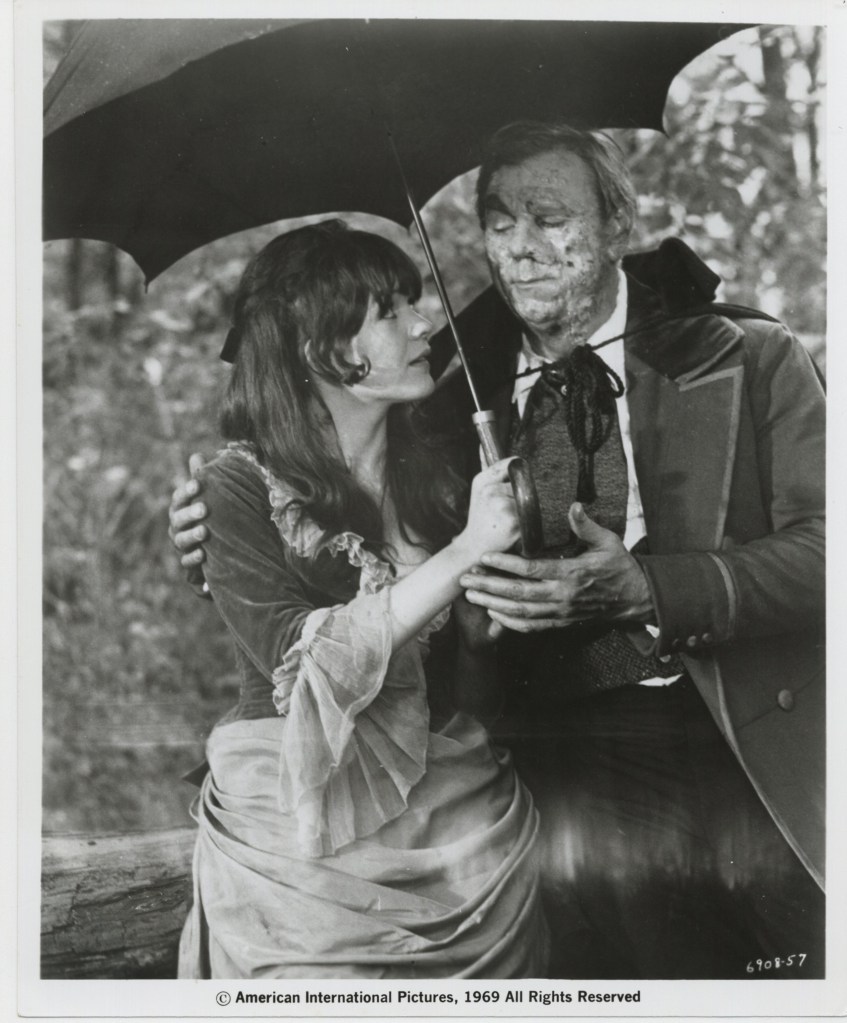
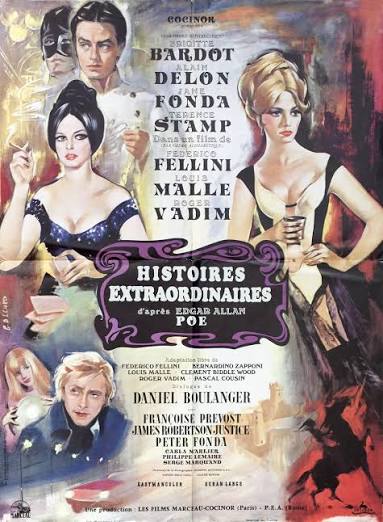
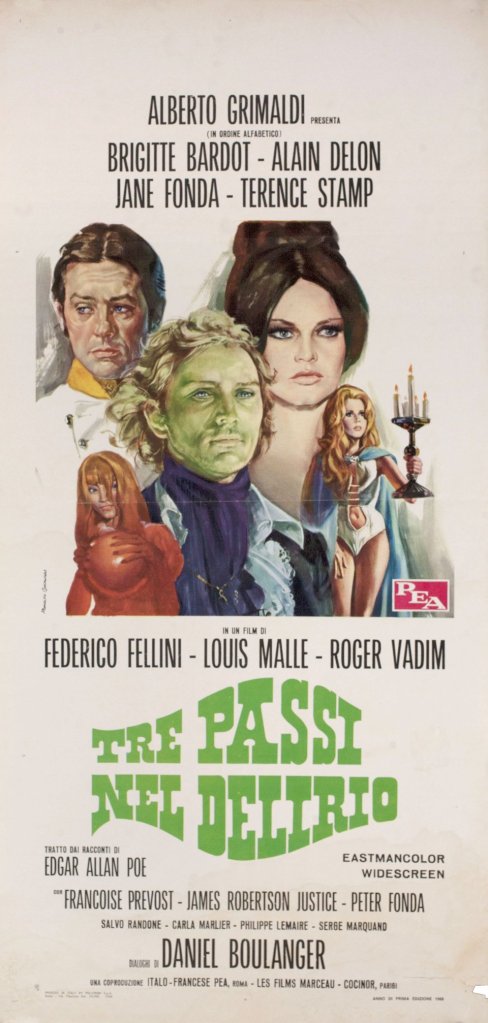


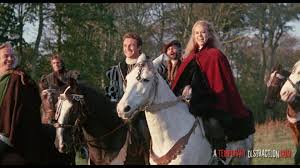
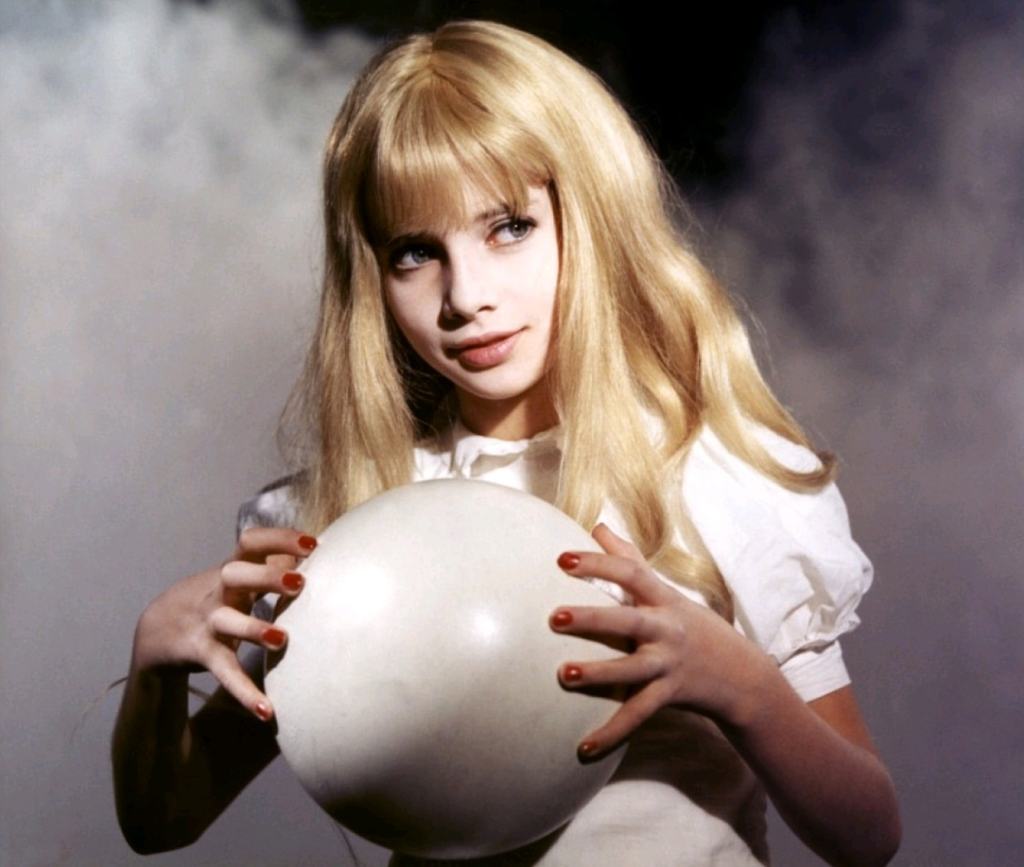
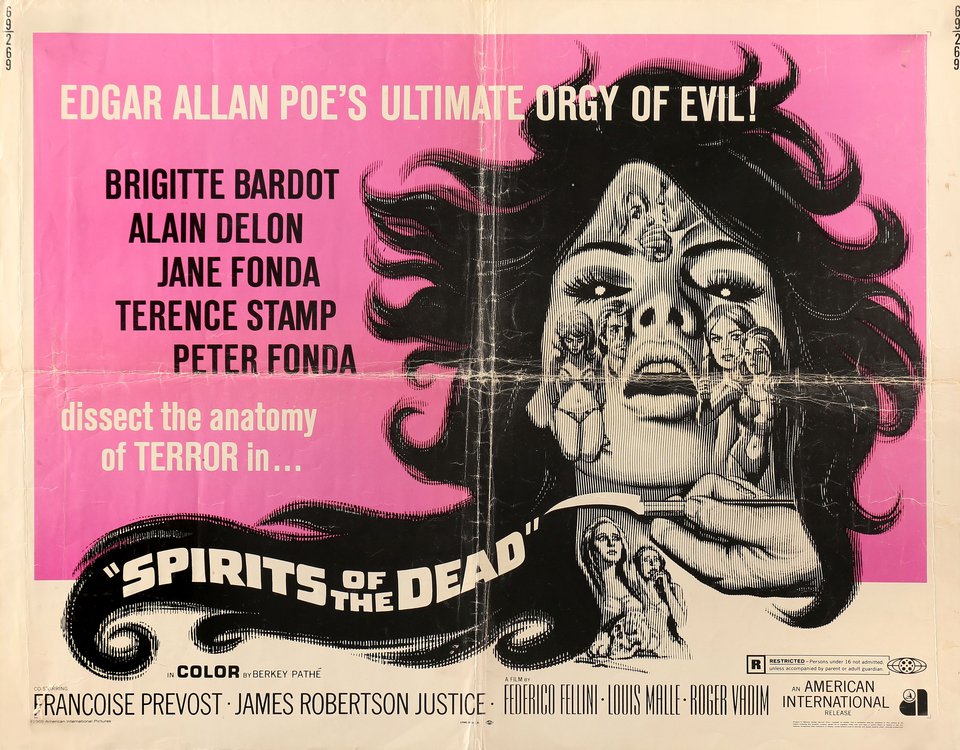
 THE FILM MADNESS OF FRADKIN-STEIN

Leave a comment